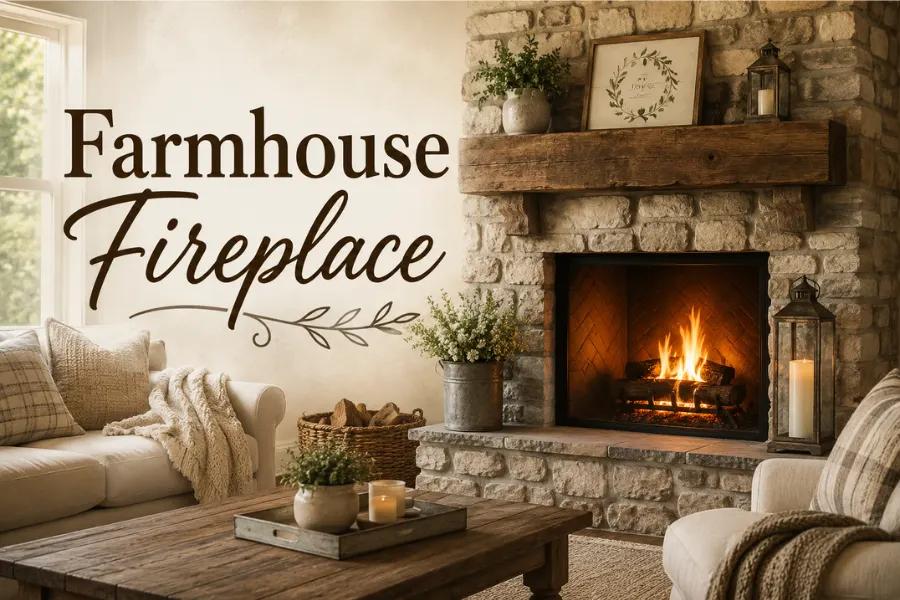
25 Farmhouse Fireplace Ideas That Will Make Your Living Room the Coziest Spot in the House
There is something about a farmhouse fireplace that just stops you in your tracks. The moment you walk into a room and see one, everything else kind of disappears. It becomes the heart of the home — the place where people naturally gather, where the kids curl up with blankets, and where conversations stretch long into the evening.
But here is the thing: a lot of people feel stuck when it comes to actually designing their fireplace. They either play it too safe and end up with something boring, or they overdo it and the whole thing feels forced. I have been in both situations myself, and trust me — neither feels good.
After years of obsessing over home decor, pinning thousands of fireplace ideas, and actually getting my hands dirty on a few DIY projects, I have put together this list of 25 farmhouse fireplace ideas that are completely different from each other. Whether you are working with a tiny apartment corner or a massive living room wall, whether you have a $200 budget or a $20,000 renovation fund, there is something on this list that will make your jaw drop.
25 Farmhouse Fireplace Ideas to Transform Your Home
1. Classic White Shiplap Fireplace Wall
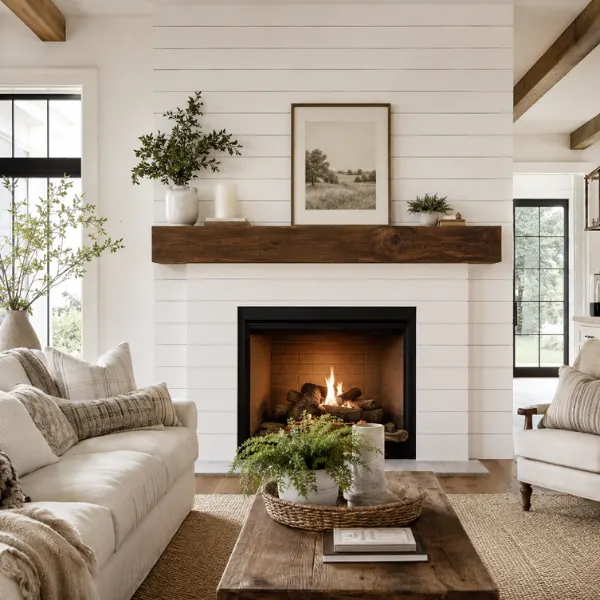
White shiplap is the poster child of farmhouse design, and for very good reason. When you wrap your fireplace wall in horizontal shiplap boards painted crisp white, the whole room opens up. It is clean, timeless, incredibly versatile, and somehow always looks fresh no matter the season or year. This is the one idea that truly never goes out of style.
Why It Works
White shiplap reflects light beautifully, which makes even smaller rooms feel bigger and more airy. The horizontal lines draw the eye across the wall rather than down, giving the space a sense of width and calm. It also acts as the perfect blank canvas — whatever you put on the mantel just pops right off it.
Best For
Living rooms and family rooms with a neutral color palette. This works especially well in homes with natural wood floors, linen sofas, and lots of soft textures. It is also a dream DIY project for beginners — if you can handle a nail gun and a level, you can do this.
Styling Tips
Pair the shiplap with a thick, dark-stained wood beam mantel for that classic contrast. Keep your mantel decor simple: a chunky white candle, a small potted plant, maybe a wooden sign or a framed print. Avoid over-decorating — the shiplap itself does the heavy lifting here. For a more modern feel, use wider boards and skip the framing around the firebox for a seamless, flat look.
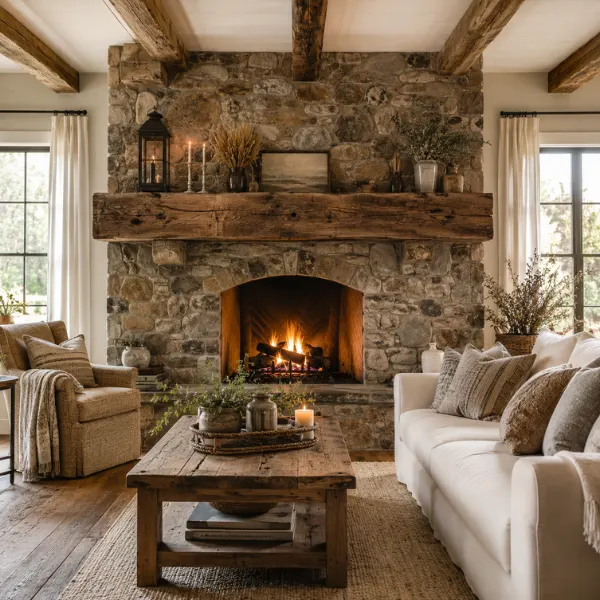
2. Reclaimed Wood Beam Mantel with Stone Surround
This combination is one of the most beloved in the farmhouse world, and once you see it in person, you will immediately understand why. A thick, weathered wood beam sitting on top of a rugged stone surround creates that perfect blend of raw texture and natural warmth. It looks like it has been there for a hundred years — in the best way possible.
Why It Works
Both materials — aged wood and natural stone — carry their own unique history and character. No two stones are the same, and no two pieces of reclaimed wood are identical. That natural variation is exactly what gives a room soul. Together, they create a focal point that feels like it grew from the earth rather than being installed by a contractor.
Best For
Larger living rooms, open-concept spaces, and homes that lean more rustic than modern. This combination also works beautifully in cabins, mountain homes, and anywhere the outdoors feels close. If your ceiling has exposed beams, matching the mantel wood to them ties the whole room together effortlessly.
Styling Tips
Look for your wood beam at salvage yards, old barn demolition sales, or specialty reclaimed wood shops. You want something with genuine wear — knots, old nail holes, and color variation are all welcome here. For the stone, river rock and fieldstone both work beautifully and are usually more affordable than cut stone. Accessorize the mantel with antique iron candle holders, a vintage lantern, and maybe a small basket of dried botanicals.
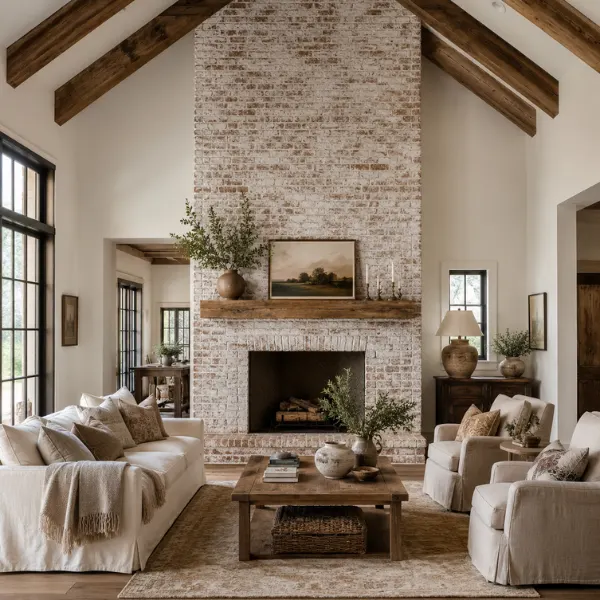
3. Floor-to-Ceiling Brick Fireplace with Whitewash Finish
Taking your brick all the way from floor to ceiling is a bold move, and it pays off enormously. Add a whitewash treatment to the brick — not full opaque paint, but that soft, milky wash that lets the texture breathe underneath — and you get something that feels old-world European and relaxed American farmhouse all at the same time.
Why It Works
The whitewash technique is genius because it lightens the brick without erasing it. You still get all that gorgeous texture and depth, but the room brightens significantly. A full floor-to-ceiling design also gives the room incredible height and presence, turning your fireplace into an undeniable architectural centerpiece.
Best For
Rooms with high ceilings — this idea really needs that vertical space to sing. It works especially well in living rooms where the fireplace is on the main wall, visible from the kitchen or dining area in an open-concept layout. It also suits anyone who loves that collected, lived-in cottage-meets-farmhouse vibe.
Styling Tips
When applying your whitewash, water down your white paint to about a 50/50 ratio and use a damp rag or sponge to apply it in small sections. Work in patches, not all at once, so you can control how much brick texture peeks through. Top it off with a simple floating wood shelf as your mantel rather than an elaborate surround — the brick deserves to be the star here.
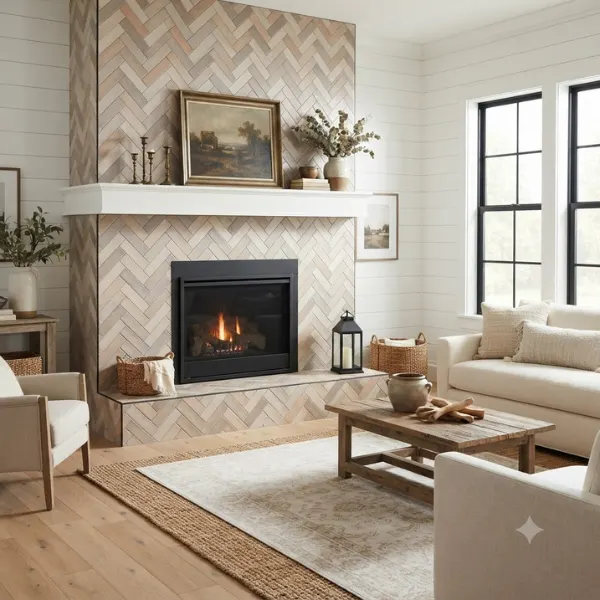
4. Herringbone Tile Fireplace Surround
If you want your fireplace to feel a little more refined without losing that farmhouse warmth, herringbone tile is where it is at. The pattern alone does all the design work — it adds geometry, movement, and a certain sophistication that you just cannot get with a straight tile layout.
Why It Works
The herringbone pattern catches the eye in the best way. It creates visual interest without being loud or overwhelming. When you use tiles in warm earthy tones like soft beige, warm gray, or muted terracotta, the result feels genuinely farmhouse rather than too modern or too traditional. It threads the needle perfectly.
Best For
Small to medium fireplaces where you want the surround material itself to be the statement. This is a great option for people who want a more polished farmhouse look, or for rooms that mix farmhouse style with a little bit of glam or transitional design. It also suits fireplace inserts beautifully.
Styling Tips
Match your grout to your tile color for a seamless, sophisticated finish — contrasting grout will make the pattern feel busier. Use the herringbone only on the firebox surround and hearth, and keep the rest of the wall simple (white paint or white shiplap) so the tile gets its moment. A clean white painted wood mantel works beautifully above it.
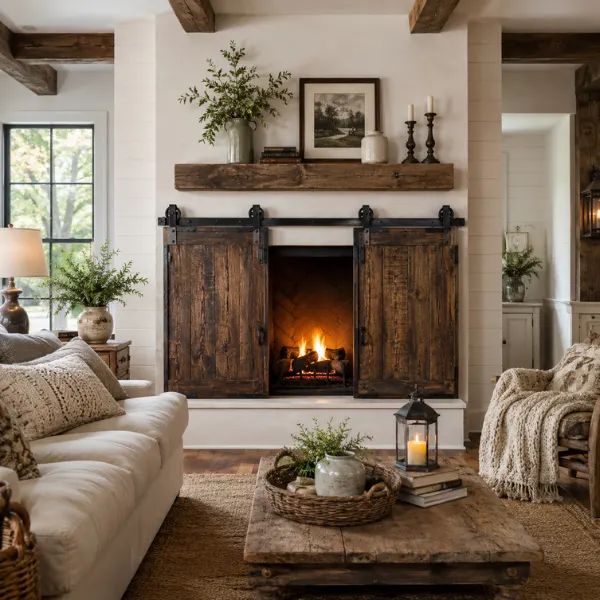
5. Sliding Barn Door Fireplace Cover
This one is for the creative souls who want something truly one-of-a-kind. Instead of a traditional fireplace screen, you install miniature sliding barn doors on either side of the fireplace opening. They slide across to cover the firebox when it is not in use and slide back open when you light it up. It is functional, unexpected, and completely on-brand for farmhouse style.
Why It Works
It is a conversation starter, plain and simple. Nobody walks into a room with barn door fireplace covers and does not ask about it. It also solves the practical problem of what to do with your firebox when it looks dark and empty — the doors close it off cleanly and keep the whole wall looking finished and intentional at all times.
Best For
Rustic farmhouse spaces, cottages, and anyone who wants their fireplace to feel like a true custom design rather than something picked from a catalog. It is also great for homes where small children are around — the doors add a physical barrier between curious little hands and the firebox.
Styling Tips
Source your hardware from a barn door hardware company — you want the real sliding mechanism, not a fake hinge setup. Use reclaimed wood for the doors themselves, and finish them with a dark walnut stain or leave them natural and weathered for an even more authentic look. Keep the surrounding wall simple so the doors remain the focal point.
6. Black Shiplap Fireplace Wall with Wood Mantel
Everything you love about the classic white shiplap fireplace — but make it moody, dramatic, and unexpected. Black shiplap walls have been taking over design blogs and Pinterest boards for a reason. Paired with a warm wood beam mantel, the contrast is absolutely stunning.
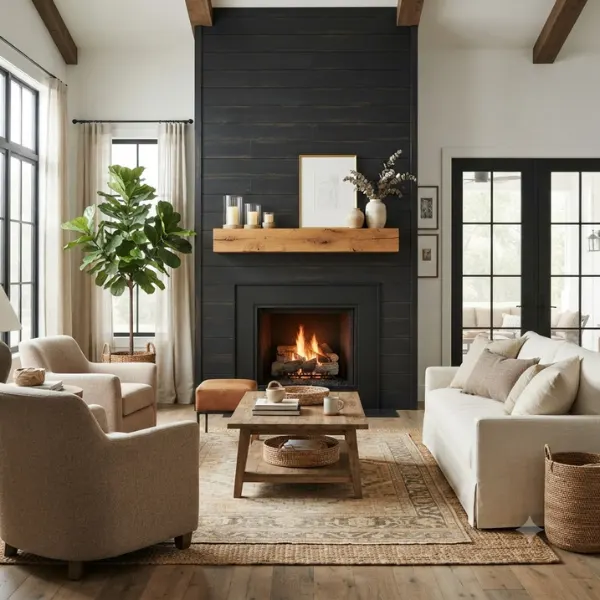
Why It Works
Dark colors make a fireplace feel more like a destination — a dramatic, pull-you-in kind of space that feels cozy in a completely different way than white shiplap does. The black recedes and the fire (or even just decorative candles if it is gas or electric) becomes even brighter and more captivating against that dark backdrop. It is bold, but in a completely livable way.
Best For
Living rooms that already have a lot of natural light — black shiplap needs good light to avoid feeling cave-like. It also works exceptionally well in cozy dens, libraries, or home offices where you want that rich, wrapped-in warmth feeling. If your home leans more modern farmhouse than traditional, this is the version for you.
Styling Tips
Choose a warm, earthy black with brown undertones rather than a stark blue-black — it will feel warmer and more farmhouse appropriate. Your wood mantel should be thick and pale — something in a light honey or natural finish works beautifully against the dark wall. Keep accessories on the mantel minimal and warm: cream candles, neutral ceramics, maybe a single branch of dried eucalyptus.
7. Stacked Stone Fireplace with Live-Edge Wood Mantel
This is the one that makes you feel like you have stepped into a mountain lodge, even if you are living in the suburbs. Stacked stone — where thin slices of natural stone are layered horizontally — creates a rich, textured surround that looks incredibly time-consuming but can actually be achieved with stone veneer panels if you want the DIY route.
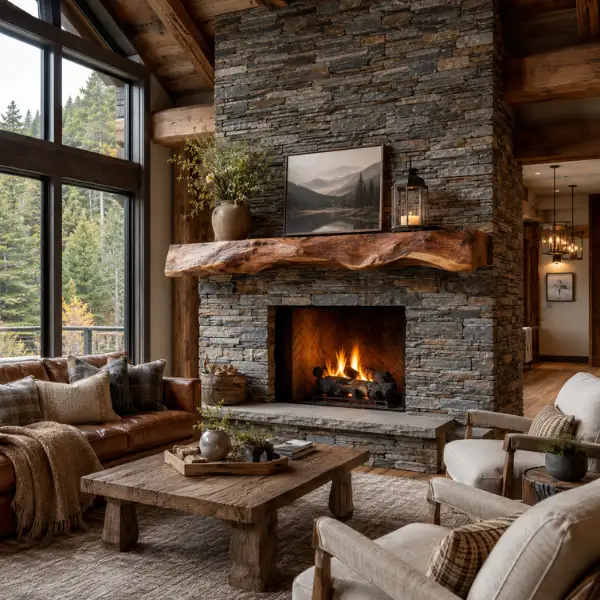
Why It Works
Stone carries a natural authority in a room. It is heavy-looking, grounded, and earthy in a way that few other materials can match. When you pair it with a live-edge wood mantel — that is a raw, unfinished-edge slab that still shows the natural curve of the tree — you get something that feels genuinely organic and handcrafted. It is the definition of bringing the outdoors in.
Best For
Large, open living rooms with high ceilings or exposed beam work above. This is a bigger, bolder fireplace design — it needs space to breathe. Homes with wood plank floors and leather furniture are its natural partners. It is also one of the best options for a main hearth in a cabin-style home.
Styling Tips
For the live-edge mantel, look for a thick walnut or oak slab at a local lumber or woodworking shop. You want it at least 3 to 4 inches thick — anything thinner looks visually weak against the heaviness of the stone. Do not over-decorate: a single vase of wildflowers, a small lantern, and maybe a framed neutral print is all you need.
8. Whitewashed Brick with Antique Wrought Iron Screen
Sometimes the best look is also the simplest. A softly whitewashed brick fireplace paired with a beautifully detailed antique wrought iron screen is a combination that feels gathered over time rather than designed in a day — and that is exactly the energy a great farmhouse home should have.
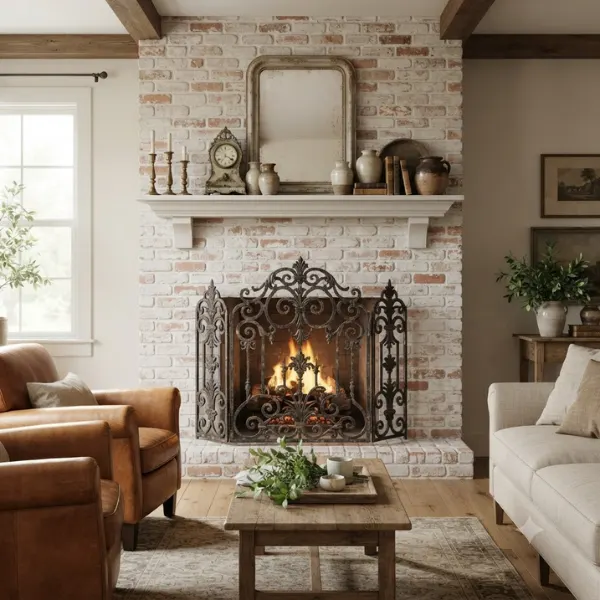
Why It Works
The whitewashed brick keeps things light and airy while still holding onto the texture and warmth of the original brick. The antique iron screen brings in a sense of history and craftsmanship — those hand-forged details and slightly imperfect lines are impossible to replicate with new mass-market screens. Together, they create a fireplace that feels authentic in every sense of the word.
Best For
Rooms that already have some vintage or antique pieces — an old mirror, worn leather chairs, heirloom furniture. This combination works beautifully in farmhouse-style dining rooms and sitting rooms, not just living rooms. It is also a smart choice for those who want to refresh an existing brick fireplace without a major renovation.
Styling Tips
Find your screen at antique markets, estate sales, or specialty vintage fireplace stores. Brass and iron both work, but make sure the finish feels aged and genuine rather than brand-new and shiny. For the mantel, keep it a plain painted white shelf and dress it with candle sticks, a vintage clock, and a few simple ceramic pieces.
9. Board and Batten Fireplace Surround in Sage Green
Here is an idea that is completely unexpected and absolutely gorgeous: swap out the standard white for a muted, earthy sage green on your board and batten fireplace surround. The board and batten gives you that lovely geometric texture, and the green color adds warmth and freshness without going bold or bright.
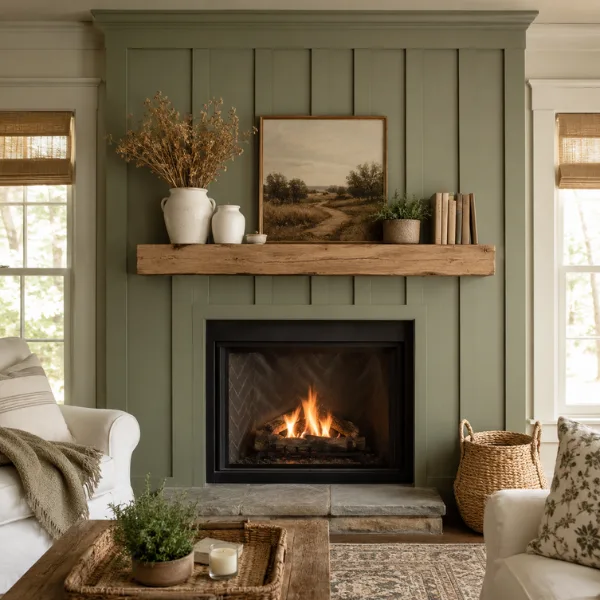
Why It Works
Sage green has become one of the most beloved colors in modern farmhouse design, and it makes complete sense — it is neutral enough to be calming but warm enough to feel inviting. On a board and batten surround, the color has texture to play against, which makes it look so much richer and more intentional than just a flat painted wall. It also pairs naturally with all the wood, linen, and woven textures that farmhouse decor is built on.
Best For
Bedrooms with fireplaces — this combination feels genuinely serene and restful. It also works beautifully in sunrooms, reading nooks, and smaller sitting rooms where you want the fireplace to feel personal and cozy rather than grand and imposing.
Styling Tips
Go matte with your paint finish — this is not the place for eggshell or satin. A dead-flat matte finish on the sage green makes the whole thing look like it was plastered and painted in a 200-year-old farmhouse. Pair it with a simple wood shelf in a lighter natural tone as the mantel, and add white ceramic vases, dried wildflowers, and a small potted herb or succulent.
10. Concrete Fireplace Surround with Exposed Wood Beam
Concrete and farmhouse do not sound like they belong together — until you see this combination in a room. A smooth concrete surround brings a clean, industrial edge that somehow makes the reclaimed wood beam mantel above it feel even more rustic and warm by comparison. It is a pairing of opposites that just works.
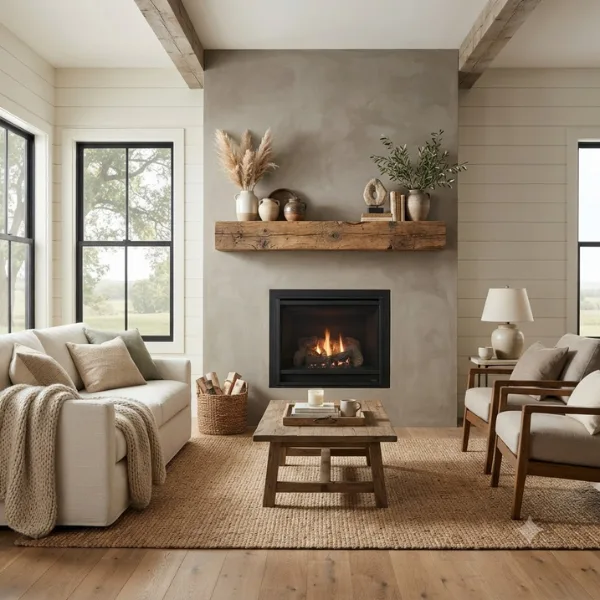
Why It Works
Concrete is a fantastic material for modern farmhouse spaces because it grounds the design in something sleek and current while still playing well with natural, rustic elements. It is also incredibly durable and low-maintenance, which makes it a practical choice for a fireplace surround. The contrast between the cool smoothness of the concrete and the warm grain of the wood is genuinely beautiful.
Best For
Modern farmhouse homes, loft-style spaces, and rooms that mix industrial and rustic elements. This is also a great option if you want your fireplace to look custom and architectural without spending a fortune — a concrete overlay on an existing fireplace is a relatively affordable upgrade that looks like it cost a lot more.
Styling Tips
Keep the concrete in a warm gray or off-white tone rather than a stark industrial gray — this keeps it feeling farmhouse rather than warehouse. Pair with woven textiles like a chunky wool throw and a jute rug to soften the concrete’s hardness. Your mantel decor should lean natural: wood, stone, dried botanicals, and earthy ceramics.
11. Floor-to-Ceiling Shiplap with Built-In Bookshelves
This is one of my absolute favorite ideas on the entire list. Instead of just doing shiplap on your fireplace wall, you build the fireplace into a floor-to-ceiling shiplap wall that also includes symmetrical built-in bookshelves on either side. The whole thing becomes a single, unified, jaw-dropping feature wall.
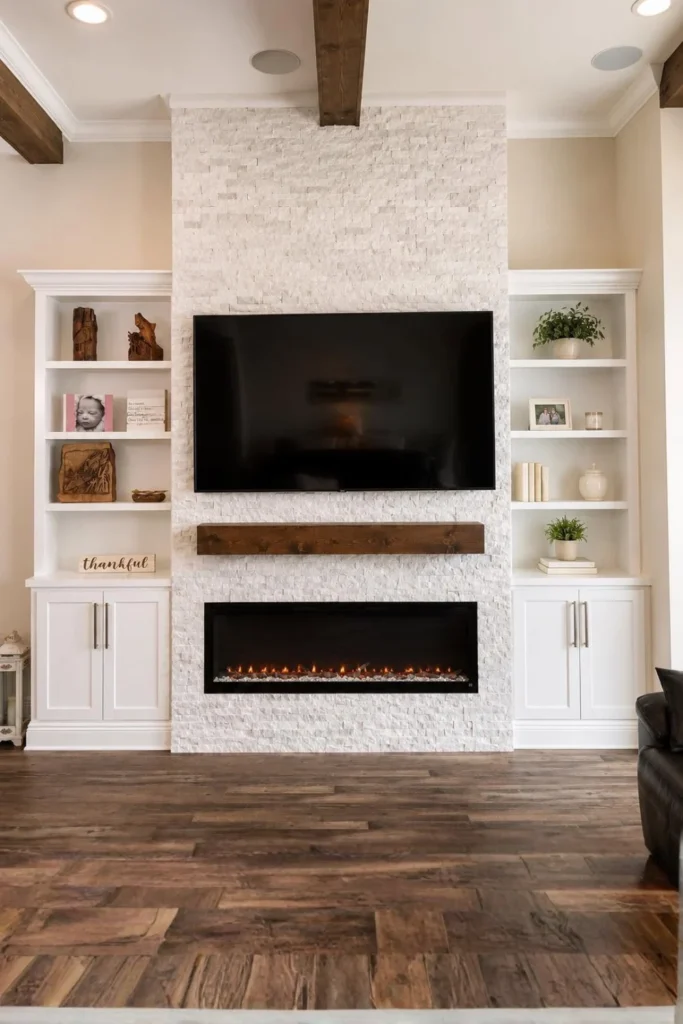
Why It Works
The built-in shelves do double duty — they give you gorgeous display space for books, plants, baskets, and decor while also framing the fireplace and giving it a sense of importance and architecture. Everything is white and unified, which makes the room feel both organized and warmly curated. It is the kind of wall that makes people gasp when they walk in.
Best For
Large living rooms and open-concept spaces where the fireplace wall is the main focal point. This is also a brilliant solution for rooms that lack storage — the built-ins around the fireplace solve that problem beautifully while also looking intentional and designed. It requires more investment than a simple shiplap job, but the payoff is enormous.
Styling Tips
Style your built-in shelves the way a designer would: do not pack them with stuff. Layer books vertically and horizontally, add a few baskets for hidden storage, introduce some greenery in simple white or terracotta pots, and leave deliberate empty space between groupings. A small piece of art leaned against the back of one shelf adds a casual, lived-in touch.
12. Distressed Brick Fireplace with Barn Beam Mantel
If you love the look of a fireplace that tells a story — that looks like it has been there since the house was built a century ago — this is your idea. Using deliberately distressed or aged brick, combined with a thick reclaimed barn beam mantel, creates the ultimate vintage farmhouse fireplace.
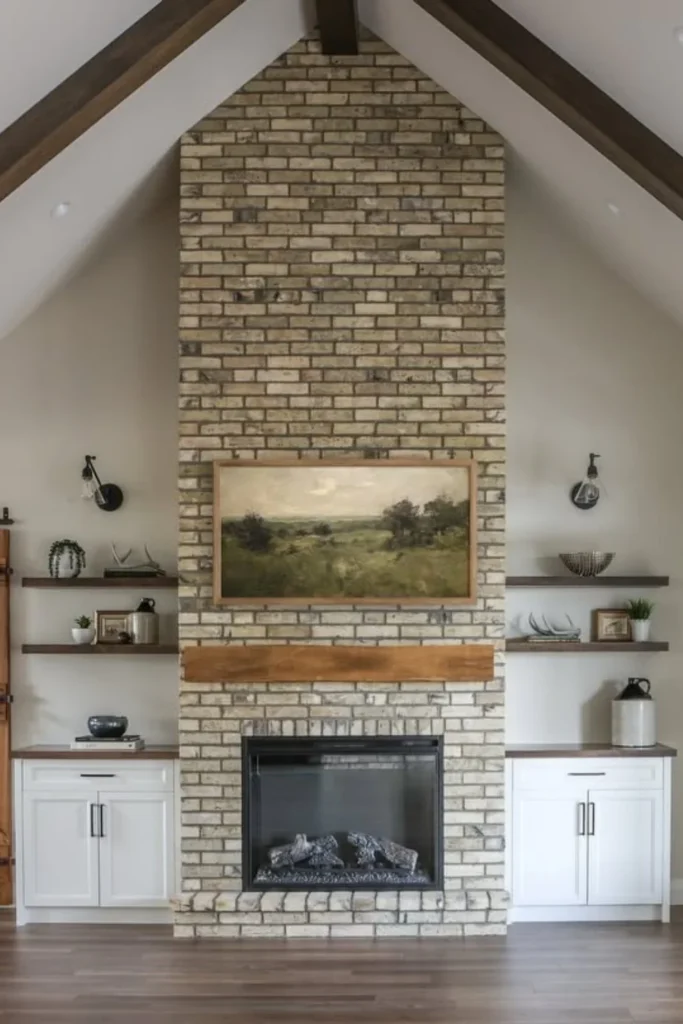
Why It Works
Distressed materials carry a sense of authenticity that new, perfect finishes simply cannot fake. The worn edges, the slightly uneven mortar, the variation in brick color — all of it feels earned and genuine. A barn beam mantel amplifies that story, especially if you source a beam from an actual old barn, complete with old nail holes and weathered color variations.
Best For
Kitchens with hearth fireplaces, large farmhouse living rooms, and any home that leans heavily into the vintage farmhouse aesthetic. This is also a great solution for homes with old, worn brick that needs refreshing — instead of replacing or covering it, you lean into the age and make it the feature.
Styling Tips
Source your barn beam from a reclaimed wood dealer or architectural salvage yard — genuine age is the whole point here, so do not settle for a new piece that has just been wire-brushed to look old. For the brick, if your existing brick is too uniform, you can hire a mason to re-point the mortar in an uneven, rustic pattern or apply a mortar wash to give it more texture and interest.
13. Small Corner Fireplace with Shiplap and Tile
Corner fireplaces are often the ugly stepchild of fireplace design — they get treated as an afterthought because they are awkward and hard to style. But a corner fireplace wrapped in white shiplap with a small herringbone or subway tile surround is actually one of the coziest, most charming setups you can create.
Why It Works
Tucking a fireplace into a corner takes advantage of dead space in a room and creates a natural little seating nook. When you clad it in shiplap and give the firebox a beautiful tile surround, it suddenly feels intentional and designed rather than just an architectural quirk. It draws seating around it naturally and creates a secondary lounge area within a larger room.
Best For
Small living rooms and studio spaces where space is at a premium. Also perfect for bedrooms, reading nooks, and older homes where corner fireplaces were common in the original architecture. This is one of the best small-scale farmhouse fireplace ideas on this list.
Styling Tips
Do not try to make a corner fireplace look bigger than it is — embrace the coziness. Float a small, simple wood shelf above the firebox as a mini mantel, and keep decor on it ultra-minimal: one small vase, a candle, maybe a tiny trailing plant. Place a comfortable armchair and a small side table nearby to complete the nook feeling.
14. Limewash Painted Brick Fireplace
Limewash is an ancient wall treatment that has been having a serious moment in interior design, and when applied to a brick fireplace, the results are genuinely stunning. It is different from whitewash — limewash has a slightly chalky, patchy, Old World quality that looks like the brick has been naturally aging for decades.
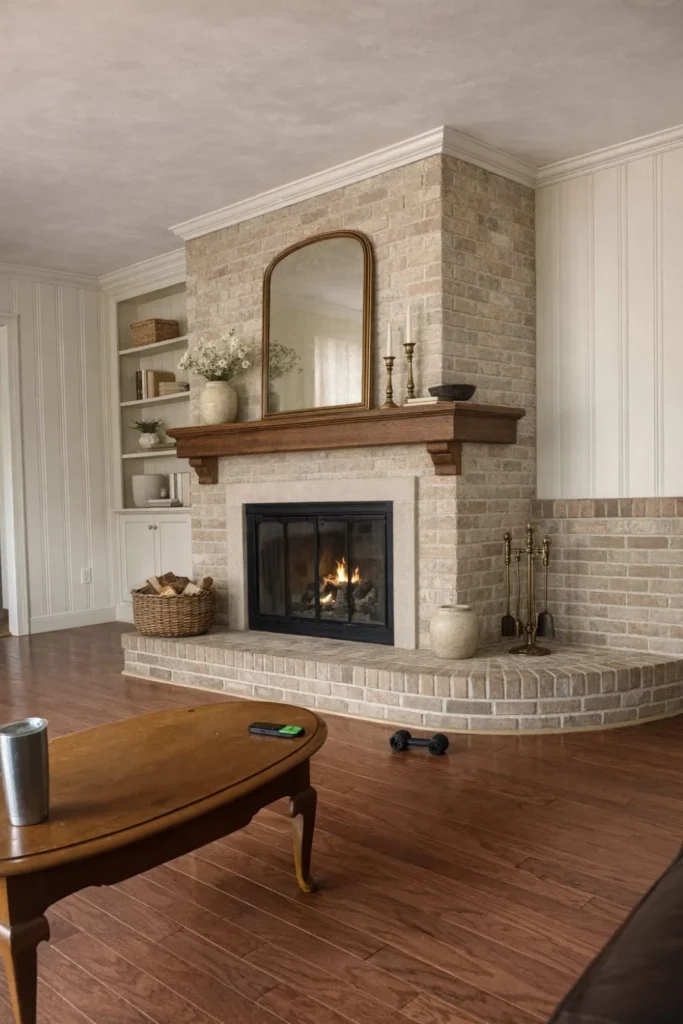
Why It Works
Limewash creates a depth and texture that regular paint simply cannot achieve. It soaks into the brick rather than sitting on top of it, which means the final result looks completely natural rather than painted. Every brick picks it up slightly differently, creating beautiful variation. For farmhouse design, which is all about authentic, layered, time-worn beauty, limewash is practically made to order.
Best For
Traditional farmhouse homes, cottages, and any space that wants to feel old and storied. It is also a fantastic option for people who love the look of European farmhouse or Italian countryside interiors. This works especially well in rooms with warm wood tones, linen furniture, and a neutral, earthy color palette.
Styling Tips
You can DIY limewash — there are good products available that make this very approachable as a weekend project. Apply it in loose, sweeping brush strokes and let it dry between coats — the beauty is in the uneven, patchy coverage, so do not try to make it perfect. A simple reclaimed wood mantel and some dried floral stems above it is all the styling you need.
15. Black Tile Fireplace Surround with White Walls
This is the modern farmhouse power move. A matte black tile surround on a fireplace set against clean white walls creates a graphic, striking contrast that feels sophisticated and contemporary while still sitting comfortably within the farmhouse aesthetic. It is sleek, unexpected, and endlessly chic.
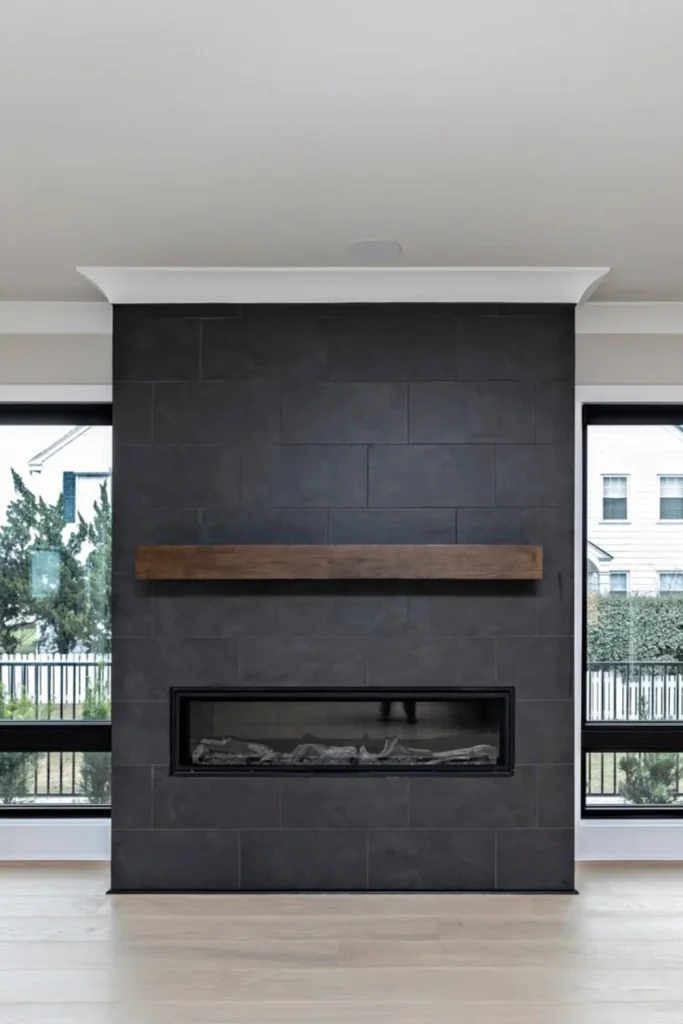
Why It Works
Black as an accent in farmhouse design is one of the smartest tools you can use — it grounds a room that is otherwise all creams and whites and neutrals, and gives it an anchor point. A black tile surround does this while also giving the fireplace itself enormous visual presence. The tile catches light differently from matte surfaces, which adds texture and depth to what could otherwise feel like a very flat design.
Best For
Modern farmhouse spaces, homes with clean lines and minimal clutter, and anyone who wants their fireplace to feel current and designerly rather than traditional and rustic. This is also a great fit for urban farmhouse spaces — think converted lofts or townhomes with a mix of modern architecture and warm, natural materials.
Styling Tips
For the tile, choose a small format — 2×4 subway or 3×3 square — in a matte black finish. Arrange them in a simple stacked or running bond pattern rather than herringbone to keep the look clean and graphic. Pair with a very pale, almost white wood mantel and simple, warm-toned accessories: brass candlesticks, a honey-colored vase, soft cream candles.
16. Rustic Fieldstone Fireplace with Raised Hearth
A raised hearth is one of those features that completely changes how a fireplace feels in a room. Instead of the firebox sitting at floor level, you raise the whole thing up — the hearth becomes a ledge you can actually sit on, and the firebox meets you more at eye level when you are seated. Combined with a rugged fieldstone surround, this is pure, classic farmhouse architecture.
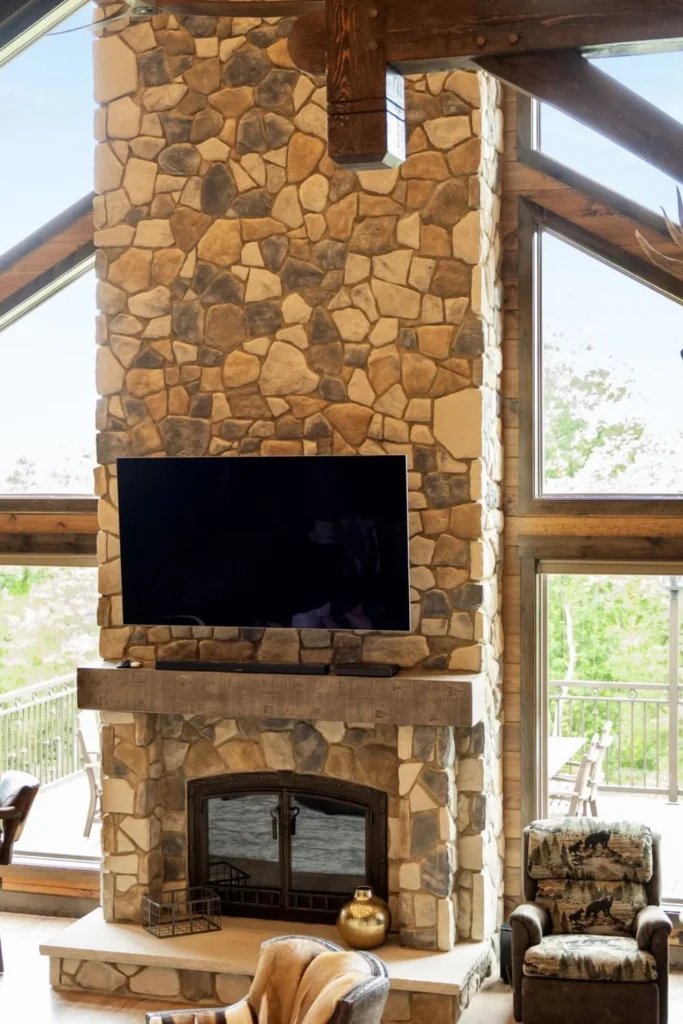
Why It Works
Raised hearths were a staple of traditional farmhouse and colonial home design because they were practical — getting the fire higher off the cold ground and giving the family a warm ledge to rest on. That functionality still feels right today. The fieldstone surround — natural, uncut, organic — adds an incredible amount of texture and character that feels genuinely rooted in the land.
Best For
Large, open farmhouse living rooms where the fireplace is the visual centerpiece of the entire space. This idea needs room — both physical space for the raised hearth footprint and ceiling height to let the stone surround breathe. It is also perfect for homes near the woods, mountains, or countryside where a connection to nature is central to the design philosophy.
Styling Tips
Do not over-mortar the fieldstone — you want to see the natural variation of the rocks and let the occasional shadow between them add depth. For the raised hearth ledge itself, top it with a simple stone or slate surface that can handle candles and occasional decorative objects. Keep the mantel (if you have one above) minimal — maybe just a single large mirror in a simple wood frame.
17. Subway Tile Fireplace Surround in Soft Beige
Not every farmhouse fireplace needs to be dramatic or over-the-top. Sometimes the most beautiful thing you can do is keep it understated and timeless. A classic subway tile surround in soft beige, cream, or warm white does exactly that — it is quietly elegant and never goes out of style.
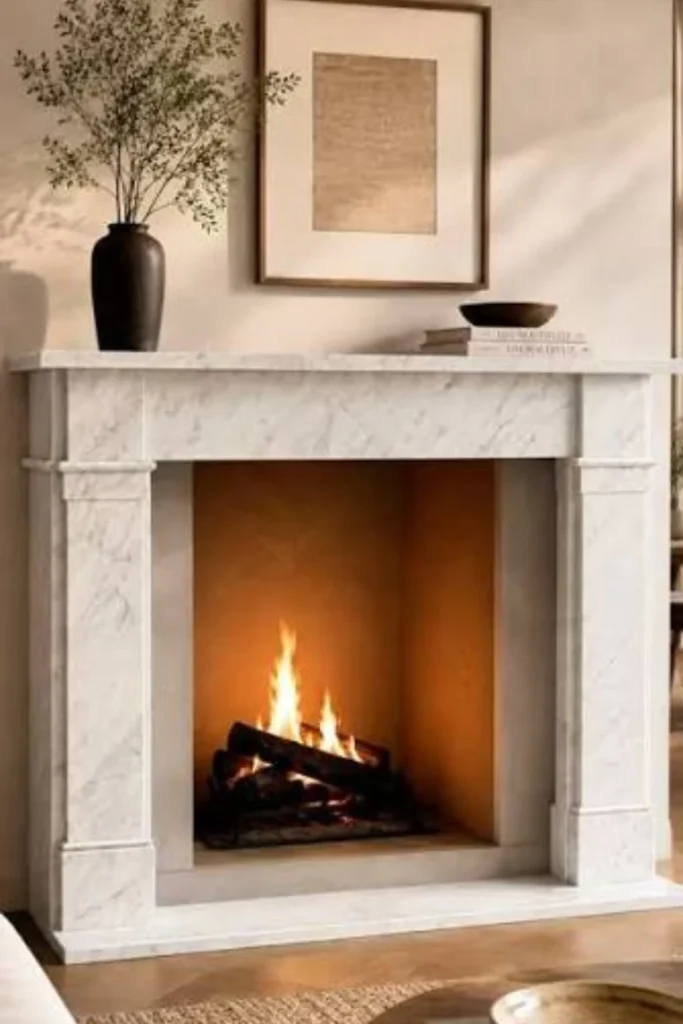
Why It Works
Subway tile is beloved because it is simple, clean, and works with virtually any design direction. In a warm beige or cream tone rather than the standard stark white, it takes on a softness that feels inherently farmhouse — gentle, warm, and easy to live with. The rectangular format and slight gloss create just enough visual interest without competing with your mantel decor or the room around it.
Best For
Any room, any size fireplace, any farmhouse aesthetic — this is truly the most universally flattering option on this list. It is also one of the most budget-friendly tile choices available, which makes it a great pick for anyone doing a DIY fireplace renovation on a limited budget.
Styling Tips
Lay your subway tiles in a classic brick or running bond pattern rather than vertical stacking — it is the most timeless arrangement and looks consistently beautiful across different room styles. Pair with a simple white-painted wood mantel and keep your tile grout in a warm gray or sandy tone rather than bright white for a softer, more cohesive finish.
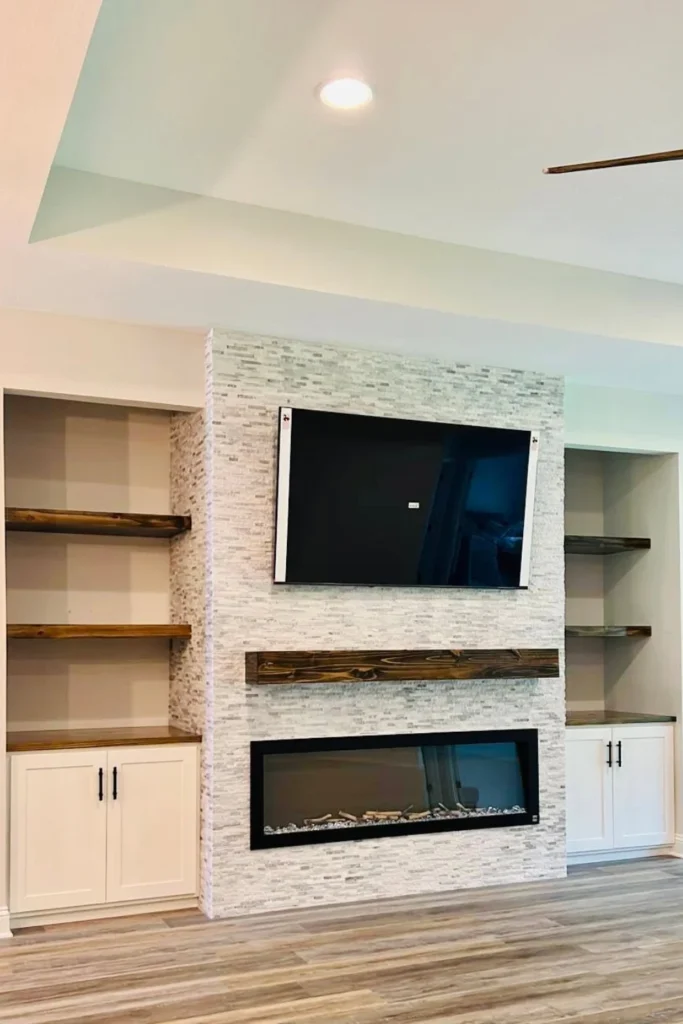
18. Shiplap Fireplace with TV Above and Built-In Cabinetry
This is the all-in-one living room solution that so many families are looking for. A shiplap fireplace wall with a television mounted directly above the firebox, flanked by built-in cabinetry on either side, creates a complete, functional, and beautiful entertainment and gathering focal point.
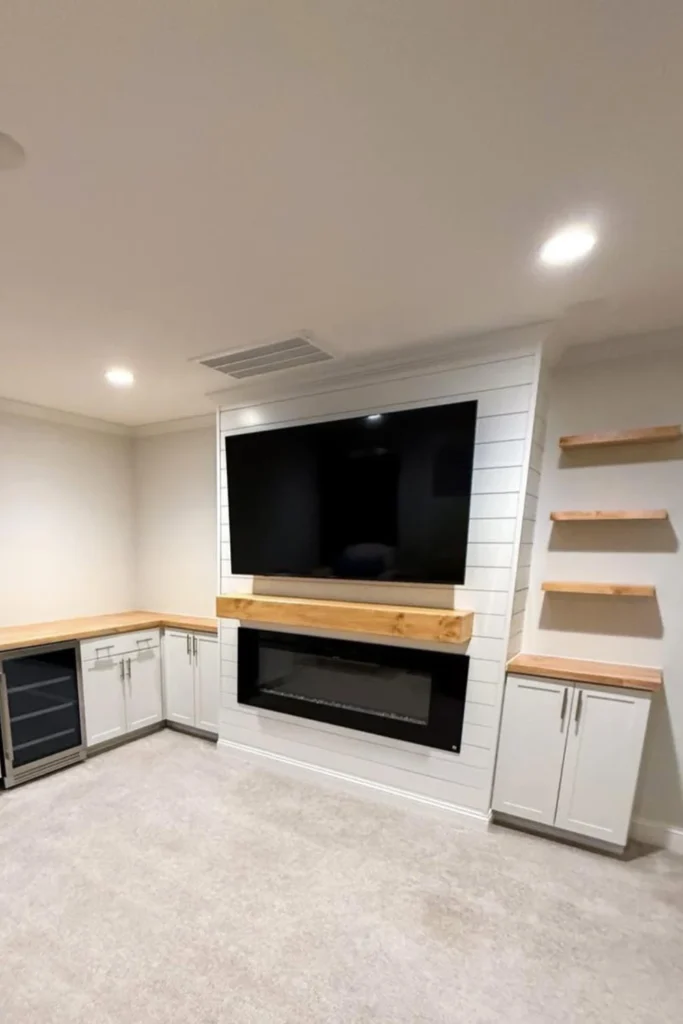
Why It Works
Combining the TV and fireplace on the same wall is a practical reality for most family rooms — people want both, and having them on the same wall means you do not have to choose between them. When you wrap the whole thing in shiplap and add flanking built-ins for hidden storage and display, it becomes a cohesive design feature rather than a functional compromise. It is the one that makes the most sense for real life.
Best For
Family rooms, great rooms, and open-concept spaces where the television is a major part of daily life. This is also the perfect choice for anyone who wants their fireplace wall to solve multiple problems at once: storage, display, entertainment, and ambiance all in one place.
Styling Tips
Mount your TV at a height that works for seated viewing — do not let the fireplace push it too high, as that causes neck strain. Design your built-in cabinetry with closed lower cabinets for hidden storage and open upper shelves for decor. Keep the shiplap white and the cabinetry either white or a soft warm gray so the whole wall feels unified rather than busy.
19. Zellige Tile Fireplace Surround
Zellige tiles are handmade Moroccan ceramic tiles with a subtly uneven surface, a slight shimmer, and gorgeous color variation — and they are absolutely stunning on a fireplace surround. This is for the farmhouse home that has a little extra personality, a little global influence, and is not afraid to do something genuinely beautiful and unexpected.
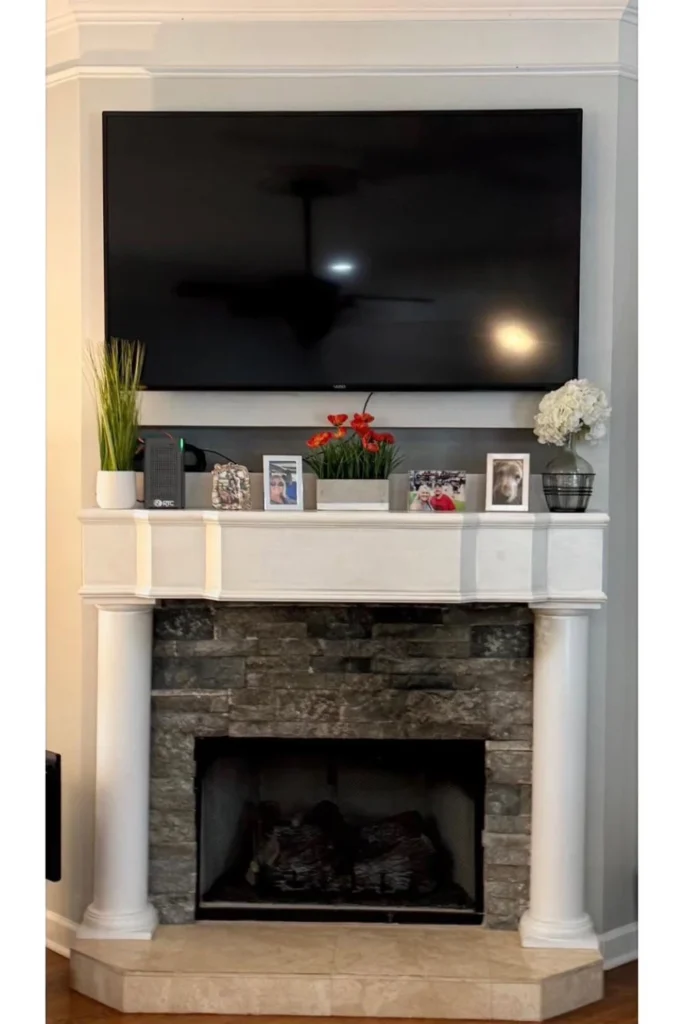
Why It Works
The handmade quality of zellige tiles gives them a warmth and depth that machine-made tiles simply cannot replicate. Each tile reflects light slightly differently, which means your fireplace surround almost seems to glow. In honey, sage green, dusty blue, or terracotta tones, zellige tiles feel right at home in a farmhouse space — they have that same handcrafted, time-honored quality that defines the whole aesthetic.
Best For
Kitchens with hearth fireplaces, cottages, and bohemian or eclectic farmhouse homes. This tile is also fantastic in smaller fireplaces where the surround area is modest — because zellige is so visually rich, a small amount of it goes a very long way.
Styling Tips
Keep everything around the zellige simple and calm — these tiles deserve to be the center of attention. A plain white plastered or painted wall, a simple reclaimed wood mantel, and minimal decor is all you need. The tile does all the talking. Also, always use a light-colored grout that matches the tile to keep the focus on the zellige surface, not the grout lines.
20. Outdoor-Inspired Indoor Farmhouse Fireplace
This one is about bringing that rugged, nature-inspired energy fully inside your home. Think large-format irregular fieldstone, chunky wrought iron accessories, a driftwood or antler accent or two, and the feeling that your fireplace could just as easily belong to a camping lodge or a countryside estate as it does to your living room.
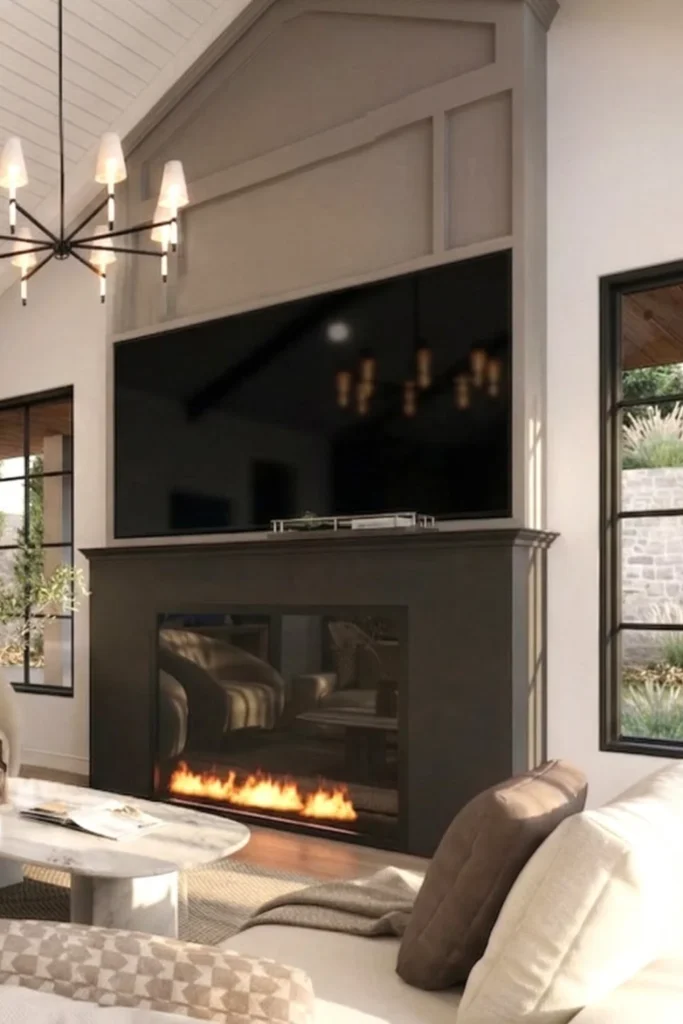
Why It Works
There is a reason outdoor fireplaces feel so magical — they connect you to nature in a very immediate way. When you bring those same materials and that same energy inside, you recreate that primal, sitting-around-the-campfire feeling that makes a fireplace meaningful in the first place. In a farmhouse home, this design direction feels completely at home rather than forced.
Best For
Homes near natural settings — mountains, forests, coastlines. Also perfect for large, open-plan farmhouse living rooms where you want the fireplace to feel genuinely impressive and nature-inspired. This is not a small-scale idea — it works best with room to spread out and breathe.
Styling Tips
Anchor the hearth area with a large, natural fiber rug — something in sisal, jute, or chunky wool. Add a few botanical prints above or beside the mantel rather than traditional framed art. A pair of antique lanterns, a basket filled with dried grasses, and a stack of actual firewood beside the hearth complete the outdoor-inspired atmosphere without ever feeling kitschy.
21. Two-Toned Brick Fireplace (Light and Dark)
Standard brick fireplaces tend to feel a little flat and expected. A two-toned brick approach — mixing lighter bricks with darker ones in a deliberate pattern — adds depth, visual complexity, and a much more custom, architectural feel to what is otherwise a very common feature.
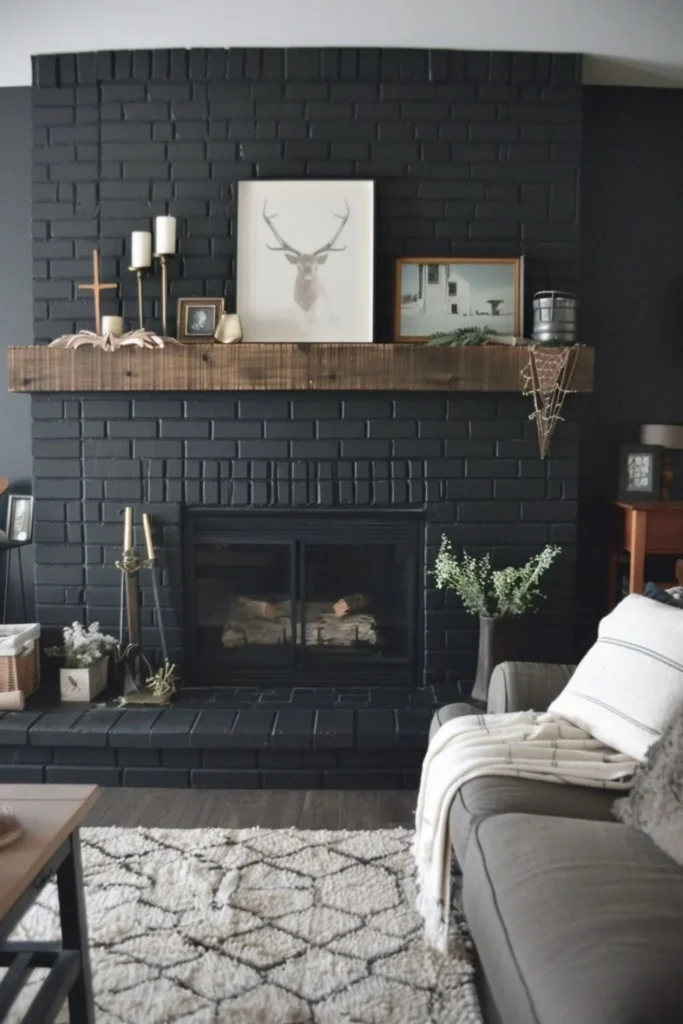
Why It Works
Two-toned brick creates pattern and movement without being loud. It references traditional building techniques where builders sometimes mixed brick batches, and that slight variation gives a fireplace enormous character. In a farmhouse setting, this feels authentic and considered — like a craftsman made deliberate choices rather than just filling in a wall.
Best For
Older homes with existing brick fireplaces that need refreshing without a full rebuild. It is also a fantastic choice for new builds where you want your brick fireplace to feel like it has always been there rather than freshly constructed. Works well in both smaller sitting rooms and large living rooms.
Styling Tips
When mixing brick tones, keep to the same family — warm reds with warm creams, or cool charcoals with warm grays. Avoid going too contrasting or the effect looks accidental rather than intentional. A simple painted white mantel shelf sits beautifully above a two-toned brick surround and lets the brick remain the feature.
22. Vertical Shiplap Fireplace Wall
Everyone does horizontal shiplap. Turning the boards vertical is a simple change that completely transforms the look — it makes the wall feel taller, gives the room a more formal and architectural feel, and still carries all the warmth and texture that shiplap is loved for.
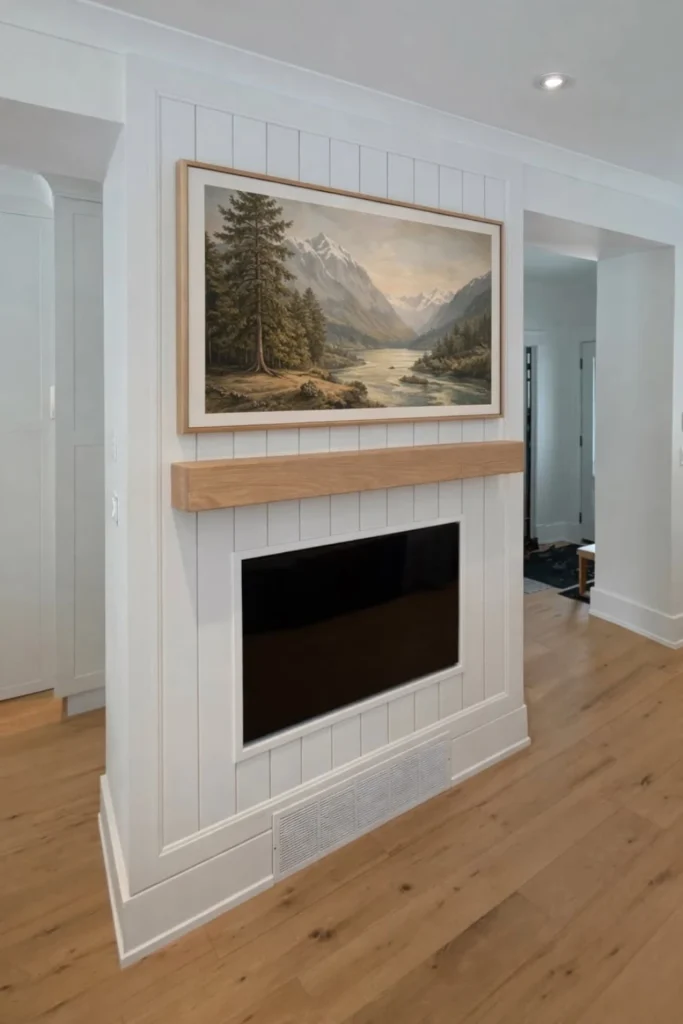
Why It Works
Vertical lines draw the eye upward, which is one of the oldest tricks in the interior design book for making a room feel taller and more spacious. Vertical shiplap on a fireplace wall does exactly that, and in a farmhouse context, it references the vertical board-and-batten siding that was common on old agricultural buildings. It is a subtle shift from the horizontal version but produces a noticeably different and equally beautiful result.
Best For
Rooms with lower ceilings that need a visual lift. Also great for anyone who loves shiplap but wants their fireplace wall to stand out from the dozens of horizontal shiplap fireplaces they see on Pinterest. It works in both small and large rooms and suits traditional farmhouse just as well as modern farmhouse.
Styling Tips
Paint vertical shiplap in a warm white or soft cream — the vertical lines already do the visual work, so you do not need a bold color. A simple floating wood shelf works beautifully as a mantel above vertical shiplap. Keep wall decor above the mantel minimal — maybe a single large wreath or one piece of art — because the vertical lines below already create a lot of visual movement.
23. Floating Shelves Flanking a Simple Fireplace Insert
Sometimes the fireplace itself is not the star — the whole composed vignette around it is. Flanking a simple, clean fireplace insert with painted floating shelves on either side creates a casual, collected, very livable farmhouse setup that is easy to style and easy to live with every single day.
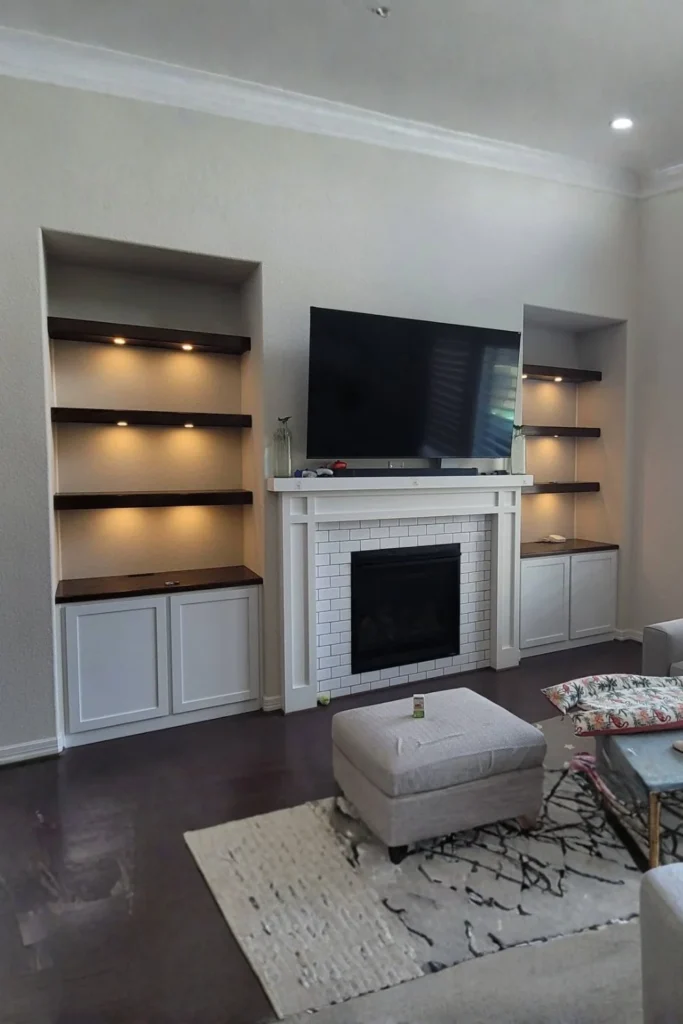
Why It Works
Floating shelves beside a fireplace give you flexibility that built-in cabinetry does not — you can rearrange them, repaint them, or remove them entirely as your taste evolves. They also let the fireplace stay simple and clean while the shelves carry the decorative personality of the room. It is a balanced, visually relaxed approach to a fireplace wall.
Best For
Apartments, rental spaces, and small to medium rooms where a large built-in is not practical or possible. Also perfect for anyone who loves to redecorate often — swapping out shelf styling with the seasons is one of the most satisfying and affordable ways to keep a room feeling fresh.
Styling Tips
Style your shelves in groups of odd numbers — three or five items per shelf cluster looks far more natural than two or four. Mix heights: a taller vase, a short stack of books, a small plant, and a medium candle holder. Leave deliberate empty space between groupings — breathing room is what separates a curated shelf from a cluttered one.
24. Galvanized Metal Accents with Wood and White Fireplace
Galvanized metal is one of the most underused materials in farmhouse fireplace design, and it is such a shame because it is incredibly versatile, affordable, and genuinely beautiful when used right. Incorporating galvanized metal in your fireplace screen, tool set, log holder, or even a small galvanized shelf above the mantel adds an authentic industrial-meets-country quality that no other material quite replicates.
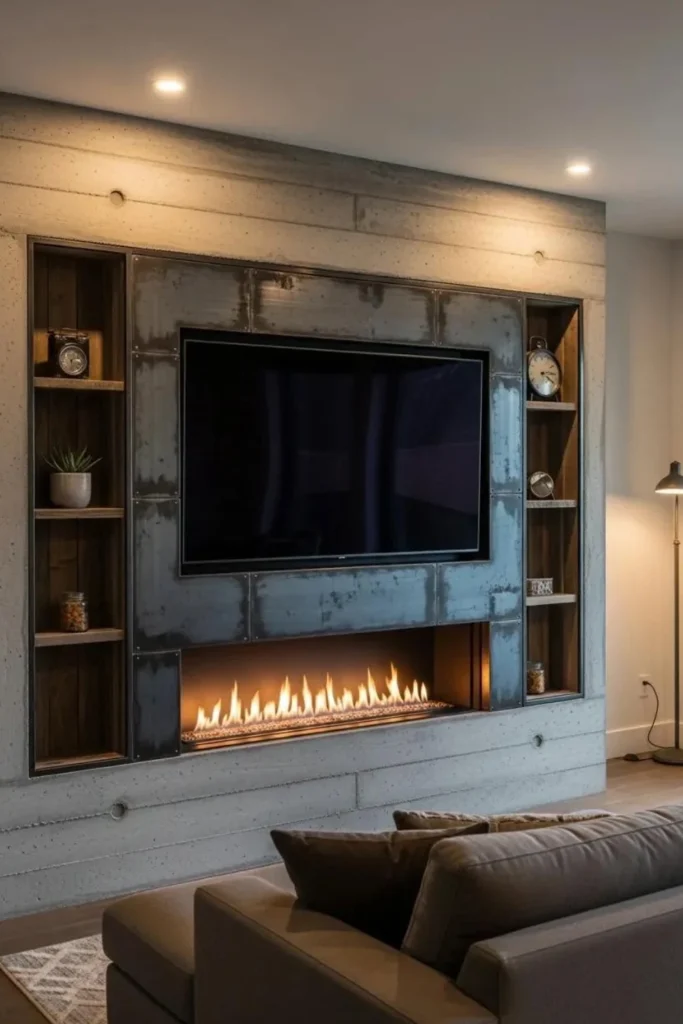
Why It Works
Galvanized metal has a matte, slightly silvery surface that picks up light in a cool, understated way. Against the warmth of white paint or natural wood, it creates a quiet but effective contrast. It also ages beautifully — developing a gentle patina over time that only adds to the farmhouse aesthetic. And because it is a metal, it is practical and durable around a fireplace environment.
Best For
Farmhouse kitchens with hearth-style fireplaces, utility rooms, mudrooms, and any space that wants a slightly more utilitarian, working-farmhouse feel. Also a great choice for anyone who loves the look of old farm buildings and general stores, where galvanized metal was used for everything from buckets to roofing.
Styling Tips
Use galvanized metal as accent rather than the main material — a fireplace screen, a log basket, a set of fireplace tools, or a tray on the hearth are all perfect applications. Pair it with a white painted brick or shiplap surround and a natural wood mantel. Add a few printed cotton or linen textiles nearby to soften the metal’s coolness.
25. Vintage Mantel with Seasonal Wreath and Layered Decor
The final idea on this list is less about the fireplace structure itself and more about the art of dressing a fireplace mantel — because sometimes the most beautiful farmhouse fireplace is simply a beautiful, layered, seasonally styled mantel that changes throughout the year and always feels perfectly at home.
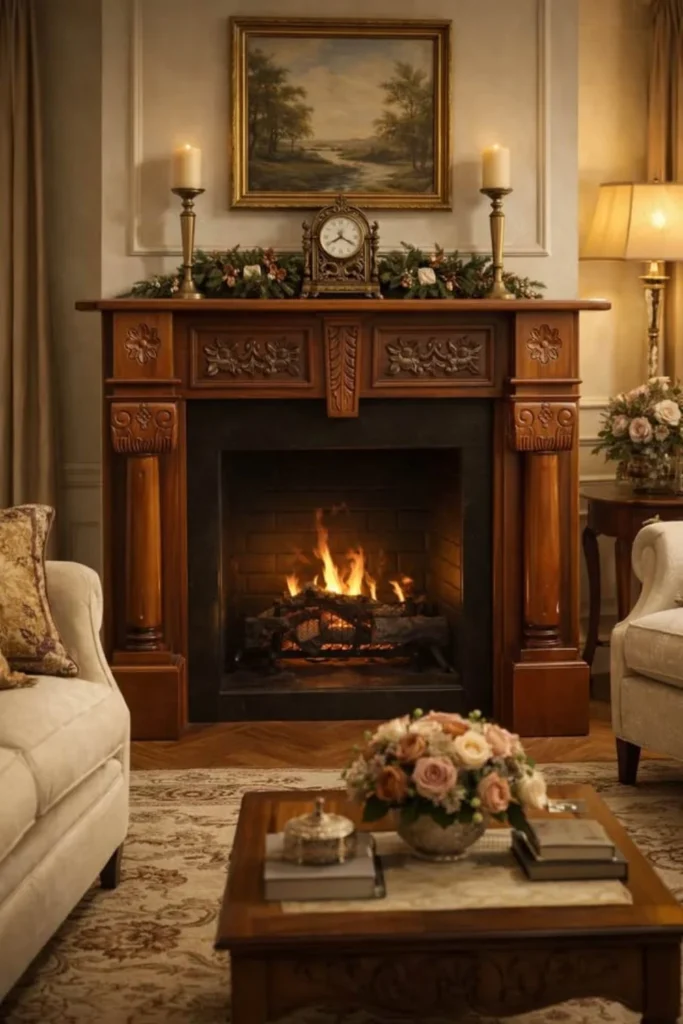
Why It Works
A fireplace mantel is like a stage. The fireplace is the backdrop, and the mantel is where the performance happens. When you layer your mantel with a mix of heights, textures, and genuine personality — a vintage clock, a seasonal wreath leaned against the wall above, a mix of candles, a small wooden tray, a vase of whatever is blooming outside — the whole fireplace comes alive. It feels personal, warm, and real in a way that no tile or material choice can fully achieve.
Best For
Any fireplace, any room, any budget. This is the most accessible idea on the entire list because it does not require any renovation or construction. If you already have a fireplace with a mantel, you can implement this idea this weekend. It is also the most flexible — it evolves with the seasons, with your taste, and with whatever you happen to find at the antique market.
Styling Tips
Anchor your mantel with a large piece at the back — a leaned mirror, a piece of art, or a large wreath. Then layer forward from there: a taller candle or vase on one side, a medium-height object in the middle, and something shorter on the other end. The key is asymmetry — perfectly symmetrical mantels feel formal and stiff; slightly off-balance, layered arrangements feel relaxed and real. Swap out one or two pieces with each season: pine cones and red berries in winter, wildflowers in spring, dried sunflowers in fall.
Mistakes to Avoid When Designing Your Farmhouse Fireplace
Getting your farmhouse fireplace right takes more than just picking a pretty idea from a list. I have seen so many beautiful renovations go sideways because of a few very avoidable mistakes — so here is what to watch out for.
Choosing trendy over timeless. Farmhouse design is fundamentally about things that look like they have always been there. If you are picking materials purely because they are all over social media right now, ask yourself how they will look in ten years. Classic materials — natural stone, reclaimed wood, white-painted brick — age beautifully. Highly specific trendy finishes often do not.
Over-decorating the mantel. This is the single most common mistake I see. People get excited and pile too many things onto their mantel, and the whole thing starts to look cluttered and anxious rather than curated and calm. Less is almost always more. Pick five things you genuinely love, arrange them thoughtfully, and stop there.
Ignoring scale and proportion. A massive stone surround in a small room will feel crushing. A tiny, modest fireplace insert on a giant empty wall will look lost and sad. Before you commit to any design, measure your room carefully and look at inspiration photos of rooms that are genuinely similar in size to yours.
Using the wrong materials near heat. Not every tile, paint, or sealant is rated for use near a fireplace. Always check that whatever you are applying to the surround and hearth area is rated for high-temperature use, especially for anything going inside or directly adjacent to the firebox.
Skipping the hearth. The hearth area — that floor extension in front of the fireplace — is often an afterthought, but it is incredibly important both for safety and for the overall look. Treat it as an intentional design element, not just a practical requirement.
Making it impossible to change. Your taste will evolve. Whenever possible, build in some flexibility — especially in your mantel styling and any painted finishes. Avoid permanently affixing every single element so that if you want to refresh the look in a few years, you actually can without demolishing everything.
Conclusion
Your farmhouse fireplace can be so much more than just a heat source. It can be the moment someone walks into your home and immediately feels something — warmth, comfort, beauty, a sense that someone genuinely thought about this space and made it into something special.
Every single idea on this list is achievable. Some of them will cost a little money and take a weekend. Some will take more planning and a bigger budget. But all of them are rooted in the same core principle of farmhouse design: real materials, genuine warmth, and a space that feels like it has always belonged exactly where it is.
Start with the idea that stopped you mid-scroll and made your heart do a little jump. That is the right one for you. Take it step by step, enjoy the process, and before you know it, you will have a fireplace that your whole family gravitates toward every single day.
FAQs
What is the most popular farmhouse fireplace style right now? White shiplap with a dark wood beam mantel remains the most consistently loved farmhouse fireplace look. It is clean, timeless, and works in virtually any room. Black shiplap and limewash brick are also having a major moment right now for those who want something a bit more unexpected.
Can I DIY my farmhouse fireplace makeover? Absolutely. Many of the ideas on this list — shiplap installation, whitewashing brick, mantel beam installation, floating shelves, and mantel styling — are very doable for a beginner with basic tools, patience, and a good YouTube tutorial. Tile work is more challenging but still approachable for a determined DIYer. Anything structural, electrical, or involving the firebox itself should always be handled by a licensed professional.
What materials are safe to use around a fireplace? For surrounds: natural stone, brick, ceramic tile, and porcelain are all heat-safe choices. For mantels: solid wood mantels must be kept at least 12 inches above the firebox opening per most building codes. Always check local codes before building or installing anything. Paints used on or near the firebox area should be heat-rated.
How do I make a small fireplace look bigger? A few tricks work really well here: extend the surround material wider than the actual firebox opening to create the illusion of a larger surround; take your accent material (shiplap, stone, tile) all the way to the ceiling to draw the eye up; place a large mirror above the mantel to reflect light and open the space visually; and keep your mantel decor very minimal so the eye is not distracted from the fireplace itself.
How do I style a farmhouse fireplace mantel for different seasons? This is one of the most fun parts of having a farmhouse fireplace. Keep a few consistent anchor pieces year-round — a mirror, a lantern, a wood tray — and swap out the seasonal accents. In winter: pine cones, berry stems, candles, and a simple evergreen garland. In spring: fresh greenery, pastel florals, and soft linen textures. In summer: dried grasses, simple white flowers, and lighter, airier arrangements. In fall: dried sunflowers, pumpkins, warm candles, and earthy botanicals.
Is a gas fireplace or wood-burning fireplace better for farmhouse style? Both work beautifully with farmhouse design. Gas fireplaces are cleaner, more convenient, and easier to control — and modern gas inserts look incredibly realistic. Wood-burning fireplaces carry a more authentic, sensory farmhouse experience with the crackle and smell of real wood. Your choice should be based on your lifestyle and your home’s existing infrastructure rather than aesthetics, since both can be styled identically on the outside.