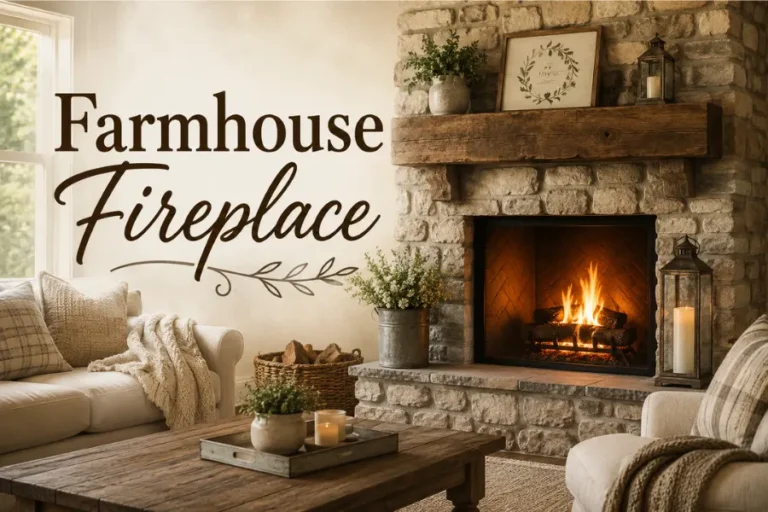
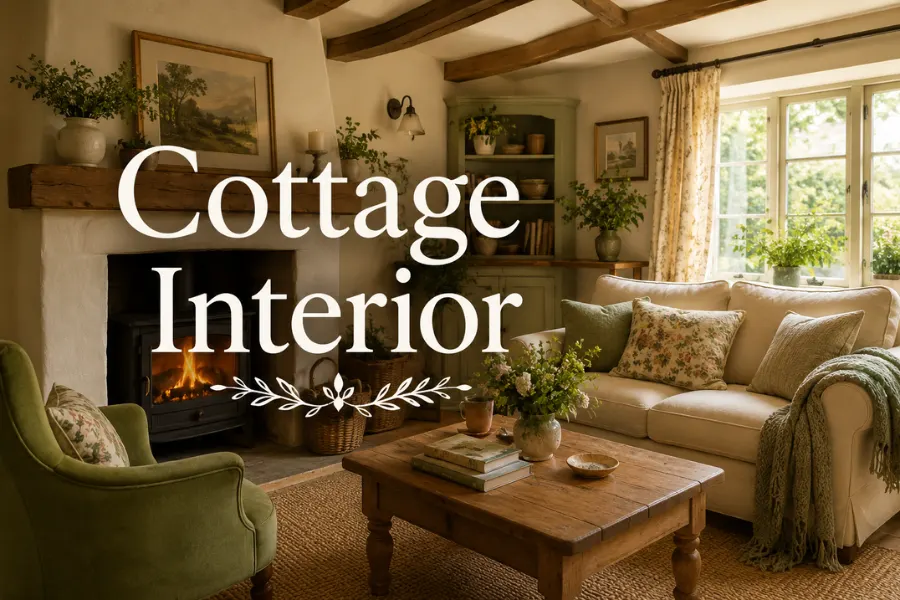
28 Cottage Interior Ideas That Will Make Your Home Feel Like a Dream Retreat
There is something about a cottage-style interior that gets people every single time. You walk through the door and something just settles. The tension in your shoulders drops. You notice the soft light coming through linen curtains, the smell of aged wood and fresh flowers, the way a patchwork quilt is draped over an armchair like someone just got up from reading. It feels like a home that has been lived in, loved, and layered over time — and that feeling is exactly what cottage interior design is all about.
Cottage style is not one single look. It’s a feeling. It can be the breezy, sun-bleached ease of a coastal cottage, the moody richness of an English country retreat, the warm earthiness of a rustic woodland cabin, or the clean simplicity of a Scandinavian-inspired space. What all of them share is an appreciation for natural materials, comfort above all else, a lived-in warmth, and that beautiful sense that every corner of the room tells a little story.
In this post, I’m sharing 28 of the very best cottage interior ideas — ideas that are realistic, beautiful, and completely achievable for the everyday home decorator. Each one is different, each one is detailed, and together they cover every room and every style of cottage living. Let’s dig in.
The 28 Best Cottage Interior Ideas
1. Shiplap Accent Wall
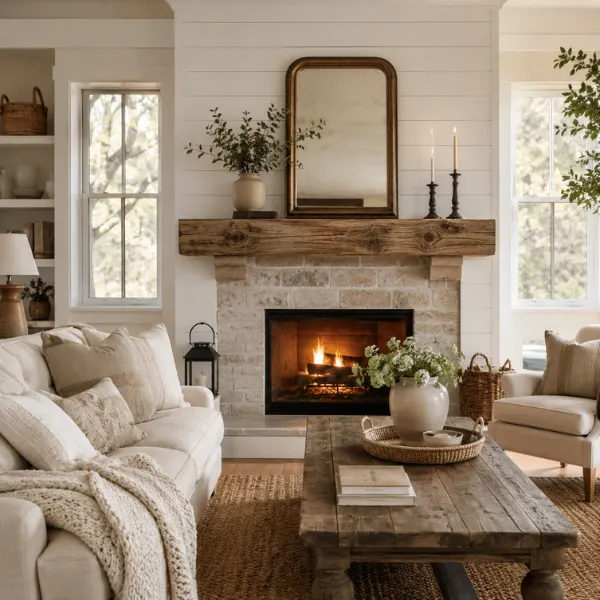
If there is one single thing you can do that will instantly make a room feel more cottage-like, it’s adding shiplap. Those horizontal wooden planks with their subtle grooves bring so much texture, warmth, and architectural interest to a plain, flat wall — and the effect is immediate. Whether you paint it crisp white or leave it in a soft off-white with an antiquing glaze, shiplap changes a room’s entire personality.
Why It Works
Shiplap gives a flat, boring wall actual dimension and character. The shadow lines created by each plank catch light differently throughout the day, which means the wall looks slightly different in the morning, afternoon, and evening — and that kind of living texture is something you simply cannot get from paint alone. It reads as both rustic and refined, which is the exact sweet spot cottage design aims for.
Best For
Living rooms, bedrooms, bathrooms, and even cottage kitchens used as a backsplash. It works especially well as a single feature wall behind a bed or fireplace, though some people take it floor to ceiling on every wall for a fully immersive look.
Styling Tips
Paint shiplap in Benjamin Moore Bone White, Sherwin-Williams Alabaster, or Farrow & Ball All White for the classic cottage look. If you want a warmer, more antiqued effect, apply a subtle gray or brown glaze over the white after it dries — this is a technique used in many high-end cottage renovations and it gives the planks an aged, collected quality that looks incredible. Layer in some vintage frames, botanical prints, or wall sconces against the shiplap to build up the visual story.
2. Stone Fireplace as a Focal Point
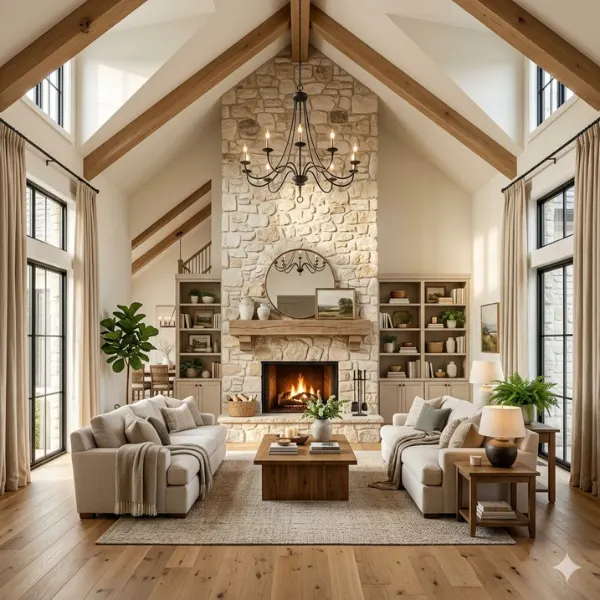
Nothing — and I mean absolutely nothing — anchors a cottage living room quite like a stone fireplace. It’s the first thing your eyes go to when you walk into the room, and it sets the entire tone for everything around it. A stone fireplace brings in texture, a sense of permanence, and that irreplaceable cozy quality that makes you want to pull a blanket over your lap and stay all evening.
Why It Works
Stone is one of the most honest, natural materials in existence. It doesn’t pretend to be anything it’s not, and in a cottage context, that raw, earthy quality is exactly what you’re looking for. A fireplace also creates a natural gathering point in a room — it gives the furniture arrangement a reason to exist, pulling everything together toward one warm, glowing center.
Best For
Living rooms and main gathering spaces. Works in both small and large cottages — a modest stacked stone surround suits a compact room beautifully, while a floor-to-ceiling fieldstone chimney becomes an extraordinary statement in a larger space.
Styling Tips
Style the mantel simply: a few white candles in varying heights, a framed vintage mirror, some dried botanicals or a small trailing plant, and maybe one or two meaningful objects. Resist the urge to over-decorate it. The stone itself is the feature — everything on the mantel should frame it, not compete with it. In front of the fireplace, layer a large natural fiber rug and position a couple of armchairs or a small sofa to create an intimate fireside seating area.
3. Window Seat with Built-In Storage
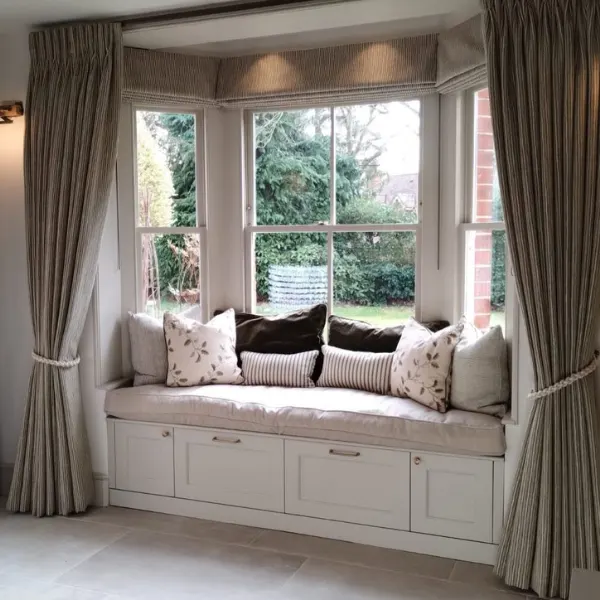
A window seat is one of the most requested features in cottage interiors — and once you’ve had one, you’ll understand why. It’s a built-in bench installed along a window wall, typically with a cushioned top and storage drawers or cubbies underneath. It turns what is often a dead, awkward wall space into one of the most charming and functional spots in the entire house.
Why It Works
Window seats are pure cottage magic. They combine natural light, a cozy perch, and clever storage in one compact footprint. They also create an architectural feature in a room that would otherwise just be a plain wall with a window in it. There’s something about a window seat piled with pillows that makes a room feel genuinely loved and lived in.
Best For
Living rooms, bedrooms, reading nooks, staircase landings, and bay windows. Especially powerful in small cottages where every inch of floor space matters, because the storage underneath is genuinely useful while the seat above is purely cozy.
Styling Tips
Cover the seat cushion in a durable linen or cotton in a soft, muted tone — oat, sage, dusty blue, or warm cream all work beautifully. Then layer it generously with throw pillows in complementary patterns: a subtle stripe, a small floral, and a plain texture make a gorgeous trio without looking too matchy. Add a small reading lamp nearby and a shallow basket underneath the seat for throw blankets, and you’ve created a perfect little cottage corner.
4. Exposed Wooden Ceiling Beams
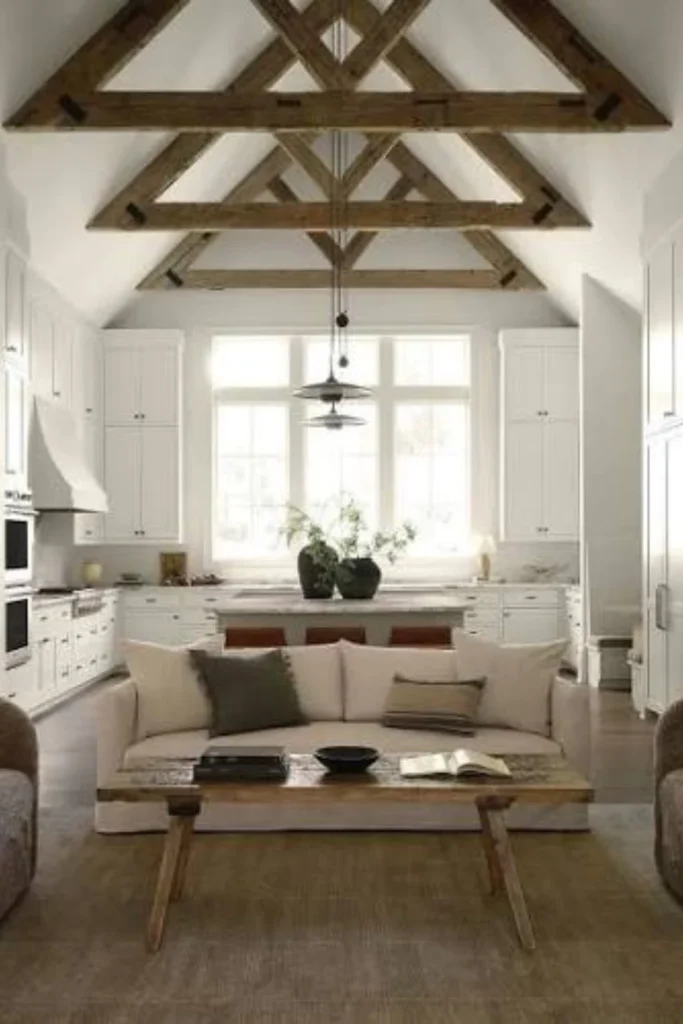
Exposed ceiling beams are one of those architectural details that take a cottage interior from nice to genuinely breathtaking. Whether they’re original structural beams uncovered during a renovation or decorative beams installed purely for aesthetic effect, they bring warmth, history, and a sense of craftsmanship to a room that flat, painted ceilings simply cannot replicate.
Why It Works
Ceiling beams draw the eye upward, which makes a room feel taller and more expansive. At the same time, their warm wood tones and rough-hewn texture bring the space back down to an intimate, human scale. It’s a beautiful contradiction — the beams make a room feel bigger and cozier simultaneously. In low-ceilinged cottage rooms, they emphasize the character of the architecture rather than hiding it.
Best For
Living rooms, open-plan kitchen-dining areas, and bedrooms with vaulted or high ceilings. Especially dramatic in rooms with white or cream walls, where the dark wood beams create a stunning visual contrast.
Styling Tips
If your beams are original, preserve as much of their natural character as possible — knots, weathering, and texture are features, not flaws. If you’re installing decorative beams, choose a reclaimed or aged wood finish rather than something too polished and perfect. Hang pendant lights or a chandelier from the beams to add warmth and direction to the room. In a kitchen, hang copper or cast iron pots from a beam-mounted pot rack for the most classic cottage kitchen look imaginable.
5. Neutral Color Palette with Warm Undertones
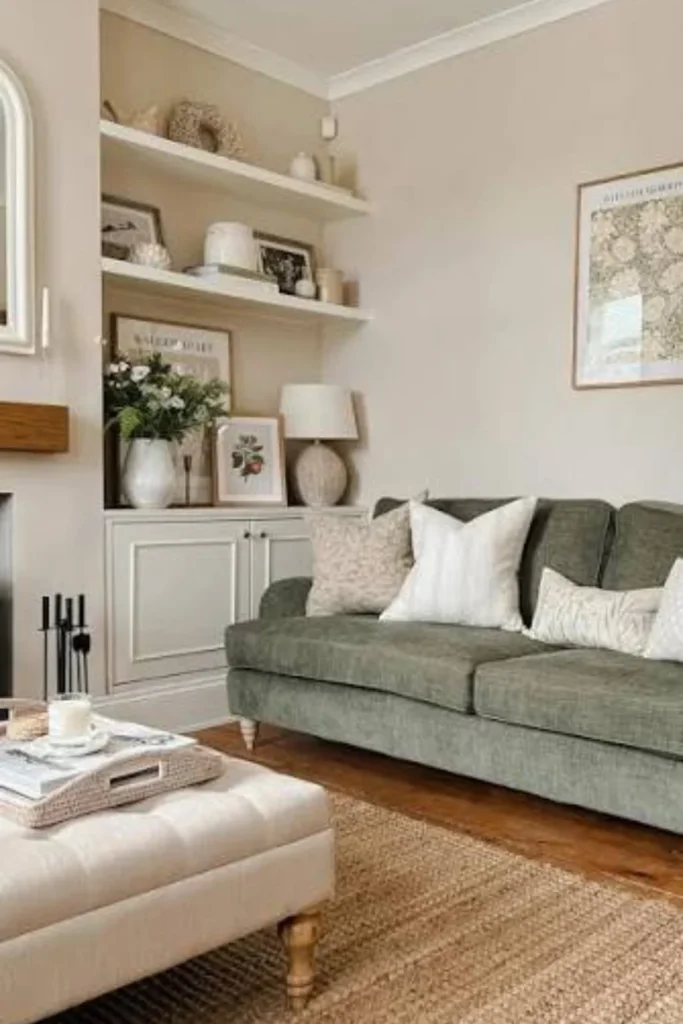
The foundation of almost every beautiful cottage interior is a carefully chosen neutral color palette. But not just any neutral — the right cottage neutrals have warmth baked into them. Think creamy whites, oat beiges, warm taupes, soft sage greens, and muted dusty blues. These aren’t cold, sterile whites. They’re the colors of linen left in the sun, of sea-worn stone, of old painted wood.
Why It Works
A warm neutral palette gives a cottage interior its characteristic soft, enveloping quality. It makes natural light look golden and flattering, it allows textures and materials to take center stage, and it creates a visual calm that more saturated color palettes simply can’t achieve. It’s also incredibly practical — warm neutrals are endlessly easy to accessorize and update seasonally.
Best For
Any and every room in the cottage. This palette works across the entire home and creates that seamless, cohesive flow from room to room that makes a cottage feel considered and well-designed rather than randomly put together.
Styling Tips
Choose one main warm white or cream for your walls — Benjamin Moore White Dove, Farrow & Ball Pointing, or Sherwin-Williams Creamy are all exceptional choices. Then layer in your slightly deeper neutrals through upholstery, rugs, and curtains. Add interest through texture rather than through contrasting colors: a chunky knit throw, a linen cushion, a jute rug, a wicker basket. The textures do all the visual work within a quiet, cohesive palette.
6. Farmhouse Kitchen with Open Shelving
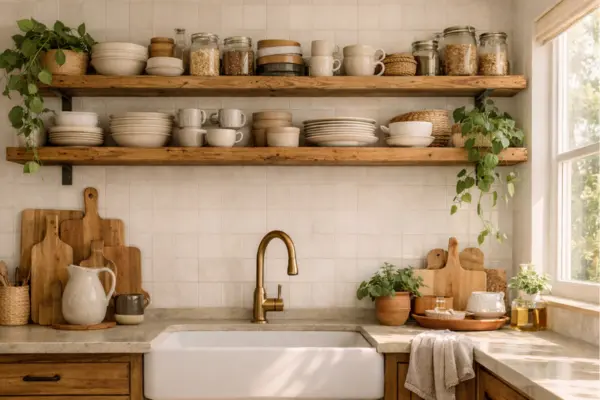
The cottage kitchen is where the whole aesthetic really comes alive. Open shelving is one of the most impactful and characteristic features of a cottage kitchen — those exposed wooden shelves lined with mismatched vintage dishes, stacked ceramic bowls, mason jars of grains, and a few trailing herbs in terracotta pots. It’s practical and beautiful at the same time, which is exactly what cottage living is all about.
Why It Works
Open shelving removes the heaviness that upper cabinets bring to a small kitchen. Without those closed cabinet doors, the room immediately feels more open, more airy, and more welcoming. The displayed items also add warmth and personality — your grandmother’s old mixing bowls, a row of matching glass canisters, a favorite cookbook propped upright — these things tell a story that painted cabinet doors never could.
Best For
Small to medium cottage kitchens where upper cabinet doors would make the space feel closed-in and dark. Also wonderful in larger farmhouse-style cottage kitchens as part of a deliberate styling approach alongside painted lower cabinets.
Styling Tips
Paint your lower cabinets in a classic cottage color — Farrow & Ball Mizzle, a soft sage, or a warm duck egg blue are all timeless. Use open shelves above in natural wood or painted white. Arrange your shelving in groups: stack white or cream plates together, line up mugs on hooks, group glass jars by size. Leave a little breathing room — don’t cram every inch. A few trailing herbs, a small vase of fresh flowers, and a vintage tin or two complete the look perfectly.
7. Beadboard Wainscoting
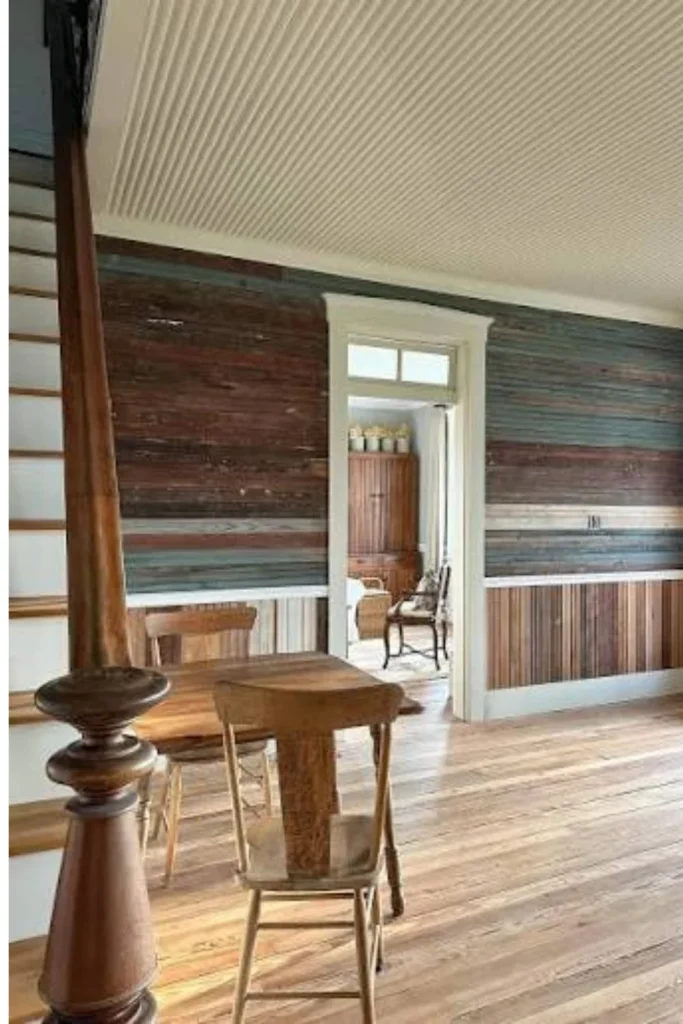
Beadboard is one of those cottage details that looks like it has always been there — and that’s exactly the point. It’s a type of paneling made up of narrow vertical planks with a small bead or ridge between each one, typically installed on the lower half of a wall to create wainscoting. It adds instant texture, charm, and architectural detail to any room without requiring a full renovation.
Why It Works
Wainscoting protects walls at chair height — which is its original practical purpose — but in a cottage context, it’s the visual impact that matters most. Beadboard creates a traditional, handcrafted quality that makes rooms feel like they’ve been there for generations. It’s particularly effective in bathrooms and kitchens, where it adds character to spaces that can otherwise feel purely utilitarian.
Best For
Bathrooms, hallways, kitchens, and dining rooms. Brilliant in small spaces because it adds visual interest without taking up any floor space. Also incredibly effective in children’s rooms and guest bedrooms as part of a classic cottage aesthetic.
Styling Tips
Paint beadboard in a classic soft white, warm cream, or a very pale sage green. Above the wainscoting, use a complementary wall paint in a slightly warmer or deeper tone — this two-tone approach is one of the most classically correct and beautiful cottage wall treatments. Top the beadboard rail with a simple wooden chair rail and use it as a ledge for small framed prints, a trailing plant, or a row of vintage bottles.
8. Reclaimed Wood Flooring
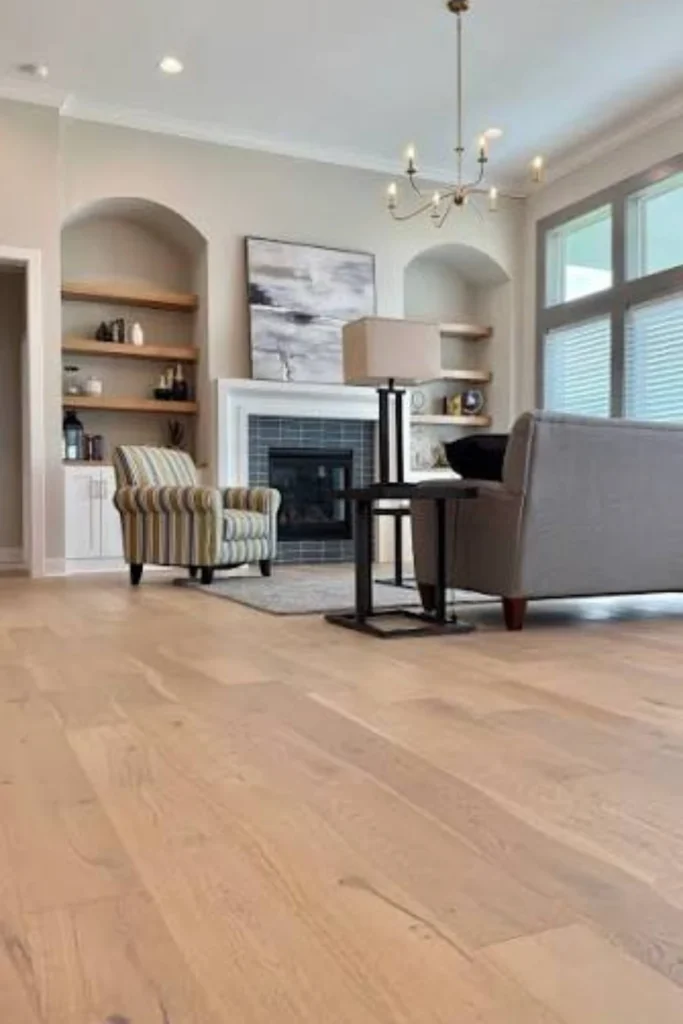
Wide plank reclaimed wood flooring is the single most grounding design choice you can make in a cottage interior. The knots, the grain, the slight variations in color and width, the sense that these boards came from somewhere and have a history — all of that character is completely irreplaceable. It sets the tone for the entire home the moment someone walks through the front door.
Why It Works
Reclaimed wood floors add warmth, age, and authenticity to a space in a way that new flooring — no matter how well designed — simply cannot match. The imperfections are the point: the nail holes, the saw marks, the variations in tone. These things tell a story, and in a cottage interior, story is everything.
Best For
Living rooms, dining rooms, hallways, and bedrooms. Particularly powerful in open-plan cottage spaces where the flooring creates a continuous visual thread that ties the whole space together. Also beautiful in bathrooms when properly sealed.
Styling Tips
Let the floor breathe — don’t cover it entirely with rugs. Leave enough of the floor visible to appreciate the wood. When you do add rugs, choose natural materials like jute, sisal, or a worn Persian rug that complements rather than competes with the wood beneath. Avoid glossy finishes on the floor itself — a matte or satin oil finish lets the grain show beautifully and looks far more authentic than a high-gloss lacquer.
9. Vintage and Antique Furniture Mix
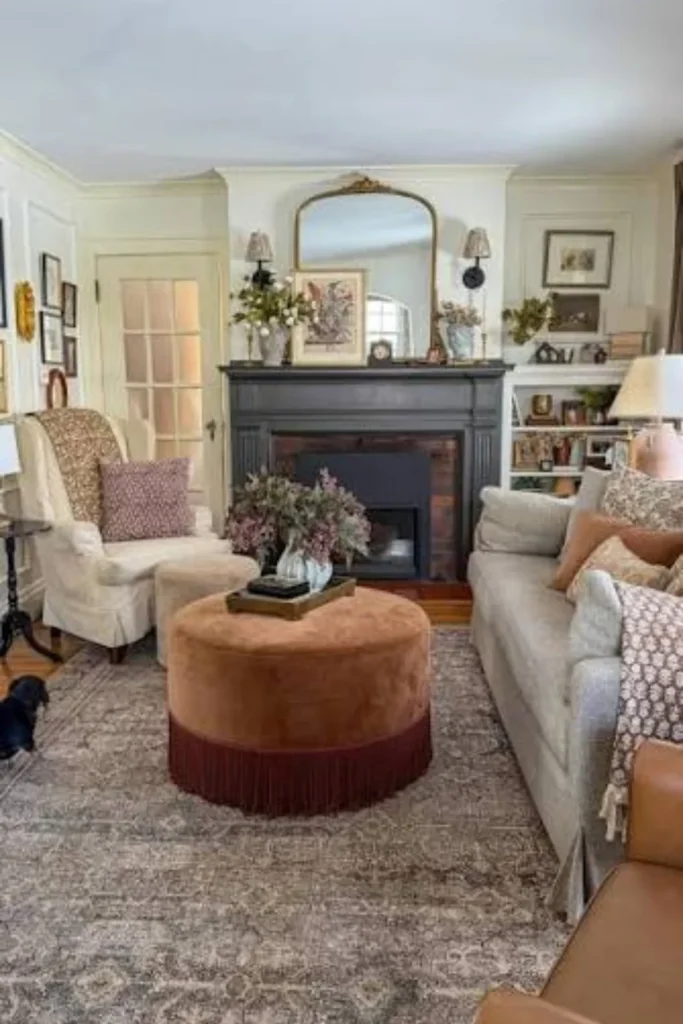
One of the most important rules of cottage interior design is this: don’t match everything. A room full of perfectly coordinated furniture from the same collection looks like a furniture showroom. A cottage should look collected — like pieces have been found over time, inherited, loved, and brought together because they feel right together, not because someone planned it too carefully.
Why It Works
Vintage and antique pieces bring genuine character and history into a room. An old farmhouse dining table with mismatched chairs, a distressed dresser repurposed as a bathroom vanity, a Victorian armchair recovered in a modern fabric — these combinations create the layered, personal quality that is absolutely central to cottage style. No two rooms look the same, and that’s the whole point.
Best For
Every room. Cottage style actively encourages mixing eras, styles, and origins. A Scandinavian-influenced linen sofa beside a Victorian wingback chair beside a rattan side table is not only acceptable in a cottage interior — it’s ideal.
Styling Tips
The key to mixing vintage pieces successfully is finding a common thread: a consistent color palette, a shared material (all wood tones in the warm spectrum, for example), or a similar vibe (relaxed, handcrafted, slightly worn). Shop thrift stores, estate sales, and flea markets before you buy anything new. Sand, repaint, or reupholster pieces that need it — the DIY effort makes them feel even more yours.
10. Soft Floral Wallpaper
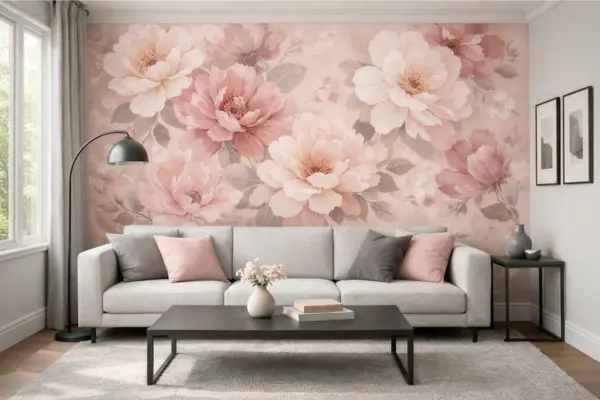
Floral wallpaper is a cottage classic. Whether it’s a small, scattered ditsy print in muted pinks and creams or a more dramatic large-scale botanical in sage and ivory, the right floral wallpaper can transform a room completely — giving it warmth, pattern, depth, and that beautiful sense of the outdoors brought inside.
Why It Works
Flowers and nature are central to the cottage ethos. Wallpaper with a soft, vintage-inspired floral print connects the interior to the garden outside, creates visual texture on a flat wall, and brings color into a room in a way that feels soft and natural rather than bold and graphic. It also has a romantic, timeless quality that photography simply can’t capture — it has to be seen in person to fully appreciate.
Best For
Bedrooms, hallways, powder rooms, and dining rooms. Especially beautiful in small rooms where a single papered wall can make a dramatic impact without overwhelming the space. Also stunning in a reading nook or window alcove as an accent.
Styling Tips
Keep the rest of the room simple when you use a floral wallpaper — let it be the star. Plain white or cream trim, simple furniture in natural tones, and soft linen textiles in colors pulled from the wallpaper pattern. If you’re nervous about committing to all four walls, paper just one — the wall behind a bed or behind open shelving is particularly impactful. Choose watercolour-style or vintage-printed florals over modern, graphic designs for the most authentic cottage feel.
11. Layered Linen and Cotton Textiles
Textiles are the heartbeat of a cottage interior. Without them, even the most beautifully designed cottage room can feel cold and unfinished. But layer in the right combination of linen curtains, cotton throws, quilted bedspreads, woven cushion covers, and braided rugs, and suddenly a room breathes — it feels soft, warm, inhabited, and completely welcoming.
Why It Works
Natural textiles like linen and cotton have an inherent warmth and texture that synthetic fabrics can’t replicate. They wrinkle beautifully, soften over time, and develop a lived-in quality that actually looks better with washing and use — which is exactly the opposite of most modern, pristine decor. In a cottage context, that gentle aging is an asset, not a flaw.
Best For
Living rooms, bedrooms, and dining areas. Textiles are the most accessible and affordable way to introduce cottage style into any room — even a room with very little architectural character can be transformed purely through the right combination of fabrics.
Styling Tips
Layer different weights and textures: a lightweight linen throw draped over an armchair, a heavier cotton quilt folded at the end of the bed, a textured cushion cover in a subtle weave. Mix a couple of patterns in the same color family — a simple stripe and a small check, or a muted floral and a plain linen. Keep the palette soft and harmonious. Wash everything regularly so it develops that beautiful, slightly rumpled quality that is so essential to cottage style.
12. Cottage Bathroom with Clawfoot Tub
A clawfoot bathtub is one of the most romantic and iconic pieces of furniture in cottage interior design. Freestanding, sculptural, and deeply nostalgic, it transforms a bathroom from a purely functional space into a genuine retreat. The moment you install a clawfoot tub, the entire room organizes itself around it — and that’s exactly as it should be.
Why It Works
A clawfoot tub is a statement piece in the truest sense — it has a sculptural presence that no built-in tub can match. Its freestanding form means you can position it anywhere in the room, which creates real design flexibility. The classic claw feet add that period detail that is so central to cottage style, and the deep soak it provides is a genuine functional luxury.
Best For
Main bathrooms, master ensuites, and any bathroom large enough to accommodate a freestanding tub without feeling cramped. Also stunning in cottage-style bathrooms with black and white tile floors, beadboard wainscoting, or exposed stone walls.
Styling Tips
Paint the exterior of the tub in a contrasting color to the interior — the inside is almost always white or cream, but the outside in a soft sage green, a moody navy, or a classic deep black looks extraordinary. Position it near a window if at all possible, and add a simple wall-mounted caddy for candles and bath oils beside it. A vintage floor-mounted faucet in a brushed nickel or unlacquered brass finish completes the look authentically.
13. Checkerboard Painted Floor
This one is for the brave, the creative, and the people who understand that a little bit of pattern underfoot can completely transform a space. A painted checkerboard floor — two complementary colors laid out in alternating squares — is a playful, nostalgic, and deeply cottage-appropriate detail that turns the floor into a genuine design feature.
Why It Works
A checkerboard floor instantly gives a room personality and a sense of whimsy that wall decor and furniture alone can’t achieve. It draws the eye downward and outward, making a small room feel larger. It also has a wonderful vintage, slightly eccentric quality that fits perfectly within the cottage ethos of collected, layered, personality-driven interiors.
Best For
Kitchens, bathrooms, entryways, mudrooms, and laundry rooms. Small to medium rooms where the pattern can be fully appreciated without becoming overwhelming. It’s especially beautiful in white and soft black, or cream and sage green combinations.
Styling Tips
Choose two colors that are related rather than stark opposites — soft cream and warm black, dusty blue and off-white, or even two tones of the same color for a subtler effect. Use porch and floor paint for durability and apply at least two top coats of a clear matte sealer to protect it. Keep everything else in the room simple and slightly understated so the floor can be the feature it’s designed to be.
14. Built-In Bookshelves Flanking the Fireplace
This is one of the most classic cottage interior arrangements in existence — and it remains popular because it simply works. Built-in bookshelves on either side of a fireplace create a symmetrical, anchored focal point for a living room that is both beautiful and deeply functional. Books, objects, plants, and framed photos fill the shelves while the fireplace glows in the center.
Why It Works
Built-in shelving adds permanent architectural character to a room in a way that freestanding furniture never can. When placed flanking a fireplace, the shelving frames the focal point perfectly, creating a cohesive, intentional composition that pulls the eye in and makes the whole wall feel purposeful. It also solves the perennial cottage problem of “too many books and not enough places to put them.”
Best For
Living rooms and home libraries. Scales beautifully from small cottages with modest alcove shelving to large rooms with floor-to-ceiling built-ins. The basic concept works in any cottage style, from traditional English country to modern farmhouse.
Styling Tips
Paint the built-ins the same color as the walls — this makes the shelving feel like an integrated part of the architecture rather than furniture pushed against a wall. Fill them in a deliberately unmatched way: some books facing forward, some turned spine-in for a neutral texture break, some stacked horizontally, some objects grouped together. Trailing plants, vintage bottles, and small framed prints make the arrangement feel personal and layered.
15. Cottage Bedroom with Quilted Bedding
The cottage bedroom is all about one thing: the feeling of crawling into bed and never wanting to get out. The layered bedding approach — a base fitted sheet, a soft cotton flat sheet, a quilted coverlet, a fluffy duvet, and a couple of folded throws at the end — creates that deeply inviting, abundantly cozy bed that defines the cottage sleep aesthetic.
Why It Works
Quilted bedding has a handcrafted, heirloom quality that is fundamentally cottage in spirit. Whether it’s a vintage patchwork quilt inherited from a grandmother or a new cotton quilted coverlet in a simple pattern, the texture and warmth it adds to a bedroom is irreplaceable. Layered bedding also means you can adjust easily to the seasons by adding or removing layers.
Best For
All cottage bedrooms, from the master suite to the guest room. The layered bedding approach works in small rooms and large ones alike — in a small room, it makes the bed feel like an indulgent focal point; in a large room, it creates warmth and draws everything in.
Styling Tips
Start with white or cream as your base — sheets, pillowcases, and the main duvet in clean soft white. Then layer in a quilt or coverlet in a very soft pattern: a tiny blue and white check, a pale floral, or a muted stripe. Fold a chunky knit throw across the foot of the bed. Add four or five pillows in complementary sizes and fabrics — some plain linen, some with a subtle print. The result should look generous and slightly disheveled, like someone just woke up from a wonderful nap.
16. Dutch Door Entry
A Dutch door — the kind that splits horizontally so the top half can open independently of the bottom — is one of the most charming and distinctly cottage-appropriate architectural details you can add to a home. It originated in old farmhouses where it kept animals out while letting in light and air, and that same practical-meets-charming quality makes it just as appealing today.
Why It Works
A Dutch door is functional and beautiful in equal measure. With the top half open and the bottom closed, you get natural light, fresh air, and a visual connection to the garden or outside world without compromising on security or keeping children or pets contained. It’s a detail that immediately communicates “cottage” — nothing else looks quite like it.
Best For
Front entry doors, back garden doors, mudrooms, and kitchen doors that lead to a back porch or yard. Works in any cottage style but is particularly magical in English country, farmhouse, and coastal cottage interiors.
Styling Tips
Paint it in a classic cottage color — a chalky sage green, a warm navy, a soft black, or a classic barn red all look wonderful. Add simple iron hardware in a vintage or forged finish. Hang a wreath of dried herbs or seasonal flowers from the top half when it’s closed. Inside the entry, pair it with a built-in coat rack, a narrow console table, and a simple bench — the whole entry area should feel like the invitation into the rest of the cottage.
17. Botanical Print Gallery Wall
A gallery wall of botanical prints is one of the easiest and most beautiful things you can do to give a plain wall an instant cottage identity. Whether you source vintage scientific illustrations from estate sales, print watercolor botanicals from online archives, or press and frame flowers from your own garden, botanical prints carry that love-of-nature quality that is absolutely central to cottage living.
Why It Works
Botanical prints connect the interior to the natural world outside, which is a core principle of cottage design. They’re also wonderfully flexible: they look beautiful in almost any combination, they can be framed in matching frames for a more curated feel or mismatched frames for a more eclectic, collected look, and they work across virtually every room in the house.
Best For
Hallways, stairwells, dining rooms, bathrooms, and bedrooms. Particularly effective on large, otherwise empty walls that need to be filled with something characterful without spending a huge amount.
Styling Tips
Lay your frames out on the floor first and arrange them until you’re happy with the composition before putting a single nail in the wall. Mix frame sizes deliberately: a large central anchor piece surrounded by smaller prints creates the most visually interesting arrangement. Vintage gilded frames, simple black frames, and plain natural wood frames all work together beautifully when the prints inside are cohesive. Use an odd number of pieces — three, five, seven, or nine — for a composition that feels naturally balanced.
18. Rattan and Wicker Furniture Accents
Rattan and wicker furniture have been part of the cottage design vocabulary for well over a century — and right now, they’re more popular than ever. From a wicker armchair beside a bedroom window to a rattan side table in the living room, these natural, handwoven pieces bring texture, warmth, and an organic honesty into a cottage interior that manufactured furniture simply can’t replicate.
Why It Works
The handwoven, organic quality of rattan and wicker is inherently imperfect — and that imperfection is exactly what makes it beautiful in a cottage context. These materials also have a wonderful lightness to them: visually, they don’t crowd a room the way solid upholstered furniture can. They’re breathable, natural, and they age gracefully rather than wearing out.
Best For
Living rooms, bedrooms, sunrooms, and porches. Work brilliantly as accent pieces alongside upholstered furniture and wood-based pieces. Also ideal for small cottages where the visual lightness of rattan prevents the space from feeling cramped.
Styling Tips
Add a plump cushion to any rattan seat for comfort and color. Choose cushion fabrics in natural tones, a simple check, or a soft stripe for the most cohesive cottage look. Group rattan pieces with other natural materials — wood, linen, jute, stone — rather than mixing them with metals or glass, which can feel incongruous. A pair of wicker side tables flanking a linen sofa, each topped with a simple lamp and a trailing plant, is a genuinely classic cottage composition.
19. Cozy Reading Nook with Armchair and Lamp
Every great cottage should have a dedicated reading nook. Not just an armchair in the living room — a proper, intentionally designed little corner that says, clearly and warmly, “this is where you come to read and to be quiet.” It can be as simple as a well-placed armchair with a good lamp beside it, or as elaborate as a built-in window alcove with cushioned banquette seating and bookshelves on either side.
Why It Works
A reading nook gives a cottage interior one of its most essential ingredients: a sense of intimate scale within a larger space. It creates a destination within the room — somewhere you actively want to go, not just pass through. It also gives the room a sense of thoughtful, intentional design. Every cottage benefits from at least one “because this is beautiful and it makes life better” corner, and the reading nook is that corner.
Best For
Living rooms, bedrooms, hallways, loft spaces, and under-stair areas. Especially powerful in larger rooms that might otherwise lack intimacy — a well-designed reading nook breaks a large space into human-sized zones.
Styling Tips
Position the armchair near a window for natural reading light during the day. Add a floor lamp for evening reading — an articulated brass reading lamp or a simple linen-shaded floor lamp both work beautifully. A small side table at elbow height for a cup of tea, a woven basket for throw blankets, and a small low bookshelf beside the chair complete the picture. Keep the area slightly set apart from the main seating — even turning the chair at a slight angle toward the window is enough to create a sense of its own little world.
20. Cottage Kitchen with a Farmhouse Sink
The farmhouse sink — also called an apron-front sink — is one of the most beloved features in any cottage kitchen. Its large, deep, single-basin design and the way the front of the sink extends past the edge of the counter give it a substantial, architectural presence that standard undermount sinks simply don’t have. It’s both a workhorse and a beautiful design feature.
Why It Works
A farmhouse sink has a wonderful utilitarian handsomeness to it — it looks like it was designed to actually be used, which in a cottage kitchen is exactly the right energy. Its generous depth makes it practical for large pots and washing up, while its exposed apron front makes it the design anchor of the kitchen. In white or cream, it’s a classic; in a bold color like matte black or a deep forest green, it’s a showstopper.
Best For
Cottage kitchens of any size. Particularly transformative in older homes where the kitchen lacks architectural character — a farmhouse sink brings instant charm and a sense of craftsmanship. Works beautifully with both painted Shaker cabinets and open shelving.
Styling Tips
Pair a white farmhouse sink with vintage-style bridge faucets in an unlacquered brass or brushed nickel finish — this combination is one of the most classically perfect in cottage kitchen design. Keep the counter around the sink relatively clear: a wooden dish rack, a small pot of herbs, and a ceramic soap dispenser are all you need. Under the sink, if you have open space, tuck in a couple of wicker baskets for cleaning supplies to keep the visual calm.
21. Sage Green Painted Cabinets
Color in a cottage kitchen almost always lives on the cabinets — and right now, sage green is the single most requested cottage cabinet color I encounter. It’s soft without being boring, nature-inspired without being overpowering, and it works with an extraordinary range of countertop materials, hardware finishes, and wall colors. It has an inherent restfulness to it that makes being in the kitchen genuinely pleasant.
Why It Works
Sage green sits in that perfect middle ground between neutral and color. It’s interesting enough to feel designed and intentional, but quiet enough to recede into the background and let other elements shine. It pairs beautifully with natural wood, warm whites, brass hardware, and stone countertops — all of which are core cottage kitchen materials. It also photographs incredibly well, which doesn’t hurt if you’re a Pinterest person.
Best For
Cottage kitchens, utility rooms, and bathrooms. Works on both upper and lower cabinets, though many designers choose it for the lowers only and keep uppers in white or cream for a lighter, more open feel.
Styling Tips
The best sage greens for cottage kitchens are Farrow & Ball Mizzle, Little Greene Sage, or Sherwin-Williams Rosemary. Pair with brushed brass or unlacquered brass hardware for warmth. A warm white wall paint and a natural stone countertop — limestone, marble, or quartz with warm veining — complete the palette beautifully. Add open shelving in natural wood above, some potted herbs on the windowsill, and you’ve created the quintessential cottage kitchen.
22. Exposed Stone Wall
An exposed stone wall is one of the most dramatic and visually striking elements you can have in a cottage interior. Whether it’s original fieldstone that was previously hidden behind plasterboard, or a stone veneer applied to create the effect, an exposed stone wall brings an ancient, tactile quality to a room that nothing else can replicate.
Why It Works
Stone is permanence made visible. It has texture, depth, and color variation that no smooth, painted surface can match. In a cottage context, exposed stone connects the interior to the landscape outside — to the earth, the fields, the quarried material that built the original cottages of Britain, Ireland, and rural Europe. It makes a room feel genuinely old and genuinely honest.
Best For
Living rooms, kitchens, dining rooms, and bathrooms. Particularly powerful as a chimney breast or fireplace surround, as a single feature wall in a living room, or as an unexpected detail in a cottage bathroom.
Styling Tips
Do not paint the stone. Please. The whole appeal is the natural color variation — the grays, tans, creams, and rust tones that appear together in natural stone are irreplaceable once painted over. Hang simple wall sconces directly on the stone for a warm, candlelit effect. Keep furniture simple and materials natural beside it — linen, wood, jute. Let the stone be the loudest voice in the room.
23. Wainscoting with Wallpaper Above
This two-tone wall treatment — painted paneling on the lower half and wallpaper on the upper half — is one of the most sophisticated and classically beautiful decorating moves in a cottage interior. It’s detailed, layered, and looks like it took years of careful refinement to achieve, even though it’s completely achievable in a weekend.
Why It Works
Dividing the wall horizontally into two distinct zones creates visual interest and a sense of deliberate design. The paneling below provides structure and groundedness, while the wallpaper above adds pattern, softness, and personality. Together, they create a richly layered wall treatment that feels genuinely traditional and carefully considered.
Best For
Dining rooms, hallways, bedrooms, and bathrooms. Especially beautiful in rooms with fairly high ceilings where the upper portion of the wall has enough surface to showcase the wallpaper properly. Also an excellent approach in smaller rooms where the paneling below creates the feeling of architecture.
Styling Tips
Paint the wainscoting in a soft white, warm cream, or a muted color that complements the wallpaper above. Use a classic botanical, a gentle stripe, or a small repeat pattern for the wallpaper. The chair rail that separates the two should be slightly thicker than you think necessary — it needs to feel substantial enough to act as a real visual dividing line. Simple wall sconces mounted in the wallpapered zone, at roughly eye height, look incredibly elegant.
24. Cottage Entryway with Hooks and Bench
The entryway of a cottage sets the tone for everything that follows. A well-designed cottage entry should feel welcoming, organized, and instantly charming — the kind of entrance that makes people smile before they’ve even properly come inside. A combination of a simple wooden bench, a row of vintage coat hooks, an antique mirror, and a basket or two achieves this with very little effort and even less budget.
Why It Works
The entryway is the very first space people experience when they enter your home, which means it has an outsized impact on how the whole cottage feels. A thoughtfully designed entry signals that everything inside is going to be just as considered. It also solves a practical problem — coats, bags, shoes, and everyday detritus — in a way that looks beautiful rather than chaotic.
Best For
Cottage entries of any size. Even a very narrow hallway with just a few hooks and a slim console table communicates the same warmth and welcome as a larger mudroom. This is one of the most accessible and affordable cottage upgrades you can make.
Styling Tips
Install a row of simple wrought iron or vintage brass hooks at a consistent height. Below, add either a built-in bench or a simple wooden one with a cushion tied to it with ribbon. A large mirror above the console or bench makes the space feel larger and brighter. Add a wicker basket or a ceramic umbrella stand on the floor. A small potted plant or a bunch of dried flowers in a vase on the console completes the picture.
25. Planked Ceiling (Wood Tongue and Groove)
Most people think about walls and floors when they’re designing a room. The ceiling is almost always an afterthought — painted white and forgotten. But in a cottage interior, a planked or tongue-and-groove ceiling is one of the most beautiful and unexpected upgrades you can make. It brings warmth and architectural interest to a surface that is often left completely blank.
Why It Works
A planked ceiling adds texture overhead in a room, which gives the space a sense of craftsmanship and completeness. In a low-ceilinged cottage room, it can actually make the ceiling feel like a design feature rather than a limitation. In a higher room, it adds warmth and intimacy to what might otherwise feel too tall and cold.
Best For
Living rooms, bedrooms, kitchen-diners, and porches. Especially effective in rooms where the ceiling is already low — the planking embraces the low height as a cozy quality rather than a drawback. Also gorgeous in bathrooms where the wood adds warmth against stone or tile.
Styling Tips
White-painted tongue-and-groove is the most universally appealing option — it’s crisp, clean, and works with any wall color. For a warmer, more rustic look, leave the wood in its natural or lightly oiled state. Simple recessed lighting or vintage pendant fixtures hung from the planked ceiling look beautiful. In a bedroom, this ceiling treatment paired with shiplap walls and wide plank floors creates a total-immersion cottage experience that is deeply lovely.
26. Herb Garden in the Cottage Kitchen
A small indoor herb garden in the kitchen is one of those things that is simultaneously incredibly practical, visually beautiful, and completely in keeping with the cottage philosophy of bringing the outside in. Terracotta pots on a windowsill, a wooden crate of growing herbs on the counter, or a mounted wall shelf with six varieties of herbs in mismatched ceramic pots — all of them look wonderful and smell even better.
Why It Works
Fresh herbs on the kitchen windowsill bridge the gap between interior and garden, which is one of cottage design’s most fundamental principles. They bring living color and fragrance into a room, they have natural, organic forms that soften the hard edges of kitchen surfaces, and they serve a real purpose — which makes them even more satisfying. In cottage design, beauty and function working together is always the goal.
Best For
Any cottage kitchen with a window. Brilliant in small cottages where a full garden may not be possible, as the indoor herb garden fulfills that deep cottage need for connection with growing, living things. Also works on a balcony or in a conservatory if the kitchen window doesn’t get enough light.
Styling Tips
Use terracotta pots of varying sizes for the most natural, cottage-appropriate look. Label each pot with a hand-lettered wooden or terracotta stake. Group them on a wooden tray or a small shelf that’s been mounted directly on the window frame above the sink. Grow the most-used herbs for your cooking: basil, rosemary, thyme, mint, and parsley are the classics. Swap out pots seasonally to keep the display looking fresh and to reflect what you’re actually cooking.
27. Coastal Cottage Living Room
A coastal cottage living room takes the fundamental warmth and comfort of cottage style and opens it up to the sea. The palette shifts to sandy whites, soft blues, seafoam greens, and bleached neutrals. The materials become lighter and more breathable: white slipcovered sofas, weathered driftwood surfaces, sheer linen curtains that lift in the breeze, woven sea grass rugs. It’s the most relaxed, sunlit, effortlessly beautiful version of cottage interior design.
Why It Works
The coastal cottage palette mirrors the natural environment of the seaside — and that connection to a real, specific place gives the interior an authenticity and coherence that purely decorative trends often lack. It’s also an extremely liveable aesthetic: the light colors make small rooms feel bigger, the natural materials are durable, and the overall vibe is relaxed enough that you never feel like you’re trying too hard to keep the room looking right.
Best For
Homes near the water, obviously, but also for anyone who wants their interior to feel bright, airy, and permanently summery. This palette and approach works beautifully in any room that gets good natural light.
Styling Tips
Slipcover your sofa in a white or cream cotton — slipcovers are the most cottage-appropriate sofa choice anyway, and in white they look effortlessly coastal. Layer in blues through cushion covers, a woven rug, a throw or two. Add a handful of natural coastal accessories: a piece of driftwood used as a decorative object, a large clear vase filled with shells collected from the beach, a nautical print or two in simple white frames. Keep window treatments minimal — sheer white linen panels that can be pushed all the way back to let in maximum light.
28. Scandinavian-Inspired Minimalist Cottage
The Scandinavian-influenced cottage is perhaps the most modern and restrained interpretation of cottage design — and for people who love clean lines and simplicity but still want warmth and character, it’s absolutely perfect. It takes the fundamental cottage appreciation for natural materials and handcrafted quality and strips away the layers, the patterns, and the clutter, leaving something beautifully spare and intentional.
Why It Works
Scandinavian cottage design proves that you don’t need abundance to create warmth. A room with white-painted floorboards, bare wood furniture, simple linen textiles, and a handful of carefully chosen objects can feel just as cozy and welcoming as a room stacked with vintage finds and floral cushions — sometimes even more so. The restraint is its own kind of luxury.
Best For
Modern cottage homes, converted buildings, small apartments trying to channel cottage warmth without cottage clutter. Also ideal for people who love the cottage ethos but have a naturally minimalist personality and find maximalist interiors stressful rather than inviting.
Styling Tips
Keep the palette almost entirely white, cream, and natural wood, with very occasional accents in soft gray, pale blue, or muted terracotta. Furniture should be simple and functional, with clean silhouettes and honest materials. Introduce texture through a chunky wool throw, a sheepskin rug, a linen cushion, a woven basket. Add one or two living plants — a simple olive tree in a white ceramic pot, or trailing pothos in a terracotta planter. Every object in the room should earn its place.
Mistakes to Avoid When Decorating a Cottage Interior
I’ve seen beautiful cottages get decorated wrong, and the mistakes almost always fall into a handful of very predictable traps. Read these carefully before you start buying anything.
Overdoing the “cute” factor. There’s a fine line between charming and kitsch, and cottage interiors walk it carefully. If every surface has a ceramic animal, a novelty sign, and a basket of artificial flowers, you’ve crossed it. Cottage style should feel naturally accumulated, not artificially decorated. Edit ruthlessly — not every surface needs something on it.
Using all-new, matchy furniture. Buying a “cottage style” furniture set where every piece matches perfectly is one of the most reliable ways to end up with a room that looks like a furniture catalogue rather than a real home. Cottage interiors need genuine character, and that means mixing ages, sources, and styles within a coherent overall palette.
Ignoring natural light. Cottage interiors are built on warmth, and warmth comes from light. Heavy, dark curtains block the natural light that makes those warm wall colors glow. Use sheer linen, light cotton, or simple Roman blinds that can be fully lifted during the day. Prioritize light above almost everything else.
Painting exposed stone or original wood. Original stone walls, original wooden beams, original reclaimed floorboards — these are the actual soul of a cottage. Painting them covers up the very thing that makes the space special. If you’ve inherited an original cottage feature, preserve it. The imperfections are not problems to be solved.
Scaling furniture incorrectly. A huge, overstuffed corner sofa in a small cottage sitting room looks ridiculous and makes the space feel cramped and dark. Conversely, tiny furniture in a large cottage space looks scattered and uncertain. Scale is one of the most important decisions in any interior, and cottage rooms — many of which have unusual proportions — require careful attention to it.
Using too many patterns competing with each other. Cottage style embraces pattern — florals, checks, stripes, plaids — but the key is keeping them within the same color family and scale range so they play together rather than fight. A large bold floral, a medium stripe, and a small check in the same color palette is gorgeous. Those same three patterns in clashing colors is chaos.
Neglecting the outdoors connection. Cottage design fundamentally connects interior and exterior. If your curtains are always closed, your plants are fake, and there’s no visual or physical connection to the garden, something important is missing. Open the windows, grow real plants, position furniture so it faces the view, and bring in elements — wood, stone, botanicals — that echo the natural world outside.
Conclusion
Cottage interior design is one of the most deeply human approaches to decorating a home. It’s not about following trends or impressing people or creating a room that looks perfect in photos. It’s about creating a space that genuinely serves the life lived inside it — that’s warm enough, cozy enough, beautiful enough, and honest enough to feel like the very best version of home.
The 28 ideas in this article cover everything from big architectural changes like exposed stone walls and reclaimed wood floors, to small and completely affordable touches like an indoor herb garden or a gallery wall of botanical prints. You don’t have to do all of them. In fact, the best cottage interiors are the ones that feel edited and personal rather than comprehensive and checked-off. Pick the ideas that feel like you. Start small if you need to. Layer things in over time. Buy from thrift stores and estate sales. Make some things by hand. The more you invest yourself in the process, the more the space will feel like it genuinely belongs to you — and that, in the end, is what every good cottage interior is really about.
FAQs
What is the difference between cottage style and farmhouse style? Cottage style and farmhouse style share a lot of DNA — both love natural materials, vintage pieces, and a lived-in warmth. The main difference is that cottage style tends to be softer and more romantic, with more floral patterns, layered textiles, and a connection to the English country garden tradition. Farmhouse style is typically more utilitarian and rustic, with an emphasis on function, clean lines, and a more American agricultural aesthetic.
Can I achieve a cottage interior in a modern apartment? Absolutely. Cottage style is an attitude more than an architecture. You can bring the cottage ethos into any space through textiles, vintage furniture, natural materials, plants, soft lighting, and a warm color palette. The Scandinavian-inspired minimalist cottage approach in particular works beautifully in a clean, modern apartment.
What colors work best for a cottage interior? Warm neutrals are the backbone of cottage color: creamy whites, oat beiges, warm taupes, soft sage greens, muted dusty blues, and gentle terracottas. These colors have a warmth and softness that cool, stark whites and modern grays don’t share. For accents, reach for muted pastels and natural earth tones rather than bright, saturated colors.
How do I make a cottage interior feel cozy without making it feel cluttered? The key is being selective. Cottage style should feel layered and collected, not crammed and overwhelming. Choose pieces with genuine meaning or beauty, group objects deliberately, and leave some breathing room on surfaces. A few thoughtfully chosen items will always feel better than a lot of random things competing for attention.
What flooring is best for a cottage interior? Wide plank reclaimed or natural wood flooring is the first choice for cottage interiors — it adds warmth, character, and a sense of age. Stone or slate tiles work beautifully in kitchens and bathrooms. Painted floors — especially in white or in a checkerboard pattern — are a wonderful cottage choice for rooms where you want pattern underfoot. Layer natural fiber rugs like jute, sisal, or wool over any of these base flooring choices for added warmth and texture.
Is cottage interior design expensive? Not at all — and in fact, many of the most beautiful cottage interiors are built almost entirely from second-hand finds, DIY projects, and creative repurposing. Thrift stores, estate sales, flea markets, and online resale platforms are your best friends. The most expensive elements tend to be the architectural ones — flooring, shiplap, built-ins — but even these can be done gradually and on a budget. The core of cottage style has always been resourcefulness.
How do I add cottage style to just one room without redoing the whole house? Start with the room you spend the most time in. Pick two or three ideas from this article that feel achievable and impactful — layered textiles, a gallery wall, and some open shelving in the kitchen, for example, or shiplap on one bedroom wall paired with quilted bedding. You don’t need to do everything at once. Cottage style builds beautifully over time, and the gradual, layered approach often produces the most authentic and personal results.