29 Contemporary Farmhouse Ideas That Are Warm, Stylish, and Actually Livable
Contemporary farmhouse is one of those rare design styles that actually makes sense for real life. It is not precious. It is not stiff. It does not ask you to hide your kids’ backpacks or pretend your family does not eat dinner at a kitchen island while catching up on the day. It is warm, grounded, and beautiful — but it is also deeply functional in a way that a lot of design styles are not.
The thing is, the phrase “contemporary farmhouse” gets thrown around so loosely that it has started to lose meaning. Walk into a big-box home store and everything with a barn door and a shiplap panel gets called contemporary farmhouse. But real contemporary farmhouse design is more than that. It is a thoughtful conversation between the new and the old — where clean modern lines meet genuine natural materials, where open space flows naturally without feeling empty, and where every room has personality without a single thing feeling like it came straight off a Pinterest template.
I have spent years studying this style, working with it in real rooms, and watching it evolve from the early Joanna Gaines era into something more refined, more personal, and more genuinely sophisticated. What you are going to find in this article is not a list of clichés. These are 29 distinct, realistic, and fully thought-out contemporary farmhouse ideas — covering every room, every budget range, and every home size — that will help you build a home that feels timeless, warm, and completely yours.
29 Contemporary Farmhouse Ideas for Every Room and Every Space
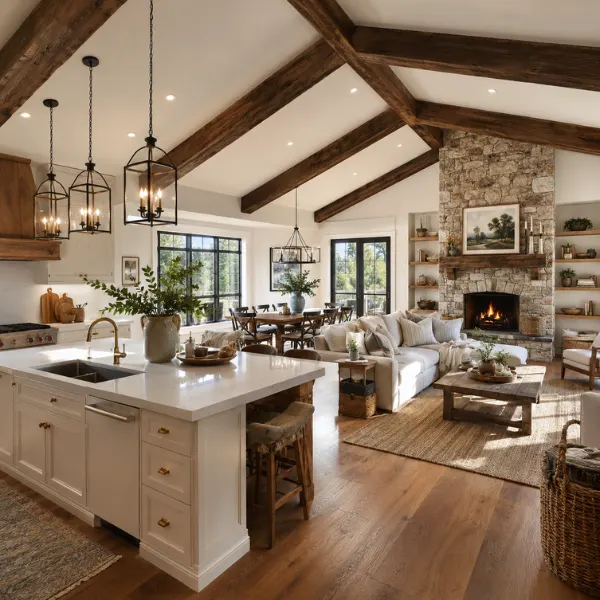
1. Open-Concept Kitchen and Living Room with Exposed Wood Beams
The open-concept layout is the single most defining feature of a contemporary farmhouse home, and when you anchor it with exposed wood beams overhead, the whole space clicks into place. It is that combination of boundless, flowing space and raw natural overhead structure that defines this style more than almost anything else.
Why It Works
An open floor plan eliminates the boxed-in feeling of traditional room layouts and replaces it with genuine social flow — you can cook, talk, keep an eye on the kids, and have guests all at once without being walled off from anyone. The exposed beams overhead bring all that open space back down to earth, adding warmth, depth, and a strong connection to the natural materials that give farmhouse design its soul. Together, open layout and beams create a home that is both impressive in scale and genuinely cozy to live in.
Best For
Families and entertainers who use their home as a gathering space. This is also the ideal choice for any new build or major renovation where you have the opportunity to remove walls and configure the layout from scratch. If your home already has good ceiling height — anywhere from 9 feet and up — you have everything you need to make this work beautifully.
Styling Tips
If your beams are new rather than genuinely reclaimed, give them a light wire-brushing and a dark walnut stain to make them feel earned and authentic. Define the living and kitchen zones within your open plan using furniture arrangement rather than walls — a large area rug anchors the living room, and the kitchen island handles the transition beautifully. Keep your overhead palette consistent: white or cream ceilings with the warm wood beams running through them, and everything below follows their lead.
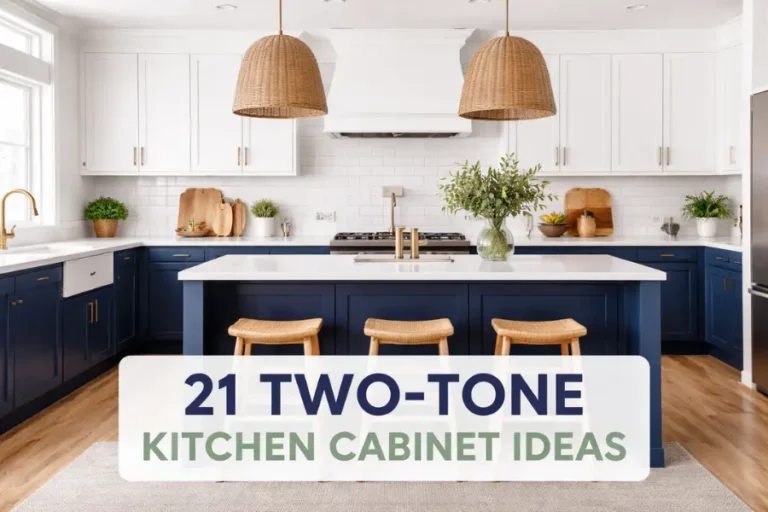
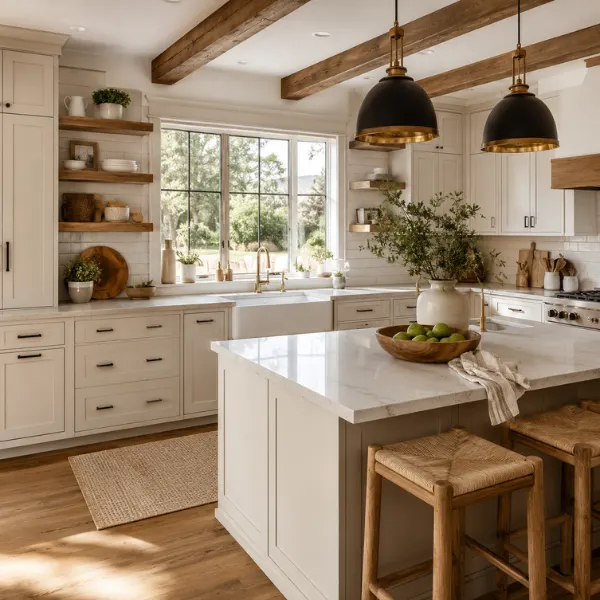
2. Shaker Cabinet Kitchen with Quartz Countertops and a Farmhouse Sink
This is the contemporary farmhouse kitchen formula that has become genuinely iconic — and it earned that status because it works. Shaker-style cabinets in white or a warm off-white, paired with clean quartz countertops and a deep apron-front farmhouse sink, checks every box: functional, beautiful, timeless, and surprisingly easy to execute.
Why It Works
Shaker cabinets thread the needle between old and new better than almost any other cabinet style. Their simple recessed-panel face is clean enough to read as modern, but the form itself references traditional craftsmanship that has been used for centuries. Combined with the visual weight of a farmhouse sink — which centers the kitchen and gives it an anchor point — and the clean elegance of quartz countertops, this kitchen looks like it cost twice what it did and will look just as good in twenty years.
Best For
This is genuinely the most versatile option on this list — it works in small galley kitchens and sprawling open-concept spaces alike. If you are doing a kitchen renovation and you want something that will hold its value aesthetically, this combination is your safest and most beautiful bet.
Styling Tips
Do not go stark white — choose an off-white or warm cream for your cabinets to keep things from feeling clinical. Pair matte black hardware with a crisp white cabinet for a graphic, current contrast, or choose unlacquered brass for a warmer, slightly more vintage feel. For the countertops, pick a quartz with very subtle warm-toned veining rather than a dramatic bold pattern — in a farmhouse kitchen, the counters should feel grounded rather than show-stopping.
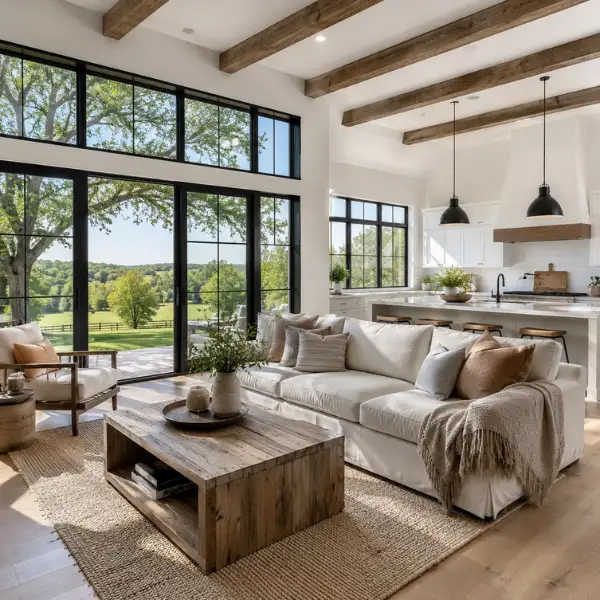
3. Large Black-Framed Windows Throughout
Nothing signals contemporary farmhouse more immediately than black-framed windows. They are the architectural detail that visually separates modern farmhouse from its more traditional cousin — those crisp, thin black frames against white walls create a graphic contrast that is simultaneously elegant and industrial.
Why It Works
Black window frames are one of those rare design elements that read as both fresh and timeless. They bring a boldness and definition to the exterior and interior of a home without requiring any additional color or decoration. Every view through a black-framed window feels like a framed piece of art — whether it is the backyard, a mountain view, or even just a garden. They also make a room feel more sophisticated and considered without adding any visual clutter.
Best For
Any contemporary farmhouse home, but especially those with beautiful outdoor settings where bringing the outdoors in is a priority. Large black-framed windows are particularly effective in living rooms, kitchens, and primary bedrooms where natural light and views matter most. They also work extraordinarily well in rooms with a lot of white or light-colored surfaces — the black frames become the punctuation marks that make the whole design legible.
Styling Tips
Go as large as your wall and budget will allow — the bigger the windows, the more impact the black frames have. Keep your window treatments minimal and sheer or go without treatments entirely where privacy allows, since the goal is to maximize both light and the architectural visibility of the frames. Pair black window frames with matte black door hardware, cabinet pulls, and light fixtures throughout the space for a cohesive, intentional interior language.
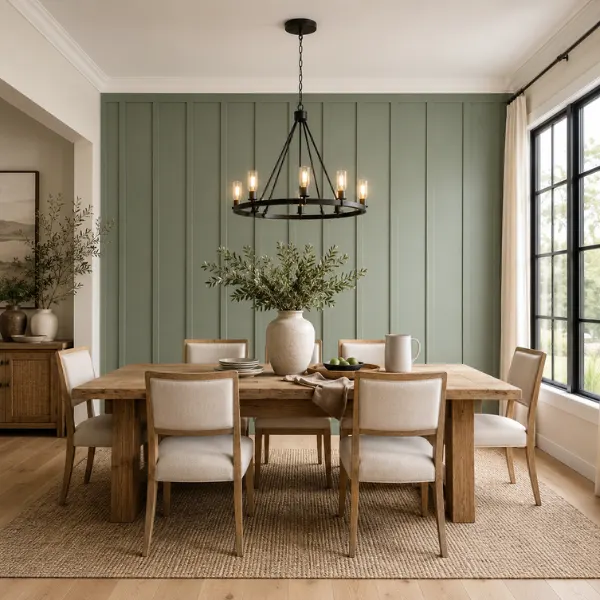
4. Board and Batten Accent Wall in the Dining Room
A board and batten accent wall in the dining room is one of the most effective and affordable ways to bring authentic architectural character into a contemporary farmhouse home. The vertical lines and slight texture of the battens give the wall dimension and interest, and the dining room is the perfect location — intimate enough that the detail really lands, visible enough that guests always notice it.
Why It Works
Board and batten is a technique that references the original cladding used on agricultural outbuildings — vertical planks with narrower strips covering the seams — and it translates beautifully into contemporary interiors as a wall treatment. In a dining room, it gives the space a sense of formality and craftsmanship without being heavy or ornate. Painted in a warm white, soft gray, or even a muted sage green, it becomes a backdrop that makes everything in front of it — the dining table, the chairs, the light fixture — look even better.
Best For
Dining rooms of any size. In a smaller dining space, the vertical lines of the board and batten make the ceiling feel higher, which opens the room up. In a larger dining room, it adds the architectural presence that the space needs to feel anchored and designed rather than just furnished. It is also an excellent DIY project — the materials are affordable and the installation is straightforward for anyone with basic carpentry skills.
Styling Tips
Run your board and batten from baseboard to ceiling for maximum architectural impact. The most pleasing proportions are typically battens every 12 to 16 inches apart — too close together feels fussy, too far apart loses the effect. If you want more visual drama, paint the board and batten wall in a slightly deeper tone than your other walls — a warm greige or a soft sage creates a beautiful dining room backdrop that feels sophisticated and collected.
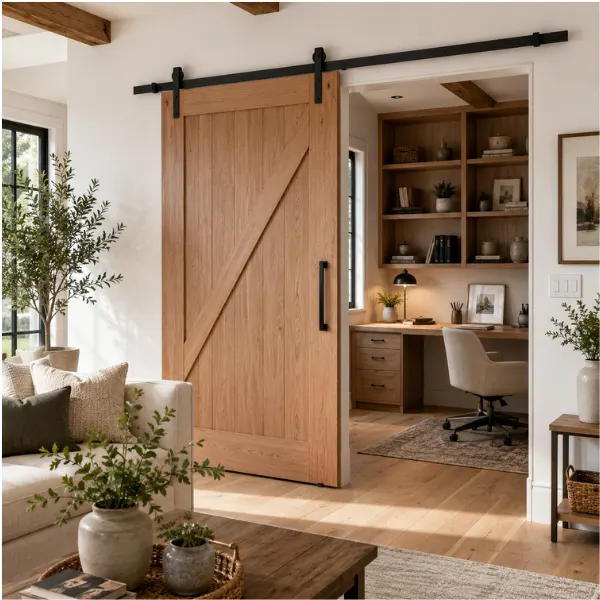
5. Sliding Barn Door as a Room Divider
The sliding barn door is so associated with farmhouse design that it has become almost a shorthand for the style — but when used thoughtfully and in the right place, it is genuinely one of the most functional and beautiful design choices you can make. Used as a room divider rather than just a closet or pantry cover, it becomes an architectural feature that completely transforms how you use your space.
Why It Works
Unlike a traditional hinged door that swings into a room and interrupts flow, a sliding barn door rolls along a track beside the wall opening — it takes up no floor space, it is visually dramatic in a way no standard door can match, and when it is open, it completely disappears into the wall to leave a wide, clean opening between spaces. When it is closed, it becomes a piece of visual art. In a contemporary farmhouse setting, it is both deeply functional and deeply aesthetic.
Best For
The transition between a mudroom and a kitchen, between a home office and a living room, or between a master bedroom and a bathroom. It is also an excellent solution for closing off a laundry room or a pantry from a main living area while adding something genuinely beautiful rather than a plain hollow-core door.
Styling Tips
Choose a solid wood door in a natural finish or a dark stain rather than a heavily weathered or distressed look — contemporary farmhouse skews cleaner and more refined than traditional rustic. Your hardware should be matte black and simple — clean lines, no ornate detail. If you are using the barn door in a high-visibility location like between the living room and dining room, consider a door with a glass panel insert to allow light to pass through both spaces.
6. Limewash Plaster Walls in the Living Room
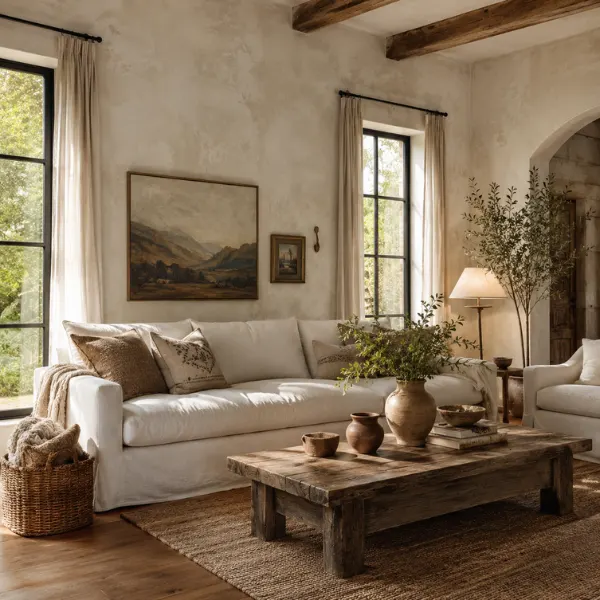
Limewash plaster walls are having the kind of moment that I genuinely believe will translate into permanent popularity rather than just a passing trend. Applied to living room walls, this ancient technique creates a surface with depth, texture, and life that no flat paint can touch — and in a contemporary farmhouse space, it provides the kind of aged, European authenticity that makes a room feel like it was designed rather than just decorated.
Why It Works
Limewash is applied in thin layers that soak into the wall rather than sitting on top of it. The result is a surface that catches light differently throughout the day — in morning light it looks one way, in afternoon light another, and in lamplight yet another. That living, breathing quality is what makes a room feel genuinely warm and dimensional. It also ages beautifully, developing more character over time rather than chipping or peeling like conventional paint.
Best For
Living rooms and dining rooms where you want to create an immediate, atmospheric sense of depth and history without adding architectural elements like shiplap or wainscoting. It works especially well in rooms with natural light and warm wood floors — the interplay between the limewash surface and natural light is consistently beautiful. It is also a surprisingly approachable DIY project for a weekend with the right product and a good tutorial.
Styling Tips
Choose a warm, earthy limewash tone — creamy white, soft terracotta, or a warm warm sage all work beautifully in a contemporary farmhouse living room. Avoid anything too cool-toned or gray — those read more Scandinavian than farmhouse. Pair with natural linen curtains, a wool rug in earthy tones, and furniture in warm wood and natural fabrics, and the whole room will feel like it has been building for decades.
7. Butcher Block Kitchen Island with Bar Stools
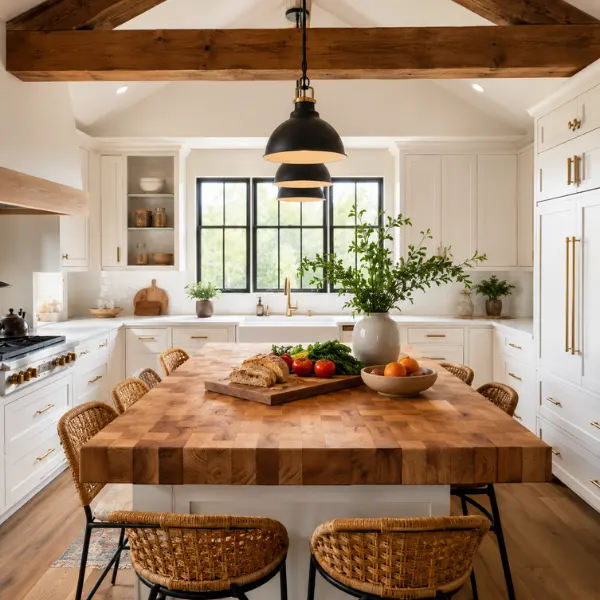
A butcher block kitchen island is one of the most genuinely functional and genuinely beautiful choices you can make in a contemporary farmhouse kitchen. That thick, warm slab of end-grain or edge-grain wood in the center of your kitchen is a working surface, a gathering point, a casual dining spot, and a visual centerpiece all at once.
Why It Works
Butcher block brings a warmth and tactile quality to the kitchen that quartz and granite simply cannot match. It is warm to the touch, beautiful in its grain pattern, and gets better with age — developing a rich patina that grows more beautiful the more it is used. In a contemporary farmhouse kitchen, it bridges the gap between the clean modern cabinetry and the natural, organic materials that give the style its warmth. Paired with bar stools, it becomes the social center of the home.
Best For
Kitchens where the island is the primary work surface and gathering point. Butcher block is particularly great for families who actually cook — it is a genuinely practical surface for food preparation, not just a pretty one. It is also one of the most affordable countertop options available, which makes it a smart choice for homeowners who want maximum visual impact on a modest budget.
Styling Tips
Oil your butcher block with food-safe mineral oil every few months to protect it and keep it looking rich and nourished — this is not optional maintenance, it is what keeps the wood beautiful for decades. Choose your bar stools thoughtfully: in a contemporary farmhouse kitchen, woven or rattan counter stools, simple wood stools with metal legs, or clean-lined upholstered stools all work beautifully. Avoid stools that are too traditional or too industrial — find the middle ground.
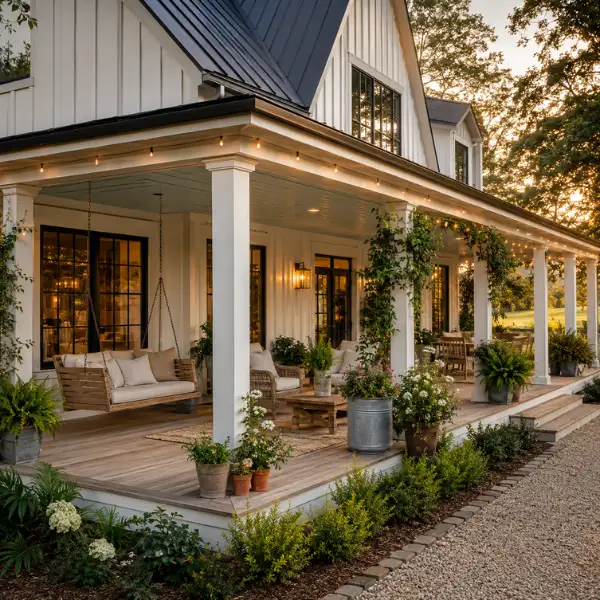
8. Wraparound Front Porch with Tongue-and-Groove Ceiling
The wraparound porch is the defining feature of traditional American farmhouse architecture, and in a contemporary farmhouse home, it gets updated with clean lines, modern furniture, and a beautiful tongue-and-groove ceiling — usually painted in a pale sky blue or soft cream — that transforms the outdoor space into a genuine extension of the living room.
Why It Works
A wraparound porch immediately signals something about the home and the people who live in it — it says this is a place where people slow down, sit together, and watch the world go by. In practical terms, it creates protected outdoor living space on multiple sides of the home that is usable in light rain, shaded from summer sun, and inviting in cool evenings. The tongue-and-groove ceiling adds a refinement and coziness to the porch that makes it feel genuinely designed rather than just constructed.
Best For
New builds and major renovations where the exterior architecture can support a full wraparound porch. This is not a quick upgrade — it is a structural and architectural commitment. But for anyone who loves outdoor living, who lives in a climate where porches are usable for a large portion of the year, and who wants their home’s exterior to make a genuine statement, it is one of the most worthwhile investments in a contemporary farmhouse design.
Styling Tips
Paint your tongue-and-groove porch ceiling in Haint Blue — a pale, slightly gray-blue that reads as sky when you look up and creates a genuinely magical atmosphere on the porch both day and night. Furnish with durable outdoor pieces in natural finishes: a wooden porch swing, a set of wicker or rattan chairs with linen cushions, and a collection of potted plants in terracotta or galvanized metal planters. String lights along the roofline make the porch beautiful after dark.
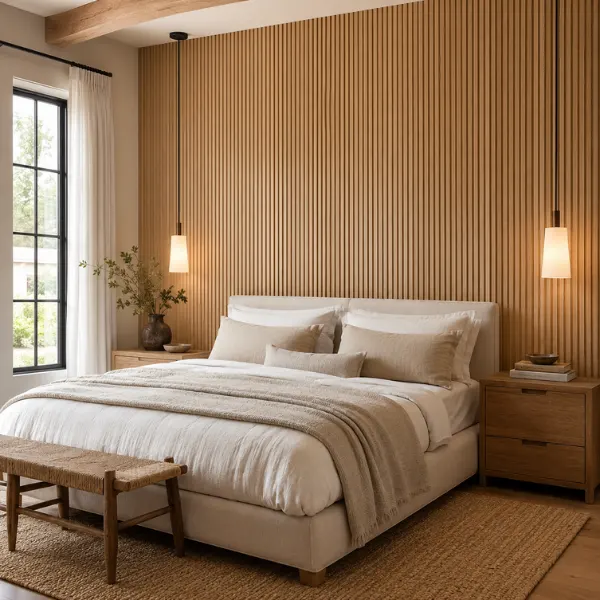
9. Fluted Wood Paneling Feature Wall in the Primary Bedroom
Fluted wood paneling is one of the most exciting contemporary farmhouse updates to happen in recent years. Where shiplap was the go-to wall treatment of the first wave of modern farmhouse design, fluted paneling — with its vertical ridges and deeply tactile surface — brings a more refined, architectural quality that feels genuinely current without abandoning the warmth of natural wood.
Why It Works
The ridges of fluted paneling catch and release light in a way that flat panels cannot, creating a surface that has genuine depth and shadow play. It is more sculptural than shiplap and reads as more architecturally sophisticated, which makes it a great choice for a primary bedroom where you want something that feels special and considered. The vertical orientation also makes any wall feel taller, which benefits ceilings of any height.
Best For
Primary bedrooms and master suites where one feature wall behind the bed is the main design moment. It also works beautifully in home offices, libraries, and formal living rooms where you want to create a sense of warmth and substance without going full traditional paneling. This is an idea that works at any scale — even a small bedroom benefits from a single fluted panel wall behind the bed.
Styling Tips
Leave your fluted paneling in its natural wood tone for maximum warmth — a light oak or ash stain is spectacular — or paint it in a warm white or soft cream if you want a lighter, more airy feel. Pair with a simple, generous bed in natural linen or cotton, minimal bedside tables, and a single beautiful pendant light on each side of the bed. The paneling does the visual work; let your furniture support rather than compete with it.
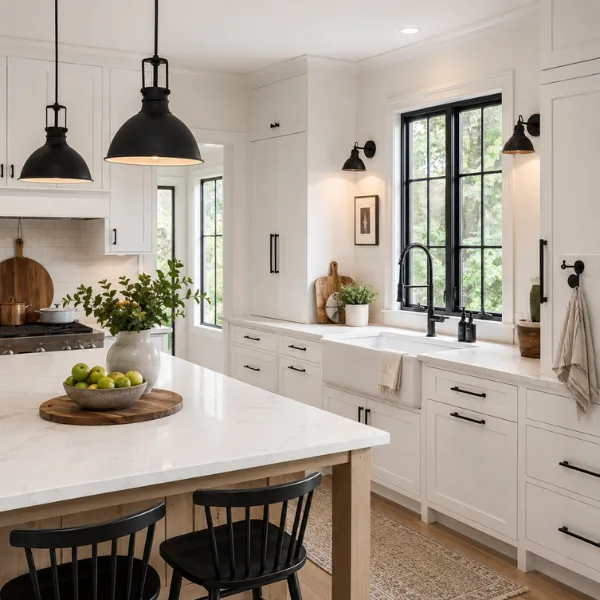
10. Matte Black Kitchen Hardware and Fixtures
This sounds like a small detail, and it absolutely is — but it is also one of the highest-impact, most affordable changes you can make to an existing kitchen. Swapping out your cabinet hardware, faucet, light fixtures, and sink hardware for matte black unifies the whole room under a single design language and gives it a contemporary farmhouse edge that is clean, graphic, and endlessly stylish.
Why It Works
Matte black hardware is to contemporary farmhouse design what brushed nickel was to early 2000s kitchen design — it is the finish that immediately signals a current, intentional aesthetic. Unlike polished chrome or shiny brass, matte black does not show fingerprints and water spots as readily, which makes it as practical as it is beautiful. In a white or cream kitchen, the dark hardware provides exactly the right amount of contrast to make everything feel crisp and designed.
Best For
Anyone who loves their existing kitchen layout but wants a fast, affordable refresh that makes a significant visual impact. This is also the perfect upgrade for a rental or a home you are preparing to sell — matte black hardware photographs beautifully and reads as current and desirable to virtually every design-savvy buyer.
Styling Tips
Consistency is the key here — if you go matte black, go all the way. Cabinet pulls, faucet, towel hooks, pot filler if you have one, light fixtures, and even the window frames if possible. Mixing matte black with other finishes (except for a very deliberate, considered mix with unlacquered brass) tends to look accidental rather than intentional. Shop for your hardware in bulk from the same line so the finish matches exactly across all pieces.
11. Vaulted Ceiling with Decorative Scissor Trusses
A vaulted ceiling with exposed scissor trusses is one of the most architecturally dramatic choices available in contemporary farmhouse design, and the results speak for themselves every single time. The ceiling becomes a fifth wall — a soaring, structural feature that gives the room incredible height, volume, and a striking geometry that you simply cannot achieve with a standard flat ceiling.
Why It Works
High vaulted ceilings with visible structural trusses do two things simultaneously: they make the room feel grand and expansive, and they introduce natural wood structure that brings warmth and craftsmanship back into what could otherwise become an overwhelmingly large space. The scissor truss form — where two beams cross in a V shape at the peak — is visually elegant and genuinely structural, which means the beauty you are seeing is also the building doing its job.
Best For
Great rooms, living rooms, and open-concept main living areas in new builds or major renovations. This is an architectural decision that needs to be made during the design phase of a build or significant renovation — you cannot add scissor trusses to an existing home without essentially rebuilding the roof structure. But if you are building new, this is one of the most powerful decisions you can make.
Styling Tips
Leave your trusses in a natural stained or slightly weathered wood finish — they are architectural sculpture and should look the part. Keep the ceiling between the trusses in a bright, clean white to maximize the contrast and let the trusses stand out clearly. Hang a large, statement pendant light from the peak of the vault — a linear chandelier, a cluster of pendant bulbs, or an oversized lantern-style fixture all work beautifully at that height.
12. Modern Farmhouse Mudroom with Built-In Cubbies and Bench
A well-designed mudroom is one of the most underrated spaces in a contemporary farmhouse home — and one of the most transformative. When it has proper built-in cubbies, a solid bench, and thoughtful storage, it not only keeps your home organized but also sets the tone for the whole house the moment you walk through the door.
Why It Works
The mudroom is the connective tissue between the outside world and the interior of your home. Without it, jackets, shoes, backpacks, sports equipment, and all the detritus of daily life ends up scattered through your entry and your kitchen. With a properly designed mudroom, everything has a home — and the rest of your house stays clean and calm. In a contemporary farmhouse, a mudroom is not just practical; it is also a design moment in its own right.
Best For
Families, anyone with pets or outdoor hobbies, and homes where the main entry point is through the garage or a side door. This is also a spectacular addition to any farmhouse-style home where the aesthetic of the space matters as much as its function — and that is always.
Styling Tips
Design your cubbies with one dedicated section per family member — hooks above, a bench seat in the middle, and storage below (either open baskets or closed cabinets). Paint the cabinetry in a warm white or soft sage green with matte black hardware for a contemporary farmhouse look that feels clean and designed even when it is holding the chaos of daily life. A durable, easy-to-clean floor material is essential here: shiplap on the walls and porcelain tile on the floor is a combination that is both beautiful and extremely practical.
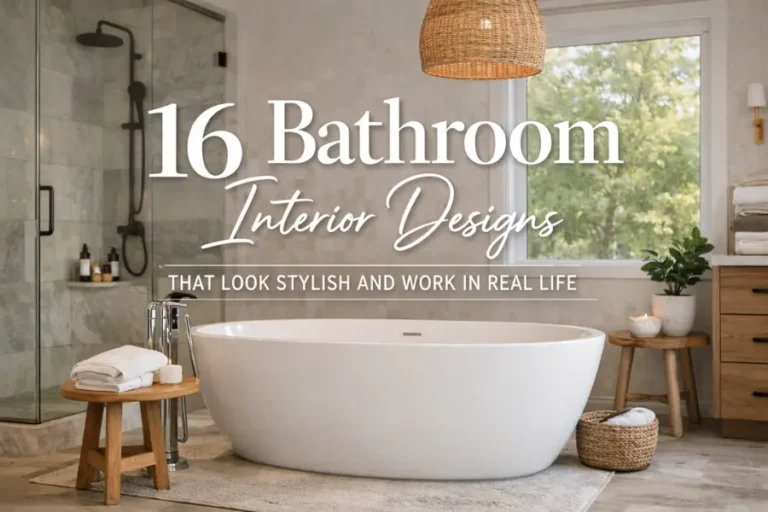
13. Clawfoot Soaking Tub in a Contemporary Farmhouse Bathroom
A clawfoot soaking tub is one of those design choices that immediately elevates any bathroom from nice to extraordinary. In a contemporary farmhouse bathroom, its combination of vintage silhouette and refined materials creates that perfect meeting point between old and new that the whole style is built around.
Why It Works
The clawfoot tub carries a century of design history in its graceful curves and raised feet, and that history is exactly what gives it power in a contemporary farmhouse bathroom. Paired with modern plumbing finishes, a clean quartz or marble vanity, and shiplap or subway tile walls, it creates a bathroom that feels like a genuine retreat rather than just a functional room. The tub becomes the visual anchor — everything else plays in support.
Best For
Primary bathrooms and spa-inspired master baths where there is enough floor space for the tub to breathe and be appreciated. In a smaller bathroom, a clawfoot tub can be the only bathing option (removing a shower enclosure and installing a ceiling-mount shower arm over the tub) — this is a classic and very functional solution that works beautifully in tight spaces.
Styling Tips
Choose a finish for your tub’s exterior that ties into your hardware — matte black, brushed brass, or bright white all work depending on your overall bathroom palette. Position the tub so it is visible from the bathroom entrance and is the first thing you see when you walk in — it is too beautiful to hide in a corner. Dress the area around it simply: a simple wooden stool, a linen towel, and a small plant are all you need.
14. Wide-Plank White Oak Hardwood Floors
Wide-plank white oak floors are to contemporary farmhouse design what denim is to a great casual wardrobe — they go with everything, they get better with age, and once you have them, everything else falls into place around them. The wide planks (typically 5 to 7 inches wide or more) read as more generous and architectural than standard strip flooring, and white oak has a warm, open grain that photographs and lives beautifully.
Why It Works
White oak has a tight, relatively uniform grain that reads as clean and contemporary while still being genuinely warm and natural. It accepts stain beautifully — from light, barely-there tones to rich, dark walnuts — and is significantly harder and more dent-resistant than softer wood species like pine. Wide planks mean fewer seams across your floor, which makes any room feel bigger and more cohesive. And the slight texture of wire-brushed or hand-scraped white oak hides everyday scratches and pet footprints remarkably well.
Best For
Any room in a contemporary farmhouse home, but especially living rooms, kitchens, dining rooms, and primary bedrooms where the floor is the single largest visual surface in the space. Wide-plank white oak works in both light and dark finishes, which makes it equally at home in bright, airy spaces and in rooms with a richer, more dramatic palette.
Styling Tips
Choose a wire-brushed finish over a high-gloss one — the texture adds authenticity and character, and the matte surface is far more practical in a real home with real foot traffic. Keep your grout lines and seams tight and clean. Lay your planks running parallel to the longest wall in each room (typically parallel to the main flow of traffic through the space) for the most expansive visual effect.
15. Contemporary Farmhouse Home Office with Built-In Shelving
The home office has gone from afterthought to essential room in the contemporary home, and in a contemporary farmhouse space, it is an opportunity to create something genuinely beautiful and deeply functional at the same time. Built-in shelving behind the desk turns a plain room into a curated, architectural workspace that you actually want to spend time in.
Why It Works
Built-in shelving in a home office does something remarkable — it takes what is typically a purely functional space and gives it the collected, layered quality of a personal library. In a contemporary farmhouse aesthetic, the combination of painted built-ins (white or a warm accent color) with natural wood desk surfaces and warm textiles creates a workspace that feels personal, grounded, and genuinely inspiring. It also solves the eternal home office problem of how to store everything without making the room feel cluttered.
Best For
Dedicated home offices in homes where one or both occupants work from home regularly. It is also a beautiful solution for a study, a library, or a creative studio space. Even in a small room — a spare bedroom converted to an office — floor-to-ceiling built-in shelving transforms the space and makes it feel intentional and designed rather than improvised.
Styling Tips
Style your built-in shelves the way a designer would: mix books, plants, art objects, baskets for hidden storage, and genuine personal objects — photographs, heirlooms, a piece of pottery from a trip you loved. Leave deliberate negative space between groupings. A rolling library ladder is both functional and beautiful if your shelves go all the way to the ceiling. Keep your desk surface in a warm natural wood to contrast with painted shelving.
16. Contemporary Farmhouse Kitchen with Open Shelving and Shaker Cabinets
Replacing some of your upper kitchen cabinets with open wood shelving is one of the most popular and most impactful moves in contemporary farmhouse kitchen design. It opens up the room visually, puts your beautiful ceramics and glassware on display, and creates that curated, collected kitchen aesthetic that reads as both practical and design-forward.
Why It Works
Open shelving removes the visual mass of upper cabinetry from your kitchen wall, which immediately makes the room feel lighter, more open, and more personal. It also forces you to curate what you keep on your kitchen surfaces — only the things you actually love and use frequently make it onto open shelves, which keeps the kitchen looking intentional rather than cluttered. In a contemporary farmhouse space, the combination of open wood shelves with Shaker lower cabinets creates a beautiful layering of old and new that the style is famous for.
Best For
Contemporary farmhouse kitchens where at least one wall has good natural light — open shelves shine brightest when light can reach the items displayed on them. This works in both large and small kitchens, and it is particularly effective in smaller kitchens where removing upper cabinet mass genuinely makes the room feel larger and less closed-in.
Styling Tips
Use your open shelves for the things you reach for every day — everyday dishes, mugs, glasses, olive oil, and a few well-loved cookbooks. Style them in a loose, layered way rather than a precise or symmetrical arrangement. Mix ceramic pieces in similar tones with a plant or two and some functional items like a wooden cutting board leaned against the back of the shelf. Keep everything on your open shelves clean and edited — more is not more here.
17. Neutral Color Palette with Warm Wood and Earthy Textile Accents
Contemporary farmhouse design is fundamentally a neutral design style — and that is actually one of its greatest strengths. A whole-home neutral palette of warm whites, creams, warm grays, and soft off-whites creates a backdrop of quiet calm that lets the natural materials, the textiles, and the architecture do all the talking.
Why It Works
Neutral palettes in contemporary farmhouse homes never feel cold or empty because of the layering of natural materials that accompanies them: raw wood grain, natural stone, linen, wool, cotton, jute, and rattan all add enormous warmth and texture even when everything is in the same tonal family. The neutrality of the backdrop also means that seasonal changes — a new pillow, a different throw, some fresh botanicals — immediately transform the feel of a room without requiring any repainting or major changes.
Best For
Whole-home color direction, especially in open-concept homes where the living room, dining room, and kitchen flow into each other and benefit from a unified palette. This approach also ages spectacularly well — neutral farmhouse interiors look just as beautiful and current in ten years as they do today, which is not something that can be said of most bold, trend-driven color choices.
Styling Tips
Build your neutral palette in layers — not one shade of white everywhere, but three to four related neutrals that work together. Warm white on the walls, a slightly deeper cream on the trim, a warm linen upholstery, a natural jute rug, honey-toned wood floors and furniture — each layer is distinct but harmonious. Add tactile contrast through materials rather than color: a chunky knit throw, a smooth ceramic vase, a worn leather pillow.
18. Statement Pendant Lights Over the Kitchen Island
Pendant lights over a kitchen island are one of the easiest, most transformative design upgrades available in a contemporary farmhouse kitchen — and choosing the right ones turns a functional light source into a piece of visual sculpture that completely changes the character of the space.
Why It Works
The kitchen island pendant is the jewelry of the kitchen — it is the thing that catches the eye first and sets the tone for the whole room’s design direction. In a contemporary farmhouse space, the right pendant light does the work of bridging modern and rustic simultaneously. A cluster of simple Edison bulb pendants, a set of black iron lantern pendants, or a pair of large rattan or wicker shades all communicate the farmhouse sensibility while keeping the overall effect current and sophisticated.
Best For
Any kitchen with an island or peninsula where the ceiling height allows for pendant installation. Most kitchens need pendants hung at 30 to 36 inches above the countertop surface — if your ceiling is high enough to accommodate this while still allowing clear sightlines across the room, pendant lighting is always the right choice over recessed or flush-mounted fixtures.
Styling Tips
Install two or three pendants in a row over a standard-length island rather than a single large fixture — the repetition is more visually interesting and provides more even light coverage. Space them evenly and hang them at the same height. For a contemporary farmhouse kitchen, aged brass or matte black fixtures work best; stay away from chrome or polished nickel, which read too modern and sleek for the aesthetic.
19. Shiplap Ceiling in the Primary Bedroom
While shiplap on walls gets most of the attention, a shiplap ceiling is genuinely one of the most beautiful and unexpected places to use this material in a contemporary farmhouse home. In the primary bedroom, a white-painted shiplap ceiling adds texture, warmth, and an instantly cozy quality that makes the room feel like a genuine retreat.
Why It Works
We spend enormous time looking up at our bedroom ceilings — lying in bed, waking up slowly, falling asleep — and yet most ceilings are completely ignored design-wise. A shiplap ceiling transforms that overlooked surface into a beautiful architectural detail. The horizontal lines of the planks make the ceiling feel more expansive, the texture adds warmth, and the white paint keeps it bright and airy rather than heavy or oppressive.
Best For
Primary bedrooms and master suites where the ceiling is visible from the bed and where you want the room to feel genuinely designed in every detail. It is also a beautiful choice for covered outdoor porches (where the tongue-and-groove version is most common), sunrooms, and reading nooks. This is a manageable DIY project on a small room ceiling — a larger bedroom ceiling may benefit from professional installation.
Styling Tips
Run your shiplap ceiling planks perpendicular to the longest wall in the room (parallel to your bed headboard wall) for the most visually expansive effect. Keep the ceiling boards in a standard 4 to 6 inch width — narrower boards can feel fussy, and wider boards start to lose the distinctive shiplap look. Pair with simple, slim-profile bedside pendant lights hung from the ceiling rather than on table lamps for a clean, unfussy bedroom aesthetic.
20. Freestanding Modern Farmhouse Pantry Cabinet
Not every home is configured for a walk-in pantry, but every contemporary farmhouse kitchen deserves that sense of organized, purposeful storage that a pantry provides. A large, well-designed freestanding pantry cabinet — in painted wood with simple hardware and open upper shelves — fills that role beautifully while also becoming a furniture-quality design piece in its own right.
Why It Works
A freestanding pantry cabinet brings the warmth and craft of real furniture into a kitchen that is otherwise dominated by built-in cabinetry. It has a presence and a personality that a built-in pantry does not — it looks like it has been collected rather than constructed. In a contemporary farmhouse kitchen, that furniture-like quality is exactly right. It also provides the flexibility to move with you if you ever change homes.
Best For
Kitchens that lack dedicated pantry storage, apartment kitchens, rental kitchens where built-ins are not possible, and any space where you want to add kitchen storage that feels like a design choice rather than a necessity. This also works beautifully in dining rooms used as a secondary storage and display piece.
Styling Tips
Look for a pantry cabinet with a mix of closed lower storage (drawers or doors) and open upper shelves — the open shelves give you display space for your beautiful everyday objects, while the closed lower section handles the things that do not need to be seen. Paint it a shade slightly warmer or different from your existing kitchen cabinets so it reads as an intentional piece of standalone furniture rather than a mismatched addition.
21. Exposed Brick Interior Wall in the Living Room
When a home has existing brick — whether it is an original fireplace surround, an exterior wall that has been opened up, or a repurposed industrial element — exposing and celebrating it in the living room creates a textural richness and sense of history that no applied finish can replicate.
Why It Works
Exposed brick is one of those materials that carries time in a tangible way — every unevenness, every variation in color, every small imperfection is a record of when and how the building was made. In a contemporary farmhouse living room, that depth of character is profoundly valuable. Brick does not just add texture; it adds story, and a room with real story always feels more alive than one that is purely designed.
Best For
Older homes with original brick features, converted industrial or warehouse spaces, and anyone who is fortunate enough to have a brick chimney or exterior wall visible inside their home. It is also achievable in new construction through the use of thin brick veneer applied to a standard wall — the effect is genuine enough when done well, though genuine exposed brick will always have more character.
Styling Tips
If your existing brick is a dark, heavy color, a light limewash will brighten it without losing the texture — this is often the perfect compromise. If it is already warm and beautiful, leave it completely alone. Resist the urge to whitewash it fully or paint it — once you paint brick, you can never fully get the natural look back. Style the wall with furniture and lighting that gives the brick room to breathe: a simple sofa in front of it, a few well-placed plants, and warm lighting that illuminates the texture of the surface.
22. Contemporary Farmhouse Dining Room with a Long Trestle Table
The long trestle table is one of the oldest and most enduring pieces of furniture in farmhouse design, and in a contemporary farmhouse dining room, it becomes something genuinely special. A clean-lined, solid wood trestle table seats a crowd, anchors the dining room with real presence, and tells everyone who sits at it that meals here are taken seriously and enjoyed slowly.
Why It Works
A trestle table has structural integrity built right into its silhouette — the X-shaped or H-shaped base is both visually interesting and genuinely solid, distributing the weight of the tabletop without the need for a center support column. This makes it not only beautiful but exceptionally functional for a large family or a household that entertains. In solid wood — oak, walnut, pine, or ash — it becomes a piece that will last for generations.
Best For
Dining rooms that function as genuine gathering spaces for large families, dinner party hosts, and anyone whose social life centers around the table. A trestle table requires enough length to make the form work — you want at least a 7 to 8 foot table for the trestle silhouette to feel proportionate. This works in both open-concept dining spaces and dedicated dining rooms.
Styling Tips
Seat your trestle table with a mix of chairs and a bench — two chairs at each end and a long bench along each side is the classic farmhouse configuration that also happens to seat more people and look more interesting than matching chairs all the way around. Dress the table simply: a long linen table runner, a few white or cream candles in varying heights, and a low centerpiece of seasonal botanicals.
23. Limewash Brick Exterior with Black Trim
The exterior of a contemporary farmhouse sets expectations for everything inside, and limewash brick with black trim is one of the most striking exterior combinations currently available. The soft, chalky depth of the limewash against the graphic crispness of the black trim frames creates a home that looks handsome, current, and beautifully composed from the street.
Why It Works
Limewash on the exterior brick softens the sometimes harsh regularity of new brick construction, making the home look like it has settled comfortably into its landscape over many decades. The black trim — on windows, doors, gutters, and any exterior detailing — provides the contemporary graphic edge that separates this look from a purely traditional or historical aesthetic. Together, they produce an exterior that is simultaneously timeless and deeply current.
Best For
Brick homes undergoing exterior refreshes, new builds with brick exteriors, and anyone who wants their home’s exterior to make a real statement without going bold or colorful. This combination photographs beautifully and has an enormous amount of curb appeal — it is one of those exterior choices that makes neighbors slow down as they walk past.
Styling Tips
On the exterior, coordinate your black trim across every element — window frames, front door, garage door frames, shutters if you have them, gutters, and any decorative ironwork. Consistency is everything on the exterior. For your front door specifically, matte black is stunning, but a very deep navy, forest green, or charcoal can be equally beautiful if you want something slightly warmer than pure black. Flank the front door with a pair of large, simple planters in black or terracotta with a simple, structured topiary or seasonal greenery.
24. Contemporary Farmhouse Laundry Room with White Shiplap and Utility Sink
The laundry room is the most underdesigned room in most homes — and in a contemporary farmhouse, it is a genuine missed opportunity. A laundry room with white shiplap walls, a deep utility sink in an apron-front style, open wood shelving for supplies, and beautiful vintage-inspired tile on the floor becomes a functional space that you are actually happy to spend time in.
Why It Works
We spend a significant amount of time in our laundry rooms — sorting, folding, hanging, ironing — and the quality of that space directly affects how pleasant those tasks feel. When the room is designed with the same care and intention as the rest of the home, a chore-based task becomes something closer to a meditative ritual. The shiplap keeps it bright and fresh, the utility sink is deeply practical, and the open shelving keeps everything organized and accessible.
Best For
Any homeowner willing to invest in the functional spaces of their home with the same attention they give to the showpiece rooms. This is particularly rewarding in homes where the laundry room is large enough to include a proper counter for folding and a hanging rod for line-dry items. It is also a genuinely achievable DIY upgrade — shiplap, open shelves, and a new utility sink are all affordable and manageable projects.
Styling Tips
Bring the farmhouse style into your laundry supplies too — decant your detergents and fabric softeners into simple glass or ceramic vessels with handwritten labels, keep a small enamel bucket for stain treatments, and hang a simple galvanized metal rod from the ceiling for line-drying. A patterned floor tile — a simple black and white check, or a small-scale hexagon — adds a lot of personality to a utility space with minimal investment.
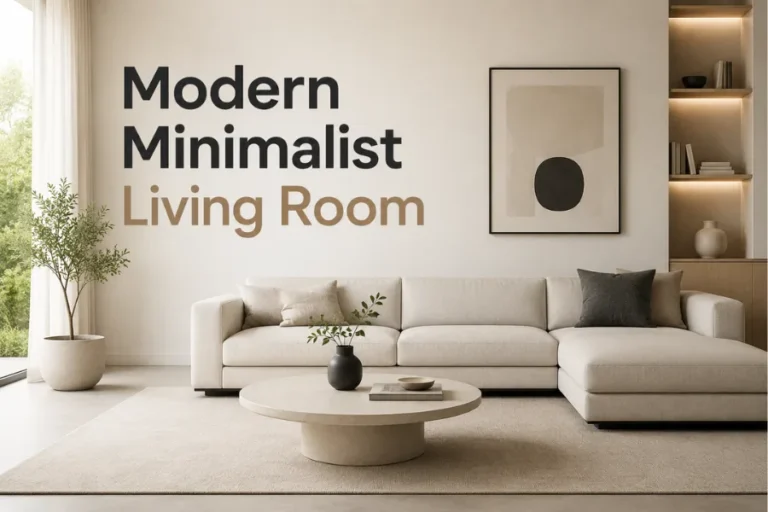
25. Organic Modern Furniture Mix in the Living Room
Contemporary farmhouse design has evolved beyond simple rustic-meets-modern in recent years. The most interesting living rooms in this style right now are layering in organic modern furniture — pieces with soft curves, natural materials, and a sculptural quality that adds warmth and sophistication without looking traditionally rustic. Think curved sofas, sculptural side tables, and furniture that feels genuinely contemporary while still being rooted in natural materials.
Why It Works
Organic modern furniture brings an ease and a sophistication to contemporary farmhouse interiors that straight-lined, boxy furniture cannot achieve. A sofa with gently curved arms feels welcoming in a way that a sharp-cornered sectional does not. A sculptural side table in travertine or light wood draws the eye and rewards a close look. These pieces do not look like farmhouse furniture — but they feel completely at home in a farmhouse space because they share its material honesty and its warmth.
Best For
Contemporary farmhouse living rooms that are evolving beyond the standard shiplap-and-barn-door setup into something more personal and sophisticated. This is also a great direction for people who love the warmth of farmhouse style but find the heavier rustic elements too casual or too themed for their taste. Organic modern furniture is the bridge between farmhouse and something more elevated.
Styling Tips
Anchor your organic modern living room with a large, natural fiber rug — a chunky boucle, a flat-weave wool, or a hand-knotted jute all work beautifully. Build your furniture around a sofa with a natural linen or bouclé upholstery, and layer in a mix of side tables in different materials and heights rather than a matching set. A single abstract painting or large art print on the wall grounds the whole room and gives it a curatorial quality that feels genuinely contemporary.
26. Spa-Inspired Contemporary Farmhouse Bathroom with Natural Stone
Contemporary farmhouse bathrooms have quietly become some of the most beautiful rooms in the modern home — and nothing elevates them faster than natural stone. Whether it is a marble subway tile shower, a slate floor, a travertine vanity countertop, or a limestone feature wall, natural stone brings a spa quality to a farmhouse bathroom that feels genuinely luxurious.
Why It Works
Stone has been used in bathrooms for thousands of years precisely because it belongs there — it is durable, water-resistant, beautiful, and it improves with age. In a contemporary farmhouse bathroom, natural stone provides the most important ingredient this style requires: authenticity. You cannot fake the depth of a genuine piece of travertine or the subtle variation of real marble. That realness is what makes a farmhouse bathroom feel like a place of genuine rest rather than just a tiled box with good lighting.
Best For
Primary bathrooms and master baths where the investment in materials pays off most directly in daily quality of life. Natural stone is also beautiful in guest bathrooms, powder rooms, and even small bathroom renovations where a single stone tile choice — on the floor or in the shower — completely transforms the room’s character.
Styling Tips
Keep your stone choice to one or two materials per bathroom — mixing too many stone types creates visual confusion. A single marble tile throughout the shower and on the floor, for example, is more beautiful and more cohesive than four different stone types competing for attention. Pair natural stone with simple, natural wood elements — a teak shower bench, a wood-frame mirror, a wooden soap dish — and warm brass or matte black fixtures to complete the contemporary farmhouse feel.
27. Covered Outdoor Living Room with a Ceiling Fan and String Lights
The contemporary farmhouse home does not stop at the back door. A covered outdoor living room — with a ceiling fan for airflow, string lights for ambiance, a comfortable seating arrangement, and a durable outdoor rug underfoot — extends the farmhouse living space beyond the interior walls and creates one of the most-used and most-loved spaces in the entire home.
Why It Works
People who invest in a covered outdoor living room use it constantly — morning coffee, afternoon lounging, evening entertaining, weekend breakfasts that stretch into lunch. The coverage protects the space from light rain and harsh sun, the ceiling fan makes it comfortable in warm weather, and the string lights make it beautiful and usable after dark. A well-designed covered outdoor room effectively adds a significant square footage of living space to your home at a fraction of the cost of an indoor addition.
Best For
Homes in temperate and warm climates where outdoor living is possible for a large portion of the year, and anyone whose lifestyle centers on being outside whenever possible. This is also a spectacular addition to a home with young children, who benefit enormously from easy access to outdoor space from within the comfortable range of the house.
Styling Tips
Choose outdoor furniture in materials that age beautifully — teak, powder-coated aluminum, wrought iron, or weather-resistant wicker. An outdoor rug in a natural indoor-outdoor material grounds the seating area and defines the space. String your lights from the roofline or overhead structure to the surrounding fence or trees at a height that allows comfortable movement underneath but creates an intimate, canopy-like glow after dark.
28. Contemporary Farmhouse Kids’ Bedroom with Built-In Bunk Beds
Built-in bunk beds in a contemporary farmhouse kids’ bedroom are one of the most functional and most beautiful solutions for a family home. When the bunks are built-in — designed with the same care and craftsmanship as the rest of the home — they become architectural features rather than furniture, and they make the most efficient possible use of vertical space in any bedroom.
Why It Works
Built-in bunk beds do something that freestanding bunks cannot: they integrate with the room so completely that the bed and the bedroom become a single unified design. Add built-in drawers below the lower bunk, built-in shelves beside each sleeping space, and a simple ladder in natural wood, and you have a sleeping and storage solution that is also a genuinely beautiful piece of room architecture. Kids love the coziness of a tucked-in sleeping nook, and parents love the order it brings to what can otherwise be the most chaotic room in the house.
Best For
Kids’ bedrooms and guest rooms where multiple sleeping spots are needed without taking up excessive floor space. Built-in bunks are particularly effective in smaller rooms where a conventional bunk bed might take up too much floor area — the built-in design can be skinnier and tighter to the wall, leaving more usable floor space for play and movement.
Styling Tips
Build your bunks in painted wood — white or a warm off-white works beautifully against the natural wood floors and textures that typically characterize a contemporary farmhouse home. Add a simple reading light on a swing arm at each bunk level so kids can read in bed without disturbing anyone else. Curtains on a track that can be drawn across each sleeping space give older kids a sense of privacy and coziness that they love.
29. Vintage-Inspired Contemporary Farmhouse Entryway
The entryway is the first room every single person who visits your home will experience — and in a contemporary farmhouse, it should immediately communicate warmth, thoughtfulness, and a clear design point of view. A vintage-inspired entryway does this with a board and batten wall treatment, a warm natural wood console table, an antique or vintage mirror, and an inviting bench with storage below.
Why It Works
The entryway establishes the entire mood of the home before anyone has seen anything else. A well-designed entryway tells visitors that someone genuinely cares about this space and the people who enter it — it says welcome in the most complete and design-language way possible. The combination of vintage and contemporary elements in a farmhouse entry creates that layered, collected quality that the whole style is about: it looks like it was built piece by piece over time, chosen with love, not designed all at once on a spreadsheet.
Best For
Any home — large or small, old or new. The entry is the only room in a house where the impact is immediate and universal, which means the investment in getting it right is always worthwhile. Even a very small entryway — just a few square feet — can be dramatically improved with a good bench, a mirror, a hook for hanging coats, and a considered choice of wall treatment and flooring.
Styling Tips
Your entryway should answer four practical questions beautifully: Where do I put my keys? (A small tray or hook) Where do I sit to take off my shoes? (The bench) Where do my bags go? (Under-bench storage or a hook above) What do I see when I walk in? (The mirror, the console table, whatever piece of art or botanical arrangement makes you smile.) If your entryway answers all four questions and looks beautiful doing it, you have done everything right.
Mistakes to Avoid in Contemporary Farmhouse Design
Getting contemporary farmhouse right requires understanding what it genuinely is — and that means knowing what it is not. Here are the most common mistakes I see people make, and how to avoid all of them.
Overdoing the rustic elements. This is the most common trap. When every surface is reclaimed wood, every accessory is distressed, and every fixture is wrought iron, the result is not contemporary farmhouse — it is a costume. Contemporary farmhouse uses rustic elements selectively and purposefully. One reclaimed wood beam, one aged wood mantel, one vintage find per room is far more effective than ten.
Ignoring the contemporary part. The word contemporary is in the name for a reason. Clean lines, modern proportions, current materials, and updated layouts are what separate this style from traditional farmhouse or country decor. If your space looks like it stepped out of a 1990s country catalog rather than a 2025 design studio, you have lost the contemporary element.
Going too gray and too cold. Early modern farmhouse design leaned heavily on cool grays, and those interiors have not aged well. Contemporary farmhouse uses warm neutrals — creams, warm whites, warm greiges, honey wood tones — that feel genuinely cozy rather than clinical.
Treating every room identically. Contemporary farmhouse is not a wallpaper that you apply to every surface in every room. Each room should feel connected to the whole but also have its own personality, its own focal point, and its own unique design moment.
Prioritizing looks over livability. The entire point of farmhouse design is that it is deeply livable — warm, functional, and genuinely comfortable. If you find yourself designing a space that looks perfect but would not work for your actual life, step back. A contemporary farmhouse home should be more comfortable and more functional than it looked before you started, not just more beautiful.
Skimping on natural materials. The one area where it genuinely pays to invest more is in the quality and authenticity of your natural materials. Real wood, real stone, real linen, and real wool always look and feel better than their synthetic equivalents. Budget for authenticity wherever it matters most.
Conclusion
Contemporary farmhouse design, done right, produces homes that are genuinely one of the most livable environments available in modern interior design. They are warm without being fussy. They are beautiful without being precious. They grow and evolve with the family living in them rather than becoming a theme that traps its occupants.
The 29 ideas in this article are not meant to be a checklist — not every home needs all of them, and not every room needs a renovation to become more beautiful. Start with the idea that resonates most deeply, the one that makes you want to put down this article and go look at your own space with fresh eyes. Execute it thoughtfully, live with it for a while, and let the next decision grow from what you learn.
The best contemporary farmhouse homes are not the ones that followed a formula — they are the ones where someone made choices that genuinely reflected their family, their materials, and their life. Your home deserves nothing less.
FAQs
What is the difference between contemporary farmhouse and modern farmhouse? These terms are often used interchangeably, but there is a meaningful distinction. Modern farmhouse became a very specific aesthetic — heavy on the shiplap, barn doors, and chip-and-Joanna palette — that has become somewhat of a cliché. Contemporary farmhouse is a broader and more evolved term that describes a farmhouse-influenced design that is current, sophisticated, and personal rather than template-driven. It embraces more color, more material variation, and more individual expression while keeping the warmth, authenticity, and natural material base of farmhouse design at its core.
How do I achieve contemporary farmhouse on a budget? Focus your budget on the things that have the highest visual impact: paint (limewash or board and batten can be DIYed cheaply), hardware swaps (matte black pulls and fixtures make an enormous difference affordably), and textile upgrades (genuine linen and wool do not have to be expensive if you shop thoughtfully). Save on furniture by mixing vintage finds with simple, clean-lined new pieces. The biggest budget mistake people make in this style is buying farmhouse-themed decor rather than genuine natural materials — a real wood shelf is always more beautiful than a laminate one covered in mason jar accents.
Can contemporary farmhouse work in an apartment or a condo? Absolutely — and often very beautifully. Without the ability to change walls, floors, or architecture, the style shifts to being expressed entirely through furniture, textiles, materials, and accessories. A linen sofa, a natural wood coffee table, an organic modern area rug, a few beautiful ceramics, and some genuine botanical elements will turn virtually any neutral rental space into a genuinely farmhouse-feeling home. The key is to choose things that are genuinely natural and genuinely beautiful rather than things that are farmhouse-branded.
What colors work best in a contemporary farmhouse home? Warm neutrals are the foundation — think creamy whites, soft warm grays, warm beige, and earthy off-whites. From there, the most beautiful contemporary farmhouse accent colors are the ones drawn from nature: sage green, dusty blue, terracotta, warm rust, and muted ochre. What does not work is anything too bright, too saturated, or too cool — those colors fight the warmth that the style is built on.
How do I update an existing farmhouse that feels too traditional or too rustic? The fastest way to modernize a farmhouse that feels too traditionally rustic is to edit rather than add. Remove excess decorative items, simplify your mantel and shelf styling, swap your traditional furniture for pieces with cleaner lines and lighter fabrics, and repaint in a warm but sophisticated white rather than a dated cream or yellow. Adding matte black hardware throughout, bringing in some organic modern furniture pieces, and choosing contemporary art over traditional country prints will advance the aesthetic significantly without a major renovation.
What is the best natural material to start with in a contemporary farmhouse redesign? Start with your textiles — specifically, replace any synthetic or polyester fabrics in your most-used rooms with genuine linen, cotton, or wool. It sounds simple, but the difference between a synthetic throw pillow and a genuine linen one is enormous when you are sitting in the room. Natural textiles breathe, drape differently, and photograph completely differently from synthetic ones. They are also the easiest and most affordable upgrade available, and they make every other natural material in the room look better by association.