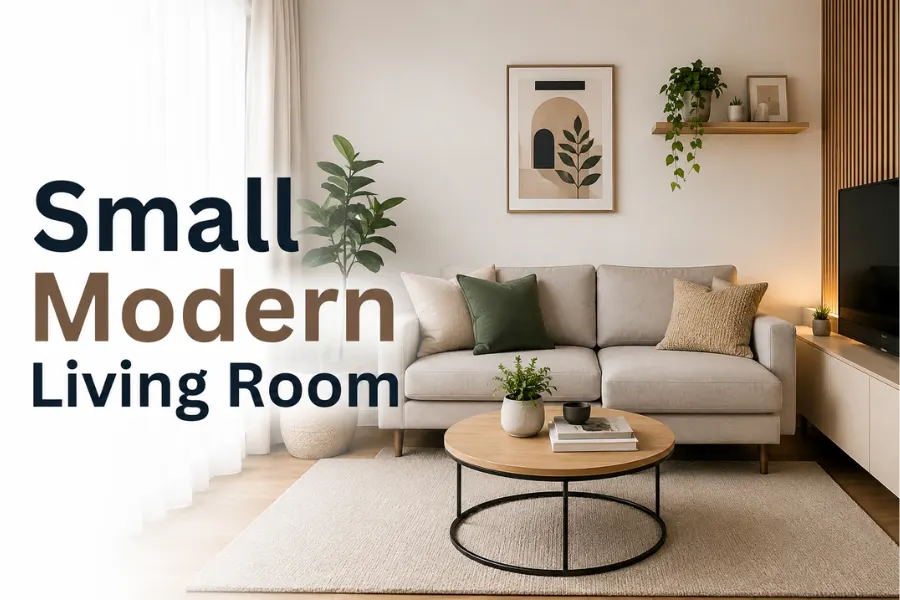
27 Small Modern Living Room Ideas (That Actually Work in Real Homes)
If you’ve ever stood in the middle of your living room wondering why it feels cramped even though you “only” have a sofa and a coffee table in it, you’re not alone. Small living rooms get a bad reputation, but the truth is most small-space problems aren’t really about square footage. They’re about layout, scale, and a handful of habits that quietly work against you.
After years of squeezing big style into tight floor plans, I’ve learned that a small modern living room isn’t about cramming in less stuff and hoping for the best. It’s about choosing the right few pieces, giving them room to breathe, and letting smart layout tricks do the heavy lifting. Some of the ideas below are perfect for a tiny studio corner, some shine in a normal-sized family room, and a few are built for bigger open-plan spaces, because “small living room” doesn’t mean one-size-fits-all.
Grab a notebook, because you’re about to get 27 real, doable ideas you can actually use, not just admire on a screen.
27 Small Modern Living Room Ideas That Actually Work
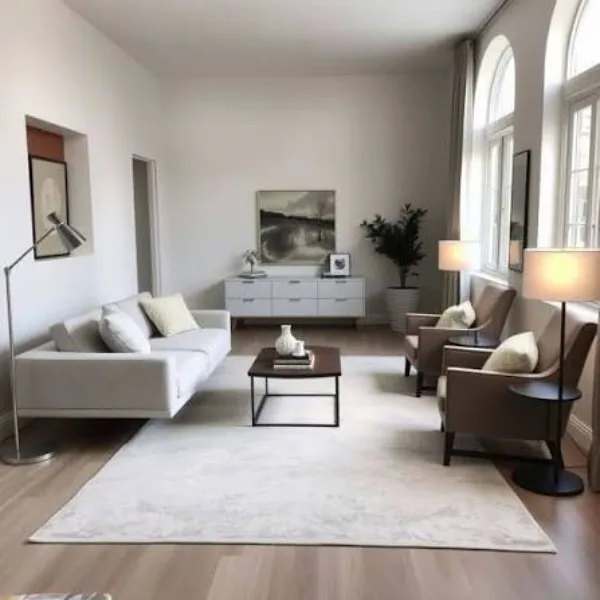
The Floating Sofa Layout
Instead of pushing your sofa against the back wall like every other room in the building, pull it forward a few inches and let it “float” in the open space. This one move adds depth, creates a walking path behind it, and instantly makes a small living room feel more intentional and put-together.
Why It Works
When a sofa hugs the wall, your eye stops right at the edge of the room and the whole space reads as flat. Floating it forward creates a sense of depth because there’s suddenly room to move around it, which tricks the brain into seeing the room as bigger than it actually is.
Best For
Square or rectangular living rooms with at least 7 to 8 feet of depth, including normal apartment living rooms and larger open-plan spaces where the back of the sofa faces a hallway or dining area instead of a wall.
Styling Tips
- Leave at least 30 inches behind the sofa for a comfortable walking path
- Add a slim console table or bench behind it to anchor the back side
- Use a rug that extends a few inches past the front legs of the sofa
- Keep the sofa back low-profile so it doesn’t block sightlines across the room
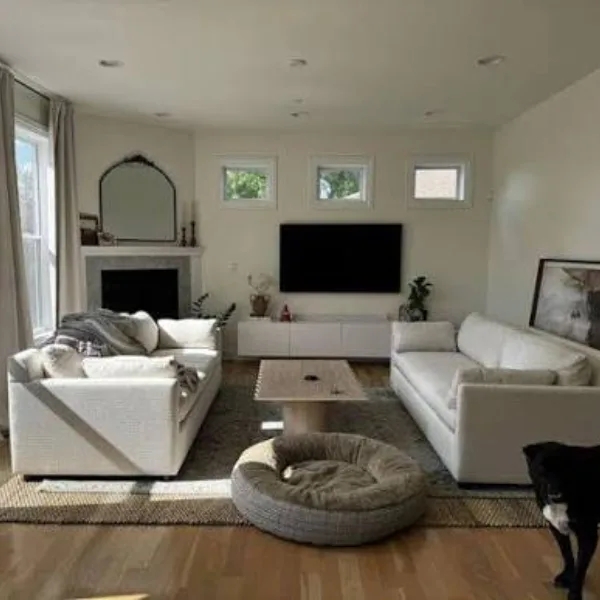
The Symmetry Slayer Two-Sofa Setup
Skip the usual sofa-plus-armchair combo and try two matching sofas facing each other instead. It sounds bold for a small room, but identical pieces read as one balanced shape rather than two separate items, which keeps the whole layout calm and surprisingly spacious-feeling.
Why It Works
Symmetry is one of the easiest tricks for making a small space feel curated instead of cramped. Two sofas of the same size and fabric create a clean visual rhythm, and one coffee table in between gives the room a single, strong focal point instead of several competing pieces.
Best For
Normal to slightly larger living rooms with enough width for two loveseats or apartment-sized sofas, especially in households that host often or want generous seating without committing to one oversized sectional.
Styling Tips
- Choose loveseats or apartment-sized sofas rather than full three-seaters
- Keep both sofas the exact same color and fabric so the symmetry actually reads
- Add one low coffee table in between, never anything taller than the sofa arms
- Use a matching lamp on each side to keep the whole look balanced
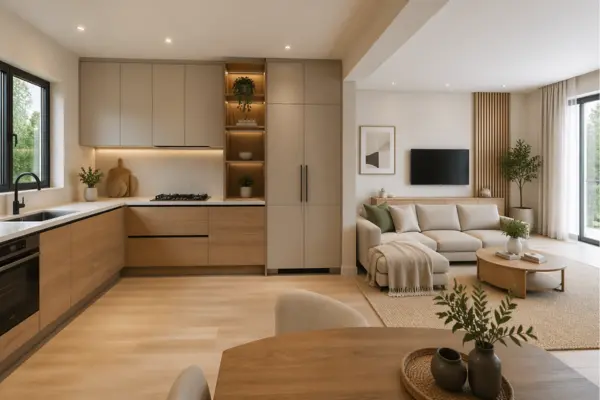
The Corner-Hugging L-Shaped Sectional
Tuck an L-shaped sectional into one corner of the room instead of floating it in the middle. This frees up the rest of the floor for movement, gives you plenty of seating for movie nights, and works especially well in a boxy or square small living room.
Why It Works
Corners are often the most wasted real estate in a small room. Letting the sectional wrap into the corner puts a dead zone to work as seating while leaving the rest of the floor plan open, which keeps the room feeling roomier than its actual size suggests.
Best For
Square-shaped small living rooms and studio apartments, particularly any room where one wall meets another without a window or doorway breaking up the corner.
Styling Tips
- Pick a sectional with exposed legs so light can travel underneath it
- Add a slim side table on the open end instead of a bulky end table
- Face the chaise end toward the TV or window, never toward a blank wall
- Choose a lower-back design so the corner doesn’t feel boxed in
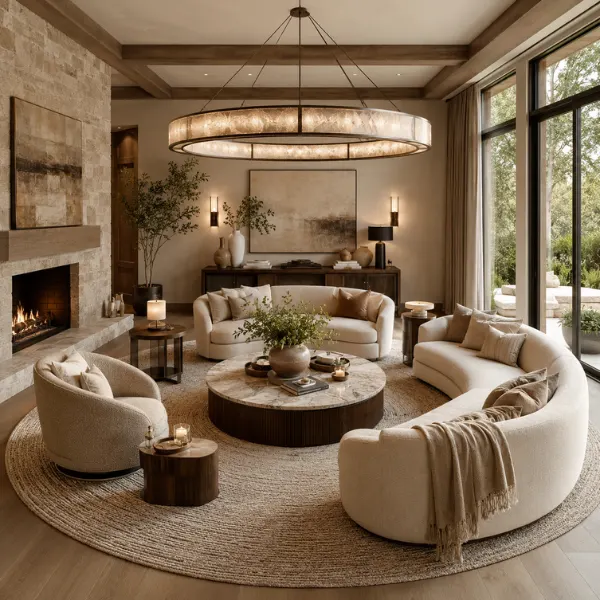
The Circular Conversation Nook
Arrange a small sofa, two chairs, and a round coffee table in a loose circle instead of the usual square setup. The rounded shape softens the room, removes the hard corners that block a narrow walking path, and turns a tiny seating area into an intentional little gathering spot.
Why It Works
A circular arrangement keeps everyone at a similar distance, which naturally encourages conversation, and rounded furniture has no sharp edges to bump into or visually block a tight room. It’s one of the most forgiving layouts for an awkward or oddly angled space.
Best For
Small or oddly shaped living rooms, awkward corner nooks, or apartments where the living area doubles as a casual hangout spot rather than a formal sitting room.
Styling Tips
- Anchor the circle with a round coffee table or ottoman, never a square one
- Mix one sofa with two lightweight chairs that can be pulled in or pushed out
- Keep the circle loose, not tight, so people can still walk through the gaps
- Add a round rug underneath to echo the shape of the whole layout
The Single Statement Sofa With Breathing Room
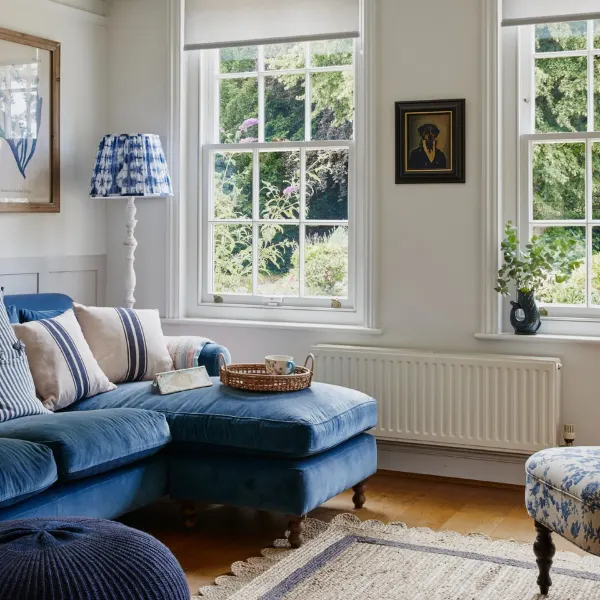
Instead of cramming in a sofa, a loveseat, and two chairs, commit to one beautiful sofa and let the opposite side of the room stay open. Negative space is a real design tool, and one well-chosen piece carries a small room better than several mismatched ones ever could.
Why It Works
A small room with too much seating starts to feel like a furniture showroom. One generous sofa, paired with empty floor space across from it, gives the eye somewhere to rest and makes the room feel calmer, even though there’s technically less furniture in it.
Best For
Studio apartments, single-occupant homes, or small living rooms that mainly need to function for one or two people rather than large groups.
Styling Tips
- Put the budget you’d spend on a second seat toward one quality sofa instead
- Leave the opposite wall mostly bare except for one art piece or a floor lamp
- Add a single accent chair only if there’s still clear walking room around it
- Use a patterned or colorful throw pillow so the lone sofa doesn’t feel underdressed
The Fireplace-Centered Furniture Arrangement
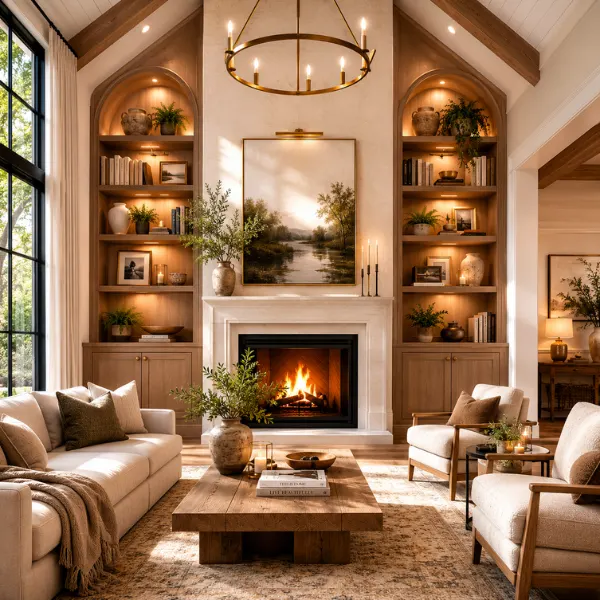
If your small living room has a fireplace, let it do the work as the room’s focal point instead of competing with it for attention. Angle your seating toward the mantel, and the rest of the layout tends to fall into place almost on its own.
Why It Works
Small rooms get confusing fast when there are two focal points fighting for attention, like a fireplace on one wall and a TV on another. A fireplace already carries visual weight, so building the layout around it removes the guesswork and gives the room one clear, cozy center.
Best For
Normal-sized living rooms or older homes with a built-in fireplace, especially when the mantel sits on the room’s longest wall.
Styling Tips
- Mount the TV above the mantel if you need both focal points in one spot
- Angle a chair or two toward the fireplace instead of lining everything up straight
- Keep mantel styling simple, just a mirror or art piece and a few candles
- Use a rug that stretches from the front of the fireplace to the front of the sofa
The Zoned Open-Concept Rug Trick
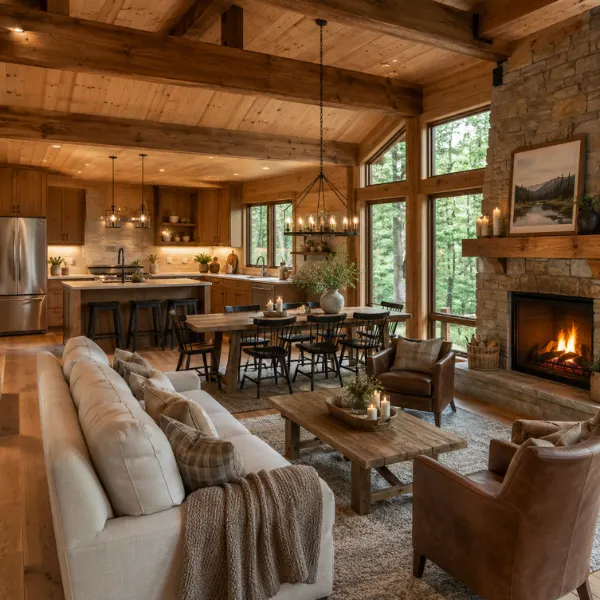
In an open-plan apartment where the living room blends straight into the kitchen or dining area, one well-placed rug can mark out the living zone without adding a single wall. It’s one of the cheapest, fastest ways to make an open layout feel like separate rooms.
Why It Works
Our brains read floor changes as room boundaries. A rug under the sofa and coffee table visually closes off the living area, so even in a large open-plan space, the living room reads as its own defined zone instead of blending into everything around it.
Best For
Larger open-concept apartments, studio layouts, or loft-style homes where the living room doesn’t have walls on every side.
Styling Tips
- Size the rug so all the front legs of your seating land on top of it
- Choose a rug tone that contrasts slightly with the kitchen or dining floor
- Add a floor lamp at the rug’s edge to reinforce where the zone ends
- Keep the TV stand or media console inside the rug’s boundary, not outside it
The Wall-Mounted Media Console
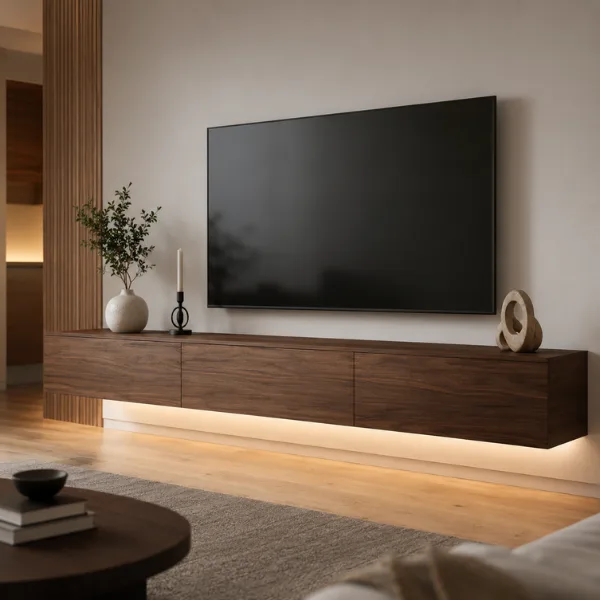
Skip the bulky entertainment center and mount your TV straight onto the wall, then add a slim floating console underneath for the remote, the streaming box, and the cables. The floor underneath stays completely clear, which does wonders for how spacious a small living room feels.
Why It Works
A floor-standing entertainment unit is often the single largest piece of furniture in a small room. Moving the TV and storage up onto the wall frees up floor space, lets light travel further across the room, and gives the whole setup a cleaner, more current look.
Best For
Apartments, rental homes, and small to normal-sized living rooms where wall space is more available than floor space.
Styling Tips
- Hide cords with an in-wall cable kit or a paintable cord cover
- Choose a floating shelf with drawers for remotes and chargers
- Mount the TV at seated eye level rather than higher just because the wall is empty
- Add a couple of slim baskets on the console for extra hidden storage
The Multifunctional Storage Ottoman
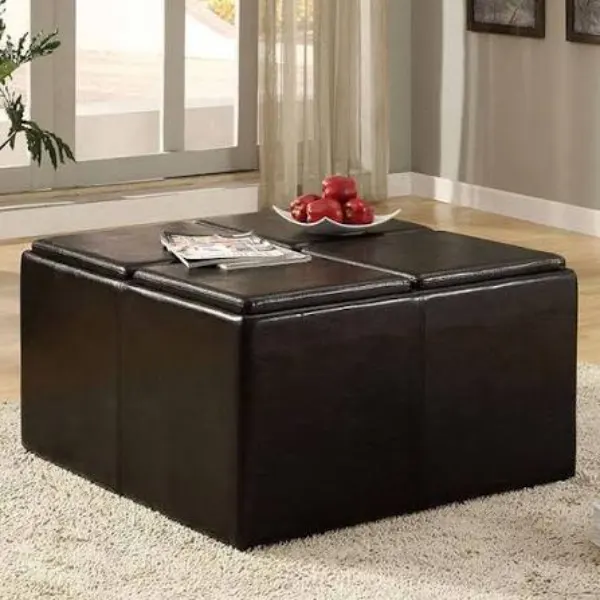
Swap your coffee table for a large storage ottoman that works as a footrest, an extra seat, a surface for trays, and a hiding spot for blankets, remotes, and toys, all in one piece of furniture. It’s a single swap that solves several small-room problems at once.
Why It Works
A small living room can’t afford furniture that only does one job. A storage ottoman gives you a coffee table, extra seating for guests, and clutter-free storage without taking up any more floor space than a regular table would have anyway.
Best For
Family living rooms, small apartments with frequent guests, or any household that struggles to find a home for remotes, blankets, and stray toys.
Styling Tips
- Top it with a large wooden tray so it still functions like a coffee table
- Choose a durable, easy-to-clean fabric like performance velvet or boucle
- Pick a removable-lid style over a flip-top one for easier everyday use
- Keep one or two throws visible on top and tuck the rest inside
The Lift-Top Coffee Table Workstation
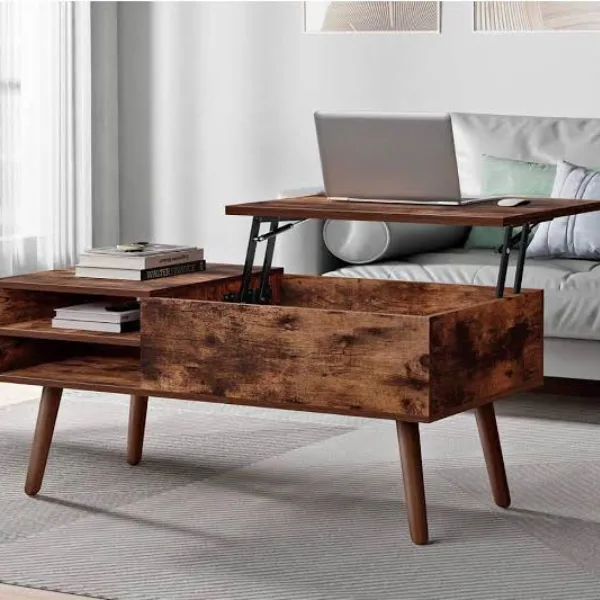
A lift-top coffee table raises up to laptop height, turning your living room into a workspace for an hour without needing a separate desk. When you’re finished, it folds back down and goes right back to being a normal coffee table.
Why It Works
Most small homes don’t have room for a dedicated office, but most people still need somewhere to work occasionally. A lift-top table solves that problem without permanently giving up floor space to a desk that only gets used part of the day.
Best For
Studio apartments, work-from-home renters, or small living rooms doubling as a part-time office.
Styling Tips
- Choose a table with hidden storage underneath for chargers and notebooks
- Pair it with a dining chair you can pull over instead of buying a desk chair
- Keep the raised surface clear except for your laptop while you’re working
- Lower it back down at the end of the day so it reads as a coffee table again
The Daybed Swap
Replace the traditional sofa with a daybed, which gives you relaxed lounge seating during the day and a real bed for overnight guests, without the bulk of a sleeper sofa. Most daybed frames also sit lower and slimmer, which genuinely helps in a tight room.
Why It Works
A daybed pulls double duty as seating and a guest bed, and most designs are slimmer than a traditional sofa, which keeps sightlines open in a small space. It also brings a slightly more relaxed, lived-in feel than a stiff three-seater ever could.
Best For
Studio apartments, guest rooms that double as a living room, or small homes that regularly host overnight visitors.
Styling Tips
- Style it with a mix of throw pillows and a folded blanket, just like a sofa
- Push it under a window for the most natural, balanced placement
- Keep a spare set of sheets in a basket nearby for quick guest setup
- Choose a wood or metal frame rather than heavy upholstery to keep it visually light
The Sleek Sleeper Sofa for Guests
A modern sleeper sofa looks just like a regular low-profile sofa during the day, then folds out into a real mattress at night. Today’s versions have shed the lumpy, bar-in-your-back reputation, making them a genuinely smart choice for small living rooms that need to flex.
Why It Works
This solves the classic small-apartment problem of needing a guest room you don’t actually have. Because it looks like a normal sofa the rest of the time, you’re not sacrificing daily style just to have a backup bed a few times a year.
Best For
One-bedroom apartments, small homes without a spare room, or anyone who hosts visitors occasionally but not often enough to dedicate a whole room to them.
Styling Tips
- Choose a slim track-arm or no-arm design so it doesn’t read as bulky
- Layer it with cushions and a throw to disguise the folded mechanism underneath
- Keep a foldable mattress topper stored in an ottoman for extra guest comfort
- Pick a performance fabric, since it sees more daily wear than a typical sofa
The Nesting Tables Trick
Use two or three nesting tables of different sizes instead of one bulky coffee table. They tuck neatly inside each other when you’re not using them, then pull apart for extra surface space whenever friends come over or you need a spot for snacks and drinks.
Why It Works
A single large coffee table takes up the same footprint all the time, whether you need that surface space or not. Nesting tables flex along with you, staying compact day to day and expanding only when company actually shows up.
Best For
Small apartments that entertain occasionally, studio living rooms, or anyone short on space who still wants flexible surface area on hand.
Styling Tips
- Choose mixed materials, like a wood top on a metal base, for visual interest
- Tuck the smallest table fully inside the largest one when you’re not entertaining
- Pull one table beside the sofa as a drink spot when you need extra surface
- Stick to two or three nested sizes so the stack doesn’t start looking cluttered
Floating Shelves Above the Sofa
Mount a row of slim floating shelves on the wall above your sofa to display books, plants, and a few framed photos. It’s vertical storage that costs almost nothing in floor space, and it pulls the eye upward, which makes the ceiling feel a little higher.
Why It Works
Small rooms run out of floor space fast, but wall space almost always goes unused. Floating shelves give you display and storage room without claiming a single square foot on the ground, and that upward visual pull genuinely makes the room feel taller than it is.
Best For
Small apartments, rental homes where built-ins aren’t an option, or any living room with a blank wall above the sofa.
Styling Tips
- Leave at least 6 inches between the top of the sofa and the lowest shelf
- Style in odd numbers, like one plant, one stack of books, one small frame per shelf
- Mix heights and textures rather than lining everything up at the same level
- Keep one shelf mostly empty so the whole display doesn’t feel crowded
The Corner Ladder Shelf
A leaning ladder shelf takes up almost no floor space but gives you several tiers for books, plants, and decor. Tucked into an awkward corner that would otherwise sit empty, it turns dead space into one of the most personality-filled spots in the entire room.
Why It Works
Corners are tricky because most furniture is built for straight walls, not angles. A ladder shelf leans diagonally by design, so it fits naturally into a corner without custom carpentry, and its open-back shape keeps the room feeling airy instead of boxed in.
Best For
Awkward corners in small or normal-sized living rooms, especially spaces that don’t have room for a full bookshelf.
Styling Tips
- Place your tallest plant on the bottom shelf and scale down as you go up
- Lean it against the wall at a slight angle rather than forcing it flush
- Keep the top shelf light, like a small lamp or single framed print
- Use baskets on lower shelves to hide less attractive items like chargers
The Built-In Window Seat With Hidden Storage
Build a low bench seat into your window nook with a hinged or lift-up top, turning unused space under the window into both extra seating and hidden storage for blankets, board games, or seasonal items. It’s a small-space classic for good reason.
Why It Works
Window areas often become awkward dead zones because furniture rarely fits well against a windowsill. A custom-fit bench solves that problem completely while adding a cozy reading spot and storage you can’t see, which keeps the whole room looking calm and uncluttered.
Best For
Homes with a deep window ledge, bay window, or alcove, particularly in normal-sized or larger living rooms with good natural light.
Styling Tips
- Add a long, fitted cushion plus two or three throw pillows for comfort
- Reserve the hidden storage for off-season blankets or items you don’t need daily
- Hang a curtain just behind the seat for privacy without blocking the light
- Keep the surrounding wall simple so the window seat stays the visual focus
The Open Bookshelf Room Divider
Use a tall, open-backed bookshelf to gently separate your living area from a hallway, entryway, or dining space, without closing off the light. It creates the feeling of two rooms in one, while every shelf still works as genuine storage and display space.
Why It Works
A solid wall would block light and chop up a small space, but an open shelf lets light and sightlines pass right through while still giving each zone its own identity. You get the privacy of a divider without any of the closed-in feeling.
Best For
Studio apartments, open-plan layouts, or small homes where the living room flows directly into another space without a wall.
Styling Tips
- Keep roughly a third of the shelves empty so light can pass through clearly
- Face the divider so books and decor are visible from the living room side
- Anchor the bottom shelves with baskets for everyday items like shoes or mail
- Choose a slim frame design rather than a deep, heavy bookcase
The Soft Monochrome Neutral Palette
Paint the walls, choose the sofa, and style nearly everything in close shades of the same neutral, like warm white, oatmeal, and pale wood. Keeping the big surfaces in one tonal family removes visual breaks, which makes a small room feel noticeably larger and calmer.
Why It Works
When walls, floors, and furniture all sit in a similar color family, there’s nothing for the eye to stop on, so the room reads as one continuous surface instead of separate, boxed-in pieces. That visual flow is one of the most reliable small-space tricks there is.
Best For
Small apartments, rental living rooms, or anyone short on natural light who wants the space to feel brighter and more open.
Styling Tips
- Stick to warm white walls, oatmeal textiles, and a soft beige or greige sofa
- Add texture through a chunky knit throw or a jute rug instead of color
- Use one or two black accents, like a lamp base, so the room doesn’t feel flat
- Avoid more than one bold pattern anywhere in the room
The Warm Earthy Organic Modern Look
Layer in natural materials, like a live-edge wood coffee table, rattan baskets, linen curtains, and a few well-placed plants, for a modern living room that still feels warm and grounded instead of cold or showroom-stiff. This look softens modern style without losing its clean lines.
Why It Works
Pure modern design can feel sterile in a small space, but natural textures add warmth without adding visual clutter. Wood grain, woven fiber, and greenery bring life into the room while keeping the overall silhouette clean and current.
Best For
Normal-sized living rooms with decent natural light, especially homes that want a modern feel without going fully minimalist or industrial.
Styling Tips
- Mix at least three natural materials, like wood, rattan, and linen, in one room
- Add one or two medium plants rather than several tiny ones scattered around
- Choose a jute or sisal rug to ground the space in texture
- Keep walls in soft white, cream, or sand so the materials themselves stand out
The Black-and-White Modern Contrast
Build your color scheme entirely around crisp white walls and furniture with sharp black accents, like a black coffee table frame, picture frames, or window trim. The high contrast feels distinctly modern and reads as intentional rather than empty, even in a very small room.
Why It Works
A small room done in all white can sometimes feel flat or unfinished. Adding black in smart, controlled doses gives the eye something to focus on and adds depth, while the dominant white keeps the space feeling open and bright.
Best For
Small modern apartments or normal-sized living rooms with good natural light, particularly for renters who want a bold look without painting a colorful wall.
Styling Tips
- Keep black to about 20 percent of the room, used in frames, legs, or hardware
- Choose one black statement piece, like a pendant light or accent chair
- Add a textured cream or gray rug to soften the contrast underfoot
- Skip a third major color so the look stays crisp
The Moody Charcoal Accent Wall
Paint just one wall in a deep charcoal, navy, or forest green instead of going dark across the whole room. A single moody wall adds drama and depth to a small space while the remaining light walls keep the room from feeling closed in or heavy.
Why It Works
A small room painted entirely dark can feel like a cave, but one dark wall acts almost like a piece of art, adding depth and a clear focal point. The lighter walls around it bounce daylight back in, balancing out the moodier tone.
Best For
Small to normal-sized living rooms with at least one good window, ideally painted on the wall behind the sofa or TV for the most impact.
Styling Tips
- Choose the wall that gets the least direct sun to avoid a flat, dull look
- Use a matte or eggshell finish rather than high gloss for a softer feel
- Hang one light-colored art piece or mirror to break up the dark surface
- Keep the rest of the room light and neutral so the accent wall stands out
The Biophilic Greenery Corner
Dedicate one corner of the room to a cluster of plants at different heights, like a tall fiddle leaf fig, a trailing pothos on a shelf, and a small snake plant on the floor. It’s one of the cheapest ways to add life and softness to a modern space.
Why It Works
Plants bring natural texture and color into a room without adding any hard furniture lines, which is exactly what a small space needs. Grouping a few plants together also reads as an intentional design choice rather than random greenery scattered around the room.
Best For
Living rooms with at least one source of natural light, in homes of any size, especially small apartments looking for personality on a tight budget.
Styling Tips
- Mix at least three plant heights so the corner doesn’t look flat
- Choose low-maintenance plants like pothos, snake plant, or ZZ plant if you don’t have a natural green thumb
- Use varied pot materials, like terracotta and woven baskets, for texture
- Keep the rest of that corner simple so the plants stay the focus
The Layered Lamp Lighting Scheme
Skip the single overhead light and bring in at least three light sources at different heights, like a floor lamp, a table lamp, and a smaller accent light. Layered lighting is the difference between a small room that feels flat and one that feels warm and considered.
Why It Works
One overhead light creates harsh, even light with no depth, which can actually make a small room feel smaller and more clinical. Multiple light sources at different heights create pools of warm light and shadow, adding dimension that tricks the eye into seeing more space.
Best For
Every small living room, regardless of layout, but especially rooms without much natural daylight or with only one ceiling fixture to work with.
Styling Tips
- Use warm white bulbs, around 2700K, instead of cool white for a cozier glow
- Place one floor lamp in a corner, one table lamp by the sofa, and a third light elsewhere
- Put lamps on dimmers where possible so you can adjust the mood at night
- Try turning off the overhead light some evenings and relying only on the lamps
The Statement Pendant Over the Coffee Table
Hang a single sculptural pendant light above the coffee table instead of relying only on lamps and an overhead fixture. It draws the eye up, adds personality without taking up any floor space, and gives a small room one clear, modern focal point.
Why It Works
A statement pendant does double duty as lighting and art, which matters in a small room where every piece needs to earn its place. Because it hangs from the ceiling, it adds visual interest without competing for the floor space your furniture already needs.
Best For
Living rooms with a ceiling at least 8 feet high and a clear spot above the coffee table, in homes of any size.
Styling Tips
- Hang it low enough to feel intentional, usually 28 to 34 inches above the table
- Choose a shape with some negative space, like a globe or cage design, so it doesn’t feel heavy
- Stick to one statement pendant rather than a cluster in a small room
- Match the metal finish to your other hardware, like lamp bases or shelf brackets
The Oversized Single Art Piece Wall
Instead of a busy gallery wall of small frames, hang one large-scale piece of art behind the sofa. A single oversized piece gives the room a gallery-like focal point and is often easier to style around than a dozen mismatched smaller frames.
Why It Works
A cluster of small frames can visually clutter an already tight room, while one large piece reads as confident and curated. It gives the eye one clear place to land, which makes the whole wall feel finished rather than busy.
Best For
Any small or normal-sized living room with at least 6 feet of wall space behind the main sofa.
Styling Tips
- Size the art to cover roughly two-thirds of the sofa’s width
- Hang it so the center sits at eye level when seated, usually 60 to 64 inches from the floor
- Choose a piece with colors that echo something already in the room, like a pillow or rug
- Skip the frame and go with an unframed canvas for an even more modern look
The Mirror Wall Expansion Trick
Hang one large mirror, or a cluster of smaller ones, directly across from your main window or light source. The reflection doubles the natural light bouncing around the room and visually pushes the wall back, making a small living room feel noticeably more open.
Why It Works
Mirrors reflect both light and the room itself, which tricks the brain into perceiving more depth than actually exists. Positioned correctly, a mirror can make a small room feel like it continues past the wall it’s hanging on.
Best For
Small living rooms with limited natural light, narrow rooms, or any space where one wall feels especially closed in.
Styling Tips
- Hang the mirror directly across from a window, never beside or behind it
- Choose one large mirror over a cluttered gallery of tiny ones for the cleanest look
- Lean a floor mirror against the wall if you’d rather skip drilling
- Keep the frame simple and modern so it doesn’t compete with the reflection itself
The Fluted Wood Paneling Accent Wall
Add vertical fluted or slatted wood paneling to one wall, either behind the sofa or surrounding the TV, for texture and warmth without any extra furniture. The ridged, vertical lines bring an architectural, high-end feel to an otherwise plain modern living room.
Why It Works
Vertical lines naturally draw the eye upward, which makes ceilings feel taller and rooms feel less boxy. Fluted paneling also adds genuine texture to a flat wall, something paint alone can’t do, without taking up a single inch of floor space.
Best For
Normal to larger modern living rooms, particularly behind a TV or sofa where a plain flat wall currently feels unfinished.
Styling Tips
- Choose a wood tone that complements your flooring, like warm oak or walnut
- Run the panels floor to ceiling rather than stopping partway up the wall
- Add integrated LED strip lighting behind the panels for a soft evening glow
- Keep that wall free of art so the texture itself stays the feature
Mistakes to Avoid When Decorating a Small Modern Living Room
Even with great ideas in hand, a few common habits can quietly undo all your hard work. Here’s what to watch for.
Pushing Every Piece of Furniture Against the Wall
It feels logical, but lining every piece up along the perimeter actually makes a small room feel more closed in, not less. Pulling furniture even a few inches away from the wall creates breathing room and a better sense of flow.
Choosing a Rug That’s Too Small
A rug that floats in the middle of the furniture, with chair and sofa legs hanging off the edges, makes the whole room feel disjointed. The rug should be large enough that at least the front legs of your seating sit on top of it.
Relying on One Overhead Light
A single ceiling fixture creates flat, even light with zero depth, which can make a small room feel more like an office than a living room. Layer in lamps and smaller fixtures at different heights instead.
Filling Every Wall and Corner Out of Habit
Not every empty spot needs something in it. Leaving a little negative space around your furniture actually makes a small room easier to live in and far less cluttered to look at.
Buying One Giant Sectional Because It Seems Practical
A bulky corner sectional can eat up more space than several smaller, well-placed pieces. In a genuinely small room, two slimmer sofas or a sofa-and-chair combo often fits better and looks more intentional.
Hanging Curtains Too Close to the Window Frame
Mounting the curtain rod right above the window makes the ceiling look lower and the window look smaller. Hang it 4 to 8 inches above the frame instead to draw the eye upward and make the whole room feel taller.
Matching Every Single Piece Too Perfectly
A living room where everything matches exactly can end up looking flat and a little lifeless. Mixing in one or two pieces with a different texture or era gives the room personality instead of making it feel cookie-cutter.
Skipping the Measuring Step
It’s tempting to eyeball a piece of furniture and hope it fits, but a few inches can be the difference between a smooth layout and a daily obstacle course. Always measure your space, your doorways, and the furniture itself before you buy.
Conclusion
A small living room isn’t a limitation, it’s a design challenge with a lot of genuinely good solutions, and you’ve just gone through 27 of them. The trick isn’t trying to use all 27 at once. Pick two or three that fit how you actually live, whether that’s a floating sofa layout paired with a layered lighting scheme, or a storage ottoman next to a moody accent wall, and build from there.
Modern style in a small space comes down to intention: fewer pieces, chosen well, with enough breathing room to let each one shine. Get the layout right first, then layer in color, lighting, and a few personal touches, and your small living room will start to feel less like a compromise and more like the best room in the house.
Frequently Asked Questions (FAQs)
What is the best layout for a small modern living room?
There isn’t one single best layout, since it depends on the room’s shape and what you actually use it for. As a general rule, float the sofa slightly away from the wall, build the layout around one clear focal point like a TV or fireplace, and leave a clear walking path of at least 30 inches.
Should I use a large rug or a small rug in a small living room?
Go larger than you think you need. A rug that’s too small will make the furniture look like it’s floating in the middle of nowhere, while a properly sized rug, big enough for at least the front legs of your seating to sit on, helps ground the whole layout.
Can a small living room fit a sectional sofa?
Yes, as long as you choose a compact or apartment-sized sectional and place it in a corner rather than floating it in the middle of the room. Look for one with visible legs so the room still feels open underneath it.
What colors make a small living room look bigger?
Soft, warm neutrals like white, oatmeal, and pale wood tend to make a small room feel more open because they remove visual breaks between walls, floors, and furniture. That said, one bold accent wall or a few dark details can still work well if the rest of the room stays light.
How much furniture is too much for a small living room?
If you can’t walk around comfortably or every wall and corner is filled with something, you likely have too much furniture. A good rule of thumb is one main seating piece, one coffee table, and one or two supporting pieces like a chair or storage ottoman.
Do I still need an overhead light if I have lamps?
You don’t need to rely on it as your only light source, but having it available for general brightness is still useful. Most small living rooms look and feel best with layered lighting, meaning lamps and accent lights doing most of the work, with the overhead light as backup.
How do I make a small living room feel modern without feeling cluttered?
Stick to clean lines, a simple color palette, and multifunctional furniture that does more than one job, like a storage ottoman or a lift-top coffee table. Modern style in a small space is really about restraint, choosing fewer, better pieces instead of filling every available inch.