

18 Different Japanese Bedroom Designs (Expert Guide)
If you have ever walked into a room and instantly felt calm — no clutter, no noise, just peace — you have experienced what Japanese bedroom design does best. I have been helping people style their homes for years, and I can tell you with full confidence that Japanese-style bedrooms are some of the most satisfying spaces to create. They are not expensive to pull off, they are not complicated to understand, and they work in almost every home — big or small.
The whole idea behind Japanese bedroom design comes down to one thing: intention. Every piece of furniture, every texture, every bit of lighting has a reason to be there. Nothing is random. Nothing is “just filling space.” That mindset alone will completely change how your bedroom feels.
In this guide, I am walking you through 18 real, practical Japanese bedroom ideas that you can actually use. I will explain why each one works, who it is best suited for, and exactly how to style it without overthinking it. Whether you are starting from scratch or refreshing an existing room, you are going to find something here that clicks.
Table of Contents
18 Japanese Bedroom Design Ideas
Here are the most famous bedroom ideas in Japan:
1. Traditional Tatami Room Bedroom
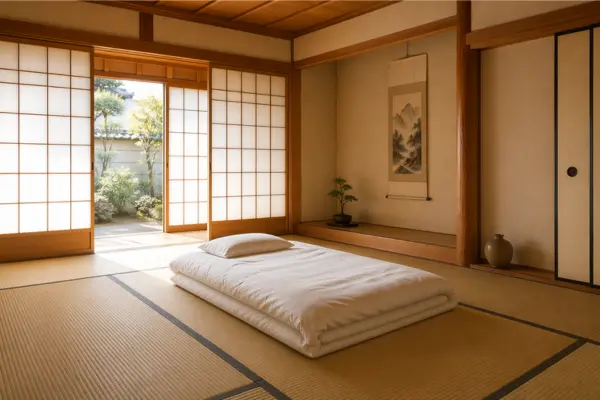
This is the one that started it all. A traditional tatami room bedroom is exactly what you picture when you think of Japan — woven straw mats on the floor, a foldable futon for sleeping, and a room so clean and open you can breathe easy the moment you walk in. During the day, the futon folds up and the room becomes open living space. At night, it becomes your bedroom. Simple, functional, and deeply calming.
Why It Works
The magic of this design is in the flexibility. Tatami mats create a naturally cushioned, breathable floor surface that feels warm underfoot and smells faintly earthy — a scent that actually promotes relaxation. Because there is no permanent bed taking up floor space, the room stays open and light no matter how small it is. There are no bulky furniture pieces competing for your attention. Your eyes have room to rest, and so does your mind.
Best For
This design works best for small to medium-sized rooms and people who genuinely enjoy a minimal, traditional lifestyle. It is also a fantastic choice if you are living in an apartment and want a bedroom that doubles as a daytime sitting or reading room.
Styling Tips
Stick to very light wood tones for any furniture pieces — a low side table or a small shelf. If you can add sliding doors or shoji-style panels, do it. Keep wall decorations down to one or two meaningful pieces, like a simple scroll or a single piece of framed art. Avoid rugs on top of the tatami mats — the mats are the floor.
2. Zen Minimalist Bedroom
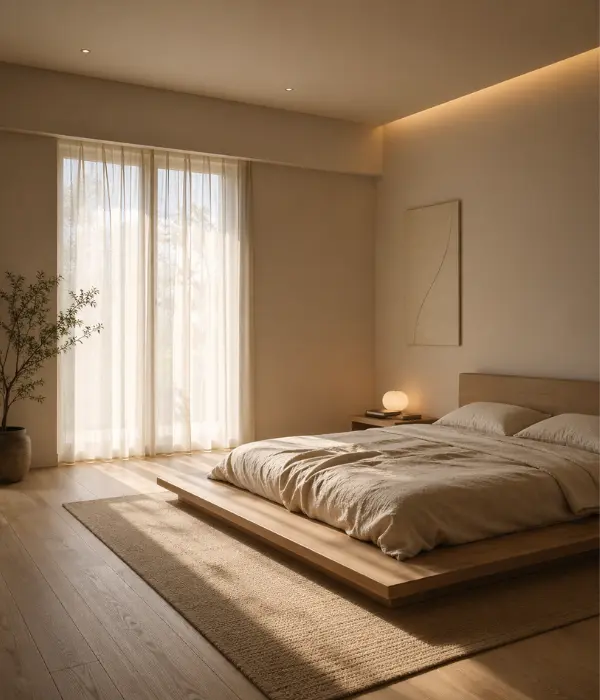
A Zen minimalist bedroom takes “less is more” and makes it a lifestyle. This design removes everything that does not absolutely need to be there — no stacks of books on the nightstand, no throw pillows piled five deep, no art gallery walls. What remains is clean, calm, and incredibly intentional. It is the kind of room that makes you exhale the second you walk in.
Why It Works
When your eyes have less to process, your brain calms down faster. That is not just a design philosophy — it is backed by how our nervous system works. A clutter-free room genuinely helps you fall asleep faster and wake up feeling less anxious. Every piece in a Zen bedroom earns its place, which means you never feel that low-level stress of looking at stuff that needs to be dealt with.
Best For
This is perfect for anyone who feels mentally drained at the end of the day, struggles with sleep, or simply hates dusting around seventeen decorative objects. It also works beautifully in any room size because the emptiness is the design.
Styling Tips
Keep your color palette to two or three neutrals — white, warm beige, soft grey. Add one small plant, like a peace lily or a simple succulent. Leave your nightstand with one item on it maximum. If it does not have a daily function, it does not live in this room.
3. Japandi Style Bedroom
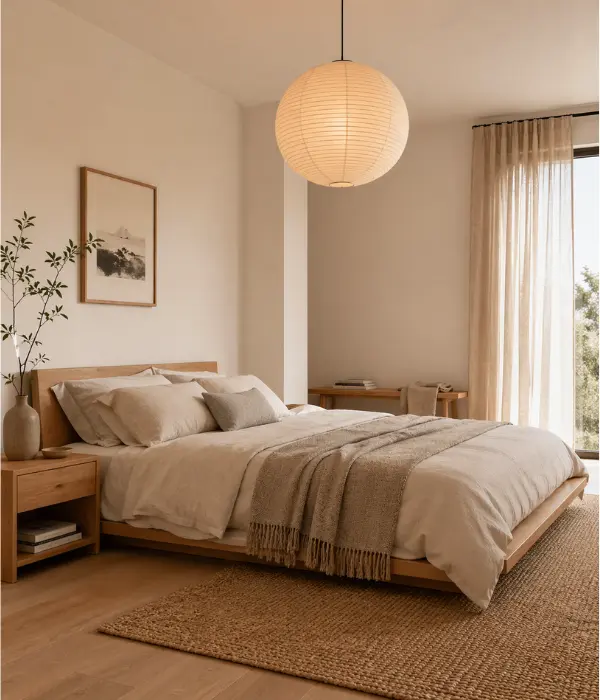
Japandi is the love child of Japanese minimalism and Scandinavian coziness, and it is one of my personal favorites to style. It takes the clean lines and calm philosophy of Japanese design and wraps them in the warm, tactile comfort that Scandinavian interiors do so well. Think natural wood, soft linen, muted tones, and just enough texture to make the room feel genuinely inviting rather than cold.
Why It Works
Pure minimalism can sometimes feel stark or even a little intimidating to live in. Japandi solves that problem by layering in warmth — through soft fabrics, rounded wooden furniture, and gentle lighting — without introducing clutter. The result is a room that feels both stylish and completely livable. You do not feel like you are living in a showroom. You feel like you are living in a home.
Best For
Japandi is ideal for modern homes and for anyone who loves minimalism in theory but found it a bit too cold in practice. It is also great for couples where one person wants sleek design and the other wants cozy comfort — this style genuinely meets in the middle.
Styling Tips
Mix light and medium wood tones — a pale oak bed frame with a slightly darker walnut side table works beautifully. Layer your bedding with linen and a chunky knit throw. Use warm-toned bulbs in your lighting, never cool white. Keep decorative objects minimal but choose ones with texture — a handmade ceramic vase, a woven basket for storage.
4. Small Space Japanese Bedroom
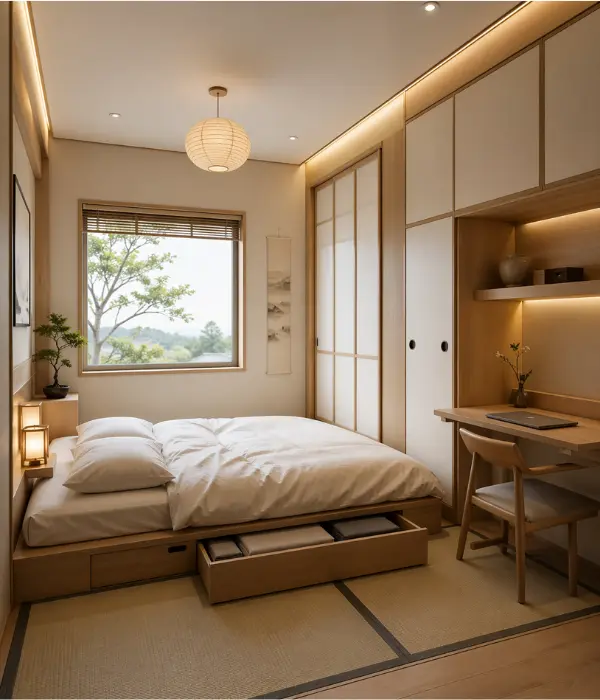
Just because your bedroom is small does not mean it has to feel cramped. Japanese design philosophy was basically invented for small spaces, and this particular approach proves it. The small space Japanese bedroom uses smart furniture choices, hidden storage, and a very intentional color palette to make a compact room feel open, organized, and genuinely restful.
Why It Works
Light colors bounce light around the room and make walls feel further apart. Low furniture keeps sightlines open, which makes ceilings feel higher. Hidden storage means everything has a place, so the room never looks messy even when it is fully functional. These are not tricks — they are just smart design principles that happen to make a huge difference in small rooms.
Best For
This design is made for apartments, studio spaces, guest rooms, or any bedroom where square footage is limited. It is also a great option for kids’ rooms where you need the space to work hard without feeling chaotic.
Styling Tips
Choose a foldable futon or a slim platform bed with built-in storage underneath. Use light wood tones and soft whites or warm creams on the walls. Mirrors on one wall will also open the space up dramatically. Avoid heavy curtains — go with light linen panels or simple bamboo blinds.
5. Low Platform Bed Bedroom
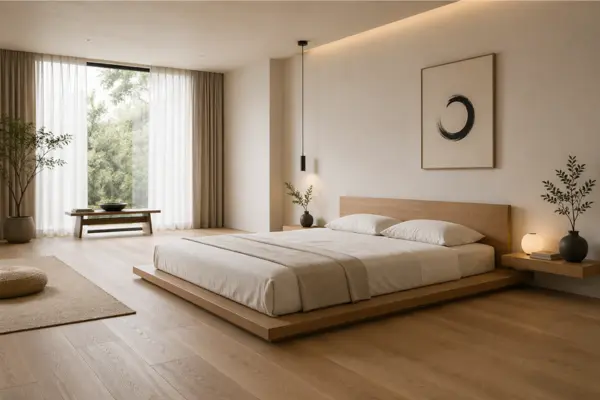
If you love the Japanese aesthetic but are not ready to go full futon-on-the-floor, a low platform bed is the perfect middle ground. It sits close to the ground, giving you that grounded, open feel of traditional Japanese design while still offering the comfort of a proper mattress. The room immediately looks wider, the ceiling feels taller, and the whole space has an easy, relaxed energy.
Why It Works
Height matters more than most people realize in bedroom design. When your bed sits high off the ground, it dominates the room visually. A low platform bed does the opposite — it lets your eye travel across the room rather than stopping at the furniture. The result is a space that feels genuinely open and restful, even if the actual square footage has not changed at all.
Best For
Low platform beds work well in medium to large bedrooms and suit modern interiors especially well. They are also a great choice for anyone who wants to keep a permanent bed setup while still embracing the Japanese aesthetic.
Styling Tips
Choose a platform bed with a simple, clean wooden frame — no headboard is completely fine, or go with a very low, flat headboard. Keep bedding simple and well-fitted. Avoid oversized fluffy duvets that pile high and break the low, clean silhouette you are going for.
6. Nature-Inspired Japanese Bedroom
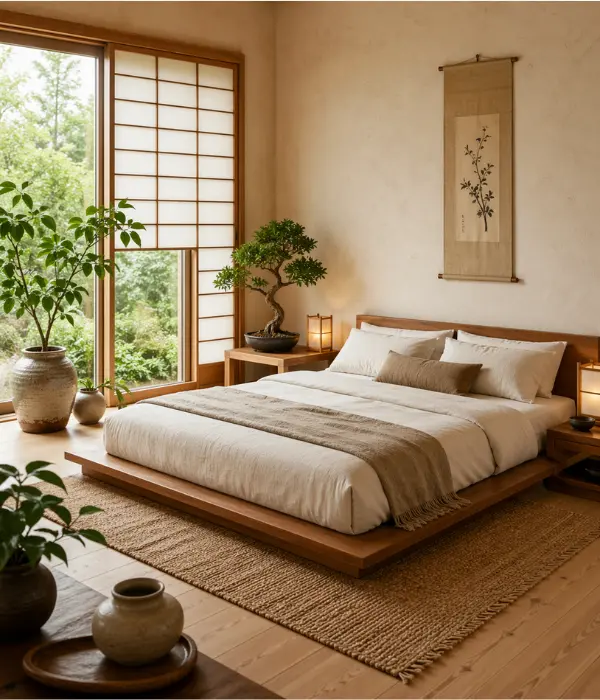
In Japanese design philosophy, nature is not just something outside the window — it is something you bring inside and live alongside. A nature-inspired Japanese bedroom does exactly that. Plants, natural wood, stone textures, bamboo, and organic fabrics all work together to create a bedroom that feels like a quiet corner of the outdoors. It is soft, grounding, and genuinely good for your wellbeing.
Why It Works
Research consistently shows that natural elements in your living space reduce cortisol — that is your stress hormone — and improve overall mood. Even something as small as a single plant on your bedside table makes a measurable difference in how relaxed you feel. In a nature-inspired Japanese bedroom, you are surrounding yourself with these calming elements intentionally and consistently.
Best For
This design is ideal for anyone who loves being outdoors but spends most of their time inside. It is also a great fit for people who find typical minimalist rooms a little too bare — the plants and natural textures add life and warmth without adding clutter.
Styling Tips
Start with a bonsai tree or a simple indoor plant like a snake plant or pothos — both are low maintenance and look beautiful in this setting. Use wooden furniture with visible grain. Add a woven jute or seagrass rug if you have hard floors. Natural linen bedding in earthy tones pulls everything together.
7. Shoji Screen Bedroom Layout
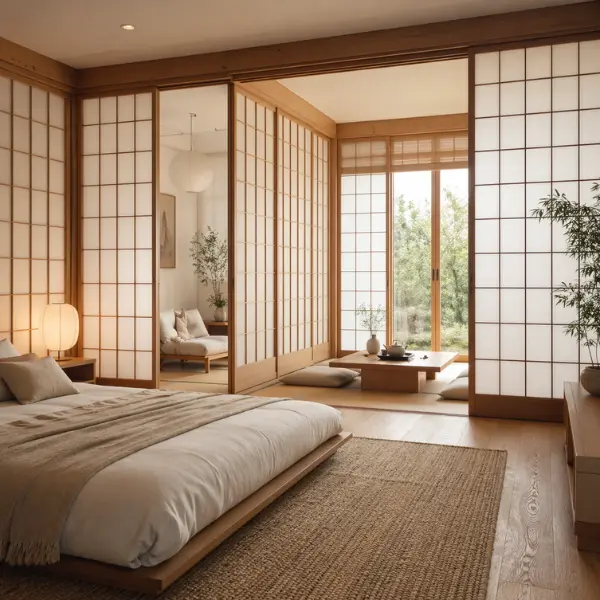
Shoji screens are one of the most iconic elements of Japanese interior design, and for good reason — they are incredibly practical. These paper-and-wood panels let soft, diffused light pass through while still providing privacy and division. Used in a bedroom, they can separate a sleeping area from a dressing area, create a cozy alcove around the bed, or simply replace a heavy door with something much more elegant.
Why It Works
Shoji screens solve one of the trickiest challenges in bedroom design: how do you divide a space without making it feel smaller? A solid wall blocks everything — light, sightlines, airflow. A shoji screen lets light and a sense of openness flow through while still creating separate zones. It is a flexible, beautiful solution that you genuinely cannot achieve with standard drywall.
Best For
This works best in medium to large rooms where you have space to zone effectively. It is also a great option for open-plan living spaces where you want to carve out a defined sleeping area without a full renovation.
Styling Tips
Keep your furniture low to complement the delicate, vertical lines of the screens. Stick to neutral tones throughout the room — the screens are already a visual feature and do not need to compete with bold colors or busy patterns. Rice paper screens in a natural wood frame are the most authentic choice.
8. Futon Folding Bedroom Concept
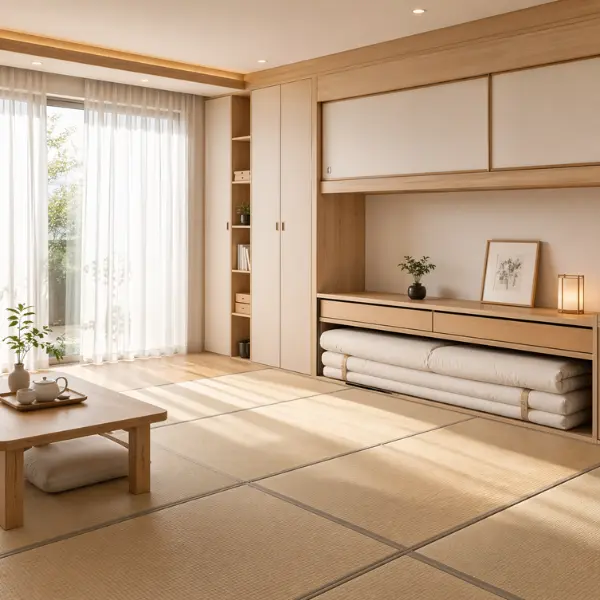
Think of this as the ultimate flexible bedroom. The futon folding concept is built around one core idea: your bedroom should be able to transform. At night, your futon lays flat and you sleep on it. In the morning, you fold it up and store it — and suddenly you have a full, open room to use however you need. Yoga space, home office, sitting room — the possibilities are completely up to you.
Why It Works
Most bedrooms sit empty and unused for fourteen or more hours a day. A bed takes up most of the floor space and serves exactly one function. The futon folding concept challenges that completely. By making your sleeping setup storable, you reclaim your room for daily life. It is one of the smartest uses of space I have ever seen, and it comes directly from traditional Japanese living.
Best For
This is a brilliant solution for small homes, studio apartments, or anyone who genuinely needs a multi-purpose room. It is also great for minimalists who want their bedroom to feel like a clean, open space rather than a room dominated by a bed.
Styling Tips
Invest in a good quality futon — not all futons are equal, and a thin cheap one will not give you the sleep you need. Use built-in wall shelving or a compact closet system for storing the folded futon during the day. Keep your floor plan completely open so the transformation from bedroom to living space is quick and effortless.
9. Warm Wooden Japanese Bedroom
Wood is the heartbeat of Japanese interior design. In a warm wooden Japanese bedroom, natural wood takes center stage — on the floors, in the furniture, sometimes even on the ceiling. The result is a space that feels deeply cozy and grounded without a single scented candle or decorative cushion doing the heavy lifting. The material itself does all the work.
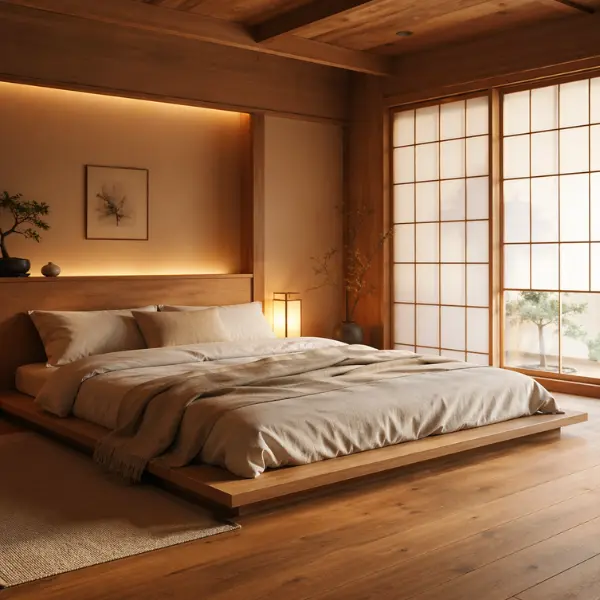
Why It Works
Wood adds warmth and organic texture that no paint color or fabric can fully replicate. It creates visual depth and a sense of craftsmanship that makes a room feel cared for and considered. In a Japanese bedroom specifically, wood kept in its natural tones — pale pine, honey oak, rich walnut — creates that perfect balance between warmth and calm. It never feels heavy or overpowering when it is used with intention.
Best For
This design works especially well in medium to large bedrooms and suits any home style that leans toward natural, cozy aesthetics. It is a great option if you love the idea of minimalism but find very white or very grey rooms a little too cold.
Styling Tips
Stick to two wood tones maximum — mixing too many finishes makes the room feel busy. Natural linen or cotton bedding in warm whites or oats pairs beautifully with wood. Avoid gloss or lacquered wood finishes — matte or satin natural finishes keep the look authentic and warm.
10. Japanese Loft Bedroom
When your floor space is limited but your ceiling has room to breathe, going vertical is one of the smartest moves you can make. A Japanese loft bedroom places the sleeping area on a raised platform or mezzanine level, leaving the space below completely open. The lower level can become a workspace, a reading nook, a dressing area, or simply an open floor space that makes the overall room feel bigger and more functional.
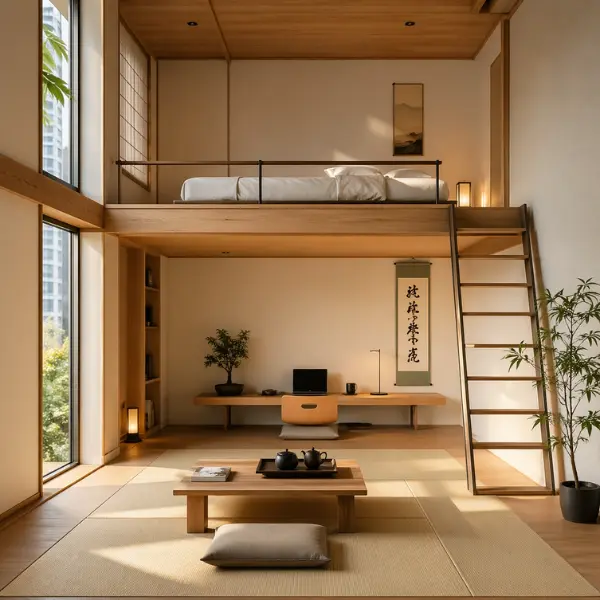
Why It Works
Vertical space is one of the most underused resources in home design. Most people think about square footage and forget entirely that height is also space. A loft bedroom changes that equation and makes a small apartment genuinely work like a much larger one. The separation of sleeping from living also improves both areas — your sleep space stays calm and dedicated, and your living space stays organized and open.
Best For
This design is ideal for small apartments with high ceilings — at least nine feet, ideally ten or more. It is also a great option for creative spaces like artist studios or home offices where you need dedicated areas for different activities.
Styling Tips
Keep the loft sleeping area very simple — a slim mattress, minimal bedding, maybe one small shelf within arm’s reach. Avoid adding too much furniture up top, as it makes the loft feel cramped. Use a simple wooden ladder rather than a bulky staircase to keep the design light and clean.
11. Dark Minimal Japanese Bedroom
Not every Japanese bedroom has to be white and airy. The dark minimal approach takes the same clean, intentional philosophy and shifts the palette into deep, moody territory — charcoal walls, dark walnut furniture, black steel accents, and rich textile layering. The result is a room that feels like a luxury retreat: calm, dramatic, and deeply sophisticated.
Why It Works
Dark tones add depth and a sense of enclosure that many people find genuinely comforting. Rather than making a room feel small, well-executed dark design makes it feel intimate and cocoon-like — which, for a bedroom, is actually exactly what you want. The key is that the minimalist structure of Japanese design keeps the darkness from ever feeling heavy or oppressive.
Best For
This works best in medium to large rooms with solid lighting options. It is a great choice for people who find bright, all-white rooms a little too clinical or cold, and for anyone who gravitates naturally toward a more dramatic, atmospheric aesthetic.
Styling Tips
Balance your dark walls and furniture with soft, layered lighting — think warm Edison bulb bedside lamps rather than bright overhead lights. Add one or two light-toned elements, like natural linen bedding or a pale wood floor, to keep the room from feeling too enclosed. Keep decorative objects to an absolute minimum.
12. Japanese Bedroom with Tea Corner
This idea adds something truly special to a bedroom — a small, dedicated corner for slowing down. A Japanese tea corner is nothing more than a low table, a couple of floor cushions, and a simple setup for making and enjoying tea. But what it creates is something much bigger: a ritual space that invites you to disconnect, breathe, and be present. It is genuinely one of my favorite touches in any bedroom design.
Why It Works
Having a dedicated spot for a quiet activity changes how you use your bedroom. Instead of defaulting to your phone every time you sit down, you have a beautiful little corner that invites you to do something intentional. It adds function to the room without adding clutter, and it reinforces the overall calm atmosphere that Japanese design is built on.
Best For
This is a great addition to medium and large bedrooms where you have a corner or alcove to work with. It is perfect for tea lovers, obviously, but also for anyone who wants a quiet space for journaling, reading, or simply sitting without a screen in front of them.
Styling Tips
Use a low wooden tea table — something simple and natural. Add two or three firm floor cushions in a neutral linen or cotton. Keep a small tray on the table with your tea supplies. A single plant or a small stone lantern nearby completes the corner beautifully. Do not overdo it — the simplicity is the whole point.
13. Open Garden View Bedroom
This design is about erasing the line between indoors and outdoors. An open garden view bedroom uses large sliding doors, floor-to-ceiling windows, or wide open panels to connect the sleeping space directly to an outdoor garden or courtyard. Natural light floods the room, the view becomes a living piece of art, and the boundary between your bedroom and nature dissolves completely.
Why It Works
Access to natural light and outdoor views has a profound effect on how we sleep and how we feel during the day. Waking up to soft morning light filtering through trees or looking out at a garden from your bed is genuinely restorative in a way that no interior design element can fully replicate. This design puts nature at the center of your daily experience without you having to go anywhere.
Best For
This is ideal for homes with outdoor space — a garden, a small courtyard, even a private balcony with some greenery. It works in both single-level homes and upper floors where there is a meaningful view to work with.
Styling Tips
Keep all furniture low so nothing interrupts the sightline to the outside. Use simple, sheer window panels rather than heavy curtains — you want to diffuse harsh midday light without blocking the view entirely. Choose outdoor plants that look beautiful from inside, like Japanese maples, bamboo, or flowering shrubs.
14. Minimal Luxury Japanese Bedroom
This is where Japanese minimalism meets genuine investment in quality. A minimal luxury bedroom does not add more — it upgrades what is already there. The furniture is exceptional. The bedding is the best linen you can find. The lighting is carefully considered and beautiful. There are very few pieces in the room, but every single one of them is worth noticing.
Why It Works
When you strip a room back to its essential elements, those elements have to work hard — and that means quality becomes genuinely visible. A beautifully crafted wooden bed frame becomes the focal point of the entire room. Premium linen bedding transforms the whole feel of the space. You notice and appreciate these things in a way you never would if they were competing with fifteen other decorative items.
Best For
This design is best suited to large bedrooms and people who prefer to spend more on fewer, better things. It is also a beautiful choice for a master bedroom where you really want the space to feel like a personal retreat.
Styling Tips
Invest in your bed first — a solid, well-crafted wooden frame will anchor the entire room. Then choose your bedding carefully: high-quality linen in a warm neutral tone is worth every penny. Add one statement lighting piece, like a handcrafted paper pendant light. Keep everything else out.
15. Compact Studio Japanese Bedroom
In a studio apartment, your bedroom is your living room is your home office is your dining room — all in one space. The compact studio Japanese bedroom solves this challenge by using smart layout planning, thoughtful furniture choices, and careful zoning to make everything coexist without the room ever feeling chaotic or cramped. It is one of the hardest design challenges out there, and Japanese principles handle it better than any other approach I know.
Why It Works
Japanese design has centuries of experience making small spaces work beautifully. The philosophy of using only what you need, keeping surfaces clear, and maximizing every inch of storage is practically tailor-made for studio living. When you apply these principles properly, a single room can feel like several distinct spaces — without a single wall being built.
Best For
This is the go-to approach for studio apartments, one-room living spaces, and compact homes where every square foot has to earn its place. It is also great for college dormitories or small rental spaces where you have limited ability to make structural changes.
Styling Tips
Use sliding partitions or shoji screens to create a soft visual boundary around your sleeping area without blocking light or making the space feel divided. Choose multi-function furniture — a low platform bed with storage underneath, a desk that doubles as a bedside table. Keep your color palette consistent throughout the entire space so it reads as one cohesive home rather than a mismatched collection of zones.
16. Wabi-Sabi Bedroom Style
Wabi-sabi is one of those design philosophies that sounds abstract until you see it in person — and then it immediately makes sense. The concept is rooted in finding beauty in imperfection, incompleteness, and the natural aging of materials. A wabi-sabi bedroom does not try to be perfect. The plaster might show texture. The wood might have a knot or a grain that draws your eye. The linen is slightly rumpled. And somehow, all of it looks exactly right.
Why It Works
Most interior design asks you to constantly maintain an ideal — everything perfect, everything in place. Wabi-sabi releases you from that completely. The beauty is in the realness of the materials, the authenticity of the space, the way things look when they are actually lived in. It creates a room that feels genuinely comfortable and honest rather than staged, and that is an incredibly relaxing thing to come home to.
Best For
Wabi-sabi is perfect for anyone who finds overly polished, perfect interiors a bit exhausting to live in. It is also a wonderful approach for people who love handmade, artisan, or vintage objects and want a design framework that celebrates rather than hides the character of those pieces.
Styling Tips
Embrace raw, unfinished materials — rough plaster walls, live-edge wood, unglazed ceramics. Let textiles be soft and slightly imperfect rather than pressed flat. Choose objects with history and character over brand-new showpieces. Resist the urge to make everything match perfectly — wabi-sabi lives in the beautiful tension between elements.
17. Modern Japanese Smart Bedroom
This design proves that minimalism and modern technology are not opposites — they just need to be introduced to each other properly. A modern Japanese smart bedroom uses smart lighting, hidden cable management, integrated speakers, and tech-forward features to improve comfort and convenience, all while keeping the room looking clean, calm, and completely uncluttered. The technology serves the design rather than fighting against it.
Why It Works
The biggest challenge with technology in bedrooms is that it tends to create visual noise — cables, charging blocks, multiple devices sitting out, LED lights glowing in the dark. A smart bedroom solves all of this by integrating everything invisibly. Lights are controlled by voice or a single app. Cables disappear behind panels or through built-in channels. The room functions beautifully and looks just as peaceful as any other Japanese-inspired space.
Best For
This design is perfect for modern homes and for tech-forward people who want a high-functioning bedroom without sacrificing the calm, minimal aesthetic. It is also a great choice if you work from home and need your bedroom to support good sleep even though screens are part of your daily life.
Styling Tips
Run all cables through the wall or use cable channels that paint over seamlessly. Choose smart bulbs that can shift from cool productive light in the morning to warm amber tones in the evening. A hidden wireless charging panel built into your nightstand eliminates charging clutter instantly. Keep all tech accessories out of sight when not in use.
18. Floor Seating Japanese Bedroom Lounge
This design brings the living room concept down to floor level in the most inviting way possible. Floor cushions, low tables, and a layered rug arrangement create a relaxed lounge area within the bedroom — perfect for reading, having a conversation, or simply sitting and doing nothing for a while. It is casual, flexible, and has an easygoing warmth that no sofa or armchair can quite match.
Why It Works
Sitting close to the ground naturally encourages a slower, more relaxed posture and pace. It is harder to feel rushed or anxious when you are comfortably settled on a floor cushion at low level. This kind of seating also keeps the room visually open because nothing is raised up competing for visual space — your eye moves freely around the room and the whole space feels more connected and grounded.
Best For
This is a great addition to medium and large bedrooms that have a natural corner or open area to work with. It is ideal for people who love to spend time in their bedroom outside of sleeping — reading, journaling, meditating, or simply unwinding at the end of the day.
Styling Tips
Layer two or three floor cushions in complementary textures — linen, cotton, a slightly textured weave. A low bamboo or solid wood table in the center gives you a surface without adding height. A simple woven rug underneath ties the seating area together and makes it feel like a defined zone within the larger room. Keep everything uncluttered — one book, one candle, one cup of tea.
Mistakes to Avoid
Even with the best intentions, Japanese bedroom design is easy to get wrong if you do not know what to watch out for. Here are the most common mistakes I see — and exactly how to avoid them.
The biggest mistake is overcrowding. People hear “Japanese design” and strip out a few things, then congratulate themselves — but there are still too many pieces in the room. Japanese design requires you to be genuinely ruthless about what stays. If you are not sure whether something belongs, it probably does not.
The second mistake is mixing too many colors. Neutral does not mean boring, but it does mean restrained. When you introduce too many shades — even subtle ones — the room starts to feel busy in a way that undercuts the whole calm aesthetic. Stick to two or three tones and commit to them.
Bulky, heavy furniture is another common problem. Oversized bed frames, chunky dressers, towering wardrobes — they all fight against the open, airy feeling that Japanese design depends on. Go low, go simple, go natural.
Poor lighting ruins more Japanese bedrooms than almost anything else. Harsh overhead lights destroy the atmosphere instantly. You want warm, layered lighting — bedside lamps, a pendant with a warm bulb, maybe some indirect lighting behind a panel. Never a cold white LED glaring down from the ceiling.
Finally, do not ignore storage. Minimalism does not mean having nowhere to put your things — it means having excellent, hidden storage so your things do not live on surfaces. Built-in shelving, under-bed drawers, and smart wardrobe systems are all completely in the spirit of Japanese design.
Conclusion
Japanese bedroom design is not a trend. It is a way of thinking about space that has been refined over centuries, and it works as well in a small modern apartment today as it did in a traditional home a hundred years ago. The core idea has never changed: keep what matters, remove what does not, and treat your space with the same intentionality you would want it to give back to you.
You do not have to do everything at once. Start with one change — clear a surface, switch your lighting, bring in one natural element. See how it makes you feel. Then go from there. The most beautiful Japanese bedrooms I have ever seen did not happen overnight. They were built slowly, piece by piece, by people who were paying attention.
FAQs
What is the most important element in a Japanese bedroom?
Simplicity is the foundation of everything. Before you think about furniture, colors, or accessories, focus on removing anything that does not need to be there. A clear, open space is the starting point for every element on this list.
Can I create a Japanese bedroom in a small space?
Absolutely — in fact, small spaces often benefit the most from Japanese design principles. Foldable furniture, low profiles, hidden storage, and a restrained color palette work together to make compact rooms feel open, organized, and genuinely comfortable.
Do I need tatami mats for a Japanese bedroom?
No, and you should not feel pressured to use them if they do not suit your lifestyle or climate. You can achieve a very authentic Japanese feel using natural wood flooring, simple low furniture, and a disciplined approach to decoration. Tatami is traditional, not mandatory.
What colors work best for this style?
Soft, natural tones are your best friends here — warm white, light beige, pale grey, soft taupe, and natural wood shades. These create the calm, balanced backdrop that Japanese design depends on. If you want to add a deeper tone, do it in one place, like a single dark accent wall or a rich wood furniture piece.
Is Japanese bedroom design expensive?
It does not have to be at all. The whole philosophy is about owning fewer, more considered things — which often means spending less overall, not more. Start by subtracting rather than adding. Clear out what is not working, keep what is, and add new pieces slowly and intentionally. That approach is both more affordable and more in keeping with the spirit of Japanese design than any shopping spree could ever be.