
11 Minimalist Bedroom Ideas for a Calm and Beautiful Space
If your bedroom feels cluttered, overwhelming, or just plain stressful the moment you walk in — trust me, you are not alone. I have helped dozens of homeowners transform their bedrooms, and almost every single one had the same problem: too much stuff and no clear plan.
Minimalist design is not about stripping your room down to nothing and sleeping on the floor. It is about making smart, intentional choices so your bedroom feels peaceful, functional, and genuinely beautiful. Think of it this way — when everything in your room has a purpose, the whole space starts to breathe.
In this guide, I am walking you through 11 minimalist bedroom ideas that actually work in real homes. Whether you have a tiny apartment bedroom or a large master suite, there is something here for you. I have personally seen these ideas work across all kinds of spaces, budgets, and styles. So grab a coffee and let’s get into it.
Table of Contents
11 Minimalist Bedroom Ideas
Here is the list of Ideas:
1. Soft Neutral Color Palette
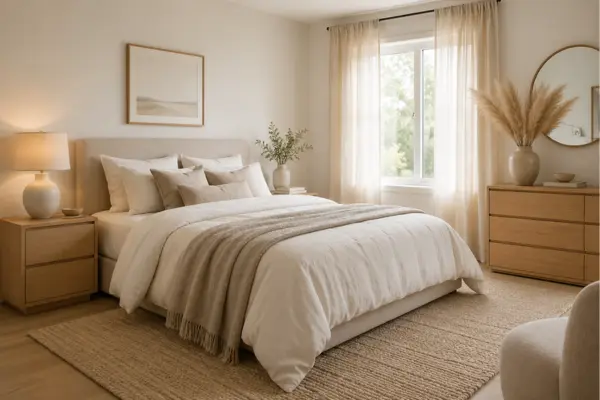
If you want your bedroom to feel instantly calmer, the single fastest fix is switching to a soft neutral color palette. Shades like warm white, sandy beige, light greige, or dusty taupe work together to create a space that feels open, airy, and easy on the eyes. You are not going for boring — you are going for intentional and restful.
Why It Works
Neutral colors do something very specific for a bedroom: they stop your brain from getting visually stimulated the moment you walk in. Bold or dark colors draw attention and create energy, which is great for a living room but terrible for a room where you are trying to wind down. Neutrals also reflect natural light beautifully, which makes even a smaller bedroom feel much bigger and brighter than it actually is. Another bonus — neutral walls and furniture are incredibly easy to style. You can swap out pillows, throws, and small accents seasonally without repainting anything.
Best For
This approach is perfect for small bedrooms that need to feel more spacious, shared bedrooms where two people need to agree on a vibe, or anyone who has tried bold color schemes and found them exhausting to live with long term.
Styling Tips
Do not make the mistake of using only one shade of white or beige — that actually ends up looking flat and a little clinical. Instead, layer two or three similar neutrals together. For example, pair a warm ivory wall with a soft linen duvet and a light greige rug. Then bring in texture through a chunky knit throw or a woven cushion cover. That layering is what keeps a neutral room feeling rich and cozy rather than empty. Keep your curtains in a light, airy fabric like sheer linen, and avoid anything with heavy patterns or bright colors.
2. Low-Profile Bed for a Clean Look
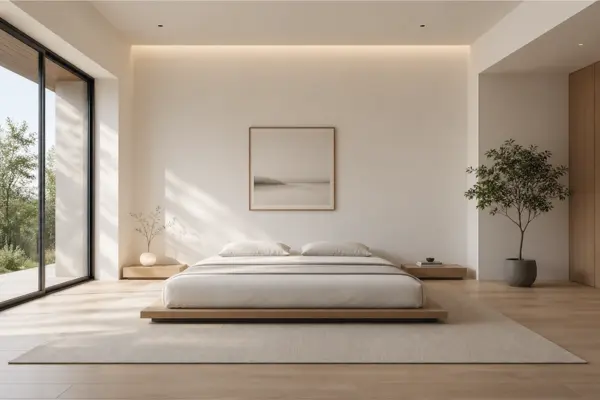
A low-profile bed is one of those design moves that looks incredibly intentional without requiring much effort at all. These beds sit close to the ground — usually with a platform frame rather than a traditional box spring setup — and they instantly give a bedroom that calm, modern, grounded feeling that you see all over Pinterest and design magazines.
Why It Works
When the tallest piece of furniture in your room sits lower to the ground, your eyes naturally perceive the space as larger. It is a visual trick that genuinely works. A lower bed also allows more of the wall to show above the headboard, which creates breathing room and makes the ceiling feel higher. On top of that, low-profile beds tend to have clean, straight lines without a lot of ornamental detail, which fits perfectly into a minimalist aesthetic. They keep the room looking tidy without you having to do anything extra.
Best For
Low-profile beds work well in medium to large bedrooms where you want the bed to feel grounded rather than imposing. They are also a great solution for rooms with low ceilings, because they do not compete with the ceiling height the way traditional tall bed frames do.
Styling Tips
Keep your bedding clean and simple — a plain duvet cover in a neutral tone, two to four pillows max, and maybe one textured throw folded at the foot. Avoid stacking multiple pillows or adding a lot of decorative cushions, because that goes against the whole clean-lined feeling you are going for. If you want nightstands, go with low ones that match or sit slightly below the mattress height. Or skip nightstands altogether and use a floating wall shelf instead — that is an even cleaner look.
3. Floating Furniture for Small Spaces
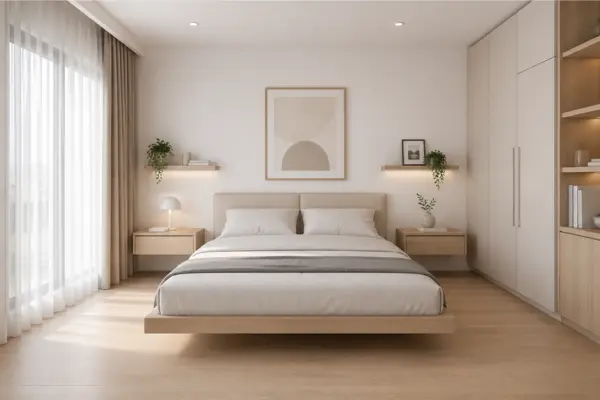
If you have a small bedroom and feel like there is simply not enough space, floating furniture might just be the idea that changes everything for you. Floating furniture is any piece that is mounted directly to the wall rather than sitting on the floor — think wall-mounted nightstands, floating shelves, or a floating desk. By getting furniture off the floor, you instantly create a sense of openness and visual breathing room.
Why It Works
When the floor is clear and uninterrupted, a room automatically looks and feels bigger. It is the same reason real estate photographers always clear the floor before a shoot — visible floor space reads as spaciousness. Floating pieces also make cleaning much easier, because there are no legs or bases for dust and clutter to collect around. From a design perspective, floating furniture has a light, airy quality that heavy floor-standing pieces simply cannot replicate. It makes a small room feel intentionally designed rather than crammed.
Best For
This is specifically a small bedroom and compact apartment solution. If you are working with limited square footage and every inch counts, floating furniture will give you back floor space without sacrificing storage or function.
Styling Tips
Start with floating nightstands — these are the easiest swap and make an immediate difference. Mount them at a comfortable height relative to your mattress, usually level with the top of the mattress or slightly higher. Keep the surfaces minimal: a small lamp, a book, maybe a plant. That is it. Do not use floating shelves as an excuse to display more stuff — the goal is still simplicity. If you add a floating shelf above the bed, keep it clean with just one or two items.
4. Built-In Storage Wall
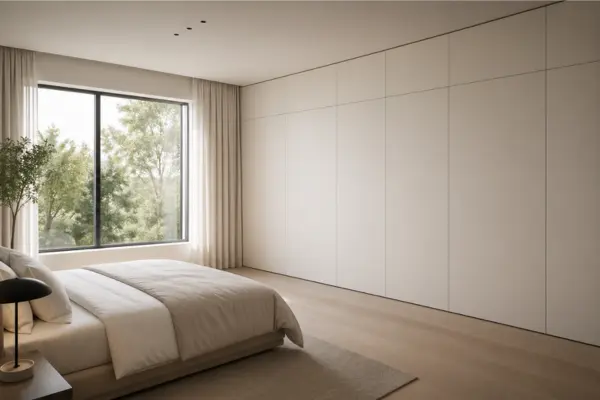
A built-in storage wall is one of the most transformative things you can do for a minimalist bedroom, especially if storage is a real challenge in your home. Instead of having a wardrobe standing in the middle of the room or a dresser taking up floor space, a built-in wall system tucks everything away behind flush doors — and suddenly the room looks effortlessly clean and intentional.
Why It Works
The beauty of built-in storage is that it completely eliminates visual clutter. When everything — your clothes, shoes, bags, and everyday items — lives behind closed doors that blend into the wall, your eye has nothing to land on except the clean, calm surfaces. It also makes the most of your vertical space all the way up to the ceiling, which is storage real estate that most people completely ignore. Built-ins feel permanent and considered, which automatically elevates the overall look of a bedroom.
Best For
Built-in storage walls work best in medium to large bedrooms where storage is a genuine priority. They are also a great solution for master bedrooms that need to function as a walk-in wardrobe alternative without the dedicated room.
Styling Tips
The most important detail here is color matching. Paint or finish your built-in cabinets in exactly the same color as your walls. When the cabinets disappear into the wall, the effect is seamless and architectural rather than furniture-like. Go for handle-free designs — push-to-open mechanisms or recessed finger pulls — to keep the surface completely smooth and uninterrupted. Inside the cabinets, use organizers and dividers so things stay tidy and easy to find. A messy interior undoes all the work of a clean exterior.
5. Statement Headboard with Simple Surroundings
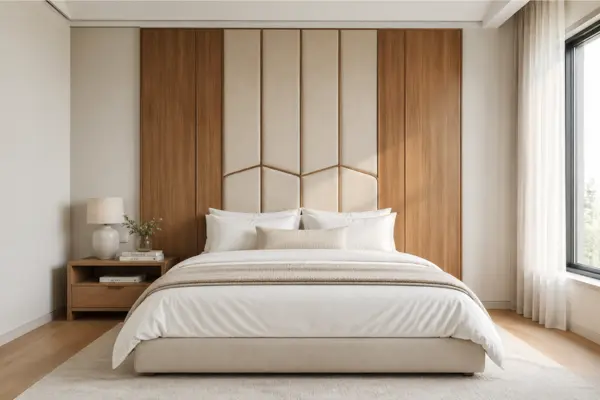
Here is a minimalist idea that surprises a lot of people: you can have one bold, beautiful element in your bedroom without it clashing with a minimalist approach. A statement headboard does exactly that. It gives the room a focal point — something intentional and visual — while everything else around it stays clean, simple, and quiet.
Why It Works
A minimalist bedroom without any focal point can feel a little too sparse or unfinished. A statement headboard solves that without adding clutter or extra furniture. It draws the eye and gives the room personality, which is what separates a thoughtfully designed minimalist bedroom from one that just feels empty. The key is that the headboard does the talking and everything else takes a step back. You get visual interest without visual noise.
Best For
This idea works in all room sizes and is especially useful for bedrooms that feel a little too plain or generic after removing excess furniture and decor. If your room feels like it is missing something but you do not want to add more stuff, a statement headboard is your answer.
Styling Tips
Great minimalist headboard options include natural wood panels, a soft upholstered headboard in a subtle texture, or a simple geometric shape in a warm material. Avoid anything too ornate, heavily carved, or with too many colors. Once you have your headboard, resist the urge to dress the walls around it. Keep the surrounding walls clean — no gallery walls, no floating shelves beside it, no busy bedside lamps. Let the headboard be the only thing that speaks in that part of the room.
6. Under-Bed Storage Layout
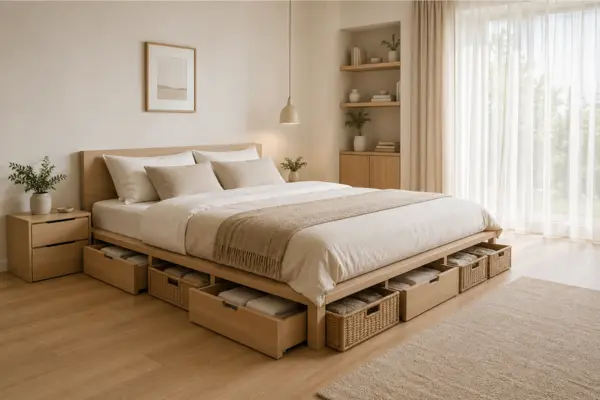
This is one of the most underused ideas in bedroom design, and honestly it is a game changer. The space under your bed is prime real estate, and in a minimalist bedroom, using it smartly means you can store a significant amount without adding a single piece of furniture to the room. No extra dresser, no extra wardrobe, no extra anything cluttering up the space.
Why It Works
Under-bed storage works because it is completely hidden. Nothing is visible from a normal standing or sitting position, so the room still looks completely clean and minimal while quietly holding a lot of your stuff. It is the perfect solution for items you need but do not use every day — extra bedding, seasonal clothing, shoes, or anything else that tends to pile up. Keeping those things out of sight keeps your mind clearer and your room calmer.
Best For
This approach is ideal for small and medium bedrooms where floor space is tight and there is limited closet or wardrobe space. It is also great for anyone who is renting and cannot install built-in storage.
Styling Tips
The neatest option is a bed frame with built-in drawers — these are purpose-built for this and look seamless. If your current frame does not have drawers, use flat storage containers or boxes in a matching color. Avoid mismatched bins, odd-shaped containers, or anything that peeks out from under the bed and looks messy. Keep items organized inside the containers so you can actually find things when you need them. Label them if it helps. Out of sight should never mean out of control.
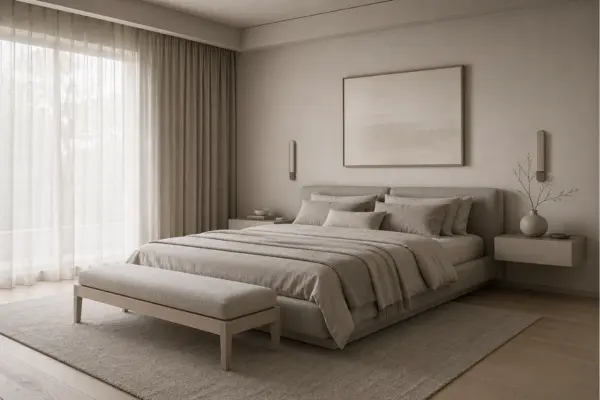
7. Monochrome Minimalist Design
A monochrome bedroom uses one color — and only one color — in different shades, tones, and textures across the entire room. The bed, the walls, the rug, the curtains, the furniture — all of it sits within the same color family. It sounds repetitive, but done well, it is one of the most sophisticated and calming looks you can achieve.
Why It Works
When every element in a room shares the same color family, the eye does not have to work to reconcile competing visual information. Everything just flows. The result is a room that feels deeply cohesive, calm, and intentional — which is exactly the goal in minimalist design. Monochrome also has a very modern, editorial quality that makes a bedroom look like it belongs in a design magazine. And because you are not worrying about mixing colors, decorating decisions actually become easier.
Best For
Monochrome design works well in modern homes and for anyone who prefers a sleek, uniform aesthetic over a more layered or eclectic style. It is also particularly effective in small rooms, because a single-color scheme makes boundaries between surfaces less obvious, which visually expands the space.
Styling Tips
The secret to making monochrome work is texture. Without texture, a single-color room goes flat very quickly. Mix matte finishes with soft fabrics — think a matte-painted wall alongside a velvet cushion, a linen duvet, and a woven rug, all in the same shade of warm grey or dusty sage. Bring in a small amount of natural wood to prevent the room from feeling too uniform or cold. And avoid adding accent colors — even one pop of a contrasting color breaks the effect. Stay in your lane and trust the process.
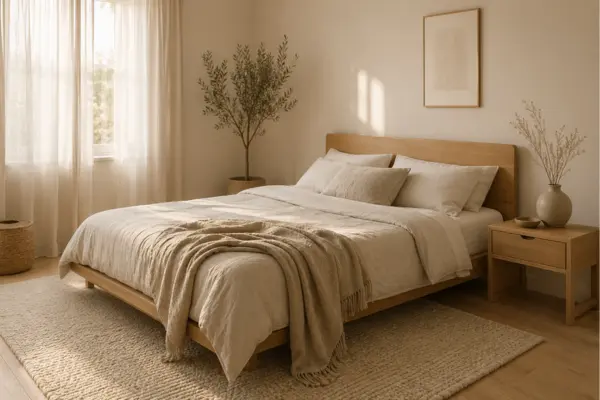
8. Natural Materials for Warmth
One of the most common complaints I hear about minimalist bedrooms is that they feel cold or clinical. And that is almost always because there are no natural materials in the room. Wood, linen, cotton, jute, stone, rattan — these are the elements that make a minimalist space feel like a home rather than a showroom.
Why It Works
Natural materials carry a warmth and organic quality that no synthetic material can replicate. Wood grain, linen texture, the slight roughness of a jute rug — these things engage your senses in a subtle, comforting way. They also bring a visual depth to a minimal room that keeps it from feeling sparse. Nature itself is inherently imperfect and textured, and bringing those qualities into a bedroom adds life without adding clutter.
Best For
Natural materials work in all bedroom sizes and styles, and they are especially important in rooms that have a very neutral or pared-back color palette. If your room is mostly white or beige and feels a little flat, natural materials are the fix.
Styling Tips
Start with the big items first. A wooden bed frame or wooden nightstand immediately grounds a room in natural warmth. Then layer in a linen or cotton duvet cover — these feel softer and more breathable than polyester, and they drape beautifully. Add a natural fiber rug underfoot, like jute or wool. Finally, a simple wooden bowl, a small stone tray, or a terracotta plant pot on your nightstand adds the finishing touch. Keep everything simple in shape — the beauty is in the material, not in ornamental detail.
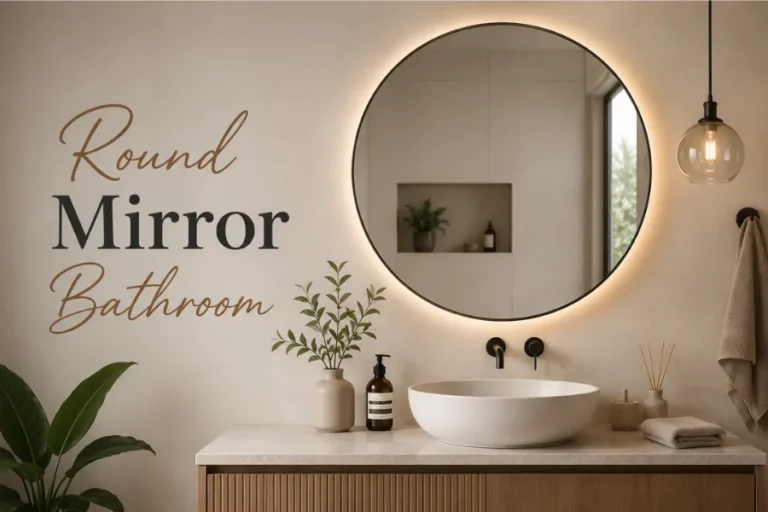
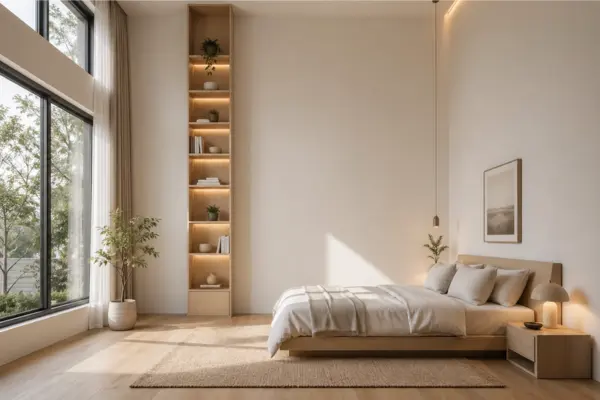
9. Mirror Placement to Expand Space
A well-placed mirror is one of the most powerful and budget-friendly design tools available to you. In a minimalist bedroom, a mirror does double duty: it reflects light to brighten the space, and it creates the illusion of depth to make the room feel larger. The trick is in the placement.
Why It Works
Light and perceived space are directly connected. When a mirror reflects a window or a light source, it effectively doubles the light in that area of the room. That makes the room feel brighter, more open, and more alive — all without touching a single light fixture. Mirrors also create visual depth. When you look into a mirror, your eye travels through the reflection and perceives more space than actually exists. In a small bedroom, that is enormously helpful.
Best For
Mirrors are particularly useful in small bedrooms and rooms with limited natural light — like north-facing rooms or spaces with only one small window. They are also great for any bedroom where you want to create a sense of spaciousness without physically expanding the walls.
Styling Tips
The best mirror placement in a minimalist bedroom is directly opposite or adjacent to a window. This maximizes light reflection and creates the strongest sense of depth. A full-length mirror leaning against the wall is a very clean, low-commitment option that also has a relaxed, lived-in quality. For a more architectural look, choose a large rectangular mirror in a simple thin frame mounted flush to the wall. Avoid ornate or heavily decorated mirror frames — they pull too much attention in a minimal room.
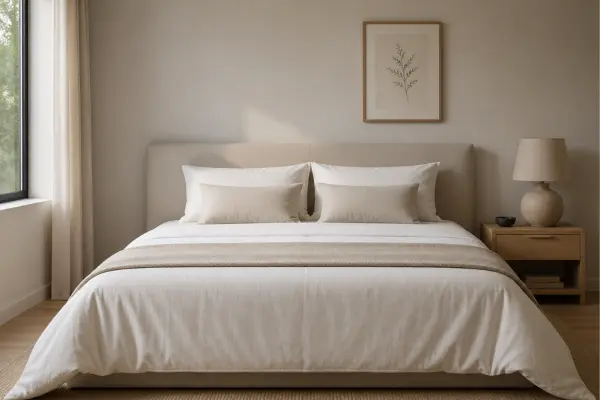
10. Minimal Bed Styling
Your bed is the centerpiece of the bedroom. It takes up the most visual real estate and sets the tone for everything else in the room. In minimalist design, the goal with bed styling is simple: clean, comfortable, and intentional — without going overboard on layers and decorative pillows.
Why It Works
An over-styled bed with dozens of pillows, multiple throws, and a complicated layering system actually reads as cluttered in a minimalist space. It also creates daily maintenance, because you have to un-do and redo all of it every morning. A simply styled bed looks just as beautiful — arguably more so — and takes about thirty seconds to make in the morning. It also keeps the room feeling restful rather than showy.
Best For
Minimal bed styling works for all bedroom sizes and styles. In fact, it is one of the easiest and most immediate changes you can make to move your bedroom in a more minimalist direction without spending any money.
Styling Tips
Start with high-quality bedding in a solid neutral color — white, cream, warm grey, or soft sage all work beautifully. One fitted sheet, one flat sheet or duvet, and two sleeping pillows is genuinely all you need. If you want a decorative element, add one or two Euro pillows in a complementary texture behind your sleeping pillows. A single throw folded neatly at the foot of the bed adds warmth without excess. That is it. The restraint is the point, and once you get used to it, you will wonder why you ever had more.
11. Open Layout with Clear Pathways
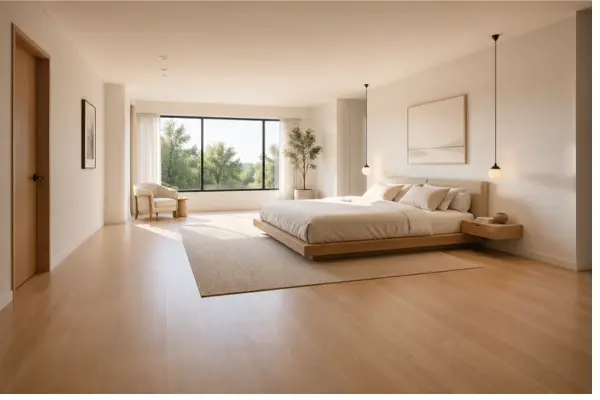
The final idea is about how you arrange your furniture, not just what furniture you choose. An open layout with clear walking pathways is fundamental to a minimalist bedroom feeling truly spacious and calm. Even if you have great individual pieces, cramming them together or blocking natural movement through the room will undermine everything else you have done.
Why It Works
When you can move freely around your bedroom without squeezing between pieces of furniture, the space feels significantly larger and more relaxed. Clear pathways also create a visual sense of order — your eye can travel through the room without interruption, which registers as calm and spaciousness. A crowded layout, even with beautiful furniture, creates unconscious stress because your brain is always processing the obstacles.
Best For
An open layout matters in all room sizes, but it is especially critical in small and medium bedrooms where furniture can quickly take over. Even in a large bedroom, a thoughtless layout can make the room feel awkward and inefficient.
Styling Tips
Start by removing any furniture that does not serve a genuine daily function. Then position what remains so there is at least 24 to 30 inches of clear walking space on each side of the bed that you regularly access. Never block a window with furniture — this cuts off natural light and makes the room feel darker and smaller. Keep the path between the door and the bed completely clear. If something feels tight or awkward when you walk through the room, it probably is — trust that instinct and rearrange until the flow feels natural and easy.
Mistakes to Avoid
Even people with great taste make these mistakes when going minimalist for the first time. Here is what to watch out for.
The most common mistake is removing too much. When you start decluttering, it can become addictive, and before you know it the room feels cold and empty rather than calm and intentional. A minimalist bedroom should still have warmth, personality, and comfort — the goal is not a bare room, it is a purposeful one.
Ignoring storage is another big one. If you clear every visible surface but have no place to actually put things, the clutter will come back within a week. Always plan your hidden storage solutions before you start removing furniture. Built-in cabinets, under-bed storage, and multi-functional pieces are your best friends here.
Using too many colors will quietly undo all your work. A minimalist room needs a tight, consistent color palette — three colors maximum, and one of them should be a neutral. Every time you add another color, the room gets a little noisier.
Finally, choosing oversized furniture for the space is a trap. A large sectional sofa belongs in the living room. In the bedroom, every piece of furniture should fit the room proportionally with space left over. When in doubt, go smaller — you can always add later, but removing something because it is too big is a much bigger hassle.
Conclusion
A minimalist bedroom does not happen overnight, and it does not require a complete renovation or a huge budget. It starts with small, intentional decisions — clearing one surface, choosing a softer color, rearranging your furniture layout — and builds from there.
The ideas in this guide are meant to work individually or together. You do not need to implement all eleven at once. Start with one or two that feel achievable right now, and see how your room starts to shift. In my experience, once people make a few minimalist changes and feel the difference in how the room feels to live in, they are completely hooked.
A well-designed minimalist bedroom gives you something that no amount of stuff ever can: genuine peace and quiet, in a space that is entirely your own.
FAQs
What is the easiest way to start a minimalist bedroom?
Start by removing items you do not actively use. Go through your bedroom and identify anything that has been sitting untouched for three months or more — donate it, store it elsewhere, or throw it out. Then focus on clearing your surfaces. You do not need to buy anything new at first. Simply removing the excess is enough to see an immediate improvement.
Can a minimalist bedroom still feel cozy?
Absolutely. In fact, a well-executed minimalist bedroom often feels cozier than a cluttered one because your attention is not being pulled in a dozen directions. The key is using soft, tactile materials — linen bedding, a wool rug, a chunky knit throw — that invite you to slow down and relax. Natural materials and warm lighting do a lot of heavy lifting here.
How many pieces of furniture should a minimalist bedroom have?
As a general rule, a bed, one or two nightstands, and a storage solution like a built-in wardrobe or a simple dresser is all you need. Some minimalist bedrooms have even less. The question to ask about every piece is: do I use this every day? If the answer is no, it probably does not belong in the bedroom.
Is minimalist design suitable for small bedrooms?
Minimalist design is arguably the best approach for small bedrooms. Fewer pieces of furniture, clearer pathways, and a restrained color palette all work together to make a small room feel significantly larger than it actually is. Small spaces benefit enormously from intentional, minimal styling.
How do I keep my minimalist bedroom organized long term?
The secret is systems, not willpower. Every item in your bedroom should have a designated home — a specific drawer, shelf, or container. When things have a place, putting them away becomes effortless. Make it a quick daily habit to clear surfaces before you go to sleep. That two-minute reset each night keeps the room looking clean without any big cleaning sessions.