12 Living Room Corner Ideas That Actually Work (And Look Amazing)
You know that one corner in your living room — the one where the lamp you never use lives, or where things just kind of… pile up? Yeah. That corner. Every single living room has at least one, and almost nobody knows what to actually do with it.
I have spent years styling rooms for clients and for my own spaces, and I can tell you that the corner is one of the easiest places in the room to get a big visual payoff with relatively little effort and money. You just need the right idea for your specific space, your lifestyle, and your style.
These 12 ideas cover everything — from tiny corner fixes you can do in an afternoon to bigger, more thoughtful setups that become genuine focal points. Mix the sizes, mix the styles, and find the one that makes you think “yes, that is exactly it.” Let us get into it.
12 Living Room Corner Ideas
1. The Cozy Reading Nook Corner
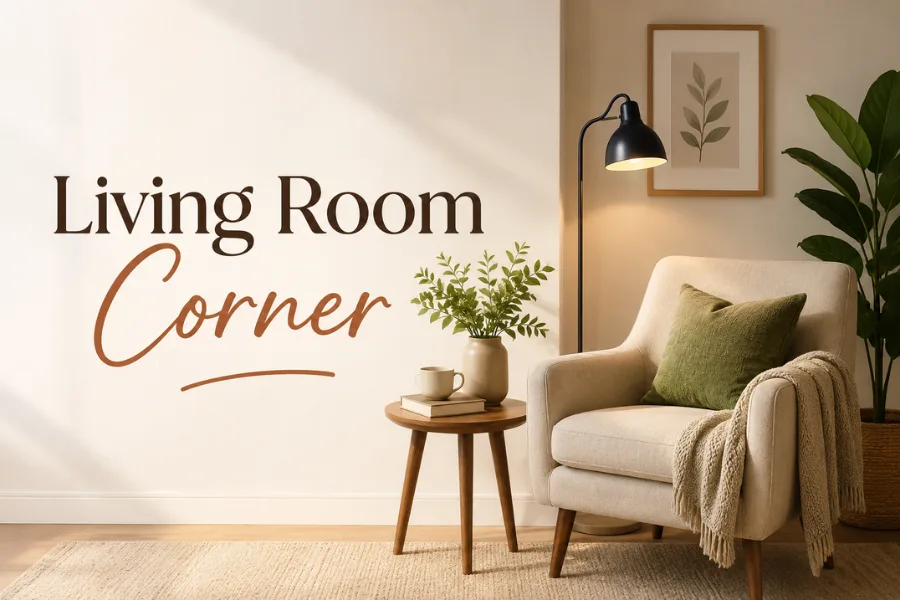
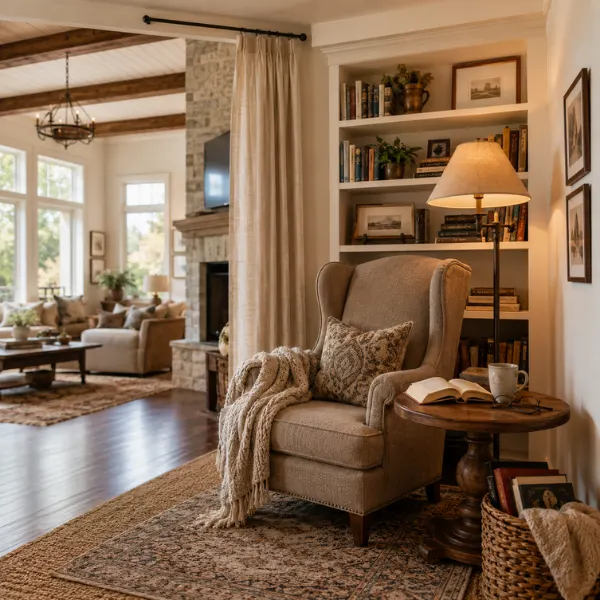
This is the corner idea that basically every Pinterest board in existence is obsessed with, and for very good reason. The concept is simple: take one overlooked corner and turn it into the most intentional, inviting spot in the entire room. You need a plush accent chair, a slim floor lamp that arcs over the seat, a small side table just big enough for your tea or coffee, and something soft — a throw blanket, a pillow or two — to make the whole thing feel genuinely lived-in and welcoming. The result is a mini personal retreat built right into your living space.
Why It Works
A dedicated reading nook gives your corner a clear purpose, and purpose is exactly what makes a design decision feel intentional rather than accidental. The chair anchors the space visually, the floor lamp draws the eye up with a beautiful curve, and the layered softness communicates comfort from across the room. It also solves the “what goes in the corner” question permanently — that corner now has a job, and it does it beautifully.
Best For
Book lovers, introverts who need a quiet spot within a shared living space, and anyone who wants a corner that functions as well as it looks. Works beautifully in living rooms of any size — you can go compact with a small slipper chair in a tight apartment corner or luxurious with a large wingback in a bigger room.
Styling Tips
Choose a chair in a fabric that contrasts with your sofa — if your sofa is neutral, go for a textured boucle or a velvet chair in a muted jewel tone. Do not go identical. The floor lamp should arc over the chair rather than standing beside it — that arc creates a canopy effect that makes the nook feel enclosed and cozy. Add a very small round side table, not a square one, because round edges feel softer and more relaxed in this kind of setup. Put a small stack of actual books you are reading on the table, not just decorative ones. Real books make it look genuinely used and loved.
2. Floor-to-Ceiling Built-In Bookshelf Corner
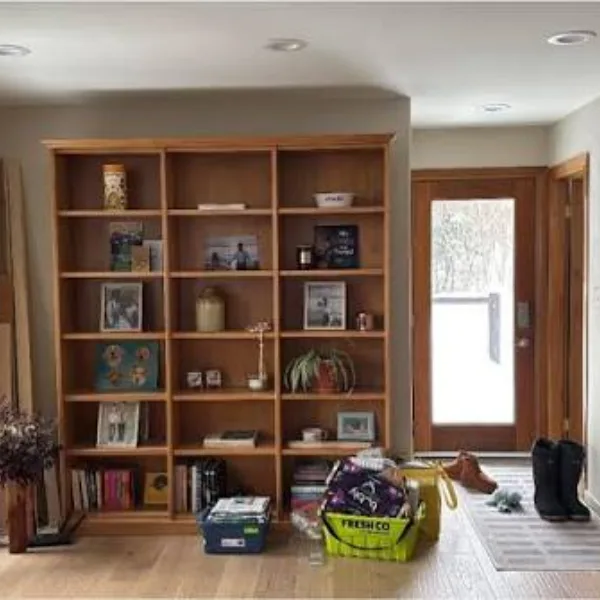
This is the corner idea that turns a blank wall junction into a full architectural moment. A floor-to-ceiling bookshelf built or installed to fit snugly into the corner — wrapping both wall faces or filling just one — instantly makes that corner look like it was always meant to be there. It stops being a corner and starts being a library wall, a display gallery, a storage system, and one of the most characterful design features in the entire room all at once.
Why It Works
Vertical elements in corners draw the eye upward, which makes ceilings feel higher and rooms feel larger. A bookshelf that runs the full height of the wall is a powerful vertical statement that does this more dramatically than almost any other corner treatment. It also solves the eternal storage problem of living rooms in a way that looks intentional and beautiful rather than cluttered. And practically speaking, it gives you enormous display real estate for books, plants, art, ceramics, and personal objects — all in one organized, composed structure.
Best For
Readers, collectors, and design lovers who want their corner to be a genuine focal point rather than a backdrop. Excellent for larger living rooms where the scale of a full-height bookshelf will not overwhelm the space, though a single-wall version works beautifully in smaller rooms too. Great for both traditional and modern interiors depending on the shelf style and finish you choose.
Styling Tips
Paint the bookshelf the exact same color as the wall behind it for a sleek, built-in look that feels custom and expensive even if you used off-the-shelf units. Mix books (some spine-out, some face-out) with plants, framed art leaned casually against the back of the shelf, and a few larger ceramic or sculptural objects. Vary the heights of objects on each shelf so your eye travels across the display rather than getting stuck at any one point. Add small puck lights or LED strip lighting to the undersides of the shelves for warm evening ambiance that makes the whole corner glow.
3. Statement Sculptural Floor Lamp Corner
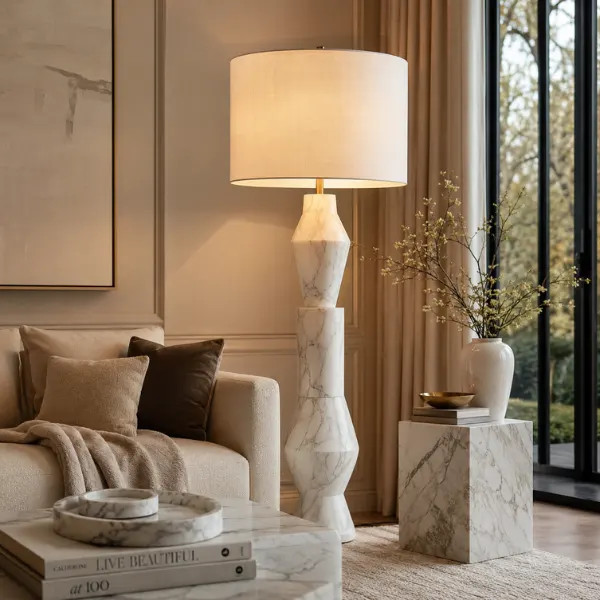
Sometimes the most powerful corner solution is not filling the space with furniture — it is filling it with light and form. A large, sculptural floor lamp placed in a corner with nothing else around it (or very little) creates a design moment that is equal parts functional and artistic. We are not talking about a basic lamp on a boring base. We are talking about an arched brass lamp, a tripod with character, a dramatic rattan shade, or an oversized modern column light that makes you stop and look at it.
Why It Works
A sculptural lamp in a corner does several things at once. It occupies vertical space without adding visual weight or bulk the way furniture does. It provides exactly the kind of warm, ambient lighting that overhead lighting almost never delivers. And it functions as a genuine piece of decor — almost like a sculpture you can also use. In rooms where other corners are already busy with furniture, one clean corner with a single stunning lamp provides essential breathing room.
Best For
Minimalist decorators, renters who cannot do permanent changes, and anyone who wants a quick high-impact corner solution without major investment or effort. Also excellent for corners that are too small for furniture but feel awkward left empty. Works across every style from mid-century modern to contemporary to bohemian depending on the lamp you choose.
Styling Tips
Go bigger than you think you need to — in a corner, a small lamp gets swallowed up and looks sad and unintentional. Choose something that reaches at least five to six feet tall or arcs dramatically. If you go with an arched lamp, position the arc so it curves toward the seating area rather than toward the wall. Place a small low tray or a single large potted plant at the base of the lamp to ground it without competing with it. Warm bulb temperatures — 2700K to 3000K — are non-negotiable for the kind of cozy atmosphere a floor lamp corner is supposed to deliver.
4. Indoor Plant Corner with Layered Greenery
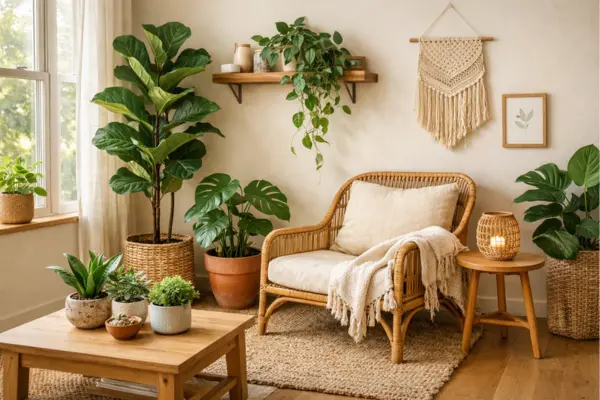
This is the corner idea that never goes out of style, never looks wrong in any room, and gets more beautiful over time rather than less. The key to making a plant corner feel designed rather than accidental is layering — you are not just sticking one plant in the corner and calling it done. You are creating a composition of different heights, different leaf shapes, different pot materials, and different textures that together form something that reads as an intentional indoor landscape.
Why It Works
Plants bring a natural, organic element into a room that no other decor item can replicate — they are alive, they move in the air, they change with the seasons, and they respond to the environment in ways that make your living room feel genuinely inhabited rather than staged. A layered plant corner also uses the vertical dimension of a corner extremely effectively, pulling the eye from floor level (low trailing plants or small pots) all the way up to ceiling height (tall fiddle leaf fig or monstera) in a single sweep that makes the room feel larger and more dynamic.
Best For
Nature lovers, anyone who finds plant care therapeutic, and decorators working with any interior style from bohemian to Japandi to modern organic. Works in any size corner — a small corner can support two or three well-chosen plants beautifully, while a large corner can handle a dramatic multi-plant composition.
Styling Tips
Start with one tall anchor plant — a fiddle leaf fig, a rubber plant, or a tall snake plant works well — and build around it. Add a medium-height plant on a simple wooden plant stand beside it, and one or two small pots at floor level. Vary your pot materials: a terracotta, a woven basket, and a ceramic in complementary neutral tones look far more interesting than three matching pots. Do not use pots that are all the same height — the variation is what creates the visual layering that makes the composition feel intentional. Make sure to actually match your plant selections to the light conditions of that specific corner.
5. Corner Bar Cart or Beverage Station
This one is equal parts practical and genuinely stylish, and it is one of those corner solutions that makes visitors to your home immediately wish they had thought of it. A well-styled bar cart, drinks cabinet, or coffee and tea station tucked into a living room corner turns an unused space into a functional feature with enormous personality. The key is treating it as a display as much as a practical setup — curated bottles, beautiful glassware, a small plant or fresh flowers, a tray to organize it all.
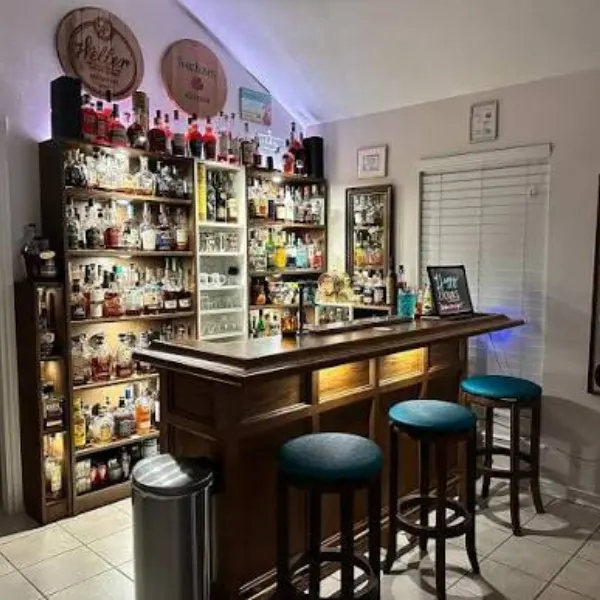
Why It Works
A beverage corner gives the space a clear function that guests immediately understand and appreciate. It creates a natural gathering moment in the room — people gravitate toward it during parties and casual evenings in a way that makes the whole social dynamic of the room feel more relaxed and hospitable. Visually, a styled bar cart or cabinet has a warm, curated quality that adds a lot of personality to a corner without requiring major furniture investment or permanent changes.
Best For
Entertainers, social households, coffee and tea enthusiasts, and anyone who wants a corner that earns its place by being genuinely useful day to day. Equally excellent as a morning coffee station for non-drinkers — the aesthetic and logic of the setup work just as well with a beautiful kettle, mugs, and tea tins as they do with bottles and glassware.
Styling Tips
Use a tray on the top surface of the cart or cabinet to corral items and prevent the setup from looking chaotic. Add one small plant — a pothos or a succulent works well here — to soften the otherwise hard surfaces of glass and metal. Decant liquids into beautiful vessels where possible, and store everyday items out of sight so the display stays curated. If you go with a rolling cart, choose one in a finish that complements your existing hardware — brass with warm-toned rooms, black or silver with cooler, more modern palettes.
6. Corner Gallery Wall Wrap
Most gallery walls run along a single flat wall. This idea does something much more dynamic — it wraps the gallery wall around the corner itself, using both wall faces that meet at the corner to create an immersive display that feels architectural and genuinely unexpected. The result is a corner that becomes the most personal and visually rich spot in the entire room, because it carries twice the storytelling surface of a conventional gallery wall.
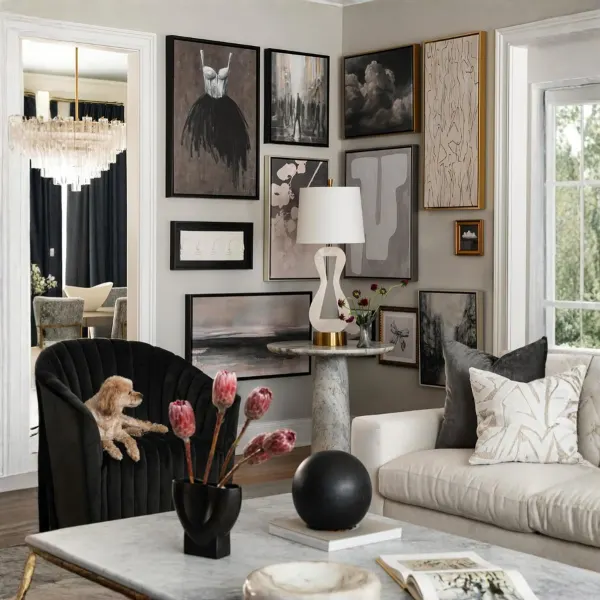
Why It Works
A gallery wall that wraps a corner uses the corner junction itself as a compositional tool — it creates a natural center point around which frames and art can radiate outward on both sides. This eliminates the most common corner problem (the awkward empty junction between two walls) by making that junction the deliberate heart of the display. It also fills vertical space exceptionally well, drawing the eye up the full height of both walls simultaneously.
Best For
Collectors, families with lots of photos, art lovers, and anyone who wants their corner to tell a story and express genuine personal identity. Works well in both large and small living rooms — the scale of the frames and the density of the arrangement can be adjusted to suit the available space. Especially effective in rooms with a more eclectic or transitional decorating style.
Styling Tips
Start by laying your frames out on the floor before hanging anything and work out your composition there. Use the corner line itself as your central anchor — frame the corner symmetrically or let the arrangement flow loosely across both sides depending on your style. Mix frame finishes, sizes, and art types (photography, prints, mirrors, and even small shelves with objects) for depth. Do not line the frames up in perfectly rigid rows — a loose, organic arrangement with varied spacing looks more collected and alive. Leave a small gap at the corner itself (about two inches on each side) so the frames do not bump right up against each other and the composition breathes.
7. Decorative Ladder Corner
This might be the simplest, most budget-friendly corner idea on this entire list, and the results are completely out of proportion to how little effort it takes. A decorative ladder — wood, bamboo, or metal — leaned casually against the corner wall becomes an instant display structure for blankets, throws, woven baskets, plants cascading down from the rungs, or even small framed art pieces. It is relaxed, organic, and endlessly adaptable to seasonal decorating changes.
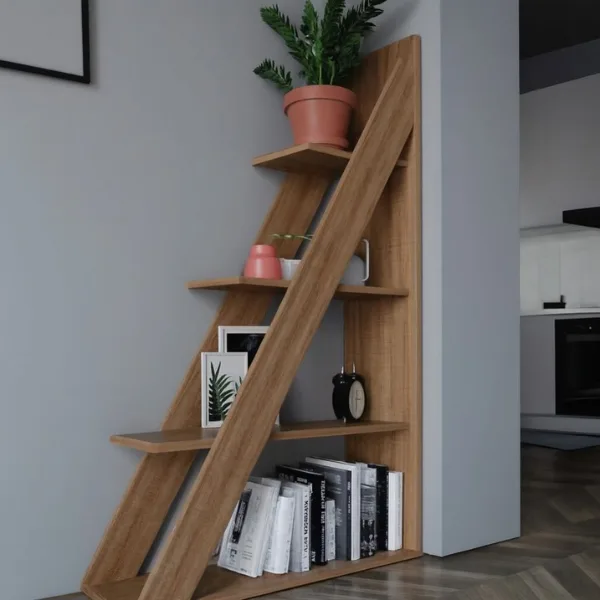
Why It Works
A leaned ladder fills vertical corner space without touching the floor in a bulky way — it is slim, lightweight visually, and yet tall enough to make an impression. It creates a layered, lived-in feel that resonates with farmhouse, bohemian, coastal, and transitional styles effortlessly. And practically speaking, it is one of the best ways to store and display extra blankets in a living room without needing a dedicated cabinet or basket that takes up actual floor space.
Best For
Renters and anyone who wants a low-commitment, easily moveable corner solution. Great for small corners where larger furniture would overwhelm the space. Also excellent for people who rotate their seasonal décor frequently, since the ladder provides a display structure that can be completely restaged in minutes.
Styling Tips
Choose a ladder that is proportional to your ceiling height — at least five feet tall for standard eight-foot ceilings, taller for higher ceilings. Drape blankets and throws over the rungs in a loose, casual way — do not fold them into perfect squares, because the relaxed drape is the whole visual point. Add a small trailing plant (a pothos or string of pearls works beautifully) on one of the upper rungs so it cascades down through the other rungs. Lean the ladder at a slight angle rather than flush against the wall to give it a more relaxed, casual posture.
8. Floor Cushion and Poufs Corner
This is the corner idea that completely rejects conventional furniture logic and creates something far more relaxed, global, and genuinely fun. Instead of a chair and a lamp, you fill the corner with an arrangement of oversized floor cushions, flat-woven kilim rugs or round poufs, and maybe a very low side table or tray at the center. The whole setup sits at floor level, creating a casual, inviting corner that practically begs you to kick off your shoes and sink in.
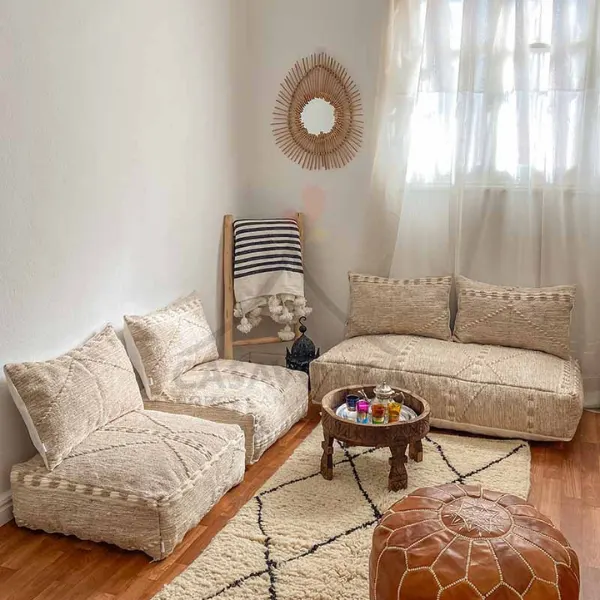
Why It Works
Floor-level seating corners are extraordinarily welcoming in a way that upright furniture cannot quite match — they communicate ease and informality immediately. They work brilliantly for households with children (everyone ends up on the floor anyway), for yoga and meditation spaces within the living room, and for entertaining, where guests naturally gravitate toward a relaxed floor setup during casual evenings. They also keep the visual weight of the room low, which actually makes the ceiling feel higher and the overall space feel more expansive.
Best For
Families with kids, bohemian and global-inspired interiors, and anyone whose living room also functions as a relaxed social gathering space. Works especially well in larger corners where there is room to spread out properly. Also a fantastic solution for multi-cultural households that incorporate floor-sitting traditions into daily life.
Styling Tips
Layer a large flat woven rug or a kilim first to define the floor zone. Add two to three large floor cushions in complementary patterns — mix a solid with a geometric and a botanical print for the kind of eclectic warmth that makes this corner look collected rather than thrown together. Bring in one or two round woven poufs in a natural material like jute or leather for structure. Keep one low wooden tray on the floor as a surface for candles, small plants, or drinks. Add a wall-mounted light or a low bedside-style lamp at sitting height — overhead lighting will not reach this corner effectively when you are sitting at floor level.
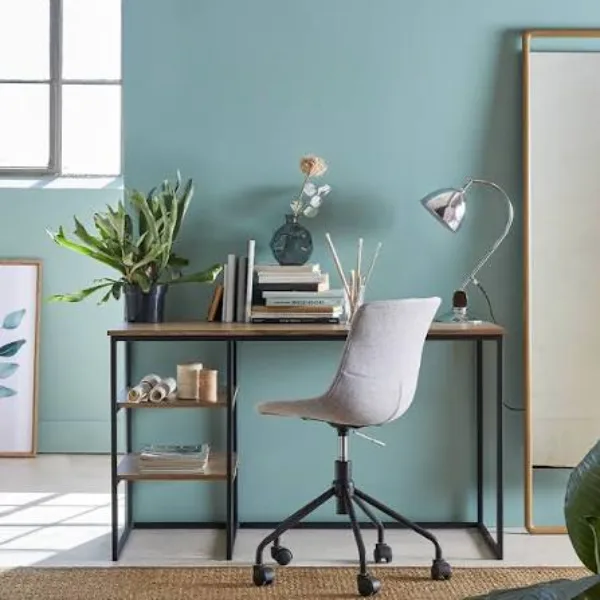
9. Corner Desk and Work Nook
The living room has taken on so many more roles in recent years, and one of the most practical corner ideas for modern homes is a slim, beautiful desk setup built into or placed in the living room corner. The key word here is beautiful — this is not a corporate cubicle shoved into your lounge. It is a thoughtfully styled mini workspace that integrates into the living room’s overall aesthetic, closes off visually when not in use, and makes working from home feel actually pleasant.
Why It Works
A corner desk utilizes the natural L-shape of the corner to create an efficient, contained work zone without using as much floor space as a desk positioned against a flat wall. The corner position also gives you natural visual separation from the rest of the living room — you are slightly tucked away rather than in the center of the main social space, which helps mentally transition between work and relaxation mode. And a beautifully styled desk corner with good lighting and curated objects on a shelf above it can be genuinely lovely to look at even when no one is working.
Best For
Remote workers, students, and anyone living in a home without a dedicated office. Works especially well in larger living rooms where a corner can be given over to a workspace without compromising the room’s main function. Also excellent in studio apartments and open-plan living spaces where the living room has to do everything.
Styling Tips
Choose a slim, simple desk profile rather than a large executive desk — clean lines disappear into the room much more gracefully. Add one or two floating shelves above the desk for storage and display (books, a plant, a few nice objects) that make the work zone look intentional rather than utilitarian. Use a proper desk chair that you actually find comfortable but that also works aesthetically in the room — a Scandinavian-style wooden chair or a mid-century upholstered swivel chair can look genuinely beautiful in a living room context. Get a desk lamp with warm light rather than the harsh blue-toned task lighting of most office setups.
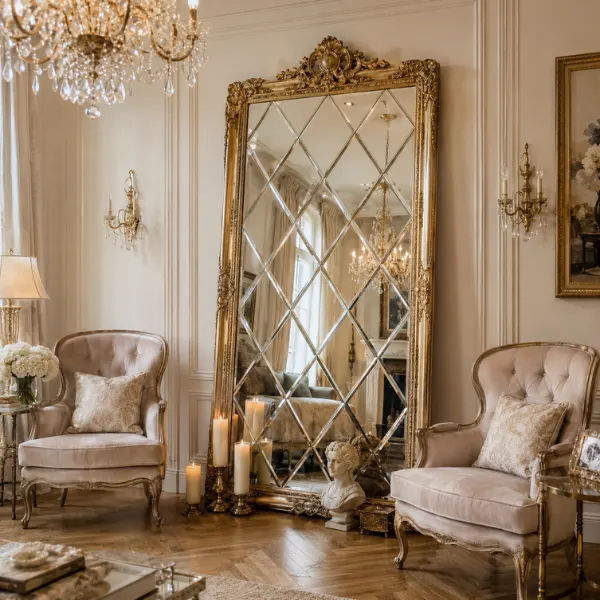
10. Tall Leaning Mirror Corner
Leaning a large floor mirror into a corner is one of those tricks that feels almost too simple to work — until you try it and realize the entire room looks better, bigger, and brighter overnight. The mirror in the corner reflects both walls beside it and doubles the light from whatever windows or lamps are in the room, creating a sense of depth and luminosity that is genuinely transformative in dark or small living rooms.
Why It Works
Mirrors are one of the oldest and most reliable tools in interior design for creating the perception of more space. In a corner, a leaning floor mirror works even more powerfully than a wall-mounted mirror because the angle of the lean means it reflects a broader slice of the room back at you, capturing more of the space, the light, and the activity of the room in its surface. The casual, leaned position also looks effortlessly stylish in a way that feels more current and relaxed than a traditionally mounted mirror.
Best For
Small living rooms, dark rooms that lack natural light, and minimalist decorators who want a high-impact corner statement without cluttering the space with furniture or objects. Also wonderful for rental homes and apartments because it requires no permanent installation.
Styling Tips
Choose a mirror that is at least five to six feet tall — a small mirror leaned in a corner looks lost and unintentional. The frame matters enormously: a raw wood frame for organic or rustic interiors, thin black metal for modern or industrial spaces, antique gold for maximalist or traditional rooms. Lean the mirror at a very slight backward angle against the wall — not perfectly vertical, as a forward-leaning mirror can feel unsafe. Place a small plant or a stack of large books directly in front of the base of the mirror, which will reflect and look like twice as many plants or books in the reflection — a classic decorator’s trick.
11. Vintage Trunk or Chest Corner
This is the corner idea for people who want something that works hard and looks great doing it. A vintage wooden trunk or decorative chest placed in the corner of a living room functions as storage, as a surface for display, as a piece of furniture with genuine history and character, and as a visual anchor for the corner all at the same time. It is one of the most multi-purpose corner solutions that exists, and the aged, storied quality of old trunks and chests gives them a warmth and personality that brand-new furniture rarely matches.
Why It Works
A trunk in a corner solves the problem of hidden storage in a living room — the kind of storage that swallows blankets, board games, extra cushions, and seasonal items without them ever needing to be seen. And unlike a dedicated storage cabinet, a vintage trunk reads as decorative, not utilitarian. It draws the eye because of its texture and history, not just its function. The horizontal low profile of a trunk also works beautifully in corners where you do not want to add height — it grounds the corner without competing with anything above it.
Best For
Anyone who needs storage but does not want their living room to look like a storage room. Excellent for bohemian, farmhouse, eclectic, and rustic interior styles where the aged quality of an old trunk feels completely at home. Also a great corner solution for the corner opposite a sofa where you want something interesting but low that does not block sightlines across the room.
Styling Tips
Style the top of the trunk as a deliberate display surface — add a tray with a candle and a small plant, or stack two or three coffee table books with a ceramic object on top. Do not pile random items directly on the trunk top, as that immediately turns it from décor into clutter. If the corner has a wall above the trunk, hang one piece of art or a simple mirror over it to complete the composition vertically. Condition and treat old wood trunks with furniture wax to bring out their color and grain and stop them from looking dusty or neglected.
12. Decorative Pebble and Plant Zen Corner
This last idea is the most unexpected one on the list, and it is the one that always gets the most questions when people walk into a room where it is done well. The concept comes from Japanese garden design and Japandi interior philosophy: you fill a shallow corner platform or a large decorative tray with smooth decorative pebbles or stones, tuck in a few small plants (succulents, bonsai, compact ferns), add a few candles or a small water feature if you want to go further, and create what is essentially a tiny indoor landscape in the corner of your living room.
Why It Works
In a world of maximalist corners packed with furniture and objects, a Zen pebble garden corner is extraordinary precisely because it does less. The smooth stones, the compact greenery, and the intentional negative space around the composition create a genuinely calming visual moment that no amount of furniture arrangement can replicate. It is grounding, natural, and deeply original — most people have never seen this treatment in a home interior, which makes it an instant conversation piece as well as a genuinely soothing design feature.
Best For
Minimalist, Japandi, and modern organic interiors where natural materials and calm visual environments are central to the design philosophy. Also excellent for corners that are genuinely too small for any furniture — this treatment works beautifully in a corner as compact as two feet wide and two feet deep. Perfect for design-forward households and anyone who finds conventional corner solutions too predictable.
Styling Tips
Use a shallow wooden tray, a concrete planter saucer, or a custom-cut piece of thin slate as the base — you want a contained boundary that defines the composition rather than stones scattered loose on the floor. Choose one stone type and stick to it rather than mixing multiple stone varieties, which can look messy. Select plants that thrive in low maintenance conditions — succulents, air plants, or a compact bonsai are ideal. Add one unscented or lightly scented pillar candle in natural beeswax on a small stone slab beside the composition. Keep everything in a palette of greens, greys, whites, and natural wood tones for maximum visual coherence.
Mistakes to Avoid When Decorating Your Living Room Corner
Even the best corner idea can go wrong with a few common missteps. Here are the ones I see most often, and how to avoid them.
Choosing furniture that is too small for the corner. This is the single most common corner decorating mistake. A tiny lamp, a small plant, or a little side table in a big corner just looks like you gave up halfway through. Scale your choices to the actual size of the corner — when in doubt, go bigger than feels comfortable at the planning stage.
Ignoring the corner completely. A bare, empty corner with nothing in it creates a visual dead zone that the eye gets stuck on and cannot resolve. Your brain actually works harder to process incomplete visual spaces, which creates a subtle but real sense that something is off in the room. Even the simplest, most minimal corner treatment is better than nothing.
Overcrowding the corner with too many things. The opposite mistake — jamming too much into a corner because you cannot choose between ideas — creates visual chaos that makes a small space feel suffocating. Pick one concept and execute it well rather than trying to combine a bookshelf, a plant, a lamp, a trunk, and a mirror all in the same twelve square feet.
Using the wrong light color temperature. Warm yellow-toned bulbs (2700K to 3000K) create cozy, inviting corner atmospheres. Cool blue-white bulbs (above 4000K) make everything feel like a dentist’s office. No matter how beautiful your corner setup is, the wrong bulb will undermine the whole mood.
Blocking natural light paths. Before you put tall furniture in a corner, check what happens to the natural light in the room. Tall bookshelves, large plants, or oversized furniture positioned incorrectly can cast shadows across the main seating area and make the room noticeably darker during the day.
Forgetting to use the vertical space. Corners have two walls meeting at full ceiling height, which gives you enormous vertical real estate. Using only the bottom half of that space — a short shelf, a small plant, a low trunk with nothing above it — wastes the most powerful visual tool the corner has. Always think vertically as well as horizontally.
Conclusion
Corners are not the hardest part of your living room to decorate — they are actually one of the easiest, once you stop seeing them as leftover space and start seeing them as opportunity space. Every idea in this list exists because someone decided their corner deserved intention, and the room got better because of it.
The most important thing is matching your corner idea to your actual life and your actual room. A reading nook only works if you actually read. A bar cart only works if you actually entertain. A Zen pebble garden only works if you actually appreciate calm, minimal spaces. The best corner is always the one that fits your life, not just the one that looks best on Pinterest.
Pick the one idea that made you feel something when you read it — a little excitement, a pull of recognition, that “yes, that is me” feeling — and go do it. Your corner has been waiting long enough.
Frequently Asked Questions
What is the best thing to put in an empty corner of a living room? The best answer depends on your living room size and your lifestyle. For small corners, a tall leaning mirror, a single sculptural floor lamp, or a simple plant are all excellent choices that add impact without overwhelming the space. For larger corners, a reading nook setup, a built-in bookshelf, or a corner gallery wall wrap will give you the most visual and functional payoff.
How do I make a living room corner look bigger? A tall leaning mirror is the single most effective tool for making a small corner feel larger because it reflects the room back at you and creates the illusion of depth. Light-colored walls, vertical elements like tall plants or floor-to-ceiling shelving, and avoiding heavy dark furniture in the corner all help maintain a sense of openness.
How do I decorate a corner with a low budget? A decorative ladder draped with blankets, a cluster of plants in thrifted pots, a gallery wall with printed-at-home art, or a simple floor cushion setup are all genuinely beautiful corner solutions that cost very little. Thrift stores and estate sales are also excellent sources for vintage trunks, interesting lamps, and unique accent chairs that give corners enormous character at a fraction of retail prices.
Can a corner sofa be used as a corner decorating solution? Absolutely, and a sectional or corner sofa is actually one of the most space-efficient ways to handle a corner in a living room. When a corner sofa fits the space well, it turns the corner into the natural social center of the room rather than a dead zone on the periphery. Just make sure the scale of the sofa is right — too large and it will overwhelm the room; too small and it will float awkwardly in the corner without anchoring it properly.
How do I light a living room corner properly? The best lighting for living room corners is layered — ambient light from above combined with a floor lamp or table lamp at the corner level that provides warm, directional light at a human scale. Avoid relying on a single overhead ceiling light to illuminate a corner, as overhead light alone creates flat, unflattering illumination and leaves corners in shadow. A floor lamp with a warm bulb (2700K) positioned in or beside the corner is one of the quickest ways to make the entire room feel more inviting after dark.
What color should a living room corner be? The corner walls do not necessarily need to be a different color from the rest of the room — in most cases, consistent wall color actually makes the room feel more cohesive and larger. However, painting just the corner walls as an accent can be a bold and beautiful design choice in the right space, particularly when paired with built-in shelving or a reading nook that makes the corner feel like its own intentional zone within the larger room.
How do I choose between all these corner ideas? Start with your two most important criteria: the size of your corner and your primary need (storage, seating, display, or pure aesthetics). If the corner is small, stick to vertical solutions like mirrors, plants, ladders, or lamps. If you need storage, the trunk or built-in bookshelf will serve you best. If you want to add seating, the reading nook or floor cushion corner is your answer. And if you just want visual impact with minimal fuss, a sculptural floor lamp or a tall leaning mirror will change the room with the least amount of effort.