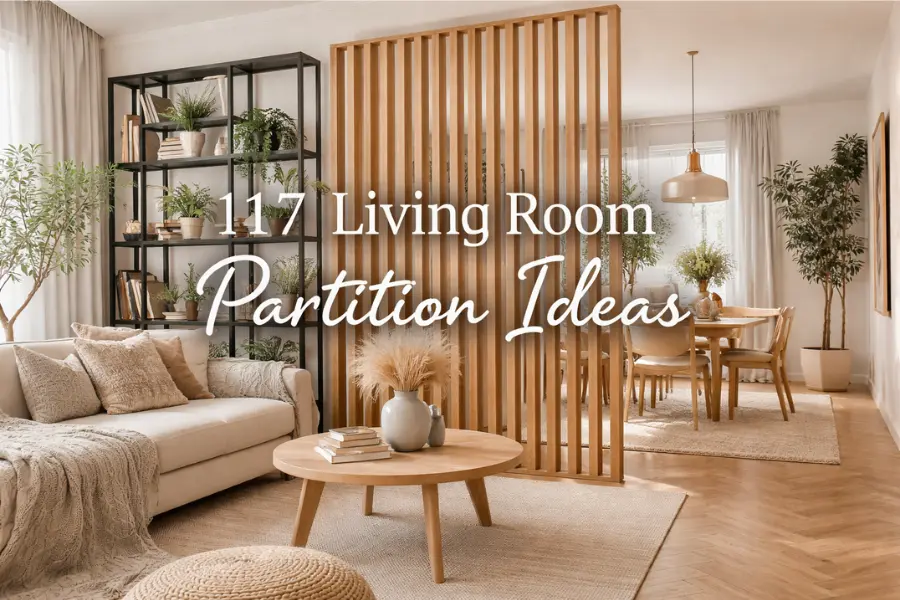
17 Living Room Partition Ideas to Transform Your Space
If you have an open-plan living room or a space that just feels a little too scattered, a partition might be exactly what you need. I have been decorating homes for years, and one of the most common problems I see is people struggling to define zones in their living rooms without making the space feel smaller or boxed in.
The good news? You do not need a full wall or a major renovation to fix that. In this guide, I am going to walk you through 17 of my favorite living room partition ideas. Each one is practical, stylish, and beginner-friendly.
As an Amazon Associate, I earn a small commission from qualifying purchases with no extra cost to you.
Table of Contents
17 Living Room Partition Ideas
Choosing the right partition depends on your space, your needs, and your style. Some ideas focus on flexibility, while others offer storage or visual impact. The following options cover a wide range so you can find what truly fits your home.
1. Wooden Slat Divider
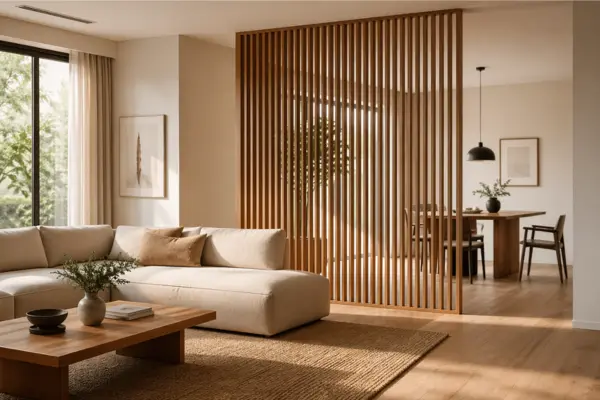
A wooden slat divider is one of those pieces that looks expensive but works in almost any home. It is made up of vertical wood strips with small gaps between them, so it separates two areas while still letting light and air pass through freely. It brings instant warmth and structure to a room without making it feel closed off. If you want something that looks intentional and polished, this is a great place to start.
Why it works
The gaps between the slats keep the room breathing. You get a clear visual boundary between two zones without losing the open, airy feeling. It also adds a natural texture that softens the look of modern furniture and clean walls.
Best For
Modern and Scandinavian-style homes, medium to large living rooms, and open-plan layouts where you want separation without sacrificing light.
Styling Tips
Go with light oak or natural pine if your space feels small — it keeps things bright. Choose darker walnut tones if you want more contrast and drama. Keep the furniture around it simple and low-profile so the divider becomes the focal point.
2. Open Bookshelf Partition
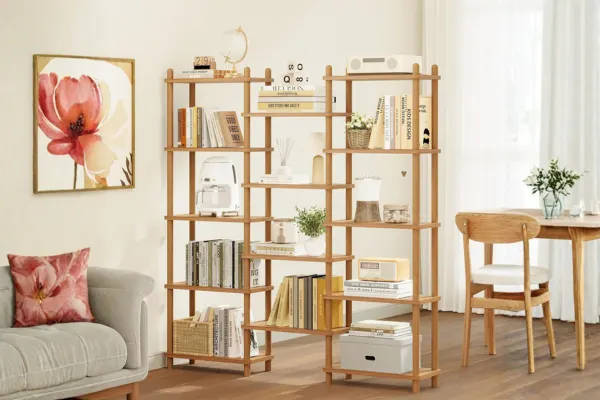
An open bookshelf is one of the smartest two-in-one solutions I know. It acts as a room divider while giving you all that glorious storage and display space. The open shelves mean light still flows through, and you can style each section with books, plants, candles, or small art pieces to make it feel truly personal.
Why it works
It pulls double duty — divider and storage in one. You are not adding extra furniture to an already-busy room. Instead, you are using one piece to solve two problems at once.
Best For
Studio apartments, small homes, and anyone who needs storage but does not want to clutter the space with too many separate pieces of furniture.
Styling Tips
Do not fill every single shelf. Leave some breathing room. Mix a few books with a trailing plant, a small lamp, or a decorative basket. That balance between full and empty is what makes a bookshelf look curated rather than crammed.
3. Glass Partition with Black Frames
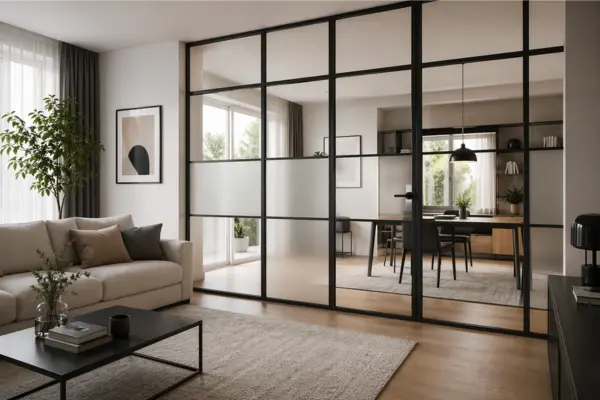
This one always looks stunning in photos, and honestly, it looks even better in person. A glass partition with black metal frames creates a sleek, modern separation that feels intentional and architectural. The glass keeps the room visually connected while the frames add a bold structure. It is the kind of detail that makes a home look professionally designed.
Why it works
Glass lets natural light travel through the space freely, so neither zone ends up feeling dark or cut off. The black frames add a graphic, editorial quality without overwhelming the room.
Best For
Contemporary and industrial-style interiors, medium to large living rooms with good natural light, and open-plan homes where you want a defined look without losing the open feel.
Styling Tips
Use clear glass if you want maximum openness. Choose frosted or ribbed glass panels if you need a bit more privacy, like separating a home office area from the main living space. Pair with matte black fixtures and minimal furniture for a cohesive look.
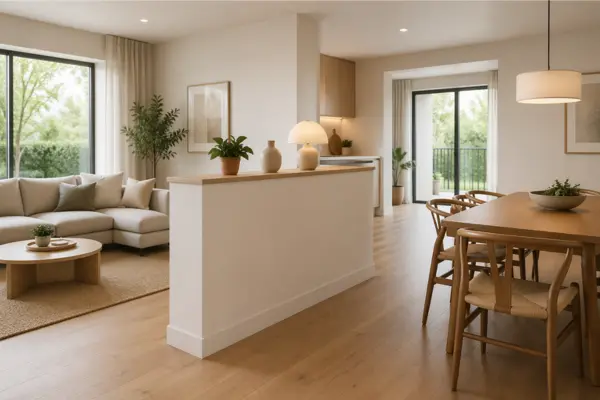
4. Half-Wall Partition
A half-wall is exactly what it sounds like — a low wall that goes about waist or chest height, stopping well before the ceiling. It creates a soft but clear boundary between areas. You can see over it, light passes above it, and the room still feels connected. It is one of the most subtle ways to divide a space without committing to a full room divider.
Why it works
It keeps sightlines open while still giving each area its own defined identity. You can have a conversation from one side to the other without any obstruction, which makes it perfect for spaces where you want separation but not isolation.
Best For
Connecting living and dining areas, open-plan kitchens, or any layout where you want a permanent but understated boundary.
Styling Tips
Use the flat top surface of the half-wall to your advantage. Style it with a small potted plant, a couple of candles, or a row of framed photos. It turns a structural element into a display moment.
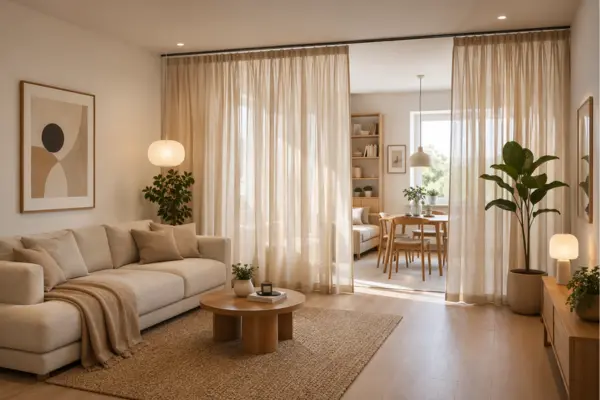
5. Curtain Divider
Curtains are honestly one of the most underrated partition ideas out there. They are affordable, flexible, and incredibly easy to install — even if you are renting. You just hang a ceiling-mounted curtain track or tension rod and slide the curtains across whenever you need to close off a space. When you do not need the divide, you pull them back and the room opens right up again.
Why it works
It gives you instant privacy and a sense of enclosure without any permanent changes to your home. You can swap out the curtains for a different color or fabric whenever the mood strikes, which makes it a very forgiving and adaptable option.
Best For
Renters, small apartments, studio layouts, and anyone who wants a temporary or flexible divider they can adjust day to day.
Styling Tips
Choose linen or sheer fabric if you want a soft, breezy effect that still lets some light through. Go with thicker, lined curtains if you need real privacy or want to block sound. Floor-to-ceiling panels always look more elevated than shorter ones.
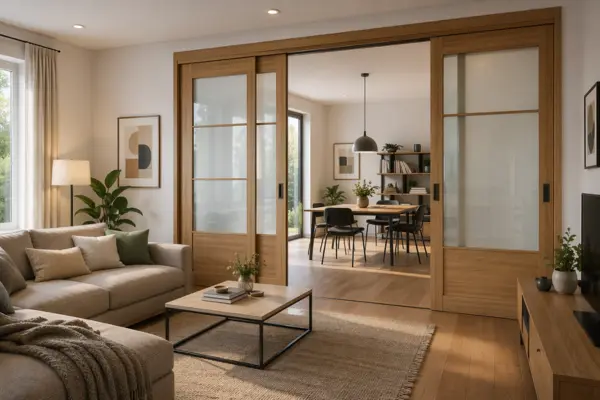
6. Sliding Door Partition
Sliding doors give you the best of both worlds. When they are open, the room feels spacious and connected. When they are closed, you have a proper, private zone. They are especially great in multi-use living rooms — like when the living area also doubles as a guest room or home office on certain days.
Why it works
The sliding mechanism means you never need floor space for a door to swing open. Everything stays neat and compact. You get full flexibility over how open or closed the space feels at any given time.
Best For
Multi-purpose living rooms, open-plan homes, and families who need to convert spaces depending on the time of day.
Styling Tips
Glass sliding panels keep things light and modern. Wooden panels bring warmth and act almost like a feature wall when closed. You can even get sliding panels with frosted or patterned glass to add a decorative element.
7. Decorative Metal Screen
A decorative metal screen is the kind of partition that doubles as a piece of art. The panels usually feature cut-out geometric, floral, or abstract patterns that cast interesting shadows on the walls and floor when light hits them. It is a divider that works just as hard visually as it does functionally.
Why it works
It separates spaces while adding a serious design statement. The patterns create visual interest without blocking the room entirely. Light still filters through beautifully, and it keeps the space feeling alive rather than heavy.
Best For
Medium-sized living rooms, statement interiors, and anyone who wants a divider that is more art piece than furniture.
Styling Tips
Geometric cut-out patterns work best in modern and contemporary spaces. Floral or Moroccan-inspired patterns suit boho, eclectic, or globally inspired interiors. Keep the wall behind it simple and neutral so the screen remains the star.
8. Indoor Plant Partition
Using plants as a partition is one of the most natural and calming things you can do in a living room. You can create a row of tall floor plants like fiddle-leaf figs or snake plants, or build a shelf unit and fill it with trailing greenery at different heights. Either way, it forms a soft, living boundary that also purifies the air and adds serious visual texture.
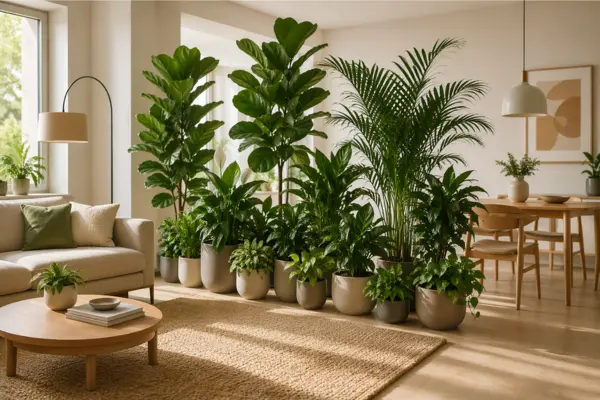
Why it works
Plants bring life into a room in a way that no other design element can quite replicate. The divide feels organic and relaxed rather than structured or rigid. It works especially well in rooms that feel a bit sterile or bare.
Best For
Nature-loving homeowners, bohemian and relaxed-style interiors, and small to medium living rooms where you want something soft and non-architectural.
Styling Tips
Mix plant heights for depth — a tall fiddle-leaf fig next to a trailing pothos next to a medium rubber plant looks much more dynamic than a row of identical pots. Make sure your plants actually suit the light levels in that part of the room or they will struggle.
9. TV Unit Partition
If your living room flows into a dining area, placing a double-sided TV unit between them is one of the cleverest space-saving moves you can make. The TV faces the living room side while the back of the unit can be styled or used for storage on the dining side. You get a functional partition without adding any extra furniture to the room.
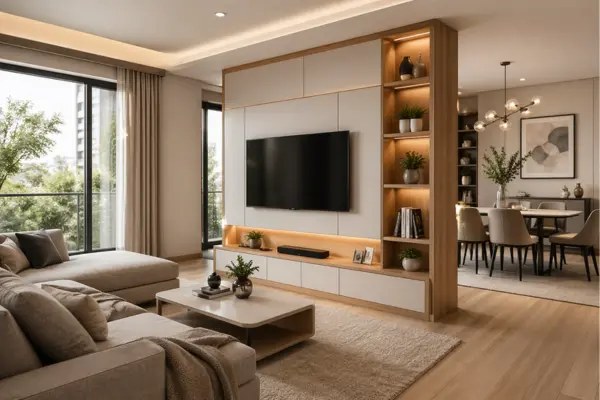
Why it works
You are using something you already need — a TV unit — to serve an additional purpose. It eliminates the need for a separate divider and organizes two distinct zones around one central piece of furniture.
Best For
Family homes, open-plan living and dining rooms, and spaces where you want every piece of furniture to work as hard as possible.
Styling Tips
Choose a floating or low-profile TV unit to keep the space feeling light. Avoid overly bulky units with too many doors and shelves — they can make the boundary feel too heavy. A clean, streamlined unit looks much more intentional.
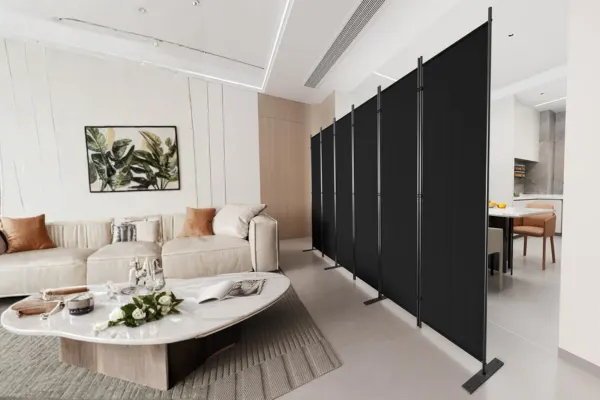
10. Folding Screen Divider
A folding screen is the most flexible partition on this list. It requires zero installation, can be moved around whenever you like, and comes in a huge range of styles — from rattan and wood to painted canvas and lacquered panels. When you do not need it, fold it up and tuck it in a corner. It is that simple.
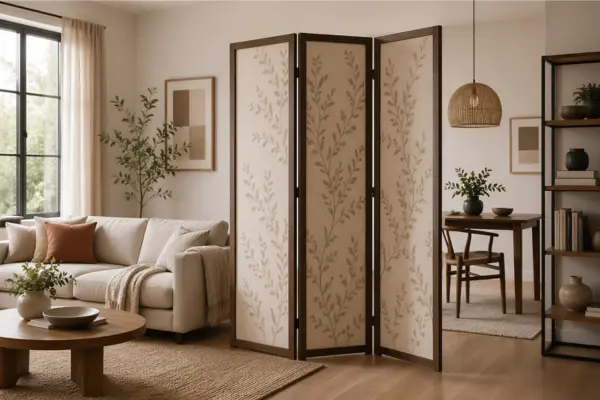
Why it works
There is no commitment involved. You can try different placements, use it on some days and not others, and change it out completely if your style evolves. It is the perfect entry-level partition for people who are not sure yet what they need.
Best For
Small apartments, renters, studio spaces, and anyone experimenting with layout for the first time.
Styling Tips
Choose a design that matches your room’s existing color palette. A folding screen that clashes with everything else will look like an afterthought. Rattan frames suit boho and relaxed spaces. Dark lacquered panels feel more formal and dramatic.
11. Ceiling-Hung Partition
A ceiling-hung partition is suspended from above rather than sitting on the floor. This can be a panel of fabric, a set of vertical wooden rods, or even a series of hanging plants. Because it does not touch the floor, the room underneath feels more open and the partition itself looks light and sculptural rather than heavy.
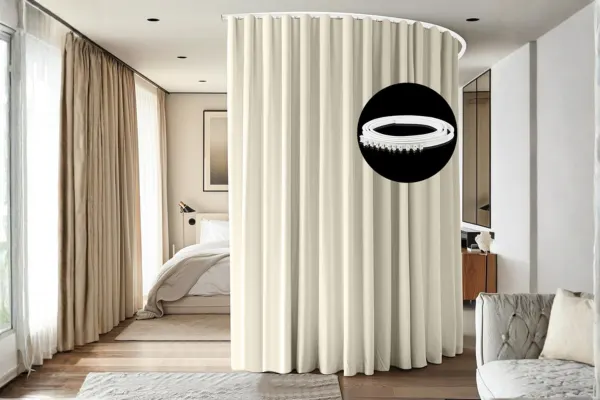
Why it works
Floor space stays completely clear and uninterrupted, which makes even compact rooms feel more spacious. The hanging structure also draws the eye upward, which can make low ceilings feel taller.
Best For
Compact living rooms, modern and minimalist interiors, and spaces where floor-based furniture is already taking up a lot of room.
Styling Tips
Keep the materials lightweight — heavy panels can feel oppressive when suspended overhead. Thin wooden dowels, sheer fabric panels, or hanging macrame all work beautifully. Make sure the installation is properly anchored to ceiling joists for safety.
12. Storage Cabinet Divider
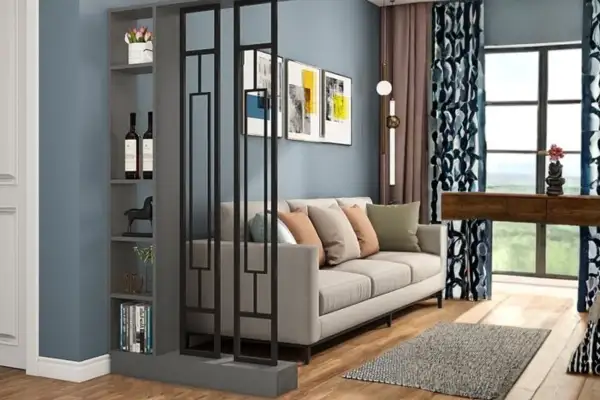
A tall storage cabinet placed perpendicular to the wall creates a strong, practical partition. Think of it like an island — a freestanding unit that defines a zone while storing everything from books and board games to throws and remotes. Both sides of the cabinet can be functional, so nothing goes to waste.
Why it works
Storage is always a win in a living room. A cabinet divider adds square footage in terms of storage without taking up more floor space than a dedicated partition would. It is doing two jobs simultaneously.
Best For
Small homes and apartments, families with a lot of stuff to store, and anyone who wants a partition that earns its keep.
Styling Tips
Keep the inside of the cabinet tidy. Open shelving on a storage unit looks great when curated, but cluttered shelves make the whole room feel messy. Use baskets or boxes to corral smaller items and keep things visually calm.
13. Backlit Panel Partition
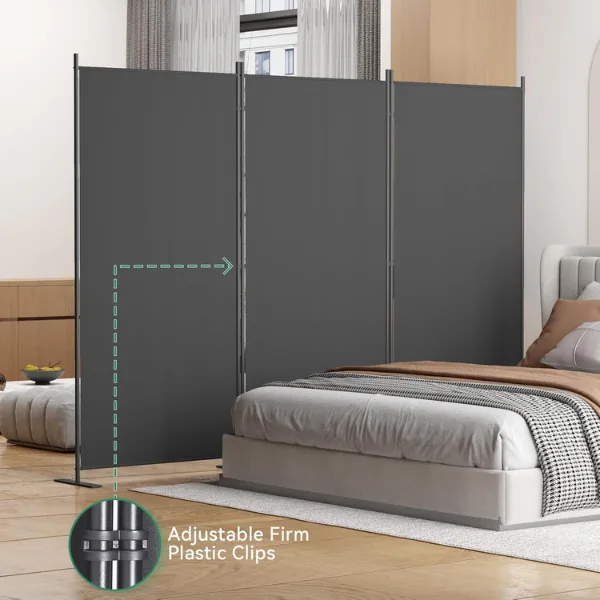
A backlit panel is a partition that glows. LED lights are set behind a frosted acrylic or glass panel, creating a soft, warm wash of light that feels luxurious and atmospheric. It works as both a room divider and a lighting feature, so it serves a triple purpose — structure, light, and mood.
Why it works
It transforms a functional divider into an ambient lighting installation. In the evenings especially, a backlit panel creates a beautiful warm glow that makes a living room feel far more considered and elegant.
Best For
Large living rooms, luxury interiors, and anyone who loves layered lighting and atmospheric design.
Styling Tips
Always choose warm white LED lighting rather than cool or daylight tones — warm light is more flattering and cozy in a living room setting. Keep the rest of the room’s lighting soft to let the backlit panel really shine.
14. Bamboo Divider
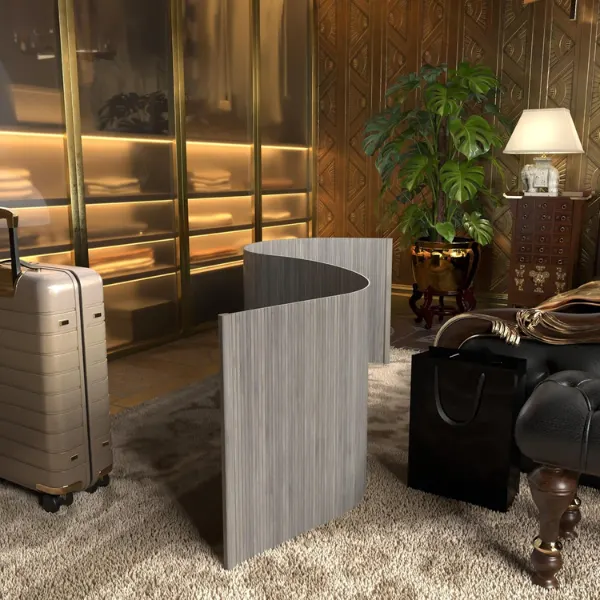
Bamboo dividers bring a natural, earthy quality that very few other materials can match. They are lightweight, sustainable, and visually interesting without being loud. A bamboo screen or panel introduces a beautiful organic texture and makes a room feel grounded and calm, especially in spaces that tend to feel a bit cold or sterile.
Why it works
Bamboo adds warmth and texture without weight. It suits a wide range of interior styles, from boho and coastal to Japanese-inspired or Scandinavian-natural aesthetics. It also lets some light filter through, so it never feels too blocking.
Best For
Eco-conscious homeowners, boho and nature-inspired interiors, and anyone who wants a partition that feels relaxed and unpretentious.
Styling Tips
Pair bamboo with natural textiles — linen cushions, jute rugs, cotton throws. Keep the color palette neutral and earthy around it. Avoid pairing bamboo with sleek high-gloss furniture as the contrast can feel jarring.
15. Geometric Grid Partition
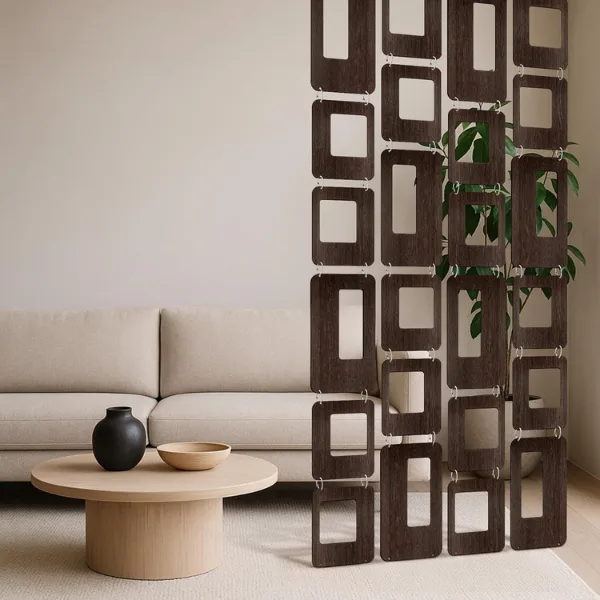
A geometric grid divider looks like a large open lattice or grid — think squares or diamonds arranged in a repeating pattern. It creates a defined visual boundary while still allowing plenty of light and sightlines through the gaps. It brings a modern, architectural edge to a room without feeling heavy or imposing.
Why it works
The grid structure gives a strong visual cue that two separate zones exist, even though the divider itself is mostly open air. It is all the function of a partition with very little of the visual weight.
Best For
Contemporary and industrial interiors, medium-sized living rooms, and anyone who wants a strong visual statement without blocking light.
Styling Tips
Stick to simple square grids for a clean, modern look. More elaborate diamond or interlocking patterns can suit eclectic or maximalist spaces. Paint the grid in a bold matte black or go with natural metal for an industrial feel.
16. Gallery Wall Divider
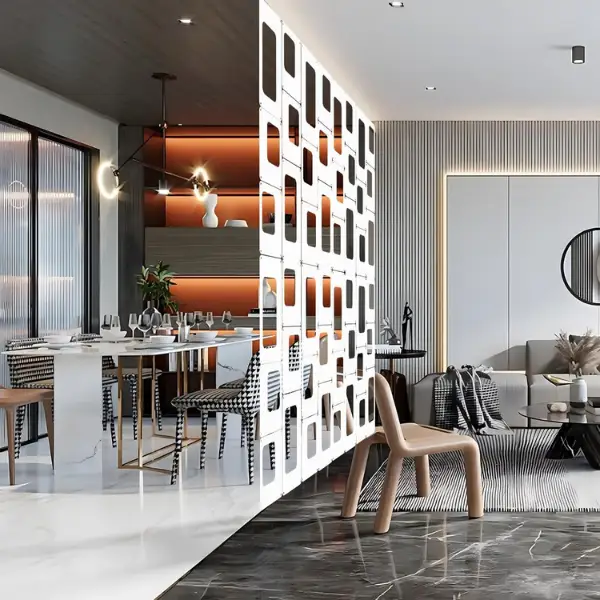
A gallery wall divider uses a cluster of framed art, photographs, and prints mounted on a wall or panel to create a visual boundary between two areas. It is less about physical separation and more about creating a strong focal point that signals to the eye where one zone ends and another begins. It is the most personal and expressive option on this list.
Why it works
It turns the concept of a partition into a storytelling moment. Every piece on the wall says something about who lives there. It makes the space feel truly lived-in and personal rather than showroom-perfect.
Best For
Creative and artistic homes, rental apartments where structural changes are not allowed, and anyone who wants to define a zone through decoration rather than furniture.
Styling Tips
Use matching frame colors for a more cohesive and organized look. A mix of black, white, and natural wood frames tends to work well together. Plan the layout on the floor first before you start putting holes in the wall.
17. Minimalist Panel Divider
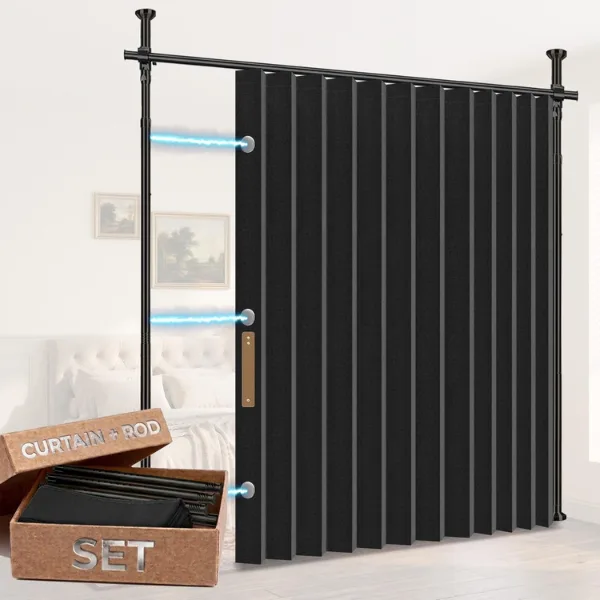
A minimalist panel divider is just what it sounds like — a clean, flat panel in a neutral color that separates two areas without making any noise about it. No pattern, no texture, no fuss. It blends quietly into the room and does its job without demanding attention. For people who prefer calm, uncluttered spaces, this is the one.
Why it works
It does not compete with the rest of your décor. A minimalist panel lets your furniture, art, and accessories be the stars, while quietly doing the structural work of defining zones in the background.
Best For
Modern, minimalist, and Japandi-style interiors where the goal is calm, intentional spaces with very little visual noise.
Styling Tips
Choose a panel in a color that is one or two shades deeper than your wall color for a tonal, barely-there look. Or go for a clean white or off-white if your walls are already neutral. Smooth matte finishes always look more premium than glossy ones.
Mistakes to Avoid
When adding a partition, it is easy to make choices that affect both function and appearance. One common mistake is choosing a design that blocks too much light. This can make the living room feel smaller and darker than it actually is.
Another mistake is going too bulky in a small space. Large or heavy partitions can overwhelm the room and disrupt movement. It is always better to choose lighter designs for compact areas.
Many people also forget about flow. A partition should not interrupt how you move through the room. Always consider walking paths and furniture placement before installing anything.
Lastly, avoid over-decorating the partition. Whether it is a shelf or a screen, too many items can make the space look cluttered. Keep things balanced and simple.
Conclusion
A well-chosen partition can completely change how your living room feels and functions. It helps define spaces, adds style, and often solves practical problems like storage or privacy.
The key is to choose something that fits your room size and your daily needs. Light and flexible options work best in small spaces, while larger rooms can handle more structured designs.
When done right, a partition does not just divide a room. It brings everything together in a more organized and beautiful way.
FAQs
What is the best partition for a small living room?
Lightweight and flexible options like curtains, folding screens, or open shelves work best. They do not block light and keep the space feeling open.
Can a partition make a room look smaller?
Yes, if it is too heavy or blocks natural light. Choosing open or transparent designs helps maintain a spacious feel.
Are partitions permanent?
Not always. Many options like curtains and folding screens are temporary and easy to move or remove.
How do I choose the right partition style?
Start by looking at your room size and needs. Then match the design with your overall interior style for a balanced look.
Can I use a partition for decoration only?
Yes, many partitions also act as design features. Options like metal screens or gallery walls add both function and visual interest.