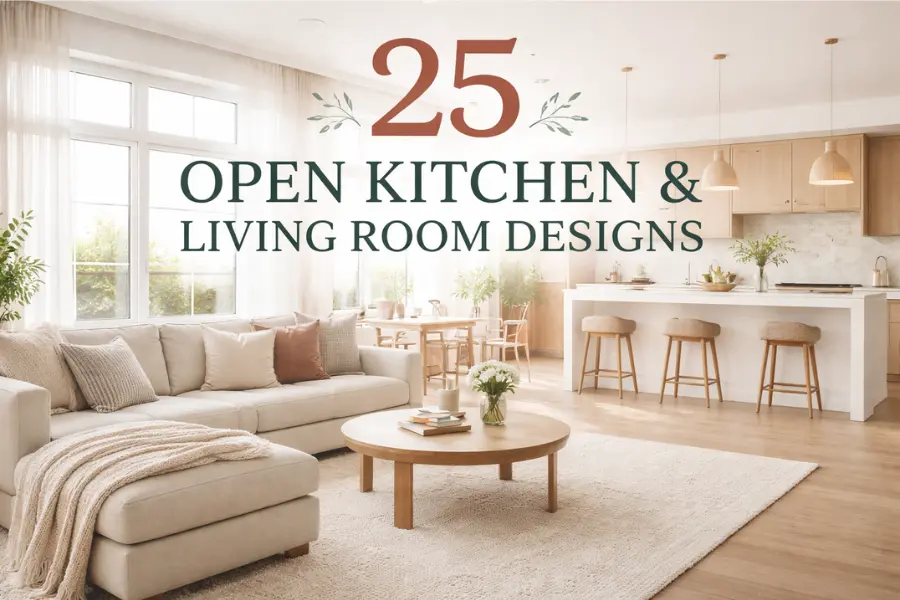
25 Open Kitchen and Living Room Designs (Expert Home Styling Guide)
If you have ever walked into a home and instantly felt like you could breathe, chances are it had an open kitchen and living room layout. There are no heavy walls cutting the space in half, no dark corners, and no feeling of being boxed in. Just one big, beautiful shared space where everything flows together.
Open layouts are one of the most popular home design choices right now, and for good reason. They make small homes feel larger, they let natural light travel freely across the room, and they bring families together in a way that closed-off kitchens simply cannot. When you are cooking dinner, you can still talk to the people sitting on the sofa. When guests are over, nobody feels isolated in the kitchen.
I have been working on home interiors for years, and I have seen every version of this layout, from tiny studio apartments to large family homes. In this guide, I am sharing 25 real, practical, and beautiful open kitchen and living room ideas that actually work in everyday homes. These are not just pretty Pinterest boards. These are layouts you can use, adapt, and make your own.
Table of Contents
25 Open Kitchen and Living Room Design Ideas
Here are the mind blowing ideas:
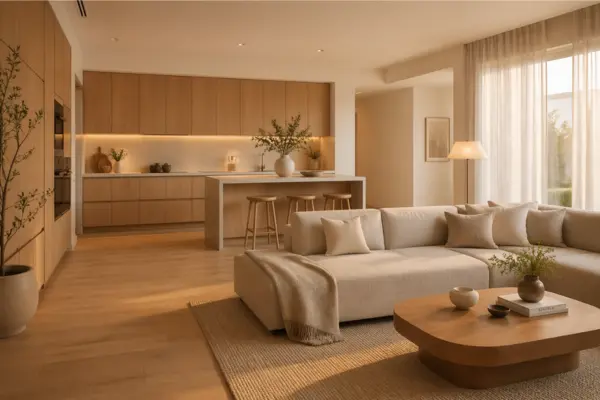
1. Warm Minimal Flow Layout
This is one of my all-time favorite starting points for anyone who feels overwhelmed by interior design. The idea is simple: soft beige tones, light wood textures, clean furniture lines, and warm but gentle lighting. Everything in this layout works together quietly. Nothing fights for attention. The kitchen and living room blend into each other naturally, and the result feels calm, welcoming, and incredibly put-together without any fuss.
Why It Works
When you strip away unnecessary color and clutter, the space instantly feels bigger and more relaxed. Neutral tones reflect light beautifully, and light wood adds just enough warmth to stop the room from feeling cold or sterile. It is the kind of space that feels like a deep breath.
Best For
Small to medium homes where you want to maximize the sense of space without major renovations.
Styling Tips
Stick to a palette of cream, warm white, and natural wood. Choose a sofa in oat or sand tones. Keep kitchen cabinets flat-front and simple. Add warm Edison-style bulb lighting over the kitchen area and a soft floor lamp in the living corner. Avoid too many accessories. Three well-chosen pieces are always better than fifteen random ones.
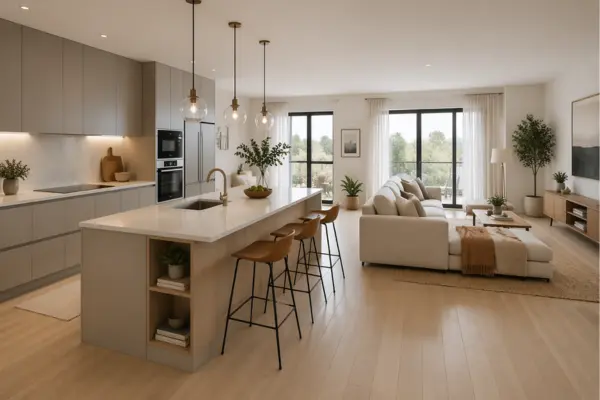
2. Island Divider Concept
A kitchen island is honestly one of the smartest things you can add to an open layout. It acts as a soft wall between the kitchen and living room without actually closing anything off. You get separation, you get extra counter space, and you get a casual seating spot all in one piece of furniture. It is multi-purpose design at its best.
Why It Works
The island defines the kitchen zone clearly without blocking sightlines. People in the living room can still see the kitchen, but there is a natural boundary that makes each area feel like its own space. It also gives the cook somewhere to face out toward the room instead of cooking with their back to everyone.
Best For
Medium to large homes with genuinely open floor plans where there is enough room for an island without it becoming an obstacle.
Styling Tips
Keep the island design clean and low-profile. Waterfall edges look incredibly sleek. Add three bar stools on the living room side for a casual dining moment. Go for a contrasting color on the island, like a deep navy or forest green, while keeping the rest of the kitchen light. Hang two or three pendant lights directly above for both function and style.
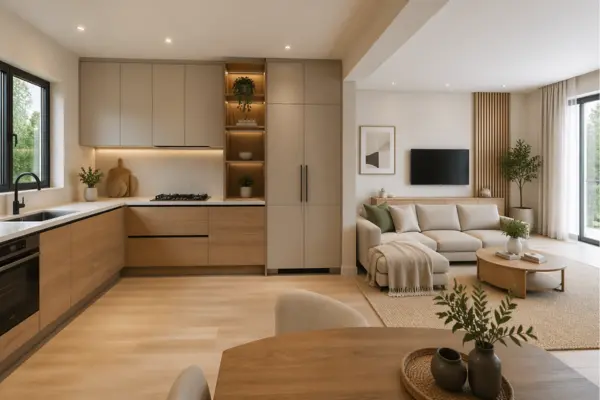
3. L-Shaped Open Flow Design
The L-shaped kitchen is a classic layout that works beautifully in open-plan spaces. The kitchen wraps around two walls in an L shape, which naturally pushes the cooking zone into a corner and leaves the center of the room wide open. The living area then flows into that open center without any awkwardness.
Why It Works
Corner space is often wasted in homes, and the L-shape makes smart use of it. By keeping the kitchen tucked along two walls, you free up the middle of the room for movement, seating, and life. It creates a natural sense of flow from the moment you walk in.
Best For
Apartments and medium-sized homes where the kitchen and living area share one large rectangular room.
Styling Tips
Match the tone of your kitchen cabinets with the larger color palette in the living room. If your sofa is grey, bring a grey element into the kitchen, whether that is a backsplash tile, cabinet handles, or a kitchen mat. This visual thread makes the two zones feel like one designed space rather than two rooms pushed together.
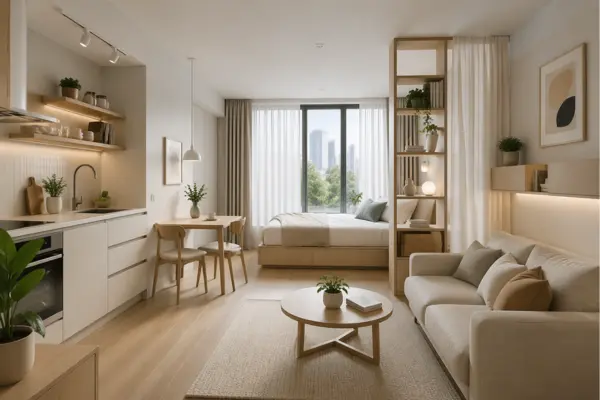
4. Compact Apartment Open Plan
Living in a small apartment does not mean you have to give up style or function. This layout is built specifically for tight spaces. The goal here is to use every inch wisely: wall-mounted storage instead of floor cabinets, a small sofa instead of an oversized sectional, and a color palette that is light and airy from ceiling to floor.
Why It Works
Small spaces feel claustrophobic when they are dark or crowded. By going light on color, keeping furniture low-profile, and mounting storage on walls instead of eating into floor space, the whole apartment breathes more easily. The kitchen and living area feel connected and intentional rather than cramped.
Best For
Studio apartments, small flats, and any space under roughly 500 to 600 square feet.
Styling Tips
White or very light grey walls are your best friend here. Use a two-seater sofa or a loveseat instead of a full three-seater. Install floating shelves in the kitchen instead of upper cabinets to keep things feeling open. Add a small round dining table that doubles as extra counter prep space. Mirrors are your secret weapon: one large mirror on a living room wall will make the space look almost twice as deep.
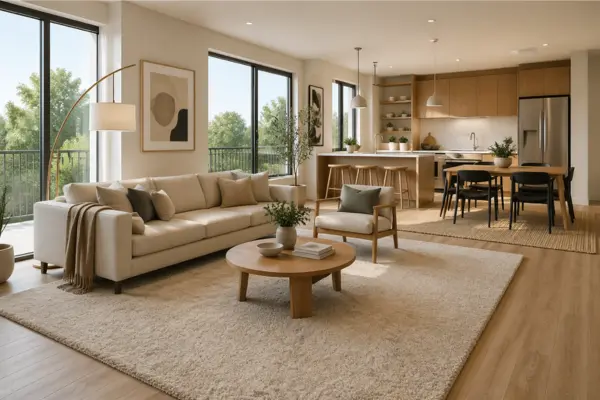
5. Zoned Rug Living Layout
Here is one of the easiest and most affordable ways to create structure in an open layout: use rugs to define each zone. A large area rug placed under the sofa and coffee table immediately signals that this is the living space. The kitchen, with its hard flooring, naturally becomes the other zone. No walls, no partitions, no construction needed.
Why It Works
Rugs create invisible boundaries. They tell your brain where one area ends and another begins without physically blocking anything. It is a psychological trick that actually works incredibly well in open layouts, especially in rental homes where you cannot make structural changes.
Best For
Every home size and every budget. This technique works whether you are decorating a tiny flat or a large open-plan family home.
Styling Tips
Choose a rug that is genuinely large enough. A too-small rug is one of the most common decorating mistakes. All four sofa legs should ideally sit on the rug, or at least the front two. Go for a texture or pattern that adds warmth to the living zone, and keep the kitchen flooring clean and simple so the contrast between zones is clear. Jute, wool, and bouclé rugs all work beautifully in open layouts.
6. Scandinavian Clean Layout
Scandinavian design is popular for a reason: it is simple, timeless, and incredibly calming to live in. This layout uses white walls, pale wood tones, soft grey accents, and minimal decoration to create a space that feels organized and peaceful. There is nothing unnecessary here. Every piece earns its place.
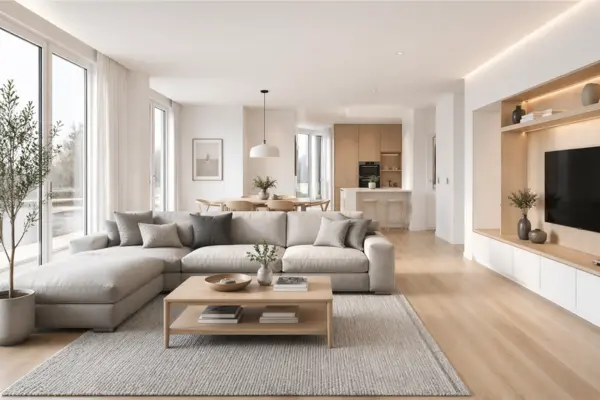
Why It Works
White walls and pale wood reflect natural light better than almost any other combination. The space feels bright even on grey days, and the simplicity of the design means there is less visual noise to stress you out. It is genuinely one of the most livable styles for everyday use.
Best For
Small homes, modern apartments, and anyone who finds busy interiors overwhelming.
Styling Tips
Invest in one or two quality furniture pieces rather than filling the room with lots of cheap items. A good sofa and a beautiful dining table go a long way. Keep décor to a minimum: a few plants, simple ceramic vessels, and clean linen cushions are all you need. Avoid clutter on kitchen countertops entirely. If something does not have a daily function, put it away.
7. Kitchen Wall with Open Pass
Not every home is suited to a fully open layout, and that is perfectly fine. This design offers a middle ground. Instead of knocking down an entire wall, a wide rectangular opening is cut through it. This creates what is often called a pass-through, a large window-style gap between the kitchen and the living room that lets light, conversation, and connection flow between the two spaces.
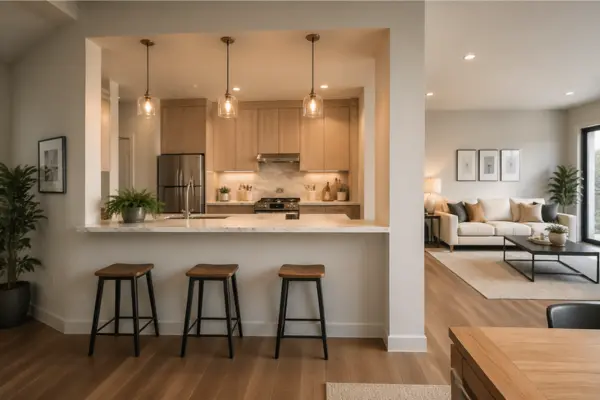
Why It Works
It gives you the best of both worlds. The kitchen has a bit of separation, which is genuinely useful if you want to keep cooking smells contained or just prefer not to have your kitchen on full display at all times. But you still get the openness, the light, and the ability to stay connected with whoever is in the living room.
Best For
Homes where full open-plan is structurally difficult, or where the homeowner wants partial separation rather than complete openness.
Styling Tips
Frame the opening well. A clean plaster finish or a tile surround makes it look intentional rather than like a half-finished renovation. Add a pendant light directly above the pass on the kitchen side for both function and atmosphere. You can also place a small shelf within the opening to display a plant or a few styled objects.
8. Central Dining Bridge Layout
In this layout, the dining table is positioned right in the middle of the open space, sitting between the kitchen and the living room. It acts as a natural bridge between the two zones. You move from the kitchen to the dining table to the sofa in one smooth, logical line. It is intuitive, it is practical, and it looks great.
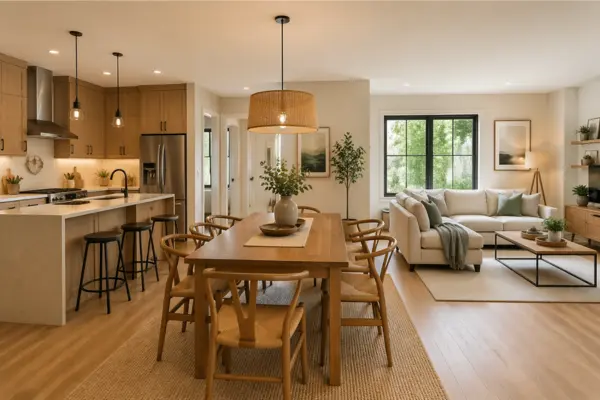
Why It Works
The dining area often gets lost in open-plan homes. People are not sure where to put it, so it ends up crammed into a corner or pushed against a wall where it looks awkward. Centering it between kitchen and living room solves that problem instantly. It gives the dining space its own identity while also tying the two zones together.
Best For
Family homes, homes that entertain regularly, and medium-sized open-plan spaces.
Styling Tips
Choose a dining table in warm wood to add richness to the space. Hang a statement pendant light above it, something with presence that helps signal this as a defined zone. Keep chairs simple and comfortable. If space allows, a bench on one side adds a relaxed, casual feel that works beautifully in open layouts.
9. Modern Glass Partition Design
If you want the look and light of an open layout but you genuinely need some separation, glass partitions are a brilliant solution. They divide the kitchen from the living room structurally, meaning sound and smell stay contained, but visually the space remains completely open. Light travels through the glass and the two zones still feel connected.
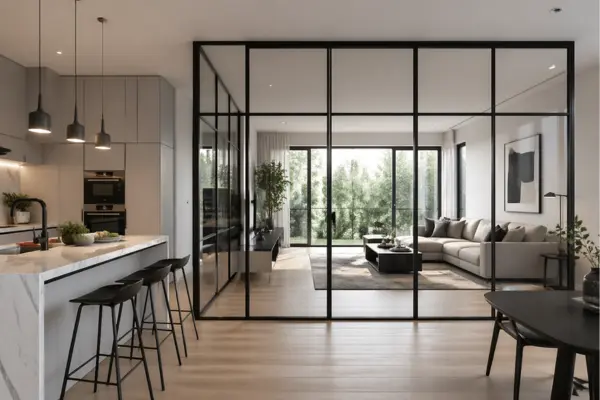
Why It Works
Glass does something walls cannot: it separates without closing off. You get actual physical separation for practical reasons while keeping the visual openness that makes open-plan layouts so desirable. It also adds a very sleek, architectural quality to the home.
Best For
Modern homes, city apartments, and anyone who wants the benefits of an open layout while managing kitchen smells or noise.
Styling Tips
Go for black steel frames around the glass panels. This is the detail that takes it from looking like a greenhouse to looking like a high-end architectural feature. Keep the glass clean and fingerprint-free because dirty glass immediately kills the effect. You can also use frosted glass panels in sections if you want slightly more privacy.
10. Cozy Corner Sofa Layout
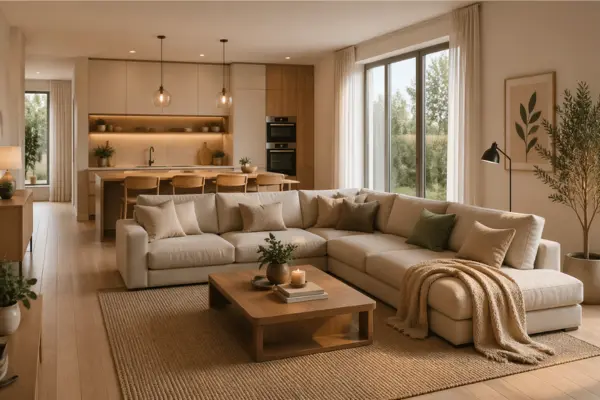
A large L-shaped corner sofa is not just comfortable, it is actually one of the most effective tools for defining an open-plan living space. When you position a corner sofa strategically, it creates a clear boundary for the living zone without a single wall or partition. The back of the sofa acts as a soft visual divider between the kitchen area and the seating area.
Why It Works
Furniture arrangement is one of the most underused tools in interior design. A sofa with its back facing the kitchen naturally separates the two zones. It tells everyone who enters the room exactly where the living space begins. Combined with a rug underneath, this is a very powerful space-defining combination.
Best For
Medium to large open-plan homes where there is enough space for a generous sofa without making the room feel cramped.
Styling Tips
Choose a fabric that is both stylish and practical. Boucle, performance velvet, and textured weaves all look beautiful and hold up well to daily use. Add a console table behind the sofa if the back faces the kitchen, this fills the visual gap and gives you a place for lamps, plants, and small decorative items. Keep cushions in two or three coordinating tones rather than too many competing patterns.
11. Floating Kitchen Island Style
This is a variation on the classic island concept, but with a lighter, more airy feel. The island is designed to look almost weightless in the space. Open shelving on the lower half instead of closed cabinets, slim legs instead of a solid plinth base, or a minimal overhang all contribute to a floating effect. The kitchen gets all the function of an island without it feeling heavy or dominant in the room.
Why It Works
In open layouts, every large piece of furniture affects the overall feeling of the space. A solid, chunky island can make a room feel smaller. A floating or visually lighter island keeps everything feeling open and uncluttered while still delivering the practical benefits of extra counter space and a zone divider.
Best For
Medium to large open-plan homes, particularly those with modern or minimal design aesthetics.
Styling Tips
Choose an island with clean, slim lines. A marble or quartz top in white or light grey keeps it feeling light. If you use open shelving on the base, keep what is stored there curated and tidy. Baskets, cutting boards, and a few cookbooks look intentional. A jumble of random kitchen items does not.
12. Open Shelving Transition Design
Open shelves positioned between the kitchen and the living room create one of the most beautiful soft dividers you can find. They let light pass through, they give you display space for plants, books, ceramics, and kitchen essentials, and they signal a transition between the two zones without closing anything off.
Why It Works
Open shelving works as a room divider in a way that feels organic rather than constructed. It does not feel like a partition. It feels like a design feature. And because light travels through the gaps between objects on the shelves, the space never feels blocked or divided in a heavy-handed way.
Best For
Small to medium homes that need some visual separation between zones without losing light or openness.
Styling Tips
Edit ruthlessly. The biggest mistake with open shelving is overcrowding it. Leave breathing space between items. Group things in odd numbers, threes and fives feel more natural than pairs. Mix heights: a tall vase next to a small plant next to a stack of books creates visual rhythm. Use the kitchen side of the shelves for styled kitchen items and the living room side for books and decorative objects.
13. Fireplace Focus Layout
When a home has a fireplace, everything should revolve around it. In this layout, the fireplace becomes the anchor of the living room zone, and the seating is arranged to face it. The kitchen sits slightly to the side or behind, still part of the open space but clearly secondary to the living area’s main focal point.
Why It Works
A fireplace is one of those rare design elements that does multiple jobs at once. It creates warmth, it provides a natural focal point, it defines the living zone, and it adds enormous character to any space. In an open layout, it helps ground what could otherwise feel like a shapeless big room.
Best For
Homes with existing fireplaces or anyone building or renovating who wants to incorporate one. Works especially well in larger open-plan rooms.
Styling Tips
Keep the mantle styling simple and seasonal. Do not over-decorate it. Two or three well-chosen objects are far more impactful than a crowded mantle. Use soft, warm lighting in the living zone to complement the fireplace glow. Candles, floor lamps with warm bulbs, and dimmable overhead lights all work beautifully here.
14. Narrow Long Room Layout
Long, narrow rooms are actually very common in older homes and terraced houses, and they can feel awkward if you do not approach them with a clear plan. This layout solves that problem by placing the kitchen along one side wall, the living room along the opposite end, and the dining area in the natural middle ground between them.
Why It Works
It uses the length of the room to your advantage instead of fighting against it. Each zone has its own section of the room, the flow from kitchen to dining to living feels completely natural and logical, and the narrow width is actually an asset because it forces a clean, streamlined layout.
Best For
Terraced houses, long apartments, and any home with a rectangular floor plan where the room is considerably longer than it is wide.
Styling Tips
Avoid anything that blocks the length of the room. Keep furniture slim and low-profile. A narrow sofa, a slim dining table, and streamlined kitchen cabinets all help. Run one consistent flooring material the entire length of the room to unify the zones and make the space feel even longer and more intentional. Use vertical elements like tall plants or floor-to-ceiling shelving to add height interest.
15. Bright White Open Space
White is not boring. When it is done well, an all-white or near-white open-plan space is one of the most striking and sophisticated things you can create. This design uses white as its foundation, from walls and ceilings to kitchen cabinets and sofa upholstery, and then layers in warmth through texture and accent tones.
Why It Works
White reflects light better than any other color. In an open-plan space, this means natural light bounces from the kitchen windows across the living room and back, making the entire space feel genuinely bright all day long. It also makes rooms look larger, cleaner, and more open.
Best For
Small homes and compact apartments that need every visual trick available to feel more spacious.
Styling Tips
The key to making white work is texture. Without it, white looks flat and clinical. Layer in a chunky knit throw, a bouclé cushion, a jute rug, a linen sofa. These textures add warmth and depth without adding color. Then bring in one or two accent tones, warm beige, natural wood, a soft terracotta ceramic, to stop it from feeling cold.
16. Industrial Loft Style
This is for the bolder decorator. Industrial loft style uses raw, honest materials: exposed brick walls, poured concrete floors, steel-framed windows, open ceiling joists. The kitchen and living room share this aesthetic completely, which is what makes it so cohesive. There are no soft pastels here, it is all texture, contrast, and character.
Why It Works
Industrial design has a confidence to it that is genuinely exciting to live in. When the materials are real, whether that is actual exposed brick or a very convincing finish, the space has personality and depth that is hard to fake with other styles. The open-plan layout works brilliantly here because there are no walls to interrupt the architectural drama.
Best For
Loft apartments, converted spaces, warehouse conversions, and modern city homes with high ceilings and strong bones.
Styling Tips
Balance the rawness with warmth. Industrial spaces can feel cold if you are not careful. A large vintage-style rug, leather sofa cushions, warm Edison bulb lighting, and a few well-placed plants all bring the comfort factor up significantly. Stick to a dark and warm color palette: charcoal, rust, aged leather, and dark wood all work beautifully.
17. Natural Earth Tone Design
If you want your home to feel like a sanctuary, earth tones are your answer. This design uses a palette of olive green, warm terracotta, clay, sandy beige, and rich brown wood textures throughout both the kitchen and the living room. The result is a space that feels deeply warm, incredibly grounded, and very easy to relax in.
Why It Works
Earth tones are colors that our brains naturally associate with calm and safety. They are drawn from nature, from soil and stone and plant life, and bringing them into your home genuinely changes how the space feels to spend time in. In an open layout, using them across both zones creates a seamless, cohesive warmth.
Best For
Family homes, nature-inspired interiors, and anyone who finds cool or neutral palettes a bit too clinical.
Styling Tips
Layer your earth tones rather than using just one. Start with a warm beige or sand on the walls, bring in terracotta through cushions or a ceramic pot, add olive green through plants or a kitchen accessory, and ground everything with a dark brown wood dining table or shelving. Add lots of real indoor plants. They are not just decorative here, they are part of the design intention.
18. Family-Friendly Open Layout
This design is for the real world. It is for homes with children, with pets, with daily chaos and regular cooking and people actually living in the space rather than just photographing it. The furniture is durable, the surfaces are practical, the layout is generous, and the design is comfortable enough to actually sit in for hours.
Why It Works
Beautiful design that you are afraid to use is not actually good design. A family home needs to look great and function under real daily pressure. This layout achieves both by prioritizing durable materials and practical furniture placement while still maintaining a clear, attractive aesthetic.
Best For
Large families, homes with young children, and anyone who wants an open layout that survives real life.
Styling Tips
Choose performance fabrics for sofas and chairs. These are upholstery fabrics engineered to resist stains and wear without sacrificing softness or style. Go for easy-clean surfaces in the kitchen, matte finishes hide fingerprints far better than gloss. Use washable rugs in the living zone. Keep a designated storage solution near the living area for toys, remotes, and the daily accumulation of family life, a large basket or an ottoman with internal storage both work brilliantly.
19. Side Kitchen Linear Layout
Sometimes called a galley kitchen in an open plan, this layout places the entire kitchen along one single wall in a straight line. Everything, sink, hob, oven, fridge, storage, runs along one wall, leaving the rest of the room completely free for the living area. It is the most space-efficient kitchen layout that exists.
Why It Works
By concentrating all kitchen function into one linear run along a wall, you maximize the usable floor space for the rest of the open-plan room. The living area gets more room to breathe, movement through the space feels more natural, and the kitchen feels contained and purposeful without dominating.
Best For
Small homes, studio apartments, and any space where floor area is limited and every square foot counts.
Styling Tips
Keep the linear kitchen visually clean. Avoid cluttering the countertop with appliances and gadgets. Store as much as possible behind closed cabinet doors. Choose a simple, flat-front cabinet design that does not draw too much attention. A bold backsplash tile or a striking overhead light above the kitchen run can add personality without taking up any floor space.
20. Two-Zone Lighting Design
This is one of those ideas that sounds simple but has an enormous impact on how an open-plan space feels. The core concept is this: the kitchen gets bright, functional task lighting, and the living room gets warm, soft, atmospheric lighting. Two different moods, two different purposes, one connected space.
Why It Works
Lighting is the single most powerful tool in interior design, and most people do not use it intentionally enough. In an open layout, lighting is one of the main ways you signal to the room that this area is for cooking and this area is for relaxing. Without that difference, everything blurs together and the space never feels quite right.
Best For
Every open-plan home without exception. Every layout benefits from intentional two-zone lighting.
Styling Tips
In the kitchen, use pendant lights directly above the island or countertops for task lighting, and add under-cabinet LED strips for practical work lighting. In the living room, ditch the overhead ceiling light as your main source. Use a floor lamp in one corner, a table lamp on a side table, and potentially some low-level shelf lighting. All living room lights should be on dimmers so you can adjust the mood. The contrast between the bright kitchen and the warm living room creates a beautiful and very intentional atmosphere.
21. Minimal Luxury Layout
This is about restraint. Less furniture, better quality. Fewer accessories, more carefully chosen. Hidden storage instead of open shelving. Matte finishes instead of shiny ones. The result is a space that looks effortlessly expensive and deeply calm, even though it requires very little decoration.
Why It Works
True luxury in interior design is not about adding more. It is about removing everything unnecessary until what remains is only beautiful and purposeful. Open layouts lend themselves perfectly to this approach because the architecture itself, the space and the light, becomes the feature.
Best For
Modern luxury homes, high-end apartments, and anyone with a genuine appreciation for quality over quantity.
Styling Tips
Invest in hidden storage. Handleless kitchen cabinets that run floor to ceiling hide everything and create a seamless wall of storage that looks incredible. In the living room, choose one hero piece of furniture, a beautifully crafted sofa or an exceptional coffee table, and let it do the talking. Keep surfaces clear. One carefully chosen object on a surface is luxury. Ten objects on a surface is clutter.
22. Multi-Level Ceiling Design
This is a more architectural approach to zone definition, and it is incredibly effective. In this design, the kitchen area has a lower ceiling while the living room opens up to a higher one. This change in ceiling height naturally signals a shift in zones, no walls required, no furniture tricks needed. The architecture does the work.
Why It Works
Ceiling height has a profound effect on how a space feels. Low ceilings feel intimate and cozy. High ceilings feel open and grand. By using different heights for different zones in one open-plan space, you give each area its own atmosphere while keeping the floor plan completely open.
Best For
Custom-built homes, homes undergoing major renovation, and any project where the architecture is being designed or redesigned from scratch.
Styling Tips
Highlight the ceiling height difference with lighting. Pendant lights that hang low over the kitchen counter work beautifully under the lower ceiling section. In the living room with the higher ceiling, consider a statement pendant or even an exposed beam detail that celebrates the height. Paint the ceiling the same color throughout to maintain unity despite the level change.
23. Indoor Green Divider Layout
Tall indoor plants used as a natural screen or divider between the kitchen and living room is one of those ideas that looks incredible in real life. A row of tall palms, a bamboo cluster, or a vertical garden panel creates a genuinely beautiful living divider that separates the zones softly while adding enormous freshness and life to the space.
Why It Works
Plants as dividers work because they separate without blocking. You can see through them, light passes through them, and they add a completely different quality to the space compared to any manufactured divider. They are also good for air quality, which is a practical bonus in a space where cooking happens regularly.
Best For
Eco-conscious homes, nature-inspired interiors, and anyone who loves plants and wants to incorporate them as a design feature rather than an afterthought.
Styling Tips
Choose plants that are genuinely tall enough to create a visual separation. Kentia palms, bamboo, fiddle leaf figs, and snake plants all work well depending on your light levels. Group three or five plants together for a more impactful effect than a single plant. Use matching planters in a consistent material, terracotta, white ceramic, or dark matte black all look intentional and cohesive.
24. Open Kitchen with Breakfast Bar
This design replaces a full separate dining table with a breakfast bar that extends directly from the kitchen counter or island. It creates a casual, relaxed eating and socializing zone right at the edge of the kitchen that flows naturally into the living room. It is compact, functional, and genuinely one of the most practical layouts for everyday use.
Why It Works
A breakfast bar serves multiple functions at once. It is somewhere to eat quickly in the morning, somewhere to sit and chat while someone cooks, and it acts as the visual and physical divider between kitchen and living room. It is also significantly more space-efficient than a full dining table and four chairs.
Best For
Small apartments, modern homes, young couples, and anyone who eats casually more often than they host formal dinner parties.
Styling Tips
Choose bar stools that are comfortable for actually sitting on. This sounds obvious but many people prioritize looks over comfort and regret it. Go for stools with a footrest bar, proper seat padding, and a back support if possible. Keep the bar counter surface clutter-free. Hang two pendant lights above it at a height that feels intimate without being so low that they are in your eyeline when sitting.
25. Soft Cozy Open Living Flow
This is the antidote to the idea that open-plan homes have to feel cold, stark, or minimal. This layout is all about warmth, softness, and layered comfort. Chunky knit throws, deep cushions, warm amber lighting, layered rugs, textured wallcoverings, and rich warm colors all come together to make the open space feel genuinely cozy and embracing rather than empty and cavernous.
Why It Works
Open-plan rooms can sometimes feel lacking in atmosphere, especially in the evening. This design tackles that directly by layering softness and warmth throughout both the kitchen and the living room until the space feels snug and welcoming regardless of its actual size.
Best For
All home sizes, but particularly effective in larger open-plan spaces where the scale can sometimes work against intimacy.
Styling Tips
Do not be afraid to mix textures. A chunky knit cushion next to a velvet one next to a woven cotton one creates exactly the kind of layered warmth this design is going for. Use multiple light sources at low and medium heights rather than relying on overhead lighting. Warm tones only: amber, burnt orange, deep terracotta, and rich honey wood all contribute to the cozy effect. Add a large rug that is genuinely plush to step on.
Mistakes to Avoid in Open Kitchen and Living Room Designs
Knowing what not to do is just as important as knowing what to do, and in open-plan design there are a few mistakes that come up again and again. Here is what to watch out for.
Overcrowding with furniture. The number one mistake. People try to fill the space because it feels large and empty, but an open-plan room needs breathing space to feel good. Choose fewer, better pieces and let the space itself be part of the design.
Using completely different color schemes in each zone. If your kitchen is all cool white and chrome and your living room is deep jewel tones and dark wood, the two zones will fight each other visually and the space will never feel cohesive. Always pull at least one or two colors through both zones to create a visual thread.
Ignoring the acoustics. Open layouts can get very loud. Hard floors, high ceilings, and no walls mean sound bounces freely. Add rugs, fabric sofas, curtains, and cushions to absorb sound and make the space more comfortable to live in day-to-day.
Getting the lighting wrong. Relying on one overhead light for the entire open-plan space is one of the most common mistakes. Layer your lighting, zone it intentionally, and always put living room lights on dimmers.
Neglecting storage. Without enough storage, open-plan spaces become visually cluttered very quickly, and clutter is the enemy of every open layout. Build in as much storage as your budget allows, especially in the kitchen, and make a habit of keeping surfaces clear.
Forgetting about smell and ventilation. Cooking smells travel freely in an open layout. Invest in a genuinely powerful extractor fan above your hob. It is not glamorous, but it is one of the most important practical decisions you will make.
Conclusion
An open kitchen and living room is not just a design choice. It is a lifestyle choice. It changes how you cook, how you socialize, how your family moves through the home, and how much natural light you enjoy every single day.
But getting it right takes more than removing a wall. It takes thoughtful furniture placement, intentional lighting, a coherent color palette, and smart zone definition. The 25 ideas in this guide give you a toolkit of approaches that work in real homes at real budgets.
Start with what resonates most with how you actually live. Are you a family that needs durability and space? Go for the family-friendly layout or the cozy open flow. Are you in a small apartment that needs every visual trick available? The compact plan or the minimal flow will transform your space. Do you want drama and personality? The industrial loft or earth tones route is calling you.
Pick your starting point, adapt it to your home, and enjoy the process. Open-plan living, done well, is genuinely one of the most rewarding ways to design a home.
FAQs
What is an open kitchen and living room design? It is a layout where the kitchen and living room share one connected space without full walls between them. The two areas flow into each other, making the home feel larger, brighter, and more sociable.
Is an open layout good for small homes? Yes, absolutely. An open layout is actually one of the best things you can do for a small home. By removing walls, you allow light to travel freely and create the perception of much more space. The key is keeping furniture scaled appropriately and avoiding clutter.
How do I separate the kitchen and living room without building walls? There are many ways to do this. Use a kitchen island as a divider. Place a large area rug to define the living zone. Position your sofa with its back toward the kitchen. Use different lighting styles in each area. Add open shelving or tall plants as soft visual dividers. Any combination of these will create clear zones without closing the space off.
What colors work best in open-plan layouts? Neutral tones like warm white, soft beige, and light grey are the most reliable choices because they keep the space feeling open and they work across both zones seamlessly. That said, earth tones and even bolder colors can work brilliantly if they are used consistently across both the kitchen and living area.
How do I stop my open kitchen making the whole room smell of cooking? Invest in a high-quality extractor fan with enough power for your hob size. This is a non-negotiable in open-plan homes. You should also cook with lids on pots where possible, keep windows nearby cracked for ventilation, and consider positioning the kitchen zone near an exterior wall where extraction is easier.
What is the biggest mistake people make in open-plan design? Overcrowding and inconsistency. Too much furniture makes the space feel small and chaotic, which defeats the entire purpose of an open layout. And using two completely different design styles in the kitchen and living room makes the space feel like two unrelated rooms rather than one beautiful connected home.