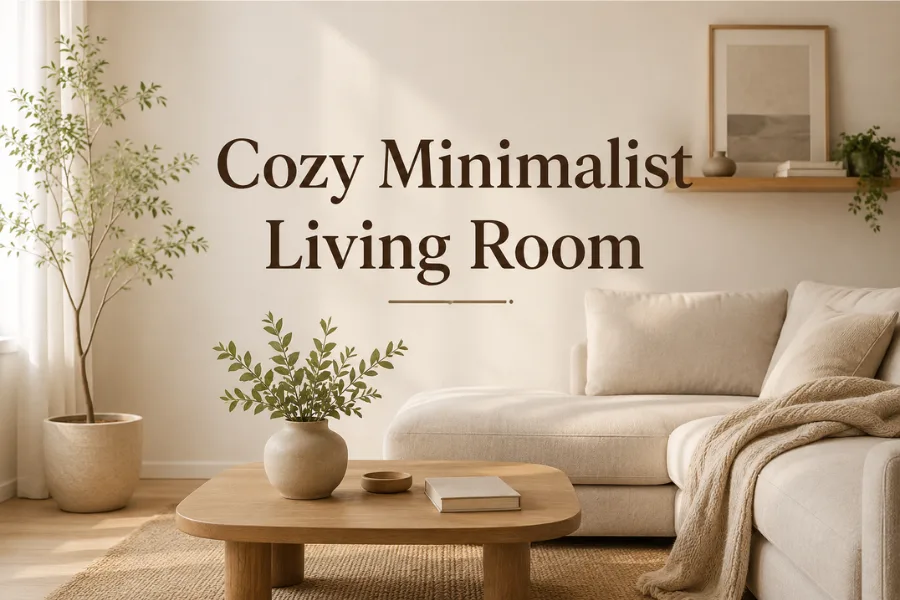
24 Cozy Minimalist Living Room Ideas That Feel Calm, Curated, and Totally Liveable
If you’ve ever scrolled through a hundred “minimalist living room” photos and thought they all looked a little cold, a little staged, a little too much like a furniture showroom and not enough like a home — you’re not alone. That’s the old version of minimalism, and honestly, it’s outdated. The cozy minimalist look that’s taking over living rooms right now is a completely different animal. It’s still clean, still uncluttered, still built on the “less but better” philosophy, but it’s warm. It’s the kind of room where you actually want to curl up with a blanket and a cup of tea, not just admire from the doorway.
The secret is balance. You’re not stripping a room down to nothing — you’re choosing fewer things, but making sure every single one of them earns its spot. Think soft textures, warm wood tones, a couple of really good pieces instead of a dozen mediocre ones, and lighting that makes the whole space glow in the evening. Whether you’re working with a tiny studio apartment corner or a sprawling open-concept living room, the principles stay the same: keep it simple, keep it warm, and let quality do the talking.
In this guide, I’m walking you through 24 completely different cozy minimalist living room ideas — a real mix of small, medium, and large layouts — so no matter what size space you’re decorating, you’ll find something that actually fits your life. Let’s get into it.
24 Cozy Minimalist Living Room Ideas
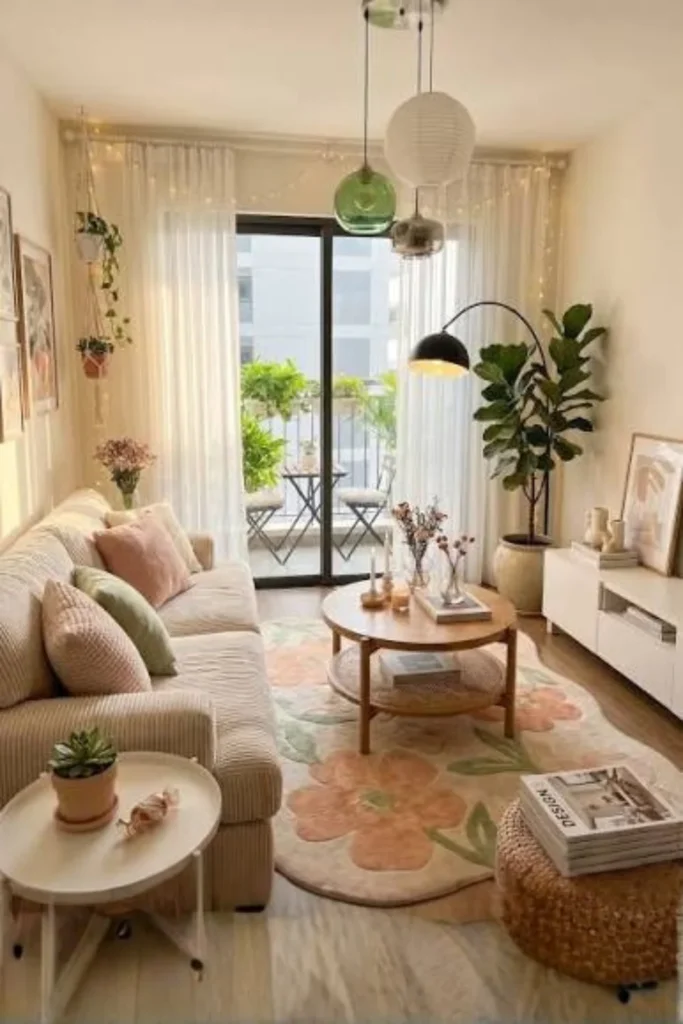
1. Neutral Tone Serenity Living Room
This is the foundation everyone should start with if they’re new to minimalist decorating. Think soft whites, warm beige, light greige walls, and a cream sofa, all working together instead of fighting for attention. It’s simple on paper but incredibly calming in person, and it works in almost any size space without feeling boring.
Why it works
Neutral tones reflect light beautifully, which makes any room — big or small — feel brighter and more open. Because there’s no competing color, your eye doesn’t have anywhere “busy” to land, which is exactly why this palette feels so peaceful the second you walk in.
Best for
Small to medium apartments, rental spaces where you can’t paint walls, and anyone who wants a flexible base they can change up with pillows or throws later without redoing the whole room.
Styling Tips
Layer at least three different neutral shades so it doesn’t look flat — think cream sofa, beige rug, off-white walls. Add one textured throw blanket in a slightly darker tone to keep things from feeling washed out, and stick to wood or rattan accents to warm it up.
2. Japandi Calm Corner with Low-Slung Furniture
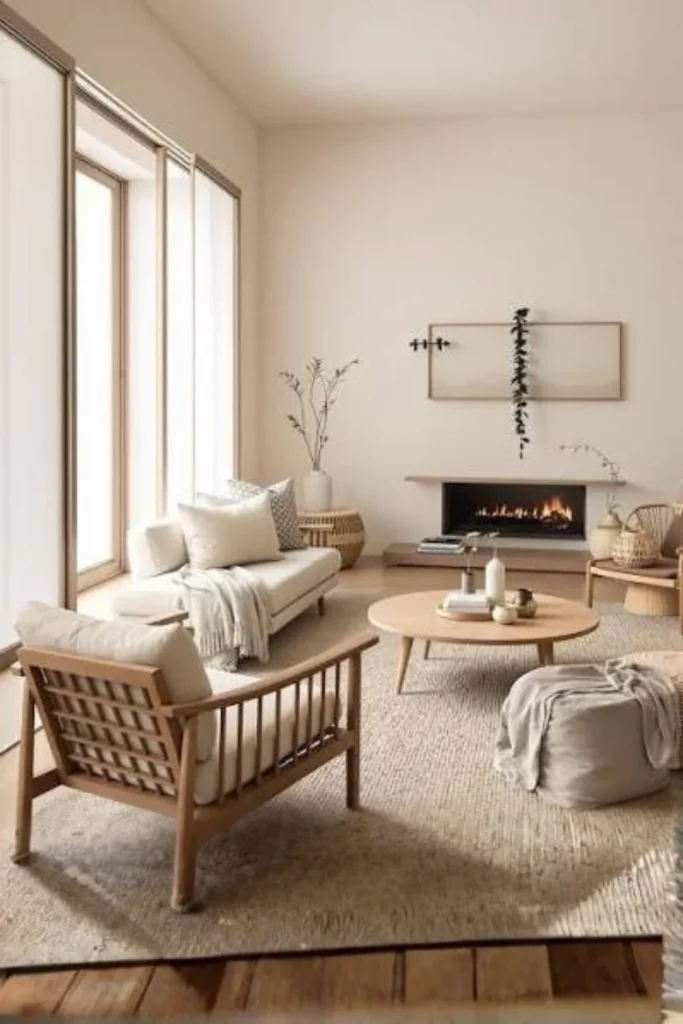
Japandi blends Japanese simplicity with Scandinavian warmth, and it’s honestly one of the most liveable minimalist styles out there. Picture a low wooden coffee table, a floor-hugging sofa, and almost no visual clutter — just calm, grounded furniture that makes the whole room feel intentional.
Why it works
Low furniture naturally makes ceilings feel higher and rooms feel bigger, while the natural materials (think oak, linen, paper lanterns) keep everything from feeling sterile. It’s structured but never stiff.
Best for
Medium-sized living rooms, especially in homes where you want a serene, almost meditative vibe — great for people who work from home and need their living room to feel like a decompression zone.
Styling Tips
Choose a sofa with exposed wooden legs instead of a fully upholstered base. Add a paper or linen pendant light overhead, keep the color palette to two tones max (like oatmeal and walnut), and skip the heavy curtains — go sheer or skip window treatments entirely if privacy allows.
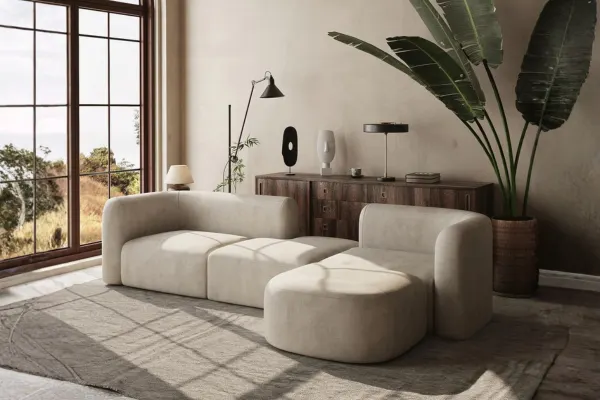
3. Curved Sofa Sanctuary
Sharp angles are taking a back seat in 2026, and curved furniture is having a real moment. A rounded sofa or a softly curved sectional instantly makes a minimalist room feel less rigid and way more inviting, almost like the furniture itself is giving you a hug.
Why it works
Curves reduce visual tension in a room. Designers have noticed that rounded furniture actually improves how a space “flows,” especially because your eye doesn’t hit hard stops at every corner. It softens the whole room without adding a single extra object.
Best for
Normal to large living rooms, especially open-concept spaces where a curved sofa can act as a natural divider between the living area and the rest of the room.
Styling Tips
Pair your curved sofa with a round or oval coffee table to keep the soft-shape theme going. Avoid boxy, sharp-edged side tables — they’ll undo the effect. A round jute rug underneath ties the whole rounded language together.
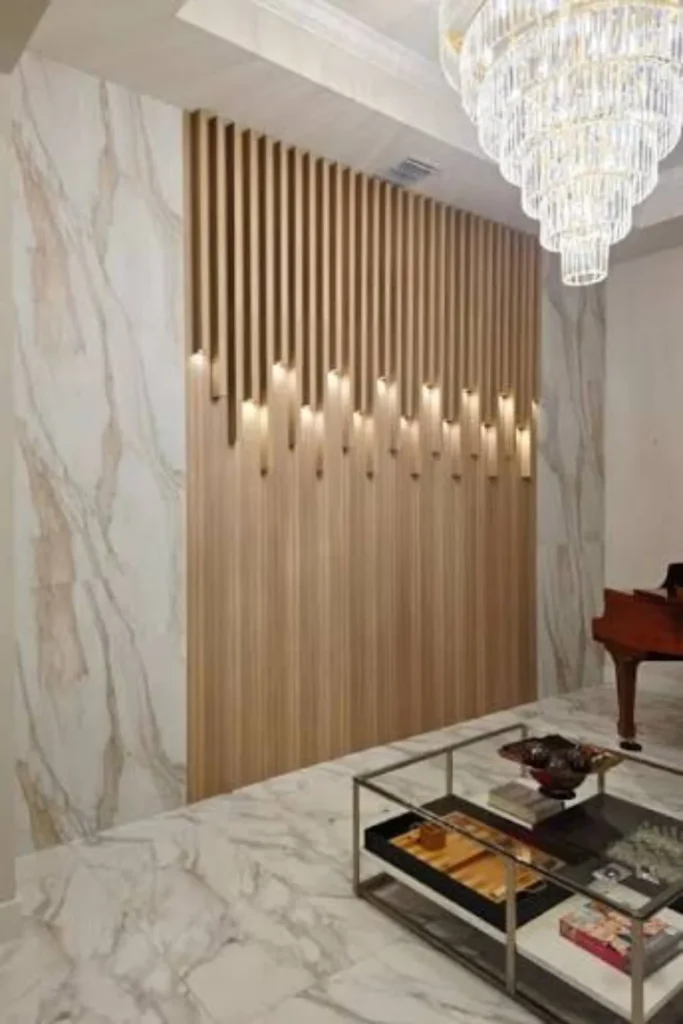
4. Warm Wood Cladding Accent Wall
Instead of hanging art or filling shelves, this idea uses one architectural feature — a partial wall of light oak or warm wood paneling — as the entire personality of the room. It’s a designer trick that makes a small space feel intentional rather than empty.
Why it works
Wood cladding adds texture and warmth to a wall without adding clutter or taking up floor space, which is exactly what small rooms need. It gives your eye a “focal point” so the rest of the room can stay simple without feeling unfinished.
Best for
Small living rooms or studio apartments where floor space is tight but you still want a “wow” moment when people walk in.
Styling Tips
Stick to a third of the wall rather than covering it entirely — a partial cladding feels curated, a full wall can feel heavy. Pair it with a simple cream sofa and one or two terracotta or sienna velvet cushions to pull warm tones through the room.
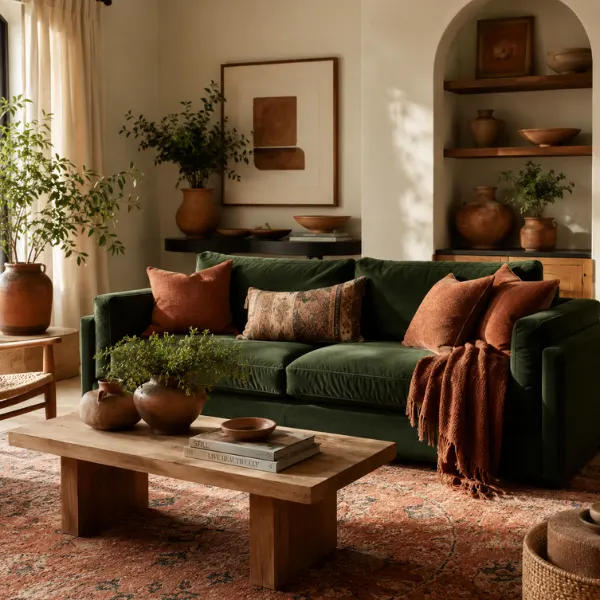
5. Earthy Terracotta and Clay Minimalism
This look leans into warm, sun-baked colors — terracotta, clay, soft olive, muted brown — instead of the typical white-and-beige minimalist palette. It still follows every minimalist rule (clean lines, few objects, no clutter) but feels grounded and a little more personal.
Why it works
Earthy tones mimic colors found in nature, which our brains automatically read as calming and warm. It gives a minimalist room emotional depth without needing patterns, art, or trinkets to create that feeling.
Best for
Normal-sized living rooms with good natural light, since these warm tones can feel a little heavy in darker rooms without windows.
Styling Tips
Use one dominant earthy shade (like clay) on a single accent chair or rug, then keep walls and the sofa in a lighter neutral so the room doesn’t feel too dark. Add one grounding material like a stone coffee table or a wood bench to round it out.
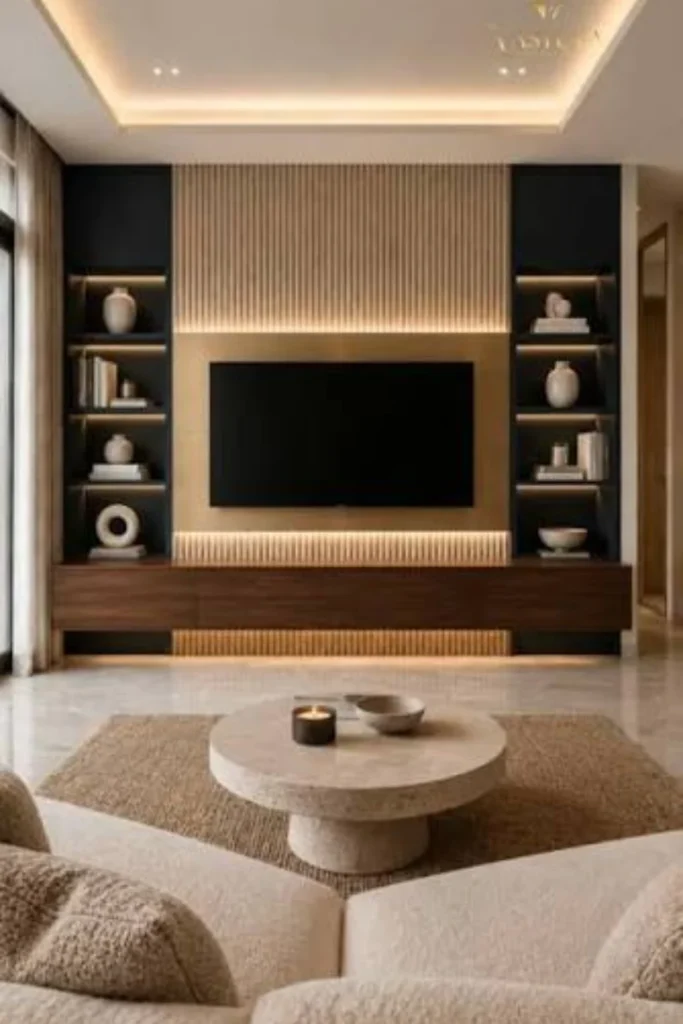
6. Floating Shelves and Hidden Storage Studio Layout
Built for studio apartments and small one-room living situations, this idea swaps bulky bookcases and cabinets for floating shelves and storage that disappears into the walls or furniture. Nothing sits on the floor that doesn’t need to.
Why it works
Floating shelves visually “free up” floor space, which makes a small room feel significantly larger than it is. Combined with hidden storage (think a storage ottoman or under-bench baskets), clutter has nowhere to pile up and ruin the calm look.
Best for
Studio apartments, micro-living spaces under 400 square feet, or any small living room doubling as a multi-purpose space.
Styling Tips
Mount shelves at varying heights to create visual interest without adding more objects. Use woven baskets tucked under a bench for daily clutter like remotes and chargers, and keep whatever’s displayed on shelves down to three or four pieces max.
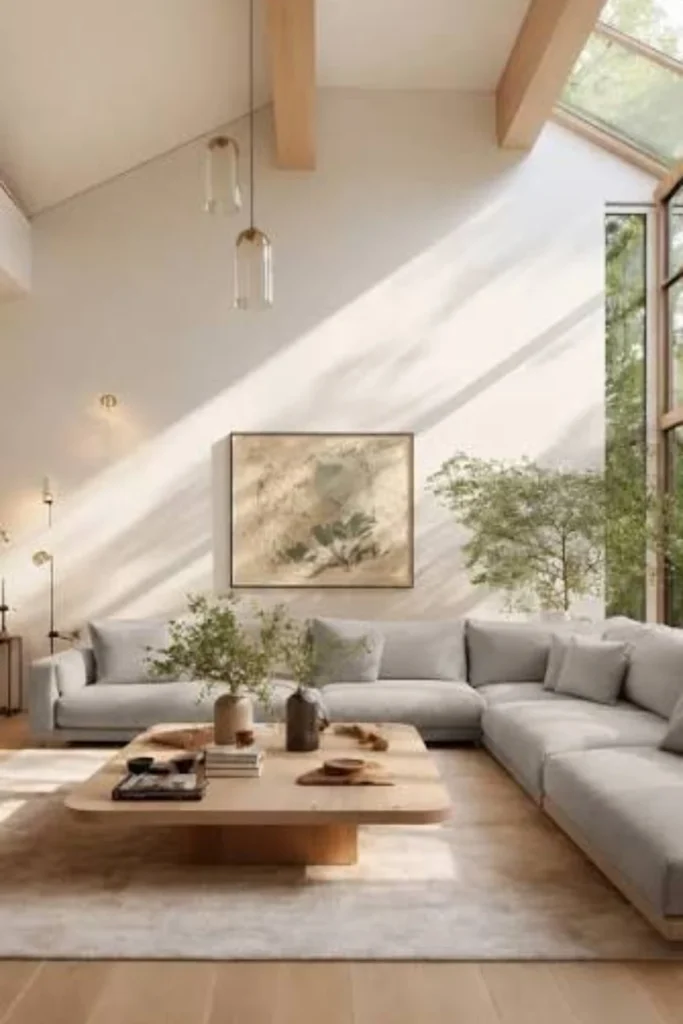
7. Oversized Sofa, Minimal Everything Else
In a big room, the temptation is to fill every corner with furniture. This idea does the opposite — it puts in one massive, plush sofa (or two oversized ones facing each other) and basically nothing else except a rug and maybe a single floor lamp.
Why it works
A large room with too many small pieces feels busy and disconnected. One generously sized, high-quality sofa anchors the whole space and gives it scale, while the empty room around it actually reads as luxurious restraint rather than “unfinished.”
Best for
Large living rooms, open floor plans, or homes with high ceilings where furniture can otherwise look swallowed up by the space.
Styling Tips
Go bigger than you think you need with the sofa — it should feel proportional to the room, not lost in it. Add a single oversized area rug underneath to ground the seating area, and resist the urge to add a console table or extra armchair just to “fill space.”
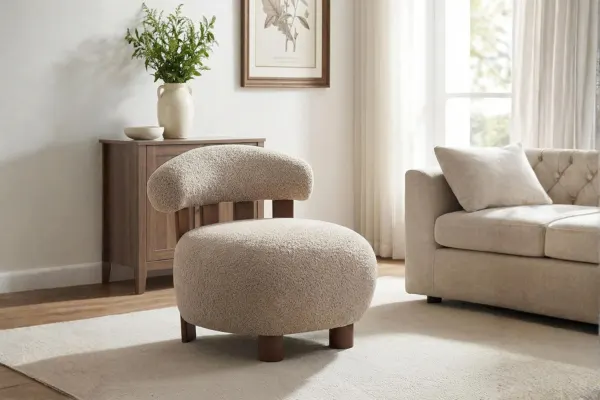
8. Monochrome Bouclé Lounge
This idea takes one color family — say, all soft greys or all warm whites — and builds the whole room around different textures within that single tone. The bouclé fabric (that bubbly, nubby texture you’ve probably seen on TikTok) is the star here.
Why it works
When everything is one color, texture becomes the main event, which keeps the room from feeling flat or boring. It’s an incredibly sophisticated look that photographs beautifully and never feels overly busy.
Best for
Normal-sized living rooms, especially for people who love a moody, editorial aesthetic but still want things to feel soft and touchable.
Styling Tips
Combine at least three textures within your chosen color — bouclé on the sofa, a wool rug, a linen curtain. Add a single black or dark wood accent (like a side table) to create just enough contrast so the room doesn’t blur together.
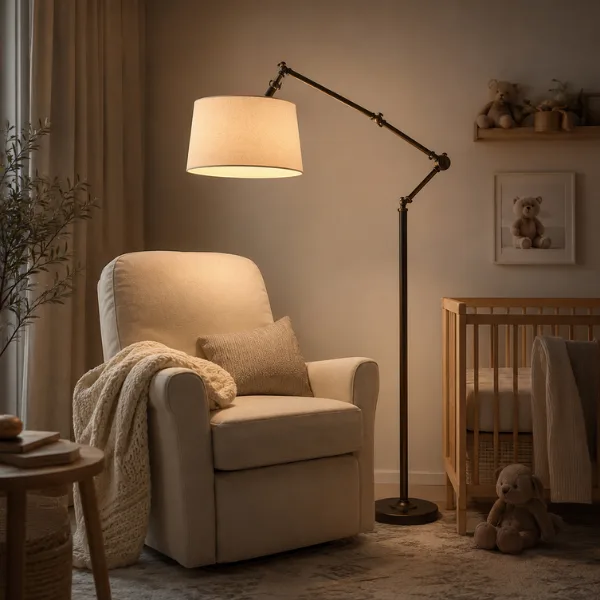
9. Reading Nook with One Statement Chair
Not every minimalist living room needs a full seating arrangement. This idea carves out a small corner — maybe by a window — with a single beautiful accent chair, a small side table, and a floor lamp. That’s it.
Why it works
A dedicated reading nook gives a small or awkward corner a clear purpose, which stops it from becoming a dumping ground for random stuff. One gorgeous chair does more visual work than three mismatched pieces ever could.
Best for
Small living rooms, awkward corners, or homes where the “living room” is really more of a shared multi-use space.
Styling Tips
Pick a chair with a distinct silhouette — a curved boucle chair or a cane accent chair both work great — since it’s doing all the visual heavy lifting. Add a small woven basket beside it for blankets or books, and use a warm-toned floor lamp instead of overhead lighting for that cozy reading glow.
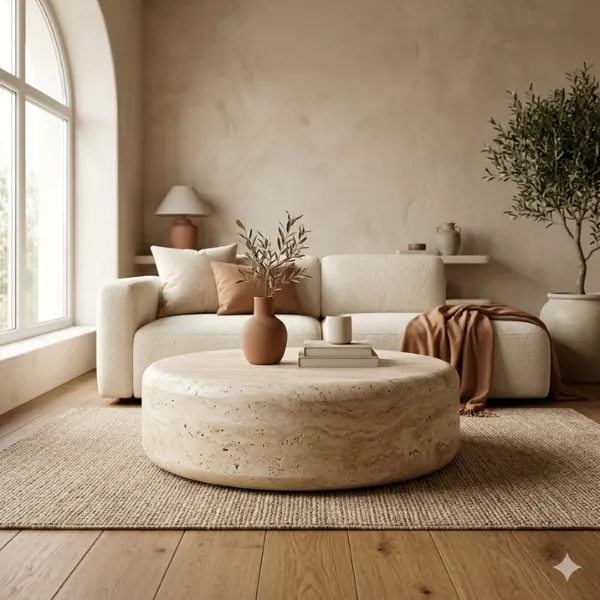
10. Layered Neutral Sectional with Travertine Coffee Table
This is a large-room favorite: a big, soft sectional in layered neutral tones (think cream, oatmeal, and taupe pillows mixed together) paired with a round travertine coffee table for a touch of texture and shine.
Why it works
Sectionals can easily look heavy and dated, but layering different neutral shades through the cushions keeps it feeling current and soft rather than like one giant block of color. The travertine table adds a natural, almost sculptural element that elevates the whole setup.
Best for
Large open-concept living rooms or family homes where the sofa needs to seat a crowd but the room still needs to feel calm, not cluttered.
Styling Tips
Mix in pillows of at least two different neutral shades and two different textures (like linen and knit). Keep decor on the coffee table to one ceramic object and a small stack of books — anything more starts to compete with the sectional’s scale.
11. Cozy Boho-Minimalist Blend
This is minimalism’s more relaxed cousin. It keeps the clean layout and lack of clutter but brings in natural materials like jute, rattan, and linen, plus a slightly more relaxed, low-to-the-ground seating style.
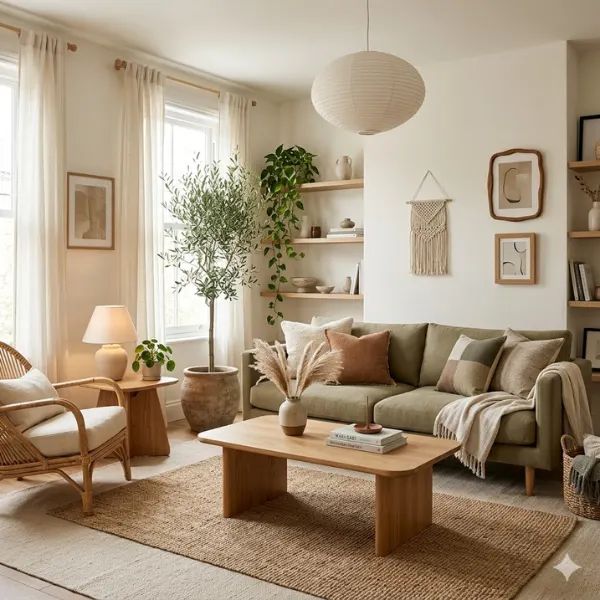
Why it works
It softens minimalism’s sometimes-strict reputation by leaning into texture and warmth instead of decorative objects. The result feels lived-in and relaxed rather than overly composed, which suits people who want comfort without giving up the clean-room feeling.
Best for
Normal-sized living rooms in homes where comfort and a laid-back lifestyle are the priority over a polished, formal look.
Styling Tips
Choose one rattan or wicker piece (a chair or a pendant light works well) as your boho anchor, then keep everything else simple and neutral. A floor cushion or low pouf adds extra seating without cluttering the room visually.
12. Black-Framed Window Cabin Minimalism
This look borrows from modern cabin design — floor-to-ceiling windows with sleek black frames, a simple fireplace, and minimal furniture that lets the view and the architecture do the talking.
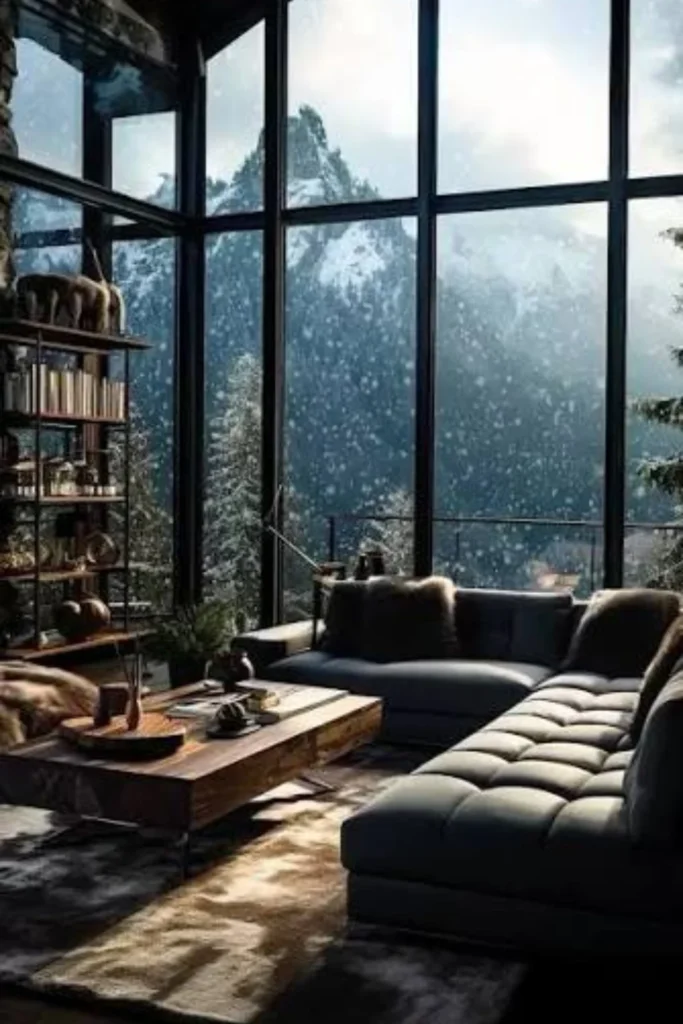
Why it works
Big windows flood the room with natural light and connect it to the outdoors, which automatically makes a minimalist space feel alive instead of empty. The black frames add just enough contrast to keep the room from feeling washed out.
Best for
Large living rooms with good window access, vacation homes, or anyone lucky enough to have a nice view they want to highlight instead of compete with.
Styling Tips
Keep window treatments minimal or skip them entirely to let the architecture shine. Add one leather chair and a live-edge wood coffee table for texture, and let a fireplace (electric or wood-burning) be your only “decor” focal point.
13. Single Oversized Plant Statement Room
Instead of scattering a handful of small plants around, this idea uses one large statement plant — like a fiddle leaf fig — in a simple ceramic planter as the room’s only piece of greenery.
Why it works
One large plant gives a room life and a sense of nature without creating the visual clutter that comes from a dozen tiny pots scattered everywhere. It’s minimal effort for a surprisingly big cozy payoff.
Best for
Small to normal-sized living rooms, especially corners near windows that otherwise feel a little empty or forgotten.
Styling Tips
Choose a planter in a neutral, textured material like white ceramic or woven rattan so it blends with your palette instead of standing out. Place a small round rug underneath to “anchor” the plant and protect your floors.
14. Multifunctional Furniture Small-Space Layout
This idea is built entirely around furniture that does double duty — a storage ottoman that’s also a coffee table, an extendable dining-slash-coffee table, a daybed that doubles as extra seating.
Why it works
In small spaces, every piece of furniture has to earn its square footage. Multifunctional pieces let you keep the room visually simple while still covering all your practical needs, which is the whole point of minimalist living.
Best for
Studio apartments, small one-bedroom living rooms, or any space that has to function as more than just a living room (think living-dining combos).
Styling Tips
Start with one true multi-use anchor piece, like a storage ottoman, and build the rest of the room around it. Avoid adding “just in case” furniture — if a piece only does one job, really question whether you have room for it.
15. Gallery Ledge Wall with Muted Sofa
Instead of a traditional gallery wall with frames nailed in fixed spots, this idea uses simple picture ledges where framed prints lean casually, giving you the freedom to rearrange anytime. It’s paired with a soft, muted-tone sofa to keep the room calm.
Why it works
The leaning, casual styling feels more personal and less “decorated,” which fits the lived-in, relaxed mood that cozy minimalism is all about. It also gives you an easy way to update the room’s look without rehanging anything.
Best for
Normal-sized living rooms, especially for renters who don’t want to put a ton of holes in the walls.
Styling Tips
Stick to a cohesive color story across your prints (black and white, or all warm tones) so the ledge looks curated, not random. Layer two or three frames slightly overlapping for that effortless, “I just placed these” look.
16. Dark Academia-Inspired Minimalist Room
This twist swaps the usual light, airy minimalist palette for deep charcoal, espresso brown, and forest green tones. It’s still clean-lined and clutter-free, just moodier and more dramatic.
Why it works
Dark, saturated colors make a room feel enveloping and intimate rather than cold, which is perfect for people who find all-white minimalism a little too sterile. Done with restraint, it actually photographs as more sophisticated than a typical light palette.
Best for
Normal to large living rooms with plenty of natural light to balance out the darker tones (this look can feel cave-like in a room with small windows).
Styling Tips
Keep the dark color to walls or one large furniture piece, not both, so the room doesn’t feel too heavy. Bring in warm brass or wood accents and at least one large mirror to bounce light back into the space.
17. Sheer Curtain and Natural Light Lounge
This idea is all about letting light do most of the design work. Sheer, flowing curtains soften the windows, curved seating keeps things gentle, and the whole room is built to glow during the day and feel cozy at golden hour.
Why it works
Sheer curtains diffuse harsh sunlight into something soft and warm, which instantly makes a room feel calmer without adding a single extra object. It’s one of the lowest-effort, highest-impact upgrades you can make.
Best for
Normal-sized living rooms with decent window exposure, especially rooms that get a lot of afternoon sun.
Styling Tips
Choose a sheer linen or cotton curtain in a warm white rather than stark white, which can look slightly clinical. Hang your curtain rod close to the ceiling rather than right above the window frame — it makes the whole wall feel taller.
18. Mid-Century Soft Curves Living Room
This blends classic mid-century shapes — think tapered wooden legs, geometric coffee tables, cane accent chairs — with a softer, more minimal color palette than traditional mid-century design usually uses.
Why it works
Mid-century furniture has clean lines built right into the design, which makes it naturally compatible with minimalism. Softening the typical bold mid-century colors into warm neutrals keeps the look from feeling like a themed room.
Best for
Normal-sized living rooms, especially for people who already love vintage or vintage-inspired furniture but want it to feel current rather than retro.
Styling Tips
Look for one true mid-century piece (a credenza or a cane chair) instead of furnishing the whole room in the style — one anchor piece reads as intentional, a whole set can feel costume-y. Pair with a soft, rounded sofa in a muted tone like sage or mint.
19. Open-Plan Zone Divider Layout
In large, open-concept homes, this idea uses furniture itself — like a curved sectional or a tall bookshelf — to quietly separate the living area from the dining or kitchen space, without adding walls or clutter.
Why it works
Open floor plans can feel directionless without some kind of visual boundary. Using furniture as a soft divider keeps the openness intact while still giving each zone its own clear identity and sense of intimacy.
Best for
Large living rooms in open-concept homes or lofts where defining “rooms” within one big space is the main challenge.
Styling Tips
Position your sofa with its back facing the dining or kitchen area to naturally signal “this is the living zone.” A floating shelf or slim bookcase can divide space without blocking light or sightlines the way a full cabinet would.
20. Textured White-on-White Room
This is true minimalism at its purest — an all-white room — but the trick is layering different textures (bouclé, linen, wool, raw wood) so it never feels flat, cold, or like an empty gallery.
Why it works
White rooms make small spaces feel significantly larger and brighter, but the layered textures keep it from feeling sterile, which is the most common complaint about all-white interiors.
Best for
Small to normal-sized living rooms, especially ones that don’t get a ton of natural light and need help feeling brighter.
Styling Tips
Touch every fabric before you buy it — texture is doing all the work here, so it needs to actually feel rich, not just look it in photos. Add one raw wood element, like an unfinished coffee table, to keep the room from feeling too clinical.
21. Color-Drenched Cozy Corner
Instead of color-blocking a whole room, this idea “drenches” one small nook — walls, trim, and ceiling all the same deep, rich tone — to create an intimate, cocooned feeling in an otherwise neutral minimalist space.
Why it works
Taking one bold color all the way to the ceiling tricks the eye into seeing the space as a deliberate, immersive moment rather than a half-finished accent wall. It adds personality and warmth while keeping the rest of the room calm and minimal.
Best for
Small living rooms or a single nook within a larger neutral room — great for renters who want a bold moment without repainting their entire home.
Styling Tips
Pick a deep, warm shade like dark chocolate or aubergine rather than a cool, sharp color, which keeps the cozy factor intact. Keep furniture in that nook minimal — one chair and a small table is plenty, since the wall color is already the star.
22. Fireplace-Anchored Minimalist Layout
This idea builds the entire room around a sleek, simple fireplace as the natural focal point, with furniture arranged to face it and almost nothing else competing for attention.
Why it works
A fireplace gives a large room an automatic, built-in sense of warmth and orientation, which means you need far less decor to make the space feel finished and cozy. It does the emotional work that a dozen accessories would otherwise have to do.
Best for
Large living rooms, especially those with vaulted ceilings or open floor plans that can otherwise feel a little directionless.
Styling Tips
Keep the mantel almost bare — one piece of art or a single sculptural object is enough. Arrange seating in a loose semi-circle facing the fireplace rather than against the walls, which makes the room feel more conversational and intentional.
23. Woven Ottoman Centerpiece Living Room
This idea swaps the traditional coffee table for one large, oversized woven ottoman that works as a coffee table, a footrest, and extra seating all at once, paired with a deep, grounding sofa color like navy.
Why it works
A single multi-purpose piece reduces the number of items in the room while actually increasing function, which is the entire goal of cozy minimalism. The woven texture also softens what could otherwise feel like a very “matchy” furniture set.
Best for
Normal-sized living rooms, especially households with kids or frequent guests who need flexible seating without a cluttered look.
Styling Tips
Top the ottoman with a simple wooden tray when you need a hard surface for drinks or books, then remove it when you want extra legroom. Choose a woven texture in jute or rattan to add warmth against a smoother fabric sofa.
24. Budget-Friendly Thrifted Minimalist Refresh
Proof that cozy minimalism doesn’t need a big budget — this idea is built around one quality “anchor” purchase (usually the sofa) with everything else sourced secondhand, thrifted, or DIY’d, like a reclaimed wood coffee table.
Why it works
Spending on one well-made anchor piece and keeping everything else affordable prevents the room from looking cheap while still staying realistic for most budgets. It also naturally creates that lived-in, collected-over-time feeling designers love.
Best for
Small to normal-sized living rooms, first apartments, or anyone redecorating without a big budget to work with.
Styling Tips
Invest your money in the sofa since it’s the largest object in the room and the hardest to “fake” looking expensive. Thrift wooden furniture and refinish it with a simple matte polyurethane coat, and add texture cheaply through knitted throws and inexpensive cushion covers.
Mistakes to Avoid When Designing a Cozy Minimalist Living Room
Even with the best intentions, it’s really easy to tip a minimalist room into looking cold, unfinished, or just plain empty. Here are the mistakes that come up again and again:
Going too sparse. Minimalism isn’t about having as little as possible — it’s about having only what you need and love. A room with one sofa and nothing else doesn’t feel calm, it feels unfinished. Always layer in at least one or two textures through pillows, throws, or a rug.
Sticking to one flat color with no texture. An all-white or all-beige room can look stunning in photos and feel sterile in person if every surface has the same smooth finish. Mix matte walls with a tactile sofa fabric and one natural material like wood or stone to keep things interesting.
Choosing a rug that’s too small. This is one of the most common layout mistakes in any living room, minimalist or not. A too-small rug makes furniture look like it’s floating and shrinks the whole room visually. Size up rather than down.
Forgetting layered lighting. Relying on one overhead light makes even a beautifully designed minimalist room feel flat and uninviting at night. Add a floor lamp or table lamp so you can create a softer, warmer glow in the evening.
Over-decorating shelves and surfaces. It only takes a few too many trinkets to turn a clean shelf into visual clutter. Stick to small, curated groupings — three objects max per surface — and give everything displayed enough breathing room around it.
Ignoring scale. Tiny furniture in a large room looks lost, and oversized furniture in a small room feels cramped. Always measure your space first and choose furniture proportional to the room, not just what looks good in a photo.
Skipping personal touches entirely. A minimalist room without a single personal object can feel like a hotel lobby rather than a home. One meaningful piece — a piece of art, a vase passed down from family, a favorite book stack — keeps the space feeling like yours.
Conclusion
Cozy minimalism isn’t a strict rulebook, it’s a mindset: choose fewer things, choose them well, and let texture and warmth do the work that clutter used to do. Whether your living room is a tiny studio corner or a sprawling open-concept space, these 24 ideas prove there’s no single “right” way to pull off the look. Pick the ones that genuinely match how you actually live — not just how a room photographs — and build from there one intentional piece at a time. The best minimalist living rooms are never finished overnight anyway; they evolve slowly, the same way the coziest homes always do.
FAQs
What is the difference between minimalist and cozy minimalist living rooms? Traditional minimalism focuses purely on simplicity and clean lines, which can sometimes feel stark or cold. Cozy minimalism keeps that same simplicity but intentionally adds warmth through texture, natural materials, and layered lighting, so the room feels inviting rather than empty.
How do I make a small living room feel minimalist but not empty? Focus on one or two anchor pieces of furniture sized appropriately for the room, then layer in texture through a rug, throw pillows, and one statement plant or art piece. The goal is intentional simplicity, not an empty room — every item should have a clear purpose.
What colors work best for a cozy minimalist living room? Warm neutrals like beige, cream, oatmeal, and soft gray are the most popular base tones, often layered with earthy accents like terracotta, olive, or warm brown. Darker, moodier palettes like charcoal or espresso also work beautifully when paired with plenty of natural light.
Do I need expensive furniture to achieve this look? Not at all. Many of the coziest minimalist rooms are built around one quality investment piece, usually the sofa, with everything else sourced affordably through thrifting, DIY projects, or budget retailers. Spending intentionally on fewer items matters more than spending a lot overall.
How many decor items should be on a coffee table or shelf in a minimalist room? A good rule of thumb is no more than three objects per surface. This keeps the room feeling curated and clean rather than cluttered, while still giving you room to display things you genuinely love.
Can a minimalist living room still have a lot of furniture? Yes, especially in larger rooms — minimalism is more about avoiding unnecessary clutter and choosing quality over quantity than it is about having a strict number of pieces. A large room with several well-chosen, well-proportioned furniture pieces can absolutely still read as minimalist.