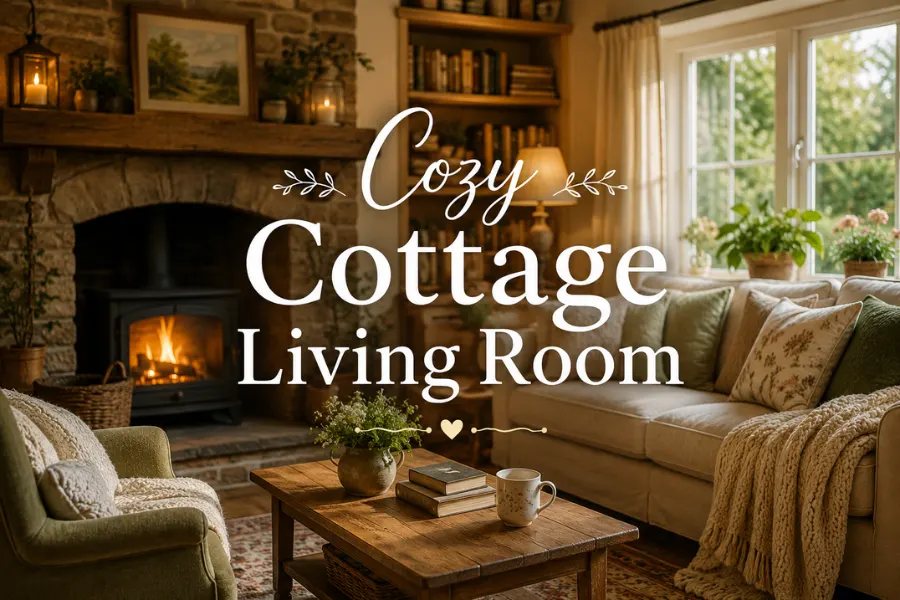
27 Cozy Cottage Living Room Ideas That Make Every Space Feel Like a Country Retreat
There is something about a cottage living room that makes you want to kick off your shoes, wrap yourself in a blanket, and forget you ever had a to-do list. It is not just the furniture. It is not just the colors. It is the whole feeling — warm, layered, unhurried, and deeply personal. Like the room was put together slowly, over time, by someone who truly loves being home.
If you have been trying to figure out how to get that feeling in your own space, you are not alone. Cottage style is one of the most searched and saved aesthetics on Pinterest and Instagram right now, and for good reason. People are tired of cold, minimalist spaces that look like showrooms. They want rooms that feel lived-in, loved, and genuinely comfortable. They want their home to feel like a destination at the end of the day, not just a place to sleep.
I have been helping people style their homes for years, and cottage living rooms are my personal favorite project. There is so much room for creativity, personality, and those little imperfect details that actually make a space feel real. In this guide, I am sharing 27 completely different cottage living room ideas — from small cozy tweaks to full room transformations — with everything you need to understand what makes each one work and how to do it yourself. Let’s make your living room the room in the house everyone wants to stay in.
27 Cozy Cottage Living Room Ideas
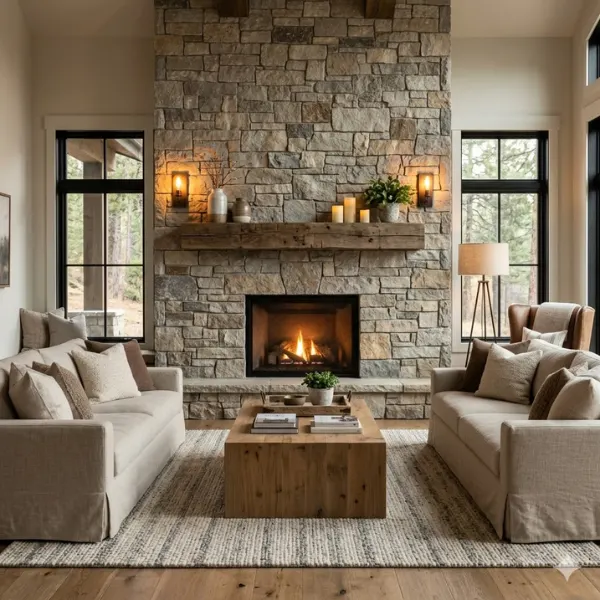
1. The Classic Stone Fireplace Focal Point
Nothing says cottage living room more clearly than a stone fireplace. It is the original anchor of country home design — raw, beautiful, and warm in every sense of the word. A fireplace framed in natural stone creates a gravitational center for the entire room, pulling everything around it into place and giving the space an unmistakable sense of history and permanence.
Why It Works
A stone fireplace gives any room instant architectural character. It is the one element that tells you this space was built to last, not assembled in a weekend. The natural variation in stone — the different sizes, tones, and textures — adds visual richness that no wallpaper or paint can fully replicate. Everything you place around it automatically looks more curated and intentional.
Best For
Living rooms of any size that need a strong focal point. Works especially well in rooms with wood floors, exposed beams, or low ceilings where the fireplace becomes the dominant architectural feature. Great for farmhouse cottages, English country style, and rustic mountain retreat aesthetics.
Styling Tips
Keep the mantel simple and deliberate. A thick timber beam mantel above the stone surround is the classic combination. Style it with three to five pieces only — a large mirror or landscape painting in the center, a few candle holders or small ceramic vessels on either side, and maybe a single trailing green plant at one end. Flank the fireplace with baskets of stacked firewood for a practical and beautiful touch. Keep your seating arrangement angled slightly toward the fire so the whole room faces this centerpiece.
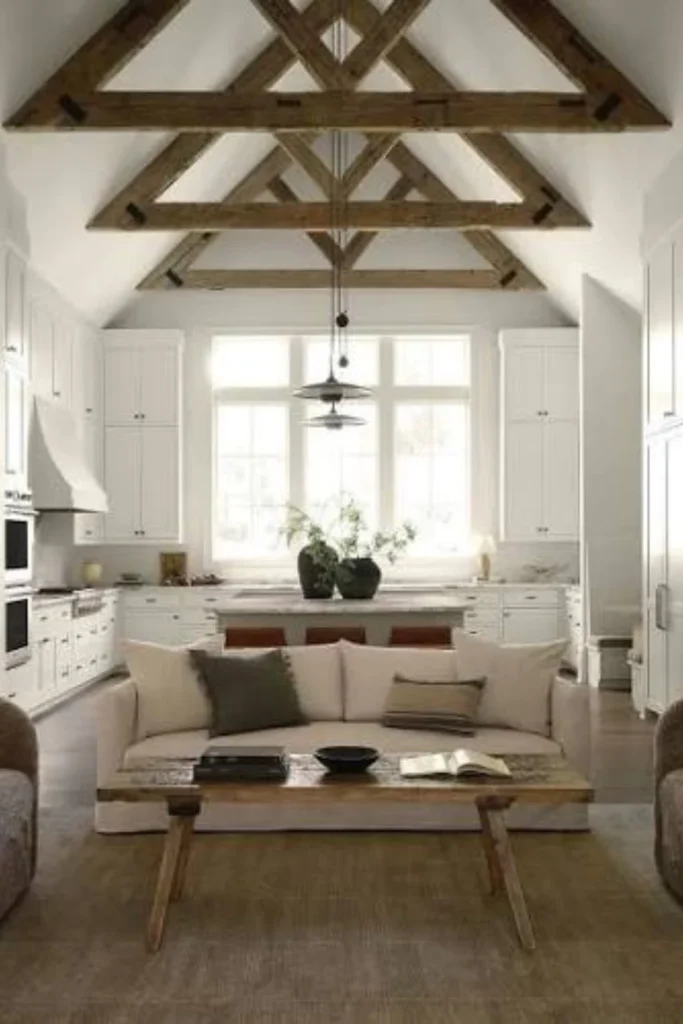
2. Exposed Ceiling Beams with a Cream Palette
Exposed wooden ceiling beams are one of the most beloved features in cottage design, and honestly it is easy to see why. They bring warmth, texture, and a sense of age to a room that feels impossible to fake. When paired with a clean cream or warm white palette on the walls and furniture, the beams become the room’s crowning detail — structural and beautiful at the same time.
Why It Works
Beams draw the eye upward, making a room feel taller while simultaneously feeling more enclosed and cozy. The contrast of dark or natural wood against a light ceiling creates visual interest without adding any clutter at floor level. A cream palette underneath lets the beams do all the heavy lifting and keeps the space feeling bright and airy despite the rustic overhead detail.
Best For
Rooms with existing beam structure or rooms where you are open to installing faux beams — a surprisingly affordable and convincing option. Works perfectly in medium to large cottage living rooms where the ceiling is the most interesting architectural feature.
Styling Tips
Go with a warm cream rather than a stark white on the walls and ceiling — something like Benjamin Moore White Dove or Sherwin-Williams Alabaster. Use linen or cotton upholstered sofas in complementary neutral tones. Add warmth at floor level with a jute or wool rug. Hang a simple wrought iron or rattan pendant light between the beams to add lighting that feels period-appropriate and beautiful.
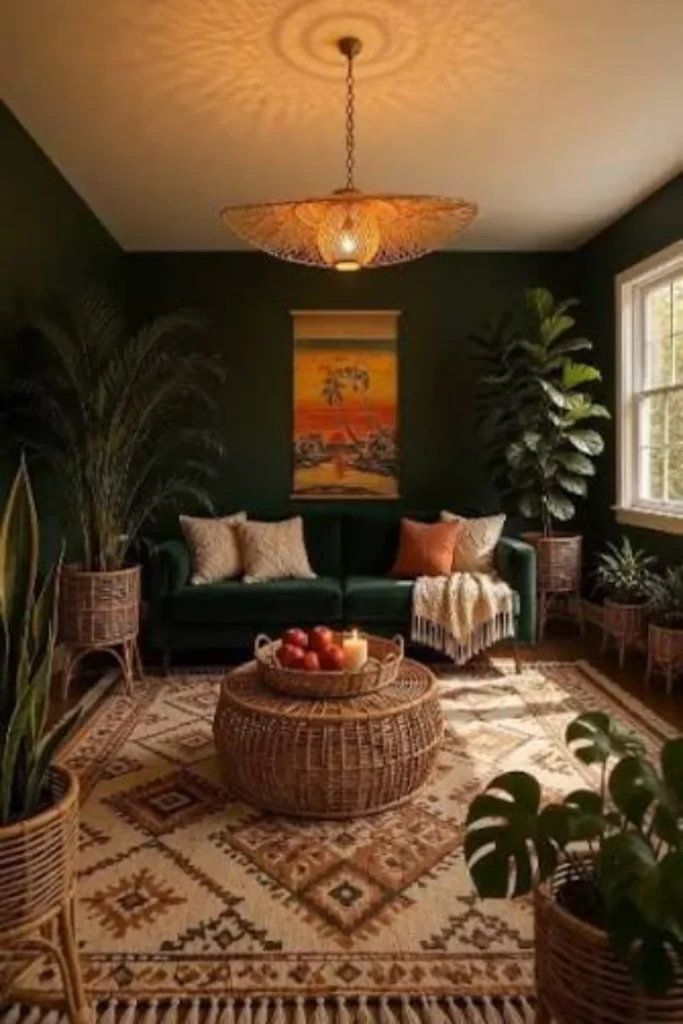
3. Layered Textile Heaven — Throws, Pillows, and Rugs
This idea is less about a single piece of furniture and more about a whole design philosophy — and it might be the single most impactful change you can make to any cottage living room. Layering soft textiles in different textures, patterns, and scales creates that instantly cozy, lived-in feeling that makes cottage rooms so irresistibly inviting.
Why It Works
Textiles absorb sound, add visual warmth, and make a room feel safe and soft in a way that hard surfaces simply cannot. Layering them — a jute rug under a smaller wool rug, linen cushions alongside velvet ones, a chunky knit throw folded over a cotton one — adds the kind of depth and dimension that makes a room look like it was styled by a professional. It is also one of the most budget-friendly ways to transform a space.
Best For
Any size cottage living room. This approach works especially well in rooms with neutral or simple furniture that needs personality added on top. It is also the perfect strategy for renters who cannot paint or alter the space structurally.
Styling Tips
Start with a large area rug as your base — jute, sisal, or a flat-weave wool in a warm neutral. Layer a smaller printed or pattern rug on top if the room is large enough. Choose sofa cushions in three different textures — one smooth linen, one textured boucle, one with a subtle pattern like a small floral or stripe. Drape two or three throws in different weights across different seats. The key is mixing, not matching — you want it to look collected, not purchased as a set.
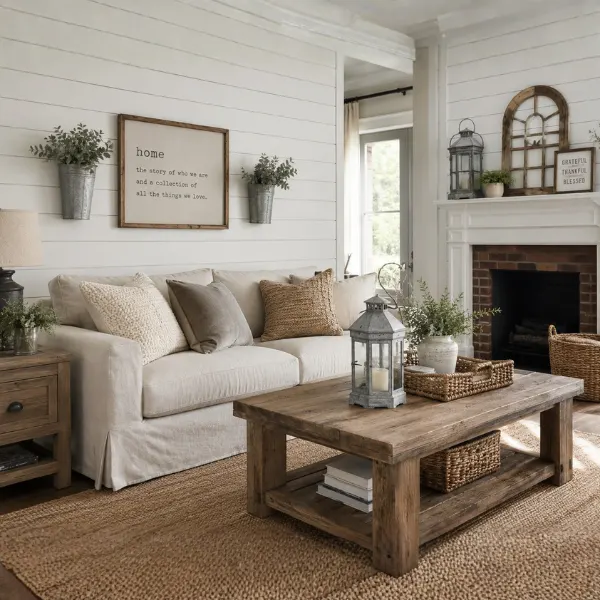
4. Shiplap Accent Wall Behind the Sofa
Shiplap has become one of the defining details of cottage and farmhouse interiors over the last decade, and it has not gone anywhere because it genuinely works. A shiplap accent wall behind the main sofa adds texture, architectural interest, and instant cottage charm to a room that might otherwise feel plain. And the best part — it is a completely DIY-friendly project.
Why It Works
Shiplap adds a horizontal texture that makes walls feel wider and rooms feel more spacious. Painted in a creamy white or soft off-white, it brightens the wall without reflecting too much light. It also gives the sofa a clear backdrop that frames the seating area and makes the furniture look more intentional and placed.
Best For
Living rooms with plain drywall walls that need architectural detail. Works beautifully in small to medium cottage rooms. Also works in rooms going for a coastal cottage or beach house inspired look where the horizontal lines echo the feeling of ocean horizons.
Styling Tips
Paint the shiplap the same color as or one shade lighter than the surrounding walls for a subtle, layered effect — or paint it white against a colored wall for a bold contrast. Hang one large piece of art or an oversized mirror directly on the shiplap to anchor the wall. Keep the mantelpiece and surrounding furniture simple so the shiplap texture remains the star of that wall.
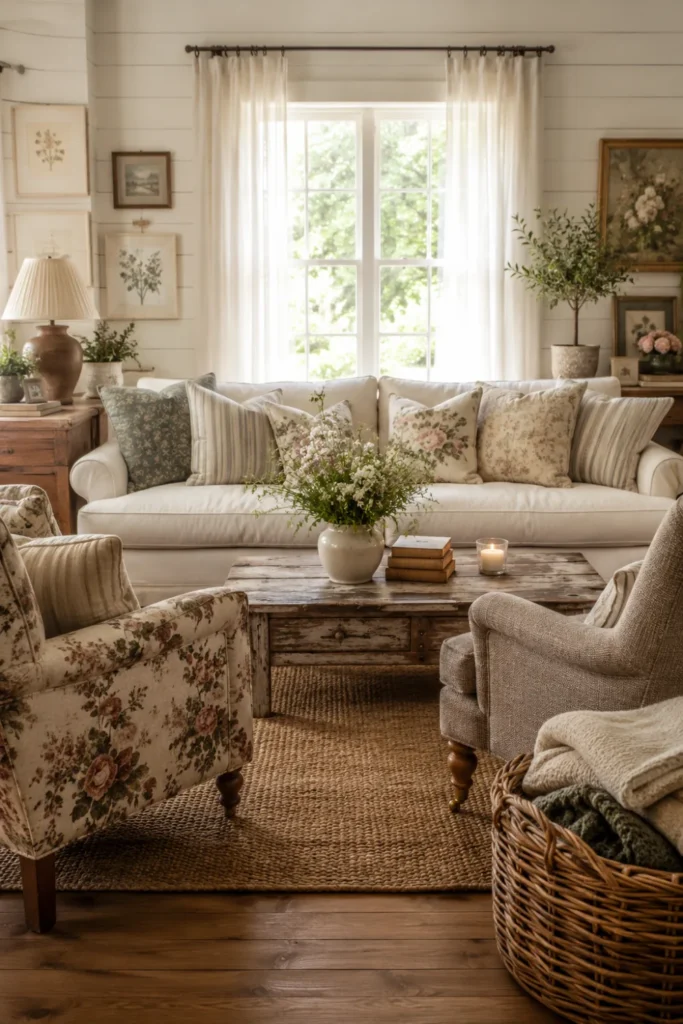
5. Slipcovered Linen Sofa with Mismatched Armchairs
The slipcovered linen sofa is the backbone of cottage living room design. Nothing else captures the relaxed, unfussy, lovable quality of cottage style quite as well — it looks beautiful fresh out of the dryer and it only gets better and more characterful over time. Pair it with two mismatched armchairs in complementary fabrics and you have a seating arrangement that looks casually curated and deeply personal.
Why It Works
Slipcovers communicate that this room is for living in, not just looking at. They remove any sense of preciousness and replace it with accessibility. The mismatched armchairs add the collected-over-time quality that is at the heart of great cottage design — as if you found one at an estate sale and inherited the other from a relative. That imperfection is the point.
Best For
All sizes of cottage living rooms. Particularly good in family homes, rooms with pets or children, and any space where comfort and practicality are just as important as aesthetics.
Styling Tips
Choose a linen slipcover in a soft natural, cream, or pale gray. For the armchairs, pick two that share one element with each other — the same wood tone on the legs, similar scale, or a color from the same family — so they feel related without matching. Add a floral or patterned pillow to each chair to tie them into the rest of the room. A chunky knit throw draped over the sofa arm completes the look perfectly.
6. Vintage and Antique Furniture Mix
There is no design element that creates genuine cottage character faster than actual antique or vintage furniture. A weathered farmhouse coffee table, a Victorian settee reupholstered in fresh linen, an old pine hutch repurposed as a media console — these pieces bring a sense of history and soul to a room that brand-new furniture simply cannot replicate, no matter how well it is designed.
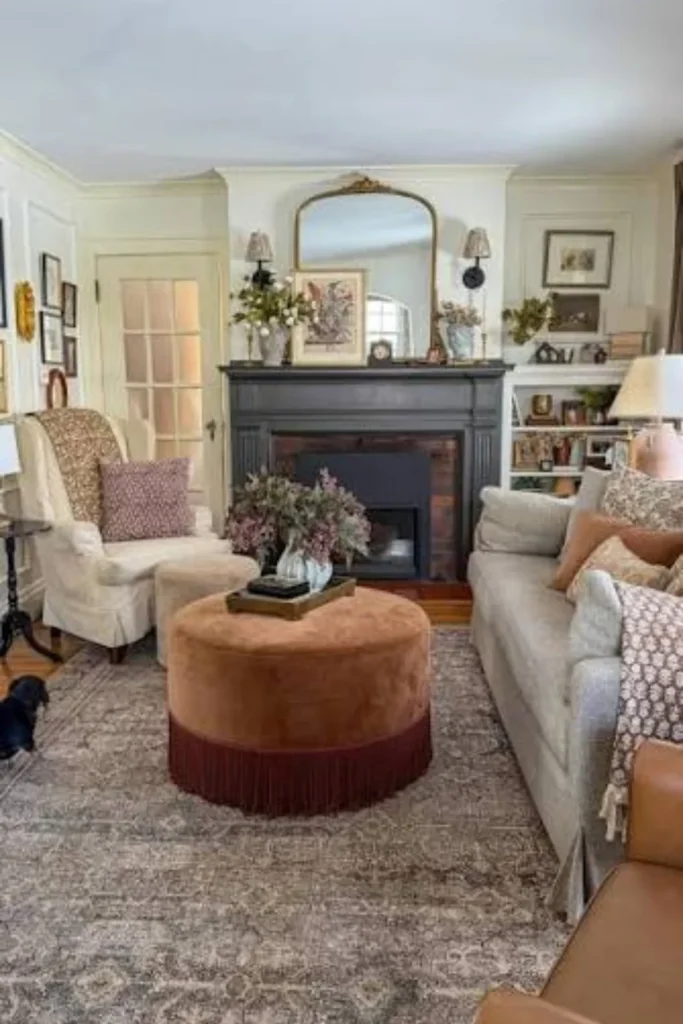
Why It Works
Every genuine antique or vintage piece has a physical story embedded in its surface — the scratch on the side of the table, the worn patch on the chair arm, the slightly uneven drawer. These details are read by the eye as evidence of a life lived, and they make the room feel real and human. They also create the effortless eclecticism that defines the best cottage interiors.
Best For
Cottage living rooms of any size that want maximum character on any budget. Thrift shops, estate sales, flea markets, and online vintage marketplaces are gold mines. Works in English cottage, French provincial, farmhouse, and any traditional cottage aesthetic.
Styling Tips
You do not need to fill the room with antiques — one or two true vintage pieces among newer items is the sweet spot. A vintage coffee table, an antique side table, or a found wooden hutch are the easiest entry points. Mix these with newer upholstered pieces for comfort. Avoid matching the wood tones perfectly — slight variation looks more authentic and collected.
7. A Warm, Moody Dark Green Accent Wall
While most cottage living rooms lean toward light and neutral palettes, a deep, warm green accent wall is one of the most sophisticated and atmospheric choices you can make. Think forest green, olive, or sage — deep enough to have drama but warm enough to feel cozy rather than cold. This is cottage design with confidence.
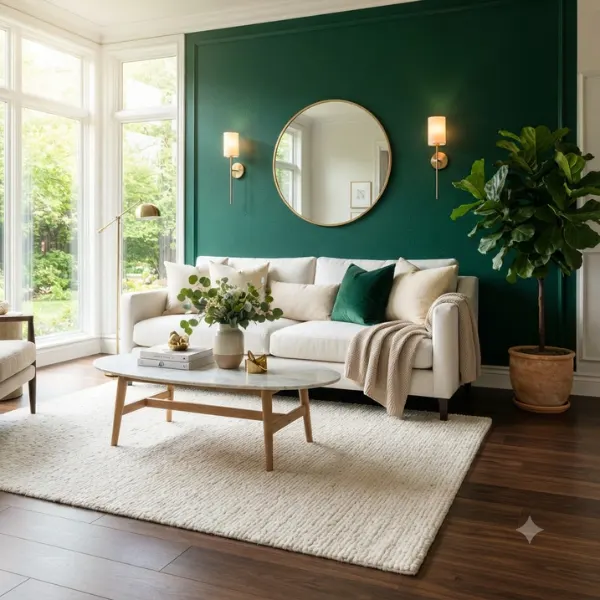
Why It Works
A deep green wall wraps the room in a sense of organic warmth that references gardens, forests, and the natural world — all central to the cottage aesthetic. It makes a room feel more intimate and enveloping, which is exactly the cozy quality you are going for. Against warm white trim and natural wood tones, it looks enormously rich and considered.
Best For
Living rooms that need a strong design statement and have enough natural light to handle a dark wall without feeling cave-like. Works especially well in English country cottage style and library-inspired cottage rooms. Also great for rooms with bookshelves, as books against a dark green wall look absolutely stunning.
Styling Tips
Farrow and Ball’s Studio Green, Olive, or Calke Green are the gold standard options. Sherwin-Williams Retreat or Rosemary are excellent more accessible alternatives. Keep the wall opposite it in a warm white or cream. Furnish with natural linen, warm wood, and brass or antique gold accents. Layer in plenty of books, plants, and vintage artwork to lean into the warm intellectual character of the space.
8. Built-In Bookshelves Flanking the Fireplace
Built-in bookshelves flanking a central fireplace is one of the most classic and enduringly popular cottage living room configurations for good reason. The combination gives the room architectural symmetry, enormous storage, a showcase for books and personal objects, and a warm, library-like feeling that is central to the cottage dream.
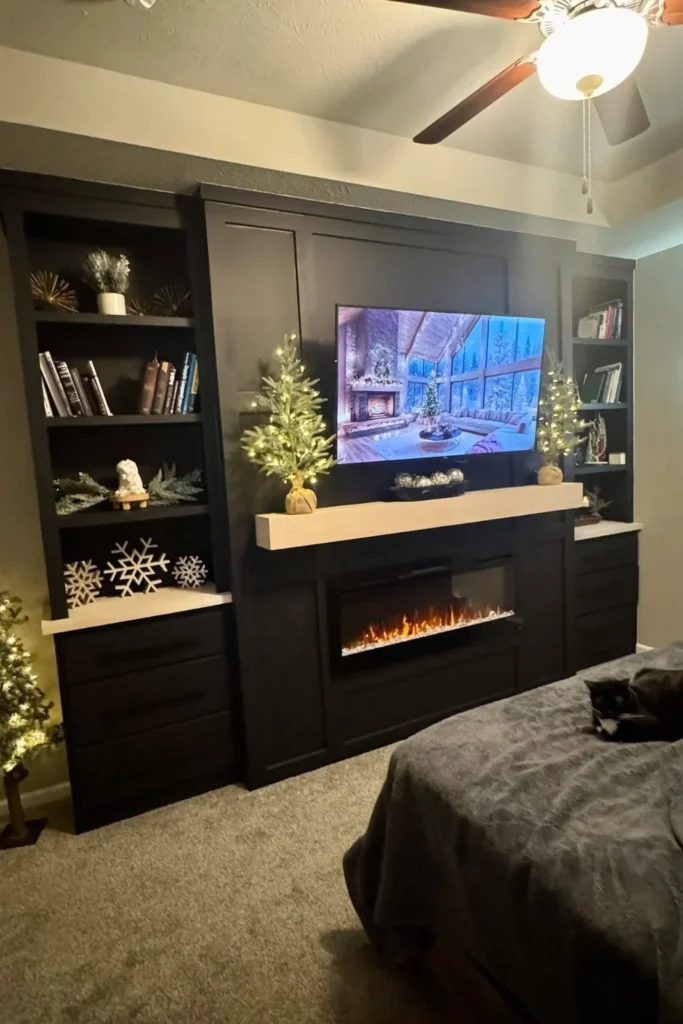
Why It Works
Built-ins do something that freestanding furniture cannot — they make the room feel like it was designed from the inside out rather than decorated after the fact. The bookshelves also give the fireplace a context and a frame, making the whole wall a unified, considered composition rather than a fireplace sitting alone on a blank surface.
Best For
Medium to large cottage living rooms where the fireplace is centered on a main wall with enough space on either side for shelving. Particularly great for reading lovers, those who collect books, and anyone who wants their living room to also feel like a home library.
Styling Tips
Paint the built-ins the same color as the walls for a seamless, architectural feel — or paint them in a slightly deeper tone to create subtle depth. Fill the shelves with a mix of books (not all spines facing out — mix in some backward-facing stacks for texture), small framed art, candles, vases, and personal objects. Avoid styling shelves too perfectly — the slightly random arrangement of a real book collection is more charming than anything symmetrically arranged.
9. Floral Curtains and Botanical Prints
Floral patterns are deeply embedded in the DNA of cottage interior design. They bring color, softness, and a connection to the natural world that is central to the cottage ethos. Floor-to-ceiling floral curtains or botanical print fabric on cushions and armchairs are one of the fastest ways to turn a plain living room into something that feels genuinely cottage-core and full of character.
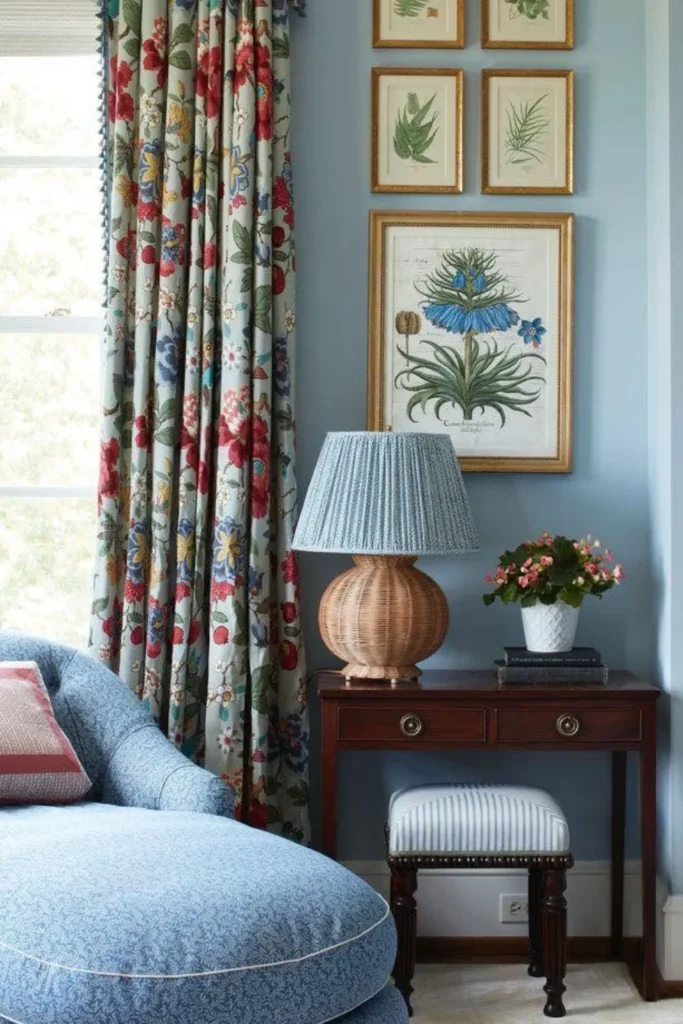
Why It Works
Florals soften a room in a way that geometric or solid patterns simply do not. They add an organic irregularity that references nature, and they layer beautifully with other cottage elements like natural woods, stone, and linen. When done well — not too matching, not too literal — florals add a romantic, literary quality to a cottage space.
Best For
Cottage living rooms going for an English country, French provincial, or romantic cottage aesthetic. Works in rooms of any size — large floral curtains in a small room create a jewel-box intimacy that is absolutely beautiful.
Styling Tips
Choose florals in a muted, faded palette rather than bright, saturated colors — dusty pinks, sage greens, faded blues, and creams feel far more cottage-appropriate than bold primaries. Mix floral curtains with solid upholstery on the main sofa to avoid visual overload. If you are nervous about full floral curtains, start with two or three botanical print cushion covers and one floral throw — the effect is immediate and low-commitment.
10. Window Seat with Storage and Cushion
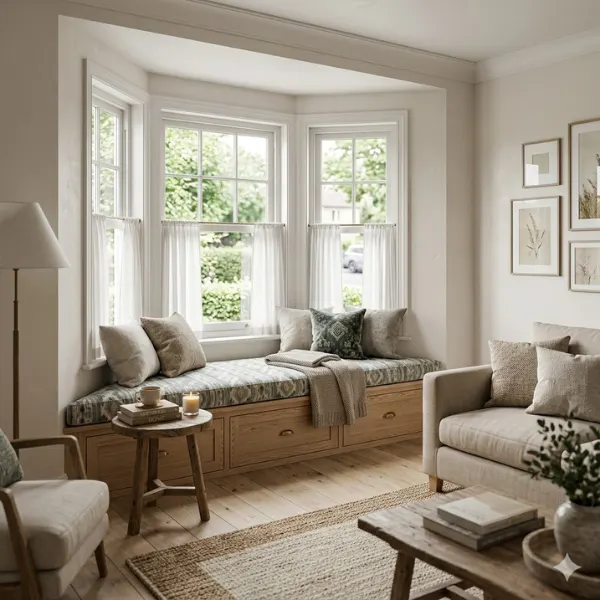
A window seat is one of those design elements that makes a room look like it was custom-built for someone who truly loves their home. Tucked into a bay window or a deep window recess, a well-built window seat with a cushioned top and storage drawers beneath is simultaneously one of the coziest spots in the house and one of the smartest organizational solutions in small cottage living rooms.
Why It Works
Window seats do something remarkable — they turn dead architectural space (a deep window sill or alcove) into one of the most desirable spots in the room. They also bring seating to a part of the room that would otherwise be empty wall, which helps with both function and the visual balance of the space.
Best For
Rooms with bay windows, deep-set windows, or alcoves that are currently being wasted. Excellent in small to medium cottage living rooms where every square foot needs to earn its place. Perfect for reading corners and rooms that double as a sitting room.
Styling Tips
Upholster the cushion top in a durable cotton or linen in a stripe, simple floral, or solid neutral. Layer three to five cushions along the back against the wall — mix sizes and patterns but keep the colors within the same palette. If the window above it has natural light, keep the curtains or blinds light and sheer so the seat feels bathed in warmth. Add a small side table or pull-up stool beside it for a drink and a book.
11. Reclaimed Wood Coffee Table as Room Anchor
The coffee table in a cottage living room should not look like it just arrived from a furniture showroom. A reclaimed wood coffee table — thick, honest, slightly imperfect — grounds the entire seating area and immediately communicates the cottage philosophy: that beautiful things do not need to be new or perfect to be loved.
Why It Works
Reclaimed wood brings genuine texture and history to the center of the room. Its weathered surface, natural grain, and occasional marks from previous lives make it visually interesting from every angle. As the piece that all the seating faces, it sets the tone for everything around it.
Best For
Any cottage living room regardless of size. Particularly powerful in rooms with neutral or light upholstered furniture where you need one strong, grounded natural element to tie everything together.
Styling Tips
Style the surface of the table simply and with purpose — a small stack of coffee table books, a chunky candle in a natural wax, a small ceramic bowl or wooden tray, and maybe one trailing green stem in a simple vase. Resist the urge to cover the whole surface — the wood itself is the decoration. Place a simple jute or wool rug underneath to define the seating area and soften the hard floor below.
12. Warm Candlelight and Soft Lamp Layers
No single element transforms a cottage living room’s atmosphere more dramatically and inexpensively than lighting. The difference between a room lit by overhead fluorescents and a room lit by layered warm lamps and candles is the difference between a waiting room and a sanctuary. Getting the lighting right is the step that turns a nicely decorated room into a genuinely cozy one.
Why It Works
Warm, low-level light creates intimacy. It softens everything — the walls, the faces of the people in the room, the textures of the furniture. Cottage style is fundamentally about warmth and comfort, and warm lighting is the most direct path to that feeling. Candles specifically add a flickering, organic quality that no electric light can fully replicate.
Best For
Every cottage living room. This is not optional — lighting is the single most impactful change you can make to any space, and layering it with multiple warm light sources is fundamental to the cottage aesthetic.
Styling Tips
Aim for a minimum of four light sources in your living room beyond any overhead light — two table lamps, one floor lamp, and a cluster of candles. Use bulbs with a color temperature of 2700K or lower for the warmest, most amber glow. Place table lamps at seated eye level rather than high on a shelf. Group candles in varying heights on the coffee table and mantel. Turn off the overhead light in the evening and rely entirely on your warm layers — the difference will genuinely stop you in your tracks.
13. Botanical Plants and Dried Flower Arrangements
Plants and dried florals bring the outside in, which is a core principle of cottage design. A mix of living plants in earthenware pots and dried flower arrangements in wicker or ceramic vessels creates a sense of organic life and natural abundance that makes a cottage living room feel genuinely connected to nature — not just styled to look like it.
Why It Works
Plants add color, texture, and movement to a room in a way that no decor object can. A large potted plant in a corner fills empty vertical space beautifully. A simple bunch of dried lavender or wheat on a shelf adds a soft, earthy scent and a muted natural palette. Together, living and dried botanicals create a layered, seasonal, genuinely alive quality to the space.
Best For
Any cottage living room, but especially beautiful in rooms with limited color where the greenery provides the main visual interest. Also fantastic in rooms near windows where the natural light benefits the plants.
Styling Tips
Group plants in threes or fives — odd numbers look more natural than symmetrical pairs. Choose pots in terracotta, aged ceramic, or woven baskets rather than plastic or overly shiny finishes. For dried arrangements, dried pampas grass, cotton stems, bunches of lavender, or preserved eucalyptus are the most universally beautiful and cottage-appropriate options. Place a large trailing plant like a pothos or a tall snake plant in an underused corner to fill it with life rather than furniture.
14. Wainscoting and Picture Rail Paneling
Wall paneling — whether classic wainscoting that runs from the floor to roughly halfway up the wall, or full picture rail height paneling — is one of the most transformative architectural additions you can make to a cottage living room. It instantly adds the kind of period character and craftsmanship detail that makes a room feel like it has always been there.
Why It Works
Paneling adds visual rhythm to the walls and creates a horizontal break that makes rooms feel more proportioned and grounded. It also gives the room a sense of heritage and craftsmanship that is central to traditional cottage interiors. When painted in a warm white or soft cream, it reflects light beautifully and makes the room feel both brighter and more refined.
Best For
Dining room-adjacent living spaces, formal cottage sitting rooms, and any living room where the walls currently feel flat and uninteresting. Works particularly well in older homes that already have some period character to build on.
Styling Tips
Classic wainscoting is typically installed to around chair rail height — about 36 inches from the floor. Paint the panel section in the same color as the wall above for a seamless look, or go one shade darker for a grounded two-tone effect. Hang artwork only in the upper portion above the wainscoting rail. Keep the furniture scale in proportion — lower, more relaxed seating suits paneled rooms beautifully.
15. Vintage Rug Layering on Wood or Stone Floors
Layering rugs is one of the most beloved techniques in cottage and bohemian interior design, and it is far easier to pull off than most people expect. A large, neutral base rug topped with a smaller vintage Persian, kilim, or patterned rug creates a rich, layered floor situation that adds enormous warmth and visual interest — especially over wood or stone floors.
Why It Works
Rug layering creates visual depth and makes the floor itself a design feature rather than just a background surface. It also helps define a seating area within a larger room without any architectural intervention. Vintage rugs in particular bring colors and patterns that are impossible to find in new pieces, and their slightly faded, worn quality is exactly the character cottage rooms need.
Best For
Living rooms with wood plank, stone tile, or any hard flooring. Particularly beautiful in larger rooms where one rug is not sufficient to fill the space or in rooms that need added warmth and color.
Styling Tips
Start with a large jute, sisal, or natural flat-weave rug as your base layer. The top rug should be smaller and positioned toward the center of the seating arrangement — a vintage Persian, a patterned kilim, or a faded Oriental rug all work beautifully. The colors of the top rug should appear elsewhere in the room — in cushion fabrics, curtains, or artwork — so it feels connected rather than placed randomly.
16. A Reading Nook Corner with Floor Lamp and Stacked Books
The dedicated reading nook is one of the most aspirational elements of cottage living room design. It does not need to be an architecturally built space — a well-placed armchair, a good floor lamp, and a thoughtfully styled stack of books in a corner is all it takes to create one of the most inviting spots in the house.
Why It Works
A reading nook within the living room creates a sense of a room-within-a-room. It gives the corner purpose and makes the overall space feel more layered and considered. It also sends a message about the household — books are loved, reading is valued, and this is a home that prioritizes rest and reflection.
Best For
Any cottage living room with a corner that is currently underused or empty. Works with a wide range of chair sizes and styles. Particularly good in rooms that also have a TV, where the reading nook provides an alternative non-screen destination.
Styling Tips
Choose a high-backed or wingback chair for maximum reading comfort. Position a floor lamp slightly behind and to one side of the chair so the light falls over your shoulder — this is the most practical reading light position. Stack two to three small towers of books on the floor beside the chair along with one or two on a small side table. Add a small plant or a candle nearby. A small round rug underneath the chair defines the nook from the rest of the room.
17. Soft Pastel Color Palette with Blue and Blush Tones
While deep and neutral tones are the most common cottage living room choice, a soft pastel palette — pale blue walls, blush cushions, lavender accents, and warm white woodwork — creates a cottage living room that feels dreamlike, romantic, and utterly charming. This is cottage design at its most gentle and feminine, and it is one of the most beautiful things you can do with a small room.
Why It Works
Pastels reflect light in a particularly beautiful way, creating a room that seems to glow from within. Soft blues and blushes have a naturally calming effect that amplifies the sanctuary quality of a cottage interior. They also age beautifully — a slightly faded pastel palette looks even better than a fresh one.
Best For
Small to medium cottage living rooms, beach cottages, country sitting rooms, and any space going for a romantic, storybook, or English garden cottage aesthetic. Also wonderful in rooms with limited natural light, as pastels keep the space feeling bright even when the sky is overcast.
Styling Tips
Paint the walls in a soft, dusty blue — Farrow and Ball’s Borrowed Light, Mizzle, or Skylight are beautiful options. Use blush pink and cream in upholstery fabrics, adding botanical print cushions in complementary tones. White painted woodwork throughout keeps everything feeling fresh and clean. Style the mantel or shelves with soft-colored ceramics, white candles, and small floral arrangements in blush and white tones.
18. Wicker and Rattan Accent Pieces
Wicker, rattan, and cane are having a massive moment in interior design right now, and cottage living rooms are the natural home for these materials. A rattan side table, a wicker magazine basket, a cane-backed armchair, or a woven pendant light shade — any and all of these bring a natural, handcrafted quality that is warm, textural, and completely at home in a cottage aesthetic.
Why It Works
Natural woven materials speak directly to the cottage philosophy of bringing the outdoors in and valuing handcrafted, organic things over mass-produced perfection. They add visual texture without adding visual weight, which is particularly useful in smaller rooms where you need warmth without clutter.
Best For
Cottage living rooms of any size. Works across most cottage sub-styles — English country, coastal cottage, boho cottage, and even modern cottage all absorb rattan beautifully. Especially useful in small rooms where you need lightweight textural interest.
Styling Tips
A rattan or wicker side table beside an armchair is the easiest entry point. A woven pendant light over a corner reading spot or above the coffee table area is a slightly bigger commitment but enormously impactful. A woven storage basket or two beside the sofa or fireplace holds throws and remotes while looking beautiful doing it. Mix rattan with linen, cotton, and natural wood for a harmonious organic palette.
19. Gallery Wall of Personal Artwork and Vintage Frames
A gallery wall done in the cottage style is not the perfectly spaced, same-frame grid that you see in minimalist interiors. It is a collected, personal, imperfect arrangement of vintage frames in different sizes, family photographs, small watercolor landscapes, pressed botanical prints, and whatever else speaks to you. It is one of the most expressive design moves you can make in a living room.
Why It Works
A gallery wall brings enormous visual interest to what is often the most under-addressed vertical surface in a living room — the large wall beside the sofa or above a console table. It also introduces color, pattern, and personal narrative in a way that a single large piece of art cannot. Done in the cottage spirit, it tells the story of the people who live in the room.
Best For
Any cottage living room regardless of size. Particularly powerful in rooms that are otherwise quite neutral and need something with personality and scale on the walls.
Styling Tips
Start by collecting frames in varying sizes — they do not need to match, but gold, antique brass, dark wood, and painted white all mix beautifully together. Lay them out on the floor first before hanging to find an arrangement you love. Include a mix of content — one or two original drawings or watercolors, a few family photos, some botanical or landscape prints, and possibly a small mirror or two to add depth. The overall shape should be organic, not perfectly rectangular — let it grow slightly irregularly for the most cottage-authentic feel.
20. Cozy Cottage Color Scheme in Warm Terracotta and Cream
Terracotta is one of the warmest, most earthy, and most deeply satisfying colors you can bring into a cottage living room. Whether as an accent wall color, in ceramic pot form, or in cushion and rug tones, terracotta adds a rich, sun-baked warmth that pairs beautifully with cream upholstery, natural wood, and deep green plants.
Why It Works
Terracotta references earth, clay, and the handmade — all deeply connected to the cottage design philosophy. It is a warm color that makes a room feel like it is glowing with a low afternoon light even when the actual light is flat. Against cream or white, it has just enough contrast to be interesting without being jarring.
Best For
Cottage living rooms going for a warm, Mediterranean, or rustic Italian farmhouse-meets-English cottage feel. Also beautiful in rooms with exposed brick or stone, where the terracotta tones echo the natural building materials.
Styling Tips
Introduce terracotta in layers rather than all at once. Start with a terracotta ceramic pot for your largest plant. Add a terracotta or warm rust-toned throw pillow on the sofa. If you want more commitment, paint one wall in a terracotta tone — Farrow and Ball’s Red Earth or Potted Shrimp are beautiful cottage-appropriate options. Balance with plenty of cream, natural linen, and the green of plants to keep the palette feeling grounded and organic rather than heavy.
21. English Country Cottage Style with Deep Floral Upholstery
The English country cottage style is possibly the original and most beloved of all cottage aesthetics. Deep, jewel-toned sofas upholstered in floral or richly patterned fabrics, surrounded by layers of pattern, antiques, and warm lamp light, create a room that feels like it belongs in a countryside manor — intimate, cultured, and endlessly comfortable.
Why It Works
The English country cottage style is rooted in the idea that comfort and beauty are not mutually exclusive, and that rooms should feel gathered, personal, and layered rather than sparse or perfunctory. Deep-colored floral upholstery anchors the room with gravitas and warmth while the layered patterns around it create the visual richness that this style demands.
Best For
Living rooms with good natural light that can handle rich, saturated tones. Works best in rooms with period features like fireplaces, cornices, or original windows. Particularly beautiful in autumn and winter when the warm palette feels most resonant.
Styling Tips
Choose a sofa or a set of armchairs in a rich floral — deep burgundy, green, and navy florals are the most classically English. Layer with cushions in coordinating but non-matching florals and solid velvets. A Turkish or Persian rug in warm reds and blues underneath pulls the palette together. Hang oil paintings or dark-framed botanical prints on the walls. A standard lamp with a pleated shade in the corner completes the Downton Abbey energy beautifully.
22. Painted Wooden Floor with a Faded Striped Runner
If your cottage living room has wooden floors that are not quite beautiful enough to celebrate bare, painting them is a wonderful and characterful solution. A painted wood floor in a soft gray, chalky white, or pale sage green, topped with a long striped runner rug down the center or in front of the sofa, has enormous cottage character and a slightly Swedish or New England coastal charm.
Why It Works
Painted wood floors have a handmade, deliberate quality that feels completely at home in a cottage interior. They lighten a room without the expense of new flooring, and the painted surface becomes a backdrop that makes rugs and furniture look particularly beautiful against it. A faded linen stripe runner adds length to the room and warmth to the painted surface.
Best For
Cottage living rooms with worn, mismatched, or unremarkable wood floors that need refreshing. Brilliant in smaller rooms where a new floor would be too costly and a rug alone is not enough. Works beautifully in coastal cottages, Swedish-inspired spaces, and light, airy cottage aesthetics.
Styling Tips
Use a durable floor paint designed for high-traffic areas — Rust-Oleum and Farrow and Ball both make beautiful options. A chalky white or pale gray is the most versatile base. Choose a striped runner in natural linen tones — cream, sand, faded blue, or black and white — for the most timeless look. Layer with a small round rug under the coffee table on top of the runner for extra warmth and dimension.
23. Simple Cottage Kitchen-Adjacent Open Shelving Display
In cottage homes where the living room and kitchen flow together in an open plan or semi-open layout, treating one living room wall with open wooden shelving that displays a beautiful mix of books, ceramics, baskets, and collected objects creates a seamless, homey transition between the two spaces. This is cottage organization at its best — functional storage that is also genuinely beautiful to look at.
Why It Works
Open shelving communicates abundance and warmth. A wall of well-styled shelves full of books, plants, candles, and ceramics creates the impression of a home that is richly lived in and thoughtfully organized. It brings together the kitchen’s practicality with the living room’s comfort in a way that closed cabinets never can.
Best For
Open-plan or semi-open cottage homes where the living and cooking spaces share a visual field. Also useful in living rooms that need storage without the formality of a full built-in unit.
Styling Tips
Use rough-sawn wooden planks supported by simple iron brackets for the most cottage-authentic look. Style with a mix of functional items — pitchers, baskets, collected ceramics — alongside decorative ones like books, candles, and small plants. Group objects in odd numbers and vary the heights within each grouping. Keep the wall color behind the shelves the same as or slightly darker than the surrounding walls so the objects read clearly.
24. Cottage Living Room with a Wood-Burning Stove Insert
While a full stone fireplace is the grand version, a freestanding cast iron wood-burning stove or a stove insert installed into an existing fireplace opening is the more compact, more efficient, and arguably more charming solution. There is something incredibly satisfying about a small, glowing stove with a black pipe disappearing up into the chimney — it is practical, beautiful, and deeply cottage.
Why It Works
A wood-burning stove is functionally superior to an open fireplace — it burns more efficiently and heats the room more effectively. But it is the visual quality that makes it so beloved in cottage design. The thick black or enamel finish body, the glass door through which you can see the flames, and the warm glow it casts across the room create an atmosphere that is impossible to fake with any other element.
Best For
Cottage living rooms where the existing fireplace is small, inefficient, or in need of updating. Also brilliant in small living rooms where a full stone surround would be too large — the stove with a simple hearth tile beneath it and a slim mantel above occupies far less visual space while delivering maximum character.
Styling Tips
Place the stove on a simple slate or terracotta tile hearth pad. Keep a small basket of seasoned firewood beside it. The mantel above — if there is one — should be styled simply: a few candle holders, one piece of art, and a small plant. Avoid filling the surrounding area with too many accessories — the stove itself is the decoration.
25. Cottage Style with a Coastal Blue and White Palette
The coastal cottage is a specific and deeply beloved variation of the wider cottage style — the marriage of seaside freshness and countryside warmth. Blue-washed pine paneling, whitewashed wood floors, white linen slipcovers, driftwood accents, and carefully considered nautical references create a room that feels breezy, bright, and restorative.
Why It Works
Blue and white is one of the most timeless and universally appealing color combinations in interior design, and in a cottage context it connects to a long tradition of seaside and painted coastal homes. The palette keeps a room feeling light and airy in any weather and scales beautifully from tiny beach huts to larger summer homes.
Best For
Coastal homes, lake houses, summer cottages, and any inland space that wants to channel a seaside atmosphere. Works best in rooms with good natural light and ideally some connection to the outdoors through large windows.
Styling Tips
Keep the blue soft and slightly washed rather than vivid — pale Wedgwood blue, faded denim, or dusty teal all work beautifully. Use white generously on all woodwork, ceilings, and the main sofa. Bring in natural textures through wicker baskets, jute rugs, driftwood accessories, and linen cushions. Avoid overly literal nautical theming — a single oar leaning against the wall or a collection of sea glass in a bowl on the coffee table is far more refined than a room full of anchor motifs.
26. Understated Minimalist Cottage with Clean Lines and Natural Materials
Not every cottage living room needs to be maximalist, patterned, and full of vintage clutter. The understated minimalist cottage aesthetic — clean lines, honest natural materials, a palette of warm whites and soft taupes, and very deliberate styling — is one of the most sophisticated and liveable interpretations of the cottage style and it is having a significant moment right now.
Why It Works
By stripping away everything unnecessary and allowing only honest materials — natural linen, raw wood, aged stone, simple ceramic — the minimalist cottage approach lets the quality and character of the materials themselves do all the talking. The result is a room that feels serene, intentional, and quietly luxurious. It also ages beautifully and never looks cluttered.
Best For
People who love the cottage philosophy but find busy patterns and heavy layering overwhelming. Works well in modern or contemporary homes where the architecture is clean and simple. Also excellent in rooms that function as a calm retreat from busy home life.
Styling Tips
Choose one or two materials and stay loyal to them throughout — raw linen and natural oak, for example, or aged plaster and stone. Keep the palette to three tones maximum — warm white, soft taupe, and one deep natural accent like clay, sage, or slate. Style very deliberately with a small number of beautiful objects — a single large ceramic vase, one stack of well-worn books, one plant. Resist the urge to fill every surface.
27. Seasonal Decoration — Bringing the Outdoors In Through Every Season
One of the most beautiful and underappreciated aspects of cottage living room design is its relationship with the passing of seasons. A cottage living room that changes gently with the seasons — fresh greenery and light linens in spring, dried flowers and warm throws in autumn, branches and candles in winter — has a vitality and warmth that static, year-round styling cannot match.
Why It Works
Seasonal decoration connects the home to the natural world in the most direct and cost-effective way possible. Most seasonal changes cost very little — a bunch of branches from the garden, a bowl of seasonal fruit or pinecones, a change of throw pillow covers — but they keep the room feeling fresh, alive, and curated all year round. It also reinforces the cottage philosophy that a home should reflect real life and the world outside.
Best For
Every cottage living room, regardless of size or style. This is less a decorating idea and more a decorating habit, and it is one of the most joyful habits a homeowner can develop.
Styling Tips
Keep a loose seasonal framework: spring brings fresh branches, garden-cut flowers in simple vases, and lighter throw colors. Summer allows for more open windows, lighter textiles, and fresh botanical arrangements. Autumn calls for dried flowers, warm amber candles, wooden bowls of seasonal produce, and heavier knit throws. Winter is the time for evergreen branches, a proliferation of candles, woven blankets stacked generously, and the maximum warmth of all your lamp layers running simultaneously. You do not need to redecorate — small swaps in what you place on the coffee table and mantel are enough to make the whole room feel different and seasonally alive.
Mistakes to Avoid in a Cottage Living Room
Getting a cottage living room right takes instinct, but avoiding these common mistakes makes the whole process much easier and the results much more satisfying.
Making it too themed. Cottage style is not a costume. Filling a room with anchor motifs, literal farmhouse signs, or matching sets of “rustic” accessories bought from a home decor chain does not create a cottage interior — it creates a parody of one. The real thing is assembled slowly, personally, and imperfectly. Resist anything that comes in a matched set and resist anything that announces its style too loudly.
Using too many competing patterns. Cottage rooms do use pattern, but there is a discipline to it. If your sofa, curtains, rug, and every cushion are all different patterns in different scales, the room will feel chaotic rather than cozy. Anchor the room with solid or subtly textured upholstery on the main sofa and introduce pattern in smaller, more layerable pieces like cushions and throws.
Overhead lighting only. An overhead light is the enemy of cottage atmosphere. If the only light in your living room comes from a ceiling fixture, the room will never feel cozy no matter what else you do to it. Invest in table lamps, floor lamps, and candles before you spend another dollar on any other decor.
Furniture that is too big for the space. Cottage rooms are typically intimate in scale, and oversized furniture crammed into a small room does not create coziness — it creates claustrophobia. Measure your room carefully, choose appropriately scaled furniture, and leave clear pathways so the room flows naturally.
Ignoring the floor. Many cottage living rooms have beautiful wood or stone floors that are either left cold and bare or covered in an inappropriate rug. A good rug — jute, wool, or vintage — is one of the most impactful investments you can make. It warms the room, defines the seating area, and adds enormous texture and comfort underfoot.
Buying everything new. Cottage style genuinely requires some age and imperfection. A room full of brand new matching furniture will never achieve the collected, personal quality that defines the best cottage interiors. Mix in at least one or two vintage, thrifted, or genuinely antique pieces and notice how immediately the room comes to life.
Over-styling and under-living. The most beautiful cottage living rooms look slightly imperfect — a book left open on the coffee table, a throw slightly crumpled, a vase of flowers one day past their best. Over-styling a cottage room until every object is positioned with museum-like precision destroys exactly the warm, natural quality you were going for. Style it beautifully, then live in it, and let it settle into itself.
Conclusion
A cozy cottage living room is not something you build in a weekend shopping spree. It is something you grow into — one good lamp, one found vintage piece, one beautiful rug, one bunch of dried lavender at a time. The rooms that inspire us most on Pinterest and in design magazines did not happen in an afternoon. They happened over years of living in them, adding to them, and loving them.
What all 27 ideas in this list have in common is the same fundamental principle: the cottage living room should feel like it was made for the people who live in it, not for the people who might visit it. It should feel warm before it feels stylish. It should feel real before it feels perfect. And it should always feel like the best possible place to be at the end of a long day.
Start with one idea that immediately feels right to you. Maybe it is the layered textiles, or the warm lamp layers, or finding one beautiful vintage piece at a local antique market. Start there. The rest will follow naturally, and the room you end up with will be entirely your own.
FAQs
What makes a living room feel like a cottage? The key elements are warm lighting from multiple sources, natural materials like wood and linen, a mix of textures in soft furnishings, some element of age or vintage character, and a color palette rooted in natural tones. You do not need all of these at once — start with two or three and build from there.
What colors work best for a cottage living room? Creamy whites, warm off-whites, soft greens, dusty blues, terracotta, warm taupes, and deep sage all work beautifully. The most important thing is warmth — avoid cool, blue-based whites and grays, which fight against the cozy quality you are aiming for.
Is cottage style expensive to achieve? Not at all — it is actually one of the most budget-friendly design aesthetics because it thrives on vintage, thrifted, and imperfect pieces. Flea markets, estate sales, and thrift stores are far more useful than furniture showrooms for achieving genuine cottage style. Candles, plants, and a good rug are also inexpensive and enormously impactful.
Can a modern home look like a cottage inside? Absolutely. The cottage aesthetic is about materials, textures, and atmosphere rather than architecture. Shiplap panels, exposed beam installations, warm paint colors, vintage furniture, and layered soft furnishings can bring cottage character to even the most boxy, modern new-build living room.
What is the difference between cottage style and farmhouse style? Farmhouse style is generally more structured and neutral, with an emphasis on clean lines, white shiplap, and practical simplicity. Cottage style is warmer, more layered, more pattern-friendly, and more personal — it draws more from English and French country house traditions and places more emphasis on the collected, imperfect, and romantic.
How do I make a small cottage living room feel cozy without being cramped? Choose furniture in the right scale for the room — not too big — and keep pathways clear. Use warm lamp lighting to create intimacy rather than overhead lighting. Layer rugs and textiles to add warmth without taking up floor space. A mirror on one wall opens the room up visually. And embrace the small scale — intimacy is not a problem to be solved in a cottage room, it is one of its greatest qualities.
What are the best textiles for a cottage living room? Linen, cotton, jute, wool, and velvet are all perfect cottage fabrics. Linen for main upholstery and curtains, jute for base rugs, wool for layered or vintage rugs and throws, cotton for cushion covers and slipcovers, and velvet for accent chairs or decorative pillows. Avoid synthetics where possible — they do not have the natural texture and drape that makes cottage textiles so beautiful.