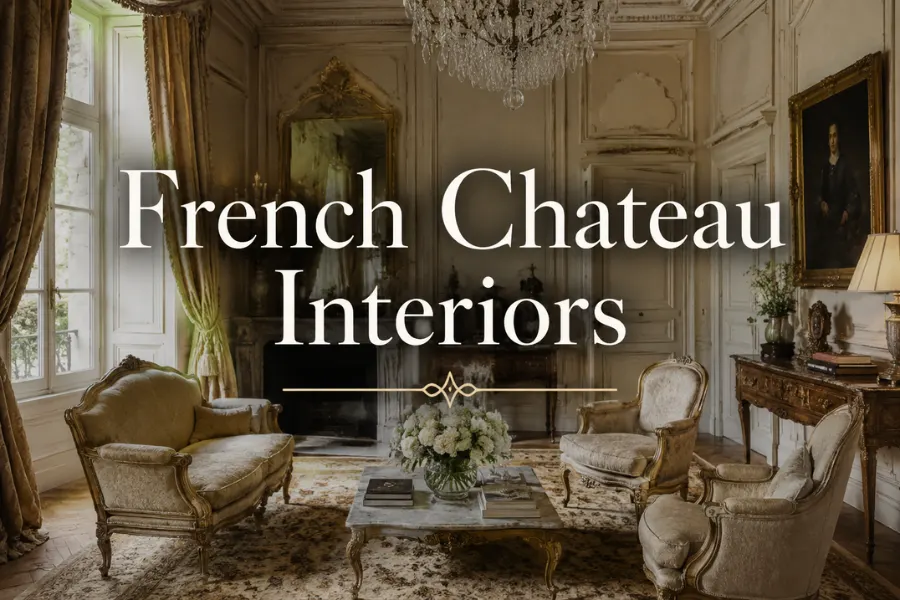
23 French Chateau Interiors That Will Make You Fall in Love With Old-World Elegance
There is something about a French chateau interior that stops you completely in your tracks. It’s not just the grandeur of it — it’s the feeling. The way a limestone fireplace anchors a room. The way the light falls through tall, arched windows and lands on a herringbone parquet floor. The way a gilded mirror makes a space feel twice as big and ten times more romantic. French chateau interiors have been captivating people for centuries, and honestly, they show no sign of losing their magic anytime soon.
Now, before you think this style is only for people with a 40-room estate somewhere in the Loire Valley, let me stop you right there. The best thing about French chateau design is that its core principles — beautiful proportions, quality materials, layered textures, and a deep respect for craftsmanship — can be translated into almost any home, at almost any budget. You don’t need a castle. You need the right ideas and a clear understanding of what makes this style so deeply, timelessly beautiful.
I’ve spent years studying and working with this aesthetic, and in this guide I’m breaking down 23 distinct French chateau interior ideas — from grand sweeping gestures like a carved limestone fireplace to small but powerful touches like boiserie wall paneling or a velvet-draped window. Each idea is unique, realistic, and comes with everything you need to actually bring it to life in your own home.
23 French Chateau Interior Ideas That Bring the Elegance Home
1. The Grand Limestone Fireplace
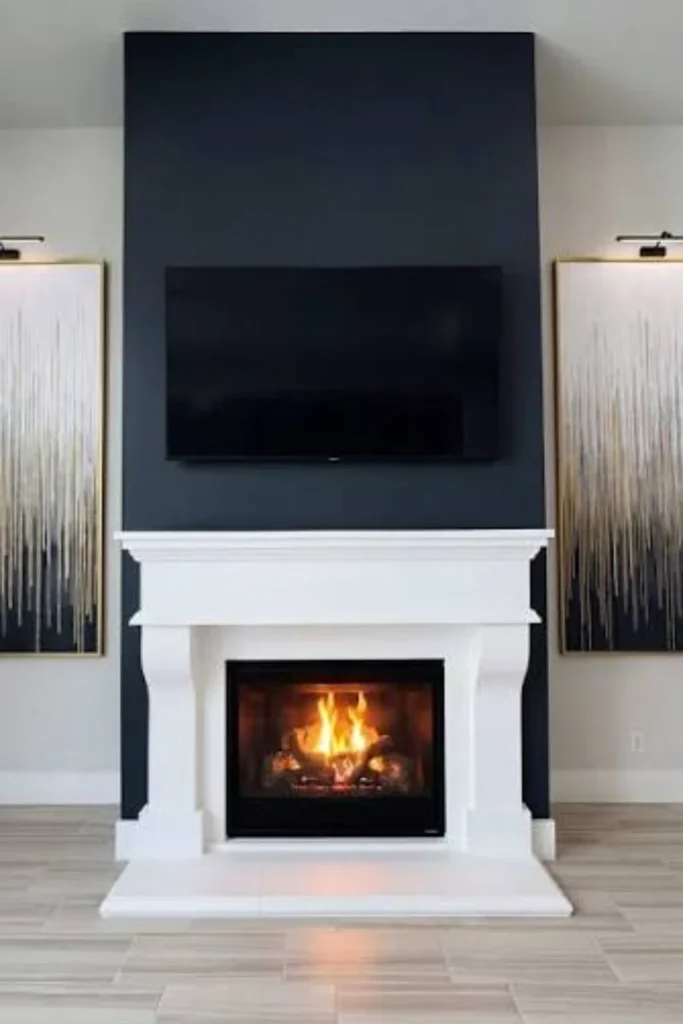
Nothing in French chateau design commands a room quite like a hand-carved limestone fireplace. This is the undisputed centerpiece of any chateau salon, the architectural moment that everything else is organized around. Tall, white, and intricately detailed, it carries centuries of craftsmanship in every carved curve and sets the entire mood of a room from the moment you walk through the door.
Why It Works
Limestone has a warm, natural white tone that feels simultaneously grand and approachable. Unlike dark stone, it reflects light beautifully and reads as elegant without being cold or intimidating. The fireplace surround creates a natural focal point that anchors the furniture arrangement and gives the room a sense of purpose and architecture that simply cannot be faked with paint or accessories alone. It is the thing that makes a room feel like it belongs in a chateau rather than just being styled like one.
Best For
Living rooms, master bedrooms, and formal salons where you want an architectural statement piece. Also incredibly effective in entrance halls where it creates an immediate sense of arrival and grandeur.
Styling Tips
Keep the mantel styling restrained and intentional — a large gilded mirror above, flanked by a pair of matching candlesticks or small sculptural objects, is the classic French approach. Resist the urge to crowd the mantel with too many items. The fireplace is already doing all the heavy lifting. If genuine carved limestone is beyond the budget, excellent quality cast limestone surrounds and even high-quality plaster reproductions are now widely available and look extraordinarily convincing from any normal viewing distance.
2. Boiserie Wall Paneling
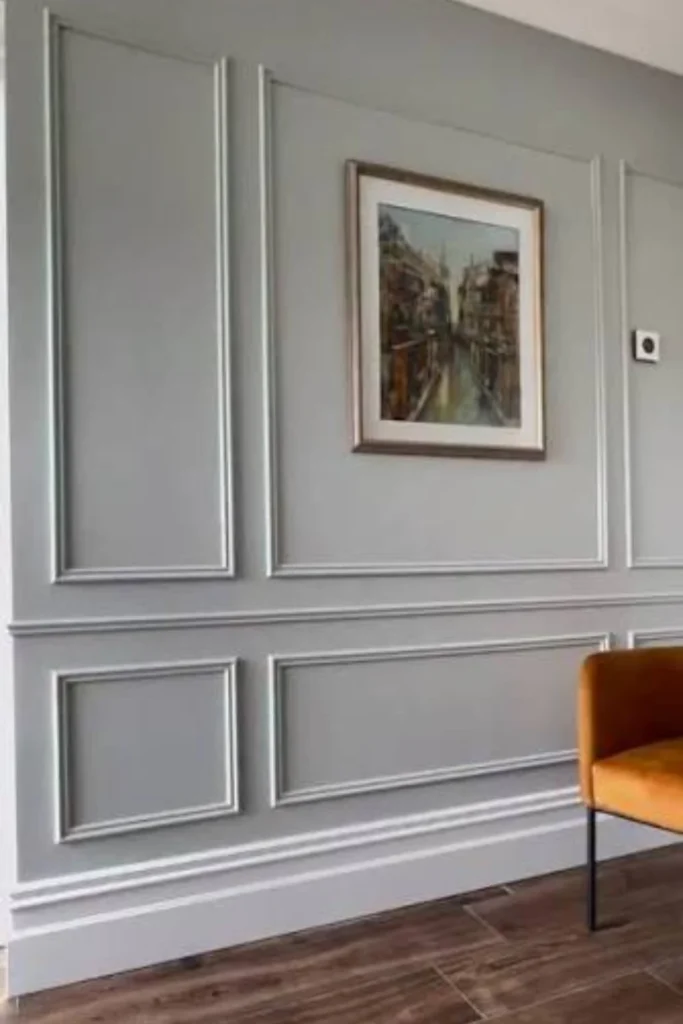
Boiserie is the French art of decorative carved wood paneling that covers the walls of a room from floor to ceiling, or from chair rail to ceiling, in a series of carved or molded rectangular panels. It originated in 17th-century France and became the defining interior detail of every aristocratic home in the country. In a chateau interior, boiserie is what separates a beautiful room from an extraordinary one.
Why It Works
Boiserie adds an architectural depth and richness to walls that paint simply cannot achieve. The panels create shadow lines that shift as the light moves throughout the day, making the room feel alive and dynamic. When painted in a soft, chalky white or warm grey, boiserie panels give a room a sense of history and craftsmanship that immediately reads as authentic French elegance. It’s the kind of detail that makes guests walk into a room and quietly say “wow” before they’ve even registered why they’re impressed.
Best For
Salons, dining rooms, formal hallways, and libraries where you want the room to feel architecturally rich and historically significant. Also beautiful in master bedrooms for a truly romantic, private atmosphere.
Styling Tips
Paint your boiserie in soft, chalky tones rather than stark white — Benjamin Moore’s White Dove, Farrow and Ball’s Pointing, or a warm greige like Farrow and Ball’s Elephant’s Breath all work beautifully. The trick is to paint both the panels and the wall in the same color for a refined, seamless look rather than contrasting them. Hang one large, significant piece of art within the largest panel for a deeply curated, gallery-like effect.
3. Crystal and Wrought Iron Chandelier
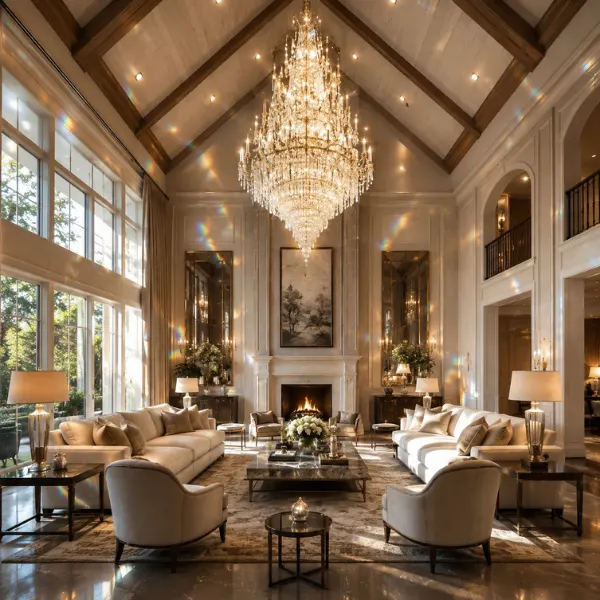
The chandelier in a French chateau room is never just a light fitting. It is an event. Large, elaborate, and impossible to ignore, the right chandelier transforms the ceiling into part of the decor and fills a room with a warm, flickering glow that no recessed light can ever replicate. Whether crystal, wrought iron, gilded bronze, or a mix of all three, the chandelier is where French chateau lighting begins and ends.
Why It Works
French chateau rooms have high ceilings, and without a significant chandelier, that vertical space feels empty and wasted. A chandelier fills the room vertically, draws the eye upward, and creates a sense of ceremony and occasion in everyday spaces. Crystal drops and arms catch and scatter light in a way that makes a room feel warm, layered, and genuinely magical — especially in the evening.
Best For
Dining rooms, entry foyers, salons, and master bedrooms. Even a smaller crystal chandelier in a bathroom creates an instant chateau moment that feels wildly luxurious.
Styling Tips
Scale is everything with chandeliers. Most people choose one that’s too small, which makes it look timid and disappointing in the space. A rough guide: add the length and width of the room in feet, and that number in inches is roughly the right diameter for your chandelier. In a dining room, hang it so the bottom sits about 30 to 34 inches above the table surface. In other rooms, aim for a minimum of 7 feet clearance from the floor to the lowest point.
4. Herringbone Parquet Hardwood Floors
The parquet herringbone floor is one of the most iconic and instantly recognizable elements of French chateau interiors. Short planks of hardwood laid in a repeating zigzag pattern, it’s a floor that has appeared in French chateaux since the 17th century and never once gone out of style. Walking on a herringbone floor feels different — more refined, more considered, more French.
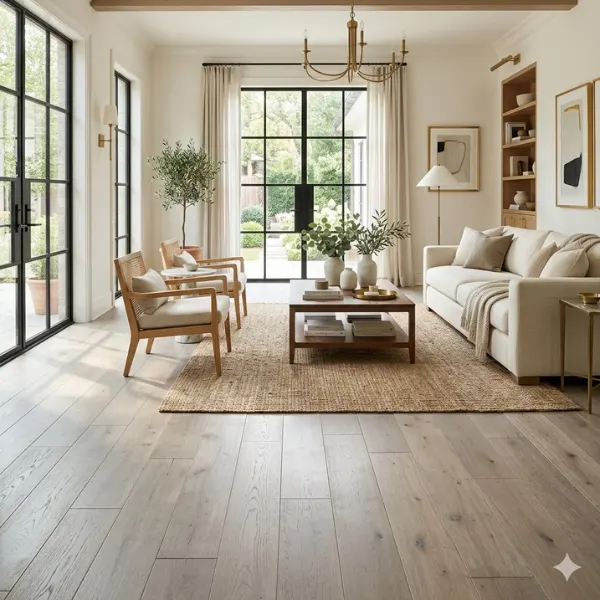
Why It Works
The herringbone pattern creates movement and visual interest underfoot that a straight-laid floor simply cannot match. It makes rooms feel larger by drawing the eye across the space diagonally, and it adds an immediate sense of craftsmanship and quality that elevates every piece of furniture sitting on top of it. In pale, lightly oiled oak, it reads as soft and airy. In darker, more aged wood tones, it becomes dramatic and rich.
Best For
Living rooms, salons, entrance halls, dining rooms, and large master bedrooms. Herringbone can also be used in a kitchen for a warmer, more European feel — particularly beautiful in pale cream-painted cabinetry kitchens.
Styling Tips
Choose a plank width of around 2.5 to 3 inches for the most authentic chateau look — wider planks lose the intricate interlocking quality of the traditional pattern. A light, natural oil finish rather than a thick lacquer keeps the wood looking natural and properly aged. Layer large antique or vintage rugs on top of the floor to define conversation areas and add warmth — this is exactly how chateau rooms are styled, with the beautiful floor peeking out from beneath generous rugs on all sides.
5. The Grand French Chateau Salon
The salon is the heart of any French chateau — it is where life happens, where guests are received, where conversations stretch late into the evening by firelight. Furnishing and styling a true French chateau salon is about creating a space that is simultaneously grand and deeply comfortable, formal in its bones but warm and inviting in every detail.
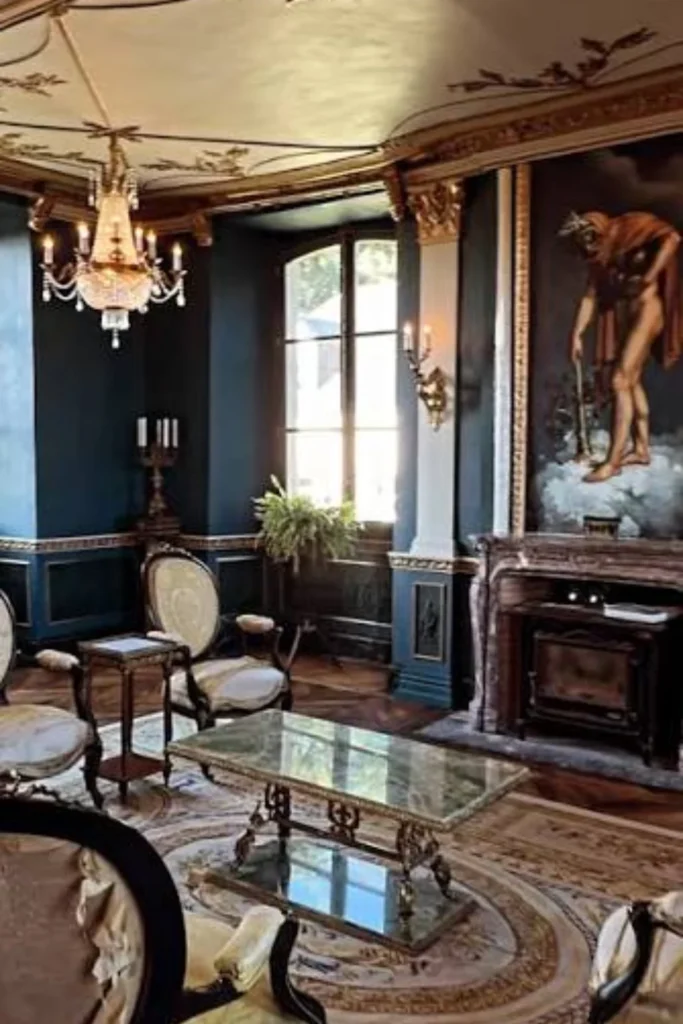
Why It Works
The French chateau salon succeeds because it operates on a philosophy of deliberate arrangement. Furniture is grouped to encourage conversation — chairs and sofas pulled in close to one another, not pushed against the walls. Every piece is chosen for both its beauty and its function. The result is a room that feels like it has been lived in and loved for generations, which is exactly the atmosphere that makes chateau interiors so eternally appealing.
Best For
Any large living room or formal sitting room. The salon approach can also be applied to a smaller room by simply scaling the furniture appropriately and keeping the same principles of conversation-focused arrangement, quality materials, and layered lighting.
Styling Tips
Begin with a large, antique-style sofa in a neutral linen or velvet and build outward with a pair of carved armchairs across from it. Layer two or three rugs of different sizes to create zones of warmth. Every side table should have a lamp on it — French chateau rooms are almost entirely lit by table and floor lamps, never by overhead fixtures alone. Add stacks of books, a vase of fresh flowers, and a decorative tray of objects to each surface, and the room will begin to feel genuinely inhabited and alive.
6. Tall Arched Windows with Floor-Length Drapes
The tall, arched window draped in floor-length fabric is one of the most immediately recognizable signatures of French chateau architecture. Natural light floods through at every hour of the day, and when dressed with generous, pooling fabric in silk, velvet, or fine linen, these windows become some of the most beautiful architectural features in any room.
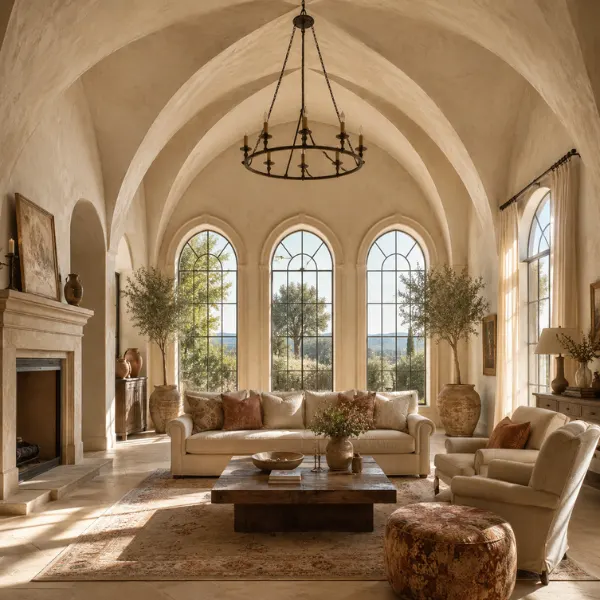
Why It Works
Tall windows make ceilings feel higher and rooms feel more expansive. When you extend floor-length drapes to the ceiling — even if the window itself doesn’t reach the top — the eye naturally reads the full height as part of the window and the room feels significantly grander. The pooling of fabric on the floor adds a sense of luxury and generosity that is deeply embedded in the French aesthetic.
Best For
Any room where you want to create the impression of height and grandeur — living rooms, dining rooms, master bedrooms, and entrance halls particularly. Even standard-height windows can be transformed by hanging curtains very high and very wide.
Styling Tips
Always hang your curtain rod as close to the ceiling as possible, not just above the window frame. This single decision makes more visual difference than almost any other curtain choice. Choose fabric with real weight — interlined linen, silk dupioni, or velvet all hang magnificently and pool beautifully. Neutral tones — cream, ivory, soft taupe, pale sage — are the most authentically French and give the most versatility with other decor choices.
7. The Gilded Overmantel Mirror
A large, elaborately gilded mirror hung above the fireplace is one of the defining features of French chateau interiors going back to the court of Louis XIV. Tall, wide, framed in carved gold leaf or gold-finished gesso, the overmantel mirror doubles the light in a room, creates the illusion of more space, and adds a touch of genuine opulence that catches your eye every time you walk into the room.
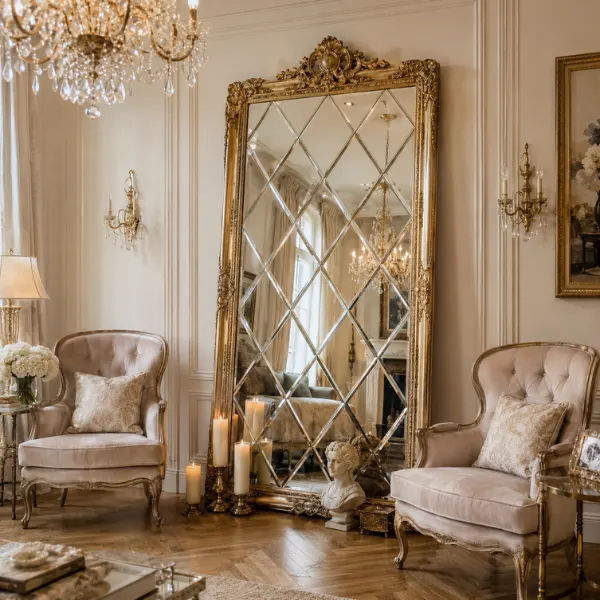
Why It Works
Mirrors in French chateau interiors serve a dual purpose that nothing else can replicate — they are both decorative objects in their own right and functional tools for expanding a space. An overmantel mirror specifically reflects the room back on itself, which doubles the visual depth and creates a sense of space and light that makes even modestly sized rooms feel genuinely grand. The gilded frame adds warmth and richness to the wall without adding weight or darkness.
Best For
Living rooms and formal salons above the fireplace is the classic placement. Also incredibly effective in dining rooms hung on a long wall to reflect the table and candlelight, and in entrance halls to create a dramatic first impression.
Styling Tips
Choose a mirror that is slightly narrower than the width of the fireplace surround — this proportion looks intentional and balanced. The taller, the better — a mirror that reaches from the mantel shelf to within a few inches of the ceiling creates the most dramatic chateau effect. For budget-conscious decorators, antique and vintage gilded mirrors in varying conditions are widely available at estate sales, antique markets, and online vintage dealers and often cost far less than new reproductions.
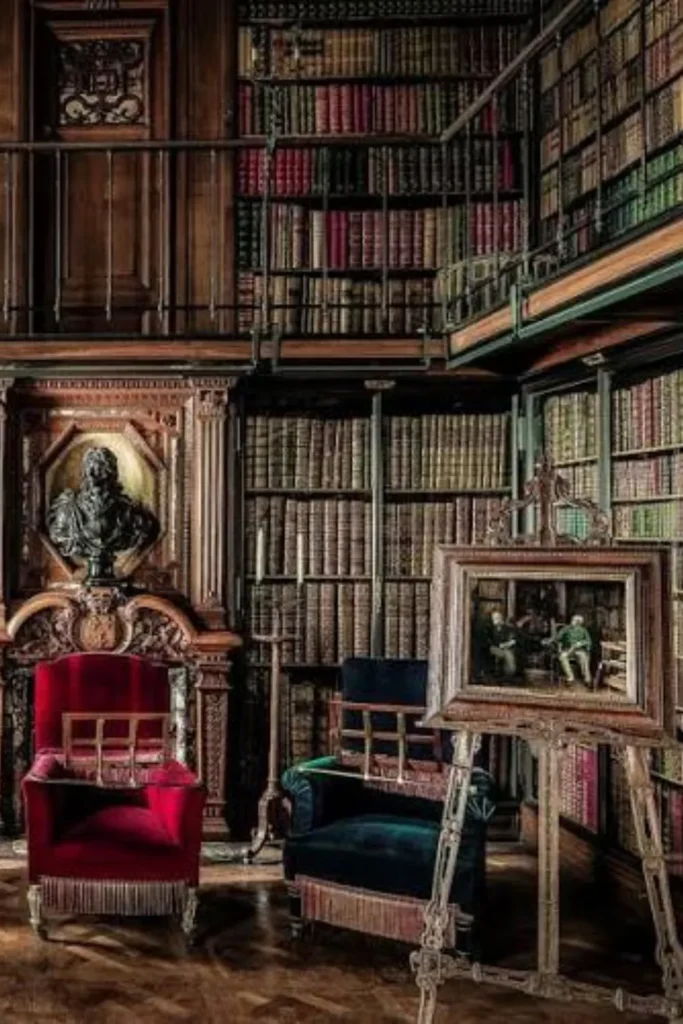
8. The Chateau Library with Mahogany Built-Ins
A proper French chateau library is one of the most covetable rooms imaginable — floor-to-ceiling mahogany or walnut built-in shelves lining every wall, a rolling library ladder, a leather-topped writing desk, deep upholstered chairs by the window, and thousands of books creating a backdrop of learning, depth, and accumulated knowledge. It’s a room that makes you want to light a fire, pour a glass of wine, and stay forever.
Why It Works
The library functions in French chateau interiors as a room of retreat and intellectual pleasure — a counterpoint to the social formality of the salon. Dark, rich wood against cream walls and the warm spines of books creates a visual warmth and coziness that feels completely unique to this room type. Built-in shelves also make a room feel architecturally complete and intentional in a way that freestanding furniture can never quite achieve.
Best For
Home offices that need to also function as formal spaces, dedicated study rooms, and any room you want to feel serious, cozy, and deeply intelligent at the same time. A small version of this idea works beautifully in a corner of a living room — two flanking bookcases on either side of a window create an instant library alcove.
Styling Tips
Don’t organize your books by color — this is a Pinterest trend that looks beautiful in photographs but destroys the actual character and authenticity of a real library. Organize by subject or author, mix in art objects, framed photographs, and small sculptures between groupings of books, and allow the organic variation of spines to create natural visual interest. A leather-topped desk in the center of the room or positioned to face a window is the perfect finishing touch.
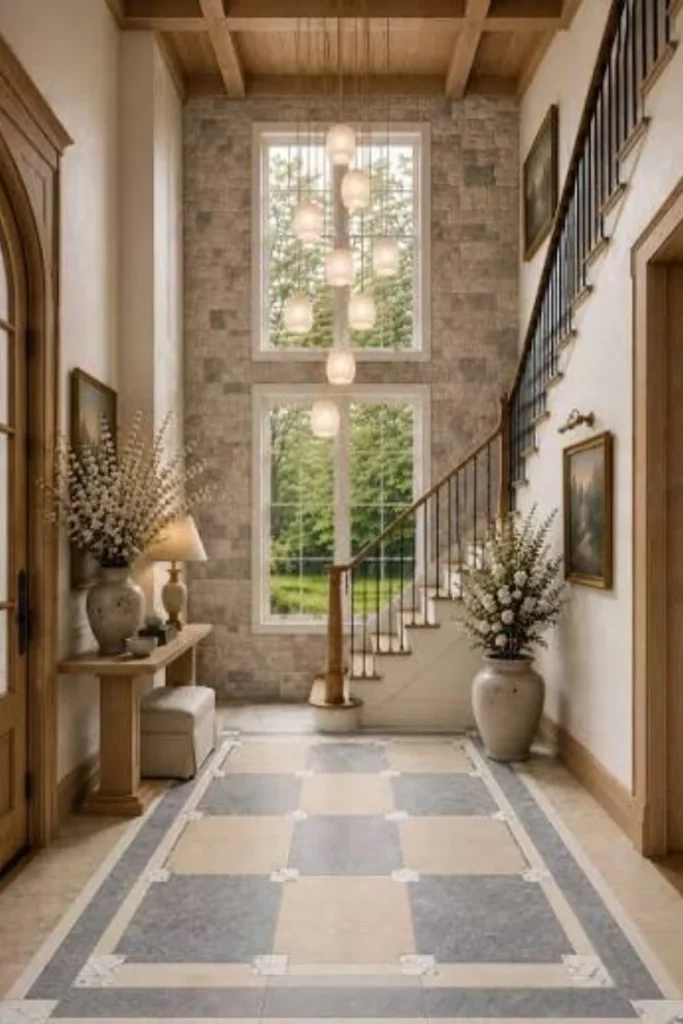
9. Stone Floor Entrance Hall
The entrance hall of a French chateau sets every expectation for what lies beyond. In the grandest tradition, it features stone floors — limestone, flagstone, or a black and white marble chequerboard — that immediately communicate that you have arrived somewhere significant. The stone is cool and grounded, it ages beautifully, and it announces the home’s commitment to quality from the very first step.
Why It Works
Stone flooring in an entrance hall is practical as well as beautiful — it handles traffic, mud, and moisture far better than wood, and it develops a patina over time that only makes it more beautiful. The classic black and white marble chequerboard pattern in particular is an immediately recognizable chateau signature that works in any sized entrance, from a narrow apartment foyer to a sweeping grand hall.
Best For
Entry halls, mudrooms converted to formal entries, kitchen flags, and utility spaces where natural stone’s durability and beauty make it the perfect choice. The chequerboard pattern suits formal halls; limestone flags feel more relaxed and country-chateau.
Styling Tips
Scale your stone tile to the size of your hallway — small tiles in a large hall look busy and wrong, and very large tiles in a small hall feel disproportionate. For a classic chequerboard, 12-inch tiles in a hallway that’s under 8 feet wide, and 18-inch tiles for anything wider, are good starting points. A large antique wooden console table against the wall with a gilded mirror above it completes the entrance hall moment perfectly.
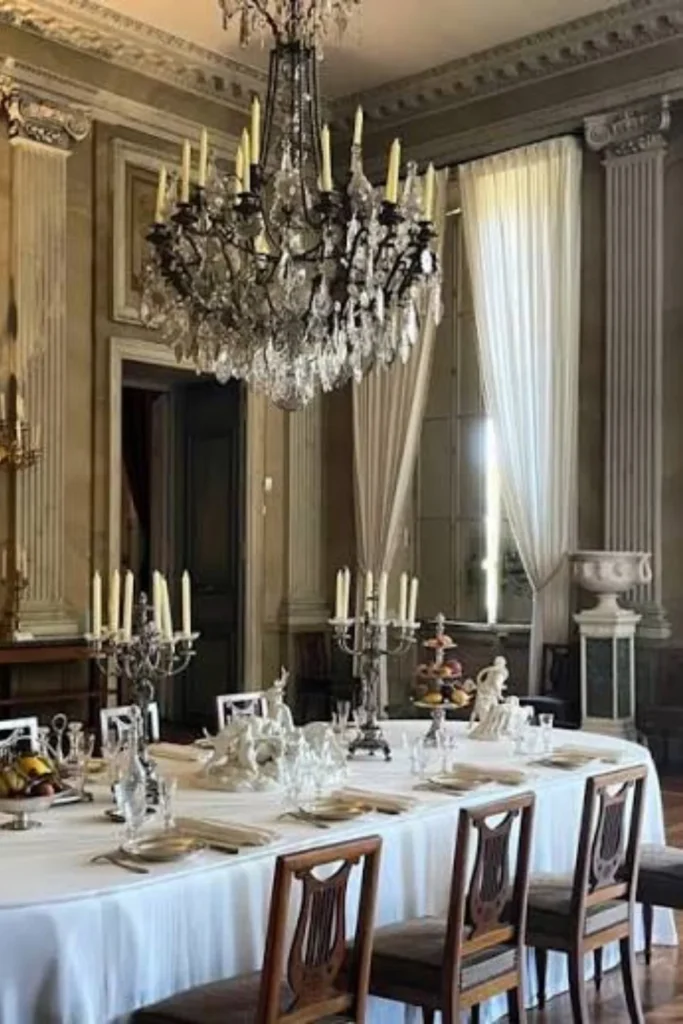
10. The French Chateau Dining Room
A French chateau dining room is designed entirely around the pleasure of the long meal — the unhurried gathering of people around a beautiful table, surrounded by candlelight, crystal, and the particular hush of a room that exists only for this one perfect purpose. A long dining table, dressed chairs in velvet or linen slipcovers, a statement chandelier above, and a buffet or sideboard displaying fine china make up the essential elements.
Why It Works
The dining room in chateau design operates on the principle that meals are events worth celebrating. Every element — from the quality of the table linen to the height of the candelabra — is chosen to make sitting down to eat feel like a genuinely special occasion. The formality is balanced by warmth: natural materials, candlelight, and the beauty of real china and crystal make the room feel celebratory without being stiff.
Best For
Dedicated dining rooms in any home where formal entertaining is important. The principles — a significant table, quality chairs, chandelier lighting, and a sideboard — can be applied even in a smaller dining space to create the same sense of occasion on a more intimate scale.
Styling Tips
The table is your foundation — choose solid oak or walnut if you can, with a finish that shows its grain and character. Mix your dining chairs deliberately: matching carvers at the heads of the table and slightly different side chairs along the length is a very French, very considered approach. Always dress the table with a linen runner rather than a full tablecloth for a more relaxed, country-chateau feel. Pair pillar candles of varying heights in silver or brass candlesticks for the most beautiful chateau centerpiece.
11. The Chateau Kitchen with Copper Accents
The French chateau kitchen is the delicious contradiction at the heart of the style — simultaneously grand and deeply rustic. Stone floors, creamy painted cabinetry extending to ceiling height, a massive farmhouse sink, open shelving holding mismatched but beautiful dishes, and the showstopper: copper pots and pans hanging from a rack above the island or along the wall, their warm glow filling the room with living color and warmth.
Why It Works
Copper is the most French thing you can put in a kitchen. It is practical — copper conducts heat better than almost any other material — and it is breathtakingly beautiful, developing a warm, burnished patina over time that no painted finish or stainless steel can match. Against cream or white cabinetry and pale stone floors, a collection of copper pots creates an instant focal point that is functional and deeply decorative at the same time.
Best For
Any kitchen where you want warmth, character, and a sense of culinary heritage. Copper accents work equally well in large chateau-scale kitchens and in smaller, apartment-sized spaces where even a few well-chosen copper pieces can change the entire feeling of the room.
Styling Tips
You don’t need a full set of copper cookware to make this work — five or six pieces of varying sizes hanging from a simple iron rack above the stove or island creates the full effect. Mix in brass hardware on the cabinet doors and drawers, a brass faucet over the farmhouse sink, and aged brass drawer pulls throughout to create a warm, consistent metallic palette that feels genuinely French and genuinely lived-in.
12. The Butler’s Pantry as a Design Feature
In the French chateau tradition, the pantry is not a storage closet — it is almost a room of its own. Glass-front cabinetry displaying fine china and crystal, marble countertops, a deep apron sink, zellige tile backsplash, and carefully arranged preserves, baskets, and provisions make the butler’s pantry a space that is as beautiful as it is functional. It’s the quiet, hardworking backbone behind the chateau’s beautiful dining room.
Why It Works
The butler’s pantry represents the French chateau’s philosophy that even utilitarian spaces should be beautiful. When everything has a designated, beautiful home — fine china behind glass, crystal on dedicated shelves, linens in stacked perfection — the chaos of daily life becomes completely invisible and the whole home feels profoundly organized and elegant. It also makes entertaining infinitely easier when everything needed for a beautiful table is in one dedicated, perfectly organized space.
Best For
Homes with a dedicated room or large alcove between the kitchen and dining room. Even a compact version — a section of the kitchen given over to glass-front cabinetry and a small prep sink — captures the spirit of a butler’s pantry beautifully.
Styling Tips
Paint the inside back of glass-front cabinets a contrasting color — a deep navy, sage green, or warm charcoal makes the china and crystal pop beautifully when the doors are open and creates a layered, jewel-box effect. Zellige tiles in warm white or cream behind the prep sink add handmade texture that reads as beautifully authentic to the chateau aesthetic. Keep the countertops marble or honed stone for a luxurious, practical surface.
13. The French Chateau Master Bedroom
A French chateau master bedroom is one of the most romantic environments imaginable. A grand upholstered bed with a tall, carved headboard against a linen or velvet-paneled wall, cascading drapery on either side of tall windows, antique furniture with curved legs and gilded hardware, and layers of the most beautiful bedding you can find — this room is designed entirely for rest, romance, and the quiet pleasure of waking up somewhere truly beautiful.
Why It Works
The French chateau bedroom succeeds because it is unapologetically luxurious in its prioritization of beauty and comfort. Unlike modern minimalist bedrooms that strip everything back, the chateau bedroom layers texture on texture — silk against linen against velvet against cotton — creating a richness that feels deeply cozy rather than overwhelming. Every piece of furniture has curves and character, which softens the room and makes it feel intimate rather than imposing.
Best For
Master bedrooms in any home where you want to create a true retreat — a space that feels completely separate from the rest of the house and entirely devoted to rest and beauty.
Styling Tips
The bed is everything in a chateau bedroom — invest here before anywhere else. A tall upholstered headboard in a neutral linen or velvet, dressed with an abundance of pillows and a beautiful throw, immediately creates the effect. Add a pair of antique-style bedside tables with curved legs, a table lamp with a warm-toned shade on each, and a small stack of books. Keep the color palette soft and muted — ivory, blush, pale grey, warm white — and the room will feel naturally serene and beautiful without additional effort.
14. Crown Moldings and Ceiling Medallions
Crown moldings are one of the fastest, most affordable ways to bring French chateau character into any home. Running along the junction of wall and ceiling, ornate crown moldings define the room’s architectural character and signal that this is a space where every detail has been considered. Paired with an elaborate ceiling medallion around the chandelier, they create a ceiling that is as beautiful as the floor.
Why It Works
Throughout French architectural history, the richness of a room’s moldings directly communicated the wealth and taste of its owner — crown moldings were, quite literally, signs of prosperity and refinement. Today, they work because they give any room a finished, architectural quality that makes everything inside it look more intentional and curated. A room with beautiful moldings simply looks more expensive and more thoughtfully designed, regardless of what else is in it.
Best For
Every room in a chateau-inspired home benefits from at least a simple crown molding, but dining rooms, salons, entrance halls, and master bedrooms warrant the most elaborate profiles. Ceiling medallions are particularly powerful in rooms where a chandelier is the focal point.
Styling Tips
For the most authentic chateau effect, choose a molding profile that is proportionate to your ceiling height — a ceiling under 9 feet calls for a simpler, narrower profile, while ceilings over 10 feet can handle a deep, complex molding with multiple elements. Modern high-density polyurethane moldings are lightweight, easy to install, paint beautifully, and cost significantly less than plaster while being virtually indistinguishable once painted.
15. Velvet Upholstery in Jewel Tones
Velvet is the fabric of French chateau interiors. Deep, light-catching, endlessly luxurious, velvet upholstery on sofas, chairs, headboards, and banquettes is one of the most instantly impactful ways to introduce chateau elegance into a room. And jewel tones — sapphire blue, emerald green, deep plum, rich burgundy — are the colors that make velvet look most properly and dramatically French.
Why It Works
Velvet absorbs and reflects light in a way that no other fabric can, creating a depth and richness of color that changes throughout the day as the light shifts. In a room that is otherwise dressed in neutral tones — cream walls, natural wood floors, gilded accents — a jewel-toned velvet sofa or a pair of emerald armchairs creates a focal point that is deeply saturated and immediately beautiful. It is a statement that feels both historically rooted and very contemporary at the same time.
Best For
Living room sofas and accent chairs, dining chairs, bedroom headboards, window seat cushions, and decorative throw pillows throughout the home. Even one velvet accent piece in a neutral room shifts the whole register of the space toward something more elegant.
Styling Tips
Balance the richness of velvet with lighter, more relaxed textures elsewhere in the room — linen curtains, natural wood, woven rugs — to stop the look from feeling heavy or oppressive. A jewel-toned velvet sofa paired with natural linen cushions and a jute rug is perfectly balanced: the velvet gives the room its luxury, and the natural textures keep it grounded and livable.
16. The French Chateau Bathroom with Freestanding Tub
The French chateau bathroom is an exercise in unapologetic luxury. At its center: a freestanding cast iron tub on claw feet or a sleek slipper tub in bright white, positioned under a tall window or facing the fireplace. Surrounding it: marble floors, perhaps a chequerboard tile or Calacatta marble, a large gilded mirror above a marble-topped vanity, brass or unlacquered bronze fixtures, and walls painted in the softest sage, pale grey, or warm ivory.
Why It Works
A freestanding tub is a sculptural object in the way that a built-in tub never can be. It occupies the center of the room like a piece of furniture, demanding space and attention, and immediately makes a bathroom feel like a room designed for pleasure rather than pure function. The chateau bathroom’s commitment to beautiful materials — real marble, unlacquered brass, handmade ceramic tiles — gives it a quality and character that grows more beautiful over time rather than feeling dated.
Best For
Master bathrooms and guest bathrooms where there is enough floor space to position the tub as a standalone feature. Even a relatively small bathroom can accommodate a freestanding tub if the rest of the room is kept simple and uncluttered.
Styling Tips
Position the tub so it faces something worth looking at — a window with a garden view, a fireplace, or a beautifully framed piece of art on the opposite wall. Choose unlacquered or lightly brushed brass for all fixtures — it develops a beautiful natural patina over time that becomes one of the most beautiful things in the room. A large, gilded mirror and a marble-topped pedestal with towels folded in impeccable white linen stacks complete the chateau bathroom picture.
17. Aubusson and Savonnerie Rugs
The floor rugs of French chateau interiors are as important as the furniture that sits on them. Aubusson and Savonnerie rugs — flat-woven or cut-pile wool rugs featuring elaborate floral patterns, soft muted tones, and centuries of French weaving tradition — are the quintessential chateau floor covering. They bring color, pattern, warmth, and an enormous sense of history to every room they inhabit.
Why It Works
These rugs have a painterly quality — the floral and medallion patterns look like works of art laid on the floor — that adds a layer of visual complexity to a room that pulls everything together. They work with every element of chateau design: the gilded mirrors, the carved furniture, the velvet upholstery, and the parquet floors. And because they come in soft, muted versions of warm tones — rose, sage, cream, pale blue, warm gold — they complement rather than compete with the rest of the room.
Best For
Salons, dining rooms, master bedrooms, and entrance halls. A large Aubusson rug in a salon defines the seating area beautifully and immediately signals that this is a room with serious decorative intention.
Styling Tips
Genuine Aubusson and Savonnerie rugs are antiques and can be expensive, but excellent quality reproductions in the same style and palette are widely available and look beautiful in a chateau-inspired interior. Size generously — the rug should be large enough to sit under all four legs of the sofa and chairs in a living room, or extend at least 24 inches beyond the dining table on all sides. Allow the rug to age naturally — small signs of wear in a chateau interior are signs of authenticity, not failure.
18. The Climate-Controlled Wine Room
In the grandest French chateau tradition, the wine room is not an afterthought tucked under the stairs — it is a dedicated, temperature-controlled space built specifically for housing and displaying a serious wine collection. Stone walls, stone floor, custom wooden wine racks from floor to ceiling, and a small tasting table with a pair of beautiful chairs make this one of the most indulgent and genuinely useful rooms in the chateau-inspired home.
Why It Works
Wine is deeply embedded in French chateau culture — chateaux in Bordeaux, Burgundy, and the Loire Valley are wine estates first and foremost. A wine room brings that heritage indoors and creates a space that is both highly functional — protecting a wine collection at the correct temperature and humidity — and deeply atmospheric. Stone walls and vaulted ceilings, even in a modest version, create an impression of a genuine cave that is tremendously romantic.
Best For
Basements, under-stair spaces, and dedicated rooms in larger homes. A smaller, scaled version — a custom wine cabinet with glass doors, temperature control, and interior lighting in a corner of the dining room or salon — captures the same spirit beautifully in a more compact form.
Styling Tips
Stone cladding on walls and a stone or flagged floor are what make a wine room feel authentic rather than like a converted closet. Wooden wine racks with a warm, natural finish hold the bottles beautifully and display the collection in a way that makes it feel curated. A small wall sconce or two on a dimmer provides atmospheric lighting without generating heat that could affect the wine.
19. Gold Leaf and Gilded Accents Throughout
Gold is the thread that runs through every authentic French chateau interior, tying all the individual elements together into a cohesive whole. From gilded picture frames to gold-leafed mirror surrounds, brass hardware on doors and furniture, and the warm glint of gilded chair legs catching the firelight — gold in a chateau interior is never flashy or garish. It is the quiet, consistent shimmer that says refinement without ever shouting it.
Why It Works
Gold leaf has a particular quality that gold paint can never replicate — it has subtle variation and depth that catches and moves with the light, rather than reflecting it in a flat, even way. Even small amounts of genuine or high-quality gilding — on a frame, a mirror, a carved chair leg — have a warmth and richness that immediately elevates the surrounding space. It is the single most effective accent you can add to a chateau-inspired interior.
Best For
Every room in a chateau-inspired home. Picture frames, mirror frames, lighting fixtures, furniture legs, hardware, decorative objects, and accessories — all are opportunities to introduce the warm glow of gold that defines this aesthetic.
Styling Tips
Keep your gold palette consistent — mix warm golds and antique golds rather than bright chrome or silver, which will fight with the warmth of the chateau palette. Antique and vintage gilded frames from estate sales are extraordinary finds — even chipped and worn gilding looks authentically patinated and beautiful in a chateau context. Resist the urge to spray paint frames gold — the flatness of spray paint is the opposite of what makes gilding so beautiful.
20. The Formal French Chateau Foyer
The entrance foyer of a French chateau is the home’s first declaration of intent. Tall, symmetrical, and architecturally rich, it features a stone or marble floor, a grand staircase sweeping upward, a large console table topped with a gilded mirror, significant artwork on the walls, and perhaps a chandelier of sufficient drama to make the heart quicken on first sight. It is a room that exists solely to make you feel that something remarkable lies beyond.
Why It Works
First impressions in interior design are permanent. The foyer sets the tone for the entire home — it tells visitors immediately what kind of home this is and what to expect in the rooms beyond. A foyer that is architecturally generous, carefully furnished, and beautifully lit creates a sense of arrival and anticipation that no amount of interior decoration in the rooms beyond can fully compensate for if the entrance fails.
Best For
Any entrance hall in a home where chateau style is the goal. The principles — a significant mirror, a beautiful console table, a statement light fitting, and a stone or marble floor — can be applied to hallways of almost any size to create a genuinely impressive first impression.
Styling Tips
The console table and mirror are the most important investment in the foyer — choose these with real care and the space will almost style itself. A pair of matching lamps on the console creates symmetry and warmth. Fresh flowers in a significant vase on the console are the chateau touch that instantly makes the whole entrance feel alive, welcoming, and genuinely inhabited.
21. The French Chateau Sunroom or Orangerie
The orangerie — a glass-walled conservatory or sunroom attached to the chateau — is where the French indulge their love of plants, light, and the garden without surrendering to the weather. Terracotta floors, white-painted cast iron furniture with cushions in a faded floral print, terracotta pots overflowing with citrus trees, bay laurels, and fragrant herbs, and light flooding in from all sides — the orangerie is the most relaxed and joyful room in the chateau.
Why It Works
The orangerie works because it brings the outside in with complete commitment — not just with a few potted plants on a windowsill, but with full trees, the smell of earth and citrus, the hum of bees in the summer, and the particular quality of light that only comes through glass walls. It is a room that changes with the seasons and requires constant tending, which makes it feel alive in a way that no decorated room can fully match.
Best For
Homes with a conservatory, sunroom, or glass-enclosed extension. The principles can also be applied to a large, south-facing room with generous windows by committing to an abundance of large potted plants and garden furniture — the spirit of the orangerie is entirely achievable without the glass walls.
Styling Tips
Go large with the plants — the orangerie’s magic comes from the abundance and scale of the planting. A single lemon tree in a beautiful terracotta pot is a starting point, not an endpoint. Add a beautiful antique bistro table and two chairs for morning coffee among the plants. A terracotta floor — either genuine fired tiles or a convincing porcelain reproduction — completes the outdoor-indoor connection that makes this room so uniquely French.
22. The Grand Staircase with Wrought Iron Balustrade
The grand staircase of a French chateau is an architectural statement that rivals any painting or piece of furniture in the home. Wide stone or oak treads, a sweeping balustrade in hand-forged wrought iron with gilded details, curved stone newel posts at the base, and perhaps a dramatic chandelier descending through the stairwell from several floors above — this is design at its most cinematic and most architectural.
Why It Works
The staircase in a French chateau is not just a means of getting from one floor to another — it is a procession, a moment of theater that the home stages several times a day. A beautiful staircase becomes the architectural spine of the whole interior, visible from the foyer and connecting the public and private zones of the house with genuine grace. The wrought iron balustrade in particular — with its fluid, hand-forged curves — is one of the most distinctive and beautiful elements of this entire interior style.
Best For
Homes with central or feature staircases where the architecture allows for this treatment. Even a modest staircase can be dramatically improved by replacing hollow timber balusters with simple wrought iron ones and refinishing the treads in a warm, natural wood tone with a stone-effect painted riser.
Styling Tips
The handrail material makes an enormous visual difference — a smooth, continuous timber handrail in oak or walnut on top of wrought iron balusters is the classic chateau combination and looks far more refined than a metal handrail. Hang a single large, significant piece of art at the landing where the staircase turns — this is the ideal placement because it stops the eye at exactly the right moment and creates a beautiful relationship between the architecture and the art.
23. The Intimate Chateau Reading Nook
Not every French chateau moment needs to be grand. The intimate reading nook — tucked into a window bay, a deep alcove, or a quiet corner by the fireplace — is one of the most beloved and human-scaled ideas in all of chateau design. A single deep-seated armchair in faded velvet or worn leather, a small side table for a lamp and a glass of something, a built-in bookshelf filling one wall, and a window overlooking the garden — this is happiness made into architecture.
Why It Works
The reading nook works because it provides something that the grand rooms of a chateau cannot — intimacy, enclosure, and a sense of being held by the architecture rather than displayed within it. It is the room within the room, the quiet corner that becomes the spot everyone secretly wants to claim when they visit. In homes that are otherwise designed to impress, the reading nook is designed entirely for the person living there, and that personal scale and purpose makes it feel more genuinely luxurious than anything else in the house.
Best For
Window bays, alcoves next to fireplaces, corners of libraries or studies, and any small area within a larger room that can be defined and made intimate with a change of lighting, a rug, and a beautiful chair.
Styling Tips
The chair is everything — choose one that is genuinely comfortable and beautiful, not just beautiful. A rolled arm chair in faded velvet or a worn leather library chair with a wooden frame are both perfect. Add a small footstool for extended reading sessions. The lamp should be positioned so it casts light directly on your reading material without creating glare — a simple swing-arm or adjustable table lamp is more useful here than a beautiful but impractical decorative one. A cashmere or wool throw over the arm of the chair completes the picture perfectly.
Mistakes to Avoid When Designing French Chateau Interiors
This style is beautiful, but it has a few specific pitfalls that I see regularly. Here’s what to watch for.
Overdoing the gold. Gold is essential to the French chateau aesthetic, but there is a point at which it tips from elegant to overwhelming. If every single surface is gilded, the eye has nowhere to rest and the effect becomes gaudy rather than refined. Think of gold as a seasoning — present throughout the room but never dominating any single surface.
Choosing furniture that is only beautiful and not functional. Authentic French chateau interiors are deeply lived-in. The furniture is meant to be used, sat on, leaned against, and enjoyed. Rooms that look like a museum display — where you’re afraid to touch anything — miss the essential warmth and comfort that makes this style so compelling. Choose pieces that look beautiful AND that you genuinely want to sit on and use.
Ignoring proportion and scale. French chateau design is fundamentally about correct proportion — the right chandelier for the ceiling height, the right rug for the room size, the right molding scale for the wall height. Getting proportion wrong — especially undersizing lighting or rugs — is the single most common and most visually damaging mistake in any attempt to achieve this style.
Mixing too many periods and styles at once. Authentic chateau interiors evolved over generations, so they do contain a mix of periods — but it’s a considered, coherent mix. Randomly combining French Louis XV chairs with Japanese-inspired wallpaper and Moroccan lanterns doesn’t create eclectic chateau style; it creates visual chaos. Choose a primary reference period — Louis XV, Louis XVI, Directoire, or Gustavian — and let everything else support that core identity.
Using cheap imitations of expensive materials where quality matters. There are absolutely places in chateau design where budget-friendly alternatives work beautifully — polyurethane moldings painted white, reproduction gilded frames, quality velvet from mainstream retailers. But there are materials where quality genuinely matters and cannot be convincingly faked: the drape and weight of curtain fabric, the feel of a proper stone floor, the comfort of a well-upholstered chair. Save where you can, but invest in what you touch every day.
Neglecting lighting completely. French chateau rooms are lit almost entirely by lamps, candles, and chandeliers — never by harsh overhead fixtures. If your room has a single overhead light and no table or floor lamps, it will never achieve the warm, layered quality of a genuine chateau interior regardless of how beautiful the furniture and fabrics are. Lighting is the atmosphere, and atmosphere is everything in this style.
Making it too perfect. This may be the most important caution of all. The French chateau interior is beautiful precisely because it has lived a life. Slightly worn upholstery, a faded rug, a chipped gilded frame, a stone floor polished by centuries of footsteps — these imperfections are not flaws to be corrected. They are the evidence of a life well and elegantly lived, and they are the thing that separates a genuine chateau interior from a showroom reproduction of one.
Conclusion
French chateau interiors have captivated decorators, dreamers, and homeowners for centuries — and when you spend time really understanding why, the reasons become clear. This style is not about excess or about trying to live like an 18th-century aristocrat. It is about a deeply considered approach to beauty, material quality, proportion, and the pleasure of daily life. It is about creating a home that is both beautiful to look at and genuinely wonderful to live inside.
The 23 ideas in this guide cover everything from the grand architectural gestures — a limestone fireplace, a herringbone parquet floor, a sweeping wrought iron staircase — to the quiet, intimate moments that give the style its real soul: the reading nook by the fire, the lemon tree in terracotta, the gilded mirror above the hall console. Together, they make up a complete picture of a style that has never been more relevant or more loved.
You don’t have to attempt all 23. Choose the ideas that genuinely speak to you, that suit your existing home and your real lifestyle, and let those be your starting point. Two or three chateau ideas executed beautifully and authentically will always outshine a room where every idea has been attempted but none fully committed to.
French chateau interiors are a lifetime of work, discovery, and refinement — and that is exactly what makes them so endlessly rewarding to pursue.
FAQs About French Chateau Interiors
Can I achieve a French chateau interior in a small home or apartment? Absolutely, and many people do it beautifully. The key is to focus on the elements that translate to smaller scales — boiserie wall paneling, crown moldings, a chandelier scaled appropriately to the room height, quality curtains hung ceiling to floor, and one or two really well-chosen antique pieces. A small room with the right architectural details and lighting will feel far more chateau than a large room that’s been poorly considered.
What colors are most authentically French chateau? The authentic chateau palette centers on soft neutrals — warm whites, ivories, soft stone tones, and pale greys — as the primary colors, with richer jewel tones appearing in upholstery and accessories. Think Benjamin Moore White Dove, Farrow and Ball’s Pavilion Gray or String, or any warm off-white. Rich golds, deep blues, emerald greens, and soft rose work beautifully as accent colors in upholstery, rugs, and drapery.
What is the difference between French chateau style and French country style? Both are rooted in French design traditions, but they occupy very different points on the formality spectrum. French country style is warm, rustic, and provincial — stone walls, terracotta floors, open shelving, simple linens, and the comfortable, worn-in feeling of a Provençal farmhouse. French chateau style is grander, more formal, and more architecturally elaborate — carved moldings, parquet floors, crystal chandeliers, gilded mirrors, and fine upholstered furniture. The two can be beautifully blended, particularly in kitchens and informal sitting rooms.
Is French chateau interior design very expensive? It can be, but it doesn’t have to be. The most important investments are the architectural elements — crown moldings, quality flooring, and ceiling medallions — because these cannot be easily changed later. For furniture and accessories, antique markets, estate sales, and vintage dealers are your best friends. Genuine antique pieces are often far cheaper than quality new reproductions and they bring the authentic patina and imperfection that makes chateau interiors truly beautiful. Focus your budget on what you touch and see the most, and be patient — the best chateau interiors are assembled over years, not purchased all at once.
How do I mix modern conveniences with French chateau design without losing the aesthetic? This is exactly what the best contemporary chateau designers do — the key is concealment. Modern appliances in a chateau kitchen are hidden behind panel-fronted cabinetry. Smart home systems are controlled via discreet panels that don’t interrupt the architectural integrity of the room. A flat-screen television is either concealed behind a hinged painting or built into a custom cabinet with doors that close to reveal the room’s proper aesthetic when not in use. Modern comfort and chateau beauty are not opposites — they just require thoughtful planning from the very beginning.
What is boiserie and can I add it to a standard home? Boiserie is the French term for decorative carved wood paneling installed on walls, typically from floor to ceiling or from a chair rail to the ceiling. It is absolutely achievable in a standard home — modern suppliers produce beautiful boiserie-style panel systems in MDF and polyurethane that install on any drywall surface and paint to look indistinguishable from the real thing. It is one of the highest-impact, most authentically French changes you can make to any room.
What type of lighting is most appropriate for a French chateau interior? The guiding principle is layers and warmth. A chandelier as the primary ceiling feature, supplemented by wall sconces (ideally flanking mirrors or artwork), table lamps on every surface, and floor lamps in corners creates the multi-layered, warm glow that defines chateau lighting. All sources should be on dimmers. Candles — real or high-quality LED flameless versions — add the final, irreplaceable layer of warm, flickering light that makes these interiors come completely alive in the evening.