22 Living Room Styles That Will Completely Transform Your Home in 2026
Your living room tells people who you are before you say a single word. It is the first space guests walk into, the place your family unwinds at the end of a long day, and honestly — the room you spend the most time in. Yet so many people get stuck either copying something they saw on Pinterest or just buying whatever feels “safe” at the furniture store.
Here is what I have learned after years of helping people redesign their homes: you do not need a massive budget or a hired designer to create a living room that actually feels like you. What you need is clarity — the right style that fits your space, your personality, and the way you actually live day to day.
That is exactly why I put this guide together. I have pulled together 22 completely different living room styles, from serene and minimal to bold and layered, and I have broken each one down so you know exactly how to pull it off yourself. Whether you are working with a tiny apartment, a big open-plan home, or something in between — there is something here for you.
22 Living Room Styles: The Complete Guide
1. Japandi Minimalism
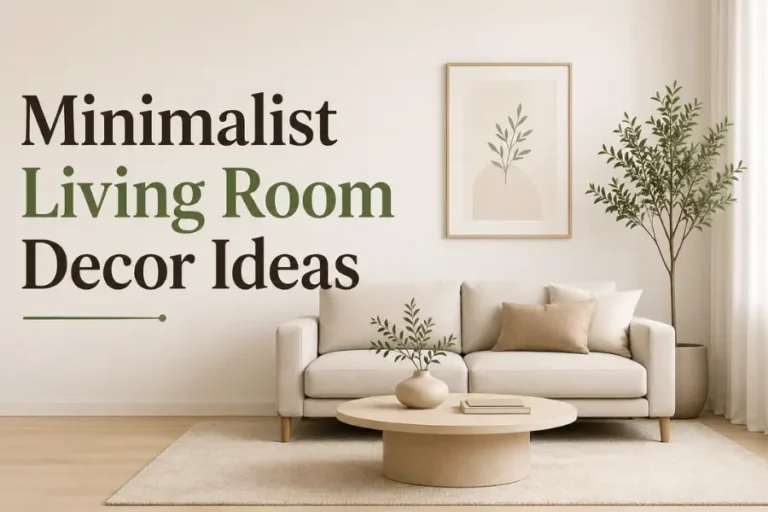
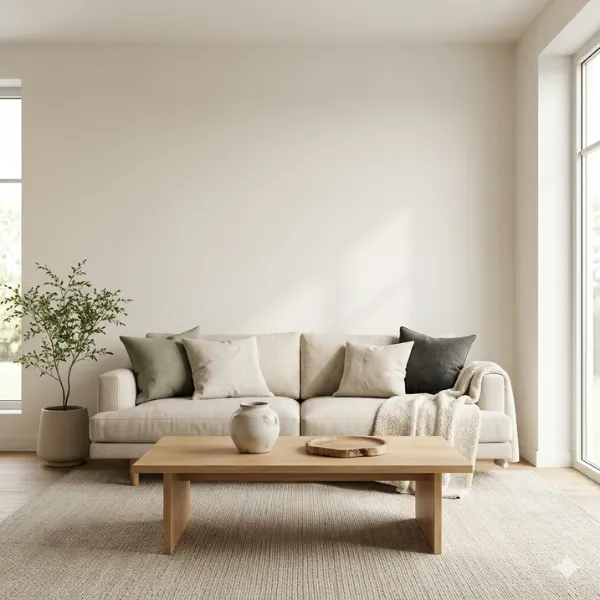
Japandi is the calm, beautiful result of blending Japanese and Scandinavian design. Picture clean lines, warm neutral tones, natural wood furniture, and absolutely no clutter. It is the kind of room that makes you take a deep breath the second you walk in — quiet, intentional, and genuinely sophisticated. If you have ever felt overwhelmed by too much stuff in your space, this style is the answer.
Why It Works
Japandi combines two of the most respected minimal design philosophies in the world into one harmonious look. The Japanese side brings wabi-sabi — the appreciation of imperfection, natural textures, and things that age beautifully. The Scandinavian side brings hygge — that warm, human coziness that stops minimal spaces from feeling cold or empty. Together, they create rooms that feel elegant but never sterile. The low-profile furniture keeps your eye moving across the whole room, which makes even small spaces feel significantly larger than they actually are.
Best For
- Small to medium-sized rooms
- Urban apartments with limited square footage
- Anyone who gets anxious around clutter
- First-time decorators who want a simple, foolproof starting point
Styling Tips
- Stick to a palette of warm whites, oatmeal, charcoal, and muted sage green — nothing bright or cool-toned
- Choose low-profile sofas and coffee tables — furniture that sits closer to the floor opens up the room visually
- Pick one handcrafted ceramic vase or a raw-edge wooden tray as your single focal point — resist adding more
- Use linen or boucle textiles only, not polyester — the natural fiber is what gives it that authentic feel
- Leave intentional empty space on shelves and surfaces — this is not laziness, it is the whole point of the style
2. Biophilic Living Room
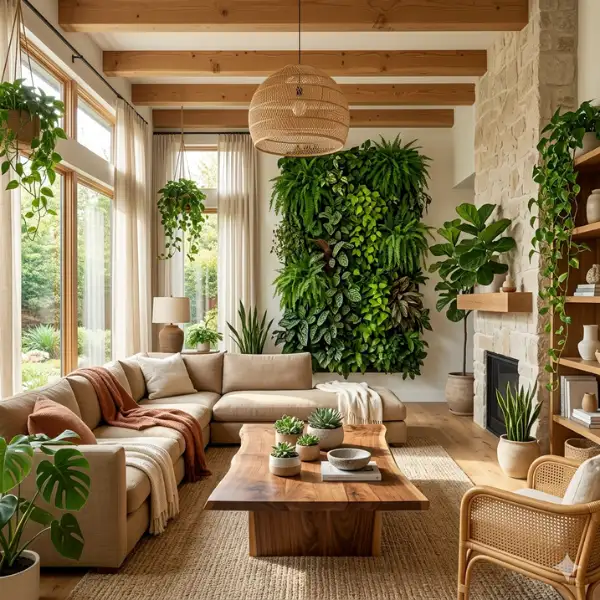
Biophilic design is all about bringing the outside world in. We are talking living plant walls, natural stone surfaces, raw wood, and earthy textures that make your living room feel like a lush indoor garden. And here is the thing — science actually backs this up. Studies consistently show that surrounding yourself with natural elements reduces stress, lowers blood pressure, and improves your overall mood. This style is beautiful and genuinely good for you.
Why It Works
Human beings are hardwired to feel better around nature — it goes back thousands of years of evolution. A biophilic living room taps directly into that instinct by layering natural materials and living plants throughout the space. The combination of different textures — rough stone next to smooth linen, polished wood alongside leafy green plants — creates a visual richness that feels endlessly interesting without becoming overwhelming. It photographs beautifully and feels even better in person.
Best For
- Large, bright rooms with good natural light
- Plant lovers who already have a collection to work with
- Wellness-focused homes where calm and restoration are a priority
- Open-plan living spaces where there is room to layer elements generously
Styling Tips
- Layer plants of genuinely different sizes — a tall fiddle-leaf fig in the corner, medium pothos trailing from a shelf, small succulents on the coffee table
- Use a live-edge wood or natural stone coffee table as your anchor piece — it grounds everything else
- Choose a color palette of earthy greens, warm browns, and terracotta — nothing synthetic or neon
- Install wooden ceiling beams or hang a rattan pendant light to bring organic interest overhead
- Use sheer linen curtains instead of heavy drapes — you want as much natural light flooding in as possible
3. Modern Maximalism
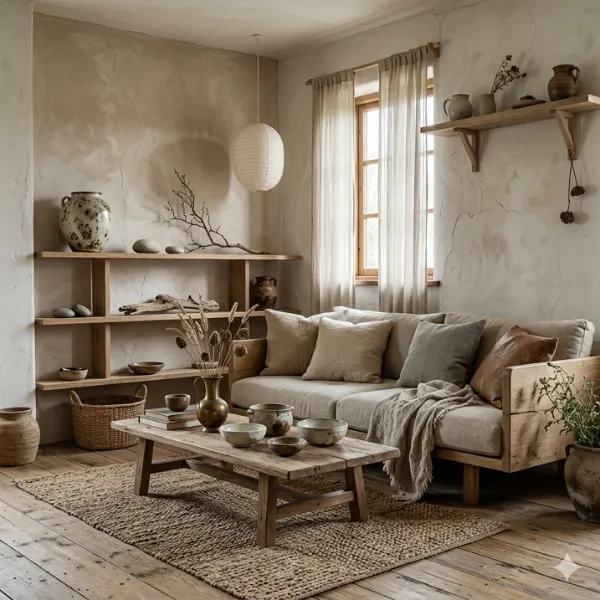
Forget everything you were ever told about “less is more.” Modern maximalism is the art of intentional abundance. Bold colors, mixed patterns, layered textures, statement artwork — but with a clear visual logic that holds it all together. This is the style for people who want their living room to feel truly alive, deeply personal, and completely unlike anyone else’s home. The key word is “modern” — it is not chaos, it is confidence.
Why It Works
Modern maximalism succeeds because it follows one non-negotiable rule: everything must be connected by a clear color story or theme. Unlike pure maximalism, which can tip into chaos, the modern version means you are being thoughtful and intentional about every single thing you add. A velvet jewel-tone sofa anchors the room. A curated gallery wall creates a visual narrative. A bold patterned rug ties all the elements together at floor level. The result is a room that rewards looking — you always notice something new every time you walk in.
Best For
- Large rooms with enough visual space to carry the layering
- Confident decorators who trust their own taste
- Art lovers, antique collectors, and people with interesting things to display
- Entertainers who want their home to spark conversation
Styling Tips
- Pick three dominant colors and repeat them throughout the room in different forms — cushions, art, throws, lamp bases
- Mix patterns fearlessly but vary the scale — a small geometric paired with a large floral reads as intentional, not messy
- Create a gallery wall with a unified frame color even if the art styles are completely different — that one consistent detail ties everything together
- Layer two rugs for extra depth — a flatweave under a plush area rug works brilliantly
- Add at least one genuine “conversation piece” — an unusual lamp, an antique chair, a sculpture — something that makes people ask where you got it
4. Cottagecore Retreat
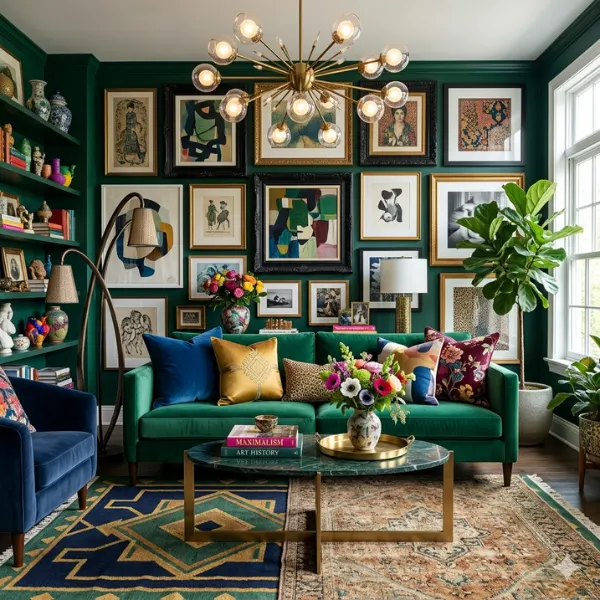
Cottagecore romanticizes the slow, gentle pace of English countryside living. Floral fabrics, vintage furniture, stacked books, dried flowers, lace curtains, and warm amber lighting all come together to create a space that feels like a proper warm hug. It is nostalgic, soft, completely enchanting — and genuinely one of the most comforting styles you can create. If life feels too fast, your living room does not have to.
Why It Works
In a world of fast-paced, screen-heavy living, cottagecore offers a real sensory escape. The softness of the fabrics, the warmth of the colors, the handmade quality of every little detail — everything in this style signals rest and restoration. Even small cottagecore rooms feel incredibly cozy and intimate because the style leans into layered textiles and ambient lighting rather than cold open space. It also rewards thrifting and vintage shopping, which makes it wonderfully budget-friendly compared to most other styles.
Best For
- Small, cozy rooms where intimacy works in your favor
- Vintage lovers and dedicated thrift store shoppers
- Renters on a budget who cannot paint or renovate
- Book readers, introverts, and anyone who craves a quiet retreat at home
Styling Tips
- Hang linen or lace curtains that let light filter through softly — hard blackout curtains immediately kill the vibe
- Style a mismatched stack of vintage books on the coffee table with a single dried flower placed on top
- Use a floral or toile upholstered armchair as your hero piece — let it be the star of the room
- Use warm Edison bulb lamps or real candles only — cold overhead LED lighting is the enemy of this style
- Display dried lavender, pampas grass, or eucalyptus stems in ceramic pitchers around the room
5. Wabi-Sabi Sanctuary
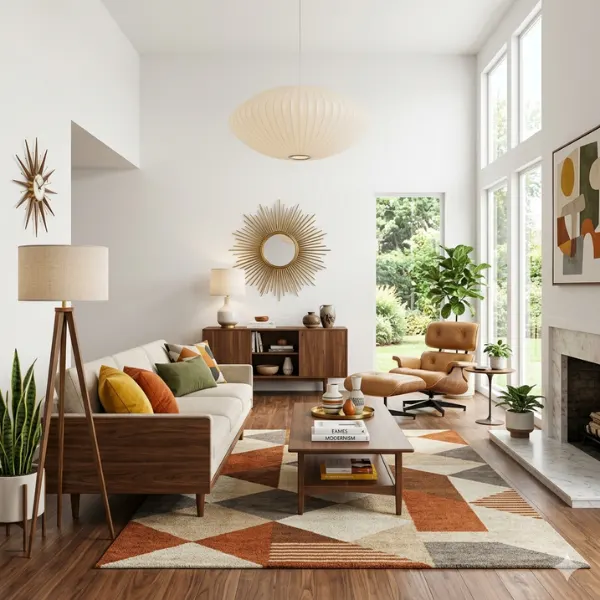
Wabi-sabi is the Japanese philosophy of finding genuine beauty in imperfection and impermanence. A wabi-sabi living room celebrates cracked pottery, weathered wood, uneven plaster walls, and aged brass. It is raw, honest, and deeply peaceful — a room that feels genuinely lived in and loved rather than staged for a photoshoot. This style removes the exhausting pressure of trying to make everything look perfect.
Why It Works
Wabi-sabi removes the pressure of perfection entirely. There is no striving for a “showroom look” here — instead, you are deliberately curating things that have history, texture, and authentic character. A slightly uneven handmade bowl, a plaster wall with visible texture, a piece of driftwood used as a shelf — these elements carry real stories. The earthy, muted color palette of raw clay, slate gray, moss green, and off-white creates an incredibly calming atmosphere that no polished, perfectly coordinated room can replicate.
Best For
- Any room size — this style is one of the most adaptable on this list
- People who are drawn to handmade, craft, and artisan objects
- Minimalists who find pure minimalism a bit cold or lifeless
- Anyone who wants a room that feels genuinely calm and grounded
Styling Tips
- Leave walls with visible plaster texture, or limewash them in muted clay tones — imperfection is the goal
- Choose pottery and ceramics that are hand-thrown with irregular shapes rather than factory-perfect pieces
- Use worn leather, rough linen, or undyed cotton for all your soft furnishings
- Display natural found objects as décor — a smooth river stone, a piece of coral, dried seed pods in a bowl
- Never try to match things perfectly — asymmetry and odd-numbered groupings always look more authentic
6. Mid-Century Modern Revival
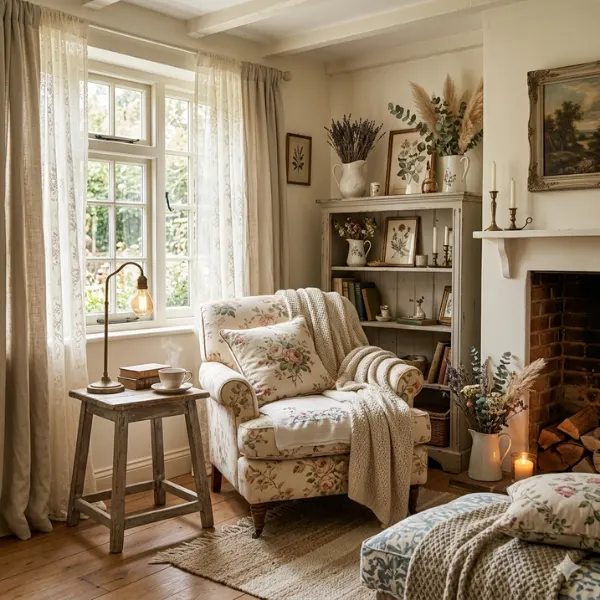
Mid-century modern is probably the most iconic interior design style of the entire 20th century — and it has never once gone out of fashion. Walnut wood furniture with tapered legs, bold geometric patterns, avocado and mustard yellow accents, and clean functional forms create a look that manages to feel simultaneously retro and completely current. It is one of those rare styles where everything just works together naturally.
Why It Works
MCM hits the perfect balance between form and function. The furniture is built to be beautiful AND comfortable — there is no sacrificing one for the other, which is what makes it so enduring. The signature tapered-leg pieces visually “lift” the room, making floors more visible and spaces feel larger. When you pair the rich walnut tones against a clean white wall and add one or two retro accent colors, the result feels genuinely designer-worthy without being cold, impractical, or hard to live in.
Best For
- Medium to large rooms where the furniture proportions can shine
- Design history enthusiasts who appreciate the stories behind iconic pieces
- Open-plan living areas where the clean lines read well from a distance
- People who want a timeless style that will not date in ten years
Styling Tips
- Invest in one genuinely good MCM sofa with a low back and tapered wooden legs — it is the room’s anchor and worth the spend
- Use bold mustard, burnt orange, or olive green for accent chairs or throw cushions — these colors are the soul of the style
- Hang a starburst clock or a sunburst mirror — they are the most recognizable MCM décor pieces and immediately set the tone
- Choose a graphic geometric rug in warm tones to anchor the floor
- Add a Noguchi-inspired paper pendant or a tripod floor lamp for that authentic mid-century atmosphere
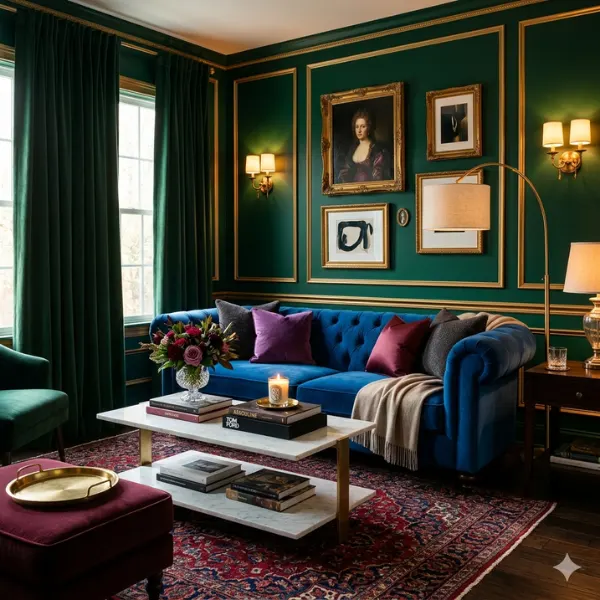
7. Moody Jewel-Tone Glam
Deep emerald green, rich sapphire blue, luxurious amethyst purple, and dark burgundy — jewel-tone rooms feel like stepping into a velvet-lined treasure chest. Dark painted walls, plush velvet furniture, gold accents, and dramatic layered lighting make this style feel deeply luxurious, atmospheric, and completely unforgettable. This is the living room equivalent of wearing your best outfit every single day.
Why It Works
Dark, saturated colors do something genuinely remarkable in a living room — they make the space feel intimate and enveloping, like a private club or a high-end hotel lounge. Jewel tones absorb light beautifully, which means the room actually shifts character throughout the day. In daylight it looks rich and sophisticated. In the evening with warm lamps and candles, it becomes absolutely magical. This is one of the most dramatic transformations you can make in a home — simply painting the walls a deep color changes everything about how the room feels.
Best For
- Rooms that receive less natural light — dark styles actually work better in these spaces
- Evening entertainment-focused homes where atmosphere matters
- People with a bold personality who are not afraid of commitment
- Medium to large rooms where the depth of color has room to breathe
Styling Tips
- Paint all four walls the same deep jewel tone — do not do just an accent wall, it looks timid and unfinished
- Choose a velvet sofa in a contrasting jewel color — emerald walls paired with a sapphire sofa is genuinely spectacular
- Use brushed gold or antique brass hardware, frames, and lamp bases throughout the room for warmth and cohesion
- Layer your lighting: wall sconces plus table lamps plus floor lamps — never rely on a single overhead light source
- Keep the ceiling white or cream so the room does not feel like a cave — that contrast is essential
8. Coastal Luxe
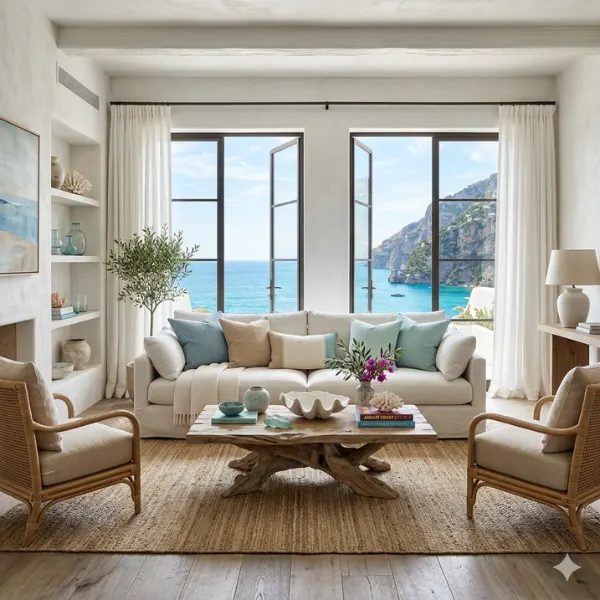
This is not your grandmother’s nautical-themed room with plastic anchors and fake rope. Coastal Luxe is the elevated, sophisticated version — think Amalfi Coast villa rather than souvenir shop. Bleached linens, white-washed wood, soft ocean blues, natural raffia, and sculptural sea-glass décor create breezy, high-end elegance. It captures that feeling of being near water without a single tackily painted seashell in sight.
Why It Works
Coastal Luxe works because it channels the emotional ease of being near water — that feeling of open skies, fresh air, and natural beauty — and brings it indoors using genuinely beautiful, quality materials. The palette of white, soft blues, sandy beiges, and warm driftwood tones is universally calming, which is why it works in almost any home regardless of location. The “luxe” part comes from deliberately avoiding cheap plastic or kitsch nautical accessories and instead choosing refined linen, quality rattan, and artisan ceramics.
Best For
- Bright, sunny rooms that already have good natural light
- Coastal or lakeside homes that want to lean into their surroundings
- Anyone craving a calm, airy refresh without a full renovation
- Small to large rooms — the palette works at any scale
Styling Tips
- White-wash or lime-wash your walls — it instantly establishes the coastal tone without any nautical clichés
- Choose a large natural fiber rug in jute or sisal as your foundation — it brings the sandy, textural quality in through the floor
- Hang linen drapery panels in soft white or pale blue that pool very slightly on the floor — it looks effortlessly elegant
- Use sculptural driftwood, large clamshells, or sea glass objects as coffee table styling pieces
- Layer throw blankets in waffle cotton or textured weave for that “beach house at its best” feel
9. Industrial Loft
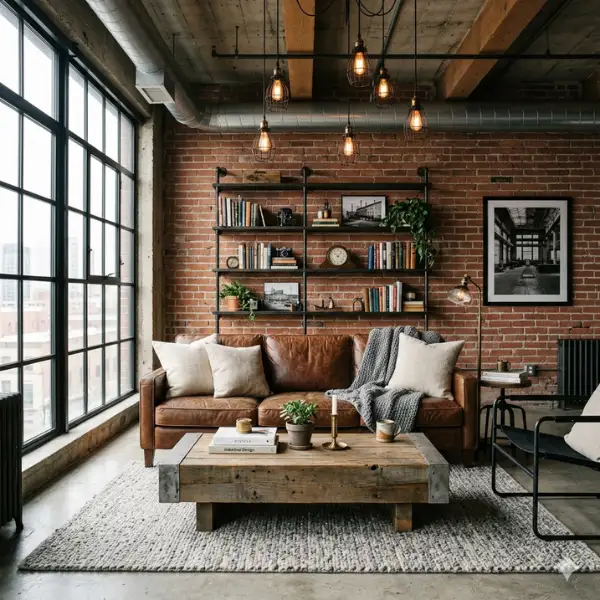
Exposed brick walls, concrete floors, black steel window frames, Edison bulb pendants, and reclaimed wood shelving — the industrial loft style celebrates raw, unfinished beauty. It is cool, edgy, and has a rugged quality that feels effortlessly stylish, especially in urban spaces. This style turns everything that most decorators try to hide — pipes, ducts, raw materials — into deliberate, beautiful design features.
Why It Works
Industrial style works by leaning into the bones of a building rather than covering them up. Exposed ductwork becomes a design feature. A raw concrete wall becomes gorgeous texture. The combination of hard materials like metal, concrete, and brick with soft furnishings like a plush leather sofa, chunky knit throws, and warm wool rugs creates a compelling tension that makes the room feel dynamic and layered. Adding warm Edison lighting against all that gray and black creates a surprisingly intimate and inviting atmosphere.
Best For
- Large open-plan rooms with high ceilings where the drama has space to work
- Loft apartments or converted warehouse spaces with existing raw features
- Urban minimalists who want style without fuss
- People who find other styles too precious or delicate for real daily life
Styling Tips
- If you do not have real exposed brick, high-quality peel-and-stick brick panels work surprisingly well and cost a fraction of the price
- A large vintage leather sofa in tobacco brown or caramel is the perfect anchor — it softens all the hard materials beautifully
- Use black metal pipe shelving mounted on walls for storage that doubles as industrial-style décor
- Hang oversized industrial pendant lights in cage or factory style as your main statement lighting
- Warm the whole room up with a chunky wool area rug and lots of warm-toned Edison bulbs — without this, industrial can tip into cold and unwelcoming
10. Art Deco Reimagined
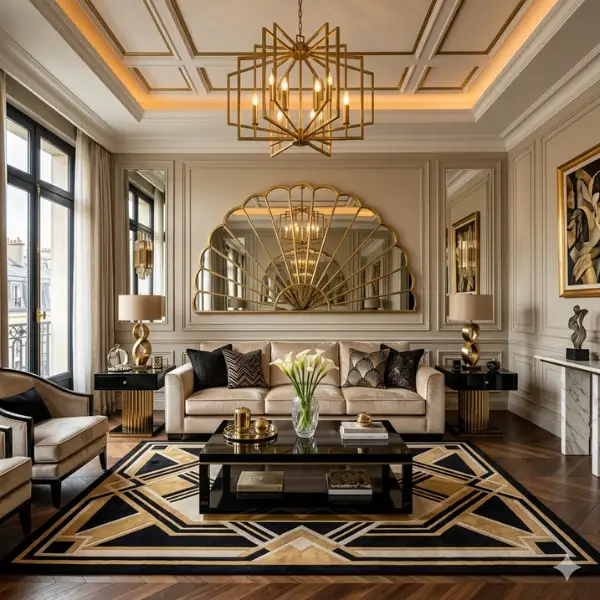
Art Deco is pure old-world glamour brought confidently into the modern age. Think bold geometric patterns, mirrored surfaces, gold and black color palettes, lacquered furniture, sunburst motifs, and an air of opulence that makes you feel like you are living in a 1920s Parisian penthouse. It is sophisticated, theatrical, and completely unforgettable — the style that makes a room feel like an actual experience.
Why It Works
Art Deco creates strong visual rhythm that draws the eye around the entire room. The bold geometry — zigzag patterns, fan shapes, angular furniture silhouettes — gives everything a sense of movement and elegance. The gold and black palette reads as high-end at every budget level, which is why it remains one of the most enduring glamour styles in design history. Modern Art Deco updates the original by pairing those classic elements with cleaner, more contemporary furniture shapes, so it feels current and exciting rather than museum-like or costume-y.
Best For
- Medium to large rooms where the geometric patterns have room to make an impact
- High-ceiling spaces that can carry the drama of the style
- People who love design history and want a room that tells a story
- Entertaining-focused homes where you want guests to be genuinely wowed
Styling Tips
- Use black and gold as your base color story — cream walls, black furniture pieces, gold accents throughout
- Add a geometric patterned rug with sunburst or chevron motifs as the floor centerpiece — it anchors all the other elements
- Hang a fan-shaped or asymmetrical gold mirror as your statement wall piece — this is the single most recognizable Art Deco move
- Use lacquered or glossy surfaces on side tables, consoles, and picture frames — the sheen is part of the style’s DNA
- A velvet sofa in champagne, blush, or deep navy with gold piping detail completes the look beautifully
11. Scandinavian Hygge
Hygge (pronounced “hoo-gah”) is the Danish concept of coziness and contented wellbeing. A hygge living room is warm, simple, and completely wrapped in soft textiles, gentle candlelight, and natural wooden accents. Light wood floors, creamy white walls, sheepskin rugs, and flickering candles define this utterly inviting style. It is the living room equivalent of wrapping yourself in your favorite blanket on a cold evening.
Why It Works
Hygge prioritizes how a room makes you feel over how it looks in photographs. The combination of warm lighting from lots of candles, natural materials, and soft textiles triggers a deep physiological sense of safety and comfort. It is minimalist without ever feeling sparse because the warmth is built through layers of texture rather than visual clutter. It is also one of the most genuinely achievable styles on this entire list — most of the effect comes from lighting choices and textiles rather than expensive furniture or major renovation.
Best For
- Small to medium rooms where the coziness is a feature, not a problem
- Cold climate homes that need warmth baked into the design itself
- Young families who need comfort and practicality together
- Budget-conscious decorators who want maximum impact for minimum spend
Styling Tips
- Buy candles in bulk and group them on trays, window sills, and coffee tables in odd numbers — this single step transforms a room more than almost anything else
- A real sheepskin throw draped over your sofa does more for a hygge atmosphere than almost any piece of furniture
- Paint walls a warm off-white rather than pure brilliant white — that subtle warmth changes how the entire room feels
- Keep a big wicker basket filled with chunky knit blankets next to the sofa — it is functional and sets the whole mood
- Keep it genuinely simple: one beautiful wooden coffee table, two plush sofas, great layered lighting — hygge does not need clutter to feel warm
12. Earthy Organic Modern
Earthy Organic Modern is the sweet spot between clean contemporary design and warm, nature-inspired materials. Terracotta pots, warm brown leather, raw linen upholstery, sandy tones, textured walls, and curved organic furniture shapes create a room that feels grounded, sophisticated, and genuinely livable. It is the style that solved the biggest problem with pure minimalism — it actually feels warm.
Why It Works
This style has genuinely dominated interior design in 2025 and 2026 for excellent reasons. It takes the clean lines and uncluttered layout of modern design but swaps sterile white walls and chrome fixtures for warm terracotta, rich clay tones, soft leather, and chunky textured materials. The result is a room that looks clean and contemporary but also feels genuinely welcoming and human. The curved furniture edges are a key ingredient — they soften everything and make the whole space feel less rigid and more inviting.
Best For
- Any room size — the palette and proportions work everywhere
- Warm climate homes where earthy tones feel natural and appropriate
- Contemporary style lovers who find pure minimalism too cold
- Anyone looking to update a modern home without a full overhaul
Styling Tips
- Limewash or texture-paint your walls in warm terracotta, clay, or sandy ochre — it is transformative and far more interesting than flat paint
- Choose a boucle-textured sofa in oatmeal, camel, or warm white — boucle is the defining fabric of this style right now
- Use curved shapes wherever you can — round mirrors, arch-top accessories, oval rugs — they soften the whole room
- A large terracotta pot with a sculptural cactus or monstera plant is the perfect organic accent piece
- Warm brass or antique bronze hardware and lamp bases tie the entire earthy palette together
13. Mediterranean Warmth
Imagine the whitewashed walls of Santorini, the cobalt blues of the Amalfi Coast, terracotta tiles underfoot, hand-painted ceramics on every shelf, wrought iron lanterns casting patterned shadows, and the lingering warmth of afternoon sun. Mediterranean style is warm, sensory, and completely transporting. It turns any living room into a sun-soaked escape regardless of where you actually live.
Why It Works
Mediterranean design has one of the strongest visual identities in the entire design world. The moment you see the combination of white walls with cobalt blue accents and warm terracotta tones, you feel immediately transported to the coast. This emotional response is what makes it so powerful and so consistently beloved. The style also layers beautifully — Moroccan lanterns, hand-painted Spanish tiles, Greek pottery — each element adds genuine cultural richness without feeling chaotic because the warm, earthy base palette holds absolutely everything together.
Best For
- Bright, sunny rooms that can handle the warmth and saturation of the palette
- Open-plan spaces where the layered elements have room to breathe
- Warm climate homes where the style feels natural and authentic
- Travel-inspired decorators who want their home to tell a story of places they love
Styling Tips
- Paint or whitewash walls a brilliant chalky white — it is the essential canvas that makes all the other elements sing
- Introduce cobalt blue through cushions, pottery pieces, or a beautifully tiled side table
- Lay terracotta tiles if your budget allows; if not, a terracotta-colored rug achieves a very similar warmth
- Hang Moroccan-style metal lanterns — they cast incredible patterned shadows at night that completely transform the atmosphere
- Bring in an olive tree in a large terracotta pot as a living sculptural element — it is the single most Mediterranean thing you can do
14. French Country Elegance
French Country style is rustic romance with a genuinely refined edge. Distressed white furniture, beautiful toile fabric, soft lavender and pale blue accents, exposed wooden beams, ornate carved details, and fresh flowers everywhere bring the effortless elegance of a Provençal farmhouse into your own home. It is casual but deeply beautiful — a style that feels both relaxed and sophisticated simultaneously.
Why It Works
French Country succeeds at something genuinely difficult — it feels both relaxed and elegant at the same time. The key is the balance between refined details like carved furniture legs, ornate mirror frames, and delicate fabrics alongside rustic warmth from distressed finishes, exposed beams, and linen slipcovers. This tension creates a room that never feels too formal or too casual. The palette of faded lavender, soft sage, and antique cream is also one of the most universally flattering and timeless color stories in all of interior design.
Best For
- Medium to large rooms with classic architectural details to complement
- Romantics at heart who want their home to feel like a beautiful love letter
- Antique furniture lovers who already have pieces waiting for the right context
- Classic home architecture with moldings, ceiling details, or fireplace features
Styling Tips
- Choose a white or cream distressed-finish coffee table — intentionally aged-looking, not just damaged
- Drape a toile or Provençal floral fabric over an armchair for an instant French Country transformation
- Display fresh or dried lavender in small vases dotted around the room — the visual and scent are both perfect for this style
- Use a gilded or whitewashed ornate mirror as your focal-point wall piece — it should feel like it has a history
- Soft, faded rugs in muted blues and dusty pinks tie the gentle overall color story together beautifully
15. Eclectic Boho
Boho style is a joyful, unapologetic rebellion against matching furniture sets and perfectly coordinated interiors. Macramé wall hangings, Moroccan rugs layered over jute, rattan furniture, global textiles, crystals on the shelf, vintage finds from last weekend’s market, and trailing plants hanging from every corner — this style celebrates total individuality and looks like it was gathered from adventures around the world over many years. No two boho rooms are the same, and that is entirely the point.
Why It Works
The genuine magic of boho is that the intentional “imperfection” of mixing so many different elements actually creates real personality and warmth. The warm, earthy foundation of cream walls, natural fiber rugs, and rattan furniture acts as a visual anchor that allows the more eclectic pieces — a Moroccan tile side table, a Turkish tapestry, a woven basket collection — to feel beautifully collected rather than randomly chaotic. Boho is also incredibly affordable since it actively celebrates secondhand, handmade, and one-of-a-kind pieces over expensive catalogue shopping.
Best For
- Any size room — boho scales up and down beautifully
- Creative free spirits who find rigid design rules suffocating
- Budget decorators who love thrift stores and weekend markets
- Anyone who has collected interesting things from travels and has nowhere to put them
Styling Tips
- Layer two or three rugs of different textures — a flatweave Kilim over a natural jute works brilliantly and costs very little
- Hang a large macramé wall piece — it is the single most impactful boho element you can add to any room
- Mix rattan, bamboo, carved wood, and woven furniture together without trying to match them — the variety is the whole point
- Cluster trailing plants like pothos, string of pearls, and philodendron in woven rattan baskets at different heights
- Display your travel souvenirs, crystals, and global textiles proudly — they are the entire story of this style
16. Grandmillennial (Grandma Chic)
Grandmillennial is the trend that finally made grandma’s house genuinely cool again. Chintz fabrics, needlepoint cushions, china collections proudly on display, floral wallpaper, gathered lampshades, embroidered textiles, and antique furniture — all styled in a way that feels affectionately nostalgic and full of warmth rather than dated or dusty. It is one of the most charming, personality-filled styles on this entire list.
Why It Works
Grandmillennial works because it is deeply emotionally resonant — it triggers warm memories and a comforting sense of continuity and history. In an era of mass-produced minimalism and disposable furniture, a room that looks genuinely loved and accumulated over decades stands out as something truly special. The key to making it feel fresh rather than outdated is to keep your walls light and simple — white or pale neutral — and then let the layered, patterned furnishings carry all the character and personality.
Best For
- Medium to large rooms with enough surfaces to display collections properly
- People who are keepers of antiques, heirlooms, and inherited pieces
- Traditionalists with a sense of humor and self-awareness
- Family-oriented homes where warmth and history are important values
Styling Tips
- A chintz or bold floral-print sofa or armchair is the absolute cornerstone of this style — go bold with the pattern, do not be timid
- Display inherited china, glassware, or collectibles on open shelves or in a glass-fronted cabinet — let them be seen and celebrated
- Use gathered or pleated lampshades — they are distinctly “granny” in the very best possible way
- Add needlepoint or embroidered cushions — you can find wonderful vintage ones at flea markets for almost nothing
- Keep your walls deliberately neutral so the layered, patterned furnishings can take the full center stage they deserve
17. Retro 70s Revival
Avocado green, burnt orange, rich mustard yellow, and warm walnut wood — the 1970s are back and they have genuinely never looked better. Low-slung furniture with wide, generous proportions, beautifully rounded shapes, rattan and macramé, shag rugs underfoot, and funky pendant lights recreate the decade’s relaxed and free-spirited energy — but with a modern awareness that keeps it feeling fresh and current rather than like a time capsule.
Why It Works
The 70s revival works because that decade had an incredible natural instinct for warmth and comfort. The low, wide furniture literally encourages lounging. The earthy color palette of terracotta, caramel, and avocado green is genuinely beautiful and harmonious in a way that other more neon decades simply cannot claim. The shapes are organic and inviting — rounded sofas, curved coffee tables, mushroom-shaped lamps. Modern 70s revival is smarter than pure period recreation — it keeps the best of the decade while leaving behind what dated it.
Best For
- Medium to large rooms where low, wide furniture proportions make visual sense
- Retro nostalgia lovers who have a soft spot for that decade’s warmth
- Creative, slightly eccentric personalities who want a room with genuine character
- Open-layout living areas where the generous furniture scale works naturally
Styling Tips
- A curved or pit-style sectional sofa in warm terracotta, caramel, or avocado green is absolutely the defining piece of this style
- Add a shag rug in cream, mustard, or rust — the texture is just as important as the color in 70s-inspired spaces
- Hunt vintage shops for mushroom-shaped, globe, or tulip-style table lamps — they are everywhere and usually very affordable
- Hang a macramé wall hanging or woven textile art piece — it is authentically 70s and adds beautiful handmade texture
- A rattan peacock chair or egg chair is the ultimate 70s statement piece and instantly transports the whole room
18. Sleek Futurist
The Sleek Futurist living room looks like it was designed aboard a luxury spacecraft — and somehow that is exactly as desirable as it sounds. White or light gray walls, ultra-low modular furniture, integrated smart lighting systems, hidden storage behind seamless panels, acrylic and glass accents, and pure architectural minimal forms create a space that feels genuinely ahead of its time. Technology is not hidden here — it is celebrated as part of the design.
Why It Works
Futurist design works by removing every single unnecessary visual element from the room. There are no decorative accessories that serve no function. Every piece is intentional, precisely proportioned, and often multi-purpose. The result is a room with extraordinary visual calm — nothing is competing for your attention, so you can actually rest. Smart programmable lighting adds the ability to completely transform the room’s mood in seconds. The technology is part of the décor, not an afterthought tucked behind cushions.
Best For
- Large rooms with clean architectural lines where the minimal aesthetic has room to breathe
- Committed tech enthusiasts who already live with smart home systems
- Extreme minimalists who feel genuinely calmer in completely uncluttered spaces
- New builds and modern architecture where the bones of the space already support the style
Styling Tips
- Install recessed LED light strips under your sofa and open shelving for a beautiful floating effect that looks genuinely high-end
- Choose a modular sofa in pure white, light gray, or charcoal with clean, completely geometric lines — no curves, no fuss
- Use acrylic or glass side tables — they take up essentially zero visual space while still serving their function
- Manage every single cable with proper cable management channels — visible wires break the aesthetic completely and immediately
- One large-scale abstract artwork in monochromatic or near-white tones adds soul to the room without disrupting the visual quiet
19. Rustic Farmhouse
Rustic Farmhouse is American comfort living at its finest and most unpretentious. Shiplap walls, reclaimed wood ceiling beams, plaid and buffalo check fabrics in warm colors, galvanized metal accents, sliding barn doors, mason jar vases on the coffee table, and one big comfortable slipcovered sofa — this style is warm, honest, and makes absolutely every single guest feel immediately welcome and at home the moment they walk through your door.
Why It Works
Farmhouse style has remained consistently popular as a design choice for years because it speaks to something very deep — a real desire for authenticity, rootedness, and a home that actually gets better with use and time. The reclaimed wood carries genuine history. The worn leather softens beautifully as years pass. The plaid and check fabrics are eternally classic. It is a style built around real family living — durable materials, comfortable furniture, generous seating — so it actually improves with age rather than showing wear and looking tired.
Best For
- Large family rooms where durability and comfort both matter
- Rural or suburban homes where the style connects naturally to the surroundings
- Families with kids and pets who need a home that can genuinely handle real life
- Anyone craving unpretentious, honest warmth over polished perfection
Styling Tips
- A slipcovered sofa in white or natural linen is the farmhouse icon — it looks incredible and the slipcovers are washable, which is a genuine practical bonus
- Add a reclaimed wood coffee table with visible knots and natural grain lines — the imperfections are what make it beautiful
- Hang a buffalo check or plaid throw over the sofa arm — it ties the whole look together instantly
- Use galvanized metal buckets or mason jars as vases, candle holders, and casual storage — they are the perfect farmhouse detail
- A large vintage or vintage-style clock on the wall adds wonderful scale and a sense of history to the space
20. Monochrome Statement
A monochrome living room uses a single color in every shade, tone, and texture throughout the entire space — walls, furniture, rugs, accessories, and even the ceiling. The result is surprisingly dramatic and genuinely sophisticated. An all-white room feels like a gallery you actually live in. An all-sage green room feels like a painting you are inside. It is an incredibly bold choice that looks far harder to pull off than it actually is.
Why It Works
Monochrome works because removing color contrast entirely means your eye focuses on what actually defines great design — shape, texture, and proportion. When a room is one color family throughout, the differences between a rough linen texture, a smooth velvet surface, and a matte plaster wall become fascinatingly visible and interesting. It is also a style that photographs stunningly, makes a room feel significantly larger and more unified, and creates a visual calm that mixed-color spaces genuinely cannot replicate.
Best For
- Any room size — the single color palette actually makes small rooms feel larger
- Confident color people who love the idea of full commitment to a palette
- Design-focused decorators who care deeply about texture and material quality
- Photography and content creators who want a genuinely striking backdrop
Styling Tips
- Paint the walls, ceiling, and even the trim the same color — this “color drenching” technique is absolutely essential and non-negotiable
- Vary your textures aggressively to prevent the room from looking flat and one-dimensional: matte walls paired with a velvet sofa and a glossy ceramic vase
- Choose your color with clear emotional intent — sage for calm and restoration, blush for warmth and femininity, navy for drama and depth
- One deliberate off-color accent — a single natural wood element, one black lamp base — actually strengthens the monochrome rather than breaking it
- Natural light is your greatest asset — a monochrome room looks dramatically different and beautiful at different times of day
21. Curated Vintage Collector
The Curated Vintage Collector room is built entirely around pieces with real stories — antique furniture found at estate sales, vintage artwork discovered at a flea market, rare thrifted finds, inherited objects passed down through family, and one-of-a-kind accessories that no one else has. Nothing matches perfectly, but absolutely everything feels deliberate, personally meaningful, and completely unique. This is the direct opposite of walking into a showroom and pointing at a coordinated set.
Why It Works
This style works because genuine authenticity is more interesting than any amount of coordinated perfection. A room that contains a 1950s armchair reupholstered in new velvet, a vintage oil painting found for twenty dollars at a flea market, and a handmade wooden shelf holds your attention in a way that a perfectly matched furniture set simply never can. Every single piece invites a question — where did you find that? The style also rewards patient, joyful shopping over time, which means the room grows more interesting with every passing year.
Best For
- Any size room — the style scales naturally in any direction
- Passionate thrifters who love the hunt as much as the find
- History lovers and antique enthusiasts who want their home to reflect their interests
- Slow, thoughtful decorators who prefer building a room over years rather than all at once
Styling Tips
- Choose a deliberately neutral background — white, cream, or soft gray walls — so the individual pieces and collections can truly shine
- Display vintage items at genuinely different heights — floor level, shelf height, wall-mounted, and even ceiling with a hanging pendant
- Group your collections by theme or material for visual coherence: vintage cameras together, books organized by color, old maps in matching frames
- Mix furniture eras fearlessly — a Victorian sideboard placed next to a 1970s armchair can look absolutely incredible when done with confidence
- Invest in one or two genuinely beautiful antique rugs — they tie completely disparate pieces together into a room that feels intentionally curated
22. Color-Drenched Maximalism
This is without question the most fearless living room style on this entire list. Color-drenched maximalism takes bold color saturation and pairs it with a genuine “more is more” decorating philosophy. Every wall, every surface, every shelf is layered with color, pattern, texture, and art. It is maximalism but supercharged with joyful, intentional color confidence. This style is not for the faint-hearted — but for those who commit completely, the results are absolutely extraordinary.
Why It Works
It works when you commit entirely — there is genuinely no halfway with this style. The bravery of the full commitment is itself the design statement. A burnt orange wall covered floor-to-ceiling with differently framed artwork, a cobalt blue velvet sofa, a layered Persian rug in jewel tones, and shelves overflowing with colorful books and objects creates a room that is profoundly alive, deeply personal, and unlike anything else you will find in a catalogue. Research in color psychology shows that high-saturation environments actively boost creativity and energy — exactly what this style delivers every single day.
Best For
- Large rooms where the layers of color and art have genuine space to work
- Genuinely fearless decorators who trust their instincts completely
- Creatives and artists who want a home environment that matches their inner world
- Extroverted, entertaining-focused homes where energy and conversation are the goals
Styling Tips
- Choose your dominant “hero color” first, then build a palette of four or five colors that vibrate beautifully with it
- Paint the walls AND the ceiling the same bold color — total immersion is the goal, not a feature wall
- Create a floor-to-ceiling gallery wall with frames in different colors, sizes, and materials — the variety is the whole point
- Mix bold pattern scales throughout — a large abstract painting with a medium geometric rug with small floral cushions — and let them all coexist
- The single most important rule in this style is consistency of confidence — hesitation reads as a mistake; complete boldness reads as vision
Mistakes to Avoid
Even the best style inspiration can be completely undermined by a handful of common decorating mistakes. Here are the ones I see most often — and exactly how to avoid them.
Buying the Wrong Rug Size This is the single most common mistake in living room decorating. A rug that is too small makes the whole room feel disconnected and visually awkward. The rule is simple: at least the front legs of all major furniture pieces should sit on the rug. When you are in doubt between two sizes, always go one size larger than your instinct tells you.
Relying on One Overhead Light A single ceiling light makes a living room feel like a hospital waiting area, not a home. Every living room needs at least three different light sources at varying heights — a floor lamp, a table lamp, and either pendant lights or wall sconces. Layer your lighting properly and the whole room transforms almost overnight.
Pushing All Furniture Against the Walls It feels counterintuitive, but floating furniture away from the walls actually makes a room feel larger and more cohesive, not smaller. Pull your sofa at least six to twelve inches off the wall and create a proper conversation grouping in the center of the room. It immediately looks intentional and professionally designed.
Choosing Paint Color First Paint color should always be chosen last — after you have already selected your sofa, rug, and major furniture pieces. Paint is the easiest thing to change and it needs to harmonize with everything else in the room. Picking a paint color first and then trying to match furniture to it is working backwards and almost always leads to frustrating, expensive mistakes.
Buying Everything from One Store A living room that all comes from the same catalogue looks exactly like that catalogue — not like a real, lived-in home. Even if your primary furniture comes from one retailer, mix in vintage finds, artisan pieces, and accessories from different places. That combination of sources is what creates the layered, personal look that actually feels curated and beautiful.
Hanging Art Too High Artwork should be hung so the center of the piece sits at eye level — roughly 57 to 60 inches from the floor. Most people consistently hang art too high, which disconnects it visually from the furniture below and makes everything feel disjointed. When grouping multiple pieces together, treat the whole arrangement as one single unit and center that group at eye level.
Ignoring Scale and Proportion A tiny lamp on a large console table looks completely lost. A massive sofa crammed into a small room feels suffocating and wrong. Before you buy any major piece, measure your room carefully and tape out furniture footprints on the actual floor to see how they will fit. One correctly proportioned piece does more for a room than three wrong-sized ones ever will.
Trying to Decorate Everything at Once The most beautiful rooms in the world were built slowly and thoughtfully, not all in one weekend shopping trip. Rushing to fill every corner immediately leads to regret purchases you will want to replace within a year. Start with the largest anchor pieces — your sofa and rug — live with them for a few weeks, and then let the room gradually reveal what it actually needs. Patience always creates better rooms.
Conclusion
After going through all 22 of these styles, here is the truth I want you to sit with for a moment: there is no wrong living room style. The only genuinely wrong choice is decorating for someone else — for guests, for social media, for what you think you are supposed to want.
The styles in this guide run the full spectrum — from the whisper-quiet calm of Japandi Minimalism to the full-throated joy of Color-Drenched Maximalism, from the gentle nostalgia of Cottagecore to the forward-reaching confidence of Sleek Futurism. None of them is objectively better than any other. The best one is simply the one that makes you feel most at home the second you walk through the door.
Start with whichever style called to you most as you read — the one you kept returning to, the images that made you pause. Buy one or two key pieces that genuinely commit to that vision. Live with them for a while. Let the room evolve naturally and organically from there.
The happiest home decorators I have ever worked with are the ones who treat their living rooms as ongoing, evolving creative projects rather than one-time tasks to be completed and ticked off. Your living room should grow with you.
You have all the inspiration and all the knowledge you need right here. Now go make your living room the most beautiful room in your home.
FAQs
How do I choose the right living room style for a small room?
For small rooms, styles that use light colors, low-profile furniture, and avoid heavy visual clutter consistently work best. Japandi Minimalism, Scandinavian Hygge, Coastal Luxe, and Wabi-Sabi are all excellent choices because they use pale, warm palettes and furniture that visually “floats” rather than anchors heavily to the floor. Well-placed mirrors and thoughtful layered lighting also do enormous work in small spaces — a strategically positioned mirror can effectively double the perceived size of a room without costing much at all.
Can I mix two styles together in the same living room?
Absolutely — and honestly, the most interesting and personally expressive rooms usually do combine elements from more than one style. The key is choosing styles that share at least one connecting element: a shared color palette, a common material, or a compatible era. For example, Japandi and Biophilic Design share a deep love of natural materials and earthy tones, so they blend almost seamlessly. Cottagecore and Grandmillennial both celebrate vintage fabrics and antiques, making them natural companions. What to avoid is forcing styles together that share no visual language — like Sleek Futurist paired with Eclectic Boho.
What is the easiest living room style to achieve on a small budget?
Eclectic Boho and Cottagecore are genuinely the most budget-friendly styles on this list because they actively celebrate secondhand, vintage, and handmade pieces. A good afternoon at a flea market or thrift store gives you far more usable material for these styles than an expensive designer store ever would. Rustic Farmhouse is also very budget-accessible since it focuses on simple, durable, practical materials that are easy to source affordably. Scandinavian Hygge is achievable on almost any budget at all because the primary ingredients — candles and layered textiles — cost very little.
How do I make a dark living room feel brighter without losing its cozy feel?
The trick is layering warm-toned artificial light sources rather than fighting the darkness with cold, harsh overhead lighting. Use multiple warm-toned light sources at different heights — table lamps, floor lamps, candles, and possibly LED strip lighting. Warm gold and amber tones make darkness feel intentional and cozy rather than gloomy or depressing. Mirrors placed strategically to reflect existing light sources amplify what you already have. Pale furniture against darker walls also creates beautiful contrast that reads as “moody and atmospheric” rather than simply dark and unwelcoming.
Which living room style is most child-friendly and pet-friendly?
Rustic Farmhouse, Earthy Organic Modern, and Scandinavian Hygge are consistently the most practical choices for families with children and pets. Farmhouse style uses genuinely durable, easy-to-clean materials — slipcovered sofas can be machine washed, reclaimed wood hides scratches naturally, and natural fiber rugs age beautifully and gracefully with real wear and tear. For upholstery specifically, performance fabrics like Crypton or performance boucle look beautiful while withstanding spills and scratches. The styles to approach with caution for young families are Sleek Futurist (acrylic and glass everywhere), Grandmillennial (fragile china collections at accessible heights), and any style built around very light-colored carpeting.
Do I need to repaint to change my living room style?
Not always — it genuinely depends on the specific style change you are making. If you are moving toward Moody Jewel-Tone Glam or Color-Drenched Maximalism, then yes, painting is essential and should be done first. But for styles like Japandi, Cottagecore, Boho, or Farmhouse, you can achieve a truly dramatic transformation purely through new textiles like throws, cushions, and curtains, by replacing accessories, adding plants, and changing your lighting. Textiles and lighting are the two highest-impact, lowest-commitment changes available to you — and the right place to start any style update before committing to paint.
What are the most timeless living room styles that will not look dated in ten years?
Mid-Century Modern has been considered timeless for over seventy years and shows absolutely no signs of fading — its clean, functional beauty seems genuinely immune to trends. Japandi Minimalism and Earthy Organic Modern both lean on natural materials and neutral palettes that age beautifully. Wabi-Sabi by its very nature becomes more beautiful as things age and develop patina. French Country Elegance has been consistently loved for decades. The styles most likely to date quickly are those tied most tightly to a specific cultural moment — certain very specific maximalist color combinations or highly trend-driven aesthetic choices. When in genuine doubt, natural materials and classic proportions are always your safest long-term bet.