
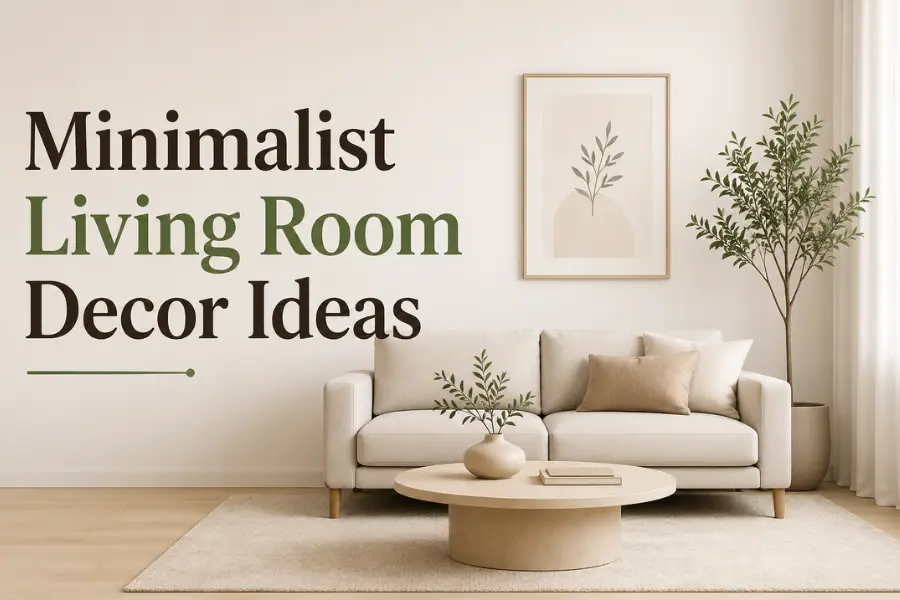
29 Minimalist Living Room Decor Ideas That Actually Work
There is something deeply calming about walking into a room that has just enough — and nothing more. No cluttered shelves. No furniture fighting for attention. Just clean lines, warm textures, and a space that feels like it can finally breathe. That is exactly what minimalist living room decor gives you.
But here is the thing most people get wrong. They think minimalism means empty. Cold. Bare white walls with a single candle and nothing else. And then they try it, hate it, and pile everything back in. Real minimalism is the opposite of that. Done right, it feels warm, personal, and incredibly put-together. It is about choosing less — but choosing better. Every piece of furniture, every texture, every plant earns its place. Nothing is random.
In this guide, I am sharing 29 minimalist living room decor ideas — each one different, each one realistic, and each one something you can genuinely do yourself. Whether your room is tiny or large, rented or owned, starting from scratch or just needing a refresh — there is something here for you. Let’s get into it.
Table of Contents
29 Minimalist Living Room Decor Ideas
Here is the complete list;
1. The Warm White Canvas Room
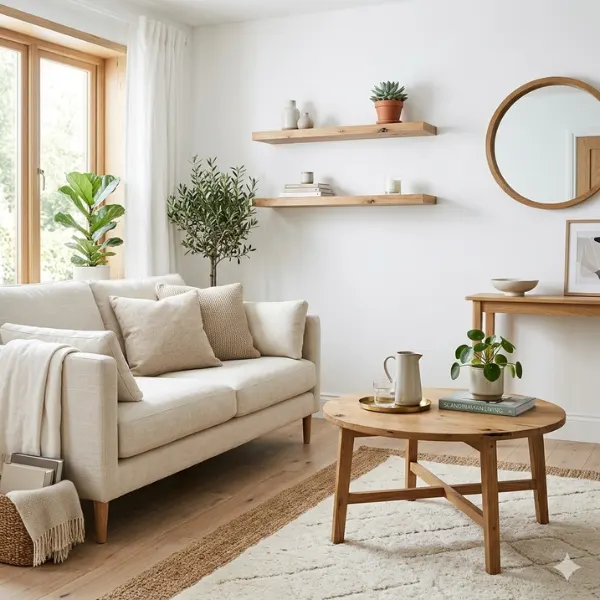
A warm white canvas room uses soft, creamy white tones — not bright, stark white — as the foundation for everything. The walls, the sofa, the curtains all sit in the same white family. The result is a room that feels open, airy, and deeply cohesive without feeling clinical or cold. Small texture differences between pieces are what make it interesting.
Why It Works
Warm white reflects light beautifully without washing a room out. Because everything sits in the same tonal family, the eye moves around the room peacefully rather than jumping from one contrasting piece to another. It is the easiest way to make a small living room feel twice as big.
Best For
Small living rooms, apartment spaces, and anyone just starting their minimalist journey who wants a clean, forgiving base to build from.
Styling Tips
Use at least three different textures — linen cushions, a knitted throw, and a cotton rug — to stop the room from looking flat. Swap harsh bright-white bulbs for warm LED lights at 2700K. Add one natural wood element, like a coffee table or side shelf, to anchor the warmth.
2. Japandi Low-Profile Sofa Setup
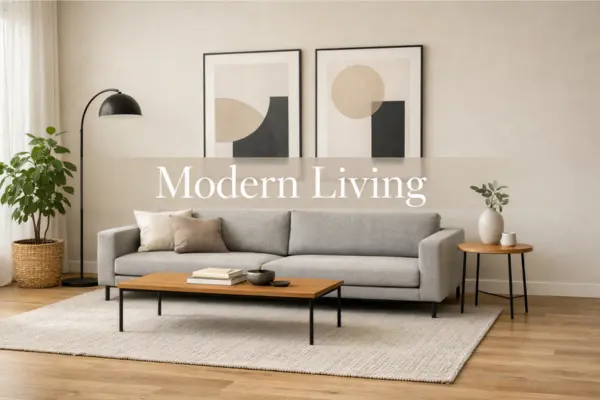
This idea takes its cue from Japanese and Scandinavian design. The centrepiece is a low-profile sofa — one that sits close to the ground — paired with a low wooden coffee table and minimal accessories. The whole setup feels grounded, intentional, and effortlessly calm. It is one of the most popular minimalist looks right now, and for good reason.
Why It Works
Low-profile furniture keeps the visual weight of the room down near the floor. This makes the ceiling feel higher and the room feel more spacious. The Japandi approach combines Japanese simplicity with Scandinavian warmth, so the space never feels cold or sterile.
Best For
Rooms with low or standard ceilings, modern apartments, and anyone who loves a clean, architectural look with a cosy edge.
Styling Tips
Choose a sofa in a muted linen or boucle fabric — beige, oatmeal, or warm grey work best. Keep the coffee table in light oak or walnut. Add a single ceramic vase on the table and one woven basket on the floor. That is all you need.
3. Neutral Linen Texture Layer Look
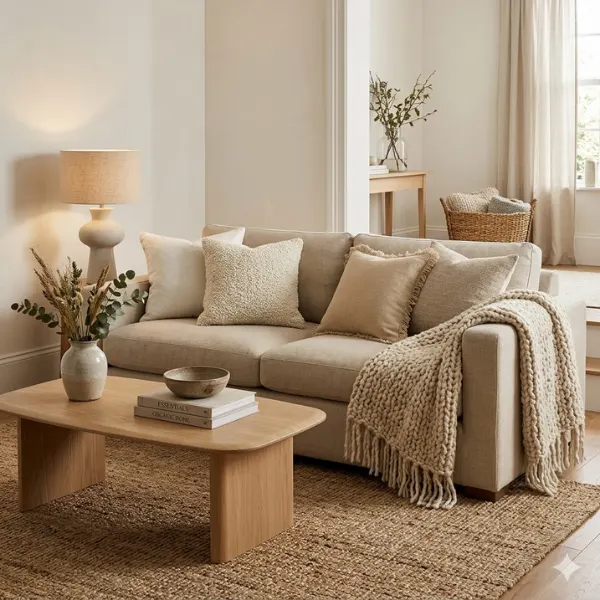
This is all about layering different textures within the same neutral colour palette. Think linen cushions, a chunky knit throw, a jute rug, and a cotton-covered sofa — all in shades of cream, sand, and oatmeal. None of them are the same colour, but they all live in the same warm family. The result is incredibly rich-looking without a single loud colour in sight.
Why It Works
Texture is how minimalist rooms stay interesting. When you remove pattern and bright colour from a room, texture becomes the main design tool. Layering different materials in similar tones adds depth and warmth that photographs beautifully and feels even better in person.
Best For
Anyone who loves a cosy, organic, natural aesthetic. Great for both small and large living rooms and especially effective in rooms with limited natural light.
Styling Tips
Start with your largest surface — the sofa — in a plain linen or cotton fabric. Layer a chunky knit throw over one arm. Place a jute rug underneath. Add two or three cushions in varying textures, not patterns. Keep everything in the same tone family and let the materials do the talking.
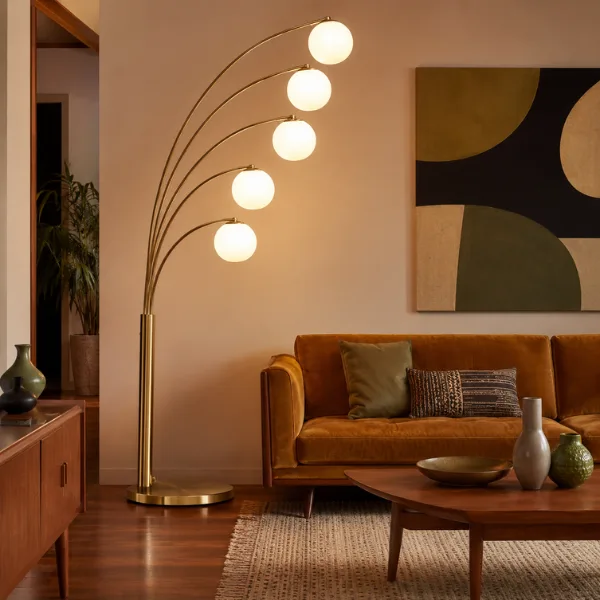
4. The Single Statement Arch Floor Lamp
Sometimes one well-chosen piece changes everything. A tall, curved arch floor lamp placed beside or behind the sofa does exactly that. It adds height, drama, and warm ambient light without taking up any floor or table space. The arc shape softens the room, and the light it casts in the evening is genuinely beautiful.
Why It Works
Arch floor lamps draw the eye upward, which helps a room feel taller. They also provide a pool of warm, focused light that overhead ceiling lights simply cannot replicate. In minimalist design, lighting is everything — and an arch lamp does the job of two or three smaller pieces.
Best For
Living rooms that need a focal point without added clutter. Perfect for renters who cannot make structural changes, and for anyone who wants to improve their room’s evening atmosphere instantly.
Styling Tips
Go for a matte black or brushed brass finish depending on your room’s overall tone. Warm metal tones (brass, gold) suit beige and terracotta rooms. Matte black suits grey and white palettes. Use a warm Edison-style bulb rather than a cool daylight bulb. Position the lamp so it arches over the reading chair or corner of the sofa.
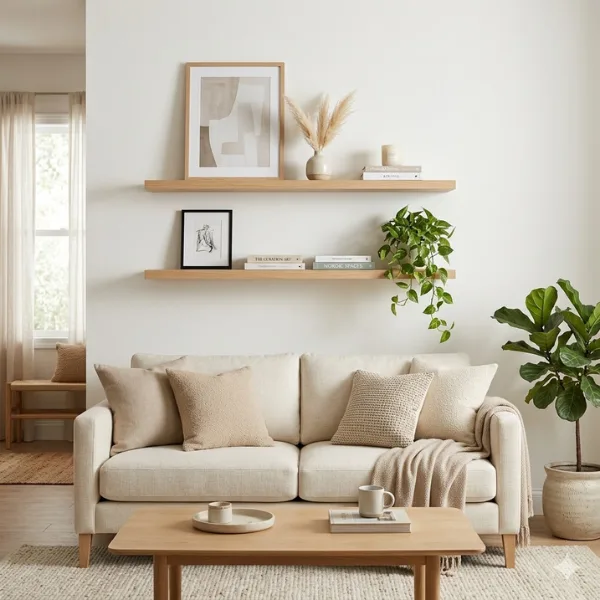
5. Floating Wooden Shelf Gallery Wall
Instead of filling a wall with framed prints edge to edge, this idea uses one or two floating wooden shelves to create a curated, layered display. A small plant, one or two framed pieces, a ceramic object, and a candle — that is it. The shelf itself becomes part of the visual. Space between objects is just as important as the objects themselves.
Why It Works
Floating shelves add storage and display space without touching the floor, which keeps the room feeling open. A curated shelf tells a story about who you are without filling every inch of wall. The mix of heights — a tall plant next to a small frame — creates movement and visual interest.
Best For
Living rooms that need wall decoration but want to avoid the busy look of a traditional gallery wall. Works in any size room and is especially great for rentals.
Styling Tips
Stick to a maximum of five to seven objects per shelf. Use the rule of odd numbers — group items in threes or fives for a natural look. Always include at least one living element, like a trailing plant or a small succulent. Leave visible space between pieces. Resist the urge to fill every gap.
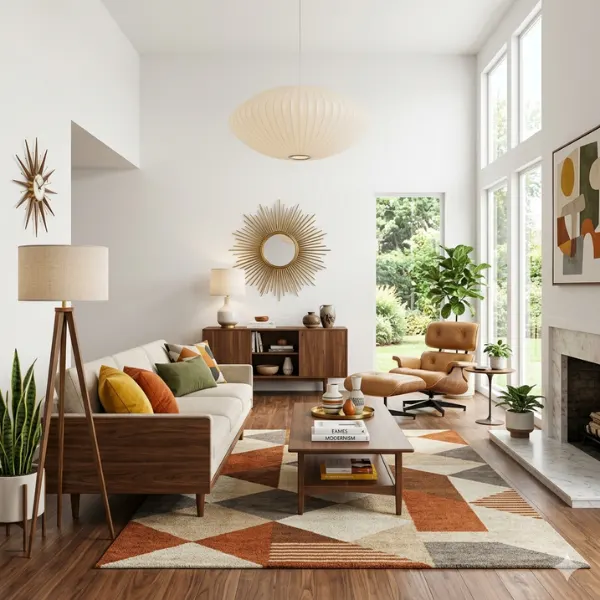
6. Wabi-Sabi Ceramic Vase Corner
Wabi-sabi is a Japanese philosophy that finds beauty in imperfection. In practice, this means grouping two or three handmade ceramic vases of different heights in a corner or on a surface. They do not need to match. In fact, the slight differences in shape, glaze, and finish are the whole point. Add a few dried pampas stems or a single branch of eucalyptus and you have something that looks genuinely artful.
Why It Works
Handmade ceramics add soul to a minimalist room. They carry the marks of being made by hand — slight unevenness, imperfect glaze — and that irregularity is what makes them interesting. They look intentional without being perfect, which is the heart of wabi-sabi design.
Best For
Anyone who wants a minimalist room that still has warmth and personality. Ideal as a coffee table centrepiece or a floor corner moment in a larger room.
Styling Tips
Choose vases in earthy tones — off-white, sage green, terracotta, or warm grey. Vary the heights significantly so there is clear difference between the shortest and tallest. Fill one with dried stems and leave one or two empty. Do not over-arrange. Set them down and then step away.
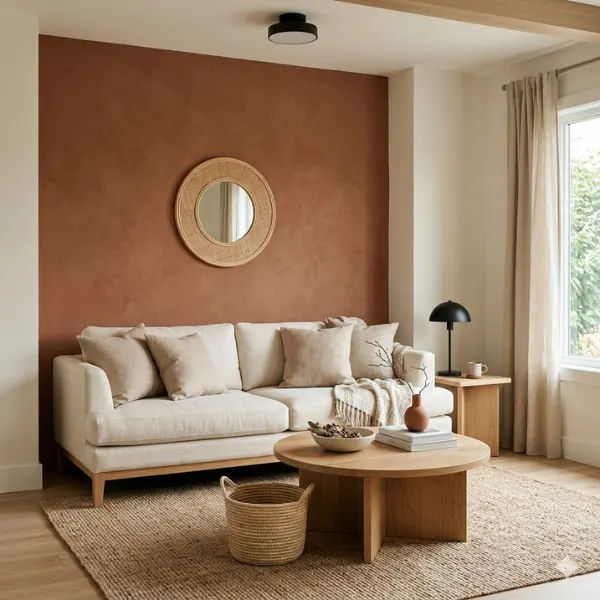
7. Earthy Tone Accent Wall with Clay Paint
Instead of decorating with objects, let the wall do the work. A single accent wall painted in a warm earthy shade — terracotta, warm clay, dusty rose, or mushroom brown — becomes the room’s focal point immediately. Modern clay paints have a slightly chalky, matte finish that looks incredibly sophisticated and pairs beautifully with natural wood and linen furniture.
Why It Works
A well-chosen accent wall gives a minimalist room a strong anchor. It creates depth and warmth without any additional furniture or décor. Clay paints in particular have a texture and depth to them that flat emulsion paints lack — they change subtly as the light shifts throughout the day.
Best For
Rooms that feel a little plain or lack character. Excellent for renters who can repaint, and for living rooms with a sofa sitting against a wall — that wall becomes the statement.
Styling Tips
Choose the wall your sofa or main seating sits against. Test the paint in a large swatch (at least A3 size) and observe it at different times of day before committing. Pair with natural wood furniture, cream or linen soft furnishings, and brass or matte black hardware. Avoid adding too much additional décor to this wall — let the colour speak.
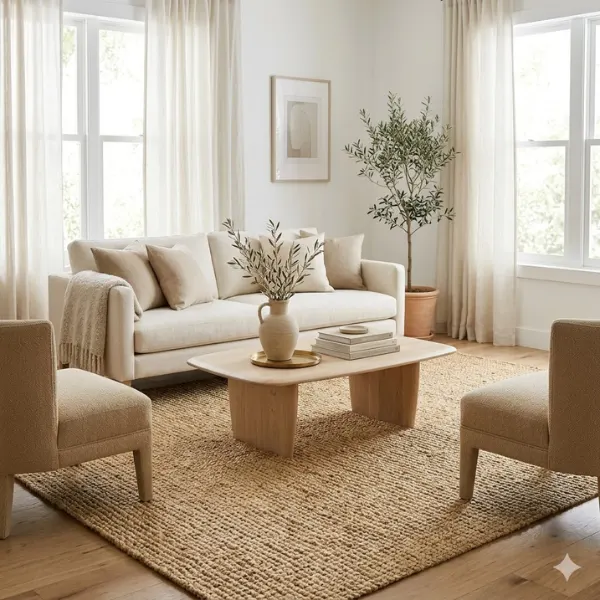
8. The Jute Rug Anchor Setup
A large jute rug placed under the main seating area pulls the whole room together. It is one of the simplest and most effective moves in minimalist decorating. The natural, woven texture of jute adds warmth to hard floors, defines the living space, and brings a grounded, earthy quality that works with almost any colour palette.
Why It Works
Rugs visually anchor furniture and stop a seating arrangement from floating in a room. Jute in particular has a natural, unpretentious quality that suits minimalist spaces perfectly. It is also incredibly durable and one of the most sustainable rug materials available.
Best For
Rooms with timber, concrete, or tile floors. Works in any size living room — go as large as you can afford to fill the space properly. A too-small rug is one of the most common decorating mistakes.
Styling Tips
Choose a rug large enough so that at least the front legs of every sofa and chair sit on it. For most living rooms, a 200x300cm rug is the starting point. Natural jute works with everything, but if you want a softer feel underfoot, look for jute-and-cotton blends. Layer a smaller sheepskin or wool rug on top for added texture in cooler months.
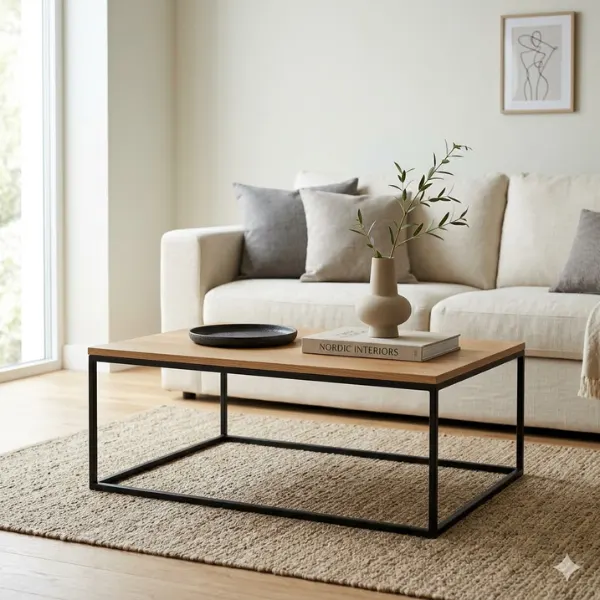
9. Minimalist Black Steel Coffee Table Moment
A slim, low coffee table with a black powder-coated steel frame and a simple glass or wooden top is one of the most versatile minimalist pieces you can own. It is sleek, it takes up minimal visual space, and it pairs well with almost any sofa colour or style. The key is in the restraint of what you place on top of it.
Why It Works
Dark steel frames add a quiet, grounding presence to a room without adding visual weight. The slim legs keep the piece light and airy. It is one of those pieces that manages to look both modern and timeless at once, which is the hallmark of great minimalist furniture.
Best For
White, cream, and grey living rooms that need a subtle contrast anchor. Also great for industrial-leaning minimalist spaces and rooms with concrete or dark timber floors.
Styling Tips
On the tabletop, use the rule of three. Place one tray (to contain smaller items), one object with height (a small plant or vase), and one flat item (a coffee table book or a simple candle). Do not pile the table with remotes, coasters, and random items. Keep a small basket nearby to tuck everyday items away.
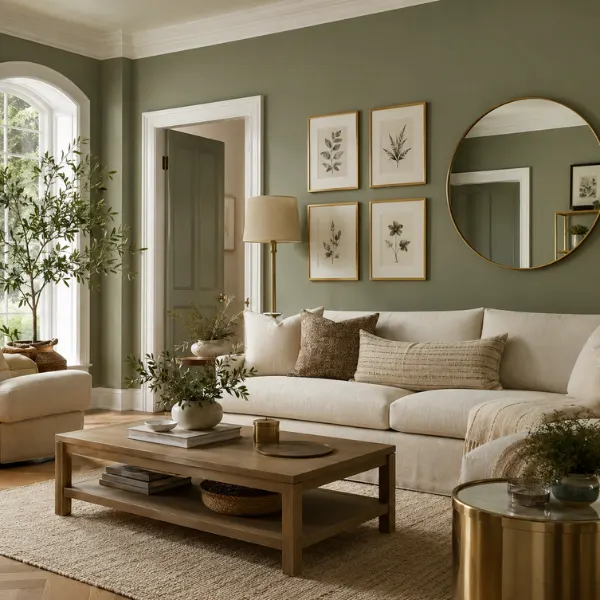
10. Soft Sage Green Room with Natural Wood
Sage green is one of the most liveable accent colours in minimalist design. It reads almost like a neutral — soft, muted, and deeply calming — but it adds colour and life in a way that beige or grey cannot. Pair it with natural light wood furniture, cream soft furnishings, and plenty of greenery and you have a room that feels like a breath of fresh air.
Why It Works
Sage green taps into biophilic design — our innate connection to nature. It is a colour that works at all hours of the day and in both natural and artificial light. Unlike brighter greens, sage never overwhelms. It adds colour while still letting the room feel calm and uncluttered.
Best For
Light-filled living rooms, homes with a natural or Scandinavian design direction, and anyone who loves plants and organic interiors. Works beautifully in both small and generously-sized rooms.
Styling Tips
Use sage green on the walls or as a sofa colour — not both. If the walls are sage, keep the sofa cream or linen. If the sofa is sage, keep the walls white or warm cream. Pair with light oak or ash wood furniture rather than dark wood, which can make the room feel heavy. Style with terracotta pots, trailing plants, and brass hardware for a look that feels genuinely cohesive.
11. The Decluttered Open Shelving Display
Open shelves only work in a minimalist room if the styling is intentional. This idea is about turning your shelving unit into a curated display — using the empty space as deliberately as the objects themselves. Think books spine-out in tonal groupings, one or two ceramics, a small plant, and nothing else. Less on the shelf means more visual impact per item.
Why It Works
When you remove clutter from open shelves, each remaining object gets the attention it deserves. The eye moves calmly from one piece to the next rather than scanning frantically over a mass of things. It also makes the room feel more spacious because the shelves are not competing with everything else for attention.
Best For
Living rooms with built-in shelving or a bookcase as a focal point. Great for people who love books and want to display them without the room feeling chaotic.
Styling Tips
Group books by colour or tone rather than title for a much calmer visual effect. Leave at least one full shelf completely empty or with a single object. Mix vertical and horizontal book stacks to vary height. Add objects in odd numbers — one ceramic vase, three small pots, five books — never even numbers, which feel static.
12. Japandi Sliding Panel Room Divider
In open-plan homes or large studio apartments, a Japandi-style sliding panel divider creates a defined living zone without building walls. Slim wooden frames with rice paper or linen inserts, or slatted wooden panels, allow light to pass through while clearly separating the sitting area from a dining or work space.
Why It Works
Sliding panels add architecture, warmth, and function all at once. They reference the Japanese shoji screen tradition and bring that sense of considered, calm design into a Western home beautifully. They also give you flexible control over your space without any permanent construction.
Best For
Open-plan apartments, studio flats, and living rooms that double as home offices. Also a wonderful idea for defining a reading corner or a meditation nook within a larger room.
Styling Tips
Look for panels in light oak, bamboo, or whitewashed timber. Rice paper inserts diffuse light beautifully and add a soft, warm glow to the space. Position the divider so it runs along the natural traffic flow of the room rather than across it. Keep the furniture on both sides of the divider simple to avoid the divided space feeling cramped.
13. Cosy Reading Nook with Linen Armchair
Every minimalist living room benefits from one dedicated corner that invites you to slow down. A single linen armchair, a small side table, a warm lamp, and a basket of books is all you need. This nook becomes the most personal corner of the room — the place that tells guests what you love without saying a word.
Why It Works
A reading nook gives purpose and personality to a corner that might otherwise be wasted. In minimalist design, every area of the room should have a function and a feeling. A well-styled reading corner adds both — it is useful and it looks warm and inviting from across the room.
Best For
Rooms with a bay window, a recessed alcove, or simply an underused corner. Perfect for anyone who loves reading or simply wants a quiet retreat away from the main sofa.
Styling Tips
Choose an armchair with clean lines and a high enough back to feel enclosed and cosy. Linen in oatmeal, soft grey, or dusty rose works beautifully. Place a small wooden side table next to it — round tables work better than square in tight corners. Add a single floor lamp behind the chair so the light falls over your shoulder. Stack three or four books on the side table and leave the rest in the basket.
14. Monochrome Beige Layered Living Room
A monochrome beige room sounds like it could be boring. Done well, it is one of the most sophisticated looks in modern interior design. This idea uses every shade of beige — from near-white to warm caramel — layered across walls, furniture, rugs, and cushions. The room becomes a study in subtle variation and texture.
Why It Works
Monochrome rooms feel incredibly cohesive because there are no competing colours asking for attention. The eye relaxes and takes in the room as a whole rather than ping-ponging between different shades. It is a look that photographs stunningly and feels deeply calm to live in.
Best For
Anyone who wants a room that looks deliberately designed without a lot of effort. Great for living rooms of all sizes and particularly effective in rooms that receive warm, afternoon light.
Styling Tips
Use at least five different materials to keep the room from feeling flat — wool, linen, cotton, jute, and ceramic are a great starting point. Vary the tone across the room — lighter towards the windows and slightly deeper on the furthest wall. Add one or two plants in earthy terracotta pots to bring in the only contrasting element the room needs.
15. Floor-to-Ceiling Sheer Curtain Setup
Nothing transforms a living room faster or more dramatically than floor-to-ceiling curtains. Sheer curtains in particular — in white, ivory, or very pale linen — allow natural light to filter through softly while adding an incredible sense of height, elegance, and calm. The trick is in mounting the curtain rod as close to the ceiling as possible, not just above the window frame.
Why It Works
Hanging curtains from ceiling height creates the illusion of taller ceilings and larger windows, even if your actual window is small. Sheer fabric diffuses incoming light beautifully, softening the whole room and giving it a gentle, dreamy quality at all times of day.
Best For
Any living room with standard or low ceilings that needs to feel more spacious. Especially effective in rooms that get direct sunlight, as sheers soften harsh light without blocking it entirely.
Styling Tips
Mount your curtain rod 10 to 15 centimetres below the ceiling, not above the window frame. Let the curtains skim or slightly puddle on the floor — never hang them short. Choose a fabric with a slight texture, like sheer linen or voile, rather than a completely flat polyester. Use rings or eyelet headings for the cleanest, most minimal look.
16. The Sculptural Pendant Light Focal Point
One beautiful, sculptural pendant light hung deliberately over the coffee table or main seating area does what a whole shelf of accessories cannot. It draws the eye up, defines the space below it, and adds character and artistry to the room. In a minimalist space, the lighting fixture can be the single most statement-making piece.
Why It Works
Pendant lights over living areas are still relatively uncommon, which makes them an instant conversation piece. Hanging a light low over the coffee table (not the dining table) feels unexpected and sophisticated. It also dramatically improves the room’s evening atmosphere by pulling warm light down to the gathering space.
Best For
Rooms with higher ceilings that can accommodate a hanging pendant. Also wonderful in rooms with a reading corner or a defined seating area that needs an anchor.
Styling Tips
Hang the pendant so the bottom of the shade sits approximately 150 to 160 centimetres from the floor — low enough to feel intimate but high enough that no one walks into it. Choose a shade in rattan, woven seagrass, paper, or frosted glass for a minimalist look. A warm, dimmable bulb is essential — you want light that shifts from practical to atmospheric in seconds.
17. Reclaimed Wood Accent Wall Feature
A single wall of horizontal reclaimed wood planks adds texture, history, and warmth that no paint colour or wallpaper can replicate. The natural variation in the wood — different tones, old nail holes, slightly uneven edges — gives the wall a depth and character that feels authentic rather than manufactured.
Why It Works
Reclaimed wood brings a sense of story and permanence into a room. It grounds a minimalist space and gives it character without adding any clutter. Because the wood is textural rather than colourful, it works within a minimalist palette without disrupting it.
Best For
Living rooms that feel too plain or corporate. Excellent for ground-floor rooms or basement living areas that need warmth. A fantastic option for renters using peel-and-stick wood plank panels, which require no permanent installation.
Styling Tips
Use this feature behind the sofa or as a TV wall rather than on a window wall, where it may make the room darker. Keep the rest of the room very simple — this wall is already saying enough. Pair with cream or linen soft furnishings, simple black or brass hardware, and a few plants in natural pots.
18. Bonsai Tree and Pebble Tray Coffee Table Display
This idea brings the Japanese garden into your living room in miniature. A small bonsai tree — or even a simple olive tree or ficus in a beautiful pot — placed on the coffee table alongside a flat tray of smooth river pebbles creates a meditative, peaceful focal point. It is quiet, organic, and deeply calming.
Why It Works
Plants at table height bring nature directly into your sightline at rest — which is where it has the most calming effect. A bonsai in particular has centuries of Japanese design philosophy behind it. The pebble tray echoes the Zen garden tradition and adds a tactile, grounding element to the display.
Best For
Anyone who wants to add a living element to their coffee table without flowers (which need replacing). Great for people who travel frequently, as bonsai and succulents are low-maintenance with minimal watering.
Styling Tips
Choose a wide, shallow ceramic tray in a neutral tone and fill it with smooth, similarly sized river pebbles. Place the bonsai or small plant directly on the tray. Add one or two smooth stones or a single candle on the side. Keep everything else off the coffee table. The restraint is the whole point.
19. Hidden Storage Ottoman Living Room
One of the best investments in a minimalist living room is a large storage ottoman. It serves as a coffee table, a footrest, additional seating when you have guests, and — most importantly — a place to store blankets, remote controls, and everyday items that would otherwise clutter the room. The visible surface stays clean. The mess hides inside.
Why It Works
Clutter is the enemy of minimalism. But life is not clutter-free. A storage ottoman solves this beautifully — it gives everything a home without adding another piece of furniture to the room. When the ottoman is closed, the room looks perfectly minimal. When you need something, it is right there.
Best For
Small living rooms where every piece needs to do multiple jobs. Also excellent for family living rooms where remotes, games, and blankets would otherwise be everywhere.
Styling Tips
Choose a round or rectangular ottoman in a fabric that works as a coffee table — something firm enough to hold a tray. Place a wooden tray on top with a candle and one small plant to create a proper surface for drinks. Select a neutral colour that works with your sofa — oatmeal, slate grey, or warm tan are all reliable choices.
20. Charcoal Accent Throw Pillow Pop
Sometimes a minimalist room just needs a single layer of contrast to come alive. Four well-chosen cushions in charcoal, deep slate, or soft black placed against a cream or white sofa add exactly the right amount of visual weight and drama. The dark tone grounds the room and makes the lighter colours around it feel even brighter.
Why It Works
Contrast is what gives a room definition and prevents it from looking washed out or unfinished. Charcoal cushions are the safest, most versatile contrast choice in a neutral minimalist room — they work with every other shade and never go out of style.
Best For
Any cream, linen, or white sofa in a neutral minimalist room that feels a little flat or unfinished. Also great for adding a more sophisticated, moody feel to a light-coloured space.
Styling Tips
Use an even number of cushions in this case — two pairs is cleaner than an odd mix when working with a single dark colour. Vary the size between the pairs — two larger cushions at 60x60cm and two smaller at 45x45cm. Mix textures — one pair in linen, one in velvet or boucle — for visual interest without adding colour complexity.
21. Concrete and Linen Mixed Material Room
This pairing sounds industrial. In practice, it is one of the most beautiful and tactile combinations in contemporary minimalist design. A concrete coffee table or side console alongside linen upholstery and soft cotton cushions creates a room that feels grounded and sophisticated — raw and refined at the same time.
Why It Works
The contrast between the coolness of concrete and the softness of linen creates a tactile tension that is endlessly interesting. Neither material is precious or fragile, which makes the room feel genuinely liveable rather than like a showroom. And because both materials are neutral, they work within virtually any colour palette.
Best For
Modern apartments, industrial-leaning spaces, and anyone who loves a considered, architectural aesthetic. Also great for renters who can bring in a concrete-look side table without any permanent changes.
Styling Tips
The key is not to let the concrete dominate. Keep concrete to one or two pieces — a coffee table or a low planter — and balance it with plenty of soft textiles. Add a large, plush linen sofa, a wool rug, and linen curtains to soften the room around the harder elements. A single large plant in a simple concrete pot ties both materials together beautifully.
22. Bamboo Basket Storage Wall Moment
Three or four bamboo or seagrass baskets hung on a wall — in a loose, casual cluster — look beautiful and serve a real purpose. They can hold blankets, magazines, or just decorate the wall with organic texture and shape. This is one of those ideas that costs very little but adds an enormous amount of warmth and personality to a plain wall.
Why It Works
Natural baskets add texture, organic shape, and warmth to a wall that would otherwise need a gallery of frames. They are lightweight, affordable, easy to hang, and incredibly easy to move if you change your mind. They also bring a handcrafted, artisanal quality that connects the room to natural materials.
Best For
Blank walls in neutral living rooms. Excellent for renters as baskets require only small picture hooks. Great as a backdrop behind a sofa or as a focal point on an otherwise empty side wall.
Styling Tips
Mix sizes and weave patterns for the most interesting display — vary between tight and open weaves, and between round and oval shapes. Hang them in an organic, slightly uneven cluster rather than in a rigid grid. Leave varying amounts of space between them so it looks natural rather than engineered. Keep the rest of the wall completely bare.
23. The Negative Space Living Room Layout
This is less about adding things and more about what you deliberately leave out. In Japanese design, the concept of “ma” — the meaningful empty space between objects — is as important as the objects themselves. This idea means leaving open floor space, keeping surfaces clear, and resisting the urge to fill every corner. The empty space is a design choice, not an oversight.
Why It Works
Empty space makes a room feel calm and considered. When every surface is filled and every corner is occupied, the eye has nowhere to rest. When space is deliberately left open, it communicates confidence — this person chose to leave this space empty. That restraint is incredibly powerful and makes the pieces that are present feel far more special.
Best For
Any living room, but especially rooms that currently feel cluttered or overwhelming. This is the single most transformative and free thing you can do.
Styling Tips
Start by removing fifty percent of what is currently in your room. Live with it for a week. Then — and only then — consider adding things back selectively. Leave at least one third of your floor space completely clear. Keep windowsills and large surfaces empty or with a single object. Learn to be comfortable with the space.
24. Muted Terracotta and Warm Brown Colour Palette
Terracotta is having its moment — and it deserves it. Paired with warm chocolate browns, caramel, and deep oatmeal, it creates a living room palette that feels earthy, grounded, modern, and deeply inviting all at once. This combination works in both a Japandi-inspired space and a more Mediterranean, sun-washed setting.
Why It Works
These are the colours of the natural world — clay earth, sun-dried stone, warm wood — and our eyes find them instinctively restful. This palette reads as sophisticated without being cold. It feels organic and hand-crafted. And unlike grey or stark white, these tones look warm even on the dullest winter day.
Best For
South or west-facing rooms that receive warm afternoon light. Ideal for anyone transitioning away from the grey-on-grey minimalist trend and looking for something with more soul and warmth.
Styling Tips
Start with terracotta on one wall or in a large area rug. Bring in warm brown through a leather chair, a dark wood shelf, or a set of cushions. Keep the sofa and curtains in a lighter, neutral cream to balance the depth of the terracotta. Add trailing plants in terracotta pots to tie everything together and make the palette feel intentional.
25. Biophilic Window Ledge Plant Shelf
A simple wooden shelf mounted directly in front of a window, or a series of shelves spanning the window frame, turns any window into a living, growing wall of greenery. Trailing plants, small succulents, and leafy indoor varieties at different heights create a beautiful filter between your interior and the outside world.
Why It Works
Biophilic design — connecting indoors to the natural world — has been shown to reduce stress and increase wellbeing. Plants at window height catch the light beautifully, their leaves become slightly translucent, and the whole display creates a calming, ever-changing frame for your room. It also maximises natural light for the plants, which means less maintenance for you.
Best For
Living rooms with large windows and limited floor space for pot plants. Also wonderful for rooms that face a garden or a tree-lined street.
Styling Tips
Choose trailing plants for the upper shelves — pothos, string of pearls, or ivy — so they cascade down. Place broader, leafy plants on the lower shelves. Keep the pots simple and in the same material — all terracotta, all white ceramic, or all simple black plastic hidden inside jute pot covers. Do not mix pot materials, as it quickly looks busy.
26. Symmetrical Minimalist Sofa Arrangement
Symmetry is one of the most reliable tools in interior design. Two identical armchairs facing the sofa, two matching side tables, two identical lamps — this kind of balanced, mirrored arrangement communicates calm and order immediately. It is a classic layout that never feels dated and always looks intentional.
Why It Works
The human brain finds symmetry deeply satisfying. A symmetrical arrangement looks composed, deliberate, and calm — which is exactly what minimalist living rooms should feel. It also makes furniture buying much simpler: you find a piece you love, and buy two.
Best For
Larger living rooms with enough space to accommodate a full symmetrical arrangement. Also works beautifully in rooms with a fireplace or television as the central focal point between the two chairs.
Styling Tips
The sofa does not need a pair — just the accent chairs or side tables flanking it. Use matching lamp shades on identical side tables on either end of the sofa for the easiest version of this look. Keep the objects on each side table the same — one candle and one plant on each. Resist the temptation to break the symmetry with accessories, at least initially.
27. The Low Wooden Platform TV Unit
A low, long TV unit that hugs the floor — essentially a wooden platform cabinet — replaces the bulky, tall television furniture that crowds so many living rooms. Keeping the TV low and the unit long and slim maintains a horizontal visual line across the room and stops the screen from dominating the space.
Why It Works
Television setups are one of the hardest parts of a minimalist living room to get right. A low, sleek TV unit solves the problem by keeping the visual weight of the setup near the ground, giving the room a Japanese-inspired, grounded quality. The horizontal line of a long, low unit also makes the room feel wider.
Best For
Any living room where the television is unavoidable. Works especially well against a plain wall, a reclaimed wood wall, or an earthy accent wall that makes the TV feel less dominant.
Styling Tips
Choose a unit in light oak, walnut, or a painted matte finish. Ensure it is at least as wide as the sofa — ideally wider. Use cable management from day one — visible cables completely undermine the minimalist aesthetic. Style the top of the unit with just two objects: one small plant on one end and one ceramic object on the other. Leave the rest empty.
28. Soft Sky Blue Accent in an All-Neutral Room
A single layer of soft, muted sky blue — in a pair of cushions, a throw, or one accent chair — lifts an all-neutral living room without overpowering it. Sky blue reads almost like a neutral at its softer shades, adding colour and freshness while still feeling quiet and calm.
Why It Works
Blue is one of the most universally calming colours. At its softer, sky-toned levels, it sits beautifully alongside cream, beige, warm white, and even soft terracotta. It adds a breath of air to a room that might otherwise feel slightly too beige, and it brings a connection to sky and water that feels natural and restful.
Best For
Neutral minimalist rooms that feel slightly flat or too uniform. Works in both large and small living rooms and is particularly effective in rooms with good natural light.
Styling Tips
Introduce the blue through soft furnishings first — two cushions or a lightweight throw are a low-commitment starting point. For a bolder version, use sky blue on a single armchair placed beside the sofa. Pair with natural linen and warm wood tones. Avoid pairing with cool grey, which will make the combination feel cold rather than calm.
29. One Oversized Piece of Abstract Wall Art
In a truly minimalist living room, a single large-scale piece of abstract art on the main wall makes a powerful statement. Not a gallery wall, not multiple smaller prints — just one. Large, confident, and given all the wall space it needs to breathe. This is how art is displayed in the world’s most considered interiors, and it works because the simplicity of the room lets the art do exactly what it was made to do.
Why It Works
A single large artwork demands attention in the best possible way. It gives the room a focal point, adds the artist’s energy and emotion, and completes a minimalist room in a way that no accessory or furniture piece can. The art becomes the personality of the room.
Best For
Any minimalist living room with a clear, uninterrupted wall. Especially powerful in rooms where the furniture and palette are very restrained — the art provides the colour, emotion, and character.
Styling Tips
Hang the piece so that its centre sits at approximately eye level — around 145 to 150 centimetres from the floor. For abstract art in a minimalist room, choose a piece with colours already present in the room. You do not need to match exactly — just connect. Leave at least 30 centimetres of wall visible on all sides of the artwork. Do not add anything else to this wall.
Mistakes to Avoid
Even with the best ideas, a few common mistakes can quickly undo all your hard work. Here are the ones I see most often.
Buying too much furniture “just in case.” The most frequent mistake in a minimalist room is filling it with furniture you might need, rather than furniture you definitely need. Start with the essentials and add slowly.
Choosing the wrong rug size. A rug that is too small makes a room look awkward and unfinished. When in doubt, go larger. The front legs of your sofa and chairs should always sit on the rug.
Using too many different wood tones. Light oak, dark walnut, blonde pine, and warm teak do not naturally live together. Pick one dominant wood tone and stick with it. You can mix two tones, but keep them close on the spectrum.
Skimping on lighting. A single overhead ceiling light is not sufficient for a comfortable living room. You need at least three light sources at different heights — a floor lamp, a table lamp, and either a pendant or ceiling fixture — all on warm bulbs.
Styling shelves too fully. Open shelves need space to breathe. If every inch is filled, it is not minimalist shelving — it is just organised clutter. Clear at least thirty to forty percent of the shelf space.
Ignoring cables and cords. Nothing destroys a minimalist aesthetic faster than a tangle of visible cables. Invest in cable management from the start, not as an afterthought.
Rushing the editing process. Minimalism takes time. Remove things slowly and live with the changes before adding anything back. Your eye needs time to adjust to less.
Conclusion
A minimalist living room is not about perfection. It is not about empty rooms, white walls, and nothing that shows you actually live there.
It is about choosing intentionally. It is about quality over quantity, texture over pattern, space over stuff. It is about a room that feels genuinely calm when you walk in — because every piece in it earned its place.
You do not need to do all 29 ideas at once. Start with one. Change the rug. Clear a shelf. Move the lamp. Buy one good piece and remove three average ones. Minimalism is a direction, not a destination — and every small step makes the room noticeably better.
The ideas in this guide are realistic, tested, and genuinely beautiful. Pick the ones that speak to you, adapt them to your space, and trust the process. Less really is more. And your living room is the perfect place to prove it.
FAQs
What is the most important principle of minimalist living room design? Intentionality. Every piece in the room should be there for a reason — functional, beautiful, or both. If you cannot explain why something is in the room, it probably should not be there. Start by removing things rather than buying new ones.
How do I make a minimalist living room feel warm and not cold? Focus on texture. Warm wool rugs, linen cushions, chunky throws, and natural wood are all neutral in colour but incredibly warm in feel. Use lighting wisely — warm bulbs at 2700K create a soft, evening glow rather than a clinical white light. Add plants. One large leafy plant does more for warmth and life than almost anything else.
Do I need to spend a lot of money to create a minimalist living room? No. In fact, minimalism often saves money because you are buying fewer pieces. The priority is removing, editing, and rearranging before spending anything. Many of the best minimalist rooms are created by clearing out what is already there rather than shopping for new things.
What colours work best in a minimalist living room? Neutral and earthy tones form the best foundation — warm white, cream, beige, oatmeal, sand, sage green, and terracotta. These tones are calm, flexible, and work beautifully together. One or two carefully chosen accent colours — a soft blue, a deep charcoal, a warm clay — add personality without disruption.
How many decorative accessories should a minimalist living room have? Far fewer than you think. A good starting rule is this: if you would not notice it missing, remove it. Aim for three to five meaningful objects in the entire room rather than twenty average ones. Group things in odd numbers, leave space around each grouping, and resist restocking the surfaces as soon as you have cleared them.
Can a minimalist living room work for families with children? Absolutely — and in some ways it works even better. When there is less clutter to begin with, tidying up is far faster and easier. The key is smart storage: baskets, ottomans, built-in shelving, and designated homes for toys, remotes, and everyday items. The room does not need to look sterile — just edited and considered.
What is the difference between minimalism and Japandi design? Minimalism is the broader principle of less-is-more design. Japandi is a specific style that blends Japanese and Scandinavian minimalism. It tends to use warmer earthy tones, natural and handcrafted materials, low-profile furniture, and the concept of wabi-sabi (finding beauty in imperfection). All Japandi rooms are minimalist, but not all minimalist rooms are Japandi.
How do I start if my current living room is very cluttered? Begin with a full removal session. Take everything off shelves and surfaces. Clear the floor of non-essential pieces. Then — slowly and deliberately — put back only what you love and genuinely use. This is almost always more effective than trying to organise existing clutter. You need to see the room empty before you can fill it intentionally.