
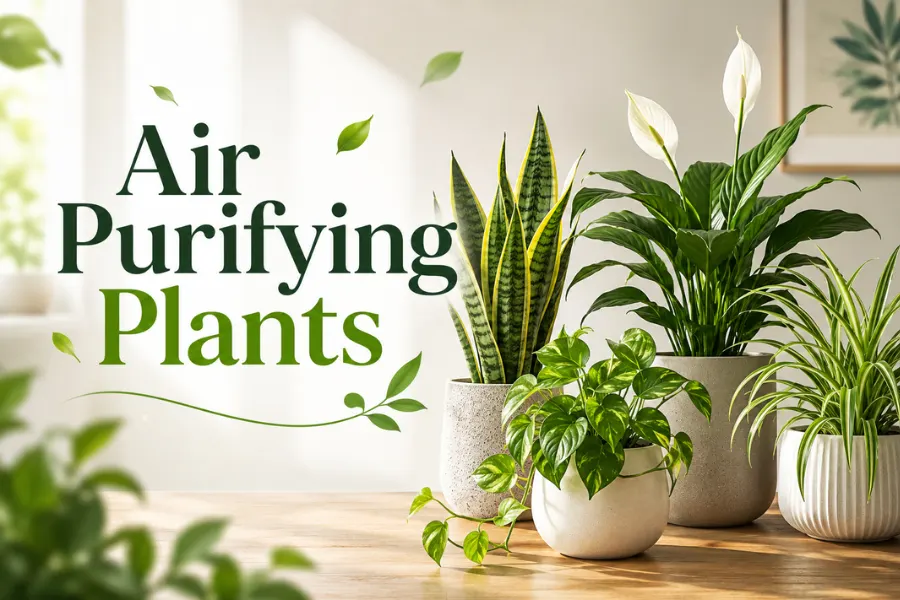
22 Air Purifying Plants That Will Transform Your Home Into a Breath of Fresh Air
If you’ve ever walked into a room and felt like the air was heavy, stuffy, or just a little “off,” you’re not imagining it. We spend over 90% of our time indoors, so what we breathe inside our homes matters a lot. Here’s the good news: you don’t need an expensive air purification machine to fix this. You just need a few well-chosen plants.
NASA’s famous Clean Air Study proved that certain houseplants can absorb harmful toxins like formaldehyde, benzene, and carbon monoxide right through their leaves and root systems. What started as space station research ended up being some of the most useful home décor advice ever published.
In this guide, I’m walking you through 22 of the best air purifying plants — each one different from the last. Whether you’ve got a tiny apartment window ledge or a big sunny living room corner, there’s something here for every space, every skill level, and every style.
Table of Contents
22 Air Purifying Plants (In Detail)
Here is the complete list:
1. Snake Plant (Sansevieria trifasciata)
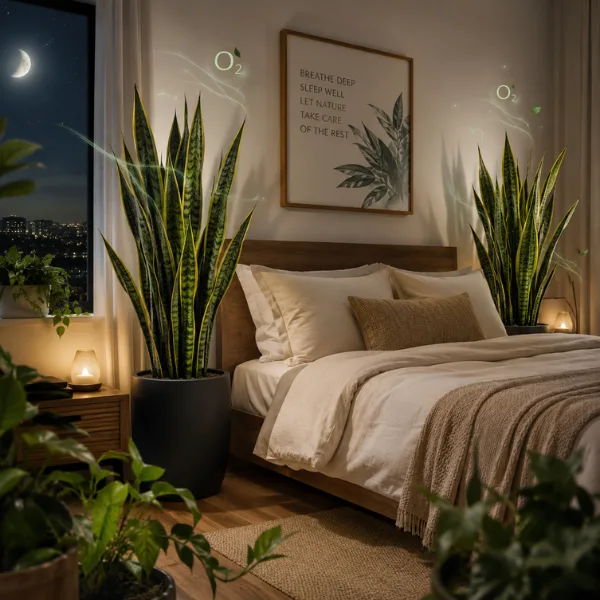
The snake plant is the one plant I tell every single beginner to start with. It’s nearly impossible to kill, it thrives in dark corners, and it works overnight — literally. Unlike most plants, it releases oxygen at night instead of during the day, making it one of the best bedroom plants you can own. It’s tall, sculptural, and gives any room an instant modern upgrade without asking much in return.
Why It Works
The snake plant filters out formaldehyde, benzene, xylene, toluene, and nitrogen oxides — all common chemicals found in furniture, cleaning products, and paint. It’s one of the few plants that continues purifying air even when the lights are off, making it a true overnight air cleaner.
Best For
Bedrooms, home offices, apartments with low natural light, and rooms with new furniture or fresh paint. Perfect for anyone who forgets to water their plants.
Styling Tips
Go tall and dramatic — pick a variety that reaches 3 to 4 feet and place it in a matte black or terracotta pot in the corner of your bedroom. It looks stunning flanking a bed on either side. Mix it with lower plants in front to create a layered green display.
2. Peace Lily (Spathiphyllum ‘Mauna Loa’)
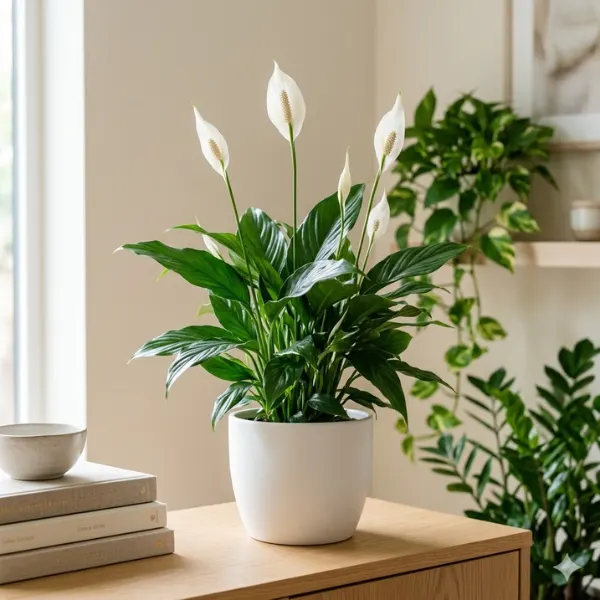
The peace lily is one of those rare plants that’s both gorgeous and genuinely useful. Those elegant white blooms aren’t just pretty — they signal that the plant is healthy and actively working. It’s one of the top performers from NASA’s study, and it handles low light better than almost any flowering plant out there. If you want something that looks like it belongs in a luxury hotel lobby but fits on a bookshelf, this is your plant.
Why It Works
Peace lilies tackle some of the toughest indoor toxins including ammonia, benzene, formaldehyde, trichloroethylene, and xylene. They also increase humidity slightly, which helps with dry air in heated or air-conditioned rooms.
Best For
Bathrooms, bedrooms, living rooms with low light, and spaces near new carpets or furniture where chemical off-gassing is common.
Styling Tips
Put it in a white ceramic pot to match its blooms — the contrast of dark green leaves against white flowers and a white pot looks incredibly clean and minimalist. Group it with other low-light plants like pothos or ZZ plants on a plant shelf for a lush green corner moment.
3. Spider Plant (Chlorophytum comosum)
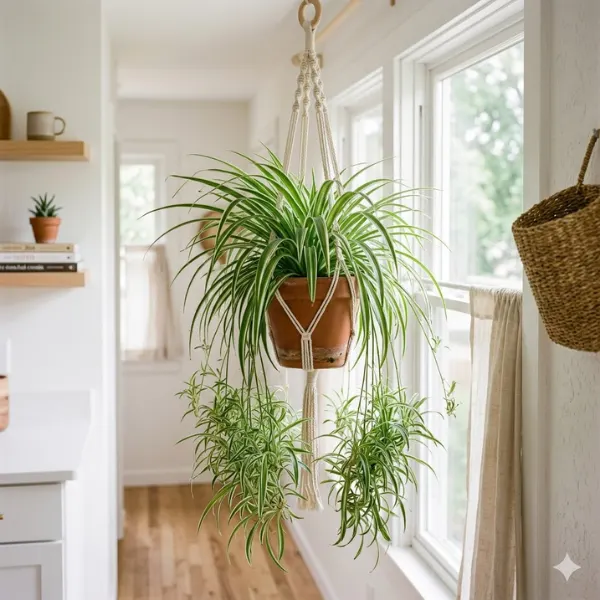
Don’t let the name fool you — there’s nothing creepy about this one. The spider plant is cheerful, fast-growing, and one of the most pet-friendly air purifiers on this entire list. It produces little “baby” plants on trailing stems called spiderettes, which you can clip off and propagate for free. One plant becomes five plants within a season if you let it do its thing.
Why It Works
Spider plants are highly effective at removing carbon monoxide, formaldehyde, and xylene from the air. They’re especially good in kitchens and garages where these pollutants tend to build up from gas stoves and car exhaust.
Best For
Kitchens, hallways, kids’ rooms, and any household with cats or dogs (it’s non-toxic). Great for hanging baskets where the trailing babies can show off.
Styling Tips
Hang it in a macramé hanger near a window where the cascading baby plants can trail downward — it’s one of the most Pinterest-worthy plant displays you can make without spending much money. Choose a pot with drainage and let it trail freely rather than clipping it too often.
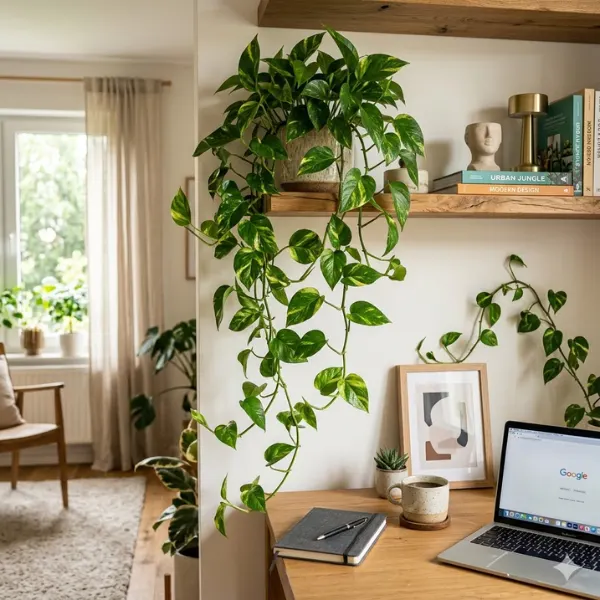
4. Pothos / Devil’s Ivy (Epipremnum aureum)
Pothos is the plant that survives everything — low light, irregular watering, forgetfulness, and even the occasional dramatic overwatering. It has a reputation among plant lovers as the one that just keeps going. The trailing vines grow fast, look incredible on high shelves or mounted on walls, and they’re one of the hardest-working toxin removers in any room.
Why It Works
Pothos removes benzene, formaldehyde, xylene, and toluene — chemicals commonly released by synthetic carpets, adhesives, and office furniture. It’s particularly effective in enclosed or poorly ventilated spaces like home offices and studio apartments.
Best For
Home offices, studio apartments, dorm rooms, and any space that needs a low-maintenance but high-impact green touch. Works in practically any light condition.
Styling Tips
Let it trail down a high shelf or bookcase for that beautiful, cascading jungle feel. You can also train it to climb a moss pole or a wall-mounted frame for a totally different look. The golden variety adds warmth; the marble queen variety adds a sophisticated, variegated pattern.
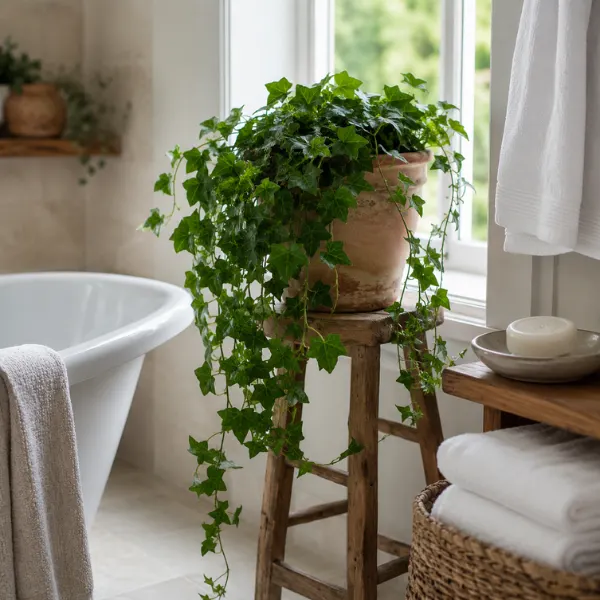
5. English Ivy (Hedera helix)
English ivy is the quiet overachiever of the plant world. Research beyond just the NASA study has found it to be exceptionally good at reducing airborne mold and even fecal matter particles — which makes it the go-to recommendation for bathrooms and homes with pets or allergies. It has a classic, timeless look that works in both rustic and modern interiors.
Why It Works
English ivy is particularly powerful at filtering airborne mold spores, formaldehyde, benzene, and fecal particles. Studies have shown it can reduce mold levels in a room significantly within just a few hours of being placed there.
Best For
Bathrooms, bedrooms of allergy sufferers, pet-friendly homes, and enclosed spaces with high humidity or mold risk.
Styling Tips
Let it spill over the edges of a rustic wooden plant stand or terracotta pot. In a bathroom, hang it near the window where the steam and indirect light will keep it thriving. You can also train it along a small trellis for a cottage garden feel inside your home.
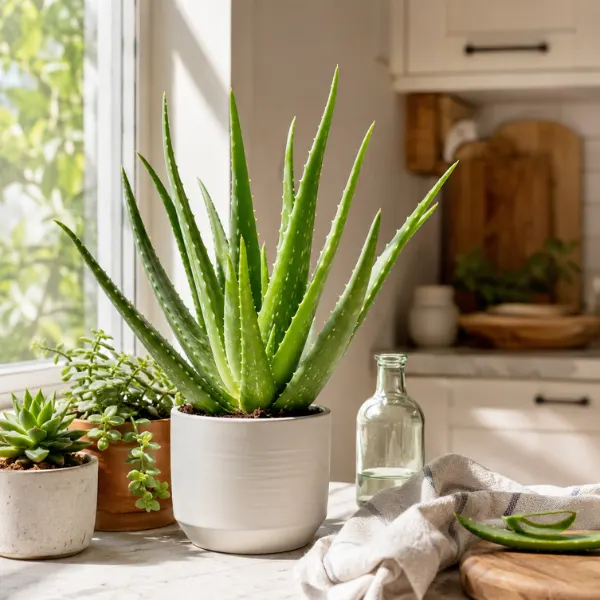
6. Aloe Vera (Aloe barbadensis miller)
Aloe vera is the multitasker of the plant world — it’s a sunburn remedy, a skincare ingredient, and an air purifier all in one. It’s a succulent, so it stores water in its thick leaves and barely needs any attention. Place it on a sunny windowsill and mostly leave it alone — it’ll reward you by quietly pulling formaldehyde and benzene out of your air while also looking chic doing it.
Why It Works
Aloe vera clears formaldehyde and benzene from the air — both chemicals commonly released from paints, varnishes, and cleaning products. As a bonus, it also works as a visual air quality indicator; brown spots on its leaves can signal unusually high levels of harmful chemicals nearby.
Best For
Kitchens, sunny windowsills, bathrooms, and bedrooms. Also a practical plant for households that cook frequently, since it doubles as a first-aid remedy for minor burns.
Styling Tips
Pair it with other succulents in a clustered arrangement on a kitchen windowsill. White pots, terracotta pots, or even a modern geometric cement planter all look great. Keep it small and compact by not repotting too frequently — it’s more stylish when it’s slightly snug in its pot.
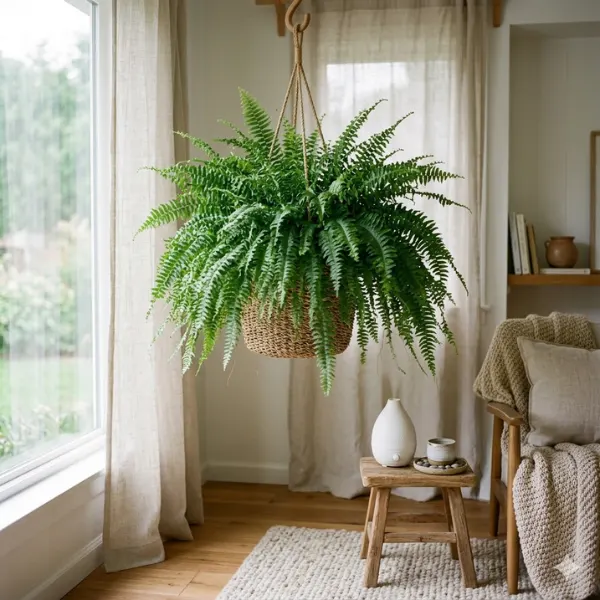
7. Boston Fern (Nephrolepis exaltata)
If your home tends to feel dry — especially in winter or in air-conditioned rooms — the Boston fern is your answer. It doesn’t just filter toxins; it actively adds moisture back into the air, acting like a natural humidifier. The lush, full fronds are incredibly dramatic and give any space a deep jungle feel that’s hard to replicate with other plants.
Why It Works
Boston ferns remove formaldehyde and other volatile organic compounds while simultaneously increasing humidity in the room. That humidity boost is especially beneficial for people with dry skin, scratchy throats, and respiratory sensitivity.
Best For
Living rooms, bedrooms in dry climates, rooms with central heating or air conditioning, and anyone who suffers from dry air-related symptoms in winter.
Styling Tips
Hang it from the ceiling in a woven basket planter or set it on a plant pedestal where the fronds can cascade dramatically over the sides. Keep it away from direct sun and drafts. Mist it regularly or set it on a pebble tray with water to keep humidity high.
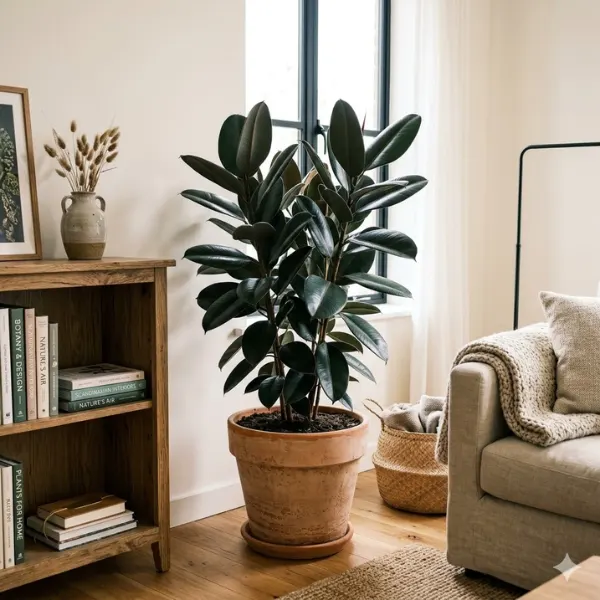
8. Rubber Plant (Ficus elastica)
The rubber plant has had a massive style comeback in recent years and for good reason — its large, glossy, dark leaves are bold and architectural in a way that few other houseplants can match. It’s a bigger plant that makes a real statement, and behind that good looks is a serious air purifier that’s particularly effective against airborne bacteria and mold.
Why It Works
Rubber plants are exceptional at absorbing airborne bacteria and mold spores in addition to removing formaldehyde from the air. Their large leaf surface area makes them highly efficient at processing air compared to smaller plants.
Best For
Living rooms, dining rooms, home offices, and large open spaces that need a bold focal plant. Ideal for rooms with moderate to bright indirect light.
Styling Tips
Go big — get one that’s at least 3 feet tall and put it in a simple, oversized terracotta or matte white pot. Place it in a corner near your sofa or beside a bookshelf where it can anchor the room. Wipe its leaves with a damp cloth monthly to keep them clean and glossy, which also keeps them purifying efficiently.
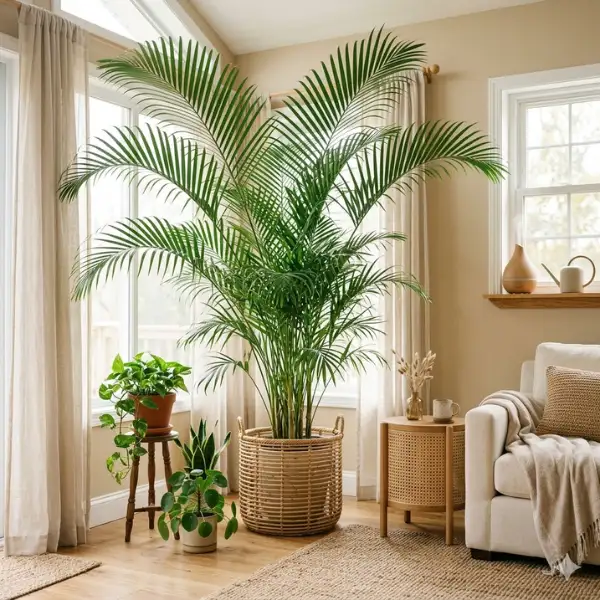
9. Areca Palm (Dypsis lutescens)
The areca palm is the closest thing to bringing a tropical resort lobby into your living room. It’s a large, feathery palm that looks absolutely stunning in a bright corner, and it’s one of the top-rated air purifiers and natural humidifiers available. If you want that “plant parent who means business” look with maximum impact, the areca palm is your statement piece.
Why It Works
Areca palms effectively filter xylene and toluene from the air while also transpiring large amounts of moisture, making them one of the best natural humidifiers you can own. They’re recommended for people with respiratory conditions or those living in dry climates.
Best For
Living rooms, sunrooms, large bright spaces, and homes in dry or desert climates. It needs bright indirect light to really thrive.
Styling Tips
Place it in a large rattan or wicker basket planter — the tropical texture of the basket complements the palm fronds perfectly. Let it be the tallest plant in the room and build your plant arrangement around it with shorter plants at its base. Don’t crowd it; give it room to spread.
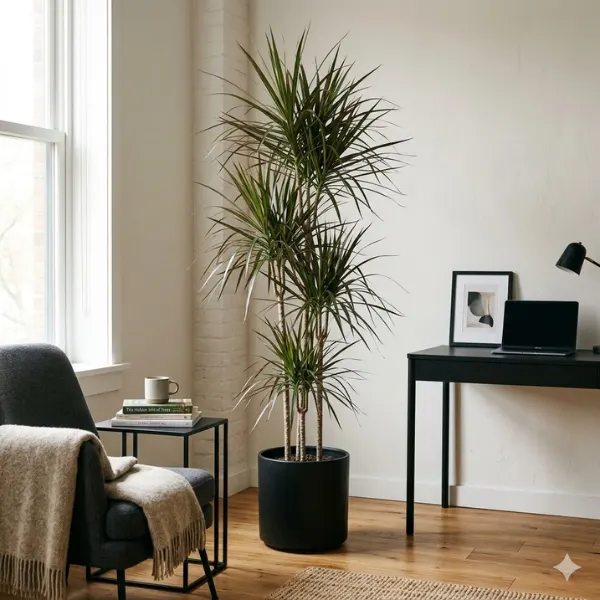
10. Dracaena / Dragon Tree (Dracaena marginata)
The dragon tree is the cool, edgy cousin in the plant family. Its long, thin leaves with red or purple edges and its tall, spindly cane-like stems give it an almost exotic, architectural quality. It’s one of the best plants for removing xylene — a pollutant that comes from car exhaust, paint, and cleaning solvents — and it looks like something you’d see in a design magazine.
Why It Works
Dragon trees filter xylene, formaldehyde, benzene, and trichloroethylene from the air. They’re especially recommended for homes near busy roads or in areas with higher outdoor pollution, since xylene from car exhaust can seep indoors.
Best For
Home offices, living rooms, modern or industrial-style interiors, and homes near roads with heavy traffic. Tolerates lower light well.
Styling Tips
Plant it in a sleek, minimalist pot — matte black, dark charcoal, or deep navy all look stunning against the red-edged leaves. Use it as a vertical focal point in a reading nook or office corner. Its height and slim profile make it ideal for narrow spaces that need some life.
11. Chinese Evergreen (Aglaonema modestum)
The Chinese evergreen is one of those plants that makes you look like you know exactly what you’re doing — even if you’re a total beginner. It comes in a stunning range of leaf colors from deep green to bright red and silver-gray, and it genuinely thrives on neglect. It’s been used in Chinese homes for centuries as a symbol of good luck and clean air, and the science backs that reputation up completely.
Why It Works
Chinese evergreens emit a high oxygen content while purifying the air of benzene, formaldehyde, and other chemical toxins. The more light they receive, the more efficiently they work — but even in dim conditions, they’re still actively filtering.
Best For
Living rooms, hallways, entryways, and any room that needs color without high maintenance. Excellent for beginners or frequent travelers who can’t tend to plants daily.
Styling Tips
Choose a red or pink variety like Aglaonema ‘Red Siam’ for a bold pop of color, or a silver-green variety for a cooler, more elegant look. Place it in a patterned ceramic pot for a boho-chic display, or keep it sleek in a white pot for a Scandinavian vibe. It adapts to its styling container beautifully.
12. Philodendron (Philodendron hederaceum)
Philodendrons are the plant world’s natural born climbers and trailers. They have heart-shaped leaves that look lush and full almost immediately, and they grow fast enough to give you that satisfying feeling of watching something thrive. They’re particularly good at processing formaldehyde — one of the most common indoor pollutants found in wood paneling and pressed wood furniture.
Why It Works
Philodendrons are excellent at absorbing formaldehyde from the air, particularly at higher concentrations where many other plants struggle. Their large leaf surface area and rapid growth rate make them more active air processors than slower-growing plants.
Best For
Living rooms, bedrooms, home offices, and rooms with wood-paneled walls, pressed wood furniture, or new flooring. Great for shelves where they can trail downward.
Styling Tips
Let a heartleaf philodendron trail over the edge of a high bookshelf, or train it up a coir pole for a lush, vertical statement. The split-leaf variety (Monstera deliciosa) is technically a close relative and gives a more dramatic, tropical vibe if you want to go bigger.
13. Bamboo Palm (Chamaedorea seifrizii)
The bamboo palm is the quiet achiever that most people overlook in favor of fancier palms, and that’s a mistake. It’s perfectly sized for apartment living, tops out at around 5 to 7 feet, and manages to look lush and full without taking over the room. NASA ranked it among its highest-rated air purifiers, and it also acts as a natural humidifier — a double benefit that most plants can’t offer.
Why It Works
Bamboo palms are highly effective at filtering formaldehyde, benzene, and trichloroethylene while simultaneously releasing moisture into the air. They’re particularly good at tackling the formaldehyde released from new furniture and carpeting.
Best For
Apartments, living rooms, spaces with new furniture or flooring, and rooms in dry climates. Handles lower light better than most palms.
Styling Tips
Place it in a large woven seagrass basket and position it in a corner of your living room or bedroom. It works beautifully as a privacy screen on a balcony or in a studio apartment where you want to divide a space naturally with greenery.
14. Weeping Fig (Ficus benjamina)
The weeping fig has a reputation for being a bit dramatic — and honestly, it earns that reputation. It drops leaves when it’s moved, when the temperature changes, or when it’s unhappy. But when it’s in the right spot and left alone, it becomes a stunning, tree-like statement plant that works hard to clean your air and elevate your space. Treat it well and it’ll stay beautiful for years.
Why It Works
Weeping figs are particularly effective at removing formaldehyde, xylene, and toluene — pollutants commonly found in adhesives, nail polishes, and stain removers. They’re among the best plants for filtering chemicals associated with furniture and home renovations.
Best For
Living rooms, sunrooms, large bright spaces, and homes that have recently been painted, renovated, or furnished. Needs bright, consistent indirect light.
Styling Tips
Once you find the right spot, don’t move it. Place it in a large decorative pot near a bright window and let it become the anchor of the room. Trim it into a tree shape over time to keep it tidy and structured. It works beautifully as a natural room divider in open-plan spaces.
15. Lady Palm (Rhapis excelsa)
The lady palm is elegant, refined, and a little underrated. Its fan-shaped fronds have a neat, structured look that feels more polished than most tropical palms, and it’s one of the few plants that can thrive in both indoor shade and bright light with equal grace. It also happens to be one of the best plants for breaking down nitrogen oxide and toluene — two pollutants that often slip under the radar.
Why It Works
Lady palms effectively filter nitrogen oxide and toluene from the air — pollutants that come from gas appliances, car exhaust, and paints. They also improve general air humidity and can grow up to 6 feet tall indoors, giving them a large working surface area.
Best For
Living rooms, entryways, dining rooms, and large corner spaces that need a tall, graceful statement plant. Particularly useful near gas stoves or fireplaces.
Styling Tips
Put it in a square, architectural pot — something geometric in matte white or stone gray complements its structured fan fronds beautifully. Use it as a focal point in an entryway to greet guests with both elegance and cleaner air.
16. Chrysanthemum (Chrysanthemum morifolium)
Most people think of chrysanthemums as a cut flower in a vase, not a houseplant — but keep one alive in a pot and you’ve got one of the most effective air purifiers you can buy. The blooms are cheerful and come in every color imaginable, and they’re doing serious work behind the scenes removing ammonia and benzene from your indoor air.
Why It Works
Chrysanthemums are among the few plants that actively eliminate ammonia from the air — a chemical commonly found in cleaning products, fertilizers, and dyes. They also tackle benzene from plastics, detergents, and paint. More blooms means more active purification.
Best For
Kitchens, laundry rooms, and any space where cleaning products are stored or used. Also great for spaces that get a lot of natural light since they need bright light to stay in bloom.
Styling Tips
Treat it like a decorative centerpiece. Put it in a beautiful ceramic pot on your kitchen table or windowsill and let the blooms be the main event. Change the pot color with the seasons — terracotta for autumn, white for spring. When the blooms fade, move it to a brighter spot outdoors to rest and potentially rebloom.
17. ZZ Plant (Zamioculcas zamiifolia)
The ZZ plant looks like it should be high maintenance — the glossy, waxy leaves look almost fake they’re so perfect. But it’s actually one of the most drought-tolerant, low-light-tolerant plants in existence. It stores water in its rhizomes (underground structures), so it can go weeks without water. For someone who loves the look of a well-kept plant without the constant attention, this is the dream.
Why It Works
ZZ plants absorb and remove xylene, toluene, benzene, and ethylbenzene from the air. Their waxy leaves trap airborne particles and the plant slowly processes them through its root system over time.
Best For
Home offices, dark apartments, bathrooms without windows, and anyone with a busy schedule who can’t commit to regular plant care. Works in almost any light condition.
Styling Tips
Its naturally architectural shape looks stunning in a simple, modern pot. Try it in a dark charcoal or all-black planter for a dramatic, editorial look. Group it with a snake plant and a rubber plant for a sleek, monochromatic green trio that requires minimal care.
18. Money Tree (Pachira aquatica)
The money tree brings good luck according to feng shui tradition, and whether or not you believe that, it’s definitely good for your air. Its distinctively braided trunk and large, palmately shaped leaves make it one of the most recognizable and requested plants in home décor right now. It’s a fast grower, a good purifier, and one of those plants that genuinely becomes a conversation starter.
Why It Works
Money trees actively remove benzene, formaldehyde, xylene, and toluene from the air. They’re particularly high oxygen producers, pulling carbon dioxide out of the air rapidly and converting it through photosynthesis more efficiently than many other houseplants.
Best For
Living rooms, home offices, entryways, and spaces that need a statement plant with cultural or decorative significance. Often gifted for new homes or businesses.
Styling Tips
The braided trunk is the star — choose a pot that lets it take center stage. A round, hammered copper pot or a woven basket both look incredible against the braided base. Place it near a window where it gets bright, indirect light and rotate it every few weeks so it grows evenly rather than leaning toward the light source.
19. Flamingo Lily (Anthurium andraeanum)
If you want something that looks genuinely exotic and unexpected without being difficult to care for, the flamingo lily is it. The shiny, waxy blooms — which come in deep red, coral pink, and white — are actually modified leaves called spathes, not flowers. They last for months at a time and the plant keeps producing new ones consistently. It’s eye-catching, unusual, and a solid air purifier all at once.
Why It Works
Flamingo lilies remove ammonia, formaldehyde, xylene, and toluene from the air. They’re particularly effective in spaces where ammonia-based cleaning products are used frequently, such as bathrooms and kitchens.
Best For
Bathrooms, kitchens, bedrooms, and any space where you want a bold, colorful plant that looks like a design statement rather than just greenery.
Styling Tips
Let the bloom color guide your pot choice. Deep red anthuriums look stunning in matte black or dark green pots. Pink varieties pop in white or blush terracotta. Keep them at eye level on a shelf or side table where the waxy spathe can be admired up close. They don’t like direct sun, so keep them in bright, filtered light.
20. Dwarf Date Palm (Phoenix roebelenii)
The dwarf date palm is exactly what it sounds like — a miniature version of the majestic date palm, scaled perfectly for indoor living. Its feathery, arching fronds give it a lush, tropical presence without the size and commitment of a full-grown palm. It’s a slower grower, which actually works in its favor indoors, and it’s one of the most effective palms for indoor air purification.
Why It Works
Dwarf date palms are excellent at removing xylene and formaldehyde from the air. Their feathery fronds have a large total surface area despite the plant’s compact size, making them more efficient air processors per square foot than many other palms.
Best For
Living rooms, sunrooms, bedrooms, and anyone who wants a tropical palm look without the floor space demands of larger varieties. Ideal for medium to bright light conditions.
Styling Tips
Plant it in a large, round terracotta pot and place it near a sunny window where the fronds can catch the light. At 3 to 6 feet tall indoors, it fits perfectly in corners without overwhelming a room. Pair it with a woven rug and rattan furniture for a complete tropical-inspired living space.
21. Mint (Mentha spicata)
Mint is one of those surprise entries on an air purifying list — most people know it as a kitchen herb, not an air cleaner. But mint naturally releases volatile aromatic compounds that freshen and purify the air while also repelling insects and reducing airborne bacteria. It grows quickly, smells incredible, and gives you the bonus of always having fresh herbs for your cooking and drinks.
Why It Works
Mint releases natural antimicrobial and aromatic compounds that help reduce airborne bacteria and improve perceived air freshness. It also acts as a natural insect repellent, which reduces the need for chemical sprays that would otherwise add pollutants to your indoor air.
Best For
Kitchens, windowsills, balconies, and any bright spot that gets at least 4 to 6 hours of sunlight. Perfect for small-space gardeners who want utility and air quality in one plant.
Styling Tips
Plant mint in a long, narrow window box on your kitchen sill alongside basil and rosemary for a charming herb garden display. Keep it in its own pot since it spreads aggressively and will crowd out other plants if given the chance. A small terracotta pot with a simple handwritten label is both functional and incredibly Pinterest-worthy.
22. Broadleaf Lady Palm — Variegated (Rhapis excelsa ‘Variegata’)
This is the rare, collectible version of the regular lady palm, and it’s genuinely one of the most beautiful indoor plants you can own. The variegated form has cream and green striped fronds that look almost hand-painted, and it’s significantly harder to find than its all-green counterpart. If you want a plant that stops every guest in their tracks while quietly purifying your air, this is the one.
Why It Works
Like its parent species, the variegated lady palm removes nitrogen oxide, ammonia, formaldehyde, and xylene from the air. The variegated form is slightly slower growing but equally effective at air purification, and its lighter leaf color doesn’t diminish its function.
Best For
Plant collectors, statement spaces, living rooms, and anywhere you want a showstopper that’s also functional. Best in bright, indirect light to preserve the variegation.
Styling Tips
This plant deserves a premium pot — think hand-thrown ceramic in cream or sand tones that echo the leaf variegation. Position it as a solo statement piece in a well-lit corner rather than grouping it with other plants. Keep the leaves clean and polished to show off the beautiful striped pattern. It’s a slow grower, so treat it as an investment and it will reward you for years.
Mistakes to Avoid
Even the best air purifying plants will underperform — or die — if you make some of these common missteps. I’ve seen these mistakes derail beginners over and over, so let’s address them upfront.
Overwatering is the number one plant killer. More plants die from too much love than too little. Before you water, stick your finger an inch into the soil. If it’s still moist, wait. Most air purifying plants like to partially dry out between waterings.
Putting plants in the wrong light. A peace lily placed on a sunny south-facing windowsill will scorch. A rubber plant in a dark hallway won’t grow or purify efficiently. Match the plant to the light you actually have, not the light you wish you had.
Buying too many plants at once. It’s tempting to fill every corner immediately, but plants need time and attention when they first arrive in a new environment. Start with three to five plants and learn their needs before adding more.
Ignoring drainage. If your pot doesn’t have a drainage hole, roots will sit in water and rot. Always either choose pots with drainage or add a layer of pebbles at the bottom and water very carefully.
Neglecting to clean leaves. Dust on plant leaves physically blocks their ability to absorb light and process air. Wipe large-leafed plants like rubber plants and philodendrons with a damp cloth every few weeks.
Expecting overnight results. Plants improve air quality gradually and consistently — they’re not air purifiers with an instant on/off switch. Give them two to four weeks in your space before judging their impact.
Choosing plants that don’t match your lifestyle. If you travel frequently, don’t start with a fern. If you have curious pets, avoid peace lilies and philodendrons. Match the plant to your real life, not an idealized version of it.
Conclusion
Bringing air purifying plants into your home is one of the simplest, most affordable, and most beautiful upgrades you can make to your living space. There’s no complicated installation, no ongoing subscription, and no electricity bill — just a little soil, some water, and a plant that genuinely wants to thrive alongside you.
The 22 plants in this guide cover every size, every light condition, every skill level, and every style aesthetic. From the near-indestructible snake plant to the showstopping variegated lady palm, there’s a combination here for every home and every person.
Start small. Pick two or three plants that genuinely fit your space and your lifestyle. Get comfortable with them. Then expand your collection as your confidence grows. Before long, you’ll have a home that not only looks incredible but actually feels better to breathe in — and that is a difference you’ll notice every single day.
FAQs
How many plants do I need to actually improve air quality in a room? A good starting point is one medium to large plant per 100 square feet of space. For a typical bedroom or living room, two to three well-placed plants will make a noticeable difference over time. More plants always help, but quality and placement matter just as much as quantity.
Do air purifying plants work as well as an electric air purifier? They serve different purposes. Electric HEPA purifiers work faster and capture dust, mold spores, and airborne particles. Plants work slowly but consistently, absorbing chemical gases and VOCs that many electric purifiers don’t address. Using both together gives you the most comprehensive results.
Which air purifying plant is best for a bedroom? The snake plant is the top recommendation for bedrooms because it releases oxygen at night rather than during the day, which is the opposite of most plants. Peace lilies and aloe vera are also excellent bedroom choices. Avoid highly fragrant plants in the bedroom if you’re a light sleeper.
Are any of these plants safe for cats and dogs? Yes — spider plants, Boston ferns, bamboo palms, areca palms, money trees, and mint are all considered non-toxic to cats and dogs. Peace lilies, pothos, philodendrons, and English ivy are toxic if ingested by pets, so keep them out of reach in pet-friendly homes.
How do I know if my air purifying plant is actually healthy and working? A healthy plant with new growth, firm leaves, and good color is actively purifying your air. Yellowing leaves usually mean overwatering. Brown tips often mean low humidity or fluoride in tap water. A plant that’s struggling is not purifying efficiently, so keeping it healthy is the key to keeping it functional.
Can I put air purifying plants in a room with no windows? Most plants need at least some natural or artificial light to survive. If you have a room with zero natural light, consider full-spectrum grow lights, which mimic sunlight and allow plants to photosynthesize normally. ZZ plants and snake plants can tolerate very low light but will still do better with some light source.
How long does it take for plants to improve indoor air quality? You likely won’t notice a dramatic difference overnight, but most people report a subtle improvement in air freshness within two to four weeks of adding several plants to a room. The long-term benefits — reduced toxin levels, improved humidity, lower stress — build up over months and become a consistent part of your indoor environment.