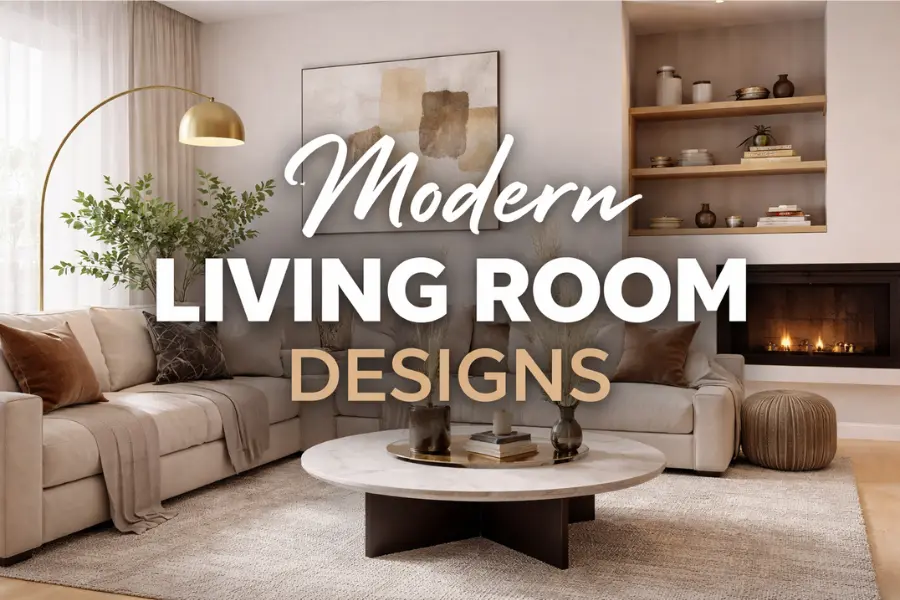
21 Modern Living Room Designs That Actually Work in Real Homes
Your living room is the heart of your home. It is the first space guests walk into. It is where your family unwinds after a long day. And honestly, it deserves to look and feel exactly the way you want it to. The good news? You do not need a massive budget or a fancy interior designer to get a stunning modern living room. You just need the right ideas — and a little bit of direction.
I have spent years helping people transform their living spaces, from tiny studio apartments to large open-plan family homes. And one thing I have learned is this: the best living rooms are not the most expensive ones. They are the most thoughtful ones.
In this guide, I am sharing 21 modern living room designs that are realistic, beautiful, and built for real life. Each one is different. Each one works for a different kind of home and a different kind of person. Whether your space is small, medium, or large — there is something here for you. Let us get into it.
Table of Contents
21 Modern Living Room Designs: The Full Guide
Here are 21 carefully researched and tested living room design ideas. Each one comes with a full breakdown — why it works, who it is best for, and exactly how to pull it off at home.
1. Warm Minimalist Living Room
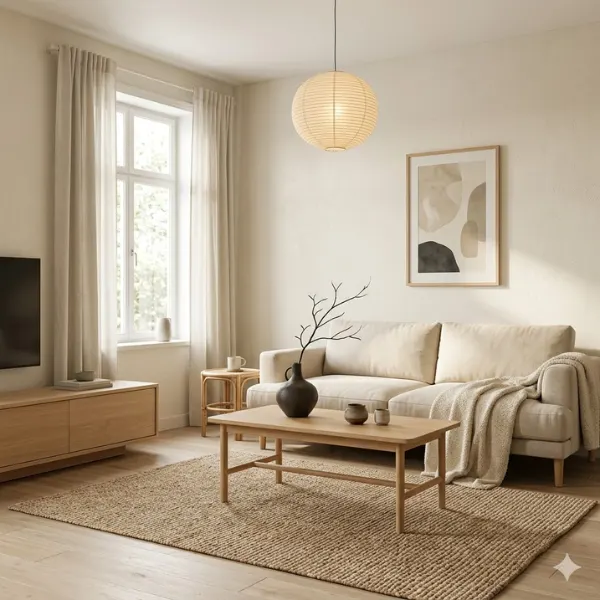
A warm minimalist living room strips everything back to the essentials — but it does not feel cold or empty. It uses soft neutral tones, natural textures, and a few well-chosen pieces to create a space that feels calm, clean, and genuinely inviting. Think creamy whites, warm beiges, and natural wood tones all working together quietly.
Why It Works
Minimalism works because it removes visual noise. When a room has fewer things competing for your attention, it immediately feels more relaxed. Adding warm tones like camel, oat, and honey prevents that empty, clinical feeling that some minimal spaces fall into. The result is a room that looks effortless but feels deeply comfortable.
Best For
This design is perfect for small to medium-sized living rooms. It also works beautifully in apartments where natural light is limited, because the light tones bounce light around the room and make it feel larger than it actually is.
Styling Tips
Start with a neutral sofa in a warm tone — think oatmeal, sand, or light taupe. Add a chunky knit throw and two or three textured cushions in earthy tones. Use a low-profile wooden coffee table and keep the floor as clear as possible. One large piece of simple wall art works better than a gallery of smaller frames. Keep decor items to a minimum — one ceramic vase, one trailing plant, and maybe a candle cluster is all you need.
2. Japandi Slatted Wall Lounge
Japandi is the love child of Japanese minimalism and Scandinavian design. It is one of the most popular living room styles right now — and for good reason. The slatted wall element brings in a deeply stylish, architectural detail that adds warmth and texture without cluttering the room. It is especially beautiful behind a TV or media unit.
Why It Works
The slatted wall creates instant depth and visual interest. It gives the eye something to land on without introducing busy patterns or bold colors. The Japanese influence keeps things intentional and calm, while the Scandinavian side brings in comfort through soft textiles and natural materials.
Best For
This design suits medium-sized living rooms really well. It works in both apartments and houses. If you have a plain, boring wall behind your TV, a DIY slatted panel is one of the most affordable ways to completely transform the look of the room.
Styling Tips
Install vertical timber slats in a warm walnut or oak tone behind your TV unit. Keep the rest of the room very quiet — low-profile furniture in neutral tones, a jute or wool rug, and soft indirect lighting. Add a single sculptural plant like a fiddle leaf fig or snake plant. Use matte black hardware for TV brackets and shelving brackets — it ties the whole look together neatly.
3. Moody Dark and Cozy Cave Room
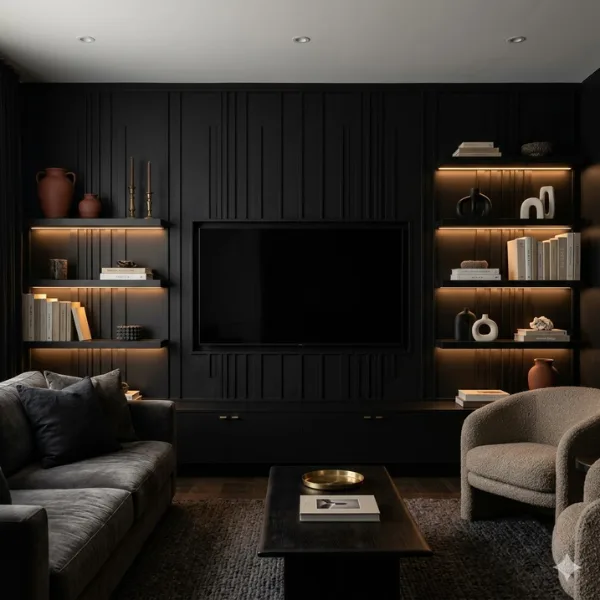
Do not be afraid of dark colours in a living room. A moody, dark-toned space done correctly is one of the most dramatic and cosy designs you can create. Deep charcoal, forest green, midnight blue — these colours wrap a room in atmosphere and make it feel like the ultimate retreat.
Why It Works
Dark walls create a cocoon effect. They make the room feel enclosed in the best way — warm, intimate, and completely relaxing. When you pair dark walls with soft lighting, plush textiles, and warm wood tones, the result is a space that genuinely feels like a luxury hotel suite.
Best For
This works brilliantly in smaller rooms where you might feel like light colours are the only option. Ironically, a dark room can feel cosier and more intentional than a plain white one. It also suits north-facing rooms that do not get much natural light anyway — lean into the darkness rather than fighting it.
Styling Tips
Choose one deep paint colour and use it on all four walls — even the ceiling if you are feeling bold. Charcoal grey, deep navy, and bottle green are the most timeless options. Layer in warm lighting through floor lamps and table lamps rather than relying on overhead lights. Use a cream or camel-toned sofa to contrast the dark walls. Add a chunky wool rug in an off-white or stone tone for warmth underfoot. Keep metal accents warm — brass and gold work far better here than chrome.
4. Organic Modern with Stone Feature Wall
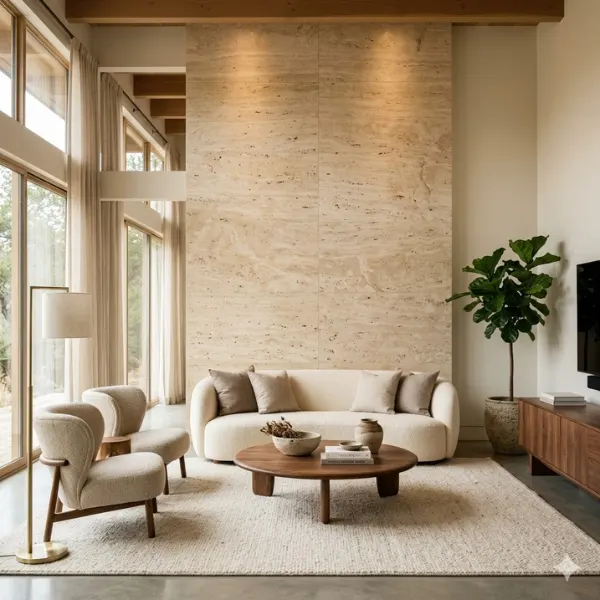
This design combines the clean lines of modern style with the raw, natural beauty of organic materials. The stone feature wall is the hero of the room — it brings in texture, earthiness, and a sense of permanence that makes the entire space feel grounded and luxurious.
Why It Works
Stone has a quality that no painted wall or wallpaper can replicate. It is tactile, unique, and every panel looks slightly different. In a modern living room, a stone wall acts as a natural anchor point. It adds character without trying too hard, and it pairs beautifully with both soft rounded furniture and sleek straight-lined pieces.
Best For
This is ideal for larger living rooms with a high ceiling, where a feature wall can really make a statement. However, even in a medium-sized room, a partial stone panel behind a sofa or fireplace creates a beautiful focal point.
Styling Tips
Use a light, warm-toned stone like travertine or a natural buff sandstone — avoid anything too grey or cold. Place a rounded boucle sofa in front of the wall and let the contrast between the organic stone and the soft fabric do the talking. Add a low walnut coffee table and some sculptural ceramic objects on the shelves. Keep the rest of the walls plain — a single feature wall is always more powerful than trying to do too much.
5. Scandinavian Light and Airy Retreat
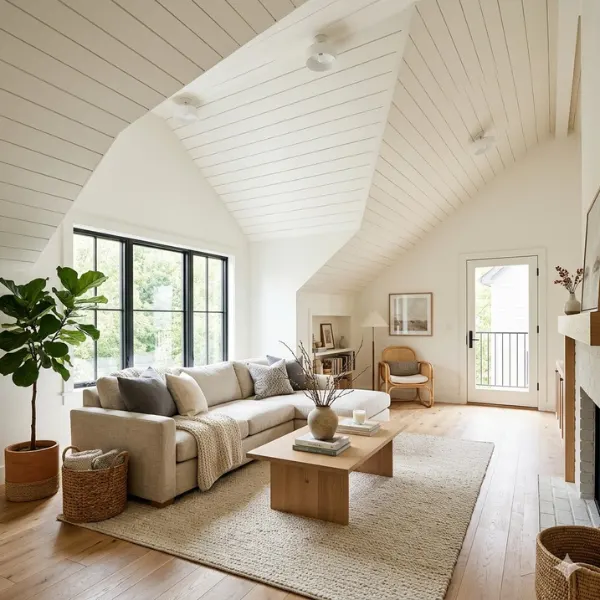
Scandinavian design has been around for decades, and it is not going anywhere. Why? Because it genuinely works. Clean lines, light woods, soft whites, and thoughtful functionality make for a living room that feels open, calm, and always put-together. It is the kind of space that looks naturally beautiful without any fuss.
Why It Works
The Scandinavian philosophy is built around bringing light into the home and keeping it simple. In living room design, this translates to open floor plans, light-coloured furniture, natural wood accents, and minimal decoration. Every piece earns its place in the room.
Best For
This design is excellent for small living rooms and apartments because the light palette and clean lines create an instant sense of space. It also works well in family homes where you need the room to be practical and easy to maintain — there is nowhere for clutter to hide in a Scandi room, which means you tend to keep it tidy.
Styling Tips
Start with white or light grey walls. Choose a sofa in light grey, soft white, or a warm oatmeal tone. Bring in natural wood through your coffee table, shelving, and lamp bases. Layer a textured rug — a flatweave cotton or a simple wool rug works best. Add a few dried pampas grass stems in a simple ceramic vase and a linen throw over one arm of the sofa. Keep your window dressings simple — sheer white curtains let the light pour in beautifully.
6. Bold Maximalist Colour-Drenched Lounge
Maximalism is having its moment right now — and it is so much fun to work with. A colour-drenched living room uses a single bold colour across the walls, ceiling, and even some furniture for a dramatic, cocoon-like effect. It looks intentional, editorial, and completely unlike anything else.
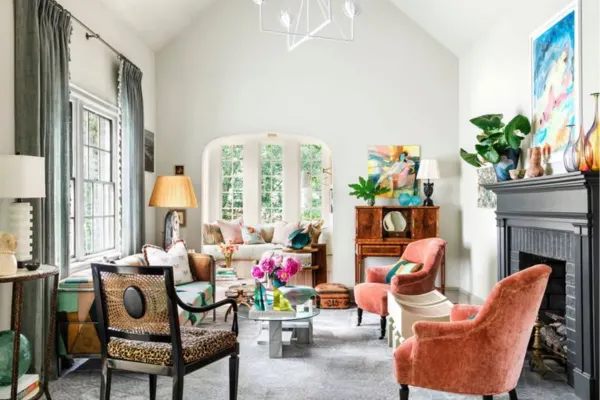
Why It Works
Colour-drenching works because it creates cohesion through repetition. When one colour is used across every surface, the room feels finished and deeply considered. It removes the need to match lots of different elements because everything belongs to the same colour family. The result is striking but never messy.
Best For
This design actually works brilliantly in small rooms. A small room drenched in a deep, moody colour feels like a jewel box — intimate and full of personality. It suits people who love bold style and want their living room to be a real statement space.
Styling Tips
Pick one rich colour: terracotta, deep teal, warm mustard, or dusty rose all work beautifully. Paint the walls, ceiling, and even the skirting boards in the same shade. Choose curtains in a slightly lighter or slightly darker version of the same colour. Bring in contrast through natural textures — rattan, wood, and linen all cut through the boldness without competing with it. Keep art minimal but impactful — one large-scale piece in a contrasting tone is all you need.
7. Boho-Japandi Fusion Living Room
This is a design combination that sounds unusual but works incredibly well in practice. Bohemian style brings in personality, warmth, and a love of natural materials. Japandi brings in calm, low-profile furniture, and intentional simplicity. Together they create a living room that feels collected, artful, and genuinely personal.
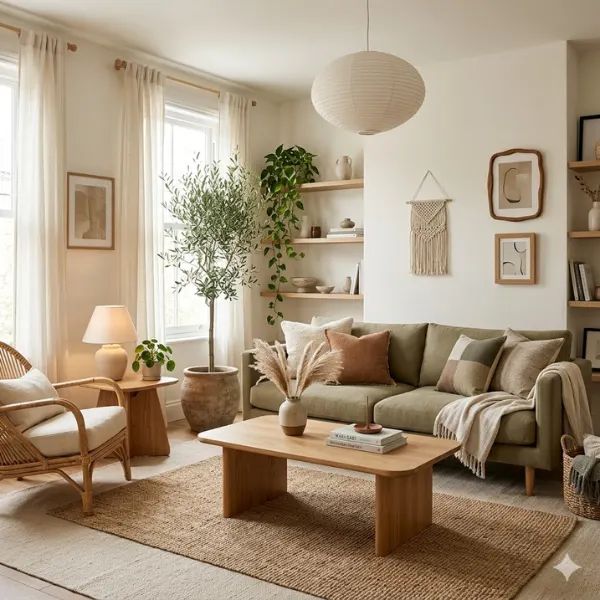
Why It Works
The two styles share a love of natural materials and organic shapes, which is why they blend so seamlessly. The Japandi foundation keeps the room from looking cluttered, while the boho elements inject colour, texture, and life. It is the perfect balance for people who love the aesthetic of boho but want a slightly more edited, grown-up version.
Best For
This works well in medium-sized living rooms. It suits renters and homeowners equally because the look is built through layered textiles and furniture rather than fixed architectural features.
Styling Tips
Start with a low corduroy or linen sofa in a warm tone — terracotta, dusty pink, or sage green all work beautifully here. Layer a woven jute rug over a plain flatweave for that classic boho layered rug look. Add a mix of wooden and rattan side tables. Bring in plants — lots of them. A trailing pothos, a fiddle leaf fig, and a small monstera together create a lush, lived-in feel. Display a bold abstract painting on the wall — something with earthy tones and loose, organic brush strokes.
8. Luxury Grand Sectional Lounge
Some living rooms are built to impress. If you have the space, a large sectional sofa anchoring an expansive, luxuriously styled room is one of the most beautiful and welcoming things you can create. This is the living room that makes guests stop in the doorway and say, “wow.”
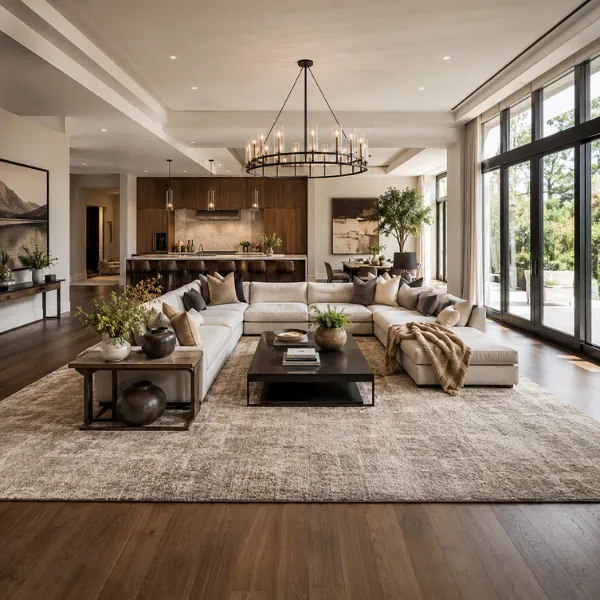
Why It Works
A grand sectional sofa immediately communicates comfort and generosity. Pair it with high-quality materials — marble, brass, velvet, and soft wool — and the room signals luxury without being cold or untouchable. The key is balancing scale: large furniture needs large rugs, tall lamps, and artwork that fills the wall.
Best For
This is made for large living rooms and open-plan family spaces. It works in houses with high ceilings and generous floor space. If you are designing a formal lounge or entertaining space, this is the direction to go.
Styling Tips
Choose a large sectional in a warm beige, camel, or deep charcoal. Anchor it with an oversized wool or silk rug — the rug should be large enough that all furniture legs sit on it. Add a marble or stone coffee table in the centre. Use brass floor lamps and pendant lights for warm, layered lighting. Keep the colour palette neutral and warm, then introduce richness through a velvet accent chair, a sculptural art piece, and some statement coffee table books.
9. Small Smart Studio Living Room
Living in a studio apartment does not mean you have to sacrifice a beautiful living space. With the right furniture choices and a clever layout, a compact room can feel just as stylish and functional as a larger one. The key is thinking vertically and choosing pieces that do more than one job.
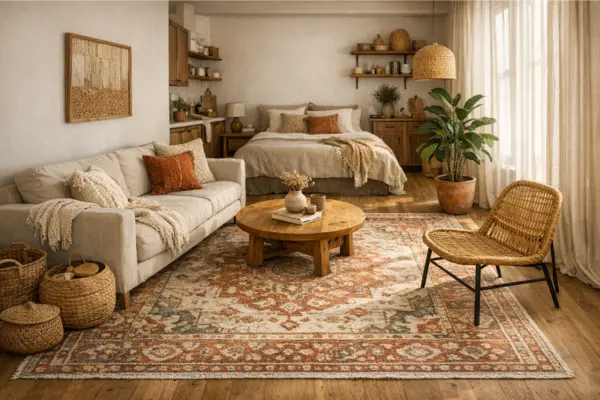
Why It Works
In small spaces, every decision matters more. When you choose furniture that has dual functions, keep the colour palette light, and use vertical wall space intelligently, the room opens up visually and feels far larger than the measurements suggest.
Best For
This is obviously designed for studio apartments, small flats, and compact homes. It also suits first-time home buyers on a tighter budget, since a minimal approach actually costs less and looks intentional.
Styling Tips
Float your sofa slightly away from the wall to create a sense of depth. Choose a sofa with slim legs rather than one that sits on the floor — the visible floor space underneath it makes the room feel bigger. Mount your TV on the wall to free up the floor. Use a round coffee table — it takes up less visual space and is easier to move around. Add wall-mounted shelves for storage and display. A large mirror on one wall will double the sense of space instantly.
10. Industrial Loft Living Room
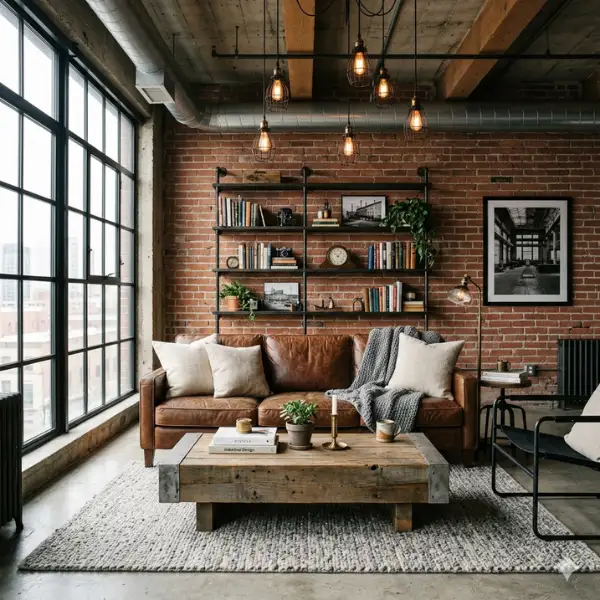
Raw exposed brick, dark steel shelving, concrete tones, and Edison bulb lighting — industrial style is one of the most iconic modern living room aesthetics. It celebrates the structure of a building rather than hiding it, and when done well, it looks effortlessly cool and deeply characterful.
Why It Works
Industrial design is honest. It does not pretend to be anything other than what it is. Exposed materials like brick and concrete bring a sense of history and texture that you simply cannot replicate with paint or wallpaper. Pairing raw materials with soft furnishings creates a balance that makes the space feel tough and comfortable at the same time.
Best For
This design is most at home in loft apartments, converted warehouses, and homes with high ceilings. It also works well in open-plan spaces where the living area flows into a kitchen or dining room.
Styling Tips
Let the architecture do the heavy lifting. If you have exposed brick, leave it bare — maybe seal it with a matte sealant to bring out the colour. Use dark steel shelving units and matte black hardware throughout. Soften the hard edges with a large Moroccan-style rug and a leather sofa in tobacco or dark tan. Add Edison bulb pendants or wall-mounted filament lights for warm, moody lighting. Bring in a few plants in simple clay or concrete pots to inject life into the raw palette.
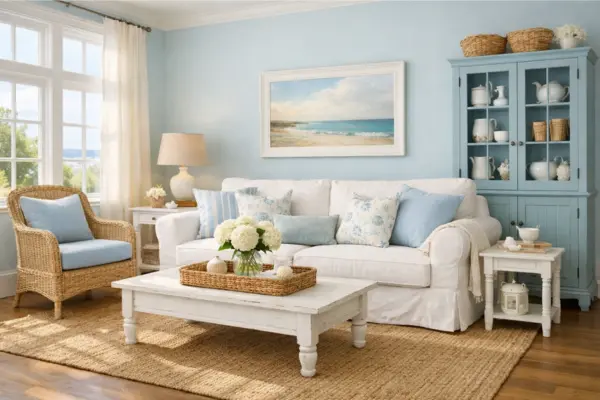
11. Coastal Breeze Living Room
Not everyone lives near the ocean, but anyone can bring that light, easy, breezy coastal feeling into their home. A coastal living room uses soft blues, sandy neutrals, natural rattan and linen, and plenty of natural light to create a space that feels like a permanent holiday.
Why It Works
Coastal style works because it is built around lightness and ease. The colour palette is inherently calming — blues and sandy neutrals are some of the most universally soothing tones in interior design. The natural materials like rattan, seagrass, and linen add warmth and texture without heaviness.
Best For
This works brilliantly in rooms that get a lot of natural light. It suits medium to large living rooms in houses and apartments alike. If your home has large windows or an outdoor terrace, a coastal scheme bridges the gap between inside and outside beautifully.
Styling Tips
Start with white or very soft off-white walls. Bring in soft blues through cushions, a throw, and perhaps a feature wall in a washed denim or pale aqua tone. Choose a linen sofa in natural, white, or soft blue. Add rattan chairs as accent seating. Use seagrass or jute for your rug. Keep window treatments light and sheer — the whole look depends on natural light flowing freely. Add some driftwood accessories, white ceramic vessels, and a potted palm or two to complete the look.
12. Curved Furniture Contemporary Lounge
Curved furniture is everywhere right now — and once you understand why, it all makes sense. Curved sofas, rounded armchairs, and circular coffee tables soften a room in a way that straight-lined furniture simply cannot. They create flow, movement, and a sense of ease that feels very current and very beautiful.
Why It Works
Hard angles in a room can feel harsh, especially in spaces that are meant to be relaxing. Curved furniture introduces softness and a sense of movement. When you combine curved pieces with soft, textural fabrics like boucle or velvet, the result is a room that feels almost tactile — you want to touch everything in it.
Best For
Curved furniture works in rooms of all sizes but looks most dramatic in larger spaces where you can use a full curved sectional as the centrepiece. In smaller rooms, a single curved armchair or a semi-circular sofa does the job without overwhelming the space.
Styling Tips
Invest in a boucle curved sofa — this is the number one statement piece for this style. Pair it with a round coffee table in marble, glass, or light wood. Add a curved floor lamp with a bent-neck silhouette. Choose a round rug to mirror the curved shapes in the room. Keep the colour palette soft and tonal — creams, blushes, and warm greys all work beautifully with curved boucle furniture.
13. Earthy Terracotta and Green Nature Room
This is one of my personal favourite living room palettes. Terracotta and green together create a room that feels rooted, warm, and deeply connected to the natural world. It is earthy, confident, and full of character.
Why It Works
Terracotta is one of the most flattering tones in interior design. It is warm without being orange, rich without being overwhelming. Pair it with the various shades of green found in real plants and foliage, and you create a palette that genuinely feels alive. It is the kind of room that gets more beautiful as you add plants to it.
Best For
This design works in medium to large living rooms. It suits houses and ground-floor apartments where connecting to the garden or outdoor space is possible. It also works well in family homes because the earthy palette hides wear and tear far better than light neutral schemes.
Styling Tips
Paint an accent wall in a warm terracotta or clay tone. Choose a sofa in a complementary tone — olive green, burnt orange, or deep cream all work. Layer your rug — a flatweave in a warm earthy tone under a round jute rug is a classic boho-nature combination. Fill the room with plants of varying heights — from a tall fig tree to small cacti on the coffee table. Add accessories in dark wood, beaten copper, and terracotta ceramics to reinforce the palette.
14. Sage Green Accent Statement Room
Sage green has become one of the most loved colours in modern living room design. It is a muted, dusty green that works as both a neutral and a colour at the same time. It pairs beautifully with natural wood, white, cream, and brass, making it endlessly versatile.
Why It Works
Sage green sits at the intersection of nature and neutrality. It is calming without being boring, and it adds depth to a room without making it feel dark. Because it reads as a soft, muted tone, it works in both small and large spaces and feels fresh in all seasons.
Best For
This design works in virtually any living room, from small apartments to large family homes. It is a safe but beautiful choice for people who want to move away from all-white and all-grey schemes but are not ready for a bolder colour.
Styling Tips
Choose sage green for one feature wall or for your sofa — both work well. If you go with a sage sofa, keep your walls off-white or warm ivory. If you go with a sage wall, choose a cream or natural linen sofa. Bring in brass accents through your lamp bases, picture frames, and hardware. Add dried botanicals in simple vases — pampas grass and eucalyptus both complement sage green perfectly. Finish with warm wood tones throughout for a cohesive, grounded result.
15. Mid-Century Modern Light-Filled Room
Mid-century modern never really goes out of style. Its signature combination of clean lines, tapered furniture legs, warm wood tones, and geometric patterns creates a living room that feels timeless. It is the design that makes you think of a beautiful film set from the 1960s, but feels completely relevant today.
Why It Works
Mid-century design is built around quality, craft, and proportion. Every piece is considered. The furniture sits elegantly on tapered legs, which keeps the room feeling light and airy even when it is full of pieces. The warm wood tones and graphic textiles give the room personality and warmth without clutter.
Best For
This style works in medium and large living rooms with good natural light. It suits homes with original hardwood floors beautifully. It is also perfect for people who want to invest in a few key furniture pieces that will last decades rather than following trend-led styles.
Styling Tips
Invest in a low-profile sofa with tapered wooden legs in a walnut finish. Choose cushion fabrics in geometric prints or textured weaves in warm tones — mustard, rust, and teal are all classic mid-century colours. Add a sunburst mirror or a bold abstract art piece to the wall. Use a tulip-style side table or a round wooden coffee table. Choose your lighting carefully — a statement arc floor lamp with a sculptural base is very mid-century in spirit.
16. Vintage-Modern Mixed Style Lounge
Vintage and modern do not fight each other — they complete each other. A living room that mixes antique or secondhand pieces with contemporary furniture has a warmth and character that newly furnished rooms often lack. It looks collected over time, which is exactly what a great home should feel like.
Why It Works
New furniture on its own can sometimes feel sterile or showroom-like. Adding vintage pieces introduces imperfection, history, and personality. A worn leather armchair next to a sleek modern sofa tells a story. A vintage lamp beside a contemporary bookcase creates contrast that makes both pieces look more interesting.
Best For
This works in rooms of any size and is one of the most budget-friendly approaches, since you are actively shopping secondhand markets, flea markets, and charity shops for pieces. It suits people who enjoy the hunt for unique items and want a living room that does not look like anyone else’s.
Styling Tips
Start with one or two solid modern pieces — a clean-lined sofa and a simple coffee table. Then go hunting for vintage pieces to layer in: an antique mirror, a retro arc lamp, a set of vintage books, a ceramic vase from a charity shop. The key is to keep the colour palette cohesive even when the styles differ. Stick to your chosen palette — warm tones or cool tones — and the mix will always look intentional.
17. Eclectic Maximalist Collector’s Room
This is the living room for people who love things. Art, books, objects from travels, ceramics, plants, framed prints — all living together in one gloriously full, personality-packed space. When done with intention, maximalism is not messy. It is a story told through objects.
Why It Works
A curated maximalist room communicates that someone genuinely lives and loves in this space. It is the opposite of sterile. Every surface holds something with meaning. The key difference between maximalism and clutter is curation — every item is chosen, not just accumulated.
Best For
This works in larger living rooms where there is enough floor and wall space to display collections without the room feeling suffocating. It suits creative people, collectors, and travellers who have gathered meaningful objects over years and want a home that reflects that.
Styling Tips
Create organisation within the chaos. Group items by colour or material on shelves — a shelf of all-green objects, a shelf of all-ceramic pieces — gives the eye visual anchors. Use a dark paint colour on the walls so that art and objects pop against it. Keep your sofa and major furniture pieces solid and simple so they do not compete with the decorative layers. Invest in good lighting — picture lights, shelf lights, and warm pendant lights all help a maximalist room feel curated rather than cluttered.
18. Dramatic Black and Gold Fireplace Lounge
This is the living room that makes a statement the second you walk in. A towering fireplace in deep charcoal or matte black, veined with gold or brass details, flanked by a pair of luxurious sofas — it is cinematic, dramatic, and completely unforgettable.
Why It Works
The contrast between black and gold is one of the most timeless and powerful combinations in interior design. Black creates depth and drama. Gold adds warmth and richness. Together, they create a space that feels expensive and intentional. The fireplace as a centrepiece gives the entire room a clear focal point, which makes designing around it straightforward.
Best For
This design works in large, formal living rooms. It suits open-plan spaces in modern houses and period properties alike. If you are creating an entertaining lounge or a formal sitting room, this approach delivers real wow factor.
Styling Tips
The fireplace is the hero, so invest in it. Choose a floor-to-ceiling marble or stone surround in a dark, dramatic tone. If you cannot change the fireplace, paint the chimney breast in a deep charcoal and add brass candlestick holders and a large gold-framed mirror above. Choose white or cream sofas to create a striking contrast against the dark backdrop. Use brass pendant lights overhead — a constellation of smaller pendants creates a beautiful effect. Keep the rest of the room simple so the fireplace remains the undisputed centrepiece.
19. Modular Multi-Functional Small Living Room
Modular furniture is one of the smartest investments you can make in a smaller home. A modular sofa that can be rearranged, a storage ottoman that doubles as a coffee table, wall-mounted shelves that free the floor — all of these choices give a small living room the flexibility it needs to work harder.
Why It Works
Small rooms need to adapt. Sometimes you need a movie night configuration. Sometimes you need more floor space for guests. A modular living room makes all of this possible without requiring you to buy new furniture for every occasion. It is a practical, future-proof approach to interior design.
Best For
This is ideal for studio apartments, small flats, and compact living rooms in terraced or semi-detached houses. It is also a smart approach for young families where the living room needs to transition between adult space and play space regularly.
Styling Tips
Start with a modular sofa — one that comes in separate pieces you can reconfigure as needed. Choose a storage ottoman rather than a solid coffee table. Mount your TV on the wall with a swivel bracket so it can be seen from different seating positions. Use floating shelves instead of a freestanding bookcase. Choose a sofa in a lighter tone — pale grey or natural linen — to keep the room feeling open. Add a large mirror to one wall to visually double the size of the room.
20. Open-Plan Floating Sofa Living and Dining Space
In open-plan homes, the challenge is defining the living area without using walls. A floating sofa arrangement is the most elegant solution. By positioning the sofa with its back to the dining area rather than against a wall, you create two distinct zones that flow naturally into each other.
Why It Works
A floating sofa creates what designers call a “soft wall” — it divides the space visually without any physical barrier. The living area feels contained and cosy, while the dining area has its own clear territory. The room reads as two purposeful zones rather than one large, undefined space.
Best For
This is made for open-plan living and dining rooms in modern houses and apartments. It is one of the most effective ways to make a long rectangular room feel purposeful and well-designed.
Styling Tips
Position your sofa in the centre of the room, with its back facing the dining area. Use a large rug to anchor the living zone — make sure all sofa legs sit on the rug. Add a console table behind the sofa facing into the living area — this becomes a natural transition point and is great for a lamp, books, or small plants. Use pendant lighting above both the dining table and the seating area to reinforce the two zones visually.
21. Soft Blush and Marble Sculptural Living Room
This is modern living room design at its most serene and feminine. Soft blush tones, sculptural furniture with clean curves, a marble fireplace, and carefully chosen art create a space that feels both calm and quietly luxurious. It is the kind of room that looks beautiful in every light.
Why It Works
Blush is one of the most flattering and universally loved tones in interior design. It is warm without being pink, and it creates a soft glow in the room that feels naturally inviting. Pairing it with marble — which has its own inherent elegance and depth — elevates the design into something that genuinely feels considered and expensive.
Best For
This design works beautifully in medium to large living rooms with a fireplace as a natural focal point. It suits both modern and period homes. If your living room gets afternoon or evening sun, blush tones will glow in the warm light in a way that is genuinely breathtaking.
Styling Tips
Choose a blush or dusty rose sofa in a velvet or linen fabric. If you prefer neutrality, use cream for the sofa and bring in blush through cushions and a throw. Source a marble coffee table — even a simple round marble top on a brass base works perfectly. Add sculptural art pieces on shelves: abstract ceramics, smooth stone objects, and single-stem dried flowers in slim vases. Use soft, layered lighting through table lamps with linen shades rather than relying on overhead lighting.
Mistakes to Avoid When Designing a Modern Living Room
Even the most beautiful design plan can go wrong. Here are the most common mistakes I see people make — and how to avoid each one.
Buying the sofa first without measuring. This is the single most common mistake. A sofa that is too large for the room will kill every other design decision you make. Always measure the room, mark the sofa footprint on the floor with tape, and walk around it before committing.
Using one light source. A single overhead light makes any room feel flat and harsh. Modern living rooms need layers of light — overhead, floor lamps, table lamps, and even candles. Each layer adds warmth and dimension.
Choosing a rug that is too small. A rug should be large enough that all key furniture legs sit on it. A small rug floating in the centre of the room looks disconnected and makes the space feel smaller, not larger.
Ignoring the ceiling. The ceiling is often called the fifth wall for good reason. A dark ceiling, a textured paint finish, or a statement pendant light can completely transform the feel of a room. Do not neglect it.
Matching everything too perfectly. A room where every piece of furniture is from the same range or collection looks staged and soulless. Mix materials, eras, and textures. Rooms with personality are built through considered contrast, not perfect matching.
Forgetting storage. A living room without enough storage will always look cluttered, no matter how beautiful the furniture is. Build in storage from the start — whether through a media unit, built-in shelving, or a storage ottoman.
Conclusion
The most important thing I can tell you about designing a modern living room is this: start with how you want it to feel, not how you want it to look.
Do you want it to feel calm? Start with a neutral palette and minimal furniture. Do you want it to feel bold and full of personality? Go for colour, layers, and statement pieces. Do you want it to feel luxurious? Invest in quality textures and lighting.
Every one of the 21 designs in this guide works in the real world. None of them require a renovation budget or a professional designer. They require thought, intention, and a willingness to be patient and build the room layer by layer.
Take what inspires you from this list. Mix ideas from two or three designs if that feels right for your home. There are no rules — only decisions that either serve the room or do not.
Your living room deserves to be your favourite room in the house. Go make it that.
Frequently Asked Questions
What makes a living room look modern? A modern living room is defined by clean lines, purposeful furniture, layered lighting, and a cohesive colour palette. It does not have to be minimal — modern can be maximalist, dark, colourful, or organic. What makes it modern is that every choice feels intentional rather than accidental.
What is the most popular modern living room style in 2026? Warm minimalism, Japandi design, and organic modern are the three most dominant living room styles right now. All three share an emphasis on natural materials, neutral tones, and quality over quantity.
How do I make a small living room look bigger? Use light paint tones, choose furniture with slim legs, mount the TV on the wall, use a large mirror, keep the floor as clear as possible, and choose a sofa in a light colour. Keeping window treatments light and allowing natural light to flow freely also makes a significant difference.
How do I choose the right sofa for a modern living room? Think about scale first — the sofa should fit the room without blocking walkways. Then think about fabric — linen and boucle are both very current and very durable. Finally, consider colour — a neutral sofa gives you maximum flexibility to change the rest of the room through accessories.
How many colours should a modern living room have? A tried and tested approach is the 60-30-10 rule. Sixty percent of the room should be a dominant colour, thirty percent a secondary colour, and ten percent an accent. This creates visual balance without making the room feel flat or overwhelming.
Do I need expensive furniture for a beautiful modern living room? No. Some of the most beautiful living rooms I have seen were built on a very modest budget using secondhand pieces, DIY elements, and a few well-chosen investments. The quality of your choices matters far more than the price tag. A beautifully styled room with affordable furniture will always look better than an expensive room that has not been thought through.
How important is lighting in a living room? It is arguably the single most impactful design element. Great lighting can make a simple, affordable room feel luxurious. Poor lighting can make an expensive, beautifully furnished room feel flat and unwelcoming. Always plan your lighting at the same time as your furniture — do not leave it as an afterthought.