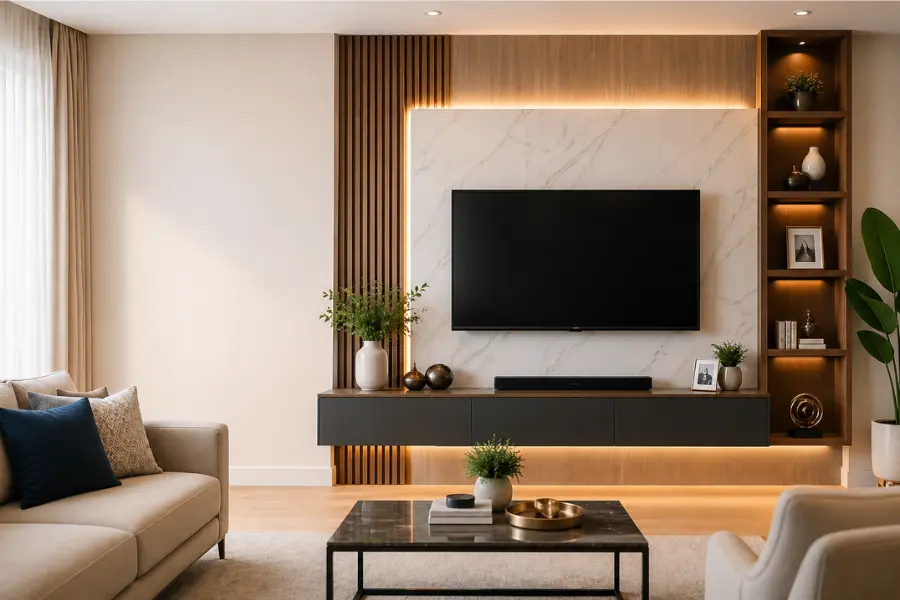
The Most Famous 28 Living Room TV Wall Ideas in 2026
The TV is probably the first thing anyone looks at when they walk into your living room. It is big, it is dark, and when it is off — it can look like a black hole sitting on your wall. I have been through this myself, and I know exactly how frustrating it can feel.
But here is the good news. Your TV wall does not have to be an eyesore. In fact, it can be the most beautiful feature in your entire home. Over the years, I have tested and tried dozens of TV wall setups — in small apartments, large family rooms, rental homes, and custom-built spaces. And I have gathered everything I know into this one guide.
Whether you have a tiny 10-foot living room or a grand open-plan space, there is an idea in this list for you. I have kept each idea realistic, budget-aware, and beginner-friendly. No architectural degree needed. Just good taste and a little planning. These 28 ideas cover every style — from rustic farmhouse to sleek modern luxury — and every size, small, medium, and large. Let us get into it.
Table of Contents
28 Living Room TV Wall Ideas
Each idea below has been carefully chosen to be different from the others. You will find ideas for tight spaces, for statement walls, for renters, and for those who want a full renovation. Take what works for your home and make it your own.
IDEA 01
■ LARGE ROOM
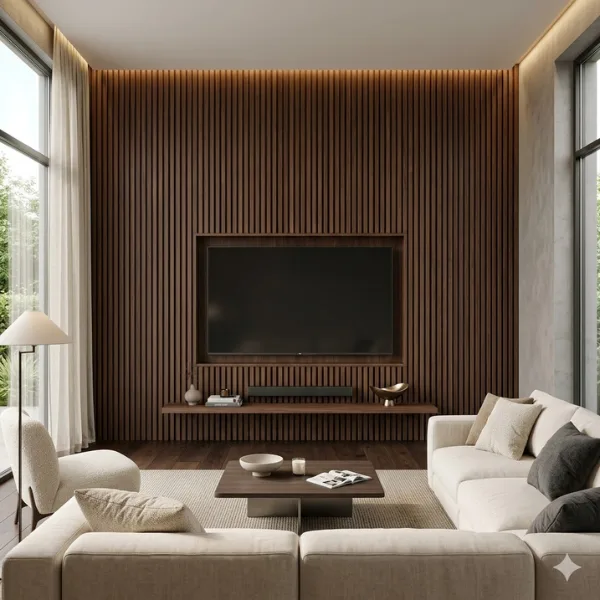
The Full-Wall Walnut Wood Slat Panel with Recessed TV
This is one of the most popular TV wall designs right now — and for good reason. Walnut wood slats stretch from one edge of the wall to the other, with the TV sitting neatly recessed into the panel. It feels warm, rich, and completely intentional. The TV becomes part of the wall, not an afterthought.
WHY IT WORKS
Wood slats add deep texture and visual rhythm to a flat wall. When the TV is recessed — meaning it sits slightly inside the wall — it removes the “floating black rectangle” problem. The dark screen blends naturally into the darker wood tones. The whole wall becomes one cohesive, furniture-grade feature.
BEST FOR
Large living rooms with plenty of wall space. Works especially well in homes with open-plan layouts, high ceilings, or where you want the living room to feel warm and earthy rather than cold and clinical.
STYLING TIPS
Go for dark walnut over light pine — it hides dust better and looks more premium. Add a slim floating shelf just below the TV for a soundbar or small decorative objects. Keep everything else in the room neutral: cream sofas, linen cushions, and warm-toned lighting to match the wood’s richness.
IDEA 02
■ LARGE ROOM
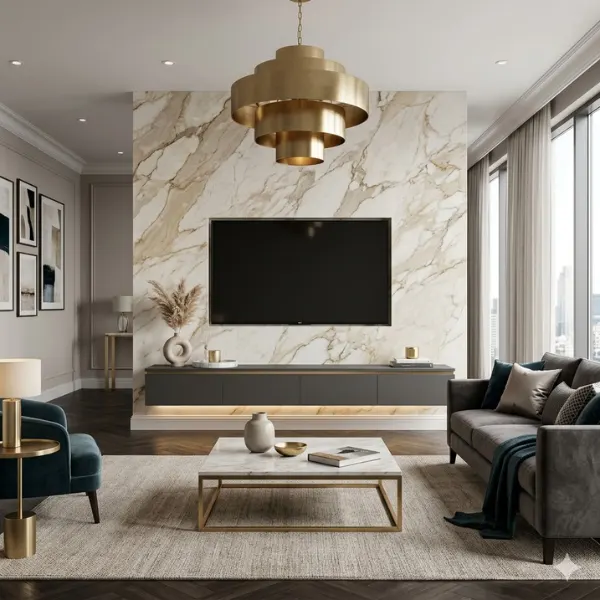
Marble Feature Wall with Floating Gold-Trimmed Console
Nothing says luxury like marble. A floor-to-ceiling marble slab or marble-effect panel behind the TV instantly transforms the room into something you would expect in a five-star hotel. Paired with a floating console trimmed in brushed gold, this setup is unapologetically glamorous and timelessly beautiful.
WHY IT WORKS
Marble has natural veining that gives every wall a unique, one-of-a-kind look. The warm veins — especially in beige or gold tones — complement the TV’s dark frame perfectly. The gold console adds a second metallic moment that ties the whole palette together without trying too hard.
BEST FOR
Larger living rooms or formal lounges where making a statement is the goal. Ideal for homeowners who love a luxury, boutique-hotel aesthetic and are willing to invest in a show-stopping wall.
STYLING TIPS
Use large-format marble panels rather than small tiles for a seamless, uninterrupted look. Keep the rest of the room restrained — velvet sofas in charcoal or deep teal, minimal accessories, and a single oversized pendant light. Let the wall do all the talking.
IDEA 03
■ SMALL & MEDIUM ROOM
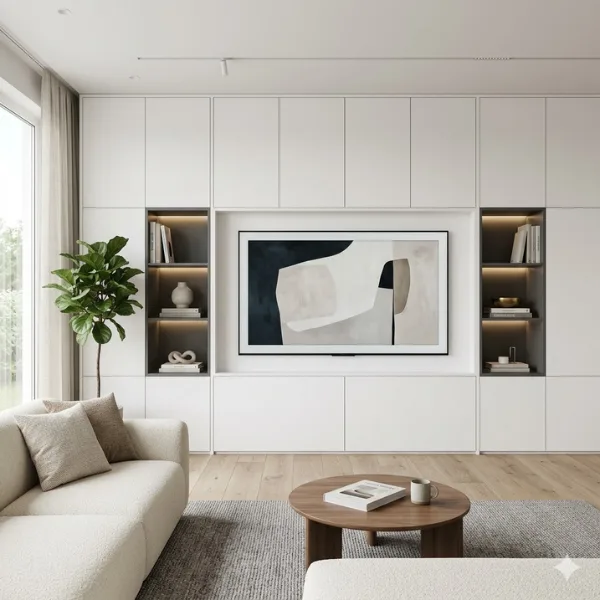
Minimalist White Built-In Cabinetry with Hidden Storage Doors
This idea is a game-changer for people who want their living room to look clean but have a lot of stuff to hide. Custom white cabinetry fills the wall from end to end, with the TV mounted in the center. Closed cabinet doors hide everything — consoles, routers, DVDs, kids’ toys — and the result is a room that always looks tidy.
WHY IT WORKS
The all-white cabinet doors create a seamless, almost wall-like appearance. The TV is the only thing that stands out, which actually makes it feel intentional rather than intrusive. When the doors are shut, it looks like a high-end fitted furniture piece rather than a media wall.
BEST FOR
Families with lots of devices and storage needs. Perfect for small to medium rooms where clutter is the enemy. Also excellent for open-plan spaces where the living area doubles as a study or playroom.
STYLING TIPS
Use push-to-open doors instead of handles for the cleanest look. Paint the interior of open shelves in a contrasting dark tone — charcoal or deep navy — so any displayed items pop beautifully. Add recessed LED strip lighting inside the open shelves to give depth at night.
IDEA 04
■ SMALL ROOM
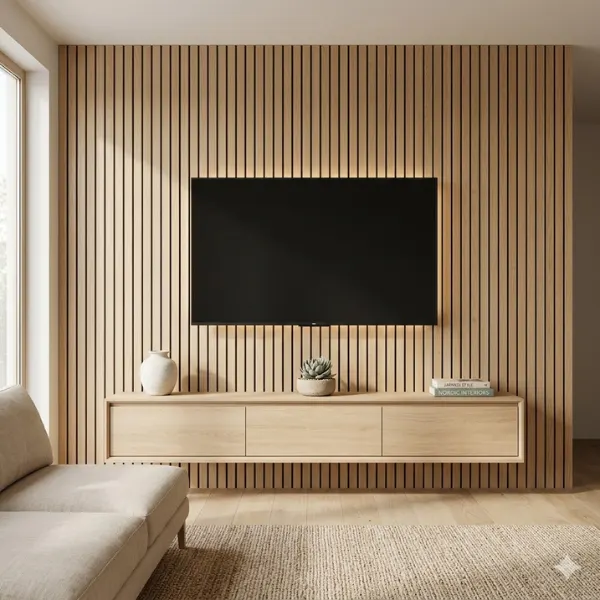
Japandi-Style Light Oak Slats with Low-Profile TV Unit
Japandi is the beautiful blend of Japanese minimalism and Scandinavian warmth. This TV wall uses light oak vertical slats — slightly spaced apart — with a very low, ground-hugging TV unit sitting beneath. The whole setup feels calm, grounded, and deeply considered. Less is genuinely more here.
WHY IT WORKS
The pale wood tones make even a small room feel larger and more open. The low unit drops the TV’s visual weight down toward the floor, which tricks the eye into perceiving the ceiling as higher. The slats create texture without visual noise — perfect for a peaceful, distraction-free space.
BEST FOR
Small apartments, studio flats, or anyone who prefers a serene and clutter-free living space. Also works brilliantly in bedrooms that double as TV rooms.
STYLING TIPS
Choose a TV unit that sits only 8 to 12 inches off the floor. Style the unit with a single ceramic vase, a small plant, and one or two hardcover books. Resist the urge to add more. The restraint is what makes Japandi so beautiful — every object earns its place.
IDEA 05
■ MEDIUM TO LARGE ROOM
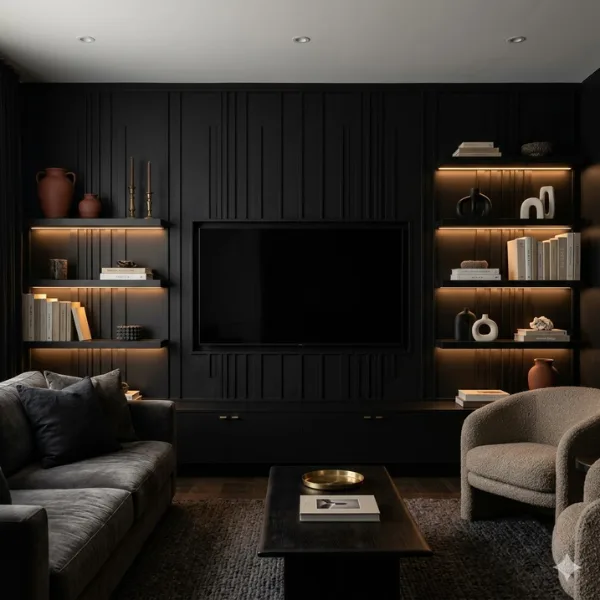
Dark Drama: All-Black Paneled Wall with Backlit Floating Shelves
Bold, moody, and completely unforgettable. Painting or paneling the TV wall in deep matte black — then adding floating shelves with warm LED underglow — creates a cinematic backdrop that makes your TV genuinely disappear when it is on. The room feels like a private home cinema, but with the polish of an interior design magazine.
WHY IT WORKS
A black screen against a black wall is almost invisible. The TV stops being a piece of technology and starts being part of the room’s composition. The warm backlighting on the shelves softens the darkness, adding glow and visual depth without breaking the moody atmosphere.
BEST FOR
Evening-focused rooms, dedicated TV lounges, or media rooms. Works beautifully in homes where natural light is controlled — think heavy curtains or north-facing rooms that do not get direct sunlight glare.
STYLING TIPS
Use matte black paint with a flat finish to absorb light rather than reflect it. Style the floating shelves with objects that have warm tones — terracotta pots, brass candle holders, and cream-coloured books. The contrast between the dark wall and warm shelf styling is the magic in this design.
IDEA 06
■ LARGE ROOM
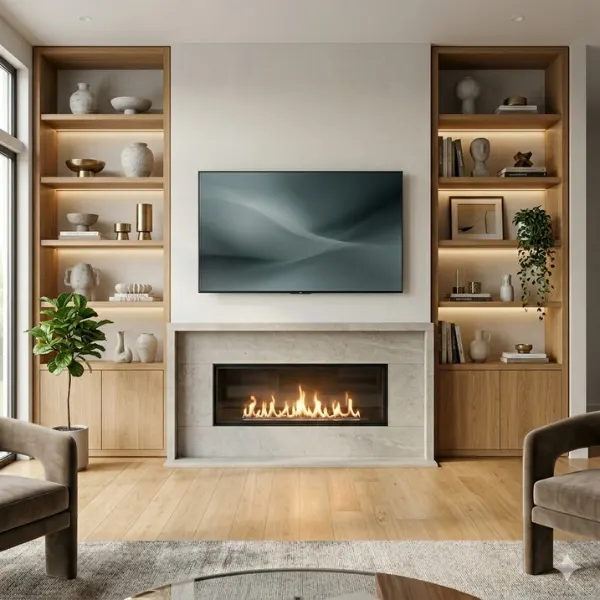
Fireplace and TV Combo Wall with Symmetrical Built-In Shelving
The classic of all TV wall ideas. A fireplace sits at the center or base of the wall, the TV is mounted above it or alongside it, and flanking built-in shelves frame the whole arrangement symmetrically. This setup has appeared in living rooms for decades because it works — every single time, in every single style.
WHY IT WORKS
Symmetry is naturally pleasing to the human eye. When you have matching shelves on both sides of a central fireplace-TV arrangement, the wall feels balanced and architecturally intentional. The fire adds warmth and life, making the room feel genuinely cosy even with a large cold TV above it.
BEST FOR
Larger family rooms, formal sitting rooms, or any home where gathering and entertaining is a priority. Works equally well in traditional, transitional, and modern styles depending on materials chosen.
STYLING TIPS
Keep the shelving styling symmetrical but not identical — same height, same general arrangement, but with slightly different objects. This gives a curated, lived-in feel rather than a showroom look. Use recessed lighting inside the shelves and consider adding a built-in log store at the base of the fireplace for texture and practicality.
IDEA 07
■ SMALL ROOM
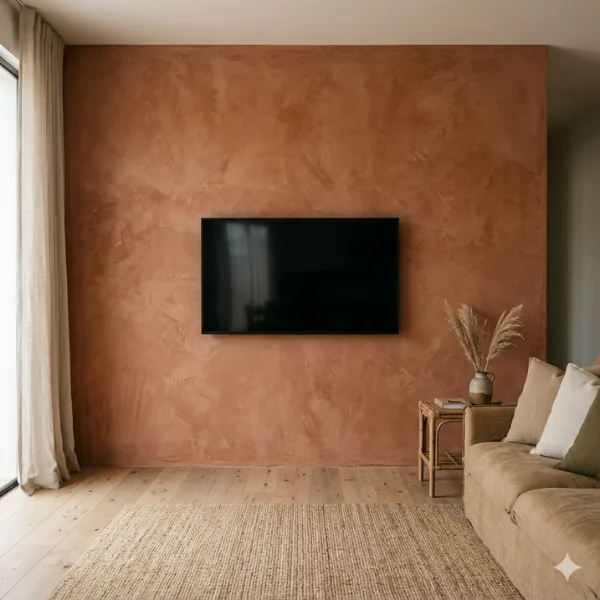
Earthy Terracotta Plaster Wall with Slim Mounted TV
If you love earthy, handcrafted interiors, this idea will stop you in your tracks. A limewash or venetian plaster finish in a rich terracotta tone creates a textured, one-of-a-kind backdrop for a slim wall-mounted TV. No shelf, no unit, no fuss — just a beautiful wall and a clean screen.
WHY IT WORKS
The organic, imperfect texture of plaster adds so much visual interest that the TV becomes almost secondary. The terracotta tone is warm enough that the dark screen does not look stark or cold against it. The absence of furniture below the TV keeps the floor clear, making even a small room feel spacious.
BEST FOR
Small living rooms, rental apartments where built-ins are not possible, or bohemian and Mediterranean-inspired interiors. This look costs very little compared to built-in cabinetry but delivers enormous visual impact.
STYLING TIPS
Leave the wall uncluttered — this plaster texture needs room to breathe. Hide all TV cables inside the wall or use a cable cover painted in the same terracotta colour. Add a simple rattan side table nearby and layer the room with woven textiles and natural materials to complete the earthy story.
IDEA 08
■ MEDIUM ROOM
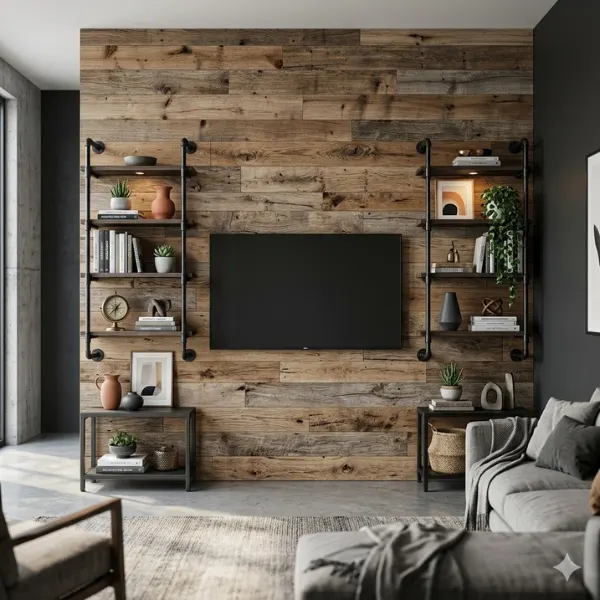
Industrial Chic: Reclaimed Wood Panels with Black Metal Open Shelving
Raw, rugged, and full of character. Reclaimed wood panels cover the wall behind the TV, while black metal pipe shelving brackets hold open shelves either side of the screen. The contrast between the warm, imperfect wood and the clean cold metal is what gives this look its unique energy and personality.
WHY IT WORKS
Reclaimed wood panels bring history and texture to a wall in a way that nothing else can. Every knot, grain, and imperfection tells a story. The black metal frames that contrast, keeping the industrial edge sharp and the overall look contemporary rather than purely rustic.
BEST FOR
Medium-sized living rooms with an urban, loft-style, or modern farmhouse vibe. Especially popular in homes with exposed brick, concrete flooring, or high ceilings. Great for renters who can install floating shelf brackets without major structural work.
STYLING TIPS
Mix media on the open shelves — stack thick books horizontally, place small potted plants (succulents work beautifully here), and add a few vintage objects or antique finds. The shelves should look collected and personal, not perfectly styled. That natural imperfection is the whole point of this look.
IDEA 09
■ MEDIUM ROOM
Neutral Fluted Panel Backdrop with Under-Glow LED Console
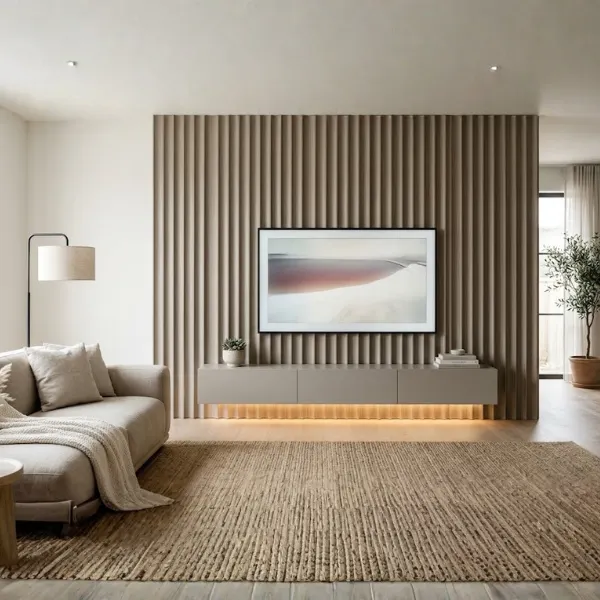
Fluted panels — those panels with vertical grooves running top to bottom — are having a major moment right now, and they are absolutely worth the hype. A neutral-toned fluted panel wall behind the TV, combined with a floating console that has hidden LED strip lighting underneath, creates a look that is quietly stunning.
WHY IT WORKS
The vertical grooves in fluted panels catch the light at different angles throughout the day, giving the wall constant visual movement and depth. The LED underglow on the console adds a soft ambient glow that makes the room feel warm and elevated at night — without being flashy or over the top.
BEST FOR
Medium-sized living rooms in modern, transitional, or contemporary homes. Works especially well in rooms where the overall palette is neutral — creams, greiges, warm whites — and where you want texture to do the decorating rather than colour.
STYLING TIPS
Choose an MDF fluted panel in a warm white or greige tone. The console beneath should be thin — around 12 to 16 inches deep — so it reads as floating. Warm white LED strips (around 2700K colour temperature) under the console give that soft, candlelit glow. Style the console top with just two or three carefully chosen objects and leave generous empty space between them.
IDEA 10
■ MEDIUM ROOM
Gallery-Style TV Wall Surrounded by Framed Art and Photographs
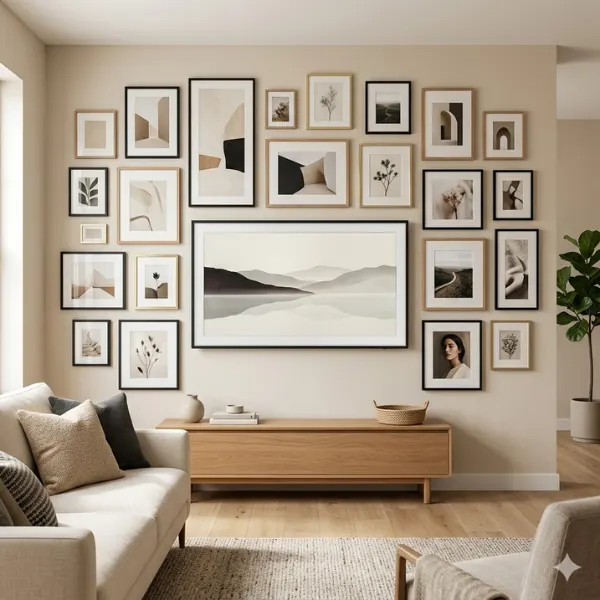
The most personal TV wall idea on this entire list. Instead of building around the TV with shelves or panels, you surround it with a gallery wall of framed artwork, photographs, and prints. The TV becomes just one more “frame” among many, and the whole arrangement feels like a curated art collection rather than a media setup.
WHY IT WORKS
When the TV is surrounded by frames of similar proportion and colour, the eye does not land on it as a technology object — it reads as part of a gallery arrangement. When the TV is off, the wall still looks beautiful and personal. This is the clever person’s trick to make a TV disappear in plain sight.
BEST FOR
Medium-sized rooms in traditional, eclectic, or transitional homes. Brilliant for people who love art and personal photography, or those who cannot afford built-in cabinetry but want a wall with serious character.
STYLING TIPS
Use frames in matching or complementary tones — all black, all natural wood, or a mix of black and gold. Keep the TV frame colour in mind when choosing. Vary the frame sizes but maintain even spacing — around 2 to 3 inches between each frame. Start by laying your arrangement on the floor before putting any nails in the wall.
IDEA 11
■ MEDIUM ROOM
Sage Green Built-In Cabinetry with Geometric Wood Pattern Accent
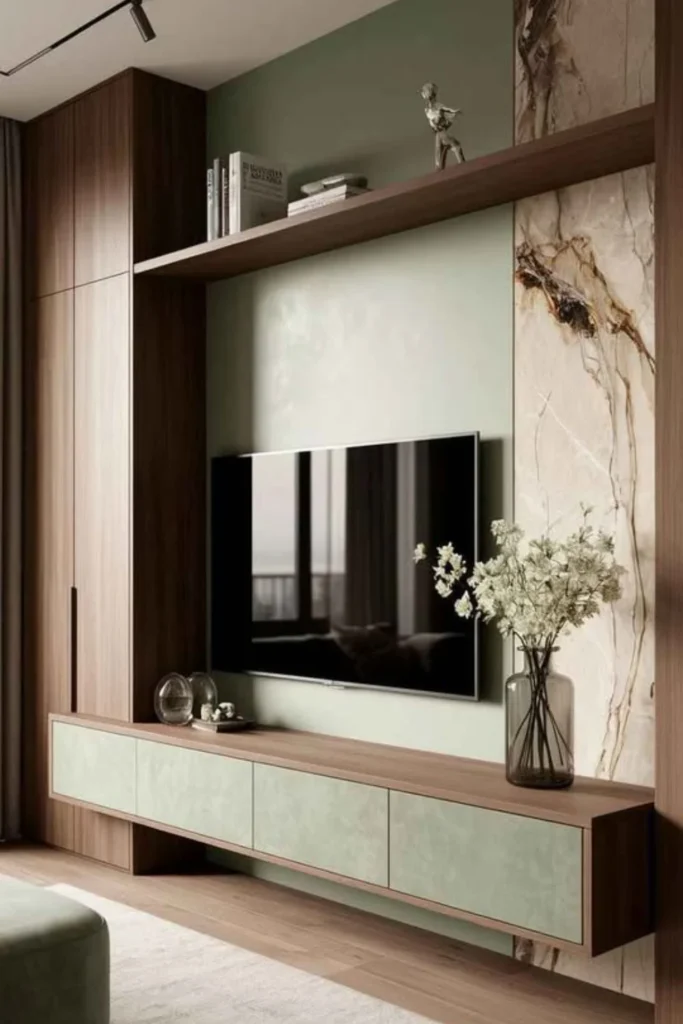
Who says TV wall cabinetry has to be white or grey? Sage green painted built-ins bring a breath of fresh air — literally — to the living room. Add a central geometric wood panel accent behind the TV screen and you have a wall that is both bold and grounded, playful and sophisticated all at once.
WHY IT WORKS
Sage green is one of the most universally flattering interior colours. It pairs with wood tones, neutrals, and natural materials without effort. The geometric wood panel adds a moment of artisan detail that breaks up the flat cabinet surfaces and gives the TV a proper, considered backdrop.
BEST FOR
Medium-sized rooms in modern, eclectic, or nature-inspired interiors. Also works beautifully in homes with plants, natural textures, and organic materials throughout. A great choice if you want colour in the room but want to keep the palette sophisticated rather than bold.
STYLING TIPS
Paint both the cabinets and the walls in a similar sage tone for a cohesive, wrap-around effect. Use brass or antique bronze hardware on the cabinet doors — the warm metal sings against the green. Style open shelves with terracotta, cream, and warm brown objects to bring out the earthiness of the palette.
IDEA 12
■ LARGE ROOM
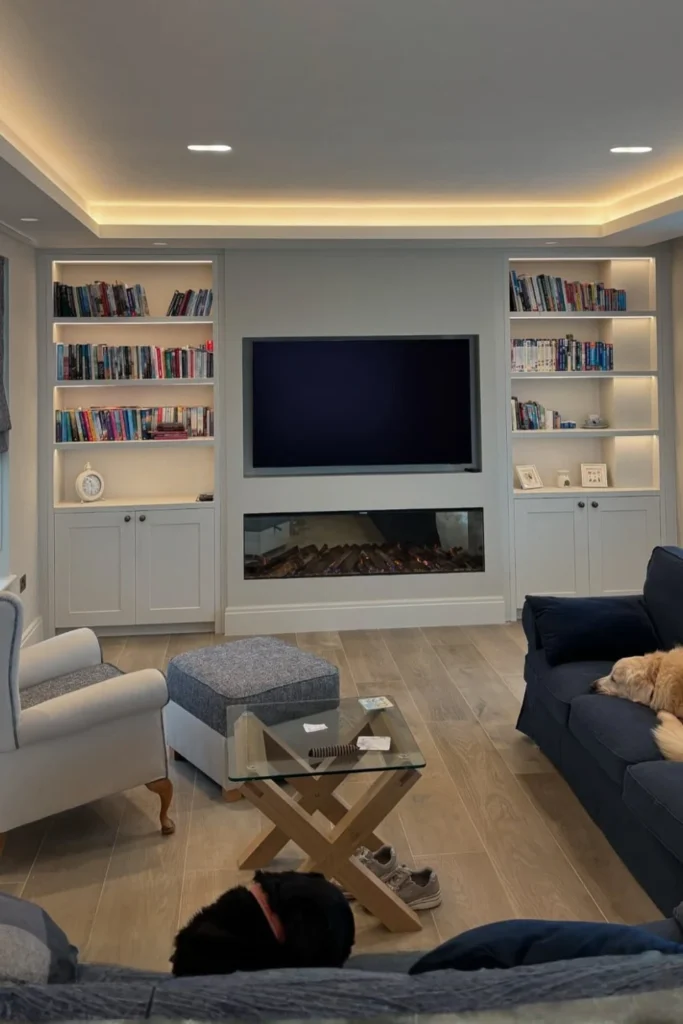
Full-Height Bookcase TV Wall with TV Centered Among Open Shelves
This is the idea for book lovers and collectors. A floor-to-ceiling open bookcase spans the entire wall, with the TV sitting in the center panel at eye height. Books, plants, artwork, and collected objects fill the remaining shelves. The result is rich, layered, and full of life — the complete opposite of a sterile media wall.
WHY IT WORKS
A full-height bookcase creates the impression of a library wall, which always feels impressive and intelligent. The TV sitting within the shelving system feels integrated rather than dominant. The hundreds of spines, objects, and plants surrounding it create such visual richness that no one focal point ever feels overwhelming.
BEST FOR
Large living rooms, home libraries, or any space where books and collected objects are an important part of the owner’s identity. Also works in rooms with high ceilings — the vertical height of the bookcase draws the eye upward and makes the space feel grand.
STYLING TIPS
Group books by spine colour in some sections for a designer look, but mix in objects, plants, and framed photos throughout to keep it feeling personal rather than curated. Paint the back panel of the bookcase in a deep contrasting colour — navy, charcoal, or dark green — so every object displayed in front of it pops.
IDEA 13
■ MEDIUM ROOM
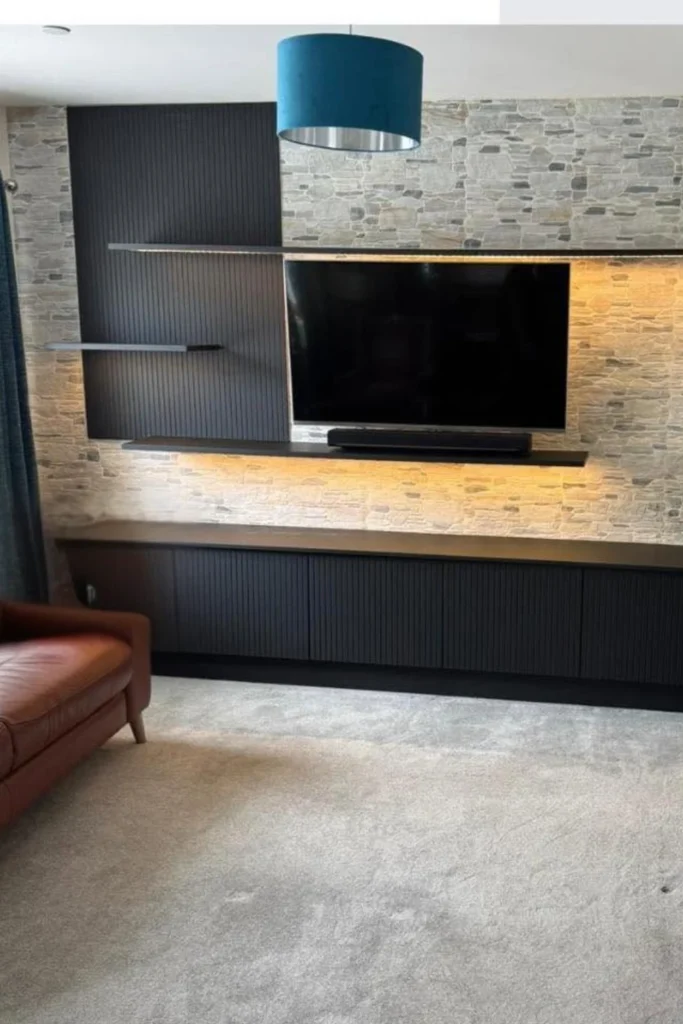
Concrete-Look Textured Panel with Warm Taupe Slatted Surround
This is a pairing that feels genuinely fresh. A concrete-effect panel — either real microcement or a high-quality porcelain tile — sits behind the TV. Warm taupe wood slats frame it on both sides. The two textures work together like a tailored suit — the cool concrete is grounded and made warm by the natural wood tones around it.
WHY IT WORKS
Concrete and wood are two of the most tactile, pleasing materials in interior design. Used together, they avoid the coldness that pure concrete can bring, while the concrete stops the wood from feeling too rustic or cosy. It is the perfect balance for contemporary homes that want warmth with an edge.
BEST FOR
Contemporary or industrial-modern living rooms. Works brilliantly alongside polished concrete floors, grey sofas, and warm metallic accents. Also a great choice for open-plan ground floors where the kitchen or dining area has a more industrial feel.
STYLING TIPS
Keep the floating console below the TV simple and light — pale oak or ash works perfectly here to echo the slats. Place a single sculptural plant (something structural like a fiddle leaf fig or monstera) beside the wall to soften the hard material palette. The organic shape of the plant against the geometric panels is a beautiful contrast.
IDEA 14
■ LARGE ROOM
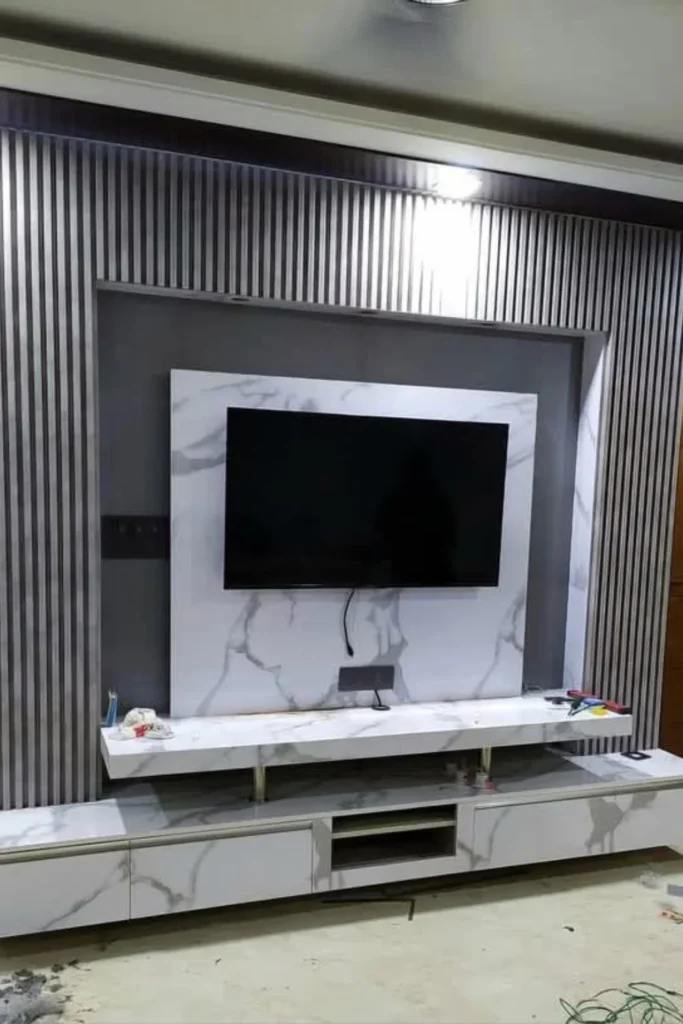
Luxury Marble Slab Behind TV with Vertical Walnut Wood Paneling
Two of interior design’s most beloved materials — marble and walnut — come together in this large-format TV wall setup. The marble slab takes the centre position directly behind the TV while vertical walnut panels run either side, extending the wall and creating a frame that feels as considered as custom furniture.
WHY IT WORKS
This combination has a natural material hierarchy — the marble draws the eye first, then the walnut grounds it. The TV, despite being large, sits within this arrangement looking like it belongs. There is no awkward gap between technology and decoration here. Everything belongs.
BEST FOR
High-end living rooms, luxury renovations, or anyone who wants a hotel lobby feeling in their own home. Requires investment in quality materials but the result is long-lasting and genuinely timeless.
STYLING TIPS
Choose a marble with warm gold or honey veining rather than cool grey to keep the space from feeling stark. The walnut panels should run floor to ceiling on at least one side to give the wall proper architectural weight. A simple smoked glass or dark oak console below ties both materials together perfectly.
IDEA 15
■ SMALL ROOM
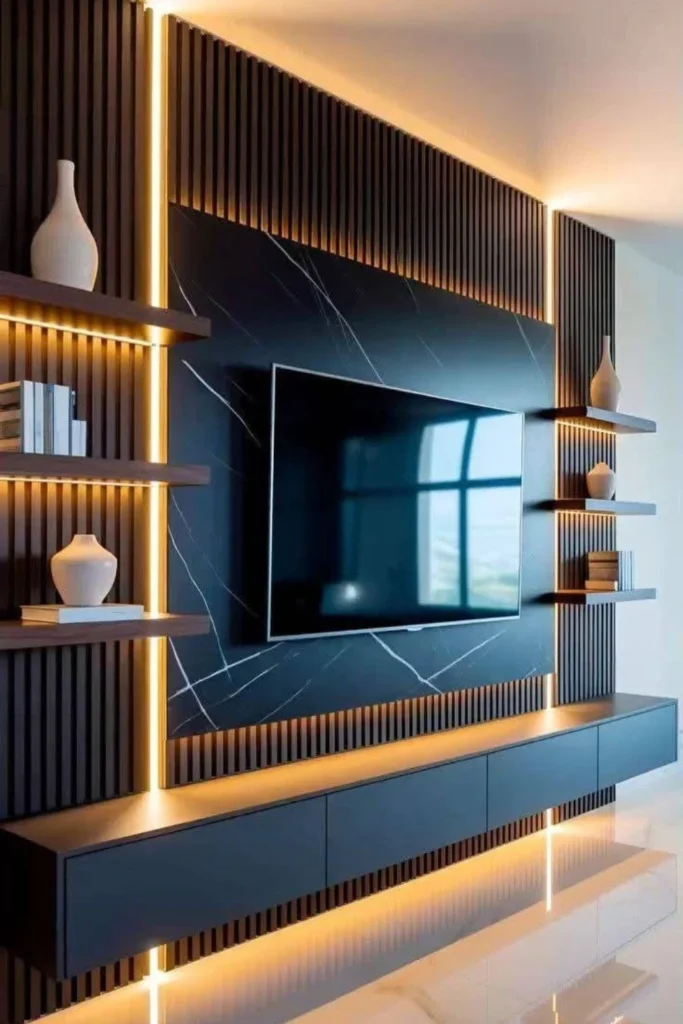
Deep Navy Accent Wall with Minimalist Floating Shelf and LED Strip
One painted wall, one slim floating shelf, and one LED strip light. That is literally all you need for this idea. Paint the wall behind your TV in deep navy blue, add a single floating shelf just below the screen for a soundbar or a few small objects, and stick an LED strip behind the TV to create a soft halo glow. Done.
WHY IT WORKS
Deep navy is a rich, dark backdrop that makes the TV screen seem less dominant. The LED halo behind the TV reduces eye strain during viewing and also creates a beautiful ambient glow when the room lights are dimmed. This is one of the most affordable and beginner-friendly ideas in this entire list.
BEST FOR
Small living rooms, first-time renters, or anyone on a tight budget who still wants a designed look. Also brilliant as a quick weekend refresh — no specialist is needed, no building work involved.
STYLING TIPS
Use a satin finish navy paint rather than matte — it is slightly easier to clean and catches the light beautifully. For the LED strip, choose a warm white or amber tone (2700K to 3000K) rather than harsh cool white. Bias lighting behind the TV like this is also genuinely good for your eyes during long viewing sessions.
IDEA 16
■ SMALL ROOM
Japandi TV Wall with Dining Table Integration for Small Apartments
In small apartments, every inch counts. This clever layout positions a Japandi-style TV wall — pale oak slats, minimal unit — directly adjacent to a dining table. The TV can be angled or mounted so it is viewable from both the seating area and the dining table. One wall serves two rooms in the most elegant way possible.
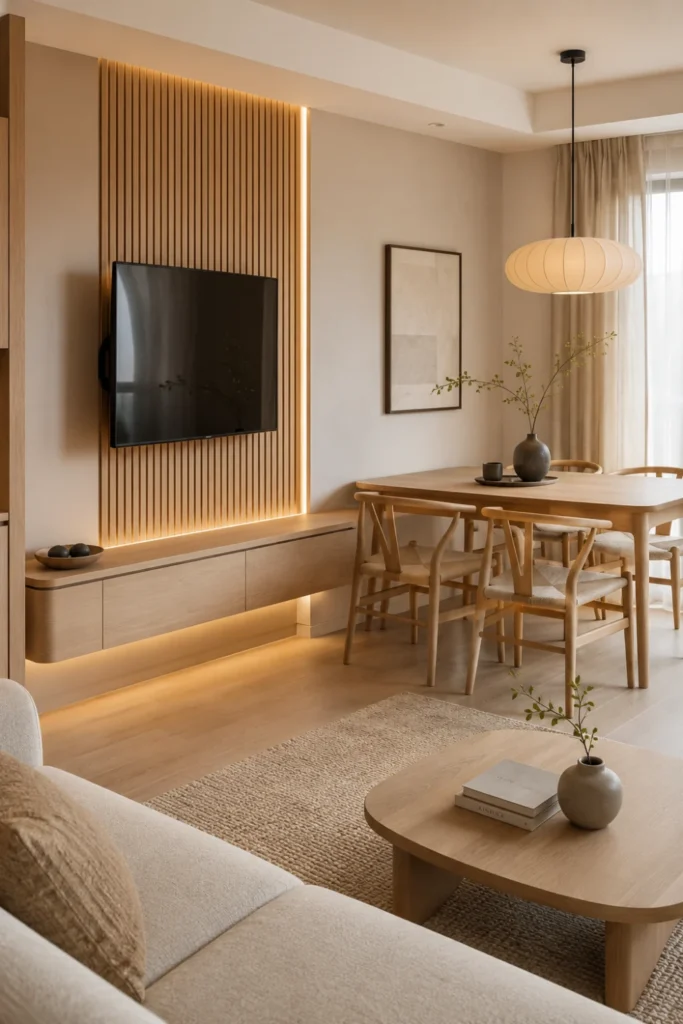
WHY IT WORKS
When your living space and dining space share one open room, having a single designed focal wall that serves both zones is both practical and visually cohesive. The TV wall does not compete with the dining area — it complements it, and the Japandi aesthetic keeps the overall feel calm and uncluttered.
BEST FOR
Studio apartments, small open-plan flats, or any home where the living and dining areas are combined into one shared space. This is also a wonderful idea for people who work from home and need the space to serve multiple functions throughout the day.
STYLING TIPS
Choose a TV unit that aligns with the height of the dining table — this creates a strong horizontal line that connects the two areas visually. Keep the slatted wall panel narrow — just wider than the TV itself — so it does not dominate the whole wall. A simple pendant light above the dining table tied to the same wood tone completes the unified look.
IDEA 17
■ MEDIUM ROOM
Rustic Shiplap TV Wall with Warm White Farmhouse Styling
Shiplap — those horizontal planks of wood with a distinctive recessed groove between each one — brings a beautiful rustic warmth to any TV wall. Painted in warm white or off-white and paired with farmhouse-style accessories, this look feels like a weekend in the countryside but in the comfort of your own home.
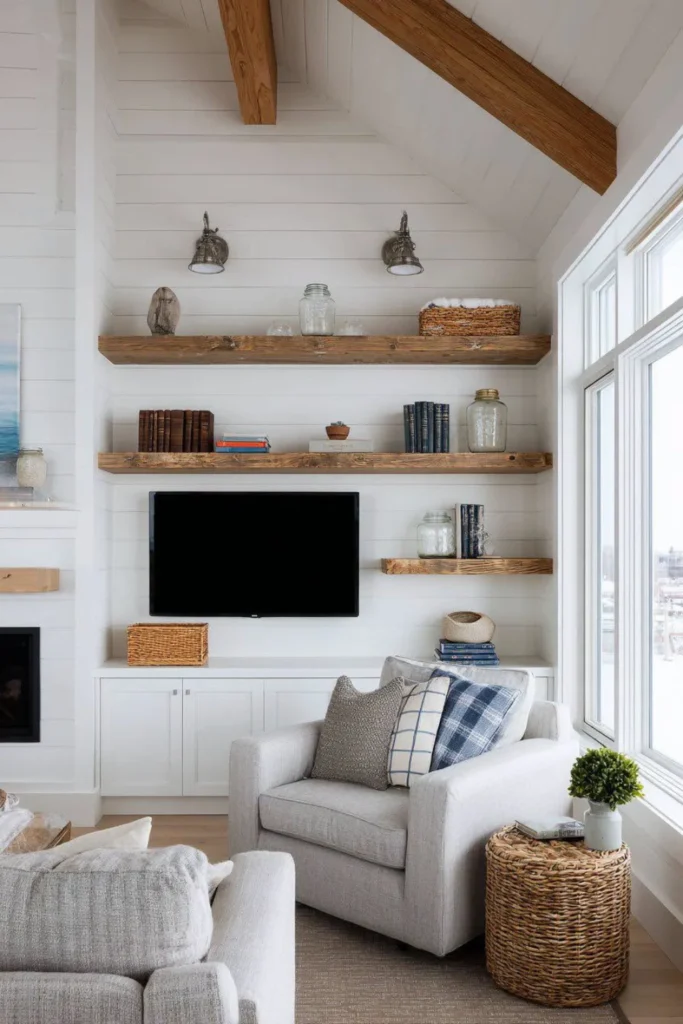
WHY IT WORKS
The horizontal lines of shiplap draw the eye across the wall, making a room feel wider. The painted white version keeps the look bright and airy rather than dark and heavy. There is a timeless quality to shiplap that survives every interior trend cycle — it never goes out of style.
BEST FOR
Farmhouse, cottage, or country-style homes. Also works in modern-rustic interiors that blend clean lines with natural materials. This is one of the best DIY TV wall projects — shiplap can be installed over an existing wall with minimal tools and skills.
STYLING TIPS
Use a painted white TV console below the screen and style it with wicker baskets, vintage books, and a simple lantern. Add a few dried cotton stems or pampas grass in a ceramic vase beside the TV for that signature farmhouse texture. Avoid too many colours — keep everything in whites, creams, and warm natural tones.
IDEA 18
■ MEDIUM ROOM
Scandinavian Blonde Wood Slats with Asymmetric Bookshelf Detail
Scandinavian design at its best — clean, functional, and genuinely beautiful. Pale blonde wood slats fill the wall behind the TV, and on one side only, a set of open shelves breaks the pattern asymmetrically. That deliberate asymmetry — shelves on the left but not the right, or vice versa — gives the wall a relaxed, architectural quality that feels modern and considered.
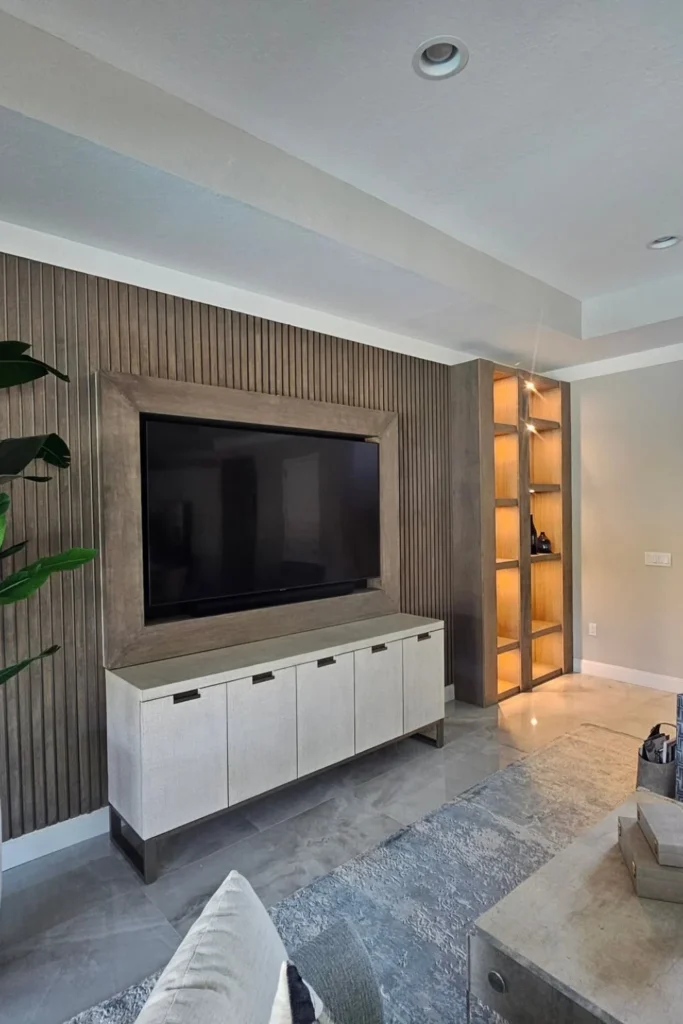
WHY IT WORKS
Pure symmetry can feel stiff and formal. Asymmetry, when done thoughtfully, feels natural and lived-in. The single bookshelf break in an otherwise uniform slatted wall creates a moment of visual interest — something for the eye to explore. It also adds practical storage without overwhelming the space.
BEST FOR
Medium-sized rooms with Scandinavian, Nordic, or minimalist interiors. Ideal for homes with light wood floors, white walls, and a preference for understated, clean design. Also works in small rooms because the pale tones and minimal lines keep things feeling open.
STYLING TIPS
The asymmetric shelf does not need to be deep — 8 to 10 inches is plenty. Fill it with a curated mix of books, a small trailing plant, and one or two ceramics. Keep everything on the shelf in a limited palette — white, pale grey, and natural wood tones only. The restraint is what makes this setup so satisfying to look at.
IDEA 19
■ LARGE ROOM
Arched Built-In Shelving with Sculptural Ceramics and Linen Drapes
Arches are everywhere in interior design right now, and this idea uses them brilliantly. Instead of straight-edged shelving, the built-in niches on either side of the TV are finished with arched tops. Sculptural ceramics fill the shelves, and sheer linen panels hang at the edges, softening the whole arrangement with a dreamy, organic quality.
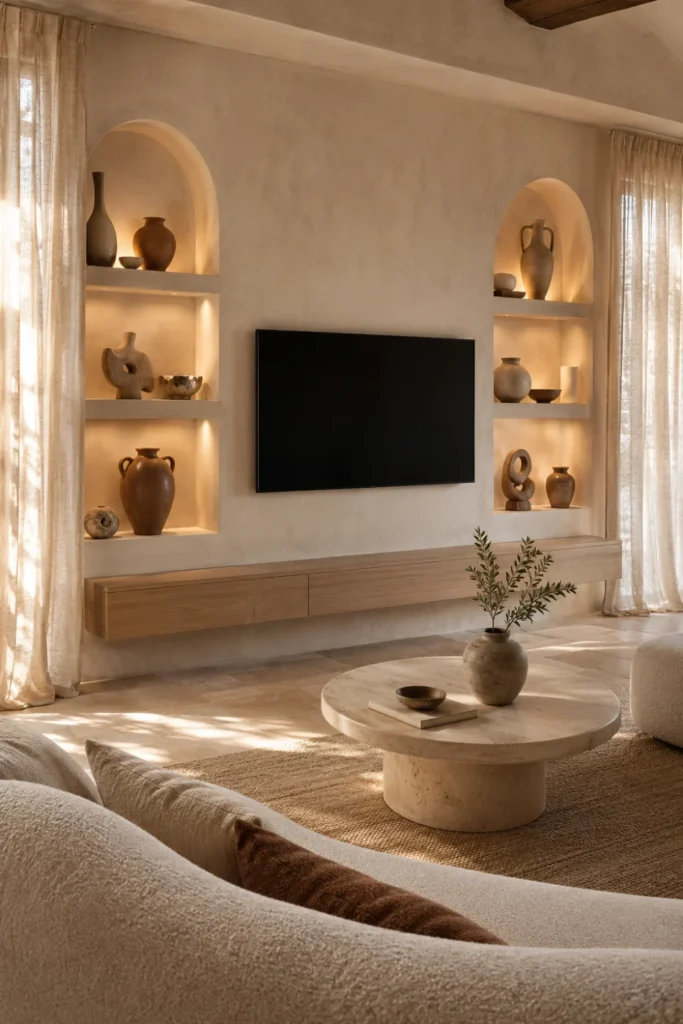
WHY IT WORKS
Arched forms feel organic and Mediterranean — they soften the hard, rectangular nature of most modern furniture. Combined with linen and ceramics, the effect is beautifully layered and textured. The TV, despite being a hard-edged rectangle, feels nestled and natural within the curved architecture around it.
BEST FOR
Large living rooms with a bohemian, Mediterranean, Moroccan, or organic-modern aesthetic. This is a statement TV wall that requires some investment in carpentry but delivers a result that genuinely looks like something from an interior design magazine.
STYLING TIPS
Fill the arched niches with objects of varying heights — tall candlesticks, medium vases, small ceramic bowls — to create a layered, collected feeling. Choose linen panels in a natural undyed colour so they frame without overpowering. Backlighting inside each arch niche adds a gallery-like glow that is especially beautiful in the evening.
IDEA 20
■ LARGE ROOM
Geometric 3D Wood Panel Wall with Moody Ambient Lighting
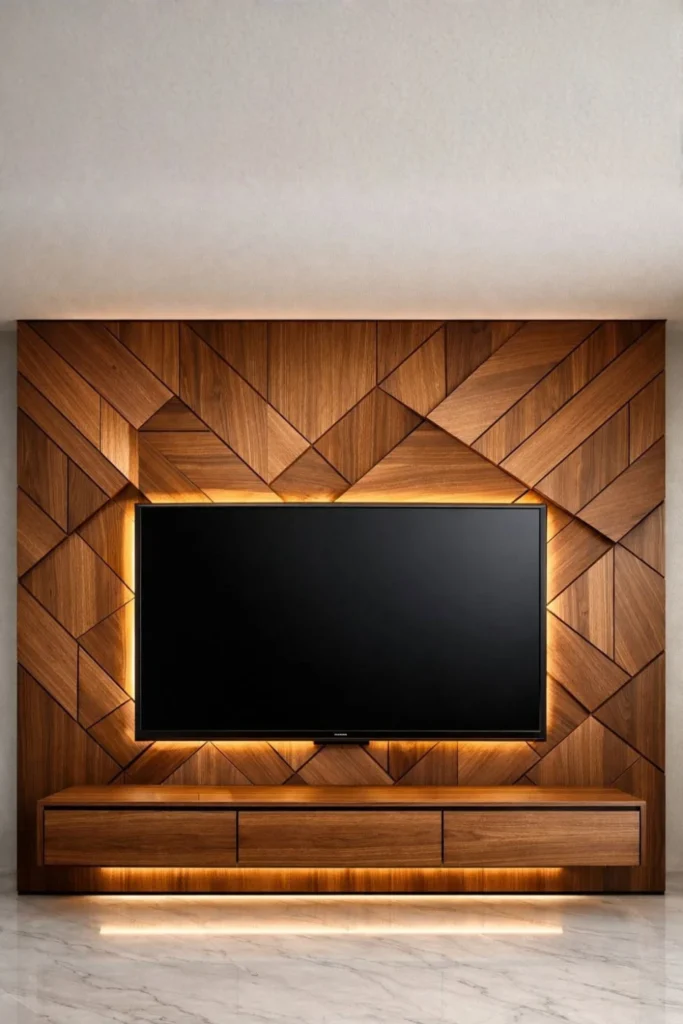
This one is for those who want their TV wall to be genuinely artistic. Three-dimensional geometric wood panels — hexagonal, diamond, or herringbone patterns — cover the wall behind the TV. The shapes create peaks and valleys that catch light in constantly changing ways. Add warm, directional ambient lighting and the result is extraordinary, almost theatrical.
WHY IT WORKS
Three-dimensional surfaces react to light in ways flat walls simply cannot. At different times of day — morning sun, afternoon shade, evening lamp light — a 3D panel wall looks different every time you see it. It gives the room constant visual interest and makes even a large TV wall feel like a piece of art.
BEST FOR
Large living rooms or feature walls in homes where making a bold design statement is the priority. Also excellent in dedicated cinema rooms, game rooms, or entertainment lounges where the space is used primarily in the evening under controlled lighting.
STYLING TIPS
Keep the rest of the room very simple when using a 3D panel wall — plain sofa, simple rug, minimal accessories. The wall is the star. Use warm directional spotlights positioned above and below the panels to maximise the shadow play. Choose a single wood tone throughout — mixing materials competes with the geometry.
IDEA 21
■ LARGE ROOM
Aquarium Feature Wall Integrated Beside Mounted TV
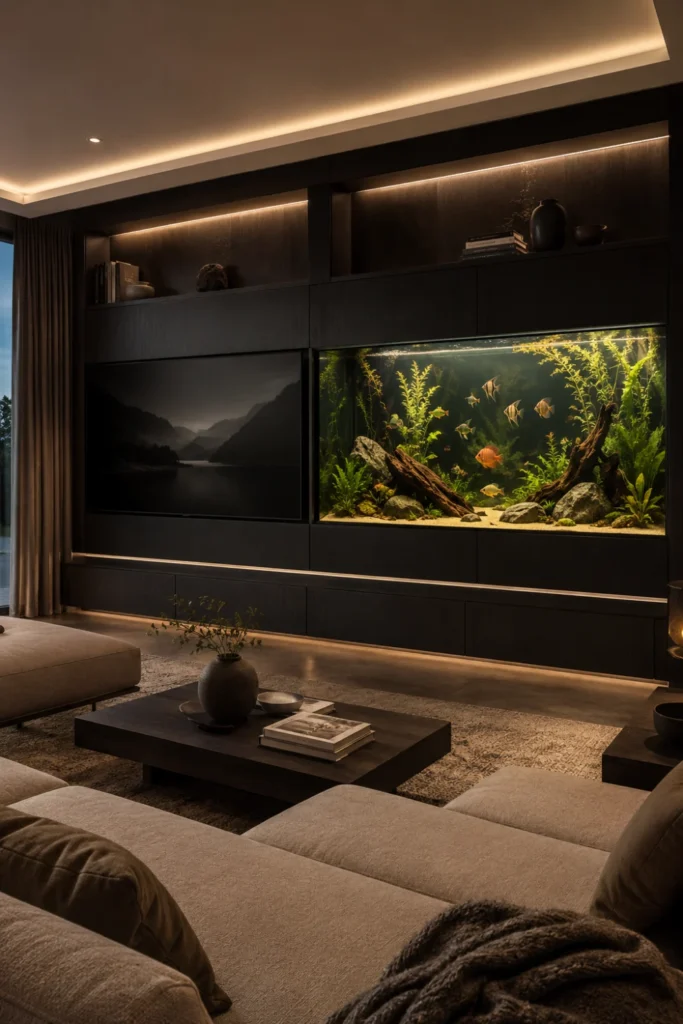
This is the most unique idea on the entire list — and the most memorable. A built-in aquarium tank is integrated into the TV wall unit, positioned alongside or flanking the mounted screen. The movement and colour of fish and aquatic plants creates a living, breathing piece of art that makes every other TV wall idea seem almost ordinary by comparison.
WHY IT WORKS
Aquariums have a proven calming effect — watching fish reduces stress and creates genuine wellbeing benefits. When placed beside a TV, the tank fills the viewing field with natural movement that is beautiful even when the screen is off. It is also an incredible conversation starter. Nobody forgets a living room with an aquarium wall.
BEST FOR
Large living rooms where a dramatic, one-of-a-kind feature is the goal. Ideal for homeowners who are committed to the maintenance that an aquarium requires and want a room that feels truly exceptional and personal.
STYLING TIPS
Keep the aquarium lighting at a warm, natural temperature to complement the room’s lighting rather than creating a clinical blue glow. Position the tank at eye height when seated — typically 18 to 24 inches from the floor. Surround the unit in a deep, dark cabinetry finish (ebony or matte black) to make the tank glow and the TV recede visually.
IDEA 22
■ MEDIUM ROOM
Vertical Plant Wall Backdrop with Floating TV Console and Potted Frames
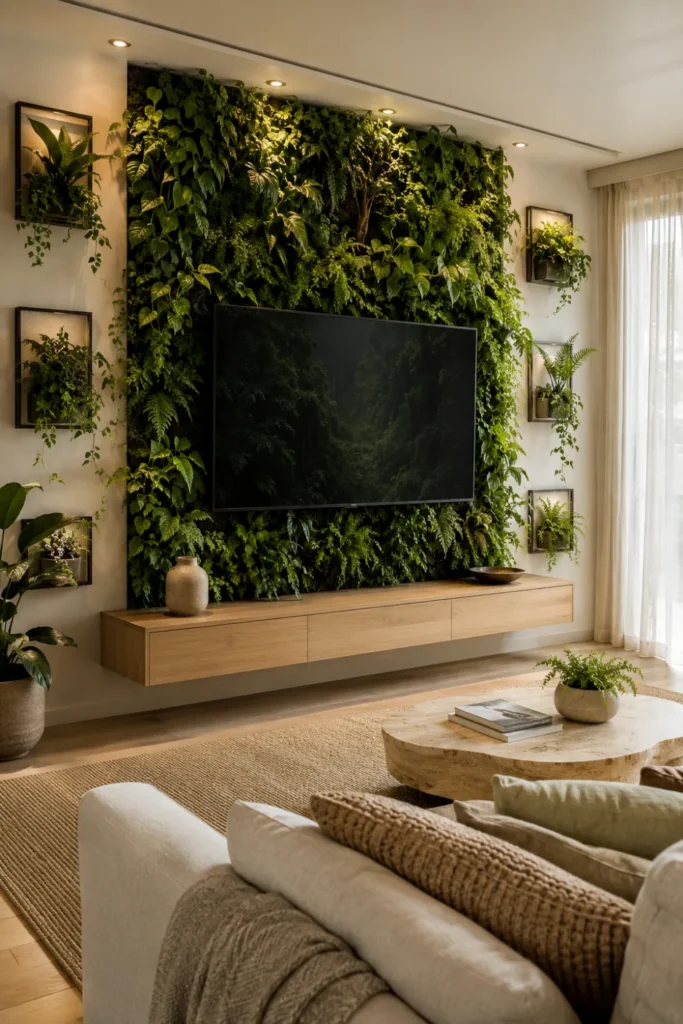
Bring the garden inside with a living plant wall behind your TV. Vertical planters or a trellis system hold a mix of trailing and upright plants directly on the wall, creating a genuinely green backdrop. The TV is mounted in front of the greenery on a thin arm bracket, and a simple floating console sits below. It looks extraordinary and smells wonderful.
WHY IT WORKS
A plant wall is visually dramatic but also practical — plants filter air, absorb sound, and dramatically improve the feel of a room. The natural, organic texture of a plant wall softens the TV’s hard rectangular shape in a way that no painted or panelled wall can. The contrast between technology and nature is part of the beauty.
BEST FOR
Medium-sized rooms in biophilic, bohemian, or contemporary homes. Brilliant for people who love plants and want their passion to become part of the room’s design. Also works in rooms that feel stuffy or overly formal — a plant wall instantly makes any space feel more relaxed and alive.
STYLING TIPS
Choose low-maintenance plants that thrive in indirect light — pothos, ferns, and heartleaf philodendrons are all excellent choices. Use a purpose-built modular vertical planter system for easy watering and maintenance. Ensure the TV is on a tilt-and-swivel arm bracket so you can clean the plants behind it without difficulty.
IDEA 23
■ LARGE ROOM
Two-Story High Ceiling TV Wall with Double-Panel Drama
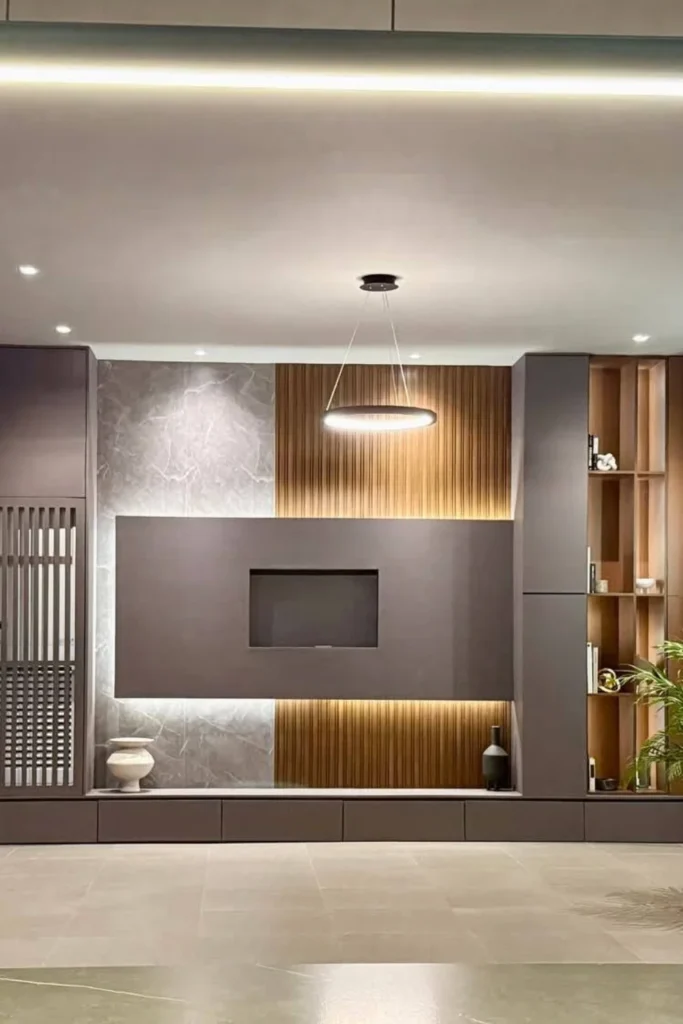
If your living room has a double-height or particularly tall ceiling, this is the TV wall idea that does it justice. Panels, shelving, or a decorative feature wall element runs from the floor all the way to the very top of the wall — filling the height completely. The TV sits at standard viewing height, but the wall above it becomes a dramatic architectural statement.
WHY IT WORKS
Tall walls that are left plain feel unfinished and cavernous. Taking the TV wall design all the way to the ceiling fills the vertical space purposefully and makes the room feel grand rather than awkward. The TV, positioned at seated eye level, anchors the bottom of a design that reaches impressively upward.
BEST FOR
Homes with double-height ceilings, vaulted spaces, or extra-tall walls. Also excellent for renovation projects where creating architectural drama is a priority. This design commands attention immediately upon entering the room.
STYLING TIPS
Use a consistent material from floor to ceiling — whether that is slatted wood, panelled MDF, or built-in cabinetry. At the upper section of the wall, consider adding a few dramatic decorative objects or sculptural art pieces that are designed to be viewed from a distance. Recessed lighting at the top of the wall, angled downward, adds depth and highlights the full height beautifully.
IDEA 24
■ MEDIUM ROOM
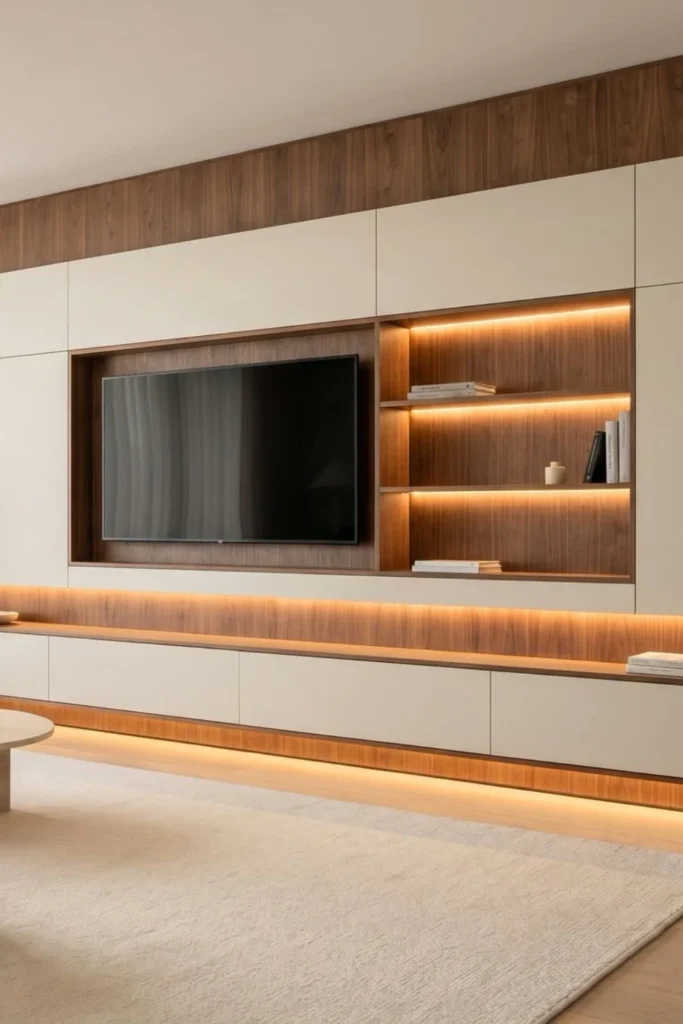
Ribbed Panel Wall in Cream with Warm Wood TV Frame and Recessed Lighting
Ribbed panels — similar to fluted but with tighter, more delicate grooves — in a warm cream tone create the most beautifully understated TV wall backdrop. A custom warm wood frame around the TV screen transforms it from a piece of technology into something that looks closer to a framed artwork. Recessed ceiling spotlights complete the polished look.
WHY IT WORKS
The tight ribbing of these panels creates a refined textile-like texture on the wall — it reads as luxurious without being fussy. The warm wood frame around the TV is a simple but transformative detail that makes an enormous difference. It turns the TV into a considered design element rather than a default technology installation.
BEST FOR
Medium-sized rooms in contemporary luxury or transitional interiors. Works especially well in homes with a warm, tonal palette — creams, caramels, and soft taupes throughout. A great choice for people who want a polished, hotel-quality result without committing to bold colours or heavy materials.
STYLING TIPS
The wood frame around the TV should be made from the same timber as any other wooden elements in the room — flooring, coffee table, or shelving — to create visual cohesion. Recessed ceiling spotlights should be positioned directly above the TV wall at a slight angle to wash the ribbed panel with light and make the texture glow. Keep the floor beneath the TV clear — this look works best with nothing between the TV and the floor, or with a very minimal, low console.
IDEA 25
■ SMALL ROOM
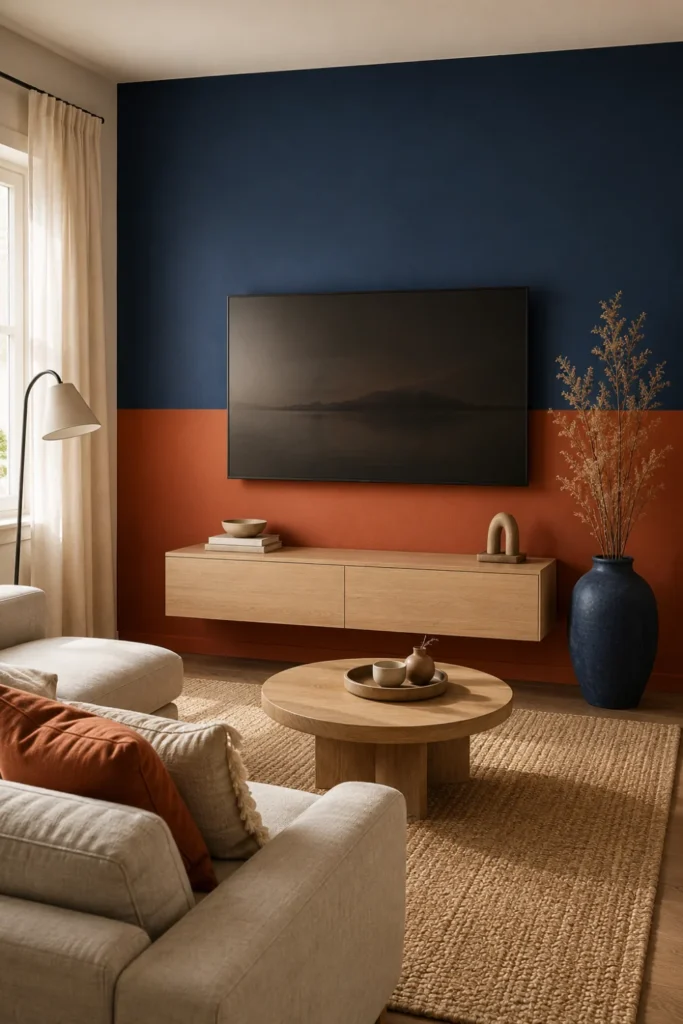
Bold Color Block Wall: Navy and Terracotta Split Behind Wall-Mounted TV
This is the most playful idea on the list and it costs almost nothing to achieve. The wall behind the TV is painted in two bold block colours — a deep navy on the upper section and a rich terracotta on the lower half, with a clean horizontal line between them at approximately TV-height. The TV is mounted directly over this colour split. The result is graphic, energetic, and completely unexpected.
WHY IT WORKS
The colour block creates a strong, designed backdrop that gives the TV context and intention. The split at TV height draws the eye directly to the screen while making the wall feel like a deliberate artistic choice rather than just a painted wall. Navy and terracotta are natural complements — they are warm-cool opposites that create energy when placed together.
BEST FOR
Small living rooms, modern interiors, or eclectic homes where colour and personality are celebrated. This is also a brilliant renter-friendly idea — it requires only paint and no structural work at all. Ideal for first homes, studios, and anyone on a limited budget who wants maximum impact.
STYLING TIPS
Use painter’s tape to create an arrow-sharp horizontal line between the two colours. The split line should sit at roughly the same height as the bottom edge of the TV. Keep everything else in the room in neutrals — natural linen sofas, a jute rug, and simple wooden furniture — so the wall colour carries the entire room’s personality. A single large ceramic floor vase in one of the two wall colours ties the palette together beautifully.
IDEA 26
■ SMALL ROOM
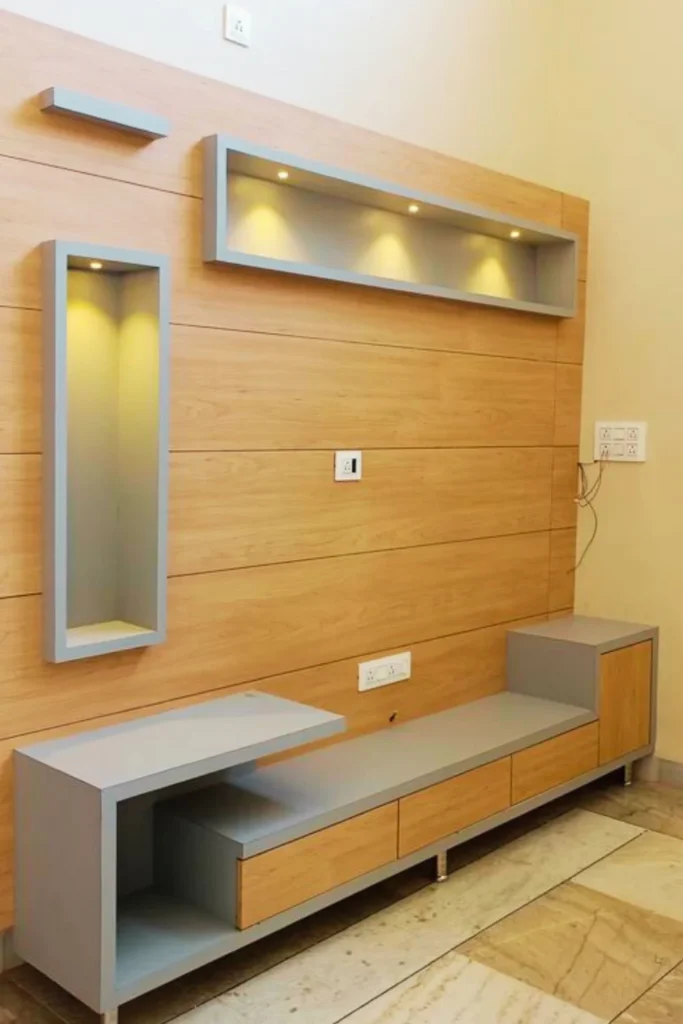
Corner TV Setup with Wrap-Around Floating Shelves
Most TV walls assume the screen sits flat against one uninterrupted wall. But what if your best wall is actually a corner? A corner TV mount — angling the screen at 45 degrees — opens up unexpected possibilities. Wrap-around floating shelves run along both walls of the corner, framing the angled TV with a generous U-shaped display arrangement that is both practical and visually interesting.
WHY IT WORKS
Corner setups are perfect for small rooms where the best wall is already occupied by windows, doors, or radiators. Placing the TV in the corner frees up flat wall space elsewhere for art, mirrors, or storage. The wrap-around shelves make the corner feel intentional and architecturally resolved rather than like a compromise.
BEST FOR
Small or awkward-shaped living rooms where a standard flat wall TV position simply does not work. Also useful in square rooms where every wall is equally usable and a corner setup creates better sightlines from multiple seating positions.
STYLING TIPS
Use a full-motion TV wall mount so the screen can be adjusted for viewing from any seat in the room. Make the corner itself a feature — paint it a different colour to the remaining walls, or add a wallpaper panel in the corner triangle behind the TV. Keep the wrap-around shelves in the same material and height for a cohesive, purposeful look.
IDEA 27
■ LARGE ROOM
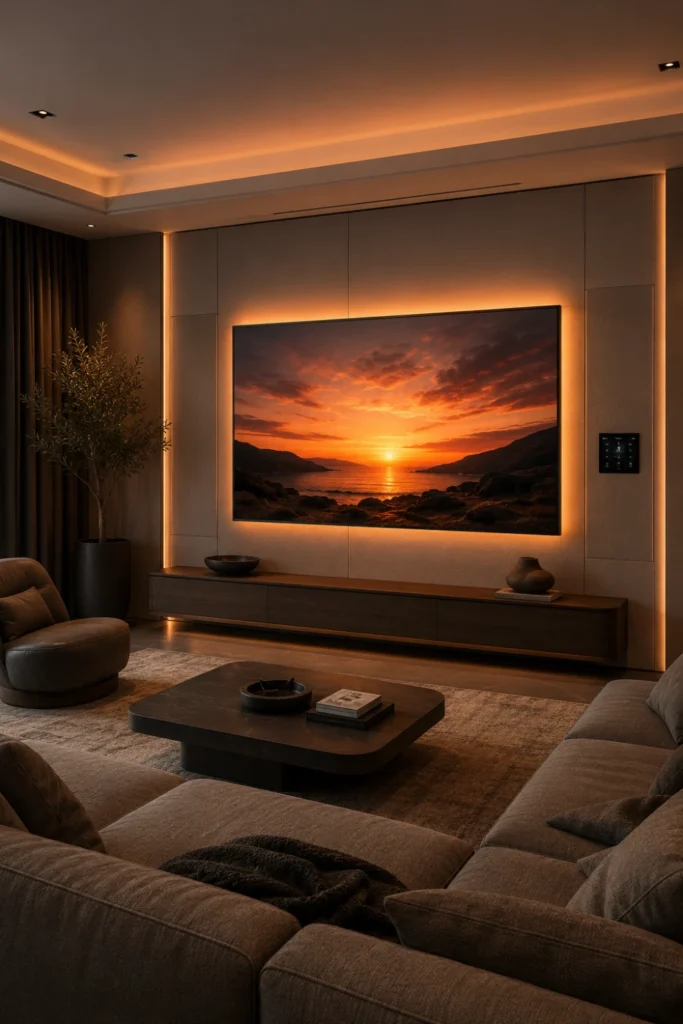
Smart Media Wall with Hidden Speakers, Voice Control Panel and LED Sync Lighting
This idea is for the technology enthusiasts — the people who want their TV wall to be as smart as it looks. A purpose-built smart media wall integrates hidden in-wall speakers, a custom voice control panel, and LED lighting that synchronises with the content on screen. When a sunset appears on TV, warm orange washes across the room. When action sequences play, the lights pulse. It is genuinely immersive.
WHY IT WORKS
Hidden technology is the ultimate luxury. When speakers are behind the wall fabric, there are no ugly black speaker boxes taking up floor space. When the LED lighting reacts to screen content, the boundary between your room and what you are watching dissolves completely. The technology enhances rather than dominates the design.
BEST FOR
Dedicated home cinema rooms, large open-plan entertainment spaces, or tech-forward homeowners who want an immersive viewing experience as a design priority. This setup requires more planning and investment than most ideas on this list but the result is genuinely like having a private cinema.
STYLING TIPS
Work with an AV specialist during the planning stage to ensure all cabling is hidden within the wall during construction — retrofitting cable channels is significantly more disruptive later. For the LED sync system, Philips Hue Play or Govee systems are both excellent, widely available, and easy to set up. Keep the TV wall material itself calm and neutral — all the drama comes from the technology and lighting, not from the wall finish.
IDEA 28
■ LARGE ROOM
Eco-Friendly Reclaimed Wood and Natural Stone Slab TV Feature Wall
This final idea is for those who care as much about where their materials come from as how they look. Reclaimed wood panels — sourced from old barns, factories, or demolished buildings — are combined with a natural stone slab directly behind the TV. The result is a wall that carries real history, real character, and a genuinely sustainable story. It is beautiful, responsible, and completely one-of-a-kind.
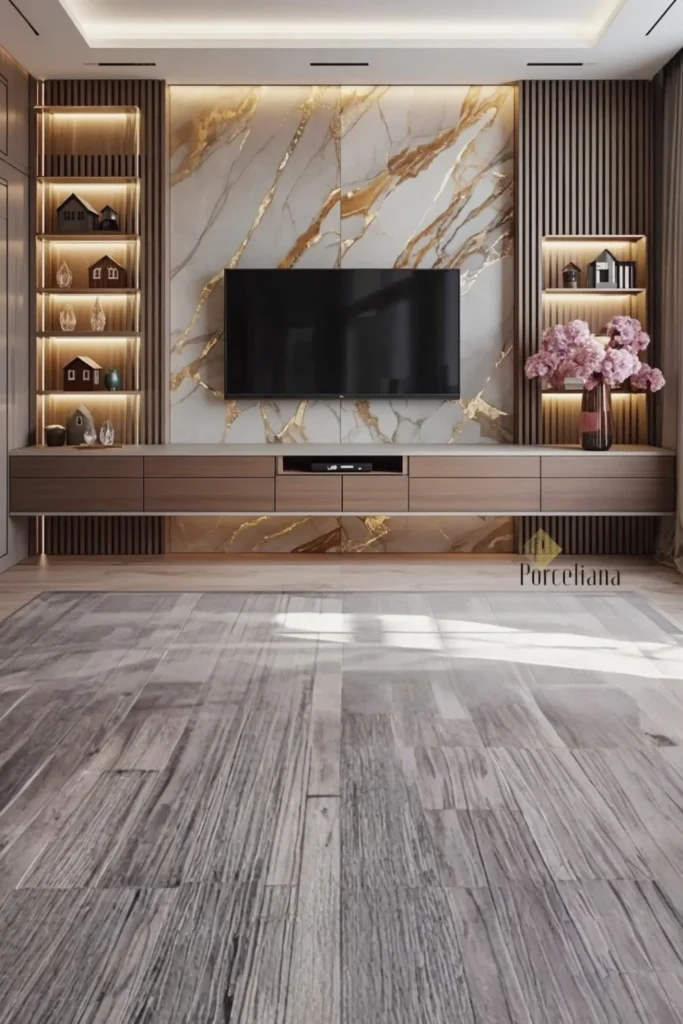
WHY IT WORKS
Reclaimed wood has a warmth and character that new wood simply cannot replicate. Every plank tells a story through its grain, knots, and natural ageing. Combined with a natural stone slab — which has its own unique formation and veining — no two walls like this will ever look the same. In an age of mass-produced interiors, this setup is meaningfully individual.
BEST FOR
Large living rooms in homes with an eco-conscious ethos, a love of natural materials, or a design story rooted in craftsmanship and sustainability. Also beautiful in rural homes, converted barns, or properties with original stone or brick features elsewhere in the building.
STYLING TIPS
Source reclaimed wood from a reputable reclamation yard or specialist supplier — ask for the provenance of the timber and choose planks that have a consistent depth to make fitting easier. For the stone, look at local quarries rather than imported options where possible. Leave the materials largely unfinished — a light natural oil on the wood and a matte sealer on the stone preserves without masking the natural beauty. Style the room with other natural, sustainable materials: jute, linen, rattan, and terracotta.
Mistakes to Avoid
I have made most of these mistakes myself, and I have seen them in hundreds of homes. Save yourself the frustration — read this before you buy a single thing.
Mounting the TV Too High on the Wall
This is the most common mistake in living room TV setups. People mount the TV as if it were a painting — at standing eye level — but you watch TV sitting down. Your neck should not be craning upward for two hours. The centre of your TV screen should be at eye level when you are seated, which for most sofas puts the TV centre at around 42 to 48 inches from the floor.
Ignoring Cable Management Before You Start
You plan the beautiful floating TV, you paint the wall, you mount the screen — and then you notice the tangle of cables hanging down like a waterfall. Think about cable management before you mount anything. In-wall cable channels, cable covers, or cord raceways painted to match your wall are all inexpensive and make an enormous difference to the finished look.
Choosing Style Over Viewing Distance
A 85-inch TV looks impressive in the showroom but in a small living room where the sofa is only 8 feet away, it will feel like sitting in the front row of a cinema — in a bad way. Always check your seating distance before choosing TV size. A good rule: your viewing distance in inches should be approximately 1.5 to 2.5 times your TV screen size in inches.
Over-Styling the TV Wall Shelves
Shelves beside the TV are not a storage opportunity — they are a display opportunity. People pack them full of books, family photos, gadgets, candles, plants, and random objects until the whole wall looks cluttered and chaotic. Edit ruthlessly. Each shelf should have breathing room between objects. A shelf that is 70 percent empty looks far more considered and beautiful than one that is completely full.
Using Cool White LED Lighting on a Warm Toned Wall
Cool white LED light (4000K and above) looks clinical and harsh against warm wood tones, cream walls, and earthy materials. It drains all the warmth out of your carefully chosen palette. Always use warm white LEDs (2700K to 3000K) behind your TV, inside shelves, and on the TV wall. The difference is night and day — literally.
Skipping the Planning Stage for Built-In Cabinetry
Built-in TV walls look effortless when they are done well. But they require precise planning before a single piece of wood is cut. Map out exactly where your power sockets, HDMI ports, TV aerial points, and broadband points are before designing your cabinetry. Moving these afterward is expensive and disruptive. Plan your electrics first, then build your design around them.
Wrapping It All Up
Your TV wall is not just a place to hang a screen. It is one of the most looked-at surfaces in your home. Getting it right changes how the whole room feels — whether you are watching a film, having friends over, or simply sitting quietly with a cup of tea on a Sunday morning.
The good news is that there is an idea in this list for every budget, every room size, and every style. You do not need a big renovation. Sometimes a single can of deep navy paint and a floating shelf are all it takes. Start where you are, use what you have, and build from there.
If you try any of these ideas, I would love to see how they turn out. Save this post, share it with someone who needs a living room refresh, and come back when you are ready for the next step.
Frequently Asked Questions
These are the questions I get asked most often about TV walls. Short, honest answers — no fluff.
What is the best height to mount a TV on the wall?
The centre of your TV screen should sit at approximately 42 to 48 inches from the floor. This puts it at eye level when you are seated on a standard sofa. If your sofa is unusually low or high, adjust accordingly — the key principle is that you should be looking directly at the screen, not up at it.
How do I hide TV cables on a mounted TV wall?
The cleanest solution is running cables through the wall using an in-wall cable management kit — these are widely available and straightforward to install. If your walls are solid or you cannot access the cavity, a painted cable raceway or conduit fixed to the wall surface in the same colour as your wall is the next best option. Avoid cable ties alone — they collect dust and always look untidy.
Can I create a feature TV wall in a rented home?
Absolutely. The renter-friendly ideas in this list — deep navy paint, colour block walls, floating shelves with removable fixings, LED strip lighting, and even freestanding TV consoles — can all be done without permanent structural changes. Always check your tenancy agreement before painting, but most landlords allow feature wall painting with permission. Use removable picture rails and damage-free hooks for shelving where possible.
How do I choose between a TV unit and a wall-mounted TV?
Wall mounting looks cleaner and more modern, and it frees up floor space. But a TV unit offers more practical storage and is easier to access for cable management. For most living rooms, a wall-mounted TV above a slim floating console gives you the best of both — the clean look of mounting with the practicality of a surface beneath. Pure wall mounting with no unit below works best in minimal or small spaces where floor space is valuable.
What is the best wall material for a TV feature wall?
There is no single best material — it depends entirely on your style and budget. Wood slat panels are the most popular right now for their warmth and texture. Marble or stone is the most luxurious. Paint is the most affordable. Fluted MDF panels offer a high-end look at a mid-range price. The best material is one that works with the rest of your room rather than against it.
How do I make a small living room TV wall look bigger?
Use light, pale tones on the wall — creams, off-whites, and pale wood slats all make a space feel larger. Avoid heavy, dark cabinetry that takes up visual floor space. A floating console with clear space beneath it lifts the visual weight off the floor. Mirrors positioned beside the TV wall also reflect light and create the impression of more space.
Is it safe to mount a TV above a fireplace?
It depends on the fireplace type. Above an electric or gas fireplace with proper heat deflection, a TV can be mounted safely if the heat output is managed carefully. Above a wood burning or open fireplace, it is generally not recommended due to heat, smoke, and soot. More importantly, above any fireplace, the TV height is almost always too high for comfortable viewing. If you love the look, consider a tilting wall mount that allows the TV to angle downward toward the seating area.