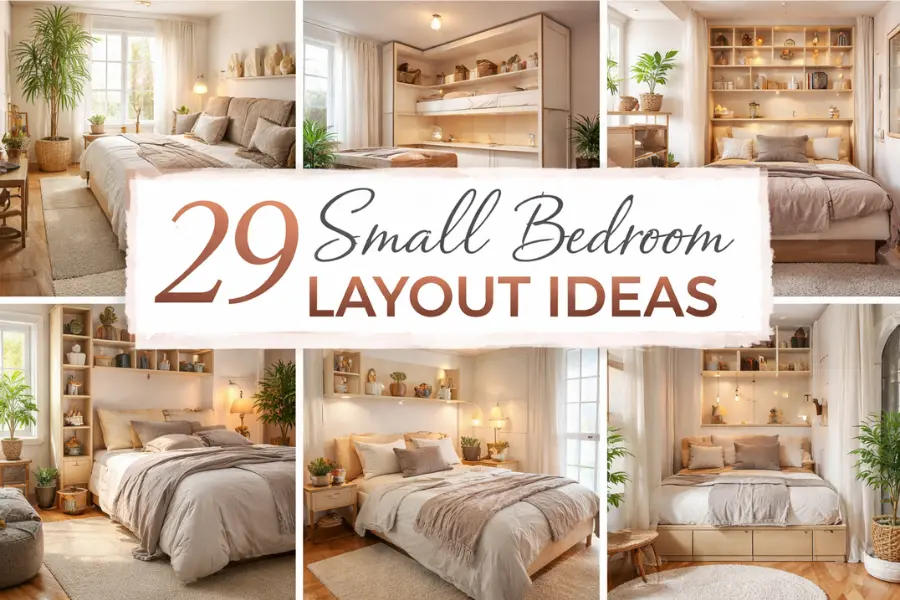
29 Small Bedroom Layout Ideas to Maximize Space and Style
Designing a small bedroom might seem challenging, but with a bit of creativity and smart planning, you can turn even the tiniest space into a cozy, stylish retreat. The key is finding a layout that makes the most of your space while reflecting your personal style. In this post, we’ll explore 29 unique and effective bedroom layouts that work for different room sizes and styles. Each layout is designed to optimize space, create a sense of flow, and make your bedroom both functional and beautiful. Whether you have a small studio apartment or a spacious master bedroom, these ideas will inspire you to make the most of your space.
Table of Contents
29 Small Bedroom Layout Ideas
Each of these ideas has been carefully selected to suit a variety of room sizes and needs. They focus on functionality, maximizing storage, and creating a stylish atmosphere. Here are the top 29 layout ideas, all with unique benefits to suit different spaces:
1. Bed Against the Longest Wall
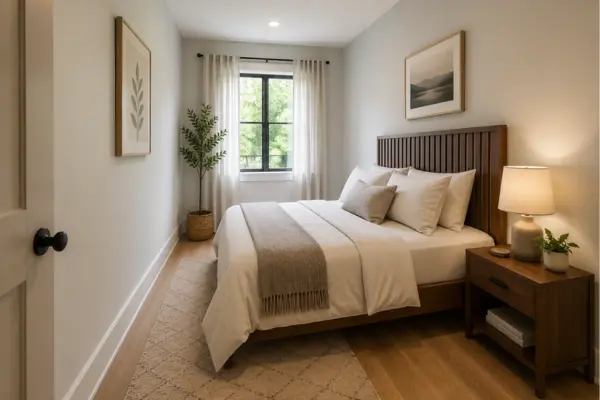
Placing the bed on the longest wall of the room is a classic design trick for small bedrooms. It helps keep the space open, offering easy flow from the door to the window. This layout works particularly well for narrow rooms where you want to maximize the walking area.
Why it works
The longest wall layout maximizes the available space and offers symmetry, which helps create a balanced look.
Best for
Narrow bedrooms or rooms with multiple doors where central placement isn’t practical.
Styling Tips
Add a statement headboard to anchor the bed, and consider using neutral bedding to keep the space feeling airy and light.
2. Corner Bed Layout
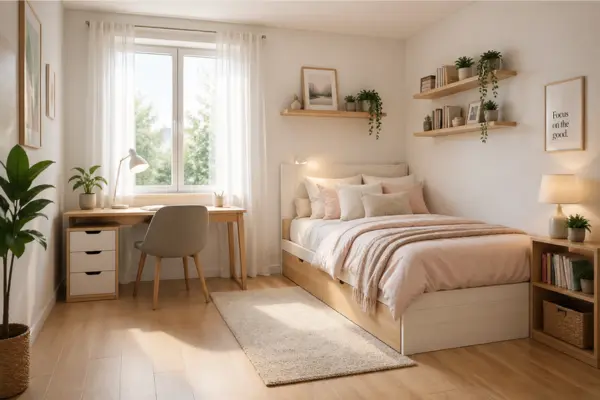
Positioning the bed in the corner of the room can free up the center space, allowing for more flexibility. This layout works especially well if you want to fit more furniture, like a desk or shelving unit, into the room.
Why it works
It opens up more floor space and makes the room feel more spacious while providing an intimate sleeping area.
Best for
Small rooms where space needs to be optimized. Ideal for those who need extra storage or workspace.
Styling Tips
Opt for a light-colored bed frame to avoid making the corner feel too cramped, and use floating shelves to keep the room organized.
3. Center Wall Layout
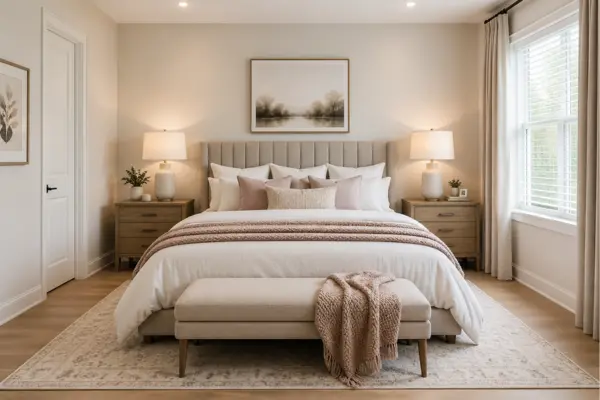
Positioning the bed in the center of the longest wall is a popular choice for creating symmetry in the room. This layout provides a well-balanced, classic look while making the space feel more open.
Why it works
This placement makes the room feel evenly balanced and gives a sense of order, which is essential in a small bedroom.
Best for
Small to medium-sized rooms where a sense of symmetry and order is key.
Styling Tips
Pair the layout with matching bedside tables and a stylish headboard to create a focal point for the room.
4. Floating Nightstands Only
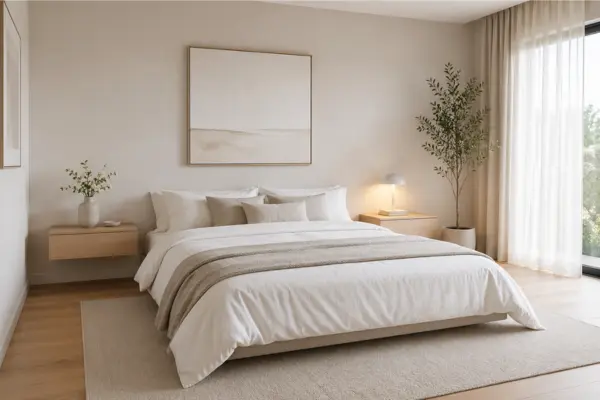
If you’re looking to create an airy, open space, floating nightstands are an excellent solution. This layout removes bulky furniture while offering convenient storage.
Why it works
Floating nightstands are sleek, modern, and visually light, making them perfect for maximizing the floor space in small bedrooms.
Best for
Minimalistic bedroom designs where every inch counts.
Styling Tips
Keep decor minimal on the nightstands to maintain a clean, uncluttered space. A small vase with fresh flowers or a bedside lamp works perfectly.
5. Bed Plus Single Narrow Dresser
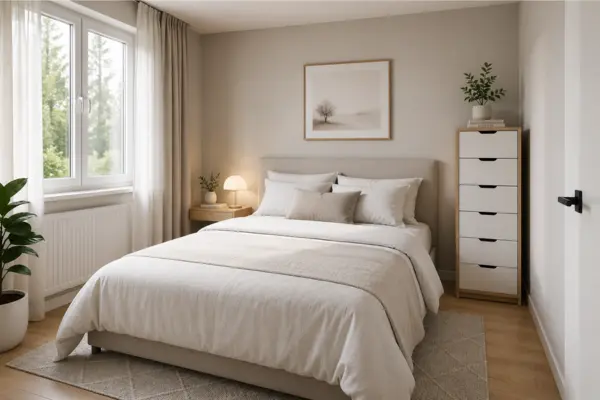
Swap out one nightstand for a slim dresser, giving you both extra storage and a stylish piece of furniture. This layout is great if you need more drawer space but don’t want to overcrowd the room.
Why it works
The narrow dresser creates a functional space-saving solution without overwhelming the room with too many pieces of furniture.
Best for
Rooms with limited space that need more storage solutions.
Styling Tips
Keep the dresser sleek and neutral to blend with your room’s aesthetic, and use vertical storage bins for added organization.
6. Loft Bed Layout
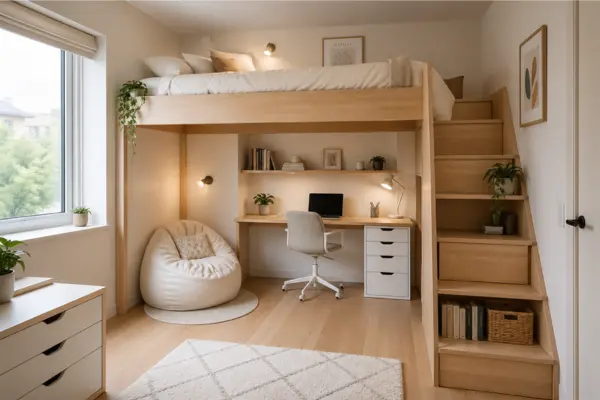
A loft bed raises your sleeping area off the floor, leaving plenty of space underneath for storage, a desk, or even a seating area. This layout is perfect for maximizing vertical space.
Why it works
Loft beds create more usable floor space, which is especially valuable in rooms with limited square footage.
Best for
Small bedrooms or studio apartments that require multi-functional spaces.
Styling Tips
Use light, airy fabrics for the bedding to avoid making the loft bed area feel heavy. Consider using the space below for a small reading nook or home office.
7. Loft with Seating Below
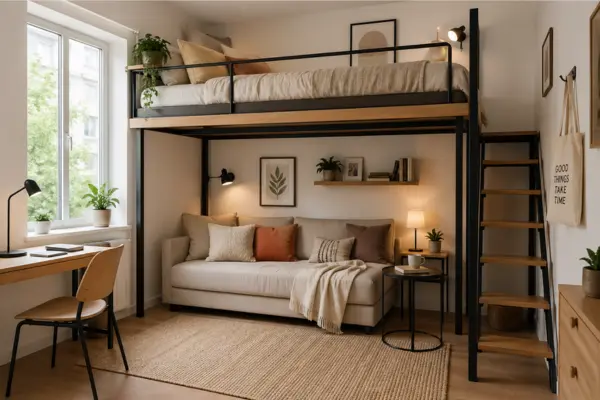
By combining a lofted bed with a seating area underneath, you can create a cozy living space without compromising on comfort. The seating area can be used for reading, relaxing, or even a small study zone.
Why it works
The layout utilizes vertical space efficiently, and the seating area offers a relaxing zone without taking up valuable floor area.
Best for
Studios, dorm rooms, or small bedrooms that double as living spaces.
Styling Tips
Use soft cushions and a plush rug to create a comfortable, inviting area below the loft.
8. Murphy Bed for Dual Use
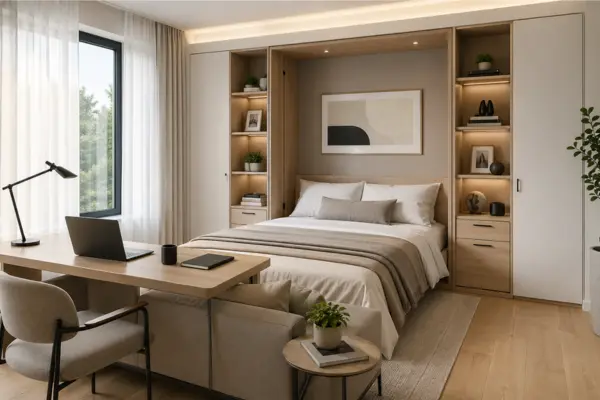
A Murphy bed, or wall bed, is ideal for transforming your bedroom into a multi-purpose room. It can be folded up when not in use, turning your space into a living area or office.
Why it works
Murphy beds save space by being hidden when not needed, offering both comfort and versatility in small spaces.
Best for
Bedrooms that need to double as home offices or living areas.
Styling Tips
Keep the decor minimal and modern to complement the functional design of a Murphy bed. Consider wall-mounted storage to keep things tidy.
9. Under-Bed Drawers Only
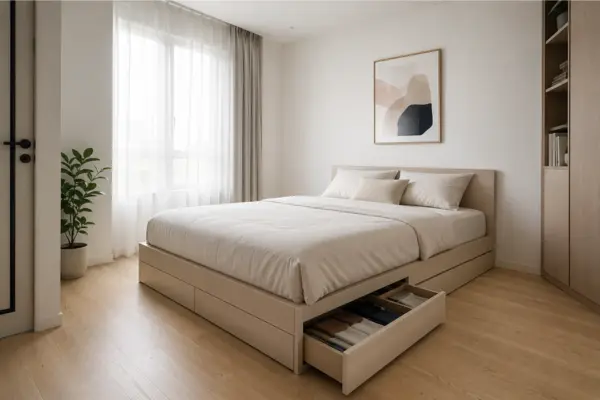
Beds with built-in storage are perfect for small bedrooms. Under-bed drawers allow you to store extra linens, clothes, or shoes without needing additional furniture.
Why it works
Maximizing under-bed space is a great way to keep clutter to a minimum while still having everything you need within reach.
Best for
Rooms with limited closet space or for those who prefer a minimalist, clutter-free bedroom.
Styling Tips
Choose a bed with a simple, low-profile design and opt for neutral bedding to maintain an airy feel in the room.
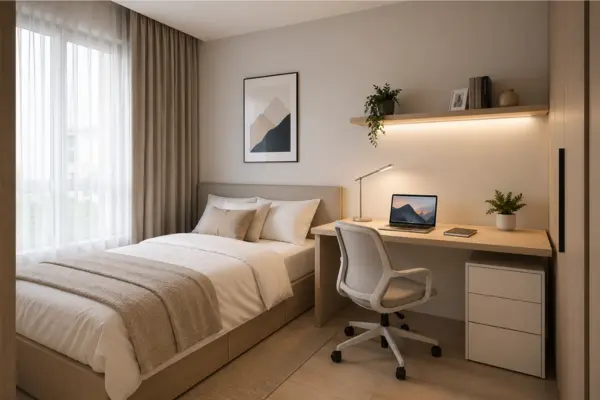
10. Switch Nightstand for Desk
For small rooms that need to serve as both a bedroom and a workspace, swapping a nightstand for a compact desk is a smart solution. This layout gives you a functional area for working or studying.
Why it works
It frees up space and makes the room feel more organized by combining two functions into one.
Best for
Studio apartments or bedrooms that need to serve multiple purposes.
Styling Tips
Opt for a sleek, modern desk that complements the bedroom aesthetic. Keep the desk area clutter-free to maintain a calm environment.
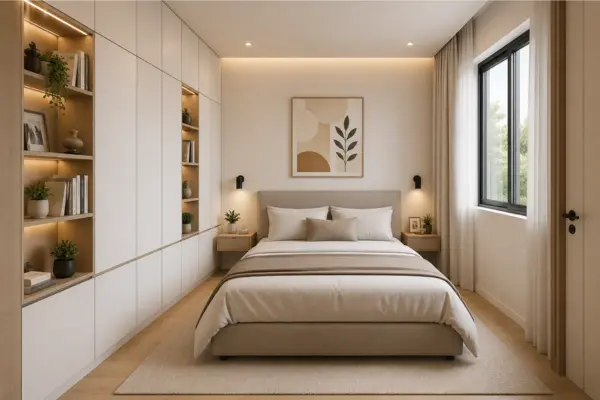
11. Built-In Wall Storage
Utilizing built-in wall storage is a smart way to save space in a small bedroom. By incorporating shelves or cabinets directly into the walls, you eliminate the need for bulky furniture, creating a more open and streamlined room. This layout maximizes vertical space, making the most of every inch in your room.
Why it works
Built-in storage keeps the room feeling organized and spacious while reducing clutter. It’s also a great way to make use of awkward wall spaces.
Best for
Small rooms with limited floor space or when you want to keep furniture to a minimum.
Styling Tips
Keep the built-in storage simple and functional, and use matching finishes for a cohesive look. Add decorative items on the shelves to make the space feel more personalized.
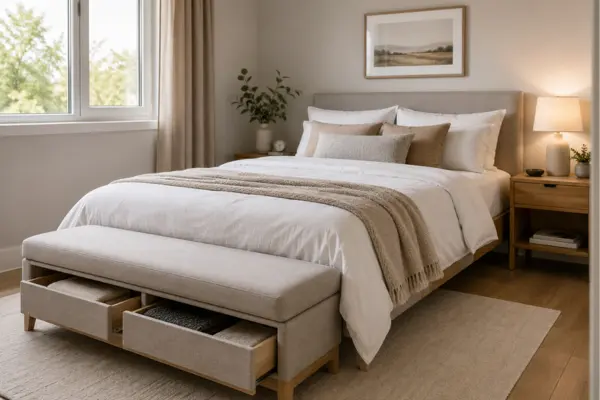
12. Bench at Foot of Bed
A slim bench at the foot of the bed can provide extra seating and storage without taking up too much space. It works well for bedrooms where you want a practical, stylish addition that can be used as both a seating area and a place to store blankets or shoes.
Why it works
The bench adds functionality without cluttering the space. It can serve as a spot to put on shoes, hold extra linens, or even be a decorative feature at the foot of the bed.
Best for
Larger small bedrooms that have space for additional furniture but need to stay functional.
Styling Tips
Choose a bench with built-in storage to keep clutter out of sight, and opt for a neutral color that complements your bedding.
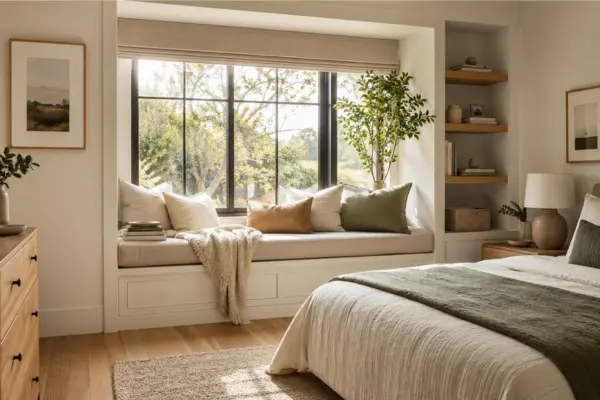
13. Window Seat Reading Nook
Creating a cozy reading nook under a window with a built-in or freestanding bench is a great way to maximize space while adding a relaxing spot to your bedroom. This layout not only adds comfort but also makes the most of natural light.
Why it works
It utilizes the often-unused window space, giving you a relaxing corner to unwind without occupying much of the room. The bench can also provide extra storage for books or blankets.
Best for
Rooms with large windows or corners that could use a functional and stylish upgrade.
Styling Tips
Add soft pillows and a throw blanket to make the nook cozy, and choose a cushion that matches your overall color scheme.
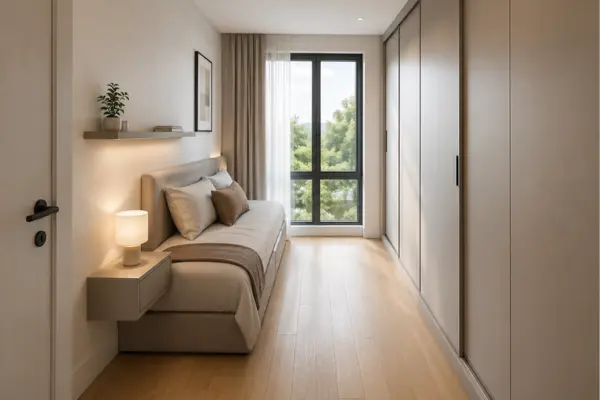
14. Opal Narrow Walkway Layout
In small rooms, creating a clear walking path is essential to keep the room from feeling cramped. A layout that positions furniture against the walls, leaving a narrow walkway in the center, makes the room feel more open and easy to navigate.
Why it works
This layout helps to free up the center of the room, making it feel less cluttered and more spacious. It allows for easy movement between the bed, storage, and other furniture.
Best for
Rooms with multiple doors or tight spaces that need to maintain good traffic flow.
Styling Tips
Use slim, low-profile furniture to avoid blocking the walkway, and keep the floor clear to create a sense of openness.
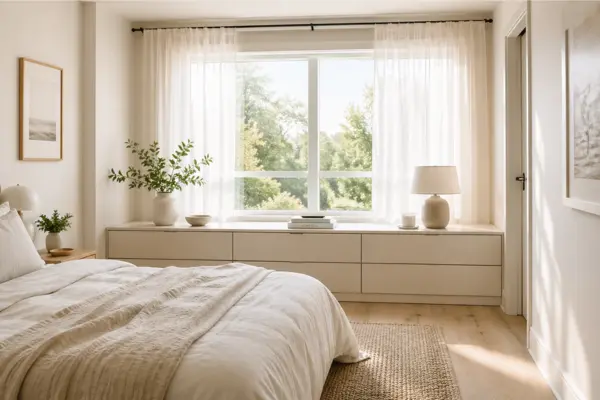
15. Slim Profile Dresser Under Window
A low-profile dresser placed beneath the window is a great space-saving trick. It not only gives you extra storage but also allows natural light to flood the room, making the space feel airy and open.
Why it works
This layout takes advantage of a previously unused space while ensuring the dresser doesn’t block light or obstruct the room’s flow.
Best for
Rooms with large windows where you want to keep the light flowing freely but still need storage solutions.
Styling Tips
Choose a dresser that is low and sleek to avoid overcrowding the room. Consider using sheer curtains or blinds to allow more light in.
16. Daybed Along Wall
A daybed is a versatile piece of furniture that can function as both a bed and a lounge area. Placing it along the wall in a small bedroom gives you extra seating space and maximizes the room’s function.
Why it works
Daybeds create a dual-purpose space, allowing you to have both a comfortable place to sleep and a functional seating area for reading or relaxing.
Best for
Small bedrooms that need to serve multiple purposes or rooms where you want to add additional seating.
Styling Tips
Use soft, inviting bedding with plenty of cushions to make the daybed feel cozy and inviting.
17. Trundle Bed for Guests
A trundle bed is an excellent choice for small bedrooms that need to accommodate guests. The second bed slides underneath the main bed, saving space when not in use. This layout is perfect for both children’s rooms and guest rooms.
Why it works
It’s an efficient way to provide extra sleeping space without taking up additional floor area.
Best for
Rooms that need to double as both a bedroom and a guest room.
Styling Tips
Choose a bed with a stylish frame to make the trundle look seamless when in use. Keep the space around the bed uncluttered to maintain the room’s flow.
18. Mirrored Wardrobe for Light
A mirrored wardrobe is both functional and decorative. It can make a small bedroom feel larger and brighter by reflecting light around the room. This is a great trick for rooms with limited natural light.
Why it works
Mirrored surfaces bounce light around the room and visually expand the space, making the room feel more open and airy.
Best for
Dark, small rooms where you need to maximize both light and space.
Styling Tips
Opt for a mirrored wardrobe with sleek, modern lines to avoid overwhelming the room. Keep the rest of the decor minimal to let the mirrors shine.
19. Full-Length Mirror Opposite Window
Placing a full-length mirror opposite a window helps reflect the natural light coming into the room, making it feel more open and airy. It’s a simple but effective way to enhance your bedroom’s overall feel.
Why it works
Mirrors reflect both light and space, making a small room appear bigger and brighter.
Best for
Small rooms that lack natural light or feel cramped.
Styling Tips
Use a large mirror with a slim frame to keep the look elegant and unobtrusive. Place it at eye level to enhance its functionality.
20. Minimal Footprint Desk in Closet
If you have a closet that’s large enough, consider turning it into a compact workspace. A small desk inside the closet allows you to keep your bedroom area clear while still having a place to work or study.
Why it works
It maximizes every inch of the room without sacrificing a dedicated workspace.
Best for
Studios or small bedrooms that need to double as an office.
Styling Tips
Keep the workspace simple and organized. Use wall-mounted shelves to store office supplies and ensure the space remains uncluttered.
21. Alcove Bed Nook
If your room has an alcove or an indent in the wall, you can make use of this extra space by tucking the bed into it. This creates a cozy sleeping nook while freeing up the rest of the room for other functions, like a desk or storage.
Why it works
Using an alcove for the bed minimizes wasted space, creating a comfortable, intimate sleeping area while maximizing the rest of the room.
Best for
Rooms with architectural features such as alcoves, recesses, or niches.
Styling Tips
Add soft lighting around the alcove for a relaxing ambiance. Keep the bedding simple to enhance the cozy, tucked-in feel.
22. Split Zones — Sleep & Work
Dividing your room into distinct zones for sleeping and working is a smart layout for those who need a multi-functional space. Use furniture or rugs to separate the bed from the desk or reading area. This can help create a sense of organization and purpose in a small room.
Why it works
This layout keeps the bedroom from feeling cluttered and allows you to concentrate on each function separately.
Best for
Studio apartments or small rooms that need to serve as both a bedroom and an office.
Styling Tips
Use a low bookshelf or a rug to visually separate the areas. Keep the decor in each zone cohesive to maintain a flow between the spaces.
23. Tall Narrow Wardrobe
Instead of a wide dresser or bulky wardrobe, opt for a tall, narrow wardrobe. This maximizes vertical space, making the room feel larger and more open while still providing ample storage for clothing and accessories.
Why it works
Tall, narrow wardrobes fit into small spaces without overwhelming the room. They use vertical space effectively, leaving more floor area open.
Best for
Small bedrooms where floor space is limited, but vertical space is available.
Styling Tips
Keep the wardrobe simple and streamlined. Choose neutral colors or finishes that blend well with the room’s aesthetic.
24. Central Seating Area
If your small bedroom has a little extra space, consider creating a small seating area. Place a comfy chair or a small loveseat at the foot of the bed, adding a cozy spot for reading or relaxing.
Why it works
A seating area at the foot of the bed gives the room a sense of balance and creates a small lounge zone. It makes the room feel more like a multifunctional living space.
Best for
Medium-sized small rooms that have a bit of extra space to accommodate a cozy seating area.
Styling Tips
Choose a small, comfy chair with a throw or a stylish bench that matches the decor. Add a small side table for extra functionality.
25. Diagonal Bed Placement
Placing the bed diagonally across the room is an unconventional but effective layout trick. It breaks up the symmetry and creates a dynamic, interesting flow in the room, making the space feel more spacious.
Why it works
This angled placement can visually expand the room and add a unique, modern touch to the design. It also allows for more creative use of other furniture.
Best for
Larger small bedrooms or rooms with awkward shapes that need a more creative approach.
Styling Tips
Balance the angular bed with softer, rounded furniture pieces, like a round rug or a curved armchair, to create harmony.
26. Symmetrical Storage Layout
For a balanced and organized look, place storage units, like shelves or dressers, symmetrically on either side of the bed. This layout adds structure and can make a small bedroom feel more orderly and calm.
Why it works
Symmetry is visually pleasing and can help create a sense of balance in a small space. It makes the room feel well-thought-out and cohesive.
Best for
Small bedrooms where you want to achieve a classic, neat, and balanced design.
Styling Tips
Choose matching storage pieces or complementary colors to maintain the symmetrical theme. Keep the surfaces tidy to highlight the symmetry.
27. Headboard With Shelving
A bed with a built-in headboard that has shelving or storage compartments is a fantastic space-saver. It eliminates the need for a nightstand while offering convenient storage for books, lamps, or other essentials.
Why it works
The headboard storage allows you to keep everything within reach without taking up extra floor space. It’s a great way to optimize a small bedroom.
Best for
Minimalist designs or rooms where space-saving is essential.
Styling Tips
Keep the headboard storage tidy and add decorative items that complement the room’s aesthetic, such as plants or small trinkets.
28. Small Sofa at Foot of Bed
If you have a little extra room, consider adding a small sofa at the foot of the bed. This can serve as a relaxing seating area, perfect for unwinding after a long day or reading your favorite book.
Why it works
A small sofa doesn’t take up too much space but provides extra seating and comfort. It adds versatility and helps make the bedroom feel more like a multi-purpose living space.
Best for
Rooms that have space to spare at the foot of the bed and require additional seating.
Styling Tips
Choose a sofa that matches the bedroom’s decor. Add throw pillows for extra comfort and color.
29. Floating Desk at Foot of Bed
For those who need a workspace in their bedroom, a wall-mounted, floating desk at the foot of the bed offers a modern and sleek solution. This layout maximizes the floor space and creates a streamlined look.
Why it works
A floating desk is compact and doesn’t take up too much space, while still giving you a functional area for working or studying.
Best for
Small rooms that double as both a bedroom and an office.
Styling Tips
Keep the desk area organized and clutter-free. Use floating shelves or wall organizers to keep your workspace tidy and efficient.
Mistakes to Avoid in Small Bedroom Layouts
While these ideas are practical and stylish, there are common mistakes that can hinder the design of a small bedroom. Here are a few things to avoid:
- Overcrowding the Space: Avoid cramming too many furniture pieces into a small room. Opt for multi-functional furniture that serves more than one purpose.
- Ignoring Vertical Space: Don’t just focus on the floor area. Use shelves, hooks, and tall furniture to utilize vertical space effectively.
- Choosing Bulky Furniture: Large furniture pieces can overwhelm a small room. Stick to compact, streamlined designs to keep the room feeling open.
- Lack of Storage: Always plan for storage. Small rooms require smart storage solutions to avoid clutter, so use under-bed storage, wall-mounted shelves, and slim dressers.
Conclusion
With these 29 small bedroom layout ideas, you can create a space that is both functional and stylish. Whether you prefer a minimalist design or something more cozy and full of character, there’s a layout here for every type of room. Remember, the key to a great bedroom design is maximizing space while still creating a personal, comfortable atmosphere. By mixing smart storage, thoughtful furniture placement, and the right decor, you can turn even the smallest space into a cozy retreat.
FAQs Section
1. How do I make a small bedroom feel bigger?
To make a small bedroom feel bigger, use light colors on the walls and furniture. Choose furniture that’s scaled to the size of the room, and opt for pieces that serve multiple functions. Mirrors and vertical storage can also help visually expand the space.
2. What furniture should I have in a small bedroom?
In a small bedroom, focus on essential furniture pieces like a bed with storage, a compact dresser, and a nightstand. If space allows, consider a small desk or a comfortable chair. Keep the furniture minimal to avoid overcrowding.
3. How can I make a loft bed feel cozy?
To make a loft bed feel cozy, use soft, comfortable bedding and add mood lighting, like string lights or a bedside lamp. Use the space underneath for a comfy chair or small table, and add textiles like throws and pillows to soften the space.
4. Can I have a small bed in a big room?
Yes, you can! In a larger room, a smaller bed can create a relaxed, spacious feel. Just balance the layout with furniture that suits the space, such as a large dresser, wardrobe, or reading nook to fill in the extra space.