
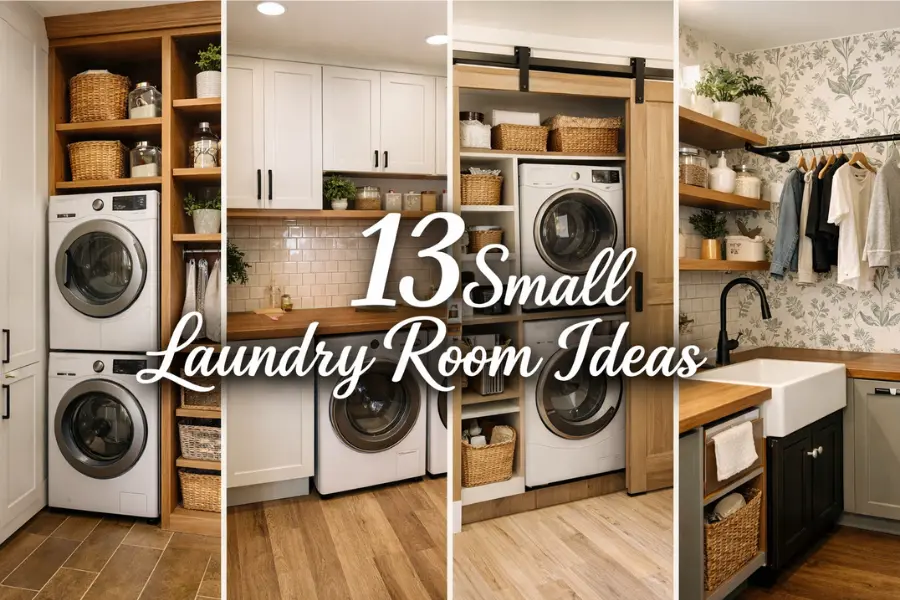
13 Small Laundry Room Ideas That Look Beautiful and Work Hard
A small laundry room does not need to feel cramped, plain, or difficult to use. In my experience, the best results come from treating this space like any other room in the home. It should be practical first, but it should also feel finished, well-planned, and pleasant to spend time in. Good design sources consistently recommend the same basics for compact laundry spaces: use vertical storage, make room for folding, hide visual clutter, and choose finishes that can handle moisture and everyday wear.
For this article, I have shaped the ideas into realistic layouts that suit different homes. Some work best in very tight laundry closets. Others fit a narrow room, a normal small laundry room, or a slightly larger utility area. Every idea is different in look and function, but each one is practical enough to use in real life and attractive enough to feel worth saving for later.
Table of Contents
13 Small Laundry Room Ideas
This section covers 13 distinct ideas that work for a range of room sizes. I have included options for very small spaces, medium-size laundry rooms, and slightly larger small rooms so you can choose a layout that fits your home instead of forcing one that does not.
1. Stacked washer and dryer with tall side storage
A stacked washer and dryer layout is one of the best ways to free floor space in a very small laundry room. By building upward instead of outward, you create room for a tall cabinet, narrow pull-out storage, or open shelving beside the machines. The result feels compact, clean, and much easier to move around in.
Why it works
This layout gives floor space back to the room. HGTV specifically recommends stacking the washer and dryer in tight spaces because it opens the floor plan and makes the room easier to use. Once the appliances move vertical, you can use the extra width for practical storage instead of squeezing everything into upper shelves.
Best for
This idea is best for apartment laundry closets, narrow utility rooms, secondary hall spaces, and homes where the laundry area is more like a niche than a full room. It also suits anyone who wants to keep supplies close without crowding the walkway.
Styling Tips
Keep the look simple and tall. Add one full-height cabinet beside the machines, then finish with warm wood shelving or a slim stone-look ledge above. Use matching baskets or storage bins so the space feels calm. In a tiny room, fewer finishes usually look better than too many mixed materials.
2. One-wall laundry room with a full countertop
A one-wall layout places the washer and dryer side by side with a continuous countertop above them. This instantly adds folding space and creates a smooth visual line across the room. It is one of the easiest ways to make a small laundry room feel larger, neater, and more thoughtfully designed.
Why it works
A long counter turns two separate machines into one complete workstation. HGTV highlights folding surfaces in compact laundry rooms because they make daily use easier without needing more square footage. The one-wall layout also leaves the room open, which is helpful in narrow spaces where you do not want storage on both sides.
Best for
This idea works best in narrow laundry rooms, galley-style utility spaces, or kitchen-adjacent laundry areas where the room needs to stay visually tidy. It is also a good choice for families who fold clothes right out of the dryer.
Styling Tips
Choose a countertop in butcher block, laminate stone-look, or quartz if your budget allows. Add upper cabinets for hidden storage, then break them up with one or two open shelves so the wall still feels light. A simple wall sconce or under-cabinet light will make the area feel polished.
3. Hidden laundry closet behind doors or curtains
A hidden laundry closet keeps the washer and dryer tucked neatly out of sight when not in use. This idea works well when the laundry area shares space with a hallway, kitchen, bathroom, or guest zone. Sliding doors, barn doors, or full-height curtains can all help the setup look intentional and neat.
Why it works
Concealed laundry areas reduce visual clutter, which is especially important in multipurpose spaces. Better Homes & Gardens recommends barn doors, curtains, and cabinets as practical ways to hide machines and supplies in busy areas of the home. This makes the laundry zone feel integrated with the rest of the house instead of looking exposed and unfinished.
Best for
This layout is ideal for homes without a separate laundry room, especially in compact houses, condos, and apartments. It is also a smart solution if your machines sit near living spaces where you want a cleaner visual look.
Styling Tips
Paint the inside of the closet to match the surrounding walls or cabinetry so it feels built in. If you use curtains, choose a linen-look fabric in a soft neutral shade. If you use doors, simple flat-panel or shaker styles usually look the most timeless.
4. Galley-style laundry room with storage on both sides
A galley layout uses both long walls of a small room. The washer and dryer can sit on one side with a counter, while the other side holds shallow cabinets, hooks, a drying rail, or slim shelving. This creates a practical center walkway and gives the room stronger day-to-day function.
Why it works
This layout supports a full work flow in a compact footprint. One side can handle washing and folding, while the other supports hanging, storage, or entryway needs. HGTV also shows how small laundry rooms can double as mudrooms when the walls are used well for hooks, benches, and daily storage.
Best for
This idea works best in long small rooms with a bit more width than a laundry closet. It also suits family homes where the laundry room needs to handle more than just detergent and hampers.
Styling Tips
Keep one side visually lighter than the other. For example, use base cabinets and upper shelves on the main wall, then use shallower storage with hooks on the opposite wall. This balance stops the room from feeling boxed in.
5. Under-window laundry station with natural light
Placing front-loading machines under a window with a countertop above them creates a bright and inviting folding area. This layout uses a wall that might otherwise be awkward and turns it into a feature. It also helps a small laundry room feel less enclosed by drawing attention toward daylight.
Why it works
Natural light improves almost any work area, and a laundry room is no exception. A window breaks up upper cabinetry and gives the room breathing space. It also helps the area feel fresher and more open, which matters a lot in compact rooms with limited visual depth.
Best for
This setup is best for normal-size small laundry rooms or utility rooms where the machines can sit side by side under a window. It is especially good if you like folding clothes in natural light and want the room to feel more cheerful.
Styling Tips
Use a single continuous counter and keep the window treatment light. A simple roller shade, woven blind, or linen café curtain works well. Add a small plant, ceramic tray, or glass jar for clothespins to make the windowsill feel finished but not crowded.
6. Laundry room and mudroom combination
A laundry room that also works as a mudroom can be one of the smartest layouts for a busy home. It combines washing space with entry storage, often using hooks, cubbies, benches, and baskets. This design feels especially practical in family homes where shoes, bags, coats, and laundry all need a place.
Why it works
HGTV highlights small mudroom and laundry room combinations because they solve more than one problem in the same footprint. When the walls work hard, the room becomes a daily drop zone and a cleaning station at once. That saves space elsewhere in the home and helps dirt stay near the entry.
Best for
This layout is best for family homes, pet-friendly homes, or back-entry areas where laundry sits close to the door. It is also helpful if you regularly deal with sports clothes, garden wear, or muddy shoes.
Styling Tips
Create clear zones so the room does not feel cluttered. Use the lower area for shoes and baskets, hooks at eye level for coats and bags, and upper cabinets for detergent and supplies. Matching baskets and a washable rug will make the space feel warm and organized.
7. Hallway laundry nook with built-in cabinetry
A hallway laundry nook uses an underused passage area and turns it into a compact but efficient laundry spot. With fitted cabinetry, upper storage, and a narrow layout, this design can blend beautifully into the home. It is a strong choice when there is no spare room but there is enough wall depth to build inward.
Why it works
This idea uses forgotten space rather than competing with rooms that already have a job. Built-ins and concealed storage help a hallway laundry nook look tidy, and hidden cabinets or curtains can soften the look even further. That makes it easier for the laundry area to sit near living spaces without feeling exposed.
Best for
This option is best for compact homes, smaller townhouses, and apartments where there is enough corridor space for a shallow built-in laundry zone. It also works well for homes with an upstairs hallway near the bedrooms.
Styling Tips
Match the cabinetry finish to nearby trim, doors, or hallway storage so the unit looks original to the house. Add warm brass or matte black hardware for a tailored finish. Good lighting also matters here, especially in darker hallways.
8. Floating shelves for an airy and open look
Floating shelves are one of the easiest ways to make a small laundry room feel open while still adding storage. They are especially useful above side-by-side machines, over a folding counter, or beside a stacked washer and dryer. Used well, they keep supplies visible without making the room feel heavy.
Why it works
HGTV points out that floating shelves make better use of empty wall space in small laundry rooms. Unlike bulky cabinetry, they keep the wall visually lighter. They also make it easier to reach everyday items like detergent, dryer sheets, and stain removers without opening and closing multiple doors.
Best for
This idea is best for tiny laundry rooms, modern farmhouse spaces, and anyone who wants a more relaxed and decorative look. It is also a good choice if upper cabinets would feel too heavy over the machines.
Styling Tips
Do not overfill the shelves. Use lidded jars, woven baskets, and a few folded white towels for a tidy look. Keep the color palette simple so the shelves feel intentional rather than messy. A row of pegs underneath can add even more function without taking extra room.
9. Floor-to-ceiling cabinetry for maximum storage
Full-height cabinetry makes a small laundry room feel custom and complete. It uses the full wall height for storage, which is especially helpful in rooms with limited floor area. Tall cabinets can hide detergent, cleaning tools, extra linens, paper goods, and all the everyday items that make laundry rooms look cluttered.
Why it works
Vertical storage is one of the most reliable ways to improve a compact room. Better Homes & Gardens recommends cabinetry around and above machines to hide essentials and keep laundry zones cleaner looking. When storage rises to the ceiling, even a small room can feel more organized because there is a place for everything.
Best for
This idea is best for homeowners who need serious storage in a small footprint. It works particularly well in utility rooms, mudroom-laundry combinations, and homes where the laundry room also stores cleaning supplies or household overflow.
Styling Tips
Use lower cabinets and drawers for the items you reach for daily, and reserve upper storage for extras and less-used supplies. If the wall feels too solid, break it up with one open shelf or a narrow vertical niche in a warm wood tone.
10. Hanging rod or drying bar for air-drying clothes
A drying bar may seem like a small detail, but it can completely improve how a laundry room works. HGTV highlights hanging rods and tension rods as smart additions in compact spaces because they give you a dedicated place for shirts, dresses, delicates, and pieces that wrinkle easily.
Why it works
Air-drying space saves you steps and helps protect delicate clothing. Instead of carrying damp items through the house, you can hang them right where they come out of the washer or dryer. This keeps the routine smoother and helps the room serve more than one laundry task.
Best for
This idea is best for any laundry room size, but it is especially useful in smaller spaces that need each feature to work harder. It suits homes where delicate fabrics, school uniforms, or office wear are washed often.
Styling Tips
Use a rod finish that matches your hardware, faucet, or light fixture so it feels built in. A slim black rod, brass rail, or stained wood support can look beautiful. Place it above a counter, under a shelf, or across a side wall for the cleanest layout.
11. Statement wallpaper or patterned floor for personality
A small laundry room is a great place to use stronger style choices because the room is compact enough to handle them. Bold wallpaper, patterned tile, or a colorful wall treatment can make the room feel memorable without overwhelming the house. This is where function and charm can meet very successfully.
Why it works
Because the room is small, you can take more design risk with less cost and less visual overload. Strong pattern helps a practical space feel finished. Design inspiration from Architectural Digest also notes the value of wallpaper, texture, and decorative lighting in making laundry rooms more attractive and enjoyable to use.
Best for
This idea is best for homeowners who already have a simple layout and want the room to feel more styled. It also works well in guest-visible laundry areas where the space should feel like a real part of the home.
Styling Tips
Choose one statement feature only. If the wallpaper is busy, keep cabinets plain. If the floor is patterned, use quieter walls. A small pendant light or framed print can finish the space without making it feel crowded.
12. Hidden hamper and fold-away ironing station
A hidden hamper and collapsible ironing station can make a compact laundry room feel much calmer. These features reduce the visual mess that often builds up in tight spaces. Better Homes & Gardens recommends tilt-out hampers and wall-mounted ironing boards because they save room and keep everyday tools out of sight when not needed.
Why it works
Laundry rooms get messy fast when baskets and bulky boards have no home. A hidden hamper keeps clothing sorted without leaving piles in view, while a fold-away ironing board removes the need to store a large board somewhere else. These details make a small room feel much more controlled.
Best for
This idea is best for tiny laundry rooms, closet laundries, and homes where visual order matters. It also helps anyone who hates seeing dirty laundry sitting out in baskets all day.
Styling Tips
Choose cabinet-front hampers that match the rest of the millwork so they disappear into the design. If you add a wall-mounted ironing board, place it near a counter or shelf so the area still feels connected and purposeful.
13. Zoned larger small laundry room with sink and work areas
Some laundry rooms are still small, but they offer enough space to create zones. In this layout, one area is for washing, another for folding, another for hanging, and another for storage or stain treatment. If space allows, a sink can make the room feel even more complete and useful.
Why it works
A zoned layout feels thoughtful and high-end because it separates tasks without making the room feel crowded. Design examples from professional decorators show that combining open storage, concealed cabinets, natural light, and a sink can turn a narrow utility room into a very hardworking space.
Best for
This idea is best for a normal-size small laundry room or a slightly larger utility room where you have enough wall length to create more than one function. It also suits homes where laundry is done often and the room needs to support daily routines.
Styling Tips
Keep the finishes consistent across each zone. Use the same cabinet color, counter material, and flooring throughout the room so it feels larger and more connected. A sink with a simple bridge faucet or pull-down tap adds practicality without sacrificing style.
Mistakes to Avoid in a Small Laundry Room
Even a beautiful laundry room can become frustrating if the basics are overlooked. I often see people focus on paint color and baskets first, then realize later that they have nowhere to fold clothes, no place to hang damp items, or no room left to open cabinet doors comfortably. In a small room, layout decisions matter more than decorative details.
Ignoring vertical space
One of the biggest mistakes is treating the room at eye level only. Small laundry rooms need height. Shelves, cabinets, peg rails, and hanging rods can all turn unused wall space into useful storage. Without them, the room often ends up cluttered because too much is being stored low or out in the open.
Choosing storage that is too deep or bulky
Deep cabinets can make a small room harder to move through. Oversized hampers and thick shelving also steal floor space quickly. In compact areas, slim storage, tall cabinetry, and built-in solutions usually work better than large freestanding pieces because they use space more carefully.
Forgetting a folding surface
Many people plan for washing and drying, but not for what happens next. A folding counter saves time, reduces mess, and makes the room far more usable. Even a narrow counter above front-loading machines can make a big difference.
Leaving no place for air-drying
A small hanging rod, tension bar, or wall rack may not seem essential at first, but it is one of the most useful additions in a laundry room. Without it, delicate items often end up hanging elsewhere in the house, which creates clutter in other rooms.
Using the wrong flooring
Laundry rooms are higher-moisture spaces, so flooring needs to be chosen carefully. Contractors warn against carpet in these rooms because humidity and leaks can lead to odor, mold, and wear. Flooring guidance also stresses proper installation, moisture control, and ventilation for materials such as vinyl and laminate in humid areas.
Adding too many visual details
In a small laundry room, too many colors, baskets, labels, and finishes can make the space feel busier than it is. One or two decorative features are enough. It is usually better to let the layout, cabinetry, and a few warm materials carry the design than to crowd the room with too many accessories.
Conclusion
A small laundry room can absolutely be stylish, efficient, and enjoyable to use. The key is to choose a layout that fits the room you actually have, not the one you wish you had. Once the essentials are in place, such as vertical storage, a proper folding area, concealed clutter control, and good materials, the room starts to feel much more complete.
If you are starting from scratch, I usually recommend choosing one strong layout idea first. That could be stacked machines, a one-wall counter setup, a hidden laundry closet, or a mudroom-laundry combination. Then build the rest of the room around that choice. This keeps the design focused, realistic, and much easier to finish well.
The best small laundry rooms are not the ones with the most expensive finishes. They are the ones that make everyday routines simpler while still looking warm and put together. That balance is what makes a practical room feel like a lovely part of the home instead of just a utility corner.
FAQs
A few common questions come up again and again when planning a small laundry room. These answers will help you make simple, confident decisions before you start decorating or remodeling.
What is the best layout for a very small laundry room?
For very tight spaces, a stacked washer and dryer is usually the best layout because it frees floor space and gives you more room for storage. If stacking is not possible, a side-by-side setup with a countertop above can still work very well in a narrow room.
How can I make a small laundry room look bigger?
Use light colors, a simple palette, and as much vertical storage as possible. Floating shelves, a continuous countertop, and hidden storage help the room feel cleaner and more open. Natural light, mirrors, and matching finishes also help create a larger visual effect.
Should a small laundry room have open shelves or closed cabinets?
Both can work, but the best rooms often use a mix. Closed cabinets hide clutter and create a cleaner look, while open shelves make everyday items easier to reach and keep the room from feeling too heavy. The right balance depends on how much visual calm you want.
Is it okay to put wallpaper in a laundry room?
Yes, wallpaper can work beautifully in a laundry room, especially in a small space where you want personality. Just make sure the room has decent ventilation and keep the rest of the finishes simple if the wallpaper has a strong pattern.
What flooring works best in a laundry room?
Laundry rooms need flooring that can handle moisture and daily wear. Contractors warn against carpet in these spaces because of humidity and leak risk. Moisture-aware installation, sealing, and ventilation are also important for longer-lasting floor performance in damp areas.
How do I hide clutter in a small laundry room?
Use cabinets above the machines, hidden hampers, narrow pull-out storage, or curtains and doors to conceal the laundry area. Better Homes & Gardens also recommends fold-away or wall-mounted features like ironing stations to reduce visual bulk in compact rooms.
Can a laundry room also work as a mudroom?
Yes, and in many homes it is one of the smartest choices. Hooks, cubbies, benches, and baskets can turn a small laundry room into a practical mudroom too. This is especially helpful near back doors, side entries, or family entrances.