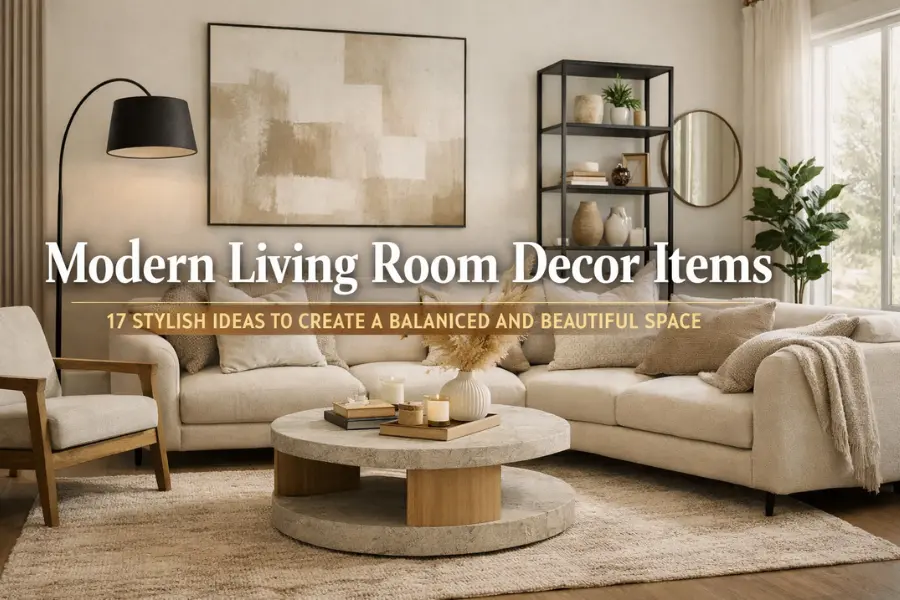
Modern Living Room Decor Items: 17 Stylish Ideas to Create a Balanced and Beautiful Space
A living room tells a story. It is the first space guests see, the place where your family gathers, and the room where you finally sit down and breathe after a long day. Getting it right matters more than most people think.
The good news? You do not need a designer budget or years of experience to make it look beautiful. You just need the right pieces, placed in the right way.
I have been decorating living rooms for years, and I can tell you one thing with confidence — modern living room decor is not about buying expensive furniture. It is about choosing items that work together, layer well, and feel intentional. Whether you are starting from scratch or refreshing what you already have, this guide will walk you through every key piece you need. Let’s get into it.
Table of Contents
17 Modern Living Room Decor Items That Actually Work
A well-decorated living room is built in layers. You start with larger anchor pieces, then add mid-sized elements for comfort, and finish with small details that pull everything together. Follow this order and the room will come together naturally.
1. Large Area Rug That Anchors the Space
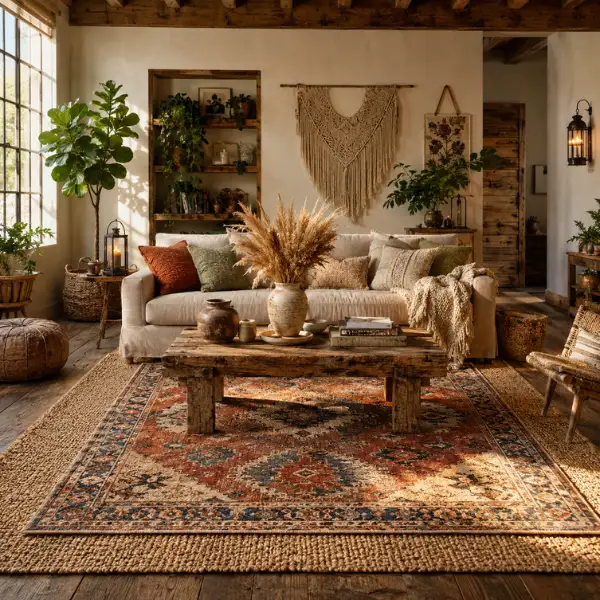
The area rug is the foundation of your living room. Most people skip it or buy one that is too small, and that one mistake throws off the entire layout. A properly sized rug ties your furniture together and gives the room a clear, defined zone. It is one of the most impactful purchases you will make for this space.
Why It Works
A large rug visually connects all your furniture. Without it, sofas and chairs float around the room with no relationship to each other. With it, everything clicks into place. It also adds warmth, softness underfoot, and a layer of texture that hard flooring simply cannot provide.
Best For
Every living room, but especially open-plan spaces where you need to separate the sitting area from the dining or kitchen zone. It works in both small and large rooms when sized correctly.
Styling Tips
The front legs of your sofa and chairs should sit on the rug — not float beside it. For a large room, go bigger and let all legs sit fully on the rug. Stick to neutral tones like warm beige, soft grey, or ivory for a modern feel. If you want pattern, keep it subtle. A low-pile or flatweave rug works best in high-traffic rooms.
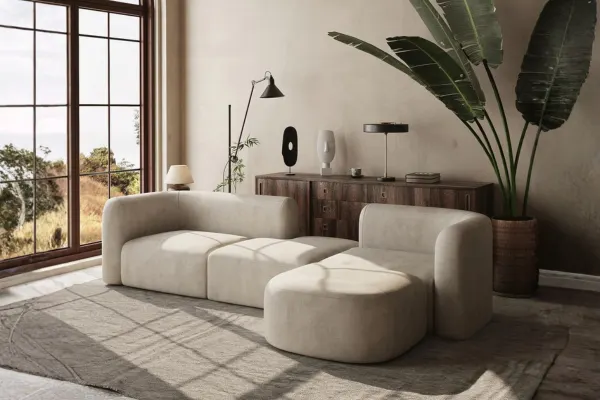
2. Sculptural Sofa with a Clean Modern Shape
Your sofa is the hero of the living room. Everything else is styled around it. In a modern space, the shape of the sofa matters just as much as the color. A sofa with soft rounded arms or clean straight lines immediately sets the tone for the whole room. Choose it carefully, because it is the piece you will live with the longest.
Why It Works
The sofa acts as the visual anchor of the entire room. It draws the eye first and defines whether the space feels modern, traditional, or casual. A well-chosen sofa with a strong silhouette makes styling the rest of the room much easier because you already have a clear direction to follow.
Best For
Every single living room. There is no layout or size that does not need a well-chosen sofa. It is your number one investment piece.
Styling Tips
Stick to neutral colors — warm beige, soft cream, stone grey, or deep charcoal. These shades work with everything and never go out of style. Avoid trendy sofa colors unless you are comfortable redecorating in a few years. Focus on the shape and the quality of the fabric. Then layer cushions and a throw on top to add personality without making the sofa feel permanent.
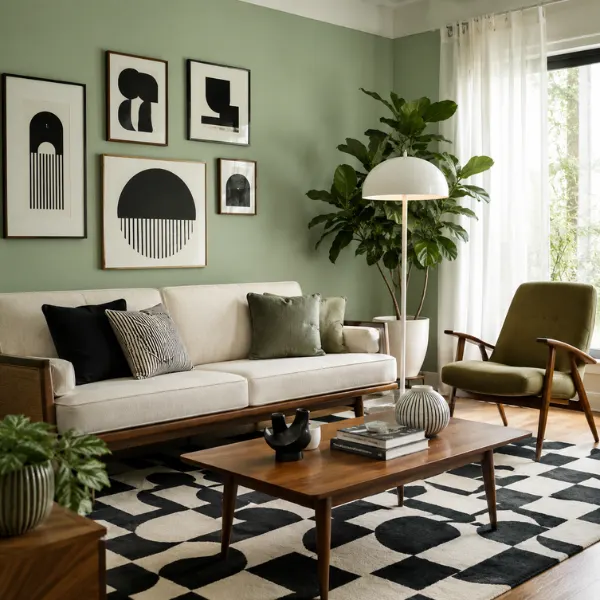
3. Oversized Wall Art for a Strong Statement
Empty walls make a room feel unfinished. But filling them with rows of small frames creates clutter and visual noise. The modern solution is one large, bold piece of wall art that commands attention. It is clean, confident, and far easier to pull off than a gallery wall.
Why It Works
Oversized art fills wall space with purpose. It acts as a focal point that draws the eye and sets the mood of the room. A single large piece looks intentional and considered. It also eliminates the decision fatigue that comes with trying to arrange multiple smaller frames.
Best For
Minimalist and modern interiors that want impact without clutter. It works especially well above a sofa, behind a console table, or on any large blank wall that currently feels empty.
Styling Tips
Hang artwork so the center sits at eye level — roughly 57 to 60 inches from the floor. Go for abstract prints, soft landscapes, or line art in muted tones that complement your existing color palette. Avoid art that is too literal or too busy. The frame matters too — thin black, natural wood, or frameless options all work beautifully in modern spaces.
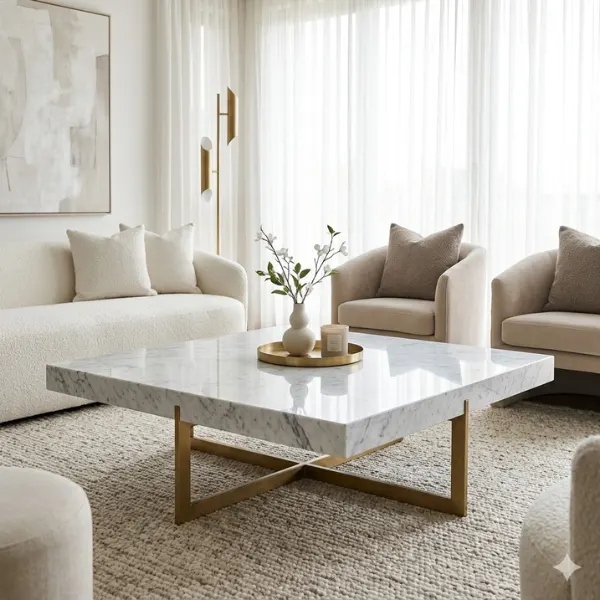
4. Statement Coffee Table with Character
The coffee table sits right in the middle of your seating area, which means everyone sees it all the time. A table with a unique shape, interesting material, or a combination of both adds so much character to the room. It is functional, yes, but it is also one of the most styled surfaces in your home.
Why It Works
A coffee table gives the room a central point and adds contrast against the softness of the sofa and cushions. It breaks up the visual weight of fabric and introduces a harder material — wood, stone, metal, or glass — that gives the layout balance and structure.
Best For
Living rooms where you want both daily practicality and a strong design moment. Whether your space is small or large, the right coffee table makes the whole room feel more put together.
Styling Tips
Style the top with a tray, a stack of two or three books, and a small sculptural vase. Keep it simple — three to five items at most. Choose a round table for smaller rooms or softer layouts, and a rectangular one for larger, more structured spaces. If your sofa is low, keep the table at a similar height. If your sofa is tall, a chunkier table balances it better.
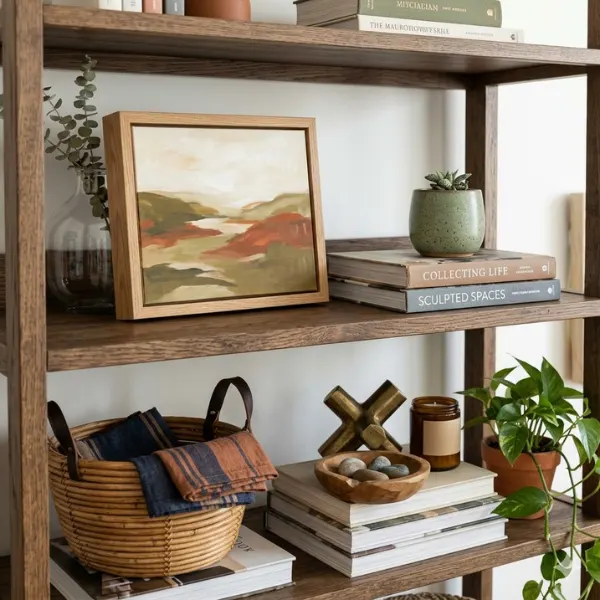
5. Tall Shelving or Display Unit
Vertical space is one of the most underused design tools in any home. A tall shelving unit draws the eye upward, which makes the ceiling feel higher and the room feel more complete. It also gives you a dedicated space to display books, plants, and decor without crowding surfaces like the coffee table or side tables.
Why It Works
Height variation is a key principle in good interior design. Most rooms have furniture that sits at a similar level, which makes the space feel flat. A tall shelving unit breaks that pattern and fills the vertical void between furniture and ceiling. It also gives you a curated display area that adds personality to the room.
Best For
Rooms with blank walls, low ceilings that need visual height, or spaces where extra storage is needed without bulky closed cabinets. It works beautifully in both small apartments and large family rooms.
Styling Tips
Do not fill every shelf. Leave some empty for breathing room. Style in layers — stack a few books horizontally, place a small plant or ceramic beside them, and add a taller object like a vase at the back. Repeat a consistent color or material through a few shelves to tie it together. Avoid uniform rows of books from end to end — it looks like a library, not a styled home.
6. Accent Chairs for Extra Style and Seating
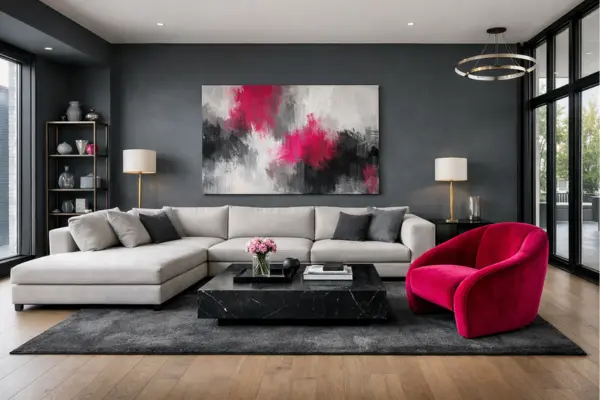
An accent chair is where things get interesting. It is the one piece in the room where you can experiment with a different material, shape, or even a bolder color without committing the whole room to it. A well-placed accent chair adds personality, breaks up the monotony of matching furniture, and invites people to sit in a different part of the room.
Why It Works
It introduces variety into the seating arrangement. A sofa alone can make a layout feel incomplete. Adding one or two accent chairs creates a conversation setup that feels intentional and socially inviting. It also gives you the freedom to mix textures — velvet, linen, leather, or boucle — without changing the sofa.
Best For
Medium to large living rooms that need additional seating. Also perfect for rooms that feel too matchy-matchy and need a design contrast to break things up.
Styling Tips
Place the chair at an angle rather than straight against the wall. It will feel more natural and conversational. Mix the material with your sofa — if you have a fabric sofa, try a leather or wood-frame chair. One or two accent chairs is the sweet spot. More than that and the room starts to feel like a waiting room.
7. Floor Lamp for Layered Lighting
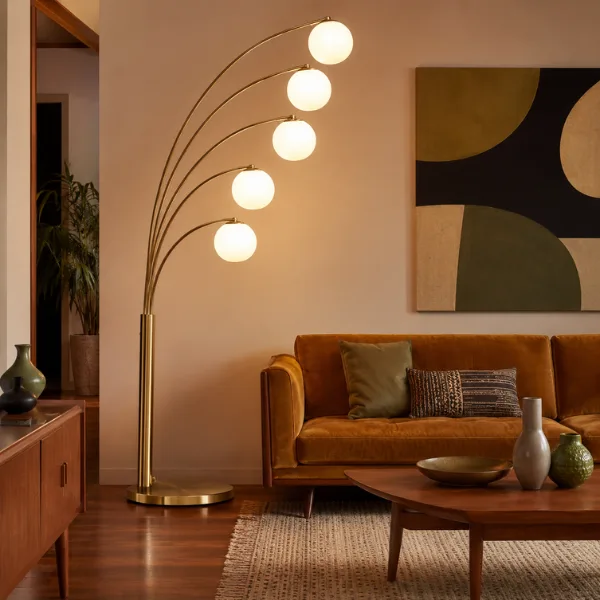
Overhead lighting alone is one of the most common mistakes in living room design. It is flat, harsh, and does nothing for the mood of the space. A floor lamp adds a second layer of light that is warm, soft, and directed exactly where you need it. It also adds height and a design element to the room.
Why It Works
Layered lighting is what separates a designed room from a basic one. When you have overhead light plus a floor lamp, the room immediately feels warmer and more intentional. The floor lamp also fills vertical space and draws the eye upward in the same way tall furniture does.
Best For
Living rooms with flat overhead lighting, dark corners that feel empty, or spaces that feel too bright and clinical in the evenings. Every living room benefits from at least one floor lamp.
Styling Tips
Place the lamp next to the sofa or beside an accent chair — wherever you read, relax, or spend the most time. Arc lamps work beautifully in modern spaces because they extend over the seating area without taking up floor space directly beside the sofa. Tripod lamps are another solid modern choice. Stick to a warm bulb tone — 2700K to 3000K — for the coziest result.
8. Side Tables with Mixed Materials
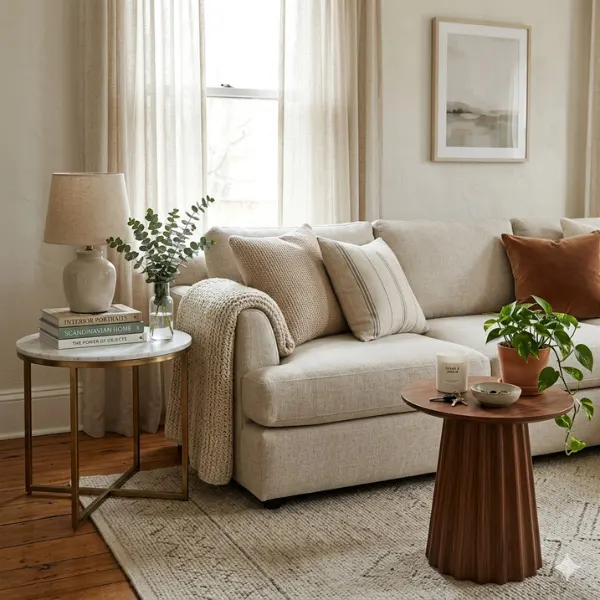
Side tables are small, but they carry real design weight. They provide a surface for your lamp, your drink, your book — but they also add material variety to the room. Choosing side tables in different materials from your sofa or coffee table brings depth and contrast to the overall look.
Why It Works
Material contrast makes a room feel curated rather than bought-as-a-set. When every piece matches perfectly, the room feels flat and showroom-like. Mixing a marble-top side table, a wooden one, or a metal frame beside a fabric sofa creates a layered, lived-in look that feels much more deliberate.
Best For
Every living room. Whether you have a large sofa or a single accent chair, a side table beside it makes the setup feel complete and functional.
Styling Tips
You do not have to match both side tables. In fact, mixing two slightly different side tables on either end of a sofa can look intentionally styled. Keep the height consistent — the table top should sit at or just below the arm of the sofa. Add a small lamp, a candle, or a single stem vase on top and leave it at that.
9. Large Mirror to Open Up the Space
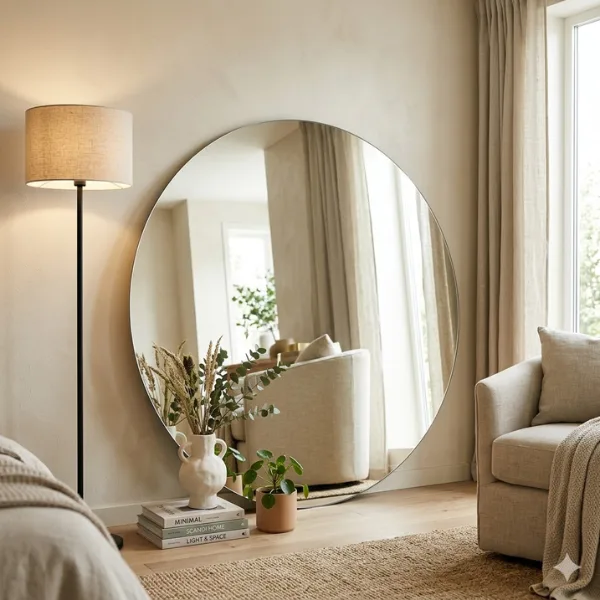
A large mirror is one of the simplest tricks in home decorating and one of the most effective. It bounces light around the room, makes the space feel bigger, and adds a polished, finished look to any wall. If you are working with a small or dark living room, a mirror is genuinely transformative.
Why It Works
Mirrors reflect both natural and artificial light, which immediately brightens the room. They also create a visual illusion of depth, making the space feel twice as large as it actually is. A well-placed mirror does the work of a window when you do not have one.
Best For
Small living rooms, rooms with limited natural light, and any space that feels tight or closed in. Also great in hallways leading to the living room.
Styling Tips
Place the mirror directly opposite a window to maximize light reflection. If that is not possible, position it where it catches the most light in the room. Choose a mirror with a thin frame for a sleek modern look, or a round shape for a softer feel. Lean a large mirror against the wall rather than hanging it for an effortlessly relaxed aesthetic that is very popular right now.
10. Full-Length Curtains for a Polished Finish
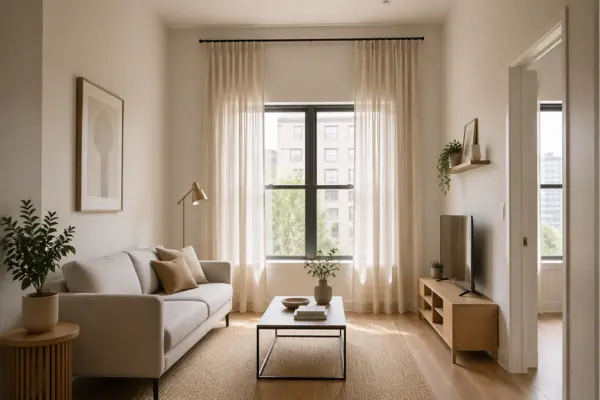
Curtains are one of the most overlooked decor elements in a living room. Most people buy curtains that just cover the window, but that approach makes the room look smaller and the ceilings feel lower. Full-length curtains that run from ceiling to floor change the entire proportion of the room instantly.
Why It Works
Long curtains draw the eye vertically, which makes the ceiling appear taller and the room feel more spacious. They also add softness and texture to a space that might otherwise feel too hard or too clinical. Fabric in a room has an acoustic quality too — it absorbs sound and makes the space feel warmer.
Best For
All living rooms, especially those with large windows, high ceilings, or walls that feel bare. Even in a room with small windows, floor-length curtains make the space feel grand and well-dressed.
Styling Tips
Always hang the curtain rod as close to the ceiling as possible — not just above the window frame. This single trick makes a huge difference. Choose light fabrics like linen or sheer cotton for an airy, modern look. Stick to neutral tones or soft whites. Make sure each curtain panel is wide enough to fully cover the window when closed, with a little extra for a gentle gather.
11. Coffee Table Books for Easy Styling
Coffee table books are one of the most underrated decor tools available. They add color, height, and personality to any flat surface — and they do it without any effort. A small stack of beautiful books instantly makes a coffee table or shelf look styled and intentional.
Why It Works
Books introduce color, dimension, and a sense of personal taste to your surfaces. A stack of two or three books creates a base that you can layer other small decor items on top of. They also communicate something about the person who lives there, which is exactly what good home decor should do.
Best For
Coffee tables, open shelves, console tables, and bedside tables. Anywhere you have a flat surface that needs a little life.
Styling Tips
Stack two to three books with the largest at the bottom. Remove the dust jackets if the spines are colorful — or keep them if the cover art is beautiful. Place a small ceramic, a candle holder, or a tiny vase on top of the stack. Choose books with covers or spines in your room’s color palette for a cohesive look.
12. Decorative Trays for Organized Styling
A tray might seem like a purely practical item, but in home decorating, it is one of the most useful styling tools you can own. It groups scattered items together and instantly makes any surface look neat, organized, and purposeful. Without a tray, a handful of small objects looks cluttered. With one, it looks styled.
Why It Works
A tray creates a visual boundary. It tells the eye where a grouping begins and ends. This simple trick transforms random objects into a deliberate vignette. It also makes it easy to clear the surface quickly — just pick up the tray.
Best For
Coffee tables, ottomans, side tables, kitchen countertops, and bathroom vanities. Anywhere you tend to collect small items that end up looking scattered.
Styling Tips
Use the tray to hold two or three items — a candle, a small vase, and a coaster set is a classic combination. Do not overfill it. The tray itself should still be visible. Choose materials that complement your room — a woven rattan tray for a natural look, a marble or stone tray for something more refined, or a lacquered black or white tray for a clean modern feel.
13. Sculptural Vases and Ceramics
You do not need flowers to make a vase look beautiful. A well-shaped vase or ceramic piece is a standalone decor item in its own right. The shape, texture, and material all contribute to the visual interest of the room. These are the kinds of pieces you buy once and use forever.
Why It Works
Sculptural objects add organic form and artistic character to a room. In a modern living room where most furniture has clean, straight lines, a curved vase or handmade ceramic introduces softness and contrast. They also photograph beautifully, which is why you see them in every well-styled home on Pinterest.
Best For
Coffee tables, open shelves, console tables, window sills, and side tables. They work as single statement pieces or grouped in small collections of two or three.
Styling Tips
Group vases in odd numbers — one large, one medium, and one small creates a natural-looking arrangement. Vary the heights and shapes. You can use dried stems, pampas grass, or eucalyptus for a low-maintenance organic look. Stick to earthy tones — terracotta, cream, stone, sage — to keep things modern and grounded.
14. Textured Cushions for Comfort and Depth
Cushions are the fastest and most affordable way to refresh your living room. They add softness to a sofa, introduce new colors and textures, and make the whole seating area feel more inviting. The key is knowing how to layer them so they look intentional rather than thrown on.
Why It Works
Texture is what makes a room feel rich and layered. When all your cushions are the same fabric, the sofa looks flat. When you mix linen with boucle, velvet with cotton, the sofa immediately feels more considered and comfortable. Cushions also give you a low-commitment way to introduce a new color into the room without repainting.
Best For
Sofas, accent chairs, window seats, and reading nooks. Any upholstered surface benefits from well-chosen cushions.
Styling Tips
Mix textures rather than patterns — this is the safest route to a polished look. Stick to a consistent color palette across your cushions, even if the textures vary. A classic arrangement for a three-seat sofa is two larger cushions at each end, one medium in the middle, and a small lumbar cushion in front. Do not overstuff the sofa — leave room to actually sit comfortably.
15. Throw Blanket for a Cozy Touch
A throw blanket is a small addition with a big impact. It softens the look of any sofa or chair and signals that this is a comfortable, lived-in space. It also balances out the harder materials in the room — wood, metal, glass — and brings warmth to the overall palette.
Why It Works
It adds softness and texture while completing the layered look of the seating area. A draped throw also makes a sofa look more relaxed and welcoming. On a purely practical level, it is there when you need it and looks beautiful when you do not.
Best For
Sofas, accent chairs, and the end of a bed. It works in every season — a linen throw in summer and a chunky knit in winter gives you two completely different looks with minimal effort.
Styling Tips
Drape it casually over one arm or corner of the sofa rather than folding it neatly. The relaxed drape looks more natural and inviting. Choose a throw in a complementary tone to your cushions — it does not need to match exactly. A chunky knit in cream or oatmeal, a soft cotton in terracotta, or a woven blanket in grey are all modern classics.
16. Indoor Plants for a Fresh Look
Plants bring something into a room that no decor item can replicate — life. They add natural color, a sense of calm, and a softness that makes even the most modern, minimal space feel warmer and more human. You do not need a green thumb to incorporate them. You just need the right plants in the right places.
Why It Works
Plants introduce an organic element that balances out the clean lines and hard surfaces of modern furniture. They also fill empty corners naturally, add height variation, and improve the overall atmosphere of the room. A corner with a tall leafy plant looks finished in a way that a corner with nothing in it never does.
Best For
Empty corners that feel bare, shelves that need a natural element, windowsills, and coffee tables. Almost every room has at least one spot that a plant would improve instantly.
Styling Tips
Use a tall plant like a fiddle leaf fig, monstera, or snake plant for empty corners — they fill vertical space beautifully. Use smaller plants like pothos, succulents, or trailing ivy on shelves and side tables. Always choose a pot that complements your room’s color palette. Terracotta, white ceramic, or woven baskets all work well in modern spaces. If you know you are not good at watering, choose low-maintenance varieties.
17. Candles for a Warm Atmosphere
Candles are the finishing touch in almost every well-styled living room. They are small, affordable, and genuinely powerful when it comes to creating atmosphere. The soft glow of a candle in the evening transforms a living room in a way that electric light simply cannot.
Why It Works
Candles bring warmth, intimacy, and a sensory element — scent — that no other decor item provides. Even unlit, a set of well-styled candles in beautiful holders adds texture and visual interest to a shelf or coffee table. Lit, they change the entire mood of the room.
Best For
Coffee tables, shelves, side tables, and fireplace mantels. They work beautifully in any room and in any season.
Styling Tips
Group candles in odd numbers — three or five looks more natural than two or four. Vary the heights within the group. Use candleholders that match your room’s materials — marble, brass, ceramic, or smoked glass all look beautiful in modern spaces. For scent, choose one signature fragrance for the living room and stick to it. It creates a consistent, welcoming atmosphere every time you walk in.
Mistakes to Avoid in Modern Living Room Decor
Even with the best intentions, a few common mistakes can quietly undermine a beautifully designed room. Here are the ones I see most often — and how to sidestep them easily.
Using a rug that is too small. This is the single most common mistake in living room design. A small rug makes the furniture look disconnected and the room feel unfinished. Always size up when in doubt.
Pushing all furniture against the walls. It feels logical, especially in a smaller room, but it actually makes the space feel emptier. Pull furniture in toward the center and create a defined seating zone. The room will feel larger and more intentional.
Overcrowding surfaces with small decor. More is not more in home decorating. A few well-chosen pieces always look better than a crowded shelf or table. Edit down, leave breathing room, and let each piece be seen.
Matching everything perfectly. A room where every piece of furniture matches in color, material, and finish feels flat and showroom-like. Mix your materials — wood with metal, fabric with leather — and the room will immediately feel more layered and real.
Relying on one source of light. A single ceiling light leaves corners dark, creates harsh shadows, and flattens the mood of the room. Always layer your lighting with floor lamps, table lamps, and candles.
Ignoring the vertical space. Most decorating happens at eye level or below. Use tall shelving, floor lamps, and ceiling-height curtains to fill the vertical space and make the room feel taller and more complete.
Conclusion
A modern living room does not require a huge budget or a professional designer. It requires the right pieces chosen thoughtfully and layered with intention.
Start with the large anchor items — the rug, the sofa, the curtains. Then build in the mid-sized pieces — the coffee table, the shelving, the accent chairs. Finally, finish with the small details that bring everything to life — the cushions, the candles, the plants, the books.
Each layer adds to the one before it. And when all 17 elements come together, the room stops looking decorated and starts feeling like home.
Take it one piece at a time. You do not have to do it all at once. Even one or two of these items, placed well, will make a visible difference to your space.
FAQs
How many decor items should I use in a living room? There is no set number. The key is balance. Start with your anchor pieces and add smaller items gradually. Step back often and edit as you go. A room with ten well-placed items always looks better than one with thirty crowded ones.
What colors work best for a modern living room? Neutrals are your safest and most versatile base — warm whites, soft beiges, stone greys, and muted earth tones. Once your base is in place, add color through cushions, throws, plants, and art. This way you can update the color without changing the furniture.
How do I make a small living room look bigger? Use a large mirror opposite a window, choose light and neutral colors, hang curtains from ceiling to floor, and keep the floor as clear as possible. Fewer, larger pieces of furniture always make a small room feel more spacious than many small ones.
Can I mix different styles in a modern living room? Absolutely. The trick is to keep a consistent color palette running through the room even when the styles vary. Mix modern with natural, industrial with soft textiles, vintage with clean-lined furniture. As long as the colors connect, the mix will feel intentional.
What is the easiest way to upgrade my living room without spending much? Start with cushions and a throw blanket to refresh your sofa. Add a floor lamp for better lighting. Bring in one or two plants. Rearrange what you already have before buying anything new. These small changes cost very little but make an immediate and visible difference.