16 Built-In Shelf Ideas for Living Room
If there’s one thing that can completely transform a living room without a full renovation, it’s built-in shelves. I’ve been decorating homes for years, and I can honestly tell you — nothing gives a room that “put-together” feeling faster than a well-planned built-in shelf. It adds storage, personality, and structure all at once.
The best part? You don’t need a massive budget or a designer on speed dial. You just need the right idea for your space. Whether you’re working with a tiny apartment living room or a wide open family space, there is a built-in shelf design that fits your needs perfectly.
In this guide, I’m walking you through 16 of my favorite built-in shelf ideas — ones I’ve seen work beautifully in real homes. I’ll break down why each one works, who it’s best for, and how to style it so it looks intentional and polished, not messy or overdone. Let’s get into it.
Table of Contents
16 Built-In Shelf Ideas for Your Living Room
Here is the best ideas:
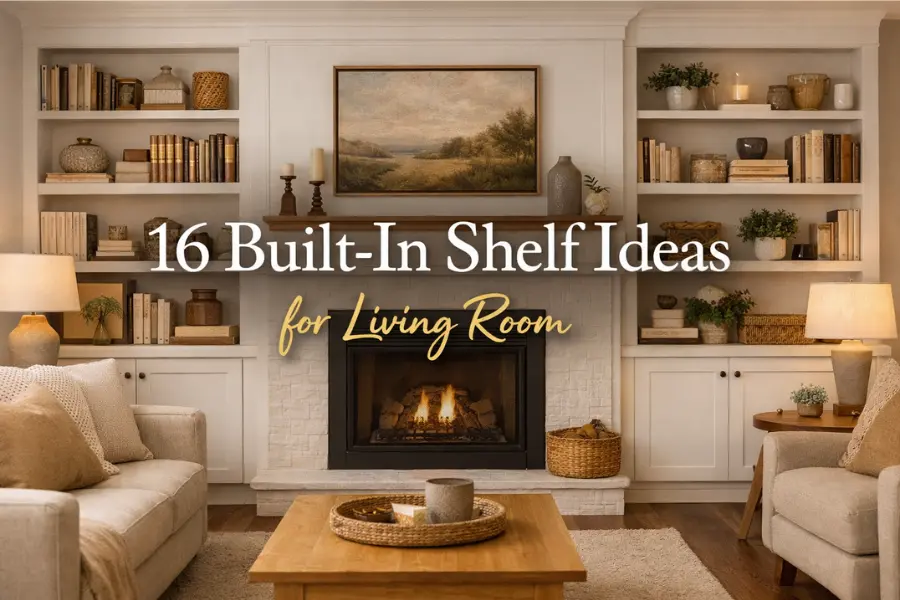
1. Floor-to-Ceiling Shelves Around a Fireplace
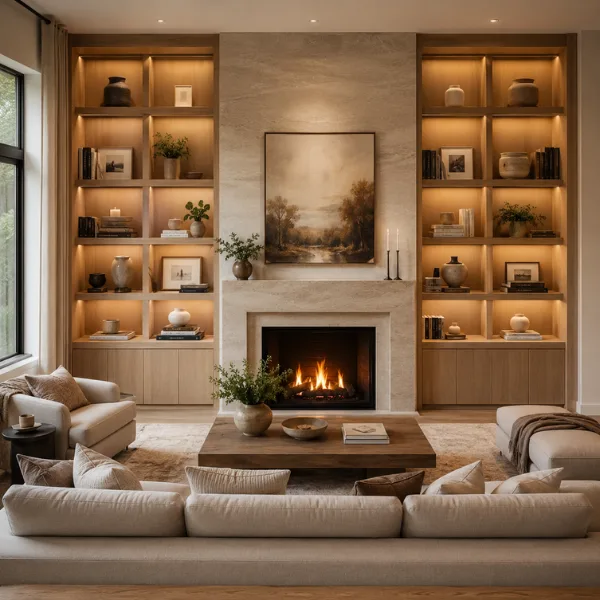
This is the one that never goes out of style. You frame your fireplace on both sides with tall built-in shelves that go all the way up to the ceiling. It creates a stunning focal point and instantly makes the room feel designed and complete. The shelves give you loads of storage while the fireplace stays the star of the show. It’s symmetrical, balanced, and honestly one of the most satisfying looks you can create in a living room. If you have a fireplace and plain walls on both sides, this idea is calling your name.
Why It Works
The symmetry on both sides of the fireplace naturally draws the eye to the center of the room. It creates a very intentional, anchored look that makes the whole wall feel finished instead of empty. You also get the bonus of storage and display space without adding any extra furniture.
Best For
Medium to large living rooms that already have a fireplace as the main wall feature.
Styling Tips
Don’t pack every shelf with books. Mix in a few larger decor pieces — a tall vase, a framed photo, a small plant. Leave some sections intentionally empty. The negative space is what makes the whole thing look styled instead of cluttered.
2. Low Built-In Shelves Under a Window
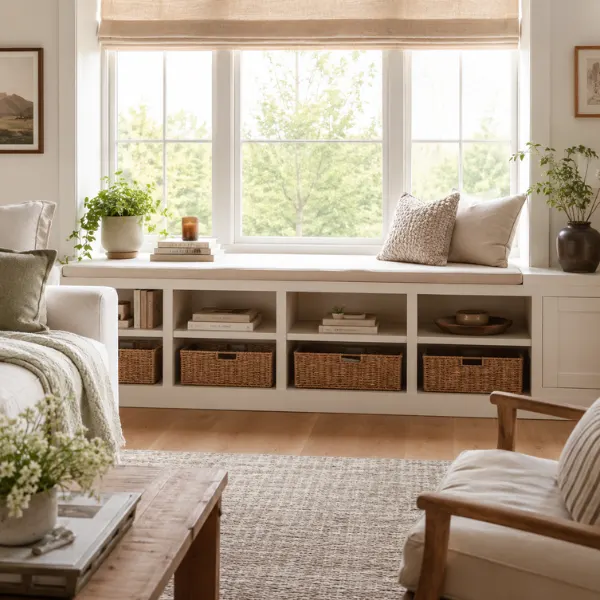
This one surprises a lot of people because it uses space most homeowners completely ignore — the wall below a window. A low, wide shelf unit installed right under the windowsill adds serious storage without blocking any of your natural light. The room still feels open and airy, but now you have a functional, beautiful surface to work with. You can even add cushions on top and turn it into a casual window seat. It’s one of those ideas that looks custom and expensive but is actually very practical and straightforward to build.
Why It Works
It fills dead space that usually just sits there doing nothing. Because the shelves stay low, they don’t compete with the window or make the room feel heavy. The light from above actually highlights whatever you style on top, which is a nice bonus.
Best For
Small to medium living rooms where floor space is limited and you want storage without adding bulky furniture.
Styling Tips
Use woven baskets on the lower shelves to hide everyday clutter. On top, keep it light — a few books stacked horizontally, a small trailing plant, maybe a candle or two. If you add a cushion on top, choose a fabric that matches your sofa for a pulled-together look.
3. Slim Corner Built-In Shelves
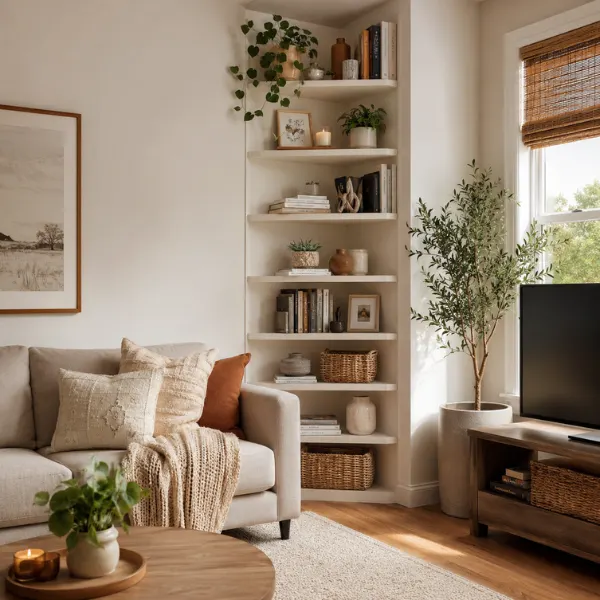
Corners are the most underused spots in any living room. Most people either shove a plant there or leave it completely empty. But a slim, tall built-in corner shelf changes everything. It draws the eye upward, adds vertical height to the room, and gives you a proper display area without eating into your floor space. Because corner shelves tuck neatly into the angle of the wall, they feel almost invisible — like the room was always supposed to have them there.
Why It Works
It takes a space that was doing absolutely nothing and turns it into a functional, styled feature. Vertical shelving in a corner also makes ceilings feel higher, which is always a win in smaller rooms.
Best For
Small rooms, studio apartments, or any living room where wall space is limited but you still want storage.
Styling Tips
Keep the design narrow — you don’t want the shelves jutting out into the room. Light or white finishes keep the corner from feeling heavy. Style with a mix of tall and short items to keep the eye moving upward.
4. Built-In Media Wall with Shelves
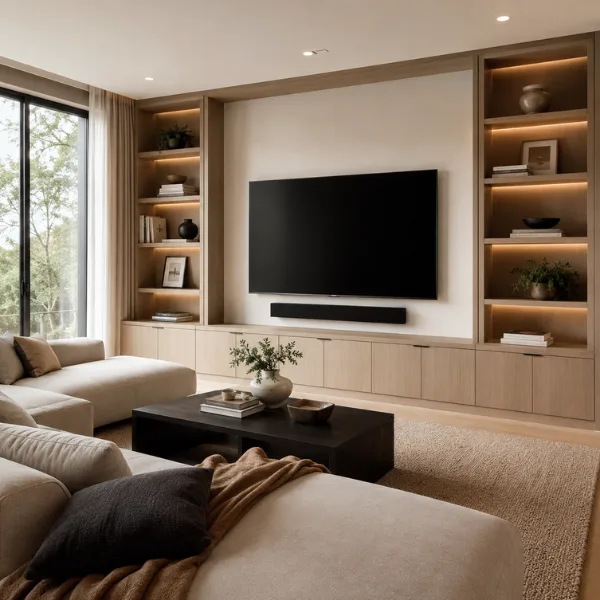
This is the ultimate living room upgrade if you’re tired of your TV sitting on a basic stand surrounded by cables and random remotes. A built-in media wall combines your TV unit with shelves on either side and closed cabinets below. Everything gets a home. The result is a clean, streamlined wall that looks completely custom. It’s especially great for families because all the gaming consoles, streaming devices, and remotes disappear behind cabinet doors, while the shelves above give you space to display things that actually look nice.
Why It Works
It solves the clutter problem that almost every living room has around the TV area. By building it in, everything looks cohesive and intentional rather than like a collection of mismatched furniture pieces pushed together.
Best For
Medium to large living rooms where the TV wall is the main focal point of the space.
Styling Tips
Keep the upper shelves lightly styled — a few books, a plant, maybe a decorative object or two. Resist the urge to fill every inch. The lower cabinets are where you hide the functional stuff, so the open shelves can stay clean and visual.
5. Arched Built-In Shelves
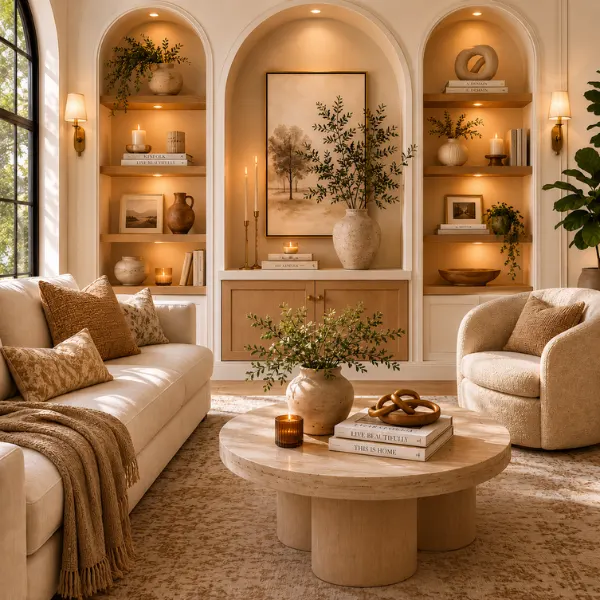
If you want built-in shelves that feel like actual architecture, arched shelves are your answer. Instead of sharp square openings, the shelves feature soft rounded arches at the top. It breaks up the rigidity of a typical shelf unit and adds a custom, boutique feel to the room. Arched built-ins have become incredibly popular because they work in both modern and more classic interiors. They feel collected and interesting, like something you’d find in a beautifully curated home abroad.
Why It Works
The curves add visual softness that straight shelving simply can’t give you. They make the shelves look like a deliberate design feature rather than just storage — which means you can keep decor minimal and let the shape do the talking.
Best For
Living rooms with a modern, transitional, or classic style. Works especially well in rooms that feel a little too boxy or plain.
Styling Tips
Let the arch shape be the star. Keep what you put inside simple — one or two objects per shelf at most. Tall candles, a small sculpture, a single book leaning against the wall. Don’t overcrowd the arches or you lose the whole effect.
6. Shelves Framing a Sofa Wall
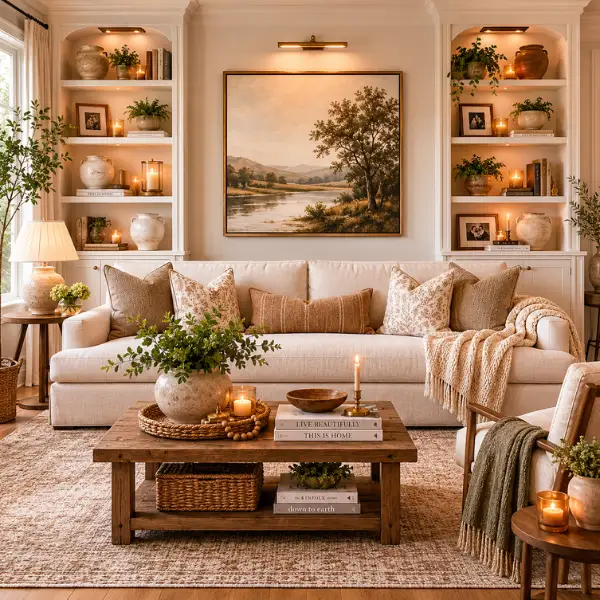
Most people think built-in shelves have to go around a fireplace or TV. But framing them around your sofa wall is one of the most underrated ideas out there. You build shelves on both sides of the sofa, with the wall above the couch left open for artwork. It anchors the seating area beautifully and gives the whole wall a purpose. The sofa feels like it belongs there rather than just floating in the middle of the room.
Why It Works
It gives the main seating area of your living room a real sense of structure. The shelves on both sides act as visual bookends, and the space above the sofa becomes a natural gallery wall moment.
Best For
Standard living room layouts where the sofa sits against a long wall and the space feels a little undefined.
Styling Tips
Keep the shelves symmetrical on both sides for a balanced look. Hang a large piece of artwork or a mirror above the sofa between the two shelf units. Mix books with a few personal objects on the shelves — family photos, small plants, candles — to keep it feeling warm, not showroom-stiff.
7. Full Library Wall
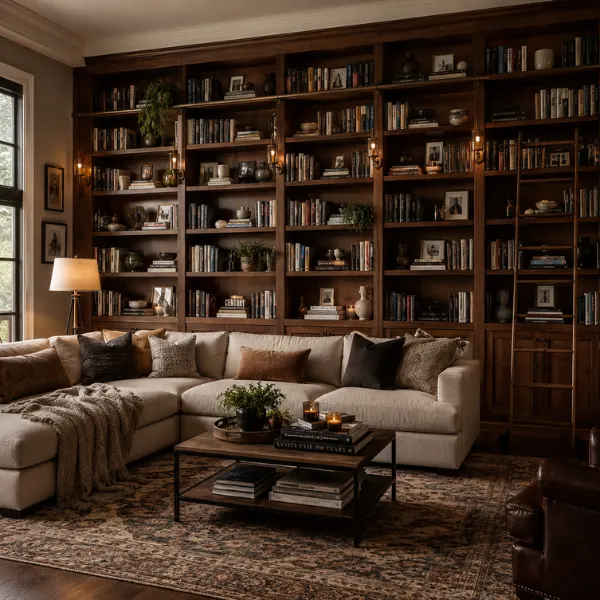
This is the one for the book lovers and the people who want their living room to feel rich, layered, and completely full of personality. A full library wall is exactly what it sounds like — one entire wall covered floor to ceiling with shelves, all dedicated to books and a curated mix of decor. When it’s done right, it doesn’t look like a storage unit. It looks like the most interesting wall in the house. Guests always gravitate toward it.
Why It Works
A full library wall adds enormous depth and texture to a room. Books have varying colors and heights which creates natural visual interest without you having to try too hard. It also tells a story about the people who live there, which makes any room feel more personal and inviting.
Best For
Large living rooms with at least one long, uninterrupted wall. It needs space to breathe and have impact.
Styling Tips
Don’t just line up books spine-out on every shelf. Mix it up — some books stacked horizontally, some standing vertically, some shelves with a small plant or framed photo tucked in between. Vary the heights so the eye bounces around naturally. A little organized chaos is exactly what makes a library wall look authentic.
8. Open Shelves with Lower Cabinets
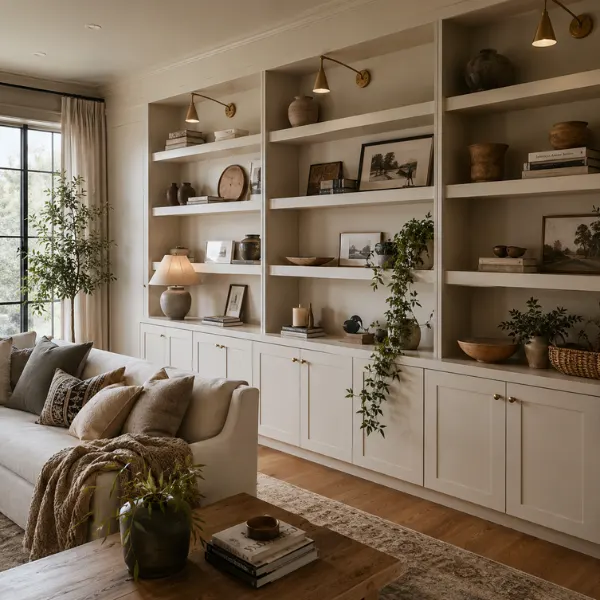
This combination is probably the most practical built-in shelf design you can choose, and it works in almost every room size. The upper portion is open shelving for display and easy access, while the lower portion has closed cabinet doors to hide everything you don’t want on show. It’s the best of both worlds — visual interest up top, clean storage below. This design is especially useful in family living rooms where real life happens and you need places to put things away quickly.
Why It Works
It creates a natural visual divide between your decorative items and your functional storage. The open shelves stay curated and styled, while the cabinets take care of the practical stuff — blankets, board games, tech accessories, whatever you need to hide.
Best For
All room sizes. This works in small apartments just as well as large family rooms.
Styling Tips
Paint the cabinet fronts the same color as the shelves for a seamless look. On the open shelves, group decor in odd numbers — threes and fives feel more natural than even groupings. Use the top cabinet shelf as a transition between the functional below and the decorative above — a trailing plant works beautifully here.
9. Shelves Around a Doorway
This one is pure genius for rooms where wall space is limited. Instead of letting the wall around a doorway go to waste, you build shelves above and on the sides of the door frame. It adds storage and display space in an area you’d normally never think to use, and it makes the doorway itself feel like an intentional architectural feature rather than just a hole in the wall.
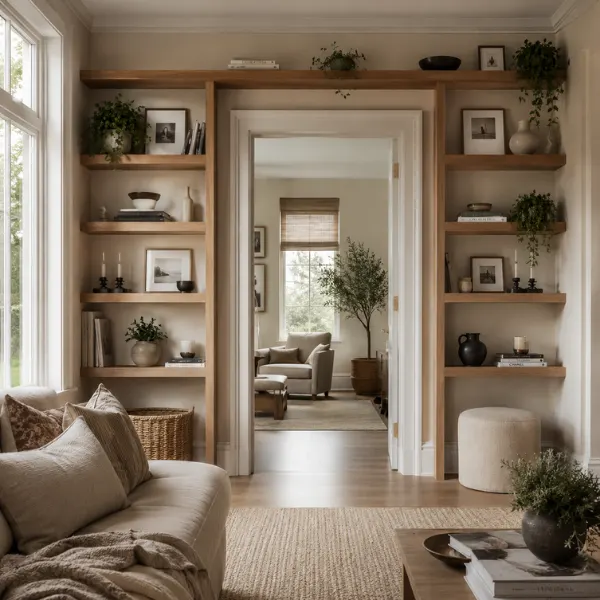
Why It Works
It maximizes every inch of vertical space in the room. The shelves above and beside the door draw the eye upward, which makes ceilings feel taller and the room feel larger than it actually is.
Best For
Living rooms with limited wall space, or any room where you want to add storage without taking up floor space or eating into the main walls.
Styling Tips
Keep the shelf depth shallow — around six to eight inches is plenty. Deep shelves around a doorway can feel clunky and make the opening feel smaller. Style with lightweight items: small books, little plants, framed photos. Keep it visually light so the doorway still feels open and easy to walk through.
10. Floating-Style Built-In Shelves
Floating shelves have that clean, modern look where the bracket and hardware are completely hidden, so the shelf appears to emerge straight from the wall. When you take that concept and build it in as a full system — multiple shelves at different heights across a wall — the result is light, contemporary, and incredibly stylish. It works especially well in smaller living rooms because it doesn’t add any visual bulk. The wall still feels open and breathable even with shelving on it.
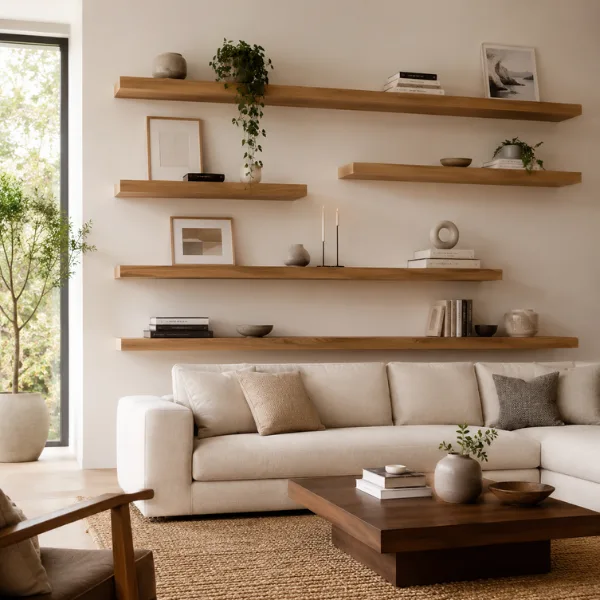
Why It Works
Traditional shelf units — even built-in ones — have side panels, tops, and bottoms that add visual weight to a room. Floating shelves eliminate all of that. Just the shelves, just the wall, nothing in between. It’s a cleaner, more modern look that suits a lot of contemporary interiors perfectly.
Best For
Small living rooms or modern interiors where you want storage without the room feeling cramped or heavy.
Styling Tips
Use thicker shelves — at least one and a half to two inches — for a more substantial look. Thin shelves can look flimsy. Keep styling minimal on each shelf, and leave breathing room between objects. The empty wall space between the shelves is part of the design.
11. Dark Wood Built-In Shelves
If you want your living room to feel warm, cozy, and a little bit dramatic in the best way, dark wood built-ins are the move. Deep walnut tones, rich espresso stains, or even painted navy or forest green shelves bring an incredible sense of depth and atmosphere to a room. It’s a bold choice, but one that almost always pays off. Dark built-ins photograph beautifully and feel luxurious in person.
Why It Works
Dark colors recede visually, which means a dark shelf unit can actually make a wall feel deeper and more dimensional. It also creates a beautiful contrast against lighter walls and furnishings, giving the room a layered, high-end look without requiring expensive materials.
Best For
Medium to large living rooms. Dark shelves in a very small room can feel overwhelming, but in a space with good natural light or a generous square footage, they’re stunning.
Styling Tips
Pair dark shelves with light or warm-white walls so the contrast does the work. Use warm lighting on or near the shelves — a floor lamp nearby or LED strip lights hidden behind the shelf edges. Style with lighter-colored objects: white ceramics, natural wood accents, light-colored books. The contrast between dark shelves and lighter decor is what makes this look so striking.
12. Cubby-Style Built-In Shelves
Cubby shelves divide the shelf unit into individual square or rectangular compartments instead of long open runs. Each cubby becomes its own little vignette, which makes styling incredibly easy and keeps everything looking neat and organized. It’s a great choice for people who struggle with how to arrange open shelves, because the compartments naturally break the space into manageable sections.
Why It Works
The structure of individual cubbies gives everything a home. There’s less visual chaos than with open shelving because the dividers break up the space and stop items from blending into one long, overwhelming run of stuff.
Best For
Family living rooms, or anyone who has kids and needs practical storage that doesn’t look like a playroom. Also great for people who love a very organized, geometric aesthetic.
Styling Tips
Mix how you use the cubbies — some for display (a single plant, a stack of books, a small sculpture), some for function (a decorative storage box, a basket, a tray). Alternate between open and “closed” cubbies for a rhythm that feels intentional. Use storage boxes in a single color family to keep the functional cubbies looking neat.
13. Reading Nook with Built-In Shelves
This is one of those ideas that turns an unused corner or awkward alcove into the most loved spot in the entire home. You combine a built-in bench or cushioned seat with shelving on the walls around it to create a dedicated reading nook. It’s cozy, it’s functional, and it has that story-book quality that makes people genuinely excited to sit in it. I’ve seen this done in tiny spaces — just a few feet wide — and it always becomes the room’s best feature.
Why It Works
It transforms dead space into a destination. A reading nook isn’t just practical storage with a seat — it creates a sense of enclosure and coziness that feels different from the rest of the room. It gives people a reason to sit, linger, and actually use the living room.
Best For
Any small unused area — a corner, an alcove, a bay window space, or even just a section of wall that’s awkward to furnish.
Styling Tips
Invest in a good cushion. Thick, well-made cushions make all the difference between a reading nook that looks nice and one that people actually want to sit in. Add pillows in varying sizes. Use warm bulb lighting — a small wall sconce or a low lamp nearby — to make the nook feel intentionally cozy rather than just an afterthought.
14. Color-Drenched Built-In Shelves
Instead of painting your built-in shelves white or leaving them in natural wood, you go all in with a bold, saturated color — deep navy, forest green, terracotta, dusty pink, rich burgundy. The whole unit, walls inside the shelving included, gets the same color treatment. It sounds scary, but when done well it is one of the most impactful and designer-looking things you can do in a living room. The color makes the shelves feel like part of the architecture itself.
Why It Works
When the shelves, the interior back wall of the shelving unit, and sometimes even the surrounding wall all share one color, the whole thing reads as one cohesive feature rather than a piece of furniture sitting against a wall. It creates depth and intensity that neutral shelves simply can’t achieve.
Best For
Living rooms with a modern, eclectic, or maximalist aesthetic. Also great for anyone who wants to add personality to a room without changing all the furniture.
Styling Tips
When you commit to a bold shelf color, keep the things you put on the shelves relatively simple and neutral — white ceramics, natural objects, clear glass, books with plain or matching spines. You want the decor to sit against the color, not compete with it. The color is the statement; the styling is the supporting act.
15. Built-In Shelves with Integrated Lighting
This idea takes a great set of built-in shelves and makes them extraordinary. By adding lighting inside the shelving — whether that’s LED strip lights running along the inside edges, small puck lights on individual shelves, or picture lights aimed at specific objects — you transform the whole unit from storage into a glowing feature wall. It adds warmth, highlights your decor, and makes the room feel finished in a way that daylight alone just can’t replicate.
Why It Works
Good lighting is the difference between a room that looks nice in photos and a room that actually feels amazing to be in. Lit shelves create atmosphere, and atmosphere is what makes a space feel like a home rather than just a room with furniture in it.
Best For
Living rooms that get used heavily in the evening — movie rooms, entertaining spaces, or any living room where you spend most of your time after dark.
Styling Tips
Always choose warm white bulbs — not cool or daylight tones. Warm light makes everything look richer and more inviting. Cool lighting on shelves can make the whole room feel clinical. If you’re using LED strips, hide them behind a small lip at the front edge of each shelf so you see the glow but not the strip itself. The light should be ambient and subtle, not spotlight-bright.
16. Full Feature Wall with Shelves and a Ladder
This is the grand statement option — a full wall system that includes open shelves at multiple heights, closed cabinet storage at the bottom, and a sliding library ladder that lets you reach the top shelves. It’s high-impact, highly functional, and brings a kind of old-world library energy to a modern living room. If you have a large room with high ceilings and you want to make a serious impression, this is the design to do it.
Why It Works
It uses every inch of the wall from floor to ceiling and makes every single inch count. The ladder isn’t just functional — it’s a visual element in its own right. It signals intentionality and craftsmanship in a way that no other shelf design quite manages.
Best For
Large living rooms with high ceilings — at least nine feet, ideally ten or more. This design needs height and wall space to have its full effect.
Styling Tips
Resist the urge to fill every shelf just because you have the storage capacity. A full feature wall that’s packed with stuff looks overwhelming rather than impressive. Style with a curated mix of books, objects, and empty space. Think of each shelf as a small composition: one tall element, one medium, one small, and some breathing room. The ladder should have enough clearance to slide freely — make sure your flooring situation (rug placement, furniture) accounts for this before you build.
Mistakes to Avoid
Even the most beautiful built-in shelf design can go wrong if you’re not careful. Here are the most common mistakes I see — and exactly how to avoid them.
Overfilling Every Shelf This is the number one problem. When every single shelf is packed wall to wall, the whole unit looks heavy and chaotic. Negative space isn’t wasted space — it’s breathing room that makes your decor stand out. Aim to leave at least 20 to 30 percent of your shelf space intentionally empty.
Ignoring Proportions Shelves that are too deep for a small room look clunky. Shelves with too much space between them look sparse and unfinished. Before you build, think carefully about what you actually plan to store and display, and size your shelves accordingly. Shallow shelves for books and small objects, deeper shelves if you need storage bins or baskets.
Skipping Closed Storage All-open shelving looks gorgeous in a showroom but is hard to maintain in a real home. Life is messy. You need somewhere to hide the board games, the extra throws, the charging cables, the stuff that doesn’t look pretty. Build in at least some closed cabinet space below or alongside your open shelves.
Poor Lighting Dark shelves make a room feel flat and dull. Even if you don’t go full integrated shelf lighting, make sure there’s a lamp or ambient light source nearby that illuminates what you’ve displayed. Decor that sits in shadow doesn’t read — and neither does all the effort you put into styling.
Matching Everything Too Perfectly Shelves where every object is the same height, same color, and same material look stiff and manufactured. Real style has variation. Mix tall and short, matte and shiny, natural and man-made. Let things feel a little collected rather than coordinated.
Conclusion
Built-in shelves are one of the most rewarding upgrades you can make to a living room. They add storage, yes — but more than that, they give the room structure, personality, and a sense that the space was genuinely designed with intention.
The key is to choose an idea that actually fits your room and your life. A full library wall is stunning but it needs space. A corner built-in is perfect for a small apartment. A media wall makes sense if your TV is your living room’s main feature. Start with function, then add beauty.
Keep your styling balanced — a mix of display and storage, open and closed, full and empty. And don’t rush it. Built-in shelves are meant to be lived with and slowly styled over time. The most beautiful rooms I’ve ever worked on always had shelves that looked like they’d been collected over years, not staged in an afternoon.
Pick your idea, start simple, and let the room grow into itself.
FAQs
Are built-in shelves a good idea for small living rooms? Absolutely — in fact, they’re often better in small spaces than in large ones. The key is choosing the right design. Slim corner built-ins, floating-style shelves, or low shelves under a window all add storage without making a small room feel cramped. The trick is to go vertical rather than wide and keep things lightly styled.
What’s the best material for built-in shelves? For most homes, MDF (medium-density fiberboard) is the most popular choice for painted built-ins because it’s smooth, affordable, and easy to work with. For stained or natural wood looks, solid wood or plywood veneers give you a richer result. If budget is a concern, MDF painted in a great color looks just as good as more expensive materials.
Should built-in shelves match the wall color? It depends on the look you’re going for. Matching the shelf color to the wall color creates a seamless, architectural feel — the shelves disappear into the room and feel like part of the structure. Contrasting the shelves against the wall adds drama and makes the shelving unit a visual feature. Both approaches work beautifully; it just comes down to whether you want the shelves to blend in or stand out.
How do I keep built-in shelves looking neat over time? Build in more closed storage than you think you need, and be disciplined about what lives on the open shelves. Dedicate the open display areas to things you actually love to look at, and put everything else behind cabinet doors or in baskets. Edit your shelves every few months — take everything off, give them a dust, and only put back what still feels right.
Are built-in shelves expensive to build? The cost varies widely depending on size, material, and whether you hire a carpenter or DIY. Simple floating shelf systems or corner units can be very affordable. Full floor-to-ceiling units with cabinets and lighting cost more. The good news is that built-in shelves add real value to a home, so they’re one of the home improvement investments that tends to pay for itself.