
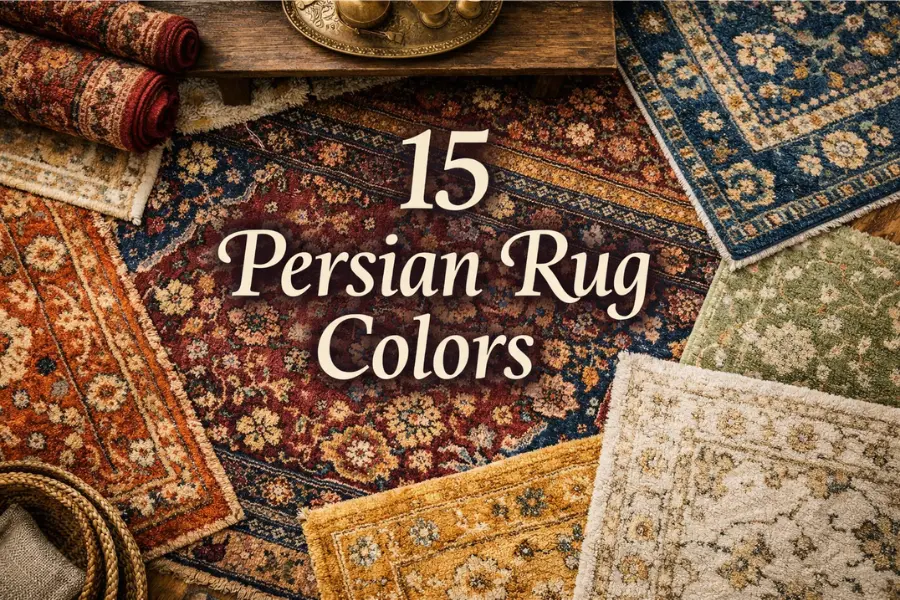
15 Persian Rug Colors That Bring Character, Warmth, and Style to Your Home
A Persian rug can change the whole feeling of a room. I have seen it happen time and again. A plain, forgettable space gets one good Persian rug placed on the floor — and suddenly everything looks pulled together, warm, and intentional.
But here is the thing most people miss. The color of your rug matters just as much as the pattern. Choose the wrong shade and even the most beautiful rug can feel out of place. Choose the right one and it becomes the anchor your entire room was waiting for.
In this guide, I am walking you through 15 Persian rug colors that genuinely work in real homes. For each one, I will tell you exactly why it works, where it fits best, and how to style around it with simple, practical tips.
Table of Contents
The 15 Best Persian Rug Colors for Your Home
Here is the ultimate list:
1. Deep Red Persian Rugs
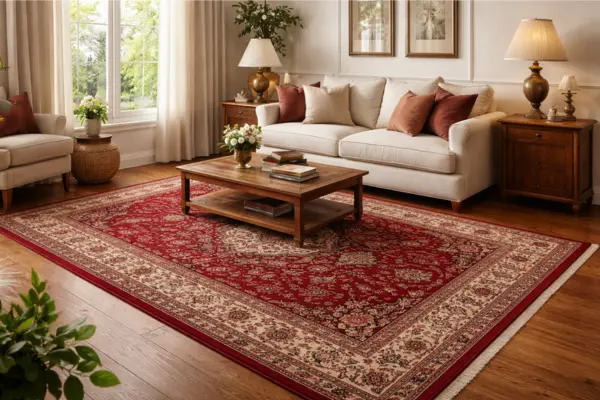
Deep red is the most iconic Persian rug color there is. It has been used for centuries, and there is a very good reason it has never gone out of style. This shade brings instant warmth, richness, and character into any room it enters. If you want a rug that feels traditional and timeless, deep red is where you start.
Why It Works
Deep red has natural warmth in it. It draws the eye, anchors the furniture around it, and gives a room a settled, lived-in feeling that is very hard to achieve with lighter colors. It also pairs beautifully with wood tones, which are found in almost every home.
Best For
Living rooms, dining rooms, and formal lounges. It works especially well in rooms with wood floors, cream or beige walls, and heavier furniture pieces. If your space feels cold or unfinished, a deep red rug can solve that problem quickly.
Styling Tips
Keep your bigger furniture pieces calm and neutral. A cream sofa, soft beige curtains, and warm wood tones let the rug shine without making the room feel overwhelming. Add brass lamps, vintage frames, and a few dark accent pieces to complete the look.
2. Navy Blue Persian Rugs
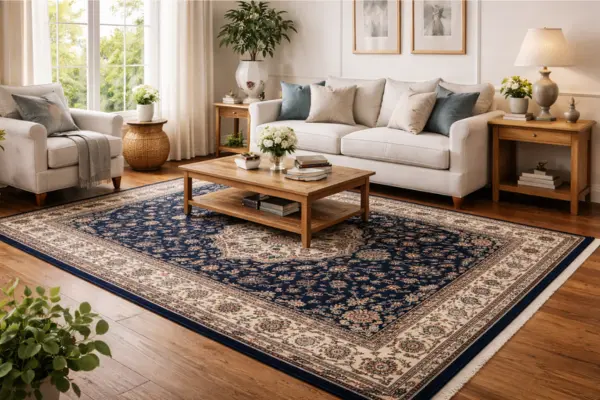
Navy blue is one of those rug colors that feels both classic and fresh at the same time. It is rich without being heavy, and it brings a quiet elegance into a room that is very easy to live with. If you are looking for a color that feels safe but still stylish, navy is one of the best choices you can make.
Why It Works
Navy has depth and stillness to it. It grounds a room without dominating it. In spaces with lots of natural light, navy adds balance. In darker rooms, it creates a cozy, layered feeling. It also works in both traditional and modern homes, which makes it incredibly flexible.
Best For
Bedrooms, living rooms, and home offices. It is especially nice in rooms with white walls, light wood furniture, gray upholstery, or natural linen fabrics. Navy also works very well in rooms that get strong afternoon sunlight.
Styling Tips
Pair navy with white walls and light wood furniture for a clean, timeless look. Add soft gray or beige cushions, natural fabric throws, and a few brushed brass accessories. Avoid matching navy too precisely — let the rug be the deepest tone in the room.
3. Ivory Persian Rugs
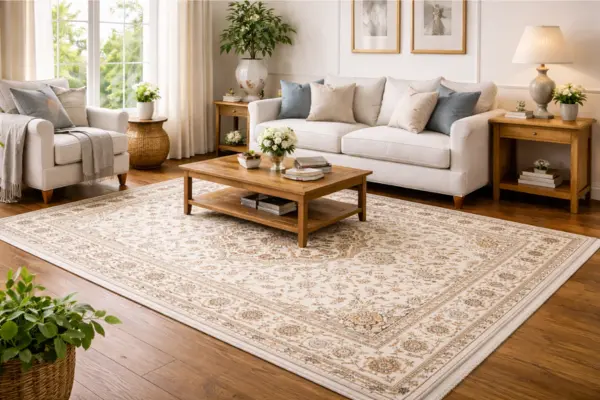
Ivory Persian rugs are one of the most underrated choices in home decorating. They bring in the beautiful detail of a traditional rug pattern without making a room feel dark or heavy. If you want pattern and texture while keeping things light and calm, ivory is a wonderful answer.
Why It Works
Ivory reflects light and opens up a space visually. In small rooms, it keeps things from feeling cramped. In larger rooms, it creates a soft, airy base that lets other furniture and decor speak without competition. It is also one of the easiest colors to build a room around.
Best For
Bedrooms, reading corners, guest rooms, and smaller living spaces. Ivory works especially well in rooms that already have a lot going on visually, because it brings lightness without adding more noise.
Styling Tips
Since the rug is light, you need texture to stop the room from feeling flat. Bring in soft throws, wooden side tables, woven baskets, ceramic decor, and layered bedding. That mix of materials is what makes an ivory Persian rug feel warm and inviting rather than cold and empty.
4. Olive Green Persian Rugs
Olive green is deeper and moodier than sage, which gives it more presence and maturity. It still feels connected to nature, but it has a richness that makes it a very grown-up choice. This is the color for people who want something earthy and grounded without going the obvious route of red or brown.
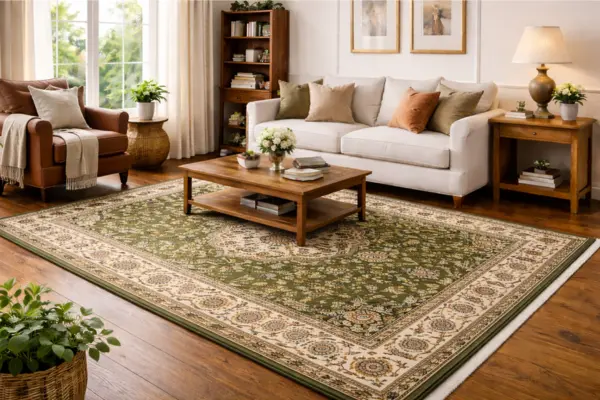
Why It Works
Olive green sits in a unique sweet spot. It is natural enough to feel calm but deep enough to add real drama and character. It works beautifully with warm neutrals, dark wood, and leather, which are found in a huge range of home styles. It also ages and wears very gracefully.
Best For
Rustic rooms, cozy lounges, masculine spaces, and transitional interiors that mix old and new pieces. Olive green is a great choice for any room where you want depth and warmth without using a traditional warm color like red or burgundy.
Styling Tips
Soften olive green with warm materials like cream upholstery, tan armchairs, and wooden shelving. A few brass details — a lamp, a picture frame, a candle holder — help tie the room together beautifully. Keep the walls neutral so the rug becomes the focal point.
5. Gold and Mustard Persian Rugs
Gold and mustard Persian rugs have an energy to them that is hard to find in other colors. They feel sunny, generous, and welcoming. In the right room, they can make the whole space feel more alive and layered in a way that is very natural and unforced.
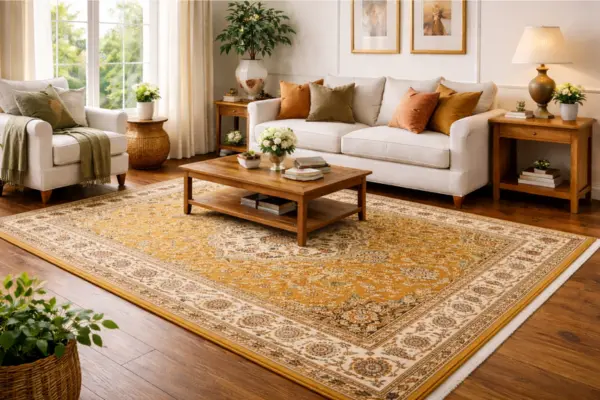
Why It Works
Gold and mustard tones work with warm wood, earthy walls, and natural materials in a way that feels almost effortless. They add visual energy without being aggressive, and they play beautifully with other warm shades like olive, rust, and soft brown.
Best For
Dining rooms, entryways, breakfast corners, and warm-toned living rooms. These colors look especially beautiful in rooms with walnut wood, dark oak furniture, or warm cream walls. They also work well in spaces that feel a little flat and need more life.
Styling Tips
Repeat the warmth in small ways around the room. A wooden bowl, a brass floor lamp, a mustard cushion, or a framed print with warm tones can tie everything together without it looking planned or overdone. This color works best in rooms that feel relaxed and lived-in.
6. Sage Green Persian Rugs
Sage green is one of the most peaceful rug colors you can choose. It brings a soft outdoor feeling into a room without making it feel like a garden center. If you want your space to feel restful, fresh, and gentle all at once, sage green is a beautiful place to start.
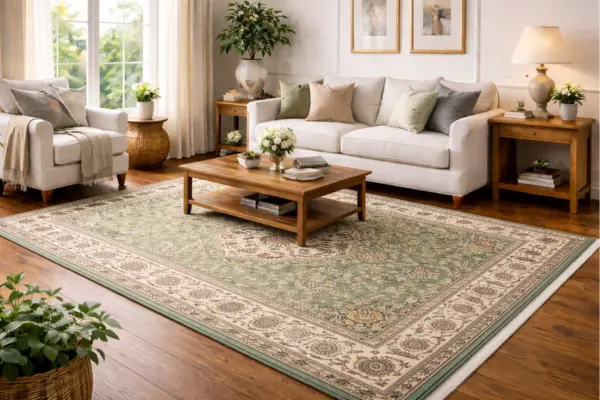
Why It Works
Sage green has a quietness to it that very few colors can match. It feels naturally calming, which makes it perfect for rooms where you want to slow down and breathe. It also works in harmony with natural materials like wood, linen, cotton, and stone in a very effortless way.
Best For
Bedrooms, sunrooms, quiet lounges, and light-filled living rooms. Sage works especially well in rooms with white or off-white walls, pale wood furniture, indoor plants, and natural fabric textiles. If your room gets good natural light, sage green will look stunning.
Styling Tips
Keep the room natural and simple around this rug. Think linen cushions, cotton throws, wooden side tables, stone accessories, and a few potted plants. Avoid anything too glossy or too sharp. Sage green shines most when the whole room feels soft, layered, and easy to live in.
7. Beige and Sand Persian Rugs
Beige and sand are the most low-pressure Persian rug colors you can choose. They are warm, relaxed, and incredibly easy to decorate around. If you are new to rugs or decorating in general, this is one of the safest and smartest places to start.
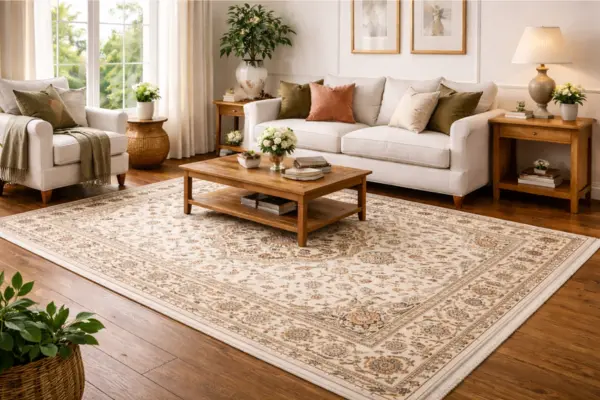
Why It Works
These tones add pattern and texture to a room without asking for much in return. They do not compete with your furniture, your walls, or your accessories. Instead, they simply make the floor feel more interesting while keeping the whole room easy on the eyes. They are a decorator’s quiet secret.
Best For
Family rooms, calm bedrooms, lounges, and neutral living rooms. If your style leans toward soft minimalist, cozy modern, or natural and organic decor, a beige or sand Persian rug is an excellent match. It brings detail through pattern while keeping things visually calm.
Styling Tips
Pair with off-white walls, warm wood furniture, and earthy accessories. If you want to add some color, use it in smaller pieces like cushions, artwork, or a throw. Olive green, rust, black, and muted blue all work beautifully alongside beige and sand tones.
8. Terracotta Persian Rugs
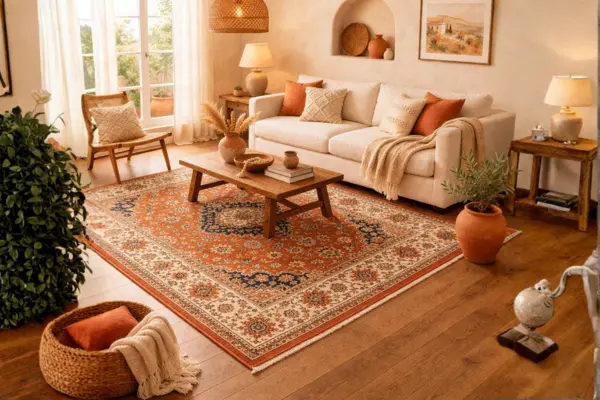
Terracotta is one of my personal favorites. It has that warm, sun-baked quality that makes a room feel instantly inviting. This color sits somewhere between orange, clay, and muted rust, which gives it a very natural and relaxed character that is easy to fall in love with.
Why It Works
Terracotta is one of those colors that feels both ancient and very current at the same time. It works with plaster-like walls, earthy textures, wood furniture, and woven materials in a way that feels genuinely effortless. It also brings warmth into a room without feeling too formal or too bold.
Best For
Cozy living rooms, boho-inspired bedrooms, and spaces with a Mediterranean, organic, or earthy style. It also works very well in rooms with lots of natural light, where the warm tone becomes even more beautiful as the day moves on.
Styling Tips
Let the terracotta rug do the warming while the rest of the room stays balanced. Use cream upholstery, plaster-toned walls, and natural accessories like pottery, woven lighting, and wooden bowls. Repeat the warm tone lightly in small details — a cushion, a vase, a candle — and the room will feel complete.
9. Rust Persian Rugs
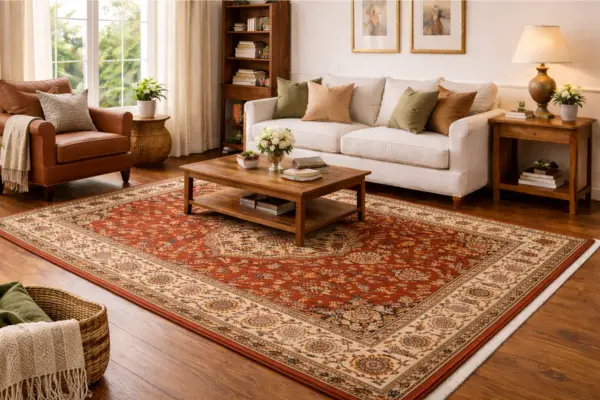
Rust Persian rugs sit in a very comfortable middle ground. They are warmer than burgundy and softer than classic red. This makes them a wonderful option for people who want a traditional rug color that still feels relaxed and approachable rather than formal and stiff.
Why It Works
Rust has a moodiness to it that adds real depth to a room. It pairs with dark wood, camel tones, cream upholstery, and olive green in a way that feels naturally layered and collected. It is also one of those colors that gets better over time as the rug softens and develops character.
Best For
Living rooms, dens, reading corners, and layered bedrooms. Rust is especially good in rooms that need more warmth and personality but should not feel too traditional or formal. It is also a very practical color for rooms that get regular use.
Styling Tips
Add textured cushions, warm lighting, and a few vintage-inspired pieces around the rug. A leather armchair, wooden bookshelf, and linen sofa can all work beautifully with rust. This color is especially useful in the colder months when a room needs to feel as cozy as possible.
10. Burgundy Persian Rugs
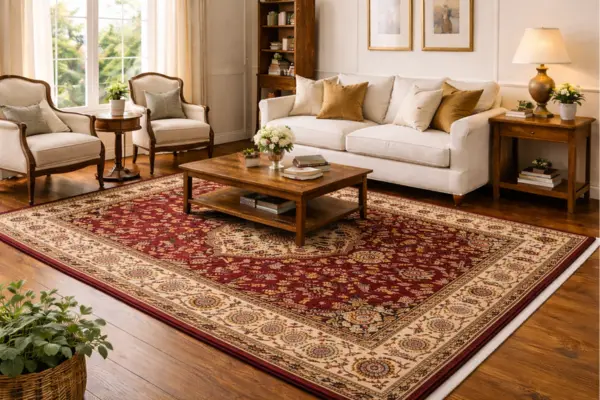
Burgundy is the choice for people who want their rug to feel like a proper statement. It is rich, formal, and full of depth. When used well, a burgundy Persian rug can make a room feel like it has real heritage and intentionality behind every choice.
Why It Works
Burgundy has a strong visual presence that commands attention. It works beautifully with deep wood tones, antique-style furniture, and heavier fabrics like velvet and wool. In the right room, it feels like the most important piece in the space — in the best possible way.
Best For
Dining rooms, formal sitting rooms, libraries, and homes with antique or traditional furniture. Burgundy suits spaces where you want the rug to feel like a proper design decision rather than a background element.
Styling Tips
To stop burgundy from feeling too heavy, pair it with lighter walls and softer textures. Cream paint, natural wood furniture, and soft curtains balance the richness of the rug beautifully. Keep the room calm around it and let the burgundy take the lead.
11. Teal Persian Rugs
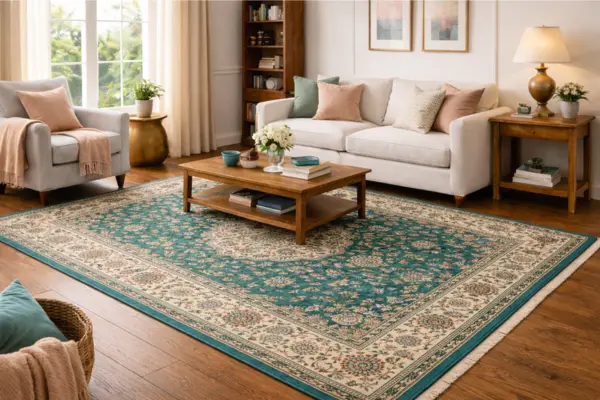
Teal is one of the more unexpected Persian rug colors, and that is exactly what makes it so interesting. It keeps the charm and beauty of a traditional rug but gives it a slightly more playful and artistic personality. If you want something a little different without going too bold, teal is a great answer.
Why It Works
Teal feels fresh and creative without being aggressive. It pairs well with a wide range of neutrals — ivory, warm wood, brass, soft gray, and even muted pink — which gives you a lot of flexibility when decorating around it. It can brighten a room without making it feel too busy.
Best For
Guest rooms, creative spaces, modern living rooms, and eclectic interiors. Teal works especially well in rooms with a mix of styles and periods, because it acts as a visual bridge between old and new pieces.
Styling Tips
Let the rug be the main source of color and keep the rest of the room fairly calm. You do not need to use teal everywhere. Just repeat it lightly in one or two small accessories — a vase, a cushion, or a piece of wall art. That is enough to make the room feel connected and thoughtful.
12. Brown Persian Rugs
Brown Persian rugs are dependable, warm, and grounding in a way that not many other colors can match. They may not be the most glamorous choice on paper, but in practice they are incredibly useful. A good brown Persian rug can make a room feel stable, comfortable, and genuinely lived-in.
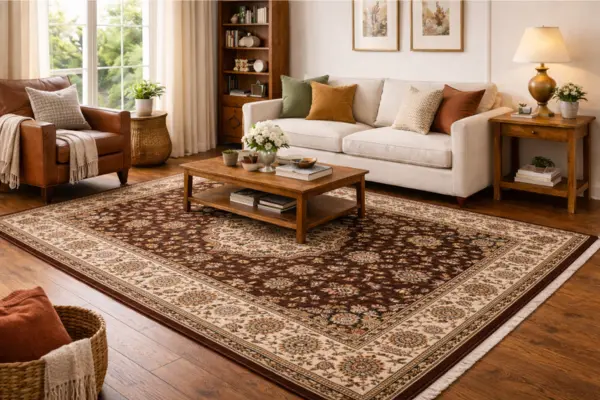
Why It Works
Brown works with almost everything. It pairs naturally with tan, cream, olive green, rust, and soft white. It also has a very practical quality — it does not show everyday wear, dust, or light marks the way lighter colors do. In a busy home, that matters a lot.
Best For
Family rooms, rustic homes, cabins, dens, and lounges with a lot of texture and natural material. Brown also works well in rooms where you want a grounded, earthy base without committing to a stronger or bolder color choice.
Styling Tips
Make sure the room still has contrast so it does not all merge into one muddy tone. Use lighter walls, natural wood, soft cream textiles, and a few accents in green or rust. That balance keeps the room feeling warm and cozy without becoming dark or heavy.
13. Charcoal and Black Persian Rugs
Charcoal and black Persian rugs are bold, confident, and surprisingly versatile. They give a traditional rug pattern a much more modern edge, which makes them an excellent choice for people who love the artistry of Persian rugs but prefer a more contemporary home style.
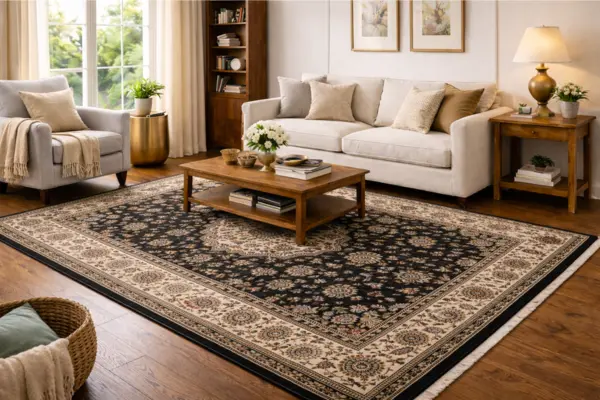
Why It Works
The deep, dark base of these rugs creates strong contrast in a room. Under light furniture or on pale flooring, they can look absolutely striking. The intricate rug pattern also becomes very visible against a dark background, which gives the design a graphic, almost artistic quality.
Best For
Modern interiors, high-contrast spaces, dining areas, and home offices. These rugs look particularly beautiful under cream or white upholstered sofas, where the contrast between light and dark creates a very intentional and elegant effect.
Styling Tips
Balance the darkness with lighter walls, soft upholstery, and warm metal accents like brass or bronze. This stops the room from feeling too cold or too heavy. A charcoal Persian rug in a room with white walls, a cream sofa, and a few warm wood pieces can look genuinely spectacular.
14. Blush and Soft Pink Persian Rugs
Blush and soft pink Persian rugs are far more versatile than most people expect. They soften a room beautifully and give traditional rug patterns a lighter, more current feel. This is not a loud or childish pink — it is a subtle, grown-up shade that brings grace and warmth into a space.
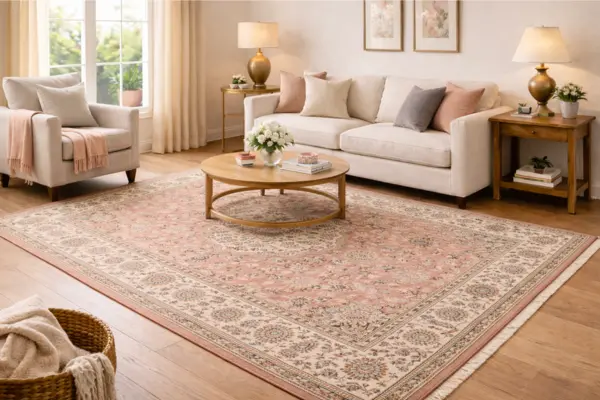
Why It Works
Blush has a natural softness that works in harmony with ivory, taupe, light wood, and brushed gold. It adds warmth without heaviness, which makes it especially useful in rooms that need to feel welcoming and comfortable without feeling dark or saturated.
Best For
Bedrooms, nurseries, feminine lounges, and calm living rooms with a soft color palette. Blush is also very useful in rooms with darker furniture, because it lightens the visual weight of the space without requiring any major changes.
Styling Tips
Keep the rest of the room balanced with soft neutrals and simple shapes. Use ivory cushions, linen curtains, light wood furniture, and a few brushed gold accessories. The goal is to make the rug feel elegant and graceful, not overly sweet or themed.
15. Multicolor Persian Rugs
Multicolor Persian rugs are one of the most useful decorating tools you can have. They are full of character, personality, and visual richness. And because they already contain so many colors within one design, they can actually make decorating easier rather than harder.
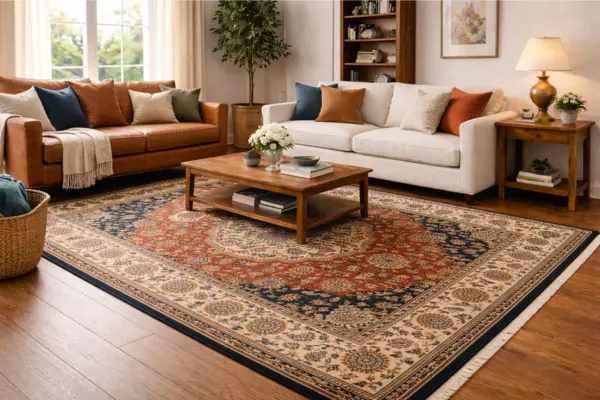
Why It Works
A multicolor Persian rug does a lot of the connecting work for you. It often includes shades of red, blue, gold, ivory, green, and brown all in one pattern. That means it can pick up and echo many of the colors already in your room, helping everything feel more intentional and tied together.
Best For
Eclectic living rooms, busy family spaces, open-plan areas, and homes where you want the rug to be the centerpiece. If you already have a mix of colors and styles in your room, a multicolor Persian rug can help all those pieces feel like they belong together.
Styling Tips
Choose one or two of the smaller accent colors from the rug pattern and repeat them lightly in your cushions, artwork, or pottery. You do not need to match every shade — that would make the room feel too busy. Just two repeated colors is enough to make everything feel thoughtful and finished.
Mistakes to Avoid When Choosing a Persian Rug Color
Even the most beautiful rug can go wrong if a few simple things are overlooked. Here are the most common mistakes I see, and how to avoid them easily.
Choosing the color before the room. Always look at your walls, floors, and main furniture first. Your rug should support what is already there, not fight against it.
Going too matchy-matchy. A rug does not need to match your sofa exactly. In fact, perfect matching often makes a room look flat. Go for colors that feel harmonious rather than identical.
Ignoring light conditions. A color that looks warm and rich in the shop can look dull in a north-facing room. Always check your rug in your actual space before committing.
Choosing too light for a high-traffic area. Ivory and blush rugs are beautiful, but they require more care. In a family room or hallway, a darker tone like navy, rust, or brown is far more practical.
Buying without considering the rug size. A rug that is too small for the room makes the space feel disconnected, no matter how beautiful the color is. Always size up when you are unsure.
Overcomplicating the styling. Persian rugs already have a lot going on in the pattern. You do not need to pile on more. Keep the room calm around the rug and let it do its job.
Conclusion
The right Persian rug color can do more for a room than almost anything else you can buy. It anchors the furniture, adds warmth and texture, and gives the whole space a sense of personality and intention.
There is no single best color for every home. Deep red may be exactly right for one living room, while sage green or ivory makes far more sense for another. The key is to start with the mood you want to create and then work backwards from there.
Think about your light first. Then look at your existing furniture and walls. Then choose a rug color that supports all of that in a natural and easy way. When you get that right, the rest of the decorating almost takes care of itself.
A Persian rug is not just a floor covering. It is the foundation of a well-decorated room. Choose wisely, style simply, and enjoy the results.
FAQs
What is the most popular Persian rug color? Deep red is still the most recognized and widely used Persian rug color. Navy blue comes in as a close second. Both are timeless options that bring depth and character into almost any room.
Can I use a Persian rug in a modern home? Absolutely. Persian rugs work beautifully in modern, minimalist, rustic, boho, and eclectic spaces. The trick is choosing a color that fits the room and styling it simply. Charcoal, ivory, and sage green are especially good in contemporary homes.
Which color makes a room look bigger? Lighter tones like ivory, beige, sand, and soft blush help a room feel more open and airy. They reflect more light and create a softer visual effect that keeps the space from feeling cramped.
How do I match a Persian rug with my sofa? Do not try to match it exactly. Instead, look for a rug that shares a similar warmth or undertone with your sofa. Then repeat one or two colors from the rug in your cushions, art, or accessories. That creates a much more natural and stylish result.
Are dark Persian rugs practical for busy homes? Yes, very much so. Navy, brown, charcoal, rust, and burgundy all hide everyday wear and light marks much better than lighter colors. They are a smart and practical choice for family rooms, dining rooms, and high-traffic areas.
Which Persian rug colors are best for bedrooms? For bedrooms, the best colors are soft and calming ones. Ivory, beige, sage green, blush, and muted navy all work beautifully. They create a peaceful, restful feeling that helps the room feel like a true retreat.
What is the best color for beginners? If you are just starting out, beige, sand, navy, and ivory are your safest bets. They are flexible, easy to decorate around, and work well in almost any home. A muted multicolor rug is also a great beginner choice because it does a lot of the decorating work for you.
Can a multicolor rug work in a simple room? Yes, and it often looks wonderful. A multicolor Persian rug brings life and personality into a simple, neutral room. Just keep the larger furniture pieces calm and repeat one or two accent colors from the rug in your decor. It creates a collected, layered look without feeling cluttered.