
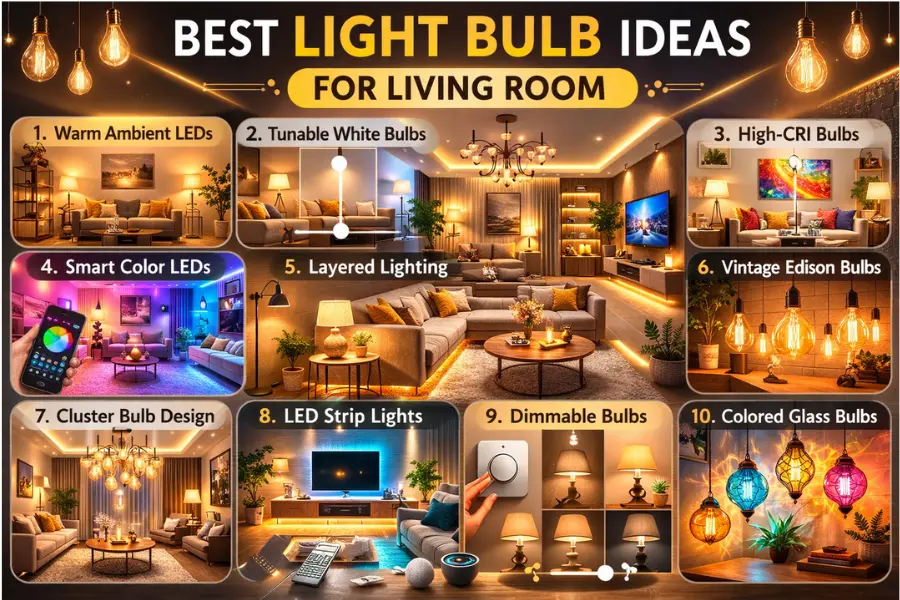
Top 10 Shortlisted Light Bulb Ideas for Living Room
Lighting is one of those things many people get wrong — not because they don’t care, but because they don’t know where to start. You pick a bulb, screw it in, and hope for the best. But then the room feels too cold, too harsh, or just… off. Sound familiar?
Here’s the truth: the right light bulb can completely change how your living room feels. It affects the mood, the warmth, the colors of your furniture, and even how relaxed you feel at the end of a long day. I’ve spent years helping people transform their living spaces, and lighting is always the first thing I talk about. It’s not about spending a lot of money. It’s about making smart, intentional choices.
In this guide, I’m sharing 10 of the best light bulb ideas for your living room — with real tips on how to use each one, what works best where, and common mistakes you’ll want to skip. Let’s get into it.
Table of Contents
Light Bulb Ideas for Your Living Room
This is the heart of the guide. Each idea below comes with a full breakdown — why it works, where it fits best, and exactly how to style it. Whether you’re decorating from scratch or just want to refresh what you already have, there’s something here for every home and every budget.
1. Warm Ambient LEDs
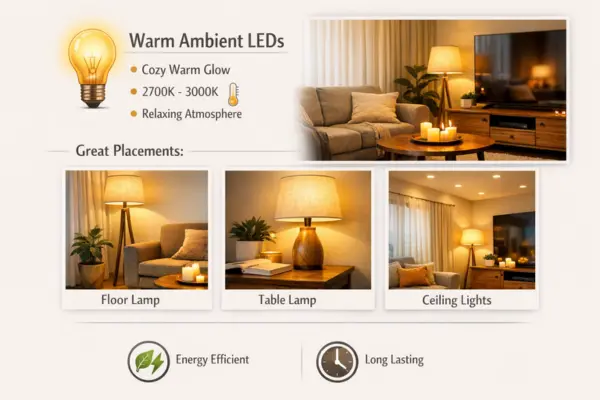
Warm ambient LEDs are the most popular choice for living rooms — and for good reason. They give off a soft, golden glow that makes any space feel cozy and welcoming. If you’ve ever walked into a room and thought “this just feels right,” warm LEDs were probably doing the heavy lifting.
Why It Works
The secret is in the color temperature. Warm LEDs sit around 2700K to 3000K on the scale. That range mimics the soft light of a sunset or a candle flame. It’s gentle on the eyes and flattering on everything in the room — your furniture, your walls, even the people sitting in it.
Unlike bright white or cool-toned bulbs, warm LEDs don’t make a room feel clinical or harsh. They create atmosphere. And in a living room, atmosphere is everything.
They’re also energy-efficient and last much longer than old incandescent bulbs. So you’re not just getting a better look — you’re saving money too.
Best For
Warm ambient LEDs work beautifully in floor lamps placed in corners, table lamps on side tables, and ceiling fixtures over your main seating area. They’re ideal for homes with wooden furniture, earthy tones, neutral walls, or natural fabrics like linen and cotton.
If your living room is your wind-down space — the place you watch TV, read, or just relax — warm ambient LEDs are the right choice.
Styling Tips
- Pair them with soft, sheer curtains to double the warmth in the room during evenings.
- Use them in a dimmer-compatible fixture so you can adjust the mood without changing the bulb.
- Layer them with a table lamp and a floor lamp rather than relying on one ceiling light alone.
- Warm LEDs look especially stunning against dark walls like terracotta, sage green, or navy blue.
2. Tunable White Bulbs
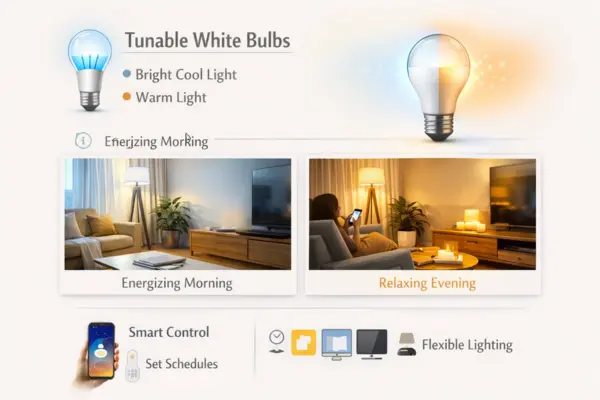
Tunable white bulbs are one of the smartest upgrades you can make to your living room. They let you shift between warm and cool light depending on the time of day or what you’re doing. One bulb, multiple moods — it really is that flexible.
Why It Works
Most living rooms serve more than one purpose. In the morning, it might be where you drink your coffee and catch up on emails. In the evening, it becomes the space where you relax or entertain guests.
A single fixed bulb can’t serve all of those moments well. Tunable white bulbs can. You dial up the cool, bright light when you need to feel alert and productive. Then shift to a warm, soft glow when it’s time to unwind.
Many tunable bulbs are also smart-enabled, meaning you can control them from an app or set them to change automatically throughout the day. It’s a small feature that makes a surprisingly big difference.
Best For
Tunable white bulbs are perfect for open-plan living rooms that flow into a dining area or home office space. They’re also great for families where different people use the room for different things at different times.
If your living room doubles as a workspace during the day and a relaxation zone in the evening, these bulbs are made for you.
Styling Tips
- Set a warm schedule for after 7 PM automatically — you’ll notice how much better the room feels.
- Use them in your main ceiling fixture first, then expand to floor lamps once you’re comfortable.
- Pair with blackout or light-filtering blinds so you have full control over the room’s lighting at any hour.
- If you use them with a smart home system like Alexa or Google Home, you can switch the mood with just your voice.
3. High-CRI Bulbs
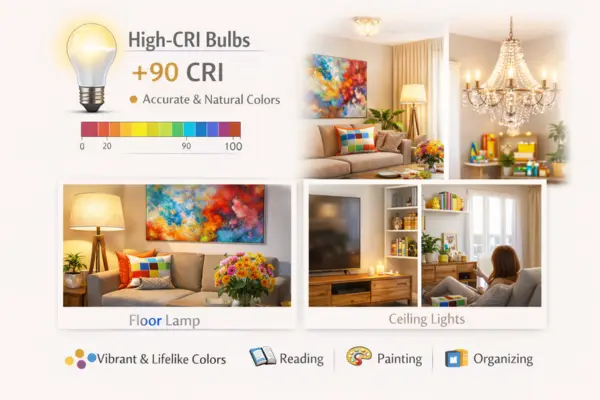
High-CRI bulbs don’t get nearly enough attention, but decorators swear by them. CRI stands for Color Rendering Index — and a bulb with a CRI of 90 or above shows colors the way they actually look in natural daylight. It’s a game-changer if you care about how your décor looks.
Why It Works
Have you ever bought a cushion in the store, loved the color, brought it home — and it looked completely different under your living room light? That’s a low-CRI problem.
Standard bulbs distort colors slightly. You might not notice it consciously, but it makes your whole room look a little flat or washed out. High-CRI bulbs fix that. Your artwork looks richer. Your furniture looks truer. Your paint colors show up exactly as you chose them.
They’re also easier on your eyes for long periods, which makes them brilliant for reading corners or any space where you spend a lot of focused time.
Best For
High-CRI bulbs are especially valuable if you have bold artwork, colorful soft furnishings, or decorative pieces you want to show off properly. They’re also ideal for reading nooks, accent shelving with books or plants, and any corner that’s meant to be a visual focal point.
Styling Tips
- Install them in a lamp that’s positioned near your favorite piece of wall art to see an instant difference.
- Use them in chandeliers or pendant lights where they’ll illuminate a wide portion of the room.
- Combine with high-CRI under-shelf lighting on display units to make your décor truly pop.
- Choose a warm high-CRI bulb (2700K–3000K with CRI 90+) so you get color accuracy without the cold, harsh feel.
4. Accent Smart LEDs
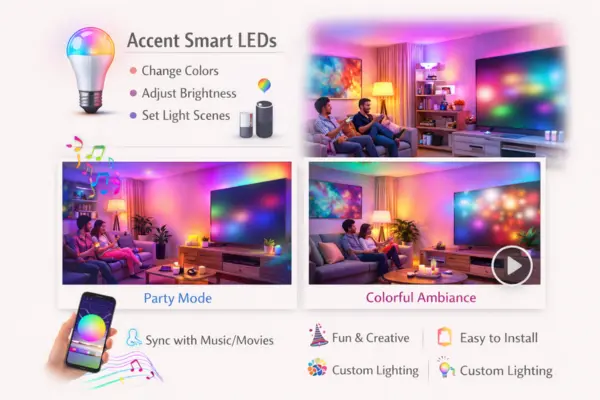
Smart LED bulbs bring both convenience and creativity into your living room. You can change their color, adjust brightness, create lighting scenes, and control everything from your phone. They’re the most versatile bulb option on this list — and honestly one of the most fun.
Why It Works
Smart LEDs do something no standard bulb can: they let you match the lighting to the moment. Hosting a dinner party? Set a warm, intimate glow. Movie night? Dim them low with a slight blue tint. A relaxed Sunday afternoon? Go for a soft peachy-warm tone.
Some smart bulbs also sync with music or on-screen content, shifting colors in real time. It sounds like a gimmick until you try it — and then you wonder how you lived without it.
They fit into standard light sockets, so there’s no complicated installation. Just screw in and connect to the app.
Best For
Accent smart LEDs work best in table lamps, floor lamps, and wall sconces — spots where you notice the light directly. They’re great for living rooms used for entertaining, media watching, or any space where you want the lighting to feel like part of the experience rather than just background.
Styling Tips
- Start with one or two smart bulbs in key lamps rather than replacing every bulb at once.
- Create a “movie mode” scene in your app — dim, warm light on one side of the room only.
- Use a soft terracotta or amber tone for evenings. It photographs beautifully too if you love sharing home content.
- Pair with a smart dimmer switch for full control without reaching for your phone every time.
5. Layered Lighting Mix
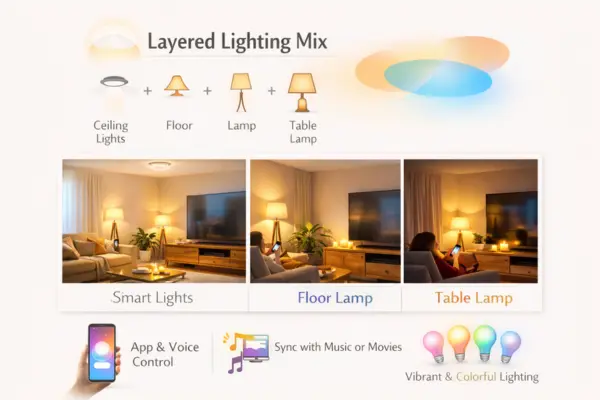
Layered lighting is less about one specific bulb and more about how you use multiple light sources together. It’s the technique professional interior designers use in every single project. And once you understand it, your living room will never look the same.
Why It Works
A room lit from one source — usually a single ceiling light — tends to look flat. Shadows are harsh. Corners feel dark. Everything looks one-dimensional.
Layering fixes this. You use three types of light together: ambient light (your main general lighting), task light (focused light for reading or working), and accent light (decorative or highlighting light). When all three work together, the room gains depth, warmth, and a sense of balance.
It also makes the room incredibly flexible. You can run all three layers together for a bright social setting, or turn off the ambient and keep just the accent lights on for a cozy evening mood.
Best For
Layered lighting works in every living room, but it’s particularly transformative in larger rooms that feel hard to light well, or in smaller rooms that feel dim and flat with just one overhead light.
Styling Tips
- Start with your ambient layer first — a ceiling fixture or recessed lights.
- Add a floor lamp in the darkest corner of the room as your second layer.
- Finish with a table lamp near the sofa or a wall sconce beside artwork as your accent layer.
- Make sure each layer is on a separate switch or dimmer so you can control them independently.
- Use warm bulbs across all three layers to keep the overall feel consistent.
6. Vintage Edison & Filament Bulbs
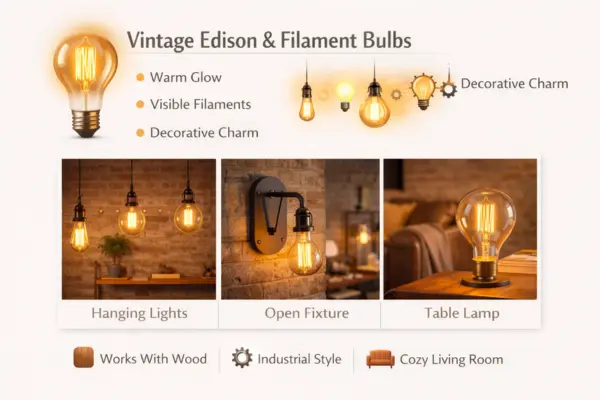
Vintage Edison bulbs are the ones with the visible glowing filament inside. They’re warm, atmospheric, and deeply stylish. They don’t just light a room — they become part of the décor themselves. If you love that cozy, old-world charm, these bulbs deliver it effortlessly.
Why It Works
There’s something about seeing the actual filament glow that feels warm and personal. It’s nostalgic without being fussy. The amber light they emit is some of the warmest you’ll find, making them perfect for creating a relaxed and intimate atmosphere.
Modern Edison-style bulbs are actually LEDs with a filament appearance — so they’re energy efficient while still giving you that classic look. You get the aesthetic without the high electricity bill.
They also double as décor. In an exposed pendant or open-shade lamp, the bulb itself becomes a design feature.
Best For
Edison and filament bulbs shine in industrial, rustic, farmhouse, or bohemian-style living rooms. They pair perfectly with exposed brick, wood beams, concrete walls, leather sofas, and metal or copper fixtures. They also work beautifully in mid-century modern spaces.
Styling Tips
- Hang them as pendants over a coffee table or in a cluster above a reading chair.
- Use them in a lamp with an open or wire-frame shade so the filament is visible.
- Group different sizes together on an exposed multi-bulb fixture for a dramatic statement.
- Keep surrounding décor simple and natural — these bulbs look best with organic materials and earthy tones around them.
7. Clustered Bulb Arrangements
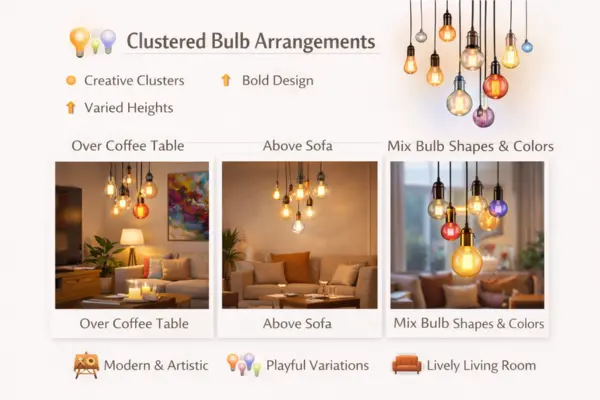
Clustered bulb arrangements are one of the boldest and most beautiful lighting choices you can make. Instead of one single pendant light, you hang a group of bulbs at varying heights to create a sculptural, artistic ceiling feature. The effect is dramatic, modern, and completely eye-catching.
Why It Works
A cluster of bulbs adds vertical interest to a room. It draws the eye upward and creates a sense of height and drama — especially in rooms with high ceilings. But even in a standard-height room, a well-placed cluster transforms an empty ceiling into a design statement.
The beauty of clusters is their flexibility. You can mix bulb shapes and sizes. You can vary cord lengths to create movement. You can combine filament bulbs for warmth or go with globe bulbs for a cleaner, more modern look.
They also provide generous, diffused light across a wider area than a single pendant.
Best For
Clustered arrangements work best above a coffee table as a centrepiece, over a lounge seating area, or in an open-plan living-dining room where they define the living space visually. They suit contemporary, Scandinavian, industrial, and eclectic interior styles particularly well.
Styling Tips
- Vary cord lengths dramatically — the difference between the longest and shortest cord should be at least 30–40 cm for real visual impact.
- Stick to bulbs in the same family (all Edison, all globe) for a cohesive look, or mix intentionally for an eclectic feel.
- Use a ceiling canopy that’s slightly larger than average — it anchors the cluster and makes the installation look intentional.
- Keep the rest of the room’s lighting minimal so the cluster remains the star of the space.
8. LED Strips Behind Furniture
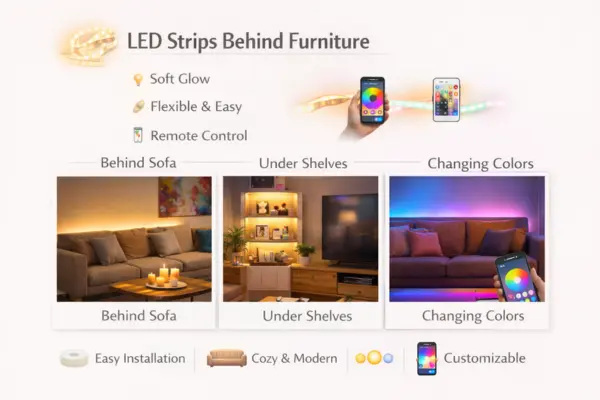
LED strip lights are thin, flexible, and incredibly versatile. Tucked behind a sofa, underneath a floating shelf, or along the back of a TV unit, they create a soft, indirect glow that makes your living room feel modern, layered, and effortlessly stylish.
Why It Works
The key here is indirect lighting. You never see the light source directly — only the glow it casts. This creates a soft halo effect around your furniture that adds depth and warmth to the room without any harshness.
Behind a sofa, LED strips make the seating area feel like it’s floating. Behind a TV unit, they reduce eye strain during screen time and make the whole wall feel like a design feature. On a shelf, they highlight your décor and books beautifully.
They’re also very simple to install. Most LED strips come with adhesive backing. You peel, stick, and plug in.
Best For
LED strips are ideal for anyone who wants a modern, interior-design-magazine look without a big budget. They work in minimalist, Scandi, contemporary, and even maximalist spaces. They’re particularly effective in living rooms that also serve as media rooms.
Styling Tips
- Warm white (2700K–3000K) LED strips feel cosier. Cool white can feel too clinical for a relaxing living room.
- Place them on the wall side of furniture, not on the floor-facing side — the glow should come from behind, not underneath.
- Run a strip along the back edge of your TV unit to create a beautiful bias lighting effect that’s also easy on your eyes.
- Dimmable LED strips give you full control over intensity — worth the small extra cost.
9. Dimmable Bulbs
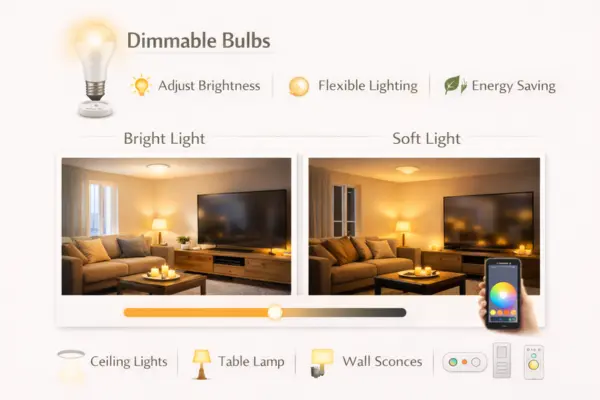
Dimmable bulbs are one of the simplest, most practical upgrades you can make — and one of the most underrated. The ability to adjust brightness means you can use the same bulb for ten different moods, from a bright Sunday morning to a soft, candle-like evening glow.
Why It Works
Fixed-brightness bulbs are limiting. Either the room is bright or it isn’t. Dimmable bulbs change that entirely. You have full control over how the room feels at any given moment.
This is especially important in a living room that serves multiple purposes. Bright for cleaning and daytime activities. Medium for social time and conversation. Low and warm for watching films or winding down before bed.
Dimmable LEDs are also great for energy efficiency. The lower you set the brightness, the less energy you use.
Best For
Dimmable bulbs work in ceiling fixtures, table lamps, and wall sconces — basically any lamp or fixture that has or can be fitted with a dimmer switch. They suit every living room style and every budget. If you only make one upgrade from this list, this might be the one.
Styling Tips
- Make sure your dimmer switch is compatible with LED dimmable bulbs — older dimmer switches were designed for halogens and may cause flickering.
- Set your dimmable lights to about 60–70% brightness for everyday use. It’s comfortable and saves energy.
- For movie nights, drop to 20–30% and position your light source behind or beside the screen rather than in front of it.
- Pair dimmable ceiling lights with a non-dimmable warm table lamp for a beautiful two-layer effect in the evening.
10. Colored or Stained-Glass Bulbs
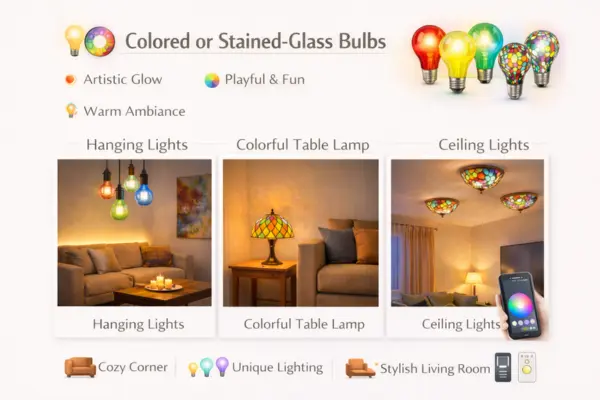
Colored and stained-glass bulbs are the most decorative option on this list. They’re not about filling a room with light — they’re about adding personality, warmth, and a touch of artistry. When used thoughtfully, they become conversation pieces in their own right.
Why It Works
Colored bulbs cast tinted light that plays beautifully on nearby surfaces. A soft amber bulb warms up a white wall. A deep ruby-red bulb in a corner lamp creates a dramatic, moody atmosphere. Stained-glass bulbs with multiple colors cast gentle patterns around them when the light shines through.
They work particularly well in table lamps where the light is close to eye level and the effect is intimate and immediate. The tinted glow adds a layer of warmth and character that plain white bulbs simply can’t achieve.
They’re also very affordable and easy to swap in and out with the seasons or your mood.
Best For
Colored and stained-glass bulbs work best in decorative table lamps, bedside lamps in attached rooms, hanging pendants in reading corners, or any lamp that functions as a decorative accent rather than a primary light source. They suit bohemian, eclectic, vintage, and maximalist living room styles most naturally.
Styling Tips
- Use amber or warm amber bulbs if you want color without it feeling too bold — it reads more like “very warm white” than “colored light.”
- Stained-glass bulbs look stunning in a lamp placed on a dark wood side table or a windowsill with surrounding plants.
- Don’t use them as your main room light — pair them with a neutral ambient source so the colored glow reads as accent, not the dominant tone.
- Try rotating them seasonally: warmer tones in autumn and winter, softer or cooler tints in spring and summer.
Mistakes to Avoid
Even with the best ideas, small errors can undo all your hard work. Here are the most common lighting mistakes I see — and how to avoid every single one.
Using only one overhead light. This is the number one living room lighting mistake. A single ceiling light creates flat, harsh shadows and makes even a well-decorated room feel dull. Always layer your lighting with at least two or three sources.
Choosing the wrong color temperature. Cool white or daylight bulbs (above 4000K) feel too clinical and harsh in a living room. Stick to warm white (2700K–3000K) for a cozy, inviting atmosphere.
Ignoring dimmer switches. A bulb without a dimmer is a missed opportunity. Dimmers cost very little but give you total control over the room’s mood at any time of day.
Buying bulbs without checking wattage compatibility. Some older fixtures have wattage limits. Always check the fixture label before screwing in a new bulb — especially with smart or LED bulbs.
Making all your bulbs the same brightness. Contrast is what gives a room depth. Mix your levels — a brighter ambient source with softer accent lamps — for a layered, professional look.
Forgetting the corners. Dark corners make a room feel smaller and heavier. A simple floor lamp or LED strip in a corner can open the space up dramatically.
Placing lamps too high. Table lamps placed too high create glare. The bottom of a lampshade should generally sit at eye level when you’re seated — around 100–110 cm from the floor.
Conclusion
Good lighting doesn’t have to be complicated or expensive. As you’ve seen, it’s really about making a few thoughtful choices — the right warmth, the right layers, and the right placement.
Start simple. Swap your main ceiling bulb for a warm LED. Add a floor lamp in a dark corner. Try a dimmable bulb in your table lamp. Small changes like these make an immediate difference you can see and feel the same evening.
Once you get comfortable, you can explore the more creative options — vintage Edison clusters, smart color LEDs, LED strips behind your sofa. Each one adds a new layer of personality and warmth to your living room.
Your living room deserves great lighting. And now you know exactly how to give it that.
FAQs
What is the best color temperature for a living room? Warm white, between 2700K and 3000K, is ideal. It creates a cozy, inviting atmosphere that works for both relaxing and socializing.
Are LED bulbs good for living rooms? Yes — LED bulbs are the best choice for most living rooms. They’re energy-efficient, long-lasting, available in warm tones, and compatible with dimmer switches.
How many light sources should a living room have? At minimum, three: an ambient source (ceiling light), a task source (floor or table lamp), and an accent source (decorative lamp or LED strip). This layered approach gives the room depth and flexibility.
Can I mix different bulb types in one room? Absolutely. Mixing bulb types is actually encouraged — as long as you keep the color temperature consistent (all warm white, for example) across your sources.
What is the easiest lighting upgrade for a beginner? Start with dimmable warm white LED bulbs in your existing fixtures. Add a dimmer switch, and you’ll immediately notice how much more control you have over the room’s mood.
Are smart bulbs worth it for a living room? Yes, especially if you use your living room for a variety of activities. The ability to change brightness and color temperature with your phone or voice makes smart bulbs one of the most practical investments in home lighting.
Where should I not place colored bulbs? Avoid using colored bulbs as your main room light source. They work best as accent lights in decorative lamps, where the tinted glow adds warmth and personality without overpowering the room.