
26 Industrial Living Room Ideas That Feel Cozy, Rustic & Totally Lived-In (2026 Trends)
There is something incredibly satisfying about a living room that feels both tough and warm at the same time. That is exactly what industrial style does best. It takes raw, rough-around-the-edges materials like exposed brick, reclaimed wood, and black iron — and turns them into something that feels genuinely cozy.
I have been decorating homes and writing about interior design for years. And I can tell you this honestly: industrial style is one of the most misunderstood looks out there. A lot of people think it means cold, dark, and uncomfortable. But done right? It is one of the warmest, most welcoming styles you can choose.
In 2026, industrial living rooms will evolve. They are no longer just for loft apartments in big cities. They work in family homes, small flats, countryside cottages, and even rental spaces. The secret is layering cozy rustic textures over those raw industrial bones — and that is exactly what this article is going to show you.
Table of Contents
26 Industrial Living Room Ideas That Actually Work
Here is the most waited list;
1. Exposed Brick Accent Wall with a Leather Sofa
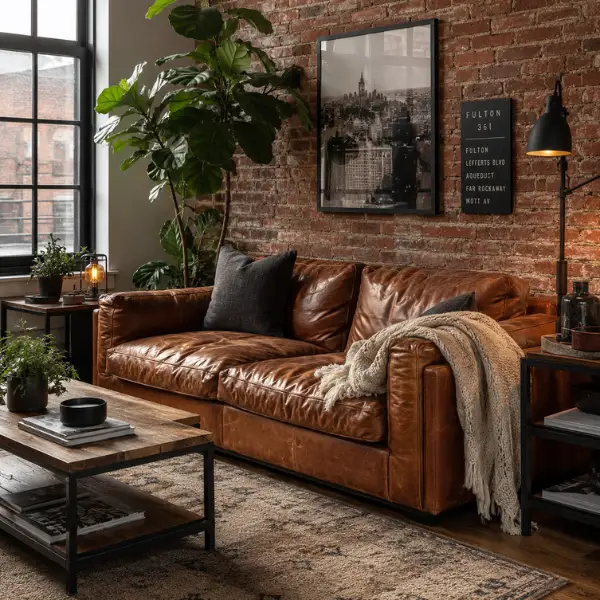
If there is one combination that defines the cozy industrial look, this is it. An exposed brick wall paired with a rich, distressed leather sofa creates that perfect balance of rugged and warm. It feels like a room that has been lived in — in the best possible way. The brick adds texture and history. The leather adds comfort and character.
Why It Works
Brick brings natural earthy tones — reds, browns, and terracotta — that instantly warm up a space. Leather, especially in cognac or dark brown shades, echoes those same warm tones. Together, they create depth without needing much else. The room feels put together without looking overdone.
Best For
This combination works beautifully in medium to large living rooms. It is also a great option if you have high ceilings, as the brick wall draws the eye upward and makes the space feel grand. Renters can use peel-and-stick faux brick panels to get the same effect without touching a single wall.
Styling Tips
- Choose a leather sofa in cognac, chocolate brown, or charcoal grey for the most authentic look.
- Add a chunky wool throw over one arm of the sofa to soften the leather’s edge.
- Place a small potted plant — a fiddle-leaf fig or trailing ivy — near the brick wall to break up the hardness.
- Keep the rest of the room simple. This pairing is already a statement; it does not need competition.
2. Reclaimed Wood Beam Ceiling
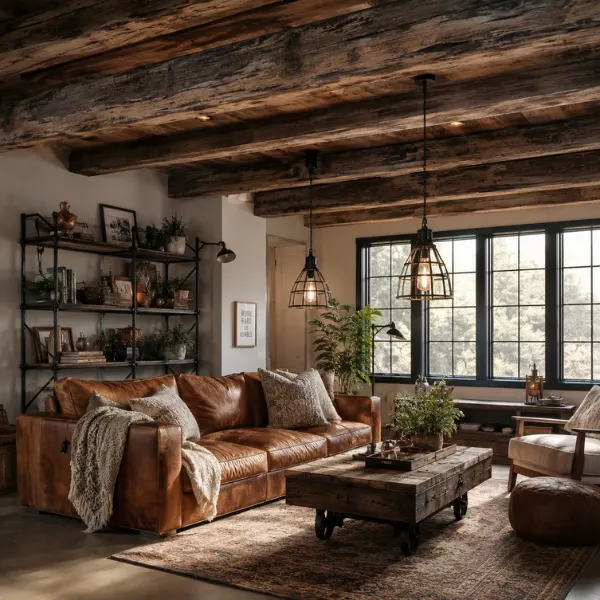
Ceiling beams are one of those design details that completely transform a room. When you add reclaimed wood beams overhead, the whole space takes on a warm, barn-like character that feels incredibly cozy. It is an architectural interest you barely have to decorate around — the beams do the heavy lifting for you.
Why It Works
Wood naturally softens industrial spaces, which can sometimes feel cold or harsh. Reclaimed beams bring history, texture, and a lived-in quality that new materials simply cannot replicate. Every knot and scratch in the wood tells a story. They also draw the eye upward, making rooms feel taller and more spacious.
Best For
This idea is perfect for rooms with existing height or an open-plan layout. Older homes often already have beams hidden under drywall — well worth investigating. If you are working with a standard ceiling height, lightweight faux wood beams from home improvement stores are a budget-friendly alternative that look remarkably realistic.
Styling Tips
- Stain beams in a warm walnut or weathered grey tone rather than painting them, so the wood grain stays visible.
- Hang pendant lights with black iron cages directly from the beams for a cohesive look.
- Let the beams be the star — avoid hanging too much décor from them. One or two pendant lights are enough.
- Pair the ceiling with white or pale grey walls so the beams stand out beautifully.
3. Black Iron Pipe Shelving Unit
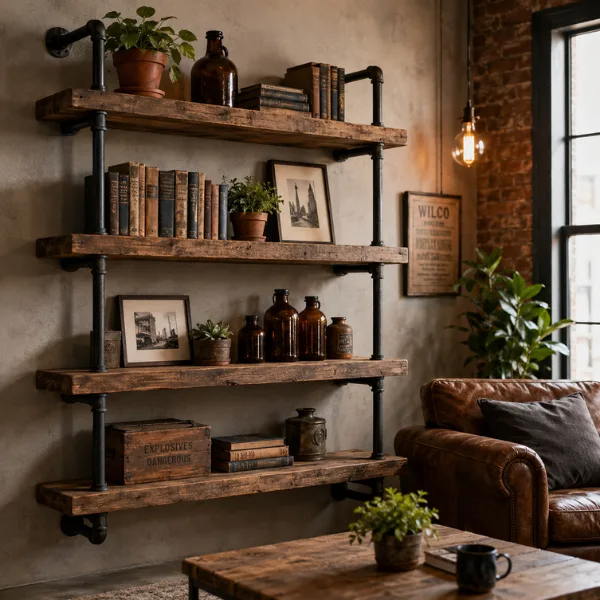
This is one of my favourite DIY projects to recommend to beginners. Black iron pipe shelving looks like it belongs in a Victorian workshop, but it is surprisingly easy and affordable to create. You are essentially attaching wooden planks to walls using iron pipe brackets — and the result is stunning.
Why It Works
Pipe shelving is the ultimate blend of form and function. It adds visual interest to blank walls while giving you practical storage and display space. The contrast between the dark matte iron and the warm wood grain is exactly what industrial style is all about. It feels handcrafted and intentional — not bought off a shelf.
Best For
This works in rooms of any size. In smaller spaces, a single column of shelves in a corner adds character without taking up floor space. In larger rooms, a full wall of pipe shelving becomes a dramatic feature wall. It is also brilliant for renters — the shelves can be removed without major damage.
Styling Tips
- Use reclaimed scaffold boards or thick pine planks for the shelves — the chunkier the better.
- Display a mix of books, small potted plants, and vintage bottles or jars. Odd numbers of objects always look more natural than even ones.
- Keep the items on your shelves in a cohesive colour palette — mostly naturals, greens, and earth tones.
- Use pipe flanges fixed directly into wall studs for maximum strength and safety.
4. Edison Bulb Cluster Pendant Lighting
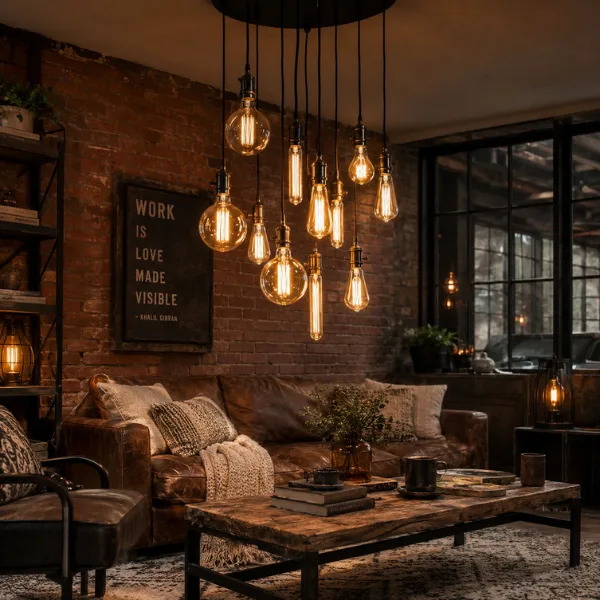
Lighting changes everything. And nothing says industrial cosy quite like a cluster of Edison bulbs hanging at different heights above a seating area or coffee table. The warm amber glow they cast is flattering, intimate, and endlessly charming.
Why It Works
Edison bulbs, with their visible filaments and vintage-inspired shapes, are the perfect antidote to the cold, stark reputation of industrial design. They cast a soft, golden light that makes even the roughest surfaces look warm and inviting. Grouped together in a cluster, they become a real centrepiece — both decorative and functional.
Best For
A cluster pendant works best above a coffee table in the centre of the room, or above a reading corner. It is ideal for medium and large rooms where a single overhead light would feel lost. For low ceilings, use a flat canopy and keep the pendants short rather than dropping them too low.
Styling Tips
- Mix bulb shapes — globe, teardrop, and tubular — in the same cluster for a more curated, less uniform look.
- Always use dimmable bulbs. The ability to lower the light in the evening is what makes this style truly cosy.
- Pair with black iron pendant cages or simple brass holders rather than fabric shades.
- Keep surrounding lighting minimal so the cluster pendant is the undisputed star of the room.
5. Distressed Cognac Leather Sectional
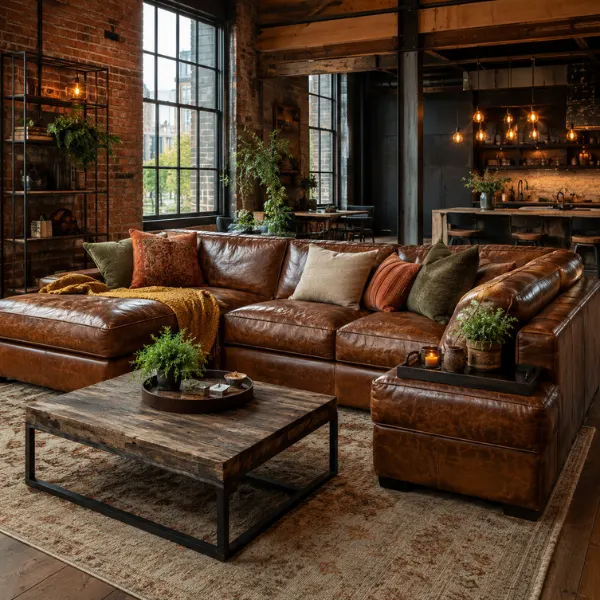
A sectional sofa is a serious investment, so you want to get it right. In an industrial living room, a distressed cognac or tobacco leather sectional is the definition of “get it right.” It is comfortable, durable, and ages beautifully — getting better and more characterful over the years.
Why It Works
Sectionals invite people to settle in and stay a while. In a cosy industrial room, that sense of generous comfort is exactly what balances out the rawness of the other materials. Cognac leather specifically has those warm amber undertones that tie in beautifully with brick, wood, and iron. And as it ages and develops its patina, it becomes more, not less, attractive.
Best For
Large living rooms with an open-plan layout benefit most from a sectional. It defines the seating zone clearly without needing walls to do the work. If your room is on the smaller side, go for an L-shape rather than a full wrap-around to keep the space feeling open.
Styling Tips
- Drape a woven blanket in a rust or mustard tone over one end of the sectional to add colour without a full repaint.
- Use a dark wooden tray on the sofa arm to hold a candle or small plant — it looks intentional and puts the leather’s flatness to good use.
- Add cushions in earthy tones: terracotta, olive green, and deep cream. Avoid bright or cold colours.
- Place a large, low-pile wool rug underneath to anchor the sectional and add warmth underfoot.
6. Polished Concrete Flooring with a Wool Area Rug
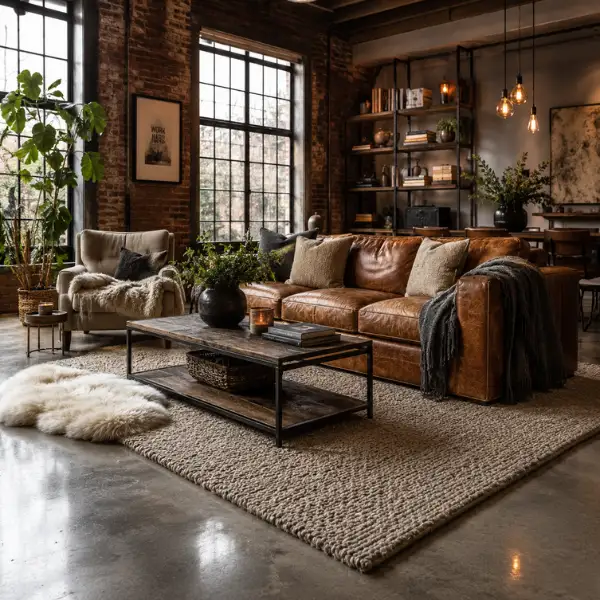
Polished concrete floors are one of the most genuinely industrial things you can do to a living room — and they look extraordinary. But on their own, they can feel cold and clinical. The solution is simple and incredibly effective: layer a large, thick wool area rug right on top.
Why It Works
The contrast between the hard, cool concrete and the soft, warm wool is the whole point. It is that push and pull between rough and cosy that makes industrial rustic design so compelling. The concrete acts as a sleek, neutral backdrop that makes everything else in the room pop. The rug pulls the seating area together and makes the space feel human and inviting.
Best For
Concrete flooring works best in ground-floor rooms or extensions where laying a new floor is possible. If you have existing flooring you cannot change, large-format tiles in a concrete-look finish are widely available and create the same visual effect without the expense of actual concrete.
Styling Tips
- Choose a wool rug in a natural, undyed tone — oatmeal, warm grey, or charcoal — rather than a bold pattern. Let the concrete be the pattern.
- Size matters enormously with rugs. Always go bigger than you think. All four sofa legs should sit on the rug.
- Layer a smaller sheepskin or faux fur over the wool rug near a reading chair for extra warmth.
- Radiant underfloor heating beneath the concrete makes it genuinely warm rather than just beautiful — well worth considering during installation.
7. Steel-Framed Floor-to-Ceiling Windows
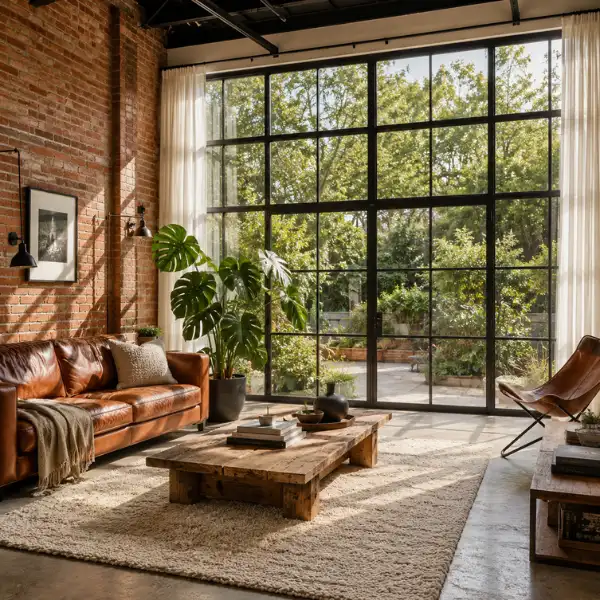
If your room has an outside wall that faces a garden or street, replacing a standard window with a steel-framed floor-to-ceiling window or crittall-style door is a genuinely transformative move. These windows are quintessentially industrial and flood the room with light.
Why It Works
Steel-framed windows have their roots in factory architecture — the same buildings that inspired industrial interior design. They bring that authentic heritage into the home while also solving the practical problem of dark, enclosed spaces. Natural light makes every material in an industrial room look its best, especially brick and reclaimed wood.
Best For
This is ideal for rooms that connect to a garden, a terrace, or even just an outside courtyard. South or west-facing walls will make the most of the light available. It also works brilliantly in basement conversions where getting light in is a priority.
Styling Tips
- Keep window treatments minimal — sheer linen curtains in a natural white or cream tone rather than heavy drapes.
- Let the steel frame be the decorative element. You do not need a curtain pole or track treatment to compete with it.
- Place a large indoor plant — a monstera or rubber plant — in the corner near the window to draw the eye toward the light source.
- If privacy is needed, frosted or reeded glass in the lower panes is far more elegant than net curtains.
8. Rustic Wood and Metal Coffee Table (Reclaimed)
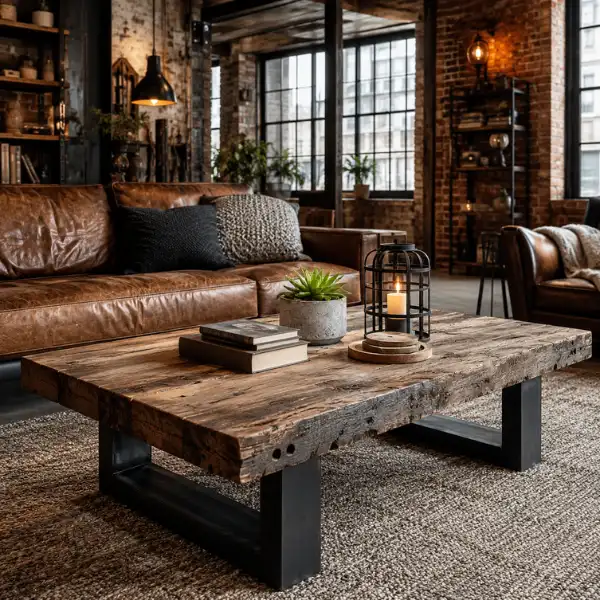
The coffee table sits at the heart of your living room. It is where drinks are placed, books are stacked, feet are rested, and conversations happen around. Choosing the right one matters. In an industrial rustic room, a reclaimed wood top with chunky metal legs is simply the ideal choice.
Why It Works
A reclaimed wood coffee table brings imperfection into the room in the best way. The knots, cracks, nail holes, and weathered grain make it look like it has a story — because it does. Paired with raw iron or black steel legs, it bridges the gap between rustic farmhouse warmth and urban industrial edge perfectly.
Best For
This type of coffee table suits rooms of every size. A smaller, round version works in compact spaces without the hard corners that make a room feel cramped. A large, rectangular reclaimed top on welded steel legs suits bigger rooms and open-plan layouts beautifully.
Styling Tips
- Style the table with intention: a stack of hardback books, a small potted succulent, a candle in an iron holder, and a coaster tray. That is it. Resist the urge to fill every inch.
- Treat the wood with a matte or satin wax finish to protect it from spills while keeping the natural texture visible.
- Look in antique markets, salvage yards, and online reclaimed wood specialists for the most authentic pieces. Old barn doors and railway sleepers make extraordinary tabletops.
- If DIYing, scaffold boards on hairpin or welded box steel legs are a brilliant and budget-friendly option.
9. Factory-Style Black Metal Fireplace Surround
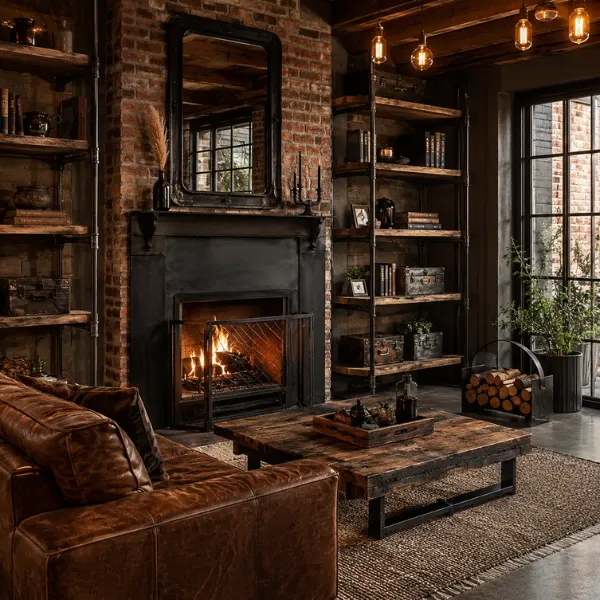
A fireplace is already the focal point of a living room. But dressing it in a sleek black metal surround gives it that factory edge that makes the whole room feel cohesive. Whether it is a wood-burning stove, a gas fire, or even an electric insert, the surround is where the styling happens.
Why It Works
Black metal is the anchor of industrial design. It appears in pendant lights, shelving brackets, window frames, and furniture legs throughout the style. When the fireplace surround echoes that same matte black tone, the room gains a visual consistency that feels deliberate and well-considered. It ties the whole space together without you needing to add more décor to do it.
Best For
This works in rooms that already have a chimney breast or fireplace alcove. A freestanding black metal wood-burning stove is an equally brilliant option for rooms without an existing fireplace. It adds both warmth and extraordinary visual impact, and requires only a flue pipe rather than a full chimney.
Styling Tips
- Style the mantel simply: a large vintage mirror, a single cast-iron candelabra, and a dried pampas grass stem in a dark bottle. Less is always more here.
- For a wood-burning stove, stack a small pile of split logs in a black iron log basket nearby. It is both practical and beautiful.
- A black steel fireguard with geometric mesh detailing adds a lovely finishing touch while protecting the room from sparks.
- Use the fireplace alcoves on either side for built-in shelving in the same pipe-and-plank style as the rest of the room.
10. Open-Plan Loft Layout with Exposed Ductwork
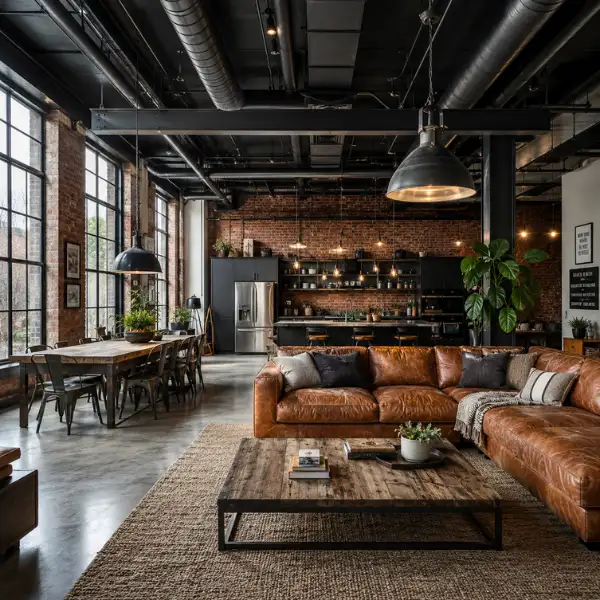
Industrial design was born in converted warehouses and factories. If you have an open-plan space — or the ability to create one — embracing the raw architecture rather than hiding it is the smartest move you can make. Exposed ductwork, instead of being boxed in, becomes a genuine design feature.
Why It Works
There is something deeply authentic about showing how a building actually works. When you paint the ductwork and pipes in dark charcoal or matte black rather than trying to disguise them, they become part of the design rather than an eyesore. Open-plan layouts also allow light to travel freely and make smaller spaces feel significantly larger.
Best For
This approach is ideal for ground-floor extensions, basement conversions, and period properties undergoing renovation. It is also a clever idea for any room where the ceiling is already showing ductwork or plumbing — rather than spending money boxing it in, paint it dark and make a feature of it.
Styling Tips
- Paint all exposed pipes, ducts, and beams in the same colour — a deep charcoal or matte black — so they read as one cohesive element rather than a collection of mistakes.
- Use furniture to zone the open space rather than walls. A large sofa facing away from the kitchen defines the living area clearly.
- Hang a large pendant light in the centre of each zone — one above the dining area, one above the coffee table — to reinforce the spatial division.
- Keep flooring consistent throughout the open plan. Concrete, dark hardwood, or large-format stone tiles all work beautifully.
11. Corrugated Steel Accent Wall Panel
This one surprises people every time, but it works brilliantly. A section of corrugated steel cladding on one wall — behind a sofa or as a fireplace back panel — adds instant industrial texture that is unlike anything else. It is unexpected, sculptural, and genuinely striking.
Why It Works
The ridged surface of corrugated steel catches light in constantly changing ways throughout the day. At different angles and times, it shifts from dramatic to subtle. It is also an enormously versatile material — available in raw zinc, weathered brown, or painted in any colour. In a cosy rustic industrial room, pairing a raw steel panel with warm wood furniture softens its industrial edge perfectly.
Best For
This idea works best in rooms where one wall can be treated differently from the others without making the space feel chaotic. A feature wall behind the sofa or television, a fireplace back panel, or a headboard-style panel are all strong choices. It is especially effective in smaller rooms where the wall area is limited but impact is needed.
Styling Tips
- Seal the steel with a clear lacquer to prevent rust transferring to anything that leans against it.
- Mount the panel with a small air gap behind it — this prevents moisture building up and makes the panel look intentionally framed rather than simply stuck to the wall.
- Pair with warm, soft elements nearby: a wool rug, leather seating, and wood shelving to prevent the room feeling clinical.
- Combine with low track lighting along the top of the panel — the shadows cast in the corrugated grooves become part of the drama.
12. Vintage Industrial Clock as Wall Focal Point
Every industrial living room needs a large wall clock. This is not a decorating rule I would usually enforce, but in this style, it is genuinely one of the most effective and affordable ways to add character to a blank wall. A big, factory-style clock with Roman numerals, exposed gears, or a weathered face is the kind of piece that makes people stop and look.
Why It Works
Industrial clocks have their roots in factory floors and railway stations — both birthplaces of industrial design. They carry an authentic historical reference that nothing else quite matches. More practically, a large clock fills significant wall space without the cost or commitment of a full gallery wall or piece of artwork.
Best For
This works in rooms of any size. In a small room, one large clock on a bare wall feels curated and confident. In a larger room, it works as part of a gallery wall alongside framed black-and-white photographs or architectural prints. It is also a brilliant option for people who are not sure how to start decorating — begin with the clock and let everything else grow from it.
Styling Tips
- Go large. An industrial clock with a diameter of 60–80cm makes a genuine statement. Small versions look lost.
- Look for clocks with black or iron grey faces, Roman numerals, and exposed workings. Antique markets and specialist online retailers are the best hunting grounds.
- Position the clock at seated eye level rather than the usual high position. In an industrial room, it reads better slightly lower.
- Do not over-accessorise around it. One clock, one raw plank shelf below it with a single plant and a candle is all you need.
13. Charcoal Grey Sofa with Rust-Toned Throw Pillows
Not everyone wants leather. And that is perfectly fine. A fabric sofa in a deep charcoal grey is an equally strong choice for an industrial living room — and in some ways, it is easier to accessorise. Pair it with rust, terracotta, and burnt orange cushions, and you have a colour palette that feels genuinely warm and completely on trend for 2026.
Why It Works
Charcoal is the perfect neutral for industrial spaces. It is darker and more considered than plain grey, and it pairs beautifully with the warm earth tones that make industrial rooms feel cosy rather than cold. The rust and terracotta pillows add that essential warmth without needing any paint on the walls. It is a simple shift that changes the entire temperature of the room.
Best For
This combination suits any size of living room. In small rooms, a two-seater charcoal sofa with bold terracotta cushions feels punchy and intentional. In larger rooms, a three-seater or sectional gives you more surface area to play with the pillow arrangement.
Styling Tips
- Mix pillow textures — velvet, rough linen, and chunky knit — in the same rust-to-terracotta colour family for a layered, lived-in look.
- Add a dark ochre or bronze-toned cushion to the mix for depth. Pure rust can look a little one-note on its own.
- Pair the sofa with a low, raw wood coffee table and a woven jute rug to complete the earthy, grounded palette.
- Choose a sofa with clean, straight lines rather than curved or ornate arms. Industrial style always favours simple, utilitarian shapes.
14. Tall Metal Bookcase with Wooden Shelf Inserts
A tall, open metal bookcase is both a storage solution and a piece of art in an industrial room. The dark iron frame with warm wooden shelves is practically a symbol of the style — functional, beautiful, and deeply satisfying to look at and use.
Why It Works
Tall bookcases use vertical space efficiently, which is especially valuable in smaller rooms. In industrial design, the combination of dark steel frame and lighter wood shelving is a recurring visual theme that connects naturally with other elements like pipe shelving, the fireplace surround, and window frames. The bookcase ties the room together visually even when it is full of colourful books and personal objects.
Best For
This works brilliantly in rooms where one wall can be dedicated to storage and display. It is ideal for avid readers, collectors, and anyone who has too many beautiful things and nowhere to put them. A single tall bookcase in a small room makes a big impact; two flanking a fireplace in a larger room look genuinely magnificent.
Styling Tips
- Arrange books by spine colour for a visually pleasing, curated look. Group warm tones together — browns, oranges, creams — to tie in with the room’s palette.
- Break up the rows of books with objects: a small bronze sculpture, a framed photograph, a trailing plant in a small terracotta pot.
- Leave some shelves partially empty. White space is not wasted space — it gives the eye somewhere to rest.
- Place the bookcase on a small square of dark rug or wooden platform if the floor is light, to help it feel grounded and intentional.
15. Warm Terracotta Tones with Steel Beam Details
Terracotta is the colour of the moment in 2026, and it pairs extraordinarily well with industrial style. When terracotta walls or large terracotta-toned pieces are combined with exposed steel beam details, the result is a room that feels like a beautiful old pottery studio crossed with a city loft.
Why It Works
Terracotta is essentially the colour of raw, unfired earth — and that perfectly echoes the ethos of industrial design, which celebrates raw and natural materials. The warm, orange-red tone fights back against the cooler greys and blacks of steel and concrete, creating a balance that feels genuinely welcoming. It is one of the most cosy colour choices you can make in this style.
Best For
Terracotta walls work best in south or west-facing rooms where the light is warm. In north-facing rooms, the colour can go a little muddy. If you are nervous about full terracotta walls, start with terracotta accessories — cushions, pottery, a large floor vase — and see how the colour feels in your light before committing.
Styling Tips
- Pair terracotta walls with white or cream trim rather than grey or black to keep the room feeling light and warm.
- Introduce steel beam details through curtain rods, shelving brackets, and light fixtures rather than structural beams, if you do not have them naturally.
- Use terracotta pottery — large, handmade, unglazed pieces — as statement decorative objects. They are inexpensive, beautiful, and perfect for the look.
- A dark walnut or ebony-stained wood floor grounds terracotta walls beautifully and prevents the warm tones from becoming overwhelming.
16. Moody Dark Navy and Black Palette with Velvet Seating
For those who want an industrial living room with genuine drama, the combination of dark navy walls, black steel details, and richly textured velvet seating is simply breathtaking. It is moody, sophisticated, and deeply cosy all at once.
Why It Works
Dark rooms feel intimate. When you commit fully to a deep navy or near-black wall colour paired with the right textures — velvet, leather, and soft wool — the result is a room that feels like a luxurious cocoon. The navy reads as almost neutral against the black steel elements, while the velvet seating adds the essential warmth that stops the room from feeling oppressive.
Best For
This palette works best in rooms that are used primarily in the evening — TV rooms, dens, or dedicated lounge spaces. It is also brilliant in rooms that receive strong natural light during the day, where the dark walls create a welcome contrast. Smaller rooms handled boldly often look more impressive than the same room painted cautiously pale.
Styling Tips
- Choose velvet seating in jewel tones — deep emerald, rich burgundy, or warm amber — rather than dark colours that will disappear into the walls.
- Layer brass or bronze metallic accessories throughout the room. A few pieces of warm metal shine beautifully against dark walls.
- Use several light sources rather than one overhead light. Floor lamps, table lamps, and wall sconces layered together create a genuinely warm and flattering atmosphere.
- Add a large abstract artwork in dark tones with a single warm accent colour — it fills the wall beautifully without interrupting the moody atmosphere.
17. Indoor Greenery Corner (Fiddle-Leaf Fig and Snake Plant)
Plants are one of the most powerful tools available to an industrial decorator. They bring life, colour, and softness to a room filled with hard materials. A dedicated greenery corner — with a tall fiddle-leaf fig, a sculptural snake plant, and trailing ivy in iron and terracotta pots — transforms the whole atmosphere of the space.
Why It Works
Green is the natural complement to the industrial colour palette of grey, black, brown, and rust. Plants introduce the one element that no manufactured material can truly replicate: living texture. They also absorb sound slightly, making a concrete and brick room feel less echoey and more intimate.
Best For
A greenery corner works in any size room. In small rooms, a single tall plant in the corner does an enormous amount of work. In larger rooms, a cluster of plants at different heights — one tall, one medium, one trailing — creates a lush, jungle-like depth that is deeply satisfying.
Styling Tips
- Pot plants in a mix of containers: black iron, raw terracotta, and concrete pots. Consistency of material would look too neat for this style. Variety is better.
- Fiddle-leaf figs are beautiful but demanding. If you are not confident with plant care, a snake plant is nearly indestructible and looks just as sculptural.
- Place the tallest plant in a corner to help define the space and draw the eye diagonally across the room.
- Group plants at three different heights — floor, side table, and shelf — to create a layered, curated effect rather than a random collection.
18. Salvaged Wood Media Console with Raw Metal Legs
The television is often the elephant in the industrial living room. It is a necessary modern intrusion into what is essentially a very historically-inspired style. The solution is to give it a console that is so beautiful it earns its place. A thick salvaged wood top on welded metal box legs or hairpin legs is that solution.
Why It Works
A reclaimed wood media console grounds the television visually and connects it to the rest of the room’s material palette. The raw metal legs carry through the iron and steel theme. And because salvaged wood is inherently varied and imperfect, no two consoles look the same — which is exactly the kind of individuality that industrial rustic style celebrates.
Best For
This works in rooms of all sizes. Narrow consoles suit smaller rooms and create a floating, lightweight effect. Wider, deeper consoles in larger rooms can house speakers, record players, and other equipment while serving as a genuine piece of furniture. If the room has an alcove, a console built into it with pipe shelving above and beside it creates a spectacular media wall.
Styling Tips
- Style the top of the console deliberately: one or two books, a small plant, and a candle or two on one side. Leave the other side clear.
- Use cable management accessories to hide wires. Visible cables are the one thing that completely undermines an otherwise beautiful industrial room.
- If the wood is very rough or unfinished, apply a clear matte wax to protect it and slightly deepen the natural colour.
- Choose a console at the right height for your screen — the centre of the television should sit at seated eye level.
19. Pegboard Workshop-Style Feature Wall
A pegboard wall is perhaps the most brilliantly functional decorative idea in industrial design. It transforms a blank wall into an organised, visually interesting feature wall that displays everything from tools to plants to artwork — all on a grid of hooks, brackets, and shelves that can be rearranged whenever you feel like a change.
Why It Works
Pegboard comes directly from workshop and factory culture — it is literally designed to organise tools and equipment. In a living room, it brings that same sense of purposeful organisation while looking genuinely cool. It is also one of the most flexible decorating ideas available. Because everything hangs on removable pegs and hooks, you can reconfigure the display completely whenever you want without touching the wall.
Best For
This idea works especially well in open-plan spaces where the living area borders a home office or creative workspace. It is also excellent for small rooms where storage needs to be creative and vertical. A single pegboard panel behind a reading chair or desk area creates a focused, characterful zone within the larger room.
Styling Tips
- Paint the pegboard in a matte black, dark charcoal, or forest green finish rather than leaving it its natural pale colour.
- Mix what you display: a trailing plant, a small framed print, a couple of tools, a leather bag on a hook, a row of books on a small bracket shelf. The more personal and eclectic the mix, the better it looks.
- Use the same size pegs and hooks throughout for visual cohesion, even if the objects you hang vary wildly.
- Leave some of the pegs empty. A pegboard crammed to capacity looks chaotic rather than curated.
20. Subway Tile Half-Wall with Raw Concrete Above
Subway tiles are a classic industrial material, and using them on the lower half of a living room wall — particularly around a fireplace or bar area — creates a beautifully layered effect when paired with raw concrete render or exposed plaster above. It is a two-texture combination that feels genuinely architectural.
Why It Works
Subway tiles bring a clean, structured grid to the wall — a reference to the utilitarian tiling of old factories and underground stations. Raw concrete or exposed plaster above adds a rougher, more organic contrast. The horizontal line where the two materials meet divides the wall at a natural point that draws the eye around the room and makes the space feel considered and intentional.
Best For
This works especially well in rooms with high ceilings, where a full wall of either material might feel overwhelming. The half-wall treatment is also more budget-friendly than tiling the whole space. It is excellent around fireplace areas, kitchen-adjacent living spaces, and behind bars or drinks trolleys.
Styling Tips
- Use classic white or pale grey subway tiles in a brick-bond (offset) pattern rather than a straight stack — it is more dynamic and more authentically industrial.
- Apply a dark charcoal or anthracite grey grout rather than white. It makes the tile grid pop and reads as far more industrial.
- Leave the concrete render above unsealed and raw for maximum texture and authenticity — or apply a limewash paint in a warm putty tone if a slightly more finished look is preferred.
- Install a simple raw wood dado rail in a dark stain at the transition point between the tile and plaster to give the change of material a clean, framed finish.
21. Vintage Factory Sign Gallery Wall
A gallery wall in an industrial room should not be a collection of matching frames and botanical prints. Instead, think vintage factory signs, industrial typography, old blueprint prints, faded advertisements, and black-and-white architectural photographs — all layered together in mismatched frames of dark wood and black steel.
Why It Works
This kind of gallery wall tells a story. Each piece is a visual reference to the industrial past — the factories, workshops, and production lines that gave this style its soul. When curated well, it creates a focal point that is genuinely personal and historically interesting. It is also a fantastic way to cover a large wall without expensive artwork.
Best For
This works on any large blank wall, especially those facing the main seating area. A chimney breast, the wall above a sofa, or the wall at the end of a long narrow room are all ideal locations. Even a small cluster of three or four pieces in a corner can create a powerful effect without needing a full wall.
Styling Tips
- Vary the frame sizes significantly — large, medium, and small — for a dynamic, layered arrangement rather than a regimented grid.
- Use a mix of materials: a black steel frame next to a distressed dark wood frame next to a raw plank frame. Consistency of colour family rather than material is what makes it cohesive.
- Source vintage signs and prints from antique fairs, flea markets, and specialist online print shops. Original pieces are best, but high-quality reproductions of vintage blueprints and advertisements work just as well.
- Lay the whole arrangement out on the floor before making a single nail hole in the wall. Take a photograph of the layout and use it as a guide when hanging.
22. Upcycled Drum or Barrel Side Tables
Industrial design celebrates the beauty in unexpected objects. A repurposed metal drum, wooden barrel, or even a large spool of wire cable makes an extraordinary side table — and the fact that it was once something entirely different is the whole point.
Why It Works
Upcycled furniture is the purest expression of industrial design’s core philosophy: that raw, functional objects have inherent beauty that does not need to be disguised. A reclaimed barrel as a side table costs almost nothing compared to buying new furniture, and it adds a sense of authenticity and story that no shop-bought piece can match.
Best For
Drum and barrel tables work best as side tables beside armchairs or sofas, or as small occasional tables in a corner. They are also excellent next to a reading chair as a place for a lamp and a cup of tea. In a larger room, a pair flanking the sofa creates a balanced, intentional arrangement.
Styling Tips
- Leave the drum or barrel in its natural state — raw metal, weathered wood stave, or peeling paint — rather than sanding it smooth or painting it. The imperfection is the beauty.
- Place a small circular tray on top to create a practical flat surface for drinks and books.
- If using a wooden barrel, seal the interior with a food-safe varnish if there is any chance of moisture entering — old wine or spirit barrels can sometimes still release their original smell.
- Source barrels from cooperages, winery suppliers, or online salvage marketplaces for the most authentic and interesting pieces.
23. Industrial Pulley Chandelier
Chandeliers in an industrial room should look like they were lifted directly from a Victorian factory ceiling. A pulley-style chandelier — featuring exposed rope, iron counterweights, and an adjustable height mechanism — is one of the most dramatic lighting choices available in this style.
Why It Works
A pulley chandelier references the block-and-tackle lifting mechanisms used in old warehouses and factories. It is genuinely functional in that it allows you to adjust the height of the light for different occasions — lower for a more intimate atmosphere, higher to flood the whole room with light. And it is visually extraordinary — a guaranteed conversation starter in any room.
Best For
This works best in rooms with relatively high ceilings — at least 2.5 metres to use comfortably. Open-plan spaces and large living rooms benefit most from the drama and scale. In smaller rooms, a simplified iron pendant chandelier in a pulley-inspired style achieves a similar feel without the physical size and overhead clearance requirements.
Styling Tips
- Choose a chandelier with warm filament bulbs rather than cool LED equivalents. The warm amber tone is essential to making the dramatic fixture feel cosy rather than clinical.
- Leave the pulley mechanism fully visible — it is a decorative element in its own right, not something to hide.
- Use the chandelier as the primary lighting source and supplement with lower, warmer lights around the room for layers of light in the evening.
- If the room has exposed beams, hang the chandelier directly from a beam using its original hook mechanism for the most authentic look.
24. Concrete Coffee Table with Steel Base
A concrete coffee table is one of those pieces that looks expensive and artisanal but can actually be made at home for very little money. The combination of a poured concrete top with a welded steel or hairpin leg base is a classic industrial pairing that works in virtually every living room.
Why It Works
Concrete has a beautiful, tactile quality that polished or painted surfaces lack. Its grey tones are neutral enough to sit alongside almost any other material in the room without clashing. Hairpin legs or welded box steel legs add the necessary industrial reference and keep the table looking lightweight and open rather than heavy and chunky.
Best For
Round or oval concrete tables work best in smaller rooms where the lack of hard corners makes movement around the space easier. Large rectangular concrete slabs on box steel legs make a dramatic centrepiece in bigger rooms. The DIY route — using a concrete mould and a basic steel leg kit — is well within the reach of complete beginners.
Styling Tips
- Always seal a concrete coffee table with a penetrating concrete sealer before use. Unsealed concrete stains permanently from spills.
- Style the table surface with a maximum of three objects: one book or magazine stack, one small plant, and one candle or tray. Restraint always looks better on a hard surface like concrete.
- Warm the coldness of the concrete with a large, soft area rug beneath it and a textured wool throw on the sofa above.
- If the grey of concrete feels too cool in your room, look for concrete mixed with iron oxide pigment — it produces warm, terracotta-tinted tones that feel much softer in a cosy rustic space.
25. Cosy Reading Nook with Caged Wall Sconce and Leather Armchair
Every industrial living room deserves a dedicated reading corner. An oversized leather armchair in a quiet corner of the room, lit by a caged wall sconce at exactly the right height, with a small pipe shelf for books and a woven blanket draped across the arm — this is the cosy industrial look at its most intimate and satisfying.
Why It Works
Reading nooks give personality to a room. They show that the space is genuinely lived in and loved, not just decorated for show. In an industrial style room, the combination of worn leather and caged iron lighting references the old reading rooms and workers’ libraries of the Victorian era. It feels literary, warm, and wonderfully personal.
Best For
Any corner of a living room can become a reading nook. Even a small alcove or a corner beside a window is enough space. The key is intentionality — everything in the nook should be chosen and positioned deliberately, so the corner has its own defined atmosphere within the larger room.
Styling Tips
- Choose an armchair with substantial arms and a high back — you want it to feel like it is holding you rather than just supporting you.
- Position the caged wall sconce at shoulder height when seated rather than head height. This directs the light downward onto the page where it is actually needed.
- Install a small single pipe shelf on the wall beside the chair at arm’s reach height. It only needs to hold five or six books at a time.
- Add a sheepskin or folded plaid throw over the arm of the chair. It invites you to sit down the moment you see it.
26. Burnished Brass and Deep Brown Intimate Lounge Corner
The final idea on this list is perhaps the most luxurious. A lounge corner built around burnished brass accents — lamp, side table legs, picture frames, candle holders — combined with deep brown leather or velvet seating creates an intimate atmosphere that feels like the finest members’ club you have ever visited.
Why It Works
Brass has become one of the most popular metals in industrial interiors, and for good reason. Its warm golden tones fight back against the coolness of steel and concrete without losing the industrial reference entirely. When burnished or aged rather than polished mirror-bright, brass looks genuinely vintage and authentically industrial. Combined with deep brown tones in the furniture and rug, it creates the most sumptuous corner imaginable.
Best For
This lounge corner works in medium and large rooms where a secondary seating area — separate from the main sofa — is both practical and desirable. It is excellent for rooms that are used for entertaining, where a slightly more intimate corner away from the main television area gives guests somewhere more conversational to settle.
Styling Tips
- Aged or burnished brass is essential — avoid bright polished brass, which looks more traditional than industrial. Look for pieces described as antique brass, brushed brass, or living brass.
- Layer a large round jute rug beneath the corner to define it within the larger room.
- Use a floor lamp with a brass arm and a dark metal shade to bring the light down to a warm, intimate level.
- Add a small bar cart in the same brass and dark wood combination nearby — it elevates the corner into a genuinely complete and luxurious lounge space.
Mistakes to Avoid When Decorating an Industrial Living Room
Industrial style is genuinely forgiving, but there are a few consistent mistakes that I see people make time and again. Avoiding these will save you time, money, and the frustration of a room that never quite comes together.
Going too cold and dark without balance. This is the most common mistake. Industrial rooms can tip from moody and cosy into cold and unwelcoming very quickly. The fix is always warmth — warm lighting, warm textures, warm tones. Never add another hard surface to a room without also adding something soft.
Buying everything new. Industrial design is fundamentally about things that have a history. A brand-new “distressed” sofa from a furniture chain will never look as good as a genuinely aged leather piece from a vintage market. Where possible, buy secondhand, salvaged, and reclaimed. Your room will thank you for it.
Overcrowding the space. Industrial design has its roots in the spare, functional aesthetic of factory floors. It is not a maximalist style. Every piece of furniture and every decorative object should earn its place. When in doubt, take something out.
Ignoring lighting. This is the most overlooked element in any interior, but it is particularly critical in industrial rooms. Overhead lighting alone creates a flat, uninspiring atmosphere. Always layer at least three light sources — overhead, floor level, and table or wall level — and use dimmable warm-toned bulbs throughout.
Matching everything too precisely. Industrial style should feel collected, not co-ordinated. If the shelving brackets, the curtain rod, the lamp base, and the coffee table legs all come from the same collection in the same shop, the room will feel lifeless. Mix metals, mix eras, mix textures. Deliberate variety is far more interesting than perfect uniformity.
Neglecting the rug. This is a small mistake with a big consequence. A room without a rug feels hard, echoey, and unfinished. The rug is what ties the seating area together and adds the essential softness that industrial rooms desperately need. Always go bigger than you think you need.
Conclusion
Industrial style, done with warmth and intention, produces some of the most characterful and beautiful living rooms in modern interior design. It is a style that rewards patience, creativity, and a willingness to look beyond the obvious. The best industrial rooms are never perfect — they are collected, layered, and genuinely lived in.
Start with one or two of the ideas from this list that excite you most. Build from there. Add warmth wherever the room feels cold, add texture wherever it feels flat, and add personality wherever it feels generic. Trust your instincts.
You do not need an enormous budget, a loft apartment, or a structural renovation to create an industrial living room you love. You need a few key pieces, a commitment to warmth, and the confidence to embrace the beautiful imperfection that makes this style so genuinely compelling. Now go make your room extraordinary. 🏭
FAQs
How do I make an industrial living room feel cosy rather than cold?
The key is warmth in three places: lighting, texture, and colour. Use dimmable, warm-toned bulbs throughout. Layer rugs, throws, and cushions in wool, velvet, and linen. And introduce warm earth tones — rust, terracotta, cognac, and deep brown — alongside the greys and blacks. A room full of industrial materials immediately feels different with these three changes made.
Do I need exposed brick to have an industrial living room?
Absolutely not. Exposed brick is one option, but not the only one. Corrugated steel panels, concrete render, dark painted walls, and raw plaster all create an equally strong industrial backdrop. Peel-and-stick faux brick panels are also a very convincing and renter-friendly alternative.
What colours work best in an industrial living room?
The core industrial palette is charcoal grey, matte black, and warm brown. From there, the cosy rustic version of the style adds terracotta, rust, deep navy, olive green, and burnished brass. Avoid cool, icy tones like pure white, pale blue, and mint green — they fight against the warmth the style depends on.
Can industrial style work in a small living room?
Yes, beautifully. The key is vertical space — pipe shelving, tall bookcases, and high pendant lighting draw the eye upward and make small rooms feel larger. Keep the floor as clear as possible, choose a sofa with slim, elevated legs rather than a skirted base, and use mirrors to reflect light and add depth.
Is industrial style expensive to achieve?
It can be as expensive or as budget-friendly as you make it. Some of the best industrial rooms are built around secondhand leather sofas, DIY pipe shelving, upcycled drum tables, and reclaimed wood coffee tables assembled from salvaged materials. The ethos of the style is finding beauty in raw, functional, and often inexpensive things — which makes it one of the most budget-accessible design styles available.
What plants work best in an industrial living room?
Plants with strong architectural forms work best — fiddle-leaf figs, snake plants, rubber plants, monstera, and cactus. Their bold, structural shapes complement the angular, raw character of industrial décor. Trailing plants like pothos and ivy work beautifully on pipe shelves and in hanging planters. Pot them in black iron, raw concrete, and unglazed terracotta for the most cohesive look.
How do I choose the right rug for an industrial living room?
Go large, go natural, and go textured. A jute, sisal, or chunky wool rug in a warm neutral tone — oatmeal, warm grey, or natural undyed wool — works best. Avoid patterned rugs unless the rest of the room is very simple. Size it generously so that at least the front legs of all seating sit on it. The rug should feel like the floor is soft, not like a decorative mat placed in the middle.