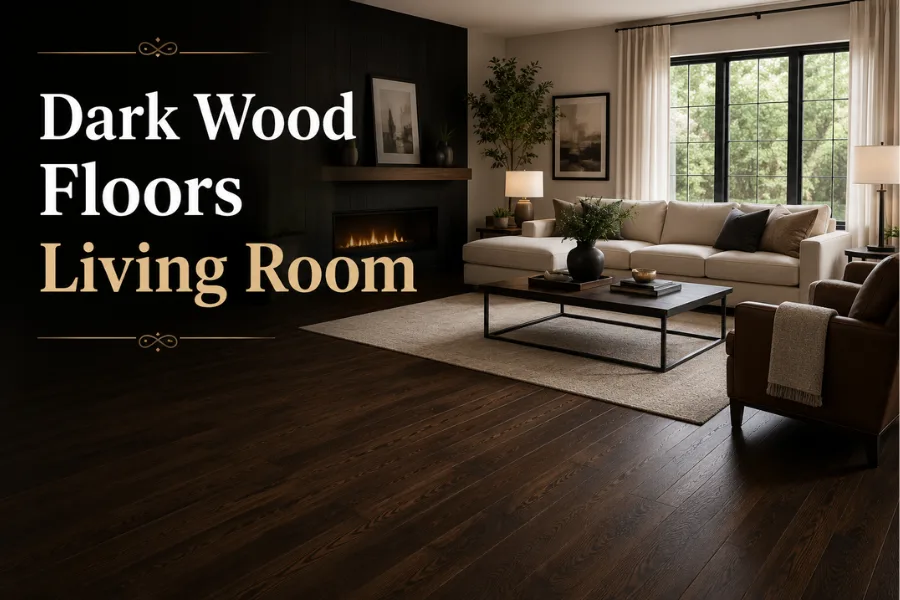
22 Dark Wood Floors Living Room Ideas That Make Every Decorator Jealous
Can I be honest with you for a second? Dark wood floors are one of the most underestimated design assets you can have in a home. Every week I hear someone say the same things: “My dark floors make the room feel so small.” “I don’t know what colors to put with them.” “They show every piece of dust and pet hair.” And you know what? Those concerns are real — but they’re also completely fixable. And once you fix them, you end up with one of the most beautiful, sophisticated, and timeless living rooms you’ve ever seen.
The thing about dark wood floors is that they are not the problem. They’re actually the solution. They anchor the room. They create instant drama. They make every piece of furniture look more intentional, every rug look more luxurious, and every wall color look more deliberate. Light wood floors are lovely — but dark wood floors have presence. They walk into the room and command attention before a single piece of furniture does.
In this post I’m walking you through 22 completely different, realistic, and genuinely gorgeous ways to style a living room with dark wood floors. Whether your home is small and cozy or large and open-plan, whether your taste is modern or traditional, farmhouse or maximalist — there is an idea here that will completely transform your space.
22 Dark Wood Floors Living Room Ideas
1. Crisp White Walls with an Ivory Linen Sofa
The contrast between pure white walls and dark wood floors is one of the most classic combinations in interior design — and it’s been popular for decades because it simply works. This pairing is bright, clean, fresh, and timeless, and it makes the dark floor the unambiguous star of the room.
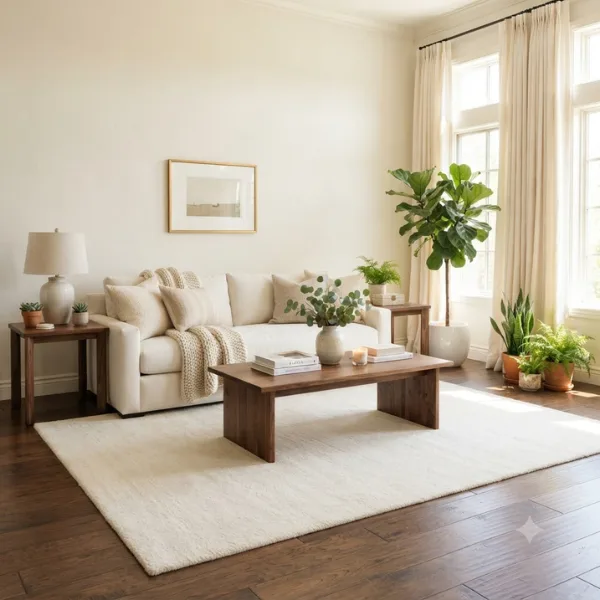
The secret to making it feel warm rather than stark is in the white you choose. Skip the cold, blue-toned whites and go with a creamy or soft warm white — think Sherwin-Williams Alabaster, Benjamin Moore Swiss Coffee, or any white with a slightly yellow or beige undertone. Pair that with an ivory or oatmeal linen sofa, and you have a combination that feels like a high-end boutique hotel done in the most approachable, livable way.
Why It Works
White walls reflect natural light and push it back into the room, which counteracts any heaviness from the dark floor. The linen sofa floats visually above the dark planks, creating a crisp, gallery-like backdrop that makes both the floor and the furniture pop. It’s effortless contrast at its best.
Best For
Any living room style — modern, farmhouse, transitional, traditional. This is the most universally flattering combination for dark wood floors, and it works in both small rooms (where it maximizes brightness) and large rooms (where it keeps the space from feeling heavy).
Styling Tips
Add a large ivory or cream area rug to define the seating area and give the floor a visual break. Bring in warm wood tones through a coffee table or side tables — a natural walnut piece creates a gorgeous tonal bridge between the white walls and dark floors. Finish with linen curtains that pool slightly on the floor, a few soft throw blankets, and simple greenery in white or terracotta pots.
2. Warm Greige Walls with a Camel Leather Sofa
If you find white walls a little too stark or cold, warm greige is your answer. Greige is that beautiful blend of gray and beige with warm undertones — colors like Sherwin-Williams Agreeable Gray, Benjamin Moore Revere Pewter, or Accessible Beige. Against dark wood floors, greige creates what designers call a “cocooning effect” — warm, enveloping, sophisticated, and incredibly livable.
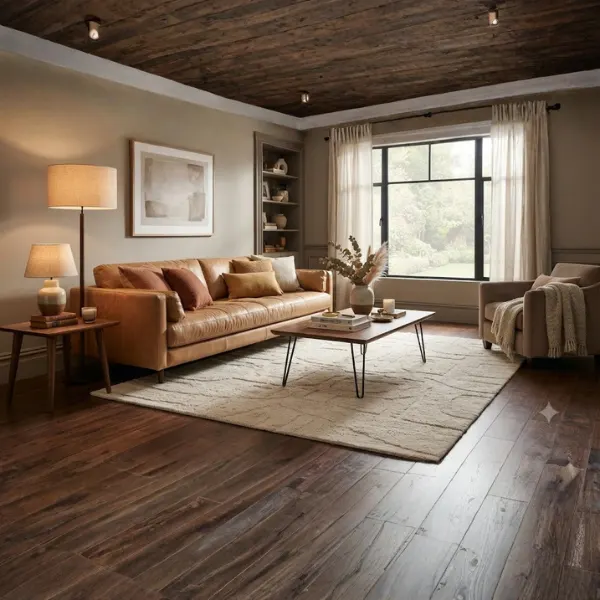
Pair it with a camel or cognac leather sofa and you’ve got one of the most timeless and elegant living room combinations in existence. Leather on dark floors has an old-money feel that no upholstered sofa quite replicates.
Why It Works
Greige walls have warm undertones that echo the warm browns in dark wood, which creates harmony rather than harsh contrast. The camel leather adds richness and warmth without competing with the floor. The overall effect is layered, tonal, and very, very sophisticated.
Best For
Traditional, transitional, and contemporary homes. Works beautifully in rooms that receive warm afternoon light. Also a great choice for homes with open floor plans where the floors flow between multiple rooms, since greige creates a cohesive, flowing palette.
Styling Tips
Add an ivory or soft oatmeal rug with a subtle geometric or organic pattern. Layer the sofa with warm-toned throw pillows in terracotta, rust, or mustard. A wooden coffee table with hairpin legs adds a mid-century touch without competing with the leather. Add a large floor lamp with a warm-toned shade in a corner — the downward light will actually highlight the rich tones in your dark floors.
3. Emerald Green Accent Wall with White Furniture
This one is for the homeowner who wants personality and isn’t afraid of a little drama. An emerald green accent wall behind the sofa or fireplace, paired with white or cream furniture against dark wood floors, creates a combination that feels both bold and grounded.
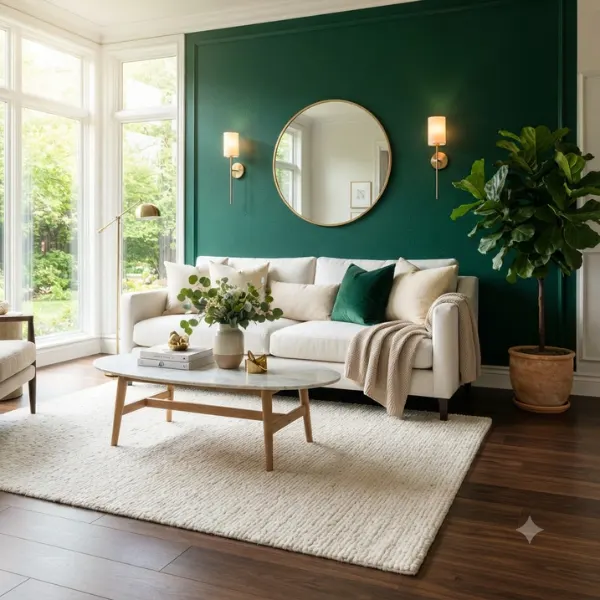
Deep emerald green has a natural connection to dark wood — the two together feel organic, lush, and genuinely luxurious. This is the combination that makes people walk into a living room and immediately say “wow.”
Why It Works
Emerald green has just enough depth to stand alongside dark wood floors without competing, but enough richness to create visual excitement. White furniture keeps the space from getting too heavy, reflecting light back across the green and the floor. It’s the perfect balance of bold and bright.
Best For
Contemporary, transitional, and eclectic living rooms. Especially striking in rooms with good natural light, where the green will shift beautifully throughout the day. Also a great option for renters who can’t change the floors — painting one wall is a low-commitment, high-impact move.
Styling Tips
Choose a true, saturated emerald rather than a sage or olive green — you want the color to have presence. Keep the other three walls white or very soft cream. Hang brass or gold-toned wall sconces on the green wall and add a large round mirror with a brass frame for a glam touch. A cream or ivory rug ties the white furniture to the floor without losing warmth.
4. Deep Navy Blue Walls with a Cream Sofa
Navy blue walls and dark wood floors are one of those combinations that shouldn’t work on paper, but somehow looks absolutely stunning in real life. The deep navy creates an intimate, wrap-around feeling — like you’ve built a cozy private retreat inside your own living room.
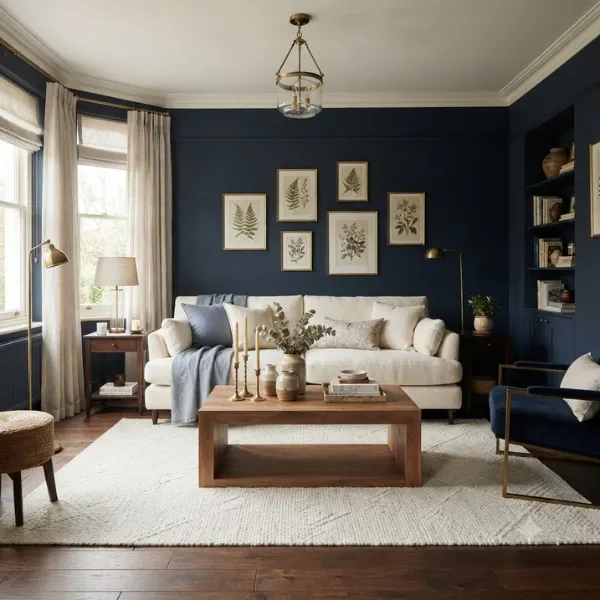
The trick is to balance the navy with a genuinely bright, warm cream or white sofa so the room doesn’t tip into feeling cave-like. Add a white ceiling, and you maintain a sense of openness even within the moody, saturated palette.
Why It Works
Navy blue has enough depth to work alongside dark floors without fighting for attention. The warmth in the dark wood actually softens what could otherwise be a cold, nautical combination, keeping it feeling cozy rather than chilly. Cream upholstery creates the contrast that keeps everything readable and visually balanced.
Best For
Medium-to-large living rooms where the depth of the navy won’t feel overwhelming. Ideal for formal sitting rooms, sophisticated contemporary spaces, and anyone who loves a classic, curated color palette. Also works beautifully with coastal-inspired decor.
Styling Tips
Use a warm white — not a cool stark white — for the ceiling and trim to keep the palette cohesive. Add natural wood accents through a coffee table or shelves to connect the floor to the wall color. A large cream or off-white wool rug with a subtle pattern anchors the seating zone. Finish with brass candlesticks, a linen throw in a soft blue or neutral, and a few botanical prints in brass frames.
5. Herringbone Dark Floor Pattern with Classic Neutral Furniture
The herringbone pattern — where planks are laid at 90-degree angles to create that iconic V-shaped zigzag — is one of the most beautiful and timeless ways to install dark wood floors. It adds a layer of pattern and movement to what could otherwise be a straightforward floor, turning the floor itself into a design feature that every single guest will notice and comment on.
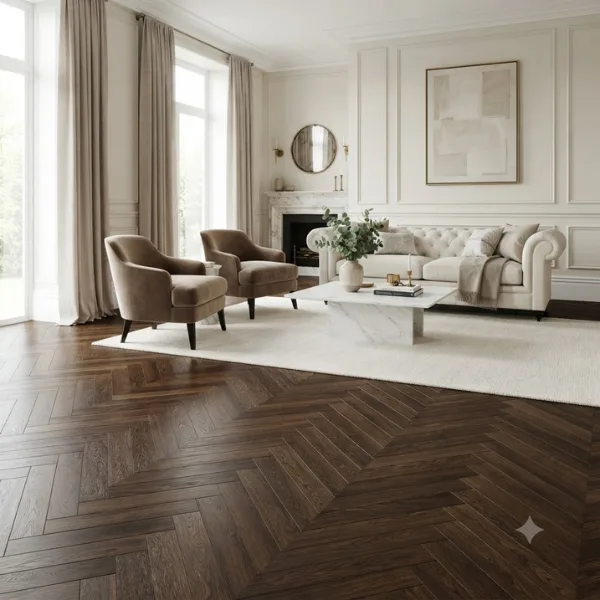
Because the floor is already doing so much visual work, this approach calls for restrained, classic furniture that supports without competing.
Why It Works
Herringbone adds texture and dimension to the floor plane. In a room with simple, neutral furniture, the pattern gives the space all the visual interest it needs without any effort from decor or accessories. It’s architectural detail at its most impactful.
Best For
Traditional, transitional, and classic European-inspired interiors. Beautiful in formal living rooms, studies, and main entertaining spaces. Works in any size room — in smaller rooms, the pattern actually draws the eye across the floor, making the space appear larger.
Styling Tips
Let the floor be the hero. Choose furniture in soft neutrals — cream, warm gray, camel, or soft taupe. A simple Chesterfield sofa in linen, a glass or marble coffee table, and simple panel curtains in a warm white or soft taupe are all you need. Wall art can be slightly more expressive here since the floor is handling the main design moment.
6. Light Wood Furniture Against Dark Floors
One of the most visually interesting approaches to a dark floor living room is the “tonal bridge” method — using light to mid-toned wood furniture that sits between the darkness of the floor and the brightness of the walls. This creates a room where everything is connected tonally but nothing is fighting for attention.
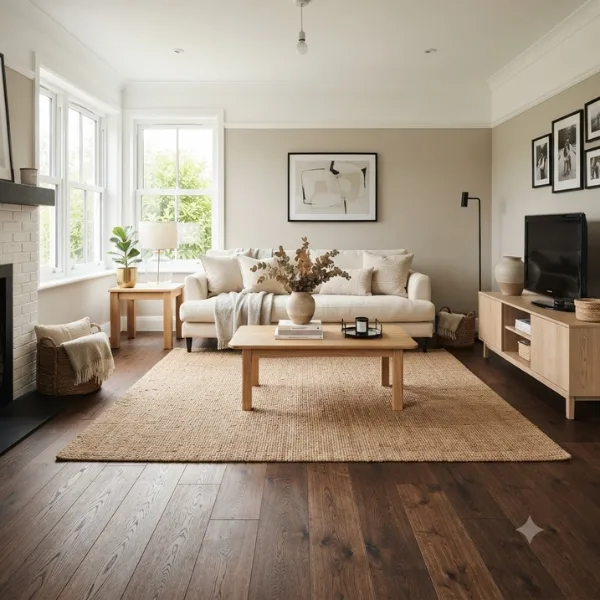
A blonde oak coffee table, light ash console, or natural pine side tables all work beautifully against dark walnut or espresso floors. The contrast is real but gentle, and the effect is warm and layered rather than stark.
Why It Works
The lighter wood furniture picks up the grain and warmth of the dark floor but reflects more light, keeping the room from tipping heavy. It creates visual continuity between floor and furniture without matching — and in interior design, that “almost matching but not quite” approach is almost always more interesting than an exact match.
Best For
Scandinavian, farmhouse, transitional, and contemporary living rooms. Works particularly well in medium to large rooms where the contrast between the two wood tones can breathe. Also a great approach for rooms with open-plan layouts connecting to a kitchen.
Styling Tips
Pair light oak or ash furniture with soft white or warm greige walls. Add linen or cotton upholstery in oatmeal or warm cream for the sofa. A natural jute or sisal rug completes the organic, layered look. Avoid going too matchy — mix the light wood pieces with at least one or two different materials like glass, ceramic, or metal to keep the room from looking like a furniture showroom.
7. Moody Charcoal Walls with a Velvet Sofa
This one is for the person who wants their living room to feel like a scene from a beautiful film — dramatic, intentional, and deeply cozy. Charcoal walls with dark wood floors create what designers call a “color drench” — an enveloping, low-contrast scheme where everything is rich and dark, and the only light comes from carefully layered lamps and the glow of the space itself.
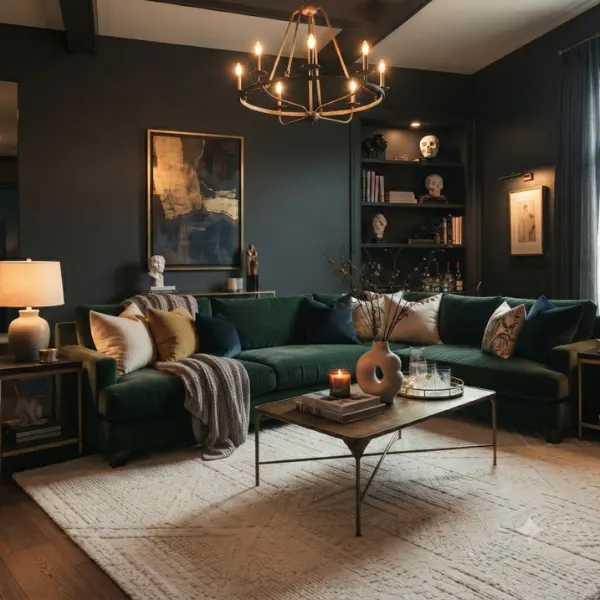
A plush velvet sofa in deep teal, dusty mauve, or forest green against charcoal walls and dark floors is a combination that feels genuinely extraordinary.
Why It Works
When walls and floors are both dark and similar in tone, the room reads as one unified, enveloping environment rather than a series of separate elements. It feels intimate and deliberate. The velvet adds texture and a touch of glamour that keeps the darkness from feeling heavy or depressing.
Best For
Larger living rooms with high ceilings where there’s plenty of visual volume to carry the depth of color. Also stunning in rooms used primarily in the evenings, where artificial lighting can be controlled and layered beautifully.
Styling Tips
Lighting is absolutely critical in this scheme. Layer a statement ceiling light, two or three table lamps with warm-toned shades, and at least one floor lamp. Add metallic accents in brass, gold, or antique copper — they glow against dark backgrounds in a way that nothing else does. A cream or ivory rug provides the one bright contrast element that keeps the room grounded and readable.
8. Sage Green Walls with Natural Linen and Rattan
Sage green has taken the interior design world by storm over the last few years — and when paired with dark wood floors, it creates one of the most serene, grounded, and genuinely beautiful living room palettes available.
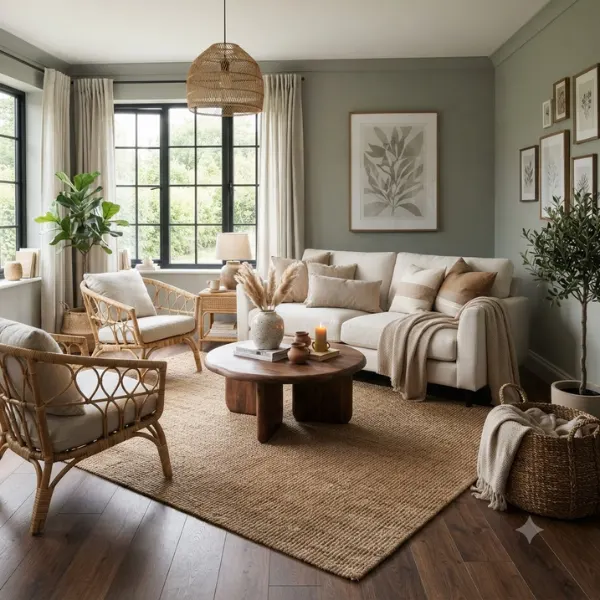
The muted, earthy quality of sage green connects naturally to the warmth of dark wood, making the two feel like they were always meant to go together. It feels organic, calm, and quietly sophisticated.
Why It Works
Sage has enough green in it to feel fresh and alive, but enough gray in it to stay restrained and sophisticated. Against dark wood floors, it creates a natural, earthy harmony that feels like a room that has evolved over time — collected rather than assembled all at once.
Best For
Farmhouse, boho, Scandinavian, and transitional living rooms. Works beautifully in rooms with natural light. Also a perfect choice for a smaller living room where you want the space to feel calm and open without going all-white.
Styling Tips
Choose natural-fiber textiles throughout — linen, cotton, jute, and rattan. A cream or warm white sofa works perfectly, as does natural linen. Add rattan or wicker accent chairs or a side table for texture. A large jute rug grounds the seating zone and ties the natural palette together. Bring in dried flowers, small potted plants, and simple clay pottery in cream or terracotta for the finishing touches.
9. All-White Room with a Single Bold Rug as the Hero
Here’s a concept that’s clean, powerful, and genuinely stunning: strip everything back to white — walls, ceiling, sofa, curtains — against your dark wood floors, and then lay one single, large, bold-patterned rug that does all the decorating for you.
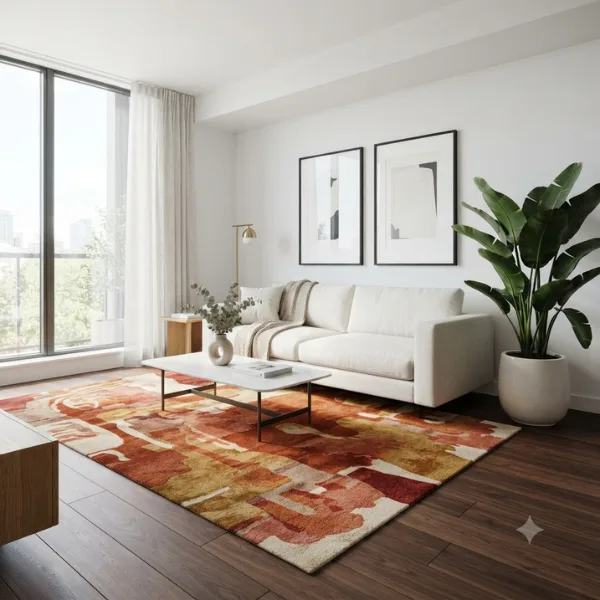
This is a high-contrast, minimal approach where the rug becomes the artwork, the dark floors become the frame, and everything else serves as supporting cast.
Why It Works
The contrast between an all-white room and dark floors is already dramatic. The bold rug adds color, pattern, and personality without adding visual clutter. It defines the seating zone, introduces the color palette, and creates a focal point without requiring any additional decor.
Best For
Contemporary, minimalist, and Scandinavian living rooms. Also excellent for small-to-medium sized rooms where you want maximum impact with minimal visual noise.
Styling Tips
Choose a rug with at least one warm tone — terracotta, rust, mustard, or warm red — to echo the warmth in the dark wood floors and prevent the all-white from feeling cold. Go large — bigger than feels right, ideally with all furniture legs sitting on the rug. A simple marble coffee table, a single large plant, and one or two simple framed prints are all you need around it.
10. Warm Mustard and Ochre Accents with Neutral Walls
Mustard and ochre are two of the most unexpectedly perfect accent colors for dark wood floors — and they’re deeply underused in most living rooms. Warm yellow tones pick up the golden and amber undertones that live inside most dark hardwood, making the floor glow rather than just sitting dark.
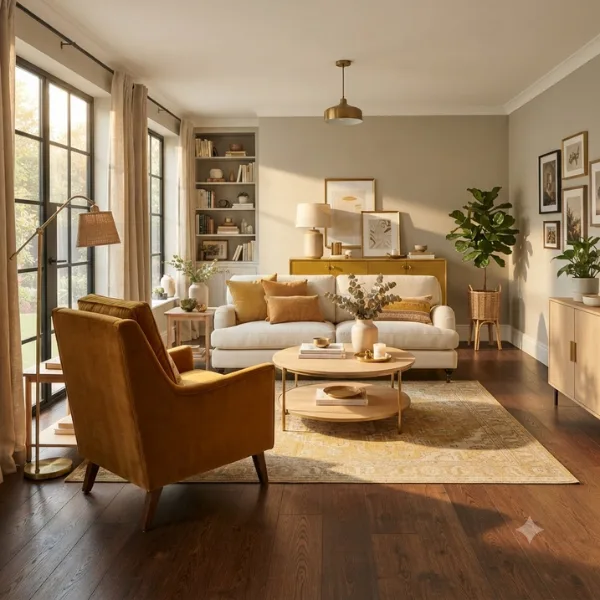
This works best as an accent approach rather than a full wall color — think mustard throw pillows, an ochre armchair, a golden-toned rug, or even a single mustard-painted console — against soft neutral or cream walls.
Why It Works
Yellow and gold tones have a natural visual affinity with dark wood because they share warm undertones. Mustard doesn’t compete with the floor — it actually amplifies it, drawing out the richness and warmth that might otherwise get lost in a predominantly neutral room.
Best For
Transitional, boho, and contemporary living rooms. Especially effective in rooms that receive warm afternoon or evening light. Also a great choice for rooms that feel too gray, cool, or flat and need warmth without a major overhaul.
Styling Tips
Keep walls soft — warm white, greige, or a very soft warm gray. Introduce mustard through one or two throw pillows, a single armchair, or a patterned rug that incorporates the color. Add natural wood furniture in a lighter tone, and finish with brass or gold-toned accessories. Avoid adding too many accent colors — let the mustard be the one statement.
11. Black Walls with Bright White Built-In Shelves
This is the most dramatic pairing on this list — and it is absolutely stunning when executed correctly. Matte black or near-black walls against dark wood floors create a cocooning, intensely moody environment. The key that makes it work rather than suffocate is white built-in shelving on at least one wall, which introduces brightness and creates architectural interest.
This is not a small room approach. This is a living room that wants to be a statement.
Why It Works
Black and dark wood are natural partners — the tones belong together in a way that black and light wood never quite achieves. The white built-ins provide the contrast and the light that prevent the scheme from feeling claustrophobic, and they give the dark floors and walls a crisp, gallery-like frame.
Best For
Large living rooms with high ceilings and good natural light. Contemporary, eclectic, and sophisticated interiors where the homeowner isn’t afraid of commitment. Also beautiful in rooms used primarily for evening entertaining.
Styling Tips
Layer artificial lighting generously — wall sconces, table lamps in every corner, and a statement ceiling fixture are all necessary here. Style the white built-ins with a mix of books, art objects, plants, and ceramics in neutral and warm tones. A large cream or ivory rug grounds the seating area. Keep upholstery light — cream, ivory, or warm gray — so the furniture is clearly visible against the dark walls.
12. Wide-Plank Dark Floors with Mid-Century Modern Furniture
Wide-plank dark floors — planks that are five inches or wider — have a completely different energy from standard-cut dark flooring. They feel more casual, more natural, more lived-in. And mid-century modern furniture — with its clean tapered legs, organic curves, and honest use of materials — is the perfect stylistic partner for them.
Think: a walnut-finished Eames-style chair, a low-profile teak sofa with slim cushions, a simple tulip-shaped coffee table, and a large geometric rug in warm earth tones.
Why It Works
Wide planks make the wood grain more visible, which adds warmth and naturalness to the floor. Mid-century furniture sits low and light, which means the floor remains highly visible and becomes a genuine design feature rather than just a surface you walk on. The combination feels cool, collected, and genuinely timeless.
Best For
Open-plan living spaces, contemporary homes, and anyone who loves clean lines and an uncluttered aesthetic. Works beautifully in both large and medium-sized rooms where the wide planks can be fully appreciated.
Styling Tips
Keep the palette warm — soft whites, warm taupes, camel, and burnt orange. Add a large geometric or abstract rug in earth tones. Pull in a few plants at varying heights — a tall fiddle-leaf fig in the corner and smaller succulents on the coffee table. Hang a single large piece of abstract art on the wall rather than a gallery arrangement — mid-century style rewards restraint.
13. Layered Rugs Over Dark Wood Floors
If you have a large living room with dark floors and you’re not sure where to start, layering rugs is one of the most brilliant and accessible design moves you can make. Start with a large natural-fiber base rug — jute, sisal, or a flat-weave in a neutral tone — and layer a smaller, patterned or colorful rug on top in the seating zone.
The two rugs together create depth, texture, and visual interest while simultaneously defining zones in a large open room and softening the visual weight of the dark floors.
Why It Works
Layered rugs add texture in a way that a single rug never can. The base layer provides warmth and grounds the space; the top layer adds pattern, color, and personality. Together, they make the floor look intentional and styled rather than bare. They also break up what can sometimes feel like an overwhelming amount of dark flooring in a large room.
Best For
Large living rooms, open-plan spaces, and rooms that feel too empty or echo-y. Also a great budget-friendly option — a beautiful base layer of affordable jute topped with a smaller vintage or patterned rug creates a very expensive-looking result for far less money.
Styling Tips
The base rug should be light in color — cream, natural, or pale gray — and large enough that all furniture legs sit on it. The top rug should be smaller (roughly 4×6 or 5×8 over a larger base) and can be bolder in color or pattern. Make sure at least one color in the top rug echoes something in the room — a throw pillow, a piece of artwork, or the sofa fabric.
14. Dark Floors with a Gallery Wall of Large-Scale Art
Your dark wood floors deserve walls that work as hard as they do. A floor-to-ceiling gallery wall of large-scale art pieces — especially on the wall behind the sofa — creates a conversation between the richness of the floor and the visual energy of curated artwork.
This approach works best when the artwork incorporates some warm tones that echo the floor, rather than being entirely cool or stark.
Why It Works
Dark floors already do a lot of visual heavy lifting in a room. A powerful gallery wall gives the eye somewhere equally interesting to travel to when it lifts off the floor — creating a complete, layered visual environment rather than a room where the floor is doing all the work and the walls feel neglected.
Best For
Contemporary, eclectic, and maximalist living rooms. Particularly effective in rooms with high ceilings where a large gallery arrangement can really fill the vertical space. Also a great approach for a room where you have a significant art collection you want to showcase.
Styling Tips
Choose frames in consistent materials — all black, all brass, or all natural wood — even if the artwork itself varies significantly in style. Make sure the largest pieces are at eye level and anchor the arrangement. Keep furniture simple so the art can breathe — a clean-lined sofa in a warm neutral and a simple coffee table is all you need below a statement gallery wall.
15. Dark Floors with Soft Blush and Dusty Rose Accents
Blush and dusty rose are not colors that most people immediately associate with dark wood floors — but that unexpected pairing is exactly what makes it so interesting. Pale blush walls or soft rose upholstery against dark floors creates a room that feels both grounded and delicate at the same time.
This is a sophisticated, grown-up take on a pink room — nothing sugary or childish about it. Think blush plaster walls, a dusty rose linen sofa, warm white trim, and dark floors as the grounding element.
Why It Works
Blush has warm undertones that harmonize with the warmth in most dark wood floors. The pale tone reflects light and keeps the room feeling airy, while the dark floor adds the weight and sophistication that stops it from reading as too sweet or feminine.
Best For
Contemporary, transitional, and Parisian-inspired interiors. Perfect for a smaller living room where a soft wall color is needed to keep the space feeling open and bright. Also a beautiful choice for a formal sitting room that you want to feel elegant and feminine without being overdone.
Styling Tips
Keep wall color in the soft, greyed-down blush family — colors like Farrow & Ball Petal, or a warm dusty rose with gray in it. Use warm white for trim and ceiling. Add natural wood furniture in a lighter tone and brass accessories for warmth. A cream or soft white rug, simple linen curtains, and a few delicate plants complete the palette.
16. Industrial Style: Dark Floors with Exposed Brick and Steel Accents
For a living room with an urban, industrial edge, dark wood floors paired with exposed brick walls and steel-accented furniture create one of the coolest, most authentic-feeling environments in residential design. This is the aesthetic of converted loft apartments and Brooklyn brownstones — raw, real, and genuinely full of character.
The trick is balancing the rawness of the brick and steel with enough soft elements — a generous rug, plush cushions, warm lighting — to keep it from feeling cold or unfinished.
Why It Works
Dark wood floors ground the rawness of exposed brick and steel in warmth. Without the dark floors, an industrial scheme can feel cold and uncomfortable. The wood brings in enough organic warmth to make the whole look feel livable and inviting rather than like a construction site.
Best For
Loft apartments, converted spaces, and homes with existing architectural character like brick walls, steel windows, or exposed ceiling beams. Also works in contemporary homes where the industrial aesthetic is being intentionally introduced.
Styling Tips
Choose large, low-profile furniture in dark leather or charcoal fabric — both work beautifully against the dark floor and brick combination. Add a large natural-fiber rug to soften the ground plane. Industrial-style lighting is essential here — Edison bulb pendants, black-framed ceiling fixtures, or a vintage-style arc floor lamp. A few well-chosen plants, a leather Chesterfield, and simple black-framed art complete the look.
17. Dark Floors in a Small Living Room with Mirrors and Light
Small living rooms with dark floors get a bad reputation — but handled correctly, they can be absolutely beautiful. The key is using mirrors and light strategically to expand the visual space while fully embracing the depth and richness the dark floor brings.
A large floor mirror leaned against one wall, multiple light sources, and glass or reflective accessories all work together to bounce light around the room and prevent any sense of closeness or heaviness.
Why It Works
Mirrors reflect both natural and artificial light, effectively doubling the brightness of a room. In a small room with dark floors, they also reflect the beautiful depth and grain of the floor itself, which actually makes the floor look like an intentional design feature rather than something that’s making the room feel smaller.
Best For
Small apartments, compact townhouse living rooms, and any room under 200 square feet. Also effective in rooms with limited natural light where maximizing brightness is a priority.
Styling Tips
Choose furniture that sits on legs rather than directly on the floor — the visible space underneath furniture creates a sense of lightness and openness. Use a light-colored sofa and chairs. Add two or three different light sources at varying heights. A large round mirror, at least 40 inches, should be on the list as a non-negotiable.
18. Jewel Tone Rug as the Entire Color Story
Sometimes the simplest approach is the most beautiful: dark wood floors, soft neutral walls, simple neutral furniture — and one spectacular jewel-toned rug that sets the entire color tone for the room.
An amethyst purple, deep sapphire blue, ruby red, or emerald green rug against dark floors creates a combination that is rich, layered, and genuinely luxurious. The rug does all the work. Everything else just needs to stay out of its way.
Why It Works
Jewel tones have the depth and saturation to stand alongside dark wood without being overpowered by it. They add dramatic color without requiring painted walls, bold furniture, or complicated styling. It’s a single-item makeover that completely transforms the room.
Best For
Contemporary, traditional, and transitional living rooms that feel flat or generic and need a single statement piece to bring them to life. Also great for rooms where you’re not ready to commit to a bold wall color but want to introduce richness.
Styling Tips
Choose a rug with enough size that all furniture legs sit on it — this creates a defined, cohesive seating zone. Let the rug’s dominant color influence one or two accessories — a throw pillow, a vase, or a single piece of artwork. Keep everything else neutral and restrained so the rug remains the hero.
19. Wainscoting and Paneled Walls with Dark Floors
Wainscoting — the traditional practice of adding wood paneling to the lower half of a wall, typically topped with a chair rail — brings a beautiful, layered, architectural quality to a living room with dark wood floors. When painted in a warm white or soft cream, wainscoted walls create a room that feels genuinely timeless and refined.
This is the kind of detail that separates rooms that look “nice” from rooms that look “designed.”
Why It Works
The horizontal line of wainscoting echoes the horizontal planks of the floor, creating visual rhythm between the floor and the walls. It also adds architectural detail that makes a room feel custom and considered. Against dark wood floors, white wainscoting creates a crisp, elegant contrast that feels formal without being cold.
Best For
Traditional, classic, and transitional living rooms. Particularly effective in older homes, colonial-style houses, and any room where you want to add architectural character without a major structural renovation.
Styling Tips
Paint the wainscoting and upper wall section in slightly different tones — a warm white for the wainscoting and a slightly deeper warm cream or greige for the upper wall — to create subtle layering. Add a warm-toned sofa, simple crown molding along the ceiling, and artwork with traditional or classic frames. A patterned rug in warm neutrals completes the tailored look.
20. Bohemian Layered Look with Plants and Vintage Furniture
Dark wood floors are the perfect canvas for a bohemian, maximalist living room full of plants, layered textiles, and vintage furniture finds. The depth of the dark floor grounds what could otherwise feel chaotic, giving the room a solid, anchored foundation from which all the layering and eclecticism can work.
Think: a vintage rattan sofa with linen cushions, a gallery wall of framed botanical prints and macramé, trailing pothos plants, layered rugs, and candles everywhere.
Why It Works
Dark floors absorb visual complexity rather than adding to it. In a boho room with lots of pattern, texture, and plant life, the dark floor acts as a neutral anchor that lets everything else coexist without the space feeling out of control. It adds the weight and groundedness that a heavily layered room needs.
Best For
Boho, eclectic, and maximalist living rooms. Perfect for creative homeowners who love collected, layered spaces full of personality. Also great for rental apartments where you can’t change the floors — dark rental floors are often a blessing in disguise for this aesthetic.
Styling Tips
Layer at least three rugs of different sizes and patterns. Bring in as many plants as the light will support — a large fig tree in one corner, trailing plants on shelves, and small succulents on the coffee table. Mix furniture from different decades and different origins. Keep the overall palette warm — terracotta, rust, cream, olive, and dark wood — so all the layering stays cohesive.
21. Modern Minimalist: Dark Floors with All White and Black Lines
This is the aesthetic of a contemporary architectural home — pared back, geometric, and deeply intentional. Dark wood floors as the only warm element in an otherwise black-and-white room create a stunning visual tension that feels both modern and surprisingly warm.
The dark floor is the one material that prevents this scheme from feeling cold or clinical. Without it, an all-white-and-black room can feel like a showroom. With dark wood floors underfoot, the same combination feels grounded and human.
Why It Works
White, black, and dark wood are a natural three-tone palette that has perfect tonal balance. The white reflects light and keeps the room open, the black adds graphic definition and contrast, and the dark floor provides warmth and naturalness. Nothing fights for attention — everything contributes.
Best For
Contemporary, minimal, and Scandi-influenced living rooms. Works best in rooms with clean architecture, large windows, and minimal decorative detail. Also a great approach for a small apartment where simplicity is a practical necessity as well as a stylistic choice.
Styling Tips
Choose one hero furniture piece in a bold black-and-white pattern — a graphic rug, a striped sofa, or a bold piece of art — and let everything else be simple and quiet. Add one plant in a white or black ceramic pot for organic warmth. Lighting should be architectural — a clean pendant, a simple arc floor lamp, and no fussy table lamps.
22. Coastal-Inspired Living Room with Dark Floors and Blue Accents
Dark wood floors in a coastal living room might seem counterintuitive — most people imagine pale driftwood and whitewashed floors at the beach. But deep walnut or espresso floors in a coastal room actually ground what can sometimes feel like an overly light, bland aesthetic, giving it real depth and character.
Think: navy and white striped cushions, a whitewashed brick fireplace, cream linen sofas, blue glass accessories, and a sisal rug over dark hardwood floors. It’s coastal with grown-up sophistication.
Why It Works
The warmth of dark wood floors balances the coolness of blue-and-white coastal palettes. It prevents the typical coastal look from feeling washed out or too casual, grounding it in richness and depth. The result is a coastal room that feels elegant and collected rather than like a vacation rental.
Best For
Beach houses, lake homes, coastal-city apartments, and any room where a nautical or water-inspired aesthetic is the goal. Also works beautifully in rooms with large windows that bring in natural light — the blue-and-white palette will shift beautifully with the changing light while the dark floor stays grounded and rich.
Styling Tips
Use navy, white, and natural as your three primary tones. A large sisal or natural-fiber rug in a natural or cream tone grounds the seating area. Add blue accents through throw pillows, glass vases, and a piece of coastal art. Cream linen for the sofa is non-negotiable — it keeps the light and breezy quality while the dark floor provides the weight.
Mistakes to Avoid When Decorating with Dark Wood Floors
These are the mistakes I see over and over again — from first-time homeowners to people who have been decorating for years. Learn these before you spend a single dollar.
Pairing dark floors with cool white walls. This is the most common mistake, and it creates a jarring, disconnected feeling that no amount of accessories can fix. Cool whites have blue or gray undertones that clash with the warm browns and golds in most dark wood floors. Always choose whites with warm undertones — creamy, beige-tinted, or yellow-tinted whites — to create harmony rather than conflict.
Using too many dark elements together. Dark floors plus dark walls plus dark furniture plus dark curtains equals a room that feels like a bunker. Dark floors should be the one dark element in an otherwise balanced room — or they can coexist with dark walls in a very intentional, fully designed moody scheme. Accidentally piling dark elements on top of each other without intention creates a heavy, depressing result.
Choosing a rug that’s too small. This is the single most universal decorating mistake, and it’s especially costly on dark floors. A rug that floats in the center of the room without touching the furniture lines looks like an island stranded in a dark sea. Always go larger — the rug should be big enough that all main furniture legs sit on it, or at minimum the front legs of all pieces.
Ignoring the undertones in the floor. Dark floors are not all the same. Some have warm red or orange undertones (like cherry or red oak). Some have cool gray or ashy undertones (like some stained maple or gray-washed floors). Some are warm brown (like walnut). The colors and materials you pair with your floor need to respond to these specific undertones — not just “dark floors” in general. Ignoring undertones leads to a room that feels slightly off but you can never quite identify why.
Skimping on lighting. Dark floors absorb light. This means you need more light sources in a room with dark floors than you would in a room with light floors. Relying on a single overhead light is not enough — you need layered lighting at multiple heights and from multiple directions. Table lamps, floor lamps, and wall sconces all contribute differently, and you need at least two of these categories working together for any room with dark floors to feel warm and well-lit.
Forgetting contrast. Dark floors need contrast to look their best. The most common version of this mistake is pairing dark floors with furniture in a similar very dark tone — dark leather sofa on dark floors, dark wood coffee table on dark floors, dark curtains. Without contrast elements, the room’s separate elements blur together and the beauty of the floor gets lost.
Choosing high-gloss finish in a high-traffic room. High-gloss dark floors look incredible in photographs but show every single scratch, footprint, scuff, and piece of debris in real life. If you have children, pets, or simply live in your home, a matte or satin finish will look infinitely better day-to-day. Reserve high gloss for formal rooms that see limited foot traffic.
Conclusion
Dark wood floors are one of those design elements that rewards confidence. The homeowners who love them most are the ones who committed fully — who chose the right contrast, layered the lighting, went large on the rug, and selected wall colors that worked with the floor’s undertones rather than against them.
If you’ve been nervous about your dark floors, I hope this post has shown you that the nervousness was completely unnecessary. Those floors are a gift. They ground your furniture, they add richness to every surface they reflect, and they make every room they’re in feel like it was put together by someone who actually thought about it.
Pick the idea that resonates most with your style and your space — and then lean into it fully. The half-committed approach is always the least interesting one. Whether you go crisp white and minimal, deeply moody and dramatic, coastal and breezy, or boho and layered — do it with conviction, and your dark wood floor living room will be the room in your home that everyone always wants to spend time in.
Frequently Asked Questions
What is the best wall color to go with dark wood floors? Warm whites, soft creams, and greige tones consistently produce the most harmonious results. The critical thing is choosing colors with warm — not cool — undertones. Cool grays and blue-toned whites can feel disconnected from the warmth in most dark wood floors. Colors like Sherwin-Williams Alabaster, Benjamin Moore Accessible Beige, and Agreeable Gray all work beautifully. For a bolder choice, navy blue, sage green, and emerald green are all stunning paired with dark floors.
Do dark wood floors make a room look smaller? On their own, dark wood floors do not make a room smaller — it’s the combination of dark floors with dark walls and dark furniture without contrast that creates a heavy, closed-in feeling. Dark floors paired with light walls, a light-colored sofa, a large light rug, and good lighting will feel just as open and airy as light floors in the same room.
What color rug looks best on dark wood floors? Light-colored rugs — ivory, cream, warm white, natural fiber, soft gray, and oatmeal tones — are the most consistently successful choices. They create a visual “island” that reflects light and defines the seating zone beautifully. Jewel-toned rugs in deep sapphire, emerald, or amethyst also look stunning for a bolder approach. Avoid rugs that are very similar in tone to the floor — the contrast is what makes both elements look their best.
What furniture color goes best with dark wood floors? Light to medium-toned furniture — cream, ivory, camel, warm gray, and blush — creates the most elegant contrast with dark floors. Light oak, natural ash, or blonde wood furniture pieces create a beautiful tonal bridge between dark floors and light walls. If you prefer darker furniture, commit to a fully designed moody scheme with enough lighting and contrast accessories to keep the room balanced.
Can I use dark floors in a small living room? Absolutely. The key is to keep walls light, use furniture on legs rather than skirted furniture, go large on the rug, and layer lighting at multiple heights. Mirrors are your best friend in a small room with dark floors — a large floor mirror or statement wall mirror bounces light across the entire space and makes the room feel significantly larger.
How do I keep dark wood floors from showing dust and dirt? Choose a matte or satin finish rather than high-gloss, as high-gloss finishes show every mark and scratch much more visibly. Microfiber mops are far more effective than brooms for daily maintenance — they attract and hold debris rather than pushing it around. A robot vacuum set to run daily is the ultimate solution for busy households. Using a large rug over the highest-traffic areas also significantly reduces the visible accumulation of dust and debris.
What lighting is best for a room with dark wood floors? Layered lighting is essential. You need three levels: ambient lighting from an overhead fixture, task lighting from table lamps and floor lamps, and accent lighting from wall sconces or under-shelf lighting. Warm bulb temperatures — 2700K to 3000K — will highlight the rich, warm tones in your dark floors beautifully. Avoid cool daylight bulbs, which can make warm dark wood look gray and dull.