
23 Grey Flooring Ideas That Will Completely Transform Your Home
Let me be straight with you — grey flooring is not going anywhere. I have been helping people renovate and style their homes for years, and the one question that lands in my inbox almost every single week is this: “Should I go with grey floors?” My answer is always yes — but only if you pick the right grey for your specific space.
Grey is one of those rare floor colors that feels at home in almost every design style you can think of. It works in a bright, sun-filled Scandinavian bedroom. It works in a moody, dramatic loft. It works in a cozy farmhouse kitchen and a spa-like master bathroom. And it does all of this without ever looking out of place.
That is exactly why I put this guide together. Every idea here is genuinely different — different material, different finish, different vibe, and a different room that it works best in. Whether you are doing a full home renovation or just refreshing one room on a tight budget, you will find something here that fits your space perfectly.
23 Grey Flooring Ideas for Every Style and Budget
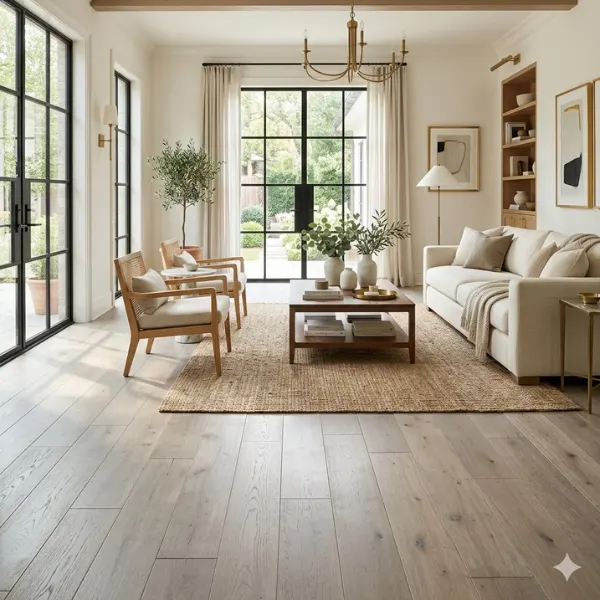
1. Light Grey Hardwood Plank Flooring
If you want a grey floor that still feels warm and inviting — not cold, not clinical — light grey hardwood plank is the one you have been looking for. It gives you that classic, natural wood grain character with a soft modern grey finish layered over it. It works beautifully in almost every room in the house and feels genuinely timeless no matter what furniture you put on top of it.
Why It Works
Light grey hardwood hits the sweet spot between warmth and modernity. The natural wood grain running through every plank stops it from feeling flat or boring — there is texture, depth, and subtle movement across the whole floor. Because the grey tone is light, it bounces natural sunlight around the room rather than absorbing it, which makes even average-sized rooms feel noticeably bigger and airier. It also acts as a true neutral backdrop, meaning you can layer almost any color palette on top of it — warm terracotta accents, cool navy throws, dusty greens — and the floor never fights back. And unlike pure white floors that show every scuff and footprint, light grey is genuinely practical for daily family life.
Best For
Living rooms, dining areas, and main hallways are where this floor really shines. It is also a strong choice for home offices where you want a space that feels professional but still welcoming. It works especially well in rooms that receive a decent amount of natural light — the grey tones shift from cool and crisp in shadow to almost warm and honey-like in direct sun, which gives the room a constantly changing beauty throughout the day.
Styling Tips
Pair with warm white walls (not stark, bright white) and add natural linen or jute rugs to keep the space from reading too cold. Bring in furniture with warm wood tones — walnut side tables, light oak shelving — because that contrast looks absolutely beautiful against light grey floors. Use brass or gold hardware on cabinets and light fixtures to layer in warmth. The one thing to avoid: do not put grey walls, grey furniture, and a grey floor all in the same room. It will feel washed out and flat very quickly.
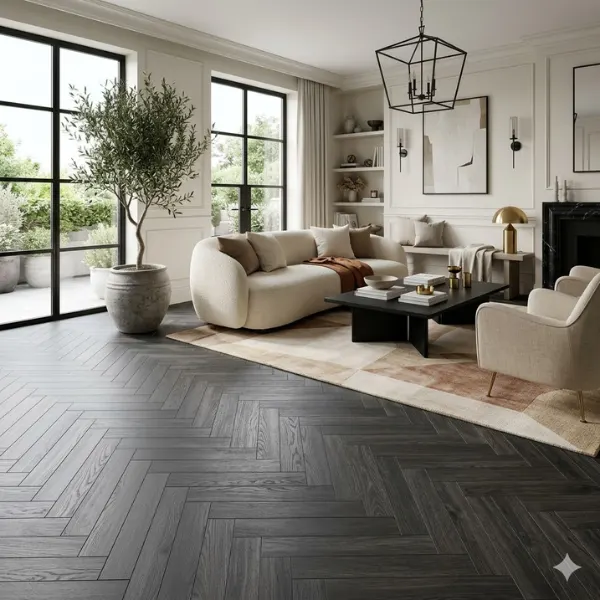
2. Charcoal Herringbone Engineered Wood
Herringbone is one of those patterns that makes a room feel genuinely designed — not just decorated. When you do it in charcoal grey engineered wood, you get this stunning combination of old-world European elegance and sharp, clean modern edge. People walk into a room with this floor and they stop for a second. It is that kind of floor.
Why It Works
The herringbone pattern creates a zigzag visual movement across the floor that draws the eye from one end of the room to the other — it makes the floor itself become part of the design, not just a background surface. Charcoal grey is deep and dramatic without tipping into full black, which would feel heavy and oppressive in most spaces. Engineered wood is actually the smarter choice over solid hardwood for this particular pattern — it is more dimensionally stable, handles humidity changes far better, and is significantly easier to cut and install correctly at the angles herringbone requires. The combination of deep color and intricate pattern delivers the kind of richness that luxury hotels spend a fortune to achieve.
Best For
This is perfect for entryways, dining rooms, and home libraries. It is a showstopper statement floor for rooms where you want the very first thing someone notices when they walk in to be the floor itself. It is also genuinely beautiful in a master bedroom if you love a moody, cocoon-like sleeping atmosphere.
Styling Tips
Let this floor be the star of the room — resist the urge to compete with it. Keep walls light, think soft off-whites, warm beiges, or a rich velvet green for drama. Minimalist furniture in natural linen or bouclé fabric looks incredible against this floor. Anchor the seating area with a large geometric rug in cream or rust tones. Black iron light fixtures are the perfect hardware match here — they echo the depth of the charcoal without copying it exactly.
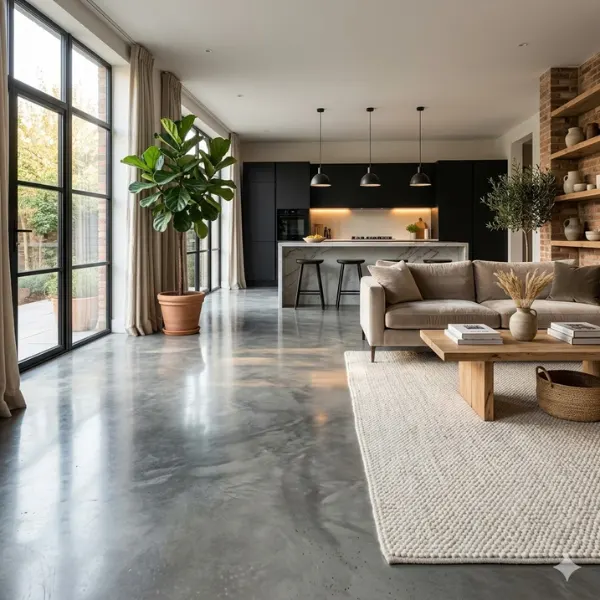
3. Polished Grey Concrete Floors
Polished concrete used to mean garage floors and warehouse spaces. Not anymore. In 2026, polished grey concrete is one of the most sought-after flooring finishes in modern homes — and once you understand what it actually looks and feels like in person, it is very hard not to fall for it completely.
Why It Works
Concrete has a natural texture that is genuinely unique — it is never perfectly uniform across the surface, which means every floor you pour is one of a kind. The polished finish catches light in a way that makes it almost luminous, and it reads differently in morning light versus warm evening light, giving the room a living, shifting quality that most other floors simply cannot offer. It is also one of the most durable flooring options in existence — properly sealed concrete can last for decades with minimal upkeep and it is completely waterproof once sealed correctly.
Best For
Open-plan living spaces, loft apartments, ground-floor extensions, and modern kitchens are all natural homes for polished concrete. It is also one of the best flooring options for underfloor heating systems — concrete is an excellent conductor of radiant heat and holds onto warmth beautifully once it reaches temperature.
Styling Tips
The key with concrete is to balance its inherent hardness with soft, warm textiles everywhere else in the room. Oversized area rugs, velvet sofas, and linen floor-length curtains all help to make the space feel livable rather than cold. Exposed steel elements, raw wood shelving, and industrial pendant lights are natural companions. Add large plants — fiddle leaf figs, olive trees, large monsteras — to bring life and softness into the space. Use warm-toned lighting temperatures in the evening, because cool overhead LEDs will make grey concrete feel like a cold storage room.
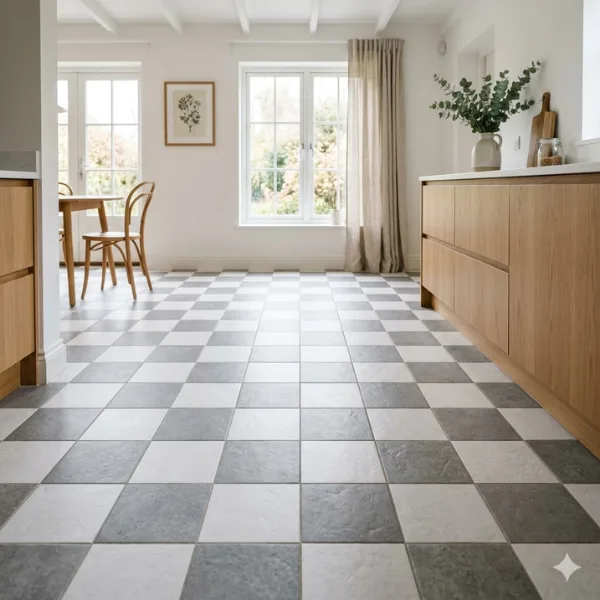
4. Grey and White Checkerboard Tile
The checkerboard pattern is officially back — and doing it in light grey and white rather than the classic black and white makes it feel fresh, modern, and surprisingly soft. It is bold enough to be a statement, but neutral enough to sit comfortably alongside almost any decorating style you can imagine.
Why It Works
Using grey instead of black softens the entire visual impact of the checkerboard dramatically. From across a room, it reads as graphic and interesting. Up close, it is actually quite gentle and easy to live with. The diagonal grid creates the optical illusion of a larger floor area by drawing the eye outward across the room in multiple directions simultaneously. And this pattern has genuinely never gone out of style — variations of checkerboard have been installed in European homes for centuries, which is about as strong an argument for longevity as you can get.
Best For
This is a natural fit for kitchens, bathrooms, entryways, and utility rooms. It works exceptionally well in smaller spaces where you want the floor to add personality and life without making the room feel cramped or smaller. Sunrooms, conservatories, and boot rooms are also beautiful applications for this pattern.
Styling Tips
Go with 6×6 inch or 8×8 inch tiles in smaller rooms and scale up to 12×12 in larger spaces — getting the scale right relative to the room makes a big difference. Keep everything else in the room simple: white walls, minimal clutter, and natural wood accents let the floor breathe and do its job. A single botanical print or a vintage-style round mirror on the wall elevates the whole look without competing with the floor pattern.
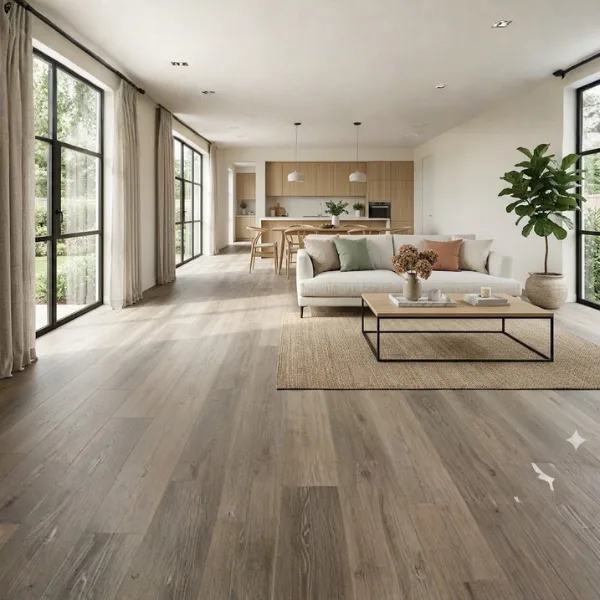
5. Greige Wide-Plank Luxury Vinyl Plank (LVP)
Greige — that perfect blend of grey and beige — is genuinely having a major moment in flooring, and for good reason. In wide-plank LVP format, it delivers the warm, inviting feeling of a natural wood floor with all the practical benefits of completely waterproof vinyl. It is the ultimate crowd-pleaser for families who do not want to choose between style and durability.
Why It Works
Greige is the most flattering floor color for the majority of home interiors, full stop. It bridges the gap between cool grey — which can read as clinical and cold — and warm beige, which can feel dated. The result is a tone that sits in a sweet spot that complements both warm and cool furniture tones at the same time, which is rare. Wide planks in the 6 to 9 inch range make rooms feel expansive and genuinely luxurious. And because it is LVP, it is 100% waterproof, scratch-resistant, and perfectly suited to homes with kids, dogs, and heavy foot traffic — without ever looking like a practical compromise.
Best For
This is genuinely the most universally applicable option on this entire list — it works in literally any room in the house. It is especially strong in kitchens, open living areas, and bathrooms where durability is non-negotiable. If you are renovating a rental property or a home you plan to sell, greige LVP appeals to the widest possible range of buyers and is a very smart investment.
Styling Tips
Pair with soft white or warm cream walls for a look that genuinely belongs in a magazine. Earthy accent colors — terracotta, sage green, dusty rose, warm mustard — all look spectacular on a greige floor. Use large area rugs in natural textures like sisal, jute, or chunky wool to add warmth underfoot and define different zones within a room. Keep furniture legs visible whenever possible — thin tapered wood legs or slim black metal legs look incredible against wide-plank floors.
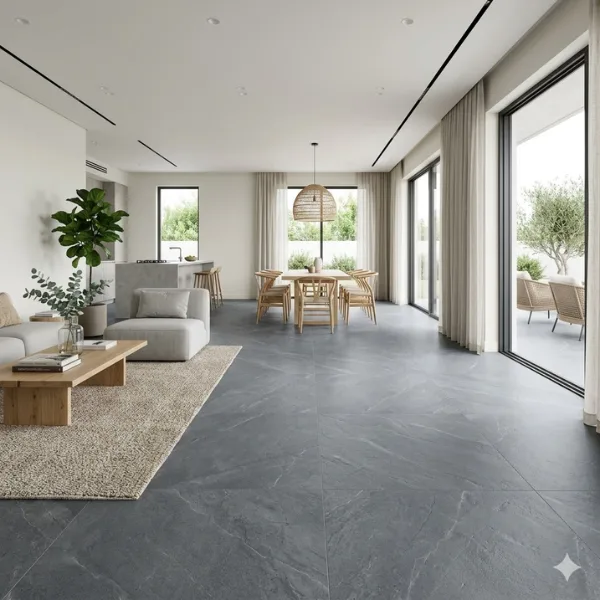
6. Slate Grey Large-Format Porcelain Tile
Large-format tiles are one of the most powerful tools in interior design for making a space feel bigger, cleaner, and more sophisticated — and in a slate grey finish, they deliver a cool, contemporary result that genuinely looks expensive without always costing a fortune.
Why It Works
The magic of large-format tiles — anything 24×24 inches and above — is in the minimal grout lines. Fewer grout lines mean a more continuous, uninterrupted visual surface that reads as larger and cleaner than the same floor done in small tiles. Slate grey is a sophisticated neutral that has a natural, textured quality to it, unlike flat painted grey finishes. The slight surface variation in a quality slate-look porcelain catches light at different angles and adds a visual depth that makes a room feel genuinely designed rather than just put together.
Best For
This tile is at its very best in open-plan living and dining areas, large bathrooms, and kitchen extensions. It is particularly powerful in rooms that flow out to an outdoor terrace or patio — extending the same tile continuously through sliding doors into an outdoor space creates that seamless indoor-outdoor connection that everybody loves right now.
Styling Tips
Match your grout color very closely to the tile color to achieve the seamless, spa-like effect. Install underfloor heating under tile — it is one of the best conductors available and completely eliminates the cold-feet complaint that puts some people off hard floors. Lay a thick, generously sized rug to define the seating zone within the open plan. Pair with natural materials: rattan pendant lights, a concrete-look kitchen island, and linen window treatments all work beautifully alongside slate grey porcelain.
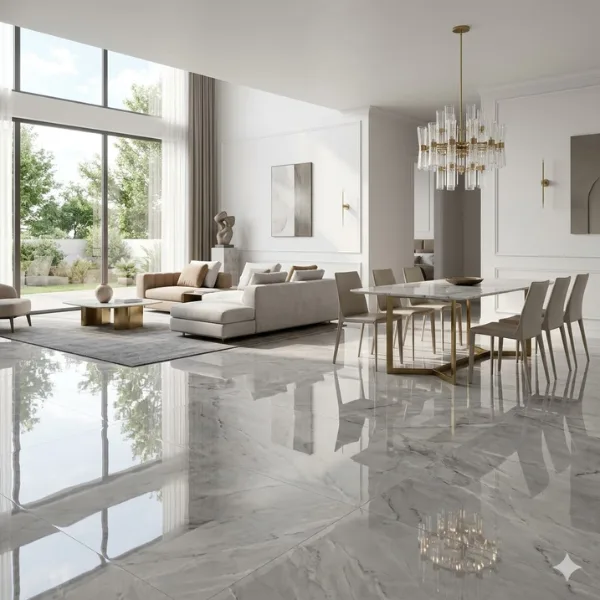
7. Grey Marble-Look High Gloss Porcelain
You want the look of real marble without the maintenance? This is your answer. Grey marble-look porcelain in a high-gloss finish delivers the same dramatic veining, the same luminous surface quality, and the same “I cannot believe how beautiful this floor is” reaction — at a fraction of the cost and with a fraction of the upkeep that real marble demands.
Why It Works
Modern porcelain printing technology has become so advanced that these tiles are genuinely almost indistinguishable from real marble at first glance. The high-gloss finish reflects light bouncing off it and makes the entire room feel taller and more open. Grey marble tones — soft whites with grey veining — are the most popular marble palette because they complement both warm and cool interiors without clashing. And unlike real marble, porcelain is non-porous, highly resistant to staining, and requires zero sealing. It is a genuinely smart luxury choice.
Best For
Master bathrooms, entryways, and kitchen areas with open-plan living are where this tile makes the biggest impact. It is also a showstopper in formal living areas and dining rooms where you want an unmistakably luxurious feel without the real marble price tag or care requirements. It performs particularly well in bright, sun-filled rooms where the glossy surface can work its reflective magic.
Styling Tips
Keep the rest of the room’s palette very simple to let the marble-look floor do the talking. White walls, soft grey cabinetry, and warm brass fixtures is a classically beautiful combination that never fails. A statement chandelier or an architectural pendant light pairs perfectly with a gloss floor — they work together to bounce light around the room. Use grey-toned grout that blends into the tile rather than contrasting with it, which keeps the overall look luxurious and cohesive.
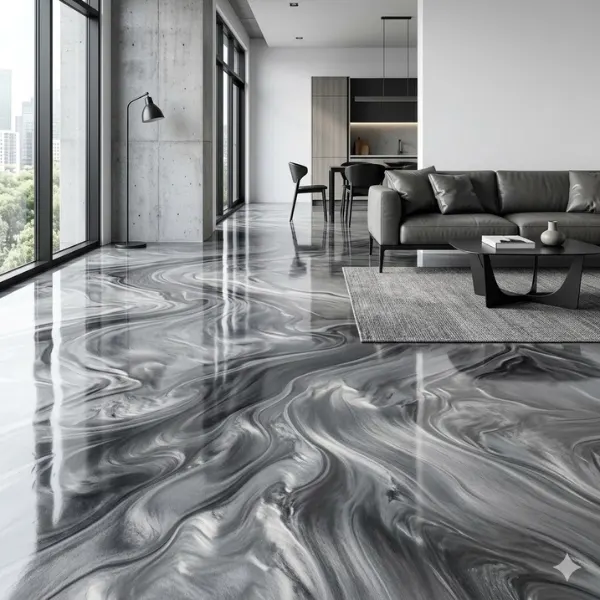
8. Swirling Grey Metallic Epoxy Floors
If you have ever wanted a floor that looks like liquid marble was poured and then frozen in time, this is it. Grey metallic epoxy is a system where grey pigments and metallic flakes are applied and then manually manipulated while still wet to create completely unique swirling patterns. No two floors are ever identical — yours is a one-of-a-kind piece.
Why It Works
The shimmering, fluid appearance of metallic epoxy is unlike anything else available in flooring — it sits somewhere between a floor and an art installation. When light hits the metallic particles embedded in the surface, the floor seems to shift and move depending on where you are standing, giving the room a quality that is almost difficult to describe until you see it in person. Grey keeps the effect sophisticated and livable rather than over-the-top flashy. And despite its dramatic appearance, properly applied epoxy is one of the most durable flooring systems available — it can last 20 or more years in high-traffic areas.
Best For
Garages, home gyms, basements, studios, and commercial-style home spaces are where epoxy started, and it still looks incredible in all of them. It is also increasingly popular in modern kitchens and bathroom wet rooms because of the seamless, completely waterproof surface it creates. In an architecturally striking open-plan home, it makes a bold and genuinely unforgettable living room floor.
Styling Tips
Go completely minimal everywhere else in the room — this floor is the design feature and it needs space to breathe. Pair with matte black or dark charcoal walls for a luxurious, immersive atmosphere. Industrial furniture in raw metal and leather works brilliantly. Alternatively, surround it with pure white walls and let the floor function as an unexpected large-scale art piece. Always hire a professional for installation — the swirling technique takes real experience and practice to execute correctly.
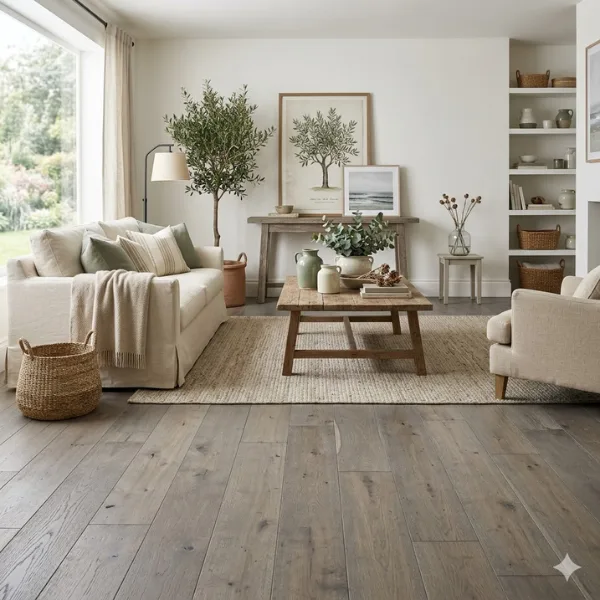
9. Grey Stained Oak Wood Flooring
Grey staining oak gives you something that sits beautifully between purely grey and purely natural wood. It is a soft grey wash over the wood surface, and because the wood grain and natural knots show through the stain rather than being covered by it, every single board looks like it has decades of character already built in. It is rustic and modern at the exact same time.
Why It Works
The staining process does not hide the wood grain — it actually enhances it. Grey pigment sinks into the wood differently depending on the density and pattern of the grain, which creates natural variation and depth across the floor that looks completely authentic. Oak in particular has a bold, beautiful grain structure that responds to grey staining especially well. The technique gives you the warmth and authenticity of a real hardwood floor combined with a contemporary, neutral palette that modern interiors need.
Best For
Farmhouse-style homes, Scandinavian interiors, and coastal properties where you want natural materials with a modern sensibility are the best homes for this floor. It works beautifully in bedrooms and living rooms where texture and a sense of warmth are the priorities over sleek minimalism.
Styling Tips
Lean into the rustic character of this floor with linen slipcovers, vintage pottery, woven baskets, and simple botanical prints. Mix old and new pieces deliberately — pair a beautiful antique chest with a modern arc lamp for that curated, collected feel. Do not over-polish the styling; the beauty of grey stained oak is in its relaxed, imperfect quality. Use matte wall paints in creams, whites, or soft sage green to complement the natural grey tones without competing with them.
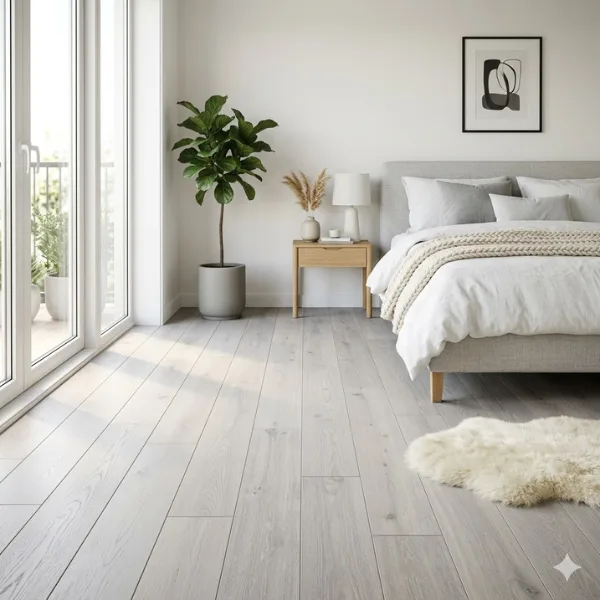
10. Light Grey Scandinavian Plank Flooring
If your goal for a room is that it should feel like a long, slow exhale — calm, clean, bright, and effortlessly put together — Scandinavian-style light grey plank flooring is exactly the floor you are looking for. It sits somewhere between whitewashed and definitely grey, and the effect in a well-lit room is genuinely beautiful.
Why It Works
Scandinavian design was built around bringing maximum light into dark northern climates, and light grey floors are the foundation of that entire philosophy. The pale tone reflects natural light rather than absorbing it, which makes rooms feel measurably brighter at every point in the day. Long, narrow planks laid lengthwise along a room emphasize depth and make spaces feel longer and more generous than they actually are. The simplicity is the strength — it creates an almost empty canvas that allows furniture, artwork, and natural elements to really stand out without any competition from the floor itself.
Best For
Bedrooms, home offices, nurseries, and small apartments where maximizing the feeling of light and openness is the primary goal. This floor is particularly powerful in north-facing rooms that do not receive much direct sunlight — the light grey floor compensates by reflecting whatever light is available and distributing it much more effectively than a darker floor ever could.
Styling Tips
Keep the entire palette almost entirely neutral — whites, creams, soft greys, and light natural woods. Bring warmth through texture rather than color: chunky knit throws, sheepskin rugs, linen cushions, and beeswax candles all add a cozy quality without disrupting the calm palette. A single large statement plant — a big monstera or a well-shaped fiddle leaf fig — adds life and drama without breaking the clean, simple scheme. Avoid dark or heavy furniture pieces against this floor; light blonde wood and natural rattan keep the Scandinavian spirit intact.
11. Dark Grey Concrete-Look Rectified Tile
Rectified tiles are precision-cut to exact dimensions, which allows them to be installed with razor-thin grout lines — sometimes as narrow as 1.5mm. In a dark grey concrete-look finish, this creates a floor that looks genuinely like polished concrete from a distance but is actually far more practical, consistent, and affordable to install and maintain.
Why It Works
Those ultra-thin grout lines are where the magic happens. They make the floor look almost seamlessly continuous from any distance, delivering the clean monolithic look of poured concrete without any of the drawbacks — no cracking risk, no ongoing sealing requirements, no difficult repairs if a section is damaged. Dark grey grounds a room in a way that lighter floors cannot — it makes ceilings feel higher by contrast and anchors furniture groupings with real visual confidence. The matte or semi-matte finish is practical too: it hides small scratches, footprints, and surface dust far better than any gloss alternative.
Best For
Modern and contemporary homes, open-plan kitchen-diner layouts, home extensions, and ground-floor bathroom renovations are all ideal applications. This tile is especially effective in rooms with high ceilings where the dark floor adds balance and weight. Basement conversions with good artificial lighting are also an excellent use for this tile.
Styling Tips
Balance the dark floor with genuinely light walls — soft white or pale warm grey paint works beautifully here. Introduce warmth through wood accents: open shelving in blonde oak, solid wooden dining chairs, and butcher block countertops all prevent the space from feeling cold or harsh. Layer with thick wool rugs and warm, layered lighting — pendants, floor lamps, and candles — to make the room feel inviting rather than austere. Black steel-framed windows and doors are a natural architectural partner for dark grey rectified tile.
12. Grey Herringbone Ceramic Tile
Herringbone is not just for wood floors. When you lay grey ceramic tiles in a herringbone pattern, you get something that feels simultaneously classic and completely fresh — it has the visual boldness of a geometric design with all the practical durability of ceramic tile in a wet or high-traffic area.
Why It Works
The herringbone pattern in tile format creates a visual richness that far exceeds what it costs to achieve. Grey ceramic tile is available across an enormous range of finishes — matte, glazed, textured, brushed — giving you real control over the final mood and finish of the floor. Smaller tiles in a 2×4 inch or 3×6 inch format laid in herringbone create a tight, intricate surface that looks incredibly detailed and carefully considered. It is one of those floors that rewards close attention without ever feeling overwhelming.
Best For
Bathrooms, kitchens, entryways, and laundry rooms all benefit enormously from grey herringbone ceramic tile. It transforms utility spaces into rooms you are genuinely proud of and happy to show people. In narrow hallways especially, the diagonal movement of the herringbone pattern optically widens the space in a way that a straight-laid floor never could.
Styling Tips
Choose a lighter grey in smaller bathrooms to keep the space feeling open and airy. In kitchens, consider extending the same grey herringbone up the walls as a backsplash — the seamless connection between floor and wall is a beautiful, cohesive look. Pair with matte black taps, fixtures, and hardware for a sharp contemporary contrast that pops beautifully against grey. White grout makes the herringbone pattern stand out clearly and dramatically; grey grout softens the whole effect into a more tonal, subtle look — both are beautiful and it purely comes down to personal preference.
13. Grey Wood-Look LVP for Open-Concept Layouts
One of the biggest design challenges in open-plan homes is visual continuity — when your living area, kitchen, and dining space all flow together without walls between them, using the same flooring throughout the whole area unifies everything and makes the space feel intentional. Grey wood-look LVP is the ideal choice for exactly this scenario.
Why It Works
Running a single flooring material through an entire open-plan space makes it feel deliberately designed and significantly larger than it actually is. Grey wood-look LVP achieves this beautifully because the plank format creates a directional flow across the whole space — run the planks lengthwise from the front to the back of the room and the floor plan visually stretches out. The wood grain pattern adds enough texture to keep a large expanse of floor interesting without ever becoming distracting or overwhelming to look at.
Best For
Open-plan kitchen-dining-living combinations, large family rooms, and any home where you want the floor to be the unifying element that ties multiple zones together seamlessly. It is also the practical first choice for families with young children and pets where waterproofing and scratch resistance are just as important as how the floor looks.
Styling Tips
Use area rugs strategically to define different functional zones within the open plan — a large rug anchoring the sofa and coffee table, another under the dining table. This creates distinct, comfortable sub-spaces within the open layout while the continuous floor keeps the whole area visually connected. Vary your furniture styles and materials from zone to zone to add interest and personality, but maintain a consistent color palette across the whole space to respect and honor the unity that the floor is working hard to create.
14. Grey Stone Flooring Paired with Exposed Brick
On paper, this combination sounds like it should not work — cold, smooth grey stone alongside rough, warm rustic brick. In practice, it is one of the most character-rich and genuinely compelling looks in this entire guide. Large-format grey stone tiles paired with an exposed brick feature wall is a combination that suits both very contemporary and very traditional spaces equally well.
Why It Works
The contrast is entirely the point. Grey stone is cool, smooth, and modern. Exposed brick is warm, rough-textured, and historical. Together they create a visual tension that feels dynamic, layered, and full of personality. The grey floor grounds the space and prevents the brick from making the room feel too dark or heavy on its own. This combination has deep roots in converted warehouse and loft-style spaces, which is exactly why it reads simultaneously as edgy and effortlessly stylish.
Best For
Period homes, converted barn or warehouse spaces, basement conversions, and ground-floor extensions where original or added brick walls are a feature. It is also a beautiful choice for a kitchen-diner in a traditional townhouse or terraced house that you want to give a sharp, contemporary urban edge.
Styling Tips
Let these two powerful textures lead the design and resist the urge to add too much else. Industrial furniture in raw steel, aged leather, and dark wood is the natural companion for this pairing. Edison bulb pendant lights add warmth and complete the industrial narrative. Introduce a large neutral-toned area rug to soften the hard surfaces underfoot. A few well-placed large plants bring the final touch of life and softness to what would otherwise be a very hard-surfaced room.
15. Wall-to-Floor Seamless Grey Tile (Bathroom)
Running the exact same grey tile from the floor all the way up the walls — no threshold, no break, no change in material — creates a cocoon-like, boutique-hotel quality in a bathroom that is completely transformative. Of all the flooring ideas on this list, this is the one that generates the most dramatic reaction for the investment it requires.
Why It Works
When a single tile covers both the floor and the walls in one uninterrupted run, the eye reads the whole room as continuous and cohesive. There is no visual interruption, no competing material, no color clash — just one calm, enveloping surface. This creates a sense of quiet and retreat that most bathrooms simply cannot achieve with a standard floor-and-wall combination. Grey is the perfect color for this treatment because it is inherently calming and spa-like, and it conceals water marks and soap residue far better than white tile would. It also photographs beautifully, which is a genuine bonus.
Best For
Master bathrooms, ensuite shower rooms, and wet rooms where a boutique hotel atmosphere is the goal. It works beautifully even in smaller bathrooms because the seamless, continuous material makes the room read as larger than its footprint actually suggests.
Styling Tips
Introduce warmth through accessories rather than materials — wooden bath trays, terracotta soap dishes, warm linen towels, and a single small potted plant are all that is needed. A frameless glass shower screen is essential here because it preserves the seamless visual flow. Matte black or brushed brass fixtures look extraordinary against grey tile — both finishes work and both are beautiful. If the bathroom dimensions allow it, a freestanding bath in white adds a sculptural focal point that contrasts beautifully with the grey envelope surrounding it.
16. Reclaimed-Look Grey Vinyl with Aged Texture
Genuine reclaimed wood flooring has a charm that is genuinely hard to replicate — the knots, the nail holes, the tonal variation across boards — but it is expensive and difficult to source in consistent quality. Reclaimed-look grey vinyl replicates every bit of that character at a fraction of the cost, with the added practical benefit of being completely waterproof throughout.
Why It Works
Modern embossed-in-register vinyl technology creates a physical surface texture that aligns perfectly with the printed wood grain pattern underneath — so what you feel underfoot matches exactly what your eyes are seeing. This is what makes modern premium vinyl look so convincingly authentic. Grey reclaimed-look vinyl reads as aged, full of character, and genuinely interesting. The variation built into the plank print repeat ensures no two adjacent boards look identical, which prevents the floor from looking repetitive or mass-produced even across large areas.
Best For
Farmhouse kitchens, coastal living rooms, rustic-style bedrooms, and any renovation where you want personality and character without a premium budget. It is also a very smart choice for rental properties and investment properties where durability is essential but the aesthetic still needs to attract quality tenants and command good rent.
Styling Tips
Lean fully into the rustic direction — shiplap-style wall cladding, open shelving with collected ceramics, vintage-style pendant lights, and thoughtfully placed antiques all play beautifully against this floor. Avoid very sleek, minimalist furniture as it tends to clash with the reclaimed aesthetic and creates an awkward visual mismatch. Layering multiple jute rugs and woven storage baskets throughout the space completes the look and adds to that warm, collected, lived-in quality.
17. Grey Carpet Flooring for Bedrooms
Grey carpet in a bedroom is one of life’s genuinely underrated pleasures. The moment you step out of bed barefoot onto soft, warm carpet — instead of cold hard flooring — is something that hard surfaces simply cannot replicate, no matter how beautiful they look. And in grey, carpet is both genuinely beautiful and incredibly practical for everyday bedroom life.
Why It Works
Carpet is the ultimate bedroom flooring because it addresses every single thing you need in a sleeping space: warmth, softness, quietness, and visual calm — all at once. Grey carpet does not show footprints, pet hair, or small bits of fluff anywhere near as clearly as white or cream carpet, making it a genuinely practical choice that does not require constant vacuuming to look presentable. In a bedroom, grey carpet acts as a soft landing pad that makes the whole room feel padded, quiet, and sanctuary-like. Its sound absorption properties also make a real difference if you live in an apartment building or have active children in nearby rooms.
Best For
Master bedrooms, guest bedrooms, nurseries, and children’s rooms are the most natural applications. Grey carpet also works beautifully in a basement living room or family room where warmth and acoustic comfort are priorities over easy cleaning. Any space where bare feet and comfort matter more than wipe-clean practicality is a strong candidate for grey carpet.
Styling Tips
Choose solution-dyed nylon or a wool blend for the best combination of stain resistance, durability, and genuine softness underfoot. Mid-grey in a cut pile — the smooth, velvety surface type — looks the most luxurious and photographs the most beautifully. Place a large textured rug on top beside the bed for an extra visual layer and an even softer landing spot in the morning. Keep bedding and soft furnishings in gentle, tonal colors — dusty blue, soft blush pink, warm cream, and sage green all look absolutely beautiful layered against a grey carpet.
18. Grey Terrazzo Tile Flooring
Terrazzo is one of the oldest composite flooring materials in the world — it has been installed in Venetian palaces and grand European buildings for centuries. But in 2026 it is having a genuine, full-scale renaissance, and grey terrazzo with its characteristic speckled pattern of marble, granite, glass, or shell chips embedded in a grey cement matrix sits at the centre of that revival.
Why It Works
Terrazzo has a visual complexity that genuinely rewards time spent looking at it. From a distance it reads as a sophisticated grey floor with subtle surface texture. Up close, you can see the individual chips of different materials catching light in slightly different ways, creating a quietly dazzling effect. Grey as the base matrix is particularly effective because it lets the chips — which might be white, black, gold, or even pale pink — stand out with real clarity. No two terrazzo floors are ever identical, giving your home a floor that is completely unique to it. Pre-cast terrazzo tiles have also made this look accessible and DIY-installable, which was not the case even a decade ago.
Best For
Bathrooms, entryways, kitchens, and any high-traffic space where you want a floor that doubles as a design statement. Terrazzo is widely used in commercial spaces because of its exceptional durability, and that same durability translates very well into high-traffic domestic areas like hallways and family kitchens.
Styling Tips
Let the floor be the clear talking point and keep your furniture and decor relatively restrained. Mid-century modern furniture is a natural, historically connected companion to terrazzo — the design periods overlap and it genuinely shows. Pair with rich, saturated accent colors: emerald green, cobalt blue, and warm terracotta all look incredible alongside grey terrazzo. Brass and gold hardware — cabinet handles, tap fittings, light switches — ties the whole look together with warmth and a touch of glamour.
19. Smoky Grey Bamboo Flooring
Smoky grey bamboo is one of the most sustainable grey flooring options available, and it happens to be genuinely beautiful on top of that. Strand-woven bamboo treated with a smoky grey stain has a tight, fine grain structure that looks exotic and refined — distinctly different from standard wood floors — while being harder than most hardwood species.
Why It Works
Strand-woven bamboo is created by shredding raw bamboo fibers and compressing them under extreme heat and pressure, producing a flooring material that is actually harder and more dent-resistant than oak or hickory. The smoky grey finish penetrates the bamboo fibers in a way that highlights the fine, tight grain texture and gives the surface an almost brushed, satiny appearance. It is also genuinely eco-friendly in a meaningful sense — bamboo regenerates in just 3 to 5 years compared to the decades required for hardwood trees to reach harvestable size.
Best For
Eco-conscious homeowners, Japandi-style interiors (the Japanese-Scandinavian design hybrid that has been gaining momentum for the past several years), minimalist homes, and high-traffic areas where you need a genuinely durable floor. It works beautifully across living rooms, home offices, and bedrooms.
Styling Tips
Honor the natural and sustainable quality of the material by pairing it with other natural companions — raw linen, rattan furniture, terracotta ceramics, and hand-thrown pottery all feel at home alongside smoky grey bamboo. A Japandi-inspired palette of warm white, soft grey, charcoal, and muted sage green complements this floor perfectly. Keep the space uncluttered and give the floor room to breathe — smoky grey bamboo looks most beautiful in restrained, considered interiors where each piece has been carefully chosen.
20. Grey Encaustic Cement Tile with Pattern
Encaustic cement tiles are hand-made, individually poured in molds, and finished with pigmented cement patterns that go all the way through the tile body rather than sitting as a glaze on top. This means the pattern never chips off or fades over time. Grey and white encaustic tiles with geometric or floral patterns are one of the most artisanal and beautiful flooring statements you can make anywhere in your home.
Why It Works
The handmade quality of encaustic tiles produces slight variations in color and pattern from tile to tile — and rather than being a defect, this adds extraordinary authenticity and depth to the finished floor. Grey and white pattern combinations — geometric diamonds, Moroccan stars, arabesque shapes — are sophisticated enough to work in a formal space but relaxed enough for a kitchen or bathroom. Because the pattern goes all the way through the tile rather than sitting as a surface print, it develops a beautiful natural patina over years of use that makes it look more considered and authentic over time, not less.
Best For
Entryways, bathrooms, kitchens, and any space where you want a floor that feels genuinely designed rather than simply selected from a showroom. Moroccan and Spanish-influenced interiors are natural homes for encaustic tile, as are eclectic, bohemian, and globally inspired spaces.
Styling Tips
Always seal encaustic tiles before grouting and again after installation to protect the porous cement surface from staining. The floor carries enough visual weight on its own — keep walls and most furnishings simple, predominantly in white or warm cream tones. Natural linen, rattan, and hand-woven textiles complement the artisanal quality of the tile beautifully and feel consistent with its handmade origins. Add a single piece of strong, colorful art somewhere in the room for a finished, traveled, collected feel.
21. Industrial Dark Grey Polished Concrete Loft Floor
This is different from standard polished concrete. This is specifically intended for loft-style and architecturally ambitious spaces where the floor is part of the building’s own design language — not just a surface covering over it. Dark grey, high-sheen polished concrete that reflects the exposed structural elements above it creates one of the most visually powerful interior atmospheres available to any homeowner.
Why It Works
In a loft or open-plan architectural space with high ceilings, exposed beams, visible ducting, or raw brick, the floor needs to hold its own visually against strong structural elements — and dark polished concrete does this better than almost any other material. The high-gloss surface creates a near-mirror reflection of everything above it, visually doubling the perceived height of the room in a way that is quietly astonishing in person. Dark grey adds weight and seriousness that feels completely appropriate to the industrial architectural language. Once properly sealed, it is one of the most low-maintenance floors you can have in your home.
Best For
Loft apartments, converted industrial buildings, architect-designed contemporary homes, and spaces with genuinely high ceilings where the floor can be fully appreciated. Open-plan creative studios and home offices that need to feel both functional and beautiful simultaneously are also outstanding applications for this floor.
Styling Tips
Commit to the industrial aesthetic without compromise — exposed steel shelving, raw or board-marked concrete walls, oversized leather sofas, and large-scale industrial lighting all belong here. Soften the hardness with large natural wool rugs and a thoughtfully curated collection of substantial, large-format artwork. Limit your accent colors to one or two strong choices — deep navy, forest green, and burnt orange all cut through the grey beautifully without disrupting the intentional, cohesive mood of the space.
22. Grey Limestone Natural Stone Flooring
Grey limestone is one of nature’s most genuinely beautiful building materials. Formed over millions of years from compressed marine sediment, it carries within it traces of fossil fragments, natural variation in surface texture, and a depth of color that no manufactured material can truly replicate. In a home, grey limestone flooring is a real investment in timeless, living beauty.
Why It Works
Limestone’s muted grey tones are warm and organic in a way that polished marble or manufactured tile simply is not. The natural variation from stone to stone — subtle shifts in grey tone, occasional fossil impressions, slight surface texture differences — creates a floor that genuinely rewards close attention over many years of living with it. Limestone pairs beautifully with almost every architectural style, from Mediterranean villas to traditional country houses to contemporary city apartments. It also becomes more beautiful with age — it develops a natural patina that makes it look more authentic and considered with every passing year.
Best For
Hallways, living rooms, kitchens, and garden rooms are all natural homes for grey limestone. It is especially beloved in country houses, Mediterranean-style properties, and traditional homes where natural materials are a core part of the design philosophy. In bathrooms, limestone honed to a smooth, matte finish is genuinely spectacular.
Styling Tips
Always seal limestone properly before use and plan to re-seal annually — acidic liquids like red wine, citrus juice, and cleaning products can etch the surface if left to sit. Pair with aged oak furniture, wrought iron or blacksmith-style hardware, terracotta planters, and linen window treatments for a look that feels rooted and authentic. Underfloor heating is a genuine must with limestone — it retains warmth beautifully once it reaches temperature and transforms the floor from potentially cold to one of the most comfortable floors you can walk on. Use warm-toned lighting in the evenings to prevent the stone from reading cold.
23. Grey SPC (Stone Polymer Composite) Waterproof Flooring
SPC flooring is the evolution of standard luxury vinyl — it has a rigid stone polymer composite core that makes it more dimensionally stable, more resistant to dents, and more completely waterproof than any other floating floor option currently available. In grey tones, it is practically the perfect floor for modern family homes: beautiful, durable, and genuinely stress-free to live with.
Why It Works
The stone composite core inside SPC flooring makes it significantly denser and more rigid than standard vinyl, which means it does not expand or contract as dramatically with temperature changes. This makes it ideal for installation over underfloor heating systems and in rooms that experience significant temperature variation through the seasons. Grey SPC is available across a huge range of finishes — wood-look, concrete-look, stone-look — giving you complete aesthetic flexibility alongside its exceptional practical performance. The core is 100% waterproof throughout its depth, meaning it can genuinely be installed anywhere in the home including bathrooms, kitchens, and below-grade spaces.
Best For
Kitchens, bathrooms, laundry rooms, basements, and any high-moisture environment where you have historically worried about flooring performance. It is the best floating floor choice for homes with underfloor heating due to its superior dimensional stability under temperature changes. Families with young children and pets will find grey SPC to be practically indestructible under normal household conditions.
Styling Tips
Because SPC is such a capable, no-worries performer on the practical side, you can put all of your design energy into furnishings, lighting, and decor without giving the floor a second thought. Choose a grey tone that coordinates with your existing cabinetry and wall colors, then style the room freely. Concrete-look grey SPC in a kitchen pairs beautifully with handleless white cabinetry, natural stone countertops, and matte black fixtures for a sharp, contemporary, completely family-proof result that looks effortlessly put together.
Mistakes to Avoid
No matter how beautiful the grey floor you choose, there are a handful of common mistakes that can undermine the whole result if you are not aware of them going in.
Choosing the wrong undertone. Grey has undertones — blue, green, purple, or warm beige. If your walls are a warm cream and you lay a cool blue-grey floor, the clash will be subtle but it will always be there. Always test a large sample in your actual space, in both natural daylight and your artificial lighting, before you commit.
Going too dark in small rooms. Dark grey floors in compact rooms without generous natural light will make them feel oppressive and cave-like very quickly. Save charcoals and deep slates for larger spaces or rooms with exceptional light. Use light to mid grey in smaller rooms to keep them feeling open and comfortable.
Ignoring the transition between rooms. When two different flooring materials meet at a doorway or threshold, the transition detail matters enormously. Abrupt, jarring changes between a grey floor and the adjacent material in the next room will constantly disrupt the visual flow of your home. Plan transitions thoughtfully — use threshold bars that match or complement the floor tone, and treat each transition as a small design decision rather than an afterthought.
Matching grey to grey to grey everywhere. Grey floors, grey walls, grey sofa, grey cushions, grey rug — it sounds cohesive in theory and almost always results in a flat, lifeless, depressing space in practice. Grey floors genuinely need contrast to come alive. Warm woods, pops of color, or simply light walls are all that is needed to make the floor sing rather than disappear.
Skipping the underlay. For any floating floor — LVP, SPC, or laminate — skipping the underlay or buying the cheapest option available is a costly mistake that will haunt you. A proper underlay prevents that hollow, clicking sound when walking across the floor, provides meaningful thermal insulation underfoot, and protects the floor from any minor irregularities in the subfloor below it. Do not cut this particular corner.
Neglecting lighting planning. Grey floors look dramatically different under warm versus cool artificial light. A grey floor that looks stunning in afternoon daylight can look dingy under harsh cool LED downlights or strangely purple under very warm incandescent bulbs. Plan your lighting and your flooring in tandem — they are inseparable in their combined effect on how a room feels, and getting one right while ignoring the other is a very common and easily avoided mistake.
Conclusion
After walking through all 23 of these ideas, the biggest takeaway is a simple one: grey flooring is not a single, monolithic thing. It is a whole world of finishes, materials, tones, patterns, and personalities — and somewhere in that world is the exact right grey floor for your home, your budget, your lifestyle, and the way you want your space to feel every day.
If you are renovating on a tighter budget, greige wide-plank LVP or grey SPC will deliver genuinely impressive results without stretching your finances. If you are doing a forever home renovation and want something that will outlast you, grey limestone or polished concrete will reward you with beauty and character for decades. If you want something that sits in between — beautiful but practical — light grey engineered hardwood or large-format porcelain tile is a consistent sweet spot.
The one piece of advice I give every single person who asks me about flooring decisions: do not rush it. Order large samples — the biggest samples the supplier will send. Live with them in your actual space for at least a week. Put them next to your furniture, your walls, your cabinetry, and look at them under your lighting at different times of the day and evening. The floor is the foundation of every single thing that sits above it in a room. Get it right, and every other decision becomes noticeably easier.
Your beautiful grey floor is out there waiting. Take the time to find the exact right one.
FAQs
Is grey flooring going out of style?
Grey flooring has held the top position as the most popular floor color for close to a decade now, and designers consistently confirm it is showing no signs of a meaningful decline. The reason is simple: grey is a true neutral. It works with virtually any color palette, furniture style, and room function. While specific shades shift over time — warm greiges are more dominant right now than the pure cool greys that were popular several years ago — the broader family of grey floors is genuinely timeless. It is a far safer long-term investment than more on-trend floor colors like terracotta or dark forest green, which are beautiful but harder to build a lasting interior around as tastes change.
What color walls go best with grey floors?
Warm whites and soft off-whites are the most universally flattering wall colors alongside grey floors — they provide enough contrast to make the floor read clearly without ever clashing. Soft sage green, warm beige, dusty blue, and pale terracotta-adjacent tones also work beautifully. For bedrooms, pale blush or soft lavender walls against grey floors create a genuinely lovely, gentle atmosphere. The one combination to consistently avoid is matching your wall color to your floor color in the same grey tone — it creates a flat, monotonous, low-contrast result. There should always be enough difference between the floor and the walls for the floor to register as its own element.
Do grey floors show dirt easily?
Mid-toned grey floors are genuinely among the best options for hiding everyday dirt, dust, and wear. Very light grey — almost white — will show dark dust, scuffs, and marks more clearly. Very dark grey — charcoal and deeper — will show light dust, pet hair, and footprints conspicuously. Mid grey hits the sweet spot where neither light nor dark debris is very visible in normal lighting. Textured surface finishes like wire-brushed wood, matte concrete-look tile, or embossed vinyl also hide surface marks far better than high-gloss finishes, which show every footprint and smudge regardless of color.
What furniture looks best on grey floors?
Grey floors are famously versatile, but some combinations are particularly striking. Warm wood furniture tones — walnut, oak, teak, and similar — create a beautiful, popular contrast against cool grey floors that never goes out of fashion. White furniture reads as crisp and clean. Deep navy or forest green upholstery creates a sophisticated, moody atmosphere. Rattan and wicker pieces bring natural warmth and a relaxed quality. The one thing to consistently avoid is matching grey furniture directly to grey floors — it creates a low-energy, underwhelming look. Always introduce some contrast in tone, material, or color somewhere within the room.
Which is better — warm grey or cool grey floors?
Neither is objectively better, and the answer entirely depends on your existing decor and the feeling you are trying to create. Cool grey with blue or green undertones feels clean, modern, and Scandinavian — it pairs beautifully with bright whites, navy accents, and mint tones. Warm grey or greige with beige and brown undertones feels inviting, settled, and versatile — it coordinates with both cool and warm furniture palettes, making it the more universally forgiving choice. If you are genuinely unsure, lean warm. Warm grey floors have consistently proven to be the most crowd-pleasing and the most positive choice for resale value in the current market.
What is the most durable grey flooring option?
For sheer hardness and longevity, properly sealed polished concrete and natural stone — limestone and slate — are essentially unbeatable. They can realistically last the lifetime of the building they are in. Among manufactured options, strand-woven grey bamboo is harder than most standard hardwood species. Grey SPC flooring is the most durable fully waterproof option and resists dents, scratches, and moisture extremely well. For tile, grey porcelain is virtually indestructible under normal residential use. The weakest options for high-traffic areas are grey carpet and grey-stained solid hardwood — both show wear more visibly over time and will require more attention or eventual replacement.
Can I use grey flooring throughout the whole house?
Absolutely, and in fact running the same grey floor through an entire home is one of the most effective techniques for creating a cohesive, spacious, intentional feel. The key is to use the same material — or at minimum the same color family — across all living areas, hallways, and bedrooms. In bathrooms and kitchens a coordinating grey tile can take over seamlessly. Where the floor material necessarily changes, invest time in planning those transition details carefully using matching threshold strips. Using one consistent grey floor throughout a home eliminates the visual interruptions that make smaller or more compartmentalized homes feel choppy and disjointed, and it is one of the single highest-impact decisions you can make in a whole-home renovation.