
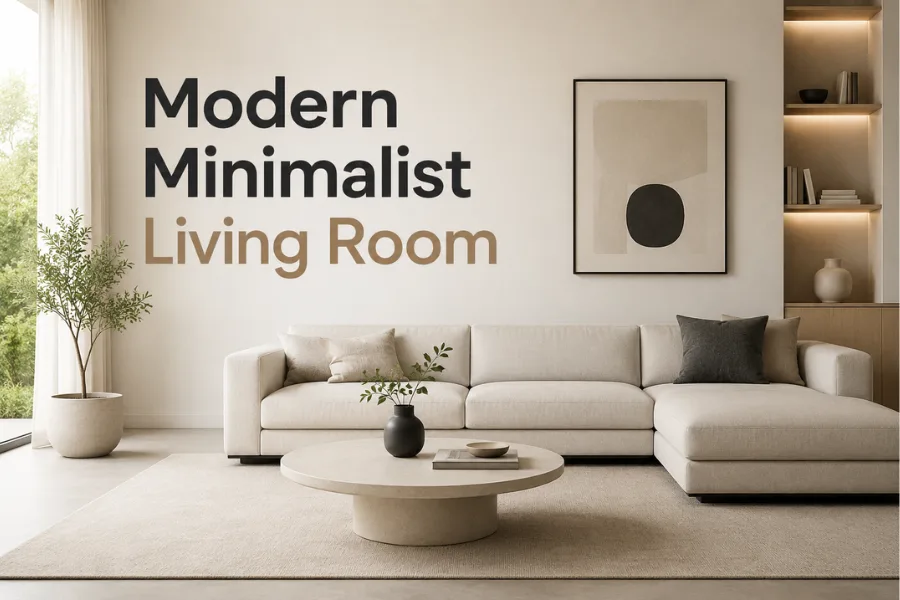
27 Modern Minimalist Living Room Ideas That Actually Work in Real Homes
If you’ve ever walked into a room and instantly felt calm — no clutter screaming at you, no random stuff piled on every surface — that’s minimalism doing its job. And honestly, it’s one of the most powerful things you can do for your home.
A modern minimalist living room isn’t about making your space look cold, empty, or like a showroom nobody lives in. It’s about being intentional. Choosing pieces that matter. Letting your room breathe. And creating a space where you actually want to sit down and relax at the end of a long day.
In this guide, I’ve pulled together 27 modern minimalist living room ideas that are realistic, beautiful, and beginner-friendly. These aren’t concepts pulled from a luxury magazine that normal people can’t replicate. Every single one of these ideas is something you can actually do — with your own hands, your own budget, and your own home.
27 Modern Minimalist Living Room Ideas
1. The Japandi Sanctuary — Warm Neutrals Meet Zen Simplicity
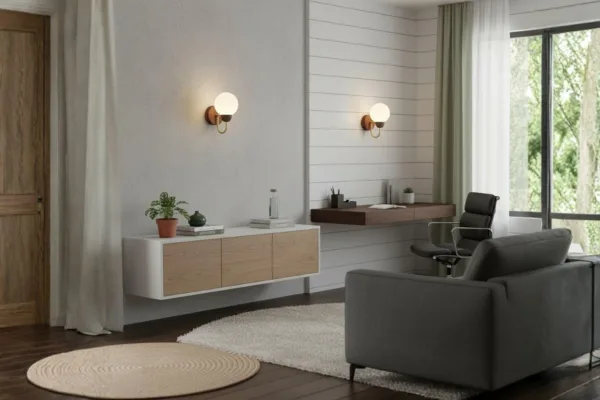
If there’s one style dominating minimalist interior design right now, it’s Japandi. This is the beautiful blend of Japanese simplicity and Scandinavian warmth, and when done right, it creates a living room that feels deeply calm, lived-in, and endlessly stylish. Think warm beige walls, low-profile wooden furniture, soft linen throws, and a single potted plant sitting quietly in the corner. Nothing shouting. Everything belonging.
Why It Works
Japandi works because it takes the best of two worlds. Japanese design strips things back to what’s truly needed, while Scandinavian design makes sure what remains is cozy and comfortable. Together, they create a room that feels both minimalist and human — which is exactly what most people are missing when they try minimalism and end up with something that feels too cold.
Best For
Medium to large living rooms. Also works beautifully in open-plan apartments where you want the living area to feel like its own calm retreat.
Styling Tips
Start with a warm white or soft greige wall. Bring in a low-slung sofa in oatmeal or stone linen. Add a solid wood coffee table — something with visible grain and no fuss. Layer a natural jute or wool rug underneath. For accessories, limit yourself to three: one ceramic vase, one small plant, and one piece of wall art. That’s it. You’re done.
2. All-White Canvas With Textured Layers
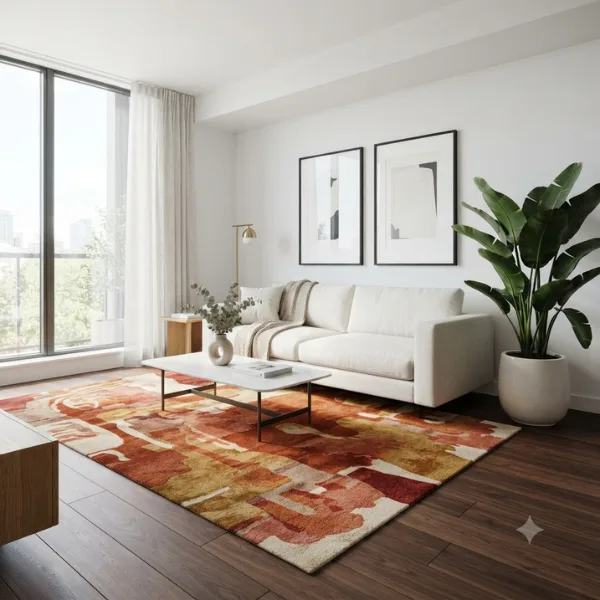
An all-white living room sounds terrifying — like one muddy shoe away from disaster. But when you build it with texture, it becomes one of the most sophisticated and timeless minimalist looks you can create. The key is that white alone is flat and clinical. White with layers of texture is rich, warm, and inviting.
Why It Works
When every surface is the same color, your eye starts noticing something else — texture. A chunky knit throw suddenly becomes a focal point. A bouclé sofa becomes a work of art. The room stays completely minimal in terms of color, but feels anything but boring because there’s so much tactile variety to explore.
Best For
Small to medium living rooms where you want to create a sense of space and light. Also great for rooms with little natural light, because all that white bounces what light you do have all around the space.
Styling Tips
Paint the walls white — not pure stark white, but a soft white with a warm undertone like “Bone” or “Chalk.” Choose a sofa in a textured fabric: bouclé, ribbed velvet, or boucle blend. Layer a fluffy white shag rug over bare floors. Drape a chunky knit throw over one arm of the sofa. Add contrast with a single black or dark wood coffee table to anchor the room.
3. Low-Profile Furniture Layout for an Airy Feel
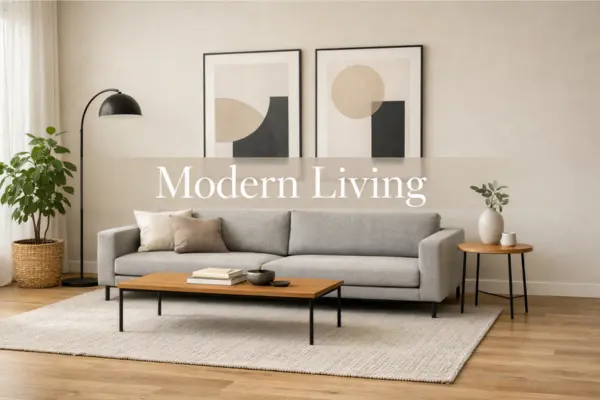
This one is more of a furniture strategy than a style, and it’s honestly one of the most underrated minimalist tricks out there. Low-profile furniture — sofas, coffee tables, media units — all sitting close to the floor creates a visual effect that makes your ceiling feel much higher and your room feel much bigger than it actually is.
Why It Works
The more wall you can see above your furniture, the taller and more spacious a room feels. When everything is hovering close to the floor, you get this incredible sense of openness and airiness that even a room twice the size couldn’t achieve without this approach. It also gives the whole space a very calm, grounded energy.
Best For
Low-ceiling apartments, small rooms, and anyone who wants their space to feel larger without knocking down walls. Works in any size room, but the effect is most dramatic in compact spaces.
Styling Tips
Look for sofas with legs under 6 inches, or platform-style sofas with no legs at all. Swap your standard coffee table for a low Japanese-style wooden table. Mount your TV on the wall or use a very low media console. Keep curtains floor-length and hang the rod close to the ceiling — this draws the eye up and emphasizes the new height of the room.
4. Earthy Tone Palette With Olive and Terracotta Accents
Forget the idea that minimalist rooms have to be white and gray. The warmest, most inviting minimalist spaces right now are built around earthy tones — sandy beiges, warm taupes, terracotta, and muted olive green. It’s still totally minimal in terms of clutter, but the color palette makes the room feel rich, grounded, and incredibly welcoming.
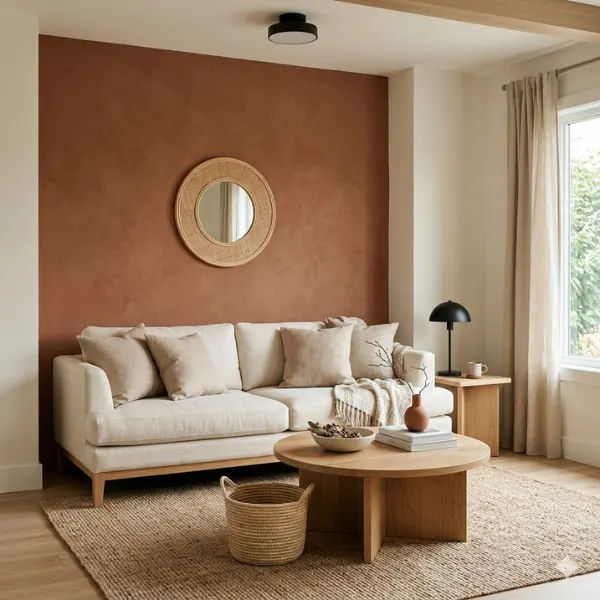
Why It Works
Earth tones are naturally calming to look at because they mimic the colors found in nature — soil, clay, sand, leaves. When you build a room around these colors, it triggers a subconscious sense of safety and ease. It’s minimalism with soul, which is exactly what 2025 design is all about.
Best For
Any size room. Especially good for family living rooms where you want a minimal look but the space still needs to feel warm enough for everyday life with kids or guests.
Styling Tips
Start with a warm sandy or taupe sofa as your base. Add terracotta through a cushion or a ceramic pot — just one or two pieces, not a full terracotta takeover. Bring in olive green through a throw or a single plant in a dark green pot. Use warm wood for any tables or shelves. Keep the wall a soft neutral — warm white or warm greige works perfectly here.
5. Floating Wood Shelves as a Curated Display Wall
Floating shelves sound simple, but when they’re styled right, they completely transform a blank wall into the most interesting feature in the room — without adding clutter. The trick is in the curation. You’re not filling these shelves with stuff. You’re building a small, deliberate gallery with only things that actually matter.
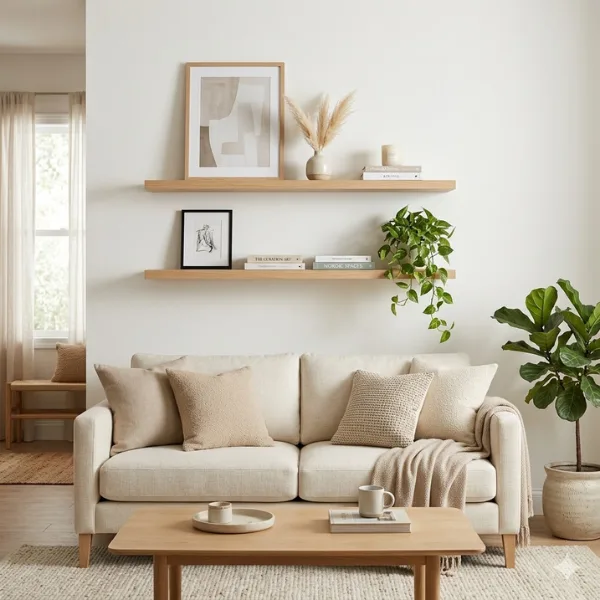
Why It Works
A bare wall in a minimalist room can feel cold and unfinished. Floating shelves solve that without the visual heaviness of a large unit or bookcase. They give your room height and personality while still keeping the floor completely clear, which is essential for that open, airy minimalist feel.
Best For
Medium to large rooms with long bare walls. Also works perfectly in small rooms as a way to add storage and character without taking up any floor space.
Styling Tips
Install two or three shelves at slightly different lengths, rather than all the same size — it looks more natural. Style each shelf with just three to five items maximum: maybe a plant, a small ceramic, a candle, and one or two books stood upright. Leave intentional gaps. Use warm wood shelves against a white or light gray wall for the cleanest look. Resist the urge to fill every inch.
6. Monochromatic Gray Room With Bold Black Frames
A gray minimalist room done right is absolutely stunning. The key word here is “done right” — because when gray goes wrong, it goes really wrong. The secret is layering different shades of gray and breaking them up with strong, confident black accents like picture frames, a black coffee table, or black metal light fixtures.
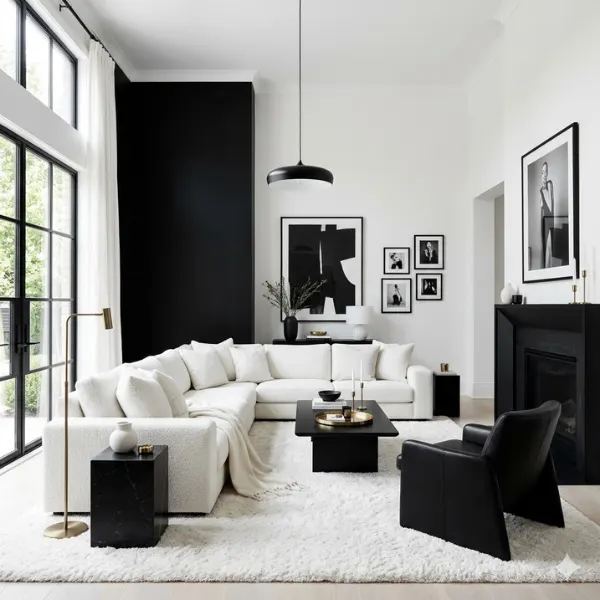
Why It Works
Gray is one of the most sophisticated neutrals in the entire color family. It reads as modern, calm, and polished. When you add black framing and accents, you’re giving the gray room a sharp backbone — something with definition and contrast that keeps the whole space from feeling too soft or blurry.
Best For
Apartment living rooms and urban spaces. Especially great for men’s spaces or anyone who wants a more serious, editorial look without going fully dark and moody.
Styling Tips
Choose a mid-toned gray for walls — not too light that it disappears, not so dark that the room feels heavy. Go for a charcoal or dark gray sofa. Add black through frames, side table legs, or a matte black floor lamp. Keep fabrics soft — a pale gray linen throw, a slightly lighter gray area rug. One or two white accessories (a vase, a candle holder) will lift the whole palette perfectly.
7. Cozy Minimalism — Plush Sofa, Bare Walls, One Statement Rug
This is the approach for people who love the idea of minimalism but genuinely struggle with the “cold and clinical” feel. Cozy minimalism is exactly what it sounds like — you strip back all the unnecessary stuff but you lean hard into comfort in the pieces you keep. One incredibly plush sofa. One bold, beautiful rug. Nothing on the walls. The result is a room that’s simple but deeply inviting.
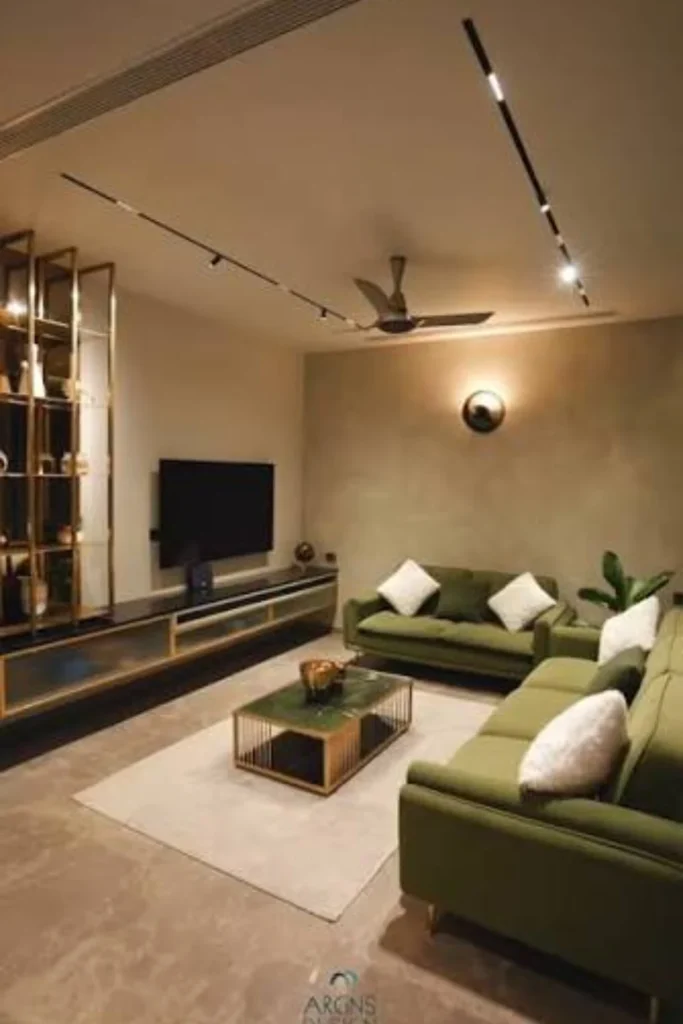
Why It Works
The contrast between totally bare walls and one incredibly luxurious, oversized rug creates an instant focal point that’s warm and welcoming. Your eye goes straight to the beautiful rug, the room feels cozy because of the plush sofa, but there’s absolutely no clutter anywhere. It’s minimalism that doesn’t make you feel like you’re sitting in an empty box.
Best For
Renters who can’t paint walls. Small to medium rooms. People who are just starting their minimalist journey and don’t want to go too far too fast.
Styling Tips
Invest in one genuinely good sofa — deep-seated, in a fabric like bouclé, velvet, or thick linen. Choose a rug that’s bigger than you think you need: it should go under the front legs of the sofa at minimum, and ideally extend well beyond it. Keep walls completely bare or add one single framed piece. Let the sofa and rug be the whole story.
8. Scandinavian Hygge Living Room With Warm Wood Tones
Hygge is a Danish concept that loosely translates to a feeling of comfort, coziness, and contentment. When you apply it to a minimalist living room, you get a space that’s clean and simple but radiates warmth — the kind of room that makes you want to curl up with a cup of tea on a rainy afternoon and never leave.
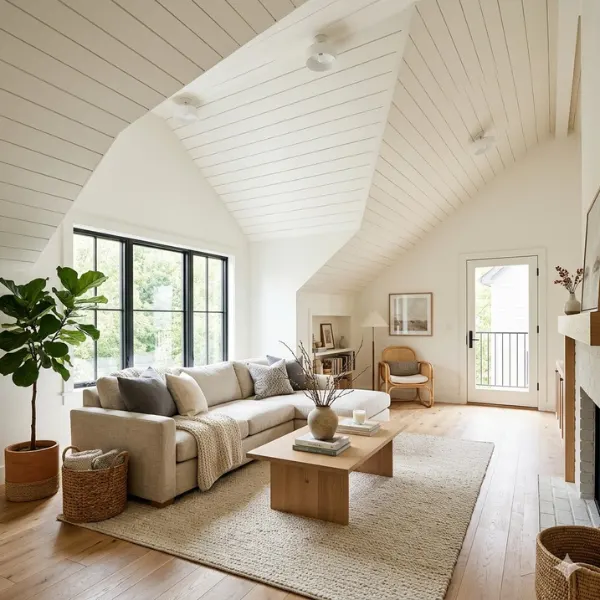
Why It Works
Scandinavian minimalism avoids the pitfall of feeling cold because it’s rooted in warmth from the start. Natural wood, soft lighting, and cozy textiles are built into the DNA of this style. You keep the “less is more” philosophy of minimalism but every piece you do have is warm, natural, and comforting.
Best For
Family living rooms, apartment living rooms, and anyone in a colder climate who wants their home to feel like a refuge. Works in all room sizes.
Styling Tips
Bring in warm birch or pine wood through your furniture — a simple wooden coffee table, side tables, and maybe a low TV bench. Layer multiple soft textures: a wool rug, linen cushions, a chunky knit throw. Use warm-toned lighting — avoid harsh white LED bulbs and go for warm white or amber bulbs instead. Add candles or a candle holder grouping on the coffee table. Keep walls soft white or very light gray.
9. The Single Statement Piece Room
This is one of the most confident, design-forward approaches to minimalism — and it’s also one of the simplest. You choose one genuinely incredible piece of furniture or art — something that stops people in their tracks — and you build the entire room around it. Everything else is quiet, neutral, and understated. The statement piece does all the talking.
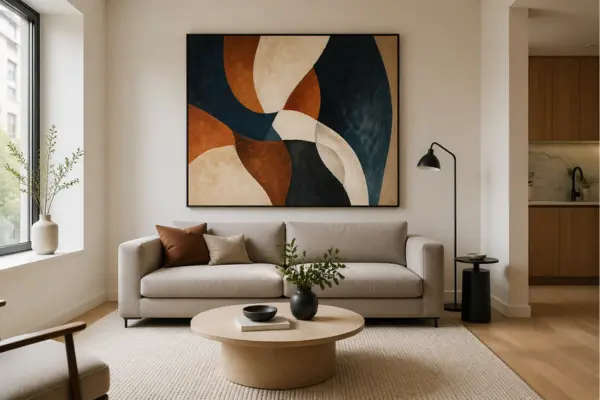
Why It Works
When one piece is truly exceptional, it doesn’t need any help. In fact, other strong pieces around it would just create competition and noise. By giving your hero piece total silence around it, you let it reach its full potential. The room looks expensive, intentional, and edited — like someone with real taste made every single decision.
Best For
Larger rooms where one statement piece has enough room to breathe. Also works in small rooms if the statement piece is scaled correctly — a bold armchair in a small room is just as powerful as a sculptural sofa in a large one.
Styling Tips
Your statement piece can be anything: a curved sculptural sofa, an oversized piece of art, a handmade ceramic floor lamp, or a stunning wooden sideboard. Once you’ve chosen it, make everything else in the room recede. Neutral walls, a simple rug in a tone that complements rather than competes, and basic, clean-lined supporting furniture. Let your hero piece win.
10. Built-In Storage Wall With Flush Cabinet Doors
Nothing destroys a minimalist living room faster than visible clutter — remotes, chargers, books, cables, random stuff that has nowhere to go. A built-in storage wall with floor-to-ceiling flush cabinet doors solves this problem permanently. Everything gets hidden behind clean, seamless panels and your living room becomes the calm, uncluttered space you’ve always wanted.
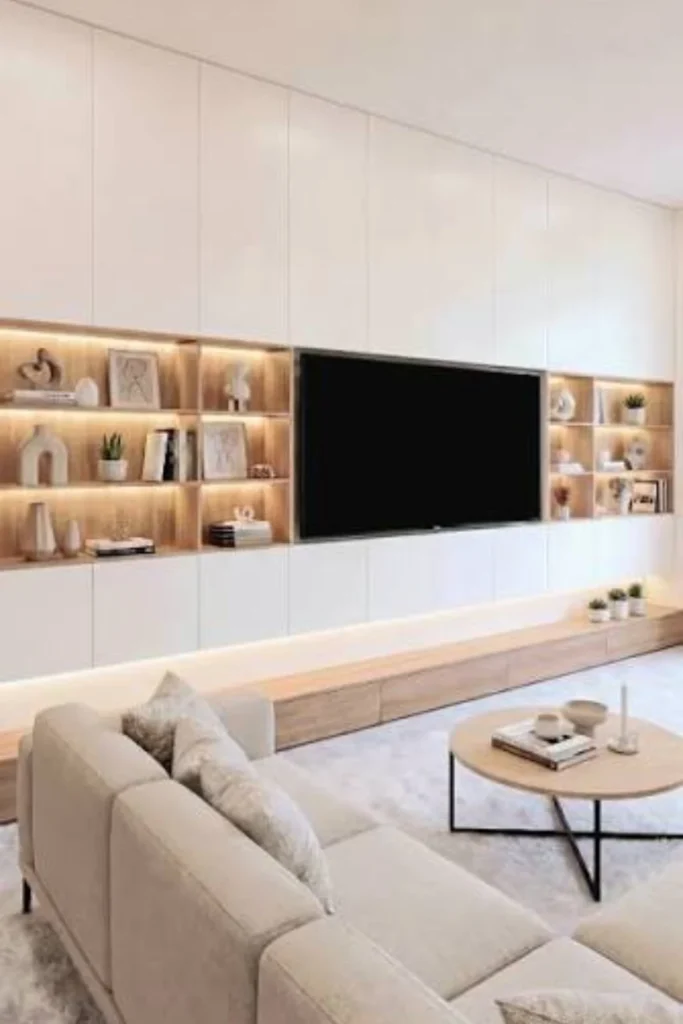
Why It Works
When storage is built-in and completely flush with the wall, it essentially disappears. There’s no visual weight, no handles sticking out, no visible shelves loaded with stuff. The room looks bigger, cleaner, and more expensive. And because everything has a dedicated hidden home, clutter never builds up in the first place.
Best For
Medium to large rooms. Perfect for families, people who work from home, or anyone who owns a lot of things but wants a clean-looking space. Also great for older homes with uneven walls where built-ins can be used to smooth everything out.
Styling Tips
Paint cabinet doors the exact same color as the wall behind them for a completely seamless look. Use touch-latch doors rather than handles for the cleanest finish. Leave one or two open shelves in the middle to break things up — style these with just three to five curated pieces. Built-ins don’t have to be expensive: IKEA’s PAX system painted to match your walls achieves almost the same look for a fraction of the cost.
11. Natural Light Maximized With Sheer Linen Curtains
This idea doesn’t involve buying a single piece of furniture. It’s entirely about how you handle your windows — and it can completely transform how a room feels. Most people block their natural light without realizing it. Heavy curtains, blinds pulled halfway down, net curtains that yellow over time. Switching to floor-length sheer linen curtains changes everything.
Why It Works
Sheer linen lets light diffuse softly through the fabric — it’s not harsh, it’s not blinding, it’s this beautiful, warm, glowing light that floods the room. The linen texture also adds warmth and that effortlessly relaxed quality that’s central to modern minimalist design. And because the curtains are floor-length and hung high, they draw the eye upward and make the ceiling feel much taller.
Best For
Every single room. Especially powerful in north-facing rooms that don’t get direct sunlight, or small rooms where you need every bit of light you can get.
Styling Tips
Hang curtain rods as close to the ceiling as possible — ideally within 2 inches of the ceiling line. Choose curtains that are longer than your window, not just the window height — they should pool very slightly on the floor. Go for natural linen in white, off-white, or warm oatmeal. Avoid polyester sheers — they look cheap in person and don’t drape the same way.
12. Indoor Greenery as the Only Decoration
What if your only decoration was plants? Not a jungle — just one or two carefully chosen plants, placed with intention. This is one of the easiest, most affordable, and most impactful things you can do in a minimalist living room. A single tall plant in the corner of a room changes the whole feeling of the space. It brings life, texture, and a natural softness that no other decorative element can replicate.
Why It Works
Plants create a visual connection to the natural world, which has a genuinely calming effect on the nervous system. In a minimalist room where there’s very little else competing for attention, one well-placed plant becomes a living focal point. It adds color without being a color decision, adds texture without adding clutter, and changes subtly over time — which is the opposite of every other piece of decor you own.
Best For
Any room. Especially impactful in rental apartments where you can’t change the walls or do anything structural. One large plant can do more for an empty corner than an entire collection of decorative pieces.
Styling Tips
Choose low-maintenance plants that look structural and architectural: a fiddle leaf fig, a tall snake plant, a monstera, or a large rubber plant. Put it in a simple pot — either a plain terracotta, a matte white ceramic, or a dark clay pot. No decorative pots with patterns or words on them. Place it where it will actually get enough light, not just where it looks good on camera.
13. Industrial Minimalism — Raw Concrete, Black Metal, and Oak
Industrial minimalism is one of the most striking looks in the entire minimalist family — and it’s more accessible than most people think. You don’t need a converted warehouse loft to pull it off. The combination of raw concrete (or concrete-effect paint), black metal accents, and warm oak wood creates a room that feels strong, modern, and incredibly cool without a single unnecessary element.
Why It Works
The contrast between the cool rawness of concrete and metal and the warmth of oak wood creates a natural tension that keeps the room visually interesting. It’s minimalism that has a definite point of view — it doesn’t look accidental or unfinished. And because all three of these materials are naturally understated, the room never becomes noisy or cluttered.
Best For
Urban apartments, open-plan spaces, and anyone who wants a more masculine, editorial minimalist look. Works particularly well in rooms with high ceilings or large windows.
Styling Tips
You don’t need real concrete walls — a concrete-effect paint or large-format concrete-look tiles achieve the same effect. Bring in black metal through a shelving unit, a coffee table frame, or a floor lamp. Use oak for warm contrast: a coffee table surface, floating shelves, or a sideboard. Keep textiles minimal but choose them thoughtfully — a dark charcoal rug and one stone-colored throw are all you need.
14. Floor-to-Ceiling Neutral Bookshelf Wall
A floor-to-ceiling bookshelf is one of those design elements that looks incredibly expensive and architectural but is actually achievable in almost any home. When it’s done in a neutral color and styled with restraint, it reads as a minimalist design feature rather than a maximalist storage solution. The key word is “styled with restraint.”
Why It Works
A full-height shelf wall gives a room instant drama and visual height. It creates a built-in feeling without the actual cost of built-ins. And when the shelves are painted the same color as the wall, or in a complementary neutral, the whole unit almost disappears — you see the curated objects on the shelves, not the shelves themselves.
Best For
Medium to large living rooms. Ideal for people who genuinely love books and want to display them beautifully rather than hide them. Also a great solution for rooms with low ceilings — a floor-to-ceiling unit draws the eye upward and creates the illusion of height.
Styling Tips
Paint the bookcase the same color as the wall it sits against — this makes it feel architectural and intentional rather than furniture-store. Style shelves with books organized by color for a clean look. Intersperse books with a few objects: one plant, one ceramic, one small piece of art. Leave one or two full shelves empty — negative space on a shelf is just as important as in the room itself.
15. Two-Tone Wall Color Block in Muted Tones
Color blocking on walls sounds like it belongs in a maximalist home, but when you do it with muted, closely related tones — a warm white on top and a soft warm taupe on the bottom, for example — it becomes one of the most sophisticated and quietly interesting things you can do in a minimalist room. It adds depth and definition without a single piece of extra furniture or decor.
Why It Works
A two-tone wall color block grounds the room visually. The darker bottom half makes the furniture feel anchored and intentional. It also adds architectural interest to what might otherwise be a completely plain room. Because both tones are muted and work together harmoniously, the effect feels considered rather than bold — it whispers rather than shouts.
Best For
Small to medium rooms. Especially good for rooms with nice-looking furniture that you want to frame better, or for rental spaces where a single paint update can transform everything.
Styling Tips
The color break typically works best at either dado rail height (around 90cm from the floor) or at a third of the wall height. Keep the upper portion lighter and the lower portion slightly deeper — this mirrors how natural light and shadow fall in a room. Use two tones from the same color family: warm white and warm taupe, cool white and soft sage, or cream and warm sand. No stark contrast — the difference should be subtle but noticeable.
16. Modular Sectional Sofa for Flexible Layouts
A modular sectional is one of the smartest investments you can make in a minimalist living room. Instead of one rigid sofa shape that dictates how the room has to be arranged, a modular sectional gives you total flexibility — you can build it into a classic L-shape, a U-shape, or even break it apart into individual seats depending on how you’re using the room that day.
Why It Works
Minimalism is partly about spaces that serve your actual life, not spaces that look good in a photo but don’t work for real people. A modular sofa adapts to how you really live — movie nights where everyone wants to sprawl out, dinner parties where you need to reconfigure quickly, or small apartments where the sofa doubles as a guest bed.
Best For
Open-plan living spaces, small apartments where the sofa needs to work hard, and families who use their living room in multiple different ways throughout the week.
Styling Tips
Choose a modular sectional in a neutral, textured fabric — oatmeal boucle, warm gray linen, or soft stone velvet all work beautifully. Keep the configuration simple: an L-shape against two walls leaves the center of the room completely open, which is the cleanest look in a minimalist space. Add one or three cushions maximum — odd numbers always look more natural. A low coffee table centered in front completes the setup.
17. Sunken Living Room With Custom Built-In Seating
A sunken living room — where the seating area sits a few steps below the main floor level — is one of the most dramatic and architectural things you can do with a living space. Paired with built-in seating that wraps around the lower level, it creates a room that feels like it was always meant to be there, completely bespoke, and impossibly cool.
Why It Works
A sunken seating area creates an instant sense of intimacy and enclosure within what might otherwise be a large, open space. It defines the “gathering” zone of the room without any furniture doing that work. Because the seating is built-in, there are no loose chair legs, no sofa gap-against-the-wall problems, no pieces that look slightly wrong. Everything is integrated and intentional.
Best For
Large living rooms or open-plan spaces where you need to create definition. Best suited to homeowners rather than renters, since this is a structural change. But even a very modest step-down of just one step can achieve a similar effect.
Styling Tips
Line the built-in seating with thick cushions in a neutral fabric — linen, bouclé, or heavyweight cotton. Keep the platform walls and floor the same material or tone to emphasize the architectural quality. Add cushions in one accent tone to add warmth without breaking the minimalist feel. One large overhead pendant light centered over the sunken area completes the look perfectly.
18. Open-Plan Minimalist Space With Zoned Rugs
Open-plan living is wonderful until you realize that one big empty space can feel completely undefined and overwhelming. Zoning with rugs is the minimalist solution — instead of adding walls, furniture, or dividers, you use carefully placed rugs to define different areas within the same space. Living area rug here. Dining area rug there. The zones become obvious without any additional visual clutter.
Why It Works
A rug anchors a furniture arrangement and tells everyone in the room where each zone begins and ends. In an open-plan space, this prevents that “furniture floating in a sea of floor” problem that makes so many open-plan rooms feel unsettled. It also allows you to mix different material tones between zones while keeping the overall palette cohesive.
Best For
Open-plan apartments and homes where the living and dining areas share one large space. Also works well in large living rooms where you want to create a more intimate seating conversation area within a bigger footprint.
Styling Tips
Choose rugs that are in the same color family but slightly different in texture — a flat-weave jute in the living area and a softer wool in the seating corner, for example. Make sure each rug is appropriately sized for its zone: the living room rug should fit under the front legs of the sofa at minimum. Leave a clear walkway between zones — at least 60cm of bare floor between the edge of one rug and the start of the next.
19. Curved Furniture Minimalism — Soft Arches and Round Tables
Minimalism doesn’t have to mean sharp corners and hard edges. The newest direction in minimalist design is all about curves — softly arched sofas, round coffee tables, oval mirrors, doorways with curved tops. All of these elements create the same clean, uncluttered space as traditional minimalism, but with a softness and approachability that makes the room feel genuinely inviting.
Why It Works
Curved shapes are psychologically softer than angular ones — they feel gentler, more welcoming, and less confrontational. In a minimalist room, where there isn’t much furniture to soften things, curved pieces do important emotional work. They make the simplicity feel warm rather than stark.
Best For
Small to medium living rooms where you want a minimal look that still feels cozy and approachable. Perfect for anyone who loves minimalism aesthetically but has found previous attempts at it feeling too cold or clinical.
Styling Tips
Start with one curved piece and see how it feels — a round coffee table is the easiest place to start. If you love it, upgrade to a curved sofa or a sofa with rounded arms. Add an arched floor lamp for more curves at a different height. Use an oval or round mirror instead of a rectangular one. Keep everything else in the room simple and understated — let the curves be the design decision.
20. Wabi-Sabi Inspired Living Room — Imperfect Beauty
Wabi-sabi is a Japanese philosophy that finds beauty in imperfection, impermanence, and incompleteness. In design terms, it means celebrating the natural cracks in a plaster wall, the uneven grain of handmade furniture, the rough edge of a linen cushion, the slightly crooked shape of a hand-thrown ceramic vase. It’s minimalism with character — and it’s one of the most soulful approaches to interior design that exists.
Why It Works
Wabi-sabi removes the pressure to have everything perfect — which, if you’re honest, is the real reason most people hesitate to go full minimalist. It gives you permission to have the slightly battered coffee table, the imperfect wall finish, the vintage find that doesn’t quite match anything else. All of these imperfections are the point, not the problem.
Best For
Any room, but especially rooms in older homes where perfection isn’t achievable anyway. Also perfect for budget decorators who can’t afford pristine new furniture — wabi-sabi makes the slightly worn, the slightly irregular, and the secondhand look intentional and beautiful.
Styling Tips
Keep the palette extremely muted: cream, warm gray, natural linen, pale clay. Embrace raw textures — rough linen, unglazed ceramics, natural wood that shows its grain. Display objects that tell a story: a vintage ceramic bowl, a piece of driftwood, a handmade candle holder. Nothing matchy-matchy. Leave some walls unfinished or with a soft limewash texture. Let the room feel like it evolved naturally over time, rather than being styled in an afternoon.
21. Black and White Contrast With One Warm Wood Element
The black and white minimalist room is a classic. Strong, graphic, timeless. The problem is it can tip into feeling like a hotel lobby rather than a home if you’re not careful. The solution is simple: add exactly one element of warm wood. A single oak coffee table. A wooden bench. A set of floating timber shelves. That one warm wood piece completely changes the temperature of the room and stops it from feeling corporate.
Why It Works
Black and white creates the cleanest, most graphic minimalist canvas. The wood adds biological warmth — our brains are hardwired to respond positively to natural materials. It’s an incredibly small addition that has an outsized emotional effect on how the room feels. The contrast between graphic black and white and the warmth of natural wood is also visually beautiful — it creates a harmony that neither element could achieve alone.
Best For
Modern apartments, urban spaces, and anyone who wants a very clean, design-forward look. Particularly effective in rooms with strong architectural features like exposed beams, large windows, or polished concrete floors.
Styling Tips
Get the balance right: keep the room predominantly white or light with black as accent. The wood piece should be mid-tone to warm — think oak, walnut, or light pine. Don’t introduce more than one wood piece or it starts to dilute the impact. Keep every other element of the room strictly black or white — art, lamp, cushions, rug. The wood is the only warmth. Protect it.
22. Stone and Linen Minimalism for a Spa-Like Feel
If you’ve ever walked into a high-end spa and felt that instant physical relaxation — that’s what this living room idea is trying to recreate in your home. Natural stone surfaces (or stone-look tiles and panels), soft linen upholstery, muted taupe and warm gray tones, and the kind of hushed, sensory calm that makes you immediately lower your shoulders and exhale. It’s minimalism designed for pure wellbeing.
Why It Works
Stone and linen are two of the most grounding, sensory materials available in interior design. Stone is cool to the touch, visually heavy, and permanent-feeling. Linen is soft, breathable, and relaxed. Together, they create a material contrast that’s both restful and luxurious. The spa effect comes from the combination of natural materials, muted tones, and the complete absence of anything synthetic, shiny, or visually busy.
Best For
Larger living rooms where you have the space to do the materials justice. Also works beautifully as a feature wall with stone or stone-effect paneling behind a sofa or fireplace.
Styling Tips
Start with a linen sofa in a warm stone or natural gray. Add a stone-effect coffee table or a genuine marble tray on the coffee table. Use only natural materials for every other element: jute rug, linen curtains, ceramic vessels, wood side table. Avoid anything plastic, glossy, or synthetic. Lighting should be warm and very low — think candles, warm-bulb floor lamps, and dimmer switches on every overhead light.
23. Minimalist Gallery Wall Done Right — Less Is More
Gallery walls are usually the enemy of minimalism — but they don’t have to be. A minimalist gallery wall is the art of choosing three to five pieces of art that genuinely work together and hanging them with intention. No random collection of mismatched frames. No filling every inch of wall space. Three beautiful pieces, hung with breathing room between them, can be more powerful than twenty crammed together.
Why It Works
Art is one of the most meaningful ways to personalize a minimalist room without adding clutter. The key is restraint — both in how many pieces you choose and in how much wall space you fill. When a gallery wall has generous breathing room around each piece, each individual work of art gets to be fully appreciated. It looks curated and confident rather than busy and anxious.
Best For
Rooms with large, long walls that need a focal point. Great for living rooms where you want personality and visual interest but don’t want to fill the space with knick-knacks and decorative objects.
Styling Tips
Choose a maximum of three to five pieces. Keep frames the same color — all black, all natural wood, or all white. The art itself can vary in subject but should share a tonal quality: all muted and earthy, or all black and white, or all abstract. Hang pieces with at least 10cm of space between them. Center the grouping at eye level — not at ceiling height. Stand back and look: if the wall still feels mostly empty with the art on it, you’ve nailed it.
24. Rattan and Linen Combo for Boho-Minimal Vibes
Rattan and linen is possibly the friendliest, most approachable combination in all of minimalist design. It’s the look that makes people say “this feels like a holiday” when they walk in. Natural rattan brings texture and warmth, linen brings softness and ease, and together they create a room that’s totally minimal in terms of clutter but full of natural, organic charm.
Why It Works
Both rattan and linen are naturally occurring materials with irregular textures — no two pieces are exactly alike. This organic irregularity adds warmth and character to a minimalist room without introducing any visual noise. The color palette of both materials (creamy, warm honey, natural tan) is inherently cohesive, which means they always work together without much effort.
Best For
Small to medium rooms, coastal or countryside homes, apartments that get good natural light, and anyone who wants a relaxed, casual minimal look rather than a severe or architectural one.
Styling Tips
A rattan coffee table or side table is the easiest entry point. Pair with a linen sofa or linen cushion covers in warm white or natural cream. Add a jute rug to complete the natural material trifecta. Keep the wall color very light — warm white or soft cream. The room’s warmth comes from the materials, not the paint. A single dried pampas grass stem in a tall ceramic vase is the perfect finishing touch that feels effortlessly bohemian without being over the top.
25. Smart Minimalism — Hidden Tech, Clean Surfaces
This one is for the tech-lovers who also love clean spaces — which sounds like a contradiction until you realize it doesn’t have to be. Smart minimalism is about integrating all your technology invisibly. TV hidden inside a cabinet that closes flush when not in use. Speakers recessed into walls. Cables completely concealed. Charging stations hidden in a drawer. The room looks like no technology exists in it — until you want to use it.
Why It Works
Technology is one of the biggest challenges in minimalist design because most of it is ugly. Black boxes, trailing cables, blinking lights, and chunky remote controls are the enemy of a clean, calm space. Smart minimalism solves this by making technology invisible by default, which means your living room gets to be the serene, uncluttered space you want it to be every single day — not just when all the screens are off.
Best For
Anyone who watches a lot of TV, works from home, or has a lot of tech gadgets and finds them visually overwhelming. Works in all room sizes.
Styling Tips
Start by cable-managing everything that’s already in your room — cable ties, cable boxes, and cord covers make an immediate difference for almost no cost. Consider a TV lift cabinet if a floating TV isn’t your preference. Use smart plugs and smart lighting to eliminate physical switches and power strips from sight. Route cables behind skirting boards where possible. A clean, empty surface communicates calm more than almost anything else in a room.
26. Small Living Room Maximized With Mirrors and Vertical Lines
Small living rooms are where minimalism earns its reputation — because when you’re working with limited square footage, every single decision matters. Two of the most powerful tools for a small minimalist room are mirrors and vertical lines. Mirrors double the perceived space. Vertical lines (tall curtains, floor lamps, vertical shelving) draw the eye upward and make ceilings feel higher.
Why It Works
Mirrors are one of the oldest tricks in interior design for a reason — they genuinely work. A large mirror on one wall can make a room feel almost twice as big as it is. Combine this with vertical elements that draw the eye upward, and a small room can feel genuinely spacious without adding a single square foot.
Best For
Small apartments, studio living rooms, rooms with low ceilings, and any space where you need to create the illusion of more space without structural changes.
Styling Tips
Place a large mirror on the wall directly opposite the window — it will reflect natural light across the room and double the sense of space. Use floor-length curtains hung at ceiling height. Choose a tall, slim floor lamp over a shorter table lamp. Use vertical shelving rather than horizontal. Keep the floor as clear as possible — any furniture with legs (rather than a solid base) shows more floor and makes the room feel bigger. Stick to a very light, neutral palette — dark colors in small rooms absorb light and visually shrink the space.
27. Statement Ceiling Light as the Room’s Only Focal Point
Most people think about focal points in minimalist rooms as something that happens on the walls or the floor — a piece of art, a beautiful sofa, a rug. But a statement ceiling light is one of the most powerful and underused focal points in home design. One genuinely spectacular pendant light, hanging in the center of the room, becomes the jewel of the entire space — and because your eye goes immediately upward to find it, everything below can remain beautifully quiet.
Why It Works
Ceiling height is one of the most underutilized dimensions in a living room. When you place a statement light overhead, you’re adding visual drama to a completely unused zone — which means you don’t need to compromise on simplicity anywhere else in the room. It’s pure visual reward for zero additional clutter.
Best For
All room sizes. Particularly powerful in rooms with high ceilings where a dramatic pendant can hang low without feeling cramped. Also works beautifully in small rooms where a single overhead light creates a jewel-box effect.
Styling Tips
Choose one genuinely interesting light — a sculptural paper lantern, a woven rattan pendant, a cloud-shaped plaster light, or a geometric wire globe. Hang it lower than you think is correct — most people hang pendants too high and lose the impact. Keep every other light source in the room low and warm: table lamps and floor lamps only. Remove everything from the ceiling except this one light. Make it the only thing up there — and let it be extraordinary.
Common Mistakes to Avoid in a Minimalist Living Room
- Getting minimalism right takes a little practice. Here are the most common mistakes people make — and how to avoid them.
- Going too empty too fast. Minimalism is not the same thing as emptiness. A room with just a sofa and nothing else doesn’t feel calm — it feels unfinished. Add things back slowly and deliberately until the room feels right. The goal is intentional, not barren.
- Choosing furniture that’s too small. This is one of the biggest rookie mistakes. A tiny rug under a large sofa, or a small coffee table lost in the middle of a big room, looks awkward and unintentional. In minimalist design, the pieces you choose need to be properly proportioned — often larger than you’d initially think.
- Ignoring texture completely. When you reduce color and pattern, texture becomes everything. A room that’s minimal in both color and texture feels sterile. Layer different textures — linen, wool, wood, ceramics — to keep the room feeling rich and sensory even with minimal decoration.
- Keeping everything matching. Minimalism doesn’t mean buying one matching set and stopping there. Perfectly matched furniture sets actually read as less sophisticated than carefully mixed pieces that work harmoniously together. Mix your wood tones slightly, vary your cushion fabrics, and let the room feel curated rather than catalogued.
- Neglecting lighting. Overhead lighting alone makes any minimalist room feel flat and harsh. Layer your lighting: overhead ambient light, floor lamps for warmth, table lamps for intimacy, and candles for atmosphere. This is one of the cheapest and most impactful improvements you can make.
- Decluttering but not organizing. You can hide all your clutter in a drawer and still have a disorganized, dysfunctional space. True minimalist living means having good storage systems that actually work — so things go back where they belong and clutter doesn’t silently rebuild itself over time.
- Treating minimalism as a one-time project. A minimalist room isn’t a finished product — it’s an ongoing practice. Things will accumulate over time. Build a habit of regularly editing your space, removing things that have crept in, and reassessing whether what you have is still earning its place.
Conclusion
Minimalism isn’t a trend — it’s a way of living in your space more intentionally. And after going through all 27 of these ideas, I hope what’s become clear is that there is no single way to do it. You can go warm and Japandi. You can go bold and industrial. You can go soft and curved. You can go quiet and spa-like. What all 27 ideas have in common is this: every piece earns its place, every surface has room to breathe, and the room exists to serve the life happening inside it.
Start with one idea that genuinely excites you. Not the one that looks best on Pinterest, but the one that actually feels like you. Buy one thing, move one thing, paint one wall. Minimalism is always built one intentional decision at a time — and every single decision you make in the right direction will make your home a little calmer, a little cleaner, and a lot more you.
FAQs
What is the most important rule of minimalist living room design? The most important rule is intentionality. Every single piece in your room should be there because it serves a purpose — functional, emotional, or aesthetic. If something is there by default, by accident, or because you haven’t got around to moving it, it doesn’t belong in a minimalist room.
Do minimalist living rooms have to be white? Absolutely not. While white and light neutrals are popular because they amplify light and space, modern minimalist rooms work beautifully in warm earthy tones, muted greens, soft grays, deep charcoals, and even rich chocolate browns. The key is a cohesive, restrained palette — not a specific color.
How do I make a minimalist living room feel cozy and not cold? Layer texture. A minimalist room with multiple textures — linen, wool, wood, ceramics, natural fiber rugs — feels warm and sensory even with very little decoration. Also focus on lighting: warm-bulb lamps, candles, and dimmer switches do more for coziness than any piece of furniture.
Can a minimalist living room work for families with kids? Yes — and it actually works better than most people expect. The key is good storage systems that make it easy for everyone to put things away. Built-in storage, large baskets, and multi-functional furniture mean that even with toys, homework, and daily life happening in the room, it can return to a calm, clean state quickly.
How many decorative items should a minimalist living room have? There’s no fixed rule, but a good starting point is the “rule of three” — groupings of three items always look more natural and deliberate than two or four. For a whole room, aim for fewer than ten visible decorative objects total. The fewer you have, the more each individual piece matters.
What’s the biggest mistake beginners make when starting a minimalist living room? Buying new minimalist-looking things before getting rid of the old ones. Minimalism starts with subtraction, not addition. Before you buy a single new piece, spend a day removing everything that doesn’t earn its place. You’ll often find the room you wanted was already there — just buried.
Is minimalist design expensive? It doesn’t have to be. In fact, because you’re buying fewer pieces, you can afford to invest more in each one — which is where the quality-over-quantity philosophy really pays off. That said, some of the most beautiful minimalist rooms are built almost entirely from thrifted furniture, simple IKEA basics, and DIY updates. The aesthetic comes from curation and restraint, not price tags.