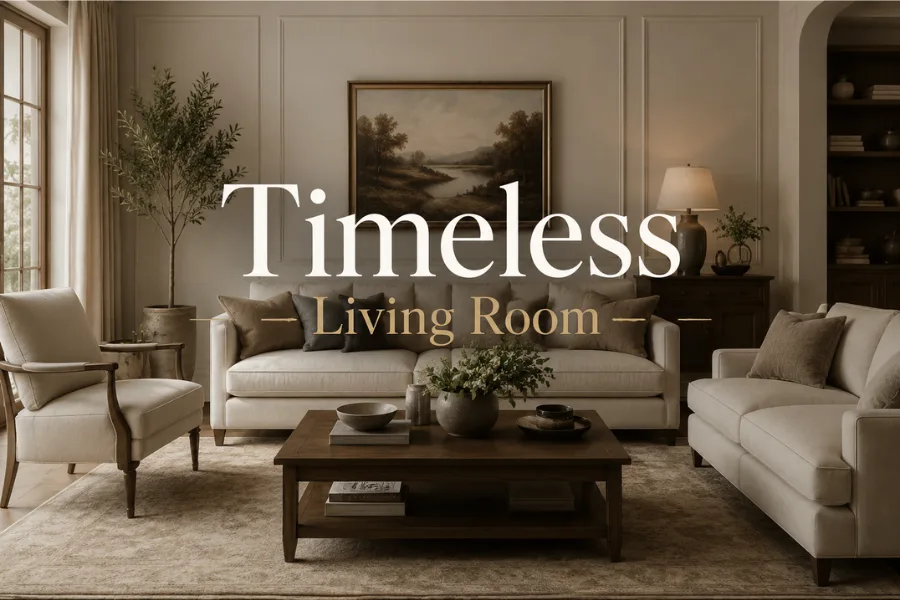
24 Timeless Living Room Ideas That Never Go Out of Style
Walk into a beautiful living room and you just know it. It does not matter if it was decorated five years ago or fifty. There is something about it that feels right — warm, pulled together, and completely at ease with itself.
I have been decorating homes for years, and one of the most common things I hear from homeowners is this: “I spent so much money redecorating, and it already feels dated.” That breaks my heart every time — because it does not have to be that way.
Whether your living room is a tiny city apartment or a sprawling open-plan family space, the principles of timeless design apply to every size, every budget, and every style. In this post, I am sharing 24 of my absolute favorite living room ideas that are classic, realistic, and completely beginner-friendly. Every single idea on this list is different — so no matter your taste, you will find something that speaks to you.
Table of Contents
24 Timeless Living Room Ideas (Core Section)
Here is the ultimate list of hand picked ideas:
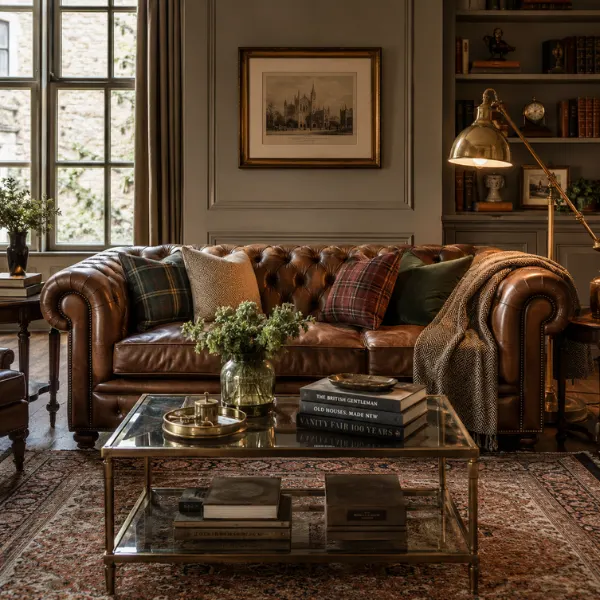
1. The Chesterfield Sanctuary
Picture deep buttoned leather, rolled arms, and a sofa that looks like it belongs in a British gentleman’s library — that is the Chesterfield. This iconic piece of furniture has been around for over 200 years, and it still turns heads every single time. Built around this statement sofa, the Chesterfield Sanctuary living room feels rich, layered, and quietly confident without ever trying too hard.
Why It Works
The Chesterfield sofa has one of the most recognizable silhouettes in furniture history. Its deep tufting adds immediate texture, and because it comes in leather, velvet, and linen, it adapts to nearly any color palette. It does not need much help — it is the kind of furniture that does the heavy lifting for you. Pair it with warm neutrals, a glass coffee table for lightness, and a simple floor lamp, and the room practically decorates itself.
Best For
Apartments, townhouses, home offices that double as sitting rooms, or anyone who wants a serious dose of old-world sophistication without going full Victorian. Works beautifully in both small and medium-sized rooms.
Styling Tips
- Go for burgundy, forest green, or caramel leather for that classic feel. Navy velvet is a more modern but equally timeless option.
- Add a glass or brass coffee table to keep the look from feeling too heavy.
- Layer in plaid or herringbone throw pillows — they are made for this sofa.
- Keep walls neutral (warm white, putty, or soft greige) so the sofa gets all the attention.
- A vintage-style floor lamp in brass or antique bronze in the corner completes the look perfectly.
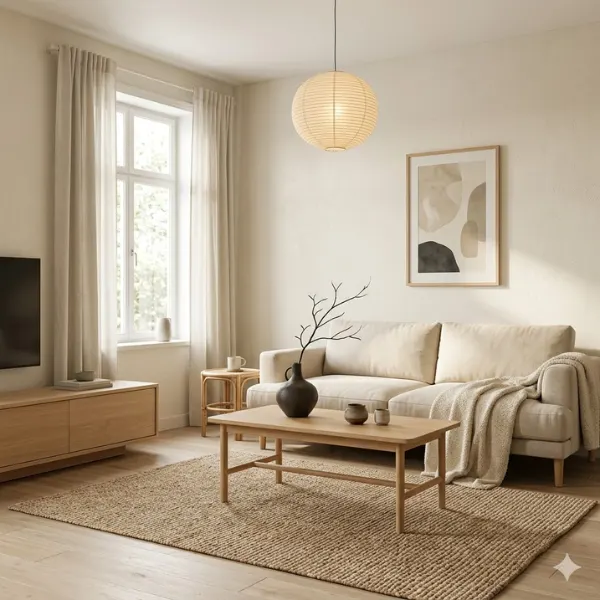
2. Japandi Zen Retreat
Japandi is the beautiful marriage of Japanese minimalism and Scandinavian warmth — and it might be the most genuinely timeless style on this entire list. It is calm, it is intentional, and it never feels cluttered. The Japandi Zen Retreat living room is built around clean lines, natural materials, and the philosophy that every single object in the room should earn its place.
Why It Works
Both Japanese and Scandinavian design have always valued craftsmanship, simplicity, and a deep respect for nature — so when you combine them, the result feels effortlessly harmonious. There are no gimmicks here, no trendy colors that will embarrass you in three years. It is all about proportion, natural texture, and genuine quiet. The room feels like a breath of fresh air every time you walk in.
Best For
Urban apartments, modern homes, anyone who feels overwhelmed easily or craves a calm retreat at the end of the day. Especially good for small to medium living rooms where clutter would instantly feel suffocating.
Styling Tips
- Stick to a palette of warm whites, sand, clay, charcoal, and soft sage. Nothing too bright or saturated.
- Choose low-profile furniture — a low linen sofa, a simple wooden coffee table, a flat platform TV unit.
- Add texture through a chunky natural jute rug, a rattan side table, or a bouclé throw.
- Keep décor to a minimum. One sculptural ceramic vase, a single branch in a narrow vessel, maybe one piece of abstract wall art.
- Use warm-toned Edison bulbs or paper pendant lights — harsh white lighting completely ruins the mood.
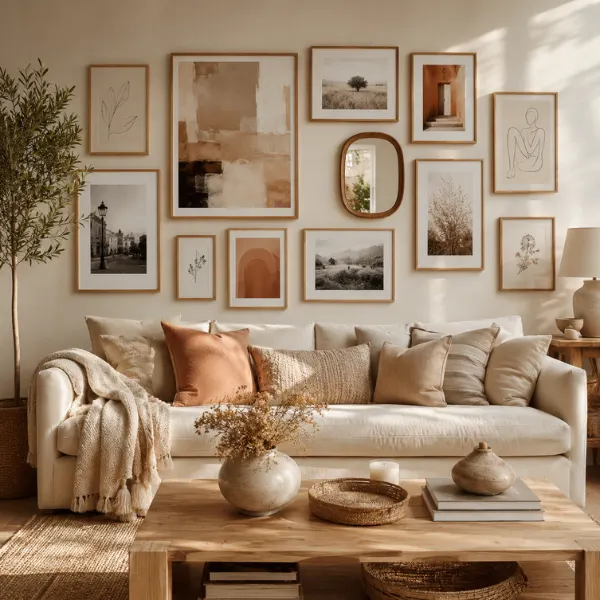
3. Warm Neutral Gallery Wall Haven
A gallery wall done right is one of the most personal and visually stunning things you can do to a living room — and when it is built in warm neutrals, it becomes completely timeless. This look is less about bold art statements and more about creating a curated, collected feel — like your walls have been gathering meaning over many years.
Why It Works
Gallery walls never go out of style because they are inherently personal. No two are ever the same. And when you anchor yours in warm tones — creamy whites, earthy tans, soft terracottas, muted golds — it ties the whole room together without competing with your furniture. It adds incredible visual richness to a space without requiring you to buy new furniture or repaint the whole room.
Best For
Renters, first-time homeowners, people who love art but are not sure where to start. Works in living rooms of any size — a large wall in a big room, or even a narrow strip of wall in a compact space.
Styling Tips
- Mix frame sizes but keep the frames themselves in the same finish — all black, all gold, or all natural wood.
- Include a mix of art types: a print, a photograph, a small mirror, a piece of typography, and something abstract.
- Lay your arrangement out on the floor first before you put a single nail in the wall.
- Leave 2 to 3 inches between frames for a gallery-style look, not a cluttered one.
- Anchor the whole arrangement by centering it behind your sofa or above your fireplace mantel.
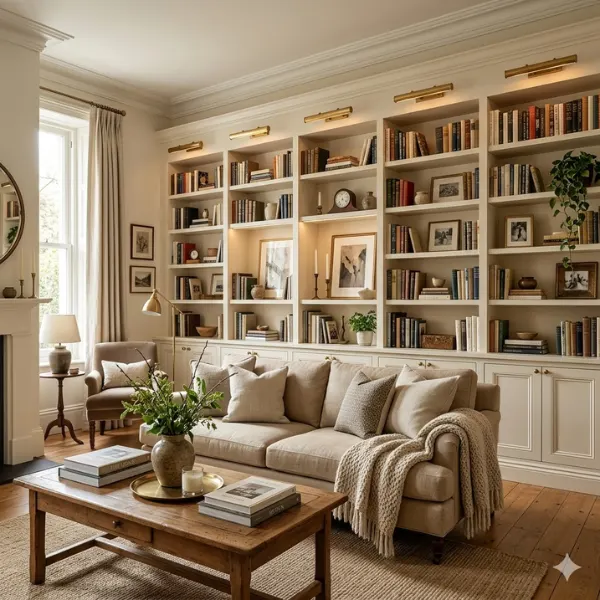
4. Classic Built-In Bookshelf Library
If there is one thing that will make any living room look like it was designed by a professional, it is built-in bookshelves. They add architectural weight, they create storage, they give you the most beautiful backdrop for your sofa — and they have been a staple of great interior design for literally centuries.
Why It Works
Built-ins do something that freestanding furniture simply cannot do — they make a room feel intentional, permanent, and custom. They draw the eye upward and make ceilings feel taller. They also solve the eternal problem of where to put everything — books, plants, candles, picture frames, and decorative objects all have a home. And because they are painted to match the wall color or trim, they blend seamlessly into the architecture of the room.
Best For
Anyone with a dedicated living room (rather than open-plan), home library enthusiasts, families who need organized storage, and anyone living in a period home or traditional-style house. Works best in medium to large rooms, but even a single flanking bookcase on one side of a fireplace is transformative.
Styling Tips
- Paint your built-ins the same color as your walls for a seamless, architectural look. White, warm cream, or soft sage are all gorgeous options.
- Arrange your books by color for an Instagram-worthy but genuinely beautiful result.
- Break up rows of books with objects — a small plant, a framed photo, a sculptural piece, a candle.
- Use the lower cabinets (if you have them) for hidden storage — board games, blankets, remote controls.
- Add picture lights or LED strip lighting inside the shelves to make the whole thing glow in the evening.
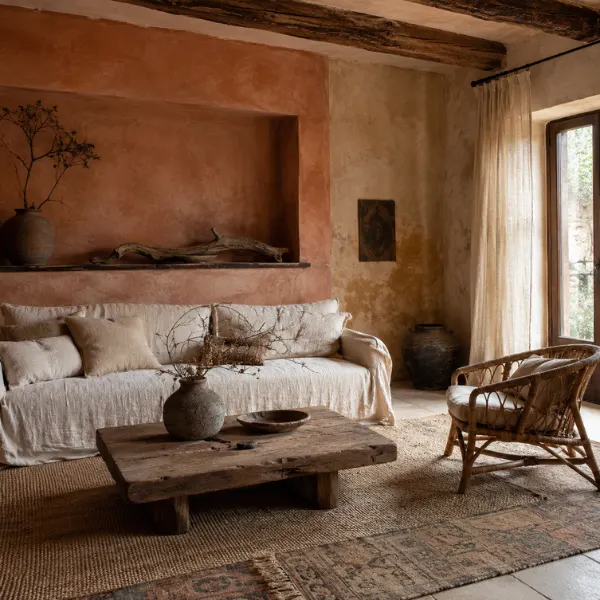
5. Wabi-Sabi Earthy Escape
Wabi-Sabi is a Japanese philosophy that finds beauty in imperfection, age, and the natural passage of time. In living room terms, it means uneven textures, organic shapes, handmade pieces, and a palette that looks like it was pulled straight from the forest floor. It is the antidote to everything sterile and over-designed — and it is deeply, genuinely beautiful.
Why It Works
We are living in a world of mass production and perfect finishes, and there is a growing hunger for things that feel real and human. A Wabi-Sabi living room feels like a sanctuary from all of that. Nothing is too polished, nothing is too precious — it is a room where you can actually relax. And because the style is rooted in natural materials and organic color palettes, it literally never goes out of date.
Best For
Nature lovers, creatives, people who shop at farmers markets and vintage stores. Works in cottages, farmhouses, converted barns, and any home with original character or exposed materials. Wonderful in both small cozy rooms and larger, more rustic spaces.
Styling Tips
- Choose walls in warm plaster tones — think raw linen, dusty ochre, or aged terracotta. Limewash paint is perfect here.
- Use furniture with natural wear — linen slipcover sofas, wooden coffee tables with knots and grain, rattan chairs.
- Layer rugs. A flat-woven kilim under a natural jute runner creates depth and warmth simultaneously.
- Display handmade and imperfect objects — a lumpy ceramic bowl, a hand-thrown pottery vase, a twisted driftwood sculpture.
- Avoid anything too shiny, too symmetrical, or too matching. The beauty here is in the honest variety of things.
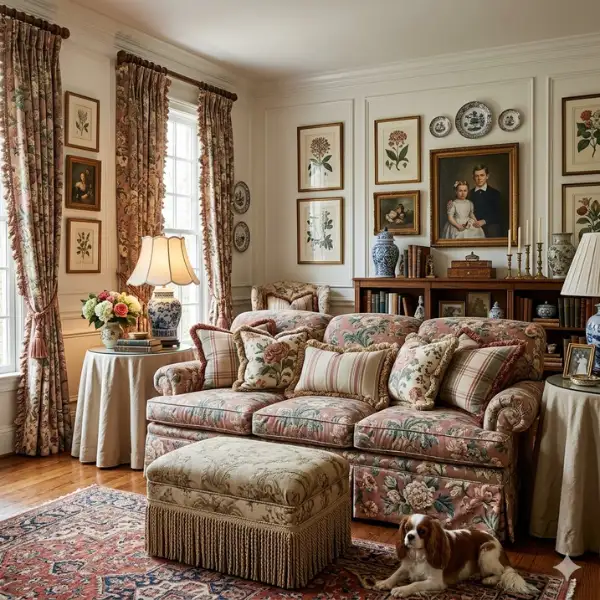
6. Grand Millennial Charm Room
Grand Millennial style is what happens when a younger generation falls completely in love with your grandmother’s decorating — chintz, fringe, scallops, florals, and all. It is playful, it is layered, it is nostalgic, and it is absolutely having a major moment right now — because deep down, it was always beautiful.
Why It Works
Grand Millennial embraces the kind of decorating principles that have stood the test of time for over a century — pattern mixing, rich upholstery, collections of meaningful objects, and rooms that tell a story. It feels personal and warm in a way that stark minimalism sometimes cannot. And because it draws from genuine design history rather than a passing fad, it has real staying power.
Best For
Personality-driven decorators, vintage lovers, anyone inheriting a family home or working with older architecture. Particularly stunning in Victorian terrace houses, colonial homes, and any space with original period features like crown molding or picture rails. Works best in medium to large rooms where you have room to layer.
Styling Tips
- Start with a classic chintz or floral sofa — or recover an existing sofa in a bold botanical print.
- Layer in fringe trim on throw pillows, a scalloped lampshade, and a bullion fringe ottoman.
- Mix your patterns — floral, stripe, and plaid can all live happily together if they share a common color.
- Fill your walls with framed botanical prints, family portraits, and vintage plates.
- Use skirted side tables, ruffled curtains, and tasseled tiebacks for that full, glorious effect.
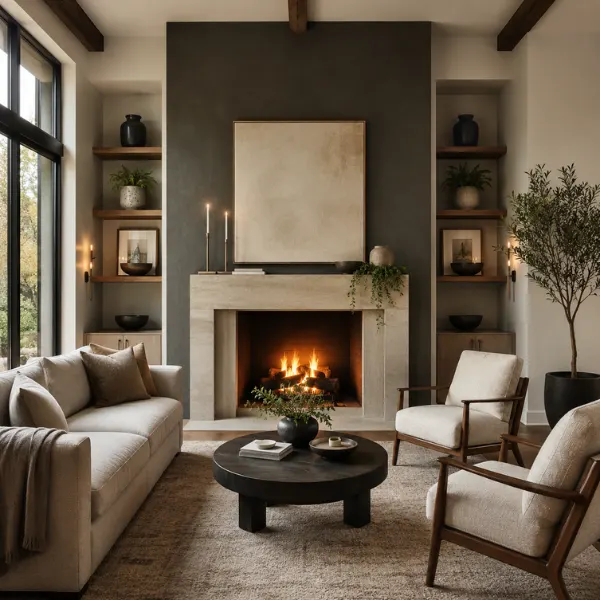
7. Modern Fireplace Focal Point
A fireplace has always been the natural heart of a living room — and a beautifully styled fireplace surround turns a perfectly nice room into an unforgettable one. The modern version of this idea strips away the fussy Victorian ornamentation and replaces it with clean architectural lines, beautiful natural stone, and intentional simplicity.
Why It Works
Every room needs a focal point — the one thing your eye travels to the moment you walk through the door. A modern fireplace earns that role effortlessly. It creates warmth (literally and visually), provides natural symmetry for the furniture arrangement, and acts as an anchor for the whole room. Style the mantel well and everything else falls into place around it.
Best For
Anyone lucky enough to have a fireplace — or even a faux fireplace or electric insert. Works beautifully in living rooms of any size. In a small room, a simple concrete or plaster surround makes it feel like a boutique hotel. In a large room, a floor-to-ceiling stone chimney breast becomes a true architectural statement.
Styling Tips
- Choose surround materials that age beautifully — honed limestone, concrete, Venetian plaster, or soapstone.
- Keep the mantel styled simply: a large mirror or single piece of art, two matching candlesticks, and one trailing plant.
- Flank the fireplace with matching built-ins, sconces, or tall potted plants for perfect symmetry.
- If you do not have a working fireplace, install an electric insert with realistic flame effects — it gives you 90% of the visual impact.
- Paint the chimney breast a different shade to the rest of the room — a deep navy, sage green, or terracotta makes it pop beautifully.
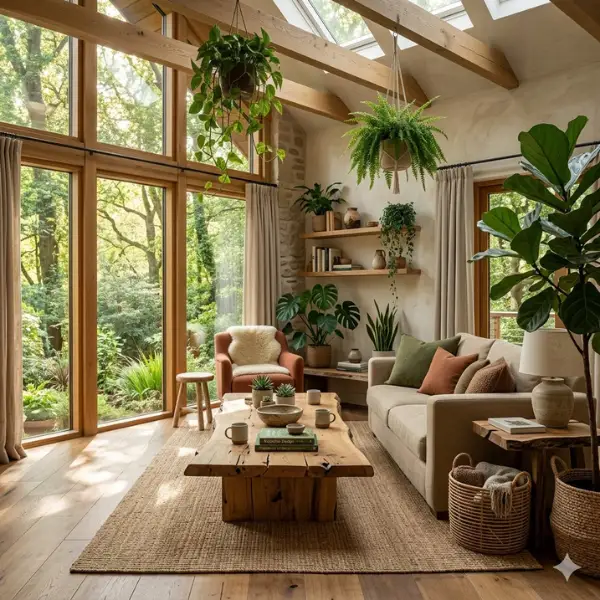
8. Biophilic Nature-Infused Lounge
Biophilic design is the practice of bringing the natural world inside — and it goes far beyond just putting a houseplant in the corner. A true biophilic living room layers reclaimed wood, stone, living plants, natural light, organic shapes, and earthy color palettes to create a space that genuinely feels like an extension of the outdoors.
Why It Works
Decades of research now confirm what designers have always intuitively known — humans feel better, calmer, and more creative when they are surrounded by natural elements. A biophilic living room taps into that on a deep level. And because it is rooted in materials that are genuinely beautiful — wood, stone, linen, leather, rattan — it never looks cheap or dated.
Best For
Nature lovers, anyone who works from home and needs a calming environment, families with young children (natural materials are incredibly durable), and anyone who has always wanted to live in a treehouse. Works particularly well in rooms with good natural light or large windows.
Styling Tips
- Layer several different types of plants at different heights — a tall fiddle-leaf fig, a trailing pothos on a shelf, and a cluster of small succulents on the coffee table.
- Use a reclaimed wood coffee table, live-edge side table, or wooden ceiling beams to bring in raw natural texture.
- Choose upholstery in natural fibers — linen, cotton canvas, jute, or wool — rather than synthetics.
- Add a stone or slate side table and a ceramic table lamp base for an earthy mineral element.
- Keep the color palette rooted in nature — warm greens, sandy beiges, rich browns, and soft terracotta.
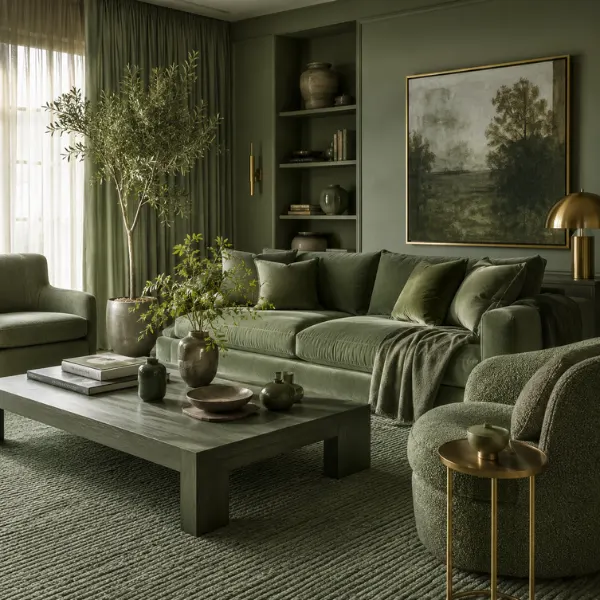
9. Tonal Monochromatic Cocoon
A monochromatic living room sounds like it might be boring — but when it is done with real intention and skill, it is one of the most sophisticated and serene looks in interior design. The key is using one base color and then layering every shade, tone, and texture of that color throughout the room until it feels rich, dimensional, and completely enveloping.
Why It Works
Monochromatic rooms never fight with themselves. When everything reads in the same color family, the eye can fully relax and take in the beauty of texture and form rather than being pinged from one competing color to another. It feels curated and deliberate — the kind of room you see in high-end design magazines. And because you are working with a single hue, the room ages beautifully as you swap in new pieces over time.
Best For
Design-conscious homeowners, people who find it hard to mix colors, and anyone who wants their living room to feel like a grown-up, polished space. Works in any room size — small rooms feel cocooned and intimate in a single dark tone, while large rooms feel luxuriously expansive in soft, layered neutrals.
Styling Tips
- Choose your anchor color wisely — deep sage green, warm caramel, dusty blue, or soft terracotta all work magnificently.
- Layer at least five different shades and tones of your chosen color from light to dark across walls, sofa, curtains, rug, and accessories.
- Texture is everything in a monochromatic room — mix velvet, linen, bouclé, leather, and wood to add visual variety.
- Use a single contrasting accent (warm brass hardware, a black picture frame) to stop the room from disappearing into itself.
- Curtains floor-to-ceiling in the same family as your wall color make the room feel dramatically larger.
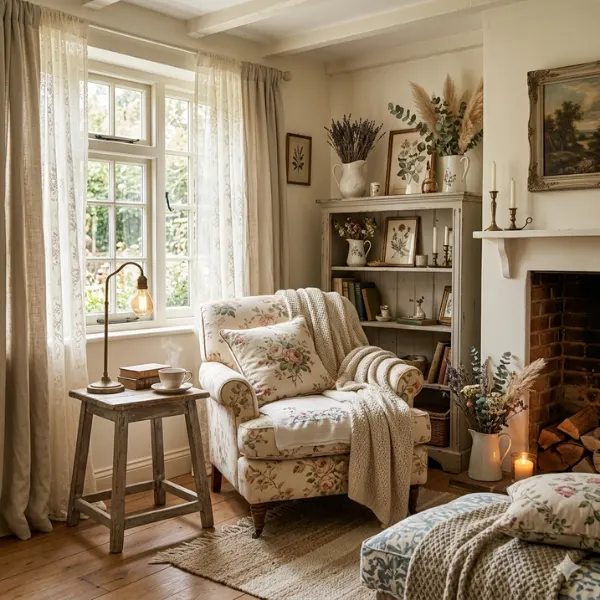
10. Mid-Century Modern Revival
Clean tapered legs, walnut wood, a low-slung profile, and graphic patterns on the upholstery — Mid-Century Modern has one of the most universally beloved aesthetics in all of interior design history. It originated in the 1950s and ’60s, was rediscovered by a new generation in the 2000s, and has never left the conversation since. That alone tells you everything you need to know about how timeless it is.
Why It Works
Mid-Century Modern is the rare design style that works equally beautifully in a Victorian terrace, a 1970s ranch house, and a brand-new new-build apartment. Its clean lines and warm wood tones are endlessly adaptable. It also sits perfectly at the crossroads of comfortable and stylish — you want to sit on that sofa, and you want to look at it too.
Best For
Anyone who loves clean, unfussy design with a hint of retro personality. Particularly good in apartments and smaller living rooms because the low-profile furniture does not crowd the space. Works in both open-plan layouts and dedicated sitting rooms.
Styling Tips
- The sofa is your starting point — look for a low-slung piece with tapered wooden legs in walnut, teak, or oak.
- Add an Eames-style lounge chair or a tulip side table for an instantly recognizable accent.
- A Sputnik-style chandelier or a mushroom-shaped floor lamp completes the era perfectly.
- Use a graphic abstract or geometric area rug in mustard, burnt orange, teal, or olive.
- Keep the walls light — warm white or soft cream — to let the warm wood tones and rich upholstery fabrics shine.
11. Sculptural Statement Lighting Lounge
Most people treat lighting as an afterthought — and that is the single biggest mistake in living room decorating. A truly great living room is built around its lighting. In the Statement Lighting Lounge, the light fixture is not just functional — it is the art piece, the conversation starter, and the thing that makes the whole room feel finished.
Why It Works
Lighting does something that no other design element can do — it changes how everything else in the room looks. A sculptural pendant or chandelier draws the eye upward, makes ceilings feel higher, and adds immediate drama and personality. And because great light fixtures are built to last, investing in one is never wasteful. It will look beautiful with three different sofas over the next twenty years.
Best For
Rooms with standard or higher ceilings where a hanging fixture can really shine. Great for anyone who wants maximum visual impact with minimal furniture changes. Works especially well in open-plan living areas where the light fixture helps define and anchor the seating zone.
Styling Tips
- Choose a statement fixture that contrasts your room in some way — an oversized rattan pendant in a sleek modern room, or a sharp geometric brass chandelier in a cozy traditional space.
- Size up. Most people choose fixtures that are too small. Go one or two sizes bigger than you think you need.
- Layer your lighting — the statement fixture provides atmosphere, but you also need table lamps and floor lamps for actual functional light.
- Hang pendants lower than you think — 30 to 34 inches above your coffee table for the most dramatic, intimate effect.
- Dimmer switches are non-negotiable. A statement fixture at full brightness is completely different from the same fixture at 40% — and the lower setting wins every time.
12. Vintage and Modern Lighting Mix
This living room idea is subtly brilliant — instead of committing to one style of lighting, you deliberately mix vintage and contemporary fixtures throughout the same space. A sleek matte black pendant alongside a vintage Murano glass table lamp. A modern arc floor lamp next to a scalloped antique bedside-turned-accent lamp. The contrast is the point, and it works beautifully.
Why It Works
When vintage and modern lighting share a room, neither looks like it belongs to a specific era — and that is exactly what makes the space feel timeless. It has the character and warmth of the past paired with the clean confidence of the present. It is also deeply personal — because vintage pieces are always one-of-a-kind, your room can never be exactly replicated by anyone else.
Best For
Eclectic decorators, people who love thrifting and vintage markets, and anyone who wants a sophisticated, layered look without committing to a single design style. Works in any room size.
Styling Tips
- Pick a unifying element — either a consistent finish (all brass, all black, all warm wood) or a consistent shape (all round, all organic) — to tie the different eras together.
- Shop antique markets, estate sales, and second-hand stores for vintage pieces. The hunt is part of the joy.
- A vintage ceramic lamp base with a simple linen shade looks stunning next to the most contemporary sofa.
- Do not match your vintage and modern pieces too perfectly — a slight mismatch in scale or proportion is what makes it look intentional and designed, not random.
- Layer at least three light sources in the room: overhead, table level, and floor level.
13. Layered Texture Maximalist Parlour
Maximalism is not about cramming as much as possible into a room. It is about richness, personality, and the confident layering of pattern, color, and texture until the room tells a full, complex story. The Maximalist Parlour does exactly that — every surface has something interesting on it, and yet nothing feels random or chaotic because there is a real color palette and design logic holding it all together.
Why It Works
Maximalist rooms are the rooms people remember. They create an atmosphere that minimalism simply cannot — they feel lived-in, collected, deeply personal, and joyful. And when they are done with real skill (using a consistent color palette, balancing visual weight across the room, mixing pattern scales thoughtfully), they are genuinely timeless because they are built around personality rather than any particular trend.
Best For
Bold personalities, frequent entertainers, anyone who has a lot of art and objects they love and wants to display them proudly. Works best in medium to large rooms where there is enough space to layer without overwhelming. Also surprisingly good in period properties with high ceilings.
Styling Tips
- Choose three to four colors and repeat them throughout the room in different proportions — a dominant color for walls and sofa, a secondary color for the rug and curtains, and two accent colors in pillows, art, and objects.
- Mix pattern scales — a large floral, a medium geometric, and a small stripe can all live in the same room if they share a color.
- Layer your textiles — a velvet sofa, a silk pillow, a woven throw, a fringed ottoman. The more texture variety, the better.
- Use a large, ornate mirror to bounce light and add depth without adding more furniture.
- Edit ruthlessly. Maximalism is not hoarding. Everything in the room should be beautiful or meaningful — ideally both.
14. French Country Countryside Sitting Room
Imagine a farmhouse in Provence — stone walls, linen slipcovers, lavender in a ceramic jug, faded toile curtains, and sunlight pouring through tall shuttered windows. That is French Country, and it is one of the most enduringly beautiful and comfortable living room styles ever conceived. It is warm, romantic, and completely unpretentious.
Why It Works
French Country design is the perfect marriage of elegance and ease. Nothing in the room tries too hard — it all looks like it was gathered slowly over many years from different places, flea markets, and family inheritances. And because it leans so heavily on natural materials, timeworn finishes, and classic textile patterns, it simply does not date. Rooms decorated in this style in the 1980s still look beautiful today.
Best For
People who love romantic, lived-in interiors. Particularly wonderful in older homes, country properties, and cottages — but also works beautifully in city apartments when you want to create a sense of warmth and escape. Best in medium to large rooms where you can layer generously.
Styling Tips
- Start with a slipcovered sofa in natural linen or washed cotton — the slightly rumpled look is perfectly intentional.
- Use toile de Jouy for curtains, throw pillows, or an accent chair. Blue-and-white or red-and-white are the most classic colorways.
- Add a large farmhouse coffee table — a worn wooden trunk, a scrubbed pine table, or a distressed painted piece.
- Display a collection of French ceramics, old wine bottles, dried lavender bunches, and faded botanical prints.
- Install shutters or simple linen tab-top curtains rather than heavy formal drapes — the casual look is the point.
15. Coastal Linen and Driftwood Retreat
This is not the nautical living room of anchor motifs and red-and-navy stripes. The Coastal Linen and Driftwood Retreat is a far more sophisticated interpretation of seaside living — bleached wood, breezy linen, woven rattan, sea glass tones, and the kind of calm that makes you feel like you just stepped off a beach.
Why It Works
This style captures the most universally loved qualities of coastal living — light, air, natural texture, and a relaxed ease — and translates them into a living room that works beautifully even if you live nowhere near the sea. It is inherently neutral and natural, which means it ages incredibly well and adapts easily as you update pieces over time.
Best For
Anyone who craves a calm, airy, spa-like living environment. Particularly great for families because the light palette and natural materials are incredibly practical. Works in rooms of any size — it is especially transformative in dark or small rooms because the light palette opens everything up.
Styling Tips
- Paint walls in a warm white, pale linen, or very soft sage — avoid anything too stark or blue-toned.
- Choose a sofa in natural linen, washed canvas, or oatmeal-colored bouclé. Slipcovers work perfectly here.
- Layer natural fiber rugs — jute, sisal, or seagrass — for texture underfoot.
- Add driftwood accents: a driftwood lamp base, a piece of sculptural driftwood on the coffee table, or a mirror framed in bleached wood.
- Keep your accessories in a palette of sand, stone, sea glass green, soft blue, and warm white. Real shells, coral, and sea glass work beautifully as accents.
16. Dark and Moody Jewel-Tone Den
For every person who gravitates toward light and airy, there is someone else who wants to walk into a living room that feels like a velvet-lined jewel box — walls in deep emerald, sapphire, or amethyst, rich upholstery, candlelight, and the kind of enclosing warmth that makes you never want to leave. That is the Dark and Moody Den, and it is breathtaking.
Why It Works
Dark rooms get a bad reputation for feeling small or gloomy, but when they are done well — with warm lighting, rich materials, and the right reflective surfaces — they feel extraordinarily luxurious. Think of the best hotel lobbies you have ever walked into. There is a reason so many of them use deep, moody palettes. The jewel tones in this design — emerald, sapphire, amethyst, deep teal — are rooted in historical design going back centuries, which is precisely why they still look incredible today.
Best For
Evening entertainers, people who love the cozy intimacy of a dark space, and anyone with a room that does not get much natural light (you might as well lean into it beautifully). Works best in small to medium rooms where the enclosing quality of the dark palette enhances the cocooning effect.
Styling Tips
- Paint all four walls AND the ceiling in the same deep color for the most dramatic, immersive result. Farrow & Ball’s Hague Blue, Studio Green, or Vardo are perfect starting points.
- Use lighting generously — wall sconces, table lamps with warm amber bulbs, and candles everywhere.
- Upholster your sofa in velvet — a jewel-toned velvet sofa (deep teal, dusty rose, or burnt gold) is utterly stunning against a dark wall.
- Add brass, bronze, or antique gold hardware and accessories — they glow magnificently against dark color.
- Use mirrors strategically to bounce light and prevent the room from feeling cave-like.
17. Symmetrical Wingback Conversation Area
There is something deeply satisfying about a living room built around a pair of matching wingback chairs facing each other across a beautiful rug and coffee table. It is orderly, it is purposeful, and it creates an immediate invitation for actual conversation — which is what a living room was always supposed to be for in the first place.
Why It Works
Symmetry is one of the oldest and most reliable principles in design because the human brain is hardwired to find it appealing. A symmetrical living room arrangement feels instantly calm, balanced, and deliberate. The wingback chair specifically has been a staple of great interiors for over 300 years — its shape is iconic, its proportions are perfect, and it works in absolutely any decorating style from traditional to transitional to modern.
Best For
People who entertain frequently, fans of traditional and transitional design, and anyone who wants their living room to feel truly composed and finished. Works beautifully in both formal sitting rooms and everyday family spaces. Perfect in medium to large rooms.
Styling Tips
- Choose wingbacks that contrast your sofa — if your sofa is neutral, go for a patterned wingback in a floral or check. If your sofa is bold, choose linen or leather wingbacks.
- Position the chairs facing each other with a coffee table between them. Add a small side table beside each chair for drinks and books.
- Use identical or near-identical table lamps on either side of the sofa to reinforce the symmetry.
- A large area rug should sit underneath all the furniture to visually unite the arrangement.
- A fireplace or a large piece of art on the wall between the chairs gives the whole arrangement a natural focal point.
18. Art Deco Glamour Lounge
Geometric shapes, lacquered surfaces, rich jewel tones, exotic materials, and an unapologetic love of luxury — Art Deco is one of the most theatrical and distinctive design styles in history, and translated thoughtfully into a contemporary living room, it is absolutely spectacular.
Why It Works
Art Deco has experienced multiple major revivals since it first emerged in the 1920s, and each time it comes back, it feels just as relevant and exciting as before. That is because it is built on genuinely beautiful formal principles — geometric precision, material opulence, and a bold graphic aesthetic — that transcend any particular decade. A living room with strong Art Deco bones looks just as sensational today as it would have in 1935.
Best For
Bold, glamorous personalities who want their living room to make a genuine statement. People who love jewelry, fashion, and the idea of dressing a room the way you dress yourself. Works best in medium to large rooms with high ceilings where the architectural drama can really breathe.
Styling Tips
- Start with geometry — a sunburst mirror, a fan-shaped wall sconce, herringbone flooring, or chevron-patterned upholstery establishes the aesthetic immediately.
- Use a palette of black, gold, deep ivory, and one rich accent color — emerald green, sapphire blue, or burgundy.
- Choose furniture with strong, clean geometric silhouettes — a curved velvet sofa, a lacquered side cabinet, a geometric cocktail table.
- Layer in luxurious materials — mirrored surfaces, lacquered wood, brass inlay, and silk or velvet upholstery.
- A statement chandelier with geometric crystal drops or a sculptural brass sunburst pendant is the perfect crown for the whole room.
19. Open-Concept Multi-Zone Living Space
As open-plan living has become the norm in modern homes, the challenge is creating a living room that feels purposeful and defined without the benefit of four walls. The Multi-Zone approach solves this beautifully — using rugs, furniture placement, lighting, and subtle visual anchors to carve distinct, comfortable zones out of one larger space.
Why It Works
The Multi-Zone approach respects how people actually live — we need a place to watch a film, a place to have a conversation, maybe a reading nook or a home workspace. By deliberately creating those zones within one open space, the room becomes more functional without sacrificing the openness and flow that makes open-plan living so appealing in the first place. And because the zones are defined by furniture and rugs rather than walls, the arrangement can always be adapted as your life changes.
Best For
Anyone with an open-plan kitchen, dining, and living layout — which describes most modern new-build homes and renovated period properties. Works particularly well for families, people who work from home, and entertainers who need a space that serves multiple purposes simultaneously.
Styling Tips
- Use a large area rug to anchor the primary seating zone — this instantly creates a room within a room.
- Position your sofa with its back to the open space (rather than pushed against a wall) to create a visual divider between zones.
- Use pendant lighting to define zones from above — one pendant over the seating area, one over the dining table.
- A console table behind the sofa creates a visual and physical boundary between the living zone and the space beyond.
- Keep the color palette consistent across all zones so the whole space feels cohesive rather than fragmented.
20. Reclaimed Wood and Stone Artisan Room
This living room is for the people who appreciate genuinely beautiful craftsmanship — rooms built from materials that were made to last and only get better with age. Rough-hewn reclaimed wood beams, a stone fireplace surround, hand-thrown ceramics, woven textiles, and furniture made by real artisans in real workshops. It is slow design at its absolute best.
Why It Works
Materials that are genuinely natural and genuinely aged carry their own beauty that no manufactured surface can replicate. A room built from reclaimed oak, rough stone, and handwoven textiles tells a story — and it looks better with every passing year as those materials develop their patina further. It is the opposite of disposable decorating. You invest once, and you live beautifully for decades.
Best For
Homeowners who value quality over quantity, people who live in barn conversions, stone cottages, or log cabins, and anyone who simply loves the texture and story of natural, aged materials. Works beautifully in both rural and urban settings — a city apartment with reclaimed wood shelving and a stone feature wall has enormous character.
Styling Tips
- Use reclaimed wood planks as open shelving or for a feature wall behind your sofa — the grain and texture are extraordinary.
- Choose a stone hearth or fireplace surround if you have a fireplace — even a simple limestone or slate surround makes an enormous difference.
- Invest in one or two genuinely artisan-made pieces of furniture — a live-edge coffee table, a hand-thrown ceramic lamp, a hand-knotted rug.
- Keep upholstery in natural, undyed materials — raw linen, organic cotton canvas, or natural leather.
- Display your artisan objects with pride — a grouping of hand-thrown pots, a basket collection, or a single spectacular piece of pottery on a pedestal.
21. Transitional Greige Elegance
Greige — the perfect blend of grey and beige — is the ultimate background color for a timeless living room, and the Transitional style is its perfect partner. Transitional design sits comfortably between traditional and contemporary, borrowing the warmth and comfort of classic design while keeping the clean lines and lack of fussiness of modern style. Together, they create the most universally appealing living room you can build.
Why It Works
Greige works with everything. It does not fight with your furniture, your art, or your accent colors — it simply lets everything else shine. And because Transitional style deliberately avoids committing too hard to any single era or aesthetic, it always feels current without ever feeling trendy. It is the living room equivalent of a well-cut blazer — it will never embarrass you.
Best For
Anyone who finds it hard to commit to a single decorating style, people selling their homes (it appeals to the broadest possible audience), and anyone who wants a living room that works as a beautiful, practical everyday family space. Works in rooms of any size.
Styling Tips
- Paint walls in a warm greige — Benjamin Moore’s Pale Oak, Sherwin-Williams’ Accessible Beige, or Farrow & Ball’s Elephant’s Breath are all exceptional choices.
- Choose a sofa with classic proportions — clean lines, no fussiness, comfortable seat depth — in warm ivory, camel, or soft grey.
- Add warmth through wood tones — a walnut coffee table, oak side tables, or a natural wood console.
- Layer in texture through a chunky knit throw, a linen pillow, and a high-low pile rug in warm ivory and natural.
- Use brass or antique bronze hardware and light fixtures for a warm, sophisticated finish that bridges traditional and contemporary.
22. Eclectic Curated Antique Mix
The Eclectic Antique living room is the one where every piece has a history — a Victorian button-back chair reupholstered in a contemporary velvet, a 1930s lacquered side table next to a modern linen sofa, a Persian rug on bare floorboards. Nothing matches precisely, and everything works together magnificently. This is the room of someone who genuinely lives with beautiful things rather than just buying a room set.
Why It Works
Antiques are always in style because they are always genuinely beautiful and genuinely rare. A room filled with carefully chosen vintage and antique pieces from different periods has a depth and character that no amount of new furniture can replicate. And because nothing in it belongs to any single contemporary trend, it ages completely gracefully — it simply becomes more itself over time.
Best For
Confident decorators who trust their own eye, antique lovers, frequent thrift and vintage shoppers, and anyone who has inherited beautiful pieces and does not know how to incorporate them. Works in any size space — a single great antique piece can transform even a tiny room.
Styling Tips
- Develop your eye before you shop — spend time in galleries, museums, and beautiful antique shops to understand what different periods look like.
- Find your unifying thread — it might be a color palette, a material (all wood pieces in warm honey tones, for example), or a mood. This thread ties wildly different pieces together.
- Mix periods with confidence — a Georgian chest of drawers next to a 1970s arc lamp next to a contemporary sofa is a perfectly valid and beautiful combination.
- Do not be afraid to reupholster antique frames in contemporary fabrics — it is the most effective way to update old pieces while keeping their beautiful bones.
- The more genuinely personal your collection, the better the room. Buy things you love, not things you think you should love.
23. Coffered Ceiling Statement Room
A coffered ceiling — that beautiful grid of recessed panels framed by beams or molding — is one of the most spectacular architectural features any living room can have. And the beautiful thing is that you do not need to live in a grand historic mansion to have one. Modern faux-coffered ceilings created with simple molding and paint are accessible, relatively affordable, and completely transformative.
Why It Works
Coffered ceilings add immediate architectural gravitas to a room. They draw the eye upward, make any ceiling feel intentional and purposeful, and add the kind of period-appropriate detail that increases the perceived value of a home significantly. They have been a hallmark of great domestic architecture for centuries — from Renaissance palaces to American colonial mansions — which tells you everything about their timeless appeal.
Best For
Homeowners who want to add genuine architectural character to a plain room, anyone renovating or upgrading a period property, and people who want maximum visual impact without changing the furniture. Works in medium to large rooms — in small rooms, a coffered ceiling can feel oppressive unless the ceiling is fairly high.
Styling Tips
- Paint your coffered ceiling the same color as the rest of the ceiling for a subtle, sophisticated look — or go bold and paint it a contrasting color to make it a true design feature.
- A dramatic chandelier hanging from the center panel makes the whole architectural composition feel complete and intentional.
- Keep the rest of the room relatively simple if you have a dramatic ceiling — you want the architecture to be the star.
- If your ceilings are low (under eight feet), skip this idea or use very slim, flat molding profiles to suggest the effect without adding visual weight.
- Faux coffered ceilings made from MDF molding, panel molding, and paint are incredibly affordable DIY projects that look genuinely extraordinary.
24. Arch-Window Mediterranean Sanctuary
Inspired by the sun-drenched interiors of Tuscany, Santorini, and Southern Spain — this living room is built around beautiful arched windows, warm plaster walls, terracotta tiles, and the kind of effortless elegance that only comes from design rooted in centuries of Mediterranean tradition. It feels warm, ancient, and completely alive.
Why It Works
Mediterranean design is built on materials and principles that have been refined over thousands of years — and that longevity shows. Thick plaster walls, terracotta, wrought iron, hand-painted tiles, and natural linen have been beautiful for millennia and will remain beautiful for millennia more. This style also works particularly well in rooms with architectural character — an existing arch, a deep window reveal, or even just high ceilings give you the perfect starting point.
Best For
Anyone with original architectural features in their home (arched doorways, deep window reveals, brick or stone walls), homeowners in warm climates where indoor-outdoor living is important, and anyone who has ever fallen in love with the aesthetic of a European Mediterranean home. Works beautifully in both small and large spaces.
Styling Tips
- If you do not have existing arched windows or doorways, create the effect with arched mirrors, arched alcoves, or even a large arched piece of art or wallpaper panel.
- Use limewash or venetian plaster on at least one wall — the organic variation in tone is essential to the aesthetic.
- Choose terracotta floor tiles, terra cotta planters, and woven rugs in earthy reds and ochres.
- Furnish simply — a low-slung linen sofa, a rustic wooden coffee table, wrought iron side tables, and large ceramic vessels.
- Layer in Mediterranean plants — an olive tree in a terracotta pot, trailing rosemary, lavender in a cluster of small pots on the windowsill.
Mistakes to Avoid When Decorating Your Living Room
No matter which of these ideas you fall in love with, there are a handful of very common decorating mistakes that will quietly undermine even the most beautiful design choices. I have seen them in hundreds of homes, and they are all completely avoidable once you know what to look for.
Choosing a rug that is too small. This is probably the single most common mistake in living room decorating, and it makes the room look unfinished every single time. Your rug should be large enough for the front legs of all your key furniture pieces to sit on it — ideally all four legs of everything. When in doubt, go bigger.
Hanging artwork at the wrong height. Art should be hung so that the center of the piece is at approximately eye level — which for most adults means the center sits around 57 to 60 inches from the floor. Artwork hung too high makes a room feel disconnected and awkward. Too low looks unconfident. Get the height right and your whole wall composition will transform.
Ignoring the impact of lighting. If you are relying on a single overhead light fixture to light your entire living room, you are missing approximately 80% of what lighting can do for a space. Layer your light sources — at least one overhead fixture, one floor lamp, and one or two table lamps — and put them all on dimmers. The difference is staggering.
Pushing all the furniture against the walls. This feels like it creates more space, but it actually makes a room feel emptier and less comfortable. Pull your furniture in from the walls and group it around a central coffee table. The room will feel more intimate, more purposeful, and paradoxically larger.
Buying everything from the same place at the same time. Rooms that are purchased in one shopping trip in one afternoon at one store all look the same way — like a showroom, not a home. The most beautiful living rooms are built slowly, with pieces gathered from different sources at different moments. Give yourself time and permission to build gradually.
Neglecting the ceiling. The ceiling is the fifth wall of your room, and most people completely ignore it. Whether you paint it in a rich color, add molding or a coffered detail, or simply hang a spectacular pendant light, addressing the ceiling takes your room from nice to extraordinary.
Skimping on curtain length. Curtains that hover above the floor look apologetic and unfinished. Always hang your curtains as high as possible (ideally at ceiling height) and let them puddle slightly or just kiss the floor. The visual effect of floor-to-ceiling curtains is one of the most dramatic and cost-effective improvements you can make to any living room.
Conclusion
A timeless living room is not about following rules or buying the most expensive things. It is about making choices with real intention — choosing quality materials over trendy ones, investing in pieces with beautiful bones, and building a room that reflects who you genuinely are rather than who a magazine told you to be this season.
Every single idea on this list has been loved for decades — in some cases, centuries — because it is rooted in genuine design principles rather than passing fashions. Whether you are drawn to the quiet calm of a Japandi Retreat, the rich personality of a Grand Millennial Parlour, or the Mediterranean warmth of an Arch-Window Sanctuary, the thread connecting all of them is the same: intention, quality, and a room that feels genuinely yours.
Start small if you need to. One great piece, one beautiful layer, one bold decision. Build slowly, buy thoughtfully, and trust your own eye. That is exactly how the most beautiful living rooms in the world were made — and yours can be too.
Frequently Asked Questions
What makes a living room design truly timeless? A timeless living room is built on quality materials, classic proportions, and a design philosophy that does not rely on current trends for its appeal. Neutral foundations, natural textures, balanced furniture arrangements, and layered lighting are the non-negotiables. The rest can change over time — timeless design is flexible enough to absorb new pieces gracefully without losing its character.
How do I choose a style if I like several of these ideas? Start by identifying the two or three ideas that genuinely excite you most — not the ones you think you should like, but the ones that made your heart beat a little faster. Then look for the common thread. Do they all share warm color palettes? A love of natural materials? A preference for clean lines? That thread is your personal design language, and once you identify it, decisions become much easier.
Can I mix different styles from this list? Absolutely — and in fact, the most beautiful living rooms almost always do. The Vintage and Modern Lighting Mix idea is built on exactly this principle. The key is finding a unifying element (a color palette, a material, a mood) that ties different references together. Without that thread, mixing becomes random. With it, mixing becomes sophisticated.
How do I make a small living room feel bigger and still look timeless? Use a light, warm neutral palette on the walls and large furniture pieces. Choose furniture with legs (so you can see the floor beneath it, which makes the room feel larger). Use mirrors strategically to bounce light. Keep the floor plan clear and purposeful. Hang curtains ceiling-height. Choose one statement piece rather than filling the room with many small things. And invest in a rug that is bigger than you think you need.
Is it worth hiring an interior designer for a living room makeover? It depends on your budget, your confidence, and the complexity of the project. For structural decisions — built-ins, flooring, fireplace surrounds, or complete room redesigns — professional guidance is almost always worth the investment. For styling and decorating decisions, a single consultation session with a designer (many offer these) can give you the framework and confidence to execute the project yourself. Either way, you now have 24 beautifully detailed ideas to bring to that conversation.
What is the best starting point when decorating a living room from scratch? Always start with the largest and most expensive pieces — sofa, rug, and curtains. These are the hardest to change and set the tone for everything else. Get these right first, then layer in furniture, then lighting, and finally accessories and art. Working in this order prevents the very common mistake of falling in love with a small accessory and then being unable to find furniture that works around it.
How often should I update my living room if I want it to stay looking fresh? A truly timeless living room never needs a full overhaul. Instead, refresh it seasonally with small, inexpensive changes — swap throw pillow covers, bring in new plants, move your art around, introduce a new candle scent or a different throw. Every few years, you might update one key piece — a new rug, a reupholstered chair, a new light fixture. The bones of the room, if they are genuinely timeless, will remain beautiful indefinitely.