26 Rustic Living Room Ideas That Actually Work (No Design Degree Needed)
If you’ve ever scrolled through Pinterest and thought, “I want that warm, cozy, cabin-meets-farmhouse vibe in my living room” — you’re in the right place. Rustic living rooms have this magical ability to feel like a warm hug the moment you walk in. There’s something about natural wood, earthy textures, and that lived-in charm that no ultra-modern, shiny space can ever match.
I’ve spent years helping people transform their living rooms, and rustic style is one of my absolute favorites to work with because it’s forgiving, personal, and truly timeless. Whether you’re working with a tiny apartment living room, a big open-plan space, or a medium-sized family room, there’s a rustic idea in this list for you.
These 26 ideas are all different from each other — different sizes, different moods, different budgets — so you’ll have plenty to choose from. Let’s get into it.
Table of Contents
26 Rustic Living Room Ideas
Here is the complete list:
1. Exposed Timber Beam Vaulted Ceiling Retreat
If you want one single feature that instantly makes a living room look stunning and rustic without doing much else, it’s exposed timber beams on a vaulted ceiling. This is the ultimate statement. It draws your eyes up, makes the room feel huge, and adds serious architectural character that no rug or throw pillow can replicate.
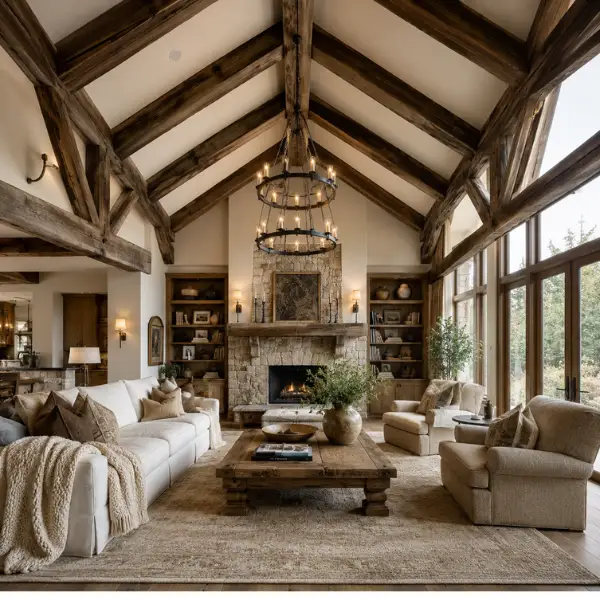
The beauty of this idea is that it works for both real log cabin homes and regular suburban houses. You can add faux wooden beams (they look incredibly real now) if your ceiling doesn’t already have them. The vaulted height gives the room an airy, open feel while the dark wood beams pull everything down and make it feel grounded and warm at the same time.
Why It Works
The contrast between a high, open ceiling and chunky dark beams creates visual drama without needing any extra decoration. The beams act as a natural focal point — your eyes travel across the room and then up, which makes the entire space feel curated and intentional. It also photographs beautifully, which is always a bonus.
Best For
Large living rooms, open-plan spaces, homes with existing high ceilings, mountain or cabin-style properties, and anyone who wants a wow-factor without spending a fortune on furniture.
Styling Tips
- Keep the rest of the room relatively simple so the beams do all the heavy lifting.
- Pair with creamy white or warm beige walls — not stark white, which can feel too cold against wood.
- Hang a large statement light fixture from the center beam — a wrought iron chandelier or woven rattan pendant works beautifully.
- Add a plush area rug in a neutral or earthy tone to balance the visual weight of the ceiling.
2. Stacked Stone Fireplace Focal Point
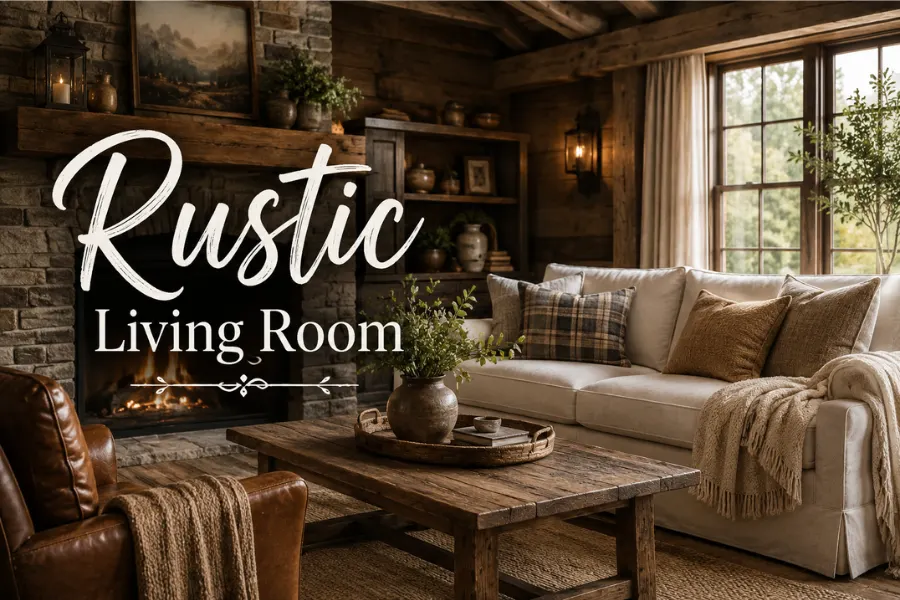
A stacked stone fireplace is probably the most classic rustic living room element there is — and for good reason. It’s warm, it’s dramatic, it’s tactile, and it automatically becomes the heart of the room the moment it’s built. Even a gas or electric fireplace framed in stacked stone reads as completely authentic and anchors the entire space.
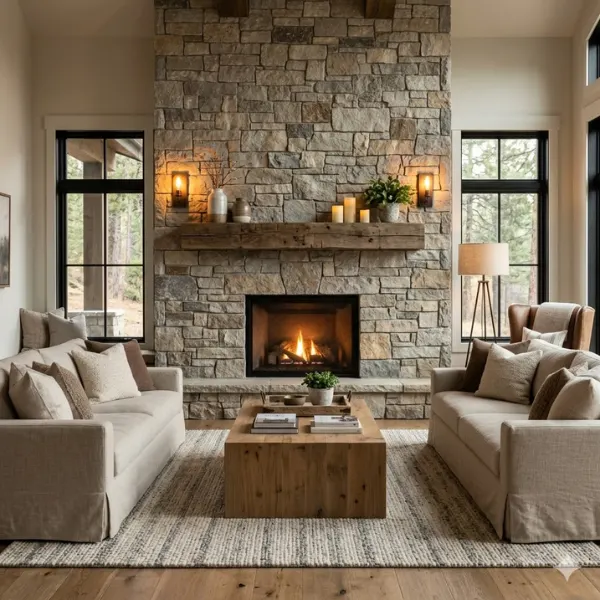
You can go with river rock, slate, fieldstone, or manufactured stone veneer depending on your budget. Floor-to-ceiling stacked stone makes the biggest impact, but even a smaller surround around a standard fireplace box looks spectacular. It’s one of those things that transforms a room permanently and adds real value to your home.
Why It Works
Stone brings in texture that you genuinely cannot fake with paint or wallpaper. It’s raw, natural, and completely rustic in the truest sense. A stone fireplace also tells people “this room is meant to be lived in and loved” — which is exactly the message rustic style sends.
Best For
Any size living room — go bigger with the stone on larger walls, and keep it more contained in smaller rooms. Works best as the room’s main focal wall.
Styling Tips
- Build a simple wood mantel above the stone for displaying decor — candles, greenery, framed artwork.
- Use warm-toned lighting on either side (sconces or tall floor lamps) to make the stone glow in the evenings.
- Keep furniture arranged toward the fireplace — two sofas facing each other with the fireplace at the head feels incredibly inviting.
- Don’t add a TV directly above the fireplace if you can avoid it. Mount it to the side instead.
3. Reclaimed Barnwood Accent Wall
Not everyone can knock out a wall or add stone. But nearly anyone can do a reclaimed wood accent wall — and the results are seriously impressive. This is one of the highest-impact, most budget-friendly rustic upgrades you can make to a living room. Old barn boards, salvaged pallet wood, or even new wood pre-treated to look weathered all do the job beautifully.
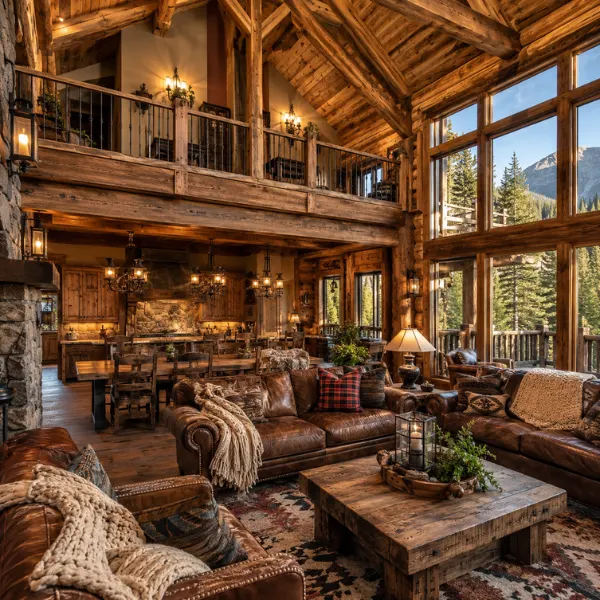
The beauty of reclaimed barnwood is that every single plank is different — different color, different grain, different history. That variation is what gives the wall its character. It doesn’t look manufactured. It looks like it’s been there for decades. And it turns a plain, flat wall into a genuine work of art.
Why It Works
It adds the warmth and texture of wood without committing to a full wood-paneled room. As an accent wall, it creates a backdrop that makes your furniture and decor pop against it. It also softens a living room beautifully, taking the edge off any cold or sterile finishes in the space.
Best For
Apartments, rented homes (removable panels are available), medium to large living rooms, bedrooms doubling as sitting rooms, and anyone on a tighter renovation budget.
Styling Tips
- Use it as the wall behind your sofa or behind your TV/entertainment setup.
- Mix different widths of planks for a more dynamic, textured look.
- Leave it raw and unsealed if you want a truly weathered look, or apply a matte clear coat to protect it while keeping the aged appearance.
- Hang simple, lightweight decor on it — a couple of black-framed prints or a small wreath of dried botanicals.
4. Log Cabin Great Room with Loft Overlook
This is the full dream — a proper great room where the living area, dining space, and sometimes even the kitchen flow together in one open, magnificent rustic space, with a loft above that overlooks everything. It’s dramatic, it’s functional, and it makes every gathering feel like a special occasion.
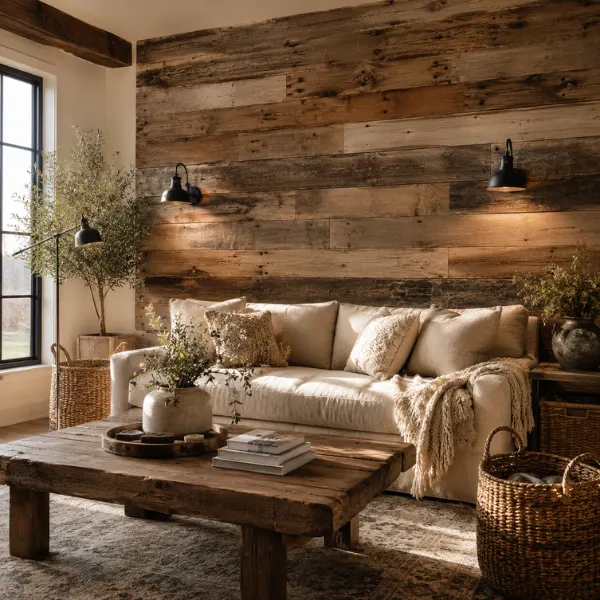
The loft overlook adds a layered visual dimension you just don’t get in standard rooms. You see the space from two levels, and both levels benefit from each other’s design. This is the kind of room that appears in mountain retreat magazines and makes you close your laptop and immediately want to book a cabin trip.
Why It Works
The combination of open-plan living and a loft creates a sense of scale and grandeur that feels luxurious but still rustic and unpretentious. The exposed structural elements — log walls, visible beams, rough-sawn wood railings on the loft — do all the decorating for you.
Best For
New builds, whole-home renovations, true cabin or mountain homes, and large open-plan spaces with height to spare.
Styling Tips
- Use a consistent wood tone throughout both levels for cohesion — mixing too many different wood finishes can look chaotic at scale.
- The loft railing is an opportunity for a design statement — simple log railings, wrought iron balusters, or even rope details all look stunning.
- Place your main seating group under the loft for a cozy, sheltered feel, and use the more open area near windows for a reading or dining nook.
- Layer lighting: overhead pendants for the main space, floor lamps in corners, and warm sconces on the loft level.
5. Rustic Boho Layered Rug Lounge
This idea is pure texture heaven. Instead of one single rug, you layer two or even three rugs on top of each other — a large natural jute or sisal base, topped with a smaller vintage kilim or Moroccan shag. The result is a living room floor that feels rich, collected, and full of personality. It’s a signature boho move that works perfectly within a rustic setting.
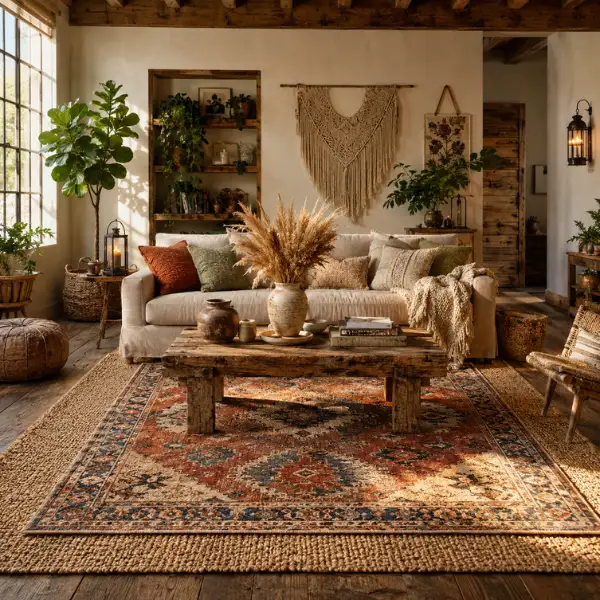
The layered rug look is very easy to pull off and surprisingly affordable — you can find vintage kilims at estate sales, online marketplaces, or thrift stores for a fraction of retail price. And the jute base rug is a staple that costs less than you’d think.
Why It Works
Layered rugs create warmth, depth, and visual interest at floor level — which is actually where your eye spends a lot of time in a living room. It also helps define the seating zone in a large or open space, making everything feel more intentional and cozy.
Best For
Medium to large living rooms, open-plan spaces that need zones defined, boho-leaning rustic styles, and anyone who loves color and pattern without committing to a bold wall color.
Styling Tips
- Always place the larger, plainer rug on the bottom — jute, sisal, or seagrass are perfect.
- The top rug should be smaller and have more pattern or texture — Moroccan, kilim, or vintage Persian styles work beautifully.
- Let the edges of the bottom rug show at least 6–8 inches around the top rug for the layered effect to read well.
- Keep the rest of your decor relatively calm so the rugs remain the star of the floor.
6. Industrial Pipe Shelf & Raw Metal Living Space
Rustic doesn’t always mean soft and cozy. Industrial rustic takes the natural warmth of wood and pairs it with the cool, raw edge of steel pipes, exposed metal brackets, and blackened iron fixtures. The combination is incredibly striking — tough and warm at the same time. Black iron pipe shelving units are one of the hallmarks of this style and they’re surprisingly easy to build yourself.
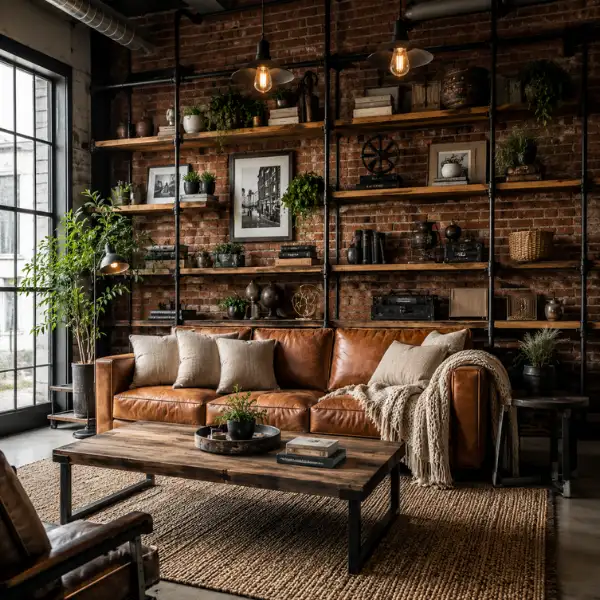
This look is particularly popular in converted loft apartments and urban homes where the rustic warmth is needed to balance out concrete floors or brick walls. But it works just as well in suburban homes that want a more edgy, modern take on rustic living.
Why It Works
The contrast of organic wood grain against the hard geometry of black steel creates visual tension that keeps a room interesting. It’s a style that reads as masculine and design-forward while still being approachable and lived-in. It also photographs very well.
Best For
Urban apartments, lofts, homes with exposed brick or concrete, modern rustic styles, and anyone who wants rustic but doesn’t want it too “soft.”
Styling Tips
- Build or buy pipe shelving for one main wall — books, plants, vintage finds, and decorative baskets all look great on them.
- Use black metal as an accent throughout: light fixtures, curtain rods, furniture legs, and picture frames.
- Keep wood tones warm and medium — avoid very light or very dark wood, which can read too modern or too traditional.
- Balance the hard industrial elements with soft textiles: a chunky knit throw, linen cushions, and a plush rug go a long way.
7. Farmhouse Shiplap Wall with Linen Sofa
Shiplap is to farmhouse rustic what stone is to cabin rustic — it’s the defining element that sets the whole tone. Horizontal or vertical white shiplap paneling on a living room wall instantly creates that clean, fresh, Southern farmhouse feeling that Joanna Gaines made millions of people fall in love with. Pair it with a simple linen sofa and you have a classic combination that never goes out of style.
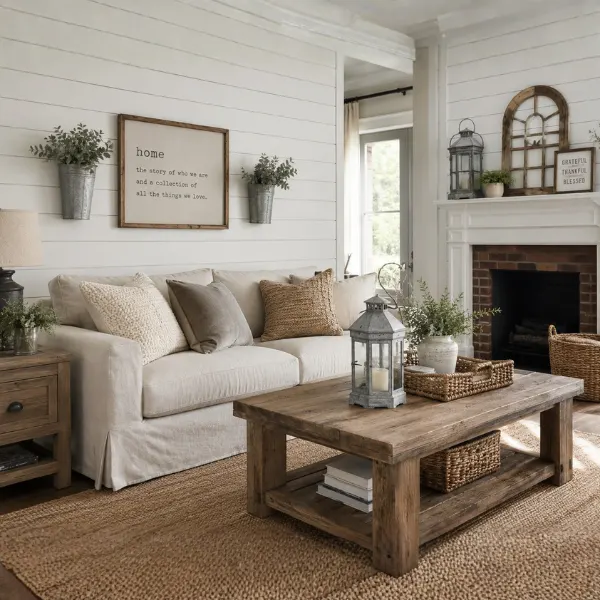
What’s great about shiplap is that it’s relatively affordable to install, and the results are immediate and dramatic. A single shiplap accent wall can completely change how a room feels without any other major changes.
Why It Works
Shiplap adds texture and architectural detail to what would otherwise be a plain wall — but it does it in the most understated, elegant way. It’s rustic but clean, casual but polished. The linen sofa keeps the color palette light and airy, making the whole room feel calm and inviting.
Best For
Small to medium living rooms, farmhouse and cottage-style homes, anyone who loves the light and airy aesthetic, and rooms that don’t get a huge amount of natural light.
Styling Tips
- Paint your shiplap in a warm white or soft cream — not a cool bright white, which reads too clinical.
- Layer your linen sofa with cushions in different textures: a cotton knit, a velvet pillow, and a woven cushion all in neutral tones look wonderful together.
- Add a reclaimed wood coffee table and a woven seagrass basket or two for contrast.
- A galvanized metal lantern or two on the mantel or coffee table adds a perfect finishing farmhouse touch.
8. Mountain-Style Floor-to-Ceiling Window Sanctuary
In a mountain-inspired rustic living room, the view is part of the design. Floor-to-ceiling windows that look out onto trees, hills, or sky bring the outside in and flood the space with natural light. This idea is less about what you put IN the room and more about how you frame what’s outside it. The windows are the artwork.
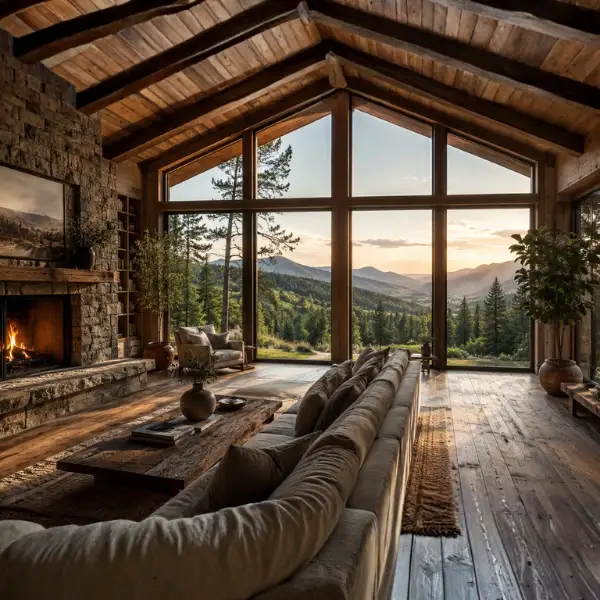
Even if you don’t live on a mountain, large windows in a rustic living room facing a garden or tree line achieve the same effect. The key is to let the view be the star and design the interior to complement it rather than compete with it.
Why It Works
Natural light is the single best thing you can add to any room — it makes everything look better, feel bigger, and feel more energizing. When you combine that light with rustic natural materials, the two just sing together. The room feels like a living extension of the outdoors.
Best For
Homes with a beautiful garden, natural view, or treeline. New builds and renovations where window placement can be planned. Large living rooms where window walls won’t eat into usable wall space.
Styling Tips
- Keep window treatments simple or skip them entirely — heavy drapes block the view and the light.
- Use furniture with clean, simple lines so it doesn’t compete with what’s outside.
- Position your main seating to face the view — not the TV.
- Bring indoor plants close to the windows to blur the boundary between inside and outside even more.
9. Cozy Brick Fireplace Nook with Vintage Chandelier
A brick fireplace has a completely different personality to a stone one. Where stone feels grand and architectural, brick feels intimate and nostalgic — like grandma’s cottage or an old English pub. It’s warm in a different way, and when you pair it with a vintage-style chandelier (think faux candles or Edison bulbs in a wrought iron fixture), the whole space feels like it has stories to tell.
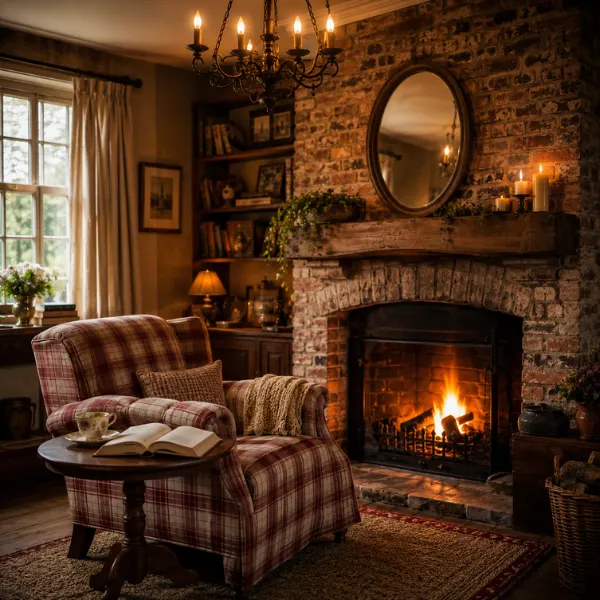
This is a great option for homes that already have an existing brick fireplace that just needs some love and the right surrounding decor to come alive. No renovation required — just styling.
Why It Works
Brick has incredible texture and a warmth that paint simply cannot replicate. It ages beautifully and becomes more charming over time rather than looking dated. The vintage chandelier adds the right kind of old-world drama to the space without making it feel stuffy.
Best For
Older homes and cottages with existing brick fireplaces, small to medium living rooms, anyone who loves the vintage, antique, or cottagecore aesthetic.
Styling Tips
- If your brick looks tired, a whitewash technique (thin white paint diluted with water, applied with a brush and partially wiped off) gives it a fresh but still authentic look.
- Keep your mantel decor simple and seasonal — a few candles, a trailing plant, and maybe a vintage mirror.
- The chandelier should hang centered over your seating group, not necessarily over the fireplace itself.
- Add an armchair in a floral or plaid fabric near the fireplace for a quintessential reading nook feel.
10. Live-Edge Wood Coffee Table Centerpiece Room
A live-edge coffee table is one of those pieces that changes everything. The “live edge” means the outer natural edge of the tree slab is left raw and untouched — no straight cuts, no smoothing out the natural curve of the wood. Every single table is therefore completely one-of-a-kind. No two are the same, and that uniqueness is exactly what makes it special.
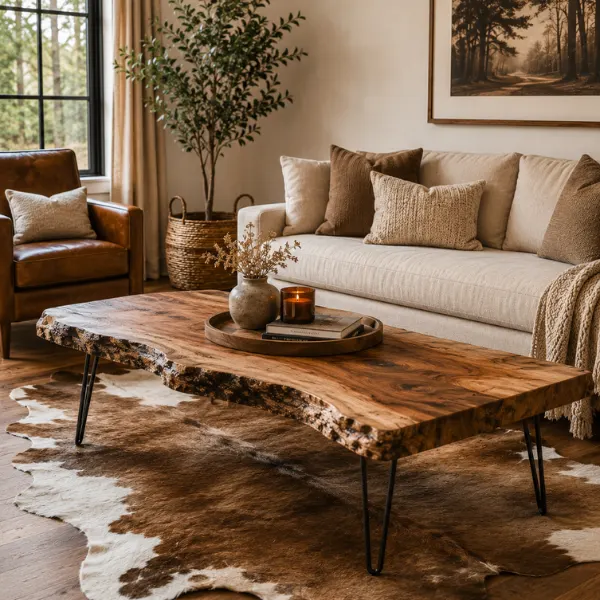
Build your entire living room around this one statement piece and the result will feel cohesive, intentional, and strikingly beautiful. A live-edge table on hairpin legs, a simple linen sofa, and clean neutral walls — it genuinely doesn’t need much else.
Why It Works
The natural, organic form of a live-edge table is the very definition of rustic beauty — it’s nature doing the design work. It becomes the conversation piece of the room without being flashy or loud. It’s grounded, earthy, and entirely authentic.
Best For
Modern rustic styles, minimalist rustic rooms, medium to large living rooms where the coffee table can be properly appreciated, and anyone who wants one statement furniture piece to anchor the whole space.
Styling Tips
- Style the table surface simply: a tray, a candle or two, a small vase with dried flowers.
- Pair with hairpin or black metal legs for a modern rustic look, or with solid chunky wooden legs for a more traditional rustic feel.
- Keep surrounding furniture low-profile and neutral so the table remains the focal point.
- A sheepskin or cowhide rug underneath adds another layer of natural texture beautifully.
11. Earthy Terracotta & Woven Basket Corner
Not every rustic living room idea needs to be a big renovation. This one is purely about accessories and color — specifically, the warm, orange-tinged richness of terracotta combined with the natural texture of woven baskets, dried botanicals, and clay pottery. Group these elements together in a corner of your living room and you have a styled vignette that looks like it was photographed for a home magazine.
Terracotta has had a massive comeback and it’s not going anywhere soon. It’s the perfect color for rustic spaces because it’s earthy, warm, and pairs beautifully with wood, jute, linen, and greenery.
Why It Works
Earthy tones like terracotta and warm brown create an automatic sense of comfort and groundedness. Layering different shades of the same color family — rust, amber, camel, cream — gives the corner a cohesive, styled look without feeling too matchy-matchy.
Best For
Any size room. This is an accessory-based idea that works in small corners just as well as large rooms. Perfect for renters who can’t make structural changes.
Styling Tips
- Group baskets in three different sizes — large, medium, and small — tucked into a corner or beside the sofa.
- Add a tall terracotta pot with a trailing plant (pothos or monstera work beautifully) and a few smaller clay pots.
- A dried pampas grass arrangement in a tall terracotta vase adds height and that gorgeous boho-rustic texture.
- Layer a burnt orange or rust-toned throw blanket over the sofa arm nearby to carry the color palette through.
12. Dark Wood Paneled Walls with Leather Armchairs
This idea is unapologetically rich and bold. Dark wood paneling — whether it’s walnut, dark oak, or stained pine — on the walls creates a moody, sophisticated rustic atmosphere that feels like a gentleman’s study or a luxurious hunting lodge. Pair it with a deep leather armchair and you have a room that feels like it belongs in a five-star mountain retreat.
The key to making this work without it feeling oppressive or cave-like is smart lighting and a few lighter elements to keep the room breathing.
Why It Works
Dark wood paneling creates incredible depth and warmth. It’s one of those design choices that looks dramatic in photos but feels incredibly comfortable and cozy in real life. Leather armchairs in cognac, tan, or deep brown complete the masculine rustic luxury feel perfectly.
Best For
Medium to large rooms with adequate natural light, traditional and lodge-style rustic aesthetics, home offices that double as sitting rooms, and anyone who loves the moody, dramatic side of rustic design.
Styling Tips
- Balance the dark walls with a light-colored ceiling — keep it white or cream to reflect light back into the room.
- Use warm-toned lighting exclusively: Edison bulbs, amber lampshades, and candlelight work wonderfully.
- A large wool or Persian-style rug in warm reds, golds, and greens anchors the seating group beautifully.
- Add a few books, a vintage globe, or a trophy-style object (an antler mount, a taxidermy piece, or a vintage map) to complete the lodge feel.
13. Rattan Furniture Boho Farmhouse Sitting Area
Rattan is one of those natural materials that bridges rustic and boho in the most effortless way. A rattan sofa or a pair of rattan armchairs immediately reads as casual, warm, and full of character. It’s a material that photographs beautifully, ages well, and brings an organic looseness to a living room that heavier wooden furniture sometimes can’t.
This idea is all about building a sitting area centered on rattan furniture, layered with colorful cushions, woven throw blankets, and a generous jute rug underneath. It’s relaxed, it’s beautiful, and it genuinely invites you to sit down and stay a while.
Why It Works
Rattan is light in color and light in feeling — it brightens a space while still being completely natural and rustic. The open weave of rattan also adds visual interest without visual weight, making it perfect for smaller spaces that can’t handle bulkier furniture.
Best For
Small to medium living rooms, sunrooms and conservatories, boho-leaning rustic aesthetics, apartment dwellers who want rustic warmth without heavy furniture, and anyone who loves a casual, eclectic vibe.
Styling Tips
- Choose rattan furniture with comfortable cushions included — or buy plump outdoor-grade cushion pads separately in indoor fabrics.
- Mix colorful boho-style cushions: think terra cotta, teal, mustard, and cream in patterned or embroidered fabrics.
- A macramé wall hanging above a rattan sofa is a perfect pairing — it adds height and texture on the wall.
- Keep the floor simple — a large jute rug lets the rattan furniture be the star.
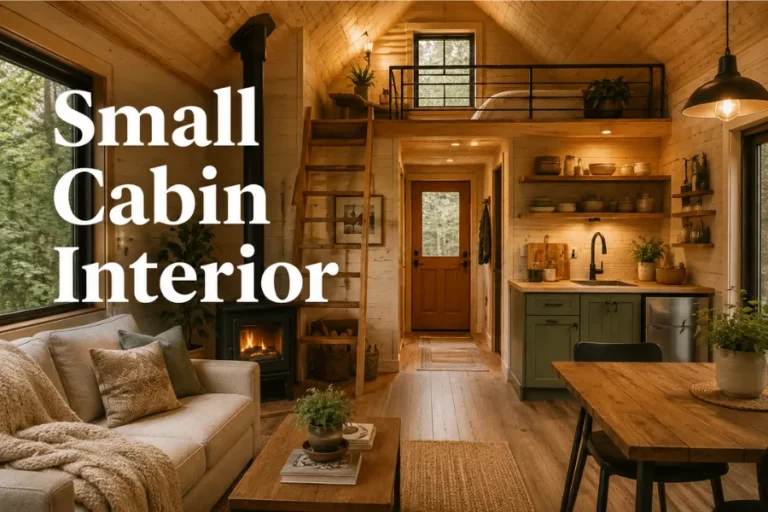
14. Small Cabin Living Room with Wood Stove
A wood stove — not a built-in fireplace, but a freestanding cast iron wood burning stove — is one of the most authentically rustic elements you can introduce to a living room. It’s practical, it heats a room brilliantly, and it has incredible visual presence. A small living room built around a central wood stove feels like the coziest place on earth, especially in winter.
This idea is specifically about small spaces — where a large fireplace would overwhelm, a wood stove sits comfortably in a corner or against a wall and becomes the natural heart of the room without taking over.
Why It Works
A wood stove is a working, functional piece of the room — not just decorative. That functionality gives it a different kind of authenticity. There’s something very honest and straightforward about a room centered on a stove that heats the space. It’s rustic in the truest, most original sense.
Best For
Small living rooms and cottage-style spaces, homes in colder climates, cabins and log homes, and anyone who wants a truly functional rustic centerpiece.
Styling Tips
- Place the stove on a slate or stone hearth pad to protect the floor and add a natural material element.
- Stack a small pile of real firewood nearby — it doubles as decor and is completely functional.
- Keep furniture low and simple: a pair of small armchairs with sheepskin throws is perfect.
- A simple wool rug and a few candles on a wooden side table complete the picture perfectly.
15. Open-Plan Rustic Kitchen & Living Great Room
One of the best things about rustic design is how naturally it flows across an open-plan space. When your kitchen and living room share one open area, rustic elements — exposed wood, stone, earthy colors, natural materials — can tie both zones together seamlessly. The result is a home that feels cohesive, warm, and welcoming from every angle.
This idea is about intentionally designing the living and kitchen areas to complement each other through shared materials and tones, rather than treating them as two separate rooms that happen to share a wall.
Why It Works
Open-plan rustic great rooms feel incredibly generous and social. There’s no barrier between cooking and conversation — the whole family or group of friends can be together in one beautifully designed space. Matching or complementary wood tones across the kitchen cabinetry, flooring, and living room furniture create powerful visual continuity.
Best For
Homes with open-plan layouts, families who love entertaining, new builds or major renovations where the layout can be opened up, and anyone who wants their home to feel larger and more connected.
Styling Tips
- Use the same flooring material throughout — wide-plank wood floors work especially well in this setting.
- Carry the same wood tone from the kitchen cabinets into the living room in the form of a coffee table, shelving, or accent furniture.
- A large kitchen island with wooden bar stools creates a natural transition point between the two zones.
- Use consistent lighting fixtures throughout — the same metal finish on pendants, sconces, and floor lamps unifies the whole space.
16. Southwestern Kilim Rug & Adobe-Style Lounge
Rustic doesn’t have to mean Northern European forest cabin — it can also go beautifully Southwest American, drawing inspiration from adobe homes, desert landscapes, and the rich textile traditions of that region. A bold kilim rug in terracotta, rust, gold, and navy becomes the foundation of a living room that’s rustic, colorful, and deeply characterful all at once.
This is a rustic style with attitude — it’s warm like all rustic rooms are, but it has a graphic, patterned energy that’s completely its own.
Why It Works
The high-contrast patterns of kilim rugs and Southwestern textiles add visual energy to a rustic space without relying on contemporary or trendy elements. Everything in this look is deeply rooted in tradition, craft, and natural materials — which is the very definition of rustic.
Best For
Medium to large living rooms, homes in warm climates, anyone who loves color and pattern within a rustic framework, and interior styles that lean toward worldly and eclectic.
Styling Tips
- Let the kilim rug dictate your color palette — pull its colors into your cushions, throws, and art.
- Use adobe-inspired wall colors: warm terracotta, dusty pink, or an earthy ochre.
- Rough plaster walls (real or faux finish) amplify the adobe feel beautifully.
- Natural wood furniture with simple, slightly rough finishes — nothing too polished — fits perfectly with this aesthetic.
17. Macramé Wall Art & Dried Botanical Display
This idea is about creating a living room that tells a handmade, artisanal story. A large macramé wall hanging — the kind made from knotted cotton rope that takes up a significant portion of a wall — immediately sets the tone. Pair it with an arrangement of dried botanicals (pampas grass, dried lunaria, eucalyptus sprigs, bunny tail grass) and you have a room that feels thoughtful, creative, and deeply personal.
This is a particularly great idea for anyone who loves the craft of home decorating and wants a space that truly looks unique — not like something you walked into a store and bought off the shelf.
Why It Works
Handmade and natural elements carry an energy that mass-produced items simply don’t. Macramé adds texture to a wall in a way no artwork can — it’s three-dimensional, tactile, and completely unique. Dried botanicals bring nature indoors with zero maintenance required, which is a huge win.
Best For
Small to medium living rooms, renters who can’t make structural changes (hang the macramé from a simple nail), boho-rustic and artisan aesthetics, and anyone who wants a living room that feels curated and special.
Styling Tips
- Choose a macramé piece that’s proportional to your wall — it should take up at least a third of the wall’s width to make an impact.
- Group dried botanicals in tall, simple vases of different heights and materials — glass, terracotta, and ceramic all look wonderful together.
- Keep surrounding wall decor minimal so the macramé remains the clear focal point.
- A neutral linen or cotton sofa underneath the macramé ties the whole wall together perfectly.
18. Repurposed Barn Board Floor with Antique Accents
Old barn boards as flooring — or used to create a stunning feature floor in a living room — are one of the most authentic rustic design choices you can make. The boards are typically wide-plank, heavily grained, and carry the natural marks and color variations of real age. Layered with antique furniture pieces and vintage accessories, the room becomes a genuinely beautiful, one-of-a-kind space.
You can source reclaimed barn boards from architectural salvage yards, specialty flooring suppliers, or even directly from old farms in your area. It’s often more affordable than you’d expect.
Why It Works
Authentic aged wood floors have a depth and richness that no new engineered or laminate flooring can replicate. Every knot, scratch, and discoloration in the wood has a story, and that history makes the floor — and by extension the whole room — feel alive with character.
Best For
Whole-home renovations, ground-floor living rooms, cabin and farmhouse homes, and anyone who wants to invest in a flooring feature that will last a lifetime and genuinely improve with age.
Styling Tips
- Seal barn board floors with a low-sheen or matte finish to protect them while preserving their aged character — avoid high-gloss finishes, which look out of place.
- Pair with antique or vintage furniture: old trunk coffee tables, distressed leather sofas, iron-based side tables.
- Keep walls simple — if the floor is the star, the walls should be supporting actors only.
- A large simple area rug in the center of the room protects the floor in the highest-traffic zone and adds warmth.
19. Slate Floor & Navy Blue Wall Rustic Refresh
This is a bold, unexpected combination that works beautifully in a rustic context. Slate tile on the floor (particularly in a dark charcoal tone) paired with a deep navy blue accent wall creates a room that’s moody, rich, and dramatic — but completely offset by the warmth of rustic wood elements and soft lighting. It’s the rustic room that takes risks and pulls them off.
Think of it like the dark horse of rustic living rooms — not what you’d expect, but once you see it, completely unforgettable.
Why It Works
Navy blue and natural slate are both deeply connected to the natural world — the ocean, mountain stone, night skies. They work within a rustic framework because they’re not artificial or synthetic-feeling. The dark color combination forces you to be intentional with your lighting, which almost always results in a more atmospheric and beautiful space.
Best For
Medium to large rooms with good natural light (the navy wall needs daylight to show its true color), modern rustic aesthetics, anyone who wants a dramatic living room, and spaces that get used primarily in the evening.
Styling Tips
- The navy wall works best when it’s one wall only — typically behind the fireplace or sofa.
- White stone or brick for the fireplace against the navy wall creates a stunning contrast.
- Warm amber lighting is non-negotiable here — warm-toned bulbs only, throughout the room.
- Add natural wood elements aggressively to keep the room from feeling too cold: a large wood coffee table, wood shelving, and warm brown leather or linen furniture.
20. Cowhide Rug & Knotty Pine Minimalist Retreat
Sometimes rustic means doing less, not more. This idea is a study in restraint — a knotty pine floor or walls, a simple cowhide rug laid on top, a clean-lined linen sofa, and a handful of carefully chosen natural accessories. Nothing extra, nothing that doesn’t serve a purpose. It’s rustic pared back to its most elemental and pure form.
Knotty pine has a reputation for feeling dated (thanks to many 1970s basements), but approached with a modern eye and minimal accessories, it’s genuinely stunning — full of natural grain and warmth.
Why It Works
Simplicity in a rustic room creates a sense of calm that more maximalist approaches can’t achieve. When you strip away the excess and let the natural materials do the talking — the grain of the pine, the texture of the cowhide, the weight of natural linen — the result is deeply peaceful and beautiful.
Best For
Small to medium rooms, anyone who loves Scandinavian-influenced design, modern rustic styles, cabins and holiday homes, and anyone who is overwhelmed by maximalist design but still wants rustic warmth.
Styling Tips
- Keep your color palette to a strict maximum of three tones: warm white, natural wood, and one earthy accent (tan, rust, or sage).
- A cowhide rug works best on wood floors — place it under or in front of the sofa.
- Use open shelving for a few carefully chosen objects: a ceramic vase, a single plant, two or three books.
- Resist the urge to add more. The power of this look is in the restraint.
21. Double-Sided Stone Fireplace Open Concept Room
A double-sided fireplace — one that opens to two rooms or two sections of an open space — is an architectural luxury that also functions as a rustic design masterpiece. When it’s built in stone or stacked river rock, it becomes the dramatic centerpiece around which the entire living space orbits. Both sides of the room share the warmth and the visual focal point, which creates an incredibly connected and cohesive feel.
This is the kind of feature that you plan during a renovation or new build, and it rewards that planning with a lifetime of beauty and functionality.
Why It Works
A double-sided fireplace solves the age-old open-plan problem of “where do you put the focal point” — it creates two focal points in one structure, and both sides benefit equally. In stone, it’s also a substantial architectural element that grounds a large open space beautifully.
Best For
Large open-plan homes, properties with separate living and dining areas that share a great room, renovations and new builds where structural elements can be planned, and anyone who wants an architectural statement piece.
Styling Tips
- Design both sides of the fireplace intentionally — each side should have its own seating arrangement that makes sense independently.
- Use the same stone throughout the entire fireplace structure, all the way from floor to ceiling if possible.
- Avoid hanging a TV on either side of a double-sided fireplace — the visual competition is too much.
- Keep both sides of the fireplace furnished differently to give each zone its own identity while still being cohesive.
22. Pampas Grass & Clay Pot Organic Living Corner
This is a pure nature-lover’s rustic corner — and it’s one of the cheapest and most beautiful things you can create in a living room. Tall pampas grass in a large clay or ceramic pot, surrounded by smaller clay pots of varying sizes holding succulents, trailing pothos, or dried flower arrangements. The whole corner becomes a lush, natural focal point that takes up minimal floor space.
Pampas grass has become incredibly popular because it’s literally perfect for rustic spaces — it’s soft, feathery, warm-toned, low-maintenance (in its dried form), and incredibly beautiful. It photographs stunningly and works in virtually any size room.
Why It Works
Plants bring life into a room in a way no inanimate object can. They add height, softness, and a connection to the natural world that’s fundamental to rustic design. Clay pots are among the oldest human-made objects and they carry that ancient, earthy quality automatically.
Best For
Any size room, any rustic style, renters and anyone who doesn’t want to commit to structural changes. This is purely an accessory and plant-based idea with maximum impact.
Styling Tips
- Go big with the pampas grass — a single stem sticking out of a small pot looks lost. Aim for three to five stems in a tall, substantial pot.
- Arrange your clay pots in a triangular grouping of different heights for a designed look rather than just a random cluster.
- Place the corner near a window for any live plants to thrive.
- Add a simple wooden stool or a small rattan side table nearby to complete the vignette.
23. Vintage Trunk Coffee Table with Plaid Textile Layers
This is the definition of a thrift store triumph. An old leather or wooden steamer trunk used as a coffee table is one of the most classically rustic moves you can make — it’s functional (storage inside!), beautiful, and completely authentic. Style it with a tray of candles on top, and then pile the surrounding seating with plaid wool throws, quilted blankets, and chunky knit cushions.
This idea is more about layering and accessorizing than about renovation or structural changes. It’s perfect for anyone who wants to quickly and affordably shift their living room into rustic territory.
Why It Works
A vintage trunk immediately tells a story. Where has it been? What was carried in it? That sense of history and narrative is central to what makes rustic design so emotionally compelling. The plaid textiles amplify the cozy, cabin feel in the most effortless way.
Best For
Any size room. Renters, apartment dwellers, students, and anyone on a budget who wants maximum rustic impact with minimal spend.
Styling Tips
- Look for vintage trunks at antique markets, estate sales, or online marketplaces — they’re often incredibly affordable.
- If the trunk looks too beat up, give it a coat of dark brown leather paint or wood stain — don’t refinish it to look brand new.
- Style the trunk top simply: a wooden tray, a candle or two, and maybe a small stack of books.
- Layer two or three different plaid patterns in your throws — they don’t need to match perfectly, and they look better when they don’t.
24. Black Iron Fixture & Copper Accent Rustic-Industrial Den
Metal plays a starring role in this version of rustic. Black iron and copper are the two metals that feel most at home in a rustic-industrial living room — they’re warm, they’re tactile, and they age beautifully over time. This idea is about using these two metals intentionally throughout the room: in light fixtures, lamp bases, curtain rods, picture frames, side table legs, and small decorative accents.
The combination of raw, dark iron and warm, glowing copper is incredibly sophisticated while still being completely rustic in spirit.
Why It Works
Metal accents in a rustic room add sophistication and visual contrast against all the organic wood and textile elements. Black iron grounds the space and gives it a backbone, while copper brings warmth and glow. Together they create a room that feels edited and intentional rather than just thrown together.
Best For
Modern rustic and rustic-industrial styles, medium to large rooms, home offices that function as dens, and anyone who wants their rustic room to feel a cut above the standard.
Styling Tips
- Choose your main light fixture first — a large black iron chandelier or a cluster of black pendant lights sets the entire tone.
- Introduce copper in smaller doses: a lamp base, a few small vases, or a copper tray on the coffee table.
- Don’t mix in silver or chrome — keep it strictly to iron/black and copper for a cohesive palette.
- Warm Edison-style bulbs in all your iron fixtures amplify the copper tones beautifully.
25. Timber Frame Open Great Room with Antique Furniture Mix
A timber frame structure — where large, hand-hewn posts and beams form the visible skeleton of the room — is an architectural gift to rustic design. When you fill that frame with a curated mix of antique and vintage furniture pieces rather than a matched suite from a furniture store, you get a room that feels like it has been collected and loved over generations. It’s the opposite of a showroom, and it’s completely beautiful.
This idea is about mixing old pieces thoughtfully — a Victorian settee next to a mission-style armchair, a 1940s side table next to a rough-hewn wooden bench — in a way that feels cohesive rather than chaotic.
Why It Works
Antique and vintage furniture has a quality and character that new furniture almost never matches. The slight imperfections, the patina of age, and the craftsmanship of older pieces make them feel alive in a way contemporary furniture rarely does. In a timber frame room, these pieces feel completely at home.
Best For
Large living rooms and great rooms, homes with existing timber frame structures, new builds where timber framing is part of the architectural plan, and anyone with the patience and joy of collecting furniture over time.
Styling Tips
- The key to mixing antique furniture successfully is to keep a consistent color palette — all warm tones, all earthy neutrals — so the pieces read as a collection rather than a jumble.
- Add new upholstery to vintage chair frames to bring them into the current conversation without erasing their age.
- Layer large, simple area rugs to define zones within the room.
- Keep accessories minimal when the furniture itself is this interesting.
26. Whitewashed Wood Wall Scandinavian-Rustic Hybrid Lounge
The final idea takes rustic in its cleanest, lightest direction — Scandinavian-influenced rustic, where whitewashed wood walls, minimal furniture, soft natural textiles, and simple wooden accessories create a room that’s calm, bright, and effortlessly beautiful. It’s rustic without being heavy, warm without being dark, and natural without being earthy.
Whitewashed wood paneling — where a diluted white paint is applied to raw wood and partially wiped away so the grain still shows through — is the key element here. It lightens the wood dramatically while keeping all of its natural character visible.
Why It Works
Whitewashing is one of the oldest decorating techniques in the world and it creates a finish that’s completely unique every time — no two whitewashed surfaces look exactly alike. In a living room, it provides texture, warmth, and light simultaneously, which is a very hard combination to achieve with any other finish.
Best For
Small living rooms that need light and air, Scandinavian or Nordic-inspired rustic styles, homes in cold climates where you want warmth but also brightness, and modern rustic aesthetics that want to avoid anything too dark or heavy.
Styling Tips
- Mix soft natural textiles in white, cream, and pale grey — linen, cotton, and soft wool all feel right in this space.
- Add simple wooden furniture in light birch or ash tones — nothing too dark.
- A sheepskin throw over an armchair, a soft sheepskin rug on the floor, and a few simple candles complete the Scandinavian rustic look perfectly.
- Keep accessories very minimal — three or four beautifully chosen items rather than many small ones.
Mistakes to Avoid When Decorating a Rustic Living Room
Even the best ideas go wrong when certain mistakes sneak in. Here are the most common ones — and exactly how to fix them.
Going overboard with the theme. This is the number one rustic decorating mistake. When every single element in the room is screaming “rustic!” — the antler mounts, the log furniture, the bear figurines, the plaid everything — the room stops feeling like a home and starts feeling like a themed restaurant. Pick your rustic elements carefully and let neutral, simple pieces balance them out.
Using too much dark wood. Dark wood is warm and beautiful in moderation, but a room with dark wood floors, dark wood walls, dark wood furniture, and dark wood ceiling beams becomes oppressive and gloomy very quickly. Balance dark wood with lighter walls, pale textiles, and good lighting.
Forgetting about lighting. Rustic rooms live and die by their lighting. Overhead fluorescent or cool-toned lighting completely kills the warm, cozy atmosphere you’re working so hard to create. Use multiple warm-toned light sources at different heights — floor lamps, table lamps, candles, and sconces — rather than relying on a single ceiling light.
Buying everything from one store. A rustic living room should look collected over time, not purchased in an afternoon. Matching furniture sets make a room look sterile and fake. Mix pieces from different sources — thrift stores, antique markets, big-box stores, and specialty shops — and the room will have the layered, lived-in feel that rustic style needs.
Ignoring proportion and scale. Putting a tiny rug in a large room, or oversized furniture in a small one, are proportion mistakes that ruin even the best rustic styling. Always measure before you buy, and scale your largest elements (rugs, sofas, coffee tables) to the actual size of your room.
Skipping texture. Flat, smooth surfaces in a rustic room feel completely wrong. You need texture — rough wood, woven fibers, stone, linen, wool, leather, clay. Layer different textures at every surface level: floor, walls, furniture, and accessories.
Making it too dark. A rustic room should feel warm, not dark. These two things are not the same. Strategic use of lighter walls, pale textiles, and warm lighting keeps the room feeling cozy and inviting rather than dim and unwelcoming.
Conclusion
If there’s one thing I hope you take away from this guide, it’s that rustic style is one of the most forgiving and personal design approaches you’ll ever work with. There’s no right or wrong way to be rustic — it’s about natural materials, honest craftsmanship, warmth, and comfort. Whether you go all-in with a full timber frame great room or simply layer a few woven baskets and a cowhide rug into your existing space, you’re moving in the right direction.
Start with one idea that excites you the most. Get that right. Then build from there. Rustic rooms are never finished — they grow and evolve as you collect pieces, try new things, and let the space reflect who you are. And that, more than any single design choice, is what makes a rustic living room truly beautiful.
FAQs
What makes a living room “rustic”? Rustic style is defined by natural materials (wood, stone, leather, linen, jute), earthy color palettes, a lived-in and unpretentious atmosphere, and an emphasis on comfort over formality. It draws inspiration from cabins, farmhouses, and the natural world.
Can I create a rustic living room on a small budget? Absolutely. Some of the best rustic elements are free or very cheap — thrifted furniture, second-hand vintage pieces, reclaimed wood from salvage yards, and dried botanicals from your garden. The lived-in, collected quality that rustic style requires actually gets better when you shop slowly and affordably rather than buying everything new.
How do I make a small living room look rustic without it feeling cramped? Focus on lighter rustic elements — whitewashed wood, light jute rugs, rattan furniture, and pale linen upholstery. Keep furniture low-profile and avoid cluttering surfaces. One or two strong rustic features (a wood accent wall, a wood stove) are enough in a small room.
What colors work best in a rustic living room? Warm neutrals are the backbone — cream, warm white, beige, taupe, and caramel. Layer in earthy accent colors like terracotta, rust, olive green, burnt amber, and deep brown. Avoid cool greys and stark whites, which feel out of place in rustic interiors.
Can rustic and modern styles be mixed? Absolutely — and it often looks incredible. Modern rustic (or “rustic contemporary”) uses the same natural materials as traditional rustic but pairs them with cleaner lines and more restrained styling. Think a live-edge wood table on sleek hairpin legs, or a stone fireplace in a room with minimal, contemporary furniture.
How do I choose the right rug for a rustic living room? Natural fiber rugs — jute, sisal, and seagrass — are the safest starting point and work in virtually every rustic space. From there, you can layer in a vintage kilim, a Moroccan shag, or a cowhide for extra personality. Make sure your rug is large enough — in most living rooms, all the front legs of your furniture should sit on the rug at minimum.
Do I need a fireplace for a rustic living room? No — though it helps enormously if you have one! A fireplace adds warmth, atmosphere, and a natural focal point. But if you don’t have one, you can create a similar effect with a grouping of candles, a wood stove (if your room permits it), or even a decorative fireplace surrounded with candles inside it.