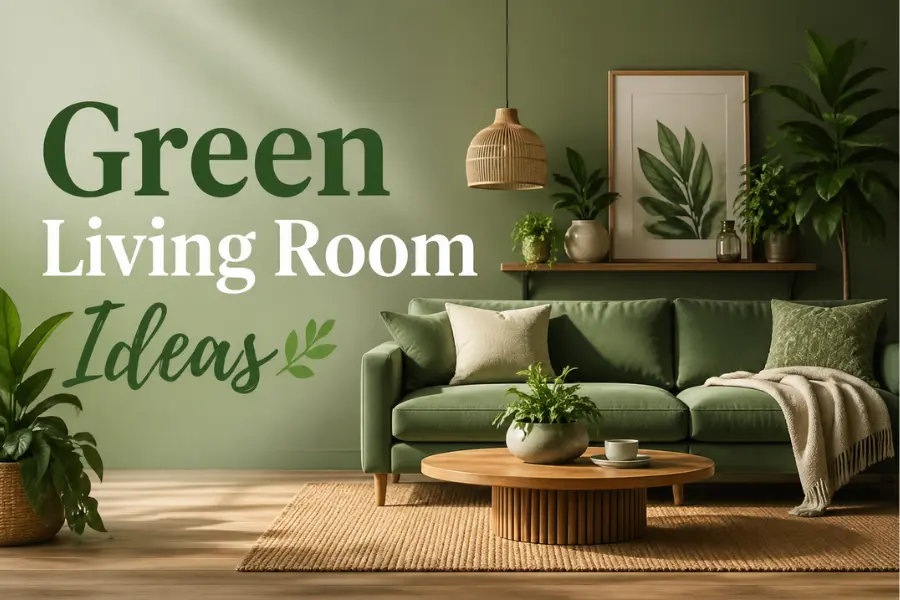
27 Green Living Room Ideas That Actually Work
Green is having a serious moment right now — and honestly, it never really left. It is one of the most calming, versatile, and beautiful colours you can bring into a living room.
I have been decorating homes and writing about interiors for years. And time and time again, green is the colour that transforms a room the most. It brings the feeling of nature indoors. It makes a space feel grounded, fresh, and alive.
In this guide, I have pulled together 27 genuinely different green living room ideas. Some are bold and dramatic. Some are soft and subtle. All of them are realistic — no fantasy budgets, no impossible rooms. Just ideas you can actually use.
I will walk you through every idea with a clear overview, why it works, who it is best for, and styling tips you can start using today.
27 Green Living Room Ideas
With full details — overview, why it works, best for, and styling tips
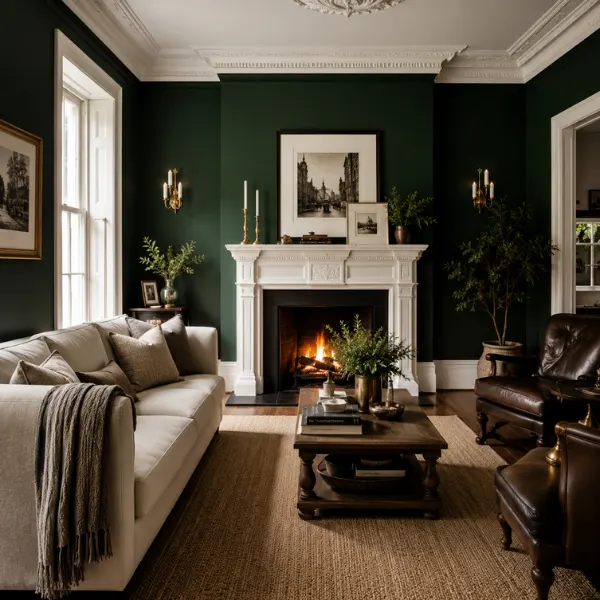
Deep Green Walls with White Trim & Fireplace
Dark green on walls creates instant drama and depth. The white trim acts as a clean boundary that stops the room from feeling too heavy. A fireplace adds warmth — both literally and visually — and anchors the whole space. The contrast between deep green and white is sharp, confident, and incredibly satisfying to look at.
Choose a deep bottle green or forest green — Farrow & Ball’s Studio Green or Sherwin-Williams’ Hunt Club are both excellent choices. Paint the trim, skirting, and window frames in bright white. Add a neutral sofa in cream or warm grey. Finish with brass candlesticks, framed black-and-white art, and a thick wool rug in a warm tone.
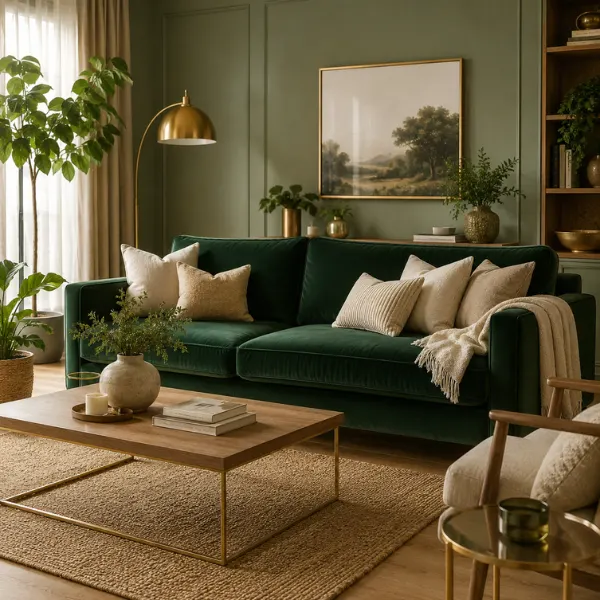
Sage Green Walls with a Velvet Emerald Sofa
Monochromatic schemes — using different shades of the same colour — are one of the most elegant decorating tricks there is. The sage keeps things soft and airy, while the emerald velvet adds richness and luxury. The contrast in texture (smooth wall vs lush velvet) adds visual interest without adding more colour.
Keep the rest of the room neutral — light wood flooring, cream or linen cushions, and a simple jute rug underfoot. Add gold or brass accents in your lamp, coffee table legs, and picture frames. A few carefully placed plants will tie the whole look together perfectly.
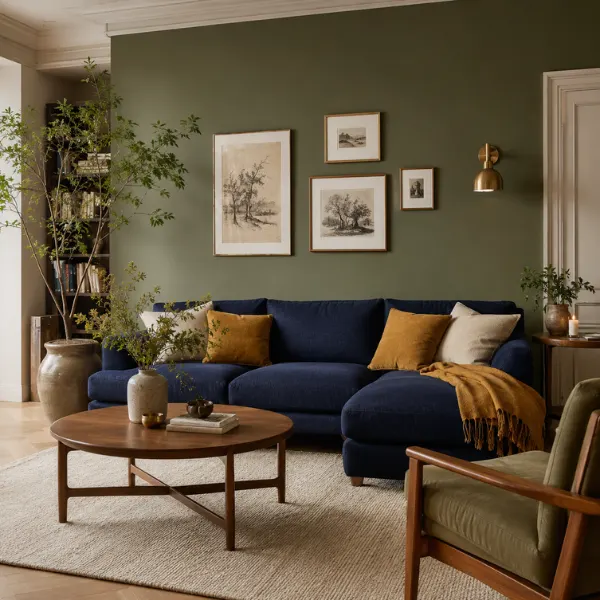
Olive Green Accent Wall with Navy Blue Furniture
Olive green has yellow undertones that make it naturally warm. Navy is cool and deep. These opposing qualities balance each other out beautifully. Neither colour fights for attention — instead, they create a calm, confident room that feels very intentional.
Paint just one wall in olive green — ideally the wall behind your sofa. Bring in a navy linen or cotton sofa. Add pops of mustard through cushions and throws to brighten the palette. Keep your flooring light (pale wood or a cream rug) to stop the room from feeling too dark.
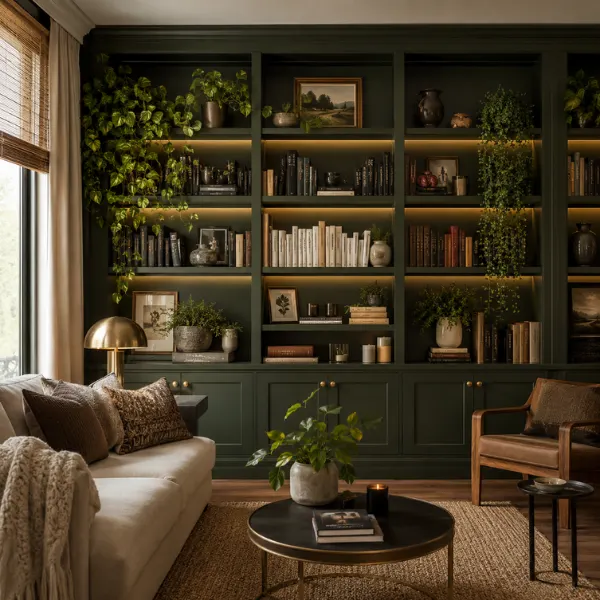
Floor-to-Ceiling Green Built-In Bookshelves
Floor-to-ceiling shelves draw the eye upward and make any room feel taller. Painting them in a deep green makes them feel like a piece of furniture rather than a bland white wall. The colour unifies everything on the shelves and creates a gallery-like backdrop for your books, plants, and decorative pieces.
Use a deep racing green or forest green for the shelves. Arrange books in colour order for a clean look. Add trailing plants like pothos or string-of-hearts on higher shelves. Mix in ceramic vases, framed prints, and small sculptures. Keep the rest of the room simple — let the shelves do the talking.
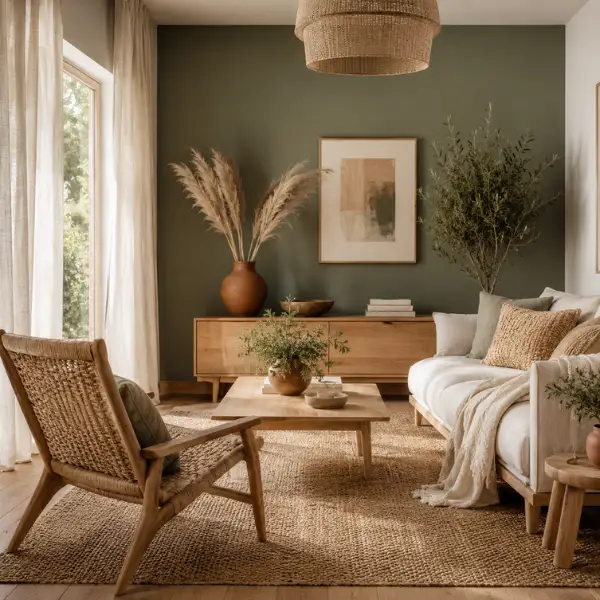
Sage Green Feature Wall with Rattan & Natural Wood
Sage green and natural materials speak the same language. Both are rooted in nature, both are calm, and both have a handmade, organic quality. Together they create a room that feels deeply relaxed. It is the visual equivalent of a slow Sunday morning.
Paint one wall in sage green. Bring in a rattan armchair or side table. Add a light oak coffee table and woven cushion covers. Layer a jute rug over wooden or stone flooring. Keep accessories minimal — a terracotta vase, a few small plants, and a linen throw will do the job beautifully.
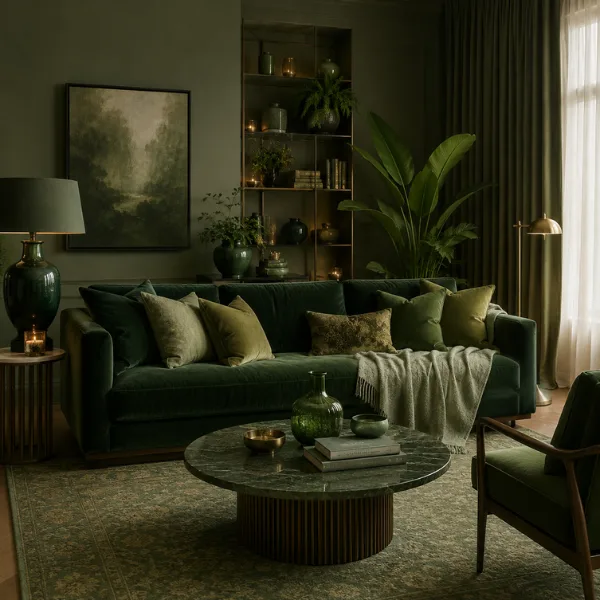
Monochromatic Green Room with Layered Textures
When you use different shades of the same colour — say, sage on walls, forest green velvet on the sofa, and moss green in the rug — the room feels cohesive and layered. The variety of textures (velvet, linen, matte paint, glossy accessories) is what stops it from feeling flat or one-dimensional.
Start with a mid-tone green on the walls — olive or muted moss works well. Add a deeper green sofa and a lighter sage throw. Layer cushions in different green tones. Bring in a patterned green rug that ties all the shades together. Add a glossy green ceramic lamp and a few plants. Every surface should have a different texture.
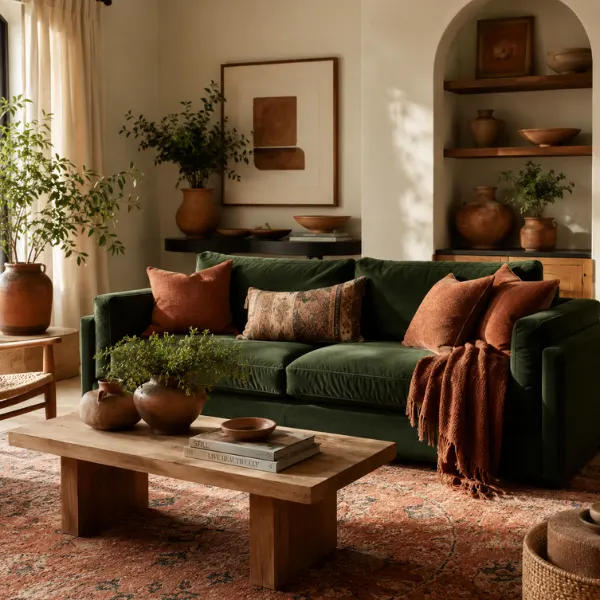
Forest Green Sofa with Earthy Terracotta Accents
Green and terracotta are found together in nature all the time — think of a forest floor with clay-rich soil, or a garden in late summer. The warmth of terracotta stops the green from feeling too cool, and the result is a room that feels incredibly welcoming.
Invest in a quality forest green sofa — velvet or a textured weave works best. Layer terracotta cushions in mixed sizes. Add a burnt orange or rust-toned rug underfoot. Display handmade clay pots on your coffee table or shelves. Keep the walls neutral — warm white or greige works perfectly here to let the sofa and accents shine.
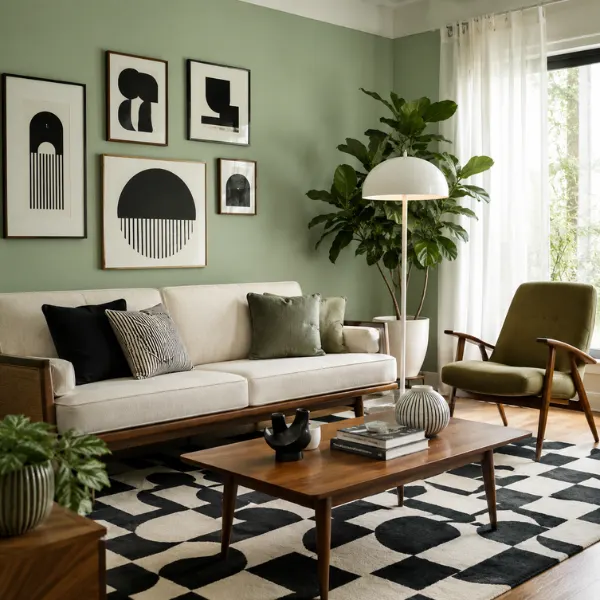
Mint Green Walls with Mid-Century Modern Furniture
Mint has an uplifting, almost cheerful quality that brings energy to a room without feeling loud. Mid-century modern furniture — with its clean geometry and warm wood tones — grounds the palette and stops it from feeling too sweet or pastel. The combination feels retro but still very current.
Paint all four walls in a soft, airy mint — think watery rather than saturated. Bring in a walnut or teak-framed sofa with clean lines. Add a retro-style floor lamp with a mushroom shade. Use black and white prints on the walls. Finish with a bold geometric rug in black, white, and cream to anchor the space.
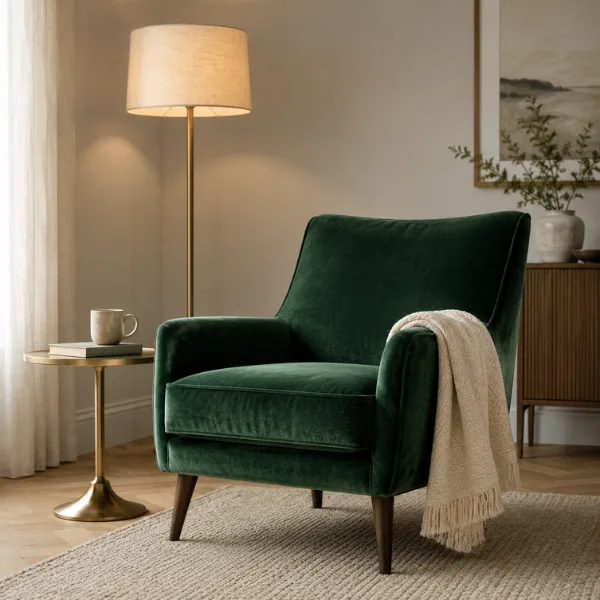
Emerald Green Velvet Armchair in a Neutral Room
In a neutral room, one bold piece becomes an instant focal point. An emerald velvet armchair delivers colour, texture, and luxury all in one. It also gives you the flexibility to change your mind later — remove the chair and your room is back to neutral. It is the lowest-commitment way to try green.
Place the armchair in a corner with a floor lamp beside it to create a reading nook. Add a small side table in brass or dark wood. Throw a cream or camel knit blanket over one arm. Keep the surrounding walls pale grey or warm white. Let the chair speak for itself.
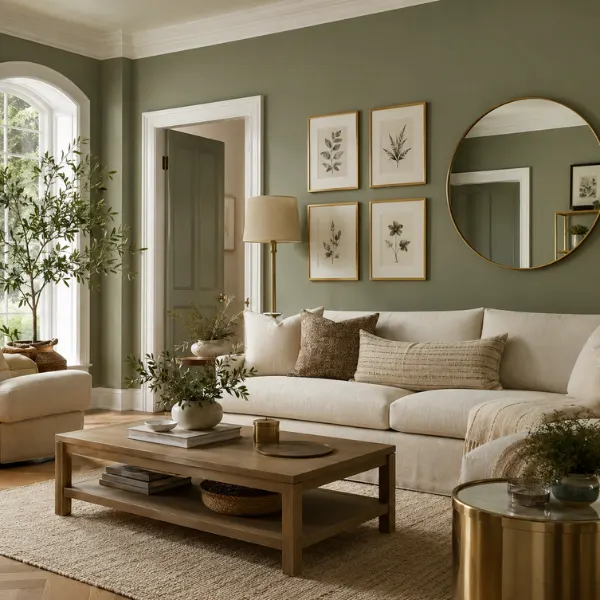
Green & Gold — Sage Walls with Brass Accents
Sage green has warm, grey undertones that pair naturally with the yellow warmth of brass. The two colours elevate each other. Brass adds a richness that stops sage from feeling too flat or clinical, while sage keeps brass from looking too flashy or cold.
Paint the walls in sage green. Source as many brass accessories as you can — a floor lamp, picture frames, a mirror, door handles, and light switches all add up. Keep furniture in linen or cream upholstery. Add a gallery wall of black and white botanical prints with matching brass frames.
Dark Green Moody Minimalist Space with Black Furniture
Dark green and black share the same depth and weight, so they work together without competing. The result is a room that feels very intentional — almost architectural. Adding minimal colour keeps everything feeling deliberate and refined rather than cluttered.
Go for a very dark bottle green or racing green on all four walls. Source a black metal-framed sofa or a charcoal grey sectional. Add a sculptural floor lamp in matte black. Keep accessories to an absolute minimum — one large plant, one piece of oversized art, and a simple stone coffee table. Let the room breathe.
Biophilic Living Room with Indoor Plants & Green Tones
Research shows that being surrounded by plants and nature-inspired tones reduces stress and improves mood. A biophilic living room does exactly that. When your décor, your plant collection, and your natural materials all speak the same language, the room feels effortlessly cohesive.
Use a warm sage or moss green on the walls. Bring in different sizes of plants — a large fiddle-leaf fig or monstera as a statement piece, smaller plants on shelves, and trailing plants in hanging pots. Choose furniture in natural linen, rattan, and wood. Add stone coasters, clay pots, and a wool rug.
Olive Green Wallpaper with Dainty Floral Prints
Olive green is a mature, grounded colour. When you add a small-scale floral pattern over it, the result is something that feels garden-inspired without being overly country or old-fashioned. The pattern adds movement and life to a room, while the olive base keeps it anchored and calm.
Use the wallpaper on one wall only — the wall behind your sofa is the perfect spot. Pick out one or two colours from the wallpaper and use them in cushions and accessories. Keep furniture simple and neutral. A cream linen sofa works best. Add a few dried flower arrangements and warm-toned candles for a finishing touch.
Sage Green Curtains with Warm Wood Coffee Table
Floor-length curtains draw the eye upward and make ceilings feel higher. Sage green is soft enough that it does not fight with other colours in the room. Paired with a warm wood coffee table, the look becomes very natural and grounded — effortless rather than overdone.
Choose curtains in a linen or linen-blend fabric in sage green. Hang them high — close to the ceiling — and let them pool slightly on the floor. Pair with a solid oak or walnut coffee table. Keep the rest of the room in warm neutrals — cream, oat, and sand.
Green & Pink — Soft Sage Walls with Blush Accents
Both sage and blush are muted, sophisticated tones with grey undertones. This shared quality makes them natural partners — neither one shouts, and together they create a palette that is calming and lovely to spend time in. It is a pairing that works across many different styles without ever looking out of place.
Paint walls in sage green. Add a blush pink velvet accent chair as your focal piece. Use cushions in a mix of sage, blush, and cream. Add gold or rose gold accents in lamps and picture frames. Bring in a few dried pampas grass stems in a tall vase for a soft, organic touch.
Tropical Leaf Print Wallpaper with Grey Sofa
A grey sofa is the perfect neutral anchor for a bold wallpaper. The grey does not compete with the green print — it lets the wallpaper be the star. The botanical pattern brings energy and personality to the room without needing any other loud elements around it.
Pick a wallpaper with large, graphic leaf shapes in a mix of green tones. Apply it to the wall behind your sofa only. Keep the sofa simple — mid-grey or charcoal in a plain fabric. Add cushions that pick out the green and any other accent colours in the wallpaper. Keep the other three walls plain white.
Hunter Green Walls with Classic Traditional Decor
Hunter green has a deep, serious quality that suits formal, traditional spaces perfectly. It was used extensively in country houses and gentleman’s libraries for good reason — it is rich without being garish, and it makes every piece of furniture look more important. It is the colour of quiet confidence.
Paint all four walls in hunter green. Choose a tufted leather or velvet chesterfield sofa. Add antique-style wooden side tables and a classic brass floor lamp. Display framed oil paintings or traditional botanical prints. Layer Persian or Turkish rugs over wooden flooring.
Sage Green Painted Kitchen Island in Open Plan Living
An island painted in sage green becomes a natural focal point in an open-plan space. It introduces colour in a way that is purposeful and architectural. It also means you can pick up that sage tone in cushions or plants in the living area, creating a cohesive flow throughout the whole space.
Paint only the island units in sage green and keep surrounding cabinets white or cream. Add brass handles and taps for a premium feel. Hang pendant lights in black or brass above the island. In the living area, bring in sage green cushions and a plant or two to echo the kitchen colour.
Green Abstract Art as a Statement Accent Wall
A large piece of art does everything a feature wall does — it creates a focal point, introduces colour, and gives the room personality — but without any commitment. The abstract style also means you get a range of green tones in one piece, which makes it easy to pick up those colours in accessories around the room.
Choose a canvas at least 80–100cm wide so it has real presence. Hang it at eye level on the wall behind your sofa. Pick out one of the green tones in the painting and repeat it in a cushion, a vase, or a plant. Keep everything else in the room neutral — the art should feel curated, not surrounded by noise.
Teal Feature Wall with Cream & Linen Furniture
Teal is deeper and more complex than most greens, which gives it a natural elegance. Cream and linen are the perfect partners — they are soft, warm, and allow the teal to shine without any visual competition. The result feels like a high-end boutique hotel without the price tag.
Paint one wall in a rich teal — the wall you see as soon as you walk in works best. Source a cream or oatmeal linen sofa with simple lines. Add cushions in a mix of teal, cream, and sand. Lay a natural fibre rug — jute or sisal — on the floor. Place a large architectural plant like a fiddle-leaf fig in the corner.
Olive Green Sofa with Cherry Wood Side Tables
Olive green has enough warmth in its undertone to work with red-toned woods — something that cooler greens like sage or mint cannot do as easily. Cherry wood’s natural richness deepens the whole palette and makes the room feel layered and considered, rather than flat or bare.
Invest in an olive green sofa in a textured fabric — velvet or a woven weave works well. Source cherry wood side tables — secondhand is fine and often better quality. Add a cream or ivory area rug. Choose cushions in burnt orange, rust, and cream to echo the warm, earthy palette.
Sage Green Bookshelves Styled with White Decor
A painted bookshelf becomes a piece of furniture rather than just storage. Sage green is calm and easy to live with, so it works in almost any room. Styling it with all white accessories creates a crisp, clean contrast that feels very intentional and pulled-together.
Sand and paint a plain white bookshelf in sage green — two coats of chalk paint works perfectly. Style shelves with white ceramic vases, cream-spined books, and a small trailing plant. Add a few dried botanicals or woven baskets. Keep the rest of the wall plain white so the bookshelf stands out.
Green & Blue Harmony — Smoky Green Walls with Navy Accents
Both smoky green and navy sit in the same cool, deep family of colours. They are close enough to feel harmonious, but different enough to create interest. The combination has an almost coastal feel — like sea meets forest — and it works across many different furniture styles.
Paint walls in a smoky or muted green — something with a grey or blue undertone. Bring in navy through cushions, a throw, or a small accent chair. Add wooden elements to warm the palette — a light oak coffee table or wooden shelving. Use cream or soft white for any textiles to keep the room from feeling too dark.
Pistachio Green Walls with Metallic & Glass Details
Light colours like pistachio reflect natural light beautifully, making any room feel larger and brighter. Metallic and glass elements add sparkle and luxury without needing to spend a fortune. The combination of soft colour and shiny detail is one of the most classic tricks in interior design.
Paint all walls in a soft pistachio tone. Choose a glass-topped coffee table and a mirrored sideboard to bounce light around the room. Add a gold or brass floor lamp and matching picture frames. Use white and cream upholstery to keep things light. A glass vase filled with fresh or dried flowers is the perfect finishing touch.
Dark Green Velvet Sofa with Mustard Throw Pillows
Mustard yellow and dark green are natural complements — they sit opposite each other on the colour wheel, which means they make each other look more vibrant without clashing. The velvet texture adds luxury, and the contrast between the two colours creates energy and warmth in equal measure.
Invest in the best dark green velvet sofa you can afford. Layer four to six cushions in different sizes — mix mustard, olive, and cream tones. Add a mustard yellow throw draped casually over one arm. Choose a neutral or warm-toned rug in cream, tan, or rust. Keep walls in warm white or greige so the sofa is the undisputed star.
Green Acoustic Panel Wallpaper with Minimalist Decor
Acoustic panels add subtle texture to a wall that makes the space feel more designed than paint alone. In olive green, the texture catches light differently throughout the day, creating a constantly changing, interesting surface. The minimalist furniture allows the wall to be the feature without anything competing with it.
Apply the acoustic panel wallpaper to the wall behind your TV or sofa. Keep furniture minimal and clean-lined — a grey or charcoal sofa with no visible legs works well. Choose a simple black-framed TV unit with hidden cable management. Add one large plant and a simple pendant light. Keep accessories to a minimum.
Sage Green Open-Plan Living Room with Continuous Exterior Walls
When the interior and exterior colour is the same, the eye does not register where the inside ends and the outside begins. It creates the illusion of a much bigger space. In sage green, the effect is especially powerful because the colour already reads as natural and outdoorsy. It is one of the cleverest tricks in open-plan design.
Use a durable exterior-grade paint in a matching sage green for the outside walls. On the inside, use the same colour in a standard interior finish. Keep furniture in natural materials — linen, rattan, light wood. Add a large potted olive tree or bay tree on the patio. Lay the same stone or wood flooring both indoors and outdoors if possible — it amplifies the effect enormously.
Mistakes to Avoid When Decorating with Green
Green is forgiving — but these errors can stop a room from looking its best.
Using the Wrong Shade for Your Light
Cool north-facing rooms need warmer greens like sage or olive. South-facing sunny rooms can handle deeper, cooler greens. Always test a paint sample on the wall and look at it at different times of the day before committing.
Going Too Dark in a Small Room Without a Plan
Dark green walls in a small room can be stunning — but only if you plan carefully. In a small room with dark walls, keep your furniture light and your textiles pale to avoid feeling cramped.
Ignoring the Undertones
Not all greens match each other. Some have blue undertones, some have yellow, and some have grey. Always check the undertones of your green choices and make sure they complement each other before buying.
Overloading the Room with Green
Pick one or two green elements to be the stars and let the rest of the room support them in neutral tones. You do not need green walls, a green sofa, green curtains, and green cushions all in one room.
Forgetting to Warm the Room Up
Green can feel cool, especially in its sage and mint forms. Always introduce at least one warm element alongside your green — wood, terracotta, brass, or warm textiles — to keep the space feeling welcoming and lived-in.
Skipping the Test Pot
Buy a test pot and paint a large A3 area of wall — not just a tiny square — before committing. Look at it morning, afternoon, and evening, on cloudy and sunny days. Only then should you buy the full amount of paint.
Your Perfect Green Living Room Is Closer Than You Think
Green is one of the most rewarding colours you can bring into your home. It is versatile, it is calming, it is timeless, and — as these 27 ideas show — it works in just about every style and every size of living room.
The most important thing to remember is this: start small if you are nervous. A single emerald armchair, a set of sage green curtains, or a large abstract painting is enough to test the water. Once you see how green transforms a room, you will likely want to go further.
Take your time, test your shades, warm the room up with natural materials and textures, and trust your instincts.
Frequently Asked Questions
Sage green is the safest and most effective choice for a small living room. It is light enough to keep the space feeling open and airy, but it still has enough depth to add real character. If you want to go darker in a small room, make sure you use pale furniture and plenty of light to balance it out.
Yes — and beautifully so. Most shades of green pair very well with grey. Sage and soft grey is a classic Scandinavian pairing. Forest green and charcoal grey creates a more dramatic, modern look. The key is to make sure both your green and your grey share the same undertone — either both warm or both cool — so they feel intentional together.
The best accent colours for green walls are: warm neutrals like cream, oat, and warm white; earthy tones like terracotta, rust, and ochre; warm metals like gold and brass; and natural materials like wood and rattan. Navy blue works brilliantly with olive and sage greens. Blush pink is a beautiful pairing with sage specifically.
Absolutely. Dark green can make a living room feel incredibly cosy, warm, and sophisticated. The key is to balance it correctly — use lighter furniture, warm textiles, and good lighting to stop the room from feeling too heavy. Dark green works especially well in rooms with good natural light or west-facing rooms that get warm afternoon sun.
There are many ways to bring green in without touching the walls. A green velvet sofa or armchair is the most impactful. Green curtains add height and softness. A painted bookshelf is a great DIY option. Large indoor plants bring natural green that requires zero decorating. And green abstract art on a neutral wall is perhaps the easiest and most reversible option of all.
For a large statement, a fiddle-leaf fig or monstera deliciosa works beautifully. For shelves, trailing pothos or string-of-hearts are brilliant. For small spaces or coffee tables, a small snake plant, succulents, or a compact peace lily works well. In a green room, choose plants with interesting leaf shapes rather than just adding more of the same tone — variety in shape and scale is what makes a plant collection look truly intentional.
Start by thinking about the mood you want. Sage is calm, soft, and the easiest to live with — it suits almost everyone. Olive is warmer and earthier — it suits people who love natural, organic spaces. Forest or dark green is dramatic and cosy — it suits those who want a bold, enveloping room. Then look at your room’s light. Darker rooms need warmer greens like olive or sage. Brighter rooms can handle forest or bottle green without feeling oppressive.