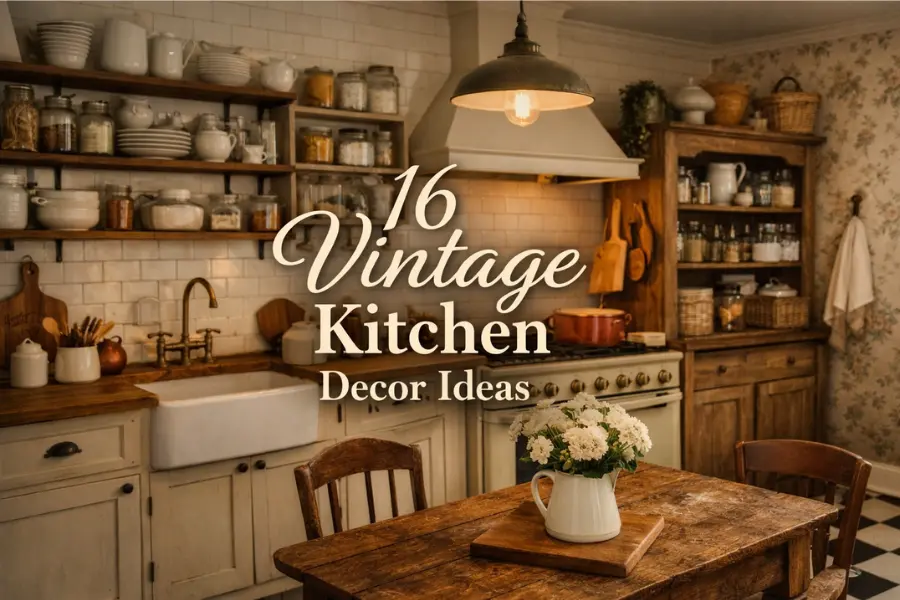
Vintage Kitchen Decor Ideas That Bring Timeless Charm Into Your Home
There is something about a vintage kitchen that just feels right. It feels warm, lived-in, and full of soul — the kind of kitchen that makes you want to pour a cup of tea and stay awhile. Unlike modern kitchens that can feel cold and overly perfect, a vintage kitchen tells a story. Every shelf, every handle, and every little detail has character.
The good news? You do not need to spend a fortune or knock down walls to get this look. Whether you are starting fresh or just want to refresh what you already have, these ideas will help you create a kitchen that feels timeless, charming, and completely your own.
In this guide, I am walking you through 16 vintage kitchen decor ideas that actually work in real homes. Each one is beginner-friendly, budget-conscious, and written from real decorating experience — not just theory.
Table of Contents
16 Vintage Kitchen Decor Ideas
Here is the list of vintage kitchen ideas:
1. Style Open Shelves with Classic Dishware
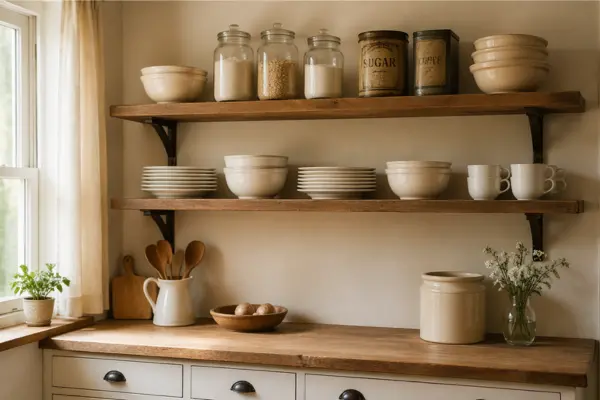
Open shelves are one of the easiest ways to give your kitchen an instant vintage personality. When you swap out closed cabinets for open wooden shelves and fill them with white dishes, glass jars, and old-fashioned tins, the whole kitchen shifts into a warmer, more welcoming space. It looks collected and intentional without being overdone.
Why It Works
Open shelving turns your everyday kitchen items into décor. The mix of soft textures — smooth porcelain, cloudy glass, worn tin — creates depth and a relaxed, homey feeling that polished modern kitchens just do not have. It also makes the room feel bigger and airier.
Best For
This idea works especially well in small kitchens or rental spaces where you cannot make permanent changes. It is one of the most flexible and reversible updates you can make.
Styling Tips
Stick to a tight color palette — white, cream, and clear glass are your best friends here. Group similar items together and leave a little breathing room on each shelf. Do not fill every inch. A few empty spaces actually make the display look more intentional and styled.
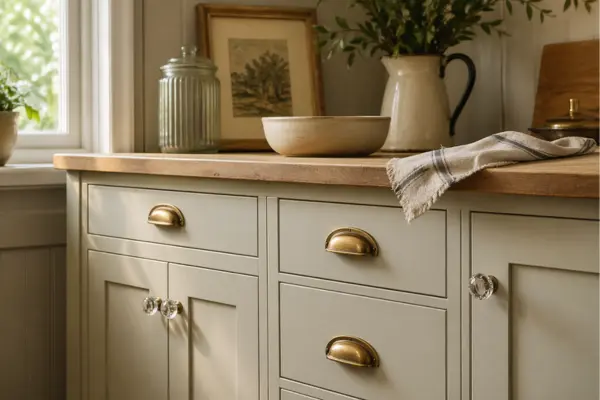
2. Replace Cabinet Hardware with Vintage-Style Handles
If your kitchen feels too modern and you want a quick fix, this is the one. Swapping out your cabinet handles and knobs is a weekend project that costs very little but makes a surprisingly big impact. Think bin pulls, glass knobs, and aged brass handles — the kind that look like they belong in a farmhouse or a European kitchen from decades ago.
Why It Works
Hardware is the jewelry of your kitchen. It is a small detail, but it is one of the first things people notice. The right hardware can make a plain, builder-grade cabinet look like it was custom-made. It adds personality without requiring a full renovation.
Best For
Any kitchen where the cabinets are in decent condition but feel too sleek or generic. This is especially great for renters who want a vintage look without permanent changes — most landlords are fine with swapping hardware as long as you keep the originals.
Styling Tips
Pick one finish and stay consistent across all your cabinets. Aged brass is a classic go-to for a warm vintage look. Antique black works well if you want something moodier. Avoid mixing metals unless you really know what you are doing — it can quickly look mismatched instead of curated.
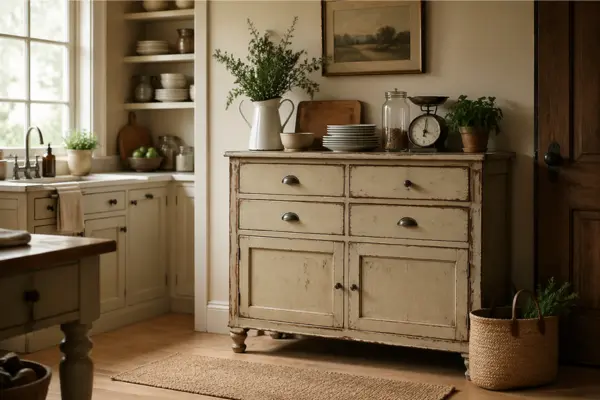
3. Add a Freestanding Vintage Cabinet or Dresser
One of the things that makes vintage kitchens feel so special is that they do not look like they came out of a catalog. Adding a freestanding piece — an old painted dresser, a pie safe, a hutch — instantly breaks up that uniform, fitted-kitchen look. It makes the space feel like it was put together over years, not ordered all at once.
Why It Works
A freestanding cabinet creates a natural focal point in the room. It adds storage while also telling a story. It makes your kitchen look like it has history, even if you just picked the piece up from a thrift store last weekend.
Best For
Medium to large kitchens that have a bit of extra wall space. If your kitchen is very small, a smaller vintage sideboard or a narrow dresser can work just as well without overwhelming the space.
Styling Tips
Let this piece stand out on its own. Keep the cabinetry around it simple and do not compete with it using lots of other statement pieces. Style the top of the dresser with a few meaningful vintage items — an old crock, a stack of cookbooks, a small plant — and leave it at that.
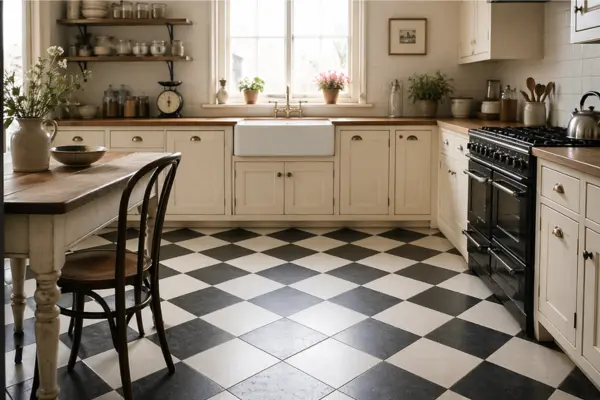
4. Install a Checkerboard Floor
Nothing screams vintage kitchen quite like a black and white checkerboard floor. It is bold, it is classic, and it instantly sets the entire tone of the room. But you do not have to go full contrast — softer color combinations like cream and sage or grey and white can give the same retro feel with a gentler touch.
Why It Works
A patterned floor adds movement and energy to the room without any clutter. It creates a strong visual foundation that makes everything above it — your cabinets, your counters, your accessories — look more intentional and pulled together.
Best For
Larger kitchens and open layouts where the floor can really be seen and appreciated. In very small kitchens, a bold checkerboard can feel overwhelming, so go softer with your color choices if the space is tight.
Styling Tips
If your kitchen is on the smaller side, skip the high-contrast black and white and opt for two softer tones instead. If you have a big, open space, go bold — the strong contrast looks stunning and very authentic. Vinyl peel-and-stick tiles are a great budget-friendly option if you are renting or not ready to commit to a permanent floor change.
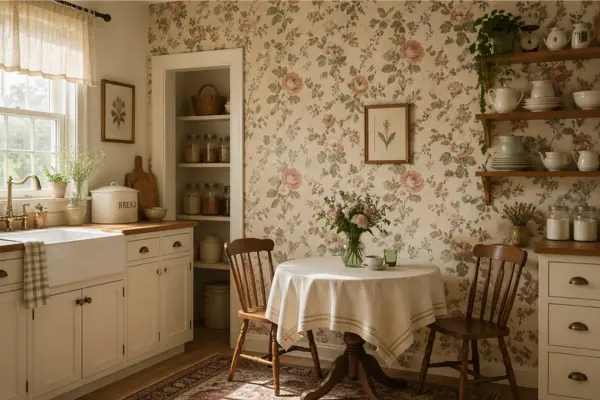
5. Use Floral Wallpaper as an Accent
Floral wallpaper used to feel outdated, but right now it is having a major moment — and for good reason. A single wall of soft, vintage-style florals can completely transform the mood of a kitchen. It brings in warmth, pattern, and a little bit of personality that paint alone just cannot do.
Why It Works
Floral wallpaper softens the hard surfaces in a kitchen — the tiles, the counters, the appliances. It introduces organic shapes and gentle colors that balance the overall look and make the space feel more inviting and human.
Best For
Feature walls, breakfast nooks, the wall behind open shelves, or a pantry area. You do not need to wallpaper the whole room. One well-chosen wall is enough to make the look work.
Styling Tips
Keep everything else in the room simple and calm. If the wallpaper has soft pink roses on a cream background, pull that cream into your cabinet color or linens. Let the wallpaper be the main event and support it with quiet, neutral choices everywhere else.
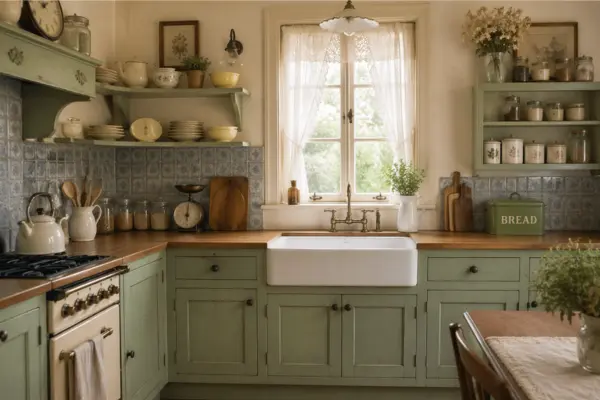
6. Choose Soft, Muted Color Palettes
Color is one of the most powerful tools in your decorating kit, and in a vintage kitchen, the palette is everything. The right shades — sage green, warm cream, dusty blue, soft yellow, faded terracotta — instantly take a kitchen from generic to genuinely charming. These tones feel calm, timeless, and a little bit nostalgic.
Why It Works
Muted, slightly faded tones have an authenticity that bright, saturated colors do not. They look like they have been lived with for years, which is exactly the feeling a vintage kitchen should give. They are also incredibly easy to work with because they pair beautifully with wood, brass, and white.
Best For
Full kitchen makeovers or cabinet repaints. Even just painting your walls in a soft vintage tone can shift the entire mood of the room without touching a single cabinet.
Styling Tips
Avoid anything too bright or too clean. If a color looks very fresh and modern on the paint chip, go one shade softer or one tone warmer. Slightly chalky, dusty, and muted is always the goal. Farrow and Ball and Annie Sloan are great references for the kind of tones that work beautifully in vintage kitchens.
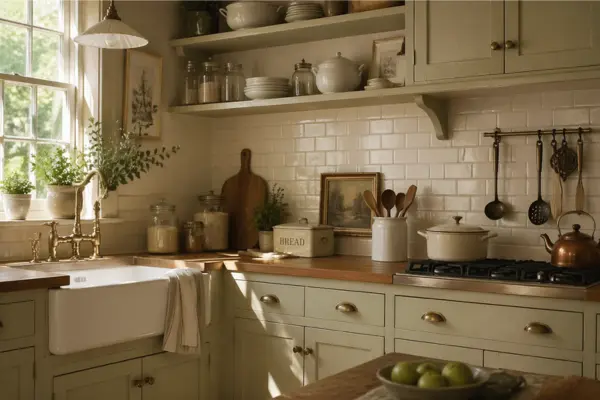
7. Add a Beadboard or Tile Backsplash
A vintage-style backsplash does double duty — it protects your walls and adds serious character at the same time. Beadboard paneling gives a cottage or farmhouse feel, while classic tile choices like penny rounds, subway tiles, or hand-painted tiles feel timeless and traditional.
Why It Works
The backsplash is one of the most visible surfaces in a kitchen, and it has a huge impact on the overall style. A well-chosen backsplash adds texture and depth, making the room feel more layered and carefully designed.
Best For
Kitchen refresh projects where you want to add impact without a full renovation. A new backsplash can make an old kitchen feel completely different.
Styling Tips
Keep the grout color simple and the tile pattern clean. Avoid anything too busy or modern-looking. White, cream, or soft grey grout tends to work best for a vintage aesthetic. If you go with beadboard, paint it in a soft vintage white or cream to keep the look authentic.
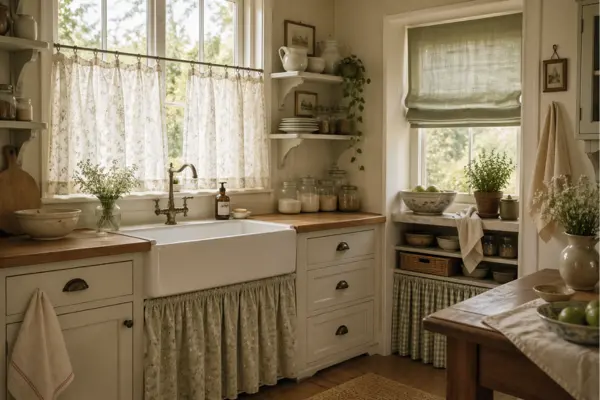
8. Use Fabric Details Like Curtains and Blinds
This is one of the most underrated vintage kitchen tricks, and it costs almost nothing. Soft fabric at the windows — café curtains, Roman blinds, simple linen panels — immediately makes a kitchen feel warmer and more personal. It is the kind of detail that turns a kitchen from functional to genuinely lovely.
Why It Works
Fabric softens every hard surface in the kitchen. Tiles, counters, and appliances are all very rigid and reflective. A piece of fabric at the window breaks all of that up and adds a gentle, human touch that instantly makes the room feel cozier.
Best For
Windows, obviously — but also under the sink if you have an open pedestal sink, or in front of open shelves if you want to cover them occasionally. Even a simple tea towel hung with a hook adds a little of this softness.
Styling Tips
Go for light, natural fabrics — linen, cotton, and muslin all work beautifully. Simple patterns like thin stripes, small checks, or delicate florals feel very vintage. Avoid anything too heavy or fussy. The goal is relaxed and airy, not formal.
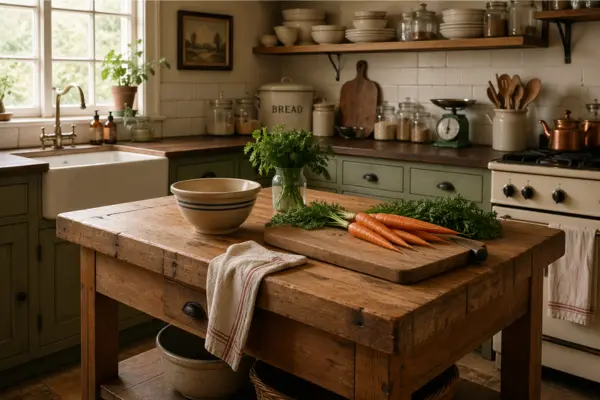
9. Add a Butcher Block or Wooden Worktable
Natural wood is one of the most important ingredients in a vintage kitchen. Adding a butcher block countertop section or a freestanding wooden worktable brings warmth, texture, and practicality into the space. It is one of those elements that looks better the more it is used.
Why It Works
Wood adds an organic warmth that no other material quite matches. It contrasts beautifully with painted cabinets and white or cream surfaces. And unlike marble or granite, wood actually improves with age — it picks up character and patina over time, which is exactly what you want in a vintage kitchen.
Best For
Medium to large kitchens that have floor space or counter space to work with. Even a small butcher block section on an existing counter can add this warmth without taking up extra room.
Styling Tips
Do not over-finish or over-polish the wood. A slightly worn, oiled surface looks far more authentic than a high-gloss finish. A simple food-safe mineral oil is all you need to maintain it. Let it develop its own marks and story over time.
10. Use Glass-Front Cabinets
Glass-front cabinets are one of those details that feels elevated without being expensive. They allow you to display your dishes and glassware while keeping everything protected from dust. They also make the kitchen feel lighter and more open because you can see through them.
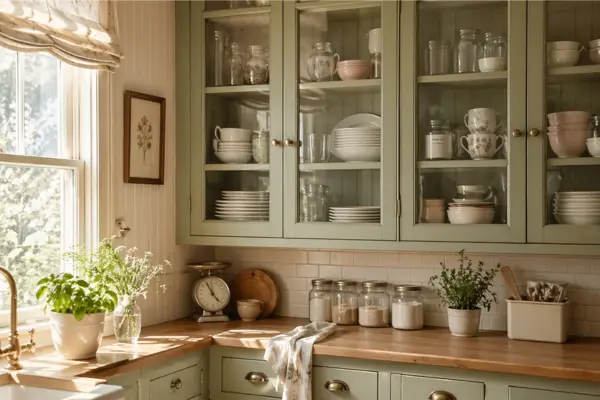
Why It Works
Glass-front cabinets blur the line between storage and display. They add elegance and a sense of depth to the room, and they force you to keep things organized and curated — which always looks better anyway.
Best For
Upper cabinets or a specific feature section of the kitchen. You do not need to convert every cabinet to glass. Even two or three glass-front doors make a big visual impact.
Styling Tips
Only put things behind glass-front cabinets that you are happy for people to see. Keep items color-coordinated and neatly arranged. A mix of white dishes, glass pitchers, and a few pieces of vintage pottery always looks beautiful behind a glass door.
11. Install an Apron-Front Sink
The apron-front sink — also called a farmhouse sink — is one of the most iconic features in vintage kitchen design. It sits proud of the cabinetry, showing off its front face, which gives the sink an almost furniture-like quality. It is a statement piece as much as it is a functional item.
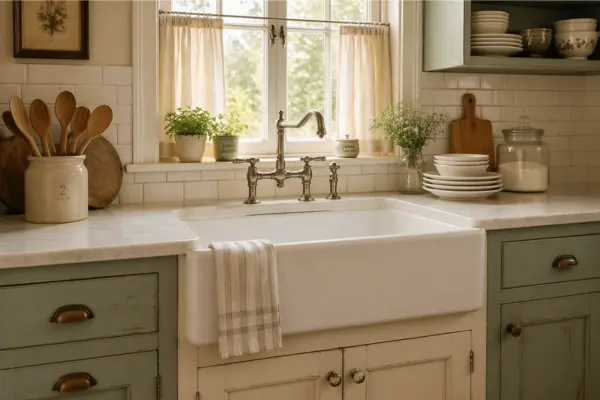
Why It Works
An apron-front sink instantly becomes the focal point of the kitchen. It anchors the whole space and gives the room a strong sense of traditional character. Even in a simple or minimal kitchen, this one feature can carry the entire vintage feel.
Best For
Full kitchen upgrades or remodels where you are already changing the countertops or cabinetry. It requires a little more planning than a drop-in sink because the cabinet below needs to be modified to accommodate it.
Styling Tips
Pair it with a classic bridge faucet or a traditional cross-handle tap in brushed nickel or aged brass. These faucet styles were designed for apron sinks and they complete the look perfectly. White porcelain and pale grey fireclay are the most popular choices for that true vintage feel.
12. Add Vintage-Style Lighting Fixtures
Lighting is one of those things that people often overlook, but it has an enormous effect on how a kitchen feels. Vintage-style pendants, schoolhouse lights, or cage-style bulb fixtures can completely change the atmosphere of the room. They add character up high, where there is often nothing but ceiling.
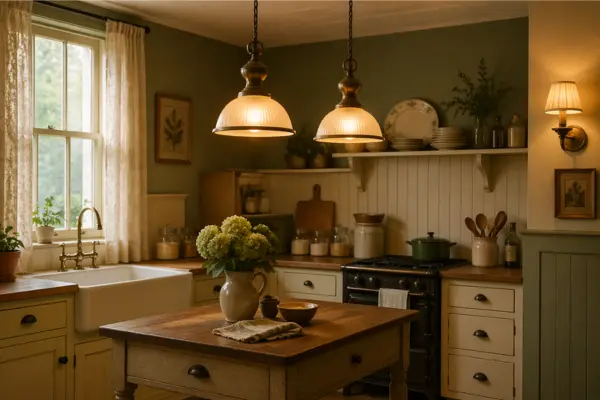
Why It Works
A beautiful light fixture adds visual interest at eye level and above, which is often wasted space in kitchens. It also sets the mood — warm, soft lighting makes a kitchen feel far more welcoming than harsh overhead fluorescents.
Best For
Above the sink, over an island or worktable, or in a dining corner. Wall sconces work beautifully in smaller kitchens where you cannot hang pendants.
Styling Tips
Always choose warm bulb tones rather than cool white or daylight bulbs. Warm light (around 2700K) gives everything a golden, cozy glow that looks absolutely beautiful in a vintage kitchen. Edison-style bulbs inside a simple glass or cage pendant are a classic choice that never goes wrong.
13. Create a Styled Pantry Area
A well-styled pantry is one of those quiet details that makes a kitchen feel truly complete. Whether you have a full walk-in pantry or just a couple of open shelves in a corner, how you organize and style it makes a big difference. Glass jars, wicker baskets, enamel canisters, and handwritten labels all contribute to that beautiful, vintage pantry look.
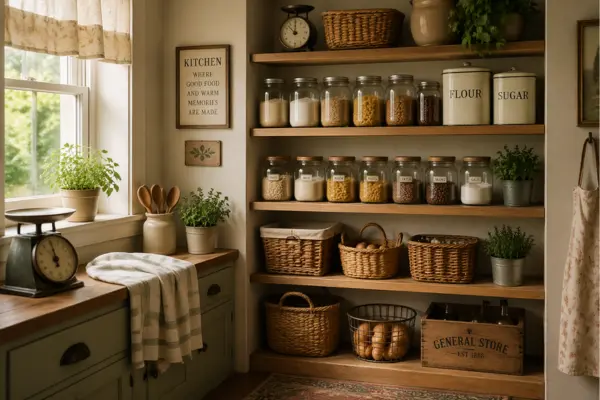
Why It Works
A styled pantry keeps things organized while looking visually appealing. It turns the practical side of a kitchen — storing food and supplies — into something that actually adds to the aesthetic rather than detracting from it.
Best For
Any kitchen, no matter the size. Even a small kitchen can have a little pantry section on one shelf. The key is consistency in your containers and a bit of thoughtful arrangement.
Styling Tips
Use matching glass or ceramic containers for your dry goods and label them with simple tags or handwritten labels. Add a few decorative pieces among the practical ones — a small bundle of dried herbs, a vintage tin, a wooden spoon. Keep the overall color palette calm and consistent.
14. Use a Round Dining Table Instead of an Island
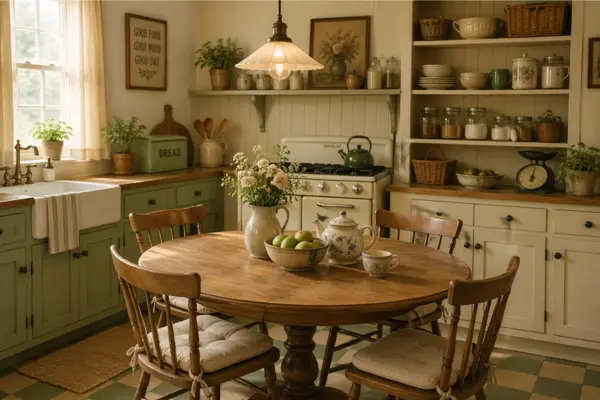
If your kitchen has space for a central seating area, consider a round dining table instead of a fixed island. A round table feels softer, more social, and far more in keeping with the vintage aesthetic. It turns the kitchen into a gathering place rather than just a cooking space.
Why It Works
Round tables encourage conversation and feel more informal and welcoming than a rigid rectangular island. They also allow more people to gather around them comfortably, which is exactly the spirit of a vintage, family-centred kitchen.
Best For
Open kitchens, kitchen-diners, or any kitchen with enough floor space to pull it off. You need at least enough room to walk comfortably around the table when chairs are pulled out.
Styling Tips
Pair the table with simple wooden chairs or mismatched vintage chairs for a collected, casual look. Add a cushion or two for comfort. A small vase of flowers or a simple ceramic bowl in the middle of the table is all you need for styling.
15. Choose a Vintage-Style Range Cooker
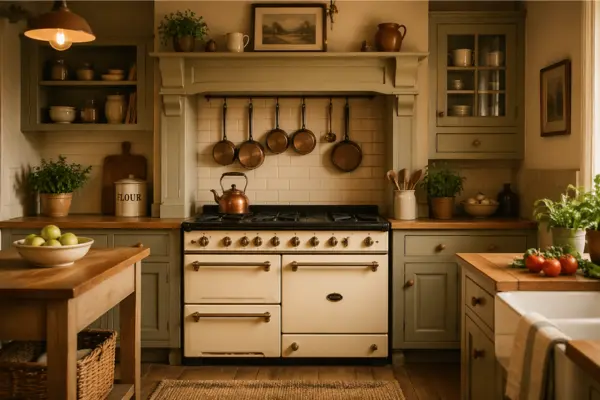
If you are doing a bigger kitchen update and have the budget, a vintage-style range cooker is one of the best investments you can make. Brands like SMEG, Falcon, and Lacanche make cookers that look like they belong in a 1950s French country kitchen but have all the modern functionality you actually need.
Why It Works
A range cooker becomes the centerpiece of the entire kitchen. Everything else in the room is designed around it. It is a strong, confident statement that immediately sets the vintage tone and makes even simple cabinetry look intentional and special.
Best For
Larger kitchens or full renovations where you are already replacing appliances. These cookers are bigger than standard models so you need to make sure your space can accommodate the dimensions.
Styling Tips
Stick to classic colors — cream, deep green, matte black, or pale blue all look stunning. Avoid bold, trendy colors that might feel dated in a few years. Keep the surrounding cabinetry simple and let the cooker be the star. Frame it with a simple tiled or beadboard splashback to complete the look.
16. Decorate with Genuine Vintage Accessories
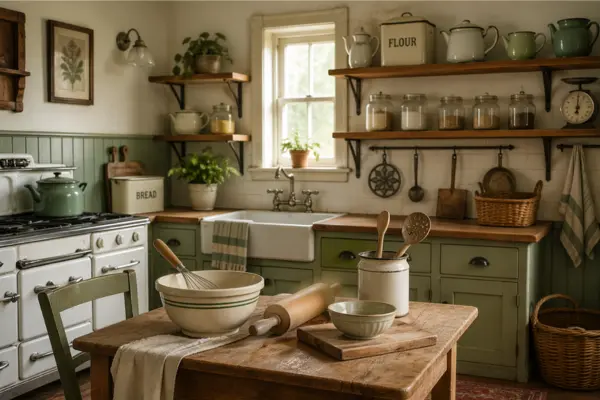
The finishing touches are what bring a vintage kitchen to life. Small, meaningful accessories — old wooden spoons, enamelware mugs, copper pots, wicker baskets, ceramic crocks, a vintage scale — add authenticity and storytelling that you simply cannot get from buying everything new.
Why It Works
These small details add layers and personality to the room. They make it feel personal, collected, and genuinely vintage rather than a styled imitation of one. Each piece has a history, and that history adds warmth to the space.
Best For
Every kitchen, no matter the size or budget. You do not need to spend a lot — charity shops, car boot sales, estate sales, and online marketplaces are full of beautiful vintage pieces for very little money.
Styling Tips
Choose a few pieces that you genuinely love rather than cluttering every surface with vintage objects. Quality over quantity always wins. A single beautiful copper jug or a well-worn wooden bread board does more for a room than a dozen mismatched trinkets. Edit regularly and let the pieces you truly love take centre stage.
Mistakes to Avoid in Vintage Kitchen Decor
Getting the vintage look right is just as much about what you do not do as what you do. Here are the most common mistakes to avoid:
Over-decorating is the number one mistake. It is tempting to fill every surface with vintage finds, but too many accessories make the space feel cluttered and chaotic rather than charming. Edit ruthlessly. If a surface feels too busy, remove two-thirds of what is on it and see how much better it looks.
Mixing too many styles causes confusion. Vintage kitchen design has several sub-styles — farmhouse, cottage, mid-century, European country. Pick one direction and stay within it. Mixing a 1950s American diner feel with a French country aesthetic, for example, will always feel a little off.
Using colors that are too bright or too fresh is another common pitfall. A vintage kitchen should feel like it has been lived in. Bright, saturated, or very clean-looking colors work against that. Always go softer and slightly more muted than you think you need to.
Forgetting about function is a mistake that can make your kitchen beautiful but frustrating to use. Every design choice should still support how you actually cook and live. Open shelves look lovely but they do collect dust and grease, so think honestly about whether you are willing to maintain them. Vintage accessories look charming but they should not be taking up space you actually need for cooking.
Conclusion
A vintage kitchen is not something you put together in an afternoon and never touch again. It is something that develops and grows over time, picking up pieces and layers that make it feel genuinely lived-in and loved. That is the beauty of this style — it rewards patience, creativity, and a good eye for a bargain.
You do not need a big renovation or a designer budget to create a kitchen that feels this way. Start with one or two of the ideas in this guide — maybe new cabinet hardware and a set of open shelves, or a soft new wall color and some café curtains — and build from there.
The goal is always a kitchen that feels warm, personal, and full of character. Take your time, trust your instincts, and enjoy the process.
FAQs
What is the easiest way to create a vintage kitchen look on a budget? Start with the small stuff — new cabinet hardware, open shelving styled with classic dishware, and a soft muted paint color. These three changes alone can completely shift the feel of a kitchen without a major spend.
Can I mix vintage and modern elements in a kitchen? Absolutely, and honestly, this often looks better than going full vintage. A modern kitchen with vintage hardware, a farmhouse sink, and some warm accessories strikes the perfect balance between practical and charming.
What colors work best for a vintage kitchen? Sage green, warm cream, dusty blue, soft yellow, and faded terracotta are all beautiful choices. The key is to go for slightly muted, chalky tones rather than bright or saturated ones.
Do I need to buy actual antique items to get the vintage look? Not at all. Vintage-style pieces from modern retailers can work just as well when they are styled thoughtfully. That said, a few genuine vintage finds — picked up from a market or a charity shop — always add an authenticity that is hard to replicate.
How do I stop my vintage kitchen from looking cluttered or outdated? Balance is everything. Mix old elements with clean, simple modern ones. Keep surfaces edited and uncluttered. Use a consistent color palette. And remember — vintage is about warmth and character, not about cramming in as many old things as possible.