

21 Neutral Bedroom Decor Ideas for a Calm and Stylish Sanctuary
If there is one thing I have learned after years of decorating bedrooms, it is this — neutral tones never go out of style. And honestly, they never disappoint either.
A neutral bedroom is not boring. Done right, it is one of the most beautiful, calming, and put-together spaces you can create. Whether you are starting from scratch or just trying to refresh what you already have, neutral colors give you a foundation that is flexible, timeless, and genuinely easy to live with.
In this guide, I am sharing 21 neutral bedroom decor ideas that actually work — not just in photos, but in real rooms, real homes, and real lives. Each idea is broken down so you know exactly why it works, who it is best for, and how to actually pull it off. Let us get into it.
21 Neutral Bedroom Decor Ideas
1. Tone-on-Tone Neutral Shades
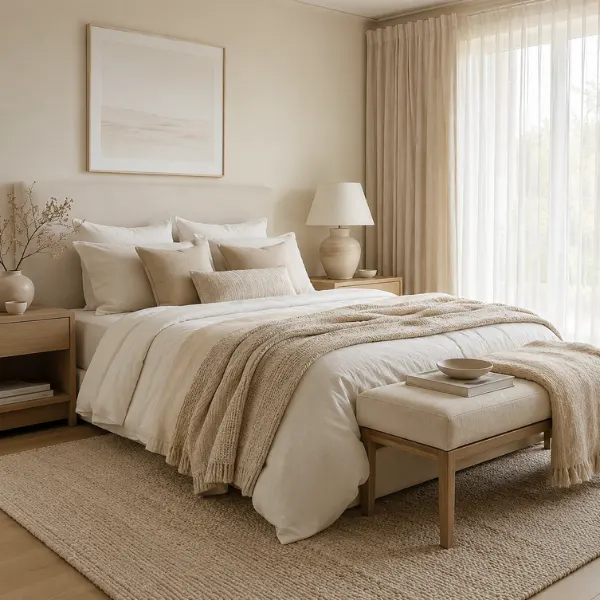
Using different shades of the same color family — think soft white layered with warm cream and pale beige — is one of the most underrated tricks in neutral decorating. It sounds simple, but the result looks incredibly polished and intentional without any effort.
Why It Works
When you stick to one color family but vary the depth of the shades, the room naturally builds depth and warmth without any visual noise. Nothing clashes, nothing competes, and everything feels like it belongs. It is the kind of look that makes people walk in and immediately exhale.
Best For
This approach works beautifully in smaller bedrooms where you want the space to feel bigger and more open. It also works in larger rooms where you want a serene, unified look rather than a busy one.
Styling Tips
Start by picking your base neutral — a warm beige, a soft white, or a creamy off-white — and use it on your walls and larger furniture pieces. Then layer in slightly darker or lighter versions of that same tone through your bedding, throw pillows, curtains, and rugs. For example, if your walls are a warm ivory, go a shade deeper on the duvet and a shade lighter on the shams. The contrast is there, but it is gentle. That is what makes it work.
2. Minimalist Neutral Design
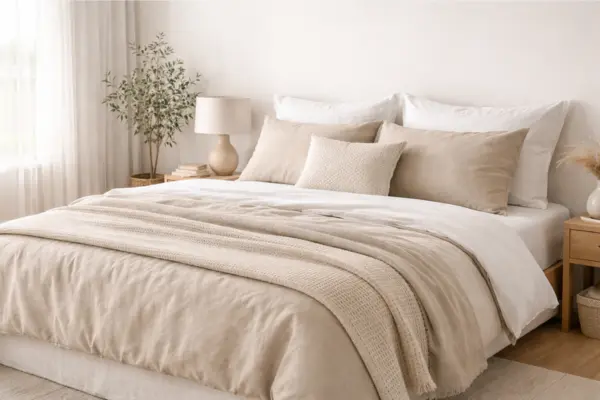
Minimalist decorating is all about stripping things back to only what you need and what you love. When you combine that mindset with neutral tones, you end up with a bedroom that feels open, peaceful, and surprisingly luxurious — even if you spent very little on it.
Why It Works
Removing excess furniture and clutter lets the room breathe. Neutral colors support this beautifully because they do not demand attention. Together, they create a space that feels calm instead of cold, and clean instead of empty.
Best For
This style suits people who prefer order over clutter and like waking up to a space that already feels organized. It is also ideal for small bedrooms where every inch counts.
Styling Tips
Limit your furniture to only the essentials — a bed, a nightstand or two, and maybe a simple dresser. Choose pieces with clean straight lines rather than ornate detailing. Keep surfaces clear. For textiles, go with a neutral duvet in a single solid tone, one or two pillows, and a simple throw. Resist the urge to add more just because it looks nice in the store. In a minimalist room, less really is more.
3. Earthy Neutral Palette
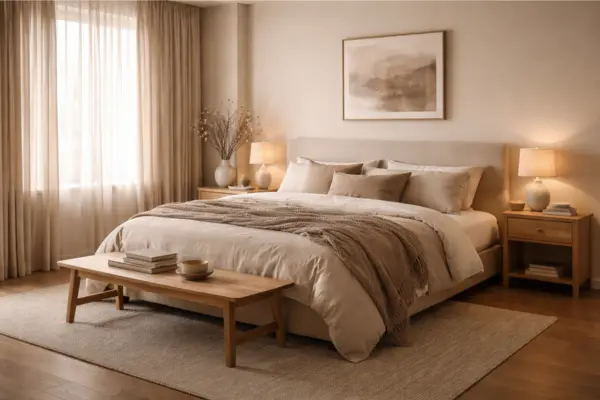
Earthy neutrals like clay, warm taupe, dusty sand, and soft terracotta-adjacent browns bring a grounded, cozy quality to a bedroom that standard beige just cannot match. These tones feel connected to nature, which is exactly why they feel so calming to be around.
Why It Works
Earthy tones are warm without being loud. They invite you to slow down and relax, which is exactly the energy you want in a bedroom. They also pair naturally with organic materials like wood, linen, and jute, making the whole room feel cohesive without much effort.
Best For
This palette is perfect for anyone who loves nature-inspired decor or wants their bedroom to feel warm and cocooning rather than crisp and cool. It suits both boho and rustic styles really well.
Styling Tips
Use a warm taupe or clay tone on your walls and then build from there. Bring in a wooden bed frame or rustic wooden nightstands to ground the earthy palette. Add a linen duvet in a sandy tone, layer a jute rug underneath the bed, and toss in a couple of terracotta or rust-toned throw pillows. If you love plants, a few leafy green stems in neutral clay pots will pull the whole thing together perfectly.
4. Natural Wood Elements
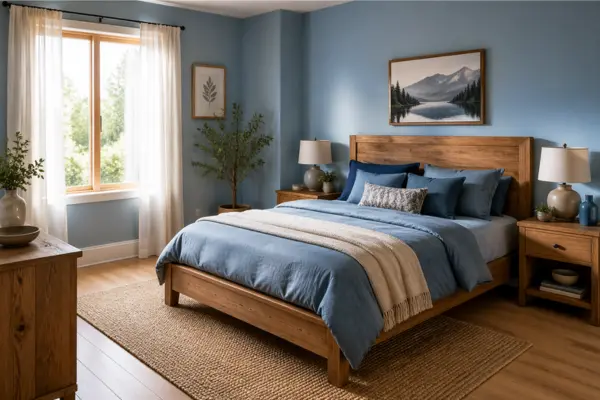
Natural wood might be the single most powerful thing you can add to a neutral bedroom. It brings instant warmth, texture, and character — three things that neutrals can sometimes lack on their own.
Why It Works
Neutral color palettes can occasionally feel a bit flat or chilly, especially in rooms with limited natural light. Wood counters that beautifully. Its natural grain, warm undertones, and organic texture add just enough visual interest to keep the room from feeling one-dimensional.
Best For
This idea works in almost any bedroom, but it is especially effective in rooms with cool-toned neutral walls like soft gray or white. The warmth of the wood balances the coolness of the paint and creates a much more livable feel.
Styling Tips
You do not need to redo all your furniture. Start with one or two wood pieces — a wooden bed frame is the most impactful choice, followed by a simple wooden nightstand. Light to medium wood tones like oak or ash are the most versatile with neutral walls. Avoid dark stained woods unless the rest of your room is on the warmer, moodier end of the neutral spectrum. A floating wood shelf above the bed can also double as decor and storage.
5. Textured Bedding Layered Look
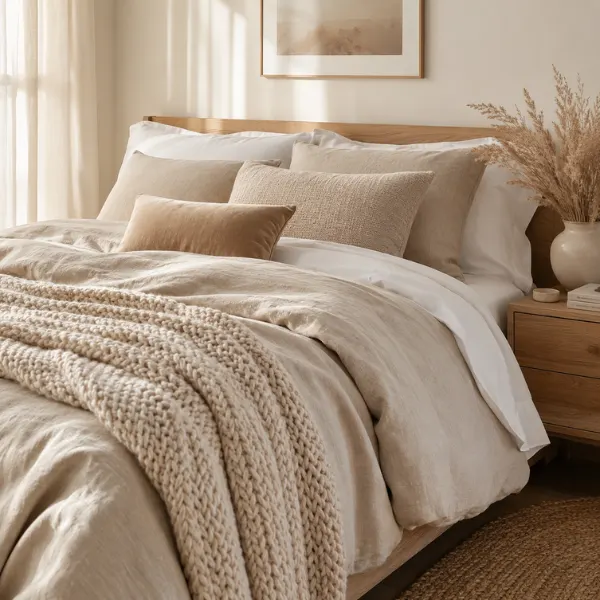
If your neutral bedroom feels a little flat or uninspired, the answer is almost always texture. Layering your bedding with different neutral fabrics — a smooth cotton sheet, a linen duvet, a chunky knit throw — adds so much visual depth without introducing a single new color.
Why It Works
The human eye naturally moves toward variation. When everything in the room is a similar neutral tone, texture becomes the visual storytelling element. Different fabrics catch light differently, feel different to touch, and create a sense of richness that paint colors alone cannot achieve.
Best For
Anyone who wants their bed to look like a Pinterest dream without changing their color scheme. This works in every size bedroom and at every budget level — you can find beautiful textured throws at very reasonable prices.
Styling Tips
Start with a fitted sheet in crisp white or cream cotton. Add a linen duvet cover in a warm beige or oatmeal tone. Layer a chunky knit throw across the foot of the bed. Add two or three pillows in slightly different neutral shades and fabrics — maybe one in a smooth velvet and one in a cotton slub. Do not over-stack the pillows. Three to five total looks intentional; more than that starts to look fussy.
6. Accent Wall With Subtle Pattern
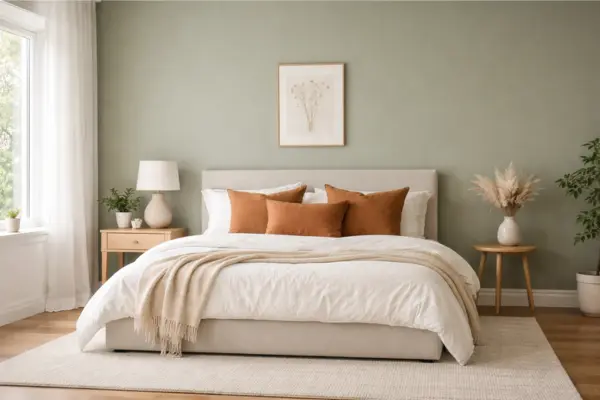
An accent wall does not have to mean a bold color splash. In a neutral bedroom, an accent wall done in a soft patterned wallpaper or a textured paint finish adds personality and a focal point without disrupting the calm you have worked so hard to create.
Why It Works
A patterned accent wall gives your eye a place to land — usually the wall behind the bed — and makes the whole room feel more designed and intentional. Because the pattern is in a neutral tone, it blends rather than shouts, which is exactly what a restful bedroom needs.
Best For
Bedrooms that need a focal point or a bit more personality but you do not want to go bold with color. This is also a great option for renters who are allowed to wallpaper and want to add character to a plain room.
Styling Tips
Look for wallpaper patterns with very subtle texture or geometry — thin linen weaves, soft herringbone, or quiet botanical prints in tone-on-tone neutrals work incredibly well. A soft gray-on-gray geometric or a warm beige linen-look wallpaper are both excellent choices. Keep the other three walls plain. Let the accent wall do its job without competing elements nearby.
7. Cozy Rug Anchor
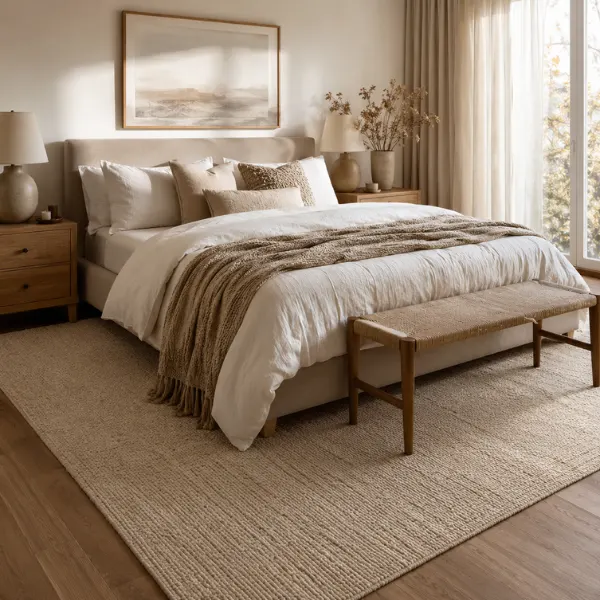
A rug might be the most overlooked element in bedroom decorating. But add the right one and the whole room suddenly comes together in a way that is hard to explain — it just looks finished.
Why It Works
A rug anchors the bed visually, defines the sleeping zone, and adds warmth and softness underfoot — especially important if you have hardwood or tile floors. In a neutral bedroom, a rug also contributes texture and a subtle layer of color depth.
Best For
Every bedroom benefits from a rug, but it is especially impactful in rooms with hard flooring or in spaces that feel a little cold or unfinished. Both small and large bedrooms benefit from this addition.
Styling Tips
Size matters a lot here. Your rug should be large enough that both sides of the bed sit at least partially on top of it — ideally with 18 to 24 inches of rug visible on each side. An undersized rug will make the room feel off. For neutral bedrooms, look for rugs in oatmeal, ivory, warm gray, or soft sand tones. A low-pile wool or a flatweave jute rug both work beautifully. Avoid anything too busy or with high-contrast patterns.
8. Sculptural Lighting
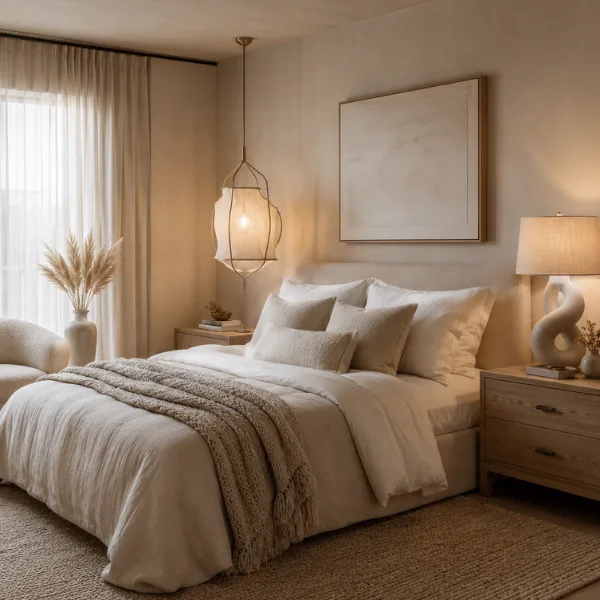
Lighting in a neutral bedroom should do two things: function well and look beautiful. Sculptural light fixtures — pendant lights with an interesting silhouette, table lamps with a unique base, wall sconces with an organic shape — add that second quality without needing to introduce bold color.
Why It Works
A neutral room can start to feel a bit quiet if every element is playing it safe. A sculptural light fixture gives the eye something interesting to look at. It adds an artful touch that elevates the entire room while still fitting seamlessly into the neutral palette.
Best For
This works especially well in rooms that feel a little too plain or too flat. Even one interesting light fixture — a pendant above the nightstand or a table lamp with an unusual base — can completely change the feel of the space.
Styling Tips
Look for lamps with matte finishes rather than shiny ones. Matte black, matte warm brass, and natural linen shades all look incredible in neutral bedrooms. A pendant light in a woven rattan or linen shade adds texture as well as light. On nightstands, go for a lamp with a sculptural base — an organic stone look, a twisted ceramic, or a clean architectural shape — paired with a simple drum shade in white or cream.
9. Neutral Headboard Statement
A headboard is the natural focal point of any bedroom, and in a neutral space, an upholstered headboard in a soft, luxurious fabric can be the detail that makes the whole room feel elevated and intentional.
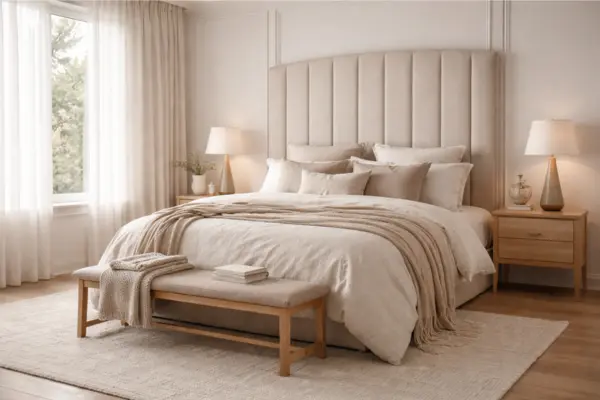
Why It Works
An upholstered headboard adds softness, height, and visual weight to the bed wall in a way that no other element can. It creates a sense of comfort and luxury without requiring any bold design choices. In a neutral room, it feels both grounded and sophisticated.
Best For
Anyone who wants their bedroom to feel like a proper sanctuary rather than just a place to sleep. It works in both small and large bedrooms and suits a wide range of neutral decor styles.
Styling Tips
Choose a fabric in a neutral tone — warm linen, soft velvet in beige or greige, or a textured boucle in cream or oatmeal. Tufted and pleated headboard designs add an extra layer of visual texture. Size-wise, go a little larger than you think you need. A headboard that extends above the bed and feels generous in scale looks far more impressive than one that barely clears the pillows. Pair it with simple bedding and minimal accessories so it stays the star of the room.
10. Organic Greenery Touches
Plants are one of the most effective ways to add life, color, and texture to a neutral bedroom — and they do it without breaking the neutral palette. The soft green of plant leaves against warm beige walls is genuinely one of the most beautiful pairings in interior design.
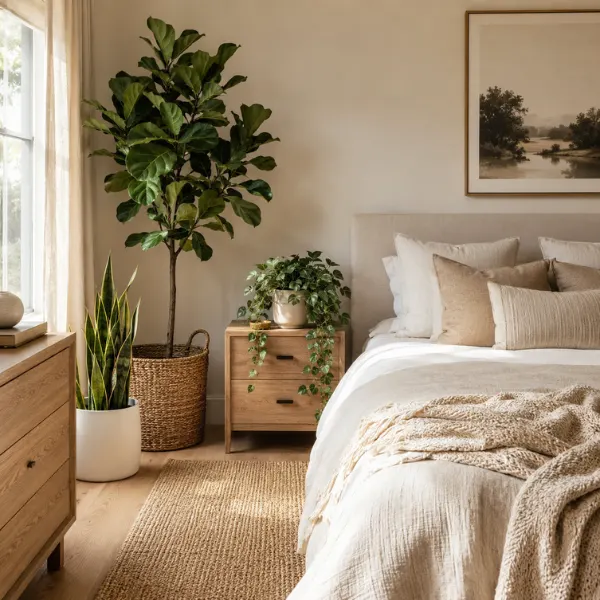
Why It Works
Neutral bedrooms can occasionally feel a little still or uninspired. Plants fix that instantly. They add movement, organic texture, and a quiet pop of natural color. They also improve air quality and make the space feel fresh and alive — qualities that genuinely matter in a room you sleep in every night.
Best For
Anyone who loves nature and wants to bring some of the outdoors inside. Works in any size bedroom, especially rooms that feel a little sterile or lacking in personality.
Styling Tips
Keep your pots neutral — terracotta, matte white, or woven baskets all work beautifully. Use varying heights to create visual interest. A tall fiddle leaf fig or snake plant in a corner adds height and drama. Small succulents or trailing pothos on a nightstand or shelf add a softer, more intimate touch. You do not need many — two or three well-placed plants are often more impactful than a dozen small ones scattered everywhere.
11. Layered Curtains
Curtains are doing more than just blocking light — they are contributing significantly to the mood and texture of your bedroom. Layering sheer curtains with heavier drapes in neutral tones is one of those decorating techniques that looks very put-together but is genuinely easy to do.
Why It Works
Layered curtains add depth and softness to a window, which is usually one of the largest visual elements in a bedroom. The sheer layer filters light beautifully during the day, casting a warm, diffused glow through the room. The heavier drape layer gives you full light control at night and adds visual weight to the window area.
Best For
Bedrooms where the windows are a significant feature, or rooms where you want to add softness and a sense of luxury without introducing color. Works well in both small and larger bedrooms.
Styling Tips
Choose a sheer in white, ivory, or pale linen as your base layer. Then add a heavier drape in a complementary neutral — warm gray, oatmeal, or soft taupe. Hang both layers from the same rod, or use separate rods if you want more flexibility. The key is to hang the curtains high — at ceiling height or just below — and wide, extending several inches past the window frame on each side. This makes the window look larger and the room feel taller.
12. Rustic Neutral Corner
Every good bedroom has at least one corner that does something beyond just holding space. A rustic neutral corner — a woven chair, a reclaimed wood shelf, a stack of books, a simple basket — creates a cozy nook that makes the whole room feel more layered and interesting.
Why It Works
Rustic elements bring natural warmth and texture to neutral bedrooms in a way that polished or sleek furniture often cannot. Reclaimed wood, woven fibers, and aged metals all have character built in, and they balance out the smoother, softer surfaces elsewhere in the room.
Best For
Medium to large bedrooms that have corners or wall space to work with. Also great for people who love a cozy, collected aesthetic rather than a very spare minimalist look.
Styling Tips
Pick a corner — ideally not directly beside the bed — and anchor it with one slightly larger element. A vintage wooden chair with a throw draped over it, or a reclaimed wood ladder used as a blanket holder, both work beautifully. Add a woven basket on the floor for practical storage, and maybe a small plant or a simple pendant light if the ceiling allows it. Keep it intentional — three or four elements maximum so it feels curated, not cluttered.
13. Matte Finishes Over Glossy
This is a detail that a lot of people overlook, but once you start noticing it, you cannot un-notice it. In a neutral bedroom, choosing matte finishes for your furniture, frames, and hardware instead of glossy ones makes a significant difference in how the room feels.
Why It Works
Glossy surfaces reflect light sharply and can make a neutral room feel almost clinical. Matte surfaces absorb light softly, which creates depth and warmth. They feel more tactile, more comfortable, and more in keeping with the calm, cocooning energy that a good neutral bedroom should have.
Best For
Anyone going for a sophisticated, understated look rather than something shiny or modern-glam. Ideal for minimalist and Scandinavian-inspired bedrooms especially.
Styling Tips
Look for a bed frame or dresser with a matte wood or matte painted finish rather than a lacquered one. Choose matte black or warm matte brass for hardware, lamp bases, and picture frames. If you are painting furniture, a flat or eggshell finish rather than a semi-gloss will immediately give it that soft, elevated quality. Even switching out shiny chrome hardware to a matte alternative on existing furniture is an easy and affordable upgrade.
14. Beige and Grey Harmony
Beige and gray are two of the most popular neutral tones in home decor, and there is a very good reason for that — they work together beautifully. When balanced correctly, the warmth of beige and the coolness of gray complement and soften each other, creating a bedroom that feels both sophisticated and deeply comfortable.
Why It Works
On their own, pure gray can feel cold and beige can feel too warm. Together, they find a balance that reads as elegant and livable. The key is getting the proportions right and making sure the undertones of your specific beige and gray are compatible rather than fighting each other.
Best For
People who want a neutral bedroom that is versatile and easy to accessorize. This palette is also ideal for anyone who finds all-beige too warm or all-gray too stark.
Styling Tips
Use one tone as your dominant base and the other as the supporting accent. Warm beige walls with soft gray bedding is one classic combination. You can also reverse it — gray walls with warm beige linen and textiles. Stick to fabrics with natural texture like cotton, wool, and velvet to keep the palette from feeling too flat. Avoid cool stark whites alongside this combination — they tend to make the gray look harsh. Warm off-whites work much better.
15. Tone Contrast With Texture
When you want a neutral bedroom to feel more dynamic but you do not want to introduce color, texture contrast is your best tool. Pairing materials that feel completely different — a smooth silk pillow against a rough linen sham, a sleek metal frame alongside a chunky knit throw — creates visual and tactile interest that makes the room feel intentional and layered.
Why It Works
The eye naturally seeks variation. In a neutral palette, that variation has to come from somewhere other than color. When surfaces and textiles have contrasting textures, the room immediately feels richer and more complex — even if every single element is the same general shade of warm white or beige.
Best For
Anyone who wants more interest and depth in their neutral bedroom without adding color. This works in every style and every size bedroom.
Styling Tips
Think about your bedroom in terms of texture categories: smooth versus rough, soft versus structured, light versus heavy. Try to have at least two or three different texture types present. Pair a smooth, solid-colored duvet with a rough jute rug underneath the bed. Contrast a sleek metal bed frame with plush velvet pillows. Place a polished ceramic lamp beside a woven rattan tray on your nightstand. These contrasts do not need to be extreme — even small differences in texture read visually and add dimension to the space.
16. Simple Wall Art in Neutral Frames
Art is one of the most personal elements in any room, and in a neutral bedroom, it plays a particularly important role. Hanging simple artwork in neutral-colored frames lets you add personality, story, and warmth to the walls without disrupting the calm palette.
Why It Works
Artwork gives the room something to say. Without it, neutral bedrooms can feel like hotel rooms — beautiful but a little impersonal. The right art in the right frame creates a focal point and tells a story about who lives there, while neutral frames ensure it blends gracefully into the overall design.
Best For
Anyone who wants to personalize their neutral bedroom without going bold. This also works beautifully if you rotate art seasonally or like to update your decor without repainting or redecorating.
Styling Tips
Choose artwork with muted, earthy, or monochromatic tones — soft abstract prints, simple botanical illustrations, black and white photography, or minimal line drawings all look wonderful in neutral bedrooms. Frame them in natural wood, whitewashed, or simple matte black frames to keep the look grounded. For above the bed, a single large piece or a grouping of three to five smaller pieces works well. Keep the arrangement simple and symmetrical for a restful, ordered feel.
17. Scandinavian Calm Bedroom
Scandinavian design is built on the idea that a space should be functional, beautiful, and deeply comfortable — with nothing unnecessary taking up space or attention. In a neutral bedroom, this translates to white or light gray walls, simple furniture with clean lines, natural light, and just a few carefully chosen accessories.
Why It Works
The Scandinavian approach to decorating results in rooms that feel genuinely restful. There is no clutter to visually process, no competing colors to navigate. The light, the natural materials, and the simplicity all work together to create a space that feels like a proper retreat.
Best For
People who are drawn to clean, simple aesthetics and want a bedroom that feels calm every single morning. Also ideal for smaller bedrooms where simplicity and smart storage are essential.
Styling Tips
Start with white or very light gray walls. Choose a bed frame in natural light wood — oak and birch are the quintessential Scandinavian choices. Keep bedding simple: white or cream duvet, minimal pillows, one cozy throw. Add a small bedside table with clean lines, a simple lamp, and a single plant or a small stack of books. Keep the floor mostly clear. Hang one piece of art, framed simply. Resist the urge to add more — the restraint is the whole point.
18. Layered Throws for Visual Interest
Throws might be the easiest and most affordable way to transform the look and feel of a neutral bedroom. Layering two or three throws in different neutral textures on your bed or a lounge chair creates an effortlessly cozy, lived-in look that feels both intentional and relaxed.
Why It Works
Throws add warmth — both literally and visually. Even in a well-decorated neutral bedroom, the absence of throws can make a space feel unfinished. Layering them adds depth, comfort, and that feeling of a room that is actually used and loved, not just styled for a photo.
Best For
Anyone who wants to add that cozy, welcoming quality to their neutral bedroom without buying new furniture or redecorating. This is also one of the most budget-friendly changes you can make.
Styling Tips
Choose throws in complementary neutrals — an ivory cotton knit, a soft gray wool blanket, and a warm camel cashmere throw, for example, all layer beautifully together. Vary the textures rather than the colors. Drape one loosely across the foot of the bed, fold one over a chair, and toss one casually across a corner of the duvet. Do not arrange them too perfectly — the slightly relaxed, unstudied look is what makes this styling technique so appealing.
19. Black Accents for Definition
One of the most effective ways to stop a neutral bedroom from feeling too soft or undefined is to introduce a small amount of black. Just a few black accents — a lamp base, a mirror frame, a curtain rod, a bedside tray — ground the whole room and give it a quiet, modern edge.
Why It Works
Black creates definition. In an all-neutral room, everything can start to blur together slightly — shapes lose their edges and the room can feel a little formless. Black accents bring things back into focus. They add contrast without color, and drama without noise.
Best For
Neutral bedrooms that feel a little too soft or are missing a sense of structure. Also great for people who like a slightly modern or contemporary feel in their decor.
Styling Tips
The key word here is restraint. A little black goes a very long way. Start with one or two elements — a matte black lamp, a black metal mirror, or simple black picture frames. See how those feel before adding more. A black curtain rod with neutral curtains is a particularly elegant and easy addition. If you want to go bigger, a single black accent wall behind the bed can work beautifully — but it must be balanced with light walls and light furniture everywhere else in the room.
20. Gentle Greige Walls
If you have ever painted a wall beige and thought it looked too yellow, or painted it gray and thought it looked too cold, greige might be your answer. Greige — a blend of gray and beige — hits that perfect middle ground that works in almost any light condition and with almost any furniture.
Why It Works
Pure beige can read warm and yellow-toned depending on the light in your room. Pure gray can feel cold and almost industrial. Greige sits right between the two extremes and reads as a sophisticated, versatile neutral that is genuinely flattering to most spaces.
Best For
Anyone who has struggled to find the right neutral wall color. Greige is particularly useful in rooms that receive a mix of warm and cool light throughout the day, since it holds up beautifully in both.
Styling Tips
When choosing a greige paint, test it on your actual wall and observe it at different times of day — morning, midday, and evening with artificial light. Some greiges pull pink or purple in certain lights, so testing is essential. Once you have your greige walls, pair them with off-white bedding, warm wood furniture, and soft lighting. Avoid bright white accessories — they can make greige walls look dirty. Warm whites and creams are much more harmonious.
21. Window View Feature
If your bedroom has a beautiful window — whether it overlooks a garden, a street lined with trees, or even just a patch of sky — do not cover it up. Make it the feature. Keeping window treatments light, simple, and neutral allows the view and the natural light to become a part of your room’s design.
Why It Works
Natural light is the single most powerful design element in any room. It cannot be replicated or purchased. When you allow it to flow freely into your neutral bedroom, it activates every texture, warms every tone, and makes the whole space feel alive in a way that artificial lighting simply cannot match.
Best For
Bedrooms with good natural light and windows that have even a moderately pleasant outlook. If your view is less inspiring, you can still do a version of this by focusing on maximizing whatever light you have.
Styling Tips
Choose sheer linen curtains in white, cream, or soft natural linen for your primary window treatment. Hang them as high and as wide as possible to maximize the light and the visual impact. If you need blackout capability for sleeping, add a simple roller blind behind the sheers rather than heavy drapes that will block the daytime light. Position a reading chair or a small bench near the window to create a purpose for the space and give you a reason to enjoy it every day.
Mistakes to Avoid When Designing a Neutral Bedroom
Even with the best ideas in hand, there are a few common pitfalls that can work against you. Here are the ones I see most often — and how to sidestep them.
Overcrowding the space is the most frequent mistake. Neutral rooms thrive on breathing room. When you fill every surface and corner with furniture and accessories, the calm quality of the neutral palette gets buried under visual clutter. Edit ruthlessly and keep only what genuinely adds to the room.
Using too much of one exact shade is another trap. A room painted beige with beige furniture and beige bedding all in the exact same tone will feel flat and oddly sterile. Neutral does not mean identical — you need variation in shade, tone, and texture within your neutral palette to keep the room looking layered and alive.
Ignoring the lighting is a mistake that can undo an otherwise beautiful neutral bedroom. Neutral tones respond dramatically to the quality and warmth of light. A single overhead bulb will flatten everything. Layer your lighting — a ceiling fixture, bedside lamps, and even a floor lamp or wall sconce — and choose warm-toned bulbs rather than cool white ones.
Choosing the wrong neutral without testing it is something I see all the time. Not all neutrals are equal, and the same paint color can look completely different in two different rooms depending on natural light, ceiling height, and what is around it. Always test paint swatches on your actual wall before committing. Live with them for a few days in different lighting conditions. It is a small extra step that saves a lot of regret.
Skipping texture because everything is the same color is also a common oversight. In a neutral room, texture is doing the heavy lifting that color does in other rooms. If everything is smooth and flat, the room will feel two-dimensional. Make sure you have a mix of soft, rough, woven, knitted, and polished surfaces throughout the space.
Conclusion
A neutral bedroom is one of the most rewarding spaces you can create. When it is done well, it feels calm, timeless, and completely your own. It never goes out of style, it works with almost every furniture style and every budget, and it creates the kind of peaceful atmosphere that genuinely helps you rest.
The key to getting it right is to think beyond just color. Layer your textures, be intentional about your lighting, choose a few quality pieces over many mediocre ones, and give the room room to breathe. Whether you go full Scandinavian minimalism, warm earthy tones, or a soft beige and gray blend, the ideas in this guide give you a solid, practical foundation to build from.
Start with one or two ideas that speak to you most and build from there. You do not have to do everything at once — great rooms are usually built gradually, with time and intention. Trust the process, and enjoy creating a bedroom that finally feels like the sanctuary you deserve.
FAQs
Can I use bright colors in a neutral bedroom?
Yes, absolutely. A neutral bedroom does not have to be completely devoid of color. You can bring in subtle pops through throw pillows, a small piece of artwork, a decorative vase, or a single plant pot in a warm earthy tone. The rule of thumb is to keep any color accents muted and small in scale so they complement the neutral backdrop rather than compete with it.
How do I make a small bedroom feel larger with neutral colors?
Stick to the lighter end of the neutral spectrum — soft whites, pale creams, and light warm grays — for your walls. Keep furniture low to the ground and minimal in number. Add a mirror or two to bounce natural light around the room. Hang curtains at ceiling height to make the walls feel taller. Avoid rugs that are too small — an undersized rug will actually make a small room look smaller.
Can I incorporate darker neutrals into my bedroom?
You can, and darker neutrals like charcoal, deep taupe, and warm chocolate brown can create a beautifully moody and cocooning atmosphere. The key is balance. Use a darker neutral on one wall only, or introduce it through bedding and textiles rather than all four walls. Pair dark neutrals with warm lighting and plenty of soft textures to keep the room from feeling heavy or cave-like.
How do I keep a neutral bedroom from feeling too plain?
This is where texture saves everything. Bring in woven rugs, knitted throws, linen duvet covers, velvet pillows, and rattan or wood accessories. Add one or two pieces of art that you genuinely love. Use plants to add natural color and movement. Layer your lighting rather than relying on a single overhead fixture. A neutral room that is rich in texture and well-lit will never feel plain — it will feel intentional and beautiful.
What is the easiest first step if I want to try neutral bedroom decor?
Start with your bedding. Swap out whatever you currently have for a simple linen or cotton duvet cover in a warm neutral — oatmeal, cream, or soft white are all excellent choices. Add a couple of complementary throw pillows in a similar or slightly contrasting neutral tone, and drape a textured throw across the foot of the bed. That one change alone can transform the entire mood of your bedroom, and it costs far less than repainting or buying new furniture.