21 Modern TV Stand Ideas to Transform Your Living Room in 2026
Let me be honest with you — the TV stand is the most underrated piece of furniture in your living room. Everyone obsesses over the sofa, the rug, the wall color. But your TV stand? That thing sits front and center every single day. Every movie night, every lazy Sunday, every time you walk into the room — your eyes land on it first.
And here is the thing: a bad TV stand makes your entire room feel off. Wires everywhere, a top-heavy TV perched on something too small, zero storage, and a style that fights with everything else. Sound familiar?
Whether you are working with a tiny apartment, a big open-plan family room, or a cozy bedroom, there is a modern TV stand idea on this list for you. I have put together 21 of the best, most realistic, and most gorgeous options — with exactly how to style each one so you do not just buy a piece of furniture, you actually make it work in your home.
Table of Contents
21 Modern TV Stand Ideas
Here are the modern TV stand Ideas:
1. Floating Walnut Low-Profile TV Console
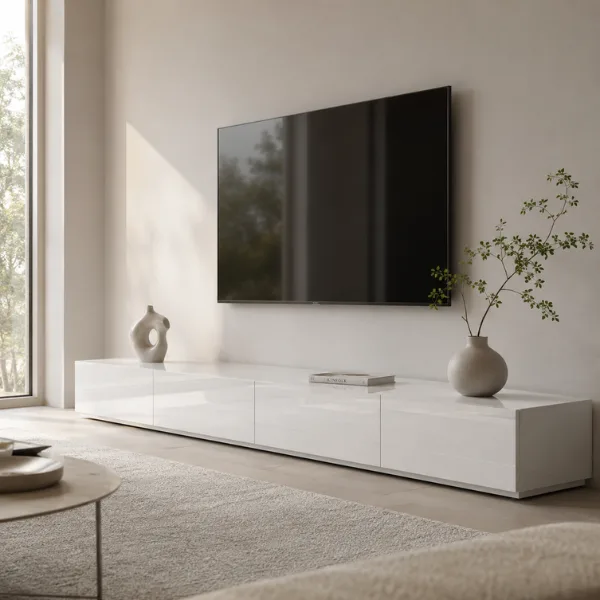
If you want your living room to look like it came straight out of an interior design magazine, this is your starting point. A floating walnut console sits flush against the wall with no legs touching the floor, giving the whole room an open, airy feeling. The warm walnut wood tone adds richness without making the space feel heavy or dark. It is one of those pieces that looks expensive even when it is not.
Why It Works
The floating installation frees up your floor completely, which tricks the eye into thinking the room is bigger than it actually is. The low profile keeps the TV at the perfect seated viewing height without any neck-straining. Walnut’s warm brown tone is also incredibly versatile — it pairs beautifully with everything from light grey walls to deep navy, sage green, and even crisp white. The closed drawers hide every remote, cable box, and gaming controller without any effort on your part.
Best For
- Small to medium living rooms where floor space is precious
- Minimalist and Scandinavian-inspired interiors
- Renters who want a high-end look without permanent renovations (just use proper wall anchors)
- Anyone who has ever spent 10 minutes looking for the remote
Styling Tips
- Mount the console about 24 to 30 inches off the floor so the TV center sits at eye level when seated
- Place a trailing pothos or small olive plant on one end to soften the clean lines
- Add a couple of matte ceramic vases in earthy tones for texture
- Run warm white LED strip lighting underneath the console for a soft glow at night — it looks stunning
2. Mid-Century Modern TV Stand with Tapered Legs
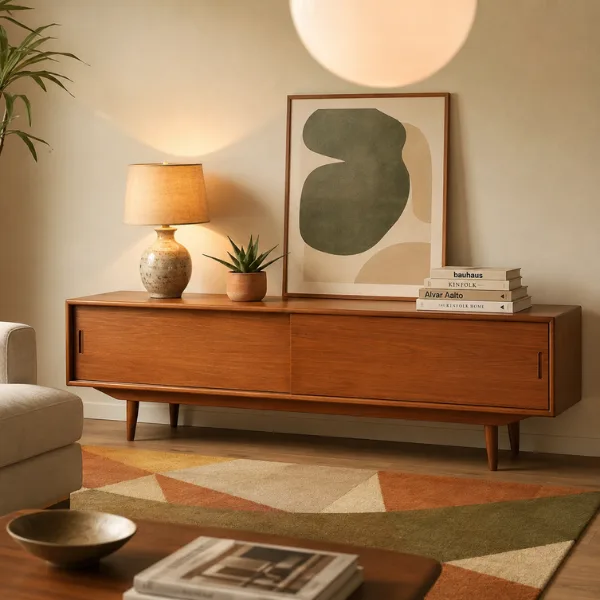
There is a reason mid-century modern never goes out of style. The tapered legs, the clean lines, the warm wood tones — it is timeless in a way that trends simply cannot touch. This TV stand brings a 1960s sophistication to your space without feeling like a museum exhibit. Think walnut or teak finish, simple knob or bar pulls, and a mix of open shelves and closed doors.
Why It Works
The tapered legs create a “floating” visual effect even though the stand sits on the floor — they make the piece look lighter and less bulky than traditional furniture. The combination of open shelves (for your media devices, speaker, or a few books) and closed cabinet doors (for the stuff you just want hidden) makes it incredibly functional. It is the perfect balance between style and practicality.
Best For
- Living rooms with warm, earthy color palettes
- Homes that already have other mid-century pieces like a curved sofa or tulip dining table
- Medium to large rooms where you want a statement furniture piece
- People who want something that will never look dated
Styling Tips
- Style the open shelves with a mix of objects at different heights — a short succulent, a stack of coffee table books, and a small sculptural piece
- Brass or gold hardware on the drawer pulls adds a luxe, retro touch
- Pair with a shag rug in cream or warm rust tones for full mid-century vibes
- Keep the wall behind it simple — a single large piece of abstract art works perfectly
3. Fluted Wood Media Wall TV Stand
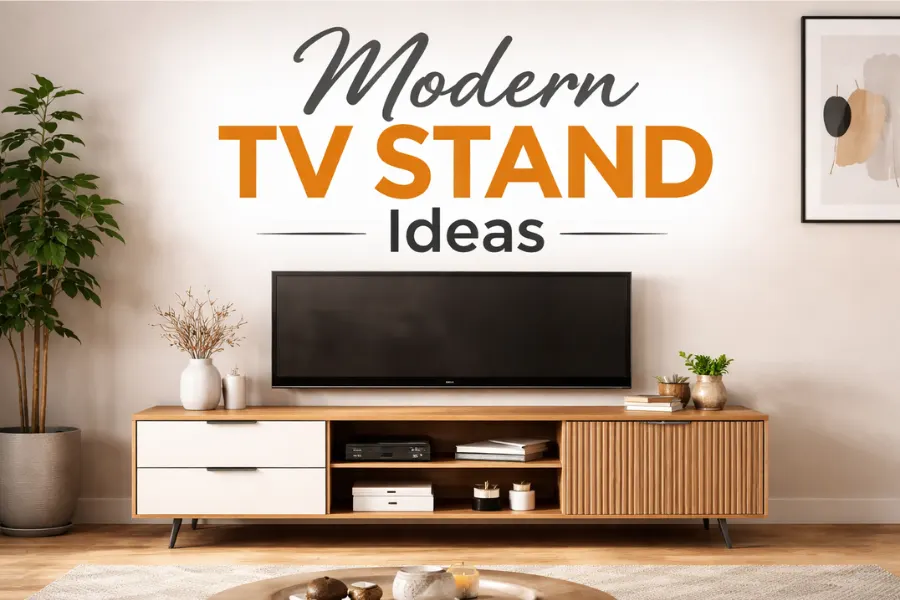
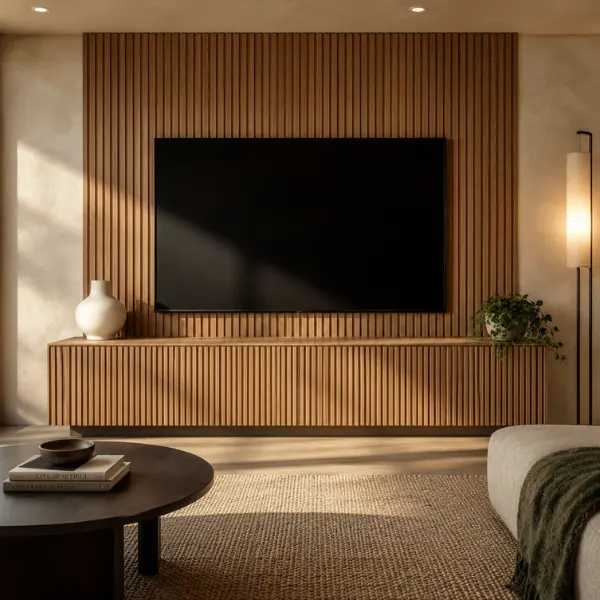
This is the biggest trend in TV stand design right now and honestly, it deserves all the attention it is getting. A fluted wood media wall uses vertical grooves (called fluting) on the cabinet doors or panels. These ridges catch light in the most beautiful way, adding texture and depth to what would otherwise be a flat surface. It instantly makes even a budget-friendly stand look expensive and architecturally considered.
Why It Works
Fluting solves a classic design problem: how do you add visual interest without adding clutter? The vertical grooves create shadow and light play across the surface all day long, so the piece always looks interesting. It works in both modern and more decorative interiors because it references classical architecture while staying completely contemporary. Cabinet doors with fluting also hide what is behind them completely, so your storage stays invisible.
Best For
- Living rooms where you want a strong design statement
- Open-plan spaces that need a defined focal point
- Anyone who loves the look of custom built-ins but does not have the budget for them
- Medium to large TVs (55 inches and above)
Styling Tips
- Choose a warm oak or natural linen finish for a softer look, or go dark charcoal for drama
- Keep the top surface minimal — one sculptural vase and maybe a trailing vine plant is enough
- Add a floor lamp on one side to draw the eye up and create vertical balance
- This stand looks incredible with a textured plaster or limewash wall behind it
4. Electric Fireplace TV Stand
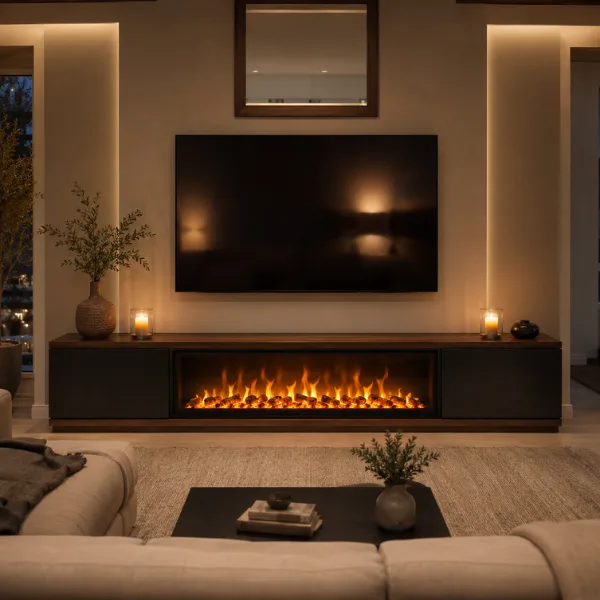
This one is a total two-for-one deal. A corner electric fireplace TV stand tucks neatly into the corner of your room, gives you a place to mount or rest your TV, AND adds a cozy fireplace ambiance — all in one unit. The electric fireplace insert has realistic 3D flame effects and can actually heat the room, making it as functional as it is beautiful.
Why It Works
Corners are some of the most wasted real estate in any room. This stand uses that awkward dead space and turns it into the most cozy, interesting part of the room. The electric fireplace adds warmth (literal and visual) without any chimney, venting, or installation work — it just plugs into a standard outlet. The angled design also naturally points the TV toward the center of the seating area, which often gives a better viewing angle than a straight wall placement.
Best For
- Small rooms and studio apartments where corner space is the only available wall area
- Renters who cannot install a real fireplace
- Bedrooms where a fireplace TV stand creates a cozy, boutique-hotel atmosphere
- Families who want zone heating without cranking up the whole house thermostat
Styling Tips
- Flank both sides of the unit with matching table lamps or wall sconces to frame the corner
- Use the mantel shelf for seasonal decor — candles, greenery, framed photos
- Choose a finish that matches your other wood tones in the room (warm oak, dark espresso, or grey)
- Set the flame to a low amber setting even when the TV is on — the combination looks incredible
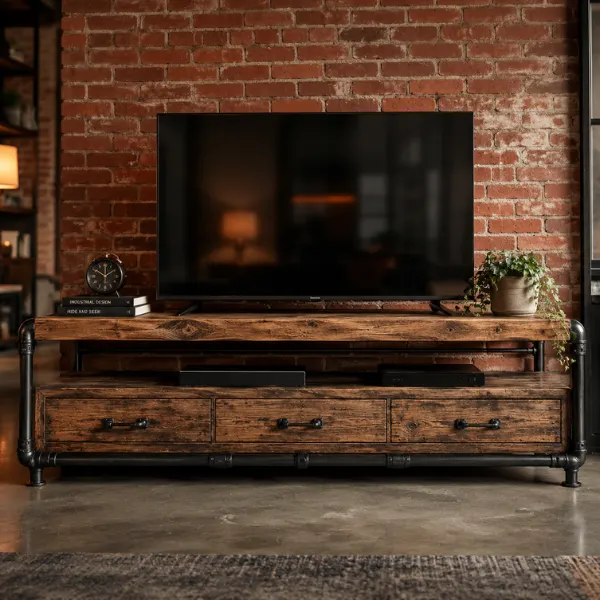
5. Industrial Pipe & Reclaimed Wood TV Stand
If you live in a loft, an apartment with exposed brick, or just love that raw urban aesthetic, this is your TV stand. The industrial pipe and reclaimed wood design combines salvaged-looking wood planks with dark metal pipe frames — the kind of stand that looks like it belongs in a Brooklyn coffee shop and a cozy home at the same time.
Why It Works
The contrast of rough, warm wood against cool, dark metal creates instant visual tension that makes the piece interesting to look at. The open shelf design means there are no doors to deal with — everything is accessible and on display. The sturdy metal frame handles serious weight without any wobbling, and the reclaimed wood look adds character and warmth to what could otherwise be a cold, harsh aesthetic.
Best For
- Loft apartments with exposed brick, concrete floors, or industrial elements
- Men’s spaces, home offices, or gaming rooms
- Anyone who hates the look of “too polished” furniture
- Medium to large rooms with high ceilings
Styling Tips
- Style the open shelves with things that match the raw aesthetic — a vintage speaker, a stack of books, a small cactus in a concrete pot
- Metal basket bins on the lower shelf keep remotes and controllers organized without ruining the look
- Edison bulb floor lamp beside the stand doubles down on the industrial theme
- Keep the wall behind it simple — bare brick, concrete, or a dark matte paint color
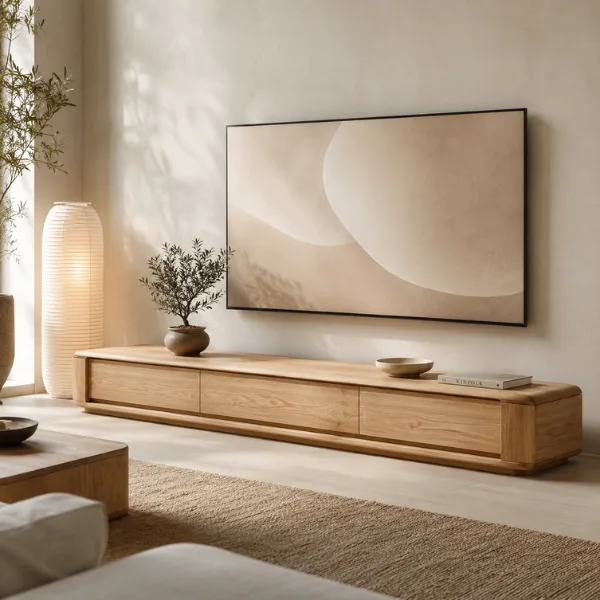
6. Japandi Minimalist TV Stand (Oak & Bamboo)
Japandi is the design world’s favorite love child — Japanese minimalism meets Scandinavian warmth. A Japandi TV stand uses natural materials like light oak and bamboo, extremely clean lines, and a restrained, clutter-free design philosophy. Nothing is ornate. Nothing is flashy. And somehow, that makes it the most beautiful thing in the room.
Why It Works
Japandi’s power comes from restraint. By stripping away everything unnecessary, the natural beauty of the materials takes center stage. Oak and bamboo have gorgeous grain patterns that become the decoration. The low, grounded profile of a typical Japandi stand also brings a sense of calm and stability to the room — it feels rooted, intentional, and peaceful. In a world full of visual noise, that is incredibly appealing.
Best For
- Meditation rooms, serene bedrooms, and calm living spaces
- People who find most furniture “too busy” or overwhelming
- Small spaces that need clean, uncluttered design
- Anyone who has ever done a “doom scroll” on Pinterest and saved 400 Japandi photos (no judgment)
Styling Tips
- Pair with a rice paper floor lamp or a simple washi paper pendant light
- Keep decor to an absolute minimum — one ceramic bowl, one small plant, done
- Neutral textiles like linen cushions and a jute rug reinforce the natural material story
- Stick to a palette of white, cream, warm grey, and natural wood — no pops of color needed
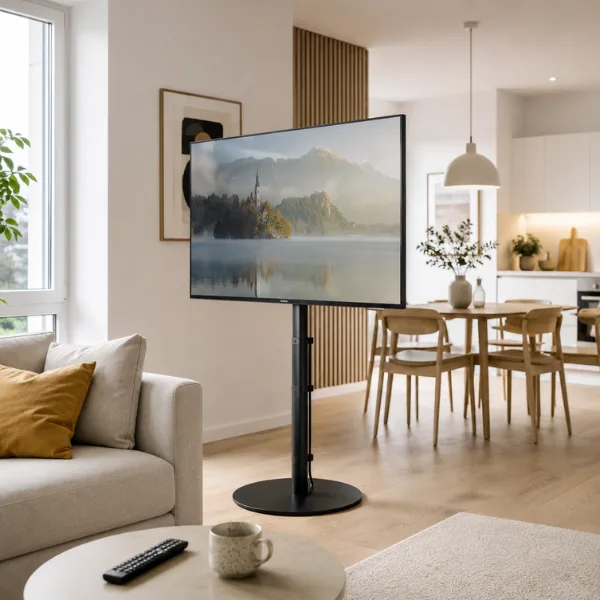
7. Swivel Floor TV Stand with Adjustable Height
This one is a total game-changer for flexible living. A swivel floor TV stand holds your TV on an adjustable pole with a pivot base — the TV turns left and right so you can watch from different angles and different rooms. No more craning your neck from the dining table. No more moving the sofa every time you want a different view.
Why It Works
Traditional TV stands lock your viewing angle permanently. This one does not. The swivel mechanism lets you redirect the screen toward the kitchen while cooking, toward the dining area during a family dinner, or toward the bed in a guest room that doubles as a living space. The height adjustment means you can sit, stand, or lie down and always have a comfortable viewing angle. It is also incredibly easy to move — perfect for renters.
Best For
- Studio apartments and open-plan layouts where one TV needs to serve multiple zones
- Home offices where you want to watch TV without buying a second screen
- Rental spaces where wall mounting is not an option
- Small bedrooms that share space with a sitting area
Styling Tips
- Choose a matte black or brushed steel finish for a sleek, minimal look
- Keep the surrounding area clean and simple — this stand is functional, not decorative, so do not overcrowd it
- Use cable clips along the pole to keep wires tidy and close to the frame
- A small side table or floating shelf beside it holds remotes and a drink without cluttering the stand itself
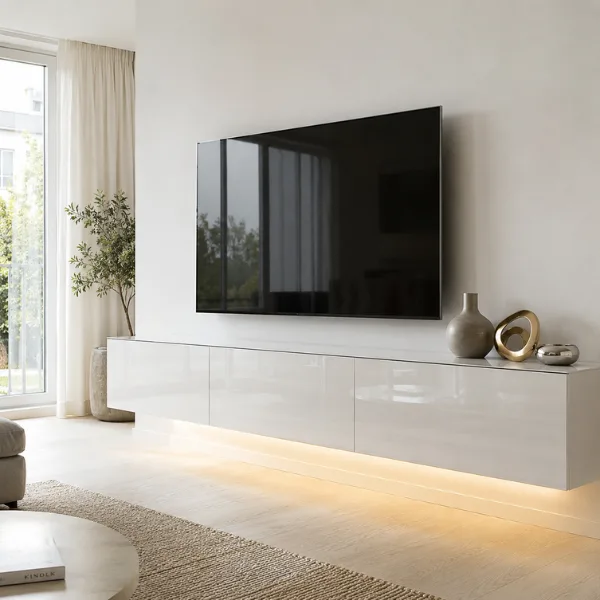
8. Sleek White Gloss Floating TV Cabinet
White gloss is the secret weapon of small spaces. A white gloss floating TV cabinet does something almost magical — it reflects light around the room, making walls feel farther away and ceilings feel higher. The high-shine finish gives even a tiny apartment a glamorous, high-end look that punches well above its price point.
Why It Works
Light colors visually expand a space, and gloss finishes amplify that effect by reflecting light rather than absorbing it. A white gloss cabinet mounted on the wall also eliminates visual weight from the floor, compounding the spacious effect. Behind the glossy doors, you have hidden storage for all the clutter that would otherwise pile up on open shelves. It is clean, it is bright, and it makes everything around it look better.
Best For
- Small apartments and city living spaces
- Coastal, Hamptons, and Scandinavian-inspired interiors
- Bright white or light grey rooms that need a cohesive, clean aesthetic
- Anyone who wants a “luxury apartment” look on a budget
Styling Tips
- Keep the top surface minimal with just a couple of metallic accents (silver or gold) to complement the gloss
- Push-to-open doors with no visible handles keep the look ultra-sleek
- Warm LED backlighting behind or beneath the unit softens the starkness of the white
- Avoid pairing with very dark furniture nearby — keep the whole area light and bright
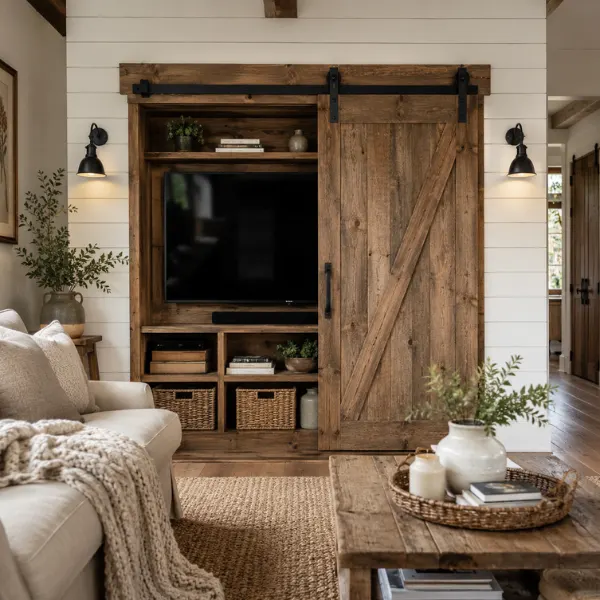
9. Farmhouse Sliding Barn Door TV Stand
You know the cozy, lived-in feeling you get when you walk into a beautifully styled farmhouse home? This TV stand bottles that feeling. The sliding barn door design uses rustic wood panels on a metal track — the doors slide open to reveal your media storage, then slide closed to hide everything away. It is charming, functional, and endlessly photogenic.
Why It Works
Sliding barn doors are brilliant in furniture design because they require zero clearance to open — no door swinging into your leg, no awkward angles. The rustic wood panels add incredible warmth and texture to the room, and the contrast with the metal track hardware echoes the farmhouse industrial aesthetic that has been dominating home design for years. Behind the doors, you have generous shelving for gaming consoles, cable boxes, DVDs, and all the other tech chaos.
Best For
- Farmhouse, country, and cottage-style interiors
- Family rooms that need heavy-duty storage for gaming gear and media accessories
- Playrooms that double as living rooms (those doors hide the chaos beautifully)
- Larger rooms that can carry the visual weight of a more decorative piece
Styling Tips
- Style the top surface with a mix of farmhouse-appropriate decor — a lantern, a wooden tray, a small potted herb or succulent
- Shiplap or board-and-batten wall treatment behind the stand takes the look to a full farmhouse moment
- Pair with a chunky knit throw over the nearby sofa arm for texture layering
- Antique or oil-rubbed bronze hardware on the barn door track adds the perfect finishing detail
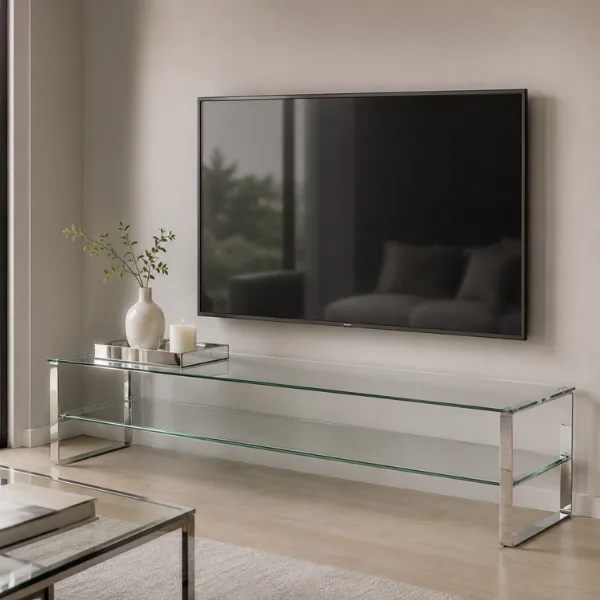
10. Glass & Chrome Transparent TV Stand
For anyone who loves the look of a TV that seems to float mid-air, a glass and chrome stand makes it happen without any wall mounting. The clear tempered glass shelves and chrome frame are so visually light that the stand almost disappears — all you see is the TV and whatever you have styled on the shelves.
Why It Works
Transparency is one of the most powerful tools in small-space design. When furniture does not visually “stop the eye,” the room feels continuous and larger. The chrome frame adds a contemporary, slightly luxurious finish that works beautifully in modern, glam, and Art Deco-inspired spaces. The glass shelves keep everything visible and accessible — great for tech setups where you need to see indicator lights on devices.
Best For
- Glamorous and contemporary interiors
- Small rooms where visual lightness is essential
- Homeowners who want a high-contrast, dramatic look
- Spaces with metallic accents (chrome, silver, brushed nickel) already present
Styling Tips
- Keep what sits on the glass shelves minimal and intentional — clutter is completely exposed with glass
- Brushed gold accents nearby (lamp base, picture frames, throw pillows) warm up the cool chrome
- Style with monochromatic decor on the shelves — all white or all black objects look incredibly sharp
- Avoid this stand in homes with young children — fingerprints and toddler bumps do not mix well with glass
11. Large Entertainment Media Wall with Built-In Shelving
This is the ultimate commitment. A full entertainment media wall takes up an entire wall from side to side — sometimes floor to ceiling — and combines a low TV console with tall flanking shelving units on either side. It looks completely custom, costs a fraction of actual built-ins, and gives you more storage than you will ever know what to do with.
Why It Works
A media wall solves the single biggest problem with TV stands: proportion. A stand sitting in the middle of a large wall always looks small and awkward. A full media wall fills that wall with intention, making the TV zone feel like a proper architectural feature rather than an afterthought. The combination shelving units on each side give you display space for books, plants, art, and collectibles — turning a functional piece into a gallery wall.
Best For
- Large living rooms with at least one wide, unobstructed wall
- Families who need serious storage for books, games, and media accessories
- Anyone who has ever wanted the look of custom built-ins without the custom price tag
- Open-plan homes that need a strong visual anchor for the living area
Styling Tips
- Use the “bookshelf styling” rule: mix books (both horizontal and vertical), plants, objects, and empty space — never pack shelves completely full
- Keep a consistent color palette across the shelves so it reads as intentional rather than cluttered
- Warm LED strip lighting inside the shelving units adds depth and drama at night
- Paint the wall behind the media wall in a slightly darker shade than the room — it makes the whole unit pop
12. Smart TV Stand with Wireless Charging & USB-C Ports
Welcome to 2026. This is the TV stand that your tech-loving brain has been waiting for. A smart TV stand comes built with wireless charging pads on the surface, integrated USB-C ports in the side panels, and sometimes even LED ambiance lighting that syncs with what you are watching. Your phone, your earbuds, your tablet — all charging without a single visible wire.
Why It Works
The number one complaint about any entertainment setup is cable chaos. A smart TV stand attacks that problem at the source by eliminating as many cables as possible through wireless and integrated charging technology. The built-in USB-C ports mean your charging cables stay neatly routed inside the stand rather than trailing across the floor. The LED ambiance lighting feature (available on some models) genuinely enhances your viewing experience by reducing eye strain and adding atmosphere.
Best For
- Tech enthusiasts and early adopters
- Home offices that double as entertainment spaces
- Anyone who has four devices on the floor charging at once (you know who you are)
- Modern and contemporary interiors where clean, cable-free design is non-negotiable
Styling Tips
- Keep the top surface completely clear except for a single decorative object — the technology IS the style here
- Matte black or brushed anthracite finishes complement the tech-forward aesthetic
- Pair with a smart lighting ecosystem in the room (Philips Hue, LIFX) for a fully cohesive smart-home look
- Cable management channels at the back of the unit are essential — thread every remaining wire through them
13. Art Deco Fluted Panel TV Stand with Gold Handles
Old Hollywood never looked so good. An Art Deco TV stand takes the fluted panel trend and turns the glamour dial all the way up. We are talking deep, rich cabinet finishes (think black, dark green, or navy), brass or gold bar handles, and a refined, symmetrical silhouette that feels theatrical and luxurious. This is not a subtle piece — and that is entirely the point.
Why It Works
Art Deco design is built around geometry, symmetry, and rich materials — and all three of those things photograph beautifully and look incredible in person. The fluted panels catch light differently at different times of day, making the stand look like it is constantly changing. The gold hardware adds a warmth that prevents the dark finish from feeling cold or oppressive. In a room with light walls, this stand becomes an instant, unforgettable focal point.
Best For
- Maximalist and bold interior styles
- Living rooms with light walls that can handle a dramatic furniture piece
- Dining rooms and sitting rooms that want a more formal, curated feel
- Anyone who follows interior design accounts and keeps saving “bold living room” images
Styling Tips
- Pair with a large round or oval mirror above the TV console area — Art Deco loves curves as a counterpoint to geometry
- Velvet cushions in jewel tones (emerald, sapphire, burgundy) nearby reinforce the luxe palette
- Keep other furniture in the room relatively neutral so the stand can be the star
- Real candles or gold pillar candleholders on the surface deepen the dramatic atmosphere
14. Tambour Door TV Cabinet with Curved Edges
Tambour doors are one of those design details that stop people in their tracks. They are made of thin slats of wood or material joined together on a flexible backing — so they roll up or slide open smoothly instead of swinging out. Combined with soft, curved edges on the cabinet body (a huge trend right now), this TV stand looks like it was designed by an architect, not manufactured in a factory.
Why It Works
The curved edges soften the overall silhouette of the piece, making it feel organic and approachable rather than rigid and boxy. Tambour doors are also an incredibly smart storage solution — they reveal everything inside in one fluid motion, and when closed, they create a beautifully seamless, texture-rich surface. The combination reads as genuinely sophisticated and design-forward.
Best For
- Contemporary and modern interiors that want a unique, conversation-starting piece
- Homes that already have curved furniture like round coffee tables or curved sofas
- Anyone tired of stand-out hardware (tambour doors typically open handle-free)
- Medium-sized rooms that need a stand with personality without going overboard
Styling Tips
- Natural wood tambour in light oak or warm sand tones is the most versatile option
- Top the cabinet with a large statement plant — a fiddle leaf fig or monstera works brilliantly
- Keep hardware and accessories minimal to let the door texture do the talking
- A curved floor lamp beside this stand creates a beautiful echo of the rounded cabinet shape
15. L-Shaped Corner TV Stand with Wraparound Shelving
This is the corner TV stand that actually looks intentional. The L-shaped design wraps around the corner with the TV on one face and wraparound tiered shelving extending along the adjacent wall. It turns what is typically dead, unusable corner space into a fully functional and genuinely stylish media zone.
Why It Works
Most corner TV stands look like afterthoughts — a triangle of wood crammed into a corner. The L-shaped design solves this by treating the corner as an asset rather than a limitation. The wraparound shelves give you display and storage space that extends naturally along the wall, so the piece feels like it was designed for the room rather than inserted into it. In open-plan homes, the L-shape also subtly defines the TV zone without using a wall or room divider.
Best For
- Open-plan living and dining areas that need gentle zone definition
- Rooms where the main wall is occupied by windows, doors, or a fireplace
- Larger families who need generous storage on both sides of the corner
- Anyone who has been staring at an awkward empty corner for months
Styling Tips
- Use the extended shelving arm for plants, books, and decor — not more tech equipment
- Match the finish to other furniture in the room for a cohesive, built-in feel
- A low-voltage LED shelf strip along the back of each shelf tier adds depth
- Swivel castors on some L-shaped models let you adjust the angle slightly — worth looking for
16. Portable Rolling TV Stand on Wheels
The most underrated TV stand on this entire list. A rolling TV stand gives you total freedom — you move it where you need it, lock the wheels when you want it still, and rearrange your room whenever the mood strikes. Modern versions are sleek, minimal, and nothing like the clunky medical-looking carts of the past.
Why It Works
Flexibility is increasingly important in modern homes, especially as rooms need to serve multiple purposes. A rolling stand takes your living room, turns it into a yoga space, a party room, or a home office in minutes — just roll the TV out of the way. For renters, it is also the best possible alternative to wall mounting. No holes, no damage, no lost deposit.
Best For
- Studio apartments and multi-purpose rooms
- Renters who move frequently
- Home gym or flex spaces where the TV needs to face different directions
- Anyone who does not want to commit to one furniture layout
Styling Tips
- Choose a matte black or white frame for a clean, modern look — avoid shiny chrome on rolling stands
- Lock the wheels in position once placed to prevent accidental drift
- Keep cables bundled neatly using velcro cable ties along the pole
- A narrow floating shelf beside the stand (rather than on it) keeps the area from looking temporary
17. TV Stand with Integrated Soundbar Bay
For the audiophiles and home cinema lovers, this one is pure gold. A TV stand with a dedicated soundbar bay has a purpose-built recessed shelf or slot directly below the TV position — the soundbar sits at exactly the right height, centered perfectly, with its own cable routing channel. No soundbar floating awkwardly on top of the console. No sound being blocked by objects in the way. Just clean, intentional audio setup.
Why It Works
Most people with soundbars have them sitting on the floor, balanced on top of a pile of books, or perched somewhere that partially blocks the speakers. A dedicated soundbar bay solves all of that by treating the soundbar as part of the furniture design — which it absolutely should be. The recessed bay also protects the soundbar from dust and accidental bumps, keeps the top surface of the console clear for decor, and gives the whole setup a genuinely high-end, custom feel.
Best For
- Home cinema enthusiasts who have invested in quality audio equipment
- Living rooms where a clear, unobstructed soundbar position matters for audio performance
- Anyone who wants a cleaner-looking setup than a soundbar sitting awkwardly below the TV
- Medium to large TVs (55 inches and above) where audio quality is part of the experience
Styling Tips
- Center the soundbar precisely in the bay and run all cables through the built-in routing channels
- Keep the top surface clean — two or three decorative objects maximum
- The rest of the shelving beneath the soundbar bay is perfect for streaming devices and gaming consoles
- Pair with acoustic panels or a textured fabric wall behind the stand for a genuine home cinema look
18. Modular Mix-and-Match TV Media Console
This is the TV stand for people who cannot commit — and I mean that as a compliment. A modular media console is made up of individual components (a base console, side cabinets, open shelving units, drawer modules) that you combine in whatever configuration works for your space right now. Next year, rearrange them. Move, add modules, remove sections. It grows and changes with you.
Why It Works
The modular approach is brilliant because it makes your TV stand future-proof. Getting a bigger TV? Add a wider base module. Having a baby and need more enclosed storage? Add door modules on the sides. Moving to a smaller apartment? Remove a few pieces. No other TV stand category gives you this level of flexibility and long-term value. The configurations also allow you to create a look that feels completely custom without paying custom furniture prices.
Best For
- Anyone who moves frequently or anticipates life changes (new baby, bigger TV, new home)
- People who want a built-in media wall look at a modular price point
- Design lovers who like being able to update their look without buying all new furniture
- Large rooms that need a wide configuration as well as smaller rooms that need just the basics
Styling Tips
- Stick to a single finish across all your modules for a cohesive look — mixing finishes reads as mismatched rather than eclectic
- Leave some modules intentionally open for display and some fully closed for storage
- As you add modules over time, keep the overall silhouette balanced and roughly symmetrical
- Tall side shelving units flanking a lower central console give the most satisfying visual proportions
19. Scandinavian Light Oak Open-Shelf TV Stand
Simple. Beautiful. Endlessly versatile. A Scandinavian open-shelf TV stand uses light oak or birch wood in a clean, leg-forward design with no doors, no drawers — just open shelves and honest materials. It is the kind of piece that works in practically every room, every style, and every stage of life. The definition of a design classic.
Why It Works
Scandinavian design prioritizes function and natural materials, and this stand delivers both. The open shelves mean everything is always accessible and visible — great for streaming devices, gaming consoles, and speakers that you use daily. The light oak finish brightens the room rather than weighing it down, and the simple silhouette does not compete with anything else in the space. It is a supporting actor that makes every other piece in the room look better.
Best For
- First apartments and homes where versatility is key
- Light-filled rooms with white or off-white walls
- Anyone building a room from scratch who wants a neutral foundation piece
- Budgets that need to stretch across an entire room — Scandinavian TV stands are typically well-priced
Styling Tips
- Warm up the look with woven baskets on the lower shelves to hide less attractive items
- Add a small trailing plant on the top shelf and some well-loved books for a lived-in feel
- A simple round mirror above the TV area adds the classic Scandinavian styling touch
- The natural wood pairs beautifully with linen, cotton, and wool textiles in the room
20. TV Stand with Lift System & Stone Top (Quiet Luxury)
This is the most aspirational entry on the list — and it is absolutely worth talking about. A lift system TV stand hides the TV completely inside a cabinet with a stone or stone-look top surface. At the press of a button, the TV silently rises from inside the cabinet on a motorized mechanism, arriving at the perfect viewing height. When the TV is off, you have a beautiful stone-topped console that looks like high-end furniture — not a media unit at all.
Why It Works
The “quiet luxury” trend in interior design is about pieces that look expensive and refined without announcing themselves. A TV stand with a lift system is the ultimate expression of this — your living room looks like a curated, art-focused space when the TV is hidden, and transforms into a proper cinema when the TV rises. The stone or stone-look top (marble, slate, travertine) adds genuine material luxury and acts as a beautiful surface for sculptures, candles, and art objects.
Best For
- Luxury homes and high-end renovations where every detail is considered
- People who want their living room to be a “TV-free” aesthetic space when entertaining
- Art collectors and design lovers who find a big black screen visually jarring
- Open-plan entertaining spaces where the room needs to feel formal and relaxed at different times
Styling Tips
- Keep the stone top completely clear or with the most minimal, curated objects — a single sculptural piece and nothing else
- The cabinetry below should be in a muted, sophisticated finish (warm white, greige, natural oak, or charcoal)
- Conceal all cables during installation — with a lift system, visible cables ruin the entire illusion
- Frame the stand with symmetrical wall sconces or picture lights for a gallery-quality presentation
21. Compact Vertical TV Stand with Wall Shelves (Small Space)
The smartest small-space TV solution that most people have never considered. Instead of a wide horizontal console, this setup uses a narrow vertical TV stand with a small footprint paired with floating wall shelves above and beside it. The TV either mounts to the wall or sits on a narrow console, while all your storage lives on the surrounding wall shelves. It uses vertical space instead of floor space — and it looks deliberately designed rather than just practical.
Why It Works
In small rooms, floor space is everything. A standard wide TV console eats into the room immediately. A vertical, wall-shelf-integrated approach spreads the storage upward and outward along the wall — places where you were not using the space anyway. The result is a media zone that looks custom and curated while taking up a fraction of the floor footprint of a traditional stand. It is genuinely one of the cleverest setups for studio apartments, small bedrooms, and compact living rooms.
Best For
- Studio apartments, micro-homes, and small urban living spaces
- Bedrooms that need a TV setup without sacrificing walking space
- Anyone who has measured their room and realized a standard TV stand will not fit
- Renters who want a high-impact look with minimal furniture investment
Styling Tips
- Use floating wall shelves in the same finish as the small console below for a cohesive, intentional look
- Vary the shelf lengths — one wide shelf, one medium, one narrow — for visual interest
- Style the wall shelves with a mix of practical items (a small speaker, charging hub) and decorative ones (plants, books, small art)
- Keep the color palette tight across the whole wall arrangement — two or three tones maximum
Mistakes to Avoid When Choosing a Modern TV Stand
Even the most beautiful TV stand will let you down if you pick the wrong one. Here are the most common mistakes I see people make — learn from them before you shop.
Buying a Stand That Is Too Small for Your TV
This is the number one mistake, and it makes the whole room look off. Your TV stand should always be wider than your TV — aim for at least 2 to 6 inches of extra width on each side. A TV that overhangs the stand looks top-heavy, unstable, and genuinely risky if you have kids or pets. Always measure your TV’s width before you shop, not after.
Ignoring the Weight Capacity
Modern TVs look light and thin, but a 65-inch OLED plus a soundbar can still add up to 100+ lbs on that top surface. Always check the listed weight capacity of any stand you are considering. If it is not clearly listed, skip it entirely. An overloaded stand is a safety hazard, not just a furniture problem.
Forgetting to Account for Cable Management
Nothing destroys a beautiful TV setup faster than a nest of cables hanging off the back. Before you buy, check that your stand has grommet holes, rear cable channels, or enclosed backs that route cables invisibly. If your shortlist stand has none of these features, factor in the cost of cable management accessories.
Choosing the Wrong Height
Your TV’s center point should align with your eye level when you are seated — typically around 40 to 43 inches from the floor. For most sofas, that means a stand height of around 20 to 24 inches. A stand that is too tall has you looking up all evening. Too short, and you are craning your neck down. Either way, movie night becomes uncomfortable fast.
Ignoring Your Room’s Style
A sleek, white gloss floating cabinet looks amazing in a minimalist apartment and completely wrong in a warm, rustic farmhouse. Your TV stand should feel like it belongs in your room — not like it came from a different house entirely. Match the finish and material to what you already have before you fall in love with something online.
Picking Style Over Storage
Open-shelf stands look gorgeous in photos. In real life, every remote, controller, charger, and cable box is on full display every day. Think honestly about how much stuff you need to store, and choose a stand that can handle that reality — ideally with a mix of open shelves for devices you use constantly and closed doors for everything else.
Not Thinking About the Future
Are you planning to upgrade your TV in the next couple of years? Getting a gaming console? Having kids? Buy a stand that works for where your life is going, not just where it is right now. A slightly wider, slightly more storage-generous stand is almost always worth it.
Conclusion
Your TV stand is working harder than you think. It holds your tech, manages your cables, stores your clutter, and anchors the most-used room in your home. When you get it right, the whole room just clicks. When you get it wrong, something always feels off — even if you cannot quite put your finger on what it is.
The 21 ideas in this guide cover every room size, every budget, every design style, and every lifestyle situation I can think of. Whether you want the drama of a full Art Deco media wall, the clean serenity of a Japandi console, the practicality of a rolling stand, or the sheer luxury of a motorized lift system — there is an option here that is made for your home.
Start with your space. Measure the wall. Write down your TV’s width. Think about what you actually need to store. Then pick the style that genuinely excites you — the one you have been coming back to as you read through this list. That is your TV stand.
Frequently Asked Questions
What size TV stand do I need for a 65-inch TV? For a 65-inch TV (approximately 57 inches wide), you want a stand that is between 63 and 72 inches wide. The golden rule is 2 to 6 inches of extra width on each side for a balanced, stable look. Going slightly wider is always better than going too narrow.
How high should a modern TV stand be? The center of your TV screen should align with your eye level when seated — usually 40 to 43 inches from the floor. For most standard sofas, that means a stand height of about 20 to 24 inches works well for TVs between 55 and 65 inches.
What is the best material for a modern TV stand? Solid wood (walnut, oak, ash, teak) is the most durable and long-lasting option — it handles weight well, can be refinished if it gets damaged, and ages beautifully. For budget options, look for thick engineered wood panels with quality veneer and reinforced metal hardware. Avoid thin particle board with flimsy cam locks.
Are floating TV stands difficult to install? The installation takes about 1 to 2 hours with basic tools and two people. The critical part is locating your wall studs and using the right anchors for your wall type. When installed correctly, floating TV stands are extremely secure and can hold substantial weight. Always follow the manufacturer’s weight guidelines.
How do I hide cables on a modern TV stand? Start with a stand that has built-in cable management — grommet holes, rear channels, or an enclosed back panel. Then use velcro cable ties to bundle cables together, and route them through the channels. A cable management box placed inside the stand’s enclosed storage holds a power strip and multiple cables neatly out of sight.
What is the difference between a TV stand and a media console? They are essentially the same thing — the terms are often used interchangeably. Generally, “TV stand” refers to smaller, simpler pieces, while “media console” or “entertainment console” tends to describe larger, more storage-heavy units. A “media wall” or “entertainment center” usually refers to floor-to-ceiling configurations with flanking shelves.
Can I put a TV stand in a bedroom? Absolutely — and some of the best TV stand ideas in this guide (the corner fireplace stand, the swivel stand, the compact vertical setup) are perfectly suited to bedrooms. Just pay extra attention to height and viewing angle since bedroom viewing positions (lying in bed, sitting upright) are different from living room sofa positions.
How do I choose a TV stand that matches my existing furniture? Focus on three things: finish (match the wood tones or painted colors already in the room), leg style (tapered legs for mid-century rooms, metal for industrial, no legs for floating/modern), and proportions (a stand that is similar in visual weight to your sofa and coffee table). You do not need to match exactly — you just need to feel cohesive.
What TV stand style is trending most in 2026? Fluted wood panels, floating low-profile consoles, and full media wall configurations with flanking shelving units are the standout trends right now. The “quiet luxury” aesthetic — warm natural materials, matte finishes, hidden storage, minimal hardware — is defining the most admired living room setups in 2026.
How much should I spend on a modern TV stand? You can find genuinely solid modern TV stands between $200 and $600 for most standard sizes. For larger media walls or premium materials (solid walnut, smart charging features, stone tops), expect $800 to $2,000 and above. The biggest value for money comes from mid-range stands with solid frames, quality hardware, and smart cable management — not the cheapest option and not necessarily the most expensive.