

15 Beautiful Layered Bedding Ideas to Make Your Bed Look Cozy and Stylish
There is something magical about a beautifully layered bed. It pulls the whole bedroom together. It makes the space feel warm, intentional, and inviting — like you actually thought about every single detail. And honestly? You do not need to be an interior designer to get there.
Layering bedding is one of the simplest ways to upgrade your bedroom without spending a lot of money. I have spent years helping people style their bedrooms, and the number one thing I always come back to is this: a layered bed always looks more expensive than a single-blanket bed. Always.
In this guide, I am sharing 15 of my favorite layered bedding ideas. Whether you love a clean and minimal look or a bold and dramatic one, there is something here for every style and every budget. I have also included practical styling tips for each idea so you can start recreating the look right away — no design degree needed.
Table of Contents
15 Layered Bedding Ideas for a Cozy, Designer-Style Bed
Here is the best ideas list to choose the best version for your bed.
1. Minimalist Neutral Layers
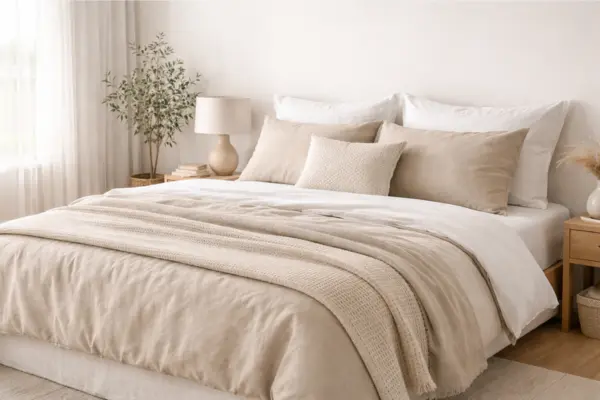
If your bedroom feels cluttered or overwhelming, this is the style for you. Minimalist neutral layering uses soft whites, creams, and warm beiges to create a bed that feels calm and clean. The beauty here is not in bold color — it is in texture. Each layer adds a subtle visual difference that makes the whole bed feel thoughtfully put together without trying too hard.
Why It Works
Neutral tones reflect light beautifully. When you mix fabrics like linen, cotton, and waffle weave in similar shades, each material catches the light a little differently. That creates a quiet, layered effect that feels rich without being loud. It is the kind of bed that looks effortlessly styled every single morning.
Best For
This style is perfect for modern homes, small bedrooms, and anyone who wants a peaceful, hotel-like retreat. It also works really well in rooms with large windows or plenty of natural light.
Styling Tips
Start with crisp white cotton sheets as your base. Add a linen duvet in warm beige or soft gray on top. Then fold a waffle-weave or cotton blanket neatly across the foot of the bed. For pillows, keep it simple — two sleeping pillows in white pillowcases and one small textured cushion in the center. Avoid going over three pillow layers. The goal is clean, not crowded.
2. Luxury Hotel Bedding
We have all walked into a hotel room and immediately wanted to fall straight onto that perfectly made bed. That fluffy, layered, impossibly neat look is not just for five-star hotels. You can recreate it at home with the right pieces and a little bit of technique. The secret is in the structure — every layer has a clear purpose and a precise placement.

Why It Works
Hotel beds look so good because every layer is visible. You can see the sheet, the coverlet, and the duvet all at once. That stacking creates height, depth, and a sense of luxury. Paired with a well-arranged pillow set, it turns your bed into the focal point of the entire room.
Best For
This works beautifully in master bedrooms, guest rooms, and any space where you want to make a strong visual impression. It suits traditional, transitional, and even contemporary bedroom styles.
Styling Tips
Begin with high-thread-count white sheets — this matters more than people realize. Add a quilted coverlet and fold it down neatly at the foot of the bed so the sheets are still visible at the top. Place your fluffy duvet on top of the coverlet. For pillows, work in rows: two large euro pillows against the headboard, two standard sleeping pillows in front, and one small decorative cushion at the very front. Iron the pillowcases if you can. It makes a bigger difference than you think.
3. Boho Textured Layers
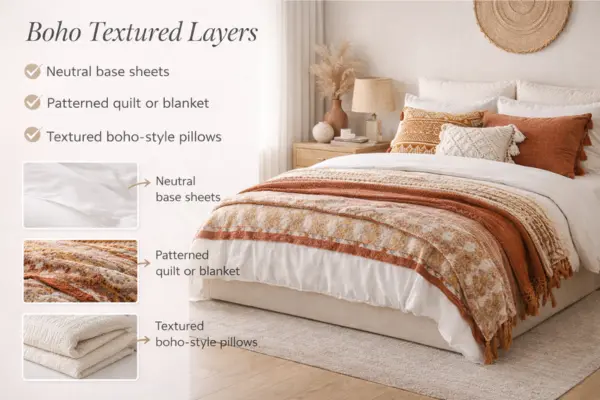
Boho bedding is for the person who loves color, personality, and a relaxed, lived-in feel. This style celebrates imperfection. You are not trying to match everything perfectly — you are mixing textures, patterns, and tones in a way that feels warm and creative. Think tasseled edges, woven throws, embroidered cushions, and earthy colors layered together in a casual, inviting pile.
Why It Works
The boho style works because it feels human. Nothing looks too stiff or overdone. The mix of patterns and textures creates visual richness without feeling heavy. When you layer a woven blanket over a patterned quilt with a few mismatched pillows, the result is a bed that looks full of character and warmth.
Best For
This is perfect for creative personalities, eclectic home styles, and bohemian or maximalist bedroom aesthetics. It also works well in rooms with rattan furniture, hanging plants, or macramé wall art.
Styling Tips
Start with neutral sheets — white or cream works best as your base because it lets the other layers shine. Add a patterned quilt in warm earthy tones like rust, mustard, or terracotta. Drape a woven or tasseled throw across the bed at a slight angle — do not fold it perfectly. For pillows, mix two or three in different sizes and patterns that share a common color. Slightly uneven folds actually look better in this style. Embrace the casual, relaxed feel.
4. Scandinavian Soft Layers
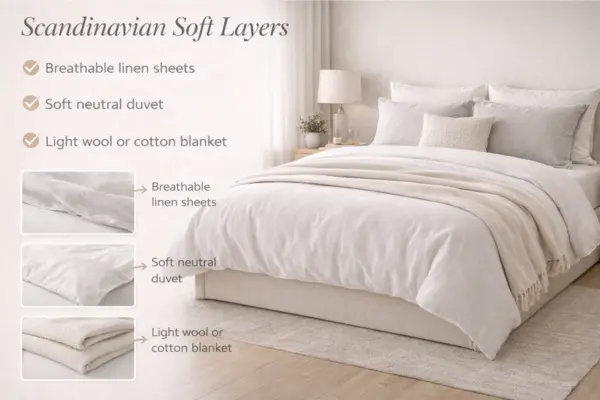
Scandinavian design is rooted in the idea that simple things done well are always beautiful. When it comes to bedding, that means soft natural fabrics, gentle neutral tones, and a quiet kind of coziness that never feels overdone. This style does not shout. It whispers comfort and balance in the most elegant way possible.
Why It Works
The combination of breathable natural fabrics and a restrained color palette creates a bed that looks peaceful from across the room. There is no clutter, no clash — just clean lines and soft layers that invite you to rest. Scandinavian bedding also works seasonally because linen and cotton breathe well in summer and layer warmly in winter.
Best For
This style suits minimalist homes, bright airy bedrooms, and anyone who values simplicity and quality over decoration. It pairs especially well with light wood furniture, white walls, and natural light.
Styling Tips
Use breathable linen sheets in white or soft gray as your foundation. Add a linen or cotton duvet in a warm neutral like oatmeal, sand, or pale taupe. Fold a light wool or cotton blanket at the foot of the bed — keep it neat but not stiff. For pillows, stick to two sleeping pillows and one simple cushion. No frills, no ruffles. Just quality fabric and clean presentation.
5. Rustic Cabin Layers
There is something incredibly comforting about a rustic, cabin-style bed. It feels like being wrapped in warmth on a cold evening with a fire burning nearby. This style uses heavier, cozier fabrics and draws on earthy colors from nature — forest greens, deep browns, rich creams, and warm plaids. It is bedding that feels like a hug.

Why It Works
Thicker fabrics like flannel and wool add real visual weight to the bed. Combined with earthy tones and classic plaid patterns, the layers create a sense of warmth and depth that instantly makes the room feel cozier. It taps into that nostalgic, retreat-like feeling that people associate with mountain cabins and peaceful weekends away.
Best For
This is ideal for homes in colder climates, bedrooms with wooden beams or log-cabin-style décor, and anyone who loves a cozy, nature-inspired space. It also works beautifully in winter as a seasonal bedding update.
Styling Tips
Start with soft flannel sheets in a warm cream or light tan. Layer a plaid comforter or quilt in forest green, burgundy, or navy on top. Fold a chunky knit blanket at the foot of the bed for added texture. Choose pillowcases that match or complement the plaid tones — you do not need to match exactly, just stay within the same warm color family. A few simple throw pillows in solid earthy tones finish the look.
6. Coastal Breeze Layers
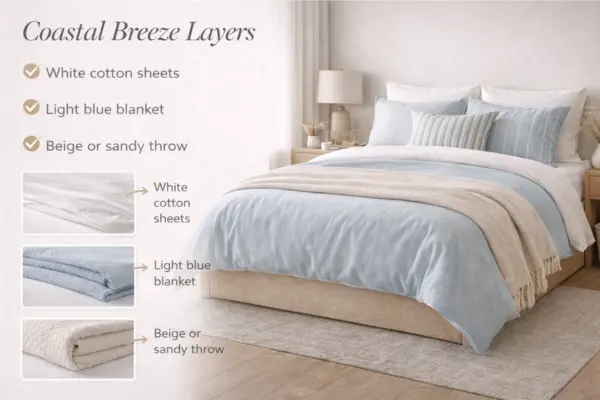
Coastal bedding feels like opening a window to the sea. It is fresh, light, and incredibly relaxing. The color palette is inspired by the beach — soft blues, sandy beige, clean white, and the occasional hint of soft green. The fabrics are always breathable and light, which makes this style perfect for warmer rooms or summer months.
Why It Works
Light colors and airy fabrics make a room feel bigger and brighter. When you layer soft blues and whites together in cotton or linen, the bed takes on a fresh, breezy quality that instantly calms the space. It is one of those styles that just makes you exhale the moment you walk into the room.
Best For
This is perfect for beach houses, warm climates, bright white bedrooms, and anyone who loves a relaxed, vacation-like atmosphere at home. It also pairs beautifully with natural wood furniture, rattan accents, and sea-inspired décor.
Styling Tips
Start with crisp white cotton sheets. Add a soft blue or seafoam-colored duvet or quilt on top. Drape a sandy beige or natural linen throw across the foot of the bed to represent those warm beach tones. For pillows, try two in white and one or two with a subtle stripe in blue and white. Keep everything looking fresh and wrinkle-free — coastal style is relaxed but not messy.
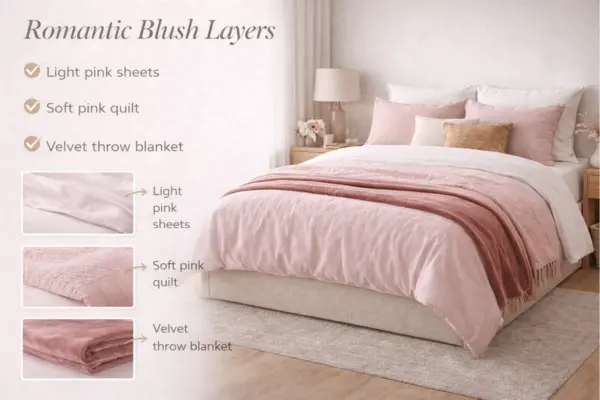
7. Romantic Blush Layers
Blush pink bedding has a softness to it that no other color quite matches. It is warm without being overwhelming, romantic without being too sweet. This style uses gentle pink tones layered with whites, creams, and soft golds to create a bedroom that feels intimate, elegant, and deeply inviting. It is the kind of bed that looks like it belongs in a beautiful lifestyle magazine.
Why It Works
Blush is a neutral at heart. It sits beautifully alongside white and cream without clashing, and it adds just enough warmth to make the room feel special. When paired with a velvet or silk-finish throw, the texture contrast elevates the whole look and gives it that luxurious, romantic quality.
Best For
This works especially well in feminine bedrooms, master bedrooms, and guest rooms where you want to create a warm and welcoming atmosphere. It suits both modern and vintage-inspired interior styles.
Styling Tips
Begin with soft blush pink sheets — look for a smooth cotton or sateen finish for the most elegant result. Layer a blush or white quilt on top. Add a dusty rose or deep mauve velvet throw blanket folded across the lower third of the bed. For pillows, mix shades of pink — from pale blush to a slightly deeper rose — and add one pillow in a soft gold or cream for contrast. Keep the overall look soft and cohesive.
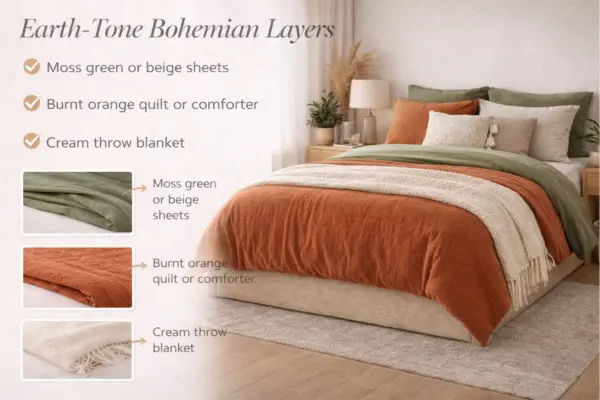
8. Earth-Tone Bohemian Layers
Earth-tone bedding is nature brought indoors. It uses the colors of soil, clay, moss, and sand — shades like terracotta, olive green, warm cream, and burnt orange — to create a bedroom that feels grounded and deeply cozy. This style sits between boho and organic, and it works beautifully in rooms that feel connected to the natural world.
Why It Works
Earth tones are inherently harmonious. They come from the same natural color family, so they never clash — they just complement each other beautifully. When layered together in different textures like linen, cotton, and woven fabric, these tones create a rich, warm bed that feels both relaxed and intentional.
Best For
This style is ideal for rooms with natural wood furniture, indoor plants, rattan or wicker accents, and warm-toned walls. It suits boho, organic modern, and nature-inspired interior styles perfectly.
Styling Tips
Start with moss green or warm beige linen sheets. Layer a burnt orange or terracotta quilt over the top. Add a cream throw blanket with fringe or tassels folded loosely at the foot of the bed. For pillows, mix textures — try a woven cushion, a simple cotton pillow, and one with embroidery in a coordinating earthy tone. The key is variety in texture while staying within the warm earth-tone color family.
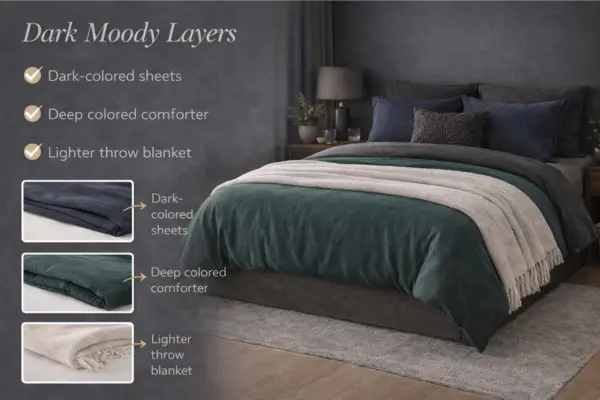
9. Dark Moody Layers
Dark bedding is bold. It makes a statement. And when done right, it transforms a bedroom into something that feels sophisticated, dramatic, and incredibly cozy. Deep navy, charcoal, forest green, and rich plum are the stars of this style. This is not a look that blends into the background — it commands attention in the best possible way.
Why It Works
Dark colors add depth and intimacy to a bedroom. They make the space feel smaller in the most comforting way — like a cocoon. When you layer different dark tones and textures together, the result is a bed that feels layered with personality. A lighter throw at the foot of the bed keeps the look from feeling too heavy.
Best For
This works beautifully in rooms with darker walls, moody lighting, or bold furniture. It is perfect for people who want a dramatic, grown-up bedroom that feels like a retreat from the world. It also suits modern, industrial, and gothic-inspired interior styles.
Styling Tips
Start with dark sheets in charcoal, navy, or deep green. Layer a richly colored comforter — it can match or be a shade darker or lighter than your sheets. Add a medium-toned throw in a contrasting texture like a knit or velvet at the foot of the bed to balance the weight. For pillows, mix a dark tone with one lighter accent pillow to stop the look from becoming too flat. A little contrast goes a long way with dark bedding.
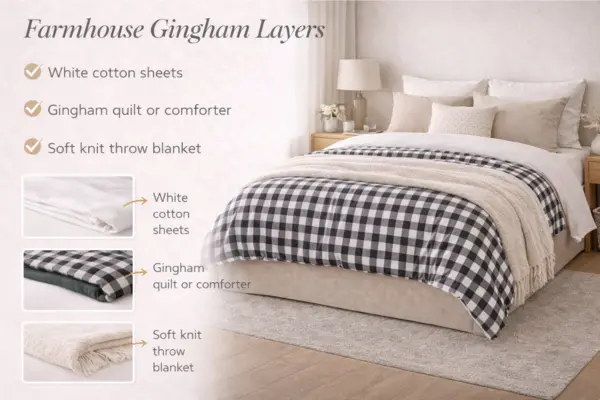
10. Farmhouse Gingham Layers
Farmhouse style is one of those classics that never goes out of fashion. It is cozy, charming, and completely approachable. Gingham and checkered patterns are the heart of this style — they feel traditional and homey without being old-fashioned. Paired with soft knit throws and simple neutral pillows, farmhouse bedding creates a bedroom that feels warm and completely at ease.
Why It Works
Gingham is visually interesting without being overwhelming. The small-scale check pattern adds rhythm to the bed without clashing with other elements in the room. Combined with soft natural textures, it creates a layered look that feels both classic and current.
Best For
This is ideal for country homes, cottages, and farmhouse-style interiors. It also works well in children’s bedrooms and guest rooms where you want a cheerful, welcoming atmosphere.
Styling Tips
Start with crisp white cotton sheets as your base. Add a gingham quilt or comforter in a classic color combination — navy and white, red and white, or sage green and white all work beautifully. Layer a soft knit throw in cream or oatmeal across the foot of the bed. Keep pillows simple — two sleeping pillows in matching pillowcases and one or two solid-colored cushions that pick up a tone from the gingham.
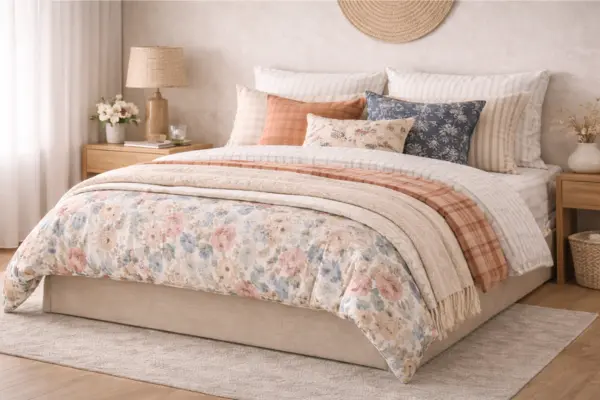
11. Pattern-Mix Layered Bed
Mixing patterns is one of the most creative things you can do with bedding. It takes confidence, but once you understand the basic rules, it becomes genuinely fun. Stripes, florals, geometrics, and abstract prints can all live together on one bed — as long as they share a connecting color. When it works, it creates a bedroom that feels incredibly stylish and full of personality.
Why It Works
Pattern mixing creates visual energy and interest. It tells a story about the person who sleeps there. The key is not to match perfectly but to coordinate — choosing patterns that share at least one or two colors so everything feels intentional rather than random.
Best For
This is perfect for creative personalities, eclectic interiors, and maximalist bedroom styles. It suits people who love bold design choices and are not afraid to experiment with color and pattern.
Styling Tips
Start with a patterned sheet in a small-scale print like a thin stripe or tiny floral. Add a duvet or quilt in a medium-scale pattern — something bolder like a geometric or larger floral. Then use decorative pillows to bring in a third pattern. The golden rule: vary the scale of your patterns. Mix one small, one medium, and one large pattern. Keep all three sharing at least one common color, and the combination will look intentional and beautiful.
12. Japandi Calm Layers
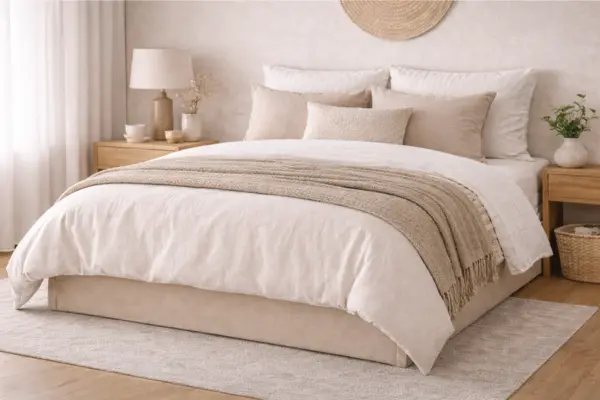
Japandi is one of the most beautiful design trends to emerge in recent years, and it translates perfectly into bedding. It blends the Japanese philosophy of wabi-sabi — finding beauty in simplicity and imperfection — with the Scandinavian love of comfort and natural materials. The result is a bed that feels deeply peaceful, almost meditative in its calm.
Why It Works
Japandi bedding works because it removes everything that is not necessary. There are no loud patterns, no excess pillows, no competing textures. Just clean, honest materials in quiet colors that make the bed feel like a place of true rest. The focus on quality over quantity is what makes this style feel so refined.
Best For
This is perfect for minimalist homes, zen-inspired bedrooms, and people who want their bedroom to feel like a true sanctuary. It pairs beautifully with low platform beds, natural wood furniture, and simple, uncluttered rooms.
Styling Tips
Use organic cotton or linen sheets in a natural, undyed shade — think raw white, warm stone, or soft clay. Add a neutral linen duvet in a similar tone. Bring in texture with a woven or knit blanket in a slightly contrasting natural shade. For pillows, use just two — no decorative cushions unless they are very simple and understated. Tuck the blanket loosely rather than folding it perfectly. Japandi is about calm intention, not rigid neatness.
13. Winter Plush Layers
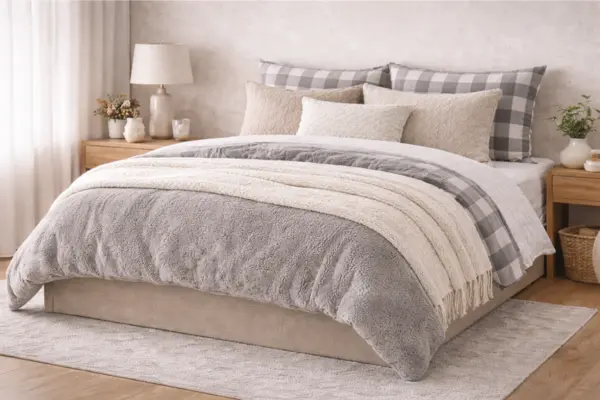
When the temperature drops and the nights get long, nothing beats a bed that looks and feels incredibly warm and cozy. Winter plush bedding is all about wrapping yourself in layers of soft, thick, cloud-like comfort. Flannel, fleece, faux fur, and chunky knit are the key fabrics here. Together, they create a bed that practically invites you to hibernate.
Why It Works
Thick, plush fabrics trap warmth and create a visually heavy, cocooning effect. The layers of different textures — flannel sheets, a heavy duvet, and a fleece or faux fur throw — make the bed look incredibly inviting even from across the room. It is both a functional and beautiful choice for winter months.
Best For
This is perfect for cold climates, winter months, and bedrooms that tend to run cool. It suits cozy, hygge-inspired interiors and anyone who loves a deeply comfortable, snug sleeping environment.
Styling Tips
Start with flannel sheets — they are warmer than cotton and feel softer against your skin in cold weather. Add a heavy down or down-alternative comforter on top. Layer a plush fleece blanket or faux fur throw across the lower half of the bed. For pillows, use slightly oversized sleeping pillows to add to the full, plush effect. Stick to warm, cozy colors like cream, caramel, warm gray, or soft burgundy to reinforce the winter feeling.
14. Reversible Pattern Layers
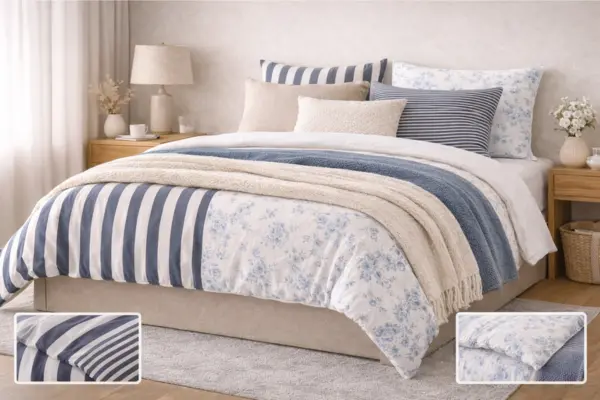
Reversible bedding is one of the smartest investments you can make for your bedroom. These duvets and quilts feature two completely different designs — one on each side — which means you essentially get two bedding looks for the price of one. Flip it one week, flip it back the next. It is the easiest way to refresh your bedroom without spending anything extra.
Why It Works
Variety keeps a bedroom from feeling stale. Reversible bedding gives you the freedom to change your bedroom’s mood with almost no effort. One side might have a floral print for spring, while the other has a simple stripe for a cleaner look. That kind of versatility is genuinely useful for people who love to refresh their space regularly.
Best For
This is perfect for people who love variety but are working with a limited budget. It is also great for guest rooms where you want a flexible look, and for anyone who finds it hard to commit to just one bedding style.
Styling Tips
Choose a reversible duvet where the two sides complement rather than clash with each other. For example, a floral on one side and a coordinating stripe on the other. When you flip the duvet, update your throw pillows and accent blanket to match the new side. This makes the whole change feel deliberate and styled. Even a single small update — like switching a pillow — makes the new side look intentional.
15. Modern Color-Block Layers
Color-block bedding is clean, graphic, and undeniably modern. Instead of relying on pattern or texture, this style uses bold blocks of contrasting color as the main design feature. Think a duvet split between navy and white, or a blanket that transitions from cream to rust. It is a simple idea that creates a very strong visual statement.
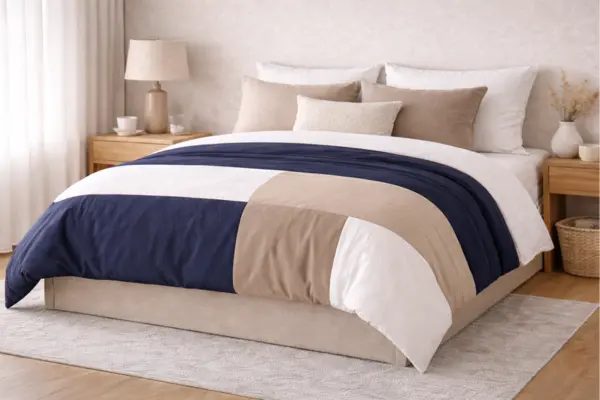
Why It Works
Color blocking is bold without being complicated. The contrast between two or three solid colors creates a striking effect that draws the eye immediately. Because there is no pattern to compete with, every layer in the bed has a clear role — and the overall result feels intentional, confident, and very current.
Best For
This is perfect for modern and contemporary bedrooms, and for people who love a design-forward aesthetic. It works especially well in rooms with minimal furniture and clean architectural lines.
Styling Tips
Start with simple neutral sheets — white or light gray is best. Choose a color-block duvet as your hero piece. Keep the rest of the bed understated so the duvet can do the talking. For pillows, stick to solid colors that match one of the blocks in the duvet. Avoid mixing patterns with color-block bedding — it competes with the design rather than supporting it. A single solid-colored throw in one of the accent tones ties everything together beautifully.
Mistakes to Avoid When Layering Bedding
Layering bedding looks effortless when done right — but there are a few common mistakes that can make even beautiful fabrics look messy or flat. Here is what to watch out for.
Using too many colors at once. More than three or four colors in one bed starts to look chaotic. Pick a palette and stick to it.
Skipping texture variety. If all your layers are in the same fabric — say, all cotton — the bed will look flat even when it is technically layered. Mix at least two different materials, like cotton sheets with a linen duvet and a knit throw.
Overloading pillows. More pillows do not always mean a better look. Five or six pillows with no clear arrangement just looks jumbled. Plan your pillow layout the way a designer would — back row first, then forward.
Folding everything too perfectly. A bed that looks too stiff and rigid does not look cozy — it looks cold. A slight fold, a casual drape, a small tuck here and there all add life and warmth to the arrangement.
Ignoring scale. Mixing patterns? Make sure they vary in scale. All large prints together fight for attention. All small prints blur together. Vary the size and let each pattern breathe.
Choosing style over comfort. A beautiful bed that you do not actually want to sleep in defeats the whole purpose. Always prioritize fabrics that feel good against your skin first, then style them beautifully on top.
Conclusion
A layered bed is one of the most impactful and affordable upgrades you can make to your bedroom. It does not require a renovation or a big budget — just a little thought, a few good pieces, and the confidence to try something new.
The 15 ideas in this guide cover every style, from the barely-there simplicity of Japandi to the rich, tactile drama of Dark Moody Layers. There is no single right way to layer a bed. The best version is always the one that fits your space, your lifestyle, and your personal taste.
Start simple. Pick one idea that excites you. Add one layer at a time. And do not be afraid to adjust as you go — that is how the best-looking beds are always created. Not all at once, but piece by piece, until it feels exactly right.
FAQs
How many layers should a bed have? Most well-styled beds have between three and five layers. This typically includes a base sheet, a duvet or quilt, a throw blanket, and a selection of pillows. You do not need more than five — after that, it starts to feel like too much.
What is the best fabric for layering bedding? Linen and cotton are the most versatile options for layering because they breathe well and look beautiful in almost any style. For added texture, incorporate a knit throw or a velvet accent piece.
Can I mix patterns when layering bedding? Yes — absolutely. The key is to vary the scale of your patterns and keep them within the same color family. Mix one small-scale print, one medium, and one large for the most balanced result.
How do I keep layered bedding looking neat? Start with well-fitted sheets that do not slip. Fold or drape each layer with intention. Fluff your pillows and duvet daily. A quick two-minute straighten each morning keeps a layered bed looking styled all day.
Is layered bedding too warm for summer? Not if you choose the right fabrics. In summer, use linen or lightweight cotton for all your base layers and swap out heavy throws for a light woven blanket. The layers still give you the visual effect without the extra warmth.
Do I need to buy all new bedding to get a layered look? Not at all. Start with what you already have and add one new piece at a time — a throw blanket, an extra pillow, or a new duvet cover. Layering is as much about how you arrange things as it is about what you buy.