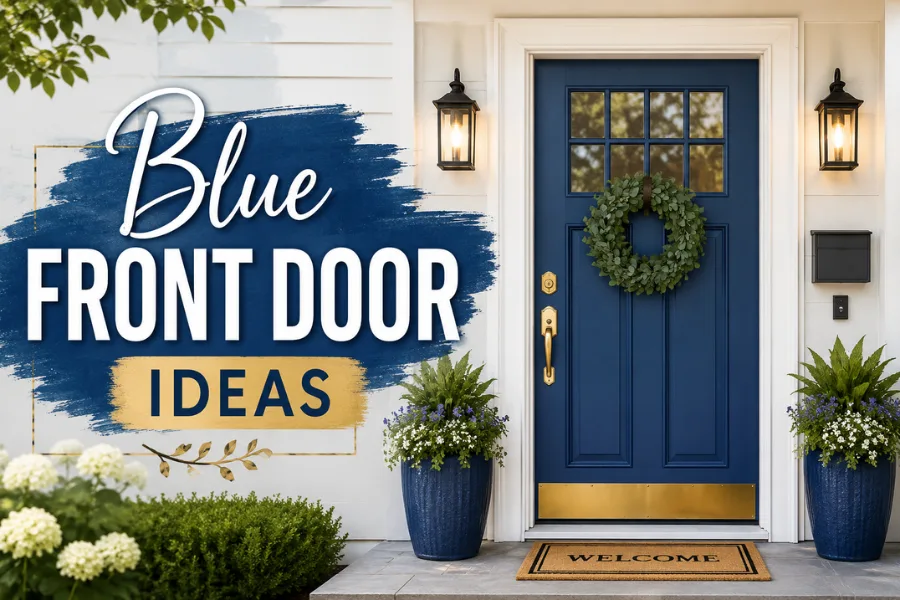
13 Blue Front Door Ideas That Boost Curb Appeal Instantly
Your front door does more talking than you’d think. It’s the very first thing a guest, a delivery driver, or a neighbor walking by actually notices about your home, and a blue front door is one of the easiest ways to make that first impression unforgettable. Blue is calm, classic, and somehow still bold enough to stand out, which is exactly why it’s been a favorite color for entry doors for decades. The best part is that blue works on almost every type of house, brick, stucco, siding, stone, you name it, and it pairs beautifully with everything from brass hardware to black trim to lush green plants. In this guide, I’m walking you through 27 real, practical blue front door ideas that fit different house styles, different door sizes, and different budgets, so you can find the exact look that fits your home. Let’s get your entryway looking like the best part of the block.
Blue Front Door Ideas
1. Classic Navy Front Door
A deep navy door is timeless, sophisticated, and works on almost any home style, from colonial to craftsman. It’s the safest bold choice you can make and rarely goes out of style.
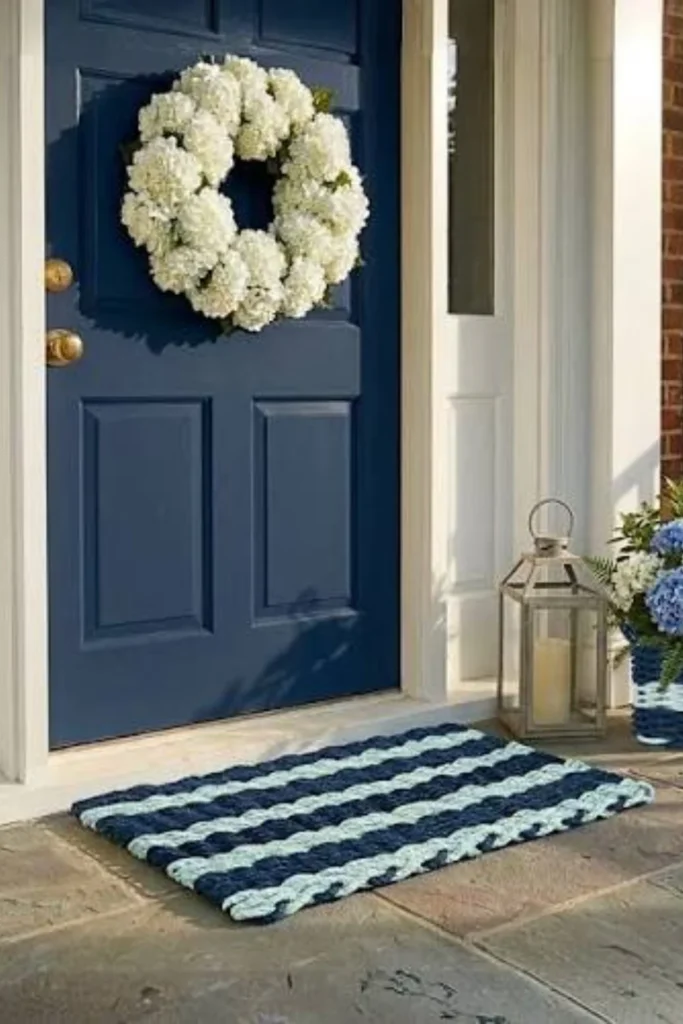
Why it works
Navy reads as elegant rather than trendy, so it photographs beautifully and ages well without ever feeling dated.
Best for
Larger entry doors on traditional or colonial-style homes with white or beige exteriors.
Styling Tips
Pair with brushed nickel or oil-rubbed bronze hardware and keep the surrounding trim crisp white for maximum contrast.
2. Coastal Light Blue Door
A soft, breezy light blue door brings a relaxed, beachy feel to any entryway, especially on homes near the water or with a casual cottage style.
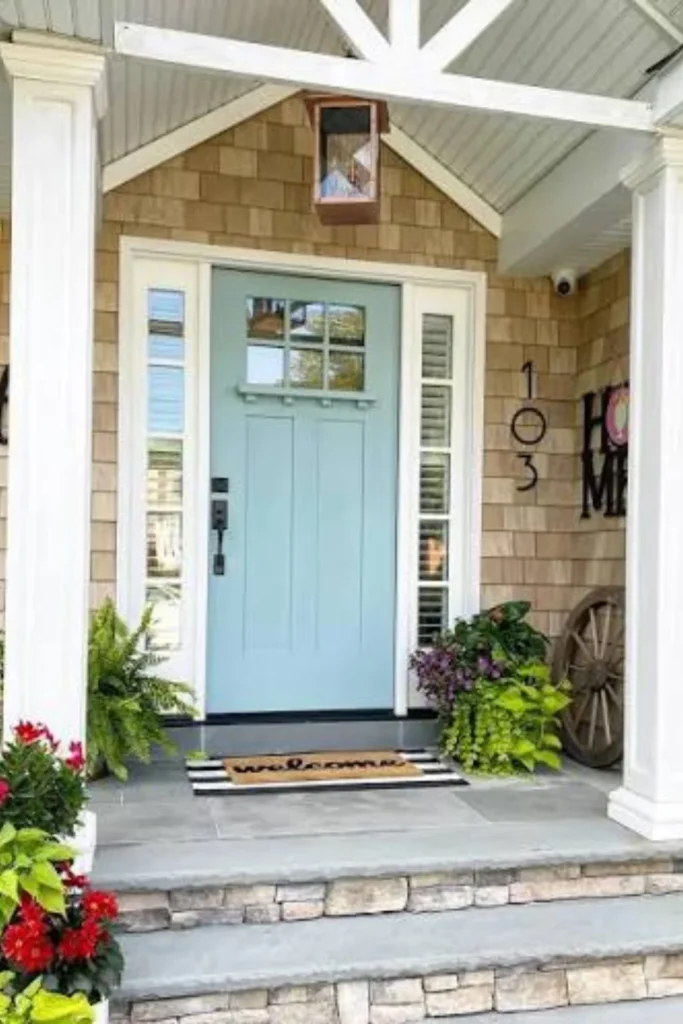
Why it works
Lighter blues feel airy and welcoming, instantly softening the look of a home’s facade without overwhelming it.
Best for
Small to medium doors on cottage, coastal, or bungalow-style homes.
Styling Tips
Add a pair of coastal-style lanterns and satin nickel hardware to complete the relaxed, seaside look.
3. Powdery Blue Farmhouse Door
A muted, chalky powder blue door fits perfectly with modern farmhouse exteriors, especially when paired with white siding or board-and-batten detailing.
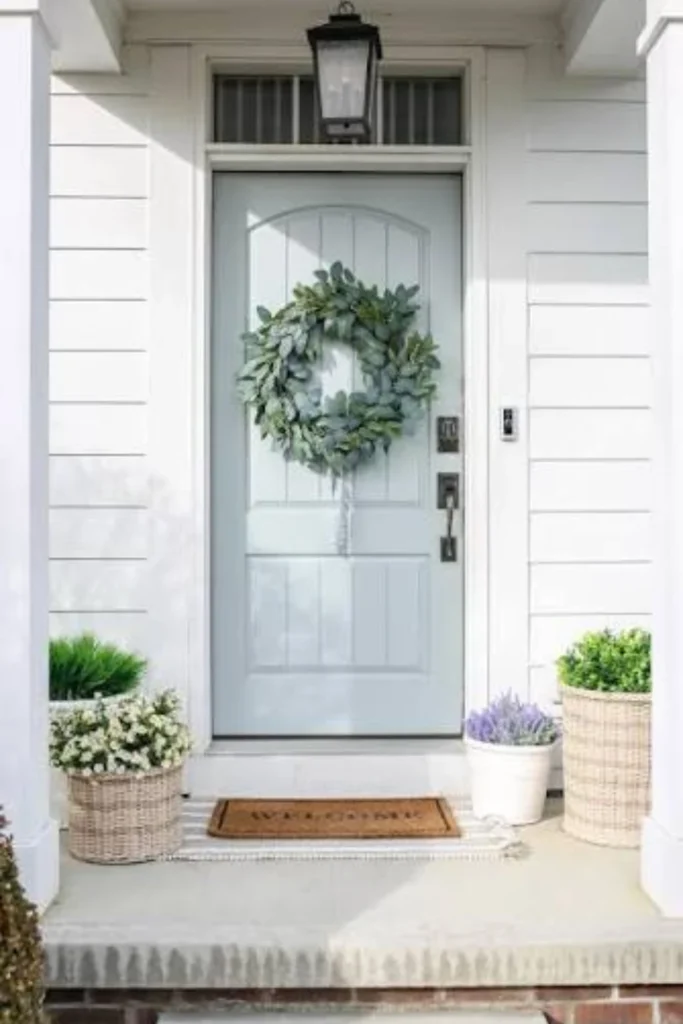
Why it works
The soft, slightly faded tone feels nostalgic and rural while still looking clean and current against crisp white walls.
Best for
Medium-sized doors on farmhouse, modern farmhouse, or rural-style homes.
Styling Tips
Use brass or steel inlay hardware and a matte finish to keep the look simple, warm, and craft-driven.
4. Deep Teal Statement Door
Teal sits between blue and green, giving your entry a sophisticated, slightly unexpected twist that still feels grounded and calm.
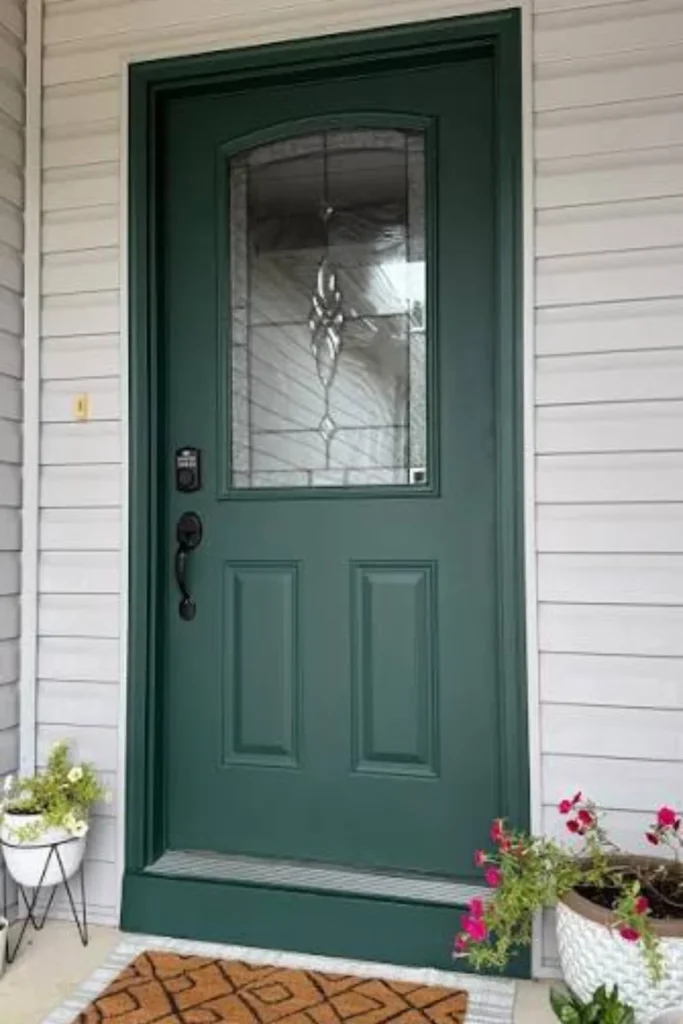
Why it works
Teal looks stunning against white exteriors and pairs naturally with greenery, so your landscaping does half the styling work for you.
Best for
Medium to large doors on modern or transitional-style homes.
Styling Tips
Surround the door with potted greenery in varying heights to let the teal tone blend naturally into the landscape.
5. Peacock Blue Cottage Door
A rich, jewel-toned peacock blue door brings serious drama to a cottage-style home, especially when paired with lush garden landscaping.
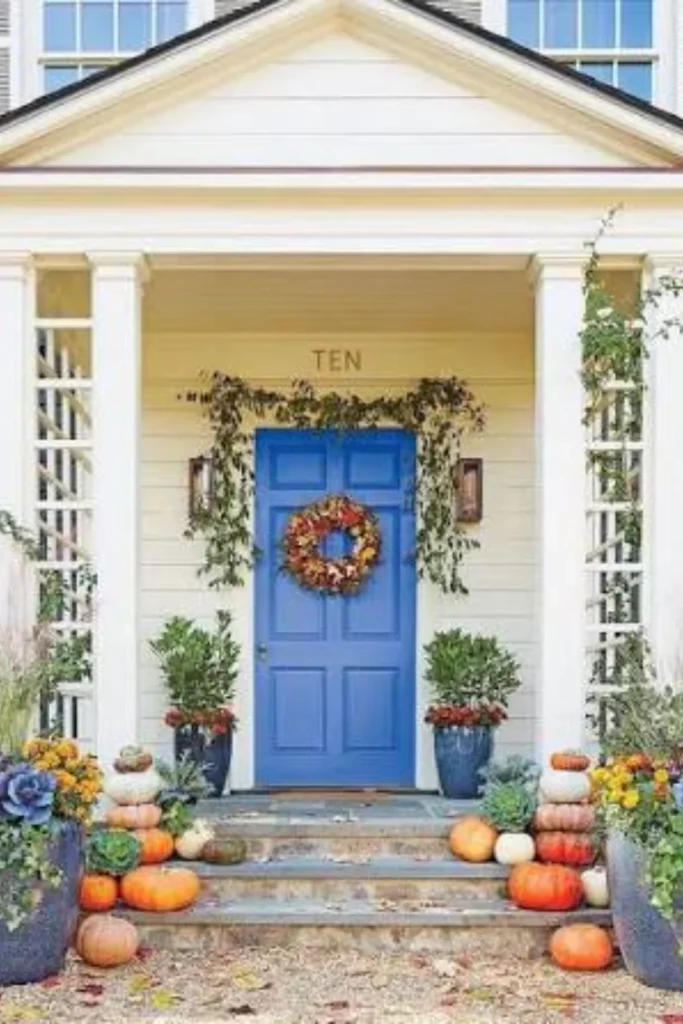
Why it works
The saturated, almost iridescent tone catches the eye immediately and feels luxurious without requiring any extra ornamentation.
Best for
Small to medium cottage doors framed by gardens or a covered portico.
Styling Tips
Add a brass door knocker and flank the door with sidelights or window boxes filled with white or pink blooms.
6. Dark Blue Spanish-Style Door
A deep, almost black-blue door fits beautifully on Spanish-style bungalows when paired with clay roof tiles, black accents, and white stucco walls.
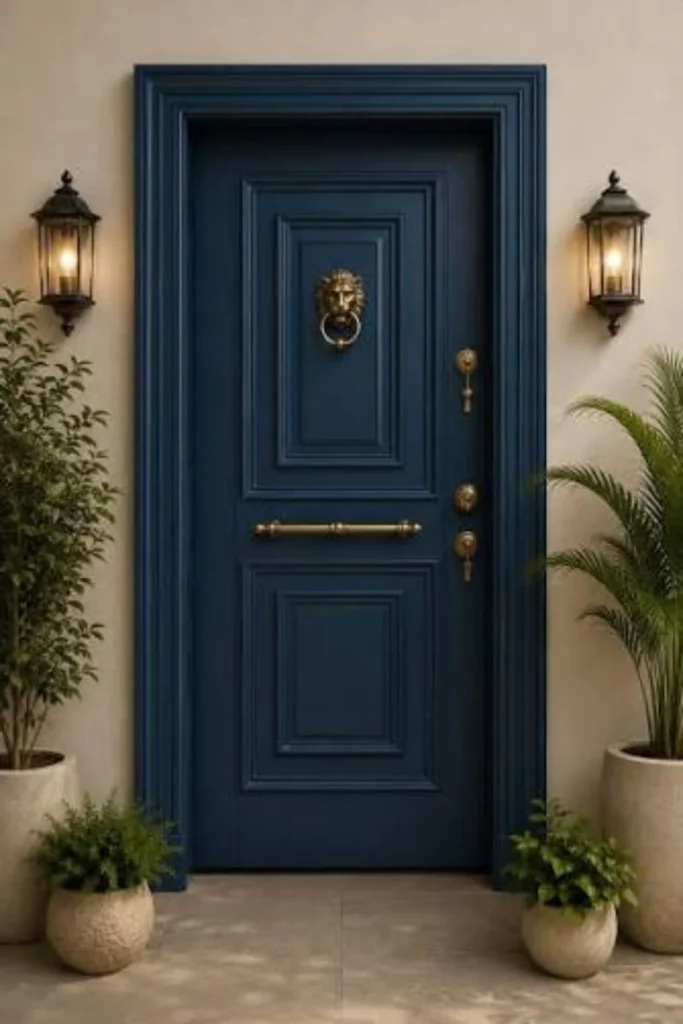
Why it works
The darkness of the blue echoes the dramatic, sun-drenched contrast typical of Spanish architecture, making the whole facade feel intentional.
Best for
Medium-sized arched or paneled doors on Spanish, Mediterranean, or stucco homes.
Styling Tips
Match black wrought iron hardware and light fixtures to the door, and keep surrounding walls plain white stucco for contrast.
7. Two-Tone Blue and White Door
A door painted half blue and half white, or with blue panels and white trim detailing, gives a playful, custom-built look without hiring a carpenter.
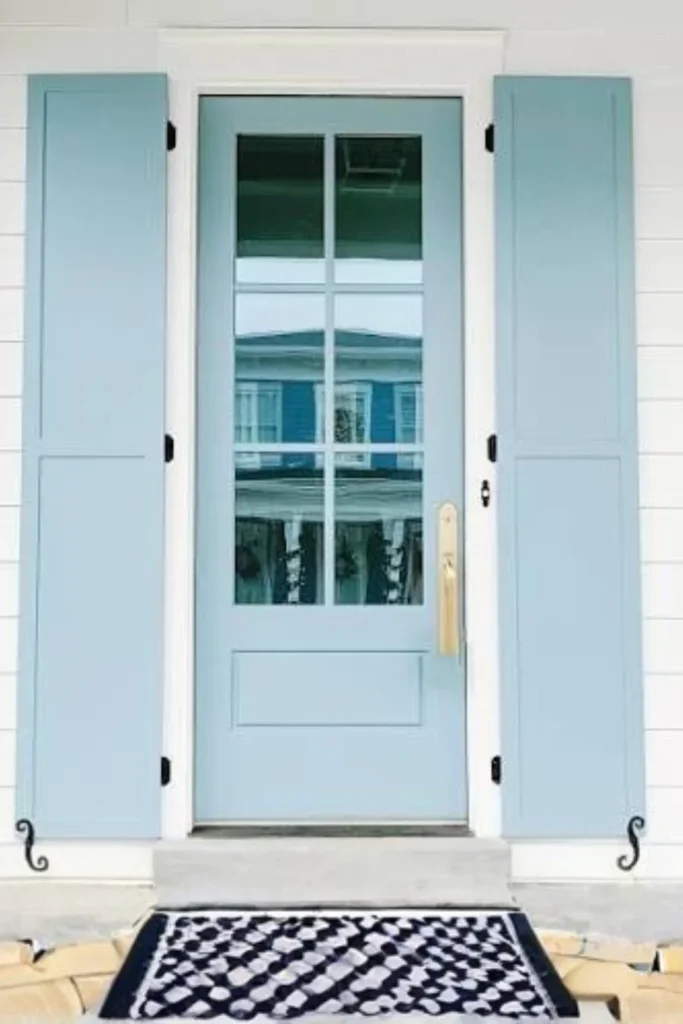
Why it works
Breaking up the color visually adds dimension and interest, making even a flat, plain door look architecturally detailed.
Best for
Small to medium doors that need extra visual interest due to a simple, flat design.
Styling Tips
Use painter’s tape to create crisp lines between the two colors and seal with a clear matte topcoat for durability.
8. Blue Door with Black Trim Frame
Framing a blue door in solid black trim creates a crisp, defined focal point, especially effective on lighter colored homes.
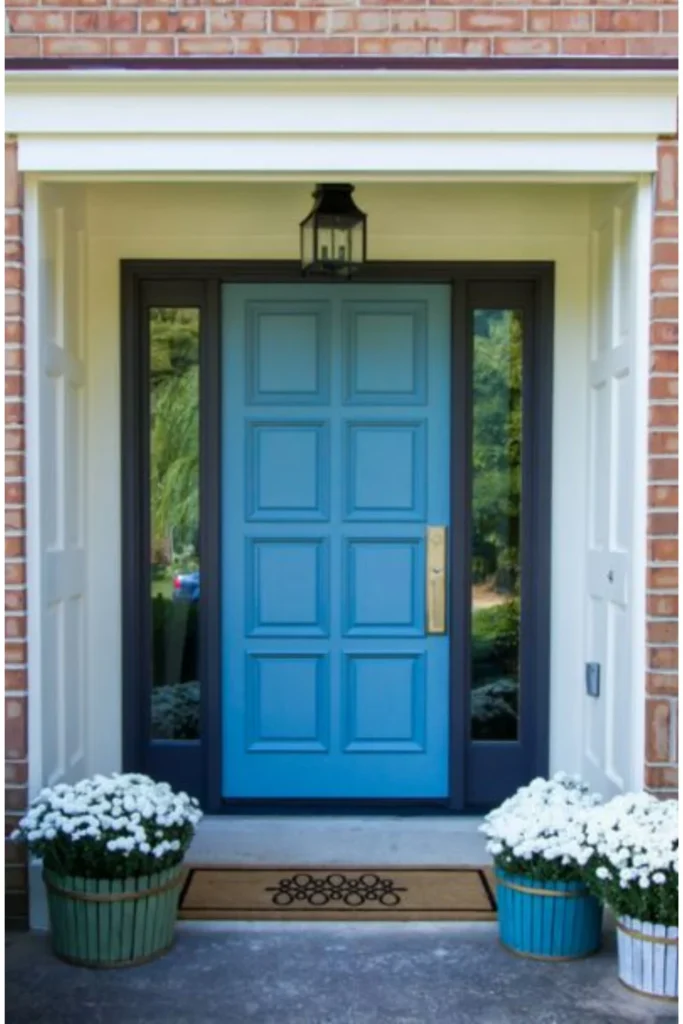
Why it works
The black frame acts like a picture frame, making the blue door pop instead of blending quietly into the wall color.
Best for
Any size door on homes with light siding, stucco, or brick where contrast is needed.
Styling Tips
Repeat the black trim color in your house numbers, mailbox, or light fixtures so the frame feels connected to the rest of the exterior.
9. Blue Door with Brass Hardware
Pairing a rich blue door with warm, polished brass hardware creates an elegant, slightly traditional look that feels expensive without a big price tag.
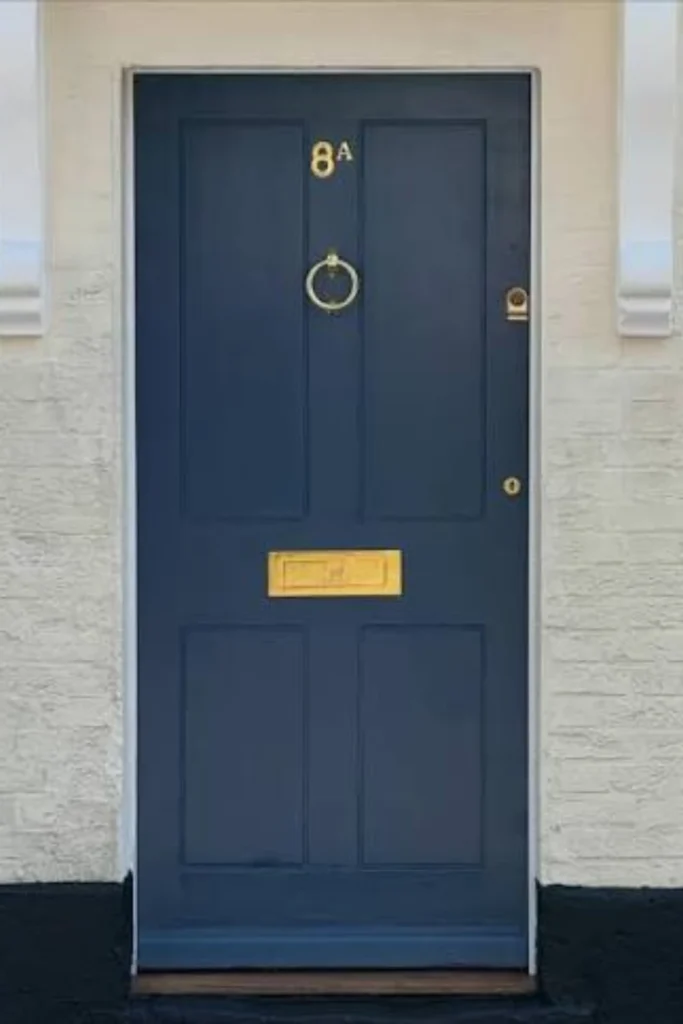
Why it works
Brass has a warm undertone that beautifully contrasts cool blue tones, creating a balanced, high-end finish.
Best for
Medium to large doors on traditional or transitional-style homes.
Styling Tips
Choose a single brass finish, like unlacquered or antique brass, and match it across the doorknob, knocker, and kick plate.
10. Modern Farmhouse Blue with Matte Finish
A matte, almost chalky finish on a medium blue door gives modern farmhouse homes a soft, understated elegance that glossy paint can’t achieve.
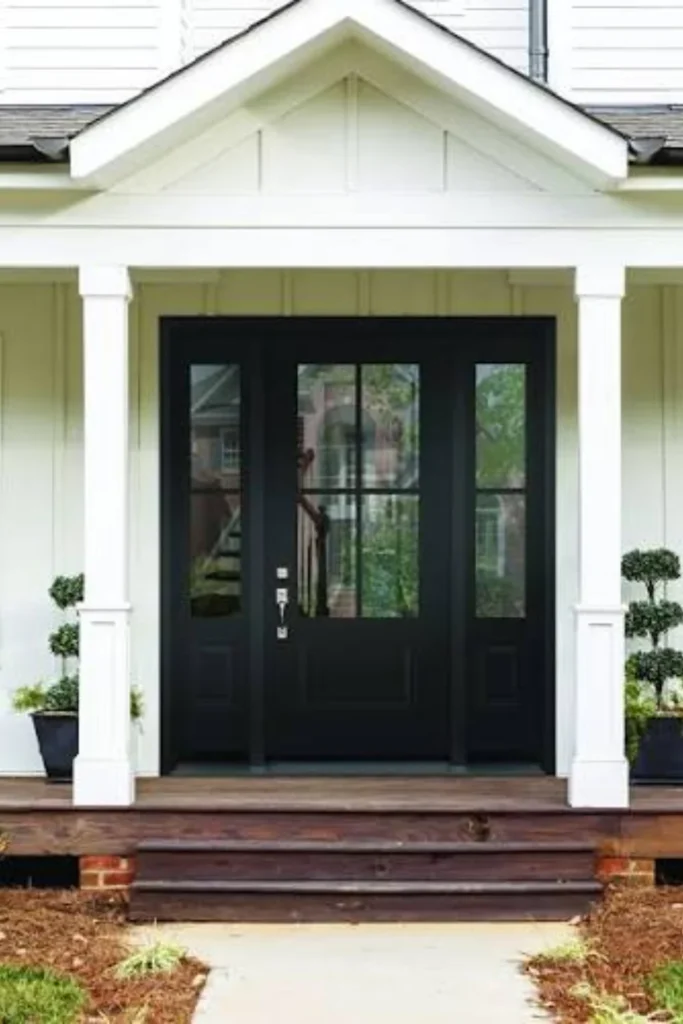
Why it works
Matte finishes diffuse light rather than reflecting it, giving the door a more natural, craftsman-like quality.
Best for
Medium-sized doors on newly built or renovated farmhouse-style homes.
Styling Tips
Use minimalist black or matte bronze hardware to keep the overall look clean and free of unnecessary shine.
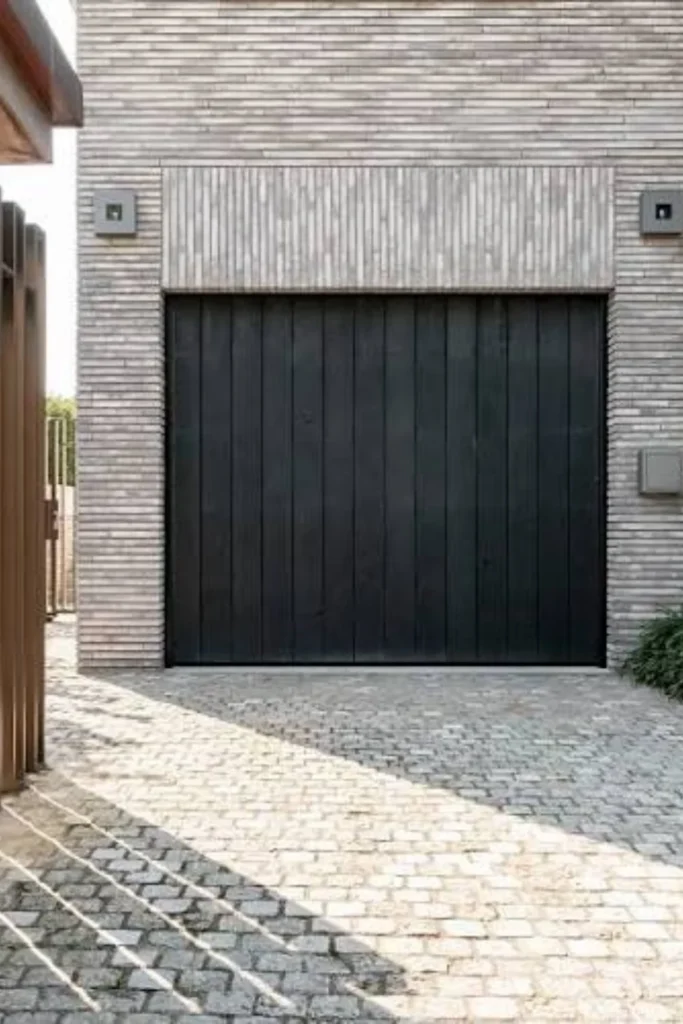
11. Shou Sugi Ban Charred Wood Inlay Door
A blue door featuring a vertical inlay of Shou Sugi Ban, a Japanese charred-wood technique, adds texture, history, and craftsmanship to a modern entry.
Why it works
The deep, textured black wood grain contrasts beautifully against blue paint, giving the door a sense of depth that flat paint alone can’t provide.
Best for
Large, architecturally modern doors on contemporary or minimalist homes.
Styling Tips
Keep the rest of the entry minimal, simple planters, clean lines, so the charred wood detail remains the clear focal point.
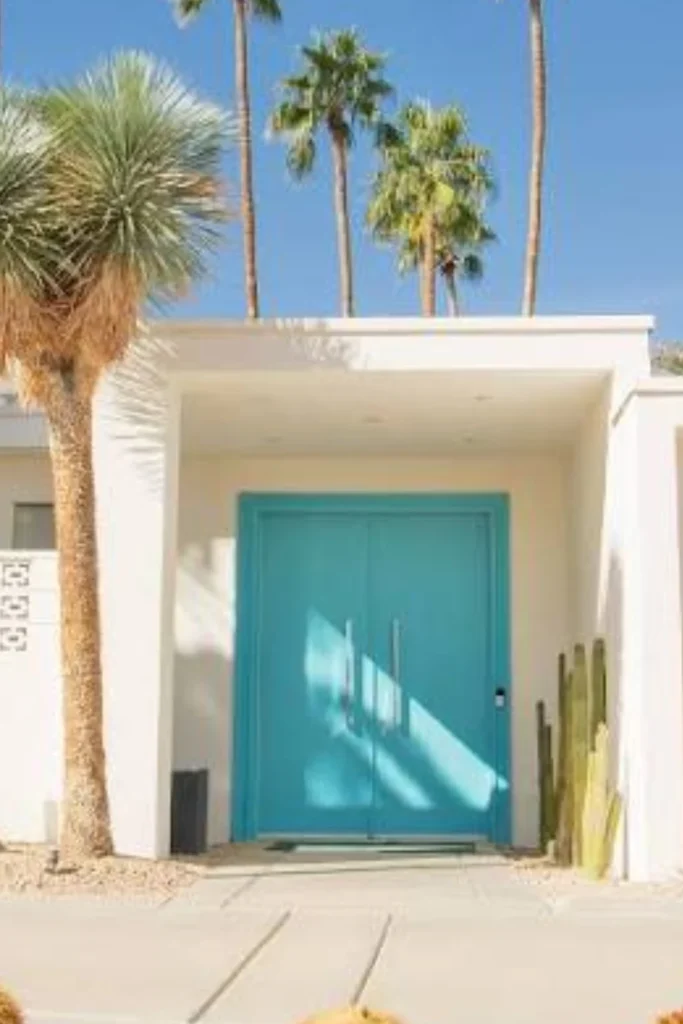
12. Mid-Century Modern Blue Door
A deep, saturated blue door paired with a knurled brass handle and vintage-inspired lighting bridges old-school charm with modern design.
Why it works
This combination plays with contrast between eras, giving the entry a curated, design-forward feel rather than a generic modern look.
Best for
Medium to large doors on mid-century modern or craftsman-style homes.
Styling Tips
Add flared planters and a vintage-style sconce on either side of the door to round out the retro-modern theme.
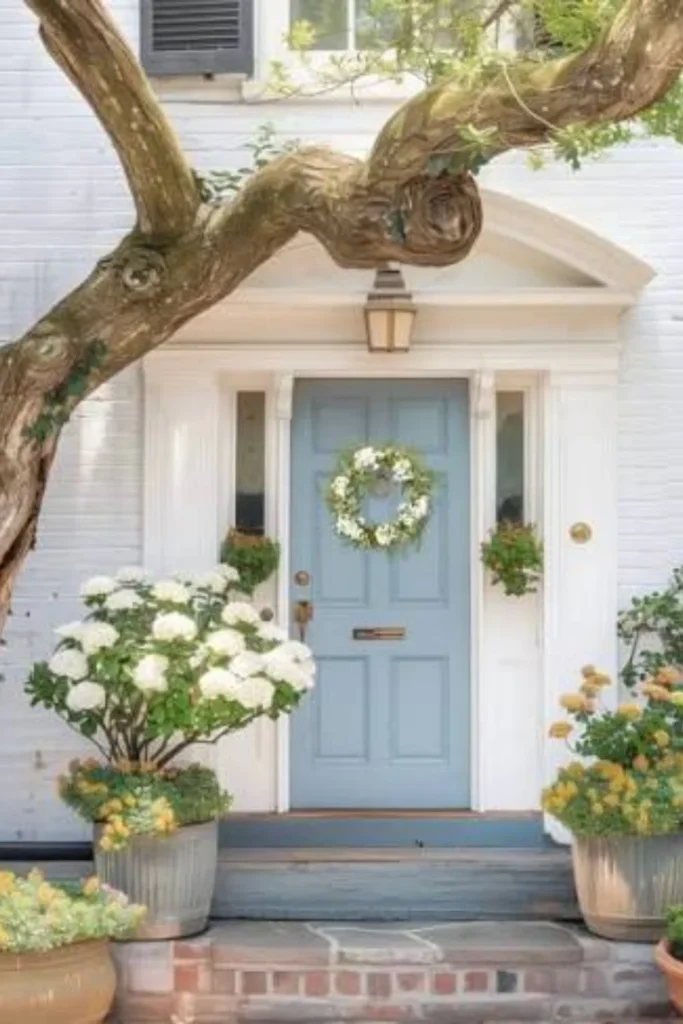
13. Prairie-Style Vertical Blue Door
A tall, narrow blue door with strong vertical lines creates striking contrast against the horizontal, stretched-out shapes typical of prairie-style homes.
Why it works
The upright presence of the door against a low, wide home creates energy and a clear visual anchor for the whole front elevation.
Best for
Large, tall doors on prairie-style or ranch homes with long horizontal rooflines.
Styling Tips
Keep hardware simple and minimal so the door’s height and shape do the visual work without extra distraction.
Mistakes to Avoid
A blue front door is one of the easiest upgrades to get right, but a few small missteps can throw off the whole effect. First, don’t pick your blue shade indoors under artificial light, always test paint swatches outside at different times of day since natural sunlight changes how a color reads dramatically. Second, avoid mismatching your door’s warmth or coolness with your hardware, a cool icy blue paired with warm yellow-toned brass can sometimes clash rather than complement, so test the pairing on a sample board first. Third, don’t ignore your door’s trim and surrounding frame, a beautiful blue door with chipped or mismatched trim will always look unfinished no matter how perfect the paint job is. Fourth, be careful about going too bright or saturated on a very large or double-door entry, since bold color has a much bigger visual footprint at that scale and can quickly feel overwhelming instead of elegant. Finally, always use exterior-grade paint made for doors, regular interior paint won’t hold up against sun exposure, rain, and daily use, and you’ll end up repainting far sooner than you’d like.
Conclusion
A blue front door is one of the most reliable, rewarding upgrades you can make to your home’s exterior. It works across nearly every architectural style, from coastal cottages to mid-century moderns to Spanish bungalows, and it can be as bold as a cobalt double door or as subtle as a powdery farmhouse blue. The key is choosing a shade that fits your home’s existing colors and style, then finishing it off with the right hardware, lighting, and a little greenery. Whether you’re repainting an old door or planning a full entryway refresh, the right blue can completely transform how your home feels from the curb. Pick the idea that speaks to you most from this list, grab a paintbrush, and give your entryway the welcome it deserves.
FAQs
What is the most popular shade of blue for front doors? Navy blue remains one of the most popular and timeless choices because it works on almost any home style and pairs well with nearly every hardware finish.
Does a blue front door increase home value or curb appeal? While it won’t directly increase your home’s appraised value, real estate experts often note that a well-chosen front door color, especially blue, can significantly boost curb appeal and first impressions for buyers.
What hardware finish looks best with a blue front door? Brass and brushed nickel are the most popular choices since they complement nearly every shade of blue, though matte black is a great option for a more modern, high-contrast look.
Can I paint my front door blue if my house exterior is also blue? Yes, but instead of matching the exact shade, choose a contrasting tone, like a warm clay or blush color, or a deeper, richer blue, so the door still stands out against the siding.
What type of paint should I use on a blue front door for it to last? Always use an exterior-grade paint specifically formulated for doors, ideally with a satin or semi-gloss finish, since these hold up better against sun, rain, and daily wear than flat or interior paints.