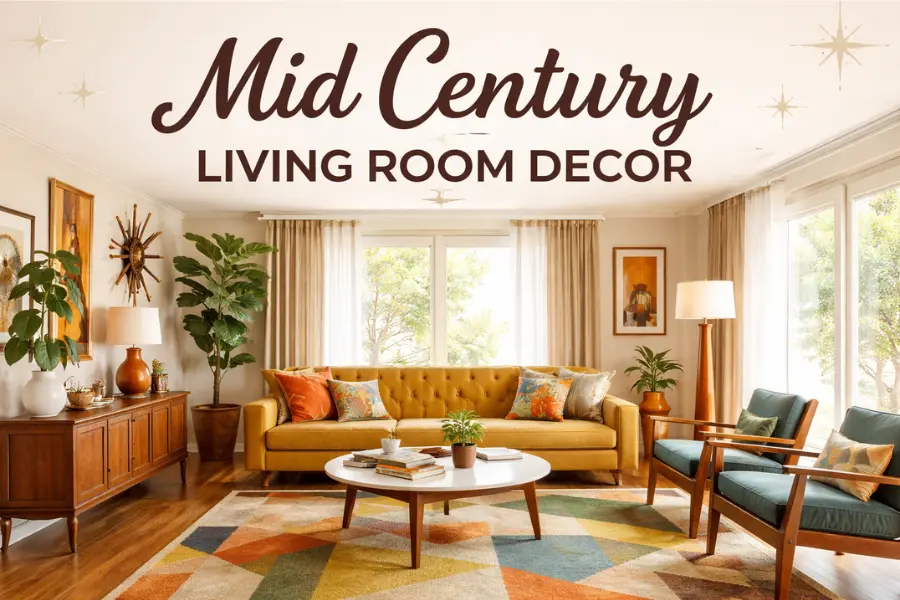
Mid Century Living Room Decor That Feels Stylish, Warm, and Easy to Live With
Mid century living room decor still works so well because it blends beauty with function. The style is known for clean lines, organic shapes, useful furniture, and a strong connection to everyday living. It grew from design made roughly between 1933 and 1965, and its core features still feel fresh in modern homes today.
A good mid century living room does not need to feel like a museum or a film set. In real homes, the best results come from warm wood tones, low-profile furniture, simple layouts, soft texture, and a few bold accents that give the room personality. Designers still use these ideas today because they create spaces that feel calm, open, and timeless.
Table of Contents
Mid Century Living Room Decor Ideas
The best way to decorate in this style is to match the idea to the size and shape of your room. Some rooms need a light and compact setup, while others need stronger zoning, larger rugs, and furniture with more presence. The ideas below are all different from each other, easy to picture in a real home, and designed to help beginners create a room that looks balanced and beautiful.
1. Slim Walnut Apartment Layout
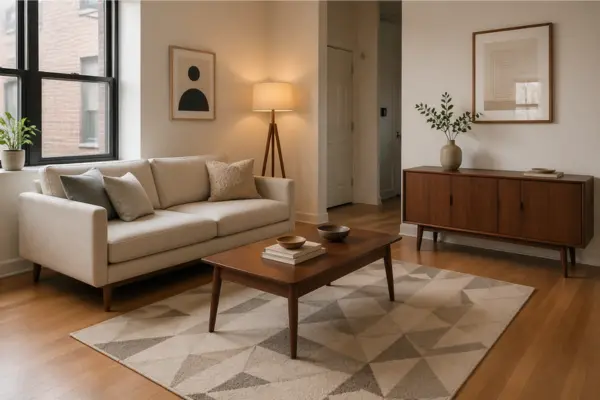
This idea uses a compact neutral sofa, a slim walnut coffee table, and a narrow credenza to create a clean and practical setup for a small living room. The look feels open, tidy, and warm. It gives you storage, seating, and classic mid century character without making the room feel crowded or heavy.
Why It Works
This layout works because it respects the room’s size. Mid century interiors often look best with low furniture, visible legs, and pieces that do not block the eye. A slim coffee table and narrow credenza keep the floor area open, which makes even a tight room feel more breathable. That sense of openness is one of the reasons mid century design has stayed so popular.
Best for
This idea is best for apartments, first homes, studio spaces, and narrow living rooms where every inch matters. It is also a smart choice if you want a room that feels polished but still easy to use every day.
Styling Tips
Choose a sofa in cream, oatmeal, or light gray so the room feels brighter. Use walnut or teak for the main wood tone and repeat it in two or three pieces for a more pulled-together look. Add one geometric rug, one ceramic vase, and one tall floor lamp. That is enough detail to finish the room without cluttering it.
2. Olive and Cream Conversation Corner
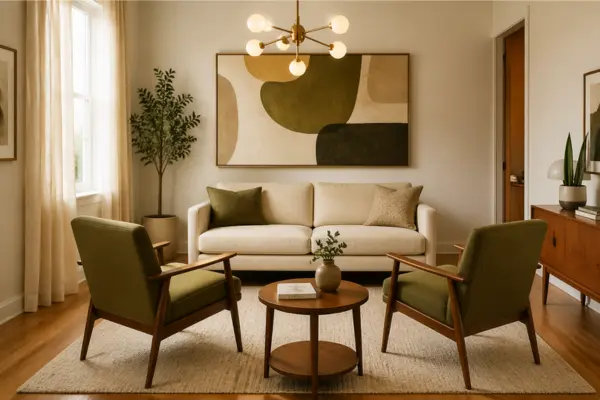
This idea centers around a cream loveseat, two small accent chairs, and olive green accents that make the room feel welcoming and stylish. Instead of filling the room with bulky furniture, it creates a balanced seating area meant for conversation. The result feels personal, warm, and polished without becoming too formal.
Why It Works
This room works because the furniture arrangement is intentional. A loveseat keeps the footprint small, while two compact chairs make the room feel complete. The olive accents add depth without overpowering the soft base palette. Mid century rooms often succeed when they combine simple furniture with one or two deeper, earthy colors that bring the space to life.
Best for
This setup is best for small living rooms, lounges, reading rooms, and homes where you want a social and relaxed seating area instead of a television-focused layout.
Styling Tips
Use one oversized art piece instead of many small frames. Choose chairs with wooden arms or tapered legs to keep the mid century feel strong. Add a round side table and a globe pendant or small sputnik light to soften the straight furniture lines.
3. Leather Chair and Floating Shelf Setup
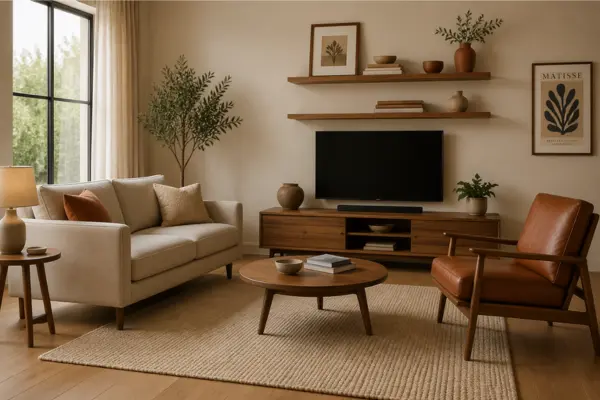
This idea mixes a simple two-seat sofa with one rich cognac leather chair and a low media unit topped with floating wood shelves. It feels collected and thoughtful, but still light and easy. The leather adds depth, while the shelves give you room for books, ceramics, and a few decorative pieces.
Why It Works
This layout works because it balances comfort with contrast. The sofa keeps the room calm, while the leather chair adds a stronger tone and a little vintage energy. Floating shelves help you decorate without adding the visual weight of a full bookcase. In many mid century spaces, low furniture and clean storage help the room feel open and organized.
Best for
This idea is best for renters, smaller family rooms, and anyone who wants a stylish room with some display space but not too much furniture.
Styling Tips
Keep the shelf styling simple. Stack a few books flat, add one small framed print, and use matte ceramics in earthy shades. Let the leather chair stand out by keeping nearby pieces soft in color and simple in shape.
4. Window-First Compact Room
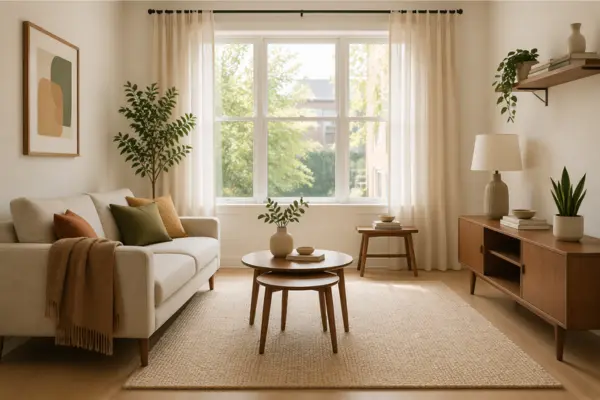
This idea is built around natural light. The sofa sits opposite the window, not in front of it, while a low bench or stool sits nearby without blocking the view. Nesting tables, linen curtains, and a soft rug help the room stay bright, open, and comfortable while still feeling grounded.
Why It Works
This room works because it protects one of the most important design tools you already have, which is light. Mid century interiors often feel airy because furniture stays low and windows stay clear. When your eye can move across the room and toward the window, the space instantly feels larger and more relaxed.
Best for
This is best for very small rooms, city apartments, and homes with one good window that deserves to stay open and visible.
Styling Tips
Hang curtains high and wide so the window looks larger. Use rust, mustard, or olive in cushions and throws instead of strong wall colors. Choose tables that can tuck together when not in use. That keeps the room flexible and easy to move through.
5. Balanced Teak and Texture Family Room
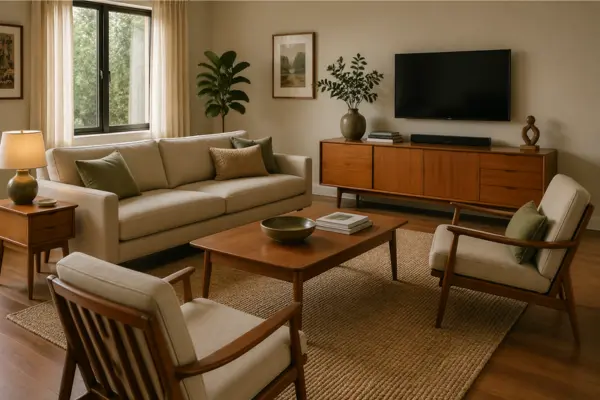
This idea uses a three-seat sofa, two wooden-frame armchairs, a rectangular teak coffee table, and a woven rug to create a practical mid century family room. It feels grounded, warm, and complete. The layout suits daily life, but it still looks refined enough for guests and weekend entertaining.
Why It Works
This layout works because it is balanced. A sofa and two chairs create a classic furniture grouping that feels settled and easy to use. Teak or walnut adds warmth, while texture through the rug and upholstery keeps the room from feeling flat. Designers often return to this mix because it feels both useful and timeless.
Best for
This idea is best for medium-size living rooms, family spaces, and homes where you want comfort, storage, and a room that looks finished without feeling formal.
Styling Tips
Use one long credenza under the television or along the main wall to keep storage neat. Choose upholstery in soft beige, warm gray, or muted green. Add a table lamp, a shallow bowl, and one stack of books to the coffee table instead of many little objects.
6. Fireplace-Centered Retro Warm Room
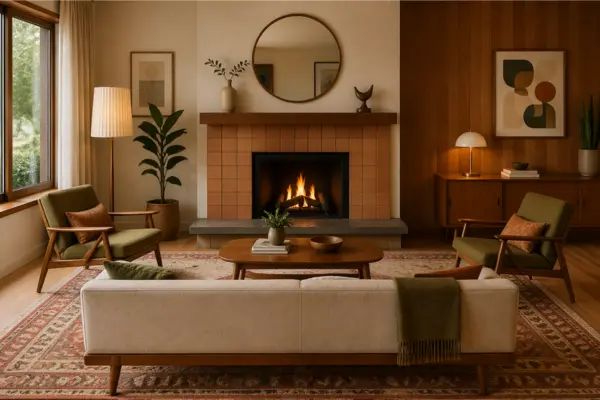
This idea places the fireplace at the heart of the room, with a sofa facing it and two smaller chairs angled nearby. A simple rug anchors the arrangement, while the mantel stays lightly styled. It creates a warm and inviting room that feels classic, useful, and naturally well arranged.
Why It Works
This works because it uses the room’s natural focal point instead of trying to invent one. Mid century spaces often feel strongest when the architecture leads the layout. A fireplace, tiled surround, wood wall, or large window already gives the room identity, so the furniture can support it rather than compete with it.
Best for
This idea is best for medium-size homes, older houses with original features, and living rooms where you want the seating to feel warm and centered.
Styling Tips
Keep the mantel simple with a round mirror, one vase, and one sculptural object. Use chairs with slim wood frames so the layout does not feel bulky. A soft patterned rug in earthy tones will tie the whole room together without stealing attention from the fireplace.
7. Bold Art and Quiet Furniture Layout
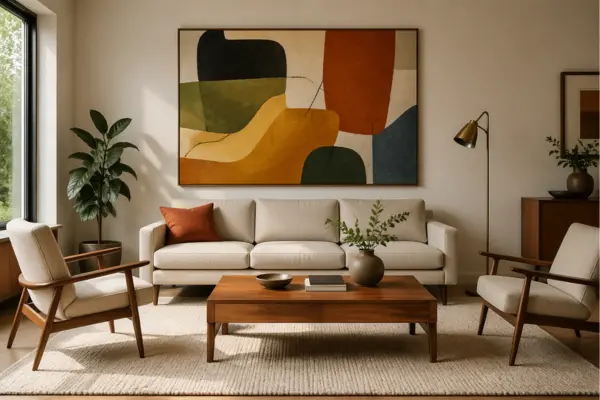
This idea keeps the furniture calm and neutral, then uses one large abstract artwork to bring the room to life. A simple sofa, clean-lined chairs, and a warm wood table create the base. The artwork becomes the hero piece, making the room feel stylish, intentional, and personal without too much decorating.
Why It Works
This layout works because it creates one clear visual moment. Mid century rooms often look best when the furniture is simple and the personality comes through art, lighting, or color accents. Large-scale art gives the eye somewhere to land and helps the whole room feel more finished.
Best for
This idea is best for medium-size rooms, newer homes, and anyone who likes mid century style but wants it to feel current rather than strongly vintage.
Styling Tips
Choose artwork with rust, black, mustard, olive, or muted blue tones so it fits naturally with the style. Keep the surrounding furniture plain and low. Repeat one color from the artwork in a cushion, vase, or small accent chair to make the room feel more connected.
8. Soft Curves Modern Mid Century Blend
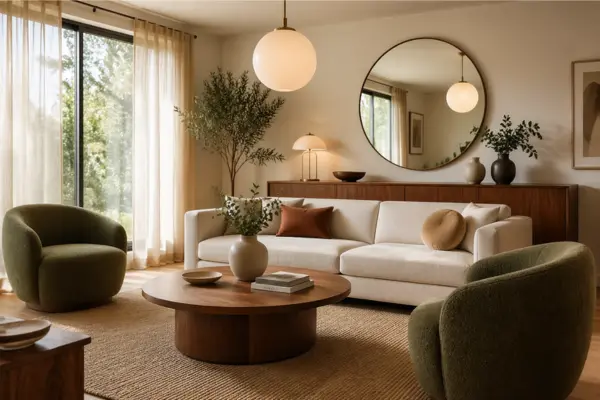
This idea combines straight furniture with softer pieces like curved accent chairs, a round mirror, and a globe pendant. The look feels lighter and more modern while still staying true to mid century design. It is an easy way to make the room feel less strict and more relaxed.
Why It Works
This works because mid century design is not only about straight lines. Organic shapes are a major part of the style, and they help rooms feel more human and comfortable. When you mix clean furniture with rounded shapes, the room feels balanced instead of stiff.
Best for
This idea is best for medium-size rooms, modern homes, and people who want a softer version of mid century decor that still feels warm and stylish.
Styling Tips
Use a straight sofa as the anchor, then add one or two curved pieces around it. A round coffee table, circular mirror, or curved lamp base can be enough. Keep the palette warm with cream, camel, walnut, and muted green so the room still feels grounded.
9. Open-Plan Zoning Layout
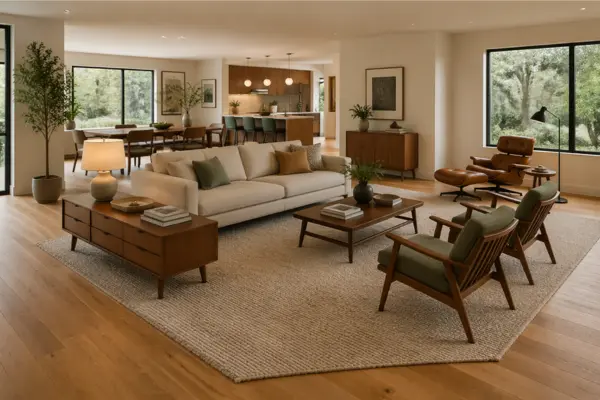
This idea is made for a large living room or open-concept space. The sofa floats in the center, chairs sit opposite, and a large rug defines the main seating area. A console behind the sofa helps shape the room, while a separate reading corner gives the layout more purpose and comfort.
Why It Works
This layout works because large rooms need structure. Mid century interiors often pair beautifully with open plans, but the furniture has to define the room. Floating the sofa creates a stronger layout than pushing everything to the walls, and a large rug helps the space feel anchored instead of scattered.
Best for
This is best for large family rooms, open-plan homes, and spaces that combine living, dining, and lounge functions in one wide area.
Styling Tips
Use a rug large enough for at least the front legs of all main seating pieces to sit on it. Add a long console behind the sofa with books, a lamp, and a tray. In the reading corner, use one leather chair, one floor lamp, and one small table to create a separate but connected zone.
10. Wood Beam and Statement Light Room
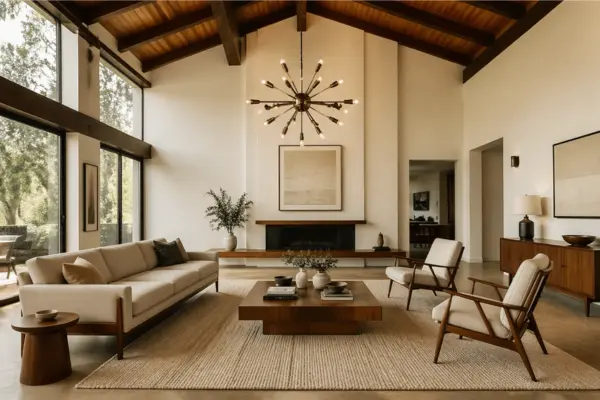
This idea lets the room’s height do some of the work. Low-profile seating keeps the space grounded, while a dramatic pendant or sputnik chandelier draws the eye upward. A large rug, broad coffee table, and simple styling create a room that feels architectural, elegant, and very true to the mid century spirit.
Why It Works
This room works because it balances horizontal and vertical focus. Mid century living rooms often use low furniture below and strong lighting or architectural detail above. That contrast makes the room feel interesting without adding more furniture than you need. It is a smart way to style a large room without filling every corner.
Best for
This idea is best for large living rooms, homes with high ceilings, and rooms with beams, vaulted ceilings, or strong architectural features.
Styling Tips
Choose one dramatic light fixture and let it stand out. Keep wall decor light so the room does not feel busy. Use large-scale pieces, such as a broad coffee table or long sofa, so the furniture feels right for the room’s size.
11. Collector’s Mid Century Lounge
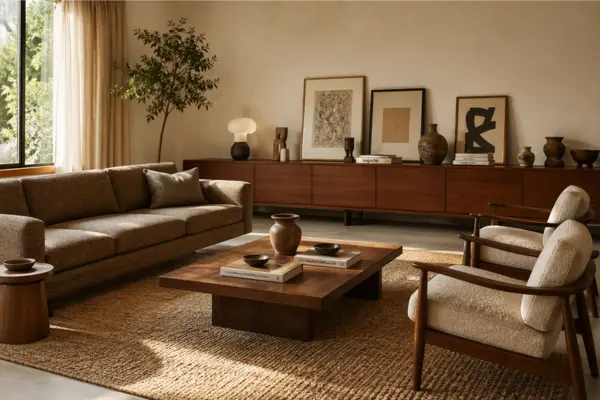
This idea uses a deep neutral sofa, two statement lounge chairs, a long storage piece, and carefully spaced books, ceramics, and art. It feels layered and personal without losing order. The room has more character than a very minimal setup, but it still looks clean, edited, and easy to enjoy.
Why It Works
This layout works because it gives collections room to breathe. Mid century rooms do not usually look their best when every surface is full. A few special objects, well spaced and supported by simple furniture, feel much more elegant. That balance between personality and restraint is one of the style’s strongest lessons.
Best for
This idea is best for larger living rooms, design lovers, and anyone who already owns beautiful books, ceramics, or vintage finds they want to display well.
Styling Tips
Group objects in threes, vary the heights, and leave empty space between them. Lean framed art on a credenza instead of hanging everything. Keep the biggest furniture neutral so your decorative pieces can stand out without making the room feel busy.
12. Indoor-Outdoor Mid Century Living Room
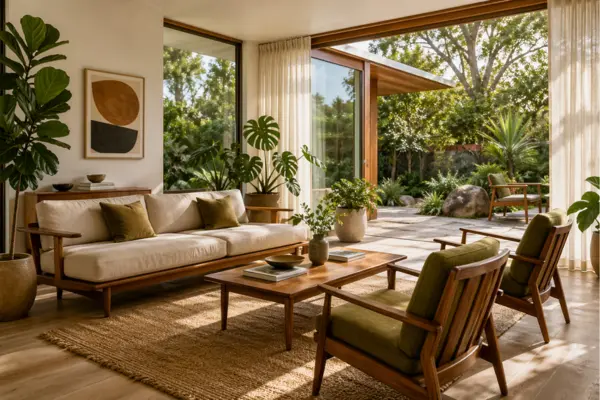
This idea takes inspiration from the garden or patio just outside the room. Wood furniture, olive accents, linen fabrics, and sculptural plants help connect the inside with the view beyond the windows. The result feels fresh, calm, and very natural, which suits mid century style beautifully.
Why It Works
This works because indoor-outdoor flow is one of the most loved parts of mid century design. Large windows, natural materials, and open sight lines help the room feel calmer and bigger. Even if your home is not a classic mid century house, you can still create that same relaxed connection with the outdoors.
Best for
This idea is best for rooms with patio doors, garden views, large windows, or anyone who wants a living room that feels especially peaceful and airy.
Styling Tips
Use light curtains or skip heavy window treatments altogether. Repeat outdoor greens inside through cushions, art, or planters. Choose natural materials like wood, linen, jute, and stone so the room feels easy and connected rather than overly decorated.
Mistakes to Avoid With Mid Century Living Room Decor
Mid century style can look effortless, but getting it right usually comes down to restraint. The biggest mistakes happen when a room is either too themed or not balanced enough. A beautiful room should feel stylish, but it should also feel comfortable and realistic for everyday life.
Treating Every Piece Like It Has to Be Vintage
A room does not need to be filled with old or reproduction furniture to feel true to the style. In fact, many of the best spaces mix a few mid century shapes with newer pieces that are more practical for daily life. This keeps the room from feeling forced or dated.
Using Too Many Small Decor Pieces
Too many little objects can make a mid century room feel messy very quickly. This style usually looks stronger with fewer, larger, better-chosen pieces. One bold lamp, one large artwork, and one beautiful bowl will often do more for the room than ten tiny accessories scattered across shelves and tables.
Choosing Furniture That Is Too Bulky
Heavy furniture can fight against the clean and airy feel that makes this style work. Mid century living rooms usually look better with lower pieces, slimmer arms, tapered legs, and furniture that leaves some visible space underneath. That openness helps the room feel lighter and more relaxed.
Ignoring Comfort in the Name of Style
A room may look beautiful in photos, but if it feels cold or hard to use, it will never feel finished. Mid century rooms need softness too. Rugs, textured cushions, linen curtains, and warm wood tones help balance the cleaner lines and make the space feel welcoming.
Mixing Too Many Wood Tones
Walnut, teak, oak, and other woods can all look lovely, but too many different tones in one room can make the space feel confused. Try to choose one main wood tone and repeat it across your key pieces. That simple step instantly makes the room feel calmer and more intentional.
Conclusion
Mid century living room decor works best when you focus on the basics first. Start with a clear layout. Choose furniture that suits the size of your room. Bring in warm wood, comfortable seating, simple lighting, and just enough color to give the space life. When those pieces are working together, the room feels naturally stylish without trying too hard.
The real beauty of this style is that it can be adapted to almost any home. A tiny apartment can use slim furniture and open legs to feel lighter. A medium-size family room can lean on balance and texture. A large open space can use rugs and furniture placement to create clear zones. The goal is never to copy one exact look. The goal is to create a room that feels warm, useful, and timeless, which is exactly why mid century design continues to inspire so many homes today.
FAQs About Mid Century Living Room Decor
Mid century style can feel very approachable once you understand the main ideas behind it. These common questions will help you decorate with more confidence and avoid the mistakes that often make the room feel too flat, too busy, or too themed.
What colors work best in a mid century living room?
The easiest starting point is a warm neutral base. Cream, soft white, beige, camel, and warm gray work very well. From there, add richer tones like olive, mustard, rust, deep blue, or muted teal. These colors suit the style because they feel grounded and natural rather than too bright or artificial.
What kind of sofa looks best in a mid century living room?
Look for a sofa with a simple shape, clean lines, and visible legs. Tufting can work, but it should stay subtle. A low or medium-height back often looks more in keeping with the style than an oversized, overstuffed design. Neutral upholstery is usually the easiest choice if you want the room to stay timeless.
Can I mix mid century decor with modern furniture?
Yes, and it often looks better that way. A room can feel fresher and more natural when it mixes mid century shapes with a few modern pieces. The key is to keep the lines clean and the palette warm. If the furniture shares a similar sense of simplicity, the room will still feel connected.
How do I make a small living room look mid century without overcrowding it?
Use fewer pieces, but choose them carefully. A compact sofa, one accent chair, one slim coffee table, and one storage piece are often enough. Keep the furniture low, let the window areas stay clear, and use one or two stronger accents instead of many small decorations.
What wood tones suit this style best?
Walnut and teak are especially popular because they have the warmth that mid century rooms are known for. Oak can work too, especially if you want a lighter version of the look. Whatever you choose, try to repeat the tone in your main pieces so the room feels more consistent.
Do I need vintage furniture to get the look?
No, you do not. Vintage pieces can add character, but they are not required. Many new pieces are made with the same clean shapes, tapered legs, and warm finishes that give mid century rooms their charm. It is more important to get the scale, shape, and balance right than to own original pieces.
What kind of lighting suits a mid century living room?
Lighting with shape works especially well. Think globe lamps, cone shades, tripod floor lamps, arc lamps, and sputnik chandeliers. These styles feel decorative and practical at the same time, which suits the spirit of mid century design very well.
How do I keep a mid century room from looking outdated?
The easiest way is to avoid turning the whole room into a theme. Mix in modern comfort, keep the styling edited, and do not overuse retro prints or bright colors. Let the room feel current, comfortable, and lived in. That is usually what makes the style look timeless instead of old-fashioned.