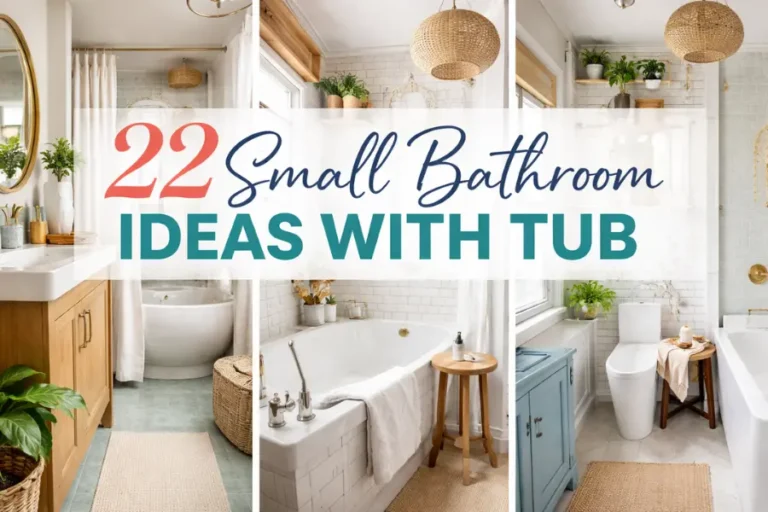
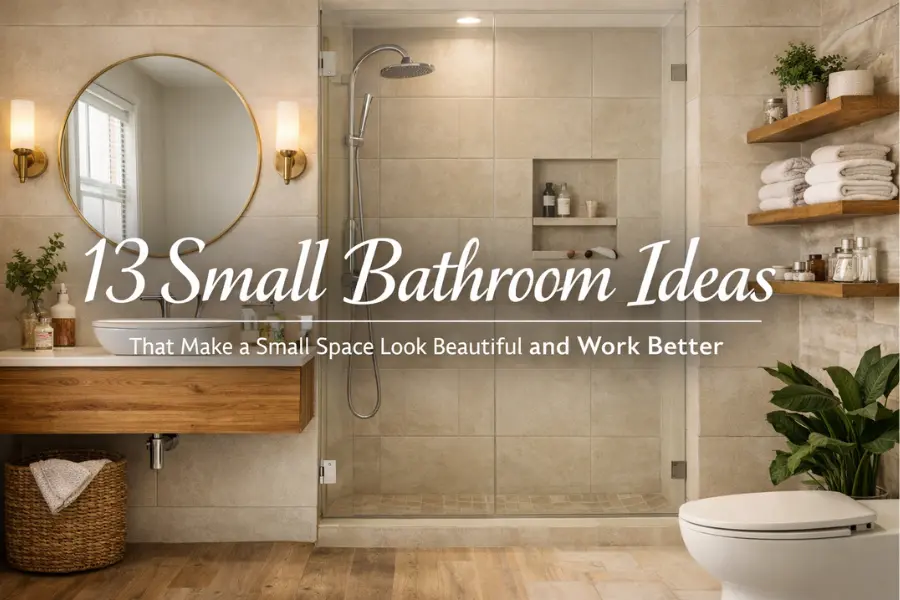
13 Small Bathroom Ideas That Make a Small Space Look Beautiful and Work Better
A small bathroom can be one of the hardest spaces to decorate well. It needs to look fresh, feel comfortable, and handle daily use without becoming messy or cramped. I have worked with many compact bathrooms over the years, and I can say with confidence that size is not the real problem. The real difference comes from layout, storage, light, and the way each element works together.
In this guide, I am sharing 13 small bathroom ideas that are different from each other, realistic for everyday homes, and suitable for a mix of layouts. Some work best in very tight bathrooms, some suit standard-size family bathrooms, and others are ideal for larger small bathrooms that need a better visual balance. Each one is chosen to help you create a bathroom that looks good and feels easier to use every day.
Small Bathroom Ideas to Try
When I plan a small bathroom, I always look at the room as a whole first. The best results come from combining beauty with function. Every choice should help the bathroom feel more open, more useful, and more welcoming. The ideas below do exactly that, and each one brings something different to the space.
1. Use a Floating Vanity to Create a More Open Look
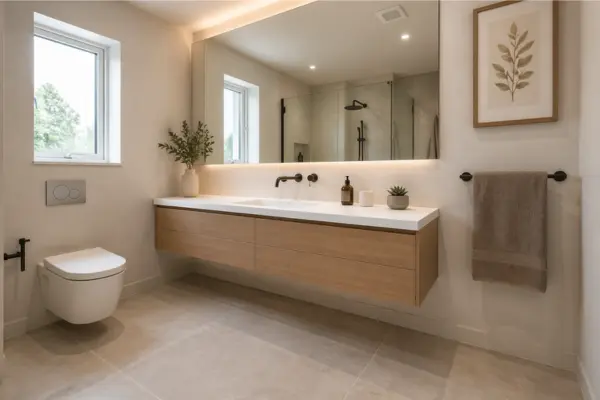
A floating vanity is one of the smartest ways to make a small bathroom feel lighter and less crowded. Because it does not sit heavily on the floor, it opens the lower part of the room and gives the eye more space to travel. This makes the bathroom feel cleaner, more modern, and better planned.
Why It Works
A floor-mounted vanity can sometimes look bulky, especially in a compact bathroom where every inch matters. A floating vanity solves that problem by exposing more floor area. Even though the room size stays the same, the bathroom feels bigger because you can see more of the floor underneath. That extra visibility creates a more open and airy effect.
It also makes cleaning easier. You can sweep or mop under it without working around awkward corners. In family bathrooms or guest bathrooms, this makes daily upkeep much simpler. I also find that floating vanities work beautifully in modern, minimal, and even soft natural designs.
Best for
This idea is best for narrow bathrooms, small en-suites, and modern bathrooms that need a lighter visual feel. It also works well in normal-size bathrooms where you want to avoid a heavy look near the sink area.
Styling Tips
Choose a vanity with clean lines and a simple finish. Light oak, white, soft grey, or muted beige all work very well. If you want the room to feel warmer, go for a wood finish. If you want a cleaner modern look, choose a matte painted surface. Keep the area underneath free from clutter so the open effect stays visible.
2. Install a Large Mirror to Reflect Light and Expand the Room
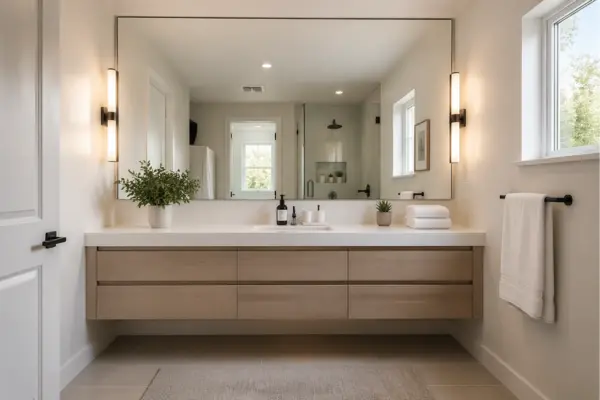
A large mirror can completely change the feeling of a small bathroom. It reflects light, doubles the visual depth, and helps the room feel much wider than it is. This is one of the easiest updates to make, yet it creates one of the biggest improvements in both style and brightness.
Why It Works
Small bathrooms often feel tight because there is not enough visual depth. A large mirror helps by bouncing light across the room and giving the impression of more space. If the bathroom has a window, the effect is even better because the mirror can spread natural light to darker corners.
I often recommend going bigger than people first expect. A mirror that stretches across most of the vanity wall can make a dramatic difference. Frameless mirrors are excellent for a clean and seamless look, while thin-framed mirrors can add a touch of softness or contrast.
Best for
This idea works for almost every bathroom size, from very compact powder rooms to larger small bathrooms. It is especially useful in dark bathrooms or spaces with limited natural light.
Styling Tips
Keep the mirror shape in line with the style of the room. A rectangular mirror suits clean, modern spaces. A rounded mirror softens a bathroom with hard lines and tiles. Add wall lights on either side if possible, or use a mirror with built-in lighting for a neat finish.
3. Choose Light Colors to Make the Space Feel Bigger
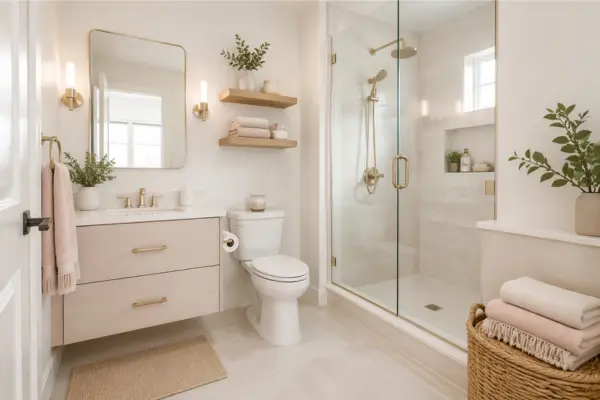
Light colors help a small bathroom feel fresh, calm, and open. Shades like white, soft beige, pale grey, warm cream, and gentle blush can reflect light and reduce visual heaviness. This simple decorating choice can make even a very small bathroom feel more breathable, balanced, and comfortable to use every day.
Why It Works
Dark or very busy colors can sometimes close in a small bathroom, especially when the room has little natural light. Lighter shades reflect light much better, which helps walls and surfaces feel less heavy. This creates a cleaner look and gives the room a more spacious feeling.
That does not mean the bathroom has to look plain. You can still create depth by mixing different textures, such as glossy tiles, soft paint finishes, wood accents, or brushed metal fixtures. The room stays bright without becoming boring.
Best for
This is best for tiny bathrooms, windowless bathrooms, rental bathrooms, and older bathrooms that need a fresher, more timeless update.
Styling Tips
Use two or three light tones rather than one flat shade throughout the room. For example, pair white walls with soft beige tiles and light wood accessories. Add warmth through towels, baskets, or small decorative pieces so the bathroom still feels welcoming.
4. Add Vertical Storage Instead of Wide Storage Units
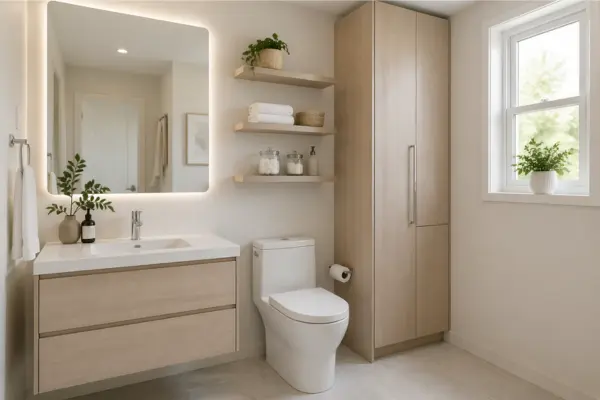
Vertical storage makes excellent use of wall height without taking too much floor space. In a small bathroom, wide cabinets can quickly make the room feel blocked and awkward. Tall, slim storage keeps essentials organized while allowing the layout to remain open, practical, and much easier to move through.
Why It Works
One of the most common small bathroom mistakes is relying only on low or bulky storage. This uses up valuable floor area and can make the room feel crowded. Vertical storage solves that problem by using empty wall space instead. A tall slim cabinet, stacked shelves, or a narrow storage tower can hold a surprising amount without making the room feel heavy.
This idea is practical because small bathrooms still need storage for daily items like towels, toiletries, cleaning products, and extra paper goods. When these things have a proper place, the room instantly looks better and feels calmer.
Best for
This works well in family bathrooms, bathrooms with high ceilings, and compact spaces where floor space is very limited.
Styling Tips
Choose storage that matches the bathroom style. Open shelves look lighter and more decorative, while closed cabinets hide clutter better. Use baskets, folded towels, and glass jars to keep shelves looking neat. Avoid overfilling them, because too many items can make the room feel busy.
5. Replace a Shower Curtain with a Clear Glass Panel
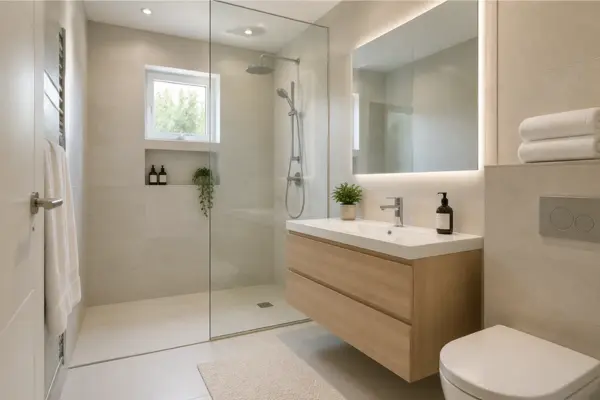
A clear glass shower panel makes a small bathroom feel more open because it does not break the room into separate visual sections. Unlike a bulky curtain, glass keeps the eye moving across the full space. The result is a bathroom that looks cleaner, brighter, and much more spacious.
Why It Works
A shower curtain can stop the eye and make the room feel shorter or narrower. This is especially true when the curtain is dark, patterned, or always partly closed. A clear glass panel removes that visual barrier and helps the whole room read as one space.
It also adds a more polished and updated look. Even in a beginner-friendly bathroom makeover, this one change can lift the room noticeably. In my experience, it works best when paired with simple tiles and minimal hardware.
Best for
This is best for narrow bathrooms, modern bathrooms, and walk-in shower layouts. It also works well in normal-size small bathrooms that feel visually chopped up.
Styling Tips
Keep the glass clean so it continues to look light and clear. Choose slim fittings in chrome, black, or brushed brass depending on your bathroom style. If full glass feels too exposed, use lightly frosted glass on one section while keeping most of the panel clear.
6. Make Use of Corner Fixtures in Awkward Layouts
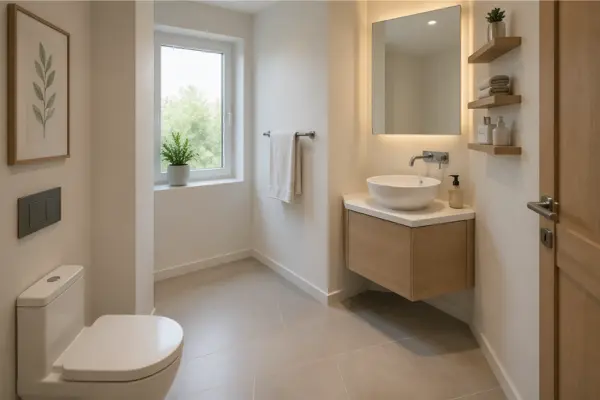
Corner fixtures can rescue a bathroom layout that feels difficult to use. A corner sink, corner vanity, or even corner shelving can free up movement space in the middle of the room. This idea is especially helpful when the door swing or narrow shape makes a standard layout feel tight.
Why It Works
Some bathrooms are not just small. They are also awkwardly shaped. In these rooms, a regular sink or vanity can push too far into the walking path. Moving key fixtures into a corner makes the layout more efficient and helps the room feel better balanced.
This idea also works well when you want to keep the bathroom comfortable for everyday use. Better walking space can make a compact bathroom feel much less frustrating, especially for families or guests.
Best for
This is ideal for very small bathrooms, powder rooms, under-stair bathrooms, and narrow layouts with an unusual shape.
Styling Tips
Choose compact fixtures with soft edges so the room feels smoother and less cramped. Pair a corner sink with a wall mirror and simple wall-mounted storage. Keep surrounding decor clean and minimal so the layout feels intentional rather than forced.
7. Build Recessed Wall Niches for Smart Storage
A recessed wall niche adds storage without taking up extra room, which makes it perfect for small bathrooms. It sits inside the wall rather than sticking out into the space. This keeps daily items easy to reach while preserving a clean, smooth layout that feels thoughtful and well designed.
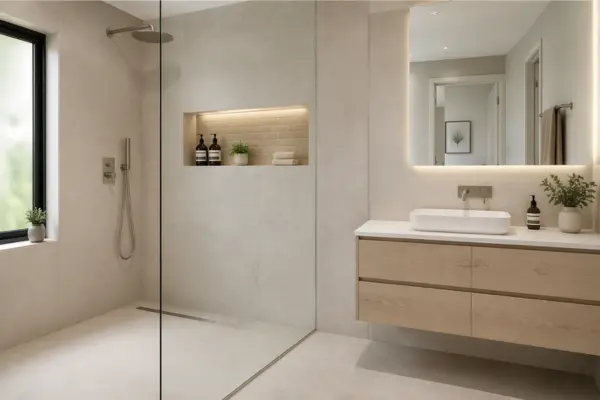
Why It Works
In a small bathroom, every protruding item matters. Shelves, racks, and storage caddies can quickly make the room feel cluttered. A wall niche solves this by creating storage inside the wall itself. It is especially useful in showers, above bathtubs, or beside a vanity.
I often recommend this idea because it blends beauty with function so well. The niche can be subtle and simple, or it can be highlighted with a different tile to add a stylish detail.
Best for
This works best in shower areas, modern bathroom renovations, and bathrooms where surface clutter is a constant problem.
Styling Tips
Keep the niche tidy and avoid filling it with too many bottles. Match the inside tile to the wall for a seamless look, or use a feature tile to make it stand out softly. Add only a few well-chosen products so it feels neat and decorative.
8. Use Large Tiles to Reduce a Busy Look
Large tiles can make a small bathroom feel calmer and more spacious because they create fewer grout lines. When the eye sees fewer breaks across the walls or floor, the room looks smoother and less crowded. This simple choice can give even a compact bathroom a more polished, balanced appearance.
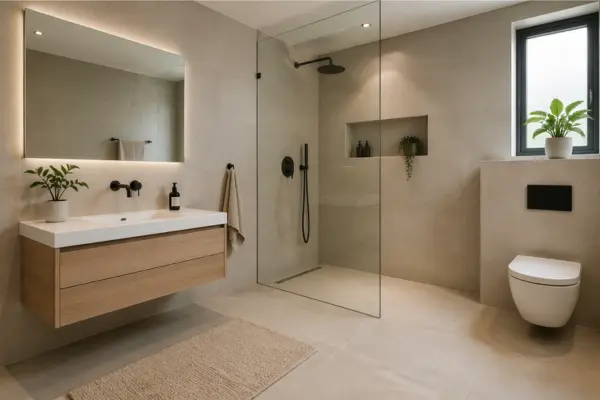
Why It Works
Many people assume small tiles belong in small bathrooms, but that is not always the best choice. Lots of small tiles create more lines, more pattern, and more visual activity. Large tiles simplify the look and make the room feel more unified.
This idea works especially well when you continue the same tile across the floor and part of the walls. That visual continuity helps the room feel longer and more open. It also gives the bathroom a clean, updated feel that is easy to live with.
Best for
This is best for modern bathrooms, medium-small bathrooms, and bathrooms that feel visually busy because of too many patterns or tile breaks.
Styling Tips
Choose tiles in soft neutral shades or stone-look finishes. Keep grout close in color to the tile for a smoother look. If you want a little contrast, let it come from hardware, mirrors, or textiles rather than from busy tile patterns.
9. Bring in Natural Materials for Warmth and Texture
Natural materials help a small bathroom feel more welcoming and less cold. Wood tones, woven baskets, stone finishes, and small plants add softness without taking over the room. This idea is excellent when you want the bathroom to feel fresh, calm, and lived in rather than purely practical.
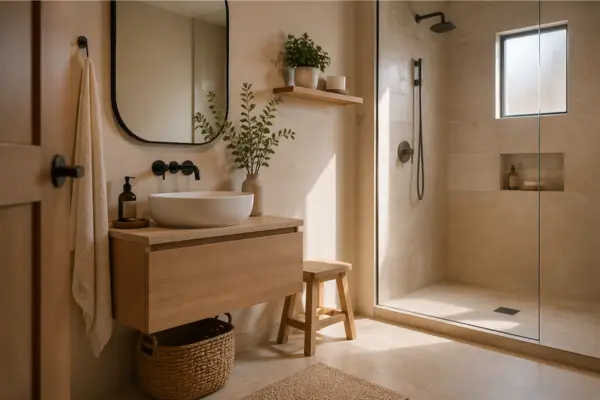
Why It Works
Many small bathrooms lean heavily on tile, glass, and metal. While these are useful materials, they can sometimes make the room feel hard or plain. Natural textures bring warmth and balance. They soften the overall look and help the bathroom feel more personal.
Even a few small touches can change the mood of the space. A wood stool, a woven storage basket, or a simple plant on a shelf can make the room feel styled in a very relaxed and natural way.
Best for
This works beautifully in modern rustic bathrooms, soft minimalist spaces, and any bathroom that feels too cold or plain.
Styling Tips
Use natural touches in moderation. A little goes a long way in a small room. Stick to moisture-friendly pieces and finishes, and keep the palette soft and earthy. Greenery, pale wood, and cream textiles are a lovely combination for this look.
10. Choose a Sliding or Pocket Door to Save Space
A sliding or pocket door can free up valuable room in a small bathroom because it removes the need for a traditional swinging door. That extra space can improve movement, make fixture placement easier, and help the whole layout feel less tight. It is a very practical change with lasting benefits.
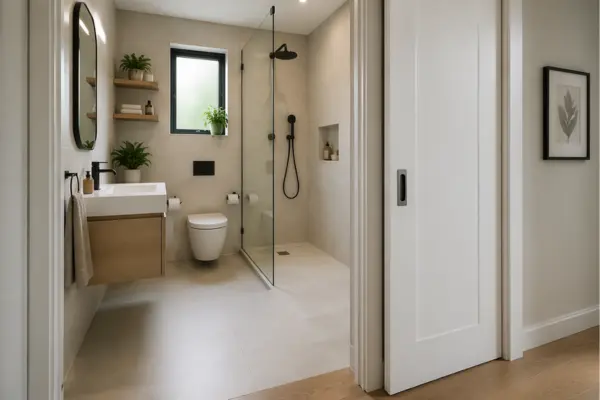
Why It Works
Standard doors need a clear swing area, and in small bathrooms that can become a real limitation. It can affect where you place the sink, vanity, storage, or even towel hooks. A sliding or pocket door removes that problem and gives you more freedom with the layout.
This change is often overlooked, but it can have a big impact. In bathrooms where every inch matters, a better door solution can make the room feel far more usable without changing the basic room size.
Best for
This is best for very compact bathrooms, en-suites, narrow layouts, and bathrooms where the door opens directly into fixtures.
Styling Tips
Choose a door style that matches the rest of the home. A simple painted sliding door suits modern and classic spaces alike. Keep the hardware understated and strong. If privacy matters, make sure the door closes securely and fits the opening well.
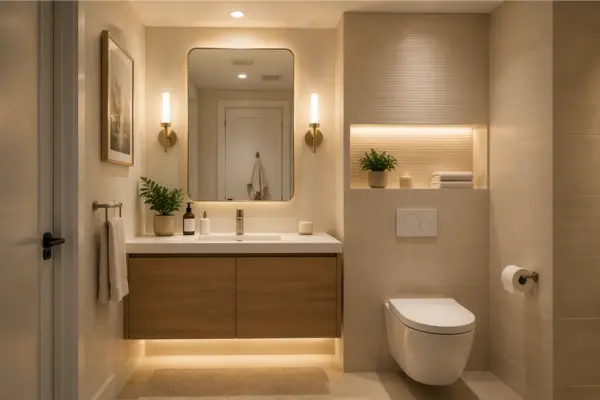
11. Layer the Lighting for a Brighter and More Balanced Room
Layered lighting makes a small bathroom feel more comfortable, more useful, and much more polished. Instead of relying on one ceiling light, this approach combines different light sources for better brightness and mood. It helps with daily tasks while also making the room look softer, warmer, and more complete.
Why It Works
Poor lighting can make even a nicely designed bathroom feel small and flat. A single overhead light often creates shadows, especially around the mirror. Layered lighting fixes that by spreading light more evenly around the room.
I always encourage a mix of task lighting and general lighting. Good mirror lighting helps with grooming, while ceiling lighting keeps the room bright overall. In some bathrooms, soft accent lighting can also add a calm and welcoming feel, especially in the evening.
Best for
This is ideal for windowless bathrooms, older bathrooms with poor lighting, and any bathroom that feels dull or shadowy.
Styling Tips
Use warm white lighting for a comfortable feel that still looks clean. Add wall sconces beside the mirror if space allows, or choose a mirror with built-in light. Avoid harsh bulbs that make the bathroom feel cold or overly bright.
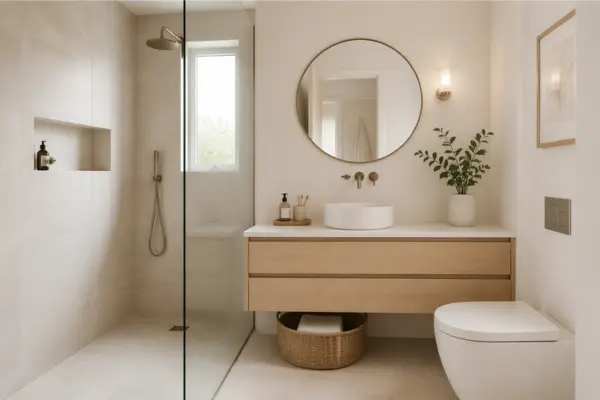
12. Keep the Layout Simple and Free from Clutter
A simple layout helps a small bathroom feel calmer, cleaner, and easier to use every day. When too many items fight for attention, the room quickly feels cramped. A more minimal approach allows the main features to stand out and gives the bathroom a neat, balanced look that feels instantly better.
Why It Works
Clutter is one of the fastest ways to ruin a small bathroom. Too many products, too many decorative objects, or too many storage pieces can make the room feel stressful. Keeping the layout simple allows the bathroom to breathe.
This does not mean the room has to feel empty or plain. It simply means every piece should earn its place. When the layout is clear and the surfaces are mostly tidy, the bathroom feels larger and more peaceful.
Best for
This is best for all small bathrooms, especially busy family bathrooms and bathrooms with very limited storage.
Styling Tips
Keep only daily-use items out in the open. Store the rest behind doors, in baskets, or inside drawers. Use a tray for essentials near the sink so they look organized. Choose one or two decorative touches instead of several small items.
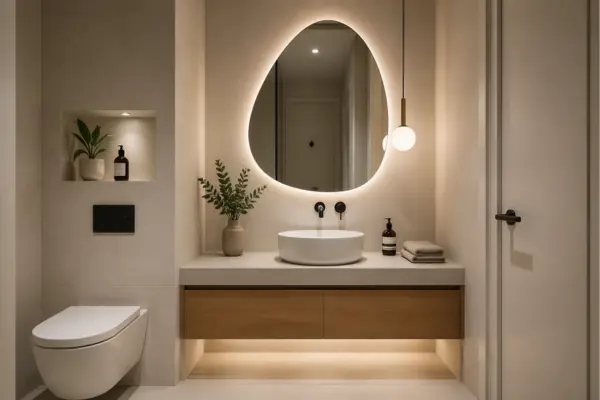
13. Add One Statement Feature for Character
A small bathroom also deserves personality, and one strong statement feature can give it charm without overwhelming the space. This could be a bold mirror, a feature wall, a beautiful light fitting, or striking hardware. One focused design choice adds style while keeping the room balanced and realistic.
Why It Works
When decorating a small bathroom, people sometimes play it too safe and end up with a room that feels flat. A statement feature gives the bathroom a clear point of interest. Because the room is small, you do not need many standout elements. One is usually enough.
The key is to keep the rest of the space fairly simple. That way, the statement piece gets attention without making the room feel crowded. This approach works especially well when you want the bathroom to feel memorable but still practical.
Best for
This is ideal for guest bathrooms, cloakrooms, and small bathrooms that already have a simple layout and need more personality.
Styling Tips
Choose only one main feature. It could be patterned tile behind the vanity, a sculptural mirror, or elegant brass fixtures. Let that be the star, and keep surrounding colors and accessories more restrained so the look stays balanced.
Mistakes to Avoid in a Small Bathroom
A small bathroom can look beautiful, but it can also go wrong very quickly when the wrong choices are made. I have seen many compact bathrooms lose their charm because of clutter, poor lighting, or oversized fixtures. The goal is not to fill every corner. The goal is to make the space feel comfortable, practical, and visually calm.
Using Oversized Fixtures
Large vanities, deep cabinets, and bulky toilets can make a small bathroom feel much tighter than it really is. Even if a piece looks attractive on its own, it may not suit the room. Always check the scale of each fixture before choosing it. A slimmer design usually works better and gives the room more breathing space.
Ignoring Storage Needs
Some people focus only on style and forget that a bathroom still needs to function well. Without enough storage, daily items end up on the sink, the toilet top, or the floor. This makes the room feel messy very quickly. Even a small bathroom needs smart storage solutions that keep clutter under control.
Choosing Too Many Patterns
Pattern can be beautiful, but too much of it in a small bathroom can feel overwhelming. Busy tiles, bold wallpaper, patterned towels, and decorative accessories can all compete with each other. It is better to choose one area for visual interest and keep the rest more relaxed. This creates a cleaner and more thoughtful result.
Keeping Poor Lighting
A beautiful bathroom will never look its best in bad light. Dim lighting, harsh bulbs, or a single ceiling fixture can make the room feel dull and uncomfortable. Good lighting should support daily tasks while also making the bathroom feel brighter and more inviting. This is one area that is always worth improving.
Filling Every Surface with Decor
Decor should add charm, not chaos. A small bathroom does not need many styling pieces to look complete. Too many candles, trays, jars, plants, and ornaments can quickly make the room feel crowded. Keep styling simple and choose only a few practical and attractive pieces.
Forgetting About Everyday Movement
A bathroom may look nice in photos, but it still has to work in real life. If the door hits the vanity, if the sink blocks movement, or if storage is hard to reach, the room will feel frustrating every day. Always think about how people move through the space before finalizing the layout.
Conclusion
A small bathroom may be limited in size, but it does not have to feel limited in style or comfort. With the right ideas, even a compact space can feel fresh, useful, and beautifully put together. Over the years, I have found that the best small bathrooms are the ones that balance practical choices with a warm and thoughtful design approach.
The most important thing is to work with the room rather than against it. Choose fixtures that fit the layout, use storage wisely, keep the palette balanced, and avoid unnecessary clutter. You do not need to use every idea at once. In fact, small bathrooms usually look best when a few strong ideas are carried out well.
Start with the changes that will make the biggest difference in your own space. That might be better lighting, a larger mirror, a floating vanity, or simply a cleaner color palette. Once those basics are in place, the room will already feel more open and more polished. From there, you can add warmth, texture, and personality in a way that feels natural and easy to maintain.
A well-decorated small bathroom is never just about looks. It should also make daily life smoother. When the room is easy to use, easy to clean, and pleasant to be in, that is when you know the design is truly working.
FAQs
Small bathrooms often bring up the same questions, especially when you want the space to feel larger without making costly mistakes. These answers cover the most common concerns in a simple and practical way.
What colors make a small bathroom look bigger?
Light shades usually work best. White, soft grey, pale beige, warm cream, and light earthy tones can all help reflect light and make the bathroom feel more open. You can still add contrast, but it is usually better to keep the larger surfaces light and bring in darker tones through small accents.
Is a floating vanity really better for a small bathroom?
In many cases, yes. A floating vanity helps the room feel less heavy because it shows more floor underneath. This creates a more open look and makes cleaning easier too. It is especially useful in modern or narrow bathrooms where visual space matters.
Should I use small tiles or large tiles in a small bathroom?
Large tiles are often the better choice. They create fewer grout lines, which helps the room feel calmer and less busy. Small tiles can still work in certain areas, but if you want the bathroom to feel more spacious overall, larger tiles usually give a smoother and more open effect.
How can I add storage without making the bathroom look crowded?
The best approach is to use vertical storage, recessed niches, wall-mounted shelves, and compact cabinets. Try to keep the floor as clear as possible. Storage that uses height or hidden areas will help the bathroom stay organized without making it feel blocked.
Are dark colors always a bad idea in a small bathroom?
Not always, but they need to be used carefully. Dark colors can add depth and drama, but too much can make a tight bathroom feel smaller. If you like darker tones, use them in a balanced way, such as on one wall, in hardware, or through accessories, while keeping the rest of the room lighter.
What is the biggest mistake people make in a small bathroom?
The biggest mistake is trying to fit too much into the room. Oversized furniture, too many decor pieces, poor storage, and busy patterns can all make the bathroom feel cramped. A small bathroom works best when every item has a purpose and the layout stays simple.
Can I still make a small bathroom feel stylish on a budget?
Yes, absolutely. Some of the best changes are also the simplest. A large mirror, fresh paint, better lighting, tidy storage, and a few natural accessories can improve the room a lot without needing a full renovation. Good styling is often more about smart choices than big spending.
Which idea should I start with first?
Start with the area that creates the biggest daily problem. If the bathroom feels dark, improve the lighting. If it feels messy, fix the storage. If it looks cramped, look at the vanity, mirror, or shower divider first. The best starting point is always the one that improves both function and appearance.