
17 Bedroom Wardrobe Design Ideas That Look Beautiful and Work in Real Homes
Choosing the right wardrobe can completely change the way a bedroom looks and feels. In my experience, a good wardrobe should do three things well. It should give you the storage you need, suit the size of your room, and add to the overall style of the space. When those three things come together, the bedroom feels calmer, cleaner, and far more comfortable to use every day.
In this guide, I am sharing 17 bedroom wardrobe design ideas that are practical, attractive, and realistic for different homes. I have included a mix of small, normal, and large bedroom solutions so you can find an idea that fits your layout, your storage needs, and your personal style. After that, I will walk you through common mistakes to avoid, along with helpful answers to questions many homeowners ask before choosing a wardrobe design.
1. Floor-to-Ceiling Built-In Wardrobe
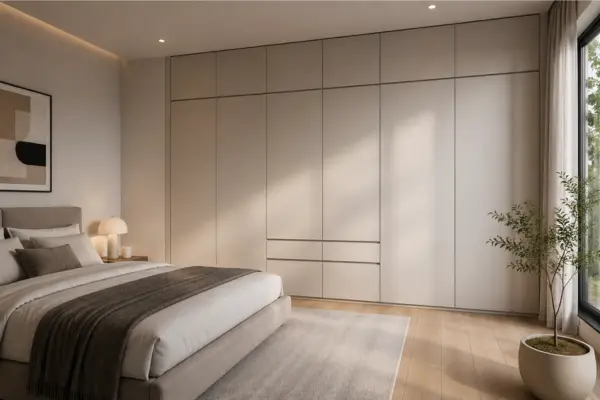
A floor-to-ceiling built-in wardrobe is one of the smartest choices for a bedroom that needs serious storage without looking messy. It fills the full wall height, creates a seamless finish, and makes the room feel more planned. This design works especially well when you want a neat, fitted look that feels custom.
Why it works
This design uses every bit of vertical space, which is especially helpful when floor area is limited. Instead of leaving a dusty gap above the wardrobe, you turn that unused section into valuable storage. It also makes the room feel taller and more polished because the wardrobe looks like part of the architecture rather than a separate piece of furniture.
Best for
It is best for medium and large bedrooms, or for smaller rooms where you need as much storage as possible. It is also ideal for families, couples, or anyone who has seasonal clothes, bedding, bags, and accessories to store in one place.
Styling Tips
Choose simple doors in matte or wood finishes to keep the look calm and timeless. Use upper cabinets for less-used items and keep daily essentials at eye level. If the wardrobe is large, break it visually with vertical panels or subtle handle lines so it does not feel too heavy in the room.
2. Sliding Door Wardrobe with Mirror Panels
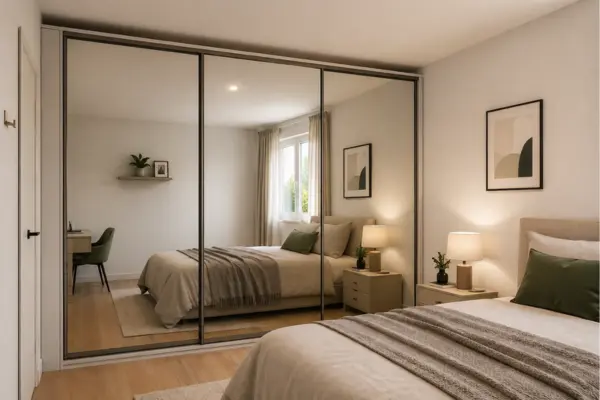
A sliding wardrobe with mirror panels is one of the most practical designs for modern bedrooms. It saves space, adds light, and gives the room a clean and elegant feel. Because the doors slide instead of opening outward, the layout stays easier to manage, especially in compact bedrooms.
Why it works
The biggest advantage is space-saving function. You do not need extra room in front of the wardrobe for doors to swing open. The mirror panels also reflect light and create the feeling of a larger room, which makes a noticeable difference in smaller bedrooms with limited natural light.
Best for
This design is best for small bedrooms, narrow rooms, apartments, and any layout where bed placement leaves little clearance in front of the wardrobe. It also works well for people who want a full-length mirror without adding another item to the room.
Styling Tips
Keep the frame slim and simple so the mirrors feel modern rather than bulky. Pair this wardrobe with light wall colors, soft curtains, and minimal furniture to increase the open feeling. If full mirrors feel too strong, go for mixed panels with mirror and plain finishes together.
3. Open Wardrobe with Minimal Frame
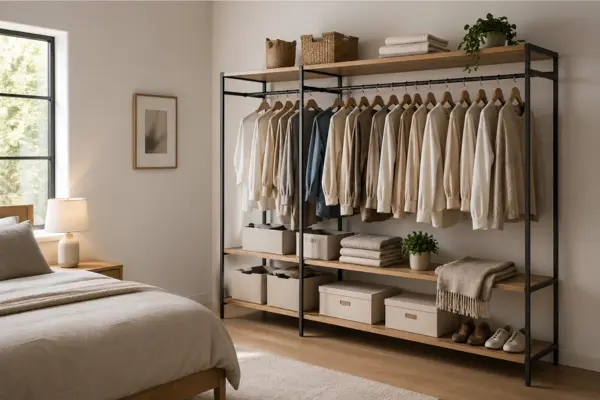
An open wardrobe with a minimal frame creates a fresh, casual, and modern bedroom look. It keeps clothing and accessories visible and easy to reach, which many people enjoy in everyday use. When styled well, it can feel light, stylish, and very personal without taking over the room.
Why it works
This wardrobe keeps the room visually open because it does not have heavy shutters or bulky doors. It is often easier on the budget and can make daily routines quicker since everything is in sight. It also works well when you want your wardrobe to feel like part of the room decor.
Best for
It is best for small bedrooms, studio spaces, guest rooms, or for anyone who prefers a simple and more flexible storage setup. It is especially useful for people with a smaller clothing collection or those who enjoy keeping everything well edited and tidy.
Styling Tips
Use matching hangers, storage boxes, and baskets to keep the setup looking intentional. Do not overcrowd the rails, or the whole space will feel messy. Add one or two decorative touches, such as a small plant, a folded throw, or a neat stack of storage baskets, to soften the practical look.
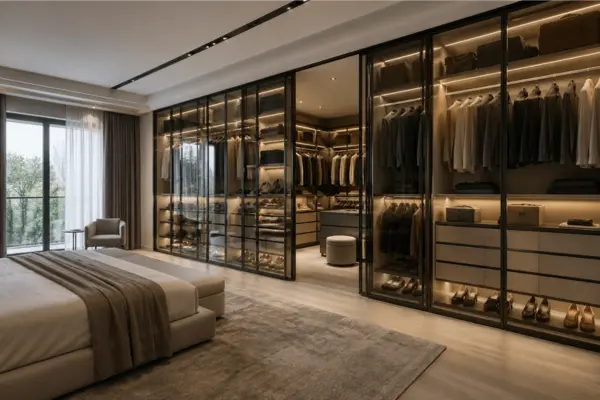
4. Walk-In Wardrobe with Glass Doors
A walk-in wardrobe with glass doors brings a luxurious and organized feel to a bedroom. It creates a separate dressing zone while still keeping everything visible and beautifully displayed. This design feels elegant, polished, and very functional when you have enough room to dedicate space to storage and dressing.
Why it works
Glass doors help the wardrobe feel lighter and more refined than solid cabinetry. They allow you to see what is inside while protecting clothes from dust. This design also adds a boutique-style quality to the room, making everyday dressing feel more comfortable and better organized.
Best for
It is best for large bedrooms, master suites, and homes with extra space for a dedicated dressing area. It suits homeowners who want both style and function and who like the idea of having clearly divided sections for clothes, shoes, accessories, and personal items.
Styling Tips
Use warm internal lighting so the wardrobe glows softly instead of looking stark. Choose tinted or fluted glass if you want a more forgiving finish that hides visual clutter slightly. Keep the inside well arranged with similar colors grouped together for a clean and high-end look.
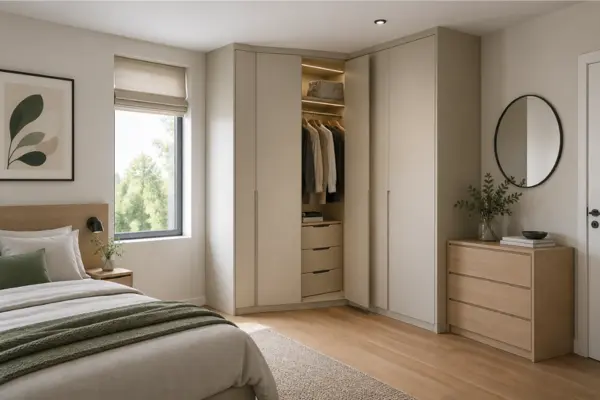
5. Corner Wardrobe for Unused Spaces
A corner wardrobe is a smart solution that turns an awkward or empty corner into useful storage. It helps make the most of the room without blocking important walking space. When designed properly, it can look neat and fitted while solving storage problems that standard wardrobes often miss.
Why it works
Corners often go unused in bedrooms because standard furniture does not fit them well. A corner wardrobe takes advantage of that dead space and improves the overall layout. It can also make the room feel more balanced by fitting into the shape of the walls rather than competing with them.
Best for
This design is best for small and medium bedrooms, unusual room layouts, and bedrooms with windows or doors that limit where a regular wardrobe can go. It is also useful in children’s rooms or guest bedrooms where smart planning matters more than large furniture.
Styling Tips
Choose a simple finish so the corner unit blends into the room instead of standing out too much. Add internal shelves, hanging space, and drawers to make the most of the shape. Keep the outside design clean because too many lines or handles can make a corner wardrobe look crowded.
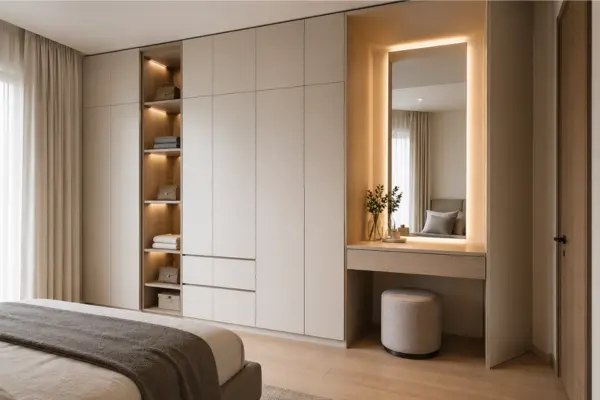
6. Wardrobe with Built-In Dressing Table
A wardrobe with a built-in dressing table is one of my favorite ideas for bedrooms where every inch matters. It combines storage and daily-use function in one well-planned unit. The result is a room that feels more organized, more practical, and much easier to use without extra furniture.
Why it works
This design saves space by combining two important bedroom needs in one layout. It creates a natural getting-ready area while keeping clothes, accessories, and personal items close at hand. It also helps reduce clutter because you do not need to squeeze in a separate vanity or desk.
Best for
It is best for small and medium bedrooms, especially in apartments or family homes where extra furniture can quickly make the room feel tight. It is also ideal for anyone who wants a simple morning routine with everything placed in one clear and useful zone.
Styling Tips
Add a mirror with soft lighting so the dressing area feels bright and comfortable. Use a small stool that tucks underneath when not in use. Keep the dressing section visually lighter than the wardrobe by using open shelving, a floating top, or a contrasting finish.
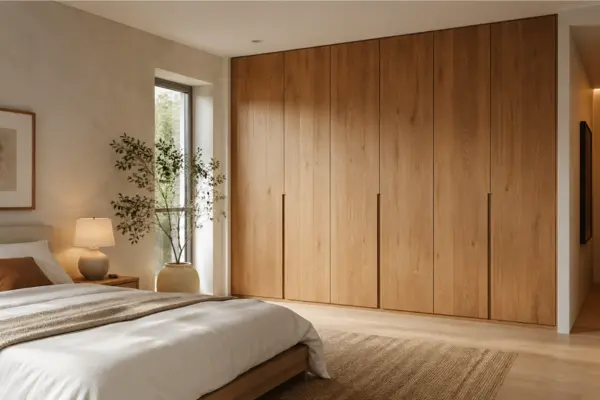
7. Wooden Wardrobe with Natural Finish
A wooden wardrobe with a natural finish brings warmth, texture, and timeless charm to a bedroom. It feels welcoming and grounded, and it works with many different decorating styles. This is one of those reliable designs that rarely goes out of fashion and suits both classic and modern homes.
Why it works
Natural wood adds character in a way that plain manufactured finishes often cannot. It softens the room and makes it feel more comfortable. It also pairs well with many colors and materials, which makes decorating easier over time if you want to update the room without replacing the wardrobe.
Best for
It is best for all bedroom sizes, depending on the wardrobe shape and scale. It works especially well in cozy bedrooms, neutral spaces, family homes, and interiors that lean toward modern organic, farmhouse, Scandinavian, or classic design.
Styling Tips
Pair natural wood with white bedding, soft rugs, and warm lighting for a balanced look. Avoid too many other heavy wood pieces in the room unless you want a rich traditional feel. If the wardrobe is dark wood, keep wall colors and curtains lighter to maintain visual balance.
8. Matte Finish Wardrobe in Soft Colors
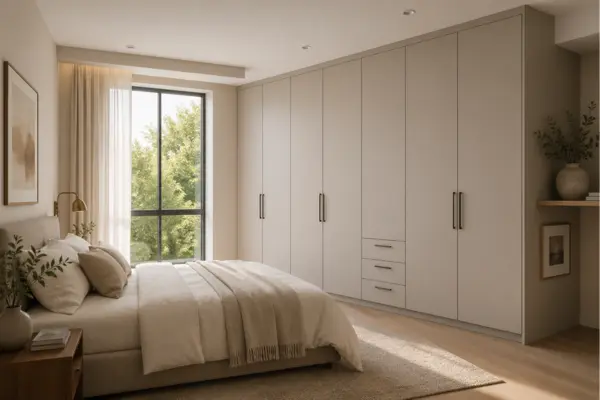
A matte finish wardrobe in soft shades gives a bedroom a calm and modern look. Colors such as beige, greige, soft grey, dusty green, and warm white make the room feel restful without appearing dull. This design is easy to live with and suits many different bedroom styles.
Why it works
Matte finishes feel softer and more relaxed than shiny surfaces. They reduce glare, hide fingerprints better, and create a clean, understated look. Soft colors also help the wardrobe blend into the room, which is especially useful if the wardrobe is large and you do not want it to dominate the space.
Best for
It is best for small, medium, and large bedrooms where a peaceful and polished look is the goal. It is especially good for people who prefer simple interiors and want a wardrobe that feels current without being too bold or trendy.
Styling Tips
Choose shades that connect with your wall color rather than fighting against it. Add texture through linens, throws, and rugs so the room does not feel flat. Black or brass handles can add contrast, but keep them simple so the soft and calm mood stays intact.
9. Wardrobe with Hidden Handles
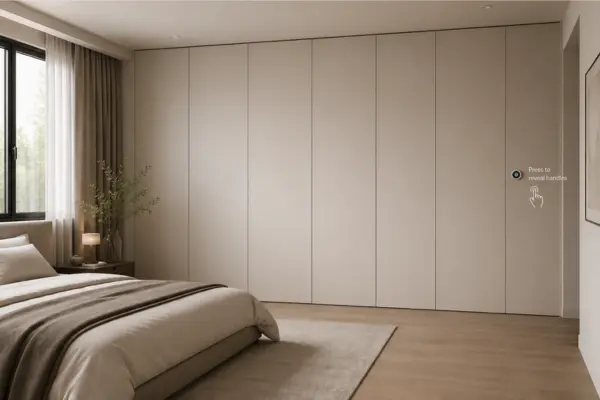
A wardrobe with hidden handles has a smooth, uninterrupted look that feels sleek and modern. It removes visual clutter and makes even a large storage unit feel more streamlined. This design is simple, stylish, and especially useful when you want the wardrobe to blend quietly into the room.
Why it works
Without visible handles, the wardrobe looks cleaner and more minimal. This can make a room feel calmer, especially if the wardrobe takes up a full wall. Hidden handle systems also work well in tight spaces because there are no knobs or pulls sticking out into walkways.
Best for
It is best for modern bedrooms, minimalist interiors, and small rooms where visual simplicity makes a big difference. It also suits homes with children because fewer projecting parts can make movement around the room safer and easier.
Styling Tips
Choose flat panel doors in matte finishes for the most seamless effect. Let texture, color, or lighting do the styling instead of decorative handles. Pair this wardrobe with clean-lined furniture, simple bedding, and uncluttered bedside tables to support the same polished look.
10. Glass Panel Wardrobe with Internal Lighting
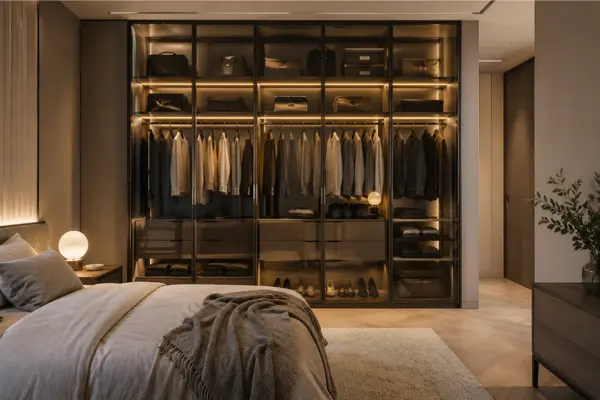
A glass panel wardrobe with internal lighting can turn simple storage into a standout design feature. It adds depth, glow, and a more refined look to the bedroom. When done well, it feels stylish without losing practicality, especially if you like keeping your wardrobe neatly arranged.
Why it works
The glass panels allow the wardrobe interior to become part of the room design. Internal lighting makes it easier to find items and adds a soft layered glow, which can improve the bedroom atmosphere. It also gives the wardrobe a custom feel that looks more expensive and thoughtfully designed.
Best for
This design is best for medium and large bedrooms where the wardrobe has enough breathing space to be appreciated visually. It is ideal for homeowners who keep things organized and want their clothing, shoes, or accessories to feel well presented.
Styling Tips
Use warm lights rather than cool white lights for a softer and more welcoming effect. Choose smoked, tinted, or ribbed glass if you want a slightly softer view of the contents. Keep the inside tidy with baskets, drawer inserts, and grouped clothing colors so it always looks appealing.
11. Compact Wardrobe for Small Rooms
A compact wardrobe designed for a small room proves that limited space does not have to mean poor storage. The key is smart internal planning and a simple outer design. A smaller wardrobe can still feel attractive and useful when it is built around the real needs of daily life.
Why it works
A compact wardrobe keeps the bedroom from feeling crowded while still providing storage for essentials. It forces a better use of space, often with a mix of hanging sections, drawers, and shelves placed exactly where they are most useful. This makes everyday use easier and more efficient.
Best for
It is best for small bedrooms, box rooms, children’s rooms, guest rooms, and apartment living. It is also a strong choice when the bedroom must hold other furniture such as a study desk, baby cot, or extra chest of drawers.
Styling Tips
Keep the wardrobe width practical rather than oversized. Use light colors or mirrored details to stop the room from feeling closed in. Inside, include adjustable shelves so the storage can change as your needs change instead of locking you into one arrangement.
12. Two-Tone Wardrobe Design
A two-tone wardrobe design adds visual interest without making the room feel busy. By combining two colors or finishes, you can create contrast, soften a large unit, or highlight certain sections. This style feels fresh and decorative while still being easy to live with every day.
Why it works
Using two tones breaks up the wardrobe visually, which is useful when the unit is wide or tall. It helps the design feel lighter and more intentional. The contrast can also connect the wardrobe to other parts of the room, such as the bed, flooring, or bedside furniture.
Best for
It is best for medium and large bedrooms, but it can also work in smaller rooms if the colors are soft and balanced. It suits homeowners who want a little more personality than a plain single-color wardrobe but still want something practical and long-lasting.
Styling Tips
Use one light shade and one medium or dark shade for a balanced result. Keep the stronger color on lower panels or side sections if you want the room to feel grounded. Repeat one of the wardrobe colors elsewhere in the room through textiles or decor for a connected look.
13. Wardrobe with Open Shelves on One Side
A wardrobe with open shelves on one side offers both hidden storage and display space in one design. It can make the wardrobe feel lighter while giving you room for daily essentials, decor, or books. This combination works especially well in bedrooms that need both function and personality.
Why it works
The open side breaks up the solid look of a full wardrobe and adds flexibility. It gives you easy access to items you use often while keeping less attractive storage behind closed doors. It also allows the wardrobe to feel more integrated with the rest of the room.
Best for
It is best for medium bedrooms, teen rooms, guest rooms, or master bedrooms where you want the wardrobe to do more than just store clothes. It also works well for people who enjoy styling small decorative items without needing a separate shelving unit.
Styling Tips
Do not overfill the open shelves. Leave some breathing room so the design feels light and tidy. Use baskets, folded linens, a framed print, or a small plant to make the shelves look finished. Keep the color palette simple so the display side does not become visually noisy.
14. Loft Wardrobe with Overhead Storage
A loft wardrobe with overhead storage is a practical design that adds valuable extra space above the main wardrobe section. It is especially useful in homes where storage is always needed. This type of wardrobe keeps everyday items below and less-used items up high, which helps the room stay organized.
Why it works
The overhead cabinets make use of wall height that often goes to waste. They are perfect for storing luggage, winter blankets, festive items, or clothes that are not needed year-round. This keeps the lower sections less crowded and helps the main wardrobe stay easier to manage.
Best for
It is best for small and medium bedrooms, family homes, and spaces with higher ceilings. It is also helpful for shared rooms where one wardrobe has to hold more than usual and every bit of storage matters.
Styling Tips
Keep the overhead section aligned with the wardrobe below so the whole unit looks neat and built in. Use simple shutters and calm colors to avoid a heavy appearance. If the room is small, choose the same color as the wall so the loft section blends in more easily.
15. Wardrobe with Textured Panels
A wardrobe with textured panels adds depth and interest without needing bright colors or strong patterns. It can feel subtle, stylish, and more custom than a plain flat wardrobe. Textures such as fluting, grooves, or panel detailing can make a simple wardrobe look much more thoughtfully designed.
Why it works
Texture creates visual richness while staying elegant and controlled. It gives the wardrobe character, especially in neutral bedrooms where you want more interest without adding clutter. It also helps large wardrobes feel less flat and boxy, which makes them more attractive as part of the room.
Best for
This design is best for medium and large bedrooms, but it can also work in smaller spaces if the texture is subtle. It suits modern classic, soft contemporary, and boutique-style interiors where details matter and a polished finish is important.
Styling Tips
Choose one strong texture and keep the rest of the room simpler so the wardrobe can stand out in a balanced way. Use soft lighting to highlight the panel details. Pair textured wardrobe doors with smooth bedding, plain walls, and minimal art for a clean and layered look.
16. Freestanding Wardrobe with Slim Design
A freestanding wardrobe with a slim design is a flexible and realistic choice for many homes. It offers storage without needing permanent fitting, which makes it useful for renters or anyone who prefers furniture they can move. When chosen carefully, it can look just as stylish as a built-in option.
Why it works
This design offers freedom and convenience. It can be moved, replaced, or repositioned more easily than fixed cabinetry. A slimmer shape also prevents the room from feeling overloaded, especially in smaller bedrooms where a deep and bulky wardrobe would take up too much visual and physical space.
Best for
It is best for rental homes, guest rooms, small to medium bedrooms, and spaces where flexibility matters. It also works for people who are decorating gradually and want a wardrobe solution that can adapt if they move or update the room later.
Styling Tips
Choose a wardrobe with clean lines, raised legs, or a lighter finish so it feels less bulky. Leave a little breathing room around it if possible instead of pushing lots of furniture tightly together. Style the top only if you can keep it minimal, otherwise leave it clear.
17. Wardrobe with Full-Length Mirror Door
A wardrobe with a full-length mirror door is a simple but highly effective bedroom design idea. It gives you storage and a practical mirror in one piece. It also helps the room look brighter and more open, which is especially useful in bedrooms that feel tight or a little dark.
Why it works
The mirror adds function without taking up extra wall or floor space. It reflects both natural and artificial light, which helps the room feel bigger and fresher. It also makes getting dressed easier because you have a full view without needing a separate standing mirror.
Best for
It is best for small bedrooms, apartments, and medium-sized rooms where every item needs to earn its place. It also suits simple and modern interiors where a clean, useful design is preferred over extra decorative furniture.
Styling Tips
Place the wardrobe where the mirror can reflect a window or open part of the room, not clutter. Keep the mirror clean so it always supports the room visually. Pair it with light curtains, tidy surfaces, and simple bedding to make the space feel even more open.
Mistakes to Avoid When Choosing a Bedroom Wardrobe
Choosing a wardrobe is not only about what looks good in a showroom or on a picture board. In real homes, the wrong wardrobe can make a room feel crowded, awkward, or frustrating to use. Over the years, I have seen the same mistakes happen again and again, and most of them can be avoided with better planning.
Ignoring the Room Size
One of the most common mistakes is choosing a wardrobe that is too large for the bedroom. A wardrobe may look beautiful on its own, but if it leaves little space for walking, opening drawers, or making the bed, the whole room becomes uncomfortable. Always measure the room carefully and think about movement around the bed and other furniture.
Focusing Only on the Outside Look
A stylish wardrobe front means very little if the inside does not suit your daily needs. Some people need more hanging space, while others need shelves, drawers, or storage for accessories and bedding. Before choosing the design, think about what you actually need to store and how you use those items every day.
Forgetting About Door Clearance
This is a mistake many beginners make. Hinged doors need enough space to open fully. If your bed, side table, or rug gets in the way, the wardrobe becomes annoying to use. In tighter layouts, sliding doors can be a much better option and often make the room more practical.
Choosing Dark Finishes for a Small Room Without Balance
Dark wardrobes can look rich and beautiful, but in a small room they can also feel heavy if the rest of the space is not balanced. If you love dark wood or deep colors, pair them with lighter walls, bright bedding, and good lighting so the room still feels open and comfortable.
Not Using Vertical Space Properly
Many bedrooms lose useful storage because the wardrobe stops too low and leaves empty space above. This gap often collects dust and wastes potential storage. If possible, choose a design that goes higher or includes overhead cabinets so the wall space works harder for you.
Adding Too Many Design Details
It is easy to get carried away with textures, mirrors, colors, open shelves, fancy handles, and display sections all at once. Too many features can make the wardrobe look busy and take away from the calm feeling a bedroom should have. Pick one or two strong design elements and let the rest stay simple.
Poor Internal Lighting
A wardrobe can look lovely on the outside and still be difficult to use if the inside is dark. This matters even more with deep wardrobes or designs placed away from natural light. Soft internal lighting or better room lighting can make a big difference in daily comfort.
Not Matching the Wardrobe to the Bedroom Style
Your wardrobe should feel like part of the room, not like something dropped into it. A very modern wardrobe may look out of place in a soft rustic bedroom, while a heavy traditional design may fight with a clean minimalist room. Try to match the wardrobe finish, lines, and overall mood to the style of your bedroom.
Conclusion
A bedroom wardrobe should do much more than hold clothes. It should support the way you live, improve the layout of the room, and add beauty without creating clutter. The best wardrobe designs are the ones that feel easy to use every day while still making the bedroom look calm, balanced, and thoughtfully styled.
Whether you are decorating a small bedroom, updating a family home, or planning a spacious master suite, there is always a wardrobe solution that can work beautifully. Some rooms need compact storage that stays light and simple. Others can handle larger statement pieces with glass panels, textured finishes, or full-height built-ins. The key is to choose a design that suits your room size, storage habits, and decorating style.
If you are unsure where to begin, start with the practical side first. Measure the room, think about how much storage you really need, and consider how you move around the space. Once that is clear, the design choices become much easier. In my experience, the most beautiful bedrooms are not the ones filled with the most expensive furniture. They are the ones where every piece feels useful, well placed, and naturally connected to the room.
FAQs
A good wardrobe choice can raise many small but important questions. Below are some of the ones people ask most often when planning a bedroom wardrobe.
What type of wardrobe is best for a small bedroom?
For a small bedroom, sliding door wardrobes, mirrored wardrobes, corner wardrobes, and compact built-in designs usually work best. These options save floor space and help the room feel more open. Light colors and simple finishes also make a small bedroom look less crowded.
Which wardrobe color makes a bedroom look bigger?
Soft and light shades such as white, beige, light grey, warm cream, and muted greige usually make a bedroom look bigger. Mirrored panels can also help by reflecting light. If you prefer darker colors, use them carefully and balance them with lighter walls and bedding.
Are sliding wardrobes better than hinged wardrobes?
Sliding wardrobes are often better for smaller rooms because they do not need extra space for the doors to open. Hinged wardrobes can still be a very good option in medium or large rooms, especially if you want full access to the inside at one time. The best choice depends on your layout.
How much space should I leave in front of a wardrobe?
You should leave enough space to move comfortably and open the wardrobe easily. In general, it is wise to keep a clear walking area in front of the wardrobe so daily use feels easy rather than tight. If your room cannot allow this, a sliding design may be the smarter choice.
Is a mirrored wardrobe a good idea?
Yes, a mirrored wardrobe is a very practical idea in many bedrooms. It gives you a full-length mirror, saves wall space, and helps reflect light. In smaller rooms especially, it can make the space feel brighter and more open without needing extra furniture.
What is the most timeless wardrobe style?
In my experience, simple built-in wardrobes, natural wood finishes, matte neutral colors, and clean lines tend to stay stylish the longest. Designs that are too trendy can date more quickly, while timeless wardrobes blend more easily with changing decor over the years.
Should a wardrobe match the bed exactly?
It does not need to match exactly, but it should feel connected to the room. The colors, finish, or overall style should work well with the bed and other furniture. A bedroom usually looks more polished when the furniture feels coordinated rather than perfectly identical.
Are open wardrobes practical for everyday use?
They can be practical if you are organized and do not have an overly full clothing collection. Open wardrobes work well for people who like easy access and a lighter visual look. However, they do need regular tidying, because everything remains visible all the time.
What should I store in overhead wardrobe cabinets?
Overhead cabinets are best for items you do not need every day. This includes luggage, extra bedding, winter blankets, festive decor, travel bags, and off-season clothes. Using these cabinets well helps keep the main wardrobe easier to manage and less cluttered.
How do I make my wardrobe look more expensive?
Choose clean lines, quality-looking finishes, well-planned lighting, and simple hardware. Keep the design uncluttered and make sure the wardrobe fits the room properly. Even a modest wardrobe can look far more expensive when it is styled well and the surrounding bedroom is kept calm and tidy.