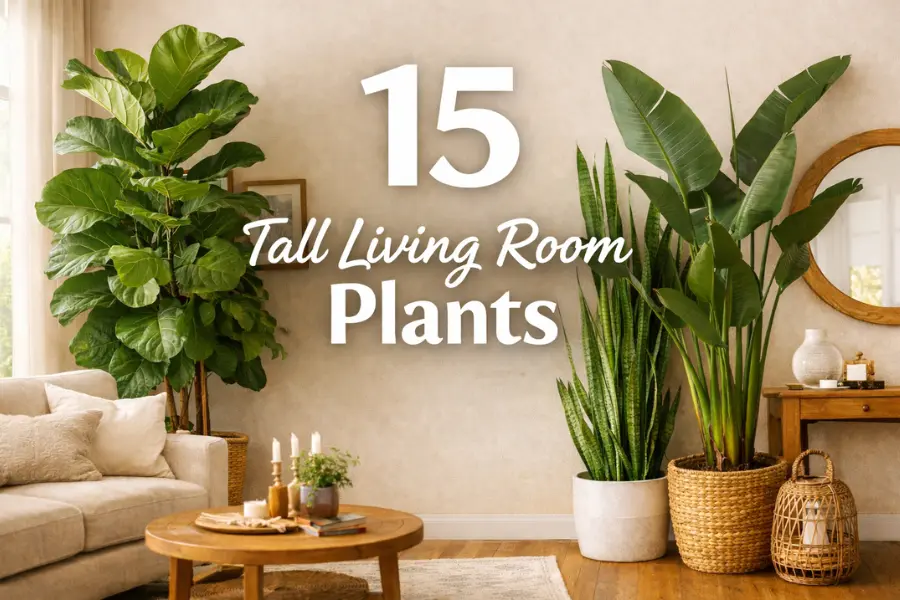
15 Decorating Ideas About Tall Living Room Plants
Tall living room plants do something that small accessories cannot do on their own. They bring height, shape, movement, and a fresh natural feeling into the room. A tall plant can fill an empty corner, soften a hard furniture layout, or become the one feature that makes the whole space feel finished. Design sources and plant guides also point out that tall indoor plants work especially well as focal points, statement pieces, and room-balancing elements, especially in bright corners, near windows, and in open living spaces.
In this guide, I have turned the plant inspiration from the pages you shared into 15 decorating ideas that feel practical, stylish, and easy to picture in a real home. I am not just listing plant names. I am showing how each one can be used in a living room, what you need to make it work, and how to begin in a simple, beginner-friendly way. The ideas are based on plants and care details featured across Wood Pulse, Houseplant UK, Veranda, and MyDomaine, including fiddle-leaf fig, monstera, rubber plant, bird of paradise, dracaena, palms, olive tree, money tree, weeping fig, African milk tree, Meyer lemon tree, and more.
Step 1. Fill an Empty Sunny Corner With a Fiddle-Leaf Fig
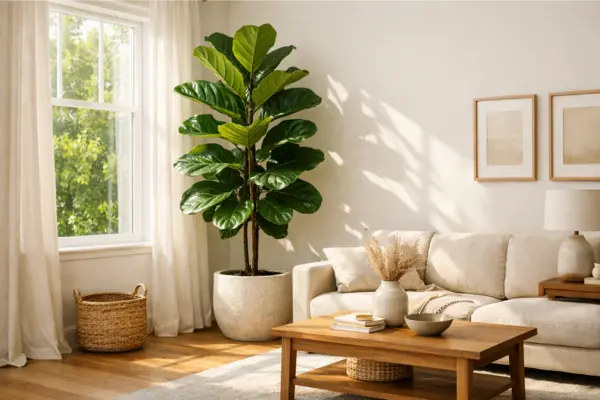
A fiddle-leaf fig is one of the best choices when your living room has a bright corner that feels bare and awkward. This plant grows upward more than outward, and its large glossy leaves naturally pull the eye up. That is why it works so well in rooms with standard or high ceilings where you want to add height without adding bulky furniture. Both Wood Pulse and MyDomaine highlight it as a dramatic indoor plant that needs plenty of bright light and can grow several feet tall indoors.
Items Needed
You need a healthy fiddle-leaf fig, a sturdy pot with drainage, a saucer or plant stand, and a spot near a sunny window with bright light. A woven basket cover also works well if you want the plant to feel softer and more decorative in the room.
How to Start With This Idea
Begin by choosing the brightest open corner in your living room. Keep the plant close enough to the window to get strong light, but avoid moving it around too often because fiddle-leaf figs do not enjoy sudden changes in light or temperature. Once it is placed, style the base simply with a clean pot and let the plant do the visual work on its own.
Step 2. Place a Rubber Plant Beside the Sofa to Soften Straight Furniture Lines
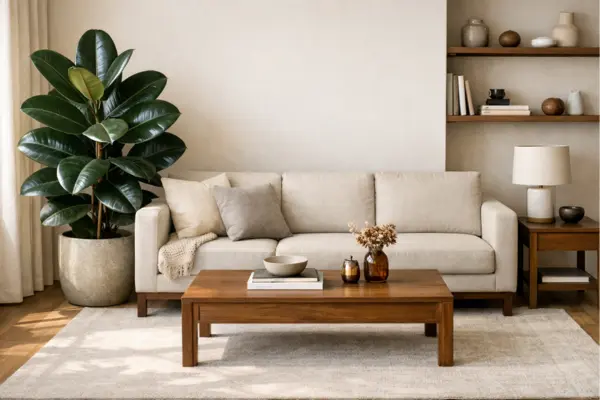
A rubber plant is a smart choice when your sofa, coffee table, and shelving all have hard edges and straight lines. Its dark glossy leaves make the room feel richer, and the softer rounded leaf shape balances more structured furniture. Wood Pulse notes that rubber plants are resilient indoor plants with glossy foliage, while Veranda points to the striking leaf color of the burgundy type and its ability to grow tall indoors.
Items Needed
You need a rubber plant, a medium to large planter with drainage, and a place beside or just behind the side of a sofa where the leaves will not be bumped too often. If your living room has warm wood furniture, a pot in black, cream, or terracotta usually looks especially good.
How to Start With This Idea
Set the plant slightly to one side of the sofa instead of centering it directly behind a seat cushion. That keeps the layout feeling relaxed. If you want a richer look, choose a burgundy rubber tree because the deep red and green tones pair beautifully with walnut wood, oak tones, and tan leather.
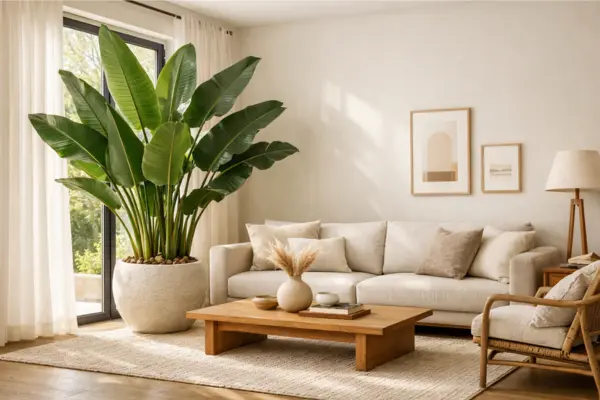
Step 3. Use a Bird of Paradise as a Bold Tropical Focal Point
When you want one plant to instantly change the mood of the living room, bird of paradise is one of the strongest choices. It has long blade-like leaves, a bold upright shape, and a tropical presence that makes even a simple room feel more layered. Wood Pulse lists it as a large foliage plant for a tropical effect, and MyDomaine notes that it can grow to about five feet indoors with enough sun.
Items Needed
You need a mature bird of paradise, a large pot with drainage, and a bright area near a big window. A simple neutral planter works best because the leaves already make a strong statement.
How to Start With This Idea
Place the plant where it can get strong light every day. This idea works best when the plant has room around it so the leaves can spread naturally. Do not crowd it with too many side tables or small accessories. Let it stand on its own and treat it like a natural piece of living room art.
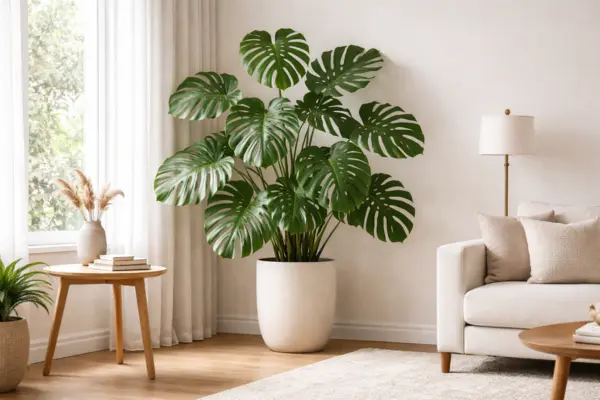
Step 4. Style a Monstera in an Open Corner Where It Can Spread
Monstera is perfect for a living room that has a little extra floor space. Unlike plants that only grow tall, monstera grows both up and out, which makes it ideal for filling open corners in a fuller, more relaxed way. Wood Pulse and MyDomaine both describe monstera as a lush statement plant with split leaves that brings a jungle-like feel indoors.
Items Needed
You need a monstera, a wide pot with drainage, and an open corner with bright indirect light. It also helps to have enough clearance around the plant so the leaves do not press into walls or furniture.
How to Start With This Idea
Start by choosing a corner near a bright window, but not in harsh direct sun all day. Give the plant space on both sides so it can grow into the room. If you want the area to feel even more layered, pair it with one smaller trailing plant nearby rather than another large floor plant.
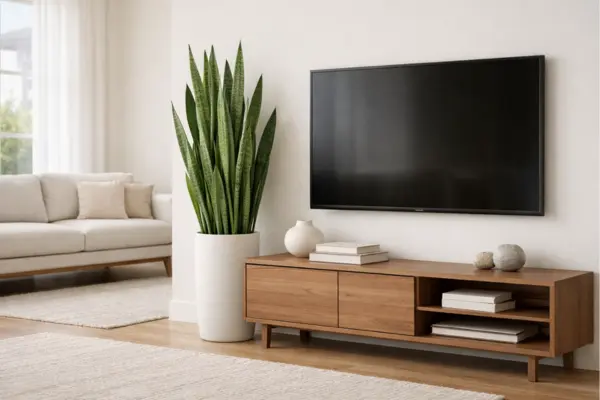
Step 5. Add a Snake Plant Beside a Media Unit for a Clean Modern Look
A snake plant works beautifully in a modern living room because the leaves are upright, narrow, and tidy. It adds height without making the space look crowded. Wood Pulse describes it as a hardy beginner-friendly plant with upright sword-like leaves, which makes it especially useful beside low furniture such as media units or console cabinets.
Items Needed
You need a taller snake plant, a slim pot with drainage, and a narrow spot beside a media unit, bookshelf, or cabinet. A matte ceramic planter usually suits this look very well.
How to Start With This Idea
Choose a spot where the plant can stand upright without blocking the TV or walking space. Because snake plants are slow-growing and forgiving, this is one of the easiest ideas for beginners. Keep the styling simple and let the strong vertical lines make the room feel more polished.
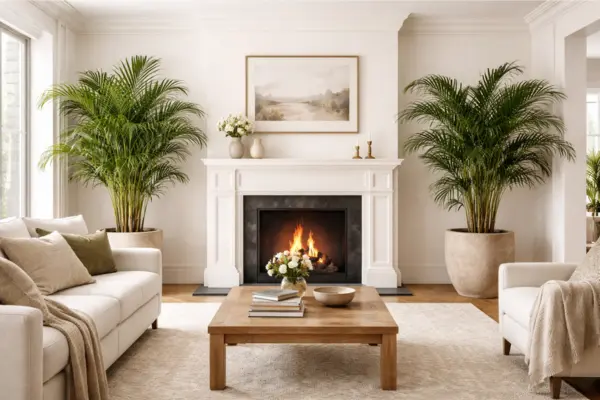
Step 6. Frame a Fireplace With Matching Palms
A pair of palms can make a fireplace wall look balanced and complete. Palms bring a soft feathery shape, so they are especially useful when the fireplace surround, mantel, or wall art feels too heavy or stiff. Wood Pulse includes areca, bamboo, majesty, kentia, and parlor palms among the best tall indoor plants, each suited to slightly different light conditions.
Items Needed
You need two matching palms or two very similar planters, plus enough floor space on both sides of the fireplace. Choose kentia or bamboo palm if your room is not extremely bright, and choose areca or majesty palm if the fireplace wall gets more light.
How to Start With This Idea
Measure the space on both sides first so the setup feels balanced. Use planters in the same color or material, then place the palms a little away from the fireplace itself so they do not feel squeezed into the wall. This idea works best when the plants mirror each other without looking too stiff.
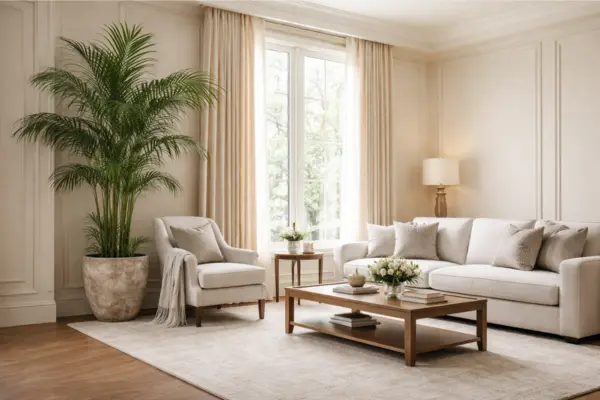
Step 7. Put a Kentia Palm in a Formal Living Room
Kentia palm has a graceful shape that suits more elegant interiors. If your living room has classic furniture, tailored curtains, or a calm neutral palette, this palm fits right in. Wood Pulse describes it as elegant and arching, while MyDomaine notes that it can handle low to bright indirect light and prefers to dry out a bit between waterings.
Items Needed
You need a kentia palm, a refined planter, and a calm open area where the leaves can arch without touching too many things. This plant looks especially good near a window seat, reading chair, or formal coffee table arrangement.
How to Start With This Idea
Start with a simple pot in black, stone, or antique brass tones. Keep the surrounding decor neat and not too busy. A kentia palm already has a graceful shape, so it works best when the room around it gives it space to breathe.
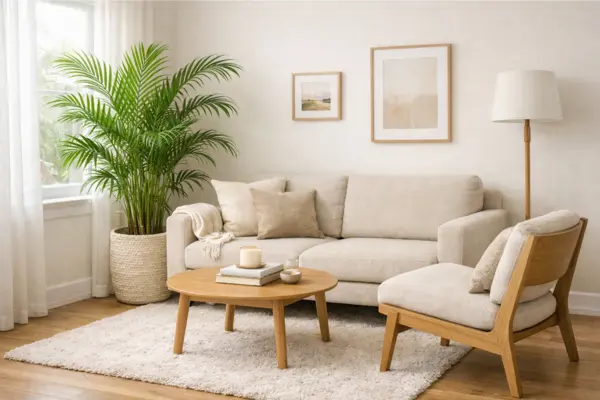
Step 8. Use a Parlor Palm in a Smaller Living Room
Parlor palm is ideal when you love the palm look but do not have a huge room. MyDomaine notes that it stays more compact and is a great choice for lower ceilings or smaller spaces, while Wood Pulse highlights its elegant look and adaptability.
Items Needed
You need a parlor palm, a medium planter, and a corner or side area that needs softness more than dramatic height. This is a good pick for apartment living rooms or homes where the furniture already fills much of the floor space.
How to Start With This Idea
Place it near a window with filtered light, or in a bright area where the light is not too harsh. If your room feels tight, use a plant stand that lifts the pot slightly and helps the space feel lighter. This is one of the easiest ways to make a small living room feel styled without making it feel crowded.
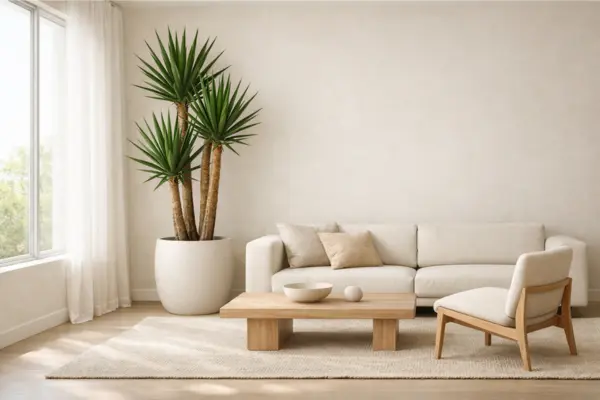
Step 9. Place a Yucca Near Minimal Furniture for a Sculptural Look
Yucca has a sharper, more architectural shape than softer tropical plants. Its tall stems and sword-like leaves make it feel sculptural, which is why it works so well in clean, modern spaces. Wood Pulse describes yucca as drought-tolerant and striking, and Houseplant UK includes yucca elephantipes among its large and tall indoor plants.
Items Needed
You need a yucca, a clean-lined planter, and a living room area with enough sunlight to support it. This idea works best when the surrounding furniture is simple and not heavily decorated.
How to Start With This Idea
Set the plant in a bright spot and keep the styling around it minimal. Think one accent chair, one side table, or one clean bench nearby. Yucca already has a strong form, so it looks best when it is not fighting with too many patterns or accessories.
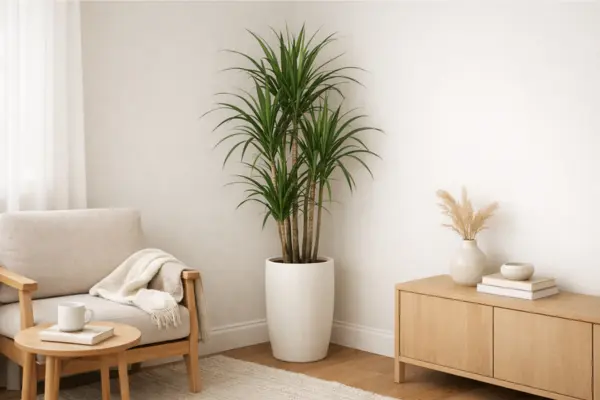
Step 10. Add a Dracaena to a Dull Corner That Needs Height but Not Bulk
Dracaena is excellent when you need a plant that feels tall and elegant without becoming too wide. Wood Pulse notes its slender leaves and easy-care nature, and MyDomaine explains that corn plant and dragon tree types can grow tall while still adapting to lower light than some other statement plants.
Items Needed
You need a dracaena or corn plant, a pot with drainage, and a narrow corner that needs visual lift. This is a great option beside a bookcase, cabinet, or accent chair.
How to Start With This Idea
Start in a bright indirect light area, but do not worry if the corner is not the sunniest point in the room. Dracaena is more forgiving than many large statement plants. Choose a pot that does not add too much width, and let the tall stems draw the eye upward.
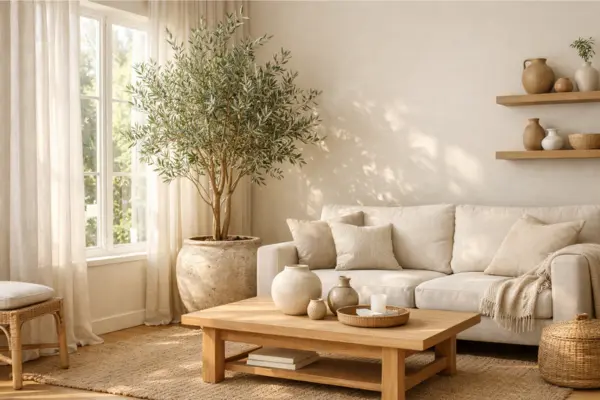
Step 11. Set an Olive Tree Near a Bright Window for a Mediterranean Feel
An olive tree gives a living room a light, airy, collected look. Veranda describes its sage-colored leaves and silvery branches as sophisticated, and notes that it prefers full sun and very well-drained soil. That makes it perfect for a living room with a truly sunny window and a calm neutral color palette.
Items Needed
You need an olive tree, a pot with strong drainage, cactus mix or similarly free-draining soil, and a sunny south-facing or very bright window area. A clay or stone-look pot suits this style beautifully.
How to Start With This Idea
Place the olive tree where it can get several hours of sunlight. Keep the surrounding decor soft and simple with linen textures, pale woods, and warm neutrals. This is one of the easiest ways to give a living room a relaxed Mediterranean character without doing a full makeover.
Step 12. Place a Money Tree in an Entry-Side Corner for a Warm Welcome
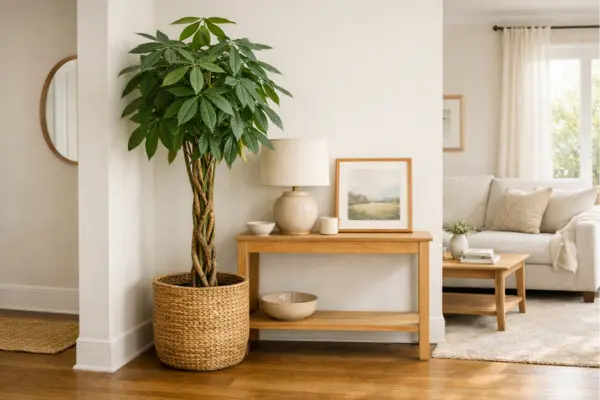
Money trees have a cheerful shape and often come with braided trunks, which gives them extra visual interest even before you notice the leaves. MyDomaine notes that they can grow up to about six feet indoors and like bright indirect light and humidity, while Veranda also highlights them as easy to care for.
Items Needed
You need a money tree, a planter with drainage, and a bright spot near the living room entrance or beside a console table. This idea works especially well when you want your room to feel welcoming right away.
How to Start With This Idea
Place the money tree where it is visible as soon as someone enters the room, but not in a drafty doorway. Keep the styling nearby simple with one lamp, one tray, or one framed piece of art. The braided trunk gives enough texture, so you do not need much else around it.
Step 13. Use a Ficus Alii Braid in a Room That Needs a Softer Tree Shape
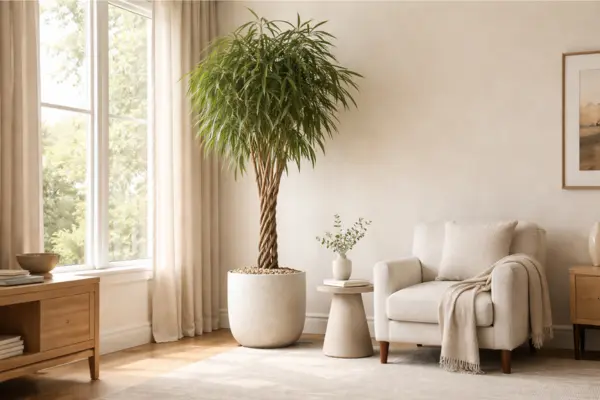
Ficus alii braid is a lovely option when you want an indoor tree look without the wide heavy leaves of a fiddle-leaf fig. Veranda describes it as more forgiving and less prone to leaf drop than some other ficus types, with slender green leaves and a softer silhouette.
Items Needed
You need a ficus alii braid, a sturdy floor planter, and a bright location with indirect light and a little direct sun if possible. This plant suits transitional or modern classic interiors very well.
How to Start With This Idea
Use it in a corner where you want height but not too much heaviness. It looks especially good beside a lounge chair, near a sideboard, or between two windows. Keep the pot shape simple so the braided trunk and slim leaves can stand out.
Step 14. Style a Weeping Fig in a Classic Reading Corner
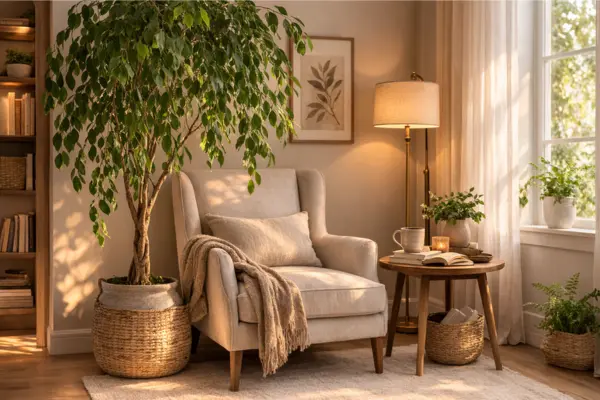
Weeping fig has a full, graceful canopy that makes a reading corner feel complete. MyDomaine describes it as a classic indoor tree with attractive greenery and notes that it can grow six feet tall or more indoors in good light.
Items Needed
You need a weeping fig, a comfortable chair, a side table, a floor lamp, and a pot that suits the style of your room. This idea works beautifully in a traditional or calm modern living room.
How to Start With This Idea
Place the chair first, then the side table, and position the weeping fig slightly behind or beside the chair so it frames the seating area. The goal is to make the reading spot feel sheltered and layered, not crowded. Keep enough light near the plant so it stays full and healthy.
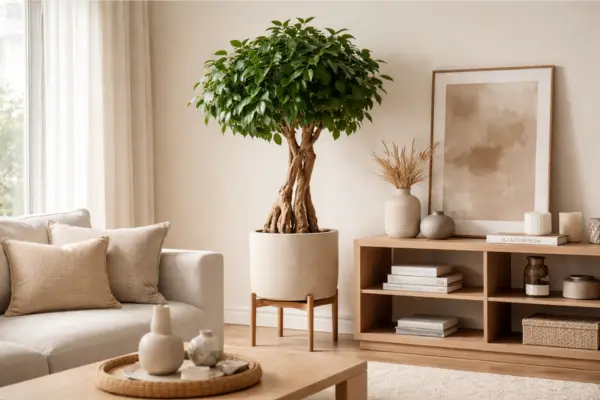
Step 15. Show Off a Ficus Ginseng Where the Trunk Can Be Seen
Ficus ginseng has character in its base and trunk, so it is not just a leaf plant. Even though Houseplant UK mainly lists it as part of its tall and large collection, that visible trunk form makes it especially useful in places where the lower part of the plant can still be seen clearly.
Items Needed
You need a ficus ginseng, a slightly raised pot or stand, and a spot beside a console, open shelf, or low cabinet where the lower structure of the plant is not hidden.
How to Start With This Idea
Choose a location where people can notice both the trunk and the canopy. Avoid tucking this plant behind a bulky sofa or table. It works best when it feels almost like a small indoor sculpture rather than just background greenery.
Final Thoughts
Tall living room plants are one of the best decorating tools for filling empty space in a natural way. They add height without building walls, softness without adding clutter, and personality without forcing a big renovation. The sources you shared consistently show that different plant shapes solve different design problems. Some plants are best for bright windows, some for lower-light corners, some for narrow gaps, and some for bold statement styling.
The easiest way to get started is to look at your living room honestly and ask one simple question: what does this room need most right now? If it needs height, choose a tall upright plant. If it needs softness, choose a palm or fuller leafy plant. If it needs drama, go for bird of paradise, monstera, or elephant ear. Once the plant shape matches the room problem, decorating gets much easier.
I can next turn this into a Pinterest-style article with a stronger intro hook, meta description, FAQ section, and conclusion for publishing.