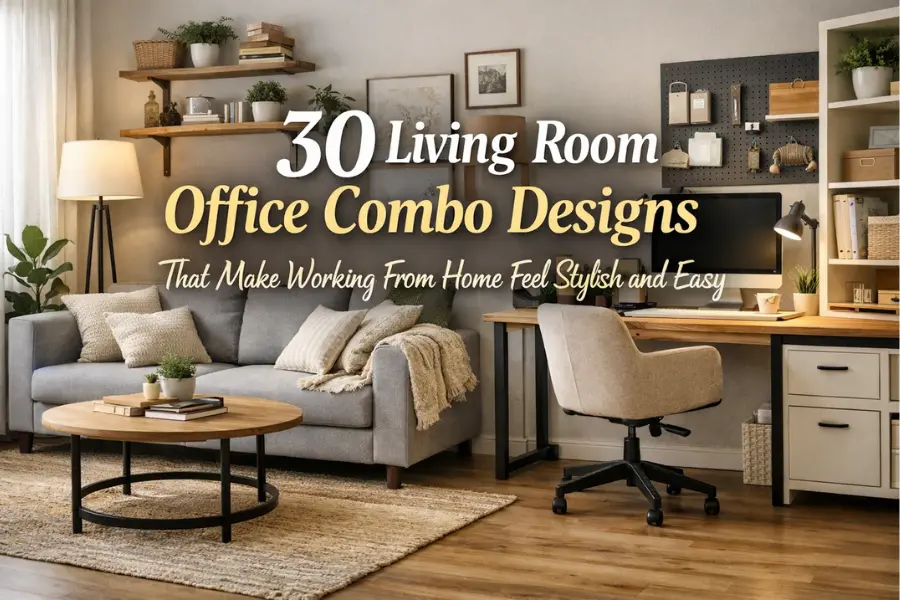
30 Living Room Office Combo Designs That Make Working From Home Feel Stylish and Easy
A living room office combo works best when it feels planned, not squeezed in at the last minute. The strongest examples use smart placement, simple storage, and a clear visual link between the desk area and the rest of the room. Across the design ideas published by Sierra Living Concepts, Apartment Therapy, and The Coolist, the same pattern shows up again and again: the most successful rooms give work its own place while still protecting comfort, flow, and style.
When I help someone set up this kind of space, I always start with three questions. Where does the room already have natural light? Which wall or corner is not working hard enough? What can be hidden at the end of the day so the room still feels calm? Those simple questions make the difference between a mixed-use room that feels polished and one that feels cluttered. Designers also point out that zoning with rugs, lighting, and furniture placement helps open-plan rooms feel more intentional and easier to use.
Below, I have taken 30 different living room office combo designs drawn from those sources and turned them into a complete beginner-friendly guide.
1. Corner Nook Workstation
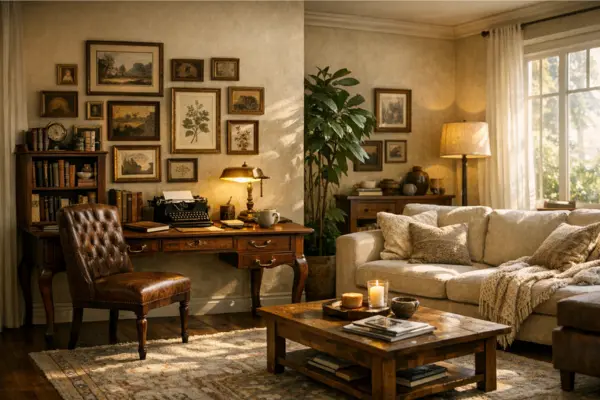
A corner nook workstation is one of the easiest ways to add a work area without taking over the room. Sierra Living Concepts highlights corner setups because they use overlooked square footage and keep the center of the living room open for relaxing, walking, and entertaining. This style works especially well in small apartments, family rooms, and open-plan spaces where every inch matters.
Items needed
You will need a compact desk or corner desk, a comfortable chair, a task lamp, and at least one vertical storage piece such as floating shelves or a narrow bookcase. A small rug can help visually define the work corner, and a basket or drawer unit will keep paper, chargers, and everyday supplies from spreading into the rest of the room. Rugs are often used to create clear zones in shared spaces, which is very helpful in this layout.
How to start with this idea
Start by choosing the quietest corner with the best daylight. Place the desk so you can move your chair easily and keep your feet flat on the floor when seated. Add shelves above instead of bulky storage beside you, because vertical storage keeps the footprint light and makes a small office corner feel tidy from the beginning.
2. Desk Behind the Sofa
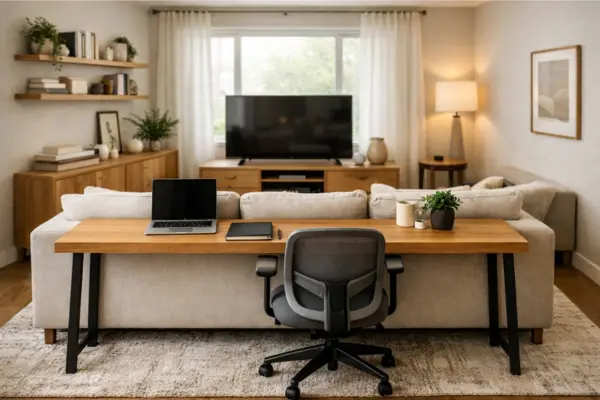
A desk behind the sofa is one of the smartest ways to separate work from lounging without adding a wall. Sierra Living Concepts recommends this approach because the sofa naturally becomes a divider between the office side and the seating side. It is especially useful in long living rooms where the back of the sofa would otherwise feel wasted.
Items needed
You will need a slim desk or console-height desk, a chair that tucks in neatly, table lighting, and cable control so the back of the sofa still looks clean. A desk that closely matches the sofa height usually looks more intentional and helps the whole arrangement feel custom instead of temporary.
How to start with this idea
Measure the height and width of your sofa first, then choose a desk that feels balanced behind it. Keep styling simple with one lamp, one tray, and one plant so the desk side still reads as part of the living room. This is also a good place to use a chair with softer fabric or a color that connects to the room, because visible pieces need to feel decorative as well as practical.
3. Bookshelf-Framed Office Wall
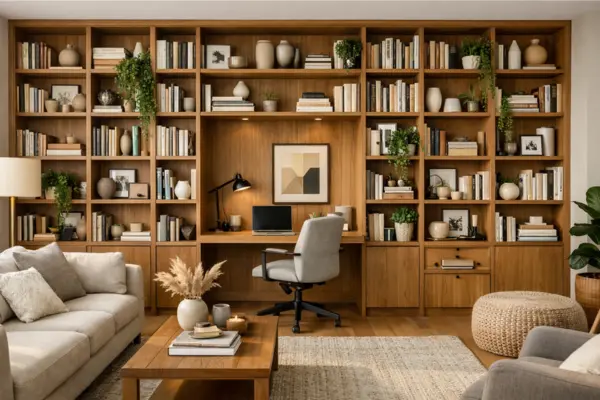
A bookshelf-framed office wall turns a desk into a built-in-looking feature. Sierra Living Concepts points out that bookcases can frame a workstation while keeping the room open, and that is exactly why this design works so well. It creates an office zone with storage, display space, and visual structure all at once.
Items needed
You will need a desk, two bookcases or one large shelving system, baskets or boxes for hidden storage, and a few decorative pieces to soften the practical items. Books, framed art, and storage bins work together here because the best version of this idea feels layered, not purely functional.
How to start with this idea
Begin by placing the desk in the center and then build the storage around it. Keep the top shelves pretty and the lower shelves practical. That balance matters because the living room side should still feel warm and personal, while the office side stays easy to use during the day.
4. Between-the-Windows Desk
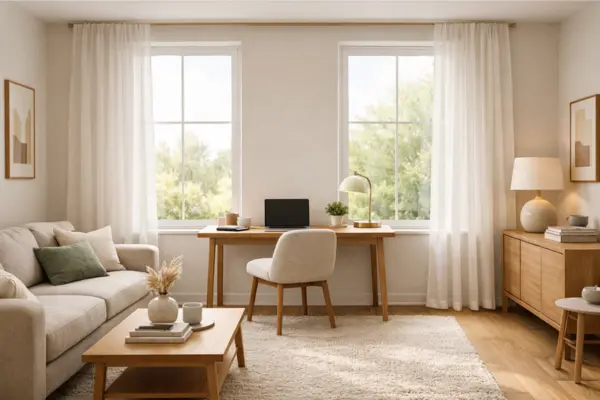
A desk between two windows makes excellent use of natural light and often turns an awkward wall into one of the prettiest spots in the room. Sierra Living Concepts recommends this layout for exactly that reason. Better Homes & Gardens also notes that a desk near a window can improve mood and make a workspace feel more inspiring, though glare may need to be managed.
Items needed
You will need a narrow desk, a chair with a low or open back, window treatments to soften glare, and a lamp for evenings. Light curtains, shades, or simple panels matter here because screen glare can become a problem when daylight shifts through the day.
How to start with this idea
Choose the narrowest desk that still gives you enough elbow room. Test the space at different times of day before fixing the layout, because window light changes. If glare hits your screen, angle the desk slightly or use soft curtains so you keep the brightness without the strain.
5. Alcove Office
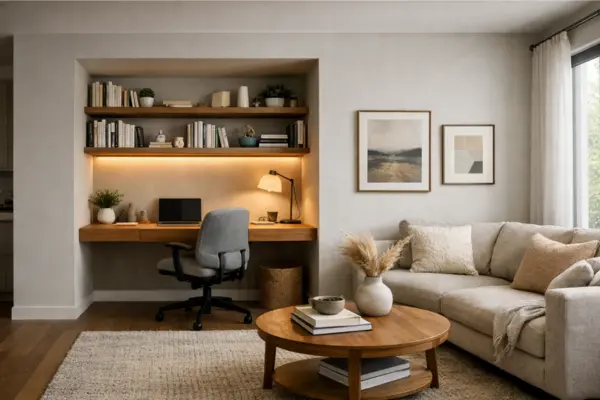
An alcove office feels natural because the architecture does part of the work for you. Sierra Living Concepts highlights alcoves and recessed wall areas as ideal places for a living room office because they already suggest a separate purpose. This is one of my favorite options for beginners because the shape of the room gives you a clear starting point.
Items needed
You will need a desk sized exactly to the alcove, wall lighting or a lamp, storage shelves, and paint or decor that ties the niche back to the main room. If the alcove is deep enough, a small drawer unit can help keep the desktop clear.
How to start with this idea
Measure the width and depth of the alcove before buying anything. Then decide whether you want the office to blend in or stand out. If you want a calm look, match the wall color to the room. If you want the niche to feel special, add wallpaper, art, or a statement light to make it feel intentionally decorated.
6. Transparent Glass Desk Layout
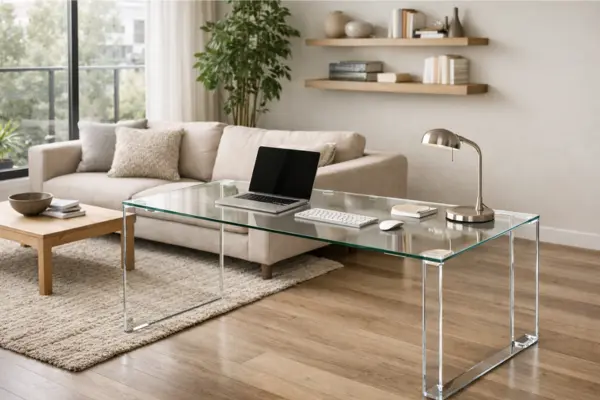
A transparent glass desk is a smart choice when the room already feels full. Sierra Living Concepts recommends glass or acrylic desks because they keep the visual flow open and help a small room look lighter. This style works best when you want the function of a desk without the visual weight of another large furniture piece.
Items needed
You will need a glass or acrylic desk, a comfortable chair, a small desk pad or tray for daily items, and soft decor around it so the area does not feel cold. Because the desk itself is visually light, the chair and nearby textiles become more important in making the setup feel warm.
How to start with this idea
Place the desk where you want the room to keep feeling open, such as near a window or beside a seating area. Avoid piling things on top because clutter shows more on transparent surfaces. Keep only your daily tools out, and use a basket or drawer nearby for everything else.
7. Tone-Matched Desk Setup
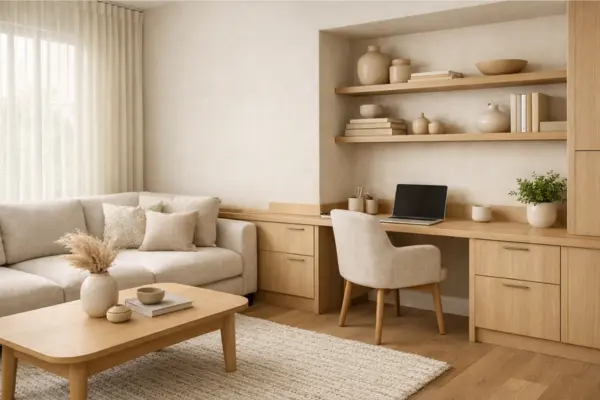
A tone-matched desk setup blends beautifully because it borrows the same finish story as the rest of the room. Sierra Living Concepts advises matching the desk to existing wood tones or painted finishes so the office feels like a natural extension of the living room. This simple trick is one of the easiest ways to make a shared space look professionally styled.
Items needed
You will need a desk in a similar wood or painted finish to your coffee table, media unit, side tables, or shelving. Matching is not about buying a full set. It is about keeping the undertone and visual weight consistent so the desk does not feel random.
How to start with this idea
Look at the main furniture pieces already in your room and choose the finish that appears most often. Repeat that tone in the desk and then echo it in one or two small accents, such as frames, a lamp base, or shelf brackets. That repetition makes the office area feel settled and connected.
8. Coordinated Office Chair and Textiles
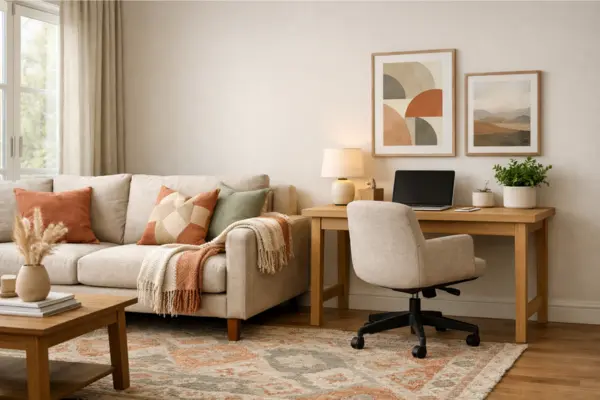
A coordinated chair and textile plan makes the office side feel softer and more residential. Sierra Living Concepts recommends choosing an office chair that works with your sofa or accent chairs instead of looking like it came from a corporate office. This matters a lot in a living room because the chair is usually visible all day, even after work ends.
Items needed
You will need a supportive chair, a throw or lumbar cushion, and nearby textiles that connect colors across the room. Upholstery, wood tone, and leg finish all matter here. The goal is a chair that supports your body but still looks right next to your decor.
How to start with this idea
Start with comfort first, then style it like any other seating piece. Check that the chair supports your spine and allows your arms and desk height to work together comfortably. After that, add softness with a cushion or small throw so it visually belongs in the room.
9. Styled Desk with Art and Accessories
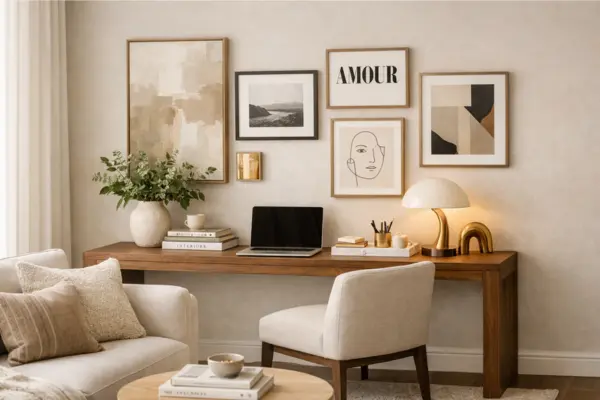
A styled desk with art and accessories is what keeps a work area from feeling too plain or too office-like. Sierra Living Concepts recommends treating the desk wall with the same care as the rest of the room by adding artwork, plants, and decor that suit the overall style. This idea works because beauty encourages you to keep the space neat and enjoyable to use.
Items needed
You will need one or two pieces of art, a plant or flowers, a desk tray, and a lamp or decorative object that adds height. The best desks do not need many extras. They just need a few pieces that feel chosen rather than accidental.
How to start with this idea
Pick one focal piece for above the desk and then build from there. Keep styling simple enough that you still have working room. A tray for small tools, one plant, and one art piece is often enough to make the whole setup feel finished.
10. Custom Built-In Woodwork Office
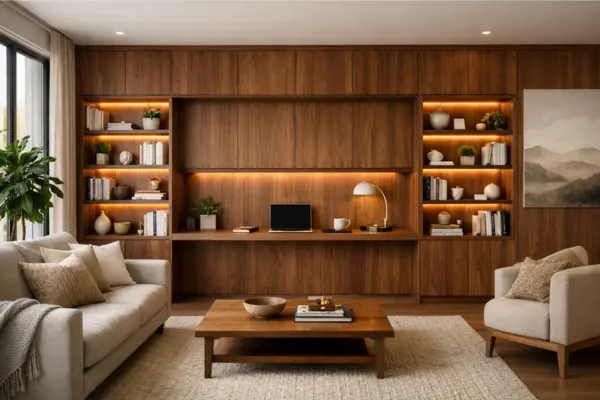
A custom built-in office is one of the most seamless ways to combine work and lounge space. Sierra Living Concepts calls built-ins the ultimate solution because they can match the room exactly and add storage without wasted space. Apartment Therapy also shows how a media cabinet and desk can work as one continuous built-in piece, which is why this idea looks so polished.
Items needed
You will need built-in shelving or cabinetry, a fitted desk surface, closed storage for office supplies, and open display space for books and decor. Lighting should also be planned carefully here, because built-ins look best when they are lit well and used cleanly.
How to start with this idea
Begin with the storage problem you want to solve. Do you need a printer hidden away, space for files, or shelves for books and styling? Once the storage plan is clear, design the desk in the center or at one end so the whole wall serves both living and working needs in a balanced way.
11. Fold-Down Wall Desk
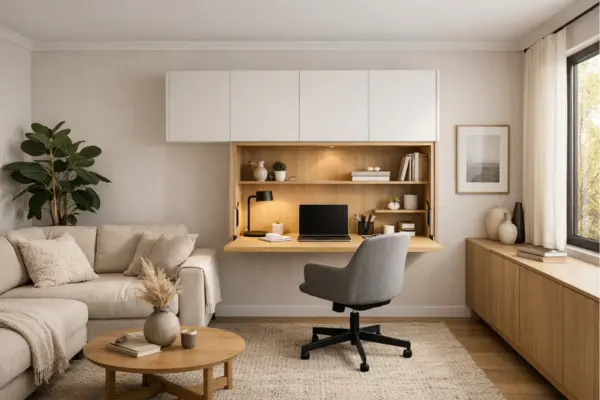
A fold-down wall desk is ideal when the room cannot look like an office all day. Sierra Living Concepts recommends this type of wall-mounted desk because it can disappear when closed and save valuable floor space. It is one of the best answers for studio apartments, guest rooms with seating areas, and compact family spaces.
Items needed
You will need a fold-down desk, wall support strong enough for the unit, a small chair or stool, and nearby storage for things that cannot stay inside the desk. If you can choose a design with built-in shelves or compartments, even better.
How to start with this idea
Choose a wall that is easy to reach but not the main focal point of the room. Make sure there is enough clearance to sit comfortably when the desk is open. Then keep the setup very edited, because the beauty of this idea is that it closes quickly and helps you switch from work mode to home mode at the end of the day.
12. Secretary or Roll-Top Desk
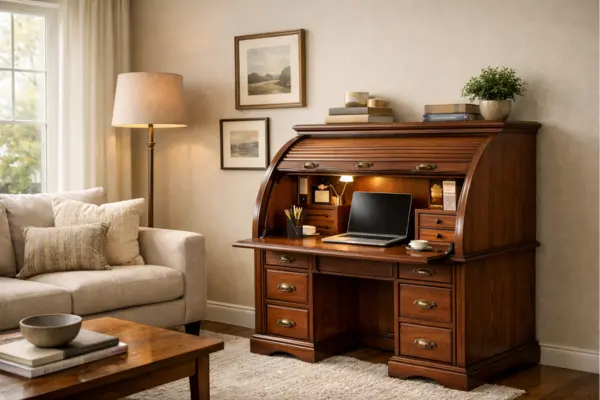
A secretary or roll-top desk is perfect for people who want their work supplies hidden in seconds. Sierra Living Concepts recommends this classic solution because it offers storage and a work surface while keeping clutter out of sight once closed. It is especially lovely in traditional, cottage, vintage, or collected interiors.
Items needed
You will need the desk itself, a chair that tucks in, and a simple filing or sorting system inside. Antique and reproduction pieces often have small compartments, which makes them very practical for everyday paperwork, stationery, and chargers.
How to start with this idea
Place the desk where it can act as a decorative furniture piece when shut. Then organize the inside carefully from the start, because these desks work best when every item has a place. If you keep the inside simple, closing the desk at the end of the day becomes effortless.
13. Closet-to-Office Conversion
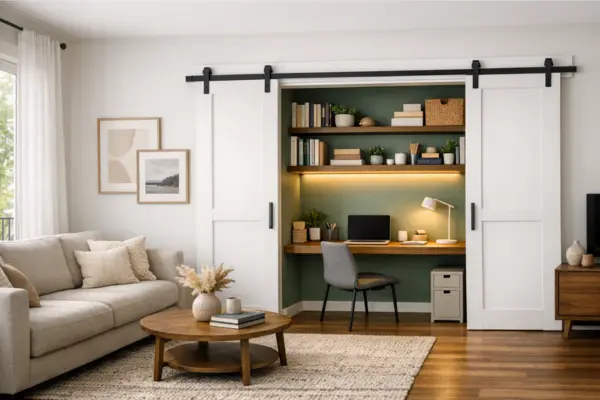
A closet-to-office conversion is one of the smartest hidden workspace ideas. Sierra Living Concepts suggests turning a living room closet into a compact office with a desk surface, shelving, and better lighting so the whole setup can be closed off when not in use. This idea is especially useful for people who need visual calm after hours.
Items needed
You will need a desk surface, lighting, storage shelves, power access, and doors or a curtain if you want to hide the setup later. Sliding or barn-style doors can work well, but even an open closet can feel neat if it is planned carefully.
How to start with this idea
Clear out the closet completely and measure every side. Add lighting first, then decide the desk height and shelf spacing. Use closed boxes or baskets for supplies so the office looks calm when the doors open, and even better when they close.
14. Convertible Coffee Table Desk
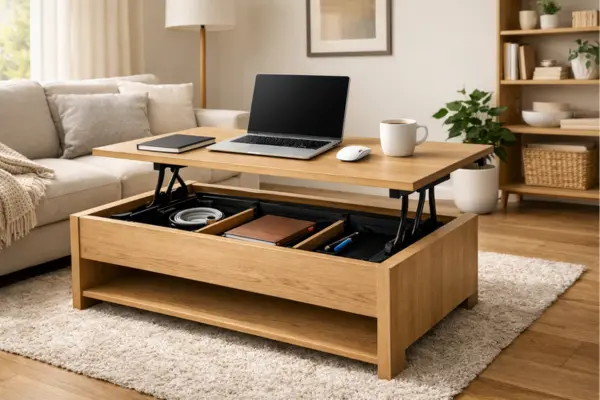
A convertible coffee table desk is a practical answer for people who work casually and do not need a full-time office station. Sierra Living Concepts highlights lift-top coffee tables that rise and expand into a work surface for short tasks. This is a useful idea for small homes, but it works best for laptop use rather than full desk days.
Items needed
You will need a lift-top or convertible coffee table, a sofa with comfortable support, a lap cushion or lumbar pillow if needed, and storage inside the table for chargers or notebooks. This design is most comfortable when the table is sturdy and the top lifts to a practical height.
How to start with this idea
Choose this layout only if your work sessions are shorter or more flexible. Keep your essentials inside the table so setup takes less than a minute. If you notice neck or shoulder strain, move longer tasks to a better chair and desk, because comfort still matters even in a casual setup.
15. Portable Laptop Desk
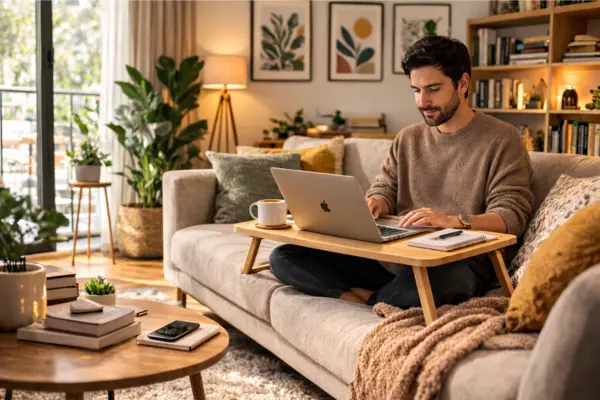
A portable laptop desk is simple, flexible, and very easy for beginners. Sierra Living Concepts recommends a portable desk that can slide under the sofa or store away in a closet, which makes it ideal for homes where the living room should stay focused on relaxing. This is a good option if you work a few hours at a time instead of full days.
Items needed
You will need a foldable or portable desk, a supportive chair or sofa position, and a small basket or tote for work supplies. Lightweight pieces work best because the whole point is easy movement and quick storage.
How to start with this idea
Choose one storage spot for the desk when it is not in use. That habit matters because portable furniture only stays helpful when it has a home. Keep the work kit small and grouped together so setting up and packing away feels easy every single day.
16. Floating Shelf Desk
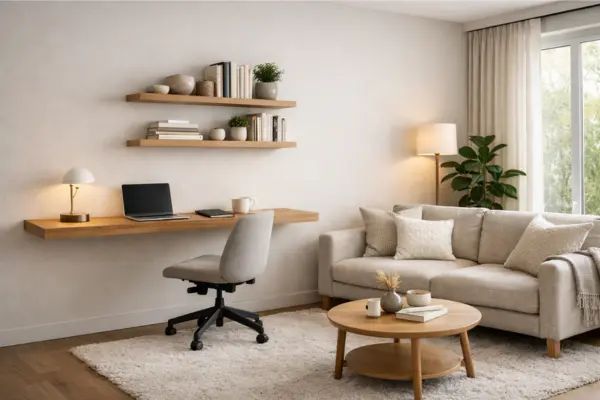
A floating shelf desk is one of the neatest solutions for very small rooms. Sierra Living Concepts recommends a wall-mounted shelf desk because it offers a work surface with almost no visible bulk. It is best for laptop work, bills, or light admin tasks rather than large equipment.
Items needed
You will need a sturdy floating desk or shelf, wall anchors, a stool or compact chair, and possibly a lamp or sconce nearby. The seat should tuck fully underneath so the setup disappears visually when not in use.
How to start with this idea
Install the desk at a height that feels comfortable for your arms and wrists, not just whatever looks right on the wall. Then test the chair or stool with it before finishing the area. Good ergonomics matter, even in a minimal setup, because an awkward height becomes annoying very quickly.
17. Under-Stairs Office Nook
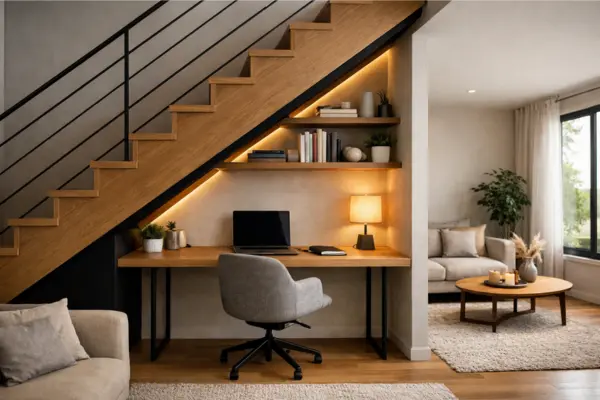
An under-stairs office nook uses dead space beautifully. Sierra Living Concepts recommends turning the area under the stairs into an office alcove with storage and lighting, and this is one of the most efficient space-saving ideas in the whole list. It works because it steals no extra floor area from the main room.
Items needed
You will need a fitted desk surface, lighting, shelves or cabinetry, and a chair sized for the lower ceiling line. Since this area can feel darker, lighting is especially important here.
How to start with this idea
Begin by checking the head clearance and the best sitting position. Place the chair where the height feels most comfortable, then build the desk around that zone. Use lighter colors, reflective finishes, or open shelving if you want the space to feel less enclosed.
18. Window-Ledge Workspace
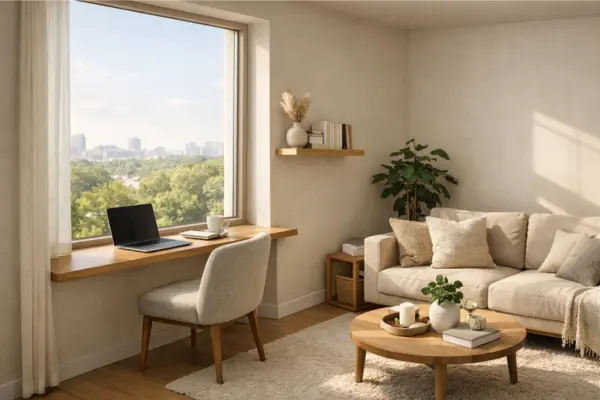
A window-ledge workspace is clever, airy, and very compact. Sierra Living Concepts suggests using a deep windowsill or extended ledge as a narrow desk for laptop work, especially in apartments with generous windows. This design feels bright and relaxed, but it needs a thoughtful setup to stay comfortable.
Items needed
You will need a ledge or narrow counter, a stool or slim chair, soft window treatment, and a place nearby for supplies. A cushion or foot support can also help, depending on the height of the seat and ledge.
How to start with this idea
Check the sunlight first, because this spot can be lovely in the morning and difficult later in the day. Add simple shade control and keep the surface light and uncluttered. This idea works best when it feels like a calm writing perch rather than a crowded office station.
19. Double-Duty Dining Nook Office
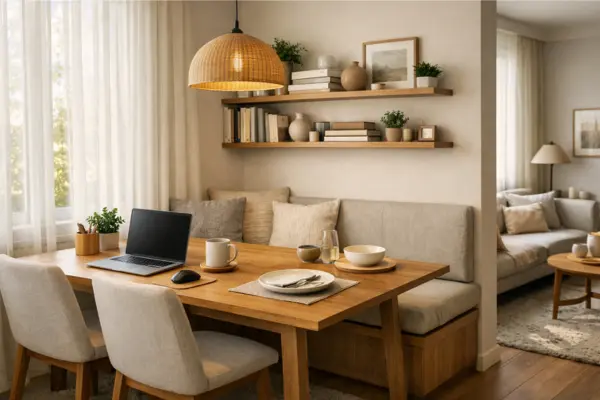
A dining nook office is a practical shared-use setup for homes where one area has to do many jobs. Sierra Living Concepts recommends a desk or table that can work for both dining and office use, which makes a lot of sense in small apartments and open-plan homes. The key is choosing furniture that performs well in both roles.
Items needed
You will need a table or desk with enough legroom, chairs comfortable enough for working, and good lighting that supports both meals and desk tasks. Storage nearby is also helpful so work papers do not stay on the table all evening.
How to start with this idea
Keep the table styling minimal and movable. Use a tray or box for office items so they can be cleared in seconds before dinner. A simple pendant above and a table lamp nearby can help the zone shift easily from work mode to living mode.
20. Media Cabinet Plus Desk Combo
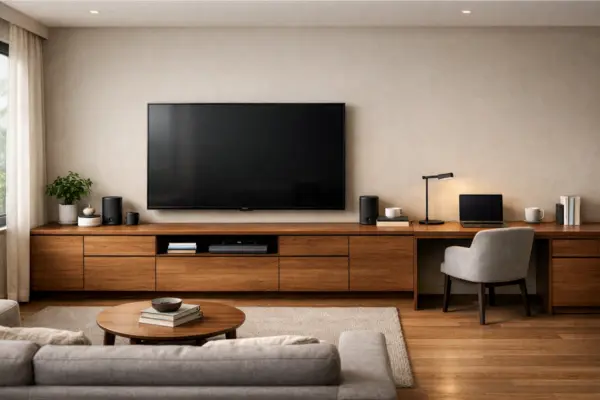
Apartment Therapy shows a built-in media cabinet that also functions as a hidden office, and it is one of the smartest hybrid designs in this group. Because the storage, screen area, and desk are all one composition, the office feels integrated rather than tacked on. This is an excellent option for modern living rooms where clean lines matter.
Items needed
You will need a media unit or built-in wall, a desk surface, hidden storage, and a chair that can disappear neatly into the design. Closed storage is especially useful in this layout because office supplies can quickly make a media wall look messy.
How to start with this idea
Start by deciding how much of the unit should be work space and how much should be media or display space. Keep the desk width generous enough to feel usable, because a hidden desk still has to perform well. Then style the entire wall as one composition so the office side does not look separate from the rest.
21. Modular Wall Desk System
Apartment Therapy also features wall-based desk systems with shelving, which are perfect for people who want both function and display. This design works because it uses vertical space while keeping the floor relatively open. It is especially good for renters or anyone who likes a more flexible storage layout.
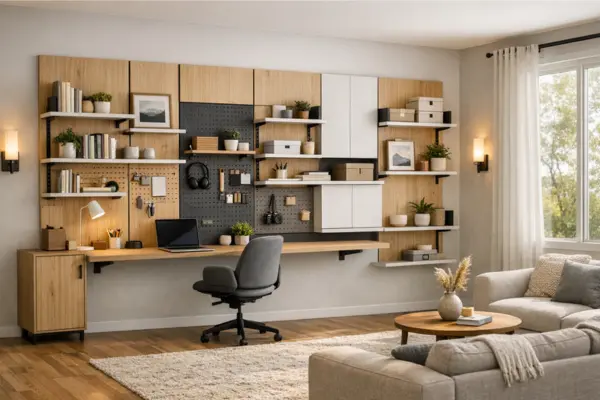
Items needed
You will need a desk component, wall-mounted shelves or rails, storage boxes, and a chair that fits the scale of the wall system. Decorative styling matters here because the shelving is always visible from the living room side.
How to start with this idea
Plan what belongs on the wall before you install anything. Put the work essentials within easy reach, then leave breathing room for books, art, or plants. A crowded wall system can feel heavy fast, so spacing is just as important as storage.
22. Intentional Color-Matched Office Corner
Apartment Therapy highlights office corners that echo the room palette, and this is one of the easiest ways to make a workspace feel calm. When the desk, chair, wall art, and textiles all relate to the same color story, the office corner feels planned into the room rather than competing with it. This idea is simple but very effective.
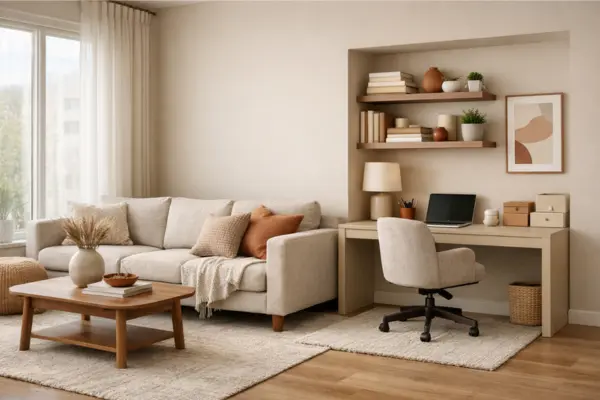
Items needed
You will need a desk, chair, and accessories in tones that already exist in the room. Paint, textiles, art, and lamps can all help carry the color story across the space without making the office feel too themed.
How to start with this idea
Choose two main colors from the living room and repeat them in the workspace. One can be a larger tone, such as wood or upholstery, and the other can come in smaller accents like a lamp shade or frame. This repeated palette is one of the quickest ways to create a polished shared room.
23. Folding Secretary Station
Apartment Therapy includes compact secretary-style setups as a way to reduce visible clutter in a shared room. This design is perfect for people who want a decorative furniture piece that can still handle daily admin, writing, or laptop work. It gives you the charm of a classic desk with the benefit of quick closure.
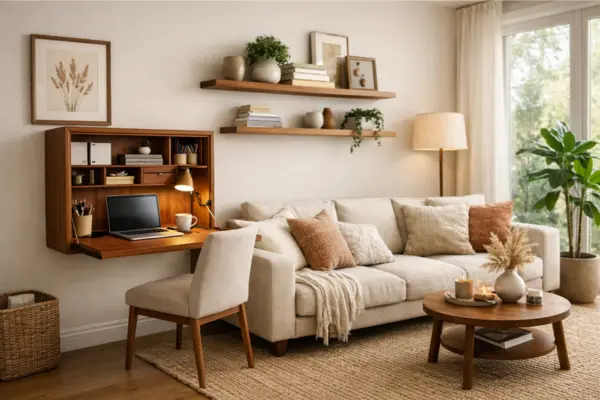
Items needed
You will need a secretary desk, a chair, and a very simple internal organizing plan. Small trays, folders, and one cable pouch are often enough inside, because these desks do not have room for over-storage.
How to start with this idea
Style the top and surrounding wall as you would any accent furniture in the living room. Then keep the inside highly edited so the front closes easily. The success of this idea comes from discipline as much as design, so start simple and stay consistent.
24. Built-In Desk and Bookshelf Combo
Apartment Therapy shows built-in desk and shelving combinations that feel both decorative and useful. This design is a strong choice for readers, collectors, and anyone who wants the office area to feel like part of a library wall or statement storage feature. It is also a great answer when storage is the main need.
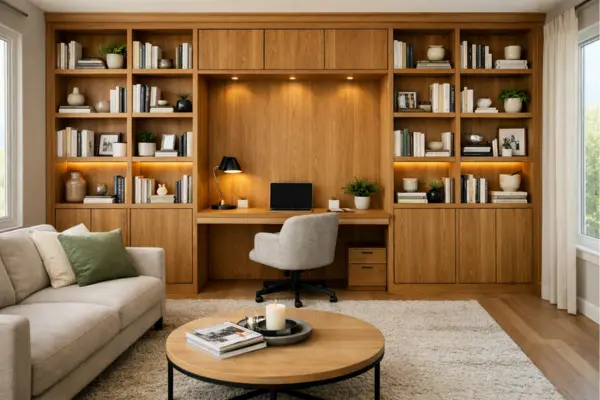
Items needed
You will need a desk, shelving, storage bins or drawers, and decorative items to break up the practical pieces. Lighting should not be forgotten, because book-and-desk walls can feel dark without layered light.
How to start with this idea
Work out the shelf purpose first. Decide which shelves are for books, which are for hidden office storage, and which are for display. Once each zone has a role, the whole wall feels more balanced and much easier to maintain.
25. Desk Facing the Window
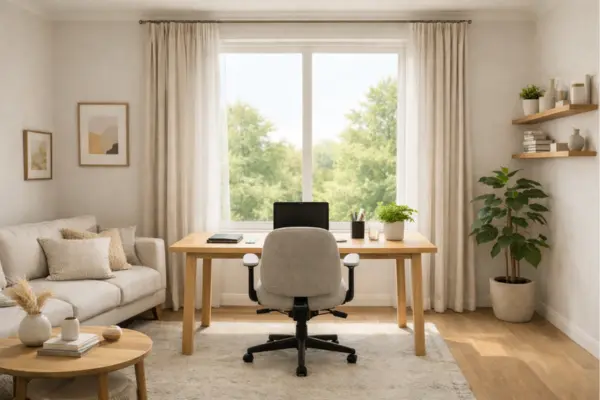
Better Homes & Gardens notes that a desk facing a window can improve mood and feel more inspiring than staring at a blank wall, and Apartment Therapy also features desk placements that take advantage of the view. This setup works especially well for people who do creative work or spend long hours at the desk. It makes the workday feel lighter and more connected to the room.
Items needed
You will need a desk, a supportive chair, window treatments, and a lamp for cloudy days or evening use. If the window light is strong, glare control becomes just as important as brightness.
How to start with this idea
Test where the light falls before deciding the final position. If the view is beautiful but the light is harsh, use curtains or shades to soften it. Keep the window area clean and lightly styled so the view remains part of the design rather than getting blocked by too many objects.
26. TV-Console Desk Combo
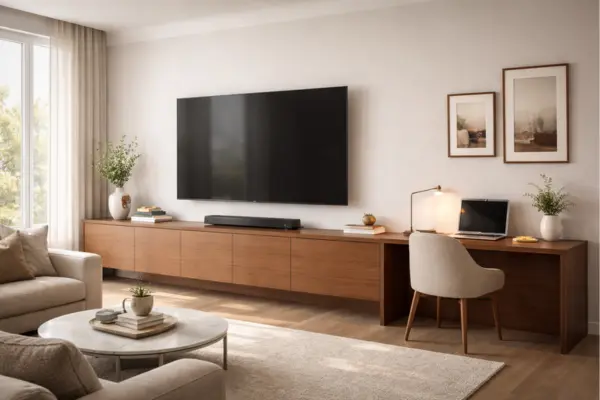
Apartment Therapy also features solutions where a desk sits below a mounted TV, allowing one wall to do double duty. This idea works best in compact homes where every wall must handle more than one function. When done well, it keeps the room efficient without feeling overloaded.
Items needed
You will need a desk or console with enough depth for work, TV placement that leaves comfortable clearance, and strong organization so technology does not create visual clutter. Cable management is especially important in this layout.
How to start with this idea
Measure the wall carefully and decide whether the TV or the desk is the main priority. Keep the desk styling light so it does not compete with the screen. This layout works best when the entire wall feels clean, balanced, and easy to reset after work.
27. Tiny Tucked-Away Desk
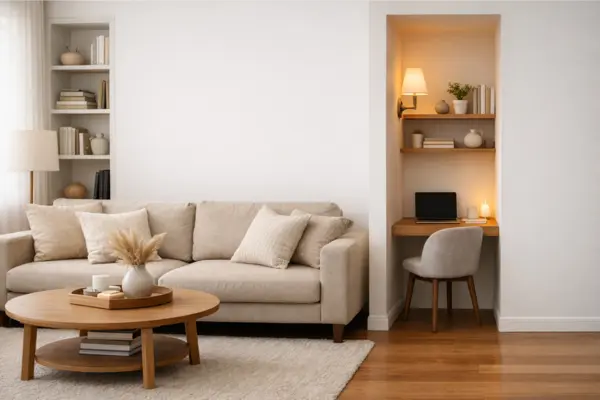
Apartment Therapy includes very small desk setups that sit quietly at the side of a room, and this is often all many people need. A tiny tucked-away desk works because it respects the living room first while still giving you a dedicated spot for focused tasks. It is ideal for emails, planning, and everyday admin.
Items needed
You will need a narrow desk, a compact chair, one light source, and just enough storage for your basics. The best version of this idea is restrained, because once you start asking too much from a tiny desk, the area quickly feels cluttered.
How to start with this idea
Look for an underused strip of wall, the end of a room, or the side of a media unit. Keep the desk depth modest and use vertical wall space for anything extra. That way, the room still feels open even though it now carries an extra function.
28. Uniform Multipurpose Slab Desk
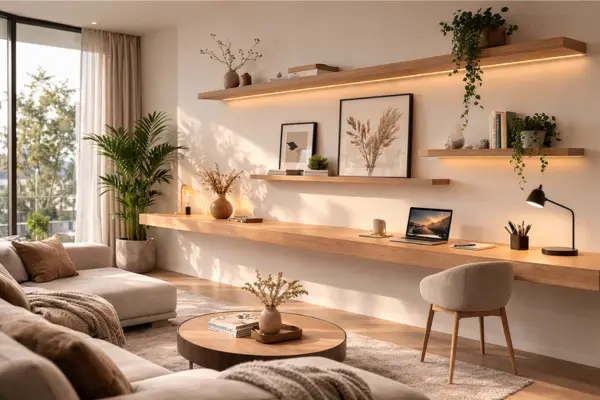
Apartment Therapy shows wall-mounted slab-style desks that can work for both office and dining use, and this idea is excellent in minimal homes. The long, clean line helps the room feel calm and intentional, especially when paired with matching or coordinated seating. This is one of the easiest layouts to keep visually neat.
Items needed
You will need a slab desk or long worktop, tuck-under seating, and simple styling that can shift from working to everyday living. Lighting should suit both tasks, so a nearby lamp or flexible wall light is useful.
How to start with this idea
Install the desk on the clearest wall you have and keep the line uninterrupted. Choose seating that looks good whether it is used for work or not. This idea relies on simplicity, so keep accessories minimal and storage hidden nearby.
29. Vintage Desk Office Nook
Apartment Therapy highlights homes that use vintage desks in living room work areas, and this is a beautiful choice when you want character. A vintage desk brings warmth, shape, and personality that newer office furniture often lacks. It can turn the office corner into one of the most charming parts of the room.
Items needed
You will need a vintage or vintage-style desk, a supportive chair that suits the look, and nearby storage if the desk drawers are limited. Because older desks can be smaller, measure carefully before using one for daily computer work.
How to start with this idea
Choose a desk with enough knee room and a surface that fits your routine. Then style the nook with a lamp, art, or books so the area feels collected instead of staged. This setup is best when it looks like it has always belonged in the room.
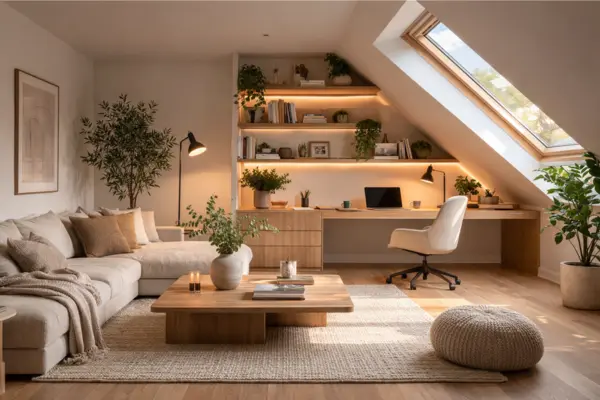
30. Sloped-Wall Nook Office
Apartment Therapy features desks tucked under sloped walls and awkward upper-floor angles, proving that difficult architecture can still be useful. This design works because it turns a hard-to-furnish area into a clear-purpose spot instead of leaving it empty. It is especially helpful in lofts, attic lounges, and upper-level living rooms.
Items needed
You will need a desk that fits the height limits, good lighting, and storage that works with the changing ceiling line. Open shelves, low cabinets, or wall hooks often work better than tall furniture in this kind of space.
How to start with this idea
Start by sitting in the area before you buy the desk, because comfort depends on where the ceiling drops. Place the desk where you have the best headroom while seated, then use the lower parts of the wall for storage or decor. Awkward spaces usually work best when every inch has a clear job.
Mistakes to Avoid
A living room office can look beautiful and still feel frustrating if the basics are wrong. Better Homes & Gardens points out that poor layout, weak storage, bad lighting, and ignoring ergonomics can all reduce comfort and productivity. In shared spaces, these mistakes also make the living room feel messy faster because work has no clear limits.
Pushing the desk into the wrong spot
Many people assume the desk has to face a blank wall or hide in the darkest corner. Better Homes & Gardens notes that a desk facing a wall can feel uninspiring, while natural light and a view often create a better working mood. Even if the desk cannot face a window directly, it should still sit where the room feels open and pleasant.
Skipping proper chair and desk comfort
A pretty chair is not enough if it does not support your body. Mayo Clinic explains that chair height, desk posture, and equipment spacing all affect comfort, while Better Homes & Gardens notes that poor positioning can lead to back, neck, and shoulder strain. In a shared room, it is easy to focus only on looks, but comfort has to come first if you use the desk often.
Letting clutter spread into the living room
Once paper, chargers, and office supplies spill into the seating area, the room stops feeling restful. Better Homes & Gardens recommends trays, baskets, shelving, and built-in storage to keep essentials organized and off the desk. This is why desks with drawers, wall storage, or hidden compartments are usually worth it in a living room office combo.
Using only one harsh overhead light
A single ceiling light rarely does enough for both working and relaxing. Better Homes & Gardens advises combining natural light with task lighting and added ambient light so the workspace stays comfortable and glare stays under control. This layered approach also helps the office zone feel warmer and more finished after dark.
Forgetting to zone the room
When there is no visual separation, the room can feel confused and crowded. Homes & Gardens explains that rugs, lighting, and furniture placement can define different zones within one space, and that this kind of micro-zoning makes a room feel calmer and easier to use. Even a very small office corner benefits from a simple boundary.
Choosing furniture that is too large
A living room office usually works best with furniture that respects the scale of the room. Oversized desks, thick chairs, or tall storage can swallow the lounge area and make the space feel heavy. The best examples from Sierra Living Concepts and Apartment Therapy use compact desks, wall storage, and furniture that tucks in neatly when not in use.
Conclusion
The best living room office combo designs do not come from buying more furniture. They come from making smarter choices with the room you already have. A corner can become a workstation, a sofa can divide the room, a bookshelf can frame an office wall, and a simple rug can tell the eye exactly where work begins and where relaxing takes over. The strongest ideas from Sierra Living Concepts, Apartment Therapy, and The Coolist all prove the same thing: a shared room can feel stylish, practical, and calm at the same time when each area has a clear purpose.
If you are starting from scratch, do not try to solve everything at once. Pick the right spot, choose the right desk size, add proper lighting, and make sure the chair feels good to use. After that, bring in the decorative layers that make the office feel like part of your home. That order always leads to a better result, and it keeps the room useful from day one.
FAQs
A few common questions come up again and again with living room office layouts. These answers will help you make better choices before you buy anything or move furniture around.
What is the best place to put a desk in a living room?
The best place is usually an underused area that does not interrupt the main seating flow. Corners, alcoves, the wall behind the sofa, space between windows, and built-in wall units are some of the most effective choices shown across the design sources used here. A good spot should feel practical to work in and visually calm when you are not working.
How do I make a home office blend into my living room?
Match the desk finish to your existing furniture, use a chair that feels residential, repeat the room’s colors in the office area, and style the desk wall with art or decor. These details help the office feel like part of the room instead of a separate setup dropped into the corner. Built-ins and media-wall combinations are especially strong if you want the most seamless look.
Can a living room office still look relaxing?
Yes, as long as storage is handled well and the office has a clear visual boundary. Homes & Gardens notes that zoning helps a room feel calmer, while Better Homes & Gardens points out that clutter and weak storage quickly reduce both comfort and focus. In my experience, hidden storage and a quick end-of-day reset make the biggest difference.
Is a small desk enough for a living room office?
For many people, yes. A narrow desk, wall-mounted shelf desk, secretary desk, or portable setup can be enough for laptop work, planning, and general admin. The key is being honest about your routine. If you need dual screens, paperwork, or long work hours, you will be happier with a more supportive chair and a slightly larger surface.
What kind of lighting is best for a living room office combo?
The best setup combines daylight, task lighting, and softer ambient light. Better Homes & Gardens recommends using window light carefully while controlling glare, then adding a desk lamp and other room lighting for balance. This layered approach supports work during the day and keeps the room cozy in the evening.
How do I stop my living room office from looking messy?
Give every work item a home. Use drawers, baskets, trays, shelves, or closed cabinetry so supplies do not spread into the lounge area. Fold-down desks, secretary desks, closet offices, and media-unit desks are especially helpful because they make cleanup fast and visually simple.
If you want, I can turn this into a more polished Pinterest-style article with an SEO title, meta description, and pin title set.