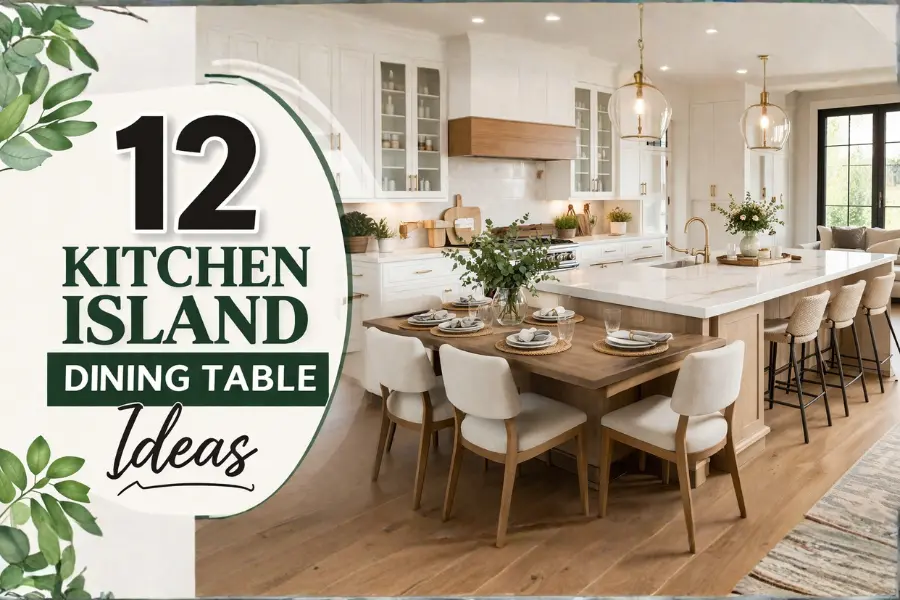
12 Kitchen Island Dining Table Ideas
A kitchen island dining table can completely change how a kitchen feels and functions. I have seen it turn plain kitchens into warm, social spaces where people cook, eat, talk, work, and spend real time together. When it is planned well, it does much more than fill the center of the room.
In this guide, I am sharing 12 different kitchen island dining table ideas that suit small, medium, and large kitchens. Each one has its own style and purpose, so you can find something that feels right for your home rather than copying a design that only looks good in photos.
Table of Contents
Top 12 Ideas For Kitchen Island Dining Tables
Here are the hand picked ideas;
1. Classic Island With a Counter-Height Dining Overhang
This is one of the most practical and timeless kitchen island dining table ideas. The island stays simple, but one side extends outward to create a comfortable seating area. It works beautifully in medium-size kitchens and gives you space for quick meals, coffee breaks, casual chats, and everyday family use without making the layout complicated.
Why It Works
This design is popular for a reason. It is easy to plan, easy to style, and easy to live with. The overhang gives people a place to sit while keeping the main body of the island useful for prep work and storage. It also keeps the kitchen looking neat because the whole design feels clean and well balanced.
Another reason it works so well is that it suits almost every decorating style. You can make it look modern, classic, warm, minimal, or family-friendly just by changing the finish, stools, and lighting. That makes it a safe and smart choice if you want something that will still look good years from now.
Best For
This idea is best for standard kitchens that need a casual dining area without taking up too much room. It works especially well for small families, couples, and anyone who wants seating for two to four people in a simple layout.
It is also a great option if you want one surface to handle several jobs at once. You can use it for meal prep during the day and dining in the evening without making the room feel crowded.
Styling Tips
I like to keep this style polished but warm. Pair a stone or quartz countertop with comfortable counter stools in wood, leather, or fabric. That mix helps the island feel useful but not too cold.
Pendant lights above the overhang will make the dining side feel more intentional. If your kitchen is neutral, you can add interest with stools in a deeper shade or with texture through woven seats, linen fabric, or matte finishes.
2. Two-Level Island With a Raised Dining Ledge
A two-level island gives you a kitchen surface and a separate dining edge in one design. Usually, the main surface is used for prep, while the raised section becomes the eating area. This creates a nice visual divide and can make the dining side feel more finished, private, and comfortable in open-plan homes.
Why It Works
This design works because it separates functions without needing extra furniture. The cooking side stays practical, while the raised ledge gives diners a cleaner and more defined place to sit. It also helps hide clutter from the dining side, which is useful if the island is often busy with cooking or dishes.
I also find this idea helpful in homes where the kitchen opens directly into the living or lounge area. The higher section acts almost like a soft screen, so the room feels more ordered and less exposed.
Best For
This style is best for medium to large kitchens, especially open-plan spaces where you want the island to feel more structured. It is also a good choice for people who entertain often and want guests to sit nearby without being right in the work zone.
It suits families too, especially when one person is cooking and others are eating, reading, or chatting at the same time.
Styling Tips
Use two different materials to make the design more attractive. A stone prep surface with a wood dining ledge often looks warm and custom. The contrast also helps each part of the island feel intentional.
Choose stools that fit neatly under the raised ledge and keep the colors soft and natural. If the island already has two levels, avoid adding too many extra details. Let the shape itself be the feature.
3. Small Square Island With Seating for Two
A small square island is one of the best ideas for compact kitchens. Instead of forcing in a long island that makes the room feel tight, this design keeps everything scaled down and functional. It gives you just enough prep space and just enough dining space for daily living without making the kitchen feel overcrowded.
Why It Works
This idea works because it respects the size of the room. In smaller kitchens, good design is not about squeezing in more. It is about making the space feel easy to move through and pleasant to use. A square island keeps the kitchen open while still giving you a useful dining corner.
It also feels more personal and relaxed. Seating for two is enough for breakfast, tea, a simple lunch, or a quiet conversation while dinner is being made. That can be all many homes really need.
Best For
This design is best for small kitchens, apartments, narrow homes, or homes where there is already a separate dining area elsewhere. It is ideal for couples, singles, or anyone who wants island seating without using too much floor space.
It is also a smart option if you want flexibility. A smaller island often leaves better walking space, which makes daily kitchen use much more comfortable.
Styling Tips
Keep the palette light so the island does not feel heavy. Soft whites, pale wood, warm beige, and muted gray all work well here. Open-leg stools also help the design feel airy.
Rounded corners can make the island feel softer and improve flow in a small room. I also recommend keeping décor simple. A small bowl, a vase with greenery, or one tray is enough.
4. Long Island With a Table Extension on One End
This idea creates a beautiful mix of island and dining table in one continuous form. The kitchen island handles prep and storage, while one end extends into a proper table-height dining area. It looks custom, elegant, and generous, especially in larger kitchens where you have the space to let the design breathe.
Why It Works
This layout works because it creates a more natural dining experience than bar seating alone. People can sit more comfortably, face each other more easily, and use the table area for longer meals, schoolwork, or baking sessions.
It also softens the look of a large island. A long block of cabinetry can sometimes feel too solid, but the table extension adds warmth and makes the whole unit feel more inviting and social.
Best For
This design is best for larger kitchens and open-plan homes where the island is meant to be a major feature. It is ideal for families who want both prep space and a real dining spot in the kitchen.
It is also perfect if you love entertaining and want guests to feel part of the kitchen without perching on stools the entire time.
Styling Tips
A wood table extension paired with a painted or stone island looks beautiful and timeless. The contrast helps the dining part stand out without feeling disconnected from the kitchen.
Use dining chairs instead of stools if space allows. That gives the extension a true table feel. A larger pendant or a row of pendants above the island can help tie everything together.
5. Furniture-Style Island With an Attached Breakfast Table
A furniture-style island feels less built-in and more decorative, which gives the kitchen a warmer and more lived-in look. When you attach a breakfast table to it, the whole setup feels charming and welcoming. This idea suits kitchens that want character, softness, and a little traditional style without losing function.
Why It Works
This design works because it does not feel too stiff or overly fitted. It adds personality and creates the feeling of a kitchen that has grown naturally over time. That can make the room feel more relaxed and homely.
I especially like this option in kitchens that need warmth. If a room has many hard surfaces or straight cabinet lines, a furniture-style island can make it feel softer and more inviting right away.
Best For
This idea is best for farmhouse, cottage, classic, or transitional kitchens. It works well in medium to large spaces where you want the island to feel like a beautiful piece of furniture rather than just extra cabinetry.
It is also ideal for homeowners who love timeless design and want a kitchen that feels collected, not overly modern or sharp.
Styling Tips
Details matter here. Turned legs, decorative panels, open shelves, and painted finishes all help bring out the furniture look. Soft colors like sage, cream, dusty blue, or warm gray work especially well.
For the dining part, choose simple wooden chairs or classic spindle-back chairs. Add a linen runner, a ceramic bowl, or a small lamp nearby to make the space feel even more welcoming.
6. Peninsula-Style Island With Dining on the Outside Edge
A peninsula gives you the look and function of an island, but it stays attached to one wall or cabinet run. That makes it a brilliant solution for kitchens where a full island would take up too much room. The outer edge can then be used for dining, making the layout practical and easy to live with.
Why It Works
This idea works because it makes the most of tighter layouts. You still get prep space, extra storage, and casual seating, but the room stays more open than it would with a fully detached island. It is one of the most realistic choices for everyday homes.
It also helps define the kitchen area in open spaces. The peninsula creates a soft border between the kitchen and the dining or living zone, which makes the layout feel more organized.
Best For
This style is best for small to medium kitchens, especially those with limited width. It works well in apartments, family homes, and open-plan layouts where a central island would block movement.
It is a very good choice if you want island dining but your kitchen simply does not have enough space for a full island in the center.
Styling Tips
Keep the shape simple and clean. Use slim stools that tuck in well so the walkway stays clear. Choose finishes that match the rest of the kitchen so the peninsula feels natural and not added on.
Pendant lights above the seating side can help define it as a dining area. If the kitchen is small, avoid bulky stools and dark heavy finishes that can make the room feel tighter.
7. Round-End Island for a Softer Dining Look
A round-end island is a lovely way to break up the hard lines that many kitchens have. Instead of a sharp corner, one end of the island curves into a seating area. This creates a softer look and a more social dining setup, while also improving movement around the island.
Why It Works
This design works because curves naturally feel more relaxed and welcoming. They can make a kitchen look more custom and carefully planned. The rounded end also makes it easier to walk around the island, which is useful in busy homes.
It is also a strong choice if you want the island to look decorative as well as practical. The curved shape adds style without needing extra ornament or clutter.
Best For
This idea is best for medium-size kitchens and family homes where smoother movement matters. It is also ideal for anyone who wants something a little different from the usual straight island designs.
If your kitchen already has many boxy shapes, a rounded end can add just the right amount of softness and visual interest.
Styling Tips
Choose stools or chairs with gentle curves to match the shape of the island. That helps the overall design feel more thoughtful and complete.
I also like using soft-edge countertops here rather than very sharp profiles. Keep the materials elegant and simple so the curve remains the star of the design.
8. Banquette-Style Island Dining Nook
This idea combines an island with a built-in bench or banquette to create a cozy dining nook. It feels more settled and comfortable than standard stool seating and can make the kitchen feel especially inviting. It brings a breakfast nook feeling into the island layout in a smart and attractive way.
Why It Works
This design works because it offers the comfort of table seating while still keeping the island central to the kitchen. A banquette feels relaxed, family-friendly, and useful for longer meals or slower mornings.
It also helps the space feel custom. A built-in bench always gives a kitchen more personality and can make even a simple layout look thoughtfully designed and finished.
Best For
This is best for family kitchens, open-plan spaces, and homes where people spend a lot of time sitting in the kitchen. It is also a wonderful option for children because bench seating is practical and easy.
It suits medium and large kitchens best, especially where there is room to create a proper nook feeling without crowding the room.
Styling Tips
Use easy-care fabric for the bench and choose a table surface that is durable enough for daily use. A wood top often adds the right amount of warmth.
Add cushions in soft neutral tones or subtle prints to make the nook feel inviting. Lighting also matters here. A pendant or wall light can help the dining corner feel separate and special.
9. Waterfall Island With Hidden Dining Side
A waterfall island has countertop material that runs down the sides, creating a sleek and modern look. When you add seating to one side in a tucked-in way, you get a design that feels very polished but still practical. It is ideal for kitchens that want a clean and high-end finish.
Why It Works
This layout works because it combines beauty with simplicity. The island looks like one sculptural piece, which gives the kitchen a very calm and uncluttered feel. At the same time, the hidden dining side keeps the design useful for everyday living.
It is especially effective in open-plan homes where the kitchen is always visible. The island becomes a visual centerpiece without looking messy or busy.
Best For
This style is best for modern kitchens, apartments, and open-plan spaces with a clean decorating style. It works well in medium and large kitchens where the island can stand out as a design feature.
It is also great for homeowners who love minimal interiors but still want the kitchen to feel comfortable and usable.
Styling Tips
Choose stools that tuck in fully so the island keeps its clean shape when not in use. That small detail makes a big difference with this style.
Keep the styling minimal. One tray, one bowl, or one vase is enough. Let the surface material be the main decorative element, especially if you are using dramatic stone or quartz.
10. Farmhouse Island With a Full Table Attachment
This idea brings together the usefulness of an island and the comfort of a full dining table. The attached table section usually sits at standard dining height and offers room for four or more people. It feels warm, family-friendly, and very natural in kitchens that are designed for gathering.
Why It Works
This design works because it truly supports daily family life. You can cook, serve, sit, talk, and help with homework all in one connected space. It feels less like a kitchen feature and more like the center of the home.
I often recommend this layout to people who want their kitchen to feel welcoming rather than formal. It encourages people to stay, not just stop in and leave.
Best For
This style is best for large kitchens and family homes where the kitchen is used all day long. It is ideal for people who prefer proper table seating over stools and want one central place for meals and activities.
It also suits farmhouse, rustic, transitional, and classic interiors very well.
Styling Tips
Use warm wood for the table section and a painted base for the island to create contrast and charm. Soft colors like cream, muted green, navy, or taupe work beautifully.
Pair the table side with real dining chairs for comfort. A large pendant light or even two matching pendants above the center can complete the look nicely.
11. Slim Island With a Pull-Out or Tuck-In Table Surface
This is one of the smartest ideas for smaller homes. The island stays slim most of the time, but a table section can pull out or tuck away when needed. It saves space while still giving you a flexible dining area, which makes it practical for compact kitchens and multi-use homes.
Why It Works
This design works because it adapts to real life. You only use the extra surface when you need it, so the kitchen stays open and easy to move through most of the day. That flexibility is very valuable in smaller spaces.
It also helps you avoid overfilling the room with furniture. Instead of trying to fit both an island and a table, you get both in one compact design.
Best For
This idea is best for apartments, small kitchens, narrow layouts, and homes where every inch matters. It is ideal for people who want a practical solution that still looks stylish.
It is also a strong option for anyone who likes clever storage and furniture that can do more than one job.
Styling Tips
Keep the design simple so the moving parts stay hidden and the island still looks elegant. Light woods, soft neutral tones, and clean lines work best here.
Avoid overdecorating the surface. A compact island looks best when it stays tidy. Let the smart design be the feature rather than adding too many accessories.
12. Statement Island Designed Around Dining First
In some kitchens, the island is not just an extra surface. It is the heart of the room. This idea puts dining and gathering first, then adds prep and storage around that purpose. The result is a generous, social, and beautiful island that becomes the main feature of the entire kitchen.
Why It Works
This layout works because it reflects how many people really use their kitchens today. The island becomes a place to gather, not just a place to chop vegetables. That makes the room feel more human, warm, and welcoming.
It is also a strong design choice in large open homes where the kitchen is fully visible. A statement island can anchor the entire room and give it real presence.
Best For
This style is best for large kitchens and open-plan homes where the island is meant to be a standout feature. It works well for entertainers, families, and anyone who loves hosting relaxed meals and conversations in the kitchen.
It is perfect when you want the kitchen to feel social first and functional second, while still keeping both needs in balance.
Styling Tips
Use standout lighting, comfortable seating, and layered materials to give the island depth and character. Wood, stone, paint, and textured fabrics can all work beautifully together.
Do not rush the styling here. Because the island is the star, every detail matters. Choose seating that is as comfortable as it is attractive, and make sure the lighting feels warm and inviting.
Mistakes to Avoid When Choosing a Kitchen Island Dining Table
A beautiful island can still be frustrating if the layout is wrong. One of the biggest mistakes I see is choosing a design based only on appearance. It may look lovely in a photo, but if the kitchen does not have enough walking space around it, the whole room becomes harder to use.
Another common mistake is trying to fit in too many seats. It is always better to have fewer seats with proper comfort than more seats that feel cramped. People need space for their legs, their elbows, and easy movement in and out. If the stools are too close together, the dining side will never feel relaxed.
Height is another detail people often overlook. Counter-height seating and table-height seating feel very different, so you need to choose based on how you actually want to eat and sit. If you plan to use the island for full meals, not just quick snacks, a table-height extension or more supportive seating may be the better option.
I also suggest being careful with bulky materials in small kitchens. Heavy dark islands, oversized stools, or thick decorative legs can quickly make a room feel tight. In smaller spaces, lighter finishes and slimmer shapes nearly always work better.
The last mistake is forgetting the kitchen’s overall style. The island should look like it belongs in the room. A farmhouse table attachment in an ultra-modern kitchen, or a polished waterfall island in a very rustic setting, can feel disconnected if the rest of the room does not support it.
How to Choose the Right Idea for Your Kitchen
The best place to start is with size. In a small kitchen, a square island, peninsula, or pull-out design is often the smartest choice. In a medium kitchen, a classic overhang island or a two-level design usually offers the best balance. In a large kitchen, you can consider a full table extension, a banquette nook, or a dining-first statement island.
Then think about how you live every day. If you only need a place for quick coffee or breakfast, a simple overhang may be perfect. If your kitchen is the center of family life, then a more comfortable and generous dining setup will be worth it.
Style should come after function, not before it. Once you know the right layout, you can choose finishes, colors, stools, chairs, and lighting that make it feel beautiful and personal.
Conclusion
A kitchen island dining table can make a kitchen feel more useful, more social, and much more attractive. The right design brings together cooking, dining, and gathering in a way that feels natural and comfortable. That is why this feature has become such an important part of modern kitchen design.
My advice is always to choose the idea that suits your space and your lifestyle, not just the one that looks impressive. A small well-planned island will always work better than a large one that makes the room hard to use. When comfort, flow, and style come together, the result is a kitchen that feels good every single day.
Whether you love the simplicity of a classic overhang island, the warmth of a farmhouse table attachment, or the smart flexibility of a pull-out design, there is an option here that can work beautifully in real life. The best kitchen is never just pretty. It is inviting, practical, and made for the way you live.
FAQs
A kitchen island dining table can raise a lot of practical questions, especially if you are planning one for the first time. These are the questions I hear most often, and the answers will help you make better design choices.
Is a kitchen island dining table a good idea for small kitchens?
Yes, it can be a very good idea if the design is scaled properly. In small kitchens, the goal is not to fit the biggest island possible. The goal is to choose a shape that gives you function without blocking movement. Small square islands, peninsulas, and pull-out table designs usually work best.
What is better, counter-height seating or table-height seating?
It depends on how you plan to use the space. Counter-height seating is great for quick meals, coffee, and casual everyday use. Table-height seating feels more comfortable for longer meals, family dinners, and homes where the kitchen table is used often for work or study.
How many seats should a kitchen island have?
Only as many as the space can handle comfortably. Two well-spaced seats will feel much better than four cramped ones. Think about comfort first, then appearance. Every person needs enough room to sit down and move easily.
What style of island is best for family homes?
For many family homes, the best options are a farmhouse island with a table attachment, a classic overhang island, or a banquette-style setup. These ideas feel welcoming, support daily life, and make it easier for everyone to gather in one place.
Can a kitchen island replace a dining table?
In some homes, yes. This works especially well if the island includes table-height seating or a proper dining extension. In smaller homes, it can be an excellent space-saving solution. In larger homes, it may still work as the main everyday eating area even if there is a formal dining room elsewhere.
What materials work best for a kitchen island dining table?
A mix of durable and warm materials usually works best. Stone or quartz is excellent for prep surfaces because it is sturdy and easy to clean. Wood is often a better choice for the dining part because it adds warmth and makes the seating area feel more comfortable and inviting.
How do I make my kitchen island look more expensive?
Focus on good proportions, quality materials, and simple styling. A beautiful countertop, well-chosen lighting, comfortable seating, and a clean uncluttered surface will always look more refined than adding too many decorative details. In most kitchens, less really does look better.
Which kitchen island idea is the most timeless?
The classic island with a counter-height overhang is probably the most timeless because it is simple, practical, and easy to adapt to different styles. A furniture-style island and a farmhouse table attachment are also very lasting choices when done in a balanced and elegant way.