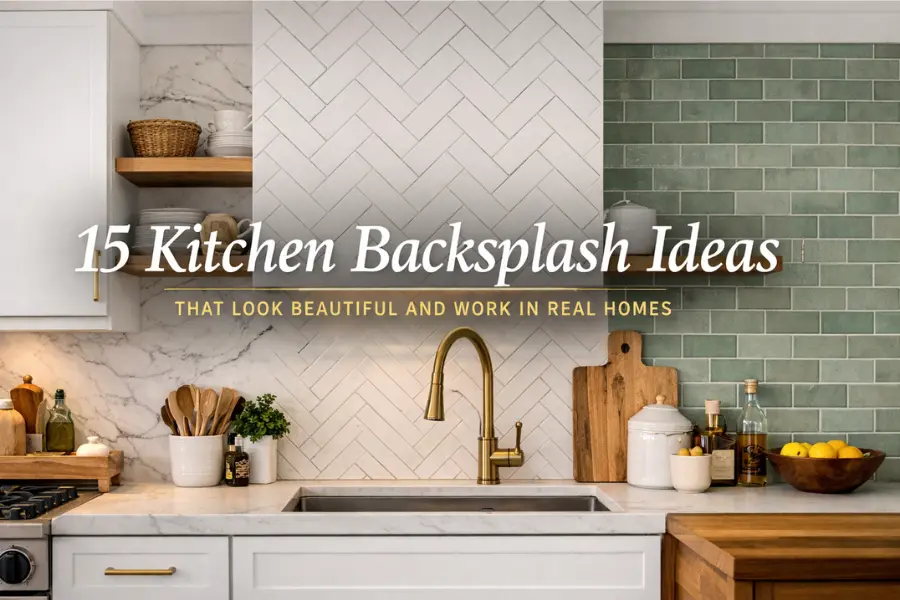
15 Kitchen Backsplash Ideas That Look Beautiful and Work in Real Homes
A kitchen backsplash can do much more than protect the wall behind your stove and counters. It can brighten a dark kitchen, add warmth to a plain layout, and give the whole space a more finished and thoughtful look. In my experience, it is one of the smartest design choices to focus on when you want a kitchen to feel more stylish without changing everything else.
In this guide, I am sharing 15 kitchen backsplash ideas that are all different, realistic, and suitable for real-life homes. I have included a mix of layouts, colors, materials, and patterns so there is something here for small kitchens, large open kitchens, and standard-size family kitchens too. Along the way, I will also share practical advice to help you choose a backsplash that not only looks beautiful but also works well for everyday life.
Table of Contents
15 Kitchen Backsplash Ideas
A beautiful backsplash should feel like it belongs in the kitchen, not like it was added just to follow a trend. I always recommend choosing a style that supports the size of the room, the cabinet color, the amount of natural light, and how much maintenance you want to deal with later. These ideas each bring something different, so you can find the one that truly suits your space.
1. Classic White Subway Tile With Dark Grout
White subway tile with dark grout is one of those backsplash ideas that continues to work year after year because it is simple, practical, and easy to style. The bright tile helps the kitchen feel open and clean, while the darker grout adds contrast and makes the pattern stand out in a more intentional way.
Why It Works
This style works because it balances freshness with structure. The white tile reflects light, which is especially helpful in smaller kitchens or kitchens that do not get a lot of natural daylight. At the same time, the dark grout outlines each tile clearly, so the backsplash does not disappear into the wall.
It also gives the kitchen a tidy, organized look. In many homes, that visual order makes a big difference. A backsplash like this can make older cabinets look more modern and can help a simple kitchen feel more designed without becoming too bold.
Best For
This backsplash is especially good for small kitchens, apartment kitchens, galley kitchens, and medium-size family kitchens. It is also a strong option for anyone who wants a timeless look that is easy to live with over time.
If your kitchen already has a lot going on, such as patterned counters or strong cabinet colors, this backsplash helps calm the space down. It works just as well in farmhouse kitchens as it does in modern and transitional homes.
Styling Tips
I like to pair white subway tile with warm wood accents, black cabinet handles, and simple pendant lights. That mix keeps the kitchen from feeling too plain or too cold. If you want a softer look, use light oak shelves or woven bar stools to add warmth.
You can also change the feel by adjusting the grout tone. A charcoal grout gives more contrast, while a soft gray grout looks gentler. If you want the backsplash to feel classic but still a little fresh, consider laying the subway tile in a vertical stack instead of the usual brick pattern.
2. Full-Height Marble Slab Backsplash
A full-height marble slab backsplash creates a smooth, seamless look that feels polished and elegant from top to bottom. Instead of using many small tiles, one large stone surface stretches across the wall, often from the countertop to the upper cabinets or even to the ceiling, making the kitchen feel more open and refined.
Why It Works
This idea works because it creates visual calm. There are no repeated grout lines to break up the wall, so the eye moves across the surface more naturally. That clean flow can make the whole kitchen feel larger and more expensive, even if the layout itself is quite simple.
Marble also brings in natural movement through its veining. That gives the kitchen interest without needing bright color or a busy pattern. The result feels luxurious, but not loud. It is one of the best choices when you want a backsplash that quietly becomes the star of the room.
Best For
This style is best for large kitchens, open-plan homes, and medium-size kitchens with simple cabinet lines. It also works beautifully in modern kitchens where clean surfaces and minimal clutter are already part of the design.
If you love a calm, upscale look and do not want too many separate materials competing for attention, this is a great direction. It suits homes where the kitchen connects directly to the dining or living room because it looks more like part of the architecture.
Styling Tips
Keep surrounding finishes simple so the marble can stand out properly. Flat-front cabinets, understated hardware, and warm under-cabinet lighting all work well here. I usually recommend avoiding heavily patterned counters if the backsplash already has strong veining.
If real marble feels too high-maintenance for your lifestyle, you can use a marble-look porcelain slab instead. It gives a similar effect with less worry. Soft brass or brushed nickel hardware usually looks especially beautiful with marble tones.
3. Vertical Stacked Zellige Tile
Vertical stacked zellige tile gives the kitchen a handmade, collected look while still feeling fresh and current. Zellige has slight color changes, uneven shine, and natural texture, which makes the wall feel more alive. When the tiles are stacked vertically, the layout also feels taller, cleaner, and more modern than a standard brick pattern.
Why It Works
This backsplash works because it mixes softness and structure in a very balanced way. The handmade surface adds depth and warmth, while the vertical layout gives the kitchen a sharper and more updated appearance. It feels detailed, but not fussy.
I often suggest this style when a kitchen feels flat or lacks personality. The tile catches light in a subtle way throughout the day, so the backsplash never looks dull. It gives movement without relying on a loud pattern or a bold color.
Best For
This is a lovely choice for normal-size kitchens, smaller kitchens with low ceilings, and anyone who wants something simple but not basic. It works especially well in kitchens with neutral cabinets, warm wood details, or natural stone counters.
It is also a smart fit for people who like a relaxed, slightly artisanal style. The overall look feels elevated, but still welcoming and easy to live with.
Styling Tips
Soft white, cream, pale sand, dusty rose, and muted green are all beautiful zellige colors for a backsplash. I often lean toward warm whites because they go with almost everything and never feel too harsh.
Pair this backsplash with natural wood cutting boards, ceramic vases, and simple open shelves. Try not to over-style the kitchen. Zellige already brings enough texture, so a cleaner setup usually looks best.
4. Warm Beige Stone Tile
Warm beige stone tile creates a kitchen that feels soft, natural, and comfortable right away. It does not shout for attention, but it adds depth in a very steady and beautiful way. This kind of backsplash is perfect when you want the kitchen to feel warm and grounded instead of bright and sharp.
Why It Works
This idea works because beige stone has a timeless quality that blends into many different homes. It adds texture through its surface and color variation, so even simple kitchens gain more richness. A warm neutral backsplash can also make white cabinets feel less cold and gray cabinets feel more inviting.
I find that this style works especially well in homes where comfort matters as much as appearance. It has a relaxed feel that does not come across as overly formal. The result is a kitchen that feels lived-in, settled, and balanced.
Best For
This backsplash is best for medium-size and large kitchens, especially those with warm wood flooring, cream cabinets, or classic design details. It also suits homes that mix traditional and modern elements together.
If you want a backsplash that will not date quickly and will still feel attractive years from now, warm stone is a dependable option. It is also helpful in busy family kitchens because its natural variation hides minor splashes and marks better than crisp white tile.
Styling Tips
I like to style beige stone with brushed brass fixtures, warm white walls, and wood accents in medium or light tones. That combination keeps the kitchen feeling relaxed and natural. A few black details can also add nice contrast if the room needs more definition.
Choose a countertop that does not fight with the stone. Soft white quartz, creamy marble-look surfaces, or plain butcher block all pair well. The goal is to let the backsplash add warmth without making the space feel heavy.
5. Glossy Emerald Green Tile
Glossy emerald green tile brings rich color and personality into the kitchen in a way that still feels elegant. It is a bold choice, but when it is done well, it can make the whole space feel more custom and memorable. This is the kind of backsplash that gives a kitchen real character.
Why It Works
This backsplash works because green has a natural richness that feels both fresh and grounded. The glossy finish reflects light, which keeps the color from feeling too flat or too dark. It adds energy to the kitchen without looking overly playful or overly dramatic.
I often suggest this idea when a kitchen has simple cabinets and needs one strong focal point. A backsplash like this can change the mood of the whole room. It takes a plain layout and makes it feel styled, intentional, and much more personal.
Best For
This idea works best in medium-size and large kitchens, especially those with white cabinets, light counters, or natural wood details. It also suits homes where the owner wants something more creative than plain neutrals but still wants the kitchen to look polished.
If your kitchen gets decent light, emerald green can look especially beautiful. It is also a nice option for open kitchens that need a feature wall to make the space feel more complete.
Styling Tips
Keep the rest of the room simple if you choose a strong color like this. White cabinets, walnut shelves, and warm brass handles work especially well. Avoid adding too many other bold colors nearby, or the kitchen may start to feel busy.
You can use rectangular tile, square tile, or slightly handmade glossy tile depending on the look you want. I personally prefer a shape with a little softness because it keeps the backsplash feeling more inviting and less sharp.
6. Tiny Square Mosaic Tile
Tiny square mosaic tile brings detail, texture, and a sense of craftsmanship to the kitchen. Because the tile pieces are small, they create a more layered and patterned look across the wall. This backsplash can feel charming, elegant, or even slightly vintage depending on the color and finish you choose.
Why It Works
This idea works because the smaller pieces give the wall more movement. In kitchens with simple cabinets and plain counters, that extra detail can stop the room from feeling flat. Mosaic tile is also useful in tighter spaces because it wraps neatly around corners and awkward wall areas.
I have found that this style can make a kitchen feel more thoughtful and complete. The trick is to keep the color palette under control. When the shade is calm, the texture can shine without making the backsplash feel too busy.
Best For
This backsplash is best for small kitchens, narrow galley kitchens, and compact cooking spaces where the wall area is limited but still important. It also works well in older homes where a little decorative detail feels more natural.
If you want your kitchen to feel more custom without choosing a large, bold statement, mosaic tile is a very realistic and useful option. It fits many layouts and can handle unusual spaces beautifully.
Styling Tips
I recommend choosing one soft tone such as white, warm gray, pale blue, or muted beige. That helps the backsplash feel elegant instead of crowded. Glossy finishes can help bounce light around the room, which is especially helpful in smaller kitchens.
Keep countertop items minimal so the wall detail remains visible. A few glass jars, one wooden tray, and a simple utensil holder are usually enough. Let the backsplash be the decorative layer.
7. Matte Black Tile
Matte black tile creates a modern, bold backsplash that gives the kitchen strong contrast and a more confident look. Unlike shiny black surfaces, matte black feels softer and more refined. It can make simple cabinets and shelves stand out beautifully while giving the space a clean and dramatic edge.
Why It Works
This backsplash works because it brings instant structure to a kitchen. Black naturally defines the wall and makes surrounding elements look sharper. The matte finish also helps the color feel richer and less harsh than a glossy surface would.
I like this idea when a kitchen needs more depth. Some kitchens feel too pale or too washed out, especially when everything is white or light gray. A matte black backsplash adds weight and balance, which can make the whole room feel more complete.
Best For
This is best for larger kitchens and standard-size kitchens with good lighting. It also suits modern homes, industrial-inspired spaces, and kitchens with white oak or walnut cabinetry.
If you have a very small and dark kitchen, this may not be the best option unless you use it on a limited section. In the right room, though, it can look striking and surprisingly elegant.
Styling Tips
Use matte black tile with lighter counters, warm wood cabinetry, or open shelving to soften the look. Under-cabinet lighting is especially helpful because it highlights the tile without making the wall feel flat or gloomy.
I would avoid pairing matte black with too many other dark surfaces unless the kitchen is very large. Give it some contrast so the room still feels welcoming and practical for daily use.
8. Soft Blue Handmade Tile
Soft blue handmade tile brings a light, relaxed feeling to the kitchen and works especially well when you want color without too much intensity. The slight unevenness in a handmade tile gives the wall a more natural and collected appearance, which helps the kitchen feel both fresh and comfortable.
Why It Works
This idea works because soft blue is calm, clean, and easy to live with. It adds color in a gentle way, so the kitchen still feels bright and open. The handmade finish adds personality, which keeps the backsplash from looking flat or too perfect.
In my experience, this style is ideal for homeowners who want a kitchen that feels cheerful but not loud. It has enough charm to stand out, but it still works well with many different materials and cabinet styles.
Best For
This backsplash works in small kitchens, normal-size kitchens, and family kitchens that need a fresh update. It is especially good in homes with white cabinets, light wood finishes, or a slightly coastal or relaxed style.
It also suits kitchens that do not get harsh direct light, because the softer blue still shows up beautifully without becoming overpowering. It is a dependable choice when you want something light but not plain.
Styling Tips
Pair soft blue tile with white cabinets, brushed nickel or brass hardware, and pale wood stools or shelving. Natural textures like linen runners or woven baskets also work very well with this look.
Keep the surrounding colors simple so the blue remains the gentle highlight. This is not the kind of backsplash that needs competition. Let it create the soft mood on its own.
9. Herringbone Tile in a Neutral Shade
Herringbone tile in a neutral shade gives the kitchen movement and elegance without relying on strong color. The pattern itself becomes the feature, while the soft tone keeps the overall result calm and timeless. It is one of my favorite ways to make a backsplash feel special without making it hard to decorate around.
Why It Works
This style works because it adds pattern in a subtle way. Even when the tile is white, cream, or warm gray, the angled layout brings enough visual interest to lift the whole kitchen. It feels thoughtful, but not overdone.
I often recommend herringbone when someone wants their kitchen to feel more custom. The same tile in a straight layout might look simple, but in a herringbone pattern, it suddenly feels more refined and designed. It is a small change that makes a big difference.
Best For
This idea works best in normal-size kitchens and medium-size family kitchens. It also suits transitional homes where the design mixes classic and modern details.
If you want something timeless with a little personality, herringbone is a strong option. It gives enough detail to feel interesting but still works well for long-term style.
Styling Tips
Use warm white, greige, light taupe, or pale gray tile for the most flexible result. I usually recommend keeping the grout close to the tile color so the pattern looks elegant rather than too sharp.
Since the layout already adds movement, keep counters and decor fairly simple. A clean countertop, a few wood accents, and soft lighting are usually all this style needs.
10. Terracotta Tile
Terracotta tile adds warmth, texture, and a lived-in beauty that can make a kitchen feel instantly more welcoming. Its earthy color brings softness and personality, especially in homes that lean rustic, Mediterranean, farmhouse, or relaxed traditional. It is one of the best choices when a kitchen feels too cold or too new.
Why It Works
This backsplash works because it introduces natural warmth in a way very few materials can. The reddish-brown and clay tones make the kitchen feel grounded and cozy. Even a simple cabinet layout feels more charming when paired with terracotta.
I have always liked terracotta for kitchens that need soul. Some spaces are technically beautiful but still feel a little lifeless. Terracotta helps solve that problem by bringing in an old-world quality that feels honest and warm rather than polished and formal.
Best For
This backsplash is best for larger kitchens, country kitchens, farmhouse kitchens, and homes with warm flooring or wooden beams. It also works beautifully in standard-size kitchens if the rest of the design is simple and balanced.
If you love natural materials and a kitchen that feels relaxed and personal, terracotta is a great choice. It is especially good in homes where comfort matters more than a perfect showroom finish.
Styling Tips
Terracotta looks beautiful with cream cabinets, open wood shelving, black iron details, and warm lighting. I also like it with aged brass or bronze fixtures. Those finishes support the earthy feeling without making the kitchen feel too themed.
Try to balance the warmth with lighter counters or painted cabinetry. Too many heavy tones in one place can make the room feel dark. A little contrast keeps terracotta looking fresh.
11. Mirrored Backsplash
A mirrored backsplash is a smart and stylish way to make a kitchen feel brighter and more open. It reflects light, creates the feeling of extra space, and gives a compact kitchen a more airy look. When used thoughtfully, it can feel elegant rather than flashy.
Why It Works
This backsplash works because it solves a practical problem while also looking attractive. In smaller or darker kitchens, wall space can feel tight and enclosed. A mirrored surface reflects both natural and artificial light, which helps lift the whole room.
I especially like this idea for kitchens that feel boxed in. It can visually stretch the space without changing the footprint at all. That makes it one of the most effective small-kitchen design moves when you want a noticeable difference.
Best For
This is best for very small kitchens, galley kitchens, apartments, and kitchens with limited daylight. It can also work in standard-size kitchens if the goal is to add a more polished, decorative finish.
If you want the kitchen to feel a little more glamorous while also solving the issue of darkness or tightness, a mirrored backsplash is worth considering. It is not for every style, but in the right setting, it works beautifully.
Styling Tips
I prefer antiqued or lightly aged mirror rather than a fully sharp reflective surface. It feels softer, more stylish, and more forgiving in everyday use. It also blends more naturally into home kitchens.
Keep the decor around it simple. Too many objects reflected in the mirror can look cluttered. Clean lines, a few carefully chosen accessories, and tidy counters will help this backsplash look its best.
12. Marble-Look Porcelain Tile
Marble-look porcelain tile gives you the elegance of marble with easier care and better durability for daily life. It usually includes soft veining and a polished or matte finish that mimics real stone, but it is far more practical for busy homes where spills, cooking mess, and maintenance all matter.
Why It Works
This idea works because it combines beauty and practicality. Many people love the look of marble, but not everyone wants the upkeep. Porcelain gives a similar visual effect while being easier to clean and less likely to cause stress in a hardworking kitchen.
I often recommend this style to families and first-time renovators because it feels high-end without being delicate. It is a good example of how smart design choices can still look beautiful. You do not have to choose between pretty and practical here.
Best For
This backsplash is ideal for busy family kitchens, standard-size kitchens, and medium-size kitchens that need a polished but low-maintenance finish. It also suits homes where the kitchen gets heavy use every day.
If you want a classic surface that will stay relevant for years, marble-look porcelain is a very sensible choice. It feels elevated, but it also supports real life, which matters just as much.
Styling Tips
Choose larger tile pieces if you want a more seamless look. Fewer grout lines make the backsplash feel cleaner and more modern. Soft brass, chrome, and matte black fixtures can all work depending on the undertone of the tile.
Keep cabinet colors simple, such as white, soft gray, mushroom, or pale wood. That allows the veining in the backsplash to show nicely without creating too many competing patterns.
13. Two-Tone Backsplash With a Shelf Break
A two-tone backsplash with a shelf break uses one finish on the lower section of the wall and another finish above, often divided by a slim shelf. It creates a layered and custom look that feels more designed than a single backsplash material, while still staying realistic for many kitchen layouts.
Why It Works
This backsplash works because it adds depth and variation in a controlled way. The shelf gives the eye a natural stopping point, and the change in material keeps the wall from feeling flat. It can make even a simple kitchen look more thoughtful and tailored.
I like this idea when a homeowner wants something different but not too bold. It gives you a chance to mix textures or colors without covering the whole kitchen in one statement material. That balance often makes the space feel more personal.
Best For
This is best for standard-size and large kitchens with enough wall area to clearly show both finishes. It is also good for kitchens with open shelving or homes where styling details are part of the overall design.
If you enjoy decorating with small framed prints, ceramics, or jars, the added shelf can be both useful and beautiful. It turns the backsplash into a more active part of the room.
Styling Tips
Use a more durable finish like tile or stone behind the cooking area, then a softer finish or a second tile above. Keep the colors connected so the wall still feels cohesive. For example, pair a warm white lower tile with a pale beige upper section.
Do not overcrowd the shelf. A few useful and attractive items are enough. This style looks best when the layers feel intentional, not overly decorated.
14. Textured White Tile
Textured white tile is a quiet but beautiful backsplash choice that adds detail through shape and surface rather than color. It keeps the kitchen bright and timeless while still giving the wall enough interest to feel special. This is a great solution for homeowners who want subtle design that still has presence.
Why It Works
This backsplash works because texture creates dimension without creating visual clutter. Light hits the raised or uneven surface differently throughout the day, so the wall always has a little movement. That means the kitchen feels layered even when the color palette stays simple.
I often suggest this option for people who say they want a white kitchen but do not want it to feel flat or boring. Textured white tile solves that problem in a very elegant way. It keeps everything light while still giving the room a finished look.
Best For
This is best for small kitchens, minimalist kitchens, and standard-size kitchens where brightness matters. It also works beautifully in homes where the design style is clean, soft, and not too busy.
If you want a backsplash that will not easily go out of style and will work with changing decor over time, this is a dependable choice. It is flexible, attractive, and easy to live with.
Styling Tips
Use warm lighting under the cabinets to bring out the texture in the tile. That one detail can make a big difference in the evening. Choose simple counters and understated cabinet hardware so the backsplash gets the attention it deserves.
White does not have to mean cold. Pair textured white tile with wood cutting boards, linen towels, and warm metal finishes to make the kitchen feel softer and more lived in.
15. Mixed-Width Stone Strips
Mixed-width stone strips create a layered, architectural backsplash with plenty of texture and depth. The narrow pieces sit side by side in varying widths, which gives the wall a more natural and dimensional appearance. This idea feels modern, but it also has an earthy, grounded quality that works well in many homes.
Why It Works
This backsplash works because it brings strong visual texture to the kitchen. If the cabinets and counters are very simple, stone strips can become the feature that gives the room personality. The variation in width and tone keeps the wall interesting from every angle.
I like this style in kitchens that need a little drama without using color. It is bold, but in a natural way. The texture does most of the work, so the kitchen still feels mature and practical rather than trendy.
Best For
This idea is best for large kitchens, open kitchens, and modern homes with enough wall space for the texture to be appreciated properly. It can also work in standard-size kitchens if used on one feature section rather than the entire wall.
If your goal is to make the backsplash stand out as a design element, this is a very effective option. It adds real presence, especially in kitchens with high ceilings or strong natural light.
Styling Tips
Keep surrounding materials simple. Smooth counters, plain cabinet fronts, and minimal decor help the texture shine. Too many other patterns nearby can make the kitchen feel crowded.
I usually recommend warm gray, taupe, sand, or mixed neutral stone tones for this style. Those colors give depth without making the room feel too dark. Good lighting is important here because it helps highlight the texture beautifully.
Mistakes to Avoid
Choosing a backsplash can feel simple at first, but I have seen many kitchens end up less balanced because a few key things were overlooked. A backsplash should not only look pretty in a photo. It should suit the size of the kitchen, work with the rest of the finishes, and still feel practical months and years later.
Choosing a Style That Does Not Match the Kitchen Size
One of the most common mistakes is picking a backsplash without thinking about the size of the space. A very dark or heavily patterned backsplash can overwhelm a small kitchen. On the other hand, a very plain backsplash may disappear too much in a large kitchen that needs a stronger feature.
Always step back and look at the whole room. Ask yourself whether the backsplash is helping the kitchen feel balanced. In small kitchens, lighter tones and reflective finishes are often easier to work with. In larger kitchens, you usually have more freedom to use texture, depth, or bolder materials.
Ignoring the Cabinet and Countertop Tones
A backsplash never stands alone. It sits between the cabinets and counters, so all three need to work together. I often see people choose a backsplash they love on its own, only to realize later that it clashes with the cabinet color or competes with the countertop pattern.
Try to compare samples side by side before making a final choice. Look at undertones too. A warm beige backsplash next to a cool gray countertop may not feel as harmonious as expected. The goal is not to match everything perfectly, but to make sure the materials feel connected.
Using Too Many Busy Elements at Once
If the countertop has heavy veining, the floor has strong pattern, and the backsplash also has bold detail, the kitchen can start to feel crowded. This is especially important in smaller spaces where every surface is more noticeable.
I always recommend choosing one main feature and letting the other surfaces support it. If the backsplash is bold, keep the counters simpler. If the counters are dramatic, use a calmer backsplash. Good kitchen design often comes from restraint, not just adding more.
Forgetting About Cleaning and Maintenance
Some backsplash materials are beautiful, but they may not be right for every home. If you cook often, have children, or prefer low-maintenance surfaces, it is important to think about how easy the material will be to clean. Too much texture or very delicate finishes may become frustrating over time.
This does not mean you have to avoid beautiful materials. It just means you should be honest about your lifestyle. A practical choice that still looks attractive is usually better than a high-maintenance finish that becomes stressful to manage.
Stopping the Backsplash Too Early
Another mistake I often notice is ending the backsplash in a way that feels awkward or unfinished. For example, a short backsplash line on one wall may look accidental if the rest of the kitchen has taller features. The stopping point should feel intentional and visually clean.
Think about where the eye naturally travels in the kitchen. In some spaces, running the backsplash all the way to the upper cabinets works best. In others, taking it to the ceiling behind open shelving can create a more complete and polished result.
Following Trends Without Thinking Long Term
Trends can be fun, and I do believe there is room for personality in every kitchen. Still, it helps to ask whether you will enjoy the backsplash two or three years from now, not just this season. A trend can inspire your direction, but the final choice should still feel connected to your home and your daily life.
If you love a stronger color or a more creative layout, that is perfectly fine. Just make sure there is a real reason you are choosing it. The most successful kitchens usually combine personal taste with practical thinking.
Conclusion
A kitchen backsplash may cover only part of the wall, but it has a huge effect on how the whole room feels. It can brighten a small kitchen, warm up a large one, and help a very plain layout feel complete. In my experience, this is one of the most useful design features to get right because it combines style and function in such an important part of the home.
The best backsplash idea is not simply the boldest or the most expensive one. It is the one that fits your kitchen size, supports your cabinet and countertop choices, and works well for your everyday routine. Some homes need the brightness of classic white tile. Others need the richness of green, the softness of stone, or the texture of a more layered finish.
If you are choosing between several ideas, start with the mood you want your kitchen to have. Do you want it to feel light, cozy, modern, natural, dramatic, or timeless? Once you know that, the right backsplash becomes much easier to spot. A beautiful kitchen usually comes from clear choices, not too many choices.
FAQs
A lot of people feel unsure about backsplash decisions because there are so many materials, layouts, and style directions available now. These are the questions I hear most often, especially from beginners who want their kitchen to look beautiful but still feel practical and easy to manage.
What is the most timeless kitchen backsplash?
White subway tile is still one of the most timeless kitchen backsplash choices. It works in many styles, from farmhouse to modern, and it continues to look clean and classic year after year. If you want something slightly more elevated but still timeless, textured white tile or neutral herringbone tile are also strong options.
Which backsplash is best for a small kitchen?
For a small kitchen, I usually recommend lighter colors and finishes that help reflect light. White subway tile, soft blue handmade tile, textured white tile, and mirrored backsplashes can all help a compact kitchen feel more open. The goal is to keep the room bright and not visually heavy.
Should backsplash be lighter or darker than cabinets?
There is no strict rule, but the backsplash should create enough contrast to feel intentional. If the cabinets are dark, a lighter backsplash often helps balance the room. If the cabinets are light, you can go either light for a soft look or darker for more contrast. The final choice depends on the mood you want and how much light the kitchen gets.
What backsplash is easiest to keep clean?
Smooth surfaces with fewer grout lines are usually the easiest to clean. Marble-look porcelain, larger-format tile, and slab backsplashes are all practical options. If easy maintenance matters a lot to you, avoid overly rough textures or very tiny grout-heavy layouts unless you truly love the look and do not mind the upkeep.
Is a full-height backsplash worth it?
Yes, in many kitchens a full-height backsplash is absolutely worth it. It creates a more finished and custom look, especially in modern and open-plan spaces. It can also make the kitchen feel taller and more polished. The key is to choose a material that still feels balanced with the rest of the room.
Can I mix backsplash styles in one kitchen?
Yes, but it should be done carefully. A two-tone backsplash or a mixed-material wall can look beautiful when the colors and finishes feel connected. I would keep the palette limited and make sure there is a clear reason for the change. Too many unrelated materials can make the kitchen feel busy instead of designed.
What backsplash works best with white cabinets?
White cabinets are very flexible, which is one reason they are so popular. They look beautiful with white subway tile, warm beige stone, soft blue tile, emerald green tile, marble-look porcelain, and textured white finishes. Since white cabinets are neutral, the backsplash becomes a great place to add warmth, texture, or color depending on the look you want.
How do I choose the right backsplash for my kitchen?
Start by looking at your kitchen size, cabinet color, countertop pattern, and lighting. Then think about the mood you want the room to have. If you want something easy and timeless, go for a classic neutral. If you want personality, choose color or texture in a controlled way. I always suggest ordering samples first because seeing the material in your own light makes a big difference.