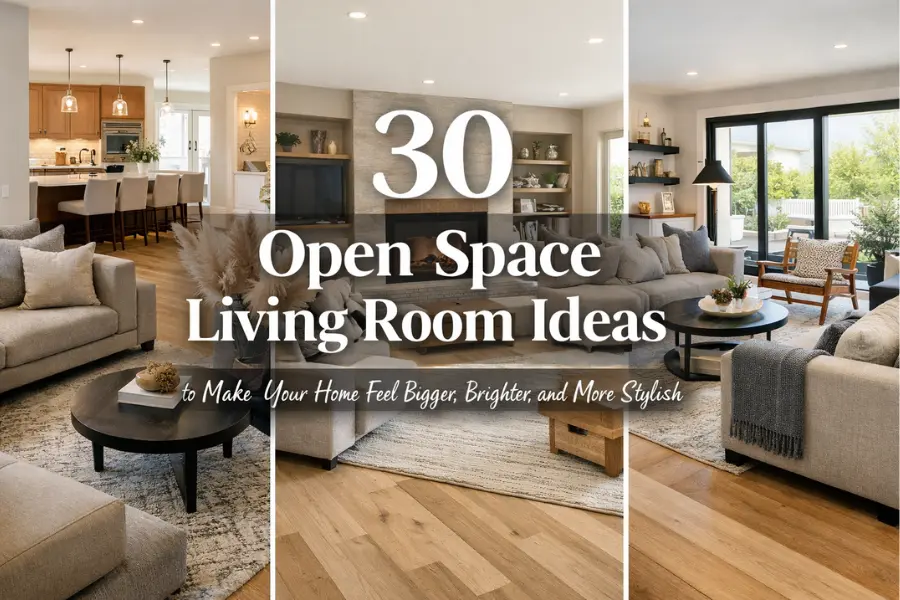
30 Open Space Living Room Ideas to Make Your Home Feel Bigger, Brighter, and Stylish
Open space living rooms can look beautiful, bright, and easy to enjoy, but they only work well when every part of the room feels connected and useful. In most homes, the challenge is not getting more space. The real challenge is making one large area feel warm, organized, and comfortable at the same time. Good open-plan decorating does exactly that. It gives each zone a purpose, keeps movement easy, and helps the whole room feel calm instead of scattered.
If you are decorating an open living room for the first time, the best approach is to think like a planner before you think like a shopper. Start with flow, then decide where the sitting area should go, then build in colour, lighting, texture, and storage. That order matters because open rooms need balance more than they need lots of decor.
In the ideas below, I am sharing 30 different ways to decorate an open space living room in a way that feels practical, stylish, and beginner friendly.
1. Treat the whole room as one connected space
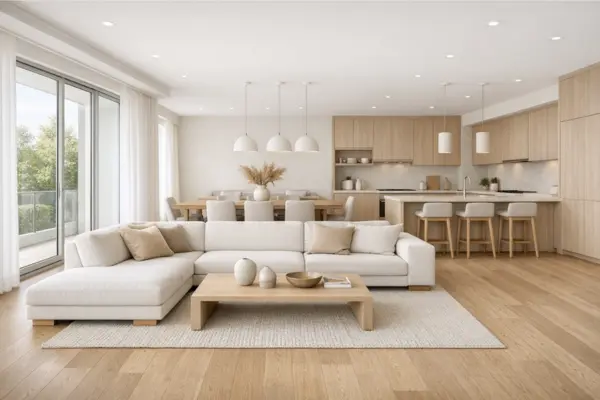
One of the smartest ways to decorate an open space living room is to stop thinking of it as separate rooms first. Instead, look at the full area as one large design story. Better Homes & Gardens recommends planning the living room together with the adjoining spaces so the finishes, colours, and furniture styles work in harmony, even if they are not exactly the same. This is what keeps an open room from feeling broken apart or random.
Items needed
You need a simple room plan, a shared colour direction, a few repeating materials such as wood or metal, and furniture styles that feel related rather than mixed without purpose.
How to start with this idea
Stand in the middle of the room and look at everything that can be seen at once. Notice the kitchen finishes, dining furniture, flooring, and wall colours. Then choose two or three elements that can repeat through the whole space, such as warm wood, black metal, or soft neutral fabric. This gives the entire open room one clear identity from the start.
2. Start with a neutral base palette
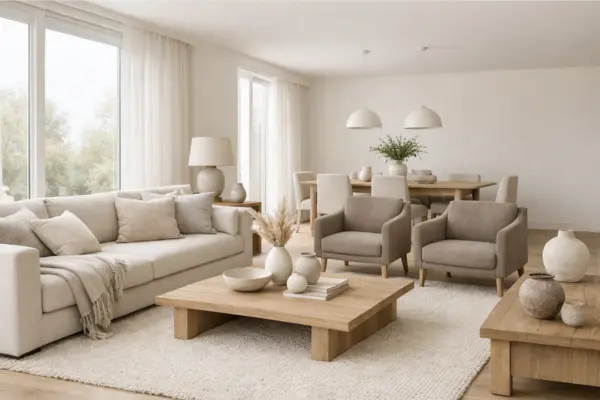
A neutral base makes an open living room feel lighter, calmer, and easier to connect with nearby areas. Better Homes & Gardens points to neutral palettes as an easy way to connect open areas, and Castlery also frames open-concept living as a style that benefits from a balanced, welcoming foundation. A neutral base does not mean boring. It simply gives you room to layer texture and accent colours later.
Items needed
You need paint samples in soft white, cream, beige, greige, or light warm grey, plus neutral upholstery or rugs if you are updating furniture too.
How to start with this idea
Pick one wall colour for the connected space and test it in daylight and evening light. Then choose your largest furniture pieces in calm tones first. When the base is quiet, the room feels bigger and more settled, and it becomes much easier to decorate the smaller details without creating visual noise.
3. Repeat accent colours from nearby zones
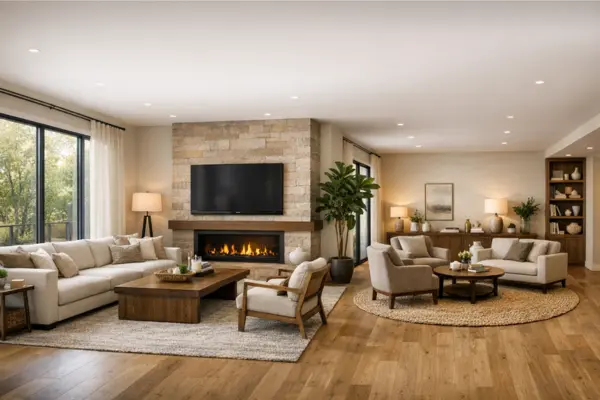
Open rooms feel more finished when colours quietly travel from one zone to another. Better Homes & Gardens suggests using favourite colours from the kitchen in softer living room materials like pillows, slipcovers, and rugs. That small repetition creates a visual link without making everything match too much.
Items needed
You need two or three accent colours already present in the nearby kitchen or dining area, plus soft decor pieces like cushions, throws, art, or a rug.
How to start with this idea
Look at the undertones in your cabinets, backsplash, stools, or dining chairs. Then bring one or two of those shades into the living room through fabric and accessories. Keep it soft and repeated rather than bold and everywhere. This simple move helps the full space feel designed as one unit.
4. Keep the same metal finish throughout
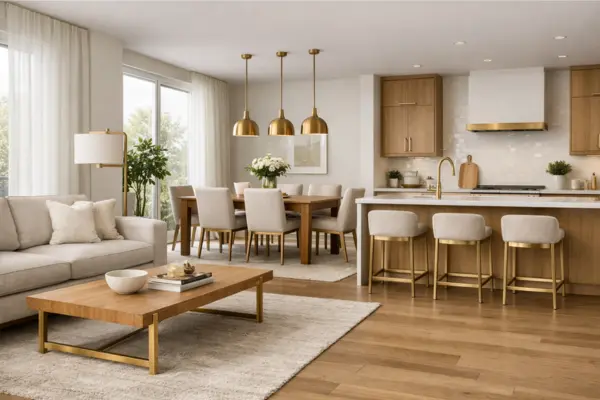
Small details matter a lot in an open room because the eye can travel so far. Dowsing & Reynolds recommends using the same metal finishes through the space, including taps, lights, sockets, and switches, to create a more visually coherent look. This is one of those quiet designer moves that makes a room feel polished.
Items needed
You need one main finish such as black, brass, chrome, or brushed nickel, and a plan for where that finish will repeat.
How to start with this idea
Choose your main metal based on what is already fixed in the room. Then repeat that finish in lighting, cabinet hardware, table legs, frames, or floor lamps. You do not need every single detail to match, but the main finish should appear often enough to feel intentional.
5. Use one flooring material across the open area
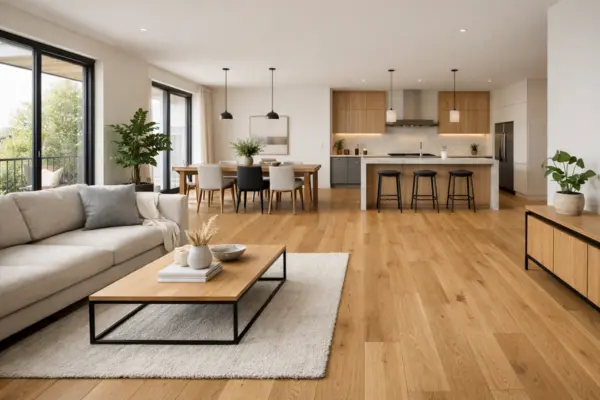
Consistent flooring is one of the easiest ways to make an open-plan space look larger and calmer. Better Homes & Gardens recommends using the same flooring across connected areas to keep the design unified. When the floor changes too often, the room can feel cut up.
Items needed
You need one flooring choice for the visible connected zones, or a plan to visually blend old and new flooring as closely as possible.
How to start with this idea
If you are renovating, choose one material for the main open area. If you are not renovating, work with what you have and avoid adding extra floor breaks with clashing mats or mismatched small rugs. Let the large floor surface feel continuous, then define spaces with furniture and lighting instead.
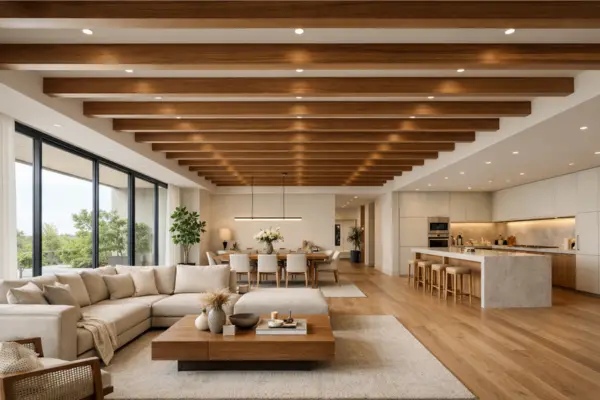
6. Repeat ceiling details for a custom look
Many people stop decorating at eye level, but ceilings can do a lot in open rooms. Better Homes & Gardens highlights repeating ceiling treatments such as beams or tongue-and-groove detailing to connect different parts of the room. This makes the open area feel more thoughtfully finished and less flat.
Items needed
You need a ceiling detail that can repeat, such as beams, paneling, wood boards, or even a repeated paint treatment.
How to start with this idea
Look at the ceiling in the living room and nearby zones. If one area already has character, see whether that detail can be echoed in another zone. Even a lighter version of the same finish can help pull the whole room together without making it feel heavy.
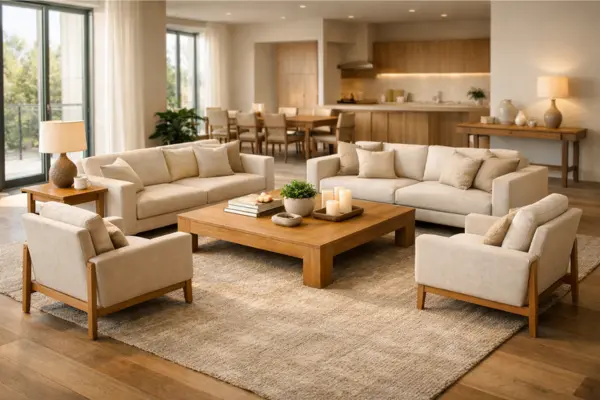
7. Create a conversation-friendly furniture layout
Open rooms often feel cold when all the seating faces the television or hugs the walls. Better Homes & Gardens recommends arranging seats so they face one another and support conversation. This makes the space feel warmer and more welcoming right away.
Items needed
You need a sofa, one or two chairs if possible, a coffee table, and enough room to let the seating group face inward.
How to start with this idea
Pull the sofa and chairs closer together than you think you need to. Let the furniture form a clear social zone. Add a rug underneath to anchor the grouping. In open spaces, a tight seating arrangement feels more comfortable than furniture spread too far apart.
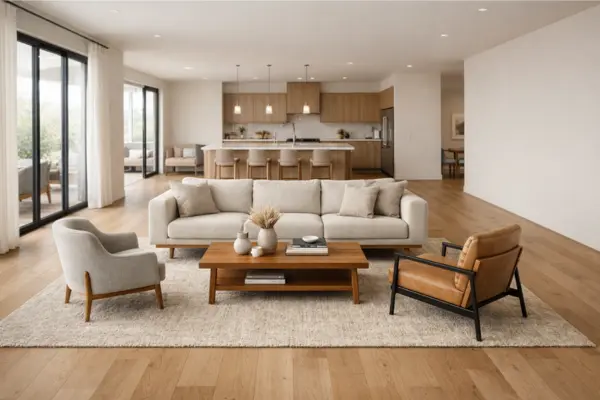
8. Float furniture instead of pushing it to the walls
Castlery explains that furniture can be used to create subtle divisions in an open room. Floating pieces away from the walls helps shape proper zones and avoids the empty-middle look that many beginners accidentally create.
Items needed
You need a rug large enough for the main seating area, a sofa that can sit forward, and a layout that leaves walking space behind or beside the furniture.
How to start with this idea
Move the sofa off the wall and place it where it best defines the living area. Then build the rest of the seating around it. Leave enough room for walking paths, but do not be afraid to let the furniture sit in the center of the room. In open layouts, this often looks better than lining everything around the edges.
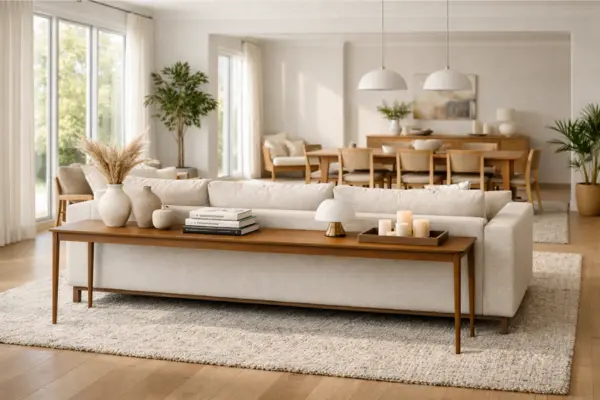
9. Place a console table behind the sofa
Better Homes & Gardens recommends a console behind the sofa because it strengthens the shape of the living area and adds useful storage. This is especially helpful in open rooms where a sofa often acts as the divider between the living space and the rest of the room.
Items needed
You need a console table that fits the sofa length well, plus a few simple accessories or practical storage pieces.
How to start with this idea
Measure the back of your sofa first. Choose a console that is not deeper than the walkway can handle. Style the top with a lamp, tray, or a couple of books, and let the table create a stronger visual edge behind the seating area.
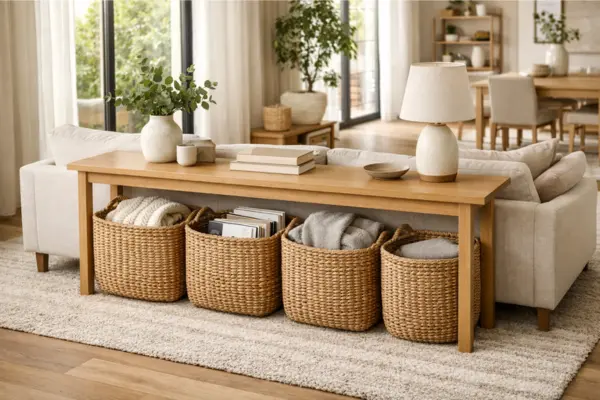
10. Use baskets under the console for hidden storage
Better Homes & Gardens specifically suggests baskets under a console table for blankets, remotes, and other essentials. In an open room, visible clutter spreads quickly, so hidden storage matters even more than in closed rooms.
Items needed
You need baskets, bins, or boxes that fit neatly under your console or side table.
How to start with this idea
Use matching baskets so the storage looks tidy instead of busy. Assign each one a purpose, such as throws, toys, electronics, or magazines. This keeps the living area feeling calm while still making everyday items easy to grab.
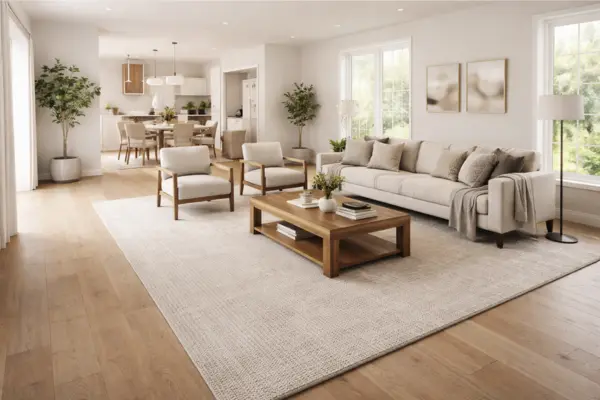
11. Define zones with large rugs
Castlery recommends using rugs to identify spaces, and Better Homes & Gardens also points to rugs as a way to define a seating area. In a large open room, a rug works like an invisible wall. It shows where one function starts and stops.
Items needed
You need a rug large enough to anchor the main seating area and, if relevant, a second rug for a nearby dining zone.
How to start with this idea
Place the largest rug under the living room seating first. Make sure at least the front legs of the main furniture sit on it. If the room includes dining space too, choose a second rug that relates in colour or texture without being identical.
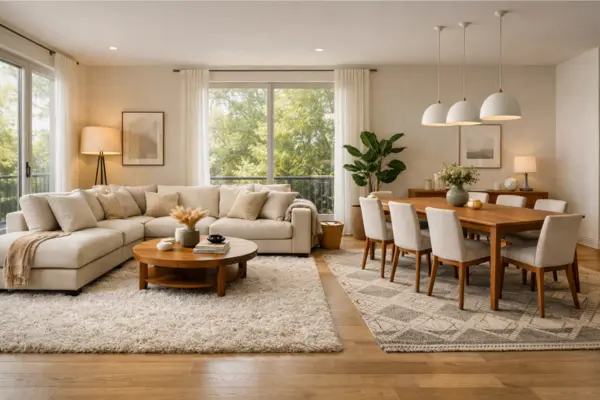
12. Change rug texture or pattern between zones
Castlery suggests using different textures and patterns to distinguish open zones. This is a simple way to separate functions while keeping the full room coordinated. A plush rug can make the living room feel soft and relaxed, while a flatter rug can make a dining area feel cleaner and more practical.
Items needed
You need rugs in different textures, pile heights, or patterns that still share a similar colour family.
How to start with this idea
Choose one rug that feels cozy for the lounge area and another that feels more practical for the dining side. Keep one design thread consistent, such as warm tones, subtle pattern, or natural fiber texture, so the zones feel different but still related.
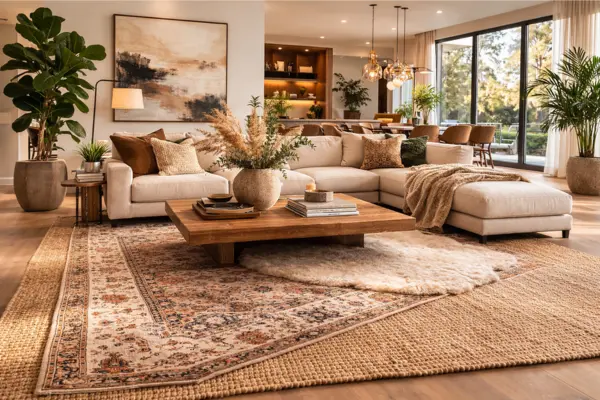
13. Layer rugs for depth and softness
Castlery notes that layering rugs can add depth and visual interest. This is a great trick when an open room feels flat or when you want the living area to feel extra cozy without changing the whole space.
Items needed
You need one larger base rug and one smaller accent rug in a shape or texture that adds contrast.
How to start with this idea
Start with a simple neutral base rug. Then place a smaller rug on top at a slight angle or centered under the coffee table. Keep the colours connected so the layering looks styled rather than messy. This works especially well in large open rooms that need more warmth.
14. Break up long sight lines with furniture
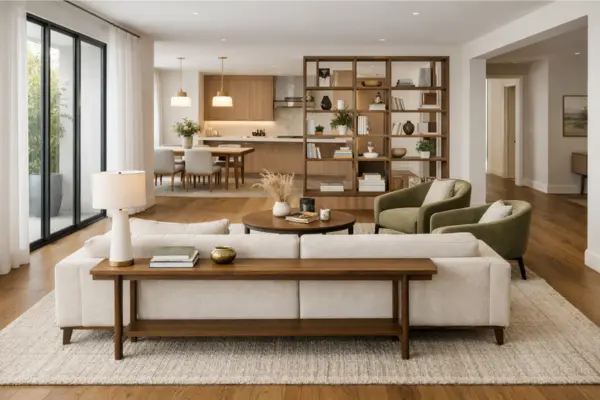
Castlery advises breaking up long sight lines with pieces like bookshelves and console tables. Open rooms often have a long visual stretch, and without something to interrupt it, the room can feel too empty or too exposed.
Items needed
You need one medium-height piece such as a console, bookshelf, bench, or sofa placed with purpose.
How to start with this idea
Look for the longest empty view in the room. Then place one useful piece where it can gently stop the eye and suggest a new zone. Keep it airy rather than bulky so the room still feels open. This is about soft division, not blocking the room.
15. Use a floor mirror as a light-reflecting divider
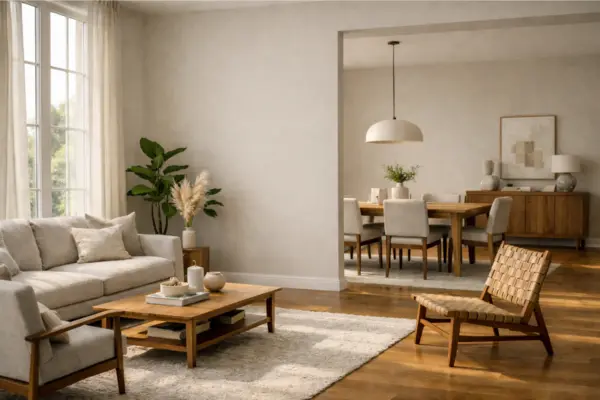
Castlery highlights a floor mirror as a way to reflect light, create the illusion of more space, and act as a visual divider. This is a smart choice in open rooms that need brightness and shape at the same time.
Items needed
You need a tall mirror with a frame that suits the room and a safe place to lean or mount it.
How to start with this idea
Place the mirror where it can bounce natural light back into the room. Let it sit near the edge of a living zone so it helps mark that area without adding heaviness. In smaller open rooms, this can make the whole layout feel more open and polished.
16. Let a sectional sofa define the living area
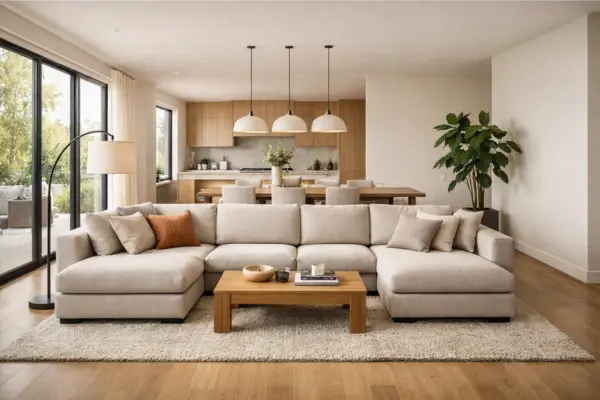
Castlery explains that a sectional sofa creates a natural barrier between the living area and the dining space while also giving plenty of seating. In many open rooms, a sectional does the zoning work for you.
Items needed
You need a sectional sized for the room, a rug, and enough clearance for walking around the sofa.
How to start with this idea
Position the sectional so its back edge faces the next zone, such as the dining area or kitchen. This clearly outlines the living room without using any wall or divider. Just make sure the sofa does not block a natural path through the space.
17. Add plants or decorative screens between zones
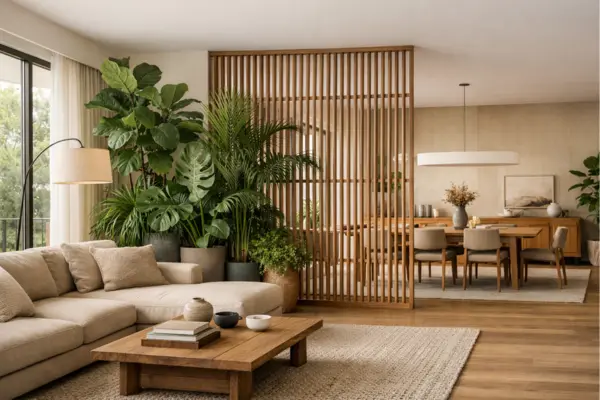
Castlery recommends plants or decorative screens to add texture and break up the monotony of a large open room. This is one of the easiest ways to separate zones while keeping the room soft and natural.
Items needed
You need one or two tall plants, a lightweight screen, or a decorative open divider that still lets light pass through.
How to start with this idea
Place a tall plant or screen where one zone naturally changes into another. Do not fully close the area. Let the divider suggest a boundary while still keeping the open feeling. Plants work especially well because they add life, softness, and height at the same time.
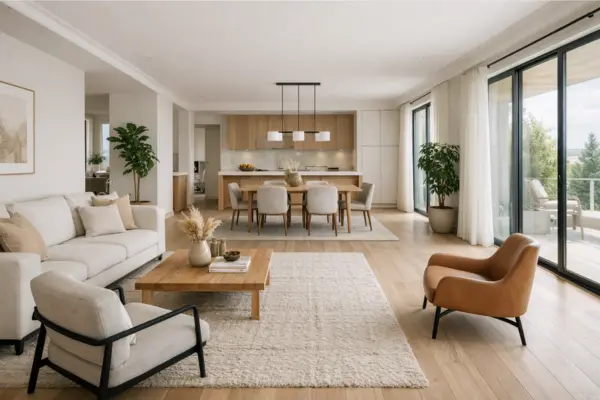
18. Create clear, natural walkways
Both Better Homes & Gardens and Castlery stress the importance of easy flow and natural pathways in open plans. A beautiful room will still feel awkward if people cannot move through it comfortably.
Items needed
You need a layout plan and enough empty space between furniture pieces to move through the room easily.
How to start with this idea
Before styling anything, walk through the room the way you normally live in it. Notice how you move from the kitchen to the sofa, from the hallway to the dining table, and from doors to windows. Then arrange the furniture around those paths instead of against them.
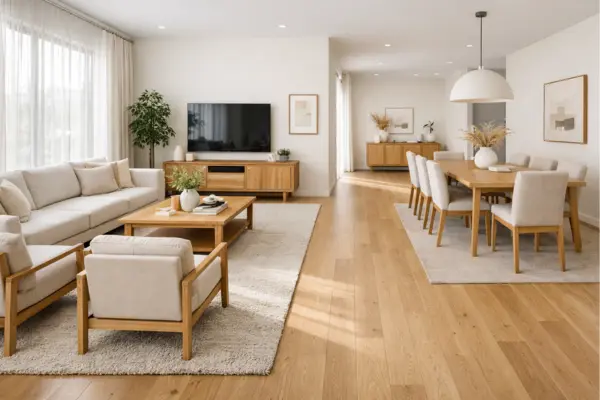
19. Keep walkways at least 36 inches wide
Better Homes & Gardens gives a specific guide for open floor plan flow: walkways should be at least 36 inches wide for safe, smooth movement. This is one of the most practical rules in open-plan decorating.
Items needed
You need a measuring tape and a willingness to adjust furniture placement if a path feels tight.
How to start with this idea
Measure the main routes through the room, especially behind the sofa, around the dining area, and near the kitchen island. If anything feels narrow, pull pieces in or move them slightly until the room flows more naturally. This small fix can completely change how the whole room feels.
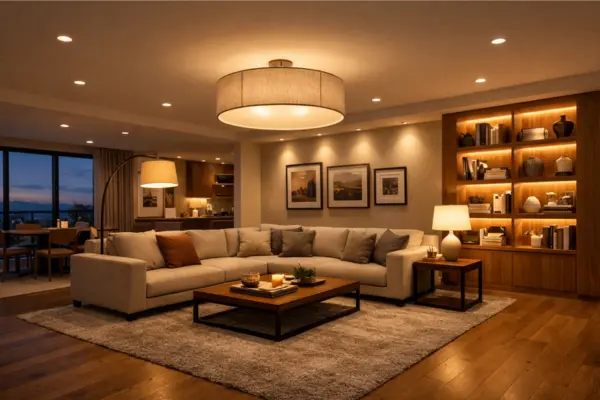
20. Build a layered lighting scheme
Dowsing & Reynolds says layered lighting is key in a multifunctional open-plan space because different tasks and moods need different kinds of light. This is especially true in one big room where cooking, relaxing, eating, and entertaining may all happen in the same open area.
Items needed
You need ambient lighting, task lighting, and accent lighting, such as ceiling lights, pendants, table lamps, or wall lights.
How to start with this idea
Think in layers. First decide how the whole room will be lit. Then add task light where work happens, like near an island or reading chair. Finally add softer lighting for mood, such as lamps or wall lights in the living area. This makes the open room functional all day and cozy at night.
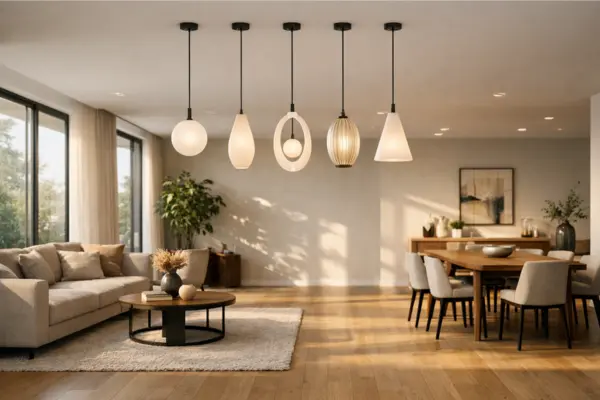
21. Hang pendant lights over transition areas
Dowsing & Reynolds specifically mentions pendant lights above a kitchen island as a strong form of task lighting that also helps break up the space and define zones. Pendant lights are useful because they mark an area from above without taking up floor space.
Items needed
You need pendant lights sized for the island, breakfast bar, or another transition point between zones.
How to start with this idea
Choose pendants that suit the overall style of the room, then use them over one feature area such as the island or bar. This helps the eye understand that one part of the room has a different function, while the rest of the room still feels open and connected.
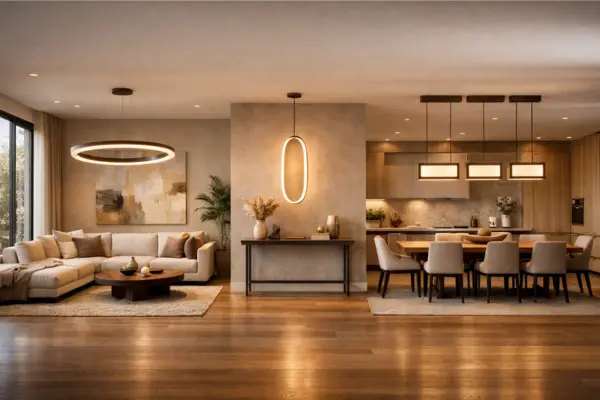
22. Use different fixture shapes to mark different zones
Better Homes & Gardens suggests using eye-catching light fixtures to define separate areas and notes that different fixture shapes can accent space boundaries. This is a subtle but very useful idea in open rooms.
Items needed
You need at least two kinds of lighting fixtures, such as a drum pendant for dining and directional or simpler lighting for kitchen or living areas.
How to start with this idea
Let each zone have its own lighting shape while keeping the finish or general style related. For example, you might use a rounded pendant above the dining table and a simpler fixture over the kitchen area. That difference helps each section feel finished and easy to understand.
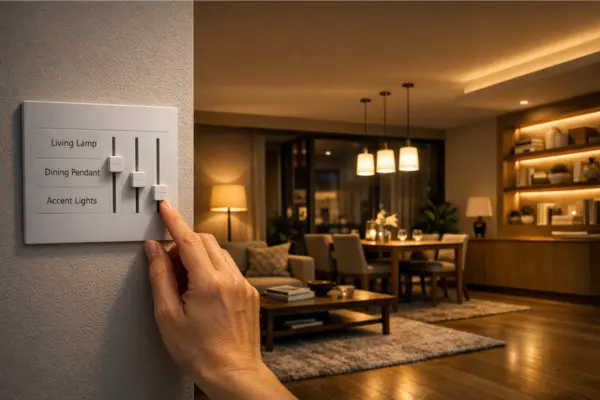
23. Put lighting on separate switches or dimmers
A layered lighting plan works even better when you can control each part of it separately. Dowsing & Reynolds frames lighting in open rooms around the need for different moods and tasks, which naturally supports separate control over each light source. This makes the room far more flexible in daily life.
Items needed
You need dimmers, separate circuits if possible, or at least lamps and fixtures that can be turned on independently.
How to start with this idea
Think about how you use the room in the morning, daytime, evening, and when guests visit. Then set up the lighting so you do not always need every fixture on at once. Even a simple lamp in the sitting area can make the whole room feel more personal and relaxed at night.
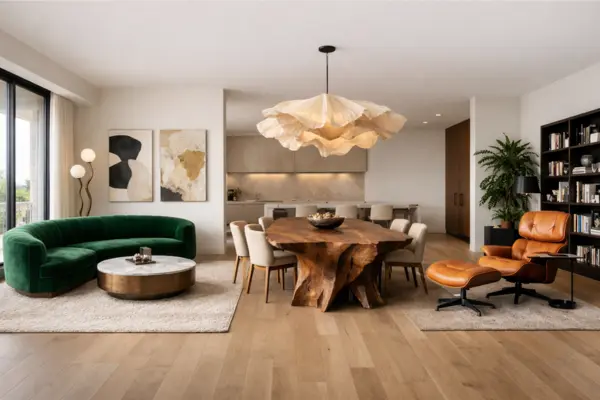
24. Use statement pieces to give each zone purpose
Dowsing & Reynolds describes open plan rooms with statement furniture and distinctive lighting, while Better Homes & Gardens suggests giving each area a clear feature that catches the eye and improves how the zone works. This helps prevent the room from blending together too much.
Items needed
You need one standout piece in each main zone, such as a bold lamp, interesting chair, artwork, or striking table.
How to start with this idea
Choose one hero piece for the living area rather than many competing pieces. Let that item set the tone. Then do the same, more quietly, in nearby zones. The goal is not to crowd the room with big statements, but to make each part of the space feel intentional.
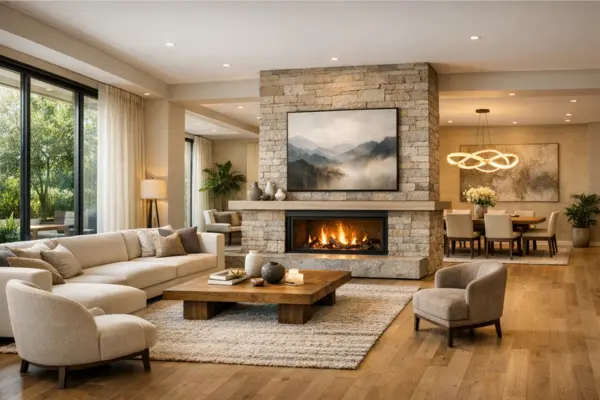
25. Give each area its own focal point
Better Homes & Gardens recommends setting focal points in different areas of an open room, such as a TV wall, mirrored bar area, large windows, or a striking range hood. This keeps each section visually clear and useful.
Items needed
You need one strong visual feature for each main zone, whether it is architectural, decorative, or furniture-based.
How to start with this idea
Ask yourself what the eye should notice first in the living area, then in the dining or kitchen side. Build around those features instead of letting random accessories compete for attention. A room with clear focal points always feels more settled and easier to style.
26. Use partial dividers instead of full walls
Better Homes & Gardens recommends design features like kitchen islands, breakfast bars, columns, partial walls, and varied ceiling heights to help define spaces while keeping conversation and views flowing. This is a very practical idea when you want separation without losing openness.
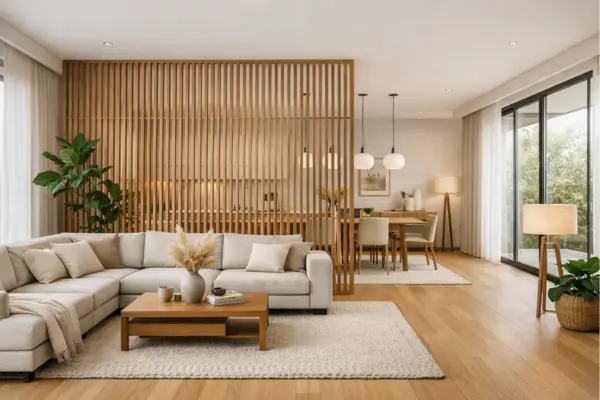
Items needed
You need an existing architectural divider or a furniture piece that can act like one, such as an island, bar, shelf, or half-height feature.
How to start with this idea
Look for any natural divider already in your room. Then style around it so it becomes part of the zoning plan. If you do not have one, create the same effect with furniture placement and lighting. The goal is gentle structure, not total division.
27. Use built-in shelving to connect work and lounge zones
Better Homes & Gardens highlights built-in bookcases stretching between connected areas to visually and functionally blend spaces while adding display and closed storage. This is especially helpful in open rooms that need more storage without adding clutter.
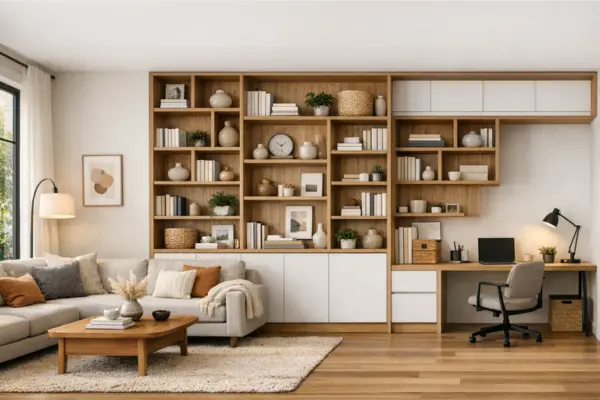
Items needed
You need built-ins, shelving units, or a long storage wall with both open and closed sections if possible.
How to start with this idea
Use shelves to carry the same materials and colours from one zone to another. Keep the styling simple and mix decorative objects with hidden storage. In an open room, this helps link areas together while still keeping everyday items neatly contained.
28. Use two shades from the same paint family
Better Homes & Gardens suggests using varied wall shades to softly distinguish areas and recommends choosing two shades from the same paint chip for a connected look. This is a smart option when you want gentle separation without visual breaks.
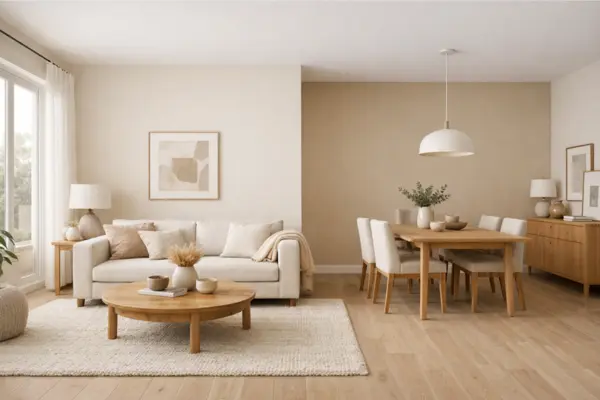
Items needed
You need two close paint shades with matching undertones and a clear plan for where each one will go.
How to start with this idea
Choose one lighter shade for the main connected walls and a slightly deeper version for one area you want to define more clearly. Because both colours come from the same family, the change feels soft and natural instead of harsh.
29. Think carefully about what each seat looks toward
Better Homes & Gardens explains that in open rooms, you should think about what you want to see from each position. The article gives examples like enjoying a fireplace, keeping an eye on children, talking with guests, and taking in outdoor views. This is such an important part of good layout planning.
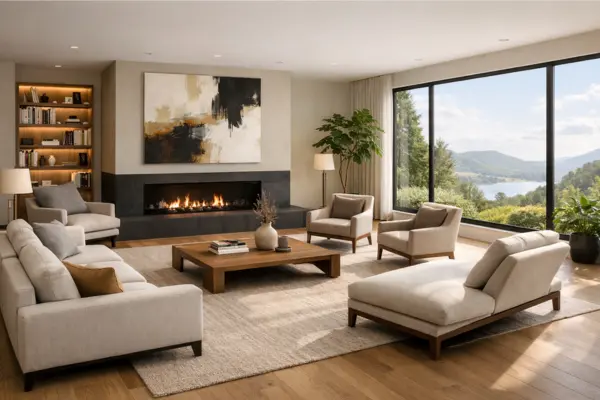
Items needed
You need a simple floor plan and a clear idea of the room’s best features, such as windows, a fireplace, a television wall, or a garden view.
How to start with this idea
Sit mentally in each key spot in the room. Imagine yourself on the sofa, at the island, and at the dining table. Then decide what should be in front of you from each seat. When the sight lines are right, the room feels more relaxing and more useful every day.
30. Create two seating zones in a large open room
Better Homes & Gardens recommends creating two distinct zones in expansive open areas, each with its own rug and lighting, while keeping them flexible for both large gatherings and smaller daily use. This is one of the best ideas for very wide living spaces.
Items needed
You need enough seating for two groupings, two rugs if possible, and lighting or tables that help each zone feel complete.
How to start with this idea
Divide the room by use. One zone might be for television and everyday lounging, while the second can be for conversation, reading, or guests. Keep both areas connected in colour and style, but give each one its own rug, table, or lighting so it feels complete on its own.
Mistakes to Avoid
Open space living rooms can go wrong very quickly when the layout is treated like a regular closed room. One common mistake is pushing all the furniture to the walls and leaving an empty center. That usually makes the room feel less cozy, not more spacious. Another common problem is ignoring walkway space. Better Homes & Gardens recommends clear flow and walkways of at least 36 inches, and that advice matters because poor flow makes even a beautiful room frustrating to use.
Another mistake is adding too many styles, colours, or finishes at once. Open rooms need connection. If the flooring changes too often, the metals do not relate, and each zone has a completely different colour story, the whole room starts to feel busy and disconnected. It is also a mistake to rely on only one ceiling light for the whole area. Dowsing & Reynolds stresses layered lighting for different tasks and moods, and that is exactly what helps a large room feel useful and comfortable from day to night.
Many beginners also forget to create focal points. When every wall is plain and no zone has a standout feature, the room can feel unfinished. Better Homes & Gardens recommends separate focal points for different areas so the eye has something clear to land on. Finally, do not overfill the room with decor just because the space is large. Open living works best when there is breathing room between the pieces, clear movement paths, and a few strong choices rather than too many small ones.
Conclusion
A well-decorated open space living room should feel easy to live in, not hard to manage. That is always my goal with this kind of layout. I want the room to feel connected, comfortable, and beautiful from every angle. The best results usually come from a few simple foundations: a clear layout, repeated colours and finishes, rugs that define the zones, lighting that supports how the room is used, and enough storage to keep clutter from spreading into every corner. Those ideas appear again and again in the real decorating guidance from the sources because they work in everyday homes.
If you are decorating your own open living room, do not try to do all 30 ideas at once. Start with the layout, then the rug, then the lighting, and then bring in colour, texture, and smaller styling details. Once the room flows well, almost everything else becomes easier. That is the secret to making an open space feel warm and beautifully finished.
FAQs
Open-plan decorating can feel overwhelming at first, especially if you are trying to make one large room do several jobs. These quick answers cover the questions I see most often when people start working on an open space living room.
How do I make an open space living room feel cozy?
The easiest way is to create a real seating zone with furniture facing inward, anchor it with a large rug, and add layered lighting. Better Homes & Gardens recommends conversation-friendly seating and rugs for warmth and zone definition, while Dowsing & Reynolds recommends layered lighting for mood and function. Together, those changes make a big open room feel much more comfortable.
What is the best sofa for an open-plan living room?
A sectional often works very well because it naturally defines the living area and gives generous seating. Castlery specifically points to sectional sofas as a natural barrier between living and dining zones. That said, the best sofa is always one that fits the room without blocking pathways.
How do I separate my living room from the dining area without building a wall?
Use rugs, furniture placement, lighting, and partial dividers. The sources recommend rugs to identify spaces, pendant or statement lighting to mark zones, and features like islands, breakfast bars, consoles, plants, screens, and partial dividers to create separation while keeping the room open.
Should all the colours match in an open space living room?
They do not need to match exactly, but they should relate. Better Homes & Gardens recommends harmonizing colours and repeating shades across connected spaces, and it also suggests using two shades from the same paint family when you want gentle separation. That approach keeps the room coordinated without making it feel flat.
How many rugs should I use in an open room?
That depends on the size of the space and how many zones you need. One large rug may be enough for a small open room, but bigger rooms often benefit from separate rugs for the living and dining areas. Castlery recommends using rugs to identify spaces and even changing texture or layering when you want more depth.
What is the biggest mistake people make in open-plan decorating?
In my experience, the biggest mistake is focusing on style before flow. If the furniture blocks movement, the seating is too spread out, or the room has no clear zones, the space will never feel right no matter how pretty the decor is. Better Homes & Gardens and Castlery both stress natural pathways and careful furniture placement for a reason. Good flow is what makes the whole room work.
If you want, I can turn this into a more polished Pinterest-style article with a clickable title, short intro hook, and a stronger blog format for publishing.