

30 Beach Theme Living Room Ideas That Feel Relaxed, Stylish, and Easy to Live With
A beach theme living room works best when it feels calm, light, and natural instead of overly themed. The most timeless coastal rooms usually mix soft blues, sandy neutrals, natural textures, weathered wood, linen, jute, and plenty of daylight. Designers also lean on large windows, simple furnishings, and a gentle indoor-outdoor connection to make the room feel open and restful.
If you want your living room to feel fresh but still personal, these ideas will help. Some are soft and minimal, some are richer and moodier, and some mix coastal style with other looks like boho, cottage, or farmhouse. The goal is not to copy one exact formula. It is to build a room that feels collected, welcoming, and true to your home. Coastal rooms tend to feel best when the palette is calm, the textures are layered, and the decor stays simple enough to let the room breathe.
Ideas 1: Blend coastal with boho details
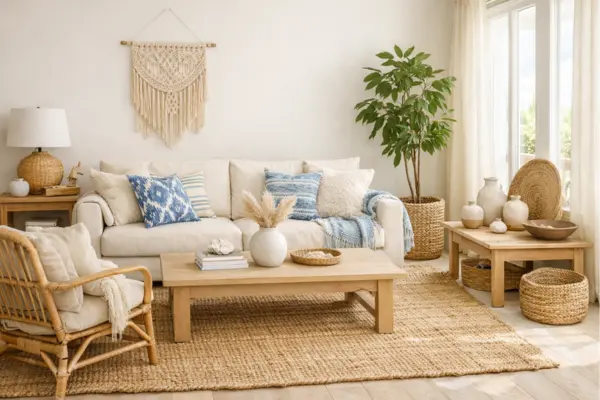
This idea is perfect if you like coastal rooms but want them to feel softer and more personal. A coastal-boho mix works well when you start with a neutral sofa, add blue-and-white pillows, and then bring in woven textures, relaxed throws, and a few handmade pieces. The result feels beachy, but not stiff or too polished.
Items needed
Use a cream or off-white sofa, striped or block-print cushions, a jute rug, a rattan chair or basket, a light wood coffee table, and a throw in linen or cotton. A few ceramic vases or textured planters also help the room feel layered without looking crowded.
How to start with this idea
Start with your largest soft pieces first. Add two or three blue-and-white pillows over a neutral seat, then warm the room with jute, wicker, and natural wood. After that, bring in one or two boho touches like a handwoven wall hanging or a relaxed fringe throw. Keep the shapes soft and casual so the room feels collected rather than styled too tightly. Coastal rooms with natural textures like jute, rattan, linen, and wood feel far more authentic than rooms filled with obvious beach props.
Ideas 2: Bring in inky blue accents
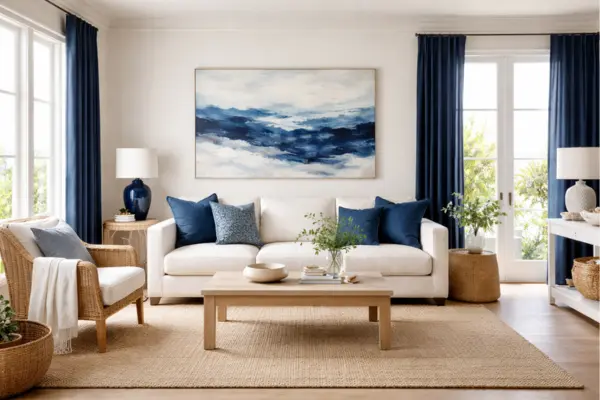
If pale blue feels too soft for you, deeper coastal color can look beautiful. Inky blue curtains, navy art, or deep blue cushions can add richness and contrast to a light room. This is a smart way to make coastal style feel more grown-up.
Items needed
Choose one or two deep blue pieces such as full-length curtains, a pair of accent pillows, an abstract painting, or a ceramic lamp. Keep the rest of the room simple with beige, white, sand, or light wood.
How to start with this idea
Pick one strong blue element first and let it lead the room. If you add too many dark pieces at once, the room can start to feel heavy. Deep blue looks best when it is balanced with soft neutrals, warm lighting, and natural texture. Designers often use blue against white or cream to keep coastal spaces fresh while still giving them depth.
Ideas 3: Create a colorful gallery wall
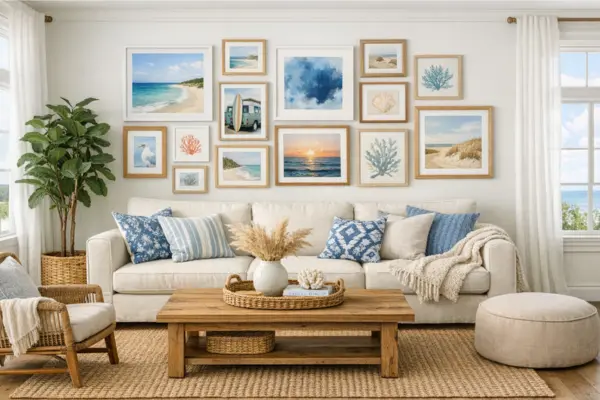
A gallery wall can bring life to a coastal room, especially if the rest of the space is based on white, beige, and blue. It gives the room personality and helps break up a safe color scheme. This is a very good choice if your space feels flat or unfinished.
Items needed
You will need matching or coordinated frames, art prints, coastal photography, abstract blue pieces, or small painted landscapes. You can also mix in one or two woven or ceramic wall pieces if your room needs texture.
How to start with this idea
Start on the floor first. Lay out your frames and test the spacing before putting anything on the wall. For a cleaner look, keep a repeating color story such as blue, sand, white, and soft green. You do not need every piece to be coastal in an obvious way. A mix of beach photos, abstract shapes, and natural tones will feel much more current. Gallery walls are often used to turn blank walls into real focal points without adding extra furniture.
Ideas 4: Use wavy or water-inspired patterns
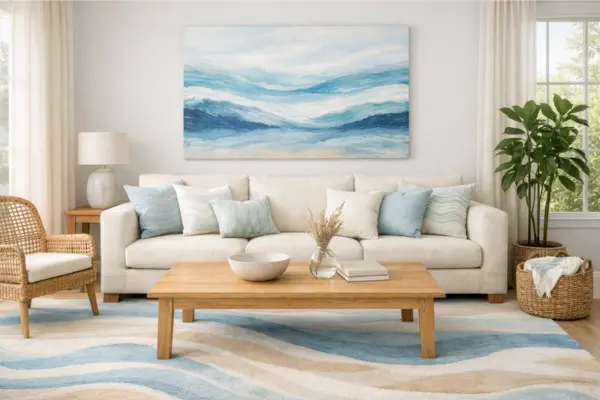
This is one of the easiest ways to bring in the feeling of water without using shell prints or nautical signs. A rug, throw, or cushion with a soft swirled pattern can add movement to the room and make everything feel lighter.
Items needed
Look for a rug with a curved or wave-like design, a throw with loose painterly lines, or cushions with fluid shapes in soft blue, gray, or cream. Keep the scale gentle so the room still feels calm.
How to start with this idea
Use this pattern in one main spot only. A rug is usually the easiest place because it anchors the room and gives the eye something interesting to land on. Once that piece is in place, echo the same tones in a few smaller accessories. Coastal rooms feel more elegant when they hint at the shore through shape and color rather than using overly literal themes.
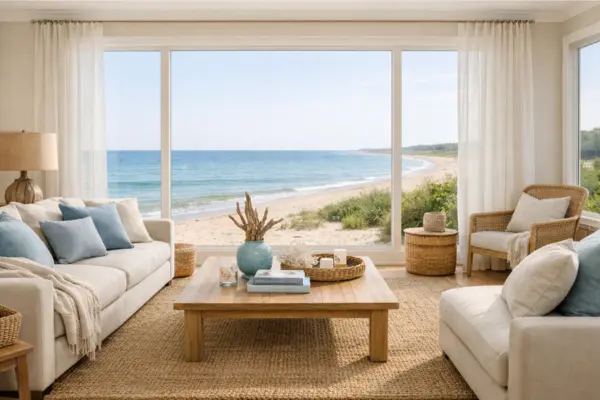
Ideas 5: Pull your palette from the outdoor view
If your room opens toward water, sand, trees, or even a bright garden, use that view as your starting point. This makes the room feel natural and connected to its setting. It also helps you avoid forcing a color palette that does not suit the home.
Items needed
Take color ideas from what you see outside. You may need pale blue textiles, sandy beige upholstery, light oak or weathered wood, green plants, and soft white curtains that let the view stay visible.
How to start with this idea
Stand in the room and notice which colors show up most often outside the windows. Choose two main shades and one grounding neutral from that view. Then repeat them inside in simple ways through cushions, rugs, and wood tones. Coastal interiors are often strongest when they draw from the sea, sky, sand, and surrounding landscape rather than relying only on one shade of blue.
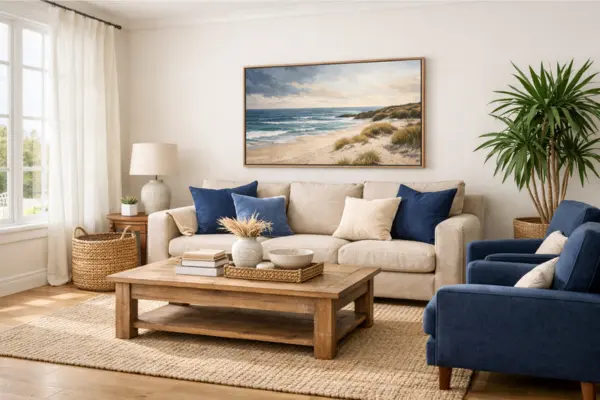
Ideas 6: Pair navy with sandy beige
Navy and beige create a coastal room with a bit more depth. Beige keeps the room warm while navy gives it structure. This combination works especially well in family rooms because it hides wear better than an all-white palette.
Items needed
Use a beige sofa or rug, navy cushions or chairs, white walls, natural wood, and a few woven baskets. Brass or matte black accents can also work well here.
How to start with this idea
Start with beige on the larger surfaces so the room feels soft. Then add navy in smaller but more defined places like a chair, curtain trim, artwork, or pillows. This keeps the room grounded without making it feel dark. Blue paired with sandy tones is one of the most reliable coastal combinations because it reflects both sea and shore.
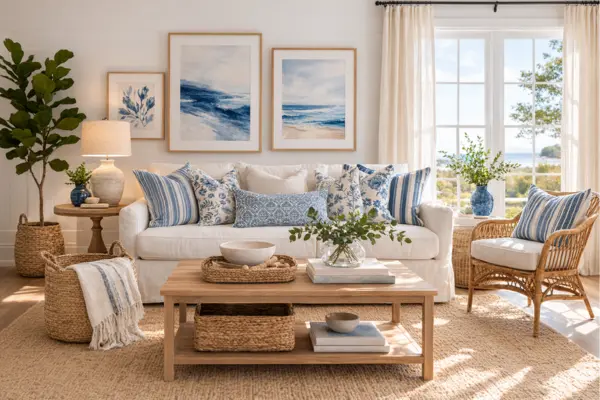
Ideas 7: Mix blue-and-white patterned textiles
Patterned fabrics can make a coastal room feel lively and layered. If your room already has a neutral sofa and simple walls, this is a great way to add interest without a full makeover.
Items needed
Try striped cushions, block-print pillows, floral blue-and-white fabric, a patterned ottoman, or a small upholstered bench. Use solids too, so the mix stays balanced.
How to start with this idea
Choose one dominant pattern and then add one or two smaller patterns around it. Keep the colors tied together so the room still feels calm. For example, mix stripes, florals, and soft geometrics in blue, cream, and white. Layering patterns is a common trick in refined coastal rooms because it builds depth and keeps the palette from feeling flat.
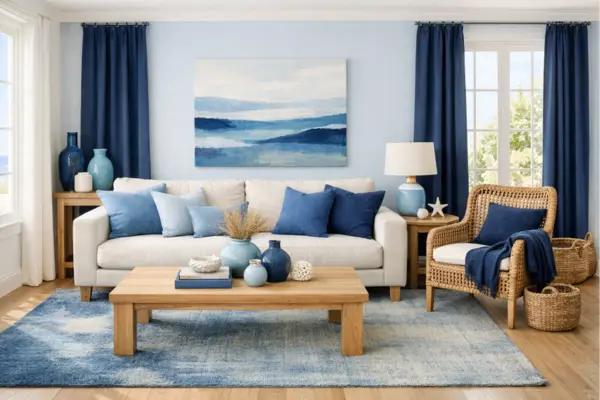
Ideas 8: Work with tonal blues instead of one shade
Using only one blue can make a room feel flat. A mix of pale blue, medium blue, and navy looks more natural, like the sea and sky on different days. This is one of the easiest ways to make a beach theme feel more polished.
Items needed
You may need a pale blue wall or rug, medium blue cushions, navy trim or art, and white or beige furniture to separate the tones.
How to start with this idea
Pick your lightest blue first and use it as the room’s base accent. Then add one mid-tone and one dark tone in smaller amounts. Spread them around the room so the eye moves easily. Designers often recommend layering shades of blue in coastal spaces because it creates a softer and more realistic look than repeating one exact color everywhere.
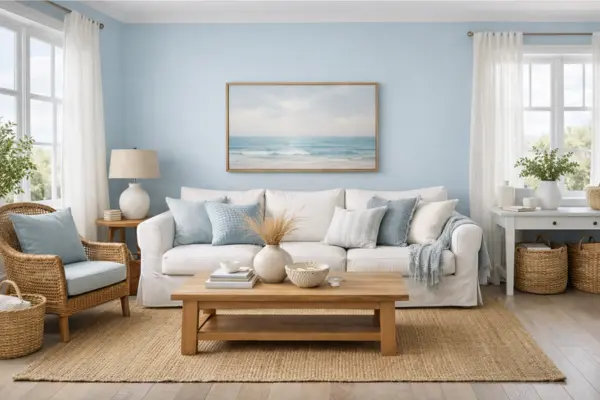
Ideas 9: Paint the walls a pale sky blue
Pale sky blue can make a living room feel open, fresh, and peaceful. It is a strong option for homes that do not get a lot of ocean light but still want that breezy feeling.
Items needed
Choose a soft sky blue paint, white trim, natural-fiber rugs, light wood or painted furniture, and warm white lighting so the room does not feel chilly.
How to start with this idea
Test the paint first in daylight and in the evening. Some pale blues can look gray or cold depending on the room. Once you choose the right shade, keep the rest of the palette simple with white, beige, wicker, and light oak. Pale blue walls are often used in coastal schemes because they reflect the calm feeling of sea and sky while still keeping the room airy.
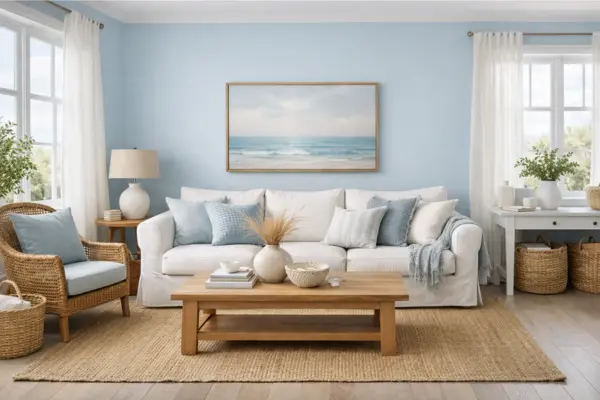
Ideas 10: Layer in eclectic furniture pieces
A more collected coastal room often feels better than one where every item matches. Mixing rustic wood, classic seating, and casual woven pieces gives the room personality and helps it look lived in.
Items needed
Try a classic sofa, a vintage side table, one woven chair, a weathered wood coffee table, and a lamp or console with a different finish. The mix should feel relaxed, not random.
How to start with this idea
Choose one main style to lead the room, then add two or three supporting pieces in different shapes or finishes. Keep the palette connected so the furniture still feels like it belongs together. Coastal rooms often look best when they feel curated over time, with natural materials and collected accessories instead of showroom-perfect sets.
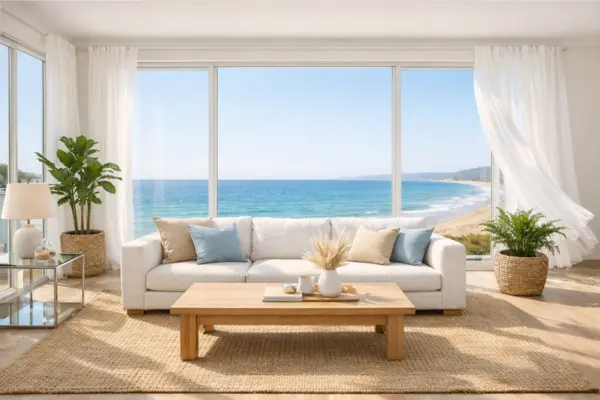
Ideas 11: Maximize natural light and views
One of the most important coastal design moves is letting the room feel open to the outside. Large windows, light curtains, and simple furniture help the view become part of the room. Even if you do not live near the water, this still creates a breezy feeling.
Items needed
Use sheer or light-filtering curtains, low-profile furniture, glass or light wood tables, and a layout that does not block the windows. A mirror can also help bounce light.
How to start with this idea
Look at your current layout first. If a large chair or cabinet blocks the window, move it. Then switch heavy window treatments for lighter ones and keep the color palette bright around the window wall. Large windows and strong indoor-outdoor flow are central to coastal interiors because they create a direct connection to light, landscape, and fresh air.
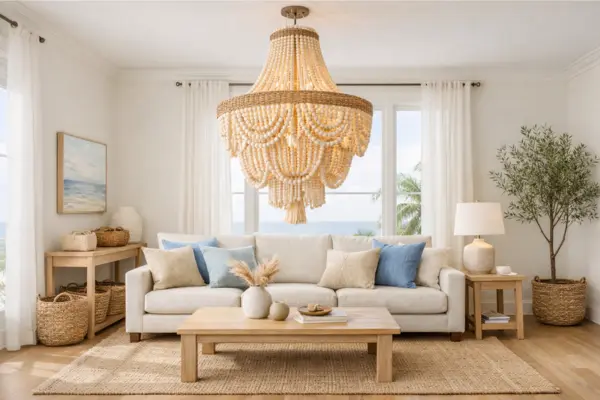
Ideas 12: Add dramatic ceiling lighting
Ceiling lighting can completely change how a coastal room feels. A beaded chandelier, woven pendant, or airy statement light draws the eye upward and adds character without taking up floor space.
Items needed
Choose a beaded chandelier, woven pendant, whitewashed lantern light, or another open and airy fixture. Pair it with soft lamps so the room still feels warm at night.
How to start with this idea
Think about the room’s mood first. If your space is very simple, a bold ceiling fixture can become the room’s statement piece. Keep the shape light and open rather than heavy or shiny. Good lighting matters even more in blue-toned rooms, since warm layered light helps keep coastal color schemes from feeling cool or flat.
Ideas 13: Use pale blue accents with light woods
This is one of the easiest and most flexible coastal looks. Pale blue feels fresh, while light wood keeps the room natural and understated. It works especially well in smaller homes because it never feels too heavy.
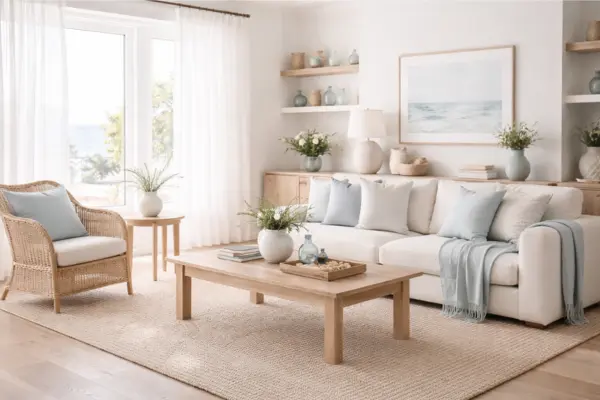
Items needed
You will need light oak or ash furniture, soft blue pillows, white or cream upholstery, a woven basket or two, and simple ceramics.
How to start with this idea
Begin with the wood first. Once the room has enough natural warmth, layer in pale blue through the soft furnishings. Keep the blue gentle and avoid adding too many shiny finishes. Coastal rooms with pale blue, white, woven materials, and light wood tend to feel relaxed, bright, and easy to maintain visually.
Ideas 14: Try darker wood floors or beams
Coastal style does not need to be pale from top to bottom. Darker wood can add contrast and make the room feel grounded. This is especially useful if your home already has dark beams or rich floorboards that you do not want to replace.
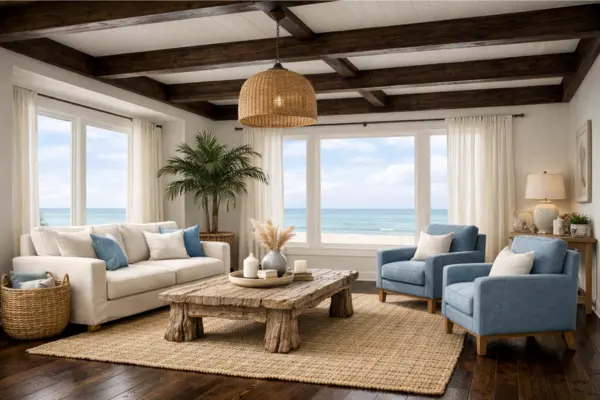
Items needed
Use white or cream upholstery, blue accents, lighter rugs, natural linen, and enough soft textures to balance the darker wood.
How to start with this idea
Let the dark wood act as the room’s anchor. Then brighten everything around it with pale walls, natural fabric, and airy accessories. If you have dark beams, echo the tone in one small furniture piece so it feels intentional. Coastal rooms can handle darker architecture beautifully when the rest of the space stays open, textured, and light in mood.
Ideas 15: Choose blue upholstery for armchairs
Blue armchairs are practical, beautiful, and easy to style. They bring in coastal color in a strong way without asking you to repaint walls or buy a new sofa.
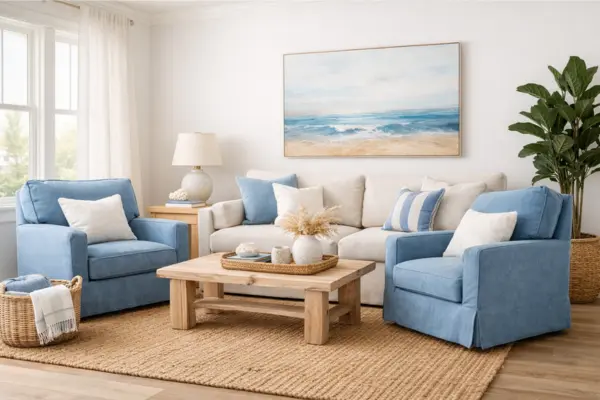
Items needed
Look for denim-toned, washed blue, or soft navy armchairs. Add a neutral rug, one wooden side table, and a small patterned cushion if needed.
How to start with this idea
Place the chairs where they can be seen from the entry to the room or opposite the sofa for balance. Then repeat the blue once or twice elsewhere in smaller ways. This could be in art, a lamp base, or a throw. A strong blue upholstered piece often works well as a focal point in coastal color schemes.
Ideas 16: Mix coastal blues with earth tones
Coastal rooms can sometimes feel a little cold if they only rely on blue and white. Earth tones solve that problem. Warm browns, clay accents, and sandy shades make the space softer and more welcoming.
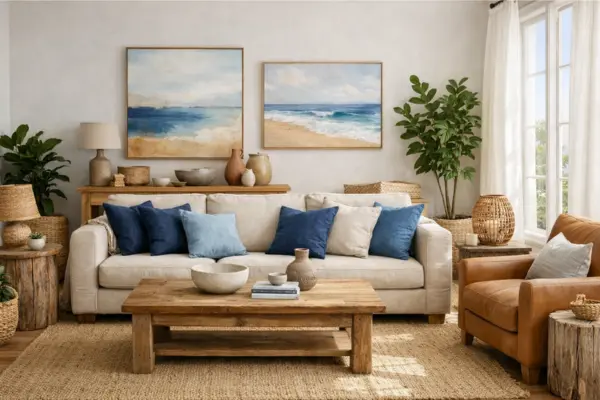
Items needed
Bring in brown wood finishes, tan leather, sandy cushions, oatmeal throws, and maybe a terracotta vase or two. Blue can stay present in smaller accents.
How to start with this idea
Start by adding one warm grounding element, such as a brown wood coffee table or a tan rug. Once the room feels warmer, layer blue more lightly around it. This creates a lived-in look instead of a very crisp seaside theme. Many current coastal spaces use organic earthy texture and warmer neutrals to keep the room sophisticated and modern.
Ideas 17: Use weathered wood beams or accents
Weathered wood instantly gives a room a soft seaside character. It brings age, texture, and a sense of ease. You do not need full ceiling beams for this look. A weathered console, coffee table, or mirror frame can do the job.
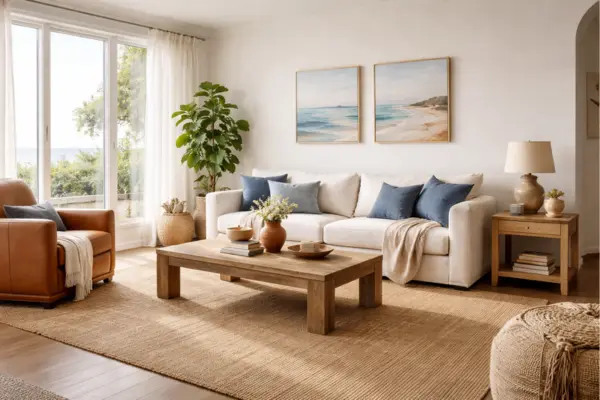
Items needed
Use reclaimed or weathered wood in one or two visible places. Pair it with linen, jute, soft blue, white ceramics, and simple greenery.
How to start with this idea
Start with one wood piece that feels slightly sun-washed or aged. Then build around it with clean, lighter finishes so it stands out. Avoid adding too many distressed items at once. Coastal rooms feel strongest when weathered elements are balanced by fresh paint, relaxed textiles, and uncluttered styling.
Ideas 18: Style built-ins with natural textures
Built-ins can easily become too stiff or too decorative. In a coastal room, they should feel relaxed and useful. Natural texture keeps them warm and helps the shelves look styled but not forced.
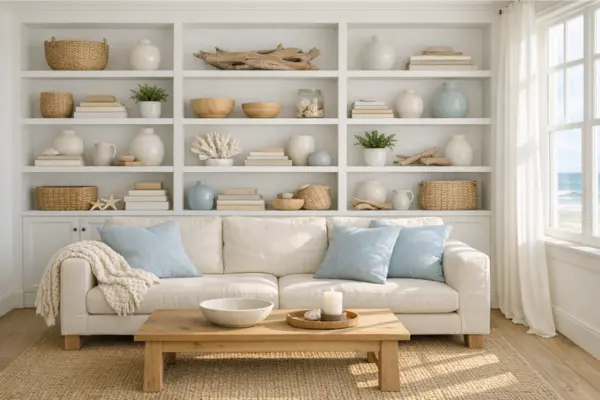
Items needed
Use woven baskets, matte ceramics, coral-colored books, driftwood-like objects, framed photos, small plants, and a few stacked books with light covers.
How to start with this idea
Begin by removing anything overly shiny, cluttered, or tiny. Then build the shelves with larger natural pieces first. Add baskets at the bottom, books in small stacks, and ceramics with a handmade feel. Keep open space between objects so the shelves can breathe. Coastal decor usually looks better when accessories are curated and restrained rather than crowded.
Ideas 19: Decorate with vintage paddles or similar finds
Vintage boating pieces can give the room a sense of place and history. Used well, they add charm without making the room feel like a themed beach rental.
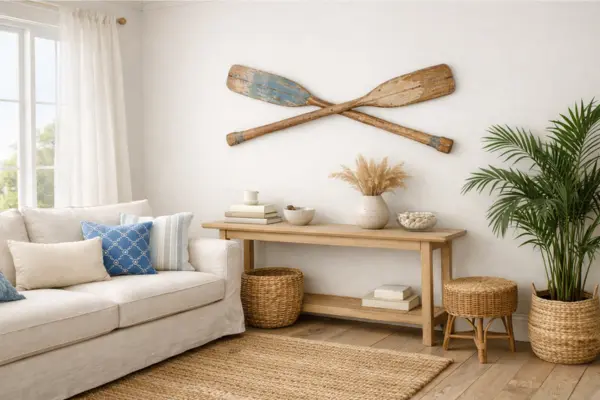
Items needed
Choose one pair of vintage paddles, an old oar, a weathered boat print, or another simple waterside object. Keep the rest of the decor clean and modern.
How to start with this idea
Use one strong item only. Hang paddles in a quiet corner, above a console, or beside a fireplace. Then repeat the wood tone somewhere else in the room. The key is restraint. Coastal rooms feel more polished when they suggest seaside life through one or two meaningful objects instead of many obvious nautical props.
Ideas 20: Go for moody blue walls
A moody gray-blue or deep stormy blue can make a coastal room feel richer and more dramatic. This look suits larger rooms, evening spaces, or homes that already have strong natural light.
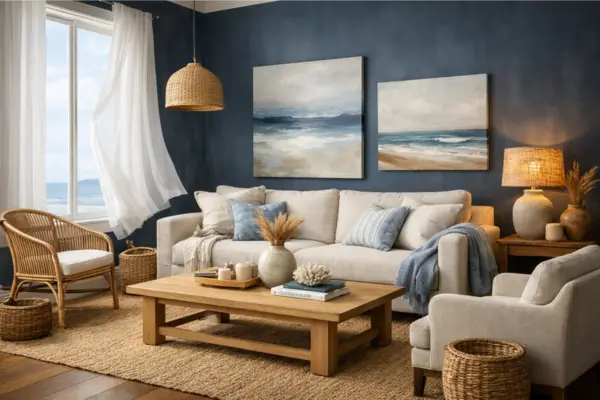
Items needed
Use a gray-blue paint, white trim, warm lamps, beige upholstery, light artwork, and maybe one natural-fiber rug to soften the depth of the walls.
How to start with this idea
Paint one wall first if you are unsure. Then check how the color changes through the day. Moody blue works best when the room also has warm tones, texture, and good lighting. Without those, the space can feel too cold. Deep blue walls are often balanced with white, cream, and natural materials to keep the room elegant and coastal rather than heavy.
Ideas 21: Keep the room mostly neutral with tiny blue touches
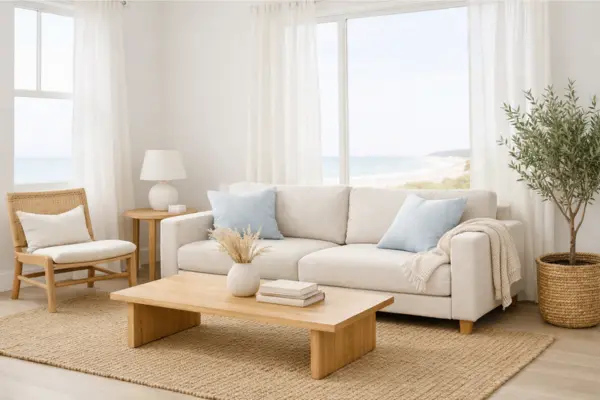
Not every beach-inspired room needs obvious color. A mostly neutral room with only a few blue touches can still feel coastal, especially when you use natural texture and lots of light.
Items needed
Choose a neutral sofa, beige rug, white curtains, woven baskets, and just a few blue accents such as a pillow, lamp, small print, or vase.
How to start with this idea
Build the room in layers of cream, white, stone, beige, and pale wood. Once that neutral base looks finished, add tiny blue touches in two or three places only. This creates a calm and classic room that still carries coastal mood. Coastal color does not have to cover every wall to be effective.
Ideas 22: Try coastal minimalism
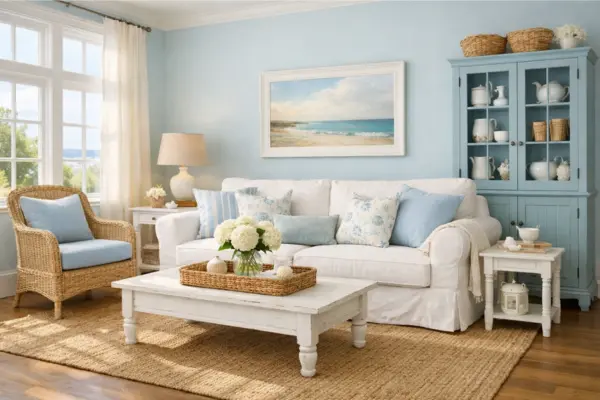
Coastal minimalism is ideal for anyone who wants a quiet room without clutter. It keeps the light, softness, and natural finish of coastal style but strips away anything extra.
Items needed
Use simple furniture with clean lines, a pale rug, linen curtains, a white or beige sofa, one light wood table, and a few carefully chosen accents in soft blue or stone.
How to start with this idea
Remove anything that does not serve the room or add real beauty. Then focus on shape, texture, and open space. Keep surfaces clean and let one or two pieces stand out. Minimal coastal rooms usually feel best with a tight palette of white, beige, pale blue, and natural material. Clean-lined furniture and quiet styling help the room feel restful rather than bare.
Ideas 23: Add sunset shades like pink or peach
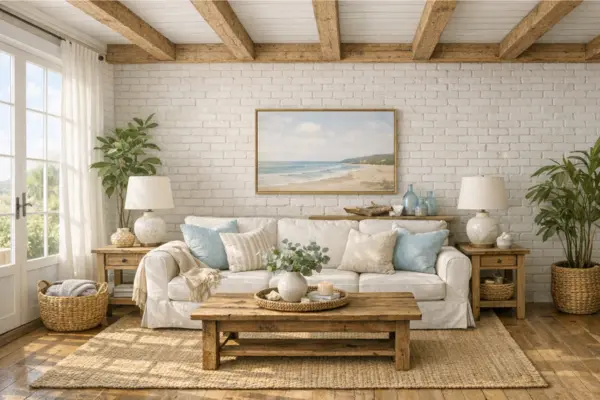
Soft pink and peach can warm up a coastal room beautifully. These tones remind you of the sky at sunset and give the room a more original, personal look than standard blue and white.
Items needed
Bring in a peach throw, blush cushion, sunset-toned artwork, or one soft pink vase. Keep the base neutral and let blue play a supporting role.
How to start with this idea
Use these warmer colors in small doses first. Pair them with sandy beige, white, and natural textures so the room stays calm. If your room already has blue, pink can soften it and make the space feel more layered. Coastal palettes today often go beyond classic nautical tones and include softer pastel shades for a more relaxed look.
Ideas 24: Blend coastal and farmhouse styles
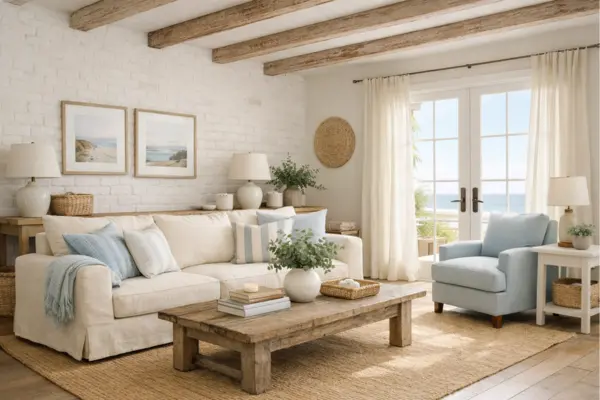
Coastal farmhouse is a nice choice if your home already has rustic features like beams, brick, or worn wood. It brings together the calm of coastal style with the warmth and familiarity of farmhouse design.
Items needed
Think whitewashed brick, exposed beams, linen sofas, pale blue pillows, black or iron accents, and one sturdy wood coffee table.
How to start with this idea
Let the architecture lead the room. If you have brick or beams, soften them with lighter textiles and a cooler palette. Then add gentle coastal touches like blue stripes, woven baskets, or pale ceramics. The goal is balance. You want the room to feel calm and transitional, not themed in either direction.
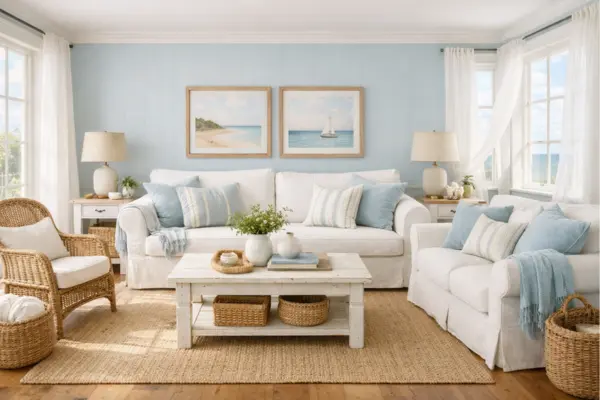
Ideas 25: Create a coastal cottage look
A coastal cottage living room feels cheerful, charming, and very welcoming. It suits smaller homes especially well because it does not need grand furniture or dramatic scale.
Items needed
Use pale blue, crisp white, a slipcovered sofa, woven accents, cottage-style tables, floral or striped cushions, and maybe a painted wood cabinet.
How to start with this idea
Start with the brightest pieces first, like white seating and pale wall color. Then add soft blue, woven texture, and one or two cottage details such as a skirted table or painted chest. Keep the room light and simple so it still feels airy. This style works best when the colors are soft and the textures feel natural rather than glossy.
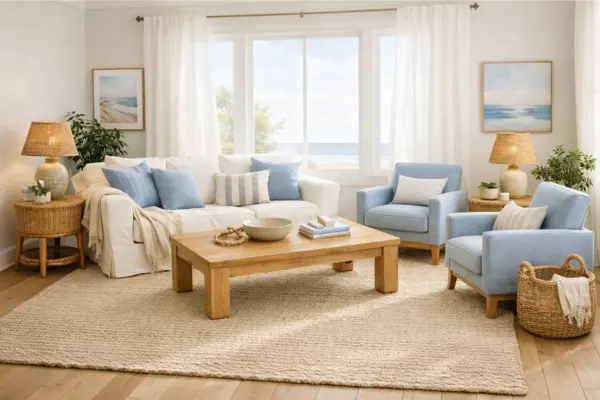
Ideas 26: Use a large beige rug to soften the room
A beige rug may not sound exciting, but it can completely improve a coastal room. It warms up blue-and-white schemes, softens hard flooring, and makes the whole space feel calmer.
Items needed
Choose a large beige, oatmeal, sisal-look, or wool-blend rug. Add blue cushions, white seating, and one or two wood pieces above it.
How to start with this idea
Pick a rug large enough to sit under the front legs of your main seating. Once the rug is down, notice how much more grounded the room feels. Then adjust the blues around it. Beige is especially useful when a coastal palette starts to feel too cool or sharp. It brings the room back to the tone of sand and keeps it easy to live with.
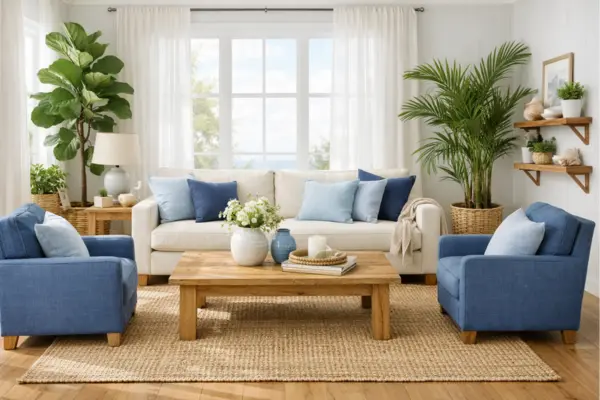
Ideas 27: Mix blue tones with greenery
Plants give coastal rooms life. When you pair blue seating or accessories with greenery, the room feels fresher and more layered right away. This is a good trick when the room feels too flat or too polished.
Items needed
Use one or two taller plants, a blue chair or pillows, a light planter basket, and maybe a small wood stool or table nearby.
How to start with this idea
Place greenery where it can soften a corner or frame a window. Then repeat the blue nearby so the colors feel connected. Choose plants with an airy shape if possible, as they suit the relaxed feel of coastal rooms. Greenery is often used with woods, blues, and natural fibers to echo the surrounding landscape and add warmth.
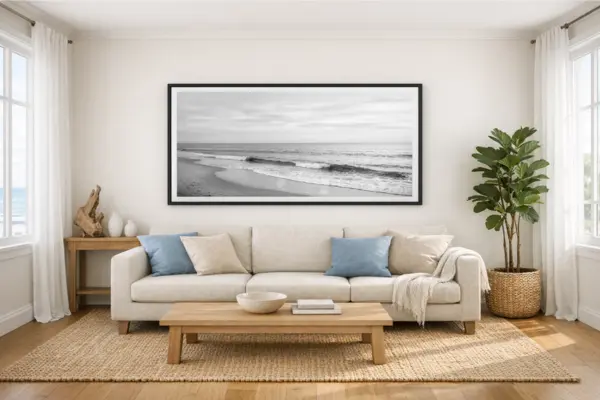
Ideas 28: Hang coastal photography
Coastal photography is a very clean and simple way to bring seaside mood into a room. Black-and-white beach images, soft dune photography, or quiet shoreline scenes can all work beautifully.
Items needed
You will need one large framed coastal photo or a small group of matching prints, plus frames in white, wood, or black depending on your room.
How to start with this idea
Choose images that match the mood of your room. If your space is soft and minimal, use calm shoreline photos with plenty of open sky. If your room is richer and moodier, black-and-white or darker ocean images can work better. Art is often the easiest way to bring in coastal feeling without adding clutter or overly obvious decor.
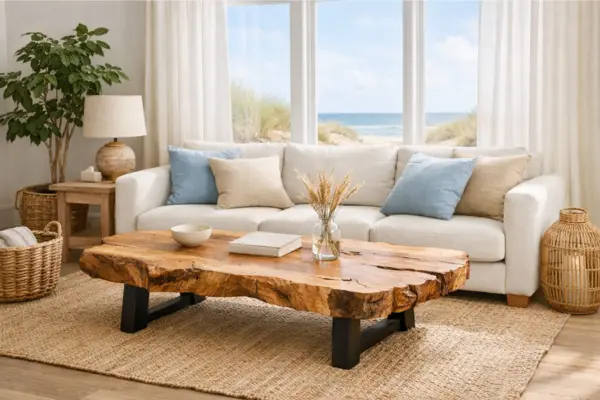
Ideas 29: Use a live-edge coffee table
A live-edge coffee table adds movement and an organic shape that feels very natural in a coastal room. It brings in wood, warmth, and a more relaxed line than a very square table.
Items needed
Look for a live-edge wood table, a neutral rug, soft upholstery, and a few simple styling pieces like a tray, a candle, and one ceramic bowl.
How to start with this idea
Keep the styling light so the shape of the table can stand out. A live-edge piece already has enough character on its own. Pair it with softer fabrics and simple seating so the room feels balanced. The right coffee table often anchors the whole living room, and organic wood shapes work especially well in interiors that draw from nature.
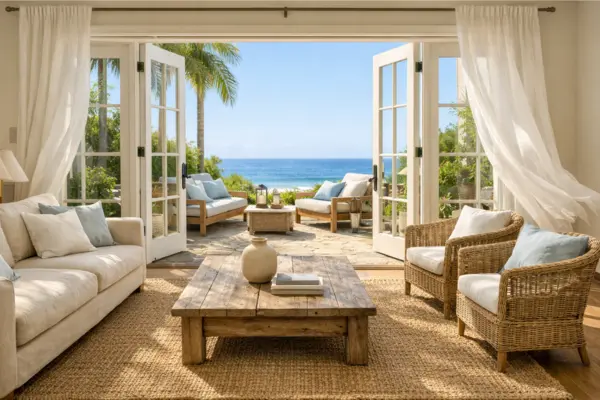
Ideas 30: Strengthen the indoor-outdoor connection
One of the most beautiful things about coastal design is how it blurs the line between inside and outside. French doors, bifold doors, patio views, and layouts that face the garden all help create that beach-house feeling.
Items needed
Use light curtains, furniture placed to face the view, similar colors indoors and outdoors, and if possible, doors or windows that open wide. Outdoor seating visible from inside also helps.
How to start with this idea
Start by treating your view as part of the room. Clear the sightline, keep the window area simple, and repeat a few outdoor tones indoors. If you have doors to a patio, make sure the indoor and outdoor spaces feel related through color or material. Coastal interiors are strongly linked to indoor-outdoor living because openness, fresh air, and landscape are part of the style itself.
Final thoughts
The best beach theme living room ideas do not try too hard. They use color with care, lean on natural texture, and create a relaxed feeling that people actually want to live in every day. You can go bright and airy, rich and moody, cottage-inspired, boho, or minimal. What matters most is keeping the room calm, layered, and connected to nature.
If you are decorating from scratch, start with the base first. Choose your main neutral, add natural wood and woven texture, and then decide how much blue, pattern, or contrast you want. That simple order makes the whole process easier and helps the room feel balanced from the beginning. Coastal style stays timeless when it is inspired by sea, sky, sand, texture, and light rather than heavy themed decor.