

21 Green Bedroom Ideas That Will Make You Want to Redecorate Today
Green is one of those bedroom colors that just works — no matter your style, your room size, or your budget. Whether you go deep and moody with forest green, soft and calming with sage, or fresh and airy with mint, there is a version of green that fits your space perfectly.
I have been decorating homes and helping people style their bedrooms for years, and green is honestly one of the most asked-about colors I get. And for good reason. Green is the color of nature. It is grounding. It makes you feel calm the moment you walk in. And unlike trendy accent colors that look outdated in two years, the right shade of green is genuinely timeless.
In this post, I am sharing 21 completely different green bedroom ideas — from tiny studio bedrooms to big, dramatic master suites. Each one is unique, fully realistic, and something you can actually pull off yourself. I will walk you through why each idea works, who it is best for, and exactly how to style it. Let’s dive in.
Table of Contents
21 Green Bedroom Ideas: The Complete Guide
Lets continue with the list that brings you here.
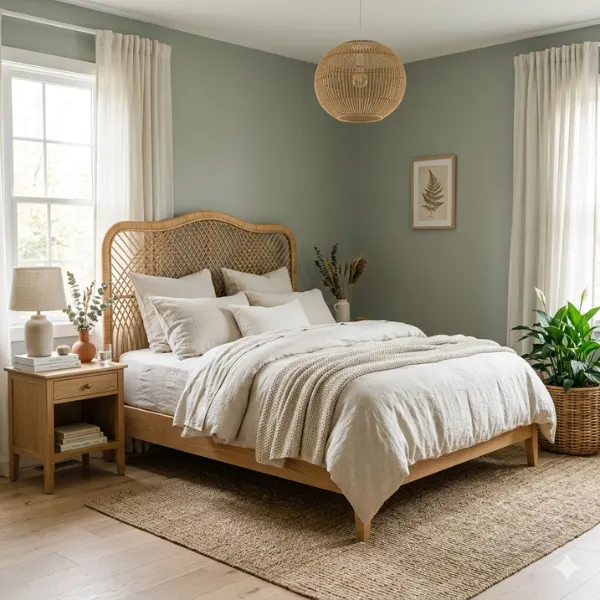
1. Sage Green Sanctuary with Rattan & Linen Textures
Sage green is the softest, most livable shade of green you can put in a bedroom. It is muted, it is earthy, and it feels like a breath of fresh air. When you pair it with natural rattan furniture and breathable linen bedding, the whole room transforms into a proper sanctuary — calm, grounded, and completely inviting.
Why It Works
Sage green sits right between gray and green, which makes it incredibly easy to work with. It does not shout at you — it quietly sets a mood. The rattan and linen textures add warmth and layers without making the room feel heavy or cluttered. Together, they create that biophilic, nature-connected feeling that is so popular right now, and for a very good reason — it genuinely makes people feel more relaxed.
Best For
This idea is perfect for medium to large bedrooms where you want a calm, everyday retreat. It works beautifully in master bedrooms, guest rooms, and any space where the goal is pure relaxation. If you love a coastal, Scandinavian, or natural organic aesthetic, this one is made for you.
Styling Tips
- Paint all four walls in sage green. Good paint options to look for include muted, gray-toned sages — avoid anything too yellow or too bright.
- Choose a rattan or wicker bed frame, or go with a rattan headboard on a simple wooden base.
- Layer your bed with linen bedding in oatmeal, cream, or soft white. Add a woven throw at the foot of the bed.
- Place a rattan pendant light overhead instead of a standard ceiling fixture.
- Add a large peace lily or pothos plant in a woven basket planter near the window.
- Use jute or sisal rugs on the floor rather than thick pile rugs — it keeps the natural, earthy vibe consistent.
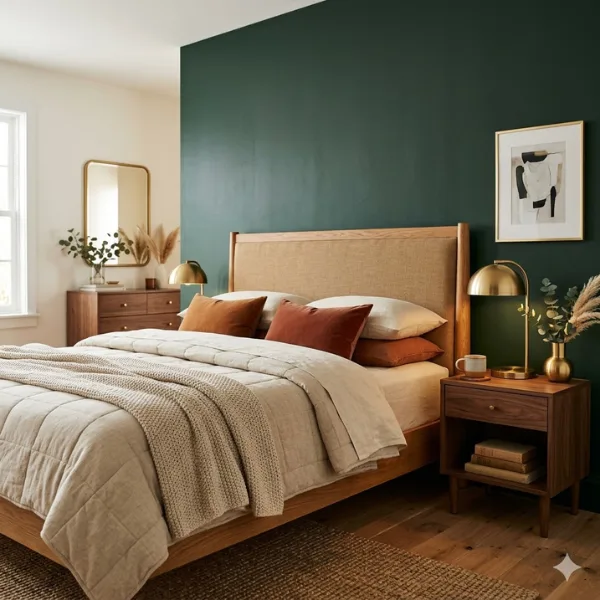
2. Forest Green Accent Wall with Brass & Wood Tones
This is the idea that convinces people who are “scared of color” to finally go bold. A single forest green accent wall behind your bed does all the heavy lifting — it creates a dramatic, cozy backdrop without painting the entire room dark. Add in warm brass fixtures and natural wood furniture, and you have a bedroom that looks genuinely expensive.
Why It Works
Forest green is deep and rich, but on one wall it feels intentional rather than overwhelming. The brass hardware picks up the warmth in the green’s undertones, and wood tones stop the room from feeling cold or too formal. It is a combination that interior designers use constantly because it always looks elevated. The contrast between the dark accent wall and lighter surrounding walls also makes your bed feel like the true centerpiece of the room — which is exactly what a bedroom should be.
Best For
This works for all bedroom sizes, but it is especially powerful in medium to large bedrooms. It suits people who love a moody, sophisticated, slightly rustic aesthetic. Think cozy reading nooks, warm evening lighting, and the general feeling of a boutique hotel.
Styling Tips
- Paint just the wall directly behind your bed head in deep forest green. Keep the other three walls in warm white or soft cream.
- Choose a wooden bed frame or upholstered headboard in camel, tan, or warm gray.
- Swap your basic bedside lamps for brass ones — even budget-friendly brass lamps from HomeGoods or similar stores make a huge difference.
- Add a brass-framed mirror above the dresser.
- Use warm-toned bedding — think quilted oatmeal duvets, rust-colored throw pillows, or deep terracotta cushions.
- A couple of small eucalyptus sprigs or dried pampas stems in a brass vase on the nightstand ties the whole look together beautifully.
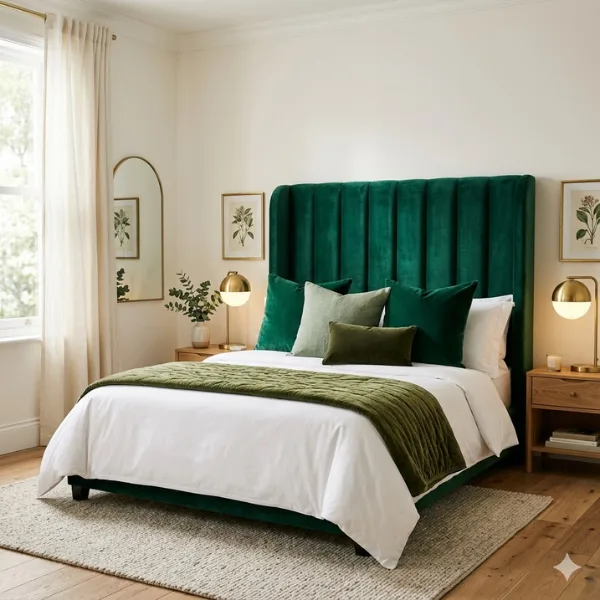
3. Emerald Green Velvet Headboard Bedroom
If you want to add green to your bedroom without touching the walls, an emerald green velvet headboard is your answer. It is bold, it is lush, and it instantly becomes the focal point of the entire room. The velvet texture catches the light in the most beautiful way — it looks different in morning light versus evening lamp glow, which makes the room feel alive.
Why It Works
Velvet is one of those fabrics that automatically elevates a room. When you put it in emerald green, it feels genuinely luxurious without requiring a full renovation. The headboard becomes your color statement while the rest of the room stays soft and neutral — this is smart decorating because it means you can switch up everything else seasonally without the room ever looking off.
Best For
This is brilliant for renters who cannot paint their walls, or anyone who wants a high-impact green bedroom without full commitment to a color scheme. It suits all bedroom sizes — even a small room looks immediately polished with a statement velvet headboard.
Styling Tips
- Keep your walls warm white, soft ivory, or very light gray so the headboard truly pops.
- Choose ivory or white percale bedding as your base — then layer in sage green and deep olive throw pillows for tonal depth.
- Add brass globe bedside sconces or table lamps to flatter the velvet texture.
- Place a large arch mirror in the corner opposite the bed — it reflects the headboard’s color beautifully and makes the room feel larger.
- Keep artwork minimal. One or two simple botanical prints in thin brass frames above the nightstands is more than enough.
- A quilted olive green coverlet folded at the foot of the bed adds one more layer of green without overdoing it.
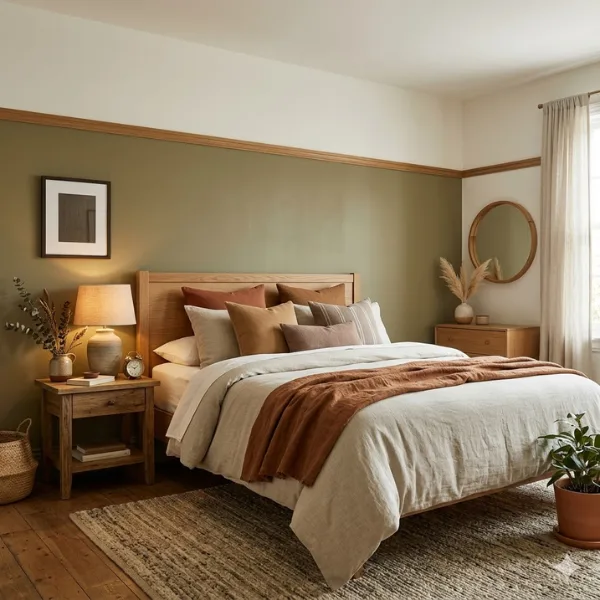
4. Olive Green Two-Tone Painted Walls with Earthy Accents
Two-tone walls are one of the most underrated painting techniques in bedroom design. The idea is simple: paint the lower two-thirds of your wall in olive green, and keep the top third and ceiling in warm white. You separate the two sections with a simple chair rail or even just a clean painted line. The result is a room that feels structured, earthy, and wonderfully cozy.
Why It Works
Olive green is a warm, complex shade — it sits somewhere between brown and green, which makes it incredibly versatile. The two-tone technique grounds the room without making it feel dark or cave-like. The lighter upper section keeps the ceiling feeling high, and the contrast between the two colors adds architectural interest to even the most basic, plain-walled bedroom.
Best For
This is ideal for medium-sized bedrooms that feel a little plain or boxy. It is a great DIY project for anyone comfortable with a paintbrush. It suits rustic, farmhouse, earthy modern, and Japandi-inspired styles particularly well.
Styling Tips
- Use a warm olive green for the lower section — look for shades described as “muted olive,” “earthy khaki,” or “warm moss.”
- Keep the upper wall and ceiling in a warm white with yellow or cream undertones, not a stark bright white — it will clash with the warmth of the olive.
- A simple wooden or picture rail molding at the dividing line looks very intentional and polished.
- Choose warm wood furniture — oak, walnut, or pine all pair beautifully.
- Layer in terracotta, camel, and rust tones through cushions, rugs, and ceramics.
- Add a large round mirror above the dresser to reflect light and break up the visual weight of the lower dark section.
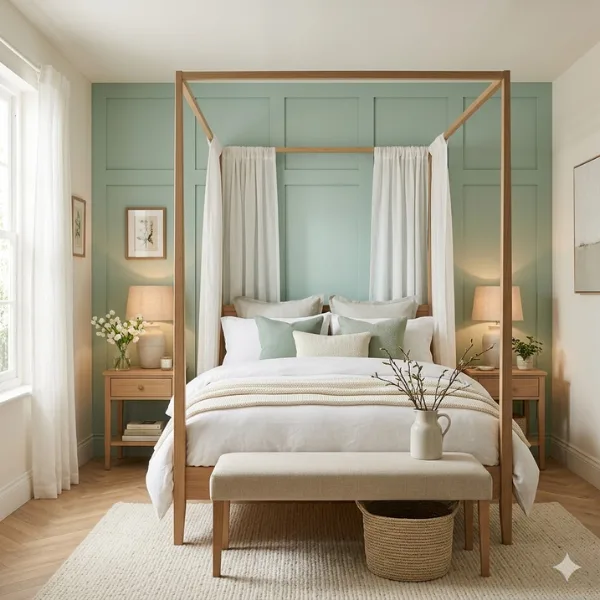
5. Mint Green Paneled Wall with Four-Poster Bed
Mint green is the lightest, freshest member of the green family. When you combine it with a classic four-poster bed, the room takes on this beautiful, airy, almost romantic quality. The wall paneling adds texture and structure, and the result is a bedroom that feels both timeless and modern at once.
Why It Works
Mint is calming without being as muted as sage, and it works incredibly well with white — making rooms feel larger and brighter. Wall paneling, whether shaker-style boards or simple vertical strips, turns a flat wall into a real feature. The four-poster bed adds height and grandeur that suits the structured paneling perfectly. Everything feels considered, which is the hallmark of a truly well-designed bedroom.
Best For
This works beautifully in larger bedrooms where the height of a four-poster bed can really be appreciated. It suits people who love a classic, romantic, or cottage-core aesthetic. It is also a genuinely gorgeous look for a luxurious guest room.
Styling Tips
- Install simple shaker-style or tongue-and-groove wall paneling on the wall behind the bed, then paint the entire wall — panels and all — in a soft mint green.
- Keep the remaining three walls in soft white or very pale cream.
- Choose a white or natural wood four-poster bed. A canopy draped with sheer linen curtains adds an extra layer of romance.
- Use white bedding exclusively — it lets the mint wall do all the talking.
- Add mint and sage throw pillows for tonal layering.
- Soft, warm-toned bedside lamps are essential — cool white bulbs will clash with this palette.
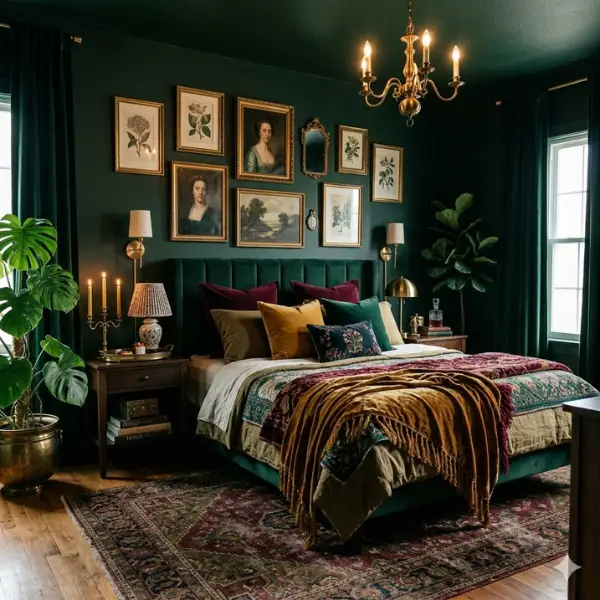
6. Dark Green Moody Maximalist Bedroom
This one is for the bold, the dramatic, and the people who find “neutral and calm” a little boring. A dark green moody bedroom goes all in — rich green walls, layered patterns, velvet textures, botanical prints, and brass everywhere. It sounds like a lot, but when it is done intentionally, it is one of the most stunning bedroom styles you will ever see.
Why It Works
Dark green creates a cocooning effect — the room feels intimate, warm, and utterly enveloping. Maximalism works here because green is a color that can absorb richness. Every added layer — a patterned throw, a stack of art books, a brass candelabra — adds to the atmosphere rather than cluttering it. The key is that every item in the room still relates back to the palette, so even with many things, everything belongs.
Best For
Best for large bedrooms with good natural light — you need the daylight to balance the depth of the dark walls. This style suits anyone with a dramatic, eclectic, or romantically inclined personality. It is not for the faint-hearted, but for those who love it, it is completely transformative.
Styling Tips
- Paint all four walls AND the ceiling in a deep, saturated green — this is called color-drenching and it is a real designer technique.
- Choose rich bedding in jewel tones — deep burgundy, forest green, dusty gold, or inky navy.
- Layer multiple rugs if you have wooden floors — a large Persian or Moroccan-style rug under the bed, with a smaller runner alongside it.
- Hang a gallery wall with a mix of botanical prints, vintage-style landscape paintings, and gold-framed mirrors.
- Use brass or antique gold light fixtures only — no chrome or nickel in this room.
- Add large indoor plants in dark ceramic pots — monstera, fiddle leaf fig, or snake plants all suit the moody aesthetic perfectly.
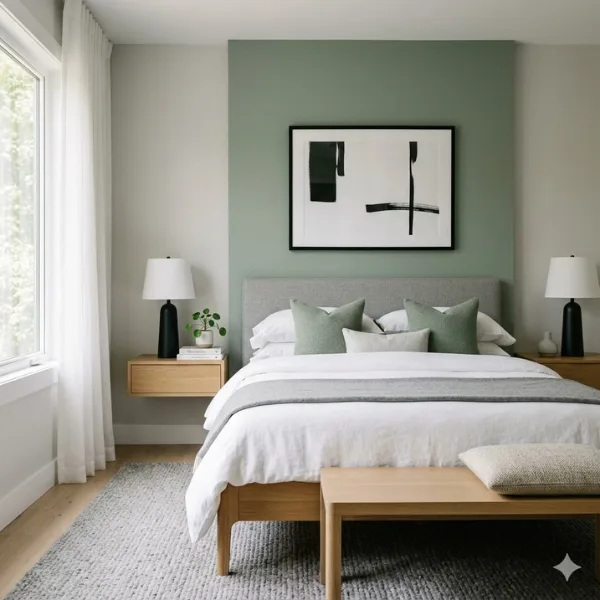
7. Sage Green & Gray Minimalist Retreat
If your design philosophy is “less is more,” this combination is your green bedroom sweet spot. Sage and gray are both quiet, understated colors that work together in perfect harmony. The result is a bedroom that feels like a high-end boutique hotel — serene, ordered, and deeply restful.
Why It Works
Sage green and gray share similar levels of saturation and warmth, so they never fight each other visually. Together, they create a palette that reads as sophisticated without being cold. The minimalist approach means every piece of furniture and every accessory earns its place in the room — nothing is there by accident, and that intentionality is what makes the space feel so calming.
Best For
This is perfect for small to medium bedrooms where you want to maximize the feeling of space. It suits people with a clean, modern, or Scandinavian aesthetic. It is also one of the easiest green bedroom looks to pull off on a tight budget because the beauty comes from simplicity, not from expensive pieces.
Styling Tips
- Paint the wall behind your bed in sage green. Keep the remaining walls and ceiling in light gray or warm off-white.
- Choose a gray upholstered bed frame — it bridges the two colors beautifully.
- Use crisp white bedding with a single sage green throw pillow on each side.
- Keep nightstands minimal and matching — simple white or light oak floating shelves work perfectly.
- Add one piece of black-and-white artwork above the headboard for graphic contrast.
- No clutter on surfaces — a single lamp, a small plant, and a book on each nightstand is the maximum.
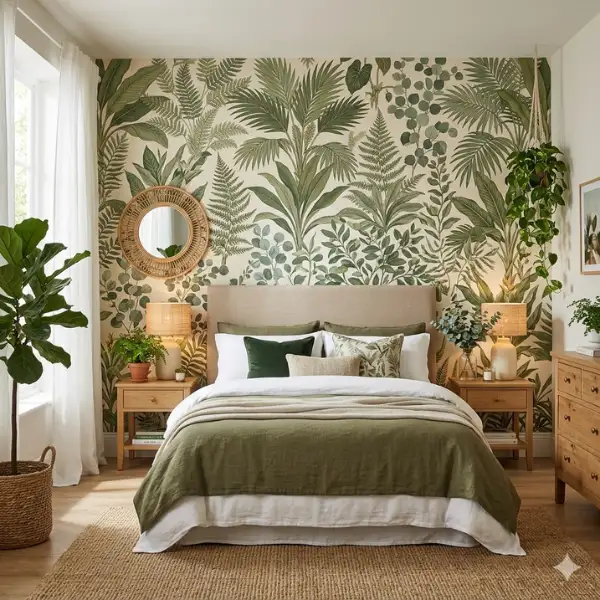
8. Botanical Wallpaper Green Bedroom
Botanical wallpaper is one of the easiest ways to bring the garden indoors. Whether it is oversized tropical leaves, delicate hand-painted ferns, or moody jungle prints, a botanical wallpaper transforms a boring bedroom into something that feels genuinely immersive and lush. You only need one wall — the one behind your bed — to make the whole room feel entirely different.
Why It Works
Wallpaper does the decorating work for you. One botanical feature wall gives you color, pattern, texture, and a nature connection all in one single decision. Because the wallpaper already contains multiple shades of green, it tells you exactly what colors to pull into your bedding, cushions, and accessories — making the rest of the room very easy to style.
Best For
This works for all bedroom sizes but is especially impactful in smaller rooms where a single accent wall can completely transform the space. It suits people who love a maximalist, nature-inspired, or tropical aesthetic. It is also a brilliant option for rental homes — many botanical wallpapers are now available as peel-and-stick, making them fully removable.
Styling Tips
- Choose a wallpaper with a white or cream background if your room is small — it keeps the space feeling light.
- For larger rooms with good light, you can go for a dark background botanical print — think inky blue-green leaves on black. It is stunning.
- Keep your furniture and bedding in neutral tones so the wallpaper stays the star. White bedding, natural wood furniture, and cream or jute rugs are all ideal.
- Bring in a few real plants to blur the line between the print and the living botanicals in the room.
- Add wicker or rattan accessories — a rattan mirror, a woven lampshade — to reinforce the natural theme without adding more pattern.
9. Color-Drenched Green Bedroom (Walls, Ceiling & Trim)
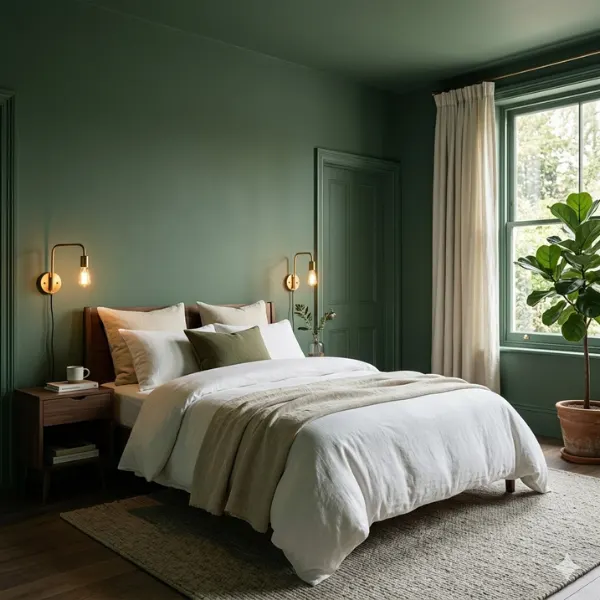
Color-drenching means painting absolutely everything the same color — walls, ceiling, skirting boards, door frames, even the inside of the door itself. When you do this in a deep, rich green, the room becomes completely immersive. It is one of those techniques that sounds extreme on paper but looks breathtaking in real life.
Why It Works
When there are no color breaks — no white ceiling line, no contrasting trim — the eye does not know where to stop, which paradoxically makes even a small room feel much larger and more enveloping. The monochrome effect also reads as very high-end and intentional. This is a technique that top interior designers use in editorial-style rooms, and it is completely achievable as a DIY project over a weekend.
Best For
Surprisingly, this works in both large and small bedrooms. In a large room, it creates drama and grandeur. In a small room, it removes the visual interruptions that make a space feel cramped. It suits people who love a bold, contemporary, or deeply atmospheric aesthetic.
Styling Tips
- Choose a deep sage, soft forest, or muted olive green — medium-depth greens tend to work best because they are rich enough to feel enveloping but not so dark they feel suffocating.
- Use the same paint for walls, ceiling, woodwork, and trim — do not skimp on painting the trim, as that is what makes the effect work.
- Keep furniture and bedding in sharp contrast — white, cream, or natural linen bedding pops brilliantly against a fully green room.
- Add brass or warm-toned lighting to prevent the room from feeling flat.
- A single large plant in a terracotta pot adds life without competing with the palette.
- Keep window treatments simple — sheer linen curtains in white or cream allow natural light in while maintaining the cocoon effect.
10. Teal Green Bedroom with Blush Pink Accents
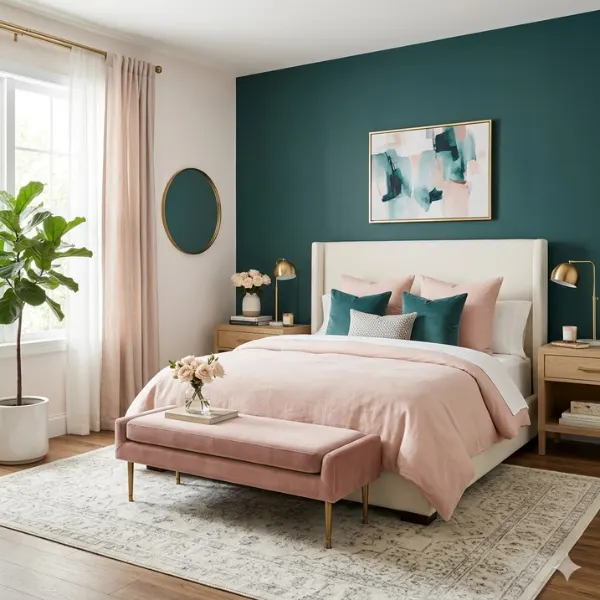
Teal sits right at the intersection of green and blue, and it is one of the most striking, sophisticated colors you can put in a bedroom. When you pair it with blush pink accents, the combination is soft, romantic, and genuinely beautiful — the kind of bedroom that makes every guest walk in and immediately say “I love this room.”
Why It Works
Teal and blush are complements — teal is cool and deep, blush is warm and soft. They balance each other out perfectly. The teal grounds the room and adds drama, while the blush prevents it from feeling too heavy or serious. It is a pairing that feels both modern and timeless, which means it will not look dated in a few years.
Best For
This combination works best in medium to large bedrooms. It suits romantic, eclectic, or contemporary styles. It is a particularly gorgeous option for a master bedroom where you want the space to feel both bold and deeply comfortable.
Styling Tips
- Paint the feature wall behind your bed in teal. A deep, rich teal with green undertones works better than one with too much blue.
- Keep the remaining walls in soft white or the lightest possible blush for a dreamy, enveloping feel.
- Choose a blush pink duvet cover or quilt as your main bedding layer.
- Add teal cushions to the bed to tie the wall color back into the center of the room.
- A dusty pink velvet bench at the foot of the bed looks utterly gorgeous.
- Use warm brass or gold fixtures — they sit beautifully at the meeting point of the two colors.
11. Green & White Scandi-Chic Bedroom
Scandinavian design is built on simplicity, function, and a deep love of natural materials. When you bring green into a Scandi-style bedroom — as a soft wall color, in the bedding, or through plants — it adds just enough warmth and nature to make the space feel truly alive without disturbing that signature clean, calm aesthetic.
Why It Works
White and green is one of the cleanest, freshest color pairings in existence. Scandi style also naturally incorporates wood, which is the perfect bridge between the two colors — natural wood is warm and brings out the earthy undertones in green. The result is a bedroom that feels bright during the day and cozy at night, with a simplicity that makes it genuinely restful to live in.
Best For
This is ideal for small to medium bedrooms, particularly those with good natural light. It suits people who love a clean, airy, uncluttered aesthetic. It is also one of the most budget-friendly looks on this list because white and natural wood furniture is widely available and often inexpensive.
Styling Tips
- Paint one wall — the one behind the bed — in a soft, muted sage green with gray undertones. Keep all other walls bright white.
- Choose a simple wooden bed frame in pine, oak, or ash. Nothing ornate — clean lines only.
- Use white bedding with a single sage green linen duvet or quilt layered on top.
- Add a woven or sheepskin rug on each side of the bed for warmth and texture.
- Keep nightstands simple — matching open-shelved wooden units look clean and functional.
- A few potted succulents or a small fiddle leaf fig in a white ceramic pot adds that essential green accent without being overwhelming.
12. Moss Green Limewash Wall Bedroom
Limewash paint is having its biggest moment right now, and when applied in a deep, earthy moss green, it produces a wall finish that looks like it belongs in a centuries-old Italian farmhouse. The beauty of limewash is in its imperfection — the brush strokes create a soft, organic texture that looks completely different from every angle and in every light.
Why It Works
Limewash adds texture and depth to a wall without any physical paneling or wallpaper. The natural, slightly chalky quality of the finish gives the room an old-world, artisanal feel that is impossible to replicate with regular matte paint. In moss green, it creates an organic, earthy atmosphere that feels deeply connected to nature — calm, warm, and completely unique.
Best For
This is a beautiful option for medium to large master bedrooms. It suits people who love rustic, Mediterranean, earthy modern, or slow-living aesthetics. It also works very well in a bedroom with wooden ceiling beams, stone floors, or other natural architectural features.
Styling Tips
- Apply limewash paint on all four walls for the full effect — this is not a technique that works as a single accent wall as it benefits from being seen all around you.
- Choose a moss green limewash — brands like Portola Paints and ROMABIO make excellent ready-to-use options.
- Pair with an oatmeal linen headboard and ivory bedding layers for a soft, tonal look.
- Add a camel-colored throw and warm terracotta cushions for earthy color contrast.
- Use warm dimmable lighting only — limewash walls look extraordinary under warm amber lamp light in the evenings.
- A chunky jute rug under the bed completes the organic, textural theme.
13. Small Seafoam Green Bedroom with Space-Saving Layout
Seafoam green is the most light-reflective shade in the green family — it is the palest, most aquatic, most airy version of the color, and it is absolutely perfect for small bedrooms. Combined with a smart, space-conscious furniture layout, it makes even the tiniest bedroom feel open, fresh, and completely pulled together.
Why It Works
Light colors make walls appear to recede, which is the fundamental trick for making small rooms feel larger. Seafoam specifically has a slightly aqua quality that catches natural light beautifully — the room glows. By keeping furniture low, choosing pieces with legs, and using floating shelves instead of bulky nightstands, you preserve the feeling of space while still having everything you need.
Best For
This is specifically designed for small bedrooms — studio apartments, box rooms, small rental flats, or any room under 150 square feet. It suits people who need a calming, functional bedroom without sacrificing style.
Styling Tips
- Paint all four walls and the ceiling in the same soft seafoam green — the color-drenching technique works brilliantly in small rooms because it eliminates the hard lines that make a room feel boxy.
- Choose a low-profile platform bed with a simple, slim headboard. The lower the bed, the taller the ceiling feels.
- Use floating wooden shelves instead of nightstands — they give you surface space without taking up floor area.
- Hang a large round mirror on the wall opposite the window — it reflects light and makes the room feel twice as big.
- Use white linen bedding with one mint green throw for a soft tonal moment.
- Keep the floor as clear as possible — a slim sisal or jute rug under the bed is all you need.
14. Olive Green Floor-to-Ceiling Wardrobe Bedroom
Built-in or freestanding wardrobes painted in olive green are one of the most underused design features in bedroom styling. Instead of the standard white built-ins that disappear into the wall, an olive green wardrobe becomes an architectural statement — a bold, beautiful focal point that also gives you all the storage you need.
Why It Works
A large wardrobe in a strong color acts as a piece of furniture art. It grounds the room, gives it a strong visual anchor, and makes everything around it look more considered. Olive green in particular is warm and muted enough that it does not feel aggressive — it feels rich, earthy, and deeply intentional. It also pairs naturally with wood, cream, and natural linens, which means the rest of the room is very easy to style around it.
Best For
This is ideal for larger bedrooms where you have space for a full-length wardrobe along one wall. It also works beautifully if you already have fitted wardrobes and want to repaint them — it is one of the easiest and most high-impact bedroom transformations you can do. It suits people with a bold, contemporary, earthy, or even maximalist aesthetic.
Styling Tips
- Paint floor-to-ceiling built-in wardrobes in a warm, muted olive green. Use a satin finish rather than matte for the doors — it is more durable and looks refined.
- Replace standard silver or chrome handles with brushed brass or antique bronze ones. This one change makes a huge difference.
- Keep your bed and other bedroom furniture in natural wood, cream upholstery, or white.
- Use white bedding to keep the rest of the room light and airy so the wardrobe wall stays the hero.
- Add open shelving units or a ladder shelf in natural wood next to the wardrobe to soften the transition from color to neutral.
- A large potted plant in the corner next to the wardrobe reinforces the earthy, natural feel.
15. Forest Green Kids’ Bedroom with Playful Accents
Green in a kids’ bedroom is a completely underrated choice. While most children’s rooms go pink, yellow, or primary colors, a nature-inspired forest green creates a space that is calming enough for sleep, interesting enough for play, and grown-up enough that it will not need a complete redesign in three years.
Why It Works
Forest green is grounding and calming — two qualities that are genuinely useful in a child’s bedroom. Studies show that green environments reduce anxiety and encourage creativity. It is also a gender-neutral choice that works for any child. By adding playful accents — fun prints, colorful rugs, a mix of textures — you get all the personality of a “fun kids’ room” without the chaotic color overload that makes children’s rooms feel stressful.
Best For
Perfect for children aged 4 and up, through to their pre-teen years. The base palette is timeless enough to grow with them — you simply update the accessories as they get older. It works for all sizes of children’s bedrooms.
Styling Tips
- Paint one wall or use green vehicle- or woodland animal-patterned wallpaper for a playful touch.
- Choose a simple house-frame bed or a low platform bed in natural pine or white — nothing too ornate.
- Use checkered or gingham bedding in green and white for a playful but not babyish look.
- Add a colorful illustrated rug — something with animals, stars, or abstract shapes — to inject fun.
- Install open wooden shelving for books and toys, kept tidy with natural woven baskets.
- A battery-powered fairy light string draped around the headboard or window frame adds a magical touch that children universally love.
- Include at least one easy-care plant — a snake plant is nearly indestructible and brings the natural green theme to life.
16. Boho Green Jungle Bedroom with Indoor Plants
If you have a green thumb and an eclectic, free-spirited soul, this is your bedroom. The Boho Green Jungle concept is exactly what it sounds like — a bedroom that is absolutely filled with living plants. Monstera leaves, trailing pothos vines, hanging ferns, snake plants in the corners, small succulents on shelves — the more, the better. The plants become the decor.
Why It Works
This idea works because plants are genuinely beautiful and deeply personal — your plant collection is unique to you. A jungle bedroom also has real wellness benefits: plants improve air quality, reduce stress, and create a sense of being immersed in nature. The boho aesthetic, with its natural materials, macrame textures, and earthy colors, provides the perfect backdrop for lush greenery to really shine.
Best For
This is made for people who love plants and do not mind caring for them. It works best in bedrooms with large windows and good natural light — plants need light to thrive. It suits large and medium-sized rooms particularly well, as the plants need space to grow and be displayed.
Styling Tips
- Start with a soft, earthy wall color — warm white, cream, or pale sage green — so the plants stand out against the walls.
- Use macrame plant hangers at different heights to create a vertical garden effect on one wall or in a corner.
- Choose plants with large, dramatic leaves for maximum impact: monstera deliciosa, fiddle leaf fig, bird of paradise.
- Add trailing plants to bookshelves — pothos or string of hearts work beautifully draped over shelf edges.
- Choose natural material furniture — rattan, bamboo, reclaimed wood — to reinforce the earthy, organic atmosphere.
- Use warm-toned Edison bulbs in your lighting fixtures — it makes the plants look lush and golden in the evenings, like a garden at golden hour.
17. Emerald Green & Black Contrast Bedroom
This is the most dramatic, graphic, and high-impact idea on this list. Emerald green and black is a combination that appears in luxury boutique hotels, high-end interior design magazines, and aspirational Pinterest boards constantly — and for very good reason. It is bold, it is striking, and it looks absolutely extraordinary.
Why It Works
Emerald green is saturated and jewel-like. Black is sharp and graphic. The contrast between the two creates instant visual drama. The emerald walls glow next to black accents, and the black accents give the emerald walls a crisp, defined edge. There is nothing soft or tentative about this combination — it is confident, decisive, and completely unforgettable.
Best For
This is best for medium to large bedrooms with good natural light — you need that light to keep the deep tones from feeling too heavy. It suits people with a bold, contemporary, or maximalist design sensibility. If your personal style tends toward statement pieces and dramatic interiors rather than soft and neutral spaces, this is for you.
Styling Tips
- Paint all four walls in a rich, jewel-toned emerald green. The ceiling can stay white or go a lighter shade of sage green for a slightly softer feel.
- Choose a black bed frame — metal, wood, or upholstered all work. This is your key piece of furniture.
- Use black and white bedding — crisp white duvet with black piping, or a graphic black and white stripe. The contrast against the emerald walls is electric.
- Add black pendant lights or bedside sconces with matte black finishes.
- A large black-framed mirror on the wall opposite the bed reflects the room and doubles the drama.
- Introduce mustard yellow or warm brass accessories — a mustard throw pillow, brass vases, gold candlesticks. These warm accents stop the room from feeling too cold.
18. Sage Green Gingham Cottage Bedroom
Gingham is back, and in sage green, it is genuinely charming. This is the bedroom idea for anyone who loves a cozy, cottage-core, English countryside aesthetic — think lazy summer mornings, fresh air through open windows, soft linens, and the smell of cut grass. It is unashamedly pretty and completely wonderful.
Why It Works
Gingham is a pattern associated with freshness, simplicity, and country living. In sage green, it feels mature and elegant rather than childish — the muted, gray-toned quality of sage keeps the gingham looking sophisticated. Combined with a rattan headboard and wooden accents, the room feels like a charming rural retreat. It is warm, welcoming, and instantly comforting.
Best For
This works beautifully in small to medium bedrooms. It suits people who love a cottage, farmhouse, country, or vintage-inspired aesthetic. It is also a particularly lovely look for a guest room — guests feel genuinely welcomed by the warmth and coziness of this style.
Styling Tips
- Use sage green gingham as your main bedding — either a duvet cover, quilt, or at minimum the pillowcases.
- Paint the wall behind the bed in a muted sage green to tie everything together.
- Choose a natural rattan or wicker headboard — it is the perfect complement to the fresh, nature-inspired palette.
- Layer with a cream or oatmeal linen duvet underneath the gingham quilt.
- Add small floral or botanical prints in slim wooden frames on the walls.
- A small vase of dried lavender or wildflowers on the nightstand reinforces the country cottage feel.
- Choose warm wooden floors or a natural jute rug — they ground the softness of the gingham beautifully.
19. Deep Green Art Deco Bedroom with Brass & Velvet
Art Deco design is all about glamour, geometry, and unapologetic luxury. In deep green — think hunter green or deep bottle green — with brass accents and rich velvet textures, a bedroom becomes something genuinely spectacular. This is a room that feels like stepping back into the most stylish era of the twentieth century, reimagined for modern living.
Why It Works
Art Deco’s signature geometric patterns, symmetrical layouts, and luxurious materials feel right at home in a deep green palette. Green has long been a color of opulence in design history — emerald jewels, velvet chaise longues, lacquered furniture. The combination of deep green, brass, and velvet hits every one of those historical notes while still feeling current and desirable in 2026.
Best For
This is ideal for large master bedrooms with high ceilings where the grandeur of the style can be fully appreciated. It suits people who love maximalist, vintage, or luxury aesthetics. It is also a brilliant option for a home with existing period features — cornicing, ceiling roses, picture rails — that you want to celebrate rather than hide.
Styling Tips
- Paint the walls in deep hunter green or dark bottle green. If the room is very large, consider using Art Deco-style geometric wallpaper in green and gold for an even more dramatic effect.
- Choose a velvet headboard in deep green or rich jewel-toned burgundy.
- Add symmetrical bedside tables with geometric bases — hexagonal, angular, or fluted designs in brass or black.
- Use a brass chandelier or pendant light as the overhead fixture — this is non-negotiable for the Art Deco look.
- Layer a geometric patterned rug under the bed in black, gold, and green tones.
- Hang a large gilt-framed mirror or a series of geometric-framed mirrors on one wall.
- Use velvet cushions in jewel tones — deep sapphire, ruby red, amber gold — to create a rich, layered bed styling.
20. Split-Level Green Bedroom (Forest Base, Mint Top)
This is one of the most clever and unusual painting techniques on this entire list. The idea is to paint the lower two-thirds of your walls in deep forest green and the upper third in soft mint — creating a split-level color gradient that mimics a landscape. The forest green anchors the room and makes it feel grounded, while the mint top and ceiling keep everything feeling open and airy.
Why It Works
The split gives you the drama and cocooning warmth of a dark green bedroom without losing the sense of height and light that a fully dark room can lack. The mint top section keeps the ceiling feeling high. The transition between the two greens feels natural and harmonious — they are the same color family, just different in depth. A simple painted chair rail or picture rail at the dividing line makes the transition look clean and intentional.
Best For
This works particularly well in bedrooms with average ceiling height — rooms that feel neither very tall nor very low. It suits people who want something genuinely unusual and creative but still grounded and livable. It is a great conversation-starting bedroom for anyone who loves to decorate outside the usual rules.
Styling Tips
- Divide the wall roughly one-third from the top. The upper third — including the ceiling — goes in soft mint. The lower two-thirds go in deep forest green.
- Add a simple timber or painted chair rail at the dividing line to make the transition look polished.
- Choose neutral bedding in slate gray or warm white — you do not need more color, the walls are doing more than enough.
- Add a mint lumbar pillow on the bed to reference the upper wall color.
- Use matte black sconces on the lower green section for crisp contrast.
- Concrete or dark wood side tables look brilliant in this setting — they are contemporary and neutral without competing with the bold palette.
21. Green Attic Bedroom with Sloped Accent Wall
Attic bedrooms have sloped walls and low ceilings that many people find challenging to decorate. The solution? Lean into the angles. Paint the sloped section in a rich, deep green and let the color define the unusual architecture rather than fight against it. Suddenly, the slope is not a problem — it is the best feature of the room.
Why It Works
Dark or saturated colors on awkward architectural features draw attention to them deliberately, which reframes them as design choices rather than limitations. The sloped green wall creates a cocoon-like effect directly over the bed that makes the sleeping zone feel incredibly cozy and intentional. The rest of the room, kept lighter, provides contrast and balance.
Best For
This is specifically designed for attic bedrooms, loft conversions, or any room with sloped ceilings. It is brilliant for teenage bedrooms, guest rooms, or small master suites in converted loft spaces. The technique works for rooms of any size — the slope is the feature, not the room’s overall dimensions.
Styling Tips
- Identify the sloped section that sits directly above the bed. Paint this section — and this section alone — in a deep, rich green. Forest green, hunter green, or deep sage all work beautifully.
- Keep the vertical walls and ceiling peak in soft white or warm cream.
- Position the bed directly beneath the green sloped section so the color wraps over you like a canopy.
- Use warm-toned bedding in cream, oatmeal, or caramel so the green stands out without competition.
- Add small wall-mounted reading lights on either side of the bed — fixed lighting is ideal in attic bedrooms where floor space and clearance can be limited.
- A small potted plant on the windowsill reinforces the nature connection and makes the green feel alive rather than flat.
Common Mistakes to Avoid in a Green Bedroom
Getting the green bedroom right is mostly about avoiding a handful of very predictable pitfalls. Here are the ones I see most often — and exactly how to sidestep them.
1. Choosing the wrong undertone. Green has warm undertones (yellow, brown, olive) and cool undertones (blue, gray). A warm-toned sage will clash with cool gray furniture. Always test your paint on the wall before committing — look at it in both natural daylight and artificial evening light before you decide.
2. Going too bright in a small room. Bright, saturated greens like kelly green or lime can feel aggressive in a small space. If your room is small, stick to muted, soft greens — sage, seafoam, dusty mint. Save the bold shades for larger rooms with plenty of natural light.
3. Forgetting about lighting. Green is one of the most light-sensitive colors — it can look completely different depending on the bulbs you use. Always use warm white bulbs (around 2700K) in a green bedroom. Cool white bulbs will make even the warmest sage look gray and flat.
4. Overdoing the green. Using green on every surface — walls, bedding, curtains, cushions, rug — without any contrast creates a room that feels visually overwhelming and monotonous. Always balance your green with neutrals: white, cream, natural wood, or soft gray.
5. Ignoring texture. A bedroom with just painted green walls and no textural variety will look flat and uninspiring, no matter how good the color is. Always layer textures — linen, velvet, rattan, wood, ceramic — to give the room depth and warmth.
6. Skimping on the headboard or bed styling. Green walls create a great backdrop, but the bed still needs to be styled well. Flat, thin pillows and a plain duvet will look lost in front of a beautiful green wall. Invest in good bedding layers and proper pillow arrangements — they make an enormous difference.
7. Choosing the wrong green for your natural light. North-facing rooms get cool, flat light — they need warm-toned greens like olive or sage with yellow undertones. South-facing rooms get warm, bright light — they can handle cooler, deeper greens like forest or teal. Always consider your room’s orientation before choosing your shade.
Conclusion
Green is one of the most versatile, most calming, and most genuinely beautiful colors you can bring into a bedroom. Whether you are going all-in with a fully color-drenched forest green master suite or simply adding a sage velvet headboard to a neutral room, the impact is immediate and real.
The 21 ideas in this guide cover every possible shade, style, and room size — from tiny attic bedrooms to dramatic Art Deco masters, from kids’ rooms to minimalist retreats. The key is finding the version that fits your room’s dimensions, your natural light, and your personal style, then committing to it fully.
My biggest piece of advice after years of decorating bedrooms with green? Do not overthink it. Pick one idea that makes you excited, get some paint samples, and start testing. Green is forgiving, timeless, and one of the most rewarding colors you will ever put on a bedroom wall.
Frequently Asked Questions
Q: What is the most popular shade of green for bedrooms in 2026?
Sage green continues to be the most popular shade for bedrooms right now. It is muted, versatile, and genuinely calming — and it works with almost every furniture style and room size. Forest green and deep olive are also very on-trend for people who want something bolder.
Q: Does green make a bedroom feel smaller?
It depends entirely on the shade. Deep, saturated greens on all four walls can make a room feel more enclosed — which can be cozy or claustrophobic depending on the room size and light. However, pale greens like mint, seafoam, and soft sage actually make rooms feel larger and more airy. For small bedrooms, always choose light-to-medium greens and use the color-drenching technique to eliminate visual breaks in the walls.
Q: What colors go well with green in a bedroom?
Green pairs beautifully with white, cream, and natural wood tones for a fresh, clean look. For a warmer, earthier palette, combine green with terracotta, camel, and rust. For drama, pair deep greens with brass, black, or burgundy. For something soft and romantic, try sage green with blush pink and warm white.
Q: Is green a good color for a bedroom if I have no natural light?
With very little natural light, avoid dark greens — they will make the room feel cave-like. Instead, choose the lightest possible muted sage or warm mint, and combine it with warm artificial lighting (2700K bulbs), mirrors to reflect existing light, and light-colored furniture and bedding. The right shade of green in a low-light room can still look beautiful — it just requires more careful selection.
Q: Can I use green in a rented bedroom without painting the walls?
Absolutely. Green velvet headboards, sage green bedding, green throw cushions, botanical wallpaper (in peel-and-stick form), and indoor plants are all ways to bring green into a rented bedroom without ever touching the walls. Even just swapping your duvet cover for a rich emerald green one can transform the entire mood of a room in minutes.
Q: What furniture colors work best with green walls?
Natural wood furniture — especially warm oak, pine, and walnut — is the most universally compatible option with any shade of green. White and cream furniture also work beautifully, particularly with softer greens. For bolder green rooms, black and brass furniture adds a stunning graphic contrast.
Q: How do I choose between sage, olive, forest, and emerald green for my bedroom?
Think about the mood you want. Sage is calm and easy to live with — a safe, beautiful choice. Olive is warm and earthy — great for rustic or natural aesthetics. Forest is deep and moody — perfect for drama and coziness. Emerald is bold and luxurious — ideal for making a strong statement. Consider your room’s light levels, size, and existing furniture tones as well — these factors will help narrow down which shade genuinely works in your specific space.