
19 Luxury Master Bedroom Designs That Feel Comfortable Every Day
If you have ever walked into a bedroom and thought, “this feels like a dream” — you know exactly what I mean when I talk about luxury. But here is the thing most people get wrong: luxury has nothing to do with how much money you spend. I have decorated rooms with budget furniture that looked absolutely stunning, and I have seen expensive rooms that felt cold and lifeless.
In this guide, I am going to walk you through 19 luxury master bedroom ideas that actually work in real homes. Not just beautiful rooms from fancy design magazines — but ideas you can genuinely apply to your own space, whether it is small, medium, or large. I will also cover the mistakes I see all the time so you can avoid them from the start. Let us dive in.
Table of Contents
19 Luxury Master Bedroom Design Ideas
Here is the complete ideas list:
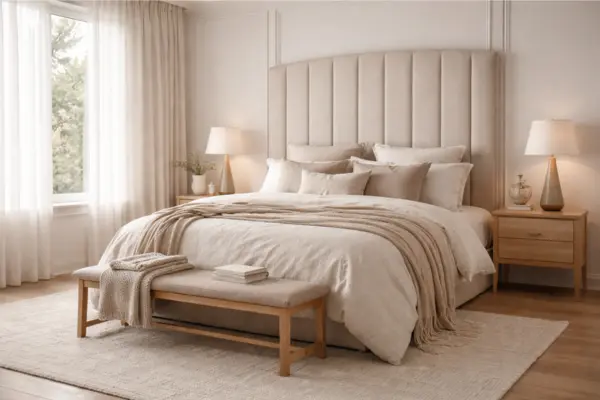
1. Soft Neutral Suite With a Tall Upholstered Headboard
If you are someone who wants your bedroom to feel like a peaceful escape from the moment you walk in, this is your design. A tall upholstered headboard becomes the star of the room, and everything else supports it quietly. Think creamy whites, warm beiges, soft taupes — colors that feel like a deep breath. The layers of texture in the bedding, the throw at the foot of the bed, and the soft rug underfoot all work together to make the room feel wrapped in comfort without being overdone.
Why It Works
The tall headboard gives the room a strong focal point right away. Your eye goes straight to it, and everything else feels organized around it. Neutral tones create a sense of calm that works morning and night — you wake up feeling rested and you fall asleep feeling relaxed. The layered textures add richness without any extra visual noise, which means the room looks expensive without looking cluttered.
Best For
This design is perfect for medium-sized bedrooms where you want elegance without drama. It also suits anyone who prefers a soft, restful atmosphere over something bold or statement-heavy. If you are someone who finds it hard to switch off at night, this palette genuinely helps.
Styling Tips
Start with linen bedding in an oatmeal or warm white tone — linen always looks expensive and gets softer with every wash. Add a chunky knit throw at the foot of the bed for texture contrast. Place a long upholstered bench at the base. For side tables, choose something in warm wood or brushed brass — both work beautifully against neutral tones. Keep your color palette consistent throughout the room and resist the urge to add anything too bold. Two or three decorative pillows is plenty. Less is always more here.
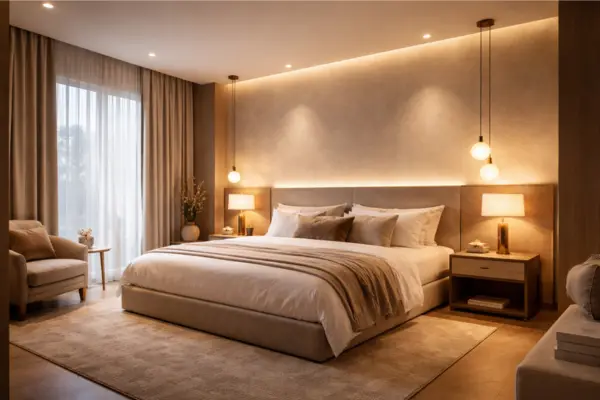
2. Boutique Hotel Bedroom With Layered Lighting
You know that feeling when you walk into a really nice hotel room and everything just feels warm, soft, and inviting? That feeling is almost entirely created by the lighting. Not the furniture, not the art on the walls — the lighting. This design brings that same hotel magic into your home by stacking different types of light sources throughout the room. Ceiling fixtures, bedside lamps, and subtle accent lighting all work together to create depth and mood in a way that one overhead light simply cannot do.
Why It Works
Layered lighting is one of the most powerful and underused tools in bedroom design. It works because it gives you control over the atmosphere depending on your needs. Bright and functional in the morning, soft and relaxing at night. Each light source does a specific job, and together they make the room feel full, warm, and intentional. This alone can completely transform a basic room into something that feels genuinely luxurious.
Best For
This approach works especially well in small to medium bedrooms where you want to create a rich, layered feel without adding more furniture. It is also brilliant for anyone who loves ambiance and wants their bedroom to feel different at different times of day.
Styling Tips
Swap your standard bedside lamps for wall-mounted sconces or hanging pendant lights on either side of the bed — this frees up table space and looks far more elevated. Add a dimmer switch to every light you can — this is a small change that makes a massive difference. A soft table lamp in the corner creates a warm glow in the evening. Use full-length curtains that pool slightly on the floor to add softness, and lay a plush rug under the bed to anchor the space. The combination of all of these together is what creates that hotel magic.
3. Warm Minimalist Master Bedroom
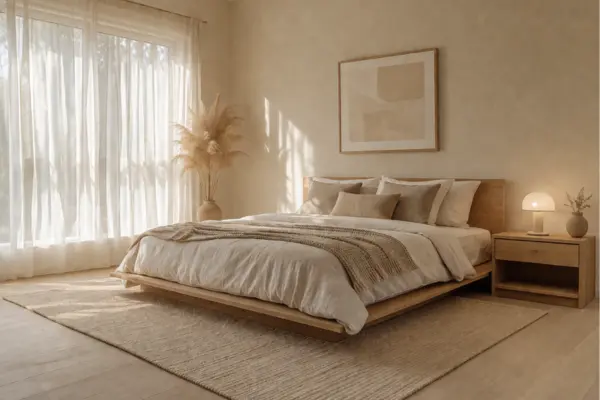
Minimalism gets a bad reputation for feeling cold and sterile, but done right, it is one of the most luxurious looks you can achieve in a bedroom. This design strips everything back to only what is needed and makes every piece count. Warm wood tones, a simple low-profile bed, clean lines, and just enough texture to keep the room from feeling empty. It is calm, it is considered, and it feels genuinely restful in a way that busy rooms never do.
Why It Works
When you remove the visual clutter, the room naturally feels larger and more open. Your brain has less to process, which means you actually feel calmer when you are in the space. The warm tones prevent that cold, clinical feeling that can come with stark minimalism — they make the room feel human and cozy even without a lot of decorative items. Every piece of furniture you choose gets to be appreciated because nothing is competing for attention.
Best For
Ideal for small and medium-sized bedrooms where space is limited. Also perfect for anyone who feels overwhelmed by clutter or wants a space that genuinely helps them unwind. If you tend to add too much and regret it later, the minimalist approach will be a revelation.
Styling Tips
Choose a low-profile platform bed in a warm wood finish or an upholstered frame in a neutral tone. A textured rug in a natural material like jute or wool adds warmth underfoot. Keep your bedside tables simple — one drawer, clean design, nothing fussy. Use soft, indirect lighting rather than harsh overhead bulbs. On the walls, one piece of art done well beats five pieces done cheaply every single time. Resist the urge to fill every surface. Leave some breathing room — that space is doing important work.
4. Dark and Moody Luxury Retreat
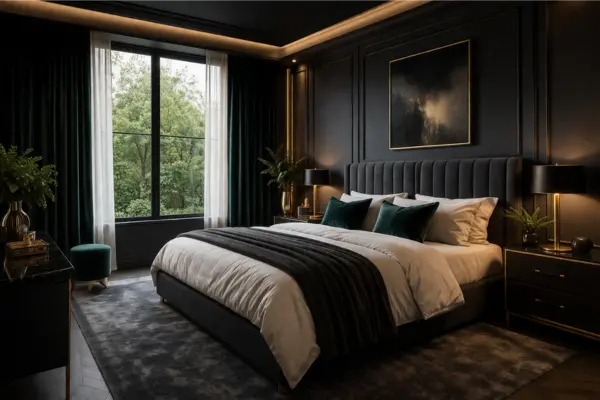
Not everyone wants a light, airy bedroom — and if you are someone who craves cozy, dramatic, and deeply atmospheric spaces, this one is for you. Deep charcoal walls, rich forest green, inky navy — these are colors that wrap around you like a warm blanket and make the bedroom feel like a true sanctuary. The key is balancing those dark tones with lighter bedding and warm metallic accents so the room feels rich rather than heavy.
Why It Works
Dark colors absorb light in a way that creates a natural cocoon effect — and your brain actually responds to that. It signals rest, which is exactly what a bedroom should do. When you balance the depth of dark walls with pale bedding and warm metals, you get a room that feels luxurious and layered without being oppressive. It is the design equivalent of a candlelit room — moody in the very best way.
Best For
This works best in rooms that get decent natural light during the day so the darkness feels intentional rather than accidental. Medium-sized rooms are the sweet spot. It also works beautifully for people who sleep late or work night shifts and want their bedroom to feel permanently cozy regardless of the time of day.
Styling Tips
Use matte paint finishes on the walls — they absorb light beautifully and avoid any harsh reflections. Choose bedding in white, ivory, or soft grey to create contrast against the dark walls. Add metallic accents through your lamp bases, picture frames, and hardware — brushed gold or antique brass both look stunning. Keep the art simple: one or two strong pieces rather than a gallery wall. Bring in a plush velvet throw for extra texture and luxury. And do not be afraid of the dark — commit to it fully and it will reward you.
5. Small Luxury Bedroom With Built-In Wall Storage
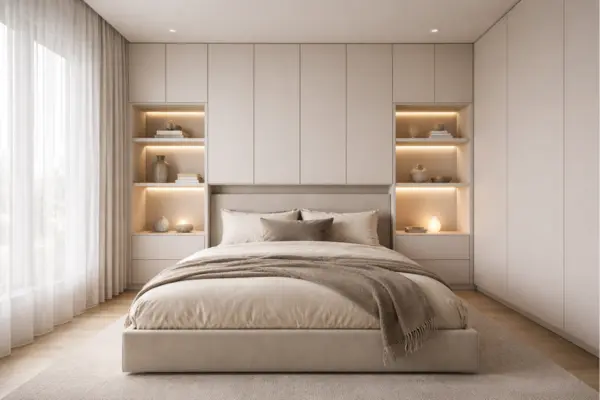
Small bedrooms can absolutely feel luxurious — you just have to approach them differently. Instead of fighting the size, you work with it. Built-in wall storage is the secret weapon here. Floor-to-ceiling cabinets and shelves make the room feel custom-designed rather than made-do. Everything has a place, surfaces stay clear, and the room takes on a calm, organized quality that genuinely feels elevated — regardless of the square footage.
Why It Works
Built-in storage eliminates visual chaos instantly. When everyday items — clothes, books, accessories — are stored out of sight behind clean cabinet doors, the room looks polished and intentional. Built-ins also make the space feel like it was specifically designed for the room, which always reads as luxury. And because they use vertical space efficiently, they free up floor space that makes the room feel bigger than it is.
Best For
This is the perfect solution for small bedrooms where space is genuinely limited. It is also great for anyone who struggles to keep their bedroom tidy — when storage is built right into the walls, tidying up becomes much easier and faster.
Styling Tips
Keep the cabinet design simple and streamlined — flat fronts with recessed handles look far more elegant than busy carved details. Paint the cabinets the same color as your walls to make them recede visually and make the room feel more cohesive. Add interior lighting inside the cabinets or along the bottom edge for a subtle, expensive-looking glow. Keep surfaces completely clear except for one or two intentional decorative items. A small plant, a beautiful lamp, or a single sculptural object is all you need.
6. Four-Poster Bedroom With Modern Lines
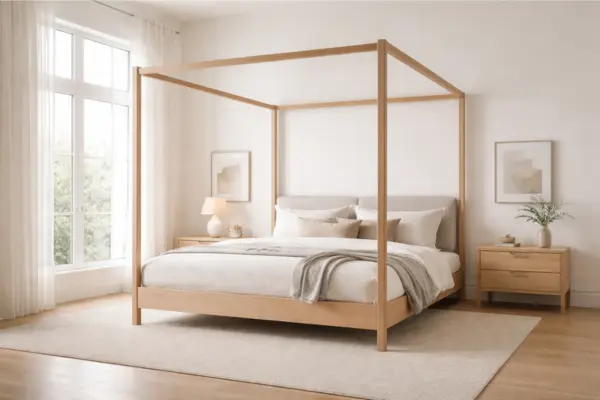
The four-poster bed has been a symbol of luxury for centuries — and when you update it with clean, modern lines, it becomes something genuinely special. Forget the heavy canopies and ornate carvings of traditional four-poster beds. The modern version is sleek and architectural, with straight posts that draw your eye upward and give the room a sense of height and grandeur. It is a statement piece in the very best sense — it elevates the entire room just by being there.
Why It Works
The vertical lines of a four-poster bed make the ceiling feel higher, which immediately makes any room feel more spacious and luxurious. It creates a natural frame around the sleeping area that gives the bed presence and purpose. A modern four-poster also works well in contemporary spaces because it brings classic elegance without any of the heaviness or fussiness of traditional styles.
Best For
This works best in medium to large bedrooms with ceilings that are at least standard height — the taller the ceiling, the better the effect. It is ideal for anyone who wants their bed to be the undeniable centrepiece of the room.
Styling Tips
Keep the bedding crisp and simple — white or neutral tones work beautifully against the architectural lines of the frame. Do not hang curtains from the posts unless you really want a specific canopy effect — the clean lines are often more beautiful without them. Use a large, simple area rug to anchor the bed and the room. Choose nightstands and other furniture that complement the bed without competing with it — low profiles and simple designs work best. Let the bed do the talking.
7. Quiet Luxury Bedroom With Earthy Tones
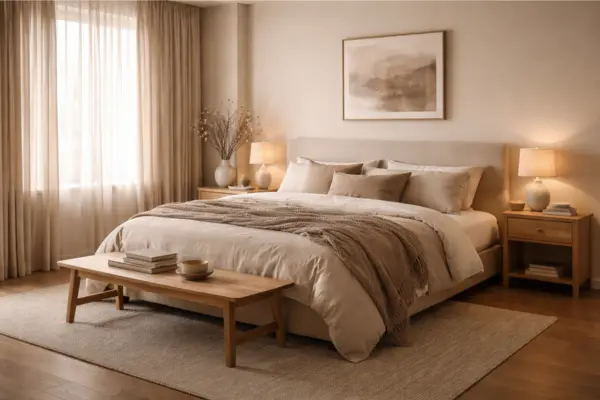
Quiet luxury is one of the biggest design movements right now, and honestly — it makes complete sense. It is the idea that true luxury whispers instead of shouts. No logos, no flashy details, no over-the-top decor. Just beautiful, natural materials in warm, earthy tones that feel genuinely comfortable and refined. Think warm terracotta, sandy beige, rich chocolate brown, and creamy white — all layered together with linen, leather, and wood to create a space that feels deeply grounded and calm.
Why It Works
Earthy tones connect us to nature in a way that our brains find genuinely soothing. They create warmth without being loud and add depth without being overwhelming. The natural materials — linen bedding, a wool rug, wooden furniture — add sensory richness that makes the room feel lived-in and loved rather than staged. It is the kind of room that gets more beautiful the longer you look at it.
Best For
This style works well in all bedroom sizes and suits almost any homeowner because of how naturally welcoming it is. It is particularly good for people who want their bedroom to feel organic and connected rather than polished and perfect.
Styling Tips
Build your palette from the ground up — start with a warm white or sandy beige on the walls, then layer in richer tones through your bedding, rug, and furniture. Use linen for bedding, always — it is the ultimate quiet luxury fabric. Incorporate at least one piece of natural wood furniture. Add a textured throw in a deeper tone like caramel or terracotta for contrast. Keep accessories natural and simple: a ceramic vase, a wooden bowl, dried botanicals. Nothing too shiny, nothing too perfect.
8. Symmetrical Master Bedroom Layout
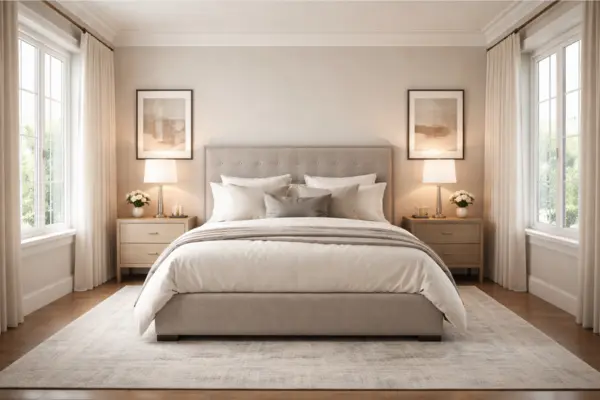
There is a reason symmetry has been used in design for thousands of years — it just works. A symmetrical bedroom layout, with matching furniture placed on either side of the bed, creates an instant sense of order, calm, and elegance. It is one of the easiest ways to make a bedroom look more intentional and polished without spending a lot of money. Two matching lamps, two matching side tables, balanced artwork — the effect is surprisingly powerful.
Why It Works
Our brains are wired to find symmetry pleasing. It signals balance and harmony, which is exactly the feeling you want in a space designed for rest. A symmetrical layout also makes the bed feel more commanding and central, which is ideal since the bed should always be the hero of the bedroom. It is one of those tricks that feels simple but makes a significant visual impact.
Best For
Symmetrical layouts work in all bedroom sizes and are especially effective in rooms shared by two people. It is also a great approach for anyone who feels like their room looks a little chaotic or unbalanced — symmetry can solve that problem almost immediately.
Styling Tips
Start with matching bedside tables and lamps on both sides of the bed — this is the foundation of the whole look. Keep the spacing equal on both sides; measure if you need to. If you have artwork above the bed, centre it carefully. Even if you choose to have slight variations in your accessories — a different book here, a different plant there — the visual symmetry of the furniture itself carries the whole design. Keep colors consistent across both sides and avoid anything too asymmetric that would break the feeling of balance.
9. Master Bedroom With a Lounge Corner
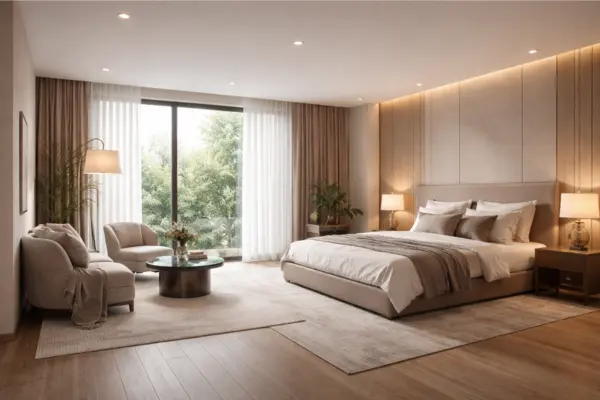
A bedroom with a dedicated lounge area feels so much more complete than one that is purely for sleeping. When you carve out a small corner for sitting — even just two chairs and a small side table — your bedroom transforms into a retreat that serves multiple parts of your day. Morning coffee, reading at night, a quiet conversation before bed — all of these moments feel better when they have a proper space to happen in.
Why It Works
Creating separate functional zones within one room makes the space feel larger and more intentional. The sleeping zone and the sitting zone complement each other, giving the room purpose beyond just housing a bed. It also makes the bedroom feel more like a private suite — the kind of space you actually want to spend time in, not just sleep in.
Best For
This works best in large bedrooms where there is genuinely enough floor space to create a distinct sitting area without crowding the sleeping area. You need enough room to place the seating comfortably without it feeling like it is crammed into a corner.
Styling Tips
Two armchairs work beautifully if you have the space — position them facing each other or angled slightly toward each other with a small round side table between them. If space is tighter, a small loveseat or chaise lounge can also work. Choose furniture that matches the style of the rest of the room — do not let the lounge area feel like a completely different room. Add a floor lamp nearby for reading. A small tray on the side table for your morning drink makes it feel genuinely functional and considered.
10. Bed Nook Luxury Design
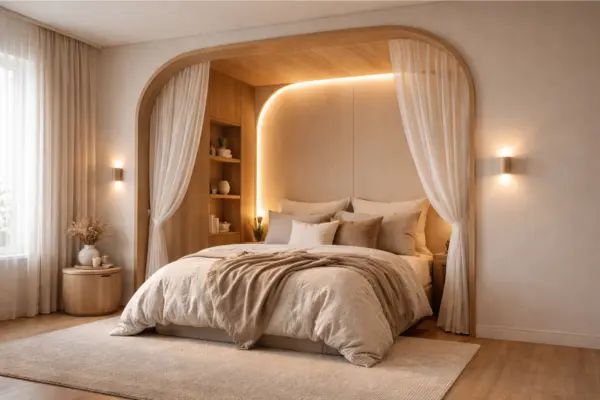
A bed nook takes the concept of a cozy sleeping space and turns it into something truly special. By slightly enclosing the bed — using panels, curtains, a canopy, or architectural elements — you create a defined sleeping area that feels private, intimate, and deeply comfortable. It is like having your own little world within the room. The effect is surprisingly powerful: the moment the bed is enclosed even partially, it feels like a sanctuary.
Why It Works
Humans are instinctively drawn to enclosed spaces for sleep — think of it as the design version of burrowing under the covers. A bed nook taps into that instinct and creates a sense of security and privacy that an open bed just cannot replicate. It also adds incredible visual interest to the room and makes the sleeping area feel like a destination rather than just a piece of furniture pushed against a wall.
Best For
Bed nooks work beautifully in small or unusually shaped bedrooms where the enclosed space actually enhances the cozy feel rather than competing with it. They also work well in open-plan spaces where the sleeping area needs visual definition.
Styling Tips
You do not need to build anything elaborate — even floor-length curtains suspended from a ceiling track around three sides of the bed create a beautiful nook effect. For something more architectural, wooden panels or a simple built-in frame work wonderfully. Use soft, tactile fabrics inside the nook — the opposite of sleek and stark. Add wall-mounted reading lights inside the nook so you are not dependent on lighting from the rest of the room. Keep the interior simple and comfortable: good bedding, a couple of pillows, and soft lighting is all you need.
11. Marble and Wood Feature Bedroom
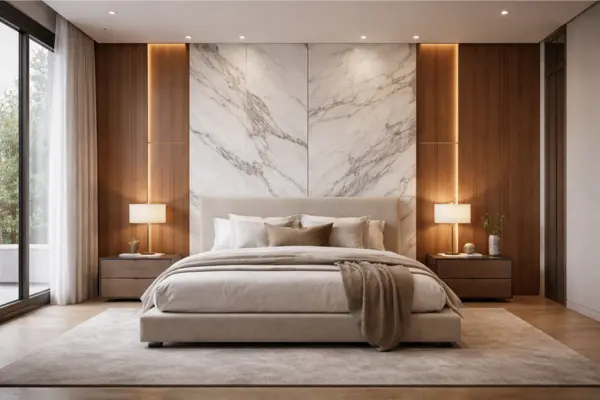
Combining marble and wood behind the bed creates one of the most striking feature walls in bedroom design. These two materials are almost opposites — one cool, smooth, and refined; the other warm, tactile, and organic — and that contrast is exactly what makes them so compelling together. When used as a backdrop for the bed, the combination creates a focal point that is genuinely impressive without requiring any additional decoration.
Why It Works
The visual contrast between marble and wood creates natural depth and interest. The coolness of the marble is warmed by the wood, which prevents the look from feeling cold or clinical. Together, they signal quality and craftsmanship in a way that paint alone never can. The feature wall does all the heavy lifting, which means the rest of the room can stay beautifully simple.
Best For
This design works best in medium and large bedrooms where the feature wall has room to breathe and be appreciated. In a very small room, it can feel overwhelming. It suits homeowners who appreciate natural materials and a design approach that is bold but not fussy.
Styling Tips
Keep the furniture in the rest of the room deliberately simple and restrained — the feature wall is the star and should not compete with anything else. Choose bedding in neutral tones that complement both the marble and wood rather than fighting with them. The marble panel does not need to be floor-to-ceiling — even a section behind the headboard height is enough to create the effect. If real marble is out of budget, high-quality marble-effect tiles or panels can achieve a very similar look.
12. Curved Furniture Luxury Bedroom
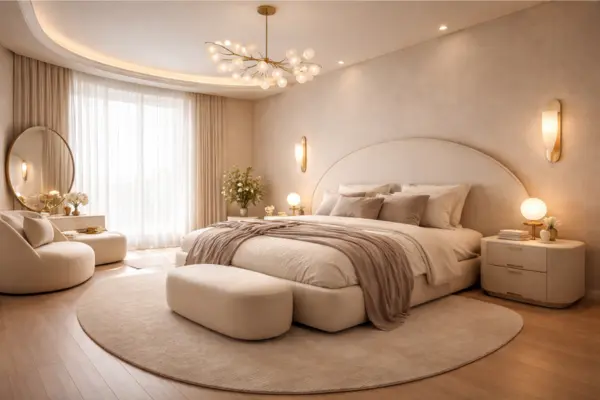
If you want your bedroom to feel softer, more relaxed, and gently luxurious, curved furniture is one of the most effective tools available to you. A rounded headboard, a curved dresser, a circular mirror, arched nightstands — these shapes break up the hard angles that most rooms are full of and create a visual flow that makes the entire space feel more graceful and welcoming. It is a subtle change that has a surprisingly large impact.
Why It Works
Straight lines and sharp corners create energy — which is great in a living room or kitchen but not ideal in a bedroom. Curved shapes do the opposite: they slow the eye down and create a sense of ease and softness. Rooms with curved furniture tend to feel more like places to unwind because the shapes themselves signal relaxation. It is a design principle that works on a subconscious level but is very real in effect.
Best For
Curved furniture works particularly well in small and medium-sized bedrooms because the soft shapes prevent the space from feeling boxy or rigid. It is also ideal for anyone who finds hard-edged, angular rooms feel a bit cold or uninviting.
Styling Tips
Start with the headboard — a rounded or arched headboard is the single most impactful place to introduce curves. From there, look for a round or oval mirror as your second curved element. Even if the rest of your furniture stays fairly straight, these two pieces will shift the feel of the whole room. Choose a soft color palette to complement the gentle shapes — blush, warm white, sage green, and dusty lilac all work beautifully with curved furniture. Avoid anything too angular or geometric in your accessories; keep the whole room feeling fluid.
13. Full Wall Drapery Bedroom
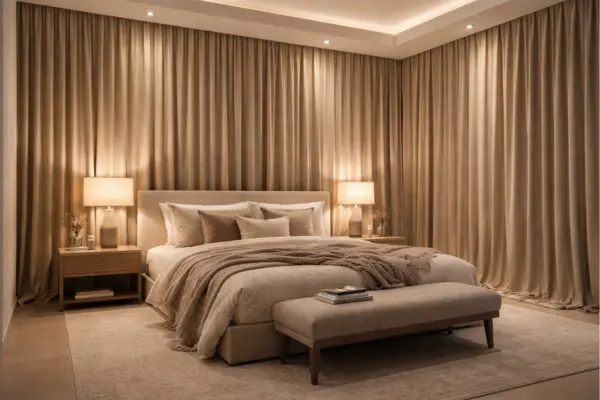
Hanging floor-to-ceiling curtains across an entire wall — not just over a window — is one of those design moves that looks like it cost a fortune but does not have to. Full wall drapery adds height, softness, and a sense of opulence that transforms even the most basic bedroom into something that feels genuinely sumptuous. The fabric softens the walls, the ceiling appears higher, and the room takes on an elegant, enveloping quality that is hard to achieve any other way.
Why It Works
Floor-to-ceiling fabric draws the eye upward, which makes the room feel taller and more spacious. It also absorbs sound, which makes the room quieter and more peaceful — something most people never think about but immediately notice and love. The softness of the fabric on the walls creates a visual warmth that balances harder surfaces like wood floors and furniture, and the result is a room that feels deeply comfortable and luxurious.
Best For
Full wall drapery works in all room sizes and is particularly effective in rooms with standard or lower ceilings, where the visual trick of vertical fabric can make a real difference. It also suits anyone who finds painted walls a little flat or stark and wants to add texture and warmth without wallpaper.
Styling Tips
Hang the curtain rod as close to the ceiling as possible and let the fabric extend all the way to the floor — even a slight puddle at the base looks beautiful. Choose a fabric with some weight to it — linen, velvet, or a thick cotton blend all drape beautifully and look expensive. Avoid anything too sheer or lightweight as it will look limp. Keep the rest of the wall decor minimal since the drapery is already doing a lot of visual work. Stick to one or two colors in the room so the curtains feel integrated rather than added on.
14. Dressing Wall Master Bedroom
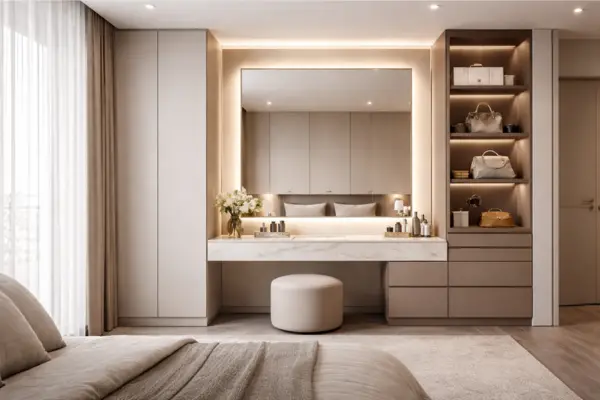
A dedicated dressing area built into one wall of the bedroom is one of those features that, once you have it, you cannot imagine living without. It combines open shelving, closed storage, a vanity mirror, and good lighting all in one cohesive unit — and it makes getting ready in the morning feel genuinely enjoyable rather than chaotic. When it is well-designed, a dressing wall looks like a custom boutique built into your home.
Why It Works
A dressing wall keeps one of the most functional parts of daily life organized, beautiful, and completely integrated into the bedroom. Instead of having a separate closet, a freestanding mirror, and a cluttered dresser, everything lives together in a designed system that is both practical and visually pleasing. It makes the room feel purposeful and tailored — like it was specifically designed for the person who lives there.
Best For
This works best in medium to large bedrooms where one wall can be dedicated to this function without crowding the sleeping area. It is particularly valuable for people who have a lot of clothes, accessories, or beauty products and want a system that keeps everything accessible and organized.
Styling Tips
Good lighting is everything in a dressing area — use warm bulbs at mirror height rather than overhead lighting, which creates unflattering shadows. Incorporate a mix of open shelves for items you use daily and closed cabinets for everything else. Keep the materials consistent with the rest of the room — if your bedroom has warm wood tones, bring that into the dressing wall cabinetry. A large mirror is non-negotiable: go as big as the wall allows. Add a small upholstered stool at the vanity for comfort.
15. Statement Wallpaper Bedroom
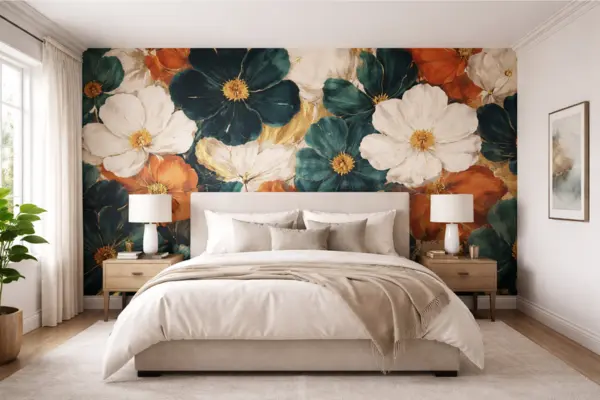
A carefully chosen wallpaper behind the bed can transform a plain bedroom into something that feels genuinely designed and considered. The key word here is statement — you are not wallpapering every wall, just the feature wall behind the bed. This one design choice changes the entire personality of the room and gives it a focal point that makes everything else fall into place around it. Done well, it looks like you hired a professional designer.
Why It Works
A feature wall creates instant visual interest and gives the room a defined focal point. Wallpaper adds pattern, texture, or both — things that paint simply cannot achieve — and makes the room feel more layered and intentional. Because it is contained to one wall, it does not overwhelm the space. Instead, it draws the eye and gives the room personality without requiring a complete redesign of everything else.
Best For
Statement wallpaper works well in medium and large bedrooms where the feature wall has enough surface area to make an impact. It suits people who want personality and visual interest in their room but are not ready to commit to a full color or pattern change throughout.
Styling Tips
Choose a pattern that complements rather than fights with your existing furniture and textiles. If your bedding and furniture are neutral, you can be bolder with your wallpaper choice. If you already have some pattern in the room, look for something more textural or subtle. Keep the other three walls in a paint color that is picked from within the wallpaper design — this is the trick that makes a statement wall look intentional rather than random. Keep your bedding simple and let the wall be the hero.
16. Japandi Luxury Bedroom
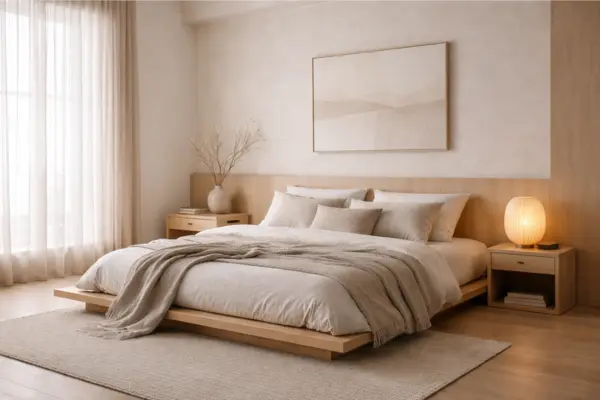
Japandi is the beautiful blend of Japanese minimalism and Scandinavian warmth — and it creates some of the most peaceful, harmonious bedroom spaces I have ever seen. The philosophy is simple: only include what has purpose and beauty, and make sure everything you choose is made from natural materials. Light wood, clean lines, neutral tones, a low bed, simple textiles — the result is a room that feels genuinely serene rather than just tidy.
Why It Works
Japandi design strips away everything unnecessary and leaves you with a space that your mind can genuinely rest in. The natural materials ground the room and connect it to the outside world in a subtle, calming way. The simplicity is not emptiness — it is clarity. And clarity in a bedroom creates exactly the kind of calm that makes falling asleep easier and waking up more pleasant. It is one of the few design styles that is as good for your wellbeing as it is beautiful to look at.
Best For
Japandi works especially well in small and medium-sized bedrooms where the minimalist approach prevents the space from feeling crowded. It is ideal for anyone who finds busy rooms stressful or who is drawn to natural, organic aesthetics.
Styling Tips
Start with light, natural wood — a simple platform bed in pale oak or ash is the ideal foundation. Keep your wall color in a warm neutral: off-white, warm grey, or soft sand. Choose bedding in natural linen or cotton in muted tones. Bring in one or two plants — they are a key part of both Japanese and Scandinavian interiors. Keep decor to an absolute minimum: a single ceramic vase, a simple woven basket, one piece of meaningful art. Every item should earn its place. Avoid anything shiny, synthetic, or decorative without purpose.
17. Sitting Area at the Foot of the Bed
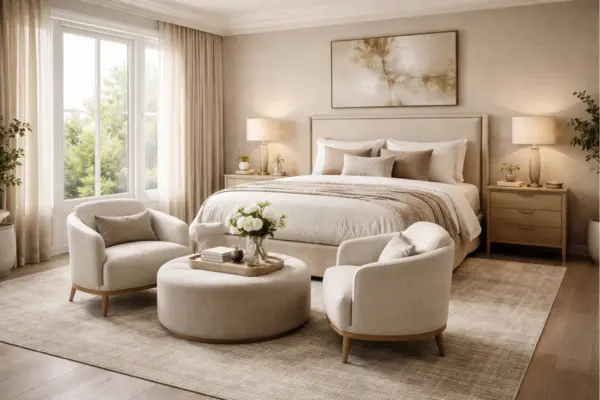
Placing a seating area at the foot of the bed is one of those design moves that feels instantly more complete and considered than a room without one. It gives the lower end of the bed a purpose and visual anchor, fills the space that often gets left awkwardly empty in larger bedrooms, and adds a functional comfort zone to the room. Whether it is a single bench, two chairs, or a small sofa, this addition changes the whole feeling of the space.
Why It Works
Large bedrooms without a sitting area at the foot of the bed often feel unfinished — there is a visual gap between the bed and the wall that the eye does not know what to do with. A seating arrangement fills that space purposefully and gives the room a layered, hotel-like quality. It also adds genuine functionality — a place to sit while putting on shoes, reading, or simply enjoying the room.
Best For
This is best suited to large bedrooms where there is enough floor space between the foot of the bed and the opposite wall to place seating without the room feeling crowded. You need at least 90 centimetres of clearance between the seating and the bed to make it feel comfortable.
Styling Tips
A long upholstered bench is the simplest and most versatile option — it echoes the shape of the bed and keeps the look clean. Two armchairs angled toward each other feel more conversational and warm. Keep the upholstery color tied to your existing palette. Add a small area rug under the seating to define the zone, and a side table if you have the space. The seating does not need to be elaborate — simple and well-chosen always wins.
18. Multifunctional Small Luxury Bedroom
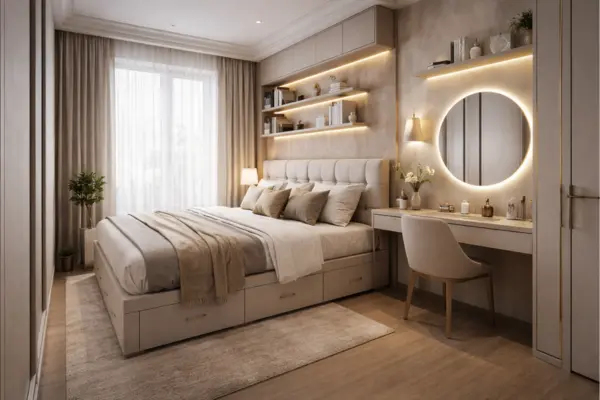
Small bedrooms do not have to feel like a compromise. When you choose furniture that works harder, a small room can feel just as luxurious and functional as a large one. The secret is multifunctional design: a bed with built-in storage drawers, floating shelves that replace bulky bedside tables, a mirror that doubles as a jewelry organizer, a fold-out desk built into the wardrobe. Every piece earns its place by doing more than one job.
Why It Works
In a small space, visual clutter is the enemy of luxury. When your furniture is doing more than one thing, you need less of it — and less furniture means more breathing room. Multifunctional pieces also reduce the need for extra storage furniture like standalone dressers and wardrobes, which frees up precious floor space. The result is a room that feels open, considered, and calm rather than cramped and chaotic.
Best For
This design philosophy is specifically for small bedrooms where every square metre matters. It is the approach I recommend to every client who feels like their small bedroom is impossible to make beautiful — once you start thinking multifunctionally, the possibilities open up dramatically.
Styling Tips
Start with the bed — a storage bed with drawers underneath is one of the best investments you can make in a small bedroom. Replace traditional nightstands with floating wall shelves, which take up zero floor space. Use mirrors strategically — a large mirror on one wall will visually double the size of the room. Choose furniture in a light color or natural wood to keep the space feeling airy. Keep the floor as clear as possible; the more floor you can see, the bigger the room will feel. And edit ruthlessly — in a small space, every item needs to justify its presence.
19. Contemporary Classic Bedroom With Panel Molding
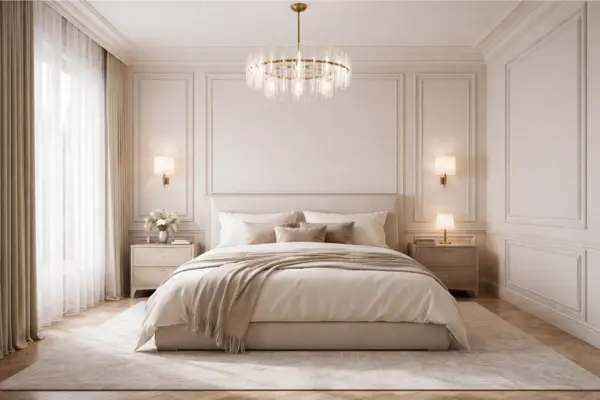
Panel molding on the walls is one of the oldest tricks in the design book — and it still works beautifully today when paired with contemporary furniture. This design takes the elegance of traditional architectural detailing and combines it with clean modern pieces to create a bedroom that feels both timeless and fresh. The wall panels add structure, texture, and a sense of craftsmanship that paint alone cannot achieve, while the modern furniture keeps the room from feeling heavy or old-fashioned.
Why It Works
Panel molding adds an instant sense of architecture and quality to any room. It makes walls that would otherwise be flat and plain feel designed and considered. When the molding is painted the same color as the wall — rather than a contrasting color — it creates a subtle, sophisticated effect that looks beautifully expensive. Paired with contemporary furniture, the combination avoids any stuffiness and creates a look that will feel relevant for years to come.
Best For
This design works in all bedroom sizes and is particularly effective in newer homes or apartments that lack any original architectural character. It suits anyone who loves classic elegance but does not want their bedroom to feel like a period piece.
Styling Tips
Panel molding kits are available from most home improvement stores and are much easier to install than they look — many people do this as a weekend DIY project. Paint the molding and the wall behind it in the exact same color for the most sophisticated result. Choose furniture in a clean, simple style — nothing too ornate that would compete with the wall detail. Stick to a neutral or muted color palette: dusty sage, warm white, soft grey, or pale blue all work beautifully with panel molding. Elegant lighting — a chandelier, a statement pendant, or a pair of refined wall sconces — completes the look perfectly.
Mistakes to Avoid
Even the most beautiful bedroom can quickly lose its charm when a few common mistakes slip in. I have seen this happen so many times, and the frustrating part is that most of these mistakes are completely avoidable once you know what to look for.
The first and most common mistake is overcrowding the room. I cannot tell you how many times I have walked into a bedroom that had too much furniture squeezed into a space that simply could not hold it all. A luxury bedroom needs breathing room. If you cannot walk comfortably around all sides of the bed, you have too much furniture. Edit ruthlessly and only keep what the room genuinely needs.
The second mistake is poor lighting — specifically, relying on a single overhead light for the entire room. One light from the ceiling creates a flat, harsh atmosphere that drains all the warmth and comfort from the space. Always layer your lighting: a main ceiling fixture, bedside lamps or sconces, and at least one soft accent light. Add dimmer switches wherever possible.
Ignoring storage is another mistake that quietly ruins even well-styled bedrooms. When everyday items have nowhere to go, they end up on surfaces and on the floor, and suddenly your beautiful room looks lived-in in the worst possible way. Build in storage from the start — or retrofit it if you need to. Hidden storage always looks more luxurious than visible clutter.
Finally, mixing too many styles, colors, or patterns without a clear vision is one of the fastest ways to make a bedroom feel chaotic rather than curated. Luxury comes from cohesion. Choose a clear direction — a color palette, a material, a mood — and let every decision support that direction. When everything in the room is working together, even simple choices look intentional and beautiful.
Conclusion
The most important thing I want you to take away from this guide is this: a luxury master bedroom is not about having the biggest budget or the most expensive furniture. It is about making thoughtful choices that serve you — the person who actually lives in the room.
Start with one idea from this list. Just one. Pick the concept that speaks to you most and build from there. Do not try to do everything at once, and do not copy anyone else’s room exactly. Use these ideas as a starting point and then make them your own.
Focus on comfort above everything else. A room that looks beautiful but does not feel good to be in has missed the point entirely. Choose quality over quantity — one beautiful piece will always do more for your room than five mediocre ones. Keep things balanced, keep things cohesive, and give the room space to breathe.
When you get it right, your bedroom will not just be a room you sleep in. It will be the place you most want to be at the end of every single day. And that is what luxury actually means.
FAQs
What is the most important element in a luxury bedroom?
The bed placement and overall comfort of the sleeping area comes first. Everything else in the room — the lighting, the storage, the decor — exists to support the bed. When the bed is well-positioned, well-styled, and comfortable, the rest of the room has a foundation to build from.
Can a small bedroom look luxurious?
Absolutely — and I have seen it done brilliantly many times. Smart storage, a simple and cohesive layout, layered lighting, and quality fabrics can make even the most compact bedroom feel elegant and considered. The key is to work with the size rather than against it.
Which colors are best for a luxury bedroom?
Neutral tones are the safest and most timeless choice: warm whites, soft creams, sandy beige, warm grey, and muted greige all create a calm and sophisticated atmosphere. If you want depth and drama, try adding richer tones like deep charcoal, forest green, or navy on a feature wall or through your textiles.
How can I make my bedroom look expensive on a budget?
Focus on the things that make the biggest visual impact for the least money. New bedding in a quality fabric like linen or cotton can completely transform how a bedroom feels. Full-length curtains hung high above the window make ceilings look taller. A large mirror adds light and space. A dimmer switch on your lighting costs very little but changes everything about the atmosphere. Start with these and you will be amazed at the difference.
How many furniture pieces should a master bedroom have?
Keep it to only what the room genuinely needs. A bed, two bedside tables, adequate lighting, and perhaps a bench at the foot of the bed or a small chair in the corner is usually plenty. Additional storage like a wardrobe or built-in closet should be included but kept as streamlined as possible. Every piece of furniture you add should earn its place — if it is not serving a clear purpose, it probably does not belong in the room.